Adhyaya 138
भीमस्य जलान्वेषणं तथा वनविश्रान्तिः (Bhīma’s Search for Water and the Forest Halt)
Upa-parva: Jatugṛha-dāha Parva (The Lac House and Escape Episode)
Vaiśaṃpāyana describes the Pāṇḍavas’ rapid, concealed movement through harsh terrain after the Vāraṇāvata incident. The wind, likened to a pure seasonal gale, intensifies the sense of urgency as vegetation and thickets are crushed in the wake of forceful passage. The party repeatedly crosses to distant banks using their arms as improvised support, avoiding routes due to fear of Dhṛtarāṣṭra’s faction. Bhīma bears Kuntī across uneven ground, underscoring protective duty amid logistical strain. By evening they reach a frightening forest tract with scarce roots, fruits, and water; ominous birds and beasts and darkened directions heighten vulnerability. Exhausted and thirsty, the group cannot proceed. Bhīma enters deeper into the forest, finds a broad-shaded banyan (nyagrodha), settles them, and announces he will seek water. Hearing the calls of water-birds (sārasas), he infers a substantial water source, drinks, bathes, and returns carrying water in his cloth. Seeing Kuntī and his brothers sleeping on the bare earth, Bhīma laments the reversal from palace beds to ground-rest, praises Kuntī’s stature and motherhood of the brothers, and reflects on the protective value of righteous kinship networks. He resolves to keep watch through the night so they may drink and recover upon waking.
Chapter Arc: जनमेजय! आचार्य द्रोण अपने शिष्यों को बुलाते हैं और गुरु-दक्षिणा के रूप में एक ही कठोर आज्ञा रखते हैं—पांचालराज द्रुपद को रणभूमि में पकड़कर मेरे पास ले आओ। → कुमार-वीर—‘मैं पहले, मैं पहले’ कहते हुए—प्रतिज्ञा को अपनी कीर्ति का शिखर मानकर पंचाल पर चढ़ दौड़ते हैं। रण में रथ, अश्व, गज और धनुष-टंकार का कोलाहल उठता है; भीम की गदा से पर्वत-से गज रक्त बहाते गिरते हैं, और पाण्डवों का वेग पंचाल-सेना को विचलित कर देता है। → रणमूर्धनि द्रुपद का घेरा टूटता है; पाण्डव-बल के प्रहार से गज-रथ धराशायी होते हैं और अंततः द्रुपद को बंदी बनाकर द्रोण के सम्मुख लाया जाता है—गुरु-दक्षिणा का लक्ष्य साकार। → द्रुपद, पराक्रमी शिष्यों के बीच द्रोण की सामर्थ्य स्वीकार करता है और विनय से स्थायी प्रीति/संबंध की याचना करता है। द्रोण का अपमान-प्रतिशोध अब अधिकार और दंड के रूप में रूपांतरित होता है—शिष्य-बल से गुरु का मान स्थापित। → बंदी द्रुपद के साथ द्रोण क्या निर्णय करेंगे—क्षमा, विभाजन, या अपमान का प्रतिदान? और क्या यह अपमान भविष्य में अग्नि की तरह लौटकर द्रोण के भाग्य को जला देगा?
Shlokas
Verse 1
(दाक्षिणात्य अधिक पाठका १ श्लोक मिलाकर कुल २६ श्लोक हैं) ऑपन-माजल छा अकाल सप्तत्रिशर्दाधिकशततमोब< ध्याय: द्रोणका शिष्योंद्वारा द्रपदपर आक्रमण करवाना, अर्जुनका ट्रपदको बंदी बनाकर लाना और द्रोणद्वारा द्रपदको आधा राज्य देकर मुक्त कर देना वैशम्पायन उवाच पाण्डवान् धार्तराष्टांश्व कृतास्त्रान् प्रसमीक्ष्य सः । गुर्वर्थ दक्षिणाकाले प्राप्तेडमन्यत वै गुरु:,वैशम्पायनजी कहते हैं--राजन्! पाण्डवों तथा धृतराष्ट्रके पुत्रोंको अस्त्र-विद्यामें निपुण देख द्रोणाचार्यने गुरु-दक्षिणा लेनेका समय आया जान मन-ही-मन कुछ निश्चय किया
Vaiśampāyana said: Seeing that the Pāṇḍavas and the sons of Dhṛtarāṣṭra had become fully trained in the use of weapons, the teacher Droṇa, recognizing that the time had come to receive the guru’s fee (guru-dakṣiṇā), formed a resolve in his mind about what should be done for his own purpose.
Verse 2
ततः शिष्यात् समानीय आचार्यो<5र्थमचोदयत् । द्रोण: सर्वानशेषेण दक्षिणार्थ महीपते,जनमेजय! तदनन्तर आचार्यने अपने शिष्योंको बुलाकर उन सबसे गुरुदक्षिणाके लिये इस प्रकार कहा--
Then the teacher summoned his disciples and urged them regarding his purpose. O king Janamejaya, Droṇa addressed all of them without exception, speaking of the guru’s fee (dakṣiṇā) that was to be rendered.
Verse 3
पज्चालराजं ट्रुपदं गृहीत्वा रणमूर्धनि । पर्यानयत भद्र व: सा स्थात् परमदक्षिणा,'शिष्यो! पंचालराज ट्रुपदको युद्धमें कैद करके मेरे पास ले आओ। तुम्हारा कल्याण हो। यही मेरे लिये सर्वोत्तम गुरुदक्षिणा होगी”
Vaiśaṃpāyana said: “Seize Drupada, the king of the Pañcālas, on the very field of battle and bring him to me. May good befall you. That alone shall be the highest teacher’s fee (guru-dakṣiṇā) for me.”
Verse 4
तथेत्युक्त्वा तु ते सर्वे रथैस्तूर्ण प्रहारिण: । आचार्य धनदानार्थ द्रोणेन सहिता ययु:,तब “बहुत अच्छा” कहकर शीघ्रतापूर्वक प्रहार करनेवाले वे सब राजकुमार (युद्धके लिये उद्यत हो) रथोंमें बैठकर गुरुदक्षिणा चुकानेके लिये आचार्य द्रोणके साथ ही वहाँसे प्रस्थित हुए
Having said, “So be it,” all those princes—swift to strike—mounted their chariots and set out together with Droṇa, intent on paying their teacher’s fee by fulfilling his demand.
Verse 5
ततो5भिजग्मु: पञ्चालान् निध्नन्तस्ते नरर्षभा: । ममृदुस्तस्य नगर द्रुपदस्य महौजस:
Then those bull-like men advanced upon the Pañcālas, striking them down. They crushed the city of the mighty Drupada.
Verse 6
दुर्योधनश्व कर्णश्न युयुत्सुश्न महाबल: । दुःशासनो विकर्णश्रव जलसंध: सुलोचन:
Vaiśampāyana said: Duryodhana and Karṇa, and Yuyutsu of great strength; also Duḥśāsana and Vikarṇa, along with Jalaṃdha and Sulochana—these were among those being enumerated.
Verse 7
एते चान्ये च बहवः कुमारा बहुविक्रमा: । अहं पूर्वमहं पूर्वमित्येवं क्षत्रियर्षभा:
Vaiśampāyana said: “And these, along with many other princes of great prowess, kept pressing forward with the cry, ‘I first! I first!’—like bulls among kṣatriyas, eager to outdo one another.”
Verse 8
तदनन्तर दुर्योधन, कर्ण, महाबली युयुत्सु, दुःशासन, विकर्ण, जलसंध तथा सुलोचन-- ये और दूसरे भी बहुत-से महापराक्रमी नरश्रेष्ठ क्षत्रियशिरोमणि राजकुमार “पहले मैं युद्ध करूँगा, पहले मैं युद्ध करूँगा” इस प्रकार कहते हुए पंचालदेशमें जा पहुँचे और वहाँके निवासियोंको मारते-पीटते हुए महाबली राजा द्रुपदकी राजधानीको भी रौंदने लगे || ५-- ७ ।। ततो वररथारूढा: कुमारा: सादिभि: सह । प्रविश्य नगरं सर्वे राजमार्गमुपाययु:,उत्तम रथोंपर बैठे हुए वे सभी राजकुमार घुड़सवारोंके साथ नगरमें घुसकर वहाँके राजपथपर चलने लगे
Then Duryodhana, Karṇa, the mighty Yuyutsu, Duḥśāsana, Vikarṇa, Jalaṃdha, and Sulochana—along with many other princes, foremost among kṣatriyas—crying, “I will fight first! I will fight first!”, reached the land of the Pañcālas, beating and slaying its people and trampling even the capital of the powerful King Drupada. After that, all those princes, mounted on excellent chariots and accompanied by horsemen, entered the city and proceeded along the royal highway.
Verse 9
तस्मिन् काले तु पाउ्चाल: श्रुत्वा दृष्टयवा महद् बलम् । भ्रातृभि: सहितो राजंस्त्वरया निर्ययौ गृहात्,जनमेजय! उस समय पंचालराज ट्रुपद कौरवोंका आक्रमण सुनकर और उनकी विशाल सेनाको अपनी आँखों देखकर बड़ी उतावलीके साथ भाइयोंसहित राजभवनसे बाहर निकले
Vaiśampāyana said: At that time the king of the Pāñcālas—having heard of the attack and also having seen with his own eyes the great army—hurriedly came out of the royal residence together with his brothers, O King Janamejaya.
Verse 10
ततस्तु कृतसंनाहा यज्ञसेनसहोदरा: । शरवर्षाणि मुज्चन्त: प्रणेदु: सर्व एव ते,महाराज यज्ञसेन (ट्रुपद) और उनके सब भाइयोंने कवच धारण किये। फिर वे सभी लोग बाणोंकी बौछार करते हुए जोर-जोरसे गर्जना करने लगे
Vaiśampāyana said: Then, having fully armed themselves, Yajñasena (Drupada) and his brothers all together released showers of arrows and roared aloud, O king.
Verse 11
ततो रथेन शुभ्रेण समासाद्य तु कौरवान् | यज्ञसेन: शरान् घोरान् ववर्ष युधि दुर्जय:,राजा ट्रुपदको युद्धमें जीतना बहुत कठिन था। वे चमकीले रथपर सवार हो कौरवोंके सामने जा पहुँचे और भयानक बाणोंकी वर्षा करने लगे
Vaiśampāyana said: Then, mounting his gleaming chariot and closing in upon the Kauravas, Yajñasena (King Drupada)—hard to overcome in battle—poured forth a dreadful shower of arrows in the fight.
Verse 12
वैशम्पायन उवाच पूर्वमेव तु सम्मन्त्रय पार्थो द्रोणमथाब्रवीत् | दर्पोद्रेकात् कुमाराणामाचार्य द्विजसत्तमम्,वैशम्पायनजी कहते हैं--जनमेजय! कौरवों तथा अन्य राजकुमारोंको अपने बल और पराक्रमका बड़ा घमंड था; इसलिये अर्जुनने पहले ही अच्छी तरह सलाह करके विप्रवर द्रोणाचार्यसे कहा--
Vaiśampāyana said: After first taking counsel beforehand, Pārtha (Arjuna) then addressed Droṇa, the teacher and best of the twice-born. For the princes, swollen with pride in their strength and prowess, were acting under an excess of arrogance—so Arjuna spoke to the Brahmin preceptor with a view to guiding the situation through deliberation rather than mere bravado.
Verse 13
एषां पराक्रमस्यान्ते वयं कुर्याम साहसम् | एतैरशक्य: पाज्चालो ग्रहीतुं रणमूर्थनि,“गुरुदेव! इनके पराक्रम दिखानेके पश्चात् हमलोग युद्ध करेंगे। हमारा विश्वास है, ये लोग युद्धमें पंचालराजको बंदी नहीं बना सकते”
Vaiśampāyana said: “After these men have displayed their prowess, we shall then attempt our own bold deed. For by them the king of the Pāñcālas cannot be seized on the very forefront of battle.”
Verse 14
एवमुकक््त्वा तु कौन्तेयो भ्रातृभि: सहितो5नघ: । अर्धक्रोशे तु नगरादतिष्ठद् बहिरेव स:,यों कहकर पापरहित कुन्तीनन्दन अर्जुन अपने भाइयोंके साथ नगरसे बाहर ही आधे कोसकी दूरीपर ठहर गये थे
Having spoken thus, Arjuna, the son of Kuntī—blameless—together with his brothers, halted outside the city itself, at a distance of half a krośa. The narration underscores a deliberate, restrained pause: they do not press into the city immediately, but keep a respectful remove, suggesting caution, propriety, and self-control in conduct.
Verse 15
द्रुपद: कौरवान् दृष्टवा प्राधावत समन्ततः । शरजालेन महता मोहयन् कौरवीं चमूम्,राजा ट्रुपदने कौरवोंको देखकर उनपर सब ओरसे धावा बोल दिया और बाणोंका बड़ा भारी जाल-सा बिछाकर कौरव-सेनाको मूर्च्छित कर दिया। युद्धमें फुर्ती दिखानेवाले राजा द्रपद रथपर बैठकर यद्यपि अकेले ही बाण-वर्षा कर रहे थे, तो भी अत्यन्त भयके कारण कौरव उन्हें अनेक-सा मानने लगे
Vaiśampāyana said: Seeing the Kauravas, King Drupada charged at them from every side. Casting a vast net of arrows, he threw the Kaurava host into confusion and stupor. Though he fought alone from his chariot, the terror he inspired made the Kauravas perceive him as if he were many—an image of how prowess and momentum in battle can magnify a single warrior’s presence and unsettle an army’s resolve.
Verse 16
तमुद्यतं रथेनैकमाशुकारिणमाहवे । अनेकमिव संत्रासान्मेनिरे तत्र कौरवा:,राजा ट्रुपदने कौरवोंको देखकर उनपर सब ओरसे धावा बोल दिया और बाणोंका बड़ा भारी जाल-सा बिछाकर कौरव-सेनाको मूर्च्छित कर दिया। युद्धमें फुर्ती दिखानेवाले राजा द्रपद रथपर बैठकर यद्यपि अकेले ही बाण-वर्षा कर रहे थे, तो भी अत्यन्त भयके कारण कौरव उन्हें अनेक-सा मानने लगे
Vaiśampāyana said: Seeing him charging forth—alone in his chariot, swift in battle—the Kauravas there, overwhelmed by fear, imagined him to be as though many. The scene underscores how courage and martial skill can magnify a single warrior’s presence, while panic distorts perception and weakens an army’s resolve.
Verse 17
ट्रुपदस्य शरा घोरा विचेरु: सर्वतो दिशम् । ततः शड्खाश्न भेर्यश्व मृदड़ाश्न सहस्रश:,धनुर्ज्यातलशब्दश्न संस्पृश्य गगनं महान् | द्रपदके भयंकर बाण सब दिशाओंमें विचरने लगे। महाराज! उनकी विजय होती देख पांचालोंके घरोंमें शंख, भेरी और मृदंग आदि सहस्रों बाजे एक साथ बज उठे। महान् आत्मबलसे सम्पन्न पांचाल-सैनिकोंका सिंहनाद बड़े जोरोंसे होने लगा। साथ ही उनके धनुषोंकी प्रत्यंचाओंका महान् टंकार आकाशमें फैलकर गूँजने लगा
Vaiśaṃpāyana said: Drupada’s dreadful arrows ranged in every direction. Then, seeing his victory, in the houses of the Pāñcālas thousands of conches, kettle-drums, and mṛdaṅgas resounded together. The lion-roars of the Pāñcāla warriors, strong in spirit, rose mightily, and the great twang of bowstrings spread through the sky and echoed far and wide.
Verse 18
प्रावाद्यन्त महाराज पाञ्चालानां निवेशने । सिंहनादश्न संजज्ञे पाज्चालानां महात्मनाम्
Vaiśampāyana said: “O King, in the settlement of the Pāñcālas, instruments were sounded, and among those great-souled Pāñcālas a lion-like roar arose.”
Verse 19
दुर्योधनो विकर्णश्न सुबाहुर्दीर्घलोचन:,उस समय दुर्योधन, विकर्ण, सुबाहु, दीर्घलोचन और दुःशासन बड़े क्रोधमें भरकर बाणोंकी वर्षा करने लगे। भारत! युद्धमें परास्त न होनेवाले महान धनुर्थर ट्रुपदने अत्यन्त घायल होकर तत्काल ही उन सबकी सेनाओंको अत्यन्त पीड़ित कर दिया। वे अलातचक्रकी भाँति सब ओर घूमकर दुर्योधन, विकर्ण, महाबली कर्ण, अनेक वीर राजकुमार तथा उनकी विविध सेनाओंको बाणोंसे तृप्त करने लगे
Vaiśampāyana said: Duryodhana, Vikarṇa, Subāhu, Dīrghalocana, and Duḥśāsana—seized by wrath—began to shower arrows. Then King Drupada, a great archer whose chariot was not easily overcome in battle, though grievously wounded by their shafts, at once pressed and tormented all their forces. Whirling in every direction like a blazing firebrand spun in a circle, he satisfied with arrows Duryodhana, Vikarṇa, the mighty Karṇa, many heroic princes, and their various troops.
Verse 20
दुःशासनश्न संक़्रुद्ध: शरवर्षैरवाकिरन् । सो35तिविद्धो महेष्वास: पार्षतो युधि दुर्जय:,उस समय दुर्योधन, विकर्ण, सुबाहु, दीर्घलोचन और दुःशासन बड़े क्रोधमें भरकर बाणोंकी वर्षा करने लगे। भारत! युद्धमें परास्त न होनेवाले महान धनुर्थर ट्रुपदने अत्यन्त घायल होकर तत्काल ही उन सबकी सेनाओंको अत्यन्त पीड़ित कर दिया। वे अलातचक्रकी भाँति सब ओर घूमकर दुर्योधन, विकर्ण, महाबली कर्ण, अनेक वीर राजकुमार तथा उनकी विविध सेनाओंको बाणोंसे तृप्त करने लगे
Vaiśampāyana said: Enraged, Duḥśāsana showered volleys of arrows. Though grievously pierced, the great bowman Pārṣata—hard to overcome in battle—endured the assault and pressed on.
Verse 21
व्यधमत् तान्यनीकानि तत्क्षणादेव भारत । दुर्योधनं विकर्ण च कर्ण चापि महाबलम्,उस समय दुर्योधन, विकर्ण, सुबाहु, दीर्घलोचन और दुःशासन बड़े क्रोधमें भरकर बाणोंकी वर्षा करने लगे। भारत! युद्धमें परास्त न होनेवाले महान धनुर्थर ट्रुपदने अत्यन्त घायल होकर तत्काल ही उन सबकी सेनाओंको अत्यन्त पीड़ित कर दिया। वे अलातचक्रकी भाँति सब ओर घूमकर दुर्योधन, विकर्ण, महाबली कर्ण, अनेक वीर राजकुमार तथा उनकी विविध सेनाओंको बाणोंसे तृप्त करने लगे
Vaiśampāyana said: “O Bhārata, in that very instant he shattered those battle-formations. He struck Duryodhana, Vikarṇa, and also the mighty Karṇa.”
Verse 22
नानानृपसुतान् वीरान् सैन्यानि विविधानि च । अलातचक्रवत् सर्व चरन् बाणैरतर्पयत्,उस समय दुर्योधन, विकर्ण, सुबाहु, दीर्घलोचन और दुःशासन बड़े क्रोधमें भरकर बाणोंकी वर्षा करने लगे। भारत! युद्धमें परास्त न होनेवाले महान धनुर्थर ट्रुपदने अत्यन्त घायल होकर तत्काल ही उन सबकी सेनाओंको अत्यन्त पीड़ित कर दिया। वे अलातचक्रकी भाँति सब ओर घूमकर दुर्योधन, विकर्ण, महाबली कर्ण, अनेक वीर राजकुमार तथा उनकी विविध सेनाओंको बाणोंसे तृप्त करने लगे
Vaiśampāyana said: Moving everywhere like a whirling firebrand, he satisfied with arrows the many heroic princes and their varied troops—striking them on all sides and pressing the battle without pause.
Verse 23
(दुःशासनं च दशभिर्विकर्ण विंशकै: शरै: | शकुनिं विंशकैस्ती&णैर्दशभिर्मर्म भेदिभि: ।। कर्णदुर्योधनौ चोभौ शरै: सर्वाज्भसंधिषु | अष्टाविंशतिभि: सर्वे: पृथक् पृथगरिन्दम: ।। सुबाहुं पञ्चभिर्विद्ध्वा तथान्यान् विविधै: शरै: । विव्याध सहसा भूयो ननाद बलवत्तरम् ।। विनद्य कोपात् पाज्चाल: सर्वशस्त्रभृतां वर: | धनूंषि रथयन्त्रं च हयांश्रित्रध्वजानपि । चकर्त सर्वपाज्चाला: प्रणेदु: सिंहसड्घवत् ।।) ततस्तु नागरा: सर्वे मुसलैर्यष्टिभिस्तदा । अभ्यवर्षन्त कौरव्यान् वर्षमाणा घना इव,उन्होंने दःशासनको दस, विकर्णको बीस तथा शकुनिको अत्यन्त तीखे तीस मर्मभेदी बाण मारकर घायल कर दिया। तत्पश्चात् शत्रुदमन द्रुपदने कर्ण और दुर्योधनके सम्पूर्ण अंगोंकी संधियोंमें पृथक्ू-पृथक् अट्ठाईस बाण मारे। सुबाहुको पाँच बाणोंसे घायल करके अन्य योद्धाओंको भी अनेक प्रकारके सायकोंद्वारा सहसा बींध डाला और तब बड़े जोरसे सिंहनाद किया। इस प्रकार क्रोधपूर्वक गर्जना करके सम्पूर्ण शस्त्रधारियोंमें श्रेष्ठ पंचालराज द्रपदने शत्रुओंके धनुष, रथ, घोड़े तथा रंग-बिरंगी ध्वजाओंको भी काट दिया। तत्पश्चात् सारे पांचाल सैनिक सिंह-समूहके समान गर्जना करने लगे। फिर तो उस नगरके सभी निवासी कौरवोंपर टूट पड़े और बरसनेवाले बादलोंकी भाँति उनपर मूसल एवं डंडोंकी वर्षा करने लगे
Then all the townspeople, taking up clubs and staves, fell upon the Kauravas and showered blows on them—like rain-laden clouds pouring down.
Verse 24
सबालवृद्धास्ते पौरा: कौरवानभ्यायुस्तदा । श्र॒ुत्वा सुतुमुलं युद्ध कौरवानेव भारत,उस समय बालकसे लेकर बूढ़ेतक सभी पुरवासी कौरवोंका सामना कर रहे थे। जनमेजय! गुप्तचरोंके मुखसे यह समाचार सुनकर कि वहाँ तुमुल युद्ध हो रहा है, कौरव वहाँ नहींके बराबर हो गये हैं, पंचालराज ट्रुपदके बाणोंसे कर्णके सम्पूर्ण अंग क्षत-विक्षत हो गये, वह भयभीत हो रथसे कूदकर भाग चला है तथा कौरव-सैनिक चीखते-चिल्लाते और कराहते हुए हम पाण्डवोंकी ओर भागते आ रहे हैं; पाण्डवलोग पीड़ित सैनिकोंका रोमांचकारी आर्तनाद कानमें पड़ते ही आचार्य द्रोणको प्रणाम करके रथोंपर जा बैठे और शीघ्र वहाँसे चल दिये। अर्जुनने पाण्डुनन्दन युधिष्ठिरको यह कहकर रोक दिया कि “आप युद्ध न कीजिये”
Vaiśampāyana said: Then the townspeople—children and elders alike—rushed out against the Kauravas. O Bhārata (Janamejaya), hearing that a fiercely tumultuous battle was underway, the Kauravas were thrown into disarray.
Verse 25
द्रवन्ति सम नदन्ति सम क्रोशन्त: पाण्डवान् प्रति । (पाञज्चालशरभिन्नाड़ो भयमासाद्य वै वृष: । कर्णो रथादवप्लुत्य पलायनपरो5 भवत् ।।) पाण्डवास्तु स्वनं श्रुत्वा आर्तानां लोमहर्षणम्,उस समय बालकसे लेकर बूढ़ेतक सभी पुरवासी कौरवोंका सामना कर रहे थे। जनमेजय! गुप्तचरोंके मुखसे यह समाचार सुनकर कि वहाँ तुमुल युद्ध हो रहा है, कौरव वहाँ नहींके बराबर हो गये हैं, पंचालराज ट्रुपदके बाणोंसे कर्णके सम्पूर्ण अंग क्षत-विक्षत हो गये, वह भयभीत हो रथसे कूदकर भाग चला है तथा कौरव-सैनिक चीखते-चिल्लाते और कराहते हुए हम पाण्डवोंकी ओर भागते आ रहे हैं; पाण्डवलोग पीड़ित सैनिकोंका रोमांचकारी आर्तनाद कानमें पड़ते ही आचार्य द्रोणको प्रणाम करके रथोंपर जा बैठे और शीघ्र वहाँसे चल दिये। अर्जुनने पाण्डुनन्दन युधिष्ठिरको यह कहकर रोक दिया कि “आप युद्ध न कीजिये”
Vaiśampāyana said: “They were fleeing, wailing, and crying out as they ran toward the Pāṇḍavas. Karṇa—his body torn by the arrows of the Pāñcālas—was seized by fear; he leapt down from his chariot and became intent on flight. The Pāṇḍavas, hearing the hair-raising cries of the wounded and distressed, responded at once.”
Verse 26
अभिवाद्य ततो द्रोणं रथानारुरुहुस्तदा । युधिष्ठिरं निवार्याशु मा युध्यस्वेति पाण्डवम्,उस समय बालकसे लेकर बूढ़ेतक सभी पुरवासी कौरवोंका सामना कर रहे थे। जनमेजय! गुप्तचरोंके मुखसे यह समाचार सुनकर कि वहाँ तुमुल युद्ध हो रहा है, कौरव वहाँ नहींके बराबर हो गये हैं, पंचालराज ट्रुपदके बाणोंसे कर्णके सम्पूर्ण अंग क्षत-विक्षत हो गये, वह भयभीत हो रथसे कूदकर भाग चला है तथा कौरव-सैनिक चीखते-चिल्लाते और कराहते हुए हम पाण्डवोंकी ओर भागते आ रहे हैं; पाण्डवलोग पीड़ित सैनिकोंका रोमांचकारी आर्तनाद कानमें पड़ते ही आचार्य द्रोणको प्रणाम करके रथोंपर जा बैठे और शीघ्र वहाँसे चल दिये। अर्जुनने पाण्डुनन्दन युधिष्ठिरको यह कहकर रोक दिया कि “आप युद्ध न कीजिये”
Having paid respectful salutations to Droṇa, they then quickly mounted their chariots. Arjuna at once restrained Pāṇḍu’s son Yudhiṣṭhira, saying, “Do not fight.”
Verse 27
माद्रेयौ चक्ररक्षौ तु फाल्गुनश्व॒ तदाकरोत् सेनाग्रगो भीमसेन: सदाभूद् गदया सह,उस समय अर्जुनने माद्रीकुमार नकुल और सहदेवको अपने रथके पहियोंका रक्षक बनाया, भीमसेन सदा गदा हाथमें लेकर सेनाके आगे-आगे चलते थे
Vaiśampāyana said: At that time Phālguna (Arjuna) appointed the two sons of Mādrī—Nakula and Sahadeva—as guards of his chariot-wheels. Bhīmasena, ever with his mace in hand, moved at the very front of the army.
Verse 28
तदा शत्रुस्वनं श्र॒त्वा भ्रातृभि: सहितो5नघ: । अयाज्जवेन कौन्तेयो रथेनानादयन् दिश:,तब शत्रुओंका सिंहनाद सुनकर भाइयोंसहित निष्पाप अर्जुन रथकी घरघराहटसे सम्पूर्ण दिशाओंको प्रतिध्वनित करते हुए बड़े वेगसे आगे बढ़े
Then, hearing the enemy’s roar, the sinless son of Kuntī—Arjuna—together with his brothers, surged forward at great speed, making all directions resound with the rumbling of his chariot.
Verse 29
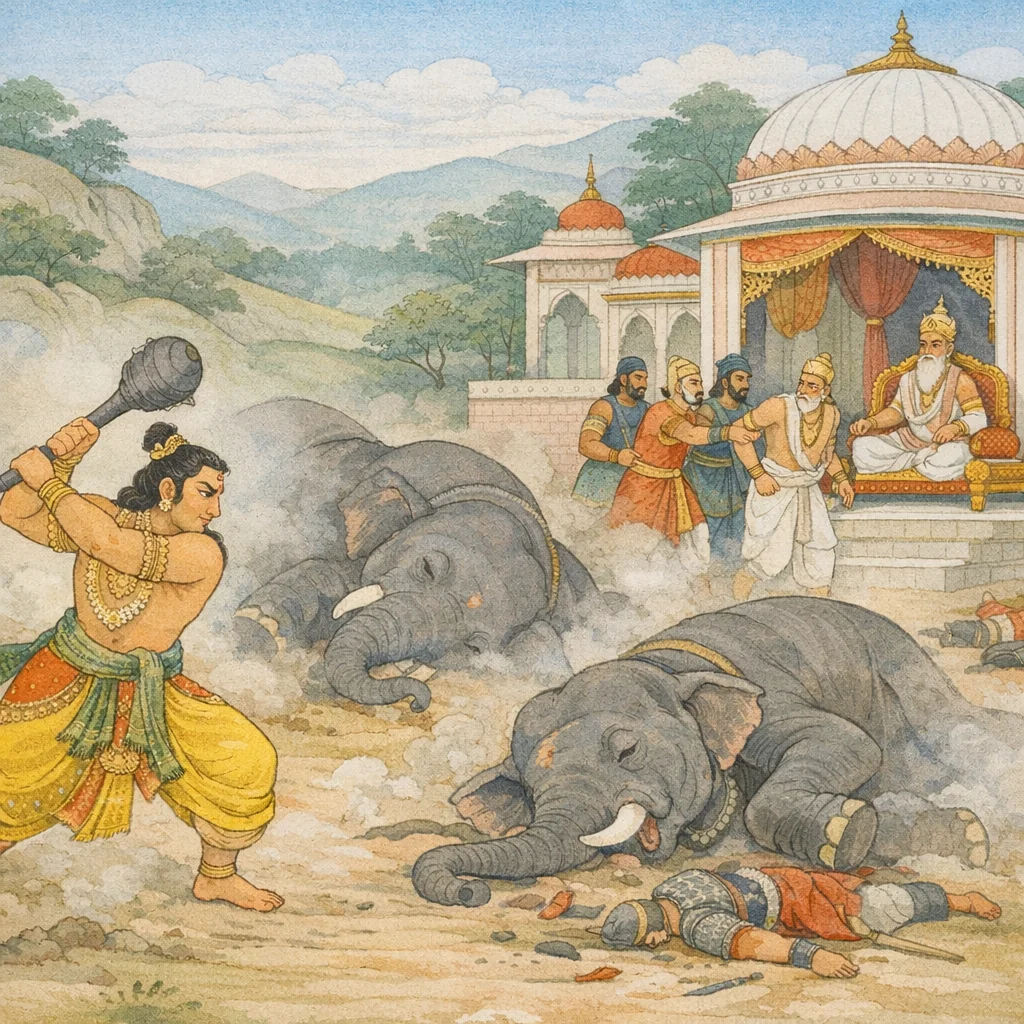
जीप नो सहज अत णिरिवानक ततः :स्वनाम् | भीमसेनो :,पांचालोंकी सेना उत्ताल तरंगोंवाले विक्षुब्ध महासागरकी भाँति गर्जना कर रही थी। महाबाहु भीमसेन दण्डपाणि यमराजकी भाँति उस विशाल सेनामें घुस गये, ठीक उसी तरह जैसे समुद्रमें मगर प्रवेश करता है। गदाधारी भीम स्वयं हाथियोंकी सेनापर टूट पड़े
Vaiśaṃpāyana said: The Pāñcāla host, with Bhīmasena at its fore, roared like the vast ocean churned into towering waves. Mighty-armed Bhīma, bearing his staff-like weapon, plunged into that great army like Yama, lord of justice and death, entering to mete out inevitable consequence—just as a sea-monster enters the sea. Wielding his mace, Bhīma himself fell upon the elephant-corps, breaking into it with irresistible force.
Verse 30
प्रविवेश महासेनां मकर: सागर यथा । स्वयमभ्यद्रवद् भीमो नागानीकं॑ गदाधर:,पांचालोंकी सेना उत्ताल तरंगोंवाले विक्षुब्ध महासागरकी भाँति गर्जना कर रही थी। महाबाहु भीमसेन दण्डपाणि यमराजकी भाँति उस विशाल सेनामें घुस गये, ठीक उसी तरह जैसे समुद्रमें मगर प्रवेश करता है। गदाधारी भीम स्वयं हाथियोंकी सेनापर टूट पड़े
Vaiśampāyana said: Bhīma, bearer of the mace, plunged into the vast host like a makara entering the sea; then, of his own accord, he charged straight at the elephant-corps.
Verse 31
स युद्धकुशलः पार्थों बाहुवीयेण चातुल: । अहनत् कुञ्जरानीकं गदया कालरूपधृत्,कुन्तीकुमार भीम युद्धमें कुशल तो थे ही, बाहुबलमें भी उनकी समानता करनेवाला कोई नहीं था। उन्होंने कालरूप धारणकर गदाकी मारसे उस गजसेनाका संहार आरम्भ किया
Vaiśampāyana said: That son of Kuntī—peerless in battle-craft and unmatched in the might of his arms—assumed a form like Death itself and, with his mace, began the destruction of the elephant-corps.
Verse 32
ते गजा गिरिसंकाशा: क्षरन्तो रुधिरं बहु भीमसेनस्य गदया भिन्नमस्तकपिण्डका:
Vaiśaṃpāyana said: Those elephants, huge as mountains, were streaming copious blood—their skulls smashed into fragments by Bhīmasena’s mace.
Verse 33
पतन्ति द्विरदा भूमौ वज़घातादिवाचला: । गजानश्चान् रथांश्वैव पातयामास पाण्डव:
Vaiśaṃpāyana said: Struck down as if by a thunderbolt, the mighty elephants crashed to the earth, their strength rendered helpless. The Pāṇḍava, in the fury of battle, also brought down elephants, horses, and chariots.
Verse 34
पदातींश्व रथांश्चैव न्यवधीदर्जुनाग्रज: । गोपाल इव दण्डेन यथा पशुगणान् वने
Vaiśampāyana said: Arjuna’s elder brother cut down both the foot-soldiers and the chariot-warriors, driving them back as effortlessly as a cowherd controls a herd in the forest with his staff. The image underscores disciplined force—power used to subdue and direct, not merely to rage—within the harsh necessities of battle.
Verse 35
चालयन् रथनागांश्व॒ संचचाल वृकोदर: । भीमसेनकी गदासे मस्तक फट जानेके कारण वे पर्वतोंके समान विशालकाय गजराज लोहूके झरने बहाते हुए वज़्के आघातसे (पंख कटे हुए) पहाड़ोंकी भाँति पृथ्वीपर गिर पड़ते थे। अर्जुनके बड़े भाई पाण्डुनन्दन भीमने हाथियों, घोड़ों एवं रथोंको धराशायी कर दिया। पैदलों तथा रथियोंका संहार कर डाला। जैसे ग्वाला वनमें डंडेसे पशुओंको हाँकता है, उसी प्रकार भीमसेन रथियों और हाथियोंको खदेड़ते हुए उनका पीछा करने लगे ।। ३२ -३४३ | वैशम्पायन उवाच भारद्वाजप्रियं कर्तुमुद्यत: फाल्गुनस्तदा
Vaiśampāyana said: Vṛkodara (Bhīma), shaking chariots, elephants, and horses, surged through the battlefield. Struck by Bhīmasena’s mace, the great elephant-kings—mountain-like in bulk—split at the head and collapsed to the earth like wingless mountains felled by a thunderbolt, streams of blood pouring forth. Pāṇḍu’s son Bhīma, Arjuna’s elder brother, brought down elephants, horses, and chariots alike, and he slaughtered foot-soldiers and chariot-warriors. Like a cowherd driving cattle through a forest with a staff, Bhīmasena chased and routed the charioteers and elephants, pressing them in relentless pursuit.
Verse 36
पार्षत॑ शरजालेन क्षिपन्नागात् स पाण्डव: । हयौघांश्ष रथौघांक्ष॒ गजौघांश्व॒ समन्तत:ः
Vaiśampāyana said: The Pāṇḍava advanced swiftly, hurling a net of arrows. On every side he struck at the massed squadrons of horses, the press of chariots, and the herds of elephants—an image of disciplined valor directed toward overcoming an armed host rather than mere rage.
Verse 37
पातयन् समरे राजन् युगान्ताग्निरिव ज्वलन् | वैशम्पायनजी कहते हैं--राजन्! उस समय द्रोणाचार्यका प्रिय करनेके लिये उद्यत हुए पाण्डुनन्दन अर्जुन द्रुपदपर बाणसमूहोंकी वर्षा करते हुए उनपर चढ़ आये। वे रणभूमिमें घोड़ों, रथों और हाथियोंके झुंडोंका सब ओरसे संहार करते हुए प्रलयकालीन अग्निके समान प्रकाशित हो रहे थे || ३५-३६ $ ।। ततस्ते हन्यमाना वै पाउ्चाला: सृञज्जयास्तथा,उनके बाणोंसे घायल हुए पांचाल और संजय वीरोंने तुरंत ही नाना प्रकारके बाणोंकी वर्षा करके अर्जुनको सब ओरसे ढक दिया और मुखसे सिंहनाद करते हुए उनसे लोहा लेना आरम्भ किया
Vaiśampāyana said: O King, in the thick of battle, Arjuna—blazing like the fire at the end of an age—rained down arrows, striking down foes as he advanced. Seeking to fulfill Droṇa’s wish, he pressed upon Drupada, cutting through masses of horses, chariots, and elephants, and shone on the field like a conflagration of dissolution.
Verse 38
शरैनननाविधैस्तूर्ण पार्थ संछाद्य सर्वश: । सिंहनादं मुखै: कृत्वा समयुध्यन्त पाण्डवम्,उनके बाणोंसे घायल हुए पांचाल और संजय वीरोंने तुरंत ही नाना प्रकारके बाणोंकी वर्षा करके अर्जुनको सब ओरसे ढक दिया और मुखसे सिंहनाद करते हुए उनसे लोहा लेना आरम्भ किया
Vaiśampāyana said: Wounded by his arrows, the Pañcāla warriors and the hero Sañjaya at once showered Arjuna (Pārtha) with many kinds of shafts, covering him on every side. Roaring like lions, they closed in to engage the Pāṇḍava in direct combat—an image of battlefield valor where wounded fighters answer injury not with retreat but with renewed force.
Verse 39
तद् युद्धमभवद् घोर सुमहाद्भुतदर्शनम् । सिंहनादस्वनं श्रुत्वा नामृष्पतत् पाकशासनि:,वह युद्ध अत्यन्त भयानक और देखनेमें बड़ा ही अद्भुत था। शत्रुओंका सिंहनाद सुनकर इन्द्रकुमार अर्जुन उसे सहन न कर सके
Vaiśampāyana said: That battle became dreadful, and its spectacle was exceedingly wondrous to behold. Hearing the thunderous lion-roar of the foes, Arjuna—the son of Indra, the chastiser of Pāka—could not endure it, for his warrior’s spirit would not tolerate such a challenge unanswered.
Verse 40
ततः किरीटी सहसा पाञ्चालान् समरे<द्रवत् । छादयन्निषुजालेन महता मोहयन्निव,उस युद्धमें किरीटधारी पार्थने बाणोंका बड़ा भारी जाल-सा बिछाकर पांचालोंको आच्छादित और मोहित-सा करते हुए उनपर सहसा आक्रमण किया
Then Kirīṭī (Arjuna), all at once, rushed upon the Pāñcālas in the thick of battle. Spreading a vast net of arrows, he seemed to veil and bewilder them—an image of overwhelming martial mastery.
Verse 41
शीघ्रमभ्यस्यतो बाणान् संदधानस्य चानिशम् | नान्तरं ददृशे किंचित् कौन्तेयस्य यशस्विन:,यशस्वी अर्जुन बड़ी फुर्तीसे बाण छोड़ते और निरन्तर नये-नये बाणोंका संधान करते थे। उनके धनुषपर बाण रखने और छोड़नेमें थोड़ा-सा भी अन्तर नहीं दिखायी पड़ता था
Vaiśampāyana said: As the glorious son of Kuntī swiftly practiced and continuously set arrow after arrow to the bow, no interval at all could be seen—there was not the slightest pause between placing an arrow and releasing it.
Verse 42
(न दिशो नान्तरिक्षं च तदा नैव च मेदिनी । अदृश्यत महाराज तत्र किंचन संयुगे ।। बाणान्धकारे बलिना कृते गाण्डीवधन्वना ।) महाराज! उस युद्धमें न तो दिशाओंका पता चलता था न आकाशका और न पृथ्वी अथवा और कुछ भी ही दिखायी देता था। बलवान वीर गाण्डीवधारी अर्जुनने अपने बाणोंद्वारा घोर अन्धकार फैला दिया था। सिंहनादश्न संजज्ञे साधुशब्देन मिश्रित: । ततः पञ्चालराजस्तु तथा सत्यजिता सह,उस समय पाण्डव-दलमें साधुवादके साथ-साथ सिंहनाद हो रहा था। उधर पंचालराज द्रपदने अपने भाई सत्यजित॒को साथ लेकर तीव्र गतिसे अर्जुनपर धावा किया, ठीक उसी तरह जैसे शम्बरासुरने देवराज इन्द्रपर आक्रमण किया था। परंतु कुन्तीनन्दन अर्जुनने बाणोंकी भारी बौछार करके पंचालनरेशको ढक दिया
Vaiśampāyana said: O King, in that battle neither the directions, nor the sky, nor even the earth could be made out—nothing at all was visible. For the mighty Arjuna, bearer of the Gāṇḍīva, had spread a dense darkness by means of his arrows.
Verse 43
त्वरमाणोभिदुद्राव महेन्द्र शम्बरो यथा । महता शरवर्षेण पार्थ: पाउ्चालमावृणोत्,उस समय पाण्डव-दलमें साधुवादके साथ-साथ सिंहनाद हो रहा था। उधर पंचालराज द्रपदने अपने भाई सत्यजित॒को साथ लेकर तीव्र गतिसे अर्जुनपर धावा किया, ठीक उसी तरह जैसे शम्बरासुरने देवराज इन्द्रपर आक्रमण किया था। परंतु कुन्तीनन्दन अर्जुनने बाणोंकी भारी बौछार करके पंचालनरेशको ढक दिया
Vaiśampāyana said: Hastening forward, the king of the Pāñcālas charged at Arjuna, like Śambara once assailed Mahendra (Indra). But Pārtha, the son of Kuntī, covered the Pāñcāla king with a great shower of arrows—meeting force with disciplined prowess rather than panic.
Verse 44
ततो हलहलाशब्द आसीत् पाञ्चालके बले । जिघृक्षति महासिंहो गजानामिव यूथपम्,और जैसे महासिंह हाथियोंके यूथपतिको पकड़नेकी चेष्टा करता है, उसी प्रकार अर्जुन द्रपदको पकड़ना ही चाहते थे कि पांचालोंकी सेनामें हाहाकार मच गया
Vaiśampāyana said: Then a loud cry of alarm arose in the Pāñcāla army. Just as a great lion strives to seize the leader of an elephant herd, so Arjuna was intent on capturing Drupada; and at that very moment an uproar spread through the Pāñcāla ranks.
Verse 45
दृष्टवा पार्थ तदा5<यान्तं सत्यजित् सत्यविक्रम: । पाज्चालं वै परिप्रेप्सुर्धनं॑ जयमुपाद्रवत्,सत्यपराक्रमी सत्यजितने देखा कि कुन्तीपुत्र धनंजय पंचालनरेशको पकड़नेके लिये निकट बढ़े आ रहे हैं, तो वे उनकी रक्षाके लिये अर्जुनपर चढ़ आये; फिर तो इन्द्र और बलिकी भाँति अर्जुन और पांचाल सत्यजितने युद्धके लिये आमने-सामने आकर सारी सेनाओंको क्षोभमें डाल दिया
Vaiśampāyana said: Seeing Pārtha (Arjuna) approaching then, Satyajit—true in valor—rushed forward against Dhanaṃjaya, intent on holding fast to the Pāñcāla king. He charged at Arjuna to protect his lord; and thus, like Indra and Bali, Arjuna and the Pāñcāla Satyajit came face to face for battle, throwing the armies into agitation.
Verse 46
ततस्त्वर्जुनपाञ्चालौ युद्धाय समुपागतौ । व्यक्षोभयेतां तौ सैन्यमिन्द्रवैरोचनाविव,सत्यपराक्रमी सत्यजितने देखा कि कुन्तीपुत्र धनंजय पंचालनरेशको पकड़नेके लिये निकट बढ़े आ रहे हैं, तो वे उनकी रक्षाके लिये अर्जुनपर चढ़ आये; फिर तो इन्द्र और बलिकी भाँति अर्जुन और पांचाल सत्यजितने युद्धके लिये आमने-सामने आकर सारी सेनाओंको क्षोभमें डाल दिया
Vaiśampāyana said: Then Arjuna and the Pāñcāla king advanced toward each other for battle. Like Indra and Virocana, the two of them threw the assembled forces into turmoil.
Verse 47
ततः सत्यजितं पार्थो दशभिर्मर्मभेदिभि: । विव्याध बलवद् गाढं तदद्भुतमिवा भवत्,तब अर्जुनने दस मर्मभेदी बाणोंद्वारा सत्यजितपर बलपूर्वक गहरा आघात करके उन्हें घायल कर दिया। यह अद्भुत-सी बात हुई
Vaiśampāyana said: Then Pārtha (Arjuna) struck Satyajit with ten vital-piercing arrows, driving them in with great force and deep impact. The feat appeared wondrous.
Verse 48
ततः शरशतै: पार्थ पाज्चाल: शीघ्रमार्दयत् । पार्थस्तु शरवर्षेण छाद्यमानो महारथ:,फिर पांचाल वीर सत्यजितने भी शीघ्र ही सौ बाण मारकर अर्जुनको पीड़ित कर दिया। उनके बाणोंकी वर्षसे आच्छादित होकर महान् वेगशाली महारथी अर्जुनने धनुषकी प्रत्यंचाको झाड़-पोंछकर बड़े वेगसे बाण छोड़ना आरम्भ किया और सत्यजितके धनुषको काटकर वे राजा ट्रुपदपर चढ़ आये
Vaiśampāyana said: Then the Pāñcāla warrior quickly harassed Arjuna with hundreds of arrows. But Arjuna, the great chariot-fighter, though covered by a rain of shafts, shook and set right the bowstring and began to discharge arrows with great speed. Cutting down Satyajit’s bow, he then pressed forward and closed in upon King Drupada.
Verse 49
वेग॑ चक्रे महावेगो धनुज्यामवमृज्य च । ततः सत्यजितश्चापं छित्त्वा राजानमभ्ययात्,फिर पांचाल वीर सत्यजितने भी शीघ्र ही सौ बाण मारकर अर्जुनको पीड़ित कर दिया। उनके बाणोंकी वर्षसे आच्छादित होकर महान् वेगशाली महारथी अर्जुनने धनुषकी प्रत्यंचाको झाड़-पोंछकर बड़े वेगसे बाण छोड़ना आरम्भ किया और सत्यजितके धनुषको काटकर वे राजा ट्रुपदपर चढ़ आये
Vaiśampāyana said: The mighty and swift Arjuna gathered speed; wiping and setting right the bowstring, he began to discharge arrows with great force. Then, cutting down Satyajit’s bow, he advanced upon the king, Drupada.
Verse 50
अथान्यद् धनुरादाय सत्यजिद् वेगवत्तरम् | साश्वंं ससूतं सरथं पार्थ विव्याध सत्वर:,तब सत्यजितने दूसरा अत्यन्त वेगशाली धनुष लेकर तुरंत ही घोड़े, सारथि एवं रथसहित अर्जुनको बींध डाला
Vaiśampāyana said: Then Satyajit took up another bow, swifter in its force, and in an instant pierced Pārtha (Arjuna) together with his horse, charioteer, and chariot.
Verse 51
सतं न ममृषे पार्थ: पाज्चालेनार्दितो युधि । ततस्तस्य विनाशार्थ सत्वरं व्यसृजच्छरान्,युद्धमें पांचाल वीर सत्यजितसे पीड़ित हो अर्जुन उनके पराक्रमको न सह सके और उनके विनाशके लिये उन्होंने शीघ्र ही बाणोंकी झड़ी लगा दी
Vaiśampāyana said: In the midst of battle, Pārtha (Arjuna) could not endure the assault inflicted by the Pāñcāla warrior. Therefore, intent on that fighter’s destruction, he swiftly released a shower of arrows.
Verse 52
हयान् ध्वजं धनुर्मुष्टिमुभौ तौ पार्ष्णिसारथी । स तथा भियद्यमानेषु कार्मुकेषु पुन: पुन:,सत्यजितके घोड़े, ध्वजा, धनुष, मुट्ठी तथा पार्श्वरक्षक एवं सारथि दोनोंको अर्जुनने क्षत-विक्षत कर दिया। इस प्रकार बार-बार धनुषके छिलन्न-भिन्न होने और घोड़ोंके मारे जानेपर सत्यजित् समर-भूमिसे भाग गये। राजन! उन्हें इस तरह युद्धसे विमुख हुआ देख पंचालनरेश ट्रुपदने पाण्डुनन्दन अर्जुनपर बड़े वेगसे बाणोंकी वर्षा प्रारम्भ की। तब विजयी वीरोंमें श्रेष्ठ अर्जुनने उनसे बड़ा भारी युद्ध प्रारम्भ किया
Vaiśampāyana said: Arjuna struck down Satyajit’s horses and his banner, and shattered his bow and bow-hand; he also disabled both the side-guard and the charioteer. Thus, as his bows were repeatedly broken and his horses slain, Satyajit fled the battlefield. Seeing him turn away from the fight, King Drupada of the Pāñcālas poured a swift rain of arrows upon Arjuna, the son of Pāṇḍu; and Arjuna, foremost among victorious warriors, engaged him in a great battle.
Verse 53
हयेषु विनियुक्तेषु विमुखो5भवदाहवे । स सत्यजितमालोक्य तथा विमुखमाहवे,सत्यजितके घोड़े, ध्वजा, धनुष, मुट्ठी तथा पार्श्वरक्षक एवं सारथि दोनोंको अर्जुनने क्षत-विक्षत कर दिया। इस प्रकार बार-बार धनुषके छिलन्न-भिन्न होने और घोड़ोंके मारे जानेपर सत्यजित् समर-भूमिसे भाग गये। राजन! उन्हें इस तरह युद्धसे विमुख हुआ देख पंचालनरेश ट्रुपदने पाण्डुनन्दन अर्जुनपर बड़े वेगसे बाणोंकी वर्षा प्रारम्भ की। तब विजयी वीरोंमें श्रेष्ठ अर्जुनने उनसे बड़ा भारी युद्ध प्रारम्भ किया
Vaiśampāyana said: When his horses had been struck down and rendered unserviceable, he turned away from the battle. Seeing Satyajit thus withdrawing—repeatedly deprived of bow and steeds—he fled the field. Observing this, King Drupada of the Pāñcālas began to shower Arjuna, the son of Pāṇḍu, with swift volleys of arrows; and Arjuna, foremost among victorious heroes, entered into a fierce battle with him.
Verse 54
वेगेन महता राजन्नभ्यवर्षत पाण्डवम् | तदा चक्रे महद् युद्धमर्जुनो जयतां वर:,सत्यजितके घोड़े, ध्वजा, धनुष, मुट्ठी तथा पार्श्वरक्षक एवं सारथि दोनोंको अर्जुनने क्षत-विक्षत कर दिया। इस प्रकार बार-बार धनुषके छिलन्न-भिन्न होने और घोड़ोंके मारे जानेपर सत्यजित् समर-भूमिसे भाग गये। राजन! उन्हें इस तरह युद्धसे विमुख हुआ देख पंचालनरेश ट्रुपदने पाण्डुनन्दन अर्जुनपर बड़े वेगसे बाणोंकी वर्षा प्रारम्भ की। तब विजयी वीरोंमें श्रेष्ठ अर्जुनने उनसे बड़ा भारी युद्ध प्रारम्भ किया
Vaiśampāyana said: “O King, with great speed and force he showered arrows upon the Pāṇḍava. Then Arjuna—foremost among victorious warriors—engaged in a mighty battle.”
Verse 55
तस्य पार्थो धनुश्कछित्त्वा ध्वजं चोव्यामपातयत् | पजञ्चभिस्तस्य विव्याथ हयान् सूतं च सायकै:,उन्होंने पंचालराजका धनुष काटकर उनकी ध्वजाको भी धरतीपर काट गिराया। फिर पाँच बाणोंसे उनके घोड़ों और सारथिको घायल कर दिया
Vaiśampāyana said: Then Pārtha (Arjuna) cut down his bow and struck down his banner to the ground; and with five arrows he wounded his horses and his charioteer.
Verse 56
तत उत्सृज्य तच्चापमाददानं शरावरम् । खड्गमुद्धृत्य कौन्तेय: सिंहनादमथाकरोत्,तत्पश्चात् उस कटे हुए धनुषको त्यागकर जब वे दूसरा धनुष और तूणीर लेने लगे, उस समय अर्जुनने म्यानसे तलवार निकालकर सिंहके समान गर्जना की
Vaiśampāyana said: Then, casting aside that severed bow, as he moved to take up another bow and his quiver, the son of Kuntī drew his sword and let out a lion-like roar.
Verse 57
पाञ्चालस्य रथस्येषामाप्लुत्य सहसापतत् । पाञज्चालरथमास्थाय अवित्रस्तो धनंजय:,और सहसा पंचालनरेशके रथके डंडेपर कूद पड़े। इस प्रकार ट्रुपदके रथपर चढ़कर निर्भीक अर्जुनने जैसे गरुड़ समुद्रको क्षुब्ध करके सर्पको पकड़ लेता है, उसी प्रकार उन्हें अपने काबूमें कर लिया। तब समस्त पांचाल सैनिक (भयभीत हो) दसों दिशाओंमें भागने लगे
Vaiśampāyana said: Arjuna, fearless, suddenly leapt onto the pole of the Pāñcāla king’s chariot. Mounting that Pāñcāla chariot, Dhanaṃjaya brought them under his control—like Garuḍa, after churning the ocean, seizes a serpent. Then the entire Pāñcāla host, struck with fear, fled in all ten directions.
Verse 58
विक्षोभ्याम्भोनिधिं पार्थस्तं नागमिव सो5ग्रहीत् । ततस्तु सर्वपाञज्चाला विद्रवन्ति दिशो दश,और सहसा पंचालनरेशके रथके डंडेपर कूद पड़े। इस प्रकार ट्रुपदके रथपर चढ़कर निर्भीक अर्जुनने जैसे गरुड़ समुद्रको क्षुब्ध करके सर्पको पकड़ लेता है, उसी प्रकार उन्हें अपने काबूमें कर लिया। तब समस्त पांचाल सैनिक (भयभीत हो) दसों दिशाओंमें भागने लगे
Vaiśampāyana said: Arjuna, son of Pṛthā, seized him as a serpent is seized after the ocean has been churned into turmoil. Then all the Pāñcālas, struck with fear, fled in all ten directions.
Verse 59
दर्शयन् सर्वसैन्यानां स बाद्दोर्बलमात्मन: । सिंहनादस्वनं कृत्वा निर्जनाम धनंजय:,समस्त सैनिकोंको अपना बाहुबल दिखाते हुए अर्जुन सिंहनाद करके वहाँसे लौटे
Vaiśampāyana said: Displaying the strength of his own arm before all the assembled troops, Dhanañjaya (Arjuna) let out a lion-like roar; and having done so, he withdrew from that place, leaving it deserted—an act that publicly affirmed his prowess and resolve before the gathered warrior host.
Verse 60
आयान्तमर्जुनं दृष्टवा कुमारा: सहितास्तदा । ममृदुस्तस्य नगर टद्रुपदस्य महात्मन:,अर्जुनको आते देख सब राजकुमार एकत्र हो महात्मा ट्रपदके नगरका विध्वंस करने लगे
Vaiśampāyana said: When the princes, gathered together, saw Arjuna approaching, they at once began to assail and damage the city of that great-souled King Drupada—moved by hostility and the impulse to resist him.
Verse 61
अर्जुन उवाच सम्बन्धी कुरुवीराणां द्रुपदो राजसत्तम: । मा वधीस्तद्धलं भीम गुरुदानं प्रदीयताम्,तब अर्जुनने कहा--भैया भीमसेन! राजाओंमें श्रेष्ठ द्रपद कौरववीरोंके सम्बन्धी हैं, अतः इनकी सेनाका संहार न करो; केवल गुरुदक्षिणाके रूपमें द्रोणके प्रति महाराज द्रपदको ही दे दो
Arjuna said: “O Bhima, King Drupada—foremost among rulers—is a kinsman of the Kuru heroes. Therefore do not slaughter his forces. Hand over Drupada himself to Drona as the teacher’s due (gurudakṣiṇā).”
Verse 62
वैशमग्पायन उवाच भीमसेनस्तदा राजन्नर्जुनेन निवारित: । अतृप्तो युद्धधर्मेषु न््यवर्तत महाबल:,वैशम्पायनजी कहते हैं--जनमेजय! उस समय अर्जुनके मना करनेपर महाबली भीमसेन युद्धधर्मसे तृप्त न होनेपर भी उससे निवृत्त हो गये
Vaiśaṃpāyana said: O King (Janamejaya), at that time Bhīmasena—restrained by Arjuna—desisted. Though not yet satisfied in the duties and code of battle, the mighty one nevertheless withdrew, submitting to counsel and discipline.
Verse 63
ते यज्ञसेन द्रुपदं गृहीत्वा रणमूर्थनि । उपाजहु: सहामात्यं द्रोणाय भरतर्षभ,भरतश्रेष्ठ जनमेजय! उन पाण्डवने यज्ञसेन द्रुपदको मन्त्रियोंसहित संग्रामभूमिमें बंदी बनाकर द्रोणाचार्यको उपहारके रूपमें दे दिया
Vaiśaṃpāyana said: Having seized Yajñasena Drupada on the very forefront of the battlefield, the Pāṇḍavas presented him—together with his ministers—as an offering to Droṇa, O bull among the Bhāratas. The act underscores the warrior code of fulfilling one’s teacher’s command, yet it also raises an ethical tension: victory in war is used to settle personal enmity through the instrument of duty to a preceptor.
Verse 64
भग्नदर्प हृतधनं तं तथा वशमागतम् | स वैरं मनसा ध्यात्वा द्रोणो द्रुपदमब्रवीत्,उनका अभिमान चूर्ण हो गया था, धन छीन लिया गया था और वे पूर्णरूपसे वशमें आ चुके थे; उस समय द्रोणाचार्यने मन-ही-मन पिछले वैरका स्मरण करके राजा ट्रुपदसे कहा --
With his pride shattered, his wealth taken away, and himself wholly brought under another’s power, King Drupada stood subdued. Remembering in his mind the old enmity, Droṇa then addressed Drupada—thus opening the way to a harsh reckoning, where personal grievance is pursued under the guise of rightful retribution.
Verse 65
विमृद्य तरसा राष्ट्र पुरं ते मृदितं मया । प्राप्प जीवं रिपुवशं सखिपूर्व किमिष्यते,“राजन! मैंने बलपूर्वक तुम्हारे राष्ट्रको रौंद डाला। तुम्हारी राजधानी मिट्टीमें मिला दी। अब तुम शत्रुके वशमें पड़े हुए जीवनको लेकर यहाँ आये हो। बोलो, अब पुरानी मित्रता चाहते हो क्या?”
“I have crushed your kingdom with sheer force; I have ground your capital into dust. Now you come here clinging to life, fallen under the power of your enemies. Tell me—do you now seek the friendship that once existed?”
Verse 66
एवमुक््त्वा प्रहस्यैनं किंचित् स पुनरब्रवीत् । मा भे: प्राणभयाद् वीर क्षमिणो ब्राह्मणा वयम्,यों कहकर द्रोणाचार्य कुछ हँसे। उसके बाद फिर उनसे इस प्रकार बोले--“वीर! प्राणोंपर संकट आया जानकर भयभीत न होओ। हम क्षमाशील ब्राह्मण हैं
Having spoken thus, he smiled slightly and addressed him again: “Do not be afraid, O hero, even if you think your life is in danger. We Brahmins are forbearing by nature.”
Verse 67
आश्रमे क्रीडितं यत् तु त्वया बाल्ये मया सह । तेन संवर्द्धित: स्नेह: प्रीतिश्न क्षत्रियर्षभ,'क्षत्रियशिरोमणे! तुम बचपनमें मेरे साथ आश्रममें जो खेले-कूदे हो, उससे तुम्हारे ऊपर मेरा स्नेह एवं प्रेम बहुत बढ़ गया है
“Because you played with me in the hermitage during your childhood, my affection and fond regard for you have grown greatly, O bull among kṣatriyas.”
Verse 68
प्रार्थयेयं त्वया सख्यं पुनरेव जनाधिप । वरं ददामि ते राजन् राज्यस्यार्धमवाप्रुहि,“नरेश्वर! मैं पुनः तुमसे मैत्रीके लिये प्रार्थना करता हूँ। राजन! मैं तुम्हें वर देता हूँ, तुम इस राज्यका आधा भाग मुझसे ले लो
“O lord of men, I ask you once again for friendship. O king, I grant you a boon—accept from me half of this kingdom.”
Verse 69
अराजा किल नो राज्ञ: सखा भवितुमहसि । अतः: प्रयतितं राज्ये यज्ञसेन मया तव,'यज्ञसेन! तुमने कहा था--जो राजा नहीं है, वह राजाका मित्र नहीं हो सकता; इसीलिये मैंने तुम्हारा राज्य लेनेका प्रयत्न किया है
Vaiśaṃpāyana said: “Indeed, one who is not a king cannot be a friend to a king. Therefore, O Yajñasena, I have striven to secure your kingship.”
Verse 70
राजासि दक्षिणे कूले भागीरथ्याहमुत्तरे । सखायं मां विजानीहि पाउ्चाल यदि मन्यसे,“गंगाके दक्षिण प्रदेशके तुम राजा हो और उत्तरके भूभागका राजा मैं हूँ। पांचाल! अब यदि उचित समझो तो मुझे अपना मित्र मानो”
Vaiśaṃpāyana said: “You are the king on the southern bank of the Bhāgīrathī, and I am the king of the northern tract. O Pāñcāla, if you deem it fitting, know me as your friend.”
Verse 71
दुपद उवाच अनाश्षर्यत्रिदं ब्रह्मन् विक्रान्तेषु महात्मसु । प्रीये त्वयाहं त्वत्तश्न॒ प्रीतिमिच्छामि शाश्व॒तीम्,द्रपदने कहा--ब्रह्मन! आप-जैसे पराक्रमी महात्माओंमें ऐसी उदारताका होना आश्चर्यकी बात नहीं है। मैं आपसे बहुत प्रसन्न हूँ और आपके साथ सदा बनी रहनेवाली मैत्री एवं प्रेम चाहता हूँ
Dupada said: “O Brahmin, it is no wonder that such generosity is found among great-souled men who are truly valiant. I am deeply pleased with you, and I desire a lasting bond of friendship and affection with you.”
Verse 72
वैशग्पायन उवाच एवमुक्त: स तं॑ द्रोणो मोक्षयामास भारत । सत्कृत्य चैनं प्रीतात्मा राज्यार्ध प्रत्यपादयत्,वैशम्पायनजी कहते हैं--भारत! ट्रुपदके यों कहनेपर द्रोणाचार्यने उन्हें छोड़ दिया और प्रसन्नचित्त हो उनका आदर-सत्कार करके उन्हें आधा राज्य दे दिया
Vaiśampāyana said: Thus addressed, Droṇa released him, O Bhārata. Then, with a pleased heart, he honored him with due respect and restored to him half of the kingdom.
Verse 73
माकन्दीमथ गज्जायास्तीरे जनपदायुताम् । सो<ध्यावसद् दीनमना: काम्पिल्यं च पुरोत्तमम्,तदनन्तर राजा द्र॒ुपद दीनतापूर्ण हृदयसे गंगा-तटवर्ती अनेक जनपदोंसे युक्त माकन्दीपुरीमें तथा नगरोंमें श्रेष्ठ काम्पिल्य नगरमें निवास एवं चर्मण्वती नदीके दक्षिणतटवर्ती पंचालदेशका शासन करने लगे। इस प्रकार द्रोणाचार्यने द्रपदको परास्त करके पुनः उनकी रक्षा की
Vaiśaṃpāyana said: Then, with a downcast heart, he took up residence in Mākandī—rich in many settlements on the bank of the Gaṅgā—and also in Kāmpilya, the foremost of cities.
Verse 74
दक्षिणांश्नापि पञज्चालान् यावच्चर्मण्वती नदी । द्रोणेन चैवं ट्रपद: परिभूयाथ पालित:,तदनन्तर राजा द्र॒ुपद दीनतापूर्ण हृदयसे गंगा-तटवर्ती अनेक जनपदोंसे युक्त माकन्दीपुरीमें तथा नगरोंमें श्रेष्ठ काम्पिल्य नगरमें निवास एवं चर्मण्वती नदीके दक्षिणतटवर्ती पंचालदेशका शासन करने लगे। इस प्रकार द्रोणाचार्यने द्रपदको परास्त करके पुनः उनकी रक्षा की
Vaiśaṃpāyana said: Droṇa, having thus humbled King Drupada, left him in possession of the southern part of the Pañcāla country up to the river Carmaṇvatī. The episode lays bare a hard ethical tension: victory is used not merely to destroy an enemy but to impose a settlement—humiliation followed by protection—showing how power can both punish and preserve, and how enmity is reshaped into a constrained political order.
Verse 75
क्षात्रेण च बलेनास्य नापश्यत् स पराजयम् | हीनं विदित्वा चात्मानं ब्राह्ेण स बलेन तु,ट्रपदको अपने क्षात्रबलके द्वारा द्रोणाचार्यकी पराजय होती नहीं दिखायी दी। वे अपनेको ब्राह्मण-बलसे हीन जानकर (द्रोणाचार्यको पराजित करनेके लिये) शक्तिशाली पुत्र प्राप्त करनेकी इच्छासे पृथ्वीपर विचरने लगे। इधर द्रोणाचार्यने (उत्तर-पांचालवर्ती) अहिच्छत्र नामक राज्यको अपने अधिकारमें कर लिया
Vaiśaṃpāyana said: Drupada could not foresee Drona’s defeat by mere royal might and martial force. Realizing himself to be inferior in the power of Brahmanical austerity and sacred potency, he began to wander upon the earth with the desire to obtain a mighty son—one capable of overcoming Drona. Meanwhile, Drona brought the kingdom called Ahicchatra in northern Pañcāla under his control.
Verse 76
पुत्रजन्म परीप्सन् वै पृथिवीमन्वसंचरत् । अहिच्छत्रं च विषयं द्रोणग: समभिपद्यत,ट्रपदको अपने क्षात्रबलके द्वारा द्रोणाचार्यकी पराजय होती नहीं दिखायी दी। वे अपनेको ब्राह्मण-बलसे हीन जानकर (द्रोणाचार्यको पराजित करनेके लिये) शक्तिशाली पुत्र प्राप्त करनेकी इच्छासे पृथ्वीपर विचरने लगे। इधर द्रोणाचार्यने (उत्तर-पांचालवर्ती) अहिच्छत्र नामक राज्यको अपने अधिकारमें कर लिया
Vaiśaṃpāyana said: Desiring the birth of a son, Drupada wandered over the earth in search of means to obtain one. Meanwhile Droṇa’s son (Aśvatthāmā) came to possess the territory and realm called Ahicchatra. The passage underscores how perceived inadequacy of one’s own power can drive a ruler toward extraordinary, even ethically fraught, pursuits—while the opposing side consolidates political control through force and opportunity.
Verse 77
एवं राजन्नहिच्छत्रा पुरी जनपदायुता । युधि निर्जित्य पार्थेन द्रोणाय प्रतिपादिता,राजन! इस प्रकार अनेक जनपदोंसे सम्पन्न अहिच्छत्रा नामवाली नगरीको युद्धमें जीतकर अर्जुनने द्रोणाचार्यको गुरु-दक्षिणामें दे दिया
Vaiśaṃpāyana said: “O King, thus the city called Ahicchatrā—rich with many surrounding districts—was conquered in battle by Pārtha (Arjuna) and then duly handed over to Droṇa as the teacher’s fee. The episode underscores the ethic of honoring one’s teacher through disciplined effort and rightful offering, even when that offering is won through warfare.”
Verse 136
इस प्रकार श्रीमहाभारत आदिपववके अन्तर्गत यम्भवपर्वमें अस्त्र- कौशलदर्शनविषयक एक सौ छत्तीसवाँ अध्याय पूरा हुआ
Thus ends the one hundred and thirty-sixth chapter of the Sambhava section within the Ādi Parva of the Śrī Mahābhārata, dealing with the display of skill in weapons. This closing colophon signals the completion of a narrative unit that highlights martial training and prowess—capacities that, in the epic’s ethical frame, must ultimately be governed by dharma rather than mere power.
Verse 137
इति श्रीमहाभारते आदिपर्वणि सम्भवपर्वणि द्रुपदशासने सप्तत्रिंशदाधिकशततमो<ध्याय:
Thus, in the revered Mahābhārata, within the Ādi Parva and specifically the Sambhava Parva, concludes the chapter entitled “The Command of Drupada,” being the one hundred and thirty-seventh chapter. This closing colophon marks the end of a narrative unit and frames the episode within the ethical and political sphere of royal injunctions and their consequences.
Verse 183
धनुर्ज्यातलशब्दश्न संस्पृश्य गगनं महान् | द्रपदके भयंकर बाण सब दिशाओंमें विचरने लगे। महाराज! उनकी विजय होती देख पांचालोंके घरोंमें शंख, भेरी और मृदंग आदि सहस्रों बाजे एक साथ बज उठे। महान् आत्मबलसे सम्पन्न पांचाल-सैनिकोंका सिंहनाद बड़े जोरोंसे होने लगा। साथ ही उनके धनुषोंकी प्रत्यंचाओंका महान् टंकार आकाशमें फैलकर गूँजने लगा
Vaiśampāyana said: The mighty twang of bowstrings rose up and seemed to touch the sky. Terrifying arrows began to range in every direction. O King, seeing their victory, in the homes of the Pañcālas thousands of instruments—conches, kettle-drums, and mṛdaṅgas—burst forth together. The Pañcāla soldiers, endowed with great inner strength, roared like lions with tremendous force; and at the same time the loud reverberation of their bowstrings spread through the heavens and echoed all around.
Frequently Asked Questions
The chapter presents a survival-ethics dilemma: how to preserve family safety and dignity while operating under concealment—balancing speed, secrecy, and care for exhausted dependents without increasing detection risk.
Adversity is framed as a test of dharma expressed through concrete care—resource-seeking, sheltering, and vigilance—where leadership is measured by protection of the vulnerable and steadiness under reversed fortune.
No explicit phalaśruti appears here; the meta-function is narrative-ethical, using Bhīma’s lament and resolve as an exemplum of protective duty and resilience within the epic’s broader moral causality.