Adhyaya 25
Kapila’s Devotional Sāṅkhya: Sādhu-saṅga, Bhakti-yoga, and Fearlessness in the Supreme Shelter
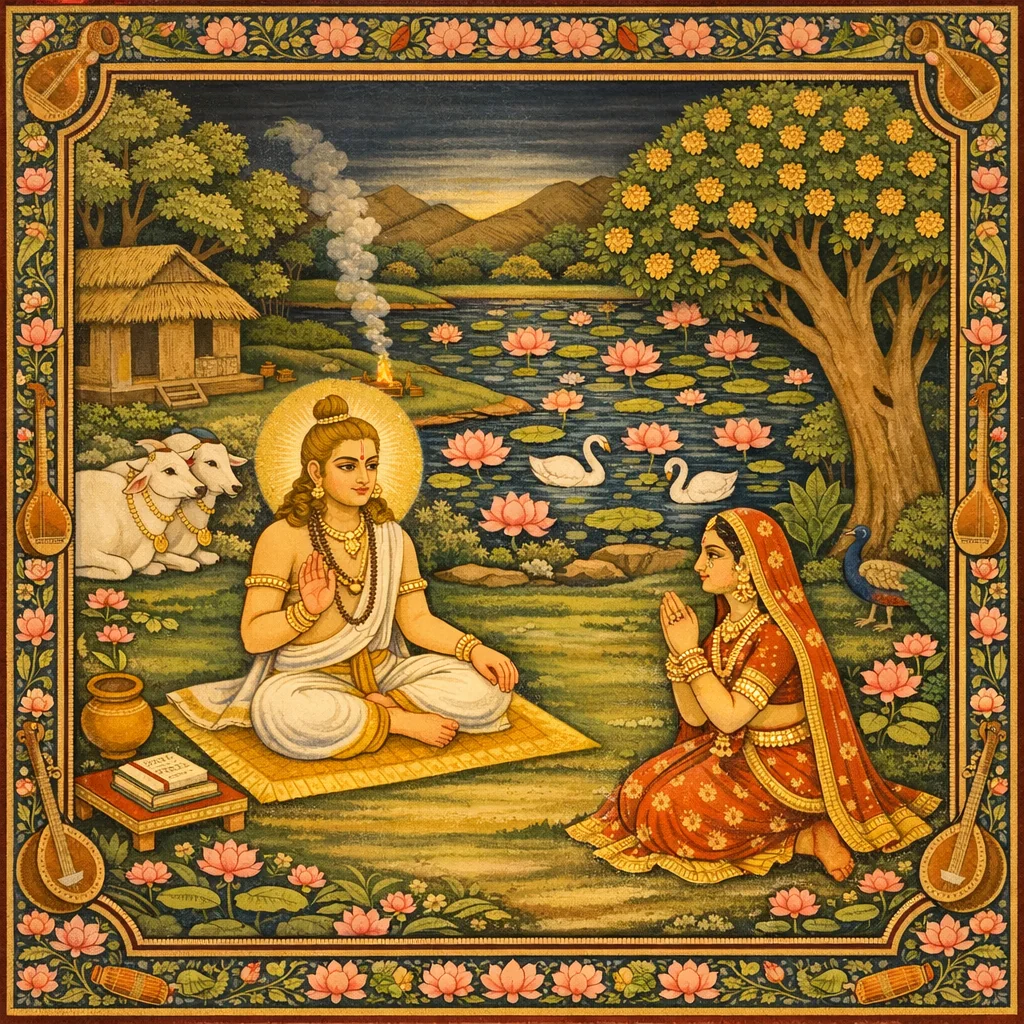
Continuing the Vidura–Maitreya narration, Maitreya describes the scene after Kardama Muni’s departure: Kapila remains by Bindu-sarovara to fulfill Devahūti’s spiritual need. Remembering Brahmā’s assurance, Devahūti confesses her suffering from restless senses and false ego and seeks Bhagavān as the sole deliverer from ignorance. Kapila defines the highest yoga as the link between jīva and Bhagavān, which yields detachment from material dualities. He contrasts consciousness drawn by the guṇas (guṇa-ākarṣaṇa) with liberated consciousness sheltered in Bhagavān (Bhagavad-āśraya), stressing purification from lust and greed. The chapter then turns to the marks of a sādhu and the transforming power of sādhu-saṅga: hearing and chanting the Lord’s glories ripens into steady attraction and then true bhakti. Asked for the practical form of this yoga, Kapila proclaims bhakti’s supremacy—dissolving the subtle body, granting liberation without separate endeavor, and making devotees desire only service. It concludes with the Lord as the only fearless refuge: cosmic rulers act “out of fear” of Him, and yogīs devoted to His feet attain perfection and His association even in this life, preparing for deeper Sāṅkhya teachings in the chapters ahead.
Shlokas
Verse 1
शौनक उवाच कपिलस्तत्त्वसंख्याता भगवानात्ममायया । जात: स्वयमज: साक्षादात्मप्रज्ञप्तये नृणाम् ॥ १ ॥
Śrī Śaunaka said: Though the Bhagavān is unborn, by His own internal potency He appeared as the sage Kapila, to bestow transcendental knowledge of ātma-tattva for the welfare of all humanity.
Verse 2
न ह्यस्य वर्ष्मण: पुंसां वरिम्ण: सर्वयोगिनाम् । विश्रुतौ श्रुतदेवस्य भूरि तृप्यन्ति मेऽसव: ॥ २ ॥
Śaunaka continued: None knows more than the Lord Himself; among all yogīs none is more worshipable or more perfected than He. He is the master of the Vedas, and to hear of Him always is the true delight of the senses.
Verse 3
यद्यद्विधत्ते भगवान् स्वच्छन्दात्मात्ममायया । तानि मे श्रद्दधानस्य कीर्तन्यान्यनुकीर्तय ॥ ३ ॥
Therefore, please describe precisely all the deeds and līlās of the Bhagavān, who acts in full freedom and accomplishes everything by His internal potency; for one of faith like me, they are worthy of kīrtana.
Verse 4
सूत उवाच द्वैपायनसखस्त्वेवं मैत्रेयो भगवांस्तथा । प्राहेदं विदुरं प्रीत आन्वीक्षिक्यां प्रचोदित: ॥ ४ ॥
Śrī Sūta Gosvāmī said: Thus, pleased and inspired by Vidura’s inquiry into transcendental knowledge, the powerful sage Maitreya—friend of Vyāsadeva—spoke to Vidura as follows.
Verse 5
मैत्रेय उवाच पितरि प्रस्थितेऽरण्यं मातु: प्रियचिकीर्षया । तस्मिन् बिन्दुसरेऽवात्सीद्भगवान् कपिल: किल ॥ ५ ॥
Maitreya said: When Kardama departed for the forest, to please His mother Devahūti, Bhagavān Kapila remained on the shore of Bindu-sarovara.
Verse 6
तमासीनमकर्माणं तत्त्वमार्गाग्रदर्शनम् । स्वसुतं देवहूत्याह धातु: संस्मरती वच: ॥ ६ ॥
As Bhagavān Kapila, the foremost revealer of the path to the supreme goal of Absolute Truth, sat calmly before her, Devahūti remembered Brahmā’s words and began to question Kapila.
Verse 7
देवहूतिरुवाच निर्विण्णा नितरां भूमन्नसदिन्द्रियतर्षणात् । येन सम्भाव्यमानेन प्रपन्नान्धं तम: प्रभो ॥ ७ ॥
Devahūti said: O Lord, I am utterly weary of the turmoil born of the unreal cravings of the material senses; by that very agitation, my Master, I have fallen into the dark abyss of ignorance.
Verse 8
तस्य त्वं तमसोऽन्धस्य दुष्पारस्याद्य पारगम् । सच्चक्षुर्जन्मनामन्ते लब्धं मे त्वदनुग्रहात् ॥ ८ ॥
O primal Lord, You alone can carry me beyond that blind, insurmountable darkness. You are my true transcendental eye, attained at the end of countless births only by Your mercy.
Verse 9
य आद्यो भगवान् पुंसामीश्वरो वै भवान् किल । लोकस्य तमसान्धस्य चक्षु: सूर्य इवोदित: ॥ ९ ॥
You are indeed the primal Bhagavān, the Supreme Lord of all living beings. To dispel the universe’s darkness of ignorance, You have risen like the sun.
Verse 10
अथ मे देव सम्मोहमपाक्रष्टुं त्वमर्हसि । योऽवग्रहोऽहंममेतीत्येतस्मिन् योजितस्त्वया ॥ १० ॥
Now, my Lord, please dispel my great delusion. Through the false ego of “I” and “mine,” Your māyā has bound me to identification with the body and its relations.
Verse 11
तं त्वा गताहं शरणं शरण्यं स्वभृत्यसंसारतरो: कुठारम् । जिज्ञासयाहं प्रकृते: पूरुषस्य नमामि सद्धर्मविदां वरिष्ठम् ॥ ११ ॥
Devahūti said: O Lord, the only One worthy of shelter, I have taken refuge at Your lotus feet. You are the axe that cuts down the tree of material samsāra. Therefore I bow to You, the foremost among knowers of the true dharma, and I inquire about the relation of prakṛti and puruṣa, and also of woman and man.
Verse 12
मैत्रेय उवाच इति स्वमातुर्निरवद्यमीप्सितं निशम्य पुंसामपवर्गवर्धनम् । धियाभिनन्द्यात्मवतां सतां गति- र्बभाष ईषत्स्मितशोभितानन: ॥ १२ ॥
Maitreya said: Hearing His mother’s spotless desire for transcendental realization—questions that increase liberation for all— the Lord approved them within His heart. Then, with a face beautified by a gentle smile, He spoke of the path followed by saintly transcendentalists intent on self-realization.
Verse 13
श्रीभगवानुवाच योग आध्यात्मिक: पुंसां मतो नि:श्रेयसाय मे । अत्यन्तोपरतिर्यत्र दु:खस्य च सुखस्य च ॥ १३ ॥
The Supreme Lord said: That spiritual yoga which concerns the Lord and the individual soul, meant for the living being’s ultimate good, is the highest yoga in My view; for in it one becomes completely detached from both material happiness and material distress.
Verse 14
तमिमं ते प्रवक्ष्यामि यमवोचं पुरानघे । ऋषीणां श्रोतुकामानां योगं सर्वाङ्गनैपुणम् ॥ १४ ॥
O sinless mother, I shall now explain to you that ancient yoga which I formerly taught to the great sages eager to hear it. This yoga is complete in all its limbs—useful and practical in every way.
Verse 15
चेत: खल्वस्य बन्धाय मुक्तये चात्मनो मतम् । गुणेषु सक्तं बन्धाय रतं वा पुंसि मुक्तये ॥ १५ ॥
The living being’s consciousness is said to be the cause of both bondage and liberation. When that consciousness is attached to the guṇas of material nature, it brings conditioned life; but when the same consciousness is devoted to Bhagavān, the Supreme Puruṣa, one stands in the consciousness of liberation.
Verse 16
अहंममाभिमानोत्थै: कामलोभादिभिर्मलै: । वीतं यदा मन: शुद्धमदु:खमसुखं समम् ॥ १६ ॥
When the mind is wholly cleansed of lust, greed, and other stains born of the false “I” and “mine,” it becomes purified and, in that purity, rises beyond material happiness and distress, resting in equanimity.
Verse 17
तदा पुरुष आत्मानं केवलं प्रकृते: परम् । निरन्तरं स्वयंज्योतिरणिमानमखण्डितम् ॥ १७ ॥
Then the soul beholds himself beyond material nature—ever self-effulgent, exceedingly minute, yet never broken or divided.
Verse 18
ज्ञानवैराग्ययुक्तेन भक्तियुक्तेन चात्मना । परिपश्यत्युदासीनं प्रकृतिं च हतौजसम् ॥ १८ ॥
With bhakti joined to knowledge and renunciation, one sees all things rightly; becoming detached from material existence, the force of māyā loses its power over him.
Verse 19
न युज्यमानया भक्त्या भगवत्यखिलात्मनि । सदृशोऽस्ति शिव: पन्था योगिनां ब्रह्मसिद्धये ॥ १९ ॥
No yogī attains perfection in Brahman-realization without engaging in bhakti to Bhagavān, the Soul of all; that alone is the truly auspicious path.
Verse 20
प्रसङ्गमजरं पाशमात्मन: कवयो विदु: । स एव साधुषु कृतो मोक्षद्वारमपावृतम् ॥ २० ॥
The wise know that attachment to the material is the soul’s most enduring bondage; yet that same attachment, when offered to saintly, self-realized devotees, throws open the door of liberation.
Verse 21
तितिक्षव: कारुणिका: सुहृद: सर्वदेहिनाम् । अजातशत्रव: शान्ता: साधव: साधुभूषणा: ॥ २१ ॥
The marks of a sādhu are these: he is tolerant, compassionate, and friendly to all living beings. He has no enemies; he is peaceful, steadfast in the śāstras, and adorned with sublime virtues.
Verse 22
मय्यनन्येन भावेन भक्तिं कुर्वन्ति ये दृढाम् । मत्कृते त्यक्तकर्माणस्त्यक्तस्वजनबान्धवा: ॥ २२ ॥
Such a sādhu renders unwavering devotional service to the Lord with an undivided heart. For the Lord’s sake he renounces other karmic ties, even worldly connections such as family, relatives, and familiar friendships.
Verse 23
मदाश्रया: कथा मृष्टा:शृण्वन्ति कथयन्ति च । तपन्ति विविधास्तापा नैतान्मद्गतचेतस: ॥ २३ ॥
Taking shelter of Me, the sādhus continually hear and speak My sweet narrations. Their minds absorbed in My līlās, they are not scorched by the many miseries of material existence.
Verse 24
त एते साधव: साध्वि सर्वसङ्गविवर्जिता: । सङ्गस्तेष्वथ ते प्रार्थ्य: सङ्गदोषहरा हि ते ॥ २४ ॥
O virtuous mother, these great devotees—the sādhus—are free from all attachment. Seek association with such holy persons, for their company removes the harmful faults born of material attachment.
Verse 25
सतां प्रसङ्गान्मम वीर्यसंविदो भवन्ति हृत्कर्णरसायना: कथा: । तज्जोषणादाश्वपवर्गवर्त्मनि श्रद्धा रतिर्भक्तिरनुक्रमिष्यति ॥ २५ ॥
In the company of pure devotees, talk of the Supreme Lord’s līlās and deeds becomes a nectar-like medicine for the ear and the heart. By cultivating that taste, one advances on the path of liberation, and in due course śraddhā, rati (loving attraction), and true bhakti and devotional service arise in sequence.
Verse 26
भक्त्या पुमाञ्जातविराग ऐन्द्रियाद् दृष्टश्रुतान्मद्रचनानुचिन्तया । चित्तस्य यत्तो ग्रहणे योगयुक्तो यतिष्यते ऋजुभिर्योगमार्गै: ॥ २६ ॥
Engaged in bhakti in the company of devotees and constantly contemplating the Lord’s pastimes, a person develops detachment from sense enjoyment in this world and the next. This Kṛṣṇa consciousness is the easiest yogic path; established in devotional service, one can control the mind.
Verse 27
असेवयायं प्रकृतेर्गुणानां ज्ञानेन वैराग्यविजृम्भितेन । योगेन मय्यर्पितया च भक्त्या मां प्रत्यगात्मानमिहावरुन्धे ॥ २७ ॥
By not serving the modes of material nature, but cultivating knowledge blossoming in renunciation and practicing yoga in which the mind is always offered in bhakti to the Supreme Personality of Godhead, one attains My association in this very life—for I am the Supreme Person, the Absolute Truth.
Verse 28
देवहूतिरुवाच काचित्त्वय्युचिता भक्ति: कीदृशी मम गोचरा । यया पदं ते निर्वाणमञ्जसान्वाश्नवा अहम् ॥ २८ ॥
Devahūti said: O Lord, what kind of bhakti is suitable for me and within my reach? By it may I easily and at once attain the service of Your lotus feet, the abode of nirvāṇa.
Verse 29
यो योगो भगवद्बाणो निर्वाणात्मंस्त्वयोदित: । कीदृश: कति चाङ्गानि यतस्तत्त्वावबोधनम् ॥ २९ ॥
The mystic yoga you have described is aimed at Bhagavān and meant to bring material existence to a complete end. Please tell me its nature: how many limbs it has, and by what ways one can truly understand that sublime yoga.
Verse 30
तदेतन्मे विजानीहि यथाहं मन्दधीर्हरे । सुखं बुद्ध्येय दुर्बोधं योषा भवदनुग्रहात् ॥ ३० ॥
O Hari, please explain this to me properly. My intelligence is small, and I am a woman; therefore the Absolute Truth is difficult for me to grasp. Yet by Your mercy, if You kindly teach it, I can understand easily and feel transcendental happiness.
Verse 31
मैत्रेय उवाच विदित्वार्थं कपिलो मातुरित्थं जातस्नेहो यत्र तन्वाभिजात: । तत्त्वाम्नायं यत्प्रवदन्ति सांख्यं प्रोवाच वै भक्तिवितानयोगम् ॥ ३१ ॥
Śrī Maitreya said: Hearing His mother’s words, Bhagavān Kapila understood her intention and, being born from her very body, became compassionate toward her. He then taught the Sāṅkhya truth received through paramparā, a path that unites bhakti-sevā with yogic realization.
Verse 32
श्रीभगवानुवाच देवानां गुणलिङ्गानामानुश्रविककर्मणाम् । सत्त्व एवैकमनसो वृत्ति: स्वाभाविकी तु या । अनिमित्ता भागवती भक्ति: सिद्धेर्गरीयसी ॥ ३२ ॥
Lord Kapila said: The senses are emblems of the devas, inclined by nature to act under Vedic injunctions. And as the senses represent the devas, the mind represents the Paramātmā; its natural duty is service. When that service spirit is offered without motive as bhāgavatī-bhakti to the Lord, it is greater even than liberation.
Verse 33
जरयत्याशु या कोशं निगीर्णमनलो यथा ॥ ३३ ॥
Bhakti dissolves the living being’s subtle covering without separate endeavor, just as the digestive fire within the stomach digests all that is eaten.
Verse 34
नैकात्मतां मे स्पृहयन्ति केचिन् मत्पादसेवाभिरता मदीहा: । येऽन्योन्यतो भागवता: प्रसज्य सभाजयन्ते मम पौरुषाणि ॥ ३४ ॥
A pure devotee, absorbed in serving My lotus feet and devoted to My worshipful activities, never longs to become one with Me. Such Bhāgavatas gather together and steadily glorify My līlās and My divine deeds.
Verse 35
पश्यन्ति ते मे रुचिराण्यम्ब सन्त: प्रसन्नवक्त्रारुणलोचनानि । रूपाणि दिव्यानि वरप्रदानि साकं वाचं स्पृहणीयां वदन्ति ॥ ३५ ॥
O My mother, My saintly devotees always behold My charming form—My smiling face and eyes tinged like the rising morning sun. They delight to see My many transcendental forms, all benevolent and bestowing boons, and they also speak with Me in words that are dear and pleasing.
Verse 36
तैर्दर्शनीयावयवैरुदार- विलासहासेक्षितवामसूक्तै: । हृतात्मनो हृतप्राणांश्च भक्ति- रनिच्छतो मे गतिमण्वीं प्रयुङ्क्ते ॥ ३६ ॥
Seeing the Lord’s enchanting limbs—His noble pastimes, gentle smile, captivating glance, and hearing His most pleasing words—the pure devotee’s heart is stolen away. His senses withdraw from all other pursuits and become absorbed in bhakti-service; thus, even without desiring it, he attains liberation without separate endeavor.
Verse 37
अथो विभूतिं मम मायाविनस्ता- मैश्वर्यमष्टाङ्गमनुप्रवृत्तम् । श्रियं भागवतीं वास्पृहयन्ति भद्रां परस्य मे तेऽश्नुवते तु लोके ॥ ३७ ॥
Absorbed wholly in thought of Me, the devotee desires neither the highest boon of the upper worlds such as Satyaloka, nor the eight yogic perfections, nor even the sovereignty of Vaikuṇṭha. Yet, without craving them, he enjoys—already in this very life—all auspicious blessings that I bestow.
Verse 38
न कर्हिचिन्मत्परा: शान्तरूपे नङ्क्ष्यन्ति नो मेऽनिमिषो लेढि हेति: । येषामहं प्रिय आत्मा सुतश्च सखा गुरु: सुहृदो दैवमिष्टम् ॥ ३८ ॥
My devotees, established in peaceful devotion, are never bereft of such transcendental opulences; neither weapons nor the turning of time can destroy them. For they accept Me as their beloved Self, as son, friend, teacher, benefactor, and worshipful Supreme Deity—therefore no one can deprive them of their gifts at any time.
Verse 39
इमं लोकं तथैवामुमात्मानमुभयायिनम् । आत्मानमनु ये चेह ये राय: पशवो गृहा: ॥ ३९ ॥ विसृज्य सर्वानन्यांश्च मामेवं विश्वतोमुखम् । भजन्त्यनन्यया भक्त्या तान्मृत्योरतिपारये ॥ ४० ॥
The devotee who worships Me—the all-pervading Lord of the universe—with unwavering bhakti abandons every aspiration for this world or the next, giving up desires for wealth, children, cattle, home, and all that clings to the body. I carry him beyond birth and death.
Verse 40
इमं लोकं तथैवामुमात्मानमुभयायिनम् । आत्मानमनु ये चेह ये राय: पशवो गृहा: ॥ ३९ ॥ विसृज्य सर्वानन्यांश्च मामेवं विश्वतोमुखम् । भजन्त्यनन्यया भक्त्या तान्मृत्योरतिपारये ॥ ४० ॥
The devotee who worships Me—the all-pervading Lord of the universe—with unwavering bhakti abandons every aspiration for this world or the next, giving up desires for wealth, children, cattle, home, and all that clings to the body. I carry him beyond birth and death.
Verse 41
नान्यत्र मद्भगवत: प्रधानपुरुषेश्वरात् । आत्मन: सर्वभूतानां भयं तीव्रं निवर्तते ॥ ४१ ॥
No one can cast off the dreadful fear of birth and death by taking shelter anywhere but in Me, for I alone am the almighty Lord—Pradhāna-Puruṣeśvara—the original source of creation and the Paramātmā within all beings.
Verse 42
मद्भयाद्वाति वातोऽयं सूर्यस्तपति मद्भयात् । वर्षतीन्द्रो दहत्यग्निर्मृत्युश्चरति मद्भयात् ॥ ४२ ॥
Out of fear of Me the wind blows; out of fear of Me the sun blazes; out of fear of Me Indra sends the rains. Out of fear of Me fire burns, and out of fear of Me death roams about, performing its appointed task.
Verse 43
ज्ञानवैराग्ययुक्तेन भक्तियोगेन योगिन: । क्षेमाय पादमूलं मे प्रविशन्त्यकुतोभयम् ॥ ४३ ॥
Yogīs endowed with transcendental knowledge and renunciation, and absorbed in bhakti-yoga for their eternal welfare, take shelter at the root of My lotus feet; thus, under My lordship, they become fit to enter the kingdom of Godhead without fear.
Verse 44
एतावानेव लोकेऽस्मिन् पुंसां नि:श्रेयसोदय: । तीव्रेण भक्तियोगेन मनो मय्यर्पितं स्थिरम् ॥ ४४ ॥
In this world, the rise of a person’s highest good is only this: by intense bhakti-yoga, to offer the mind to Me and fix it steadily in Me. This alone is the means to life’s final perfection.
Frequently Asked Questions
Devahūti approaches Kapila because she recognizes sense agitation and false ego as the cause of her fall into ignorance. She seeks a direct remedy for identification with body and relations—asking for the knowledge and practice that cut the ‘tree of material existence.’ Her appeal is framed as śaraṇāgati: Kapila is her ‘transcendental eye’ attained after many births, and only His instruction can dispel the darkness of avidyā.
Kapila defines the highest yoga as the system that relates the individual soul to the Supreme Lord and yields the living entity’s ultimate benefit by generating detachment from material happiness and distress. In practice, it is yoga whose mind-fixation and renunciation are powered by devotional service (bhakti); without bhakti, self-realization remains incomplete.
A sādhu is described as tolerant, merciful, friendly to all beings, free from enmity, peaceful, scripturally grounded, and unwavering in devotional service. Sādhu-saṅga is emphasized because it redirects the jīva’s powerful attachment: material attachment binds, but attachment to self-realized devotees opens liberation. In their association, kṛṣṇa-kathā becomes pleasing, purifies the heart, fixes attraction, and matures into real bhakti.
Kapila explains that bhakti dissolves the subtle body—mind, intelligence, and ego—without separate effort, like digestion by gastric fire. As the devotee becomes absorbed in the Lord’s form, words, and pastimes, other sense engagements fade; liberation arises as a byproduct of exclusive service rather than as an independently pursued goal.
The passage asserts the Lord’s absolute supremacy (aiśvarya): cosmic forces and administrators function within His law, so the wind blows, the sun shines, Indra sends rain, fire burns, and death operates ‘out of fear’—meaning under His inviolable governance. The theological point is practical: only shelter in Him grants abhaya (fearlessness) beyond birth and death.