Adhyaya 11
Dhruva Uses the Nārāyaṇāstra; Manu Checks His Wrath and Teaches Dharma
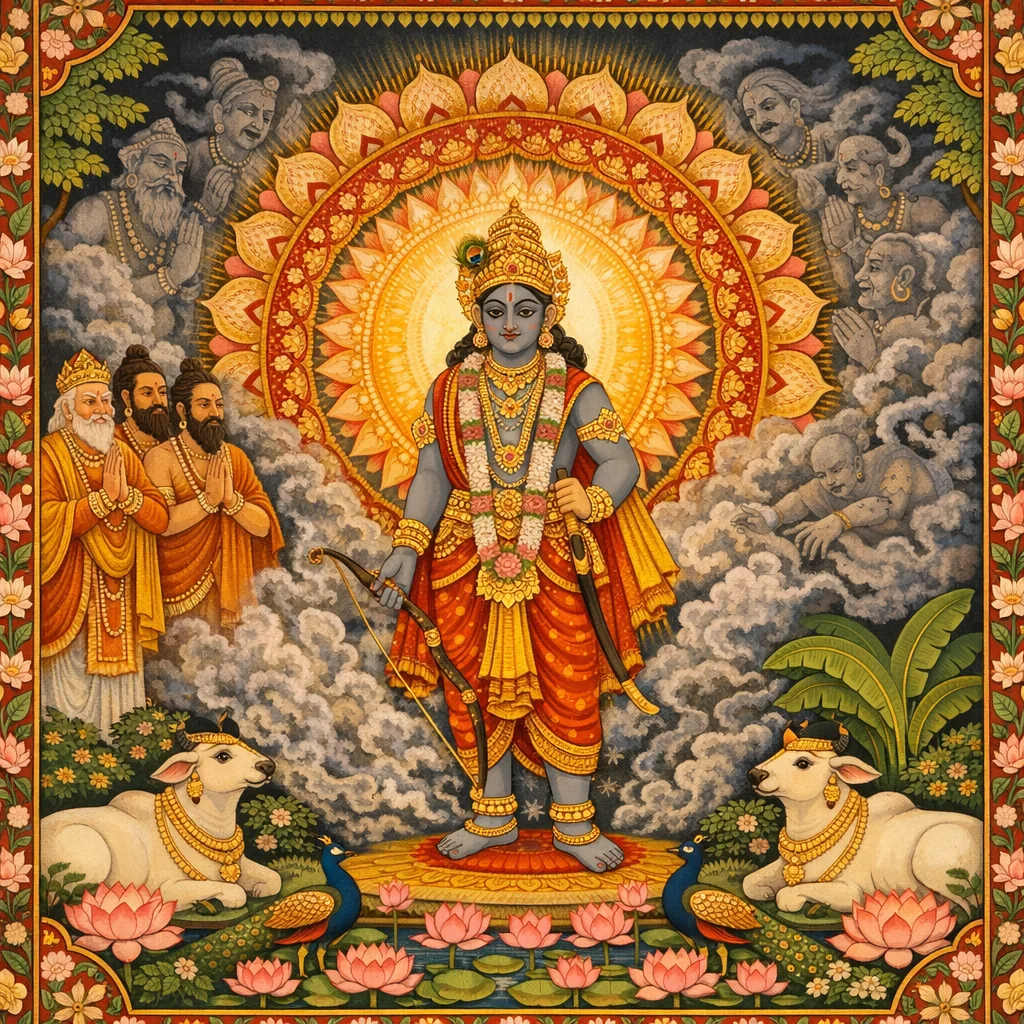
After Dhruva’s campaign against the Yakṣas following Uttama’s death, this chapter begins with Dhruva, urged on by sages, performing ācamana and releasing the nārāyaṇāstra, which instantly dispels the Yakṣas’ māyā. Empowered, he shoots devastating arrows and kills many Yakṣas, punishing beyond the actual offenders. Svāyambhuva Manu arrives with sages and compassionately intervenes to stop Dhruva’s excessive wrath. Manu teaches that uncontrolled anger leads to hellish results, violates righteous family conduct, and contradicts the path of bhakti, which forbids bodily identification and needless killing. He then gives a sustained metaphysical instruction: creation and destruction proceed through the Lord’s māyā and the guṇas; the Lord is transcendent yet acts as Time, neutrally awarding karmic fruits. The Yakṣas are not the ultimate cause of Uttama’s fate; supreme causality rests in the Supreme Lord. Manu urges Dhruva to surrender, restore his original spiritual vision, and practically pacify Kuvera to avoid further offense. The chapter ends with Dhruva offering respects as Manu and the sages depart, preparing for reconciliation and the cooling of conflict in the next narrative movement.
Shlokas
Verse 1
मैत्रेय उवाच निशम्य गदतामेवमृषीणां धनुषि ध्रुव: । सन्दधेऽस्त्रमुपस्पृश्य यन्नारायणनिर्मितम् ॥ १ ॥
Śrī Maitreya said: “O Vidura, hearing the sages’ heartening words, Dhruva Mahārāja touched water to perform ācamana, then took the arrow-weapon fashioned by Lord Nārāyaṇa and set it upon his bow.”
Verse 2
सन्धीयमान एतस्मिन्माया गुह्यकनिर्मिता: । क्षिप्रं विनेशुर्विदुर क्लेशा ज्ञानोदये यथा ॥ २ ॥
As soon as Dhruva Mahārāja joined the Nārāyaṇāstra arrow to his bow, O Vidura, the illusion wrought by the Yakṣas vanished at once—just as material pains and pleasures fade when true self-knowledge arises.
Verse 3
तस्यार्षास्त्रं धनुषि प्रयुञ्जत: सुवर्णपुङ्खा: कलहंसवासस: । विनि:सृता आविविशुर्द्विषद्बलं यथा वनं भीमरवा: शिखण्डिन: ॥ ३ ॥
As Dhruva Mahārāja employed the weapon made by Nārāyaṇa Ṛṣi upon his bow, arrows with golden shafts and feathers like swan wings shot forth. With a dreadful hissing they pierced the enemy ranks, as peacocks enter a forest amid tumultuous cries.
Verse 4
तैस्तिग्मधारै: प्रधने शिलीमुखै- रितस्तत: पुण्यजना उपद्रुता: । तमभ्यधावन् कुपिता उदायुधा: सुपर्णमुन्नद्धफणा इवाहय: ॥ ४ ॥
Struck by those razor-sharp arrows, the Yakṣa warriors on the battlefield were thrown into dismay, nearly senseless. Yet, enraged, they somehow seized their weapons and charged Dhruva Mahārāja—like serpents provoked by Garuḍa, rushing with hoods raised toward him.
Verse 5
स तान् पृषत्कैरभिधावतो मृधे निकृत्तबाहूरुशिरोधरोदरान् । निनाय लोकं परमर्कमण्डलं व्रजन्ति निर्भिद्य यमूर्ध्वरेतस: ॥ ५ ॥
When Dhruva Mahārāja saw the Yakṣas coming forward, he immediately took his arrows and cut the enemies to pieces. Separating their arms, legs, heads and bellies from their bodies, he delivered the Yakṣas to the planetary system which is situated above the sun globe and which is attainable only by first-class brahmacārīs, who have never discharged their semen.
Verse 6
तान् हन्यमानानभिवीक्ष्य गुह्यका- ननागसश्चित्ररथेन भूरिश: । औत्तानपादिं कृपया पितामहो मनुर्जगादोपगत: सहर्षिभि: ॥ ६ ॥
When Svāyambhuva Manu saw that his grandson Dhruva Mahārāja was killing so many of the Yakṣas who were not actually offenders, out of his great compassion he approached Dhruva with great sages to give him good instruction.
Verse 7
मनुरुवाच अलं वत्सातिरोषेण तमोद्वारेण पाप्मना । येन पुण्यजनानेतानवधीस्त्वमनागस: ॥ ७ ॥
Lord Manu said: My dear son, please stop. It is not good to become unnecessarily angry — it is the path to hellish life. Now you are going beyond the limit by killing Yakṣas who are actually not offenders.
Verse 8
नास्मत्कुलोचितं तात कर्मैतत्सद्विगर्हितम् । वधो यदुपदेवानामारब्धस्तेऽकृतैनसाम् ॥ ८ ॥
My dear son, the killing of the sinless Yakṣas which you have undertaken is not at all approved by authorities, and it does not befit our family, which is supposed to know the laws of religion and irreligion.
Verse 9
नन्वेकस्यापराधेन प्रसङ्गाद् बहवो हता: । भ्रातुर्वधाभितप्तेन त्वयाङ्ग भ्रातृवत्सल ॥ ९ ॥
My dear son, it has been proved that you are very much affectionate towards your brother and are greatly aggrieved at his being killed by the Yakṣas, but just consider: for one Yakṣa’s offense, you have killed many others, who are innocent.
Verse 10
नायं मार्गो हि साधूनां हृषीकेशानुवर्तिनाम् । यदात्मानं पराग्गृह्य पशुवद्भूतवैशसम् ॥ १० ॥
This is not the path of saintly souls who follow Hṛṣīkeśa. One must not mistake the body for the self and, like animals, slaughter the bodies of other beings.
Verse 11
सर्वभूतात्मभावेन भूतावासं हरिं भवान् । आराध्याप दुराराध्यं विष्णोस्तत्परमं पदम् ॥ ११ ॥
Seeing the self in all beings, you have worshiped Hari, the indwelling refuge of all life. Though Viṣṇu’s supreme abode is hard to attain, you are destined to reach that dhāma.
Verse 12
स त्वं हरेरनुध्यातस्तत्पुंसामपि सम्मत: । कथं त्ववद्यं कृतवाननुशिक्षन् सतां व्रतम् ॥ १२ ॥
You are a pure devotee of Hari; the Lord ever remembers you, and His confidential devotees honor you. Your life should exemplify the vows of the saintly—why, then, have you taken up such a reprehensible act?
Verse 13
तितिक्षया करुणया मैत्र्या चाखिलजन्तुषु । समत्वेन च सर्वात्मा भगवान् सम्प्रसीदति ॥ १३ ॥
When a devotee meets all beings with tolerance, mercy, friendship, and equal vision, the Lord—who is the Self of all—becomes greatly pleased.
Verse 14
सम्प्रसन्ने भगवति पुरुष: प्राकृतैर्गुणै: । विमुक्तो जीवनिर्मुक्तो ब्रह्म निर्वाणमृच्छति ॥ १४ ॥
When Bhagavān is fully satisfied, one is freed from the gross and subtle material conditions. Liberated even while living, one attains brahma-nirvāṇa—unlimited spiritual bliss.
Verse 15
भूतै: पञ्चभिरारब्धैर्योषित्पुरुष एव हि । तयोर्व्यवायात्सम्भूतिर्योषित्पुरुषयोरिह ॥ १५ ॥
This material creation begins from the five elements; from them the bodies of woman and man are fashioned. By the union of woman and man, progeny in this world increases.
Verse 16
एवं प्रवर्तते सर्ग: स्थिति: संयम एव च । गुणव्यतिकराद्राजन्मायया परमात्मन: ॥ १६ ॥
My dear King Dhruva, by the māyā, the illusory energy of the Paramātmā, and by the interaction of nature’s three guṇas, creation, maintenance, and dissolution take place.
Verse 17
निमित्तमात्रं तत्रासीन्निर्गुण: पुरुषर्षभ: । व्यक्ताव्यक्तमिदं विश्वं यत्र भ्रमति लोहवत् ॥ १७ ॥
My dear Dhruva, the Supreme Lord is untouched by the guṇas; in creation He is only the impelling cause. When He gives the impetus, the manifest and unmanifest universe moves, like iron moved by a magnet.
Verse 18
स खल्विदं भगवान् कालशक्त्या गुणप्रवाहेण विभक्तवीर्य: । करोत्यकर्तैव निहन्त्यहन्ता चेष्टा विभूम्न: खलु दुर्विभाव्या ॥ १८ ॥
That Bhagavān, by His power of time, sets the flow of the guṇas into interaction, and thus many energies become manifest. He appears to act, yet He is not the actor; He appears to destroy, yet He is not the destroyer—His workings are inconceivable.
Verse 19
सोऽनन्तोऽन्तकर: कालोऽनादिरादिकृदव्यय: । जनं जनेन जनयन्मारयन्मृत्युनान्तकम् ॥ १९ ॥
My dear Dhruva, the Lord is Ananta, ever-existing; yet as Time He brings all things to their end. He has no beginning, though He is the beginning of everything, and He is inexhaustible though all else is exhausted. Living beings are born through the father and slain through death, but He remains eternally free from birth and death.
Verse 20
न वै स्वपक्षोऽस्य विपक्ष एव वा परस्य मृत्योर्विशत: समं प्रजा: । तं धावमानमनुधावन्त्यनीशा यथा रजांस्यनिलं भूतसङ्घा: ॥ २० ॥
The Supreme Lord, appearing as eternal Time, is present in this world and remains impartial to all. He has neither ally nor enemy. Within the rule of time, beings reap joy or sorrow according to the fruits of their own karma, as dust is carried aloft when the wind blows.
Verse 21
आयुषोऽपचयं जन्तोस्तथैवोपचयं विभु: । उभाभ्यां रहित: स्वस्थो दु:स्थस्य विदधात्यसौ ॥ २१ ॥
Viṣṇu, the all-powerful Supreme Lord, awards the fruits of karma. Thus one being’s lifespan may decrease and another’s may increase, yet He remains ever transcendental, beyond both—His own duration neither lessens nor grows.
Verse 22
केचित्कर्म वदन्त्येनं स्वभावमपरे नृप । एके कालं परे दैवं पुंस: काममुतापरे ॥ २२ ॥
O King, some explain the varieties of life and their joy and suffering as the result of karma. Others attribute it to nature, others to time, others to fate, and still others to desire.
Verse 23
अव्यक्तस्याप्रमेयस्य नानाशक्त्युदयस्य च । न वै चिकीर्षितं तात को वेदाथ स्वसम्भवम् ॥ २३ ॥
My dear son, the Absolute Truth is unmanifest and immeasurable, the master of countless energies. Who can know His intentions and deeds? Though He is the cause of all causes, He cannot be grasped by mental speculation.
Verse 24
न चैते पुत्रक भ्रातुर्हन्तारो धनदानुगा: । विसर्गादानयोस्तात पुंसो दैवं हि कारणम् ॥ २४ ॥
My dear son, these Yakṣas, descendants of Kuvera, are not truly the killers of your brother. The birth and death of every being are brought about by the Supreme Lord, who is indeed the cause of all causes.
Verse 25
स एव विश्वं सृजति स एवावति हन्ति च । अथापि ह्यनहङ्कारान्नाज्यते गुणकर्मभि: ॥ २५ ॥
The Supreme Personality of Godhead creates this world, maintains it, and in time annihilates it; yet, being without false ego and ever transcendental, He is never tainted by the modes of nature or by such acts.
Verse 26
एष भूतानि भूतात्मा भूतेशो भूतभावन: । स्वशक्त्या मायया युक्त: सृजत्यत्ति च पाति च ॥ २६ ॥
He is the Supersoul of all beings—their Lord and maintainer; through His external potency, māyā, He creates, sustains, and annihilates all.
Verse 27
तमेव मृत्युममृतं तात दैवं सर्वात्मनोपेहि जगत्परायणम् । यस्मै बलिं विश्वसृजो हरन्ति गावो यथा वै नसि दामयन्त्रिता: ॥ २७ ॥
My dear Dhruva, surrender to the Supreme Personality of Godhead—the ultimate refuge and goal of the world, the Soul of all. He is death to death and the very form of immortality; even the demigods headed by Brahmā act under His control, like a bull led by a rope through its nose.
Verse 28
य: पञ्चवर्षो जननीं त्वं विहाय मातु: सपत्न्या वचसा भिन्नमर्मा । वनं गतस्तपसा प्रत्यगक्ष- माराध्य लेभे मूर्ध्नि पदं त्रिलोक्या: ॥ २८ ॥
My dear Dhruva, when you were only five years old, your heart was pierced by the words of your mother’s co-wife; boldly leaving your mother’s shelter, you went to the forest and, by austerity, worshiped Nārāyaṇa, the Lord within. Thus you have attained the highest position in all three worlds.
Verse 29
तमेनमङ्गात्मनि मुक्तविग्रहे व्यपाश्रितं निर्गुणमेकमक्षरम् । आत्मानमन्विच्छ विमुक्तमात्मदृग् यस्मिन्निदं भेदमसत्प्रतीयते ॥ २९ ॥
Therefore, my dear Dhruva, turn your mind to the Supreme Person—the one, imperishable, nirguṇa Lord, established in His liberated divine form. By self-realization you will see that material distinctions are only a flickering, seemingly unreal appearance.
Verse 30
त्वं प्रत्यगात्मनि तदा भगवत्यनन्त आनन्दमात्र उपपन्नसमस्तशक्तौ । भक्तिं विधाय परमां शनकैरविद्या- ग्रन्थिं विभेत्स्यसि ममाहमिति प्ररूढम् ॥ ३० ॥
Established in your inner self and rendering, step by step, supreme bhakti in service to the limitless Bhagavan—almighty reservoir of bliss who dwells as the Paramatma within all beings—you will soon cut the knot of ignorance grown as “I” and “mine”.
Verse 31
संयच्छ रोषं भद्रं ते प्रतीपं श्रेयसां परम् । श्रुतेन भूयसा राजन्नगदेन यथामयम् ॥ ३१ ॥
Restrain your anger; may auspiciousness be yours. O King, anger is the foremost enemy on the path of spiritual good. What I have told you at length is like medicine for a disease—please follow this instruction.
Verse 32
येनोपसृष्टात्पुरुषाल्लोक उद्विजते भृशम् । न बुधस्तद्वशं गच्छेदिच्छन्नभयमात्मन: ॥ ३२ ॥
One who seeks liberation from this material world should not come under the sway of anger, for when bewildered by anger a person becomes a cause of fear for all others.
Verse 33
हेलनं गिरिशभ्रातुर्धनदस्य त्वया कृतम् । यज्जघ्निवान् पुण्यजनान् भ्रातृघ्नानित्यमर्षित: ॥ ३३ ॥
My dear Dhruva, thinking the Yakṣas had slain your brother, you have killed great numbers of them. By this you have disturbed the mind of Dhanada Kuvera, brother of Girīśa Śiva and treasurer of the devas; your deed has been disrespectful to both Kuvera and Śiva.
Verse 34
तं प्रसादय वत्साशु सन्नत्या प्रश्रयोक्तिभि: । न यावन्महतां तेज: कुलं नोऽभिभविष्यति ॥ ३४ ॥
Therefore, my son, at once pacify Kuvera with humble obeisance, prayers, and gentle words, lest the radiance of the great overwhelm our family.
Verse 35
एवं स्वायम्भुव: पौत्रमनुशास्य मनुर्ध्रुवम् । तेनाभिवन्दित: साकमृषिभि: स्वपुरं ययौ ॥ ३५ ॥
Thus Svāyambhuva Manu instructed his grandson Dhruva Mahārāja; honored by Dhruva’s respectful obeisances, Manu and the great sages then returned to their respective abodes.
Frequently Asked Questions
Manu stops Dhruva because devotion must express as dharmic restraint and compassion. Dhruva’s grief-driven anger leads him to punish many non-offenders, which authorities do not approve. The Bhāgavata standard is that a pure devotee becomes pleasing to the Lord through tolerance, mercy, friendship, and equality; unchecked krodha undermines that standard even when the initial cause feels justified.
The chapter acknowledges proximate agents (such as Yakṣas) but teaches that birth and death ultimately occur under the Supreme Lord’s governance as time and Supersoul. Living beings experience the results of their karma within that system, while the Lord remains transcendental and unbiased. Therefore, blaming a whole community as the ‘real cause’ becomes philosophically mistaken and ethically dangerous.
Narratively, the nārāyaṇāstra destroys the Yakṣas’ illusory tactics; philosophically, it parallels self-realization: as the Lord’s power is invoked, māyā-like confusion (material dualities of pain and pleasure) is dispelled. The text uses this as a bridge to Manu’s teaching that true victory is mastery over anger and bodily identification, not merely battlefield dominance.
Kuvera is the treasurer of the devas and the lord of the Yakṣas, also connected to Śiva’s circle. Dhruva’s disproportionate killing agitates Kuvera, creating a risk of further conflict and offense. Manu advises immediate pacification through gentle speech and prayers, modeling the kṣatriya duty to restore social-cosmic balance after excessive force.