Adhyaya 85
शकुनेः पुत्रेण सह आश्वमेधाश्वविषयः संघर्षः — Arjuna’s restrained engagement with Śakuni’s son during the horse-escort
Upa-parva: Aśvamedha-Aśva-Anugamana (Escort and Contestations of the Sacrificial Horse)
Vaiśaṃpāyana describes a confrontation arising during the Aśvamedha horse’s passage. Śakuni’s son, a Gāndhāra leader, advances with a large force equipped with elephants, horses, and chariots, and his warriors—unable to accept Śakuni’s prior death—move to strike Arjuna. Arjuna attempts to dissuade them with conciliatory speech aligned with Yudhiṣṭhira’s policy, but they ignore counsel and surround the horse, prompting Arjuna’s controlled retaliation. Using precise archery, he incapacitates opponents rapidly, causing disorder and retreat. When Śakuni’s son directly challenges him, Arjuna explicitly states a governance constraint: by royal directive he does not kill kings, and urges cessation, affirming the challenger’s safety rather than seeking decisive elimination. The king persists and attacks; Arjuna responds by removing the king’s head-armor with an archer’s stroke—demonstrating superiority without lethal intent. Observers recognize that the king survives by Arjuna’s choice. The king’s mother, accompanied by elders and ministers, intervenes with an offering and plea; Arjuna honors her and formally counsels the king to abandon enmity, remember Gāndhārī and Dhṛtarāṣṭra, and attend Yudhiṣṭhira’s Aśvamedha in the month of Caitra, converting conflict into ritual-political reintegration.
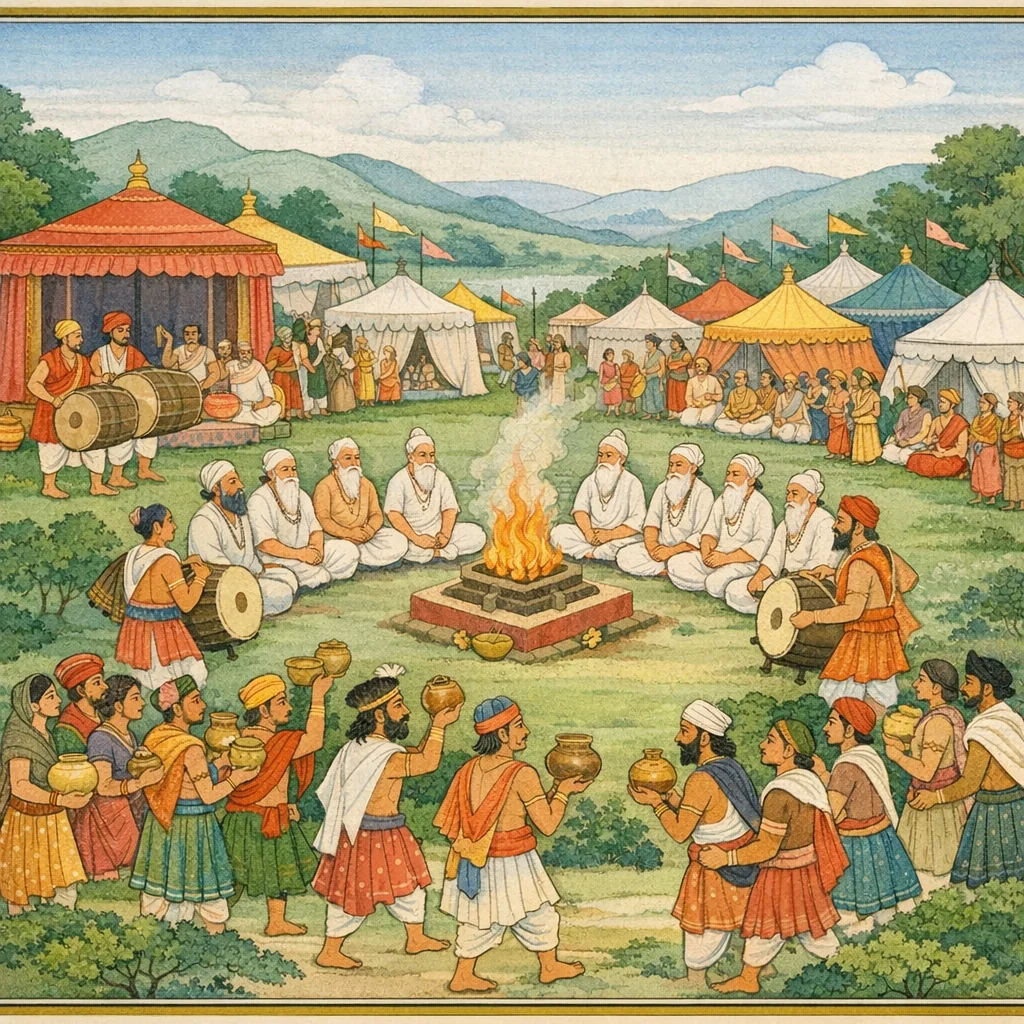
Chapter Arc: अर्जुन के अश्व की दिग्विजय-यात्रा से लौटने का समाचार गुप्तचर द्वारा युधिष्ठिर तक पहुँचता है; धर्मराज के मन में यज्ञ-आरम्भ की घड़ी निकट आ जाती है। → यज्ञभूमि की तैयारी तेज होती है—दूर-दूर देशों से राजा, विविध जनजातियाँ, ब्रह्मवादी मुनिगण और वेदवेत्ता एकत्र होने लगते हैं। शिविरों की बसाहट, जनसमूह का आवागमन और उत्सव-ध्वनियाँ (दुन्दुभि-नाद) दिन-प्रतिदिन बढ़ती जाती हैं, मानो समुद्र-गर्जना के समान कोलाहल छा जाए। → महामख का वैभव अपने शिखर पर पहुँचता है—असंख्य शिविर, हजारों जातियों के लोग पात्र लिये अन्न-दान हेतु उमड़ते हैं; यज्ञ का दृश्य स्थिर होकर भी निरन्तर चलता हुआ प्रतीत होता है, और दान-समृद्धि ‘अन्न के पर्वतों’ जैसी अतिशयोक्ति में प्रकट होती है। → युधिष्ठिर का अश्वमेध सुव्यवस्थित रूप से आरम्भ/प्रवाहित होता है—राजाओं का समागम, मुनियों की उपस्थिति, दान-वितरण और अनुष्ठान की नियमितता स्थापित हो जाती है। → यज्ञ का प्रवाह ‘रोज-रोज इसी रूप में’ चलता दिखता है—आगे के अध्यायों में दान, विधि-विधान और उपस्थित राजाओं/जनसमूह की प्रतिक्रियाओं का विस्तार होने का संकेत।
Shlokas
Verse 1
अफ्-#-#क+ पञ्चाशीतितमोब<् ध्याय: यज्ञभूमिकी तैयारी, नाना देशोंसे आये हरा राजाओंका यज्ञकी सजावट और आयोजन वैशम्पायन उवाच इत्युक्त्वानुययौ पार्थो हयं कामविहारिणम् । न्यवर्तत ततो वाजी येन नागादह्दयं पुरम्,वैशम्पायनजी कहते हैं-जनमेजय! गान्धारराजसे यों कहकर अर्जुन इच्छानुसार विचरनेवाले घोड़ेके पीछे चल दिये। अब वह घोड़ा लौटकर हस्तिनापुरकी ओर चला
Vaiśampāyana said: Having spoken thus, Pārtha (Arjuna) set out in pursuit of the horse that roamed at will. Thereafter the steed turned back, heading toward Nāgāhvaya—the city (Hastināpura). In the ethical frame of the Aśvamedha, the horse’s free wandering signifies sovereign authority tested without needless violence, while Arjuna’s following reflects disciplined guardianship of the rite rather than conquest for its own sake.
Verse 2
त॑ निवृत्तं तु शुश्राव चारेणैव युधिष्ठिर: । श्र॒त्वार्जुन॑ कुशलिनं स च हृष्टमना5भवत्,इसी समय राजा युधिष्ठिरको एक जासूसके द्वारा यह समाचार मिला कि घोड़ा हस्तिनापुरको लौट रहा है और अर्जुन भी सकुशल आ रहे हैं। यह सुनकर उनके मनमें बड़ी प्रसन्नता हुई
Verse 3
विजयस्य च तत् कर्म गान्धारविषये तदा । श्र॒त्वा चान्येषु देशेषु स सुप्रीतो5भवत् तदा,अर्जुनने गान्धारराज्यमें तथा अन्यान्य देशोंमें जो अद्भुत पराक्रम किया था, वह सब सुनकर युधिष्ठिरके हर्षकी सीमा न रही
Vaiśampāyana said: Hearing then of those deeds of victory—how Arjuna had displayed wondrous prowess in the land of Gāndhāra and likewise in other regions—Yudhiṣṭhira became exceedingly pleased, his joy knowing no bounds. The report of righteous success and disciplined valor brought solace to the king’s mind after the burdens of war.
Verse 4
एतस्मिन्नेव काले तु द्वादशीं माघमासिकीम् । इष्टं गृहीत्वा नक्षत्र धर्मराजो युधिष्ठिर:,कुरुनन्दन! उस दिन माघ महीनेकी शुक्लपक्षकी द्वादशी तिथि थी। उसमें पुष्य- नक्षत्रका योग पाकर महातेजस्वी पृथ्वीपति धर्मराज युधिष्ठिरने अपने समस्त भाइयों-- भीमसेन, नकुल और सहदेवको बुलवाया और प्रहार करनेवालोंमें श्रेष्ठ भीमसेनको सम्बोधित करके वक्ताओं तथा धर्मात्माओंमें श्रेष्ठ युधिष्ठिने यह समयोचित बात कही --
Vaiśampāyana said: At that very time, it was the twelfth lunar day (Dvādaśī) in the bright fortnight of the month of Māgha. Having obtained the auspicious conjunction of the Puṣya constellation, King Yudhiṣṭhira—righteous ruler and delight of the Kurus—took note of the proper moment and prepared to act in accordance with dharma, choosing a time sanctified by celestial signs for the duty that lay ahead.
Verse 5
समानीय महातेजा: सर्वान् भ्रातृन् महीपति: । भीम॑ च नकुलं चैव सहदेवं च कौरव,कुरुनन्दन! उस दिन माघ महीनेकी शुक्लपक्षकी द्वादशी तिथि थी। उसमें पुष्य- नक्षत्रका योग पाकर महातेजस्वी पृथ्वीपति धर्मराज युधिष्ठिरने अपने समस्त भाइयों-- भीमसेन, नकुल और सहदेवको बुलवाया और प्रहार करनेवालोंमें श्रेष्ठ भीमसेनको सम्बोधित करके वक्ताओं तथा धर्मात्माओंमें श्रेष्ठ युधिष्ठिने यह समयोचित बात कही --
Vaiśampāyana said: The mighty king, radiant with great energy, summoned all his brothers—Bhīma, Nakula, and Sahadeva. In this setting, Yudhiṣṭhira (the Kuru prince), mindful of dharma and the right moment, prepares to address Bhīma, foremost among those who strike, with counsel suited to the occasion—signaling a deliberate, ethically grounded course of action rather than impulsive force.
Verse 6
प्रोवाचेद॑ वच: काले तदा धर्मभूतां वर: । आमन्त्र्य वदतां श्रेष्ठो भीम॑ प्रहरतां वरम्,कुरुनन्दन! उस दिन माघ महीनेकी शुक्लपक्षकी द्वादशी तिथि थी। उसमें पुष्य- नक्षत्रका योग पाकर महातेजस्वी पृथ्वीपति धर्मराज युधिष्ठिरने अपने समस्त भाइयों-- भीमसेन, नकुल और सहदेवको बुलवाया और प्रहार करनेवालोंमें श्रेष्ठ भीमसेनको सम्बोधित करके वक्ताओं तथा धर्मात्माओंमें श्रेष्ठ युधिष्ठिने यह समयोचित बात कही --
Vaiśampāyana said: At that fitting time, the foremost among the righteous—King Yudhiṣṭhira—spoke these timely words. Having summoned Bhīma, the best of strikers, and addressing him—O joy of the Kurus—Yudhiṣṭhira, foremost among virtuous speakers, began to speak.
Verse 7
आयाति भीमसेनासौ सहाश्चेन तवानुज: । यथा मे पुरुषा: प्राहुय्यें धनंजयसारिण:,'भीमसेन! तुम्हारे छोटे भाई अर्जुन घोड़ेके साथ आ रहे हैं, जैसा कि उनका समाचार लानेके लिये गये जासूसोंने मुझे बताया है
Vaiśampāyana said: “O Bhīmasena, your younger brother is coming here along with the sacrificial horse, just as my men—those sent to bring news of Dhanañjaya (Arjuna)—have reported to me.”
Verse 8
उपस्थितश्न॒ कालोडयमभितो वर्तते हय: । माघी च पौर्णमासीयं मास: शेषो वृकोदर,“वृकोदर! इधर यज्ञ आरम्भ करनेका समय भी निकट आ गया है। घोड़ा भी पास ही है। यह माघ-मासकी पूर्णिमा आ रही है, अब बीचमें केवल फाल्गुनका एक मास शेष है
Vaiśampāyana said: “The appointed time is now close at hand, and the sacrificial horse is nearby. The full-moon day of Māgha is approaching; only one month remains, O Vṛkodara.” In context, the words urge timely, disciplined action for the Aśvamedha—an act meant to restore order and legitimacy after war, emphasizing readiness, proper observance of ritual time, and responsibility to dharma.
Verse 9
प्रस्थाप्यन्तां हि विद्वांसो ब्राह्मणा वेदपारगा: । वाजिमेधार्थसिद्धयर्थ देशं पश्यन्तु यज्ञियम्,“अतः वेदके पारंगत दिद्वान् ब्राह्मणोंको भेजना चाहिये कि वे अश्वमेध-यज्ञकी सिद्धिके लिये उपयुक्त स्थान देखें”
Vaiśampāyana said: “Let the learned Brāhmaṇas, who have mastered the Vedas, be dispatched. For the successful accomplishment of the Aśvamedha sacrifice, let them examine and identify a land that is fit and proper for the rite.”
Verse 10
इत्युक्तः स तु तच्चक्रे भीमो नृपतिशासनम् । हृष्ट: श्रुव्वा गुडाकेशमायान्तं पुरुषर्षभम्,यह सुनकर भीमसेनने राजाकी आज्ञाका तुरंत पालन किया। वे पुरुषप्रवर अर्जुनका आगमन सुनकर बहुत प्रसन्न थे
Vaiśampāyana said: Thus addressed, Bhīma at once carried out the king’s command. Hearing that Guḍākeśa—Arjuna, the foremost of men—was approaching, he was filled with joy.
Verse 11
ततो ययौ भीमसेन: प्राज्ै: स्थपतिभि: सह । ब्राह्मणानग्रत: कृत्वा कुशलान् यज्ञकर्मणि,तत्पश्चात् भीमसेन यज्ञकर्ममें कुशल ब्राह्मणोंको आगे करके शिल्पकर्मके जानकार कारीगरोंके साथ नगरसे बाहर गये
Then Bhīmasena set out, accompanied by the leading master-builders. Placing in front the Brahmins skilled in the rites of sacrifice, he went out from the city with the artisans—ensuring that sacred procedure and practical workmanship would proceed in proper order.
Verse 12
तं स शालचयं श्रीमत् सप्रतोलीसुघट्टितम् । मापयामास कौरव्यो यज्ञवार्ट यथाविधि,उन्होंने शालवृक्षोंसे भरे हुए सुन्दर स्थान पसंद करके उसे चारों ओरसे नपवाया। तत्पश्चात् कुरुनन्दन भीमने वहाँ उत्तम मार्गोंसे सुशोभित यज्ञभूमिका विधिपूर्वक निर्माण कराया
Verse 13
प्रासादशतसम्बाधं मणिप्रवरकुट्टिमम् । कारयामास विधिवद्धेमरत्नविभूषितम्,उस भूमिमें सैकड़ों महल बनवाये गये, जिसके फर्शमें अच्छे-अच्छे रत्न जड़े हुए थे। वह यज्ञशाला सोने और रत्नोंसे सजायी गयी थी और उसका निर्माण शास्त्रीय विधिके अनुसार कराया गया था
Verse 14
स्तम्भान् कनकचित्रांश्व तोरणानि बृहन्ति च । यज्ञायतनदेशेषु दत्त्वा शुद्धं च काननम्,वहाँ सुवर्णमय विचित्र खम्भे और बड़े-बड़े तोरण (फाटक) बने हुए थे। धर्मात्मा भीमने यज्ञमण्डपके सभी स्थानोंमें शुद्ध सुवर्णका उपयोग किया था। उन्होंने अन्तःपुरकी स्त्रियों, विभिन्न देशोंसे आये हुए राजाओं, तथा नाना स्थानोंसे पधारे हुए ब्राह्मणोंके रहनेके लिये भी अनेकानेक उत्तम भवन बनवाये। उन सबका निर्माण कुन्तीकुमार भीमने शिल्पशास्त्रकी विधिके अनुसार कराया था
Vaiśampāyana said: In the places set apart for the sacrificial enclosure, there were pillars adorned with gold and large ceremonial gateways. Pure gold was lavishly employed throughout the ritual precinct, making the setting worthy of the rite. The passage underscores how a dharmic sacrifice is supported not only by vows and mantras but also by careful, righteous provision—creating an ordered, auspicious space that honors guests and the sacred work.
Verse 15
अन्त:पुराणां राज्ञां च नानादेशसमीयुषाम् । कारयामास थधर्मात्मा तत्र तत्र यथाविधि,वहाँ सुवर्णमय विचित्र खम्भे और बड़े-बड़े तोरण (फाटक) बने हुए थे। धर्मात्मा भीमने यज्ञमण्डपके सभी स्थानोंमें शुद्ध सुवर्णका उपयोग किया था। उन्होंने अन्तःपुरकी स्त्रियों, विभिन्न देशोंसे आये हुए राजाओं, तथा नाना स्थानोंसे पधारे हुए ब्राह्मणोंके रहनेके लिये भी अनेकानेक उत्तम भवन बनवाये। उन सबका निर्माण कुन्तीकुमार भीमने शिल्पशास्त्रकी विधिके अनुसार कराया था
Vaiśampāyana said: That righteous one had suitable residences constructed, in due form and in their proper places, for the royal women of the inner apartments and for the kings who had arrived from many lands.
Verse 16
ब्राह्मणानां च वेश्मानि नानादेशसमीयुषाम् | कारयामास कौन्तेयो विधिवत् तान्यनेकश:,वहाँ सुवर्णमय विचित्र खम्भे और बड़े-बड़े तोरण (फाटक) बने हुए थे। धर्मात्मा भीमने यज्ञमण्डपके सभी स्थानोंमें शुद्ध सुवर्णका उपयोग किया था। उन्होंने अन्तःपुरकी स्त्रियों, विभिन्न देशोंसे आये हुए राजाओं, तथा नाना स्थानोंसे पधारे हुए ब्राह्मणोंके रहनेके लिये भी अनेकानेक उत्तम भवन बनवाये। उन सबका निर्माण कुन्तीकुमार भीमने शिल्पशास्त्रकी विधिके अनुसार कराया था
Vaiśampāyana said: The son of Kuntī had many residences constructed, in due accordance with prescribed rules, for the Brahmins who had arrived from various regions. The passage underscores the kingly duty of honoring learned guests and ensuring orderly, lawful arrangements for a great rite, expressing dharma through generous and well-regulated hospitality.
Verse 17
तथा सम्प्रेषयामास दूतान् नृपतिशासनात् । भीमसेनो महाबाहो राज्ञामक्लिष्टकर्मणाम्,महाबाहो! यह सब काम हो जानेपर भीमसेनने महाराज युधिष्ठिरकी आज्ञासे अनायास ही महान् पराक्रम कर दिखानेवाले विभिन्न राजाओंको निमन्त्रण देनेके लिये बहुत-से दूत भेजे
Then, acting under the king’s command, Bhīmasena dispatched messengers. With effortless efficiency—befitting rulers known for unwearied action—he sent many envoys to summon the various kings, fulfilling Yudhiṣṭhira’s directive as part of the orderly preparations for the rite.
Verse 18
ते प्रियार्थ कुरुपतेराययुर्नुपसत्तम । रत्नान्यनेकान्यादाय स्त्रियो5श्वानायुधानि च,नृपश्रेष्ठट निमन््त्रण पाकर वे सभी नरेश कुरुराज युधिष्ठिरका प्रिय करनेके लिये अनेकानेक रत्न, स्त्रियाँ, घोड़े और भाँति-भाँतिके अस्त्र-शस्त्र लेकर वहाँ उपस्थित हुए
Verse 19
तेषां निविशतां तेषु शिविरेषु महात्मनाम् । नर्दत: सागरस्येव दिवस्पृणभवत् स्वनः,वहाँ बने हुए विभिन्न शिविरोंमें प्रवेश करनेवाले महामनस्वी नरेशोंका जो कोलाहल सुनायी पड़ता था, वह समुद्र की गम्भीर गर्जनाके समान सम्पूर्ण आकाशमें व्याप्त हो रहा था
Verse 20
तेषामभ्यागतानां च स राजा कुरुवर्थन: । व्यादिदेशान्नपानानि शप्याश्नाप्पतिमानुषा:,कुरुकुलकी वृद्धि करनेवाले राजा युधिष्ठिरने इन नवागत अतिथियोंका सत्कार करनेके लिये अन्न-पान और अलौकिक शगय्याओंका प्रबन्ध किया
Vaiśampāyana said: When those guests arrived, King Yudhiṣṭhira—who fostered the prosperity of the Kuru line—ordered that food and drink be served, and that extraordinary, more-than-human beds and comforts be arranged for them. The scene highlights the king’s dharmic duty of hospitality: honoring newcomers with generous care and dignified reception.
Verse 21
वाहनानां च विविधा: शाला: शालीक्षुगोरसै: । उपेता भरतमश्रेष्ठो व्यादिदेश च धर्मराट्,भरतभूषण! धर्मराज युधिष्ठिरने उन राजाओंकी सवारियोंके लिये भी धान, ऊँख और गोरससे भरे-पूरे घर दिये
Vaiśampāyana said: The righteous king Yudhiṣṭhira, best among the Bharatas, ordered that various shelters and stables be provided for the visiting kings’ mounts and vehicles, fully supplied with rice, sugarcane, and dairy produce—so that even their retinues and animals were honored and cared for in accordance with dharma.
Verse 22
तथा तस्मिन् महायज्ञे धर्मराजस्य धीमतः । समाजम्मुर्मुनिगणा बहवो ब्रह्मवादिन:,बुद्धिमान् धर्मराज युधिष्ठिरके उस महायज्ञमें बहुत-से वेदवेत्ता मुनिगण भी पधारे थे
Thus, at that great sacrifice of the wise Dharmarāja (Yudhiṣṭhira), many companies of sages—learned exponents of Brahman and the Veda—assembled. The scene underscores that a king’s righteous rule and solemn ritual draw the presence and scrutiny of spiritual authorities, linking royal power to dharma and learned counsel.
Verse 23
ये च द्विजातिप्रवरास्तत्रासन् पृथिवीपते । समाजग्मु: सशिष्यास्तान् प्रतिजग्राह कौरव:,पृथ्वीनाथ! ब्राह्मणोंमें जो श्रेष्ठ पुरुष थे, वे सब अपने शिष्योंको साथ लेकर वहाँ आये। कुरुराज युधिष्ठिरने उन सबको स्वागतपूर्वक अपनाया
Vaiśampāyana said: “O lord of the earth, the foremost among the twice-born who were present there arrived together, each accompanied by his disciples. The Kaurava king (Yudhiṣṭhira) received them with due honor.” The verse highlights the king’s dharmic duty of hospitality and reverence toward learned Brahmins, especially in the context of a great royal rite where social and moral order is reaffirmed.
Verse 24
सर्वाश्चन ताननुययौ यावदावस थानू् प्रति । स्वयमेव महातेजा दम्भं त्यक्त्वा युधिष्ठिर:,वहाँ महातेजस्वी महाराज युधिष्ठिर दम्भ छोड़कर स्वयं ही उन सबका विधिवत् सत्कार करते और जबतक उनके लिये योग्य स्थानका प्रबन्ध न हो जाता, तबतक उनके साथ-साथ रहते थे
Vaiśampāyana said: The mighty Yudhiṣṭhira, having cast off all pride, personally accompanied them all and offered due hospitality; he stayed with them until suitable places of lodging were properly arranged. The scene underscores a king’s dharma: humility, attentive care for guests, and leadership expressed through service rather than display.
Verse 25
ततः कृत्वा स्थपतय: शिल्पिनो<न्ये च ये तदा । कृत्स्नं यज्ञविधिं राज्ञो धर्मज्ञाय न्यवेदयन्,तत्पश्चात् थवइयों और अन्यान्य शिल्पियों (कारीगरों) ने आकर राजा युधिष्ठिरको यह सूचना दी कि यज्ञमण्डपका सारा कार्य पूरा हो गया
Then the master-builders and the other artisans who were present, having completed their work, reported to the king—Yudhiṣṭhira, the knower of dharma—that the entire arrangement and procedure for the sacrifice had been fully prepared. The scene underscores orderly governance: ritual is not mere display, but a dharma-guided public act requiring skilled labor, completion, and accountable communication to the righteous ruler.
Verse 26
तच्छुत्वा धर्मराजस्तु कृतं सर्वमतन्द्रित: । हृष्टरूपो5भवद् राजा सह भ्रातृभिरादृत:,सब कार्य पूरा हो गया। यह सुनकर आलस्य-रहित धर्मराज राजा युधिष्ठिर अपने भाइयोंके साथ बहुत प्रसन्न हुए
Hearing this, Dharmarāja (Yudhiṣṭhira)—free from all sloth—saw that everything had been duly accomplished. The king became joyful, and together with his brothers he was honored and well-regarded, his satisfaction reflecting the ethical relief that comes when a duty is completed without negligence.
Verse 27
वैशम्पायन उवाच तस्मिन् यज्ञे प्रवृत्ते तु वाग्मिनो हेतुवादिन: । हेतुवादान् बहूनाहु: परस्परजिगीषव:,वैशम्पायनजी कहते हैं--राजन्! वह यज्ञ आरम्भ होनेपर बहुत-से प्रवचनकुशल और युक्तिवादी विद्वान, जो एक-दूसरेको जीतनेकी इच्छा रखते थे, वहाँ अनेक प्रकारसे तर्ककी बातें करने लगे
Vaiśampāyana said: “O King, when that sacrifice had begun, many eloquent scholars—fond of disputation and eager to outdo one another—started advancing numerous arguments and counter-arguments there.”
Verse 28
ददृशुस्तं नृपतयो यज्ञस्य विधिमुत्तमम् । देवेन्द्रस्येव विहितं भीमसेनेन भारत,भारत! यज्ञमें सम्मिलित होनेके लिये आये हुए राजा लोग घूम-घूमकर भीमसेनके द्वारा तैयार कराये हुए उस यज्ञमण्डपकी उत्तम निर्माण कला एवं सुन्दर सजावट देखने लगे। वह मण्डप देवराज इन्द्रकी यज्ञशालाके समान जान पड़ता था
Vaiśampāyana said: The assembled kings beheld that excellent arrangement and ordinance of the sacrifice—set up by Bhīmasena, O Bhārata—appearing as though it had been fashioned like the sacrificial hall of Devendra himself. In this, the narrative underscores royal duty expressed through meticulous, reverent preparation: the outer splendor of the rite is presented as a visible sign of ordered dharma and collective participation in a legitimate yajña.
Verse 29
ददृशुस्तोरणान्यत्र शातकुम्भमयानि ते । शय्यासनविहारां श्व सुबहून् रत्नसंचयान्,उन्होंने वहाँ सुवर्णके बने हुए तोरण, शय्या, आसन, विहारस्थान तथा बहुत-से रत्नोंके ढेर देखे
Vaiśampāyana said: There they beheld gateways fashioned of pure gold, along with beds, seats, and pleasure-pavilions, and also many heaps of precious gems. The scene underscores the immense royal wealth on display—an outward sign of sovereignty and prosperity—set within the larger Mahābhārata context where such splendor is ultimately weighed against right conduct (dharma) and the responsible use of power.
Verse 30
घटान् पात्री: कटाहानि कलशान् वर्धमानकान् | न हि किज्चिदसौवर्णमपश्यन् वसुधाधिपा:,घड़े, बर्तन, कड़ाहे, कलश और बहुत-से कटोरे भी उनकी दृष्टिमें पड़े। उन पृथ्वीपतियोंने वहाँ कोई भी ऐसा सामान नहीं देखा, जो सोनेका बना हुआ न हो
Vaiśampāyana said: “They saw jars, vessels, cauldrons, water-pots, and many bowls; and those kings, lords of the earth, did not see there anything at all that was not made of gold.” The scene underscores the extraordinary opulence surrounding the rite, suggesting both royal magnificence and the ethical pressure on rulers to display generosity and abundance in public sacrificial contexts.
Verse 31
यूपांश्व॒ शास्त्रपठितान् दारवान् हेमभूषितान् । उपक्लूृप्तान् यथाकालं विधिवद् भूरिवर्चस:,शास्त्रोक्त विधिके अनुसार जो काष्ठके यूप बने हुए थे, उनमें भी सोना जड़ा हुआ था। वे सभी यूप यथासमय विधिपूर्वक बनाये गये थे जो देखनेमें अत्यन्त तेजोमय जान पड़ते थे
Verse 32
स्थलजा जलजा ये च पशव: केचन प्रभो | सवनिव समानीतानपश्यंस्तत्र ते नृपा:,प्रभो! संसारके भीतर स्थल और जलमें उत्पन्न होनेवाले जो कोई पशु देखे या सुने गये थे, उन सबको वहाँ राजाओंने उपस्थित देखा
Vaiśampāyana said: “O lord, the kings there beheld assembled—brought together as if for a sacrificial rite—all manner of animals, whether born on land or in water, indeed whatever creatures were known to be seen or heard of within the world.”
Verse 33
गाश्चैव महिषीश्वैव तथा वृद्धस्त्रियोडपि च | आऔदकानि च सत्त्वानि श्वापदानि वयांसि च,गायें, भैसें, बूढ़ी स्त्रियाँ, जल-जन्तु, हिंसक जन्तु, पक्षी, जरायुज, अण्डज, स्वेदज, उद्धिज्ज, पर्वतीय तथा सागरतटपर उत्पन्न होनेवाले प्राणी--ये सभी वहाँ दृष्टिगोचर हुए
Vaiśampāyana said: “There were seen there cows and buffaloes, and even aged women as well; also creatures of the waters, beasts of prey, and birds.”
Verse 34
जरायुजाण्डजातानि स्वेदजान्युद्धिदानि च । पर्वतानूपजातानि भूतानि ददृशुश्च ते,गायें, भैसें, बूढ़ी स्त्रियाँ, जल-जन्तु, हिंसक जन्तु, पक्षी, जरायुज, अण्डज, स्वेदज, उद्धिज्ज, पर्वतीय तथा सागरतटपर उत्पन्न होनेवाले प्राणी--ये सभी वहाँ दृष्टिगोचर हुए
Vaiśaṃpāyana said: They beheld there living beings of every mode of birth—those born from the womb, from eggs, from sweat or moisture, and those that sprout from the earth; and also creatures originating in mountains and in marshy lowlands. The scene underscores the vast diversity of life gathered within the sacred narrative setting, suggesting an ethical vision in which all forms of existence fall within the scope of dharma and observation.
Verse 35
एवं प्रमुदितं सर्व पशुगोधनधान्यत: । यज्ञवार्ट नृपा दृष्टवा परं विस्मयमागता:,इस प्रकार वह यज्ञशाला पशु, गौ, धन और धान्य सभी दृष्टियोंसे सम्पन्न एवं आनन्द बढ़ानेवाली थी। उसे देखकर समस्त राजाओंको बड़ा विस्मय हुआ
Vaiśampāyana said: The entire sacrificial enclosure was made delightful and prosperous in every respect—abounding in animals, cattle, wealth, and grain. Seeing that splendid arrangement of the yajña, all the kings were struck with the greatest wonder, recognizing the scale of royal duty and generosity embodied in the rite.
Verse 36
ब्राह्मणानां विशां चैव बहुमृष्टान्नमृद्धिमत् । पूर्णे शतसहस्रे तु विप्राणां तत्र भुञज्जताम्
Vaiśampāyana said: “For the Brāhmaṇas and the Vaiśyas, abundant, well-prepared food—rich and prosperous—was provided. Indeed, as a full hundred thousand Brahmins sat there to eat, the rite displayed the king’s commitment to generous giving and proper honoring of the learned.”
Verse 37
दुन्दुभिर्मेघनिर्घोषो मुहुर्मुहुरताडयत् । विननादासकृच्चापि दिवसे दिवसे गते
Vaiśampāyana said: “A kettledrum, booming like thunderclouds, was struck again and again; and as each day passed, it repeatedly resounded.”
Verse 38
ब्राह्मणों और वैश्योंके लिये वहाँ परम स्वादिष्ट अन्नका भण्डार भरा हुआ था। प्रतिदिन एक लाख ब्राह्मणोंके भोजन कर लेनेपर वहाँ मेघ-गर्जनाके समान शब्द करनेवाला डंका बार-बार पीटा जाता था। इस प्रकारके डंके वहाँ दिनमें कई बार पीटे जाते थे ।। एवं स ववृते यज्ञो धर्मराजस्य धीमत: । अन्नस्य सुबहून् राजन्नुत्सर्गान् पर्वतोपमान्,राजन्नदृश्यतैकस्थो राज्ञस्तस्य महामखे । राजन! बुद्धिमान् धर्मराज युधिष्ठिरका वह यज्ञ रोज-रोज इसी रूपमें चालू रहा। उस स्थानपर अन्नके बहुत-से पहाड़ों जैसे ढेर लगे रहते थे। दहीकी नहरें बनी हुई थीं और घीके बहुत-से तालाब भरे हुए थे। राजा युधिष्ठिरके उस महान् यज्ञमें अनेक देशोंके लोग जुटे हुए थे। राजन! सारा जम्बूद्वीप ही वहाँ एक स्थानमें स्थित दिखायी देता था
Thus the great sacrifice of the wise Dharmarāja (Yudhiṣṭhira) continued day after day in the same manner. O King, there were seen vast distributions of food—heaps like mountains—set out in abundance. In that royal grand rite, people from many lands assembled, so that, as it were, the whole of Jambūdvīpa appeared gathered into a single place. The scene underscores the king’s dharmic ideal: public welfare through generosity, hospitality, and the honoring of the learned.
Verse 39
दधिकुल्याश्व ददृशु: सर्पिषश्व हृदान् जना: । जम्बूद्वीपो हि सकलो नानाजनपदायुतः
Vaiśampāyana said: People beheld streams of curd and lakes filled with clarified butter. Indeed, the whole of Jambūdvīpa—abounding in countless realms and communities—appeared transformed by this extraordinary abundance, suggesting a ritual order in which prosperity is made visible and shared.
Verse 40
तत्र जातिसहस्राणि पुरुषाणां ततस्तत:
There, in that very place, there were thousands of distinct kinds and groupings of men, appearing from various directions and in various ways—an image of the vast diversity of human conditions gathered within the unfolding narrative.
Verse 41
स्रग्विणश्नापि ते सर्वे सुमृष्टमणिकुण्डला:,सैकड़ों और हजारों मनुष्य वहाँ ब्राह्मणोंको तरह-तरहके भोजन परोसते थे। वे सब- के-सब सोनेके हार और विशुद्ध मणिमय कुण्डलोंसे अलंकृत होते थे। राजाके अनुयायी पुरुष वहाँ ब्राह्मणोंको तरह-तरहके अन्न-पान एवं राजोचित भोजन अर्पित करते थे
Vaiśampāyana said: All those attendants were adorned with garlands and wore well-polished, jewel-made earrings. In that place, the king’s followers respectfully served the brāhmaṇas with many kinds of food and drink, offering fare befitting a royal sacrifice—an outward display of honor, generosity, and ritual propriety.
Verse 42
पर्यवेषन् द्विजातींस्तानू शतशो5थ सहस्रश: । विविधान्यन्नपानानि पुरुषा येडनुयायिन: । ते वै नृपोपभोज्यानि ब्राह्मुणानां ददुश्च॒ ह,सैकड़ों और हजारों मनुष्य वहाँ ब्राह्मणोंको तरह-तरहके भोजन परोसते थे। वे सब- के-सब सोनेके हार और विशुद्ध मणिमय कुण्डलोंसे अलंकृत होते थे। राजाके अनुयायी पुरुष वहाँ ब्राह्मणोंको तरह-तरहके अन्न-पान एवं राजोचित भोजन अर्पित करते थे
Vaiśaṃpāyana said: The twice-born Brahmins were served—by the hundreds and by the thousands. The king’s attendants and followers presented them with many kinds of food and drink, offering provisions fit for royal enjoyment. The scene underscores the ruler’s duty to honor Brahmins through generous hospitality and orderly distribution, making public charity an expression of dharma rather than mere display.
Verse 84
इस प्रकार श्रीमह्याभारत आश्वमेधिकपरववके अन्तर्गत अनुगीतापर्वमें अश्चानुसरणके प्रसंगमें शकुनिपुत्रकी पराजयविषयक चौरासीवाँ अध्याय पूरा हुआ
Thus, in the sacred Mahābhārata, within the Āśvamedhika Parva and specifically in the Anugītā section, the eighty-fourth chapter concludes—set in the episode of pursuing the sacrificial horse and dealing with the defeat of Śakuni’s son. The closing formula frames the event as part of the larger dharmic undertaking of the Aśvamedha, where royal authority, responsibility, and the consequences of conflict are narrated within an ethical horizon.
Verse 85
इति श्रीमहाभारते आश्वमेधिके पर्वणि अनुगीतापर्वणि अश्वमेधारम्भे पज्चाशीतितमो<ध्याय:
Thus, in the Śrī Mahābhārata, within the Āśvamedhika Parva, in the Anugītā sub-section, in the episode concerning the commencement of the Aśvamedha sacrifice, ends the eighty-fifth chapter. This is a colophon marking the close of the chapter and situating the narrative within the larger ethical frame of royal duty and ritual responsibility after the war.
Verse 393
राजन्नदृश्यतैकस्थो राज्ञस्तस्य महामखे । राजन! बुद्धिमान् धर्मराज युधिष्ठिरका वह यज्ञ रोज-रोज इसी रूपमें चालू रहा। उस स्थानपर अन्नके बहुत-से पहाड़ों जैसे ढेर लगे रहते थे। दहीकी नहरें बनी हुई थीं और घीके बहुत-से तालाब भरे हुए थे। राजा युधिष्ठिरके उस महान् यज्ञमें अनेक देशोंके लोग जुटे हुए थे। राजन! सारा जम्बूद्वीप ही वहाँ एक स्थानमें स्थित दिखायी देता था
Vaiśampāyana said: O King, in that monarch’s great sacrifice it seemed as though everything was gathered into a single place. Day after day Dharmarāja Yudhiṣṭhira’s rite continued in the same majestic manner: heaps of food stood like mountains, channels of curd were laid out, and many ponds were filled with ghee. People from numerous lands assembled for that grand yajña, so that it appeared as if the whole of Jambūdvīpa had come together there at one spot—an image of royal duty expressed through abundance, hospitality, and public generosity.
Verse 403
गृहीत्वा भाजनान् जम्मुर्बहूनि भरतर्षभ । भरतश्रेष्ठ! वहाँ हजारों प्रकारकी जातियोंके लोग बहुत-से पात्र लेकर उपस्थित होते थे
Vaiśampāyana said: “O bull among the Bharatas, many vessels were taken up. O best of the Bharatas, there people of countless kinds and communities would arrive, each bringing numerous containers, ready to receive what was being distributed.”
Frequently Asked Questions
Arjuna must balance enforcement of Aśvamedha sovereignty with the ethical limit against unnecessary killing—especially the stated policy of not slaying kings—while facing an adversary motivated by unresolved grievance.
Legitimate power is shown as disciplined power: superiority is ethically meaningful when it is coupled with restraint, respect for elders, and a preference for reconciliation that restores social order.
No explicit phalaśruti appears here; the chapter functions as practical dharma illustration within the Aśvamedha framework, emphasizing how policy and restraint operationalize post-war governance.