Adhyaya 8
विष्ण्वाराधन-फलम् तथा वर्णधर्माः (Worship of Vishnu through Varṇa-dharma)
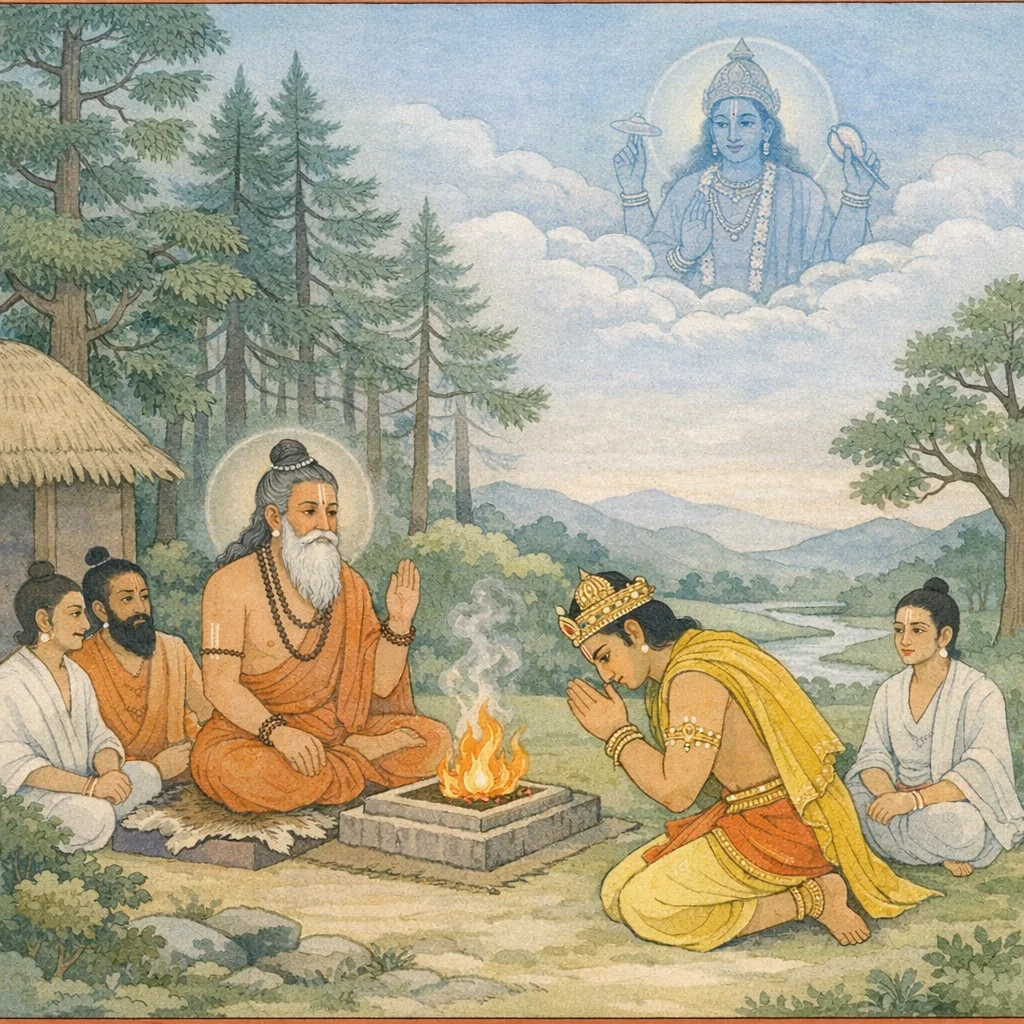
Maitreya asks how those who seek victory over saṃsāra worship Viṣṇu and what fruit such worship yields. Parāśara replies with an ancient exemplum (Sagara’s question to Aurva): worship of Govinda grants worldly aims, heaven, exalted stations, and even supreme nirvāṇa. The governing principle is that Viṣṇu is chiefly pleased through the observance of varṇa–āśrama conduct; there is no separate path, for Hari is the Self of all beings and every act therefore touches Him. Ethical restraints are taught as modes of ārādhana—avoiding slander, falsehood, and agitating speech; not desiring another’s spouse or wealth; non-violence; service to devas, dvijas, and gurus; universal welfare; and purity from rāga and other doṣas. The chapter then outlines varṇa-dharmas: the brāhmaṇa’s dāna, yajña, svādhyāya, and sacred-fire duties; the kṣatriya’s protection and governance; the vaiśya’s cattle-keeping, trade, and agriculture; and the śūdra’s charity and domestic rites, along with shared virtues and emergency allowances (āpaddharma) without karma-saṅkara, before turning toward āśrama-dharma.
Shlokas
Verse 1
भगवन् भगवान् देवः संसारविजिगीषुभिः समाख्याहि जगन्नाथो विष्णुर् आराध्यते यथा
O venerable one, O divine Lord, please explain how Vishnu—the Lord of the universe—is to be worshipped by those who seek victory over saṃsāra.
Verse 2
आराधिताच् च गोविन्दाद् आराधनपरैर् नरैः यत् प्राप्यते फलं श्रोतुं तच् चेच्छामि महामुने
O great sage, I wish to hear what fruit is attained from Govinda when men, wholly devoted to worship, adore Him with single-minded love.
Verse 3
यत् पृच्छति भवान् एतत् सगरेण महात्मना और्वः प्राह यथा पृष्टस् तन् मे कथयतः शृणु
What you ask was once asked by the great-souled King Sagara; and when questioned thus, Sage Aurva replied accordingly. Now listen as I recount it to you.
Verse 4
सगरः प्रणिपत्येदम् और्वं पप्रच्छ भार्गवम् विष्णोर् आराधनोपायसंबन्धं मुनिसत्तम
O best of sages, Sagara bowed in reverence and asked Aurva, the Bhārgava seer, about the true principle and method by which Lord Vishnu is to be worshipped.
Verse 5
फलं चाराधिते विष्णौ यत् पुंसाम् अभिजायते स चाह पृष्टो यत् तेन तन् मैत्रेयाखिलं शृणु
Maitreya, listen in full: when a man worships Viṣṇu, the Supreme Lord, whatever fruit is born for him thereby—being questioned, he declared exactly that.
Verse 6
भौमान् मनोरथान् स्वर्गं स्वर्गवन्द्यं तथास्पदम् प्राप्नोत्य् आराधिते विष्णौ निर्वाणम् अपि चोत्तमम्
When Viṣṇu is truly worshipped, one attains the fulfillment of earthly desires, heaven, and even that exalted station revered by the dwellers of heaven—and beyond these, the supreme nirvāṇa itself.
Verse 7
यद् यद् इच्छति यावच् च फलम् आराधिते ऽच्युते तत् तद् आप्नोति राजेन्द्र भूरि स्वल्पम् अथापि वा
Whatever a person longs for, and whatever result he seeks—when the Imperishable Acyuta is worshipped, O best of kings, that very fruit he attains, whether it be vast or only slight.
Verse 8
यत् तु पृच्छसि भूपाल कथम् आराध्यते हि सः तद् अहं सकलं तुभ्यं कथयामि निबोध मे
O king, as to what you ask—how indeed He is to be worshipped—listen carefully: I shall now explain to you, in full, the entire manner of His adoration.
Verse 9
वर्णाश्रमाचारवता पुरुषेण परः पुमान् विष्णुर् आराध्यते पन्था नान्यस् तत्तोषकारणम्
For one who lives in accordance with the disciplines of varṇa and āśrama, the Supreme Person—Lord Viṣṇu—is worshipped thereby. There is no other path that is the cause of His satisfaction.
Verse 10
यजन् यज्ञान् यजत्य् एनं जपत्य् एनं जपन् नृप घ्नंस् तथान्यान् हिनस्त्य् एनं सर्वभूतो यतो हरिः
O king, he who performs sacrifices truly worships Him; he who repeats sacred formulas truly invokes Him. Even one who strikes down others strikes Him—for Hari is the very Self of all beings, indwelling everywhere.
Verse 11
तस्मात् सदाचारवता पुरुषेण जनार्दनः आराध्यते स्ववर्णोक्तधर्मानुष्ठानकारिणा
Therefore Janārdana is truly worshipped by one established in right conduct, who faithfully performs the duties enjoined for his own varṇa; that disciplined dharma itself becomes an offering to the Supreme.
Verse 12
ब्राह्मणः क्षत्रियो वैश्यः शूद्रश् च पृथिवीपते स्वधर्मतत्परो विष्णुम् आराधयति नान्यथा
O lord of the earth, whether one is a brāhmaṇa, kṣatriya, vaiśya, or śūdra—only by devotion to one’s own ordained duty does one truly worship Lord Viṣṇu; there is no other way.
Verse 13
परापवादं पैशुन्यम् अनृतं च न भाषते अन्योद्वेगकरं वापि तोष्यते तेन केशवः
One who speaks no slander, no malicious tale-bearing, and no falsehood—and who avoids even words that disturb another’s mind—by such self-governed speech, Keśava is truly pleased.
Verse 14
परपत्नीपरद्रव्यपरहिंसासु यो मतिम् न करोति पुमान् भूप तोष्यते तेन केशवः
O king, that man who does not even turn his mind toward another’s wife, another’s wealth, or harm to other beings—by such inner restraint, Keśava is truly pleased.
Verse 15
न ताडयति नो हन्ति प्राणिनो ऽन्यांश् च देहिनः यो मनुष्यो मनुष्येन्द्र तोष्यते तेन केशवः
O best of men, the human who neither strikes nor kills living beings, nor harms other embodied creatures—by such a one Keśava is truly pleased.
Verse 16
देवद्विजगुरूणां यः शुश्रूषासु सदोद्यतः तोष्यते तेन गोविन्दः पुरुषेण नरेश्वर
O lord of men, the person ever intent on reverent service to the gods, the twice-born, and the teachers—by him Govinda is truly pleased.
Verse 17
यथात्मनि च पुत्रे च सर्वभूतेषु यस् तथा हितकामो हरिस् तेन तोष्यते सर्वदा सुखम्
Hari is ever pleased with the one who seeks the welfare of all beings and regards every creature with the same care he naturally has for himself and for his son—thus abiding in the joy born of universal goodwill.
Verse 18
यस्य रागादिदोषेण न दुष्टं नृप मानसम् विशुद्धचेतसा विष्णुस् तोष्यते तेन सर्वदा
O King, one whose mind is not tainted by faults beginning with attachment, whose awareness remains pure—by that very purity Lord Viṣṇu is pleased at all times.
Verse 19
वर्णाश्रमेषु ये धर्माः शास्त्रोक्ता नृपसत्तम तेषु तिष्ठन् नरो विष्णुम् आराधयति नान्यथा
O best of kings, the duties enjoined by the scriptures for the varṇas and āśramas—abiding firmly in those very duties, a person worships Lord Viṣṇu; there is no other way.
Verse 20
तद् अहं श्रोतुम् इच्छामि वर्णधर्मान् अशेषतः तथैवाश्रमधर्मांश् च द्विजवर्य ब्रवीहि तान्
Therefore I wish to hear, fully and without omission, the duties of the varṇas, and likewise the duties of the āśramas. O best of the twice-born, please expound them to me.
Verse 21
ब्राह्मणक्षत्रियविशां शूद्राणां च यथाक्रमम् त्वम् एकाग्रमना भूत्वा शृणु धर्मान् मयोदितान्
In due order I shall declare the sacred duties of the Brāhmaṇas, Kṣatriyas, Vaiśyas, and Śūdras. Become single-pointed in mind, and listen to the dharmas as I set them forth.
Verse 22
दानं दद्याद् यजेद् देवान् यज्ञैः स्वाध्यायतत्परः नित्योदकी भवेद् विप्रः कुर्याच् चाग्निपरिग्रहम्
He should give in charity, worship the gods through sacrifices, and be devoted to sacred study. The brāhmaṇa should perform the daily water-rites of purification and duly undertake the keeping of the sacred fires.
Verse 23
वृत्त्यर्थं याजयेच् चान्यान् अन्यान् अध्यापयेत् तथा कुर्यात् प्रतिग्रहादानं गुर्वर्थं न्यायतो द्विजः
For the sake of rightful livelihood, a twice-born may officiate sacrifices for others and likewise teach others. He may also accept gifts, but only justly and in accordance with dharma, especially to serve and maintain his teacher.
Verse 24
सर्वलोकहितं कुर्यान् नाहितं कस्यचिद् द्विजः मैत्री समस्तभूतेषु ब्राह्मणस्योत्तमं धनम्
A twice-born should act for the welfare of all worlds and never work harm to anyone. Friendship toward all beings—universal amity—is the Brāhmaṇa’s highest treasure.
Verse 25
ग्राव्णि रत्ने च पारक्ये समबुद्धिर् भवेद् द्विजः ऋताव् अभिगमः पत्न्यां शस्यते चास्य पार्थिव
O King, a twice-born man should keep an even mind toward a mere stone, a jewel, and another’s wealth; and he is commended to approach his own wife only in her proper season.
Verse 26
दानानि दद्याद् इच्छातो द्विजेभ्यः क्षत्रियो ऽपि हि यजेच् च विविधैर् यज्ञैर् अधीयीत च पार्थिवः
O king, a Kshatriya too should, of his own will and according to his means, give gifts to the twice-born; let him worship through many kinds of sacrifices and also study the sacred teachings.
Verse 27
शस्त्राजीवो महीरक्षा प्रवरा तस्य जीविका तस्यापि प्रथमे कल्पे पृथिवीपरिपालनम्
His livelihood was tied to the weapon, yet his highest calling was the guarding of the Earth. In that first kalpa, the very work of his life was the protection and governance of the world.
Verse 28
धरित्रीपालनेनैव कृतकृत्यो नराधिपः भवन्ति नृपतेर् अंशा यतो यज्ञादिकर्मणाम्
By the very act of protecting the earth, a ruler becomes one who has fulfilled his purpose; for from the king arise the share and continuance of works such as sacrifice and the rest.
Verse 29
दुष्टानां शासनाद् राजा शिष्टानां परिपालनात् प्राप्नोत्य् अभिमतांल् लोकान् वर्णसंस्थाकरो नृपः
By chastising the wicked and safeguarding the disciplined and virtuous, the king attains the worlds he desires; for the ruler who upholds the proper order of the varṇas stabilizes the realm’s moral structure and thus guards dharma.
Verse 30
पशुपाल्यं वणिज्यं च कृषिं च मनुजेश्वर वैश्याय जीविकां ब्रह्मा ददौ लोकपितामहः
O lord among men, Brahmā—the grandsire of the worlds—ordained for the Vaiśya his livelihood: the tending of cattle, the pursuit of trade, and the cultivation of the earth.
Verse 31
तस्याप्य् अध्ययनं यज्ञो दानं धर्मश् च शस्यते नित्यनैमित्तिकादीनाम् अनुष्ठानं च कर्मणाम्
For him too, the study of sacred teaching is praised—along with sacrifice, charity, and righteous conduct—and the faithful observance of daily and occasional rites and other prescribed duties.
Verse 32
द्विजातिसंश्रयं कर्म तादर्थ्यं तेन पोषणम् क्रयविक्रयजैर् वापि धनैः कारूद्भवेन वा
He should undertake work befitting the station of the twice-born and, directed to that purpose, sustain himself by it; or he may live on wealth from buying and selling, or on earnings gained through craftsmanship and skilled labor.
Verse 33
दानं च दद्याच् छूद्रो ऽपि पाकयज्ञैर् यजेत च पित्र्यादिकं च वै सर्वं शूद्रः कुर्वीत तेन वै
Even a Śūdra should give charity, and he may worship through the domestic offerings known as the pāka-yajñas. Likewise, he should duly perform the ancestral and related rites—indeed, all such prescribed observances are to be undertaken in that manner.
Verse 34
भृत्यादिभरणार्थाय सर्वेषां च परिग्रहः ऋतुकालाभिगमनं स्वदारेषु महीपते
O king, let resources be acquired and managed for the support of servants and all dependents; and let conjugal union be approached with one’s own wife in the proper season, in keeping with household dharma.
Verse 35
दया समस्तभूतेषु तितिक्षा नाभिमानिता सत्यं शौचम् अनायासो मङ्गलं प्रियवादिता
Compassion toward all beings, patient forbearance, humility free from pride, truthfulness, purity, effortless simplicity, auspicious conduct, and speech that is gentle and pleasing—these are the marks of a life aligned with dharma.
Verse 36
मैत्र्य् अस्पृहा तथा तद्वद् अकार्पण्यं नरेश्वर अनसूया च सामान्या वर्णानां कथिता गुणाः
O king, I have declared the virtues held in common by all the varṇas: friendliness toward all beings, freedom from craving, a heart untouched by meanness, and the absence of envy.
Verse 37
आश्रमाणां च सर्वेषाम् एते सामान्यलक्षणाः गुणांस् तथापद्धर्मांश् च विप्रादीनाम् इमाञ् छृणु
These are the common characteristics of all the āśramas. Now hear from me the virtues—and the dharma for times of distress—as they apply to the brāhmaṇa and the other twice-born.
Verse 38
क्षात्रं कर्म द्विजस्योक्तं वैश्यकर्म तथापदि राजन्यस्य च वैश्योक्तं शूद्रकर्म न चैतयोः
In a time of exigency, a twice-born man may undertake the duties of a kṣatriya, and likewise the work of a vaiśya; and even a rājanya (kṣatriya) may adopt the livelihood of a vaiśya, but for these two the work of a śūdra is not sanctioned.
Verse 39
सामर्थ्ये सति तत् त्याज्यम् उभाभ्याम् अपि पार्थिव तद् एवापदि कर्तव्यं न कुर्यात् कर्मसंकरम्
O king, when one has the capacity, that course should be relinquished by both; but in times of distress, that very course may be undertaken. Let no one create a confusion of duties—do not generate a disorderly mixture of actions that undermines dharma.
Verse 40
इत्य् एते कथिता राजन् वर्णधर्मा मया तव धर्मम् आश्रमिणां सम्यग् ब्रुवतो मे निशामय
O King, I have thus declared to you the duties of the varṇas. Now listen with care as I set forth, clearly and in due order, the sacred law of those who dwell in the four āśramas.
Frequently Asked Questions
Fulfillment of earthly desires, attainment of heaven and revered celestial status, and ultimately the supreme nirvāṇa.
Living in accordance with varṇa–āśrama duties and sadācāra (right conduct), since that disciplined dharma itself functions as worship.
By asserting Hari as the indwelling Self of all beings (sarva-bhūta-ātmā); therefore actions toward beings are actions toward Him.