Sukta 162
Sukta 1.162
Traditionally Dīrghatamas Aucathya for RV 1.162 (horse-sacrifice hymn complex; some traditions vary)
Aśva / sacrificial horse (with many gods invoked as witnesses)
Trishtubh
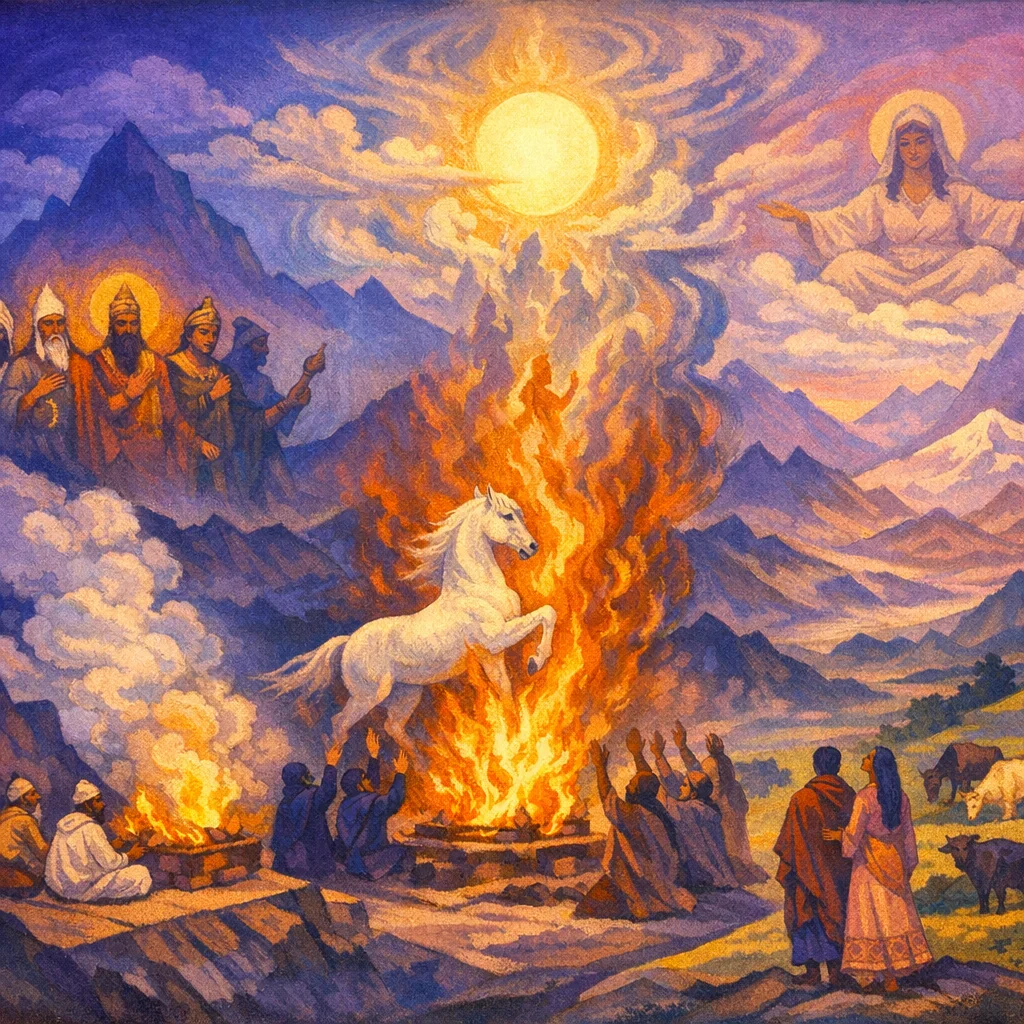
RV 1.162 is a liturgical hymn-set associated with the Aśvamedha, describing and sacralizing the consecrated horse as a god-born carrier of offering, fame, and sovereignty. It invokes many deities as witnesses so that no divine power finds fault in the rite, while carefully directing the acts of preparation, offering, and communal assent. The hymn culminates in prayers for faultlessness (anāgas), life-supporting wealth, progeny, and kṣatra—rightly ordered power—won through the ‘horse-power’ of the sacrifice.
Mantras
Mantra 1
मा नो मित्रो वरुणो अर्यमायुरिन्द्र ऋभुक्षा मरुतः परि ख्यन् । यद्वाजिनो देवजातस्य सप्तेः प्रवक्ष्यामो विदथे वीर्याणि ॥
Let not Mitra, Varuna, Aryaman, the life-force, Indra, Rbhukshan, the Maruts look upon us with blame, because we shall proclaim in the assembly the heroic powers of the swift steed born of the gods—declaring the inner mastery that must be rightly spoken.
Mantra 2
यन्निर्णिजा रेक्णसा प्रावृतस्य रातिं गृभीतां मुखतो नयन्ति । सुप्राङजो मेम्यद्विश्वरूप इन्द्रापूष्णोः प्रियमप्येति पाथः ॥
When, covered with the garment and the wealth, they lead the seized offering forward from the mouth—then the forward-moving goat, bleating, of all-forms, reaches the beloved path of Indra and Pūṣan: the life-energy is guided into the right way of the illumined and the nourisher.
Mantra 3
एष च्छागः पुरो अश्वेन वाजिना पूष्णो भागो नीयते विश्वदेव्यः । अभिप्रियं यत्पुरोळाशमर्वता त्वष्टेदेनं सौश्रवसाय जिन्वति ॥
This goat is led in front with the swift horse as Pūṣan’s portion, for all the gods. When the beloved puroḷāśa is offered with the steed, Tvaṣṭṛ strengthens it for good fame—he perfects the form so the offering becomes a true vehicle of the soul’s renown.
Mantra 4
यद्धविष्यमृतुशो देवयानं त्रिर्मानुषाः पर्यश्वं नयन्ति । अत्रा पूष्णः प्रथमो भाग एति यज्ञं देवेभ्यः प्रतिवेदयन्नजः ॥
When the offering-force, moving in the rhythm of the seasons, is led threefold by human energies around the steed of swift power, then here the first share goes to Pūṣan—the awakener and increaser—who makes the sacrifice consciously known and rightly delivered to the gods, as the unborn inner guide.
Mantra 5
होताध्वर्युरावया अग्निमिन्धो ग्रावग्राभ उत शंस्ता सुविप्रः । तेन यज्ञेन स्वरंकृतेन स्विष्टेन वक्षणा आ पृणध्वम् ॥
Let the Hotṛ and Adhvaryu, the helpers, kindle Agni; let the stone-graspers and the inspired reciter affirm the right word. By that sacrifice well-shaped into the luminous tone, perfectly offered, fill full the channels of our strength and bearing.
Mantra 6
यूपव्रस्का उत ये यूपवाहाश्चषालं ये अश्वयूपाय तक्षति । ये चार्वते पचनं सम्भरन्त्युतो तेषामभिगूर्तिर्न इन्वतु ॥
May those who fashion the posts, and those who carry them; those who carve the headpiece for the horse-post; and those who bring the cooking—may the strong collective assent and forward-impulsion of all of them move us onward.
Mantra 7
उप प्रागात्सुमन्मेऽधायि मन्म देवानामाशा उप वीतपृष्ठः । अन्वेनं विप्रा ऋषयो मदन्ति देवानां पुष्टे चकृमा सुबन्धुम् ॥
It has come near and forward; a good thought has been set in me—the thought that hopes toward the gods. Near comes the wide-backed carrier; following it, the seers and sages take delight. For the gods’ increase we have made a good bond of union.
Mantra 8
यद्वाजिनो दाम संदानमर्वतो या शीर्षण्या रशना रज्जुरस्य । यद्वा घास्य प्रभृतमास्ये तृणं सर्वा ता ते अपि देवेष्वस्तु ॥
Whatever is the binding and the fastening of the steed of plenitude, whatever head-strap and rope are his, and whatever grass is brought to his mouth—may all that be accepted and taken up among the gods, transmuted into their light.
Mantra 9
यदश्वस्य क्रविषो मक्षिकाश यद्वा स्वरौ स्वधितौ रिप्तमस्ति । यद्धस्तयोः शमितुर्यन्नखेषु सर्वा ता ते अपि देवेष्वस्तु ॥
Whatever defilement of flesh there is from flies, whatever is smeared upon the knife, whatever is on the hands of the arranger, whatever is on the nails—may all that too be taken up among the gods, purified by their acceptance.
Mantra 10
यदूवध्यमुदरस्यापवाति य आमस्य क्रविषो गन्धो अस्ति । सुकृता तच्छमितारः कृण्वन्तूत मेधं शृतपाकं पचन्तु ॥
Whatever foul breath comes from the belly, whatever scent of raw flesh there is—let the skilled arrangers make that well-settled; and let them cook the offering of intelligence, perfectly boiled and ripened.
Mantra 11
यत्ते गात्रादग्निना पच्यमानादभि शूलं निहतस्यावधावति । मा तद्भूम्यामा श्रिषन्मा तृणेषु देवेभ्यस्तदुशद्भ्यो रातमस्तु ॥
Whatever from your limbs, as they are cooked by Agni, runs down upon the spit from what is struck—let it not fall upon the earth, let it not fall among the grass; let that be given as a glad gift to the gods who desire it.
Mantra 12
ये वाजिनं परिपश्यन्ति पक्वं य ईमाहुः सुरभिर्निर्हरेति । ये चार्वतो मांसभिक्षामुपासत उतो तेषामभिगूर्तिर्न इन्वतु ॥
Those who look upon the steed when it is ripened, those who say, ‘Carry out the fragrant essence,’ and those who attend upon the steed seeking the portion of substance—may the forward-driving collective assent of them all impel us onward.
Mantra 13
यन्नीक्षणं माँस्पचन्या उखाया या पात्राणि यूष्ण आसेचनानि । ऊष्मण्यापिधाना चरूणामङ्काः सूनाः परि भूषन्त्यश्वम् ॥
The looking and tending of the flesh-cooking pot, the vessels for pouring the broth, the heat-keeping covers, the ladles of the cooked offerings—well-fashioned, they arrange and adorn the steed of force on every side.
Mantra 14
निक्रमणं निषदनं विवर्तनं यच्च पड्बीशमर्वतः । यच्च पपौ यच्च घासिं जघास सर्वा ता ते अपि देवेष्वस्तु ॥
Whatever in thee was the stepping-forth, the settling-down, the turning-about, and whatever was the impulse and forward-push of the steed; whatever thou hast drunk and whatever fodder thou hast eaten—may all that in thee be taken up and made one with the Gods.
Mantra 15
मा त्वाग्निर्ध्वनयीद्धूमगन्धिर्मोखा भ्राजन्त्यभि विक्त जघ्रिः । इष्टं वीतमभिगूर्तं वषट्कृतं तं देवासः प्रति गृभ्णन्त्यश्वम् ॥
Let not the Fire, roaring and smoke-scented, afflict thee; let not the glowing cauldron seize and scorch thee. Offered and welcomed, well-invoked and made ready with the sacred cry, that steed the Gods accept and take to themselves.
Mantra 16
यदश्वाय वास उपस्तृणन्त्यधीवासं या हिरण्यान्यस्मै । संदानमर्वन्तं पड्बीशं प्रिया देवेष्वा यामयन्ति ॥
When for the steed they spread the cloth and lay on the covering, and when the golden forms are set upon him—then they bring the horse-force into right joining and readiness, dear to the Gods, and lead it into the divine powers.
Mantra 17
यत्ते सादे महसा शूकृतस्य पार्ष्ण्या वा कशया वा तुतोद । स्रुचेव ता हविषो अध्वरेषु सर्वा ता ते ब्रह्मणा सूदयामि ॥
Whatever in thy going and setting, in the great impetus of thy roused force, was smitten by heel or by whip—those strokes, as with the ladle in the sacrifices, I make them all a consecrated offering for thee by the power of the Word.
Mantra 18
चतुस्त्रिंशद्वाजिनो देवबन्धोर्वङ्क्रीरश्वस्य स्वधितिः समेति । अच्छिद्रा गात्रा वयुना कृणोत परुष्परुरनुघुष्या वि शस्त ॥
Thirty-four ribs belong to the strong steed, kin of the Gods; the axe comes together upon the horse. Make the limbs unbroken by right skill and discerning method; joint after joint, proclaim and cut with due sound and measured art.
Mantra 19
एकस्त्वष्टुरश्वस्या विशस्ता द्वा यन्तारा भवतस्तथ ऋतुः । या ते गात्राणामृतुथा कृणोमि ताता पिण्डानां प्र जुहोम्यग्नौ ॥
One is the apportioner for Tvaṣṭṛ’s steed; two are they who guide and restrain it—so too is the right season and law. Whatever distribution of thy limbs I make according to the true measure, those portions of the masses I cast forward into Agni.
Mantra 20
मा त्वा तपत्प्रिय आत्मापियन्तं मा स्वधितिस्तन्व आ तिष्ठिपत्ते । मा ते गृध्नुरविशस्तातिहाय छिद्रा गात्राण्यसिना मिथू कः ॥
Let not the beloved inmost self, drawing near, be scorched; let not the axe stand upon thy body. Let not the greedy, unskilled cutter, overstepping, make thy limbs broken and full of gaps with the blade, striking wrongly.
Mantra 21
न वा उ एतन्म्रियसे न रिष्यसि देवाँ इदेषि पथिभिः सुगेभिः । हरी ते युञ्जा पृषती अभूतामुपास्थाद्वाजी धुरि रासभस्य ॥
Truly by this thou dost not perish, nor art thou harmed; by fair and easy paths thou goest indeed to the Gods. Two bright steeds are yoked for thee, dappled in their energies; the strong one has stood near, upon the yoke-pole of the ass—supporting the passage.
Mantra 22
सुगव्यं नो वाजी स्वश्व्यं पुंसः पुत्राँ उत विश्वापुषं रयिम् । अनागास्त्वं नो अदितिः कृणोतु क्षत्रं नो अश्वो वनतां हविष्मान् ॥
May the strong Horse-power win for us good herds of illumination and good steeds of energy, sons of the soul and a wealth that nourishes all our being. May Aditi make us without fault; may the Horse, rich with the offering, win for us the power to rule ourselves in the right order.
Frequently Asked Questions
It is a hymn used in the horse-sacrifice context that blesses and sacralizes the consecrated horse, asks the gods to witness the rite without fault-finding, and prays for prosperity and rightful power.
Because the rite is public and consequential: multiple deities (like Mitra-Varuṇa, Indra, and the Maruts) are invoked as guardians of truth, order, and force, ensuring the sacrifice is correct and effective.
It asks for life-supporting wealth (cattle, good horses, and ‘all-nourishing’ prosperity), progeny, freedom from blame or sin through Aditi, and kṣatra—stable, rightly ordered authority.