Adhyaya 93
उद्योगपर्व — अध्याय ९३: कृष्णस्य धृतराष्ट्रोपदेशः (Kṛṣṇa’s Counsel to Dhṛtarāṣṭra in the Assembly)
Upa-parva: Krishna–Dhṛtarāṣṭra Saṃvāda (Peace Counsel in the Royal Assembly)
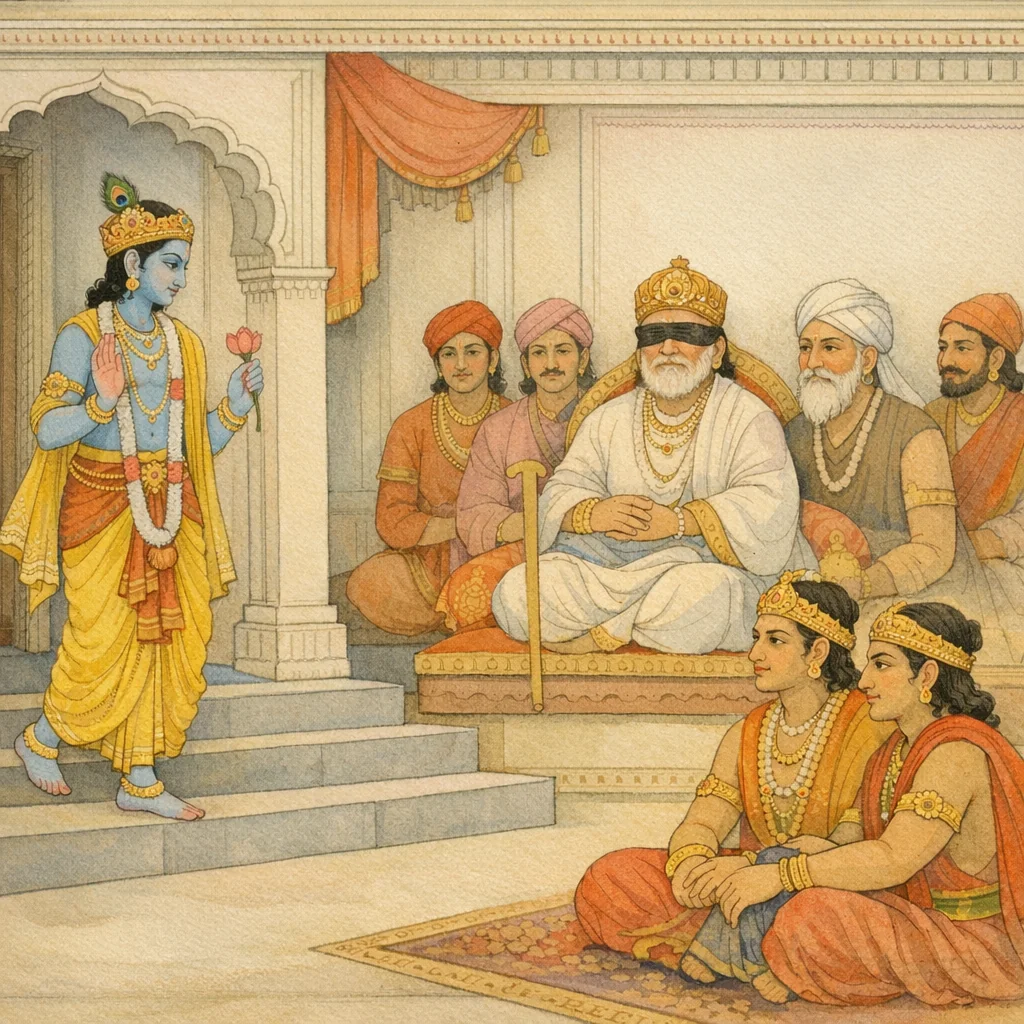
Vaiśaṃpāyana reports that, as the assembled rulers sit in silence, Kṛṣṇa rises and speaks with deliberate public audibility, addressing Dhṛtarāṣṭra as the responsible sovereign. The discourse argues for śama (conciliation) between Kurus and Pāṇḍavas as an attainable policy outcome if the king chooses to act. Kṛṣṇa frames the Kuru lineage as eminent and ethically obligated to embody compassion, non-cruelty, straightforwardness, forbearance, and truth, warning that neglect will allow a severe crisis to destroy the earth’s political order. He assigns agency: peace depends on Dhṛtarāṣṭra and on Kṛṣṇa’s mediation—Dhṛtarāṣṭra should discipline his sons, while Kṛṣṇa will stabilize the opposing side. The speech emphasizes pragmatic statecraft: unity with the Pāṇḍavas increases security and legitimacy, whereas war entails mutual depletion and civilian ruin. Kṛṣṇa also critiques assembly ethics—when dharma is injured by adharma and truth by falsehood under observers, the sabhā itself is morally compromised. He concludes by urging Dhṛtarāṣṭra to grant the Pāṇḍavas their due share, avert large-scale loss, and restore stable governance; the gathered kings inwardly approve, yet none speaks immediately after.
Chapter Arc: रात्रि के अवसान पर विदुर के धर्मार्थकाम-सम्बन्धी विविध वचनों को सुनते हुए श्रीकृष्ण का मन स्थिर और तेजस्वी रहता है—मानो नीति की धारा के बीच स्वयं नीति का स्रोत बैठा हो। → प्रभात होते ही अमिततेजस्वी शौरि राजसभा की ओर प्रस्थान करते हैं। सभाद्वार पर पहुँचकर, कैलास-शिखर के समान रथ से उतरते हैं; भीतर धृतराष्ट्र, भीष्म, द्रोण और समस्त कुरुवृद्ध-युवा उपस्थित हैं। कर्ण और दुर्योधन श्रीकृष्ण के निकट ही एक आसन पर बैठकर अपने ‘अमर्ष’ को दबाए रखते हैं—सभा में शांति के नीचे ज्वाला धधकती है। → माधव मुसकराते हुए धृतराष्ट्र तथा भीष्म-द्रोण आदि को यथावय अभिवादन/संवाद करते हैं; उसी क्षण सभा के मध्य में पीताम्बरधारी श्यामकान्ति श्रीकृष्ण स्वर्णपात्रस्थ नीलमणि के समान दीप्त हो उठते हैं और समस्त राजाओं की दृष्टि अमृत की तरह तृप्त न होने वाली होकर उन्हीं पर टिक जाती है। → सभा-प्रवेश, आसन-व्यवस्था और दृष्टि-केन्द्र का स्थिर होना—दूतकार्य के लिए मंच तैयार हो जाता है: एक ओर धर्मात्मा दूत, दूसरी ओर क्रोध से भरे कर्ण-दुर्योधन, और बीच में मौन प्रतीक्षा करती कुरुसभा। → अब श्रीकृष्ण क्या वचन कहेंगे—क्या यह सभा शांति का द्वार बनेगी या युद्ध का शंख?
Shlokas
Verse 1
इस प्रकार श्रीमह्याभारत उद्योगपर्वके अन्तर्गत भगवद्यानपर्वनें श्रीकृष्णवाक्यविषयक तिरानबेवाँ अध्याय पूरा हुआ ॥/ ९३ ॥। [दाक्षिणात्य अधिक पाठका १ श्लोक मिलाकर कुल २३ “लोक हैं।] अपन क्ाा बछ। अर: 2 चतुर्नवतितमो< ध्याय: दुर्योधन एवं शकुनिके द्वारा बुलाये जानेपर भगवान् श्रीकृष्णका रथपर बैठकर प्रस्थान एवं कौरवसभामें प्रवेश और स्वागतके पश्चात् आसनग्रहण वैशम्पायन उवाच तथा कथयतोरेव तयोरबुद्धिमतोस्तदा । शिवा नक्षत्रसम्पन्ना सा व्यतीयाय शर्वरी,वैशम्पायनजी कहते हैं--जनमेजय! उस समय बुद्धिमान श्रीकृष्ण तथा विदुरके इस प्रकार वार्तालाप करते हुए ही वह नक्षत्रोंसे सुशोभित मंगलमयी रात्रि बहुत-सी व्यतीत हो चुकी थी इस प्रकार श्रीमहाभारत उद्योगपर्वके अन्तर्गत भगवद्यानपर्वमें श्रीकृष्णका सभामें प्रवेशविषयक चौरानबेवाँ अध्याय पूरा हुआ ॥/ ९४ ॥ [दाक्षिणात्य अधिक पाठके १० ६ श्लोक मिलाकर कुल ६४ ६ “लोक हैं।] न२््च्स्स्स्ारिस्सि ह्य £:ानप्ट् पञ्चनवतितमो< ध्याय: कौरवसभामें श्रीकृष्णका प्रभावशाली भाषण वैशम्पायन उवाच तेष्वासीनेषु सर्वेषु तूष्णीम्भूतेषु राजसु । वाक्यमभ्याददे कृष्ण: सुदंष्टरो दुन्दुभिस्वन:
Vaiśampāyana said: O Janamejaya, while those two wise ones—Śrī Kṛṣṇa and Vidura—were still conversing in this manner, that auspicious night, adorned with stars, passed on for the most part.
Verse 2
धर्मार्थकामयुक्ताश्च विचित्रार्थपदाक्षरा: । शृण्वतो विविधा वाचो विदुरस्यथ महात्मन:,महात्मा श्रीकृष्ण धर्म, अर्थ और कामके विषयमें अनेक प्रकारकी बातें कहते रहे। उनकी वाणीके पद, अर्थ और अक्षर बड़े विचित्र थे; अतः महात्मा विदुर भगवानकी कही हुई उन विविध वार्ताओंको प्रसन्नता-पूर्वक सुनते रहे। इस प्रकार अमिततेजस्वी श्रीकृष्ण और विदुर दोनों ही एक-दूसरेकी मनोनुकूल कथावार्तामें इतने तन््मय थे कि बिना इच्छाके ही उनकी वह रात्रि बहुत-सी व्यतीत हो गयी थी
Vaiśampāyana said: As the noble Vidura listened, Śrī Kṛṣṇa continued to speak in many ways on dharma, artha, and kāma. His speech was remarkable—its words, meanings, and even syllables were strikingly varied—so Vidura heard those diverse conversations with glad attention.
Verse 3
कथाभिरनुरूपाभि: कृष्णस्यामिततेजस: । अकामस्येव कृष्णस्य सा व्यतीयाय शर्वरी,महात्मा श्रीकृष्ण धर्म, अर्थ और कामके विषयमें अनेक प्रकारकी बातें कहते रहे। उनकी वाणीके पद, अर्थ और अक्षर बड़े विचित्र थे; अतः महात्मा विदुर भगवानकी कही हुई उन विविध वार्ताओंको प्रसन्नता-पूर्वक सुनते रहे। इस प्रकार अमिततेजस्वी श्रीकृष्ण और विदुर दोनों ही एक-दूसरेकी मनोनुकूल कथावार्तामें इतने तन््मय थे कि बिना इच्छाके ही उनकी वह रात्रि बहुत-सी व्यतीत हो गयी थी
Vaiśampāyana said: As they spoke in conversations well-suited to the mighty, immeasurably radiant Kṛṣṇa, the night passed away—so swiftly that it seemed to Kṛṣṇa himself as though he had not even wished it to pass. Absorbed in mutually pleasing discourse on dharma and right conduct, their time slipped by unnoticed.
Verse 4
ततस्तु स्वरसम्पन्ना बहव: सूतमागधा: । शड्खदुन्दुभिनिर्घोषै: केशवं प्रत्यवोधयन्,तदनन्तर मधुर स्वरसे युता बहुत-से सूत और मागध शंख और दुन्दुभियोंके घोषसे भगवान् श्रीकृष्णको जगाने लगे
Then, many bards—Sūtas and Māgadhas—endowed with sweet and well-trained voices, awakened Keśava (Śrī Kṛṣṇa) with the resounding blasts of conches and the booming of kettledrums.
Verse 5
तत उत्थाय दाशाह ऋषभ: सर्वसात्वताम् | सर्वमावश्यकं चक्रे प्रातःकार्य जनार्दन:,तब समस्त यदुवंशियोंके शिरोमणि दशार्हनन्दन श्रीकृष्णने शय्यासे उठकर प्रात:कालका समस्त आवश्यक कर्म क्रमश: सम्पन्न किया
Then Janārdana—foremost among the Dāśārhas and the best of all the Sāttvatas—rose from his bed and, in due order, performed all the customary duties to be done at dawn.
Verse 6
कृतोदकानुजप्य: स हुताग्नि: समलंकृत: । ततश्नादित्यमुद्यन्तमुपातिषछतत माधव:,संध्या-तर्पण और जप करके अन्निहोत्र करनेके पश्चात् माधवने अलंकृत होकर उदयकालमें सूर्यका उपस्थान किया
Vaiśampāyana said: Having completed the twilight water-offerings and recitation, and having duly performed the fire-oblation, he then adorned himself. Thereafter, at daybreak, Mādhava stood in reverent attendance upon the rising Sun.
Verse 7
अथ दुर्योधन: कृष्णं शकुनिश्चापि सौबल: । संध्यां तिष्ठन्तम भ्येत्य दाशाहमपराजितम्,इसी समय राजा दुर्योधन और सुबलपुत्र शकुनि भी संध्योपासनामें लगे हुए अपराजित वीर दशार्हनन्दन श्रीकृष्णके पास आये और उनसे इस प्रकार बोले--“गोविन्द! महाराज धृतराष्ट्र सभामें आ गये हैं। भीष्म आदि कौरव तथा अन्य समस्त भूपाल भी वहाँ उपस्थित हैं। जैसे स्वर्गमें देवता इन्द्रका आवाहन करते हैं, इसी प्रकार भीष्म आदि सब लोग आपसे वहाँ दर्शन देनेकी प्रार्थना करते हैं।! यह सुनकर भगवान् श्रीकृष्णने परम मधुर सान्त्वनापूर्ण वचनद्वारा उन दोनोंका अभिनन्दन किया
Vaiśaṃpāyana said: Then Duryodhana, along with Śakuni the son of Subala, approached Kṛṣṇa—the unconquered hero of the Dāśārhas—while He was engaged in the twilight worship. They addressed Him: “Govinda, King Dhṛtarāṣṭra has entered the assembly. Bhīṣma and the Kaurava elders, along with all the other kings, are present there. As the gods in heaven invoke Indra, so do Bhīṣma and the rest request Your presence for an audience.” Hearing this, Bhagavān Śrī Kṛṣṇa greeted the two with exceedingly gentle, reassuring words, maintaining courtesy amid the gathering’s rising strain.
Verse 8
आचतक्षेतां तु कृष्णस्य धृतराष्ट्रं सभागतम् । कुरूंश्व॒ भीष्मप्रमुखान् राज्ञ: सर्वाश्व पार्थिवान्,इसी समय राजा दुर्योधन और सुबलपुत्र शकुनि भी संध्योपासनामें लगे हुए अपराजित वीर दशार्हनन्दन श्रीकृष्णके पास आये और उनसे इस प्रकार बोले--“गोविन्द! महाराज धृतराष्ट्र सभामें आ गये हैं। भीष्म आदि कौरव तथा अन्य समस्त भूपाल भी वहाँ उपस्थित हैं। जैसे स्वर्गमें देवता इन्द्रका आवाहन करते हैं, इसी प्रकार भीष्म आदि सब लोग आपसे वहाँ दर्शन देनेकी प्रार्थना करते हैं।! यह सुनकर भगवान् श्रीकृष्णने परम मधुर सान्त्वनापूर्ण वचनद्वारा उन दोनोंका अभिनन्दन किया
Vaiśaṃpāyana said: Duryodhana and Śakuni approached Śrī Kṛṣṇa, the unconquered scion of the Dāśārhas, while He was engaged in the evening rite, and said: “Govinda, King Dhṛtarāṣṭra has entered the assembly. Bhīṣma and the Kurus, with all the gathered kings, are there. Like the gods invoking Indra in heaven, they ask You to come and grant them audience.” Hearing this, Bhagavān Śrī Kṛṣṇa received them with exceedingly gentle, reassuring words.
Verse 9
त्वामर्थयन्ते गोविन्द दिवि शक्रमिवामरा: । तावभ्यनन्दद् गोविन्द: साम्ना परमवल्गुना,इसी समय राजा दुर्योधन और सुबलपुत्र शकुनि भी संध्योपासनामें लगे हुए अपराजित वीर दशार्हनन्दन श्रीकृष्णके पास आये और उनसे इस प्रकार बोले--“गोविन्द! महाराज धृतराष्ट्र सभामें आ गये हैं। भीष्म आदि कौरव तथा अन्य समस्त भूपाल भी वहाँ उपस्थित हैं। जैसे स्वर्गमें देवता इन्द्रका आवाहन करते हैं, इसी प्रकार भीष्म आदि सब लोग आपसे वहाँ दर्शन देनेकी प्रार्थना करते हैं।! यह सुनकर भगवान् श्रीकृष्णने परम मधुर सान्त्वनापूर्ण वचनद्वारा उन दोनोंका अभिनन्दन किया
Vaiśaṃpāyana said: “O Govinda, they entreat You just as the gods in heaven invoke Śakra (Indra).” Hearing this, Govinda welcomed the two with words of the utmost gentleness—soothing, courteous, and fit for a time heavy with foreboding.
Verse 10
ततो विमल आदित्ये ब्राह्मणे भ्यो जनार्दन: । ददौ हिरण्यं वासांसि गाश्षाश्वांक्ष परंतप:,तदनन्तर निर्मल सूर्यदेवका उदय हो जानेपर शत्रुओंको संताप देनेवाले भगवान् जनार्दनने ब्राह्मणोंको सुवर्ण, वस्त्र, गौ तथा घोड़े दान किये। अनेक प्रकारके रत्नोंका दान करके खड़े हुए उन अपराजित दाशा्ह वीरके पास जाकर सारथिने उनके चरणोंमें मस्तक झुकाया
Vaiśaṃpāyana said: Then, when the sun rose clear and bright, Janārdana—scorcher of foes—bestowed gifts upon the brāhmaṇas: gold, garments, cows, and horses.
Verse 11
विसृज्य बहुरत्नानि दाशार्हमपराजितम् । तिष्ठन्तमुपसंगम्य ववन्दे सारथिस्तदा,तदनन्तर निर्मल सूर्यदेवका उदय हो जानेपर शत्रुओंको संताप देनेवाले भगवान् जनार्दनने ब्राह्मणोंको सुवर्ण, वस्त्र, गौ तथा घोड़े दान किये। अनेक प्रकारके रत्नोंका दान करके खड़े हुए उन अपराजित दाशा्ह वीरके पास जाकर सारथिने उनके चरणोंमें मस्तक झुकाया
Vaiśaṃpāyana said: After bestowing many precious gems, the charioteer approached the unconquered hero of the Dāśārha line as He stood there, and bowed down in reverence at His feet.
Verse 12
ततो रथेन शुभ्रेण महता किड्किणीकिना । हयोत्तमयुजा शीघ्रमुपातिषछ्तत दारुक:,इसके बाद क्षुद्र घण्टिकाओंसे विभूषित और उत्तम घोड़ोंसे जुते हुए चमकीले विशाल रथके साथ दारुक शीघ्र ही भगवान्की सेवामें उपस्थित हुआ
Then Dāruka swiftly presented himself for service, arriving with a splendid, great chariot—bright, adorned with small tinkling bells, and yoked to excellent horses.
Verse 13
(तस्मै रथवरो युक्त: शुशुभे लोकविश्रुत: । वाजिभि: शैब्यसुग्रीवमेघपुष्पबनलाहकै: ।। भगवानके लिये जोतकर खड़ा किया हुआ वह विश्वविख्यात श्रेष्ठ रथ बड़ी शोभा पा रहा था। उसमें शैब्य, सुग्रीव, मेघपुष्प और बलाहक नामवाले चार घोड़े जुते हुए थे। शैब्यस्तु शुकपत्राभ: सुग्रीव: किंशुकप्रभ: । मेघपुष्पो मेघवर्ण: पाण्डुरस्तु बलाहक: ।। उनमेंसे शैब्यका रंग तोतेकी पाँखके समान हरा था। सुग्रीव पलासके फूलकी भाँति लाल था। मेघपुष्पकी कान्ति मेघोंके ही समान थी और बलाहक सफेद था। दक्षिणं चावहच्छैब्य: सुग्रीव: सव्यतो5वहत् । पृष्ठवाहौ तयोरास्तां मेघपुष्पबनलाहकौ ।। शैब्य दाहिने भागमें जुतकर उस रथका वहन करता था और सुग्रीव बाँयें भागमें। मेघपुष्प और बलाहक क्रमश: इनके पीछे जुते हुए थे। वैनतेय: स्थितस्तस्यां प्रभाकरमिव स्पृशन् । तस्य सत्त्ववत: केतौ भुजगारिरशो भत ।। सत्वगुणके अधिष्ठानस्वरूप भगवान् श्रीकृष्णके रथमें लगे हुए ध्वजदण्डकी उस पताकामें सूर्यका स्पर्श करते हुए-से सर्पशत्रु विनतानन्दन गरुड विराज रहे थे। तस्य कीर्तिमतस्तेन भास्वरेण विराजता । शुशुभे स्यन्दनश्रेष्ठ: पतगेन्द्रेण केतुना ।। कीर्तिमान् श्रीकृष्णका वह श्रेष्ठ रथ उस उज्ज्वल एवं प्रकाशमान गरुडथ्वजके द्वारा बड़ी शोभा पा रहा था। रुक्मजालै: पताकाभि: सौवर्णेन च केतुना । बभूव स रथश्रेष्ठ; कालसूर्य इवोदित: ।। सोनेकी जालियों, पताकाओं तथा सुवर्णमय ध्वजके द्वारा भगवान्का वह उत्तम रथ प्रलयकालमें उदित हुए सूर्यके समान उद्धासित हो रहा था। पक्षिध्वजवितानैश्न रुक्मजालकृतान्तरै: । दण्डमार्गविभागैश्व सुकृतैर्विश्वकर्मणा ।। प्रवालमणिहेमैश्व मुक्तावैडूर्य भूषणै: । किड्किणीशतसड्चैश्व वालजालकृतान्तरै: ।। कार्तस्वरमयीभिश्न पद्मिनीभिरलंकृत: । शुशुभे स्यन्दनश्रेष्ठस्तापनीयैश्न पादपै: ।। व्याप्रसिंहवराहैश्न गोवृषैर्मुगपक्षिभि: । ताराभिभर्भास्करैश्लापि वारणैश्न हिरण्मयै: ।। वज्ाड्कुशविमानैश्व कूबरावृत्तसंधिषु ।) उस रथके गरुडध्वज, चँदोवे, स्वर्णजालविभूषित मध्यभाग तथा पृथक्-पृथक् दण्डमार्गोका विश्वकर्माने सुन्दर ढंगसे निर्माण किया था। प्रवाल (मूँगा), मणि, सुवर्ण, वैदूर्य, मुक्ता आदि विविध आभूषणों, शत-शत क्षुद्रधघण्टिकाओं तथा वालमणिकी झालरोंसे उस रथके अन्तःप्रदेश सुसज्जित किये गये थे। सुवर्णमय कमलिनियों, तपाये हुए सुवर्णके ही वृक्षों तथा व्याप्र, सिंह, वराह, वृषभ, मृग, पक्षी, तारा, सूर्य और हाथियोंकी स्वर्णमयी प्रतिमाओंसे उस श्रेष्ठ रथकी अत्यन्त शोभा हो रही थी। कूबर (युगंधर)-की गोलाकार संधियोंमें वज्ञ, अंकुश तथा विमानकी आकृतियोंसे उस रथको विभूषित किया गया था। तमुपस्थितमाज्ञाय रथं दिव्यं महामना: । महाभ्रघननिर्घोषं सर्वरत्नविभूषितम्,महान् सजल मेघोंकी गर्जनाके समान गम्भीर शब्द करनेवाले तथा सब प्रकारके रत्नोंसे विभूषित हुए उस दिव्य रथको उपस्थित जान अग्नि एवं ब्राह्मणोंको दाहिने करके, गलेमें कौस्तुभभणि डालकर, अपनी उत्कृष्ट शोभासे प्रकाशित होते हुए, कौरवोंसे घिरकर एवं वृष्णिवंशी वीरोंसे सुरक्षित हो समस्त यादवोंको आनन्द प्रदान करनेवाले महामना शूरनन्दन जनार्दन श्रीकृष्ण उस रथपर आरूढ़ हुए
Vaiśaṃpāyana said: For him, the world-renowned, excellent chariot—already yoked—shone with splendor. It was harnessed with four horses named Śaibya, Sugrīva, Meghapuṣpa, and Balāhaka. The verse heightens the moral and narrative tension of the Udyoga Parva: as diplomacy strains toward war, Kṛṣṇa’s presence is marked not by boastful aggression but by auspicious order, fame, and disciplined readiness—suggesting that power, when aligned with dharma, manifests as harmony and radiance rather than mere force.
Verse 14
आने प्रदक्षिणं कृत्वा ब्राह्मणांश्व जनार्दन: । कौस्तुभं मणिमामुच्य श्रिया परमया ज्वलन्,महान् सजल मेघोंकी गर्जनाके समान गम्भीर शब्द करनेवाले तथा सब प्रकारके रत्नोंसे विभूषित हुए उस दिव्य रथको उपस्थित जान अग्नि एवं ब्राह्मणोंको दाहिने करके, गलेमें कौस्तुभभणि डालकर, अपनी उत्कृष्ट शोभासे प्रकाशित होते हुए, कौरवोंसे घिरकर एवं वृष्णिवंशी वीरोंसे सुरक्षित हो समस्त यादवोंको आनन्द प्रदान करनेवाले महामना शूरनन्दन जनार्दन श्रीकृष्ण उस रथपर आरूढ़ हुए
Vaiśampāyana said: Having circumambulated the sacred fire and the brāhmaṇas, Janārdana—wearing the Kaustubha jewel and blazing with supreme splendor—approached the divine chariot, adorned with every kind of gem and resonant with a deep sound like the thunder of rain-laden clouds. With the fire and the brāhmaṇas kept to his right in reverence, surrounded by the Kauravas and protected by the Vṛṣṇi heroes, the high-minded Śrī Kṛṣṇa, delighting all the Yādavas, mounted that chariot.
Verse 15
कुरुभि: संवृतः कृष्णो वृष्णिभिश्चाभिरक्षित: । आतिष्ठत रथं शौरि: सर्वयादवनन्दन:,महान् सजल मेघोंकी गर्जनाके समान गम्भीर शब्द करनेवाले तथा सब प्रकारके रत्नोंसे विभूषित हुए उस दिव्य रथको उपस्थित जान अग्नि एवं ब्राह्मणोंको दाहिने करके, गलेमें कौस्तुभभणि डालकर, अपनी उत्कृष्ट शोभासे प्रकाशित होते हुए, कौरवोंसे घिरकर एवं वृष्णिवंशी वीरोंसे सुरक्षित हो समस्त यादवोंको आनन्द प्रदान करनेवाले महामना शूरनन्दन जनार्दन श्रीकृष्ण उस रथपर आरूढ़ हुए
Vaiśaṃpāyana said: Surrounded by the Kurus and protected by the Vṛṣṇi heroes, Śauri Kṛṣṇa—delighting all the Yādavas—mounted his chariot.
Verse 16
अन्वारुरोह दाशारईं विदुर: सर्वधर्मवित् । सर्वप्राणभुतां श्रेष्ठ सर्वबुद्धिमतां वरम्,समस्त प्राणियोंमें श्रेष्ठ और सम्पूर्ण बुद्धिमानोंमें उत्तम दशार्हनन्दन श्रीकृष्णके पश्चात् समस्त धर्मोंके ज्ञाता विदुरजी भी उस रथपर जा बैठे
Vaiśampāyana said: After Dāśārha-nandana Śrī Kṛṣṇa—foremost among all living beings and the best among the wise—Vidura too, the knower of all dharmas, mounted that chariot.
Verse 17
ततो दुर्योधन: कृष्णं शकुनिश्चापि सौबल: । द्वितीयेन रथेनैनमन्वयातां परंतपम्,तदनन्तर शत्रुओंको संताप देनेवाले श्रीकृष्णके पीछे-पीछे दुर्योधन और सुबलपुत्र शकुनि भी दूसरे रथपर बैठकर चले
Vaiśampāyana said: Then Duryodhana, and also Śakuni the son of Subala, followed after Kṛṣṇa—the scorcher of foes—riding in a second chariot.
Verse 18
सात्यकि: कृतवर्मा च वृष्णीनां चापरे रथा: । पृष्ठतो$नुययु: कृष्णं गजैरश्वेः रथैरपि,सात्यकि, कृतवर्मा तथा वृष्णिवंशके दूसरे रथी भी हाथी, घोड़ों तथा रथोंपर बैठकर श्रीकृष्णके पीछे-पीछे गये
Vaiśampāyana said: Sātyaki and Kṛtavarmā, along with other chariot-warriors of the Vṛṣṇi clan, followed behind Kṛṣṇa—some mounted on elephants, some on horses, and some in chariots.
Verse 19
तेषां हेमपरिष्कारैर्युक्ता: परमवाजिभि: । गच्छतां घोषिण श्षित्ररथा राजन् विरेजिरे,राजन्! उन सबके जाते समय सोनेके आभूषणोंसे विभूषित, उत्तम घोड़ोंसे जुते हुए एवं गम्भीर घोषयुक्त उनके विचित्र रथ बड़ी शोभा पा रहे थे
Vaiśaṃpāyana said: “O King, as they set forth, their splendid chariots—resounding with a deep rumble, yoked to excellent horses, and adorned with golden fittings—shone brilliantly.”
Verse 20
सम्मृष्टसंसिक्तरज: प्रतिपेदे महापथम् । राजर्षिचरितं काले कृष्णो धीमाडञ्छ़िया ज्वलन्,अपनी दिव्य कान्तिसे प्रकाशित होनेवाले परम बुद्धिमान् भगवान् श्रीकृष्ण यथासमय उस विशाल राजपथपर जा पहुँचे, जिसपर पूर्वकालके राजर्षि यात्रा करते थे। वहाँकी धूल झाड़ दी गयी थी और सर्वत्र जलसे छिड़काव किया गया था
Vaiśampāyana said: In due time, Kṛṣṇa—the supremely wise one, blazing with his own divine radiance—set forth upon the great royal highway, the ancient route once traversed by royal seers. The road had been carefully swept of dust and sprinkled with water, prepared in reverent order for his passage.
Verse 21
श्रीकृष्णका कौरवस भामें प्रवेश ततः प्रयाते दाशाहिें प्रावाद्यन्तैकपुष्करा: । शड्खाश्न दश्ष्मिरे तत्र वाद्यान्यन्यानि यानि च,भगवान् श्रीकृष्णके प्रस्थान करनेपर ढोल, शंख तथा दूसरे-दूसरे बाजे एक साथ बज उठे
Vaiśampāyana said: When Śrī Kṛṣṇa entered the Kaurava court, and then set out to depart, the Dāśas (attendants/drummers) struck the kettle-drums in unison; conches were blown there, and other instruments as well.
Verse 22
प्रवीरा: सर्वलोकस्य युवान: सिंहविक्रमा: । परिवार्य रथं शौरेरगच्छन्त परंतपा:,शत्रुओंको संताप देनेवाले, सिंहके समान पराक्रमी तथा सम्पूर्ण जगतके प्रख्यात तरुण वीर भगवान् श्रीकृष्णके रथको घेरकर चलते थे
Vaiśampāyana said: The renowned young heroes of the whole world—lion-like in valor and fierce in battle—moved along surrounding the chariot of Śauri (Śrī Kṛṣṇa), intent on scorching the enemy with their might.
Verse 23
ततो<न्ये बहुसाहस्रा विचित्राद्भुतवासस: । असिप्रासायुधधरा: कृष्णस्यासन् पुर:सरा:,श्रीकृष्णके आगे चलनेवाले सैनिकोंकी संख्या कई सहस्र थी। उन सबने विचित्र एवं अद्भुत वस्त्र धारण कर रखे थे। उनके हाथोंमें खड्ग और प्रास आदि आयुध शोभा पाते थे
Vaiśampāyana said: Then many other troops—numbering several thousands—advanced in front of Kṛṣṇa. They wore garments of striking and wondrous variety, and in their hands swords and spears and other weapons gleamed.
Verse 24
गजा: पञ्चशतास्तत्र रथाश्चासन् सहस्रश: । प्रयान्तमन्वयुर्वीरं दाशाहमपराजितम्,किसीसे पराजित न होनेवाले दशार्हवंशी वीर भगवान् श्रीकृष्णके पीछे उस यात्राके समय पाँच सौ हाथी और सहस्रों रथ जा रहे थे
Vaiśampāyana said: There, five hundred elephants and thousands of chariots followed the heroic Dāśārha—Śrī Kṛṣṇa—who was undefeated by any foe, as he set forth on his journey.
Verse 25
पुरं कुरूणां संवृत्तं द्रष्टकामं जनार्दनम् । सबालवृद्धं सस्त्रीकं रथ्यागतमरिंदम,शत्रुदमन जनमेजय! उस समय भगवान् श्रीकृष्णका दर्शन करनेके लिये बालक, वृद्ध तथा स्त्रियोंसहित कौरवोंका सारा नगर सड़कपर आ गया था
Vaiśampāyana said: O Janamejaya, subduer of foes—when Janārdana (Śrī Kṛṣṇa) arrived, the entire city of the Kurus poured out into the streets, eager to behold him, with children, the aged, and women all coming together.
Verse 26
वेदिकामश्रिताभिक्षू समाक्रान्तान्यनेकश: । प्रचलन्तीव भारेण योषिद्धिर्भवनान्युत,छतोंके सड़ककी ओरवाले भागपर बैठी हुई झुंड-की-झुंड स्त्रियोंके भारसे मानो हस्तिनापुरके वे सारे भवन कम्पित-से हो रहे थे
Vaiśaṃpāyana said: The buildings of Hastināpura seemed to tremble under the weight of crowds of women seated along the roof-terraces facing the street, gathered in great numbers to watch the events unfold.
Verse 27
स पूज्यमान: कुरुभि: संशृण्वन् मधुरा: कथा: । यथाहईं प्रतिसत्कुर्वन् प्रेक्षमाण: शनैर्यया,भगवान् श्रीकृष्ण कौरवोंसे सम्मानित होते हुए, उनकी मीठी-मीठी बातें सुनते हुए और यथायोग्य उनका भी सत्कार करते हुए धीरे-धीरे सबकी ओर देखते जा रहे थे
Vaiśampāyana said: Honoured by the Kurus, Śrī Kṛṣṇa listened to their sweet words. Returning their courtesies as was fitting, he moved on slowly, casting his gaze over everyone—composed, attentive, and mindful of proper conduct amid a tense political moment.
Verse 28
ततः सभां समासाद्य केशवस्यानुयायिन: । सशड्खेैरवेणुनिर्घोषैर्दिश: सर्वा व्यनादयन्,कौरवसभाके समीप पहुँचकर श्रीकृष्णके अनुगामी सेवकोंने शंख और वेणु आदि वाद्योंकी ध्वनिसे सम्पूर्ण दिशाओंको गुँजा दिया
Then, having reached the assembly hall, the attendants who followed Keśava (Kṛṣṇa) made all the directions resound with the blare of conches and the loud notes of flutes and other instruments—an announcement of his arrival and a deliberate display of confidence and royal dignity in the tense diplomatic setting.
Verse 29
ततः सा समिति: सर्वा राज्ञाममिततेजसाम् | सम्प्राकम्पत हर्षेण कृष्णागमनकाड्क्षया,तत्पश्चात् अमिततेजस्वी राजाओंकी वह सारी सभा भगवान् श्रीकृष्णके शुभागमनकी आकांक्षाके कारण हर्षोल्लाससे चंचल हो उठी
Then that entire assembly of kings, men of immeasurable splendor, began to tremble and stir with joy, filled with eager expectation for the auspicious arrival of Śrī Kṛṣṇa. The scene underscores how the presence of a righteous mediator can awaken hope and restraint even amid looming conflict.
Verse 30
ततो<भ्याशगते कृष्णे समहृष्यन् नराधिपा: । श्रुत्वा तं रथनिर्घोषं पर्जन्यनिनदोपमम्
Then, as Kṛṣṇa drew near, the kings were filled with joy. Hearing the thunderous roar of his chariot—like the rumbling of rain-clouds—they responded with eager excitement, sensing the arrival of a decisive, dharma-guiding presence amid the mounting crisis.
Verse 31
आसाद्य तु सभाद्वारमृषभ: सर्वसात्वताम् | अवतीर्य रथाच्छौरि: कैलासशिखरोपमात्
Having reached the doorway of the royal assembly hall, Śauri—foremost among all the Sātvatas—descended from his chariot, which was likened to the peak of Mount Kailāsa. The scene underscores dignified restraint and deliberate conduct at a critical political moment: even one of supreme prowess approaches the court with measured decorum rather than force.
Verse 32
नवमेघप्रतीकाशां ज्वलन्तीमिव तेजसा । महेन्द्रसदनप्रख्यां प्रविवेश सभां तत:
Vaiśaṃpāyana said: Then she entered the assembly hall—dark and massed like a fresh rain-cloud, yet seeming to blaze with radiance; the hall itself was splendid, like the palace of Mahendra (Indra). The scene heightens the moral tension of the court: outward magnificence frames an inward crisis where honor, justice, and restraint are about to be tested.
Verse 33
श्रीकृष्णके निकट आनेपर उनके रथका मेघगर्जनाके समान गम्भीर घोष सुनकर सभी नरेश रोमांचित हो उठे। सभाके द्वारपर पहुँचकर सर्वयादवशिरोमणि भगवान् श्रीकृष्णने कैलासशिखरके समान समुज्ज्वल रथसे नीचे उतरकर नूतन मेघके समान श्याम तथा तेजसे प्रज्वलित-सी होनेवाली इन्द्रभवनतुल्य उस कौरव-सभाके भीतर प्रवेश किया ॥। ३० -३२ ।। पाणोौ गृहीत्वा विदुरं सात्यकिं च महायशा: । ज्योतींष्यादित्यवद् राजन् कुरून् प्राच्छादयज्छ़िया,राजन! जैसे सूर्य अपनी प्रभासे आकाशके तारोंको तिरोहित कर देते हैं, उसी प्रकार महायशस्वी भगवान् श्रीकृष्ण अपनी दिव्य कान्तिसे कौरवोंको आच्छादित करते हुए विदुर और सात्यकिका हाथ पकड़े सभामें आये
Vaiśaṃpāyana said: O King, the illustrious Śrī Kṛṣṇa entered the Kuru assembly holding Vidura and Sātyaki by the hand. As the sun outshines and makes the stars vanish from sight, so did Kṛṣṇa, by his divine splendor, seem to cover and eclipse the Kurus—an image that underscores both his moral authority and the gravity of the peace-mission amid the looming war.
Verse 34
अग्रतो वासुदेवस्य कर्णदुर्योधनावुभौ । वृष्णय: कृतवर्मा चाप्यासन् कृष्णस्य पृष्ठत:,वसुदेवनन्दन श्रीकृष्णके आगे-आगे कर्ण और दुर्योधन थे और उनके पीछे कृतवर्मा तथा अन्य वृष्णिवंशी वीर थे
Vaiśampāyana said: In front of Vāsudeva (Śrī Kṛṣṇa) were both Karṇa and Duryodhana, while behind Kṛṣṇa were Kṛtavarmā and other heroes of the Vṛṣṇi clan. The verse underscores how the great figures of the coming war align themselves around Kṛṣṇa—some taking the lead and others following—hinting at the moral tension between power-seeking alliance and rightful guidance.
Verse 35
धृतराष्ट्रं पुरस्कृत्य भीष्मद्रोणादयस्तत: । आसनेभ्यो5चलन् सर्वे पूजयन्तो जनार्दनम्,उस समय भीष्म और द्रोणाचार्य आदि सब लोग भगवान् श्रीकृष्णका सम्मान करनेके लिये राजा धृतराष्ट्रको आगे करके अपने आसनोंसे उठकर आगे बढ़े
Vaiśaṃpāyana said: Placing King Dhṛtarāṣṭra in front, Bhīṣma, Droṇa, and the others then rose from their seats and stepped forward, honoring Janārdana (Śrī Kṛṣṇa). The scene underscores the courtly ethic that even amid looming conflict, rightful respect is offered to a revered guest and moral authority.
Verse 36
अभ्यागच्छति दाशाहें प्रज्ञाचक्षुनरिश्वर: । सहैव द्रोणभीष्माभ्यामुदतिष्ठन्महायशा:,ब्छ्खटाए- 00 - >खऋू | दशाहईनन्दन श्रीकृष्णके आते ही महायशस्वी प्रज्ञाचक्षु राजा धृतराष्ट्र भीष्म और द्रोणाचार्यके साथ ही उठ गये थे
When Dāśārha (Śrī Kṛṣṇa) approached, the renowned king Dhṛtarāṣṭra—though blind, yet ‘seeing’ through understanding—rose at once, together with Bhīṣma and Droṇa. The scene underscores the court’s formal respect for Kṛṣṇa’s moral and political stature, even as the kingdom stands on the brink of war.
Verse 37
उत्तिष्ठति महाराजे धृतराष्टे जनेश्वरे । तानि राजसहस्राणि समुन्तस्थु: समनन््तत:,महाराज धुृतराष्ट्रके उठनेपर वहाँ चारों ओर बैठे हुए सहस्रों नरेश उठकर खड़े हो गये
When King Dhṛtarāṣṭra, lord of men, rose to his feet, the thousands of kings seated all around likewise stood up at once—an outward act of courtly discipline and recognition of royal authority amid the tense political deliberations preceding war.
Verse 38
आसन सर्वतोभद्रं जाम्बूनदपरिष्कृतम् । कृष्णार्थे कल्पितं तत्र धृतराष्ट्रस्य शासनात्,राजा धृतराष्ट्रकी आज्ञासे वहाँ भगवान् श्रीकृष्णके लिये सुवर्णभूषित सर्वतोभद्र नामक सिंहासन रखा गया था
Vaiśampāyana said: By King Dhṛtarāṣṭra’s command, a throne called “Sarvatobhadra,” adorned with refined gold, was arranged there for Kṛṣṇa. The scene underscores the formal honor shown to a revered envoy, even amid impending conflict, where outward respect and inner intention may diverge.
Verse 39
स्मयमानस्तु राजानं भीष्मद्रोणौ च माधव: । अभ्यभाषत धर्मात्मा राज्ञश्नान्यान् यथावय:,उस समय धर्मात्मा भगवान् श्रीकृष्णने मुसकराते हुए राजा धृतराष्ट्र, भीष्म, द्रोणाचार्य तथा अवस्थाके अनुसार अन्य राजाओंसे भी वार्तालाप किया
Smiling, Mādhava (Śrī Kṛṣṇa), righteous in purpose, addressed the king Dhṛtarāṣṭra, and also Bhīṣma and Droṇa; and, according to their respective rank and standing, he conversed with the other kings as well. The scene underscores diplomatic courtesy and dharmic restraint at a tense political moment.
Verse 40
तत्र केशवमानर्चु: सम्यगभ्यागतं सभाम् । राजान: पार्थिवा: सर्वे कुरवश्च जनार्दनम्,वहाँ सभामें पधारे हुए भगवान् श्रीकृष्णका भूमण्डलके राजाओं तथा सभी कौरवोंने भलीभाँति पूजन किया
There, all the kings of the earth, along with the Kurus, duly honored Keśava—Janārdana—who had arrived properly in the assembly hall. The scene underscores the ethical expectation that even amid political tension, a worthy guest and revered envoy must be received with correct hospitality and respect.
Verse 41
तत्र तिष्ठन् स दाशाहों राजमध्ये परंतप: । अपश्यदन्तरिक्षस्थानृषीन् परपुरंजय: । ततस्तानभिससम्प्रेक्ष्य नारदप्रमुखानृषीन्,राजाओंके बीचमें खड़े हुए शत्रुनगरविजयी परंतप श्रीकृष्णने देखा कि आकाशमें कुछ ऋषि-मुनि खड़े हैं। उन नारद आदि महर्षियोंको देखकर श्रीकृष्णने धीरेसे शान्तनुनन्दन भीष्मसे कहा-- “नरेश्वर! इस राजसभाको देखनेके लिये ऋषिगण पधारे हैं
Standing there in the midst of the assembled kings, Śrī Kṛṣṇa—scorcher of foes, conqueror of enemy cities—beheld certain sages stationed in the sky. Then, having carefully observed those seers led by Nārada, he proceeded to address Bhīṣma, the son of Śāntanu, indicating that the ṛṣis had arrived to witness the royal council—an implicit reminder that the deliberations of rulers are accountable to higher moral and spiritual scrutiny.
Verse 42
अभ्यभाषत दाशार्हों भीष्म शान्तनवं शनै: । पार्थिवीं समितिं द्रष्टमूषयो$भ्यागता नूप,राजाओंके बीचमें खड़े हुए शत्रुनगरविजयी परंतप श्रीकृष्णने देखा कि आकाशमें कुछ ऋषि-मुनि खड़े हैं। उन नारद आदि महर्षियोंको देखकर श्रीकृष्णने धीरेसे शान्तनुनन्दन भीष्मसे कहा-- “नरेश्वर! इस राजसभाको देखनेके लिये ऋषिगण पधारे हैं
Vaiśampāyana said: Dāśārha Śrī Kṛṣṇa softly addressed Bhīṣma, the son of Śāntanu: “O king, sages have arrived to behold this assembly of kings.” Seeing the great seers present in the sky, Kṛṣṇa signals that even political deliberations and the looming war are being witnessed under a higher moral and spiritual scrutiny.
Verse 43
निमन्त्रयन्तामासनैश्नव सत्कारेण च भूयसा । नैतेष्वनुपविष्टेषु शक्यं केनचिदासितुम्,“इन्हें अत्यन्त सत्कारपूर्वक आसन देकर निमन्त्रित किया जाय, क्योंकि इनके बैठे बिना कोई भी बैठ नहीं सकता
Vaiśampāyana said: “Let them be invited and seated with fresh seats and with even greater honor. For until these persons have taken their places, no one else is able to sit.” The statement underscores the ethical priority of honoring eminent guests and elders first, establishing proper order and respect in an assembly.
Verse 44
पूजा प्रयुज्यतामाशु मुनीनां भावितात्मनाम् | ऋषीउ्छान्तनवो दृष्टवा सभाद्वारमुपस्थितान्
Vaiśaṃpāyana said: “Let due honors be offered at once to these sages of disciplined spirit.” Seeing the ṛṣis standing at the entrance to the assembly hall, the son of Śāntanu (Bhīṣma) urged that they be received with prompt reverence—upholding the court’s duty to honor spiritual authority and maintain righteous conduct even amid political tension.
Verse 45
त्वरमाणस्ततो भृत्यानासनानीत्यचोदयत् | “पवित्र अन्तःकरणवाले इन मुनियोंकी शीघ्र पूजा की जानी चाहिये।” शान्तनुनन्दन भीष्मने मुनियोंको देखकर सभाद्वारपर स्थित हुए राजकर्मचारियोंको बड़ी उतावलीके साथ आज्ञा दी--'अरे! आसन लाओ' || ४४ ह ।। आसनान्यथ मृष्टानि महान्ति विपुलानि च
Then, in haste, he urged the attendants to bring seats, declaring that these sages—pure in inner disposition—must be honored without delay. Seeing the sages, Bhīṣma, the son of Śāntanu, quickly commanded the royal officials stationed at the hall’s entrance: “Hey! Bring seats!” Thereupon, well-polished, large, and spacious seats were brought.
Verse 46
तेषु तत्रोपविष्टेषु गृहीतार्ष्यषु भारत
Vaiśampāyana said: “O Bhārata, when they were seated there, having taken up the sacred, r̥ṣi-sanctioned observances (and preparations)…”
Verse 47
दुःशासन: सात्यकये ददावासनमुत्तमम्
Vaiśampāyana said: Duḥśāsana offered Sātyaki an excellent seat—an outward gesture of honor and hospitality amid tense negotiations, where courtesy is maintained even between rival camps.
Verse 48
अविदूरे तु कृष्णस्य कर्णदुर्योधनावुभौ
Vaiśampāyana said: Not far from Kṛṣṇa stood both Karṇa and Duryodhana—near enough for their presence to be felt, as the rival leaders gathered around Kṛṣṇa at a decisive moment in the unfolding conflict.
Verse 49
गान्धारराज: शकुनिर्गान्धारैरभिरक्षित:
Vaiśampāyana said: Śakuni, the king of Gāndhāra, remained under the protection and guard of the Gāndhāran men—signaling his secured position and the organized support of his own people within the unfolding political tensions.
Verse 50
विदुरो मणिपीठे तु शुक्लस्पर्ध्याजिनोत्तरे
Vaiśampāyana said: Vidura, seated upon a jeweled throne and clad in a spotless, white, deer-skin garment, appeared in a posture of austere dignity—signaling a life guided by restraint and moral clarity amid the court’s rising tensions.
Verse 51
संस्पृशन्नासनं शौरेमहामतिरुपाविशत् । परम बुद्धिमान् विदुर भगवान् श्रीकृष्णके आसनका स्पर्श करते हुए एक मणिमय चौकीपर, जिसके ऊपर श्वैत रंगका स्पृहणीय मृगचर्म बिछाया गया था, बैठे थे || ५० हू ।। चिरस्य दृष्टवा दाशाह राजान: सर्व एव ते
Vaiśampāyana said: Touching the seat, the great-minded Śauri sat down. The supremely wise Vidura, having respectfully touched the seat prepared for Śrī Kṛṣṇa, sat upon a jewel-like low stool on which a desirable white deerskin had been spread. The scene underscores courtly decorum and the ethical weight of honoring the righteous counselor and the divine envoy with proper reverence.
Verse 52
अतसीपुष्पसंकाश: पीतवासा जनार्दन:
Vaiśampāyana said: Janārdana (Kṛṣṇa), clad in yellow garments and radiant like the blossom of the flax plant, appeared with a serene, auspicious brilliance—an image that signals divine guidance and moral steadiness amid the gathering tensions that will lead to war.
Verse 53
व्यभ्राजत सभाम ध्ये हेम्नीवोपहितो मणि:
Vaiśampāyana said: In the midst of the assembly hall, it shone brilliantly—like a jewel set in gold—standing out with dignified splendor amid the gathered elders and kings. The image underscores how true eminence becomes most visible in a public forum, where honor, legitimacy, and the moral weight of counsel are tested before all.
Verse 54
अलसीके फूलकी भाँति मनोहर श्याम कान्तिवाले पीताम्बरधारी श्रीकृष्ण उस सभाके मध्यभागमें स्वर्ण-पात्रमें रखी हुई नीलमणिके समान शोभा पा रहे थे ।। ततस्तृष्णीं सर्वमासीद् गोविन्दगतमानसम् | न तत्र कश्चित् किज्चिद् वा व्याजहार पुमान् क्वचित्,उस समय वहाँ सबका मन भगवान् गोविन्दमें ही लगा हुआ था। अतः सभी चुपचाप बैठे थे। कोई मनुष्य कहीं कुछ भी बोल नहीं रहा था
Then everything fell silent, for the minds of all present were absorbed in Govinda. In that assembly no person, anywhere, spoke even a single word—such was the stillness born of reverence and inward attention.
Verse 94
इति श्रीमहा भारते उद्योगपर्वणि भगवद्यानपर्वणि श्रीकृष्णस भाप्रवेशे चतुर्नवतितमो< ध्याय:
Thus, in the revered Mahābhārata, within the Udyoga Parva—specifically in the section concerning the Lord’s peace-mission—ends the ninety-fourth chapter, describing Śrī Kṛṣṇa’s entry into the royal assembly. This closing colophon frames the episode as a dharmic intervention: Kṛṣṇa’s diplomatic approach is presented as a final ethical effort to avert war through counsel, restraint, and rightful negotiation.
Verse 456
मणिकाजउ्चनचित्राणि समाजहुस्ततस्ततः । तब सेवकोंने इधर-उधरसे मणि एवं सुवर्ण जड़े हुए शुद्ध, विशाल एवं विस्तृत आसन लाकर रख दिये
Vaiśampāyana said: Then, from various directions, attendants quickly gathered and brought in seats—pure, large, and spacious—adorned with inlaid gems and gold, and set them in place. The scene underscores the formal etiquette of a royal assembly, where outward order and honorific arrangements accompany weighty deliberations on duty and impending conflict.
Verse 466
निषसादासने कृष्णो राजानश्व यथासनम् | भारत! अर्घ्य ग्रहण करके जब ऋषिलोग उन आसनोंपर बैठ गये, तब भगवान् श्रीकृष्ण तथा अन्य राजाओंने भी अपना-अपना आसन ग्रहण किया
Vaiśampāyana said: Kṛṣṇa sat down upon his seat, and the kings too took their places as was proper. O descendant of Bharata, when the sages—having accepted the arghya, the ceremonial offering of respect—were seated on their allotted seats, then the blessed Śrī Kṛṣṇa and the other kings also assumed their own seats.
Verse 476
विविंशतिर्ददौ पीठं काज्चनं कृतवर्मणे । दुःशासनने सात्यकिको उत्तम आसन दिया एवं विविंशतिने कृतवर्माको स्वर्णमय आसन प्रदान किया
Vaiśampāyana said: Viviṁśati presented a golden seat to Kṛtavarman. Duḥśāsana, in turn, offered Sātyaki an excellent seat.
Verse 486
एकासने महात्मानौ निषीदतुरमर्षणौ । अमर्षमें भरे हुए महामना कर्ण और दुर्योधन दोनों एक आसनपर श्रीकृष्णके पास ही बैठे थे
Vaiśampāyana said: The two great men, Karṇa and Duryodhana—both unable to bear affront and filled with smouldering resentment—sat together on a single seat, close by Śrī Kṛṣṇa.
Verse 496
निषसादासने राजा सहतपुत्रो विशाम्पते । जनमेजय! गान्धारदेशीय सैनिकोंसे सुरक्षित पुत्रसहित गान्धारराज शकुनि भी एक आसनपर बैठा था
Vaiśampāyana said: O Janamejaya, the king—lord of the people—sat down upon his seat along with his son. Shakuni too, the king of Gandhāra, protected by soldiers from the Gandhāra region, sat on a single seat together with his son.
Verse 513
अमृतस्येव नातृप्यन् प्रेक्षमाणा जनार्दनम् | सब राजा दीर्घकालके पश्चात् दशार्हकुलभूषण भगवान् जनार्दनको देखकर उन्हींकी ओर एकटक दृष्टि लगाये रहे, मानो अमृत पी रहे हों। इस प्रकार उन्हें तृप्ति ही नहीं होती थी
Vaiśampāyana said: Gazing steadily at Janārdana, the king could not be satisfied—just as one never feels sated while drinking nectar. After a long time, on seeing the Lord Janārdana, the ornament of the Daśārha clan, he kept his eyes fixed upon Him, as though tasting immortality itself.
Frequently Asked Questions
The dilemma is whether the sovereign will enforce lawful restraint within his own family—granting a just settlement and curbing harmful ambition—or allow partiality and inaction to convert a resolvable succession dispute into widespread destruction.
Governance is ethical agency: peace is achievable when rulers choose truth, restraint, and public welfare over short-term acquisition. Institutional silence in the face of wrongdoing is portrayed as a failure of dharma, not neutrality.
No explicit phalaśruti is stated in this passage; instead, the chapter uses consequentialist meta-commentary—warning that ignored counsel and assembly complicity lead to systemic harm—thereby underscoring the interpretive value of dharma-centered political judgment.