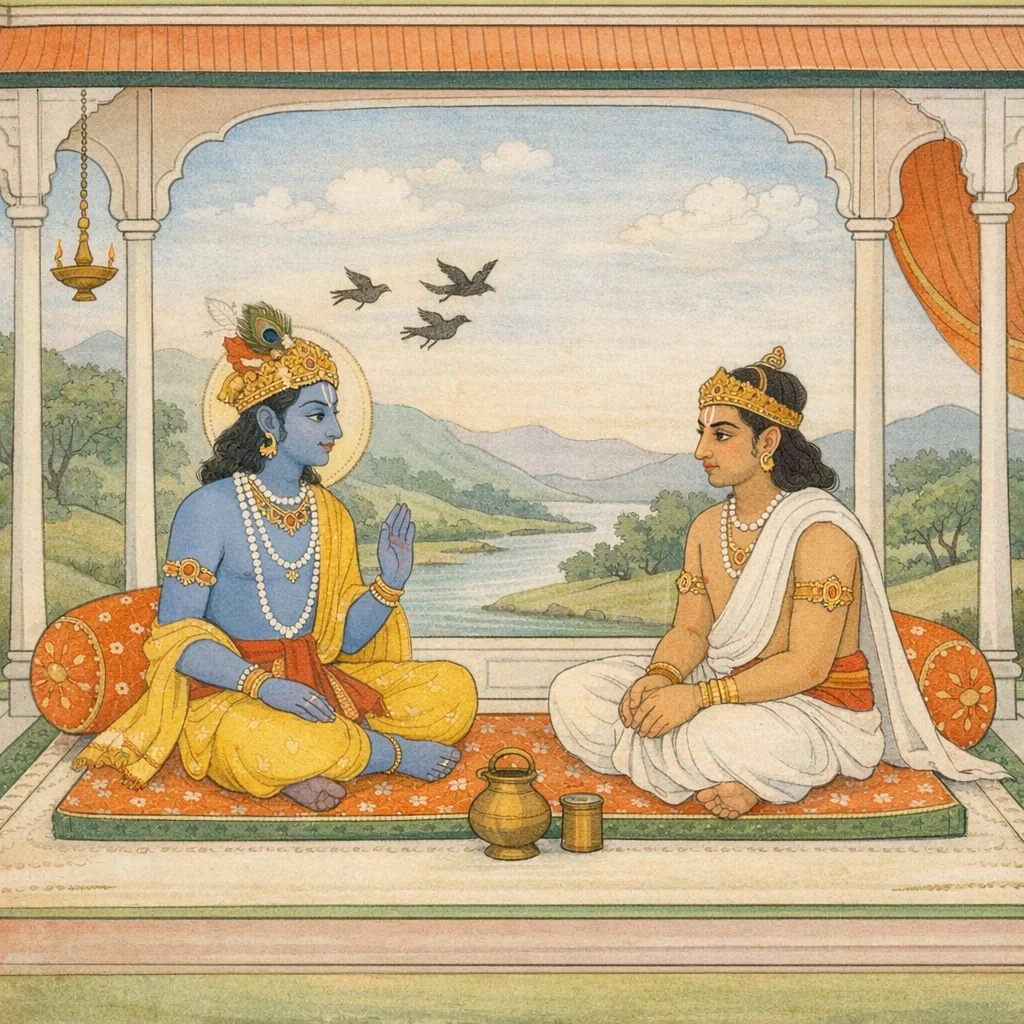
Adhyaya 72
Udyoga Parva, Adhyāya 72 — Bhīmasena’s counsel on conciliation and Duryodhana’s disposition
Upa-parva: Udyoga Parva — Krishna’s diplomatic briefing and counsel (Bhīmasena’s assessment of Duryodhana)
Bhīmasena addresses Kṛṣṇa (Madhusūdana/Vāsudeva), urging him to speak in whatever manner secures peace for the Kurus and not to provoke fear of war. He advises that Duryodhana should be approached through sāman (conciliation) rather than harsh speech, while simultaneously presenting a detailed temperament profile: resentful, perpetually agitated, hostile to others’ welfare, morally lax, pride-intoxicated, vindictive toward the Pāṇḍavas, and resistant to changing his stance even at personal cost. Bhīma frames this as a governance risk—anger spreading like fire and consuming lineages—then invokes exemplars of destructive rulers (a catalog of notorious kings) as cautionary parallels. Despite pessimism about reconciliation with such a person, Bhīma recommends gradual, gentle dharma- and artha-consistent counsel, and proposes de-escalatory postures (even adopting humility) to prevent the ruin of the Bhāratas. He also emphasizes engaging elders and court members to restore fraternal concord, noting Arjuna’s reluctance for war and his compassionate disposition.
Chapter Arc: युधिष्ठिर के सामने धर्म और क्षात्र-कर्तव्य का द्वंद्व खड़ा है—वे शान्ति-याचना की ओर झुकते हैं, पर संकेतों और वाणी में युद्ध की अनिवार्यता गूंजने लगती है। → कृष्ण युधिष्ठिर को समझाते हैं कि उनकी बुद्धि धर्माश्रित है, जबकि कौरवों की मति वैराश्रित; जो लाभ युद्ध के बिना मिल सकता हो, वही युधिष्ठिर को प्रिय है, पर क्षत्रिय-धर्म का नैष्ठिक कर्म केवल याचना नहीं। साथ ही वे बताते हैं कि शान्ति माँगने से अधर्म का भाग नहीं मिलता, पर कौरव-सभा और प्रजा के बीच धृतराष्ट्र-पुत्रों की निन्दा और धिक्कार अवश्य उठेगा। → कृष्ण निर्णायक स्वर में दुर्योधन की हठधर्मिता उद्घाटित करते हैं—वह जीवित रहते पाण्डवों का द्यूत में हृत राज्य लौटाने को तैयार नहीं; ऊपर से अपशकुन और घोर लक्षण (मृग-पक्षियों के भयावह शब्द, अग्नि के विकृत वर्ण) आने वाले विनाश की मुहर लगा देते हैं। → कृष्ण युधिष्ठिर को यह धैर्य देते हैं कि शान्ति-प्रयास धर्मसम्मत है, किंतु परिणाम की सच्चाई भी दिखाते हैं—यदि कुलीन की निन्दा और वध में चुनना पड़े तो क्षत्रिय के लिए वध (युद्ध) ही अधिक गुणकारक माना गया है, क्योंकि निन्दा जीवन को घृणित बनाती है। → कृष्ण के वचन के बाद दूत-यात्रा और सभा-समागम की छाया गहराती है—क्या शान्ति-याचना कौरवों की हठ को तोड़ पाएगी, या अपशकुनों की भविष्यवाणी युद्ध को अवश्यंभावी बना देगी?
Shlokas
Verse 1
[दाक्षिणात्य अधिक पाठके ५ इ श्लोक मिलाकर कुल ९८ ६ “लोक हैं।] #ीरशशा< (0) आस असस- - कुत्तोंके दुम हिलानेके समान राजाओंका ध्वज-कम्पन है, उनके गुर्रनेकी जगह उनका सिंहनाद है। कुत्ते जो एक- दूसरेको देखकर गर्जते हैं, उसी प्रकार दो विरोधी क्षत्रिय एक-दूसरेके प्रति उत्तर-प्रत्युत्तरके रूपमें आक्षेपजनक बातें कहते हैं। एक-दूसरेके निकट जाना दोनोंमें समानरूपसे होता है। राजालोग क्रोधमें आकर जो दाँतोंसे होठ चबाते हैं, यही कुत्तोंके समान उनका दाँत दिखाना है। विकट गर्जन-तर्जन भूकना है और युद्ध करना ही कुत्तोंके समान लड़ना है। राज्यकी प्राप्ति ही वह मांसका टुकड़ा है, जिसके लिये उनमें लड़ाई होती है। त्रिसप्ततितमो<ध्याय: श्रीकृष्णका युधिष्ठिरको युद्धके लिये प्रोत्साहन देना श्रीभगवानुवाच संजयस्य श्रुतं वाक्यं भवतश्न श्रुतं मया । सर्व जानाम्यभिप्रायं तेषां च भवतक्ष यः,श्रीभगवान् बोले--राजन्! मैंने संजयकी और आपकी भी बातें सुनी हैं। कौरवोंका क्या अभिप्राय है, वह सब मैं जानता हूँ और आपका जो विचार है, उससे भी मैं अपरिचित नहीं हूँ
The Blessed Lord said: “O King, I have heard the words spoken by Sañjaya, and I have also heard what you have said. I understand fully the intention of the Kauravas, and I am not unaware of the resolve that is in your mind as well.”
Verse 2
तव धर्मश्रिता बुद्धिस्तेषां वैराश्रया मति: । यदयुद्धेन लभ्येत तत् ते बहुमतं भवेत्,आपकी बुद्धि धर्ममें स्थित है और उनकी बुद्धिने शत्रुताका आश्रय ले रखा है। आप तो बिना युद्ध किये जो कुछ मिल जाय, उसीको बहुत समझेंगे
Your understanding is grounded in dharma, while their thinking has taken refuge in enmity. Whatever could be obtained without resorting to war—that alone would seem to you the most worthwhile.
Verse 3
न चैवं नैछिकं कर्म क्षत्रियस्य विशाम्पते । आहुराश्रमिण: सर्वे न भेक्षे क्षत्रिय श्षरेत्,परंतु महाराज! यह क्षत्रियका नैष्ठिक (स्वाभाविक) कर्म नहीं है। सभी आश्रमोंके श्रेष्ठ पुरुषोंका यह कथन है कि क्षत्रियको भीख नहीं माँगनी चाहिये
And this is certainly not the steadfast, proper vocation of a kṣatriya, O lord of the people. All disciplined men of the āśramas declare that a kṣatriya should not resort to begging.
Verse 4
जयो वधो वा संग्रामे धात्रा5डदिष्ट: सनातन: । स्वधर्म: क्षत्रियस्यैष कार्पण्यं न प्रशस्यते,उसके लिये विधाताने यही सनातन कर्तव्य बताया है कि वह संग्राममें विजय प्राप्त करे अथवा वहीं प्राण दे दे। यही क्षत्रियका स्वधर्म है। दीनता अथवा कायरता उसके लिये प्रशंसाकी वस्तु नहीं है
In battle, either victory or death has been ordained by the Creator as the timeless lot. This is the kṣatriya’s own duty: to fight on. For him, faint-heartedness—cowardly self-pity—is not something worthy of praise.
Verse 5
न हि कार्पण्यमास्थाय शक््या वृत्तिर्युधिष्ठिर । विक्रमस्व महाबाहो जहि शत्रून् परंतप,महाबाहु युधिष्ठिर! दीनताका आश्रय लेनेसे क्षत्रियकी जीविका नहीं चल सकती। शत्रुओंको संताप देनेवाले महाराज! अब पराक्रम दिखाइये और शत्रुओंका संहार कीजिये
“For a kṣatriya, livelihood and rightful standing cannot be sustained by taking refuge in dejection and self-pity, O Yudhiṣṭhira. Show your valor, mighty-armed one; strike down the enemies, O scorcher of foes.”
Verse 6
अतिगृद्धा: कृतस्नेहा दीर्घकालं सहोषिता: । कृतमित्रा: कृतबला धार्तराष्ट्रा: परंतप,परंतप! धृतराष्ट्रके पुत्र बड़े लोभी हैं। इधर उन्होंने बहुत-से मित्र-राजाओंका संग्रह कर लिया है और उनके साथ दीर्घकालतक रहकर अपने प्रति उनका स्नेह भी बढ़ा लिया है। (शिक्षा और अभ्यास आदिके द्वारा भी) उन्होंने विशेष शक्तिका संचय कर लिया है
Yudhiṣṭhira said: “O scorcher of foes, the sons of Dhṛtarāṣṭra are exceedingly greedy. By dwelling long with many allied kings, they have fostered firm mutual affection; they have secured friendships and amassed strength. Thus, through association, training, and sustained preparation, they have built up a formidable power against us.”
Verse 7
न पर्यायो$स्ति यत् साम्य॑ त्वयि कुर्युविशाम्पते । बलतवत्तां हि मन्यन्ते भीष्मद्रोणकृपादिभि:,अतः प्रजानाथ! ऐसा कोई उपाय नहीं है, जिससे (वे आपको आधा राज्य देकर) आपके प्रति समता (सन्धि) स्थापित करें। भीष्म, द्रोण और कृपाचार्य आदि उनके पक्षमें हैं, इसलिये वे अपनेको आपसे अधिक बलवान् समझते हैं
Yudhiṣṭhira said: “O lord of the people, there is no course by which they would establish equality with you—no settlement that treats you as an equal. For, with Bhīṣma, Droṇa, Kṛpa and others on their side, they imagine themselves the stronger; therefore they will not concede even a fair share, and peace on just terms becomes unlikely.”
Verse 8
यावच्च मार्दवेनैतान् राजन्नुपचरिष्यसि । तावदेते हरिष्यन्ति तव राज्यमरिंदम,अतः शत्रुदमन राजन! जबतक आप इनके साथ नर्मीका बर्ताव करेंगे, तबतक ये आपके राज्यका अपहरण करनेकी ही चेष्टा करेंगे
Yudhiṣṭhira said: “O King, so long as you deal with them in gentleness and soft forbearance, so long will they keep striving to seize your kingdom. Therefore, O subduer of foes, a ruler must recognize when mildness only emboldens the unrighteous and invites further aggression.”
Verse 9
नानुक्रोशान्न कार्पण्यान्न च धर्मार्थकारणात् । अलं कर्तु धार्तराष्ट्रस्तव काममरिंदम,शत्रुमर्दन नरेश! आप यह न समझें कि धृतराष्ट्रके पुत्र आपपर कृपा करके या अपनेको दीन-दुर्बल मानकर अथवा धर्म एवं अर्थकी ओर दृष्टि रखकर आपका मनोरथ पूर्ण कर देंगे
Yudhiṣṭhira said: “Not out of compassion, not out of pitiable weakness, and not even for the sake of dharma or material advantage will Dhṛtarāṣṭra’s sons be willing to fulfill your desire. O subduer of foes, O king—do not imagine that they will grant your request from mercy, from self-abasement, or from regard for righteousness and policy.”
Verse 10
एतदेव निमित्तं ते पाण्डवास्तु यथा त्वयि । नान्वतप्यन्त कौपीनं तावत् कृत्वापि दुष्करम्,पाण्डुनन्दन! कौरवोंके सन्धि न करनेका सबसे बड़ा कारण या प्रमाण तो यही है कि उन्होंने आपको कौपीन धारण कराकर तथा उतने दीर्घकालतकके लिये वनवासका दुष्कर कष्ट देकर भी कभी इसके लिये पश्चात्ताप नहीं किया
Yudhiṣṭhira said: “This alone is the decisive proof against them, O son of Pāṇḍu, in the way they have treated you and the Pāṇḍavas: even after forcing you to wear a mere loincloth and after making you endure the harsh ordeal of exile for so long, they have never once felt remorse. That absence of repentance is the strongest reason why reconciliation with the Kauravas cannot truly stand.”
Verse 11
पितामहस्य द्रोणस्य विदुरस्थ च धीमत:ः । ब्राह्मणानां च साधूनां राज्ञश्ष नगरस्य च,राजन! आप दानशील, कोमलस्वभाव, मन और इन्द्रियोंको वशमें रखनेवाले, स्वभावत:ः धर्मपरायण तथा सबके हैं, तो भी क्रूर दुर्योधनने उस समय पितामह भीष्म, द्रोणाचार्य, बुद्धिमान् विदुर, साधु, ब्राह्मण, राजा धृतराष्ट्र, नगरनिवासी जनसमुदाय तथा कुरुकुलके सभी श्रेष्ठ पुरुषोंके देखते-देखते आपको जूएमें छलसे ठग लिया और अपने उस कुकृत्यके लिये वह अबतक लज्जाका अनुभव नहीं करता है
Yudhiṣṭhira said: “In the very presence of the grandsire Bhīṣma, of Droṇa, of the wise Vidura, of virtuous brāhmaṇas and saintly men, and even before the king and the citizens of the city—Duryodhana, though you are generous, gentle by nature, self-controlled in mind and senses, and innately devoted to dharma and the welfare of all—deceived you at dice and robbed you by fraud. Yet even now he feels no shame for that wrongdoing.”
Verse 12
पश्यतां कुरुमुख्यानां सर्वेषामेव तत्त्वतः । दानशील मृदुं दान्तं धर्मशीलमनुव्रतम्,राजन! आप दानशील, कोमलस्वभाव, मन और इन्द्रियोंको वशमें रखनेवाले, स्वभावत:ः धर्मपरायण तथा सबके हैं, तो भी क्रूर दुर्योधनने उस समय पितामह भीष्म, द्रोणाचार्य, बुद्धिमान् विदुर, साधु, ब्राह्मण, राजा धृतराष्ट्र, नगरनिवासी जनसमुदाय तथा कुरुकुलके सभी श्रेष्ठ पुरुषोंके देखते-देखते आपको जूएमें छलसे ठग लिया और अपने उस कुकृत्यके लिये वह अबतक लज्जाका अनुभव नहीं करता है
Yudhishthira said: “O king, in the very presence of all the foremost men of the Kuru line—who were watching and fully aware of what was happening—you, though generous, gentle, self-controlled, devoted to dharma, and faithful to your vows, were nevertheless deceitfully cheated at the dice by the cruel Duryodhana. And even now he feels no shame for that wicked deed, though it was done before grandsire Bhishma, Drona, the wise Vidura, holy men, Brahmins, King Dhritarashtra, the citizens of the city, and all the best of the Kuru clan.”
Verse 13
यत् त्वामुपधिना राजन दूते वज्चितवांस्तदा । न चापत्रपते तेन नृशंस: स्वेन कर्मणा,राजन! आप दानशील, कोमलस्वभाव, मन और इन्द्रियोंको वशमें रखनेवाले, स्वभावत:ः धर्मपरायण तथा सबके हैं, तो भी क्रूर दुर्योधनने उस समय पितामह भीष्म, द्रोणाचार्य, बुद्धिमान् विदुर, साधु, ब्राह्मण, राजा धृतराष्ट्र, नगरनिवासी जनसमुदाय तथा कुरुकुलके सभी श्रेष्ठ पुरुषोंके देखते-देखते आपको जूएमें छलसे ठग लिया और अपने उस कुकृत्यके लिये वह अबतक लज्जाका अनुभव नहीं करता है
O King, when he once deceived you by a stratagem in the matter of the dice, that ruthless man has still not felt shame for his own deed. Though you are generous, gentle by nature, self-controlled in mind and senses, and innately devoted to dharma and the good of all, cruel Duryodhana, before the very eyes of grandsire Bhīṣma, Droṇa, the wise Vidura, the virtuous and the brāhmaṇas, King Dhṛtarāṣṭra, the citizens of the city, and all the foremost men of the Kuru line, cheated you in the gambling match—and even now he does not blush for that wrongdoing.
Verse 14
तथाशीलसमाचारे राजन् मा प्रणयं कृथा: । वध्यास्ते सर्वलोकस्य कि पुनस्तव भारत,राजन्! ऐसे कुटिलस्वभाव और खोटे आचरणवाले दुर्योधनके प्रति आप प्रेम न दिखावें। भारत! धृतराष्ट्रके वे पुत्र तो सभी लोगोंके वध्य हैं; फिर आप उनका वध करें, इसके लिये तो कहना ही क्या है?
O king, show no affection toward Duryodhana, whose nature is so crooked and whose conduct so corrupt. O Bhārata, the sons of Dhṛtarāṣṭra are fit to be slain by all the world; how much more, then, if you yourself strike them down—what need is there to say more?
Verse 15
वाम्भिस्त्वप्रतिरूपाभिरतुदत् त्वां सहानुजम् । श्लाघमान: प्रहृष्ट: सन् भ्रातृभि: सह भाषते,(क्या आप वह दिन भूल गये, जब कि) दुर्योधनने भाइयोंसहित आपको अपने अनुचित वचनोंद्वारा मार्मिक पीड़ा पहुँचायी थी। वह अत्यन्त हर्षसे फ़ूलकर अपनी मिथ्या प्रशंसा करता हुआ अपने भाइयोंके साथ कहता था--“अब पाण्डवोंके पास इस संसारमें “अपनी” कहनेके लिये इतनी-सी भी कोई वस्तु नहीं रह गयी है। केवल नाम और गोत्र बचा है, परंतु वह भी शेष नहीं रहेगा"
Yudhiṣṭhira said: “With words that were unseemly and improper, he wounded you and your younger brothers. Exulting in delight, boasting in self-praise, he spoke together with his brothers: ‘Now the Pāṇḍavas have nothing at all in this world that they can call their own. Only the name and lineage remain—and even that will not remain.’”
Verse 16
एतावत् पाण्डवानां हि नास्ति किंचिदिह स्वकम् । नामधेयं च गोत्र च तदप्येषां न शिष्यते,(क्या आप वह दिन भूल गये, जब कि) दुर्योधनने भाइयोंसहित आपको अपने अनुचित वचनोंद्वारा मार्मिक पीड़ा पहुँचायी थी। वह अत्यन्त हर्षसे फ़ूलकर अपनी मिथ्या प्रशंसा करता हुआ अपने भाइयोंके साथ कहता था--“अब पाण्डवोंके पास इस संसारमें “अपनी” कहनेके लिये इतनी-सी भी कोई वस्तु नहीं रह गयी है। केवल नाम और गोत्र बचा है, परंतु वह भी शेष नहीं रहेगा"
Indeed, the Pāṇḍavas now have nothing here that they can call their own. Even their very name and lineage—those too, he boasts, will not remain to them. In this line Yudhiṣṭhira recalls the cruel, exultant taunt of Duryodhana, who, swollen with false self-praise, sought to wound them by declaring that they had been stripped of all rightful standing and would be erased even in identity.
Verse 17
कालेन महता चैषां भविष्यति पराभव: । प्रकृतिं ते भजिष्यन्ति नष्टप्रकृतयो मयि,'दीर्घकालके पश्चात् इनकी भारी पराजय होगी। इनकी स्वाभाविक शूरता-वीरता आदि नष्ट हो जायगी और ये मेरे पास ही प्राणत्याग करेंगे”
Yudhiṣṭhira said: “In the course of time, and after a long while, a great downfall will surely come upon them. Their native disposition—courage, vigor, and the like—will be broken; bereft of their true nature, they will finally return to their own condition and meet their end in my very presence.”
Verse 18
दुःशासनेन पापेन तदा झूते प्रवर्तिते । अनाथवत् तदा देवी द्रौपदी सुदुरात्मना,उन दिनों जब जूएका खेल चल रहा था, अत्यन्त दुरात्मा पापी दुःशासन अनाथकी भाँति रोती-कलपती हुई महारानी द्रौपदीको उनके केश पकड़कर राजसभामें घसीट लाया और भीष्म तथा द्रोणाचार्य आदिके समक्ष उसने उनका उपहास करते हुए बारंबार उसे “गाय” कहकर पुकारा
Yudhiṣṭhira said: “When the game of dice had begun, the sinful Duḥśāsana—of utterly wicked mind—treated Queen Draupadī as though she had no protector, subjecting her to humiliation in the assembly. This outrage, carried out in the presence of elders, stands as a grave violation of dharma and a decisive moral turning point that fuels the coming war.”
Verse 19
आकृष्य केशे रुदती सभायां राजसंसदि । भीष्मद्रोणप्रमुखतो गौरिति व्याहृता मुहुः,उन दिनों जब जूएका खेल चल रहा था, अत्यन्त दुरात्मा पापी दुःशासन अनाथकी भाँति रोती-कलपती हुई महारानी द्रौपदीको उनके केश पकड़कर राजसभामें घसीट लाया और भीष्म तथा द्रोणाचार्य आदिके समक्ष उसने उनका उपहास करते हुए बारंबार उसे “गाय” कहकर पुकारा
Yudhiṣṭhira said: “Dragging her by the hair as she wept in the royal assembly hall, in the very presence of Bhīṣma, Droṇa, and the foremost elders, she was repeatedly addressed with the insulting cry ‘cow!’—a cruel public humiliation that exposed the collapse of dharma in the court.”
Verse 20
भवता वारिता: सर्वे भ्रातरो भीमविक्रमा: । धर्मपाशनिबद्धाश्न न किंचित् प्रतिपेदिरे,यद्यपि आपके भाई भयंकर पराक्रम प्रकट करनेमें समर्थ थे, तथापि आपने इन्हें रोक दिया, इसलिये धर्मबन्धनमें बँधे होनेके कारण ये उस समय उस अन्यायका कुछ भी प्रतीकार न कर सके
You restrained all my brothers, though they were capable of fearsome valor. Bound by the noose of dharma, they could not, at that time, undertake any counteraction against that injustice.
Verse 21
एताश्षान्याश्न॒ परुषा वाच: स समुदीरयन् । श्लाघते ज्ञातिमध्ये सम त्वयि प्रव्रजिते वनम्,जब आप वनकी ओर जाने लगे, उस समय भी वह बन्धु-बान्धवोंके बीचमें ऊपर कही हुई तथा और भी बहुत-सी कठोर बातें कहकर अपनी प्रशंसा करता रहा
Uttering these—and many other—harsh words, he kept proclaiming his own greatness in the midst of the kinsmen, even at the time when you had departed for the forest as an exile. The remark underscores the ethical ugliness of pride and cruelty displayed publicly against one who is already suffering, and it frames Yudhiṣṭhira’s grievance in terms of violated kinship-dharma and basic decency.
Verse 22
ये तत्रासन् समानीतास्ते दृष्टवा त्वामनागसम् । अश्रुकण्ठा रुदन्तश्न॒ सभायामासते तदा
Those who had been brought there, on seeing you—blameless and undeserving of such treatment—were choked with tears. Weeping, they sat in the assembly then, overcome by grief and moral distress at the injustice before them.
Verse 23
जो लोग वहाँ बुलाये गये थे, वे सभी नरेश आपको निरपराध देखकर रोते और आँसू बहाते हुए रुँँधे हुए कण्ठसे उस समय चुपचाप सभामें बैठे रहे ।। न चैनमभ्यनन्दंस्ते राजानो ब्राह्मणै: सह । सर्वे दुर्योधन तत्र निन्दन्ति सम सभासद:,ब्राह्मगोंसहित उन राजाओंने वहाँ दुर्योधनकी प्रशंसा नहीं की। उस समय सभी सभासद् उसकी निन्दा ही कर रहे थे
Yudhiṣṭhira said: “All the kings who had been summoned there, seeing you to be without fault, sat silently in the assembly—weeping, shedding tears, their throats choked with grief. Nor did those kings, together with the brāhmaṇas, offer him any approval. In that hall, O Duryodhana, all the assembled men were in fact censuring him.”
Verse 24
कुलीनस्य च या निन्दा वधो वामित्रकर्शन । महागुणो वधो राजन् न तु निन्दा कुजीविका
Yudhiṣṭhira said: “O subduer of foes, for a man of noble birth, either death or blame may come; yet, O king, death can be a great virtue, whereas living on in disgrace is a wretched livelihood. Better to accept an honorable end than to sustain oneself by ignominy.”
Verse 25
शत्रुसूदन! कुलीन पुरुषकी निन्दा हो या वध--इनमेंसे वध ही उसके लिये अत्यन्त गुणकारक है; निन्दा नहीं। निन्दा तो जीवनको घृणित बना देती है ।। तदैव निहतो राजन् यदैव निरपत्रप: | निन्दितश्न महाराज पृथिव्यां सर्वराजभि:,महाराज! जब इस भूमण्डलके सभी राजाओंने निन््दा की, उसी समय उस निर्लज्ज दुर्योधनकी एक प्रकारसे मृत्यु हो गयी
O King, that shameless Duryodhana was, in a sense, slain at the very moment when all the kings upon the earth condemned him. For a noble man, public censure is more ruinous than death: death may preserve honor, but disgrace makes life itself contemptible.
Verse 26
ईषत् कार्यो वधस्तस्य यस्य चारित्रमीदृशम् | प्रस्कन्देन प्रतिस्तब्धश्छिन्नमूल इव द्रुम:,जिसका चरित्र इतना गिरा हुआ है, उसका वध करना तो बहुत साधारण कार्य है। जिसकी जड़ कट गयी हो और जो गोल वेदीके आधारपर खड़ा हो, उस वृक्षकी भाँति दुर्योधनके भी धराशायी होनेमें अब अधिक विलम्ब नहीं है
Yudhiṣṭhira said: “To slay one whose conduct is of such a kind is, in truth, an easy task. Like a tree whose roots have been cut and which stands only propped up by a support, Duryodhana too will not take long to fall.”
Verse 27
वध्य: सर्प इवानार्य: सर्वलोकस्य दुर्मति: । जह्ोनं त्वममित्रघ्न मा राजन् विचिकित्सिथा:,खोटी बुद्धिवाला दुराचारी दुर्योधन दुष्ट सर्पकी भाँति सब लोगोंके लिये वध्य है। शत्रुओंका नाश करनेवाले महाराज! आप दुविधामें न पड़ें, इस दुष्टको अवश्य मार डालें
“Duryodhana—base and of wicked mind—is like a venomous serpent to all the world, fit to be slain. O King, destroyer of foes, do not hesitate; surely strike down this evil one.”
Verse 28
सर्वथा त्वत्क्षमं चैतद् रोचते च ममानघ । यत् त्वं पितरि भीष्मे च प्रणिपातं समाचरे:,निष्पाप नरेश! आप जो पितृतुल्य धृतराष्ट्र तथा पितामह भीष्मके प्रति प्रणाम एवं नम्रतापूर्ण बर्ताव करते हैं, वह सर्वथा आपके योग्य है। मैं भी इसे पसंद करता हूँ
Yudhiṣṭhira said: “Blameless one, this conduct is in every way worthy of you, and it pleases me as well—that you continue to offer respectful obeisance and humble service to Dhṛtarāṣṭra as to a father, and to grandsire Bhīṣma.”
Verse 29
अहं तु सर्वलोकस्य गत्वा छेत्स्यामि संशयम् । येषामस्ति द्विधाभावो राजन् दुर्योधन प्रति,राजन! दुर्योधनके सम्बन्धमें जिन लोगोंका मन दुविधामें है--जो लोग उसके अच्छे या बुरे होनेका निर्णय नहीं कर सके हैं, उन सब लोगोंका संदेह मैं वहाँ जाकर दूर कर दूँगा
Yudhiṣṭhira said: “I shall go myself and dispel the doubt of all people—of those, O King, whose minds are divided regarding Duryodhana.”
Verse 30
मध्ये राज्ञामहं तत्र प्रातिपौरुषिकान् गुणान् | तव संकीर्तयिष्यामि ये च तस्य व्यतिक्रमा:,मैं राजसभामें जुटे हुए भूपालोंकी मण्डलीमें आपके सर्वसाधारण गुणोंका वर्णन और दुर्योधनके दोषों तथा अपराधोंका उद्घाटन करूँगा
“In the midst of the assembled kings there, I shall publicly recount your virtues worthy of praise, and I shall also proclaim his transgressions and offences by which he has overstepped right conduct.”
Verse 31
ब्रुवतस्तत्र मे वाक््यं धर्मार्थसहितं हितम् । निशम्य पार्थिवा: सर्वे नानाजनपदेश्वरा:,मेरे मुखसे धर्म और अर्थसे संयुक्त हितकर वचन सुनकर नाना जनपदोंके स्वामी समस्त भूपाल आपके विषयमें यह निश्चितरूपसे समझ लेंगे कि युधिष्ठिर धर्मात्मा तथा सत्यवादी हैं और दुर्योधनके सम्बन्धमें भी उन्हें यह निश्चय हो जायगा कि उसने लोभसे प्रेरित होकर ही सारा अनुचित बर्ताव किया है
There I shall speak—words that are beneficial, grounded in both dharma and practical purpose. All the kings, lords of many realms, will listen. Hearing my well-weighed counsel, they will reach a clear moral judgment: that Yudhiṣṭhira stands for righteousness and truth, and that Duryodhana’s wrongful conduct has been driven by greed. Thus the ethical verdict of the assembled rulers becomes part of the political pressure surrounding the coming conflict.
Verse 32
त्वयि सम्प्रतिपत्स्यन्ते धर्मात्मा सत्यवागिति । तस्मिंश्नाधिगमिष्यन्ति यथा लोभादवर्तत,मेरे मुखसे धर्म और अर्थसे संयुक्त हितकर वचन सुनकर नाना जनपदोंके स्वामी समस्त भूपाल आपके विषयमें यह निश्चितरूपसे समझ लेंगे कि युधिष्ठिर धर्मात्मा तथा सत्यवादी हैं और दुर्योधनके सम्बन्धमें भी उन्हें यह निश्चय हो जायगा कि उसने लोभसे प्रेरित होकर ही सारा अनुचित बर्ताव किया है
Regarding you, they will come to a settled conviction: “He is righteous in spirit and truthful in speech.” And about him as well they will ascertain the truth—how, driven by greed, he has behaved in a wrongful manner.
Verse 33
गर्हयिष्यामि चैवैनं पौरजानपदेष्वपि । वृद्धबालानुपादाय चातुर्वण्यें समागते,मैं वहाँ आये हुए चारों वर्णोके आबालवृद्ध जनसमुदायको अपनाकर उनके सामने तथा पुरवासियों और देशवासियोंके समक्ष भी इस दुर्योधनकी निन््दा करूँगा
Yudhiṣṭhira said: “I shall indeed censure him—before the townsmen and the people of the countryside as well. Taking along the elders and the children, and in the presence of the entire fourfold social order gathered together, I will publicly denounce Duryodhana.”
Verse 34
शमं वै याचमानस्त्वं नाधर्म तत्र लप्स्यसे । कुरून् विगर्हयिष्यन्ति धृतराष्ट्र च पार्थिवा:,वहाँ शान्तिके लिये याचना करनेपर आप अधर्मके भी भागी न होंगे। सब राजा कौरवोंकी तथा धृतराष्ट्रकी ही निन््दा करेंगे
If you seek peace and make a plea for reconciliation, you will incur no share of unrighteousness thereby. Rather, the kings will condemn the Kurus—and Dhṛtarāṣṭra as well—for refusing what is just.
Verse 35
तस्मिल्लोकपरित्यक्ते कि कार्यमवशिष्यते । हते दुर्योधने राजन् यदन्यत् क्रियतामिति,सब लोग दुर्योधनको अन्यायी समझकर त्याग देंगे और वह निन्दनीय होनेके कारण नष्टप्राय हो जायगा। उस दशामें आपका दूसरा कौन-सा कार्य शेष रह जाता है जिसे सम्पन्न किया जाय
When he has been cast off by the world, what task can still remain? O king, once Duryodhana is slain, then whatever else must be done—let it be done.
Verse 36
यात्वा चाहं कुरून् सर्वान् युष्मदर्थमहापयन् । यतिष्ये प्रशमं कर्तु लक्षयिष्ये च चेष्टितम्,वहाँ पहुँचकर आपके स्वार्थकी सिद्धिमें तनिक भी त्रुटि न आने देते हुए मैं समस्त कौरवोंसे सन्धिस्थापनके लिये प्रयत्न करूँगा और उनकी चेष्टाओंपर दृष्टि रखूँगा
When I reach there, for your sake I shall allow not even the slightest lapse in securing your aim. I will strive to bring about peace with all the Kauravas, and I will keep watch upon their movements.
Verse 37
कौरवाणां प्रवृत्ति च गत्वा युद्धाधिकारिकाम् । निशम्य विनिवर्तिष्ये जयाय तव भारत,भारत! मैं जाकर कौरवोंकी युद्धविषयक तैयारीकी बातें जान-सुनकर आपकी विजयके लिये पुनः यहाँ लौट आऊँगा
O Bhārata, I shall go and learn—by direct observation and report—the Kauravas’ preparations and intentions for war; having heard and understood them, I will return here again for the sake of your victory.
Verse 38
सर्वथा युद्धमेवाहमाशंसामि परै: सह । निमित्तानि हि सर्वाणि तथा प्रादुर्भवन्ति मे,मुझे तो शत्रुओंके साथ सर्वथा युद्ध होनेकी ही सम्भावना हो रही है; क्योंकि मेरे सामने ऐसे ही लक्षण (शकुन) प्रकट हो रहे हैं
In every way, I foresee only war with the enemy; for all the omens that arise before me appear to point in that very direction.
Verse 39
मृगा: शकुन्ताश्न वदन्ति घोरं हस्त्यश्वमुख्येषु निशामुखेषु । घोराणि रूपाणि तथैव चाग्नि- वर्णान् बहून् पुष्यति घोररूपान्,मृग (पशु) और पक्षी भयंकर शब्द कर रहे हैं। प्रदोषकालमें प्रमुख हाथियों और घोड़ोंके समुदायमें बड़ी भयानक आकृतियाँ प्रकट होती हैं। इसी प्रकार अग्निदेव भी नाना प्रकारके भयजनक वर्णों (रंगों)-को धारण करते हैं
Beasts and birds are uttering dreadful cries. At the onset of night, among the foremost elephants and horses, terrifying apparitions are seen. Likewise, the fire itself assumes many ominous hues, taking on forms that bode fear.
Verse 40
मनुष्यलोकक्षयकृत् सुघोरो नो चेदनुप्राप्त इहान्तकः स्यात् | शस्त्राणि यन्त्र कवचान् रथांश्व नागान् हयांश्व प्रतिपादयित्वा,यदि मनुष्यलोकका संहार करनेवाली अत्यन्त भयंकर मृत्यु इनको नहीं प्राप्त हुई होती, तो ऐसी बातें देखनेमें नहीं आतीं। अतः नरेन्द्र! आपके समस्त योद्धा युद्धके लिये दृढ़ निश्चय करके भाँति-भाँतिके शस्त्र, यन्त्र, कवच, रथ, हाथी और घोड़ोंको सुसज्जित कर लें तथा उन हाथियों, घोड़ों एवं रथोंपर सवार हो युद्ध करनेके निमित्त सदा तैयार रहें। इसके सिवा आपको युद्धोपयोगी जिन समस्त वस्तुओंका संग्रह करना है उन सबका भी आप संग्रह कर लीजिये
If this exceedingly dreadful Death—who brings destruction upon the world of men—had not already drawn near here, such preparations would not be seen. Therefore, O king, let all your warriors, firmly resolved for battle, duly equip the various weapons, engines, armor, chariots, elephants, and horses; let them mount those elephants, horses, and chariots and remain ever ready to fight. Moreover, gather in full whatever other supplies are required for the conduct of war.
Verse 41
योधाश्व सर्वे कृतनिश्चयास्ते भव्न्तु हस्त्यश्वरथेषु यत्ता: । सांग्रामिकं ते यदुपार्जनीयं सर्व समग्र कुरु तन्नरेन्द्र,यदि मनुष्यलोकका संहार करनेवाली अत्यन्त भयंकर मृत्यु इनको नहीं प्राप्त हुई होती, तो ऐसी बातें देखनेमें नहीं आतीं। अतः नरेन्द्र! आपके समस्त योद्धा युद्धके लिये दृढ़ निश्चय करके भाँति-भाँतिके शस्त्र, यन्त्र, कवच, रथ, हाथी और घोड़ोंको सुसज्जित कर लें तथा उन हाथियों, घोड़ों एवं रथोंपर सवार हो युद्ध करनेके निमित्त सदा तैयार रहें। इसके सिवा आपको युद्धोपयोगी जिन समस्त वस्तुओंका संग्रह करना है उन सबका भी आप संग्रह कर लीजिये
Yudhiṣṭhira said: “Let all your warriors stand firm in their resolve, fully prepared upon elephants, horses, and chariots. And whatever resources must be procured for war—gather them all in full, O king. For if a most dreadful death, the destroyer of men in this world, were not about to befall them, such a situation would not be seen. Therefore keep your forces ever ready for battle, well equipped with weapons, devices, armor, chariots, elephants, and horses.”
Verse 42
दुर्योधनो न हालमद्य दातुं जीवंस्तवैतन्नूपते कथंचित् । यत् ते पुरस्तादभवत् समृद्ध द्यूते हृतं पाण्डवमुख्य राज्यम्,पाण्डवप्रवर! नरेश्वर! यह निश्चय मानिये, आपके पास पहले जो समृद्धिशाली राज्य- वैभव था और जिसे आपने जूएमें खो दिया था, वह सारा राज्य अब दुर्योधन अपने जीते- जी आपको कभी नहीं दे सकता
Yudhiṣṭhira said: “O king, Duryodhana will not, while he yet lives, give this back to you in any way—today or ever. That prosperous sovereignty which was formerly yours—the kingdom of the foremost Pāṇḍava—was taken away in the game of dice; Duryodhana will never restore it to you during his lifetime.”
Verse 72
इस प्रकार श्रीमह्याभारत उद्योगपर्वके अन्तर्गत भगवद्यानपर्वनें युधिष्ठिरद्वारा श्रीकृष्णको प्रेरणाविषयक बह्तत्तरवाँ अध्याय पूरा हुआ
Thus ends the seventy-second chapter of the Udyoga Parva of the Śrī Mahābhārata, within the section known as the Bhagavad-yāna (the Lord’s mission). In this chapter, Yudhiṣṭhira urges Śrī Kṛṣṇa to undertake the initiative—an appeal grounded in dharma and the hope that righteous counsel and diplomacy might avert catastrophic war.
Verse 73
इति श्रीमहाभारते उद्योगपर्वणि भगवद्यानपर्वणि कृष्णवाक्ये त्रिसप्ततितमो<ध्याय:
Thus, in the Śrī Mahābhārata, within the Udyoga Parva—specifically the section on the Lord’s embassy—this concludes the seventy-third chapter, known as ‘Kṛṣṇa’s discourse.’
Frequently Asked Questions
Whether to speak forcefully against wrongdoing or to prioritize peace through gentle, gradual counsel—balancing truthful admonition with the ethical duty to prevent wider social destruction.
Effective ethical counsel must be disposition-aware: when anger and pride dominate, strategy should emphasize conciliation and careful speech while still anchoring arguments in dharma and artha.
No explicit phalaśruti is stated in this chapter; its meta-function is pragmatic—positioning this counsel as part of the epic’s documentation of failed de-escalation efforts preceding Kurukṣetra.