Adhyaya 69
राजवृत्त-रक्षा-प्रणिधि-षाड्गुण्योपदेशः (Royal Conduct, Protection, Intelligence, and Policy Measures)
Upa-parva: Rājadharmānuśāsana Upa-parva (Instruction on the Duties of Kings)
Yudhiṣṭhira asks what distinctive duties remain for a king: how to protect the realm (janapada), manage enemies, deploy intelligence, and sustain trust across social orders, servants, family, and heirs. Bhīṣma responds by grounding statecraft in self-conquest: the king must first master the self and restrain the senses, for an unmastered ruler cannot prevail over external rivals. He then outlines layered security: stationing forces at forts, junctions, urban centers, parks, and the royal residence; appointing covert observers (praṇidhi) with inconspicuous appearances; monitoring ministers, allies, and even royal offspring; and detecting hostile spies in markets, assemblies, religious mendicant circles, gardens, and public squares. Bhīṣma advises strategic restraint and calibrated engagement: when weaker, negotiate with stronger powers; avoid unnecessary warfare when state stability is the aim; acquire resources through three non-violent means (conciliation, regulated incentives, and division of hostile coalitions) as attributed to Bṛhaspati. Fiscal doctrine is framed as protective: collect a measured share (ṣaḍbhāga) to fund security, treat citizens as one’s children, and place competent deputies in judicial-administrative affairs and revenue nodes (mines, salt, tolls, ferries, elephant forests). The chapter details civic preparedness—fortifications, gates, engines, supplies, fire-prevention rules, exclusion of destabilizing elements from sensitive areas, concealment of defensive layouts, and stockpiling of food, fuel, arms, medicines, and skilled personnel. It culminates in a constitutional schema: the seven entities to be protected (king, ministers, treasury, coercive apparatus, allies, countryside, and city) and policy taxonomies—ṣāḍguṇya (six measures of foreign relations) and the timed pursuit of dharma, artha, and kāma—linking effective rule to long-term welfare and moral accountability.
Chapter Arc: युधिष्ठिर पूछते हैं—देवता और ब्राह्मण राजसत्ता के विषय में क्या कहते हैं, और राजा के होने-न होने से प्रजा का क्या हित-अहित होता है? → भीष्म एक प्राचीन इतिहास उठाते हैं: कोसल-नरेश वसुमना लोकहित-परायण होकर बृहस्पति से राज्य-व्यवस्था का विधि-विधान पूछते हैं। बृहस्पति राजा के अभाव में समाज-तंत्र के बिखरने के अनेक ठोस संकेत गिनाते हैं—पशुपालन, कृषि, अध्ययन, व्रत-नियम, व्यापार, सुरक्षा—सबका क्षय। → बृहस्पति का निर्णायक प्रतिपादन: यदि राजा पालन न करे तो सामाजिक-धर्मचक्र रुक जाता है—पशुओं का प्रजनन, ग्राम-घोष, ब्राह्मणों का वेदाध्ययन, तप-नियम सब नष्ट होते हैं; और जब पापी लोग राजा के साथ मिथ्या व्यवहार कर उसे ठगते हैं, तब वही राजा उग्र तेज से ‘पावक’ बनकर दुष्टों को दग्ध करने वाला दंड-रूप हो उठता है। → उपदेश सुनकर वसुमना प्रयत्नपूर्वक प्रजा-पालन में प्रवृत्त होते हैं—राजा की नियुक्ति/स्थापना और सतत संरक्षण को राष्ट्र-धर्म का अनिवार्य आधार मानकर शासन-कर्तव्य निभाते हैं।
Shlokas
Verse 1
ऑपन--माजल छा जि अष्टषष्टितमो< ध्याय: वसुमना और बृहस्पतिके संवादमें राजाके न होनेसे प्रजाकी हानि और होनेसे लाभका वर्णन युधिछिर उवाच किमाहुर्देवतं विप्रा राजानं भरतर्षभ । मनुष्याणामधिपतिं तन्मे ब्रूहि पितामह,युधिष्ठिरने पूछा--भरतश्रेष्ठ पितामह! जो मनुष्योंका अधिपति है, उस राजाको ब्राह्मणलोग देवस्वरूप क्यों बताते हैं? यह मुझे बतानेकी कृपा करें
Yudhiṣṭhira said: “O best of the Bharatas, O Grandsire! The king is the lord of men—why do the learned brāhmaṇas describe him as being like a deity? Please explain this to me.”
Verse 2
भीष्म उवाच अत्राप्युदाहरन्तीममितिहासं पुरातनम् । बृहस्पतिं वसुमना यथा पप्रच्छ भारत,भीष्मजीने कहा--भारत! इस विषयमें जानकार लोग उस प्राचीन इतिहासका उदाहरण दिया करते हैं, जिसके अनुसार राजा वसुमनाने बृहस्पतिजीसे यही बात पूछी थी
Bhishma said: “Here too, O Bharata, the learned cite an ancient historical precedent. In it, King Vasumana questioned Brihaspati in just this very matter.”
Verse 3
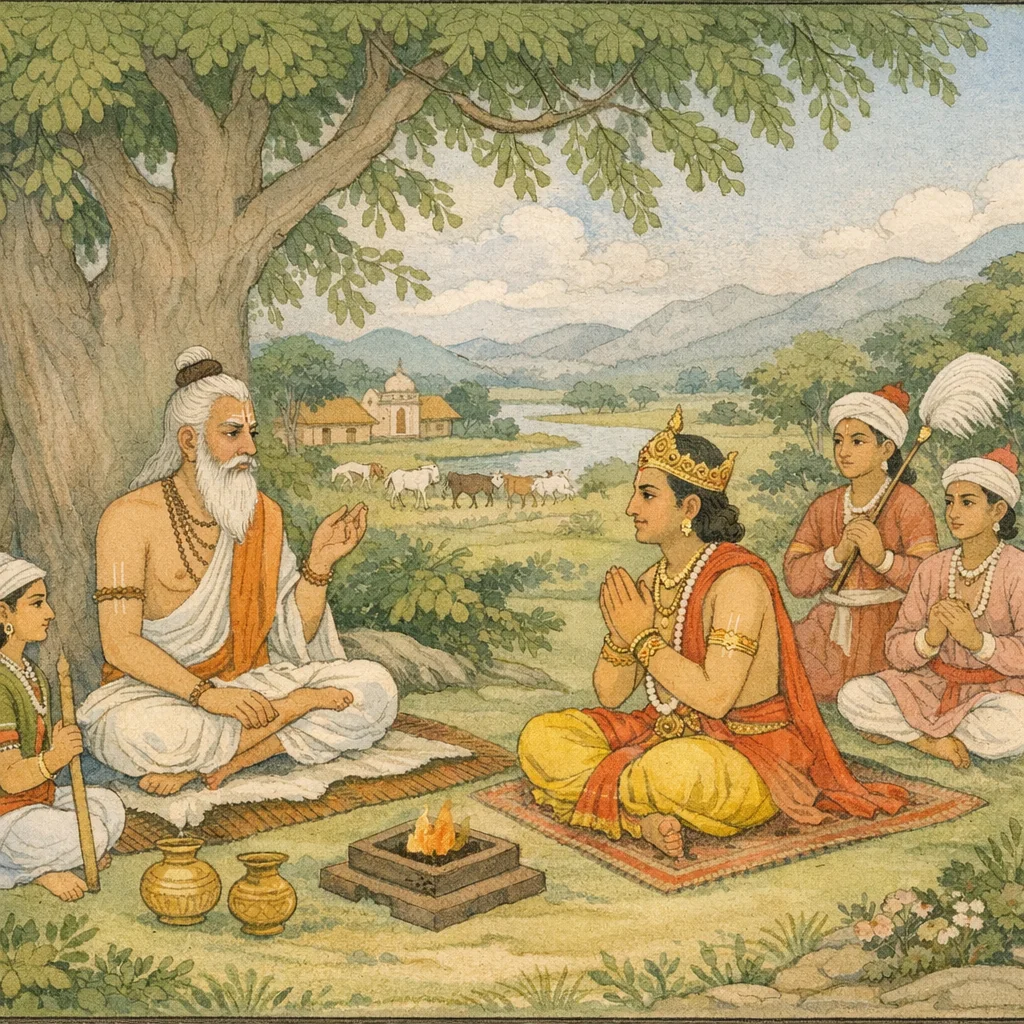
राजा वसुमना नाम कौसल्यो धीमतां वर: । महर्षि किल पप्रच्छ कृतप्रज्ञं बृहस्पतिम्,कहते हैं, प्राचीन कालमें बुद्धिमानोंमें श्रेष्ठ कोसल-नरेश राजा वसुमनाने शुद्ध बुद्धिवाले महर्षि बृहस्पतिसे कुछ प्रश्न किया
Bhishma said: In ancient times there was a king named Vasumanā, a Kosala ruler renowned as the foremost among the wise. He once approached the great sage Bṛhaspati—of steady, perfected understanding—and put certain questions to him, seeking guidance on right conduct and sound judgment.
Verse 4
सर्व वैनयिकं कृत्वा विनयज्ञो बृहस्पतिम् । दक्षिणानन्तरो भूत्वा प्रणम्य विधिपूर्वकम्,राजा वसुमना सम्पूर्ण लोकोंके हितमें तत्पर रहनेवाले थे। वे विनय प्रकट करनेकी कलाको जानते थे। बृहस्पतिजीके आनेपर उन्होंने उठकर उनका अभिवादन किया और चरणप्रक्षालल आदि सारा विनयसम्बन्धी बर्ताव पूर्ण करके महर्षिकी परिक्रमा करनेके अनन्तर उन्होंने विधिपूर्वक उनके चरणोंमें मस्तक झुकाया। फिर प्रजाके सुखकी इच्छा रखते हुए राजाने धर्मशील बृहस्पतिसे राज्यसंचालनकी विधिके विषयमें इस प्रकार प्रश्न उपस्थित किया
Bhishma said: The king, well-versed in the arts of courtesy and humility, performed every act of respectful reception toward Bṛhaspati. Standing to his right and, after completing the prescribed forms of honor, he bowed down to him in due ritual order. Intent on the welfare of all people and desiring his subjects’ happiness, the king then approached the righteous Bṛhaspati to ask about the proper method of governing the kingdom.
Verse 5
विधिं पप्रच्छ राज्यस्य सर्वलोकहिते रत: । प्रजानां सुखमन्विच्छन् धर्मशीलं बृहस्पतिम्,राजा वसुमना सम्पूर्ण लोकोंके हितमें तत्पर रहनेवाले थे। वे विनय प्रकट करनेकी कलाको जानते थे। बृहस्पतिजीके आनेपर उन्होंने उठकर उनका अभिवादन किया और चरणप्रक्षालल आदि सारा विनयसम्बन्धी बर्ताव पूर्ण करके महर्षिकी परिक्रमा करनेके अनन्तर उन्होंने विधिपूर्वक उनके चरणोंमें मस्तक झुकाया। फिर प्रजाके सुखकी इच्छा रखते हुए राजाने धर्मशील बृहस्पतिसे राज्यसंचालनकी विधिके विषयमें इस प्रकार प्रश्न उपस्थित किया
Bhishma said: Devoted to the welfare of all people, the king inquired about the proper method of governing the kingdom. Seeking the happiness of his subjects, he approached the righteous Brihaspati and asked him about the principles and procedures of statecraft—how rule should be conducted in accordance with dharma and for the common good.
Verse 6
वसुमना उवाच केन भूतानि वर्धन्ते क्षयं गच्छन्ति केन वा । कमर्चन्तो महाप्राज्ञ सुखमव्ययमाप्रुयु:,वसुमना बोले--महामते! राज्यमें रहनेवाले प्राणियोंकी वृद्धि कैसे होती है? उनका हास कैसे हो सकता है? किस देवताकी पूजा करनेवाले लोगोंको अक्षय सुखकी प्राप्ति हो सकती है?
Vasumanā said: “O great-minded one! By what do the beings within a kingdom prosper, and by what do they fall into decline? And by worship of which deity do people attain happiness that is imperishable?”
Verse 7
एवं पृष्टो महाप्राज्ञ: कौसल्येनामितौजसा । राजसत्कारमव्यग्रं शशंसास्मै बृहस्पति:
Thus questioned by the highly intelligent Kauśalya, a man of immeasurable vigor, Bṛhaspati—unperturbed and composed—set forth for him the proper manner of royal honor and reception. The scene frames kingship as a discipline of attentive, dharma-guided hospitality rather than mere display.
Verse 8
अमित तेजस्वी कोसलनरेशके इस प्रकार प्रश्न करनेपर महाज्ञानी बृहस्पतिजीने शान्तभावसे राजाके सत्कारकी आवश्यकता बताते हुए इस प्रकार उत्तर देना आरम्भ किया ।। ब॒हस्पतिर्वाच राजमूलो महाप्राज्ञ धर्मों लोकस्य लक्ष्यते प्रजा राजभयादेव न खादन्ति परस्परम्,बृहस्पतिजीने कहा--महाप्राज्ञ! लोकमें जो धर्म देखा जाता है, उसका मूल कारण राजा ही है। राजाके भयसे ही प्रजा एक-दूसरेको हड़प नहीं लेती है
Bṛhaspati said: “O great sage in polity! The dharma that is seen operating in the world has the king as its very root. It is only out of fear of the king that the people do not devour one another.”
Verse 9
राजा होवाखिलं लोकं॑ समुदीर्ण समुत्सुकम् । प्रसादयति धर्मेण प्रसाद्य च विराजते,राजा ही मर्यादाका उल्लंघन करनेवाले तथा अनुचित भोगोंमें आसक्त हो उनकी प्राप्तिके लिये उत्कण्ठित रहनेवाले सारे जगत्के लोगोंको धर्मानुकूल शासनद्वारा प्रसन्न रखता है और स्वयं भी प्रसन्नतापूर्वक रहकर अपने तेजसे प्रकाशित होता है
Vasumanā said: The king, by governing in accordance with dharma, wins the goodwill of the entire world—even when people are stirred up and restless with eager desires. Having thus brought them to contentment, he himself abides in gladness and shines forth in royal splendor.
Verse 10
यथा हानुदये राजन् भूतानि शशिसूर्ययो: । अन्धे तमसि मज्जेयुरपश्यन्त: परस्परम्,राजन! जैसे सूर्य और चन्द्रमाका उदय न होनेपर समस्त प्राणी घोर अन्धकारमें डूब जाते हैं और एक-दूसरेको देख नहीं पाते हैं, जैसे थोड़े जलवाले तालाबमें मत्स्यगण तथा रक्षकरहित उपवनमें पक्षियोंके झुंड परस्पर एक-दूसरेपर बारंबार चोट करते हुए इच्छानुसार विचरण करते हैं, वे कभी तो अपने प्रहारसे दूसरोंको कुचलते और मथते हुए आगे बढ़ जाते हैं और कभी स्वयं दूसरेकी चोट खाकर व्याकुल हो उठते हैं। इस प्रकार आपसमें लड़ते हुए वे थोड़े ही दिनोंमें नष्टप्राय हो जाते हैं, इसमें संदेह नहीं है। इसी तरह राजाके बिना वे सारी प्रजाएँ आपसमें लड़-झगड़कर बात-की-बातमें नष्ट हो जायँगी और बिना चरवाहेके पशुओंकी भाँति दुःखके घोर अन्धकारमें डूब जायँगी
Vasumanā said: “O King, just as, when the moon and the sun do not rise, living beings sink into blinding darkness and cannot see one another, so too, without a ruler, the people fall into confusion. Deprived of guidance and restraint, they collide in mutual harm, and in a short time are driven toward ruin. Therefore kingship is set forth as a necessary support of social order: it prevents the strong from preying upon the weak and keeps the community from dissolving into suffering and disorder.”
Verse 11
यथा हानुदके मत्स्या निराक्रन्दे विहड़मा: । विहरेयुर्यथाकामं विहिंसन्त: पुनः पुनः:,राजन! जैसे सूर्य और चन्द्रमाका उदय न होनेपर समस्त प्राणी घोर अन्धकारमें डूब जाते हैं और एक-दूसरेको देख नहीं पाते हैं, जैसे थोड़े जलवाले तालाबमें मत्स्यगण तथा रक्षकरहित उपवनमें पक्षियोंके झुंड परस्पर एक-दूसरेपर बारंबार चोट करते हुए इच्छानुसार विचरण करते हैं, वे कभी तो अपने प्रहारसे दूसरोंको कुचलते और मथते हुए आगे बढ़ जाते हैं और कभी स्वयं दूसरेकी चोट खाकर व्याकुल हो उठते हैं। इस प्रकार आपसमें लड़ते हुए वे थोड़े ही दिनोंमें नष्टप्राय हो जाते हैं, इसमें संदेह नहीं है। इसी तरह राजाके बिना वे सारी प्रजाएँ आपसमें लड़-झगड़कर बात-की-बातमें नष्ट हो जायँगी और बिना चरवाहेके पशुओंकी भाँति दुःखके घोर अन्धकारमें डूब जायँगी
Vasumanā said: “Just as fish in scant water, and birds in a grove without any guard, roam as they please while repeatedly injuring one another—now crushing and churning others with their blows, now themselves distressed when struck—so too, O king, in a short time they are driven, without doubt, to near-destruction. In the same way, without a king, all subjects will quickly fall into mutual quarrels and ruin, sinking into the dreadful darkness of suffering like cattle without a herdsman.”
Verse 12
विमथ्याततिक्रमेरंश्व विषद्यापि परस्परम् | अभावमचिरेणैव गच्छेयुर्नात्र संशय:,राजन! जैसे सूर्य और चन्द्रमाका उदय न होनेपर समस्त प्राणी घोर अन्धकारमें डूब जाते हैं और एक-दूसरेको देख नहीं पाते हैं, जैसे थोड़े जलवाले तालाबमें मत्स्यगण तथा रक्षकरहित उपवनमें पक्षियोंके झुंड परस्पर एक-दूसरेपर बारंबार चोट करते हुए इच्छानुसार विचरण करते हैं, वे कभी तो अपने प्रहारसे दूसरोंको कुचलते और मथते हुए आगे बढ़ जाते हैं और कभी स्वयं दूसरेकी चोट खाकर व्याकुल हो उठते हैं। इस प्रकार आपसमें लड़ते हुए वे थोड़े ही दिनोंमें नष्टप्राय हो जाते हैं, इसमें संदेह नहीं है। इसी तरह राजाके बिना वे सारी प्रजाएँ आपसमें लड़-झगड़कर बात-की-बातमें नष्ट हो जायँगी और बिना चरवाहेके पशुओंकी भाँति दुःखके घोर अन्धकारमें डूब जायँगी
Vasumanā said: “If they keep striking and overstepping one another, grieving yet still attacking each other in turn, they will quickly fall into ruin—of this there is no doubt, O king. Just as when the sun and moon do not rise, all creatures sink into dreadful darkness and cannot see one another; and just as fish in a shallow pond, or flocks of birds in an unguarded grove, repeatedly wound one another while roaming as they please—sometimes crushing others by their blows, sometimes themselves distressed when struck—so too, fighting among themselves, they soon become all but destroyed. In the same way, without a king, the whole populace will quarrel and fight among themselves and be swiftly ruined, sinking into the dense darkness of suffering like cattle without a herdsman.”
Verse 13
एवमेव विना राज्ञा विनश्येयुरिमा: प्रजा: । अन्धे तमसि मज्जेयुरगोपा: पशवो यथा,राजन! जैसे सूर्य और चन्द्रमाका उदय न होनेपर समस्त प्राणी घोर अन्धकारमें डूब जाते हैं और एक-दूसरेको देख नहीं पाते हैं, जैसे थोड़े जलवाले तालाबमें मत्स्यगण तथा रक्षकरहित उपवनमें पक्षियोंके झुंड परस्पर एक-दूसरेपर बारंबार चोट करते हुए इच्छानुसार विचरण करते हैं, वे कभी तो अपने प्रहारसे दूसरोंको कुचलते और मथते हुए आगे बढ़ जाते हैं और कभी स्वयं दूसरेकी चोट खाकर व्याकुल हो उठते हैं। इस प्रकार आपसमें लड़ते हुए वे थोड़े ही दिनोंमें नष्टप्राय हो जाते हैं, इसमें संदेह नहीं है। इसी तरह राजाके बिना वे सारी प्रजाएँ आपसमें लड़-झगड़कर बात-की-बातमें नष्ट हो जायँगी और बिना चरवाहेके पशुओंकी भाँति दुःखके घोर अन्धकारमें डूब जायँगी
Vasumanā said: “In the same way, without a king these subjects would perish. Like cattle without a herdsman, they would sink into blind darkness.”
Verse 14
हरेयुर्बलवन्तो5पि दुर्बलानां परिग्रहान् । हन्युव््यायच्छमानां श्व यदि राजा न पालयेत्,यदि राजा प्रजाकी रक्षा न करे तो बलवान मनुष्य दुर्बलोंकी बहू-बेटियोंको हर ले जायाँ और अपने घरबारकी रक्षाके लिये प्रयत्न करनेवालोंको मार डालें
Vasumanā said: “If the king does not protect, then even the strong will seize the dependents and possessions of the weak, and they will even kill those who strive to defend their own households.”
Verse 15
ममेदमिति लोके5स्मिन् न भवेत् सम्परिग्रह: । नदारा न च पुत्र: स्यान्न धनं न परिग्रह: । विष्वग्लोप: प्रवर्तेत यदि राजा न पालयेत्,यदि राजा रक्षा न करे तो इस जगतमें स्त्री, पुत्र, धन अथवा घरबार कोई भी ऐसा संग्रह सम्भव नहीं हो सकता, जिसके लिये कोई कह सके कि यह मेरा है, सब ओर सबकी सारी सम्पत्तिका लोप हो जाय
Vasumanā said: “In this world, the sense of ‘this is mine’ could not endure as any settled possession. There would be no secure wife, no son, no wealth, no property at all. If the king did not protect and govern, universal plunder and loss would spread everywhere.”
Verse 16
यान॑ वस्त्रमलड्कारान् रत्नानि विविधानि च । हरेयु: सहसा पापा यदि राजा न पालयेत्,यदि राजा प्रजाका पालन न करे तो पापाचारी लुटेरे सहसा आक्रमण करके वाहन, वस्त्र, आभूषण और नाना प्रकारके रत्न लूट ले जायेँ
Vasumanā said: If the king does not protect his people, wicked men would suddenly seize and carry off vehicles, garments, ornaments, and many kinds of precious gems.
Verse 17
पतेद् बहुविध॑ शस्त्र बहुधा धर्मचारिषु । अधर्म: प्रगृूहीत: स्थाद् यदि राजा न पालयेत्,यदि राजा रक्षा न करे तो धर्मात्मा पुरुषोंपर बारंबार नाना प्रकारके अस्त्र-शस्त्रोंकी मार पड़े और विवश होकर लोगोंको अधर्मका मार्ग ग्रहण करना पड़े
Vasumanā said: If the king does not protect and govern, then upon those who strive to live by dharma many kinds of weapons will repeatedly fall—violence will strike them again and again—and, driven by helplessness, people will be forced to take up the path of adharma.
Verse 18
मातरं पितरं वृद्धमाचार्यमतिर्थि गुरुम् । क्लिश्रीयुरपि हिंस्युर्वा यदि राजा न पालयेत्,यदि राजा पालन न करे तो दुराचारी मनुष्य माता, पिता, वृद्ध, आचार्य, अतिथि और गुरुको क्लेश पहुँचावें अथवा मार डालें
Vasumanā said: If the king does not protect his subjects by upholding order and justice, even wicked men may harass—or even kill—their own mother and father, the aged, the teacher, the guest, and the spiritual preceptor.
Verse 19
वधबन्धपरिकलेशो नित्यमर्थवतां भवेत् । ममत्वं च न विन्देयुर्यदि राजा न पालयेत्,यदि राजा रक्षा न करे तो धनवानोंको प्रतिदिन वध या बन्धनका क्लेश उठाना पड़े और किसी भी वस्तुको वे अपनी न कह सकें
Vasumanā said: “If the king does not govern and protect, those who possess wealth would daily suffer the torment of being slain or bound; and they would not be able to claim true ownership of anything. Thus, royal protection is the condition that makes security, property, and orderly life possible.”
Verse 20
अन्ताश्चलाकाल एव स्युर्लोको<यं दस्युसाद् भवेत् । पतेयुर्नरकं घोरं यदि राजा न पालयेत्,यदि राजा प्रजाका पालन न करे तो अकालमें ही लोगोंकी मृत्यु होने लगे, यह समस्त जगत् डाकुओंके अधीन हो जाय और (पापके कारण) घोर नरकमें गिर जाय
Vasumanā said: “Then untimely death and famine would prevail; this world would fall under the sway of bandits. And if the king did not protect his subjects, people—through the spread of sin and lawlessness—would plunge into a dreadful hell.”
Verse 21
न योनिदोषो वर्तेत न कृषिर्न वणिक्पथ: । मज्जेद् धर्मस्त्रयी न स्याद् यदि राजा न पालयेत्,यदि राजा पालन न करे तो व्यभिचारसे किसीको घृणा न हो, खेती नष्ट हो जाय, व्यापार चौपट हो जाय, धर्म डूब जाय और तीनों वेदोंका कहीं पता न चले
Vasumanā said: “If the king did not protect (his people), there would be no revulsion toward sexual misconduct; agriculture would not endure; the routes of trade would collapse; dharma itself would sink; and the Vedic triad would not remain—its very presence would disappear.”
Verse 22
न यज्ञा: सम्प्रवर्तेयुविधिवत् स्वाप्तदक्षिणा: । न विवाहा: समाजो वा यदि राजा न पालयेत्,यदि राजा जगतकी रक्षा न करे तो विधिवत पर्याप्त दक्षिणाओंसे युक्त यज्ञोंका अनुष्ठान बंद हो जाय, विवाह न हो और सामाजिक कार्य रुक जायँ
Vasumanā said: “If the king does not protect and govern, then sacrifices performed according to rule and furnished with proper fees would cease; marriages would not take place, and the ordered life of society itself would come to a halt.”
Verse 23
न वृषा: सम्प्रवर्तेरन् न मथ्येरंश्व॒ गर्गरा: । घोषा: प्रणाशं गच्छेयुर्यदि राजा न पालयेत्,यदि राजा पशुओंका पालन न करे तो साँड़ गायोंमें गर्भाधान न करें, दूध-दहीसे भरे हुए घड़े या मटके कभी महे न जायूँ और गोशाले नष्ट हो जायेँ
Vasumanā said: “If the king does not protect (his realm and its creatures), then the bulls will not set about breeding; the milk-pots and churns will not be properly worked; and the cowherd-settlements will fall into ruin.”
Verse 24
त्रस्तमुद्विग्नहददयं हाहाभूतमचेतनम् । क्षणेन विनशेत् सर्व यदि राजा न पालयेत्,यदि राजा रक्षा न करे तो सारा जगत् भयभीत, उद्विग्नचित्त, हाहाकारपरायण तथा अचेत हो क्षणभरमें नष्ट हो जाय
If the king does not protect and govern, then everything would, in an instant, fall into ruin—people becoming frightened, hearts shaken with anxiety, given over to cries of distress, and as if senseless.
Verse 25
न संवत्सरसत्राणि तिष्ठेयुरकुतो भया: । विधिवद् दक्षिणावन्ति यदि राजा न पालयेत्,यदि राजा पालन न करे तो उनमें विधिपूर्वक दक्षिणाओंसे युक्त वार्षिक यज्ञ बेखटके न चल सकें
If the king does not provide protection and uphold order, then the year-long sacrificial sessions—though performed according to rule and furnished with proper priestly gifts—cannot proceed without fear. The teaching is that ritual prosperity and public religious life depend upon righteous kingship that guarantees safety and stability.
Verse 26
ब्राह्मणाश्षतुरो वेदान् नाधीयीरंस्तपस्विन: । विद्यास्नाता व्रतस्नाता यदि राजा न पालयेत्,यदि राजा पालन न करे तो विद्या पढ़कर स्नातक हुए ब्रह्मचर्य-व्रतका पालन करनेवाले और तपस्वी तथा ब्राह्मण लोग चारों वेदोंका अध्ययन छोड़ दें
Vasumanā said: If the king does not protect (his subjects and uphold order), then even ascetic Brahmins—those who have completed their studies and their vows—would cease studying the four Vedas. The verse underscores that royal protection is a necessary condition for the preservation of sacred learning and disciplined religious life.
Verse 27
न लभेद् धर्मसंश्लेषं हतविप्रहतो जन: । हर्ता स्वस्थेन्द्रियो गच्छेद् यदि राजा न पालयेत्,यदि राजा पालन न करे तो मनुष्य हताहत होकर धर्मका सम्पर्क छोड़ दें और चोर घरका मालमत्ता लेकर अपने शरीर और इन्द्रियोंपर आँच आये बिना ही सकुशल लौट जायूँ
Vasumanā said: “If the king does not protect (his subjects and the realm), people—struck down and distressed—will lose all connection with dharma; and the thief, with body and senses unscathed, will depart safely (after taking away others’ property).”
Verse 28
हस्ताद्धस्तं परिमुषेद् भिद्येरन् सर्वसेतव: । भयार्त॑ विद्रवेत् सर्व यदि राजा न पालयेत्,यदि राजा पालन न करे तो चोर और लुटेरे हाथमें रखी हुई वस्तुको भी हाथसे छीन ले जायूँ, सारी मर्यादाएँ टूट जायँ और सब लोग भयसे पीड़ित हो चारों ओर भागते फिरें
Vasumanā said: If the king does not protect (his subjects and the social order), then thieves would snatch even what is held in one’s very hand; all boundaries and norms would be shattered, and everyone, afflicted by fear, would flee in all directions. The verse underscores that royal protection is not mere power but a moral duty that preserves public safety and the fabric of dharma.
Verse 29
अनया: सम्प्रवर्तेरन् भवेद् वै वर्णसंकर: । दुर्भिक्षमाविशेद् राष्ट्र यदि राजा न पालयेत्,यदि राजा पालन न करे तो सब ओर अन्याय एवं अत्याचार फैल जाय, वर्णसंकर संतानें पैदा होने लगें और समूचे देशमें अकाल पड़ जाय
Vasumanā said: “If such disorder is allowed to proceed unchecked, there will indeed arise a confusion of social orders (varṇa-saṅkara). And if the king does not protect and govern, famine will enter the realm.”
Verse 30
विवृत्य हि यथाकामं गृहद्वाराणि शेरते । मनुष्या रक्षिता राज्ञा समन््तादकुतो भया:,राजासे रक्षित हुए मनुष्य सब ओरसे निर्भय हो जाते हैं और अपनी इच्छाके अनुसार घरके दरवाजे खोलकर सोते हैं
When a king provides true protection, people become fearless on every side. Then, as they please, they can leave their house-doors open and sleep in peace—showing that the ruler’s foremost duty is to remove insecurity and uphold public order.
Verse 31
नाक़ुष्टं सहते कश्चित् कुतो वा हस्तलाघवम् | यदि राजा न सम्यग ् गां रक्षयत्यपि धार्मिक:,यदि धर्मात्मा राजा भलीभाँति पृथ्वीकी रक्षा न करे तो कोई भी मनुष्य गाली-गलौज अथवा हाथसे पीटे जानेका अपमान कैसे सहन करे
Vasumanā said: “No one can endure being abused; how much less can one endure being struck. Even if a king is personally righteous, if he does not properly protect the earth (his people and realm), how could any person be expected to bear the humiliation of insults or blows?”
Verse 32
स्त्रियश्चापुरुषा मार्ग सर्वालड्कारभूषिता: । निर्भया: प्रतिपद्यन्ते यदि रक्षति भूमिप:,यदि पृथ्वीका पालन करनेवाला राजा अपने राज्यकी रक्षा करता है तो समस्त आभूषणोंसे विभूषित हुई सुन्दरी स्त्रियाँ किसी पुरुषको साथ लिये बिना भी निर्भय होकर मार्गसे आती-जाती हैं
Vasumanā said: When the king, protector of the earth, truly safeguards his realm, women adorned with every ornament can travel the roads without fear, even without a man accompanying them. The verse presents public safety as a visible measure of righteous kingship: the ruler’s dharma is proven by a society where the vulnerable move freely and security is maintained through just protection rather than private force.
Verse 33
धर्ममेव प्रपद्यन्ते न हिंसन्ति परस्परम् । अनुगृह्नन्ति चान्योन्यं यदा रक्षति भूमिप:,जब राजा रक्षा करता है, तब सब लोग धर्मका ही पालन करते हैं, कोई किसीकी हिंसा नहीं करते और सभी एक-दूसरेपर अनुग्रह रखते हैं
When the king truly protects his realm, people naturally take refuge in dharma: they do not harm one another, and they show mutual kindness and support. The verse frames public morality as a direct fruit of just and vigilant kingship.
Verse 34
यजन्ते च महायज्ैस्त्रयो वर्णा: पृथग्विधै: । युक्ताश्नाधीयते विद्यां यदा रक्षति भूमिप:,जब राजा रक्षा करता है, तब तीनों वर्णोंके लोग नाना प्रकारके बड़े-बड़े यज्ञोंका अनुष्ठान करते हैं और मनोयोगपूर्वक विद्याध्ययनमें लगे रहते हैं
Vasumanā said: When the king protects the realm, the three social orders perform great sacrifices of various kinds, and, with disciplined attention, they devote themselves to the study of knowledge. The verse frames royal protection as the condition that allows public religion and education to flourish in an orderly society.
Verse 35
वार्तामूलो हायं लोकस्त्रय्या वै धार्यते सदा । तत् सर्व वर्तते सम्यग् यदा रक्षति भूमिप:,खेती आदि समुचित जीविकाकी व्यवस्था ही इस जगत्के जीवनका मूल है तथा वृष्टि आदिकी हेतुभूत त्रयी विद्यासे ही सदा जगत्का धारण-पोषण होता है। जब राजा प्रजाकी रक्षा करता है, तभी वह सब कुछ ठीक ढंगसे चलता रहता है
Vasumanā said: “This world is rooted in vārtā—livelihood and productive economy—and it is continually sustained by the threefold Vedic knowledge (trayyā). All affairs proceed in proper order only when the king protects his subjects.”
Verse 36
यदा राजा धुरं श्रेष्ठामादाय वहति प्रजा: । महता बलयोगेन तदा लोक: प्रसीदति,जब राजा विशाल सैनिक-शक्तिके सहयोगसे भारी भार उठाकर प्रजाकी रक्षाका भार वहन करता है, तब यह सम्पूर्ण जगत् प्रसन्न होता है
When a king takes up the foremost burden of governance and bears the duty of protecting his subjects with great strength and disciplined power, then the whole realm becomes content and secure.
Verse 37
यस्याभावेन भूतानामभाव: स्यात् समन्ततः । भावे च भावो नित्यं स्यात् कस्तं न प्रतिपूजयेत्,जिसके न रहनेपर सब ओरसे समस्त प्राणियोंका अभाव होने लगता है और जिसके रहनेपर सदा सबका अस्तित्व बना रहता है, उस राजाका पूजन (आदर-सत्कार) कौन नहीं करेगा?
In whose absence all beings would, on every side, fall into non-existence, and in whose presence their existence is ever sustained—who would not honor and revere such a king?
Verse 38
तस्य यो वहते भारं सर्वलोकभयावहम् | तिष्ठन् प्रियहिते राज्ञ उभौ लोकाविमौ जयेत्,जो उस राजाके प्रिय एवं हितसाधनमें संलग्न रहकर उसके सर्वलोकभयंकर शासन- भारको वहन करता है, वह इस लोक और परलोक दोनोंपर विजय पाता है
Whoever bears that burden of governance which makes all the worlds tremble, and stands steadfast in promoting the king’s dear interests and true welfare—such a person wins both these worlds: here and hereafter.
Verse 39
यस्तस्य पुरुष: पापं मनसाप्यनुचिन्तयेत् । असंशयमिह क्लिष्ट: प्रेत्यापि नरकं व्रजेत्,जो पुरुष मनसे भी राजाके अनिष्टका चिन्तन करता है, वह निश्चय ही इह लोकमें कष्ट भोगता है और मरनेके बाद भी नरकमें पड़ता है
Whoever harbors sinful intent against him—even merely in the mind—will, without doubt, suffer distress in this very world; and after death as well, he will go to hell.
Verse 40
न हि जात्ववमन्तव्यो मनुष्य इति भूमिप: । महती देवता होषा नररूपेण तिष्ठति,“यह भी एक मनुष्य है” ऐसा समझकर कभी भी पृथ्वीपालक नरेशकी अवहेलना नहीं करनी चाहिये; क्योंकि राजा मनुष्यरूपमें एक महान् देवता है
O king, one should never, at any time, treat a ruler with contempt by thinking, “He is only a human being.” For the king stands in human form as a great divine power; therefore, reverence toward royal authority is an ethical duty in accord with dharma, not mere social courtesy.
Verse 41
कुरुते पजचरूपाणि कालयुक्तानि य: सदा । भवत्यग्निस्तथा55दित्यो मृत्युर्वैश्रवणो यम:,राजा ही सदा समयानुसार पाँच रूप धारण करता है। वह कभी अग्नि, कभी सूर्य, कभी मृत्यु, कभी कुबेर और कभी यमराज बन जाता है
He who is ever aligned with Time assumes five forms according to the occasion. At one moment he becomes Fire, at another the Sun; at another he becomes Death; at another he becomes Vaiśravaṇa (Kubera); and at another he becomes Yama. The teaching is that a king, to uphold order, must adapt his function to the needs of the time—nourishing, illuminating, restraining, punishing, and safeguarding prosperity—without departing from dharma.
Verse 42
यदा हासीदत: पापान् दहत्युग्रेण तेजसा । मिथ्योपचरितो राजा तदा भवति पावक:,जब पापात्मा मनुष्य राजाके साथ मभिथ्या बर्ताव करके उसे ठगते हैं, तब वह अग्निस्वरूप हो जाता है और अपने उग्र तेजसे समीप आये हुए उन पापियोंको जलाकर भस्म कर देता है
Vasumanā said: When a king is treated with deceit and false service, he becomes like fire. Then, with fierce radiance, he burns to ashes the sinful men who have come near him—those who sought to wrong him through hypocrisy and fraud. The verse warns that treachery toward rightful authority rebounds upon the wrongdoers, and that the king’s punitive power, when provoked by adharma, manifests as a consuming force.
Verse 43
यदा पश्यति चारेण सर्वभूतानि भूमिप: । क्षेमं च कृत्वा बत्रजति तदा भवति भास्कर:,जब राजा गुप्तचरोंद्वारा समस्त प्रजाओंकी देख-भाल करता है और उन सबकी रक्षा करता हुआ चलता है, तब वह सूर्यरूप होता है
Vasumanā said: When a king, through his secret agents, keeps watch over all beings in his realm and moves about ensuring their safety and welfare, then he becomes like the Sun—ever-seeing, sustaining, and protective. The ethical point is that royal power is justified by vigilant care, security, and the steady promotion of public well-being.
Verse 44
अशुचींश्र यदा क्रुद्ध: क्षिणोति शतशो नरान् | सपुत्रपौत्रान् सामात्यांस्तदा भवति सो5न्तकः,जब राजा कुपित होकर अशुद्धाचारी सैकड़ों मनुष्योंका उनके पुत्र, पौत्र और मन्त्रियोंसहित संहार कर डालता है, तब वह मृत्युरूप होता है
When a king, inflamed with anger, destroys by the hundreds men of impure conduct—together with their sons, grandsons, and ministers—then he becomes Antaka, Death itself. The verse warns that wrathful, indiscriminate punishment turns royal power into a force of annihilation rather than dharmic protection.
Verse 45
यदा त्वधार्मिकान् सर्वास्ती&#णैर्दण्डैर्नियच्छति । धार्मिकांश्चानुगृह्लाति भवत्यथ यमस्तदा,जब वह कठोर दण्डके द्वारा समस्त अधार्मिक पुरुषोंको काबूमें करके सन्मार्गपर लाता है और धर्मात्माओंपर अनुग्रह करता है, उस समय वह यमराज माना जाता है
When he restrains all unrighteous people with severe punishments—bringing them under control and back to the right path—and when he shows favor to the righteous, then at that time he is regarded as Yama, the lord of justice.
Verse 46
यदा तु धनधाराभिस्तर्पयत्युपकारिण: । आच्चछिनत्ति च रत्नानि विविधान्यपकारिणाम्,जब राजा उपकारी पुरुषोंको धनरूपी जलकी धाराओंसे तृप्त करता है और अपकार करनेवाले दुष्टोंके नाना प्रकारके रत्नोंको छीन लेता है, किसी राज्यहितैषीको धन देता है तो किसी (राज्यविद्रोही) के धनका अपहरण कर लेता है, उस समय वह पृथिवीपालक नरेश इस संसारमें कुबेर समझा जाता है
But when a king satisfies those who have rendered service with streams of wealth, and confiscates the many kinds of treasures belonging to wrongdoers, then that earth-protecting ruler is regarded in this world as Kubera himself—bestowing riches on loyal well-wishers of the realm and seizing the wealth of those who act against it.
Verse 47
श्रियं ददाति कस्मैचित् कस्माच्चिदपकर्षति । तदा वैश्रवणो राजा लोके भवति भूमिप:,जब राजा उपकारी पुरुषोंको धनरूपी जलकी धाराओंसे तृप्त करता है और अपकार करनेवाले दुष्टोंके नाना प्रकारके रत्नोंको छीन लेता है, किसी राज्यहितैषीको धन देता है तो किसी (राज्यविद्रोही) के धनका अपहरण कर लेता है, उस समय वह पृथिवीपालक नरेश इस संसारमें कुबेर समझा जाता है
Vasumanā said: A king grants prosperity to some and withdraws it from others. When a ruler satisfies helpful men with streams of wealth, and confiscates the many treasures of harmful wrongdoers—giving resources to those devoted to the kingdom’s welfare and seizing the wealth of those who rebel against it—then that protector of the earth is regarded in the world as Vaiśravaṇa (Kubera) himself. The ethical point is that royal generosity must be paired with just restraint: rewarding service to the common good and curbing predation that threatens the realm.
Verse 48
नास्यापवादे स्थातव्यं दक्षेणाक्लिष्टकर्मणा । धर्म्यमाकांक्षता लोकमी श्वरस्पानसूयता
Vasumanā said: “One should not take a stand in blame or fault-finding. A capable person, whose actions are untroubled and pure, should instead aspire to a righteous world; and toward the Lord one should remain free from envy and censoriousness.”
Verse 49
जो समस्त कार्योमें निपुण, अनायास ही कार्य-साधन करनेमें समर्थ, धर्ममय लोकोंमें जानेकी इच्छा रखनेवाला तथा दोषदृष्टिसे रहित हो, उस पुरुषको अपने देशके शासक नरेशकी निन्दाके काममें नहीं पड़ना चाहिये ।। न हि राज्ञ: प्रतीपानि कुर्वन् सुखमवाप्नुयात् पुत्रो भ्राता वयस्यो वा यद्यप्यात्मसमो भवेत्,राजाके विपरीत आचरण करनेवाला मनुष्य उसका पुत्र, भाई, मित्र अथवा आत्माके तुल्य ही क्यों न हो, कभी सुख नहीं पा सकता
Vasumanā said: A man who is competent in all duties, able to accomplish tasks with ease, intent on reaching righteous worlds, and free from fault-finding should not involve himself in the business of censuring the king who rules his own land. For one who acts in opposition to the king cannot obtain happiness. Even if such a person is the king’s son, brother, or close companion—indeed, even if he is as dear as one’s own self—by behaving contrary to the king he will never come to well-being.
Verse 50
कुर्यात् कृष्णगति: शेषं ज्वलितोडनिलसारथि: । न तु राजाभिपन्नस्य शेषं क्वचन विद्यते
Vasumanā said: “Fire, driven by the wind, may leave some remnant behind after it has burned; but for one who has fallen under the king’s power, no remainder—no reserve, no refuge—exists anywhere. Such is the consuming reach of royal authority when it turns against a person.”
Verse 51
वायुकी सहायतासे प्रज्वलित हुई आग जब किसी गाँव या जंगलको जलाने लगे तो सम्भव है कि वहाँका कुछ भाग जलाये बिना शेष छोड़ दे; परंतु राजा जिसपर आक्रमण करता है, उसकी कहीं कोई वस्तु शेष नहीं रह जाती ।। तस्य सर्वाणि रक्ष्याणि दूरत: परिवर्जयेत् । मृत्योरिव जुगुप्सेत राजस्वहरणान्नर:,मनुष्यको चाहिये कि राजाकी सारी रक्षणीय वस्तुओंको दूरसे ही त्याग दे और मृत्युकी ही भाँति राजधनके अपहरणसे घृणा करके उससे अपनेको बचानेका प्रयत्न करे
When a fire, fanned by the wind, flares up and begins to consume a village or a forest, it may happen that some portion is left unburnt. But when a king attacks a man, nothing of his remains anywhere. Therefore one should keep far away from everything that is under the king’s protection, and, like death itself, regard the taking of royal property with dread and revulsion—striving to guard oneself from it.
Verse 52
नश्येदभिमृशन् सद्यो मृग: कूटमिव स्पृशन् | आत्मस्वमिव रक्षेत राजस्वमिह बुद्धिमान्,जैसे मृग मारण-मन्त्रका स्पर्श करते ही अपने प्राणोंसे हाथ धो बैठता है, उसी प्रकार राजाके धनपर हाथ लगानेवाला मनुष्य तत्काल मारा जाता है; अतः बुद्धिमान् पुरुषको चाहिये कि वह अपने ही धनके समान इस जगत्में राजाके धनकी भी रक्षा करे
Vasumanā said: “A deer perishes at once when it touches a concealed snare; in the same way, a person who lays hands on the king’s property is swiftly destroyed. Therefore, a wise man should protect the king’s wealth in this world as carefully as he would protect his own.”
Verse 53
महान्तं नरक॑ घोरमप्रतिष्ठमचेतनम् । पतन्ति चिररात्राय राजवित्तापहारिण:,राजाके धनका अपहरण करनेवाले मनुष्य दीर्घकालके लिये विशाल, भयंकर, अस्थिर और चेतनाशक्तिको लुप्त कर देनेवाले नरकमें गिरते हैं
Vasumanā said: Those who steal the king’s wealth fall into a vast and dreadful hell—without firm footing and bereft of consciousness—there to remain for a very long time. The verse frames theft from the ruler not merely as a civil offense but as a grave breach of dharma that brings severe post-mortem consequence.
Verse 54
राजा भोजो विराट सम्राट क्षत्रियो भूपतिर्नप: । य एश्रि: स्तूयते शब्दै: कस्तं नार्चितुमहति,भोज, विराट, सम्राट, क्षत्रिय, भूपति और नृप--इन शब्दोंद्वारा जिस राजाकी स्तुति की जाती है, उस प्रजापालक नरेशकी पूजा कौन नहीं करेगा?
Vasumanā said: “King, Bhoja, Virāṭ, universal sovereign, Kṣatriya, lord of the earth, ruler—by such words a certain majesty is praised. Who, then, would not deem it fitting to honor that protector of the people?”
Verse 55
तस्माद् बुभूषुर्नियतो जितात्मा नियतेन्द्रिय: । मेधावी स्मृतिमान् दक्ष: संश्रयेत महीपतिम्,इसलिये अपनी उन्नतिकी इच्छा रखनेवाला, मेधावी, स्मरणशक्तिसे सम्पन्न एवं कार्यदक्ष मनुष्य नियमपूर्वक रहकर मन और इन्द्रियोंको संयममें रखते हुए राजाका आश्रय ग्रहण करे
Therefore, one who seeks advancement—disciplined, self-mastered, with mind and senses restrained—being intelligent, mindful, and skilled in action, should take refuge under the king.
Verse 56
कृतज्ञं प्राज्ञमक्षुद्रं दृढभक्तिं जितेन्द्रियम् । धर्मनित्यं स्थितं नीत्यं मन्त्रिणं पूजयेन्नप:,राजाको उचित है कि वह कृतज्ञ, विद्वान, महामना, राजाके प्रति दृढ़ भक्ति रखनेवाले, जितेन्द्रिय, नित्य धर्मपरायण और नीतिज्ञ मन्त्रीका आदर करे
Vasumanā said: A king should honor as his minister one who is grateful, wise, large-minded and free from pettiness, firmly devoted to the king’s welfare, self-controlled, steadfast in dharma, and well-grounded in sound policy. Such a counselor strengthens righteous governance and protects the realm from ruinous decisions.
Verse 57
दृढ्भक्तिं कृतप्रज्ञं धर्मज्ञं संयतेन्द्रियम । शूरमक्षुद्रकर्माणं निषिद्धजनमाश्रयेत्,इसी प्रकार राजा अपने प्रति दृढ़ भक्तिसे सम्पन्न, युद्धकी शिक्षा पाये हुए, बुद्धिमान, धर्मज्ञ, जितेन्द्रिय, शूरवीर और श्रेष्ठ कर्म करनेवाले ऐसे वीर पुरुषको सेनापति बनावे, जो अपनी सहायताके लिये दूसरोंका आश्रय लेनेवाला न हो
Vasumanā said: Let the king rely upon—and appoint as commander—one who is steadfastly devoted to him, trained in war and steady in judgment, knowledgeable in dharma, self-controlled, brave, and engaged in noble deeds, and who does not seek support from improper or forbidden persons.
Verse 58
राजा प्रगल्भं कुरुते मनुष्यं राजा कृशं वै कुरुते मनुष्यम् । राजाभिपन्नस्य कुत: सुखानि राजाभ्युपेतं॑ सुखिनं करोति,राजा मनुष्यको धृष्ट एवं सबल बनाता है और राजा ही उसे दुर्बल कर देता है। राजाके रोषका शिकार बने हुए मनुष्यको कैसे सुख मिल सकता है? राजा अपने शरणागतको सुखी बना देता है
The king makes a man bold and strong; the king also makes a man weak and diminished. For one who has fallen under the king’s displeasure, how could there be any happiness? But the king makes happy the one who has come to him for protection.
Verse 59
(राजा प्रजानां प्रथमं शरीरं प्रजाश्न राज्ञोडप्रतिमं शरीरम् । राज्ञा विहीना न भवन्ति देशा देशैविहीना न नूपा भवन्ति ।।) राजा प्रजाओंका प्रथम अथवा प्रधान शरीर है। प्रजा भी राजाका अनुपम शरीर है। राजाके बिना देश और वहाँके निवासी नहीं रह सकते और देशों तथा देशवासियोंके बिना राजा भी नहीं रह सकते हैं ।। राजा प्रजानां हृदयं गरीयो गति: प्रतिष्ठा सुखमुत्तमं च । समाश्रिता लोकमिमं परं च जयन्ति सम्यक् पुरुषा नरेन्द्र,राजा प्रजाका गुरुतर हृदय, गति, प्रतिष्ठा और उत्तम सुख है। नरेन्द्र! राजाका आश्रय लेनेवाले मनुष्य इस लोक और परलोकपर भी पूर्णतः विजय पा लेते हैं
Vasumanā said: “The king is the foremost—indeed the principal—body of the people, and the people are the king’s incomparable body. Without a king, a realm and its inhabitants cannot endure; and without realms and their inhabitants, a king too cannot endure. The king is the people’s weightiest heart—their course, their firm foundation, and their highest well-being. O lord of men, those who take refuge in a righteous king attain complete success, both in this world and in the next.”
Verse 60
नराधिपश्चाप्यनुशिष्य मेदिनीं दमेन सत्येन च सौहृदेन । महद्विरिष्टवा क्रतुभिर्महायशा- स्त्रिविष्टपे स्थानमुपैति शाश्वतम्,राजा भी इन्द्रियसंयम, सत्य और सौहार्दके साथ इस पृथ्वीका भलीभाँति शासन करके बड़े-बड़े यज्ञोंके अनुष्ठानद्वारा महान् यशका भागी हो स्वर्गलोकमें सनातन स्थान प्राप्त कर लेता है
A king who duly instructs and governs the earth with self-restraint, truth, and goodwill, and who performs great sacrificial rites, gains vast renown and attains an everlasting station in heaven.
Verse 61
स एवमुक्तो5ड्रिससा कौसल्यो राजसत्तम: । प्रयत्नात् कृतवान् वीर: प्रजानां परिपालनम्,राजन! बृहस्पतिजीके ऐसा कहनेपर राजाओंमें श्रेष्ठ कोसलनरेश वीर वसुमना अपनी प्रजाओंका प्रयत्नपूर्वक पालन करने लगे
Thus addressed by the sage, the Kausalya king—foremost among rulers—heroic Vasumanā, O king, set himself with deliberate effort to the protection and proper governance of his subjects.
Verse 67
इस प्रकार श्रीमह्याभारत शान्तिपर्वके अन्तर्गत राजधमनुशासनपर्वमें राष्रके लिये रुजाको नियुक्त करनेकी आवश्यकताका कथनविषयक सरसठवाँ अध्याय पूरा हुआ
Thus ends the sixty-seventh chapter in the Śānti Parva of the Śrī Mahābhārata, within the section on the instruction of royal duties, dealing with the necessity of appointing a king for the welfare and order of the realm.
Verse 68
इति श्रीमहाभारते शान्तिपर्वणि राजधर्मानुशासनपर्वणि आड़्विरसवाक्येदडष्टपष्टितमो5ध्याय:
Thus ends the sixty-eighth chapter in the Śānti Parva of the Śrī Mahābhārata, within the section on the instruction concerning the king’s duties (Rājadharma).
Frequently Asked Questions
The dilemma is how to reconcile ethical kingship with necessary security measures: Bhīṣma frames surveillance, punishment, and resource extraction as legitimate only when rooted in self-restraint and directed toward protection rather than domination.
Self-conquest precedes conquest of opponents: mastery over the senses and disciplined judgment are presented as the foundation for justice, stable administration, and the prevention of avoidable harm.
A direct phalaśruti formula is not foregrounded; instead, the chapter closes with normative validation: a ruler who completes protective duties and governs the people well attains well-being hereafter, while austerities and rituals are rendered ineffective if subjects are left unprotected.