Adhyaya 23
Gārhasthya-Śreṣṭhatā and Kṣatriya-Daṇḍadhāraṇa (Householder Primacy and the Royal Duty of Punishment)
Upa-parva: Rājadharmānuśāsana Upa-Parva (राजधर्मानुशासन उपपर्व)
Vaiśaṃpāyana reports that after Arjuna’s counsel, Yudhiṣṭhira remains silent, whereupon the authoritative teacher-voice (Dvaipāyana/Vyāsa) intervenes. The discourse asserts that the gārhasthya āśrama is a śāstra-grounded ‘higher dharma’ for sustaining the world: gods, ancestors, sages, and dependents are said to live supported by householders, and broader life-forms are maintained through the householder economy. Yudhiṣṭhira is instructed to practice svadharma according to rule and method, and not to abandon household-based governance for forest life. The chapter then outlines disciplines associated with brāhmaṇas (tapas, yajña, vidyā, alms, sense-restraint, meditation, solitude, contentment, and giving) and articulates kṣatriya functions (yajña, learning, energetic initiative, non-complacency toward prosperity, rigorous bearing of daṇḍa, and protection of subjects). Among royal duties, daṇḍadhāraṇa is elevated as paramount because force capacity is structurally tied to kṣatriya identity; a supporting gāthā attributed to Bṛhaspati warns that the earth ‘swallows’ a non-resisting king and a non-resident brāhmaṇa, and exemplary figures (e.g., Sudyumna) are cited as attaining success through disciplined exercise of punishment and rule.
Chapter Arc: अर्जुन के कथन का स्मरण कराते हुए व्यास युधिष्ठिर से कहते हैं कि शास्त्र-दृष्ट ‘परो धर्म’ गृहस्थाश्रम में स्थित है—राजा को वन की ओर नहीं, प्रजा-पालन की ओर देखना चाहिए। → युधिष्ठिर के मन में संन्यास-प्रवृत्ति और राज्य-धर्म के बीच द्वंद्व उठता है। व्यास उसे स्वधर्म-पालन का आग्रह करते हुए उदाहरणों और आख्यानों से समझाते हैं कि दण्ड-धारण, प्रजा-रक्षा और विधि-पालन ही क्षत्रिय का मार्ग है। इसी क्रम में ‘लिखित–शंख’ तथा ‘सुद्युम्न’ से जुड़ा प्रसंग उभरता है, जहाँ अल्प-सा अपराध (गुरु की अनुमति बिना फल-भक्षण) भी धर्म-न्याय की कसौटी बन जाता है। → लिखित का स्वीकार—“गुरु की अनुमति बिना फल खा लिये; मुझे दण्ड दो”—और उसके साथ यह कठोर सत्य कि राजधर्म में ‘दूसरा काम’ (प्रजा-पालन से हटकर) कुमार्ग के तुल्य है। यहाँ करुणा बनाम विधि, और व्यक्तिगत शुचिता बनाम सार्वजनिक अनुशासन का टकराव तीव्र होता है। → व्यास निष्कर्ष देते हैं कि गृहस्थ-धर्म और राजधर्म ही लोक-धारण का आधार हैं; क्षत्रिय का मुख्य धर्म प्रजा का पूर्ण पालन है। ब्राह्मण-धर्म की चेष्टाएँ (तप, यज्ञ, विद्या, भिक्षा, इन्द्रिय-संयम, ध्यान, एकान्त, संतोष, शास्त्र-ज्ञान) अलग स्वभाव की हैं—अतः युधिष्ठिर को अपने वर्ण-आश्रम के अनुरूप कर्म में स्थिर होना चाहिए। → युधिष्ठिर के भीतर उठता प्रश्न बना रहता है—यदि धर्म का पालन कठोर दण्ड माँगे, तो करुणा की सीमा कहाँ तक है?
Shlokas
Verse 1
इस प्रकार श्रीमह्याभारत शान्तिपर्वके अन्तर्गत राजधमनुशासनपर्वमें अजुनवाक्यविषयक बाईसवाँ अध्याय पूरा हुआ ॥/ २२ ॥। अपन क्राता बछ। अर: त्रयोविशो<् ध्याय: व्यासजीका शंख और लिखितकी कथा कर वर्बिडिरको राजा सुद्युम्नके दण्डधर्मपालनका महत्त्व सुनाकर युविष्ठिरको राजधर्ममें ही दृढ़ रहनेकी आज्ञा देना वैशम्पायन उवाच एवमुक्तस्तु कौन्तेयो गुडाकेशेन पाण्डव: । नोवाच किंचित् कौरव्यस्ततो द्वैपायनो5ब्रवीत्,वैशम्पायनजी कहते हैं--राजन्! निद्राविजयी अर्जुके ऐसा कहनेपर भी कुरुकुलनन्दन पाण्डुपुत्र कुन्तीकुमार युधिष्ठिर जब कुछ न बोले, तब द्वैपायन व्यासजीने इस प्रकार कहा
Vaiśampāyana said: When the son of Kuntī—Yudhiṣṭhira, the Kuru prince—had thus been addressed by the Pāṇḍava Arjuna, famed as Guḍākeśa (conqueror of sleep), he spoke nothing in reply. Then Dvaipāyana Vyāsa began to speak.
Verse 2
व्यास उवाच बीभत्सोर्वचनं सौम्य सत्यमेतद् युधिष्ठिर । शास्त्रदृष्ट: परो धर्म: स्थितो गार्हस्थ्यमाश्रित:,व्यासजी बोले--सौम्य युधिष्ठिर! अर्जुनने जो बात कही है, वह ठीक है। शास्त्रोक्त परमधर्म गृहस्थ-आश्रमका ही आश्रय लेकर टिका हुआ है
Vyāsa said: “O gentle Yudhiṣṭhira, what Bībhatsu (Arjuna) has stated is indeed true. The highest dharma, as taught by the scriptures, stands firmly supported by the householder’s way of life.”
Verse 3
स्वधर्म चर धर्मज्ञ यथाशास्त्रं यथाविधि । न हि गार्हस्थ्यमुत्सृज्य तवारण्यं विधीयते,धर्मज्ञ युधिष्ठिर! तुम शास्त्रके कथनानुसार विधिपूर्वक स्वधर्मका ही आचरण करो। तुम्हारे लिये गृहस्थ-आश्रमको छोड़कर वनमें जानेका विधान नहीं है
Vyāsa said: “O knower of dharma, practice your own ordained duty in the manner taught by the śāstras and according to proper procedure. For you, O dharma-knowing Yudhiṣṭhira, there is no injunction that you should abandon the householder’s station and take to the forest.”
Verse 4
गृहस्थं हि सदा देवा: पितरोडतिथयस्तथा । भृत्याश्वैवोपजीवन्ति तान् भरस्व महीपते,पृथ्वीनाथ! देवता, पितर, अतिथि और भृत्यगण सदा गृहस्थका ही आश्रय लेकर जीवन-निर्वाह करते हैं; अतः तुम उनका भरण-पोषण करो
Vyāsa said: “O king, O lord of the earth—gods, ancestors, and guests, and likewise dependants and servants, continually sustain their lives by relying upon the householder. Therefore, you must support and maintain them.”
Verse 5
वयांसि पशवश्चैव भूतानि च जनाधिप । गृहस्थैरेव धार्यन्ते तस्माच्छेष्ठो गृहाअश्रमी,जनेश्वर! पशु, पक्षी तथा अन्य प्राणी भी गृहस्थोंसे ही पालित होते हैं; अतः गृहस्थ ही सबसे श्रेष्ठ है
Vyāsa said: “O lord of men, birds, cattle, and indeed living beings in general are sustained by householders alone. Therefore, the householder—who bears the burden of supporting others—is the foremost among those who live in the āśramas.”
Verse 6
सो<यं चतुर्णामेतेषामाश्रमाणां दुराचर: । तं चराद्य विधिं पार्थ दुश्नरं दुर्बलेन्द्रिये:,युधिष्ठिर! चारों आश्रमोंमें यह गृहस्थाश्रम ही ऐसा है, जिसका ठीक-ठीक पालन करना बहुत कठिन है। जिनकी इन्द्रियाँ दुर्बल हैं, उनके द्वारा गृहस्थ-धर्मका आचरण दुष्कर है। तुम अब उसी दुष्कर धर्मका पालन करो
Vyāsa said: “Among these four stages of life, this householder’s discipline is indeed the hardest to practice rightly. For those whose senses are weak and easily overpowered, the conduct of the gṛhastha-dharma becomes especially difficult. Therefore, O Pārtha—O Yudhiṣṭhira—now undertake and live according to that very demanding rule of life.”
Verse 7
वेदज्ञानं च ते कृत्स्नं तपश्चाचरितं महत् । पितृपैतामहं राज्यं धुर्यवद् वोढुमरहसि,तुम्हें वेदका पूरा-पूरा ज्ञान है, तुमने बड़ी भारी तपस्या की है। इसलिये अपने पिता- पितामहोंके इस राज्यका भार तुम्हें एक धुरन्धर पुरुषकी भाँति वहन करना चाहिये
Vyāsa said: “You possess complete knowledge of the Vedas, and you have undertaken great austerities. Therefore you are fit to bear, like a capable and steadfast leader, the burden of this ancestral kingdom handed down from your father and forefathers.”
Verse 8
तपो यज्ञस्तथा विद्या भैक्ष्यमिन्द्रियसंयम: । ध्यानमेकान्तशीलव्वं तुष्टिज्ञानं च शक्तित:
Vyāsa said: “Austerity, sacrifice, and learning; living on alms and restraint of the senses; meditation, a habit of solitude, and contentment together with true understanding—these are to be cultivated according to one’s capacity.”
Verse 9
क्षत्रियाणां तु वक्ष्यामि तवापि विदितं पुन:,प्रजानाथ! अब मैं पुनः क्षत्रियोंके धर्म बता रहा हूँ, यद्यपि वह तुम्हें भी ज्ञात है। यज्ञ, विद्याभ्यास, शत्रुओंपर चढ़ाई करना, राजलक्ष्मीकी प्राप्तिसे कभी संतुष्ट न होना, दुष्टोंको दण्ड देनेके लिये उद्यत रहना, क्षत्रियतेजसे सम्पन्न रहना, प्रजाकी सब ओरसे रक्षा करना, समस्त वेदोंका ज्ञान प्राप्त करना, तप, सदाचार, अधिक द्रव्योपार्जन और सत्पात्रको दान देना--ये सब राजाओंके कर्म हैं, जो सुन्दर ढंगसे किये जानेपर उनके इहलोक और परलोक दोनोंको सफल बनाते हैं, ऐसा हमने सुना है
Vyāsa said: “Now I shall again describe the dharma of the kṣatriyas—though it is already known to you, O lord of the people.”
Verse 10
यज्ञो विद्या समुत्थानमसंतोष: श्रयं प्रति । दण्डधारणमुग्रत्वं प्रजानां परिपालनम्,प्रजानाथ! अब मैं पुनः क्षत्रियोंके धर्म बता रहा हूँ, यद्यपि वह तुम्हें भी ज्ञात है। यज्ञ, विद्याभ्यास, शत्रुओंपर चढ़ाई करना, राजलक्ष्मीकी प्राप्तिसे कभी संतुष्ट न होना, दुष्टोंको दण्ड देनेके लिये उद्यत रहना, क्षत्रियतेजसे सम्पन्न रहना, प्रजाकी सब ओरसे रक्षा करना, समस्त वेदोंका ज्ञान प्राप्त करना, तप, सदाचार, अधिक द्रव्योपार्जन और सत्पात्रको दान देना--ये सब राजाओंके कर्म हैं, जो सुन्दर ढंगसे किये जानेपर उनके इहलोक और परलोक दोनोंको सफल बनाते हैं, ऐसा हमने सुना है
Vyāsa said: “Sacrifice, the pursuit of learning, energetic enterprise (including marching against enemies), never becoming complacent with royal fortune, readiness to wield punishment, stern valor, and the protection of the people—these are the defining duties of kings. When performed well, they secure a ruler’s welfare in both this world and the next.”
Verse 11
वेदज्ञानं तथा कृत्स्नं तप: सुचरितं तथा । द्रविणोपार्जनं भूरि पात्रे च प्रतिपादनम्,प्रजानाथ! अब मैं पुनः क्षत्रियोंके धर्म बता रहा हूँ, यद्यपि वह तुम्हें भी ज्ञात है। यज्ञ, विद्याभ्यास, शत्रुओंपर चढ़ाई करना, राजलक्ष्मीकी प्राप्तिसे कभी संतुष्ट न होना, दुष्टोंको दण्ड देनेके लिये उद्यत रहना, क्षत्रियतेजसे सम्पन्न रहना, प्रजाकी सब ओरसे रक्षा करना, समस्त वेदोंका ज्ञान प्राप्त करना, तप, सदाचार, अधिक द्रव्योपार्जन और सत्पात्रको दान देना--ये सब राजाओंके कर्म हैं, जो सुन्दर ढंगसे किये जानेपर उनके इहलोक और परलोक दोनोंको सफल बनाते हैं, ऐसा हमने सुना है
Vyāsa declares that a king’s proper work includes: complete knowledge of the Vedas, well-practised austerity, and upright conduct; the energetic acquisition of wealth; and the deliberate bestowal of gifts upon worthy recipients. These are royal disciplines that, when performed in a fitting manner, uphold social order and secure both worldly stability and spiritual merit.
Verse 12
एतानि राज्ञां कर्माणि सुकृतानि विशाम्पते । इमं लोकममुं चैव साधयन्तीति न: श्रुतम्,प्रजानाथ! अब मैं पुनः क्षत्रियोंके धर्म बता रहा हूँ, यद्यपि वह तुम्हें भी ज्ञात है। यज्ञ, विद्याभ्यास, शत्रुओंपर चढ़ाई करना, राजलक्ष्मीकी प्राप्तिसे कभी संतुष्ट न होना, दुष्टोंको दण्ड देनेके लिये उद्यत रहना, क्षत्रियतेजसे सम्पन्न रहना, प्रजाकी सब ओरसे रक्षा करना, समस्त वेदोंका ज्ञान प्राप्त करना, तप, सदाचार, अधिक द्रव्योपार्जन और सत्पात्रको दान देना--ये सब राजाओंके कर्म हैं, जो सुन्दर ढंगसे किये जानेपर उनके इहलोक और परलोक दोनोंको सफल बनाते हैं, ऐसा हमने सुना है
Vyāsa said: “O lord of the people, we have heard that these well-performed deeds of kings accomplish both this world and the next.”
Verse 13
एषां ज्यायस्तु कौन्तेय दण्डधारणमुच्यते । बल हि क्षत्रिये नित्यं बले दण्ड: समाहित:,कुन्तीनन्दन! इनमें भी दण्ड धारण करना राजाका प्रधान धर्म बताया जाता है; क्योंकि क्षत्रियमें बलकी नित्य स्थिति है और बलमें ही दण्ड प्रतिष्ठित होता है
Among these duties, O son of Kuntī, the bearing of the rod of punishment is declared the highest. For strength abides constantly in a kṣatriya, and upon strength the authority to punish is firmly established.
Verse 14
एता विद्या: क्षत्रियाणां राजन् संसिद्धिकारिका: । अपि गाथामिमां चापि बृहस्पतिरगायत,राजन! ये विद्याएँ (धार्मिक क्रियाएँ) क्षत्रियोंको सदा सिद्धि प्रदान करनेवाली हैं। इस विषयमें बृहस्पतिजीने इस गाथाका भी गान किया है
Vyāsa said: “O king, these disciplines and sacred duties are what bring the kṣatriyas their sure accomplishment and success. On this very subject, Bṛhaspati too once sang this traditional verse.”
Verse 15
भूमिरेतौ निगिरति सर्पे बिलशयानिव । राजानं चाविरोद्धारं ब्राह्मणं चाप्रवासिनम्,'जैसे साँप बिलमें रहनेवाले चूहे आदि जीवोंको निगल जाता है, उसी प्रकार विरोध न करनेवाले राजा और परदेशमें न जानेवाले ब्राह्मण--इन दो व्यक्तियोंको भूमि निगल जाती है
Vyāsa said: “As a serpent swallows creatures that dwell in holes, so does the earth ‘swallow up’ these two: a king who offers no resistance (who fails to check wrongdoing) and a brāhmaṇa who does not go forth (who remains inactive instead of pursuing his proper discipline).”
Verse 16
सुद्युम्नश्षापि राजर्षि: श्रूयते दण्डधारणात् । प्राप्तवान् परमां सिद्धि दक्ष: प्राचेतसो यथा
Vyāsa said: “It is also heard that the royal sage Sudyumna, by taking up the discipline of the staff—i.e., the rule of self-restraint and righteous authority—attained the highest spiritual accomplishment, just as Dakṣa, the son of Pracetas, did.”
Verse 17
सुना जाता है कि राजर्षि सुद्युम्नने दण्डधारणके द्वारा ही प्रचेताकुमार दक्षके समान परम सिद्धि प्राप्त कर ली ।। युधिछिर उवाच भगवन् कर्मणा केन सुद्युम्नो वसुधाधिप: । संसिद्धि परमां प्राप्त: श्रोतुमिच्छामि तं नृपम्,युधिष्ठिरने पूछा--भगवन्! पृथिवीपति सुद्युम्नने किस कर्मसे परम सिद्धि प्राप्त कर ली थी। मैं उन नरेशका चरित्र सुनना चाहता हूँ
Yudhiṣṭhira said: “Revered sir, by what deed did King Sudyumna, lord of the earth, attain the highest perfection? I wish to hear the account of that king.”
Verse 18
व्यास उवाच अत्राप्युदाहरन्तीममितिहासं पुरातनम् । शंखक्ष लिखितश्षास्तां भ्रातरौ संशितव्रतो,व्यासजीने कहा--युधिष्ठिर! इस विषयमें लोग इस प्राचीन इतिहासका उदाहरण दिया करते हैं--शंख और लिखित नामवाले दो भाई थे। दोनों ही कठोर व्रतका पालन करनेवाले तपस्वी थे
Vyāsa said: “Here too, people cite an ancient precedent. There once were two brothers, Śaṅkha and Likhita—ascetics of firm discipline, steadfast in their vows.”
Verse 19
तयोरावसथावास्तां रमणीयौ पृथक् पृथक् । नित्यपुष्पफलैवक्षैरुपेती बाहुदामनु,बाहुदा नदीके तटपर उन दोनोंके अलग-अलग परम सुन्दर आश्रम थे, जो सदा फल- फूलोंसे लदे रहनेवाले वृक्षोंसे सुशोभित थे
The two of them had their own hermitages, each separate and exceedingly beautiful. Those āśramas were adorned with trees that were perpetually laden with flowers and fruits, situated along the river Bāhudā.
Verse 20
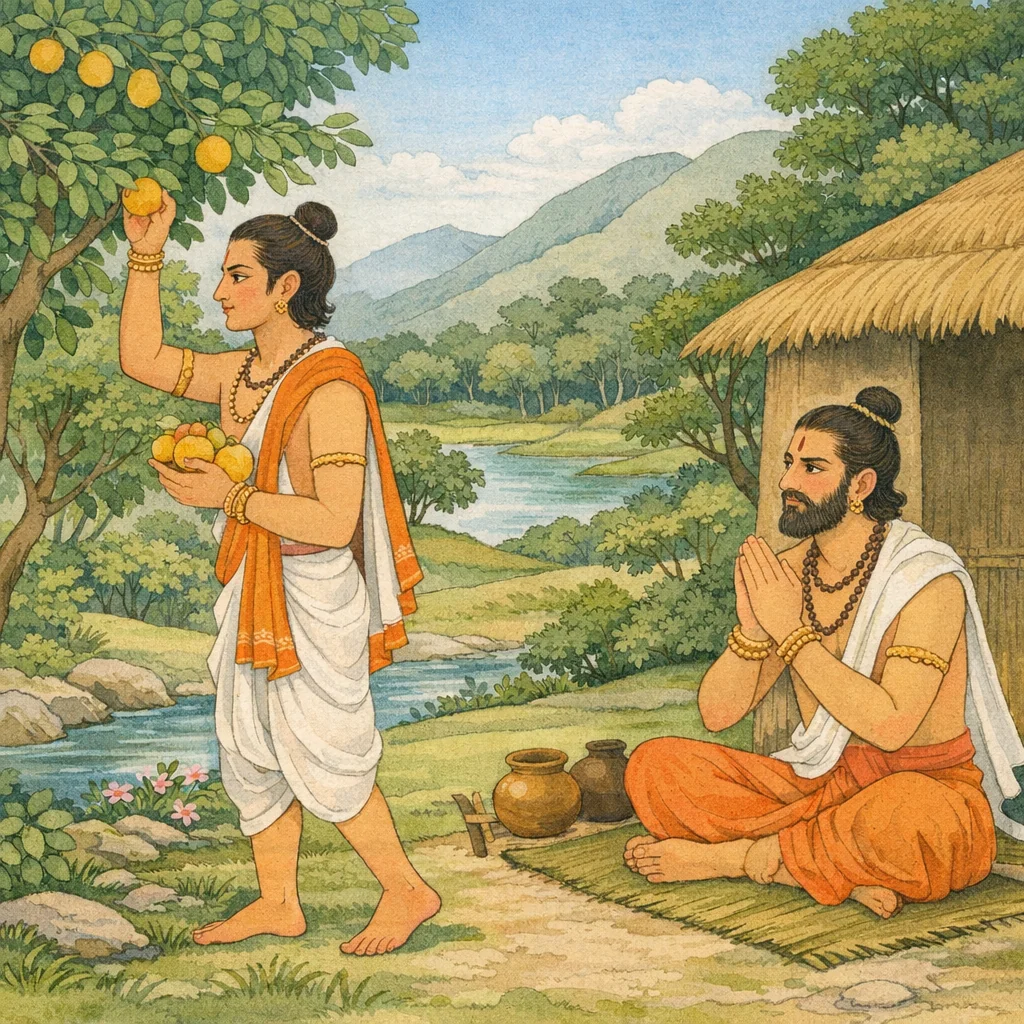
तत:ः कदाचिल्लिखित: शंखस्याश्रममागत: । यद्च्छयाथ शंखो<पि निष्क्रान्तो5$भवदाश्रमात्
Then, on one occasion, Likhita arrived at Śaṅkha’s hermitage. By chance, Śaṅkha too came out from the hermitage at that very time.
Verse 21
एक दिन लिखित शंखके आश्रमपर आये। दैवेच्छासे शंख भी उसी समय आश्रमसे बाहर निकल गये थे ।। सो5भिगम्याश्रमं भ्रातु: शंखस्य लिखितस्तदा । फलानि पातयामास सम्यक्परिणतान्युत
Vyāsa said: Then Likhita went to the hermitage of his brother Śaṅkha. At that very time, by the turn of fate, Śaṅkha had stepped out of the āśrama. Likhita thereupon caused fully ripened fruits to fall (from the trees).
Verse 22
तस्मिंश्न भक्षयत्येव शंखो5प्याश्रममागत:,वे खा ही रहे थे कि शंख भी आश्रमपर लौट आये। भाईको फल खाते देख शंखने उनसे पूछा--“तुमने ये फल कहाँसे प्राप्त किये हैं और किसलिये तुम इन्हें खा रहे हो?”
At that very time, as he was eating, Śaṅkha too returned to the hermitage. Seeing his brother eating the fruits, Śaṅkha questioned him: “From where have you obtained these fruits, and for what reason are you eating them?”
Verse 23
भक्षयन्तं तु तं दृष्टवा शंखो भ्रातरमब्रवीत् । कुत: फलान्यवाप्तानि हेतुना केन खादसि,वे खा ही रहे थे कि शंख भी आश्रमपर लौट आये। भाईको फल खाते देख शंखने उनसे पूछा--“तुमने ये फल कहाँसे प्राप्त किये हैं और किसलिये तुम इन्हें खा रहे हो?” इति श्रीमहाभारते शान्तिपर्वणि राजधर्मानुशासनपर्वणि व्यासवाक्ये त्रयोविंशो 5 ध्याय: इस प्रकार श्रीमह्या भारत शान्तिपर्वके अन्तर्गत राजधमनुशासनपर्वमें व्यासवाक्यविषयक तेईसवाँ अध्याय पूरा हुआ
Seeing his brother eating, Śaṅkha addressed him: “From where have you obtained these fruits, and for what reason are you eating them?”
Verse 24
सो<ब्रवीद् भ्रातरं ज्येष्ठमुपसृत्याभिवाद्य च । इत एव गृहीतानि मयेति प्रहसन्निव,लिखितने निकट जाकर बड़े भाईको प्रणाम किया और हँसते हुए-से इस प्रकार कहा --“भैया! मैंने ये फल यहींसे लिये हैं”
Vyāsa said: Approaching his eldest brother and offering respectful salutations, he spoke with a faint, playful smile: “Brother, I took these fruits from right here.”
Verse 25
तमब्रवीत् तथा शंखस्तीव्ररोषसमन्वित: । स्तेयं त्वया कृतमिदं फलान्याददता स्वयम्,तब शंखने तीव्र रोषमें भरकर कहा--“तुमने मुझसे पूछे बिना स्वयं ही फल लेकर यह चोरी की है
Then Śaṅkha, seized with intense anger, said to him: “This is theft that you have committed—taking the fruits yourself without asking.”
Verse 26
गच्छ राजानमासाद्य स्वकर्म कथयस्व वै । अदत्तादानमेवं हि कृतं पार्थिवसत्तम
Vyāsa said: “Go, approach the king, and plainly recount your own deed. For, O best of rulers, this is indeed what has been done—taking what had not been given.”
Verse 27
स्तेन॑ मां त्वं विदित्वा च स्वधर्ममनुपालय । शीघ्रं धारय चौरस्थ मम दण्डं नराधिप
Vyāsa said: “Knowing me to be a thief, still uphold your own duty. O king, standing in the role of one who deals with thieves, promptly enforce my punishment.”
Verse 28
“अतः तुम राजाके पास जाओ और अपनी करतूत उन्हें कह सुनाओ। उनसे कहना --नृपश्रेष्ठ! मैंने इस प्रकार बिना दिये हुए फल ले लिये हैं, अतः मुझे चोर समझकर अपने धर्मका पालन कीजिये। नरेश्वर! चोरके लिये जो नियत दण्ड हो, वह शीघ्र मुझे प्रदान कीजिये” ।। इत्युक्तस्तस्य वचनात् सुझ्युम्न॑ स नराधिपम् । अभ्यगच्छन्महाबाहो लिखित: संशितव्रत:,महाबाहो! बड़े भाईके ऐसा कहनेपर उनकी आज्ञासे कठोर व्रतका पालन करनेवाले लिखित मुनि राजा सुद्युम्नके पास गये
Vyāsa said: “Therefore go to the king and confess what you have done. Say to him: ‘O best of kings, in this manner I have taken fruit that was not given; therefore, regarding me as a thief, uphold your royal duty. O lord of men, quickly award me the fixed punishment prescribed for a thief.’ Thus instructed by his elder brother’s words, the ascetic Likhita—steadfast in strict vows—went to King Sudyumna, the ruler of men.”
Verse 29
सुद्युम्नस्त्वन्तपाले भ्य: श्रुव्वा लिखितमागतम् । अभ्यगच्छत् सहामात्य: पद्भ्यामेव जनेश्वर:,सुद्युम्नने द्वारपालोंसे जब यह सुना कि लिखित मुनि आये हैं तो वे नरेश अपने मन्त्रियोंके साथ पैदल ही उनके निकट गये
Hearing from the gatekeepers that the sage Likhita had arrived, King Sudyumna—lord of the people—went to meet him at once, accompanied by his ministers, and did so on foot.
Verse 30
तमब्रवीत् समागम्य स राजा धर्मवित्तमम् | किमागमनमाचक्ष्व भगवन् कृतमेव तत्,राजाने उन धर्मज्ञ मुनिसे मिलकर पूछा--“भगवन्! आपका शुभागमन किस उद्देश्यसे हुआ है? यह बताइये और उसे पूरा हुआ ही समझिये”
Approaching him, the king addressed that foremost knower of dharma: “Revered sir, for what purpose have you come? Please tell me—consider it already accomplished.”
Verse 31
एवमुक्त: स विदप्रर्षि: सुद्युम्नमिदमब्रवीत् । प्रतिश्रुत्य करिष्येति श्रुत्वा तत् कर्तुमहसि,उनके इस तरह कहनेपर विप्रर्षि लिखितने सुद्युम्नसे यों कहा--'राजन्! पहले यह प्रतिज्ञा कर लो कि “हम करेंगे” उसके बाद मेरा उद्देश्य सुनो और सुनकर उसे तत्काल पूरा करो
Thus addressed, the brahmin-sage Likhita said to Sudyumna: “O king, first make this promise: ‘I will do it.’ Then hear my purpose, and having heard it, you must accomplish it at once.”
Verse 32
अनिसृष्टानि गुरुणा फलानि मनुजर्षभ । भक्षितानि महाराज तत्र मां शाधि मा चिरम्,“नरश्रेष्ठ! मैंने बड़े भाईके दिये बिना ही उनके बगीचेसे फल लेकर खा लिये हैं; महाराज! इसके लिये मुझे शीघ्र दण्ड दीजिये”
Vyāsa said: “O bull among men, O great king—without my elder’s leave I have eaten fruits that were not granted to me. For this fault, punish me at once; do not delay.”
Verse 33
सुद्युग्न उवाच प्रमाणं चेन्मतो राजा भवतो दण्डधारणे । अनुज्ञायामपि तथा हेतु: स्याद् ब्राह्मणर्षभ,सुद्युम्नने कहा--ब्राह्मणशिरोमणे! यदि आप दण्ड देनेमें राजाको प्रमाण मानते हैं तो वह क्षमा करके आपको लौट जानेकी आज्ञा दे दे, इसका भी उसे अधिकार है
Sudyumna said: “O best of Brahmins, if you regard the king as the rightful authority in the matter of wielding punishment, then that same authority also extends to granting leave—he may forgive and permit you to depart. The very principle you cite as the basis for punishment must equally serve as the basis for release.”
Verse 34
स भवानभ्यनुज्ञात: शुचिकर्मा महाव्रत: । ब्रूहि कामानतो<न््यांस्त्वं करिष्यामि हि ते वच:
You have been duly granted permission, O one of pure conduct and great vows. Now tell me what other desires you have; for I shall indeed carry out your word.
Verse 35
आप पवित्र कर्म करनेवाले और महान् व्रतधारी हैं। मैंने अपराधको क्षमा करके आपको जानेकी आज्ञा दे दी। इसके सिवा, यदि दूसरी कामनाएँ आपके मनमें हों तो उन्हें बताइये, मैं आपकी आज्ञाका पालन करूँगा ।। व्यास उवाच संछन््द्यमानो ब्रद्म॒र्षि: पार्थिवेन महात्मना । नान््यं स वरयामास तस्माद् दण्डादृते वरम्,व्यासजीने कहा--महामना राजा सुद्युम्नके बारंबार आग्रह करनेपर भी ब्रह्मर्षि लिखितने उस दण्डके सिवा दूसरा कोई वर नहीं माँगा
Vyāsa said: Though repeatedly pressed by the great-souled king, the brahmarṣi asked for no other boon—except that very punishment.
Verse 36
ततः स पृथिवीपालो लिखितस्य महात्मन: । करी प्रच्छेदयामास धृतदण्डो जगाम स:,तब उन भूपालने महामना लिखितके दोनों हाथ कटवा दिये। दण्ड पाकर लिखित वहाँसे चले गये
Then that ruler of the earth ordered the hands of the noble Likhita to be cut off. Having received the punishment, Likhita departed from that place.
Verse 37
स गत्वा भ्रातरं शंखमार्तरूपो<ब्रवीदिदम् | धृतदण्डस्य दुर्बुद्धेर्भवांस्तत् क्षन्तुमहति,अपने भाई शंखके पास जाकर लिखितने आर्त होकर कहा--'भैया! मैंने दण्ड पा लिया। मुझ दुर्बुद्धिके उस अपराधको आप क्षमा कर दें”
Having gone to his brother Śaṅkha, he spoke in a distressed state: “Brother, I have received punishment. Please forgive that offense of mine, committed through foolishness.”
Verse 38
शंख उवाच न कुप्ये तव धर्मज्ञ न त्वं दूषयसे मम । सुनिर्मलं कुल ब्रह्म॒न्नस्मिन् जगति विश्रुतम् । धर्मस्तु ते व्यतिक्रान्तस्ततस्ते निष्कृति: कृता,शंख बोले--धर्मज्ञ! मैं तुमपर कुपित नहीं हूँ। तुम मेरा कोई अपराध नहीं करते हो। ब्रह्मन! हम दोनोंका कुल इस जगत्में अत्यन्त निर्मल एवं निष्कलंक रूपमें विख्यात है। तुमने धर्मका उल्लंघन किया था, अतः उसीका प्रायश्रित्त किया है
Śaṅkha said: “O knower of dharma, I am not angry with you; you have done me no wrong. O brāhmaṇa, our lineage is renowned in this world as utterly pure and unblemished. But you had transgressed dharma—therefore the expiation for that has now been accomplished.”
Verse 39
त्वं गत्वा बाहुदां शीघ्र तर्पयस्व यथाविधि । देवानृषीन् पितृश्चैवं मा चाधर्मे मनः कृथा:
Go at once to Bāhudā and, in the prescribed manner, offer the proper satisfactions. Thus honor the gods, the seers, and the ancestors—and do not let your mind incline toward unrighteousness.
Verse 40
अब तुम शीघ्र ही बाहुदा नदीके तटपर जाकर विधिपूर्वक देवताओं, ऋषियों और पितरोंका तर्पण करो। भविष्यमें फिर कभी अधर्मकी ओर मन न ले जाना ।। तस्य तद् वचन श्रुत्वा शंखस्य लिखितस्तदा । अवगाह्वापगां पुण्यामुदकार्थ प्रचक्रमे
Śaṅkha said: “Go at once to the bank of the Bāhudā river and, in due ritual order, offer libations to the gods, the seers, and the ancestors. In the future, do not ever again let your mind turn toward unrighteousness.” Hearing Śaṅkha’s words, Likhita then entered the sacred river and set about obtaining water for the prescribed rites.
Verse 41
प्रादुरास्तां ततस्तस्य करो जलजसंनिभौ । शंखकी वह बात सुनकर लिखितने उस समय पवित्र नदी बाहुदामें स्नान किया और पितरोंका तर्पण करनेके लिये चेष्टा आरम्भ की। इतनेहीमें उनके कमल-सदृश सुन्दर दो हाथ प्रकट हो गये || ४० $ ।। ततः स विस्मितो क्रातुर्दर्शयामास तौ करो,तदनन्तर लिखितने चकित होकर अपने भाईको वे दोनों हाथ दिखाये। तब शंखने उनसे कहा--'भाई! इस विषयमें तुम्हें शंका नहीं होनी चाहिये। मैंने तपस्यासे तुम्हारे हाथ उत्पन्न किये हैं। यहाँ दैवका विधान ही सफल हुआ है
Then, at that very moment, two hands—beautiful like lotuses—manifested for him. Seeing this astonishing event, Likhita showed those hands to his brother. Śaṅkha then said, “Brother, you should have no doubt about this. By my austerity I have brought forth your hands; here the ordinance of destiny has been fulfilled.”
Verse 42
ततस्तमब्रवीच्छंखस्तपसेदं कृतं मया । मा च तेऊत्र विशंकाभूद् दैवमत्र विधीयते,तदनन्तर लिखितने चकित होकर अपने भाईको वे दोनों हाथ दिखाये। तब शंखने उनसे कहा--'भाई! इस विषयमें तुम्हें शंका नहीं होनी चाहिये। मैंने तपस्यासे तुम्हारे हाथ उत्पन्न किये हैं। यहाँ दैवका विधान ही सफल हुआ है
Then Śaṅkha said to him: “This has been accomplished by me through austerity. Let there be no doubt in you about this matter. Here, what is ordained by destiny is being brought to fulfillment.”
Verse 43
लिखित उवाच किं तु नाहं त्वया पूतः पूर्वमेव महाद्युते । यस्य ते तपसो वीर्यमीदृशं द्विजसत्तम,तब लिखितने पूछा--महातेजस्वी द्विजश्रेष्ठी] जब आपकी तपस्याका ऐसा बल है तो आपने पहले ही मुझे पवित्र क्यों नहीं कर दिया?
Likhita said: “But why was I not purified by you earlier, O greatly radiant one? If the power of your austerity is truly of such a kind, O best of Brahmins, why did you not cleanse me at once?”
Verse 44
शंख उवाच एवमेतन्मया कार्य नाहं दण्डधरस्तव । सच पूतो नरपतिस्त्वं चापि पितृभि: सह,शंख बोले--भाई! यह ठीक है, मैं ऐसा कर सकता था; परंतु मुझे तुम्हें दण्ड देनेका अधिकार नहीं है। दण्ड देनेका कार्य तो राजाका ही है। इस प्रकार दण्ड देकर राजा सुद्युम्न और उस दण्डको स्वीकार करके तुम पितरोंसहित पवित्र हो गये
Śaṅkha said: “So it is; I could indeed have acted thus. But I am not the wielder of punishment in your case—I have no authority to chastise you. The task of administering punishment belongs to the king alone. By imposing that punishment, the king (Sudyumna) has been purified; and by accepting it, you too—together with your ancestors—have become purified.”
Verse 45
व्यास उवाच स राजा पाण्डवश्रेष्ठ श्रेयान् वै तेन कर्मणा । प्राप्तवान् परमां सिद्धि दक्ष: प्राचेतसो यथा,व्यासजी कहते हैं--पाण्डवश्रेष्ठ युधिष्ठिर! उस दण्ड-प्रदानरूपी कर्मसे राजा सुद्युम्न उच्चतम पदको प्राप्त हुए। उन्होंने प्रचेताओंके पुत्र दक्षकी भाँति परम सिद्धि प्राप्त की थी
Vyāsa said: O best of the Pāṇḍavas, by that very act—namely, the king’s duty of administering punishment—he became truly exalted. King Sudyumna attained the highest perfection through it, just as Dakṣa, the son of the Pracetās, attained supreme accomplishment.
Verse 46
एष धर्म: क्षत्रियाणां प्रजानां परिपालनम् । उत्पथो<न्यो महाराज मा सम शोके मन: कृथा:
Vyāsa said: “This is the dharma of kṣatriyas: the protection and governance of the people. Any other course is a deviation from the right path, O great king. Therefore do not let your mind be fashioned into grief.”
Verse 47
महाराज! प्रजाजनोंका पूर्णरूपसे पालन करना ही क्षत्रियोंका मुख्य धर्म है। दूसरा काम उसके लिये कुमार्गके तुल्य है; अत: तुम मनको शोकमें न डुबाओ ।। भ्रातुरस्य हित॑ वाक््यं शृणु धर्मज्ञ सत्तम । दण्ड एव हि राजेन्द्र क्षत्रधर्मो न मुण्डनम्,धर्मके ज्ञाता सत्पुरुष! तुम अपने भाईकी हितकर बात सुनो। राजेन्द्र! दण्ड-धारण ही क्षत्रिय-धर्मके अन्तर्गत है, मूँड़ मुड़ाकर संन्यासी बनना नहीं
Vyāsa said: “O great king, the foremost duty of a kṣatriya is the complete protection and governance of the people. Any other course is like a wrong path for him; therefore do not let your mind sink into grief. O best of the dharma-knowing, listen to this beneficial counsel from your brother: O lord of kings, for a kṣatriya the true dharma is the bearing of the daṇḍa, the rod of authority—discipline and rule—not shaving the head to become a renunciant.”
Verse 83
ब्राह्मणानां महाराज चेष्टा संसिद्धिकारिका | महाराज! तप, यज्ञ, विद्या, भिक्षा, इन्द्रियसंयम, ध्यान, एकान्तवासका स्वभाव, संतोष और यथाशक्ति शास्त्रज्ञान-ये सब गुण तथा चेष्टाएँ ब्राह्मणोंके लिये सिद्धि प्रदान करनेवाली हैं
Vyāsa said: “O great king, the disciplines of Brahmins are the very means that bring about spiritual accomplishment. Austerity, sacrifice, learning, alms-begging, restraint of the senses, meditation, a natural inclination for solitary dwelling, contentment, and knowledge of the scriptures according to one’s capacity—these virtues and practices are what grant Brahmins success on the path of dharma.”
Verse 216
तान्युपादाय विस्रब्धो भक्षयामास स द्विज: । भाई शंखके आश्रममें जाकर लिखितने खूब पके हुए बहुत-से फल तोड़कर गिराये और उन सबको लेकर वे ब्रह्मर्षि बड़ी निश्चिन्तताके साथ खाने लगे
Having gathered those fruits up, the Brahmin—now free from anxiety and fully at ease—began to eat them. The scene underscores a simple, nonviolent livelihood and the calm contentment of an ascetic who takes what is readily available without greed or harm.
Frequently Asked Questions
The chapter negotiates whether a ruler burdened by suffering may renounce governance for forest life; it argues that abandonment of gārhasthya-linked responsibilities is not prescribed for Yudhiṣṭhira, whose svadharma is to sustain order and welfare.
Practice svadharma according to śāstra and procedure: uphold the householder-based social support system and execute kṣatriya functions—especially protection of subjects and ethically constrained daṇḍa—so that social roles and welfare remain viable.
No explicit phalaśruti formula is presented in these verses; the meta-justification is functional and normative—gārhasthya sustains all beings and daṇḍa sustains polity—positioning the teaching as a governance-ethics necessity rather than a merit-recitation promise.