Adhyaya 207
Brahmacarya-Upāya: Jñāna, Śauca, and the Mind’s Role in Desire (शान्ति पर्व, अध्याय २०७)
Upa-parva: Mokṣadharma-anushāsana (Liberation Teachings) — Brahmacarya and Jñāna Discourse Unit
A guru outlines an upāya (method) for attaining the highest state through śāstric insight and practiced knowledge. He asserts a hierarchy in which humans are foremost among beings, and among humans the twice-born are esteemed, with mantra-knowers and Veda-knowing brāhmaṇas presented as exemplary due to discernment of tattva (principle/reality). Knowledge is likened to sight: without it one struggles as a blind traveler; hence knowers are socially and ethically significant. The discourse then enumerates cross-domain virtues—purity of speech, body, and mind; forbearance; truth; steadiness; and recollection—presented as universally instructive qualities. Brahmacarya is described as a ‘form of Brahman,’ superior due to its restraint of sensory indulgence (touch, taste, etc.) and its reliance on buddhi and deliberate resolve. Practical cautions are given regarding stimuli that inflame passion; remedial observances (austerity, immersion, recitation) are prescribed to neutralize rajas. The chapter shifts to a physiological-psychological model: the body’s constituents and channels are described, with a mind-bearing conduit linked to the emission of semen as intention-generated, even in dreams. Knowing this causal chain is said to support dispassion and the burning of defects, culminating in guṇa-sāmyā (equilibrium of qualities) and release at life’s end; overcoming guṇa-bondage yields ‘amṛta’ (deathless attainment).
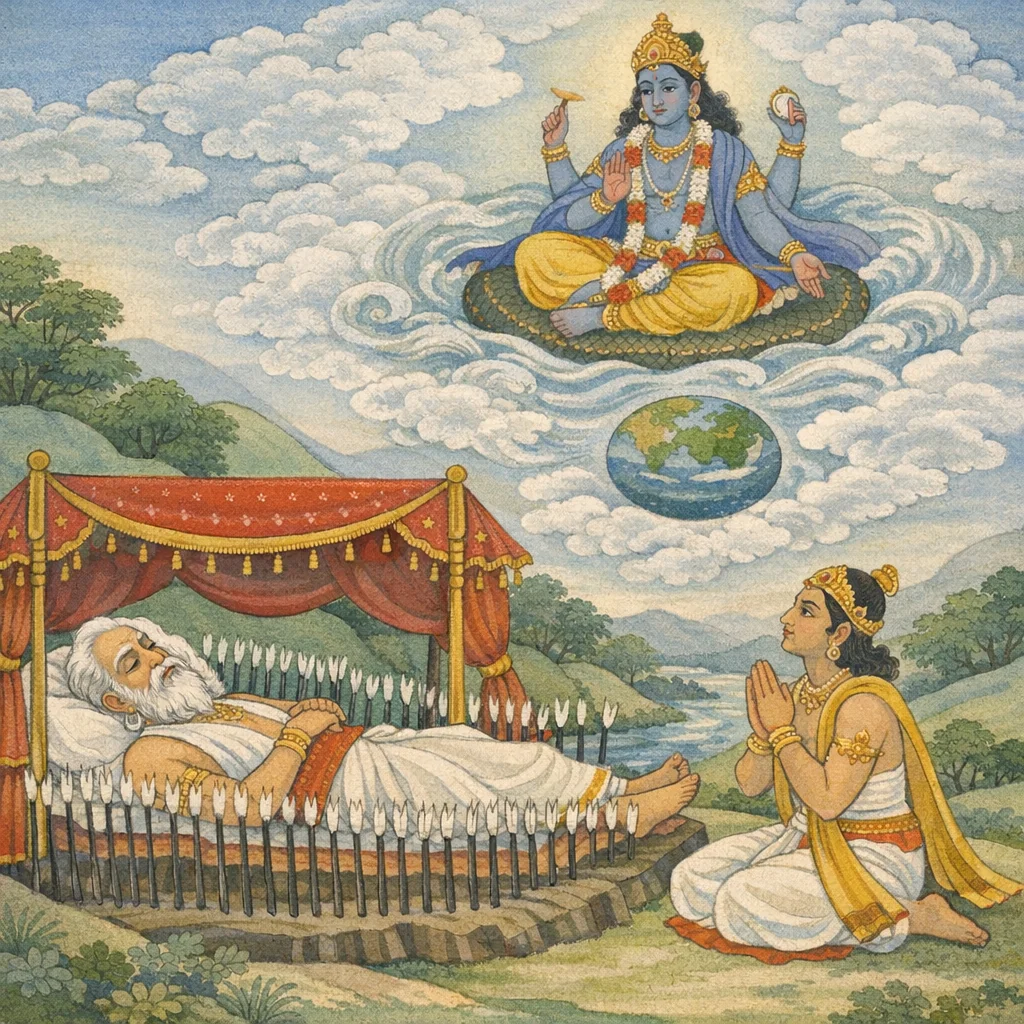
Chapter Arc: युधिष्ठिर, शोक और जिज्ञासा के बीच, पितामह भीष्म से निवेदन करते हैं कि वे नारायण-स्वरूप श्रीकृष्ण (हृषीकेश, गोविन्द, अपराजित) को तत्त्वतः सुनना चाहते हैं—उनकी उत्पत्ति, सर्वव्यापकता और महिमा सहित। → भीष्म कृष्ण को ‘पुरुष’, ‘ईश्वर’, ‘प्रभु’ और ‘सर्वम्’ कहकर सृष्टि-क्रम का विस्तार करते हैं—कैसे पुरुषोत्तम ने पृथ्वी की रचना की, जल में निवास-सा विधान किया, और युग-धर्मों के अनुसार प्रजा की प्रवृत्तियाँ बदलती गईं; आदिकाल में संकल्प से ही सन्तानोत्पत्ति का वर्णन इस परिवर्तन-रेखा को तीक्ष्ण बनाता है। → उत्तरापथ में उत्पन्न विविध जनों/म्लेच्छ-समूहों का उल्लेख और उनका युग-धर्म से विचलन—यह कथन कि कृतयुग में ऐसे आचार-समूह पृथ्वी पर नहीं विचरते—सृष्टि के नैतिक अवनमन (युग-क्षय) को चरम पर रख देता है। → भीष्म निष्कर्ष देते हैं कि इस प्रकार महात्मा श्रीकृष्ण/नारायण ने इस लोक-व्यवस्था को प्रकट किया—सृष्टि, जाति-समूह, और युगानुसार धर्म-परिवर्तन सब उसी परम कारण की लीला-व्यवस्था है। → युधिष्ठिर की जिज्ञासा आगे भी बनी रहती है—यदि युग-धर्म बदलते हैं तो राजा और साधक के लिए आचरण का स्थिर मानदण्ड क्या हो?
Shlokas
Verse 1
ऑपन-आक्रात छा आर: 2 सप्ताधिकदद्विशततमो< ध्याय: श्रीकृष्णसे सम्पूर्ण भूतोंकी उत्पत्तिका तथा उनकी महिमाका कथन युधिषछ्िर उवाच पितामह महाप्राज्ञ पुण्डरीकाक्षमच्युतम् । कर्तारमकृतं विष्णुं भूतानां प्रभवाप्ययम्
Yudhiṣṭhira said: “O grandsire, O greatly wise one—tell me of Puṇḍarīkākṣa, the unfailing Lord: Viṣṇu, the uncreated doer, who is the source and the dissolution of all beings.”
Verse 2
नारायणं हृषीकेशं गोविन्दमपराजितम् । तत्त्वेन भरतश्रेष्ठ श्रोतुमिच्छामि केशवम्
Yudhiṣṭhira said: “O best of the Bharatas, I wish to hear, in accordance with the truth and its real principles, about Keśava—Nārāyaṇa, Hṛṣīkeśa, Govinda, the unconquered.”
Verse 3
युधिष्ठिरने कहा--भरतश्रेष्ठ! महाप्राज्ञ पितामह! कमलनयन भगवान् श्रीकृष्ण अपनी महिमासे कभी च्युत न होनेवाले, सबके कर्ता, अकृत (नित्य सिद्ध), सर्वव्यापी तथा सम्पूर्ण भूतोंकी उत्पत्ति और प्रलयके स्थान हैं। ये कभी किसीसे पराजित नहीं होते। ये ही नारायण, हृषीकेश, गोविन्द और केशव--इन नामोंसे भी विख्यात हैं। मैं इनके स्वरूपका तात्विक विवेचन सुनना चाहता हूँ ।। भीष्म उवाच श्रुतोडयमर्थो रामस्य जामदग्न्यस्य जल्पत: । नारदस्य च देवर्षे: कृष्णद्वैयायनस्य च,भीष्मजी बोले--युधिष्ठिर! मैंने इस विषयका विवेचन जमदग्निनन्दन परशुराम, देवर्षि नारद तथा श्रीकृष्णद्वैपायन व्यासजीके मुँहसे सुना है
Yudhiṣṭhira said: “O best of the Bharatas! O grandsire of great wisdom! The lotus-eyed Lord Śrī Kṛṣṇa never falls away from his own majesty. He is the doer of all, the uncreated (akṛta, eternally accomplished), all-pervading, and the seat of the origin and dissolution of all beings. None can conquer him. He is also famed by the names Nārāyaṇa, Hṛṣīkeśa, Govinda, and Keśava. I wish to hear a true, principled inquiry into his essential nature.” Bhīṣma said: “Yudhishthira, I have heard this doctrine explained from the lips of Rama Jāmadagnya (Paraśurāma), the divine seer Nārada, and Kṛṣṇa Dvaipāyana Vyāsa.”
Verse 4
असितो देवलस्तात वाल्मीकिश्न महातपा: । मार्कण्डेयश्व गोविन्दे कथयन्त्यद्भुतं महत्,तात! असित, देवल, महातपस्वी वाल्मीकि और महर्षि मार्कण्डेयजी भी इन भगवान् गोविन्दके विषयमें बड़ी अदभुत बातें कहा करते हैं
Bhīṣma said: “Dear one, Asita, Devala, the great ascetic Vālmīki, and the sage Mārkaṇḍeya too speak of Lord Govinda in wondrous and exalted ways.”
Verse 5
केशवो भरतश्रेष्ठ भगवानीश्रवर: प्रभु: । पुरुष: सर्वमित्येव श्रूयते बहुधा विभु:,भरतश्रेष्ठ! भगवान् श्रीकृष्ण सबके ईश्वर और प्रभु हैं। श्रुतिमें 'पुरुष एवेद सर्वम्'- इत्यादि वचनोंद्वारा इन्हीं सर्वव्यापी श्रीकृष्णकी महिमाका नाना प्रकारसे निरूपण किया गया है
O best of the Bharatas! Keśava, the blessed Lord Śrī Kṛṣṇa, is the God and sovereign Lord of all. In the Śruti, through sayings such as “The Puruṣa alone is all this,” his glory—the glory of the all-pervading Kṛṣṇa—is set forth in many ways.
Verse 6
कि तु यानि विदुलोकि ब्राह्मणा: शार्ज्र्धन्वनि । माहात्म्यानि महाबाहो शृणु तानि युधिछिर,महाबाहु युधिष्ठिर! जगत्में शार्इ्रधनुष धारण करनेवाले श्रीकृष्णके जिन माहात्म्योंको ब्राह्मणलोग जानते हैं, उन्हें बताता हूँ, सुनो
But now, O mighty-armed Yudhiṣṭhira, listen as I recount those great excellences of the bearer of the Śārṅga bow—Śrī Kṛṣṇa—such as the Brahmins, learned in the world’s sacred tradition, are said to know. These praises are offered to orient the mind toward dharma by remembering the divine qualities that uphold and protect it.
Verse 7
यानि चारहुर्मनुष्येन्द्र ये पुराणविदो जना: । कर्माणि त्विह गोविन्दे कीर्तयिष्यामि तान्यहम्,नरेन्द्र! पुराणवेत्ता पुरुष गोविन्दकी जिन-जिन लीलाओं तथा चरित्रोंका वर्णन करते हैं, उनका मैं यहाँ वर्णन करूँगा
Bhishma said: “O best of men, O king! Whatever deeds of Govinda the people who know the Purāṇas speak of, I shall recount those very deeds here.”
Verse 8
महाभूतानि भूतात्मा महात्मा पुरुषोत्तम: । वायुज्योतिस्तथा चाप: खं च गां चान्वकल्पयत्,सम्पूर्ण भूतोंके आत्मा महात्मा पुरुषोत्तमने आकाश, वायु, अग्नि, जल और पृथ्वी-- इन पाँच महाभूतोंकी रचना की है
Bhishma said: The Supreme Person—great-souled, the inner Self of all beings—brought forth the five great elements: space, wind, fire, water, and earth.
Verse 9
स सृष्ट्वा पृथिवीं चैव सर्वभूतेश्वर: प्रभु: । अप्स्वेव भवन चक्रे महात्मा पुरुषोत्तम:,सर्वभूतेश्वर, प्रभु, महात्मा पुरुषोत्तमने इस पृथ्वीकी सृष्टि करके जलमें ही अपना निवासस्थान बनाया
Bhishma said: Having created the earth, the sovereign Lord of all beings—mighty, great-souled, the Supreme Person—made his dwelling in the waters.
Verse 10
सर्वतेजोमयस्तस्मिन् शयान: पुरुषोत्तम: । सोअग्रजं सर्वभूतानां संकर्षणमकल्पयत्
Bhīṣma said: In that all-radiant state, the Supreme Person lay reposed; and from himself he brought forth Saṅkarṣaṇa, the elder brother of all beings—establishing the primordial principle that the cosmos proceeds from the Divine in ordered succession.
Verse 11
आश्रयं सर्वभूतानां मनसेतीह शुश्रुम । उसमें शयन करते हुए सर्वतेजोमय पुरुषोत्तम श्रीकृष्णने मनसे ही सम्पूर्ण प्राणियोंके अग्रज तथा आश्रय संकर्षणको उत्पन्न किया, यह हमने सुना है ।। स धारयति भूतानि उभे भूतभविष्यती,वे संकर्षण ही समस्त भूतोंको धारण करते है तथा वे ही भूत और भविष्यके भी आधार हैं। उन महाबाहु महात्मा संकर्षणका प्रादुर्भाव होनेके पश्चात् श्रीहरिकी नाभिसे एक दिव्य कमल प्रकट हुआ, जो सूर्यके समान प्रकाशमान था
Bhishma said: “We have heard here that the mind itself is the refuge of all beings. While the Supreme Person, Śrī Kṛṣṇa—filled with all splendor—lay in yogic repose, he brought forth by mere thought Saṅkarṣaṇa, the elder and support of all living creatures. Saṅkarṣaṇa upholds all beings and stands as the foundation of both what has been and what is yet to come. After that mighty-armed, great-souled Saṅkarṣaṇa manifested, a divine lotus, radiant like the sun, appeared from the navel of Śrī Hari.”
Verse 12
ततस्तस्मिन् महाबाहो प्रादुर्भूते महात्मनि । भास्करप्रतिमं दिव्यं नाभ्यां पच्मामजायत,वे संकर्षण ही समस्त भूतोंको धारण करते है तथा वे ही भूत और भविष्यके भी आधार हैं। उन महाबाहु महात्मा संकर्षणका प्रादुर्भाव होनेके पश्चात् श्रीहरिकी नाभिसे एक दिव्य कमल प्रकट हुआ, जो सूर्यके समान प्रकाशमान था
Bhishma said: “Then, O mighty-armed one, when that great-souled being had manifested, a radiant, divine lotus—shining like the sun—arose from his navel.”
Verse 13
स तत्र भगवान् देव: पुष्करे भ्राजयन् दिश: । ब्रह्मा समभवत् तात सर्वभूतपितामह:,तात! उस कमलसे सम्पूर्ण दिशाओंको प्रकाशित करते हुए समस्त प्राणियोंके पितामह देवस्वरूप भगवान् ब्रह्मा उत्पन्न हुए
Bhishma said: “There, from the lotus, the blessed divine Lord Brahmā came into being—O dear one—illumining all the directions with his radiance, the grandsire and progenitor of all living beings.”
Verse 14
तस्मिन्नपि महाबाहो प्रादुर्भूते महात्मनि । तमसा पूर्वजो जज्ञे मधुर्नाम महासुर:,उन महाबाहु महात्मा ब्रह्माजीकी भी उत्पत्ति हो जानेपर वहाँ तमोगुणसे मधुनामक महान् असुर प्रकट हुआ, जो असुरोंका पूर्वज था
Bhīṣma said: “O mighty-armed one, even after that great-souled being had manifested, there arose from the principle of darkness (tamas) a mighty Asura named Madhu, who became the progenitor of the Asuras.”
Verse 15
तमुग्रमुग्रकर्माणमुग्रं कर्म समास्थितम् । ब्रह्मणोपचितिं कुर्वन् जघान पुरुषोत्तम:,उसका स्वभाव बड़ा ही उग्र था। वह सदा ही भयानक कर्म करनेवाला था। भयंकर कर्म करनेका निश्चय लेकर आये हुए उस असुरको पुरुषोत्तम भगवान् विष्णुने ब्रह्माजीका हित करनेके लिये मार डाला
Bhishma said: That fierce being—terrible in nature and devoted to dreadful deeds—had resolved upon a fearsome course of action. For the welfare and protection of Brahmā, the Supreme Person (Viṣṇu) slew him.
Verse 16
तस्य तात वधात् सर्वे देवदानवमानवा: । मधुसूदनमित्याहुरऋषभं सर्वसात्वताम्,तात! उस मधुका वध करनेके कारण ही सम्पूर्ण देवता, दानव और मानव--इन सर्वसात्वतशिरोमणि श्रीकृष्णको मधुसूदन कहते हैं
Bhishma said: “Dear one, because he slew Madhu, all—gods, demons, and humans—proclaim Krishna, the bull among the Sāttvatas (the foremost of the Vṛṣṇis), as ‘Madhusūdana’, the slayer of Madhu.”
Verse 17
ब्रह्मानुससूजे पुत्रान् मानसान् दक्षसप्तमान् | मरीचिमत्र्यज्ञिरसं पुलस्यं पुलहं क्रतुम्,ब्रह्माजीने सात मानस पुत्रोंको उत्पन्न किया, जिनमें दक्ष प्रजापति सातवें थे (ये ही सबसे प्रथम उत्पन्न हुए थे)। शेष छः पुत्रोंके नाम इस प्रकार हैं--मरीचि, अत्रि, अंगिरा, पुलस्त्य, पुलह और क्रतु
Bhishma said: “Brahmā brought forth, by the power of mind alone, seven sons—Dakṣa being the seventh among them. The remaining six were Marīci, Atri, Aṅgiras, Pulastya, Pulaha, and Kratu.”
Verse 18
मरीचि: कश्यपं तात पुत्रमग्रजमग्रज: । मानसं जनयामास तैजसं ब्रह्मवित्तमम्,तात! इन छः: पुत्रोंमें सबसे बड़े थे मरीचि। उन्होंने अपने मनसे ही ब्रह्मवेत्ताओंमें श्रेष्ठ कश्यप नामक श्रेष्ठ पुत्रको जन्म दिया, जो बड़े ही तेजस्वी हैं
Bhīṣma said: “O dear one, Marīci—the eldest among the elder sages—brought forth, by the power of his mind alone, a son named Kaśyapa, radiant in splendor and foremost among the knowers of Brahman.”
Verse 19
अज्जुष्ठात् ससूजे ब्रह्मा मरीचेरपि पूर्वजम् । सो5भवद् भरतश्रेष्ठ दक्षो नाम प्रजापति:,भरतमश्रेष्ठ! ब्रह्माजीने दक्षको अपने अँगूठेसे उत्पन्न किया था। वे मरीचिसे भी बड़े थे। इसीलिये प्रजापतिके पदपर दक्ष प्रतिष्ठित हुए
Bhishma said: “From his thumb Brahmā brought forth Dakṣa, who was even senior to Marīci. Therefore, O best of the Bharatas, Dakṣa became established in the rank of Prajāpati.”
Verse 20
तस्य पूर्वमजायन्त दश तिस्रश्न भारत | प्रजापतेर्दुहितरस्तासां ज्येष्ठा भवद् दिति:,भरतनन्दन! प्रजापति दक्षके पहले तेरह कन्याएँ उत्पन्न हुईं, जिनमें दिति सबसे बड़ी थी
Bhīṣma said: “O Bhārata, earlier there were born thirteen daughters of Prajāpati Dakṣa; among them, the eldest was Diti, O delight of the Bharatas.”
Verse 21
सर्वधर्मविशेषज्ञ: पुण्यकीर्तिमहायशा: । मारीच: कश्यपस्तात सर्वासामभवत् पति:,तात! सम्पूर्ण धर्मोंके विशेषज्ञ, पुण्यकीर्ति, महायशस्वी मरीचिनन्दन कश्यप उन सब कन्याओंके पति हुए
Bhīṣma said: Kaśyapa—son of Marīci—renowned for his mastery of the many distinctions of dharma, and celebrated for his holy fame and great glory, became the husband of all those maidens.
Verse 22
उत्पाद्य तु महाभागस्तासामवरजा दश । ददौ धर्माय धर्मज्ञो दक्ष एव प्रजापति:,तदनन्तर धर्मके ज्ञाता महाभाग प्रजापति दक्षने दस कन्याएँ और उत्पन्न कीं, जो पूर्वोक्त तेरह कनन््याओंसे छोटी थीं। उन सबका विवाह उन्होंने धर्मके साथ कर दिया
Bhīṣma said: Then the illustrious Prajāpati Dakṣa, knower of dharma, begot ten more daughters, younger than those previously mentioned, and gave them in marriage to Dharma.
Verse 23
धर्मस्य वसव: पुत्रा रुद्राश्नामिततेजस: । विश्वेदेवाश्ष॒ साध्याश्ष मरुत्वन्तक्ष भारत
Bhīṣma said: “O Bhārata, the Vasus are the sons of Dharma; the Rudras, of immeasurable splendour; and likewise the Viśvedevas, the Sādhyas, and the Maruts.”
Verse 24
भरतनन्दन! धर्मके वसु, अमित तेजस्वी रुद्र, विश्वेदेव, साध्य तथा मरुद्गण--ये बहुत- से पुत्र हुए ।। अपराशक्ष् यवीयस्यस्ता भ्यो5न्या: सप्तविंशति: । सोमस्तासां महाभाग: सर्वासामभवत् पति:,तत्पश्चात् दक्षके अन्य सत्ताईस कन्याएँ हुईं, जो पूर्वोक्त कन््याओंसे छोटी थीं। महाभाग सोम उन सबके पति हुए। इन सबके अतिरिक्त भी दक्षके बहुत-सी कन्याएँ हुईं, जिन्होंने गन्धर्वों, अश्वों, पक्षियों, गौओं, किम्पुरुषों, मत्स्यों, उद॒भिज्जों और वनस्पतियोंको जन्म दिया
Bhīṣma said: “O scion of Bharata, from Dharma were born many sons—namely the Vasus, the mighty and immeasurably radiant Rudra, the Viśvedevas, the Sādhyas, and the hosts of the Maruts. Besides these, Dakṣa had another set of twenty-seven daughters, younger than the earlier ones; and the illustrious Soma became the husband of them all. Beyond these too, Dakṣa had many other daughters, who gave rise to various classes of beings—Gandharvas, horses, birds, cows, Kimpuruṣas, fishes, sprouting life-forms, and plants.”
Verse 25
इतरास्तु व्यजायन्त गन्धर्वास्तुरगान् द्विजान् | गाश्च किंपुरुषान्मत्स्यानुद्धिज्जांश्व वनस्पतीन्,तत्पश्चात् दक्षके अन्य सत्ताईस कन्याएँ हुईं, जो पूर्वोक्त कन््याओंसे छोटी थीं। महाभाग सोम उन सबके पति हुए। इन सबके अतिरिक्त भी दक्षके बहुत-सी कन्याएँ हुईं, जिन्होंने गन्धर्वों, अश्वों, पक्षियों, गौओं, किम्पुरुषों, मत्स्यों, उद॒भिज्जों और वनस्पतियोंको जन्म दिया
Bhīṣma said: Other daughters of Dakṣa gave birth to the Gandharvas, to horses, to birds, to cows, to Kiṃpuruṣas, to fishes, and also to beings born from sprouts, and to trees and other vegetation. Thus the lineages of many classes of creatures were propagated through Dakṣa’s daughters, indicating the ordered continuity of creation and the interlinked responsibilities within the cosmic household.
Verse 26
आदित्यानदितिर्ऊज्ञेि देवश्रेष्ठानू महाबलान् | तेषां विष्णुर्वामनो5भूद् गोविन्दश्वा भवत् प्रभु:,अदितिने देवताओंमें श्रेष्ठ महाबली आदित्योंको उत्पन्न किया। उन आदित्योंमें सर्वव्यापी भगवान् गोविन्द भी वामनरूपसे प्रकट हुए
Bhīṣma said: Aditi, through her divine potency, brought forth the mighty Ādityas—the foremost among the gods. Among those Ādityas, the all-pervading Lord Viṣṇu himself manifested in the form of Vāmana; he is Govinda, the sovereign Lord.
Verse 27
तस्य विक्रमणाच्चापि देवानां श्रीर्व्यवर्धत । दानवाश्न पराभूता दैतेयी चासुरी प्रजा,उनके विक्रमसे अर्थात् विराट्रूप धारणकर तीन पैडमें त्रिलोकीको नाप लेनेके कारण देवताओंकी श्रीवृद्धि हुई। दानव पराजित हुए तथा दैत्यों और असुरोंकी प्रजा भी पराभवको प्राप्त हुई
By the might of his stride—when, assuming the cosmic form, he measured the three worlds in three steps—the gods’ splendor increased. The Dānavas were defeated, and the peoples of the Daityas and Asuras likewise fell into ruin.
Verse 28
विप्रचित्तिप्रधानांश्व दानवानसृजदू दनु: । दितिस्तु सर्वानसुरान् महासत्त्वानजीजनत्,दनुने दानवोंको जन्म दिया, जिनमें विप्रचित्ति आदि दानव प्रमुख थे। दिति समस्त असुरों--महान् शक्तिशाली दैत्योंकी जननी हुई
Bhīṣma said: Danu gave birth to the Dānavas, among whom Vipracitti and others were foremost. Diti, however, became the mother of all the Asuras—mighty beings of great power.
Verse 29
अहोरात्रं च कालं॑ च यथर्तु मधुसूदन: । पूर्वाह्न चापराह्न॑ च सर्वमेवानुकल्पयत्,इन्हीं श्रीमधुसूदनने दिन-रात, ऋतुके अनुसार काल, पूर्वाह्न तथा अपराह्न आदि समस्त काल-विभागकी व्यवस्था की
Bhīṣma said: “Madhusūdana (the Lord) duly arranged the divisions of time—day and night, the seasons and their proper measures, and also the forenoon and afternoon—indeed, the entire ordering of temporal segments.”
Verse 30
प्रध्याय सो5सृजन्मेघांस्तथा स्थावरजड्मान् | पृथिवीं सो$सृजद् विश्वां सहितां भूरितेजसा,उन्होंने ही अपने मनके संकल्पसे मेघों, स्थावर-जंगम प्राणियों तथा समस्त पदार्थोंसहित महान् तेजसे संयुक्त समूची पृथ्वीकी सृष्टि की
Bhīṣma said: By the resolve of his own mind, he brought forth the clouds, the beings that are immobile and mobile, and then created the entire earth—complete with all its constituents—endowed with abundant, majestic radiance.
Verse 31
ततः कृष्णो महाभाग: पुनरेव युधिष्ठिर । ब्राह्मणानां शतं श्रेष्ठ मुखादेवासृजत् प्रभु:,युधिष्ठिर! तदनन्तर महाभाग श्रीकृष्णने पुनः सैकड़ों श्रेष्ठ ब्राह्मणोंको मुखसे ही उत्पन्न किया
Then the blessed Kṛṣṇa, O Yudhiṣṭhira—being the sovereign Lord—once again brought forth a hundred excellent Brāhmaṇas from his very mouth.
Verse 32
बाहुभ्यां क्षत्रियशतं वैश्यानामूरुत: शतम् । पद्धयां शूद्रशतं चैव केशवो भरतर्षभ,भरतश्रेष्ठ! इन केशवने सैकड़ों क्षत्रियोंको अपनी दोनों भुजाओंसे, सैकड़ों वैश्योंको अपनी जाँघोंसे तथा सैकड़ों शूद्रोंको दोनों पैरोंसे उत्पन्न किया
Bhīṣma said: “O best of the Bharatas, Keśava brought forth hundreds of Kṣatriyas from his arms, hundreds of Vaiśyas from his thighs, and likewise hundreds of Śūdras from his feet.”
Verse 33
स एवं चतुरो वर्णान् समुत्पाद्य महातपा: । अध्यक्ष॑ सर्वभूतानां धातारमकरोत् स्वयम्,इस प्रकार इन महातपस्वी श्रीहरिने चारों वर्णोको उत्पन्न करके स्वयं ही धाताको सम्पूर्ण भूतोंका अध्यक्ष बनाया
Bhīṣma said: Thus that great ascetic Lord, having brought forth the four social orders, Himself appointed Dhātṛ as the overseer of all beings.
Verse 34
वेदविद्याविधातारं ब्रह्माणममितद्युतिम् । भूतमातृगणाध्यक्ष॑ विरूपाक्षं च सोडसृजत्,वे ही वेदविद्याको धारण करनेवाले अमित तेजस्वी ब्रह्मा हुए। फिर श्रीहरिने भूतों और मातृगणोंके अध्यक्ष विरूपाक्ष (रुद्र) की रचना की
Bhīṣma said: He brought forth Brahmā, the radiant ordainer and bearer of Vedic knowledge. Thereafter, he created Virūpākṣa (Rudra), the overseer of beings and the hosts of the Mothers.
Verse 35
शासितारं च पापानां 2३४8 | समवर्तिनम् । असृजत् सर्वभूतात्मा च धनेश्वरम्,सम्पूर्ण भूतोंके आत्मा श्रीहरिने पापियोंकों दण्ड देनेवाले तथा पितरोंके समवर्ती यमराजको और सम्पूर्ण निधियोंके पालक धनाध्यक्ष कुबेरको उत्पन्न किया
Bhīṣma said: The Lord, the inner Self of all beings, brought forth Yama—who restrains and punishes the sinful and is also called Samavartin, the impartial ordainer of the departed—and likewise produced Kubera, the lord and guardian of wealth.
Verse 36
यादसामसृजन्नाथं वरुणं च जलेश्वरम् । वासवं सर्वदेवानामध्यक्षमकरोत् प्रभु:,इसी प्रकार उन्होंने जल-जन्तुओंके स्वामी जलेश्वर वरुणकी सृष्टि की। उन्हीं भगवानने इन्द्रको सम्पूर्ण देवताओंका अध्यक्ष बनाया
Bhishma said: “The Lord brought forth Varuṇa as the sovereign of the waters and the protector of aquatic beings; and that same Supreme Ruler appointed Vāsava (Indra) as the overseer and chief of all the gods.”
Verse 37
यावद्यावदभूच्छुद्धा देहं धारयितुं नृणाम् । तावत् तावदजीवंस्ते नासीद् यमकृतं भयम्,पहले मनुष्योंको जितने दिनोंतक शरीर धारण करनेकी इच्छा होती, उतने दिनोंतक वे जीवित रहते थे। उन्हें यमराजका कोई भय नहीं होता था
Bhishma said: “So long as human beings retained the pure capacity to sustain the body, for just so long did they remain alive. In that earlier order of life, there was no fear produced by Yama—death did not stand over them as a terror, for lifespan followed their inner vitality rather than an external compulsion.”
Verse 38
न चैषां मैथुनो धर्मो बभूव भरतर्षभ | संकल्पादेव चैतेषामपत्यमुपपद्यते,भरतश्रेष्ठ) पहलेके लोगोमें मैथुनधर्मकी प्रवृत्ति नहीं हुई थी। इन सबको संकल्पसे ही संतान पैदा होती थी
Bhīṣma said: “O bull among the Bharatas, among those people the practice of sexual union was not established as a norm of dharma. For them, offspring came into being solely through intention (saṅkalpa).”
Verse 39
ततस्त्रेतायुगे काले संस्पर्शाज्जायते प्रजा । न हाभून्मैथुनो धर्मस्तेषामपि जनाधिप,तदनन्तर त्रेतायुगका समय आनेपर स्पर्श करनेमात्रसे संतानकी उत्पत्ति होने लगी। नरेश्वर! उस समयके लोगोंमें भी मैथुन-धर्मका प्रचार नहीं हुआ था
Bhīṣma said: “Then, when the age of Tretā arrived, offspring began to be produced merely through touch. O lord of men, even among the people of that time, the practice of sexual union as a social norm had not yet come into vogue.”
Verse 40
द्वापरे मैथुनो धर्म: प्रजानामभवन्नूप । तथा कलियुगे राजन द्वन्ड्यमापेदिरे जना:,नरेश्वर! द्वापरयुगमें प्रजाके मनमें मैथुनधर्मका सूत्रपात हुआ। राजन! उसी तरह कलियुगमें भी लोग मैथुनधर्मको प्राप्त होने लगे
Bhīṣma said: “O king, in the Dvāpara age the impulse toward sexual union (maithuna) arose as a governing tendency among people. In the same way, O Rājan, in the Kali age people came to be seized by dualities—pulled and pushed by opposing pairs—so that their conduct became increasingly driven by conflict, attraction and aversion.”
Verse 41
एष भूतपतिस्तात स्वध्यक्षश्न तथोच्यते । निरपेक्षांश्व कौन्तेय कीर्तयिष्यामि तच्छूुणु,तात कुन्तीनन्दन! ये भगवान् श्रीकृष्ण ही भूतनाथ एवं सबके अध्यक्ष कहे जाते हैं। अब जो नरकका दर्शन करनेवाले हैं, उनका वर्णन करता हूँ, सुनो
Bhīṣma said: “Dear child, He is called the Lord of beings and likewise the Overseer of all. O son of Kuntī, listen as I now describe those who, having become heedless and indifferent to right conduct, come to behold the realms of hell.”
Verse 42
दक्षिणापथजन्मान: सर्वे नरवरान्ध्रका: । गुहा: पुलिन्दा: शबराश्नूचुका मद्रकै: सह,नरेश्वर! दक्षिण भारतमें जन्म लेनेवाले सभी आन्ध्र, गुह, पुलिन्द, शबर, चूचुक और मद्रक-ये सब-के-सब म्लेच्छ हैं
Bhīṣma said: “O king, all those born in the southern region—namely the Āndhras, the Guhas, the Pulindas, the Śabaras, the Śnūcukas, and the Madrakas—are all regarded as mlecchas.”
Verse 43
उत्तरापथजन्मान: कीर्तयिष्यामि तानपि | यौनकाम्बोजगान्धारा: किराता बर्बरै: सह
Bhīṣma said: “I shall also enumerate those peoples who are born in the Northern route (Uttarāpatha): the Yaunas, the Kāmbojas, the Gāndhāras, and the Kirātas, together with the Barbaras.”
Verse 44
श्वपाकबलगृथ्राणां सधर्माणो नराधिप
Bhīṣma said: “O king of men, even the packs of outcast dog-eaters and the vultures are bound by a kind of shared code—acting in accordance with their own nature and rule.”
Verse 45
त्रेताप्रभत्ति वर्धन्ते ते जना भरतर्षभ,भरतश्रेष्ठ! त्रेतासे वे लोग बढ़ने लगे थे। तदनन्तर त्रेता और द्वापरका महाघोर संध्याकाल उपस्थित होनेपर राजालोग एक दूसरेसे टक्कर लेकर युद्धमें आसक्त हुए
Bhīṣma said: “From the Tretā age onward, O bull among the Bharatas, those people began to increase and flourish.”
Verse 46
ततस्तस्मिन् महाघोरे संध्याकाल उपस्थिते । राजान: समसज्जन्त समासाद्येतरेतरम्,भरतश्रेष्ठ! त्रेतासे वे लोग बढ़ने लगे थे। तदनन्तर त्रेता और द्वापरका महाघोर संध्याकाल उपस्थित होनेपर राजालोग एक दूसरेसे टक्कर लेकर युद्धमें आसक्त हुए
Bhishma said: “Then, when that dreadful hour of twilight arrived, the kings, O best of the Bharatas, confronted one another and became fully engaged—closing in upon each other and taking to battle.”
Verse 47
(तप: स्वरूपो महादेव: कृष्णो देवकिनन्दन: । तस्य प्रसादाद् दुःखस्य नाशं प्राप्स्यसि मानद ।। एक: कर्ता स कृष्णश्न ज्ञानिनां परमा गति: । सबको मान देनेवाले नरेश! महान् देवता भगवान् देवकीनन्दन श्रीकृष्ण तपस्यारूप ही हैं। उन्हींकी कृपासे तुम्हारे सारे दुःखोंका नाश हो जायगा। एकमात्र जगत्स्रष्टा श्रीकृष्ण ज्ञानियोंकी परमगति हैं ।। इदमाश्रित्य देवेन्द्रो देवा रुद्रास्तथाश्विनौ ।। स्वे स्वे पदे विविशिरे भुक्तिमुक्तिविदो जना: । तपस्यारूप इन श्रीकृष्णका आश्रय लेकर देवराज इन्द्र अन्यान्य देवता, रुद्रगण, दोनों अश्विनीकुमार तथा भोग और मोक्षके तत्त्वको जाननेवाले महर्षि अपने-अपने पदपर प्रतिष्ठित रहते हैं ।। श्रूयतामस्य सद्भाव: सम्यग्ज्ञानं यथा तव | भूतानामन्तरात्मासौ स नित्यपदसंवृतः ।। वे सम्पूर्ण प्राणियोंके अन्तरात्मा हैं तथा नित्य वैकुण्ठधाममें अपनी योगमायासे आवृत होकर निवास करते हैं। उनकी सत्ता और महत्ताको तुम श्रवण करो, जिससे तुम्हें श्रीकृष्णतत्त्वका ज्ञान हो जाय ।। पुरा देवऋषि: श्रीमान् नारद: परमार्थवान् | चचार पृथिवीं कृत्स्नां तीर्थान्यनुचरन् प्रभु: ।। पहलेकी बात है परमार्थसे सम्पन्न देवर्षि श्रीनारदजी भूमण्डलके सम्पूर्ण तीर्थोमें विचरण करते हुए घूम रहे थे ।। हिमवत्पादमश्रित्य विचार्य च पुन: पुनः । स ददर्श ह्वदं तत्र पद्चोत्पलसमाकुलम् ।। वे हिमालयके समीपवर्ती पर्वतपर बारंबार विचरण करके एक ऐसे स्थानपर गये, जहाँ उन्हें कमल और उत्पलसे भरा हुआ एक सरोवर दिखायी दिया ।। ततः स्नात्वा महातेजा वाग्यतो नियतेन्द्रिय: । तुष्टाव पुरुषव्याप्रो जिज्ञासुश्च॒ तदद्भुतम् ।। तत्पश्चात् महातेजस्वी पुरुषप्रवर नारदने उस सरोवरमें मौनभावसे स्नान करके इन्द्रियोंको संयममें रखकर उस भगवानके स्वरूपका अदभुत रहस्य जाननेके लिये भगवानकी स्तुति की ।। ततो वर्षशते पूर्ण भगवॉल्लोकभावन: । प्रादुक्षकार विश्वात्मा ऋषे: परमसौहृदात् ।। तदनन्तर सौ वर्ष पूर्ण होनेपर लोकस्रष्टा विश्वात्मा भगवान् श्रीहरि ऋषिके प्रति परम सौहार्दवश उनके सामने प्रकट हुए ।। तमागतं जगजन्नाथं सर्वकारणकारणम् | अखिलामरमौल्यज्ररुक्मारुणपदद्वयम् ।। वैनतेयपदस्पर्शकिणशोभितजानुकम् । पीताम्बरलसत्काञ्चीदामबद्धकटीतटम् ।। श्रीवत्सवक्षसं चारुमणिकौस्तु भकन्धरम् । मन्दस्मितमुखाम्भोजं चलदायतलोचनम् ।। नम्नचापानुकरणनम्रभ्रूयुगशोभितम् । नानारत्नमणिवजस्फुरन्मकरकुण्डलम् ।। इन्द्रनीलनिभाभ॑ तं॑ केयूरमुकुटोज्ज्वलम् । देवैरिन्द्रपुरोगैश्न ऋषिसड्चैरभिष्ठतम् ।। नारदो जयशब्देन ववन्दे शिरसा हरिम् | नारदजीने देखा, समस्त कारणोंके भी कारण भगवान् जगन्नाथ पधारे हैं। उनके युगल चरणारविन्द सम्पूर्ण देवताओंके सुवर्णमय मुकुटोंके कुंकुमसे रक्तवर्ण हो रहे हैं। गरुड़जीके ऊपर सवारी करनेसे उनके दोनों घुटनोंमें रगड़ पड़नेके कारण चिह्न बन गये हैं; जो उन घुटनोंकी शोभा बढ़ा रहे हैं। उनके श्यामसुन्दर अंगपर पीताम्बर शोभा पा रहा है और कटिप्रदेशमें किंकिणीकी लड़ें बँधी हुई हैं। वक्षःस्थलमें श्रीवत्सकी सुनहरी रेखा शोभा पाती है। गलेमें मनोहर कौस्तुभभमणि अपना प्रकाश बिखेर रही है। मुखारविन्दपर मन्द-मन्द मुसकानकी मनोहर छटा छा रही है। विशाल नेत्र चंचल गतिसे इधर-उधर देख रहे हैं। झुके हुए दो धनुषोंकी भाँति बाँकी भौंहें उनके मुखमण्डलकी शोभा बढ़ा रही हैं। नाना प्रकारके रत्न, मणि और हीरोंसे जटित मकराकार कुण्डल जगमगा रहे हैं। उनकी अंगकान्ति इन्द्रनीलमणिके समान श्याम है। बाँहोंमें केयूर तथा मस्तकपर मुकुटकी उज्ज्वल आभा छिटक रही है एवं इन्द्र आदि देवता और महर्षियोंके समुदाय उनकी स्तुति करते हैं। भगवानकी यह झाँकी देखकर जय-जयकार करते हुए नारदजीने मस्तक झुकाकर उन्हें प्रणाम किया ।। ततः स भगवान् श्रीमान् मेघगम्भीरया गिर: । प्राहेश: सर्वभूतानां नारद पतितं क्षितौ ।। तदनन्तर नारदजीको पृथ्वीपर पड़ा देख सम्पूर्ण भूतोंके स्वामी श्रीमान् भगवान् नारायणने मेघके समान गम्भीर वाणीमें कहा ।। श्रीभगवानुवाच भद्रमस्तु ऋषे तुभ्यं वरं वरय सुव्रत । यत्ते मनसि सुव्यक्तमस्ति च प्रददामि तत्ू ।। श्रीभगवान् बोले--उत्तम व्रतका पालन करनेवाले देवर्षे! तुम्हारा कल्याण हो। तुम कोई वर माँगो। तुम्हारे मनमें जो अभिलाषा हुई हो, उसे स्पष्ट बताओ। मैं उसे पूर्ण करूँगा ।। भीष्म उवाच स चेमं जयशब्देन प्रसीदेत्यातुरो मुनि: । प्रोवाच हृदि संरूढं शड्खचक्रगदाधरम् ।। विवक्षितं जगन्नाथ मया ज्ञातं त्वयाच्युत । तत् प्रसीद हृषीकेश श्रोतुमिच्छामि तद्धरे ।। भीष्मजी कहते हैं--युधिष्ठिर! प्रेमसे आतुर हुए मुनिवर नारदने जय-जयकार करते हुए अपने हृदयमें नित्य विराजमान रहनेवाले शंख, चक्र और गदाधारी भगवानसे कहा --'प्रभो! प्रसन्न होइये। जगन्नाथ! अच्युत! हृषीकेश! हरे! मैं जो कुछ कहना चाहता हूँ, वह आपको पहलेसे ही ज्ञात है। मैं उसीको सुनना चाहता हूँ। आप मुझपर कृपा करें” ।। ततः स्मयन् महाविष्णुरभ्य भाषत नारदम् | निर्दन्द्धा निरहड्कारा: शुचय: शुद्धलोचना: ।। ते मां पश्यन्ति सततं तान् पृच्छ यदिहेच्छसि । तब मुसकराते हुए भगवान् महाविष्णुने नारदजीसे कहा--“जो लोग शीत, उष्ण आदि द्न्द्दोंसे रहित, अहंकारशून्य, पवित्र तथा निर्दोष दृष्टिवाले महात्मा हैं वे निरन्तर मेरे उस स्वरूपका साक्षात्कार करते हैं; अतः तुम यहाँ जो कुछ चाहते हो, उसके विषयमें उन्हीं महात्माओंके पास जाकर प्रश्न करो ।। ये योगिनो महाप्राज्ञा मंशा ये व्यवस्थिता: । तेषां प्रसाद॑ देवर्षे मत्प्रसादमवैहि तत् ।। *देवर्ष!ी जो लोग योगी और महाज्ञानी हैं; तथा जो मेरे अंशरूपसे स्थित हैं, उनके प्रसादको तुम मेरा ही कृपाप्रसाद समझो” ।। इत्युक्त्वा स जगामाथ भगवान् भूतभावन: । तस्माद् ब्रज हृषीकेशं कृष्णं देवकिनन्दनम् ।। ऐसा कहकर भूतभावन भगवान् विष्णु वहाँसे चले गये; अतः युधिष्ठिर! तुम भी सम्पूर्ण इन्द्रियोंके स्वामी भगवान् देवकीनन्दन श्रीकृष्णकी शरणमें जाओ ।। एतमाराध्य गोविन्द गता मुक्ति महर्षय: । एष कर्ता विकर्ता च सर्वकारणकारणम् ।। इन भगवान् गोविन्दकी आराधना करके कितने ही महर्षि मुक्तिको प्राप्त हो गये हैं। ये ही जगतके सृष्टिकर्ता, संहारकर्ता और समस्त कारणोंके भी कारण हैं ।। मयाप्येतच्छुतं राजन् नारदात्तु निबोध तत् । स्वयमेव समाचष्ट नारदो भगवान् मुनि: ।। राजन! मैंने भी यह बात नारदजीसे ही सुनी है। तुम भी उनके मुखसे सुन सकते हो। भगवान् नारदमुनिने स्वयं ही यह बात मुझसे कही थी ।। समस्तसंसारविघातकारणं भजन्ति ये विष्णुमनन्यमानसा: । ते यान्ति सायुज्यमतीव दुर्लभ इतीव नित्यं हृदि वर्णयन्ति ।।) जो समस्त संसार-बन्धनकी निवृत्तिके कारणभूत भगवान् विष्णुकी अनन्य चित्तसे आराधना करते हैं, वे अत्यन्त दुर्लभ सायुज्य मोक्ष प्राप्त कर लेते हैं। यह बात सदा मेरे हृदयमें बनी रहती है तथा ऋषिलोग भी इसका वर्णन करते हैं ।। देवं देवर्षिराचष्ट नारद: सर्वलोकदूक्,सम्पूर्ण जगत्को देखनेवाले देवर्षि नारदने भगवान् श्रीकृष्णकी महिमाका प्रतिपादन किया था
Bhishma said: O king who honors all, Devakī’s son Śrī Kṛṣṇa—who is Himself the very form of austerity and the supreme Lord—will, by His grace, bring about the destruction of your sorrow. He alone is the true doer, and that Kṛṣṇa is the highest goal of the wise. (Bhishma then frames this as a received teaching, recalling how Nārada once praised the Lord and was instructed that the pure, egoless sages who behold Him are to be approached—thereby urging Yudhiṣṭhira to take refuge in Kṛṣṇa as the ultimate cause and liberator.)
Verse 48
नारदो5प्यथ कृष्णस्य परं मेने नराधिप । शाश्वतत्वं महाबाहो यथावद् भरतर्षभ
Bhīṣma said: “O king, even Nārada regarded Kṛṣṇa as the Supreme. O mighty-armed one, O bull among the Bharatas, he understood Kṛṣṇa’s eternal nature in the proper and complete way.”
Verse 49
महाबाहु भरतश्रेष्ठ नरेश्वर! नारदजीने श्रीकृष्णके परम सनातन परमात्मभावको यथावत््रूपसे जाना और माना है ।। एवमेष महाबाहु: केशव: सत्यविक्रम: । अचिन्त्य: पुण्डरीकाक्षो नैष केवलमानुष:,युधिष्ठिर! इस प्रकार ये सत्यपराक्रमी कमलनयन महाबाहु केशव अचिन्त्य परमेश्वर हैं। इन्हें केवल मनुष्य नहीं मानना चाहिये
Bhishma said: O mighty-armed one, best of the Bharatas, O king! Nārada has truly understood and affirmed Śrī Kṛṣṇa’s supreme, eternal nature as the Highest Self. Thus this mighty-armed Keśava, whose valor is unfailing, the lotus-eyed one, is inconceivable; he is not merely a human being. O Yudhiṣṭhira, you should not regard him as only a man.
Verse 206
इस प्रकार श्रीमह्याभारत शान्तिपर्वके अन्तर्गत मोक्षधर्मपर्वमें मनु और बृहस्पतिका संवादरूप दो सौ छठा अध्याय पूरा हुआ
Thus, in the Śrī Mahābhārata, within the Śānti Parva—specifically in the Mokṣadharma section—the two-hundred-and-sixth chapter, presented as a dialogue between Manu and Bṛhaspati, comes to its conclusion.
Verse 207
इति श्रीमहाभारते शान्तिपर्वणि मोक्षधर्मपर्वणि सर्वभूतोत्पत्तिक थने सप्ताधिकद्धिशततमो<ध्याय:
Thus, in the Śrī Mahābhārata, within the Śānti Parva—specifically the Mokṣa-dharma section—ends the two-hundred-and-seventh chapter, which treats the account of the origin of all beings. (This is a concluding colophon marking the close of the chapter.)
Verse 436
एते पापकृतस्तात चरन्ति पृथिवीमिमाम् | तात! अब उत्तर भारतमें जन्म लेनेवाले म्लेच्छोंका वर्णन करूँगा; यौन, काम्बोज, गान्धार, किरात और बर्बर--ये सब-के-सब पापाचारी होकर इस सारी पृथ्वीपर विचरते रहते हैं
Bhīṣma said: “My dear son, these sinners roam about this earth. Now, dear one, I shall describe the mlecchas who are born in the northern regions of Bhārata—Yavanas, Kāmbojas, Gāndhāras, Kirātas, and Barbaras. All of them, being given to sinful conduct, wander across this entire world.”
Verse 446
नैते कृतयुगे तात चरन्ति पृथिवीमिमाम् । नरेश्वर! ये सब-के-सब चाण्डाल, कौए और गीधोंके समान आचार-विचारवाले हैं। ये सत्ययुगमें इस पृथ्वीपर नहीं विचरण करते हैं
Bhīṣma said: “My dear child, such people do not move about upon this earth in the Kṛta (Satya) Age. O king of men, they are all like outcastes—behaving in thought and conduct like crows and vultures. In the age of truth they do not find place to live and roam on this earth.”
Verse 4636
एवमेष कुरुश्रेष्ठ प्रादुर्भूतो महात्मना । कुरुश्रेष्ठ) इस प्रकार महात्मा श्रीकृष्णने इस लोकको उत्पन्न किया है
Bhīṣma said: “Thus, O best of the Kurus, this manifestation has come forth through the agency of the Great-Souled One—indicating that the world’s arising is to be understood as grounded in a supreme, purposeful source rather than mere chance.”
Frequently Asked Questions
It targets the instability caused by passion (rajas) and sense-driven cognition, arguing that without knowledge and restraint the individual is impaired in judgment and vulnerable to harmful impulses.
Brahmacarya, supported by knowledge and deliberate mental discipline, is presented as a reliable method for purification and higher attainment by regulating sensory contact and intention at the level of mind.
Yes: it repeatedly links knowledge plus restraint to ‘paramā gati’ and ‘amṛta’—framing comprehension and practice as enabling guṇa-equilibrium, freedom from guṇa-bondage, and release at life’s end.