Adhyaya 123
त्रिवर्गमूलनिश्चयः — Determining the Roots of Dharma, Artha, and Kāma (Mahābhārata, Śānti-parva 123)
Upa-parva: Rājadharmānuśāsana Upa-parva (राजधर्मानुशासन उपपर्व)
Yudhiṣṭhira asks Bhīṣma for a decisive account of the three aims—dharma, artha, and kāma—inquiring into their roots, their mutual dependence, and their separability (1–2). Bhīṣma frames the triad as arising when the mind is settled on sustaining social order and when time-conditioned worldly arrangements engage human pursuit (3). He defines an interlinked causal chain: the body is grounded in dharma; artha supports dharma; kāma is described as the fruit of artha; and all three are rooted in saṃkalpa (intention), which is oriented toward objects (4). Objects, in turn, are tied to sustenance and consumption, and Bhīṣma identifies withdrawal from this root-structure as mokṣa (5). He further characterizes dharma as protection of the embodied condition, artha as instrumental to dharma, and kāma as producing pleasure, noting their association with rajas (6–7) and recommending proximity without mental abandonment, guided by purified understanding (8). He then lists characteristic “stains” or distortions: dharma is marred by negligence, artha by concealment, and kāma by excessive exhilaration (9). To clarify remediation, Bhīṣma introduces an ancient exemplum: the dialogue of the sage Kāmanda and King Aṅgāriṣṭha, who asks how to neutralize wrongdoing committed under desire and delusion, and how to reverse socially normalized misconduct (10–13). Kāmanda answers that prioritizing kāma while abandoning dharma and artha leads to loss of discernment; delusion undermines both dharma and artha, producing irreligion and misconduct (14–15). If a ruler fails to restrain corrupt behavior, society becomes fearful and withdraws support; the ruler declines, becomes punishable, and lives in distress (16–18). Correctives are prescribed: adherence to Vedic learning, honoring learned persons, cultivating generosity and lawful marriage alliances, serving patient and thoughtful advisors, disciplined practice (japa), exclusion of wrongdoers, conciliatory speech and conduct, and consistent praise of others’ virtues (19–23). The chapter closes by emphasizing obedience to teachers’ highest instruction as a pathway to welfare and excellence (24).
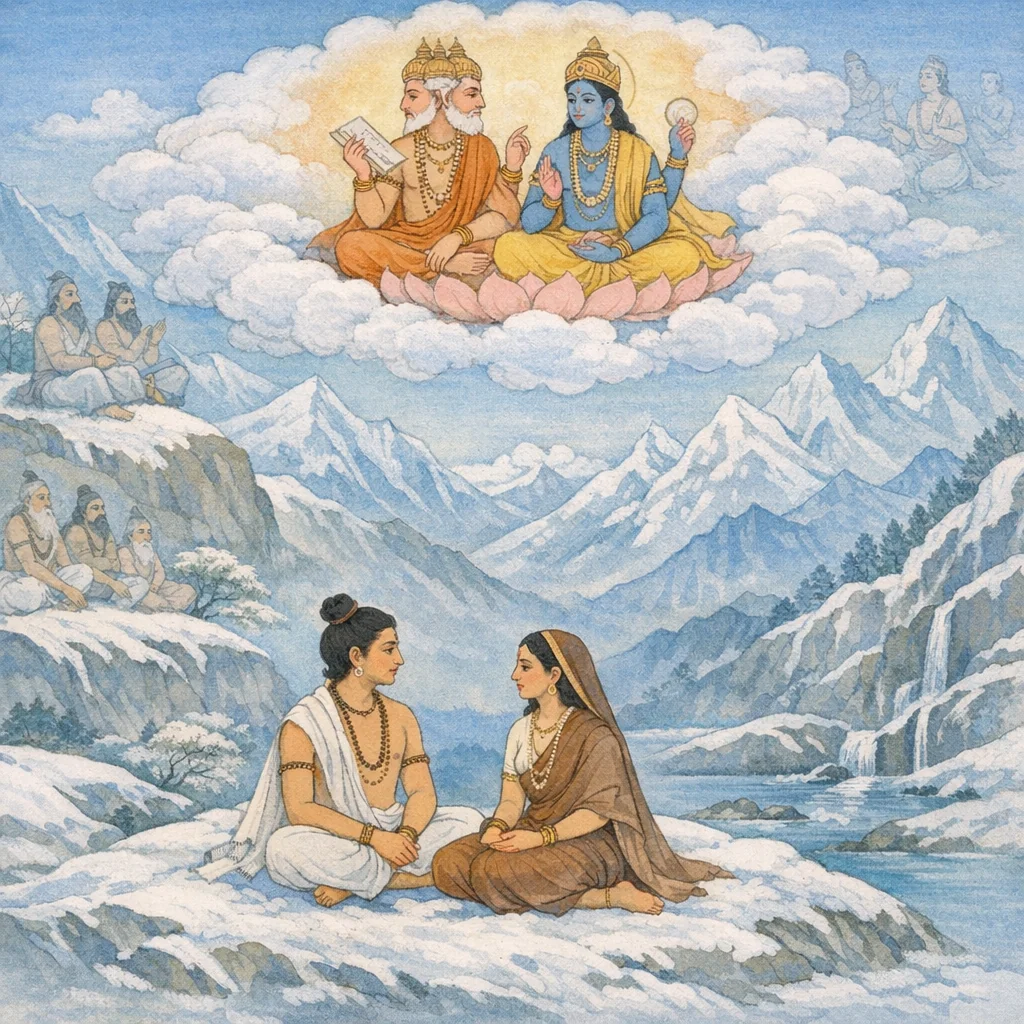
Chapter Arc: युधिष्ठिर के राजधर्म-प्रश्न के उत्तर में ‘दण्ड’ की उत्पत्ति और उसके दैवी-नैतिक आधार का उपाख्यान उठता है—धर्म के लोप से उपजा ‘व्यवहार’ और उसे बाँधने वाला नियामक तत्त्व कौन है? → कथा एक धर्मज्ञ, महातपस्वी नरेश के हिमालय-सुमेरु-समीप पवित्र स्थल (मुज्जपृष्ठ/मुज्जावट) की ओर गमन से फैलती है—जहाँ देव-ऋषि-पूजित परम्परा और प्राचीन आदेशों की स्मृति है। वहाँ से विमर्श ब्रह्मा तक पहुँचता है: जब लोक-व्यवस्था डगमगाती है, तब दण्ड का स्रोत, उसका अधिकार, और उसका भय-करुणा-संतुलन किसके हाथ में है? → पितामह ब्रह्मा सनातन भगवान विष्णु का पूजन कर ‘वरद’ देव से दण्ड-तत्त्व की व्यवस्था का विधान कराते हैं; और ‘काल’ को सर्वेश बनाकर संहार-उत्पादन, मृत्यु, दुःख-सुख—इन सबके चार विभागों का नियमन दण्ड-व्यवस्था के भीतर प्रतिष्ठित होता है। → दण्ड का वंश/परम्परा-प्रवाह (विष्णु → अंगिरा → इन्द्र/मरीचि → भृगु आदि) और धर्म-व्यवस्था का जागरण बताया जाता है—दण्ड ही वह नियन्ता है जो समस्त लोक को धर्म की मर्यादा में रखता है; बिना दण्ड के न राज्य टिकता है, न न्याय। → दण्ड के स्वरूप-वर्णन के बाद संकेत रहता है कि अब उसके प्रयोग-नीति (कब, कितना, किस पर) और राजा के आत्मसंयम/विवेक की कसौटी पर आगे विस्तार होगा।
Shlokas
Verse 1
ऑपन--माज बक। अकाल ३-विगत: अवहार: धर्मस्य येन स: व्यवहार:”। दूर हो गया है धर्मका अवहार (लोप) जिसके द्वारा, वह व्यवहार है। इस व्युत्पत्तिके अनुसार धर्मको लुप्त होनेसे बचाना ही व्यवहारका व्यवहारत्व है। २-यहाँ पद्रहवें और सोलहवें श्लोकमें आये हुए पदोंकी नीलकण्ठने व्यावहारिक दण्डके विशेषणरूपसे भी संगति लगायी है। इन विशेषणोंको रूपक मानकर अर्थ किया है। - किन्हीं-किन्हींके मतमें प्रजाके जीवन, धन, मान, स्वास्थ्य और न्यायकी रक्षा करनेके कारण राजाका स्वरूप पाँच प्रकारका बताया गया है। द्वाविशर्त्याधेकशततमो< ध्याय: दण्डकी उत्पत्ति तथा उसके क्षत्रियोंके हाथमें आनेकी परम्पराका वर्णन भीष्म उवाच अत्राप्युदाहरन्तीममितिहासं पुरातनम् । अड्रेषु राजा द्युतिमान् वसुहोम इति श्रुत:,भीष्मजी कहते हैं--युधिष्ठिर! इस दण्डकी उत्पत्तिके विषयमें जानकार लोग एक प्राचीन इतिहासका उदाहरण दिया करते हैं। उसे भी तुम सुन लो। अंगदेशमें वसुहोम नामसे प्रसिद्ध एक तेजस्वी राजा राज्य करते थे
Bhishma said: “In this matter too, those who know cite an ancient historical example. Listen to it as well. In the land of Aṅga there once ruled a radiant king, renowned by the name Vasuhoma.”
Verse 2
स राजा धर्मविन्नित्यं सह पत्न्या महातपा: । मुज्जपृष्ठ जगामाथ पितृदेवर्षिपूजितम्,“एक समयकी बात है, वे महातपस्वी धर्मज्ञ नरेश अपनी पत्नीके साथ देवताओं, ऋषियों तथा पितरोंसे पूजित मुंजपृष्ठ नामक तीर्थस्थानमें आये
Bhīṣma said: “That king—ever a knower of dharma and a great ascetic—set out together with his wife and came to the sacred ford called Muñjapṛṣṭha, a place revered and worshipped by the Pitṛs (ancestors), the gods, and the Ṛṣis.”
Verse 3
तत्र शुद्ध हिमवतो मेरौ कनकपर्वते । यत्र मुज्जावटे रामो जटाहरणमादिशत्,राजेन्द्र! वह स्थान सुवर्णमय पर्वत सुमेरुके समीपवर्ती हिमालयके शिखरपर है, जहाँ मुंजावटमें परशुरामजीने अपनी जटाएँ बाँधनेका आदेश दिया था। तभीसे कठोर व्रतका पालन करनेवाले ऋषियोंने उस रुद्रसेवित प्रदेशको मुंजपृष्ठ नाम दे दिया
Bhīṣma said: “O best of kings, there is a pure and sacred region on the Himavat, near Meru, upon the golden mountain. There, at Muñjāvaṭa, Rāma (Paraśurāma) once commanded the binding and arranging of his matted locks. From that time, sages of austere vows, regarding it as a land attended by Rudra (Śiva), gave that tract the name Muñjapṛṣṭha.”
Verse 4
तदाप्रभृति राजेन्द्र ऋषिभि: संशितव्रतै: । मुञ्जपृष्ठ इति प्रोक्त: स देशो रुद्रसेवित:,राजेन्द्र! वह स्थान सुवर्णमय पर्वत सुमेरुके समीपवर्ती हिमालयके शिखरपर है, जहाँ मुंजावटमें परशुरामजीने अपनी जटाएँ बाँधनेका आदेश दिया था। तभीसे कठोर व्रतका पालन करनेवाले ऋषियोंने उस रुद्रसेवित प्रदेशको मुंजपृष्ठ नाम दे दिया
Bhīṣma said: “From that time onward, O best of kings, the sages of austere and well-disciplined vows came to call that region ‘Muñjapṛṣṭha’. It is a land hallowed by the worship and presence of Rudra (Śiva).”
Verse 5
स तत्र बहुभिरयक्तस्तदा श्रुतिमयैर्गुणै: । ब्राह्मणानामनुमतो देवर्षिसदृशो5भवत्,वे वहाँ बहुतेरे वेदोक्त गुणोंसे सम्पन्न हो तपस्या करने लगे। उस तपके प्रभावसे वे देवर्षियोंके तुल्य हो गये। ब्राह्मणोंमें उनका बड़ा सम्मान होने लगा
Bhishma said: “There, he applied himself to austerity, endowed with many virtues grounded in the Vedic tradition. By the power of that discipline he became like the divine seers, and among the Brahmanas he came to be widely approved and held in high honor.”
Verse 6
त॑ कदाचिददीनात्मा सखा शक्रस्य मानित: । अभ्यगच्छन्महीपालो मान्धाता शत्रुकर्शन:
Bhishma said: Once, the steadfast-souled king Māndhātā—honoured by Śakra (Indra) as a friend and renowned for crushing his foes—approached him. The episode portrays Māndhātā as a ruler whose worth is measured not only by victory but by the esteem of the gods, implying that true kingship rests as much on inner firmness and righteous conduct as on martial power.
Verse 7
एक दिन इन्द्रके सम्मानित सखा उदारचेता शत्रुसूदन राजा मान्धाता उनके दर्शनके लिये आये ।। सोपसृत्य तु मान्धाता वसुहोम॑ नराधिपम् | दृष्टवा प्रकृष्टतपसं विनतोडग्रेडभ्यतिष्ठत,राजा मान्धाता उत्तम तपस्वी अंगनरेश वसुहोमके पास पहुँचकर दर्शन करके उनके सामने विनीतभावसे खड़े हो गये
Bhishma said: King Māndhātā approached the royal sage Vasuhoma. Seeing him endowed with exalted austerity, Māndhātā bowed in humility and stood respectfully before him—showing that true kingship honors spiritual discipline and seeks counsel through reverence rather than pride.
Verse 8
वसुहोमो<पि राज्ञो वै पाद्यमर्घ्य न्यवेदयत् । सप्ताड्स्य तु राजस्य पप्रच्छ कुशलाव्यये,वसुहोमने भी राजाको पाद्य और अर्घ्य निवेदन किया तथा सातों अंगोंसे युक्त उनके राज्यका कुशल-समाचार पूछा
Bhishma said: Vasuhoma too presented the king with the customary offerings of water for washing the feet and the arghya of honor. Then, mindful of the duties of kingship, he inquired after the welfare of the king’s realm in all its seven constituent limbs—asking whether the state was secure, well-governed, and free from distress.
Verse 9
सद्धिराचरितं पूर्व यथावदनुयायिनम् । अपृच्छद् वसुहोमस्तं राजन् कि करवाणि ते,पूर्वकालमें साधु पुरुषोंने जिस पथका अनुसरण किया था, उसीपर यथावत् रूपसे निरन्तर चलनेवाले मान्धातासे वसुहोमने पूछा--राजन्! मैं आपकी क्या सेवा करूँ?”
Bhishma said: Vasuhoma questioned King Mandhātṛ, who was steadily and properly following the ancient path practiced by the virtuous: “O King, what service shall I render to you?”
Verse 10
सोअब्रवीत्परमप्रीतो मान्धाता राजसत्तमम् | वसुहोम॑ महाप्राज्ञमासीनं कुरुनन्दन,कुरुनन्दन! तब परम प्रसन्न हुए मान्धाताने वहाँ बैठे हुए महाज्ञानी नृपश्रेष्ठ वसुहोमसे पूछा
Bhishma said: Then, filled with great delight, King Māndhātā addressed the highly wise Vasuhoma, foremost among kings, who was seated there—O descendant of the Kurus. The scene frames a respectful inquiry: a righteous ruler, pleased by what he has heard or witnessed, turns to an eminent king-sage for further guidance, underscoring that governance should be guided by wisdom and counsel.
Verse 11
मान्धातोवाच बृहस्पतेर्मतं राजन्नधीतं सकल त्वया | तथैवौशनसं शास्त्र विज्ञातं ते नरोत्तम,मान्धाता बोले--राजन्! नरश्रेष्ठ! आपने बृहस्पतिके सम्पूर्ण मतका अध्ययन किया है। साथ ही शुक्राचार्यके नीतिशास्त्रका भी आपको पूर्ण ज्ञान है
Māndhātā said: “O King, O best of men, you have thoroughly studied the whole doctrine of Bṛhaspati; likewise, you have fully understood the treatise of Uśanas (Śukrācārya) on polity and ethics.”
Verse 12
तदहं ज्ञातुमिच्छामि दण्ड उत्पद्यते कथम् | कि चास्य पूर्व जागर्ति कि वा परममुच्यते
Bhīṣma said: “Therefore I wish to understand: how does punishment (daṇḍa)—the coercive power of rule—come into being? What is it that first awakens and sets it in motion, and what is declared to be its highest and ultimate principle?”
Verse 13
अतः मैं आपसे यह जानना चाहता हूँ कि दण्डकी उत्पत्ति कैसे हुई? इसके पहले कौन-सी वस्तु जागरूक थी? तथा इस दण्डको सबसे उत्कृष्ट क्यों कहा जाता है? ।। कथं क्षत्रियसंस्थश्ष दण्ड: सम्प्रत्यवस्थित: । ब्रूहि मे सुमहाप्राज्ञ ददाम्याचार्यवेतनम्,इस समय यह दण्ड क्षत्रियोंके हाथमें कैसे आया है? महामते! यह सब मुझे बताइये। मैं आपको गुरुदक्षिणा प्रदान करूँगा
Therefore I wish to learn from you: how did the principle of punishment (daṇḍa) first arise? Before it came into being, what was the earliest awakened or active principle? And why is this daṇḍa praised as the most excellent? Tell me also how this power of punishment has come to rest in the hands of the Kṣatriyas. O greatly wise one, explain all this to me; I shall offer you the teacher’s fee (guru’s honorarium) in return for your instruction.
Verse 14
वसुहरोम उवाच शृणु राजन् यथा दण्ड: सम्भूतो लोकसंग्रह: । प्रजाविनयरक्षार्थ धर्मस्थात्मा सनातन:
Vasuharoma said: “Listen, O King, to how the principle of punishment and governance (daṇḍa) came into being as a means of holding the world together. It is the eternal foundation of righteous order, established to protect society by disciplining and safeguarding the people.”
Verse 15
वसुहोम बोले--राजन्! दण्ड सम्पूर्ण जगत्के नियमके अंदर रखनेवाला है। यह धर्मका सनातन स्वरूप है। इसका उद्देश्य है प्रजाको उद्दण्डतासे बचाना। इसकी उत्पत्ति जिस तरहसे हुई है, सो बता रहा हूँ; सुनो ।। ब्रह्मा यियक्षुर्भगवान् सर्वतलोकपितामह: । ऋत्विजं नात्मनस्तुल्यं ददर्शेति हि नः श्रुतम्,हमारे सुननेमें आया है कि सर्वलोकपितामह भगवान् ब्रह्मा किसी समय यज्ञ करना चाहते थे; किंतु उन्हें अपने योग्य कोई ऋत्विज नहीं दिखायी दिया
Vasuharoma said: “O king, punishment (daṇḍa) is what keeps the entire world within the bounds of order. This is the eternal form of dharma, meant to protect the people from lawlessness and arrogance. I will now tell you how it originated—listen. We have heard that once the blessed Brahmā, the grandsire of all worlds, wished to perform a sacrifice, but he could not find a priest (ṛtvij) equal to himself.”
Verse 16
स गर्भ शिरसा देवो बहुवर्षाण्यधारयत् । पूर्णे वर्षमहस्रे तु स गर्भ: क्षुवतोडपतत्
Vasuharoma said: “That divine being bore the embryo upon his head for many years. But when a full thousand years had elapsed, the embryo slipped down and fell out as he sneezed—showing how even what is long sustained can be released in an instant when time and bodily impulse converge.”
Verse 17
तब उन्होंने बहुत वर्षोतक अपने मस्तकपर एक गर्भ धारण किया। जब एक हजार वर्ष बीत गये, तब ब्रह्माजीको छींक आयी और वह गर्भ नीचे गिर पड़ा ।। स क्षुपो नाम सम्भूत: प्रजापतिररिंदम । ऋ्विगासीन्महाराज यज्ञे तस्य महात्मन:,शत्रुदमन नरेश! उससे जो बालक प्रकट हुआ, उसका नाम '“क्षुप' रखा गया। महाराज! महात्मा ब्रह्माजीके उस यज्ञमें प्रजापति क्षुप ही ऋत्विज हुए
Then he bore a wondrous embryo upon his head for many years. When a thousand years had passed, Brahmā sneezed, and the embryo fell down. From it was born a Prajāpati named Kṣupa, O subduer of foes. O king, in that great-souled Brahmā’s sacrifice, Kṣupa served as the officiating priest (ṛtvij).
Verse 18
तस्मिन प्रवृत्ते सत्रे तु ब्रह्मण: पार्थिवर्षभ । दृष्टरूपप्रधानत्वाद् दण्ड: सो<न्तर्हितो$भवत्,नृपश्रेष्ठ! ब्रह्माजीका वह यज्ञ आरम्भ होते ही वहाँ प्रत्यक्ष दीखनेवाले यज्ञकी प्रधानता होनेसे ब्रह्माका वह दण्ड अन्तर्धान हो गया
Vasuharoma said: “O bull among kings, when that sacrificial session set in motion by Brahmā had begun, Brahmā’s staff disappeared. For, once the sacrifice became chiefly governed by what was directly manifest and visible, that emblem of punitive authority was no longer in evidence.”
Verse 19
तस्मिन्नन्तर्हिते चापि प्रजानां संकरो5भवत् | नैव कार्य न वाकार्य भोज्याभोज्यं न विद्यते,दण्ड लुप्त होते ही प्रजामें वर्णसंकरता फैलने लगी। कर्तव्याकर्तव्य तथा भक्ष्याभक्ष्यका विचार सर्वथा उठ गया
When that (power of punishment/royal discipline) disappeared, confusion and intermixture spread among the people. No clear distinction remained between what ought to be done and what ought not to be done, nor between what is fit to be eaten and what is unfit—ethical order collapsed along with the loss of danda (lawful restraint).
Verse 20
पेयापेये कुत: सिद्धिर्हिंसन्ति च परस्परम् | गम्यागम्यं तदा नासीत् स्वं परस्वं च वै समम्,फिर पेयापेयका ही विचार कैसे रह सकता था? सब लोग एक दूसरेकी हिंसा करने लगे। उस समय गम्यागम्यका विचार भी नहीं रह गया था। अपना और पराया धन एक-सा समझा जाने लगा
Vasuharoma said: “How could any settled rule about what may or may not be drunk have existed then? People began harming one another. In that time, even the distinction between what was permissible to approach and what was not had disappeared; one’s own and another’s property came to be regarded as the same.”
Verse 21
परस्परं विलुम्पन्ति सारमेया यथामिषम् | अबलान् बलिनो घ्नन्ति निर्मर्यादमवर्तत,जैसे कुत्ते मांसके टुकड़ेके लिये आपसमें छीना-झपटी और नोच-खसोट करते हैं, उसी तरह मनुष्य भी परस्पर लूट-पाट करने लगे। बलवान पुरुष दुर्बलोंकी हत्या करने लगे। सर्वत्र उच्छुंखलता फैल गयी
Then men began to plunder one another, like dogs tearing at a morsel of flesh. The strong slew the weak, and lawless recklessness spread everywhere.
Verse 22
ततः: पितामहो विष्णुं भगवन्तं सनातनम् । सम्पूज्य वरदं देवं॑ महादेवमथाब्रवीत्,ऐसी अवस्था हो जानेपर पितामह ब्रह्माने सनातन भगवान् विष्णुका पूजन करके वरदायक देवता महादेवजीसे कहा--“शंकर! इस परिस्थितिमें आपको कृपा करनी चाहिये। जिस प्रकार संसारमें वर्णसंकरता न फैले, वह उपाय आप करें
Then the Grandsire (Brahmā), having duly worshipped the eternal Lord Viṣṇu, approached the boon-giving deity Mahādeva and spoke: “O Śaṅkara, in this situation you should show compassion. Devise a means by which confusion of social order (varṇa-saṅkara) does not spread in the world.”
Verse 23
अत्र त्वमनुकम्पां वै कर्तुमहसि शंकर । संकरो न भवेदत्र यथा तद् वै विधीयताम्,ऐसी अवस्था हो जानेपर पितामह ब्रह्माने सनातन भगवान् विष्णुका पूजन करके वरदायक देवता महादेवजीसे कहा--“शंकर! इस परिस्थितिमें आपको कृपा करनी चाहिये। जिस प्रकार संसारमें वर्णसंकरता न फैले, वह उपाय आप करें
Vasuharoma said: “Here, O Śaṅkara, you ought indeed to show compassion. Please arrange matters so that no confusion of social order (varṇa-saṅkara) arises in this world.”
Verse 24
ततः स भगवान् ध्यात्वा चिरं शूलवरायुध: । आत्मानमात्मना दण्डं ससृजे देवसत्तम:,तब शूल नामक श्रेष्ठ शस्त्र धारण करनेवाले सुरश्रेष्ठ महादेवजीने देरतक विचार करके स्वयं अपने आपको ही दण्डके रूपमें प्रकट किया
Then that Blessed Lord—Mahādeva, the foremost of the gods, whose supreme weapon is the trident—pondered for a long time. Having reflected, he manifested a ‘daṇḍa’ (the rod of chastisement and discipline) from his own very Self.
Verse 25
तस्माच्च धर्मचरणाजन्नीतिर्देवी सरस्वती । ससूजे दण्डनीतिं सा त्रिषु लोकेषु विश्रुता,उससे धर्माचरण होता देख नीतिस्वरूपा देवी सरस्वतीने दण्डनीतिकी रचना की जो तीनों लोकोंमें विख्यात है
Therefore, seeing the practice of dharma, the goddess Sarasvatī—who embodies nīti (right policy and wise conduct)—brought forth the science of daṇḍanīti, the discipline of governance and punishment, renowned throughout the three worlds.
Verse 26
भूय: स भगवान् ध्यात्वा चिरं शूलवरायुध: । तस्य तस्य निकायस्य चकारैकैकमीश्वरम्,भगवान् शूलपाणिने पुन: चिरकालतक चिन्तन करके भिन्न-भिन्न समूहका एक-एक राजा बनाया
Then that Blessed Lord—whose supreme weapon is the spear—again meditated for a long time. After due contemplation, he appointed for each distinct group its own single ruler, establishing orderly governance for every community.
Verse 27
देवानामीश्चरं चक्रे देवं दशशतेक्षणम् | यम॑ वैवस्व॒तं चापि पितृणामकरोत् प्रभुम्,उन्होंने सहसनेत्रधारी इन्द्रदेवको देवेश्वरके पदपर प्रतिष्ठित किया और सूर्यपुत्र यमको पितरोंका राजा बनाया
He installed the thousand-eyed Indra as the sovereign lord among the gods, and likewise appointed Yama, the son of Vivasvat (the Sun), as the ruler over the Pitṛs (ancestral spirits). The verse underscores a dharmic ordering of the cosmos: authority is assigned according to function, ensuring governance, justice, and the proper administration of worlds seen and unseen.
Verse 28
धनानां राक्षसानां च कुबेरमपि चेश्वरम् । पर्वतानां पतिं मेरुं सरितां च महोदधिम्,कुबेरको धन और राक्षसोंका, सुमेरुको पर्वतोंका और महासागरको सरिताओंका स्वामी बना दिया
Vasuharoma said: He appointed Kubera as the sovereign over wealth and over the Rākṣasas; he made Meru the lord of mountains, and the great ocean the master of rivers. The verse underscores a moral vision of cosmic order: authority is distributed according to fitness and function, so that the world is sustained through rightful governance and clear domains.
Verse 29
अपां राज्येडसुराणां च विदधे वरुणं प्रभुम् मृत्युं प्राणेश्वरमथो तेजसां च हुताशनम्,शक्तिशाली भगवान् वरुणको जल और असूुरोंके राज्यपर प्रतिष्ठित किया। मृत्युको प्राणोंका तथा अग्नि-देवको तेजका आधिपत्य प्रदान किया
Vasuharoma said: He established Varuṇa as the sovereign over the waters and over the dominion of the Asuras; he appointed Death as the lord over living breaths, and Fire (Hutāśana) as the ruler over radiance and energy. The passage underscores a moral vision of cosmic order: powers are not arbitrary, but assigned as offices so that the world functions through rightful governance and restraint.
Verse 30
रुद्राणामपि चेशान गोप्तारं विदथे प्रभुम् महात्मानं महादेवं विशालाक्षं सनातनम्,विशाल नेत्रोंवाले सनातन महात्मा महादेवजीने अपने आपको रुद्रोंका अधीश्वर तथा शक्तिशाली संरक्षक बनाया
Vasuharoma said: “He is Īśāna even among the Rudras—the mighty Lord and protector in the sacred assembly; that eternal Mahādeva, the great-souled one, wide-eyed and primeval.” The verse elevates Śiva as the supreme guardian and presiding power, grounding reverence in recognition of enduring divine sovereignty.
Verse 31
वसिष्ठमीशं विप्राणां वसूनां जातवेदसम् । तेजसां भास्कर चक्रे नक्षत्राणां निशाकरम्,वसिष्ठको ब्राह्मणोंका, जातवेदा अग्निको वसुओंका, सूर्यको तेजस्वी ग्रहोंका और चन्द्रमाको नक्षत्रोंका अधिपति बनाया
Vasuharoma said: He appointed Vasiṣṭha as lord among the Brāhmaṇas; Jātavedas (Agni) as lord of the Vasus; the Sun as chief among luminous powers; and the Moon as ruler of the stars.
Verse 32
वीरुधामंशुमन्तं च भूतानां च प्रभुं वरम् । कुमारं द्वादशभुजं स्कन््दं राजानमादिशत्,अंशुमानको लताओंका तथा बारह भुजाओंसे विभूषित शक्तिशाली कुमार स्कन्दको भूतोंका श्रेष्ठ राजा नियुक्त किया
Vasuharoma said: He appointed Skanda—the mighty, twelve-armed divine youth—as king and foremost lord of the hosts of beings; and he also assigned Aṁśumān as ruler of plants and creepers.
Verse 33
कालं॑ सर्वेशमकरोत् संहारविनयात्मकम् | मृत्योक्षतुर्वि भागस्य दुःखस्य च सुखस्य च,संहार और विनय (उत्पादन) जिसका स्वरूप है, उस सर्वेश्वर कालको चार प्रकारकी मृत्युका, सुखका और दुःखका भी स्वामी बनाया
Vasuharoma said: He made Time—the Supreme Lord in whom dissolution and origination inhere—the sovereign over the fourfold division of death, and likewise over sorrow and happiness.
Verse 34
ईश्वर: सर्वदेवस्तु राजराजो नराधिप: । सर्वेषामेव रुद्राणां शूलपाणिरिति श्रुति:,सबके देवता, राजाओंके राजा और मनुष्योंके अधिपति शूलपाणि भगवान् शिव स्वयं समस्त रुद्रोंके अधीश्वर हुए। ऐसा सुना जाता है
Vasuharoma said: “The Lord—indeed the deity of all gods, the king of kings, and the sovereign of humankind—is Śūlapāṇi (Śiva). It is heard in sacred tradition that he is the supreme ruler over all the Rudras.”
Verse 35
तमेन॑ ब्रह्मण: पुत्रमनुजातं क्षुपं ददौ । प्रजानामधिपं श्रेष्ठ सर्वधर्मभूतामपि,ब्रह्माजीके छोटे पुत्र क्षुपको उन्होंने समस्त प्रजाओं तथा सम्पूर्ण धर्मधारियोंका श्रेष्ठ अधिपति बना दिया
Vasuharoma said: Brahmā appointed his younger-born son, Kṣupa, as the foremost lord over all creatures—indeed, as the preeminent guardian among all who embody and uphold dharma.
Verse 36
महादेवस्ततस्तस्मिन् वृत्ते यज्ञे यथाविधि । दण्डं धर्मस्य गोप्तारं विष्णवे सत्कृतं ददौ,तदनन्तर ब्रह्माजीका वह यज्ञ जब विधिपूर्वक सम्पन्न हो गया, तब महादेवजीने धर्मरक्षक भगवान् विष्णुका सत्कार करके उन्हें वह दण्ड समर्पित किया
Vasuharoma said: When that sacrifice had been duly completed according to rule, Mahādeva honored Viṣṇu—the protector of Dharma—and presented to him the daṇḍa, the staff of punishment, emblem of righteous governance. By this it is shown that the power to restrain wrongdoing must be exercised in the service of Dharma and entrusted to one worthy of it.
Verse 37
विष्णुरड्लिरसे प्रादादक्धिरा मुनिसत्तम: । प्रादादिन्द्रमरीचि भ्यां मरीचिर्भुगवे ददौ,भगवान् विष्णुने उसे अंगिराको दे दिया। मुनिवर अंगिराने इन्द्र और मरीचिको दिया और मरीचिने भूगुको सौंप दिया
Vasuharoma said: “Bhagavān Viṣṇu bestowed it upon Aṅgiras. That best of sages, Aṅgiras, passed it on to Indra and Marīci; and Marīci, in turn, handed it over to Bhṛgu.” The verse underscores the ethical weight of a teaching or sacred trust being preserved through an authorized lineage rather than claimed by personal whim.
Verse 38
भृगुर्ददावृषिभ्यस्तु दण्डं धर्मसमाहितम् । ऋषयो लोकपालेभ्यो लोकपाला: क्षुपाय च,भृगुने वह धर्मसमाहित दण्ड ऋषियोंको दिया। ऋषियोंने लोकपालोंको, लोकपालोंने क्षुपको, क्षुपने सूर्यपुत्र मनु (श्राद्धदेव) को और श्राद्धदेवने सूक्ष्म धर्म तथा अर्थकी रक्षाके लिये उसे अपने पुत्रोंको सौंप दिया
Vasuharoma said: Bhṛgu entrusted to the sages the daṇḍa, the rod of chastisement, firmly grounded in dharma. The sages passed it on to the guardians of the worlds (Lokapālas), and the world-guardians in turn handed it to Kṣupa—thus describing the rightful transmission of authority meant to protect subtle dharma and the order of society.
Verse 39
क्षुपस्तु मनवे प्रादादादित्यतनयाय च । पुत्रेभ्य: श्राद्धदेवस्तु सूक्ष्मधर्मार्थकारणात्,भृगुने वह धर्मसमाहित दण्ड ऋषियोंको दिया। ऋषियोंने लोकपालोंको, लोकपालोंने क्षुपको, क्षुपने सूर्यपुत्र मनु (श्राद्धदेव) को और श्राद्धदेवने सूक्ष्म धर्म तथा अर्थकी रक्षाके लिये उसे अपने पुत्रोंको सौंप दिया
Vasuharoma said: “Kṣupa handed it over to Manu, the son of the Sun. Manu—known as Śrāddhadeva—then entrusted it to his sons, for the subtle safeguarding of dharma and artha.” The verse emphasizes a deliberate transmission of an authoritative instrument or ordinance through a legitimate lineage, so that social order, justice, and prosperity may be protected with discernment rather than mere force.
Verse 40
विभज्य दण्ड: कर्तव्यो धर्मेण न यदृच्छया । दुष्टानां निग्रहो दण्डो हिरण्यं बाह्मुत: क्रिया,अतः धर्मके अनुसार न्याय-अन्यायका विचार करके ही दण्डका विधान करना चाहिये, मनमानी नहीं करनी चाहिये। दुष्टोंका दमन करना ही दण्डका मुख्य उद्देश्य है, स्वर्णमुद्राएँ लेकर खजाना भरना नहीं। दण्डके तौरपर सुवर्ण (धन) लेना तो बाह्रांग--गौण कर्म है
Vasuharoma said: “Punishment should be apportioned after due consideration and in accordance with dharma, not imposed arbitrarily. The true purpose of daṇḍa is the restraint and suppression of the wicked; it is not meant for filling the treasury by taking gold. The taking of money as a penalty is only an external, secondary aspect.”
Verse 41
व्यद्भत्वं व शरीरस्य वधो नाल््पस्य कारणात् । शरीरपीडास्तास्ताश्च देहत्यागो विवासनम्,किसी छोटे-से अपराधपर प्रजाका अंग-भंग करना, उसे मार डालना, उसे तरह- तरहकी यातनाएँ देना तथा उसको देहत्यागके लिये विवश करना अथवा देशसे निकाल देना कदापि उचित नहीं है
Vasuharoma said: For a minor offence, it is not right to mutilate a person’s body, nor to put him to death. Nor is it right to inflict varied bodily tortures, to drive him to the point of abandoning his life, or to banish him from the land. Punishment must be proportionate and humane, especially in the governance of subjects.
Verse 42
तं ददौ सूर्यपुत्रस्तु मनुर्वे रक्षणार्थकम् । आनुपूर्व्याच्च दण्डो<यं प्रजा जागर्ति पालयन्,सूर्यपुत्र मनुने प्रजाकी रक्षाके लिये ही अपने पुत्रोंके हाथोंमें दण्ड सौंपा था, वही क्रमश: उत्तरोत्तर अधिकारियोंके हाथमें आकर प्रजाका पालन करता हुआ जागता रहता है
Manu, the son of the Sun, entrusted that daṇḍa to his sons for the protection of the people. And that rod of authority, passing in due succession into the hands of ever higher rulers, remains wakeful as it preserves and guards the subjects.
Verse 43
इन्द्रो जागर्ति भगवानिन्द्रादग्निर्विभावसु: । अग्नेर्जागर्ति वरुणो वरुणाच्च प्रजापति:,भगवान् इन्द्र दण्ड-विधान करनेमें सदा जागरूक रहते हैं। इन्द्रसे प्रकाशमान अग्नि, अग्निसे वरुण और वरुणसे प्रजापति उस दण्डको प्राप्त करके उसके यथोचित प्रयोगके लिये सदा जाग्रत् रहते हैं
Vasuharoma said: “The blessed Indra remains ever wakeful, vigilant in the ordering and application of punishment (daṇḍa). From Indra comes the radiant Fire (Agni); from Agni, Varuṇa; and from Varuṇa, Prajāpati. Having received that authority of daṇḍa in succession, each stays continually alert to employ it in the proper measure.”
Verse 44
प्रजापतेस्ततो धर्मो जागर्ति विनयात्मक: । धर्माच्च ब्रह्मुण: पुत्रो व्यवसाय: सनातन:
From Prajāpati there arises Dharma, ever awake and essentially grounded in discipline and humility. And from Dharma is born the eternal Vyavasāya—steadfast resolve and purposeful effort—like a son of Brahmā, enduring through all ages.
Verse 45
जो सम्पूर्ण जगतको शिक्षा देनेवाले हैं, वे धर्म प्रजापतिसे दण्डको ग्रहण करके प्रजाकी रक्षाके लिये सदा जागरूक रहते हैं। ब्रह्मपुत्र सनातन व्यवसाय वह दण्ड धर्मसे लेकर लोकरक्षाके लिये जागते रहते हैं ।। व्यवसायात् ततस्तेजो जागर्ति परिपालयत् | ओषध्यस्तेजसस्तस्मादोषधीभ्यश्ष् पर्वता:,व्यवसायसे दण्ड लेकर तेज जगत्की रक्षा करता हुआ सजग रहता है। तेजसे ओषधियाँ, ओषधियोंसे पर्वत, पर्वतोंसे रस, रससे निर्क्रति और निर्ऋ्रतिसे ज्योतियाँ क्रमशः उस दण्डको हस्तगत करके लोक-रक्षाके लिये जागरूक बनी रहती हैं
Vasuharoma said: Dharma, the teacher of the whole world, receives daṇḍa from Prajāpati and remains ever vigilant for the protection of the people. The eternal Vyavasāya, like a son of Brahmā, receives daṇḍa from Dharma and keeps watch for the safeguarding of the world. From Vyavasāya arises Tejas, which stays awake as it preserves the universe. From Tejas come the healing herbs; from the herbs arise the mountains. Thus, through an ordered succession of supports, the force of discipline is continually taken up for the protection of beings—ever vigilant in the service of dharma and public safety.
Verse 46
पर्वतेभ्यश्न जागर्ति रसो रसगुणात् तथा । जागर्ति निर्क्रतिदेवी ज्योतींषि निर्क्रतेरेपि,व्यवसायसे दण्ड लेकर तेज जगत्की रक्षा करता हुआ सजग रहता है। तेजसे ओषधियाँ, ओषधियोंसे पर्वत, पर्वतोंसे रस, रससे निर्क्रति और निर्ऋ्रतिसे ज्योतियाँ क्रमशः उस दण्डको हस्तगत करके लोक-रक्षाके लिये जागरूक बनी रहती हैं
Vasuharoma said: “From the mountains, the sap—essence (rasa)—keeps watch; and from the quality of that essence, it too remains vigilant. The goddess Nirṛti keeps watch, and from Nirṛti even the lights of heaven remain wakeful. Thus, in a chain of mutual support, each principle takes up the ‘staff’ (daṇḍa)—the power of restraint and governance—and stays alert for the protection of the world.”
Verse 47
वेदा: प्रतिष्ठा ज्योतिर्भ्यस्ततो हयशिरा: प्रभु: । ब्रह्मा पितामहस्तस्माज्जागर्ति प्रभुरव्यय:,ज्योतियोंसे दण्ड ग्रहण करके वेद प्रतिष्ठित हुए हैं। वेदोंसे भगवान् हयग्रीव और हयग्रीवसे अविनाशी प्रभु ब्रह्मा वह दण्ड पाकर लोक-रक्षाके लिये जागते रहते हैं
Vasuharoma said: “From the divine lights comes the staff of authority by which the Vedas are firmly established. From the Vedas arises the Lord Hayagrīva; and from Hayagrīva comes Brahmā, the imperishable Lord and grandsire. Having received that staff of discipline and rule, he remains ever vigilant for the protection and ordering of the worlds.”
Verse 48
पितामहान्महादेवो जागर्ति भगवान् शिव: । विश्वेदेवा: शिवाच्चापि विश्वेभ्यश्व॒ तथर्षय:,पितामह ब्रह्मासे दण्ड और रक्षाका अधिकार पाकर महान् देव भगवान् शिव जागते हैं। शिवसे विश्वेदेव, विश्वेदेवोंसे ऋषि, ऋषियोंसे भगवान् सोम, सोमसे सनातन देवगण और देवताओंसे ब्राह्मण वह अधिकार लेकर लोक-रक्षाके लिये सदा जाग्रत् रहते हैं। इस बातको तुम अच्छी तरह समझ लो
Vasuharoma said: “From the Grandsire (Brahmā) the great Lord—Bhagavān Śiva—keeps vigilant. From Śiva arise the Viśvedevas; from the Viśvedevas the Ṛṣis; and thus, through this sacred succession, the authority of punishment and protection is received and borne for the safeguarding of the worlds. Understand this clearly: the power to restrain wrongdoing and to protect beings is not arbitrary—it is a divinely entrusted responsibility, meant for loka-rakṣā (the protection of all).”
Verse 49
ऋषिभ्यो भगवान् सोम: सोमाद् देवा: सनातना: । देवेभ्यो ब्राह्मणा लोके जाग्रतीत्युपधारय,पितामह ब्रह्मासे दण्ड और रक्षाका अधिकार पाकर महान् देव भगवान् शिव जागते हैं। शिवसे विश्वेदेव, विश्वेदेवोंसे ऋषि, ऋषियोंसे भगवान् सोम, सोमसे सनातन देवगण और देवताओंसे ब्राह्मण वह अधिकार लेकर लोक-रक्षाके लिये सदा जाग्रत् रहते हैं। इस बातको तुम अच्छी तरह समझ लो
Vasuharomā said: “From the sages arises the blessed Soma; from Soma arise the eternal gods. And from the gods, in this world, the Brāhmaṇas remain ever awake—understand this well.”
Verse 50
ब्राह्मणेभ्यश्न राजन्या लोकान् रक्षन्ति धर्मत: । स्थावरं जड़म॑ चैव क्षत्रिये भ्य: सनातनम्,तदनन्तर ब्राह्मणोंसे दण्ड धारणका अधिकार पाकर क्षत्रिय धर्मानुसार सम्पूर्ण लोकोंकी रक्षा करते हैं। क्षत्रियोंस ही यह सनातन चराचर जगत सुरक्षित होता रहा है
Thereafter, having received from the Brāhmaṇas the right to bear the ‘staff’ (daṇḍa), the Kṣatriyas protect all the worlds in accordance with dharma. By the Kṣatriyas, this eternal universe—both the moving and the unmoving—has been kept secure from age to age.
Verse 51
प्रजा जागर्ति लोके5स्मिन् दण्डो जागर्ति तासु च । सर्व संक्षिपते दण्ड: पितामहसमप्रभ:,इस लोकमें प्रजा जागती है और प्रजाओंमें दण्ड जागता है। वह ब्रह्माजीके समान तेजस्वी दण्ड सबको मर्यादाके भीतर रखता है
In this world the people remain watchful, and among the people the Rod of punishment (daṇḍa) remains watchful as well. That daṇḍa—radiant like the Grandfather (Brahmā)—restrains all within proper bounds, preserving order and moral discipline.
Verse 52
जागर्ति काल: पूर्व च मध्ये चान्ते च भारत । ईश्वर: सर्वलोकस्य महादेव: प्रजापति:,भारत! यह कालरूप दण्ड सृष्टिके आदिमें, मध्यमें और अन्तमें भी जागता रहता है। यह सर्वलोकेश्वर महादेवका स्वरूप है। यही समस्त प्रजाओंका पालक है
Vasuharoma said: “O Bhārata, Time remains ever awake—at the beginning, in the middle, and at the end. This Time, as the power that chastises and governs, is the very form of Mahādeva, the Lord of all worlds, the Prajāpati who sustains and orders all beings.”
Verse 53
देवदेव: शिव: सर्वो जागर्ति सतत प्रभु: ।। कपर्दी शड्करो रुद्र: शिव: स्थाणुरुमापति:,इस दण्डके रूपमें देवाधिदेव कल्याणस्वरूप सर्वात्मा प्रभु जटाजूटधारी उमावललभ दुःखहारी स्थाणु-स्वरूप एवं लोक-मंगलकारी भगवान् शिव ही सदा जाग्रत रहते हैं
Vasuharoma said: The Lord of lords—Śiva, the all-pervading sovereign—remains ever awake and vigilant. He is Kapardī, the matted-haired one; Śaṅkara, the beneficent; Rudra, the awe-inspiring; Śiva, the auspicious; Sthāṇu, the immovable; and Umāpati, the consort of Umā. In this praise, the teaching is that the supreme divine presence is ceaselessly watchful and protective, sustaining the world’s welfare and removing suffering for those who take refuge.
Verse 54
इत्येष दण्डो विख्यात आदौ मध्ये तथावरे | भूमिपालो यथान्यायं वर्तेतानेन धर्मवित्,इस तरह यह दण्ड आदि, मध्य और अन्तमें विख्यात है। धर्मज्ञ राजाको चाहिये कि इसके द्वारा न्यायोचित बर्ताव करे
Thus this principle of punishment and governance (daṇḍa) is well known as applicable at the beginning, in the middle, and at the end of affairs. A dharma-knowing king should, by means of it, conduct himself in accordance with justice—using authority not as mere force, but as a measured instrument to uphold right order.
Verse 55
भीष्म उवाच इतीदं वसुहोमस्य शृणुयाद् यो मतं नर: । श्रुत्वा सम्यक् प्रवर्तेत सर्वान् कामानवाप्रुयात्,भीष्मजी कहते हैं--यथिष्ठिर! जो नरेश इस प्रकार बताये हुए वसुहोमके इस मतको सुनता और सुनकर यथोचित बर्ताव करता है, वह सम्पूर्ण कामनाओंको प्राप्त कर लेता है
Bhishma said: O Yudhishthira, any man—especially a ruler—who listens to this teaching concerning the Vasu-homa, and who, having heard it, conducts himself rightly in accordance with it, attains the fulfillment of all his aims and desires. The verse underscores that ritual knowledge bears fruit only when joined with proper, disciplined conduct.
Verse 56
इति ते सर्वमाख्यातं यो दण्डो मनुजर्षभ । नियन्ता सर्वलोकस्य धर्माक्रान्तस्थ भारत,नरश्रेष्ठ] भरतनन्दन! जो दण्ड सम्पूर्ण धार्मिक जगत्के नियमके भीतर रखनेवाला है, उसके सम्बन्धमें जितनी बातें हैं, उन्हें मैंने तुम्हें बता दीं
Thus have I told you everything, O best of men, concerning daṇḍa—the power that restrains and governs the whole world, keeping it within the bounds of dharma. O Bhārata, O foremost of men, O joy of the Bharata line: all that pertains to daṇḍa I have declared to you.
Verse 121
इस प्रकार श्रीमहाभारत शान्तिपर्वके अन्तर्गत राजधर्मानुशासनपर्वमें दण्डके स्वरूपका वर्णनविषयक एक सौ इकक््कीसवाँ अध्याय पूरा हुआ
Thus ends the one hundred and twenty-first chapter in the Rājadharmānuśāsana section of the Śānti Parva of the Mahābhārata, dealing with the nature and proper form of daṇḍa (punitive, coercive authority) and governance.
Verse 122
इति श्रीमहाभारते शान्तिपर्वणि राजधर्मानुशासनपर्वणि दण्डोत्पत्युपाख्याने द्वाविशत्यधिकशततमो<ध्याय:
Thus ends the one hundred and twenty-second chapter in the Śānti Parva of the Śrī Mahābhārata, within the Rājadharmānuśāsana section, in the subsidiary narrative on the origin of daṇḍa.
Frequently Asked Questions
How a ruler should understand and regulate the tri-varga when desire and delusion lead to wrongdoing—especially when harmful conduct has become publicly normalized—and what ethical mechanisms can reverse that trajectory.
The three aims are intention-rooted and object-directed; therefore, governance and personal ethics depend on disciplined saṃkalpa, informed discernment, and regulated engagement—while mokṣa is framed as nivṛtti (withdrawal) from the object-root of pursuit.
No formal phalaśruti formula appears; the chapter instead offers pragmatic meta-guidance: honoring teachers and learned counsel, disciplined conduct, and conciliatory speech are presented as reliable means to restore welfare, reputation, and ethical stability.