Adhyaya 80
Chapter Arc: धृतराष्ट्र, जुए के परिणामों से व्याकुल, विदुर से पूछता है—वनगमन के लिए निकले धर्मपुत्र युधिष्ठिर, भीम, अर्जुन, नकुल-सहदेव, द्रौपदी और धौम्य कैसे जा रहे हैं; नगर और जन-मन की दशा क्या है। → विदुर का वर्णन यात्रा के दृश्य को शोक-चित्र बना देता है: पुरोहित धौम्य यम-सम्बन्धी साम-मन्त्रों के साथ आगे-आगे चलते हैं; पीछे-पीछे पाण्डव, द्रौपदी और जनसमूह। अर्जुन का संकेतात्मक आचरण (रेत बिखेरना/भूमि पर चिह्न बनाना) भविष्य के शरवर्षा-सम प्रतिशोध का पूर्वाभास देता है। नगर में अपशकुन उभरते हैं—राहु का सूर्य को ग्रसना, उल्का का विपरीत दिशा में घूमना, अशुभ संकेतों से राजधानी का मन टूटता है। → अपशकुनों और जन-शोक के बीच विदुर का निर्णायक कथन उभरता है: यह दुःख क्षणिक सुख की छाया-सा है; पाण्डवों का संयम और बाहुबल दोनों साथ चल रहे हैं—वे अपनी भुजाओं की ओर देखते हुए (भविष्यकर्म का संकल्प) वन की ओर बढ़ते हैं, और राज्य-सभा में हुए अन्याय का फल समय पर लौटाने का संकेत देते हैं। → यात्रा का क्रम स्थिर होता है—धौम्य के वैदिक अनुष्ठान, द्रौपदी का दुःख, पाण्डवों का धैर्य, और प्रजाजनों का विलाप एक साथ बहते हैं। धृतराष्ट्र को विदुर के शब्दों से यह बोध मिलता है कि जो हुआ वह केवल तत्कालीन विजय नहीं, दीर्घकालीन विनाश का बीज है। → अर्जुन के ‘असक्त शरवर्षा’ जैसे भविष्य-संकेत और राजधानी के अपशकुन यह प्रश्न छोड़ते हैं—यह अन्याय किस दिन किस रूप में लौटेगा, और किसके सिर पर उसका दण्ड गिरेगा?
Shlokas
Verse 1
(दाक्षिणात्य अधिक पाठके २९ श्लोक मिलाकर कुल ६५ श्लोक हैं) अीद-आफीाद-- बछ। एफ काया अशीतितमोब<्ध्याय: वनगमनके समय पाण्डवोंकी चेष्टा और प्रजाजनोंकी शोकातुरताके विषयमें धृतराष्ट्र तथा विदुरका संवाद और शरणागत कौरवोंको द्रोणाचार्यका आश्वासन वैशम्पायन उवाच तमागतमथो राजा विदुरं दीर्घदर्शिनम् । साशडूक इव पप्रच्छ धृतराष्ट्रोडम्बिकासुत:,वैशम्पायनजी कहते हैं--जनमेजय! दूरदर्शी विदुरजीके आनेपर अम्बिकानन्दन राजा धृतराष्ट्रने शंकित-सा होकर पूछा
Vaiśampāyana said: Then, when Vidura—the far-sighted counsellor—arrived, King Dhṛtarāṣṭra, Ambikā’s son, questioned him as though gripped by suspicion.
Verse 2
धृतराष्ट उवाच कथं गच्छति कौन्तेयो धर्मपुत्रो युधिष्ठिर: । भीमसेन: सव्यसाची माद्रीपुत्रोी च पाण्डवौ,धृतराष्ट्र बोले--विदुर! कुन्तीनन्दन धर्मपुत्र युधिष्ठिर किस प्रकार जा रहे हैं? भीमसेन, अर्जुन, नकुल और सहदेव--ये चारों पाण्डव भी किस प्रकार यात्रा करते हैं?
Dhṛtarāṣṭra said: “Vidura, how does Kuntī’s son Yudhiṣṭhira, the son of Dharma, depart? And how do Bhīmasena, Savyasācī (Arjuna), and Mādrī’s two sons—Nakula and Sahadeva—those four Pāṇḍavas, fare upon the road?”
Verse 3
धौम्यश्नैव कथं क्षत्तद्रौपदी च यशस्विनी । श्रोतुमिच्छाम्यहं सर्व तेषां शंस विचेष्टितम्,पुरोहित धौम्य तथा यशस्विनी द्रौपदी भी कैसे जा रही है? मैं उन सबकी पृथक्-पृथक् चेष्टाओंको सुनना चाहता हूँ, तुम मुझसे कहो
Dhṛtarāṣṭra said: “O chamberlain, how are Dhaumya and the illustrious Draupadī faring? I wish to hear everything—tell me, in detail, of the actions and movements of them all.”
Verse 4
विदुर उवाच वस्त्रेण संवृत्य मुखं कुन्तीपुत्रो युधिष्ठिर: । बाहू विशालौ सम्पश्यन् भीमो गच्छति पाण्डव:,विदुर बोले--कुन्तीनन्दन युधिष्छिर वस्त्रसे मुँह ढँककर जा रहे हैं। पाण्डुकुमार भीमसेन अपनी विशाल भुजाओंकी ओर देखते हुए जाते हैं
Vidura said: “Kuntī’s son Yudhiṣṭhira goes with his face covered by a cloth. Bhīma, the Pāṇḍava, walks on, looking upon his own broad arms.”
Verse 5
सिकता वपन् सव्यसाची राजानमनुगच्छति । माद्रीपुत्र: सहदेवो मुखमालिप्य गच्छति,सव्यसाची अर्जुन बालू बिखेरते हुए राजा युधिष्ठिरके पीछे-पीछे जा रहे हैं। माद्रीकुमार सहदेव अपने मुँहपर मिट्टी पोतकर जाते हैं
Vidura said: “Arjuna, the ambidextrous archer, follows King Yudhiṣṭhira while scattering sand. Sahadeva, the son of Mādrī, goes along with his face smeared with dust.”
Verse 6
पांसूपलिप्तसर्वाड्रो नकुलक्षित्तविद्दल: । दर्शनीयतमो लोके राजानमनुगच्छति,लोकमें अत्यन्त दर्शनीय मनोहर रूपवाले नकुल अपने सब अंगोंमें धूल लपेटकर व्याकुलचित हो राजा युधिष्ठिरका अनुसरण कर रहे हैं
Vidura said: “Nakulā—though the most handsome of men in the world—now follows King Yudhiṣṭhira with all his limbs smeared with dust, his mind distressed and shaken by the calamity. The sight underscores how swiftly fortune can overturn dignity, and how steadfast loyalty endures even in humiliation.”
Verse 7
कृष्णा तु केशौ: प्रच्छाद्य मुखमायतलोचना । दर्शनीया प्ररुदती राजानमनुगच्छति,परम सुन्दरी विशाललोचना कृष्णा अपने केशोंसे ही मुँह ढँककर रोती हुई राजाके पीछे-पीछे जा रही है
But Kṛṣṇā (Draupadī), her long eyes filled with grief, covered her face with her hair. Though worthy of being beheld, she wept aloud as she followed behind the king—an image of violated dignity and the moral collapse of the court that should have protected her.
Verse 8
धौम्यौ रौद्राणि सामानि याम्यानि च विशाम्पते । गायन् गच्छति मार्गेषु कुशानादाय पाणिना,महाराज! पुरोहित धौम्यजी हाथमें कुश लेकर रुद्र तथा यमदेवतासम्बन्धी साम- मन्त्रोंका गान करते हुए आगे-आगे मार्गपर चल रहे हैं
Vidura said: “O lord of the people, the royal priest Dhaumya is proceeding ahead along the road, chanting Sāman hymns connected with Rudra and with Yama, and carrying kuśa grass in his hand.”
Verse 9
धृतराष्ट्र रवाच विविधानीह रूपाणि कृत्वा गच्छन्ति पाण्डवा: | तन्ममाचक्ष्व विदुर कस्मादेवं व्रजन्ति ते
Dhṛtarāṣṭra said: “Here the Pāṇḍavas are departing after assuming various disguises. Tell me, Vidura—why are they leaving in this manner?”
Verse 10
धृतराष्ट्रने पूछा--विदुर! पाण्डवलोग यहाँ जो भिन्न-भिन्न प्रकारकी चेष्टाएँ करते हुए यात्रा कर रहे हैं, उसका क्या रहस्य है, यह बताओ। वे क्यों इस प्रकार जा रहे हैं? ।। विदुर उवाच निकृतस्यापि ते पुनत्रैहते राज्ये धनेषु च । न धर्माच्चलते बुद्धिर्धर्मराजस्य धीमत:,विदुर बोले--महाराज! यद्यपि आपके पुत्रोंने छलपूर्ण बर्ताव किया है। पाण्डवोंका राज्य और धन सब कुछ चला गया है तो भी परम बुद्धिमान् धर्मराज युधिष्लिरकी बुद्धि धर्मसे विचलित नहीं हो रही है
Vidura said: “O King, although your sons have acted with deceit and the Pāṇḍavas have been deprived of kingdom and wealth, the discerning Dharmarāja’s mind does not swerve from dharma. Even under injury and loss, his resolve remains anchored in righteousness.”
Verse 11
योडसौ राजा घृणी नित्य धार्तराष्ट्रबु भारत । निकृत्या भ्रंशित: क्रोधान्नोन्मीलयति लोचने
Vidura said: “That king—ever compassionate—O Dhṛtarāṣṭra, O Bhārata, has been driven from his rightful course by deceit; and, in anger, he will not even open his eyes.”
Verse 12
भारत! राजा युधिष्ठिर आपके पुत्रोंपर सदा दयाभाव बनाये रखते थे, किंतु इन्होंने छलपूर्ण जूएका आश्रय लेकर उन्हें राज्यसे वंचित किया है, इससे उनके मनमें बड़ा क्रोध है और इसीलिये वे अपनी आँखोंको नहीं खोलते हैं ।। नाहं जन निर्दहेयं दृष्टवा घोरेण चक्षुषा | स पिधाय मुखं राजा तस्माद् गच्छति पाण्डव:,“मैं भयानक दृष्टिसे देखकर किसी (निरपराधी) मनुष्यको भस्म न कर डालूँ' इसी भयसे पाण्डुपुत्र राजा युधिष्ठिर अपना मुँह ढँककर जा रहे हैं
Vidura said: “O Bhārata (Dhṛtarāṣṭra), King Yudhiṣṭhira always kept compassion toward your sons; yet they, taking refuge in deceitful gambling, have deprived him of his kingdom. From this a fierce anger has arisen in his heart, and therefore he does not even open his eyes. ‘May I not, with a terrible gaze, burn an innocent person to ashes’—fearing this, the Pāṇḍava king goes on with his face covered.”
Verse 13
यथा च भीमो व्रजति तन्मे निगदत: शृणु । बाह्वोर्बले नास्ति समो ममेति भरतर्षभ,अब भीमसेन जिस प्रकार चल रहे हैं, उसका रहस्य बताता हूँ, सुनिये! भरतश्रेष्ठ! उन्हें इस बातका अभिमान है कि बाहुबलमें मेरे समान दूसरा कोई नहीं है
Vidura said: “Listen as I explain the manner in which Bhīma is proceeding. O bull among the Bhāratas, he moves with the proud conviction that in the strength of his arms there is none equal to him.”
Verse 14
बाहू विशालौ कृत्वासौ तेन भीमो5पि गच्छति । बाहू विदर्शयन् राजन् बाहुद्रविणदर्पित:
Vidura said: “Having made his arms broad and imposing, he goes on—Bhīma too—displaying his arms, O King, puffed up with the pride that comes from strength and wealth.”
Verse 15
प्रदिशज्छरसम्पातान् कुन्तीपुत्रो&र्जुनस्तदा,कुन्तीपुत्र सव्यसाची अर्जुन उस समय राजाके पीछे-पीछे जो बालू बिखेरते हुए यात्रा कर रहे थे, उसके द्वारा वे शत्रुओंपर बाण बरसानेकी अभिलाषा व्यक्त करते थे। भारत! इस समय उनके गिराये हुए बालूके कण जैसे आपसमें संसक्त न होते हुए लगातार गिरते हैं, उसी प्रकार वे शत्रुओंपर परस्पर संसक्त न होनेवाले असंख्य बाणोंकी वर्षा करेंगे
Vidura said: “At that time Arjuna, the son of Kuntī—Savyasācī—was, as it were, indicating a rain of arrows. Just as the grains of sand scattered behind the king fall in an unbroken stream without clinging together, so will he pour upon the enemies an innumerable shower of arrows, each distinct yet continuous.”
Verse 16
सिकता वपन् सव्यसाची राजानमनुगच्छति । असक्ता: सिकतास्तस्य यथा सम्प्रति भारत । असक्तं शरवर्षाणि तथा मोक्ष्यति शत्रुषु,कुन्तीपुत्र सव्यसाची अर्जुन उस समय राजाके पीछे-पीछे जो बालू बिखेरते हुए यात्रा कर रहे थे, उसके द्वारा वे शत्रुओंपर बाण बरसानेकी अभिलाषा व्यक्त करते थे। भारत! इस समय उनके गिराये हुए बालूके कण जैसे आपसमें संसक्त न होते हुए लगातार गिरते हैं, उसी प्रकार वे शत्रुओंपर परस्पर संसक्त न होनेवाले असंख्य बाणोंकी वर्षा करेंगे
Vidura said: “O Bhārata, the ambidextrous archer Arjuna, Savyasācī, follows behind the king, scattering sand as he walks. As those grains fall in a continuous stream without clinging to one another, so will Kuntī’s son soon loose upon the enemies a shower of arrows—countless, swift, and separate—revealing a restrained yet resolute readiness for righteous battle.”
Verse 17
न मे कश्चिद् विजानीयान्मुखमद्येति भारत । मुखमालिप्य तेनासौ सहदेवो5पि गच्छति,भारत! “आज इस दुर्दिनमें कोई मेरे मुँहको पहचान न ले” यही सोचकर सहदेव अपने मुँहमें मिट्टी पोतकर जा रहे हैं
Vidura said: “O Bhārata, let no one recognize my face today.” With this thought, Sahadeva too set out, smearing his face with earth so he might pass unnoticed on this evil day—prudent concealment amid danger and moral disorder.
Verse 18
नाहं मनांस्याददेयं मार्गे सत्रीणामिति प्रभो । पांसूलिप्तसर्वाड्रो नकुलस्तेन गच्छति,प्रभो! “मार्ममें मैं स्त्रियोंका चित्त न चुरा लूँ" इस भयसे नकुल अपने सारे अंगोंमें धूल लगाकर यात्रा करते हैं
Vidura said: “O lord, I would not, while travelling on the road, steal away the hearts of women.” Therefore Nakula goes on his journey with all his limbs smeared with dust—so he may not become a cause of temptation or disturbance to others, and may keep his conduct restrained.
Verse 19
एकव्स्त्रा प्ररुदती मुक्तकेशी रजस्वला । शोणितेनाक्तवसना द्रौपदी वाक्यमब्रवीत्,द्रौपदीके शरीरपर एक ही वस्त्र था, उसके बाल खुले हुए थे, वह रजस्वला थी और उसके कपड़ोंमें रक्त (रज)-का दाग लगा हुआ था, उसने रोते हुए यह बात कही थी
Vidura said: Drapadī, wearing only a single garment, weeping, with her hair loosened, and in her menstrual period—her clothing stained with blood—spoke these words. The scene reveals a grave violation of dignity and dharma, as a woman is publicly humiliated in a royal assembly, turning the court into a witness of adharma.
Verse 20
यत्कृते5हमिदं प्राप्ता तेषां वर्षे चतुर्दशे । हतपत्यो हतसुता हतबन्धुजनप्रिया:,“जिनके अन्यायसे आज मैं इस दशाको पहुँची हूँ, आजके चौदहवें वर्षमें उनकी स्त्रियाँ भी अपने पति, पुत्र और बन्धु-बान्धवोंके मारे जानेसे उनकी लाशोंके पास लोट-लोटकर रोयेंगी और अपने अंगोंमें रक्त तथा धूल लपेटे, बाल खोले हुए, अपने सगे-सम्बन्धियोंको तिलांजलि दे इसी प्रकार हस्तिनापुरमें प्रवेश करेंगी”
“By their injustice I have been brought to this plight. In this fourteenth year, their women too will weep beside the corpses of their husbands, sons, and kinsmen, slain, rolling in grief. With blood and dust upon their bodies, hair unbound, they will offer tilāñjali to their own—and enter Hastināpura as I have entered it today.”
Verse 21
बहुशोणितदिग्धाड़यो मुक्तकेशयो रजस्वला: । एवं कृतोदका भार्या: प्रवेक्ष्यन्ति गजाह्नयम्,“जिनके अन्यायसे आज मैं इस दशाको पहुँची हूँ, आजके चौदहवें वर्षमें उनकी स्त्रियाँ भी अपने पति, पुत्र और बन्धु-बान्धवोंके मारे जानेसे उनकी लाशोंके पास लोट-लोटकर रोयेंगी और अपने अंगोंमें रक्त तथा धूल लपेटे, बाल खोले हुए, अपने सगे-सम्बन्धियोंको तिलांजलि दे इसी प्रकार हस्तिनापुरमें प्रवेश करेंगी”
Vidura foretells a grim reversal: in the fourteenth year, the women of those who have done injustice will enter Hastināpura in that very same plight—rolling beside the corpses of their slain husbands, sons, and kinsmen, wailing without restraint, their bodies smeared with blood and dust, hair dishevelled, and offering the final libation of water (tilāñjali) for their own dead. The warning casts adharma as violence that returns upon itself: cruelty dealt to the innocent ripens into identical suffering within one’s own house.
Verse 22
कृत्वा तु नैतान् दर्भान् धीरो धौम्य: पुरोहित: । सामानि गायन् याम्यानि पुरतो याति भारत
Having arranged the darbha grasses, the steadfast priest Dhaumya goes on in front—O Bhārata—chanting the Sāman hymns linked to the southern quarter, Yama’s direction, and thus advances the rite in solemn order under dharma.
Verse 23
भारत! धीरस्वभाववाले पुरोहित धौम्यजी कुशोंका अग्रभाग नै#ऋत्यकोणकी ओर करके यमदेवतासम्बन्धी साम-मन्त्रोंका गान करते हुए पाण्डवोंके आगे-आगे जा रहे हैं ।। हतेषु भारतेष्वाजौी कुरूणां गुरवस्तदा । एवं सामानि गास्यन्तीत्युक्त्वा धौम्योडपि गच्छति
Vidura said: “O Bhārata, the steadfast priest Dhaumya, taking the tips of the kuśa grass and turning them toward the south‑western quarter, goes ahead of the Pāṇḍavas while chanting Sāman hymns connected with Yama. Saying, ‘When the Kurus’ elders have been slain in battle, I too shall chant such Sāman hymns,’ Dhaumya goes on.”
Verse 24
धौम्यजी यह कहकर गये थे कि युद्धमें कौरवोंके मारे जानेपर उनके गुरु भी इसी प्रकार कभी सामगान करेंगे ।। हा हा गच्छन्ति नो नाथा: समवेक्षध्वमीदृशम् । अहो धिक् कुरुवृद्धानां बालानामिव चेष्टितम्,महाराज! उस समय नगरके लोग अत्यन्त दुःखसे आतुर हो बार-बार चिल्लाकर कह रहे थे कि “हाय! हाय! हमारे स्वामी पाण्डव चले जा रहे हैं। अहो! कौरवोंमें जो बड़े-बूढ़े लोग हैं, उनकी यह बालकोंकी-सी चेष्टा तो देखो। धिक््कार है उनके इस बर्तावको! ये कौरव लोभवश महाराज पाण्डुके पुत्रोंको राज्यसे निकाल रहे हैं। इन पाण्डुपुत्रोंसे वियुक्त होकर हम सब लोग आज अनाथ हो गये। इन लोभी और उद्दण्ड कौरवोंके प्रति हमारा प्रेम कैसे हो सकता है?
Vidura reports the citizens’ anguished outcry as the Pāṇḍavas depart: “Alas, alas—our lords are leaving! Look at this shameful spectacle! Fie upon the elders of the Kurus, behaving like children, O King.” The lament underscores a moral inversion: those expected to uphold restraint and dharma instead act from greed and impulsiveness, driving the rightful heirs into exile and leaving the people feeling orphaned and betrayed.
Verse 25
राष्ट्रेभ्य: पाण्डुदायादॉल्लो भान्निर्वासयन्ति ये । अनाथा: सम वयं सर्वे वियुक्ता: पाण्डुनन्दनै:,महाराज! उस समय नगरके लोग अत्यन्त दुःखसे आतुर हो बार-बार चिल्लाकर कह रहे थे कि “हाय! हाय! हमारे स्वामी पाण्डव चले जा रहे हैं। अहो! कौरवोंमें जो बड़े-बूढ़े लोग हैं, उनकी यह बालकोंकी-सी चेष्टा तो देखो। धिक््कार है उनके इस बर्तावको! ये कौरव लोभवश महाराज पाण्डुके पुत्रोंको राज्यसे निकाल रहे हैं। इन पाण्डुपुत्रोंसे वियुक्त होकर हम सब लोग आज अनाथ हो गये। इन लोभी और उद्दण्ड कौरवोंके प्रति हमारा प्रेम कैसे हो सकता है?
Vidura said: “Those who, out of greed, drive the heirs of Pāṇḍu out of the kingdom—once we are separated from the sons of Pāṇḍu, all of us become truly helpless and without a protector.”
Verse 26
दुर्विनीतेषु लुब्धेषु का प्रीति: कौरवेषु न: । इति पौरा: सुदु:खार्ता: क्रोशन्ति सम पुन: पुन:,महाराज! उस समय नगरके लोग अत्यन्त दुःखसे आतुर हो बार-बार चिल्लाकर कह रहे थे कि “हाय! हाय! हमारे स्वामी पाण्डव चले जा रहे हैं। अहो! कौरवोंमें जो बड़े-बूढ़े लोग हैं, उनकी यह बालकोंकी-सी चेष्टा तो देखो। धिक््कार है उनके इस बर्तावको! ये कौरव लोभवश महाराज पाण्डुके पुत्रोंको राज्यसे निकाल रहे हैं। इन पाण्डुपुत्रोंसे वियुक्त होकर हम सब लोग आज अनाथ हो गये। इन लोभी और उद्दण्ड कौरवोंके प्रति हमारा प्रेम कैसे हो सकता है?
Vidura said: “When the Kauravas are ill-disciplined and driven by greed, how could there be any affection in us for them?” Thus the citizens, overwhelmed by intense sorrow, cried out again and again—condemning the elders’ childish conduct, denouncing the greedy expulsion of Pāṇḍu’s sons from the kingdom, and lamenting that, parted from the Pāṇḍavas, they had become as orphans, outraged at adharma in rule.
Verse 27
एवमाकारलिड्रैस्ते व्यवसायं मनोगतम् । कथयन्तश्न कौन्तेया वन॑ जम्मुर्मनस्विन:,महाराज! इस प्रकार मनस्वी कुन्तीपुत्र अपनी आकृति एवं चिह्लोंके द्वारा अपने आन्तरिक निश्चयको प्रकट करते हुए वनको गये हैं
Vidura said: “Thus, by their very appearance and outward signs, those high-minded sons of Kuntī made their inward resolve known; and, having disclosed it, they departed for the forest.”
Verse 28
एवं तेषु नराग्र्येषु निर्यत्सु गजसाह्वयात् । अनभ्रे विद्युतश्नासन् भूमिश्व समकम्पत
Vidura said: As those foremost of men set out from Hastināpura, lightning flashed in a cloudless sky, and the earth itself began to tremble—ominous portents marking the moral gravity of what was about to unfold.
Verse 29
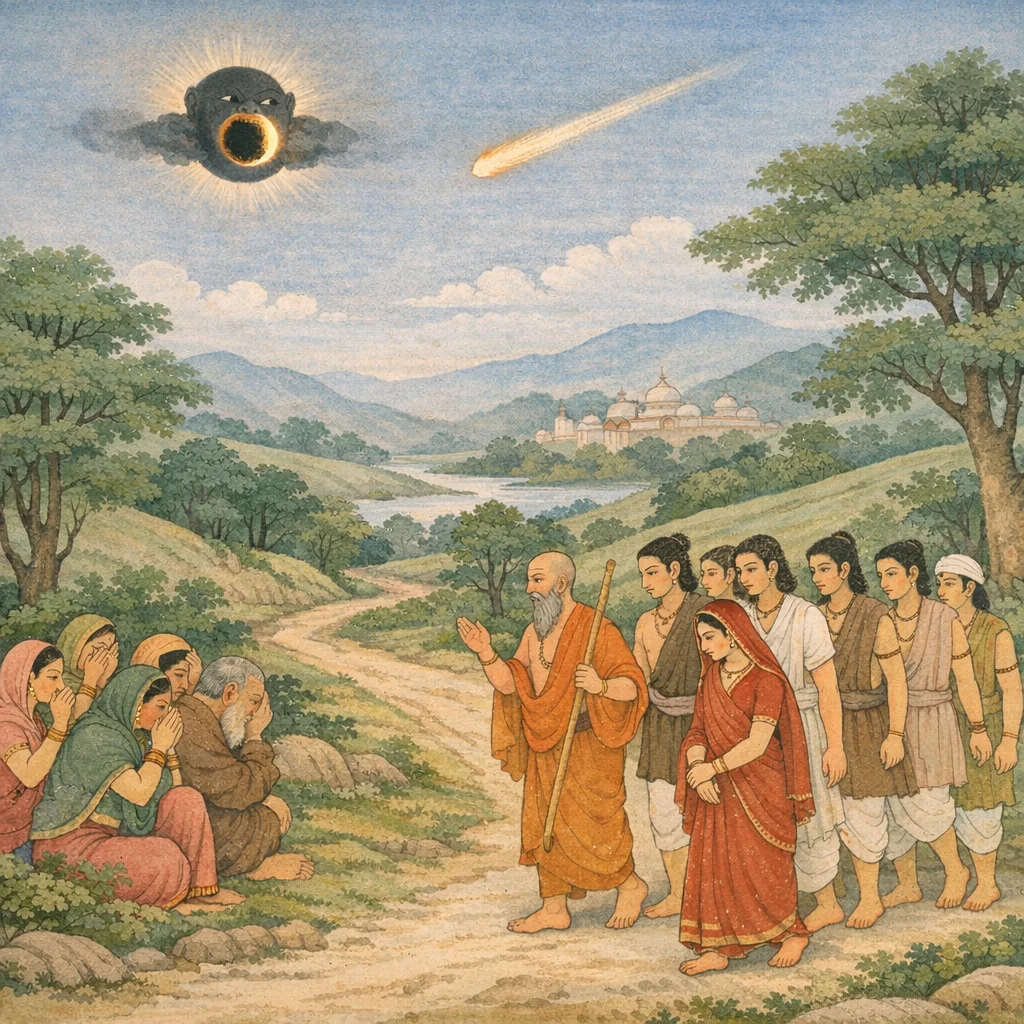
राहुरग्रसदादित्यमपर्वणि विशाम्पते । उल्का चाप्यपसव्येन पुरं कृत्वा व्यशीर्यत
Vidura said: “O lord of the people, Rāhu seized the Sun at an inauspicious time; and a blazing meteor, moving in a leftward (ill-omened) course, circled the city—after which it was shattered. These are portents that warn of disorder and impending calamity when rulers abandon right conduct and prudent restraint.”
Verse 30
हस्तिनापुरसे उन नरश्रेष्ठ पाण्डवोंके निकलते ही बिना बादलके बिजली गिरने लगी, पृथ्वी काँप उठी। राजन्! बिना पर्व (अमावस्या)-के ही राहुने सूर्यको ग्रस लिया था और नगरको दायें रखकर उल्का गिरी थी ।। प्रत्याहरन्ति क्रव्यादा गृध्रगोमायुवायसा: । देवायतनचैत्येषु प्राकाराट्टालकेषु च,गीध, गीदड़ और कौवे आदि मांसाहारी जन्तु नगरके मन्दिरों, देववृक्षों, चहारदीवारी तथा अट्टालिकाओंपर मांस और हड्डी आदि लाकर गिराने लगे थे
Vidura said: No sooner had those Pāṇḍavas, the foremost of men, departed from Hastināpura than lightning struck in a cloudless sky and the earth shook. O king, Rāhu seized the Sun though it was not the time of the new moon (amāvasyā), and a meteor fell, keeping the city to its right. Then flesh-eating creatures—vultures, jackals, and crows—began to carry and drop pieces of flesh and bone upon the city’s shrines and sacred precincts, even on its ramparts and watchtowers. Such portents proclaim the collapse of auspicious order: when the righteous are driven out, the very places meant for protection and worship are defiled, foretelling calamity born of adharma.
Verse 31
एवमेते महोत्पाता: प्रादुरासन् दुरासदा: । भरतानामभावाय राजन दुर्मन्त्रिते तव,राजन्! इस प्रकार आपकी दुर्मनत्रणाके कारण ऐसे-ऐसे अपशकुनरूप दुर्दम्य एवं महान् उत्पात प्रकट हुए हैं, जो भरतवंशियोंके विनाशकी सूचना दे रहे हैं
Vidura said: “Thus these mighty portents—hard to avert—have manifested. O King, because of your ill counsel, they foretell the ruin of the Bharatas.”
Verse 32
वैशम्पायन उवाच एवं प्रवदतोरेव तयोस्तत्र विशाम्पते । धृतराष्ट्रस्य राज्ञश्न विदुरस्यथ च धीमतः,वैशम्पायनजी कहते हैं--जनमेजय! इस प्रकार राजा धृतराष्ट्र और बुद्धिमान विदुर जब दोनों वहाँ बातचीत कर रहे थे, उसी समय सभामें महर्षियोंसे घिरे हुए देवर्षि नारद कौरवोंके सामने आकर खड़े हो गये और यह भयंकर वचन बोले--
Vaiśampāyana said: O lord of the people (Janamejaya), while King Dhṛtarāṣṭra and the wise Vidura were still speaking there, the divine seer Nārada—surrounded by great sages—came and stood before the Kauravas in the assembly, and then uttered words of grave and ominous import.
Verse 33
नारदश्न सभामध्ये कुरूणामग्रत: स्थित: । महर्षिभि: परिवृतो रौद्रं वाक्यमुवाच ह,वैशम्पायनजी कहते हैं--जनमेजय! इस प्रकार राजा धृतराष्ट्र और बुद्धिमान विदुर जब दोनों वहाँ बातचीत कर रहे थे, उसी समय सभामें महर्षियोंसे घिरे हुए देवर्षि नारद कौरवोंके सामने आकर खड़े हो गये और यह भयंकर वचन बोले--
Vaiśampāyana said: In the midst of the royal assembly, Nārada stood before the Kurus. Surrounded by great seers, he then spoke a fierce and ominous message—words meant to warn, to judge, and to set the moral stakes of what was about to unfold.
Verse 34
इतश्नतुर्दशे वर्षे विनक्ष्यन्तीह कौरवा: । दुर्योधनापराधेन भीमार्जुनबलेन च
Vaiśampāyana said: “Then, in the fourteenth year from this point, the Kauravas will meet their destruction here—brought about by Duryodhana’s wrongdoing, and also by the might of Bhīma and Arjuna.”
Verse 35
“आजसे चौदहवें वर्षमें दुर्योधनके अपराधसे भीम और अर्जुनके पराक्रमद्वारा कौरवकुलका नाश हो जायगा” ।। इत्युक्त्वा दिवमाक्रम्य क्षिप्रमन््तरधीयत । ब्राह्मीं श्रियं सुविपुलां बिश्रद् देवर्षिसत्तम:
“In the fourteenth year from today, because of Duryodhana’s wrongdoing, the Kuru line will be brought to ruin through the valor of Bhima and Arjuna.” Having spoken thus, the foremost divine seer ascended to heaven and swiftly vanished from sight, bearing a vast, Brahman-like splendor—an implicit moral verdict that adharma ripens into collective destruction.
Verse 36
ऐसा कहकर विशाल ब्रह्मतेज धारण करनेवाले देवर्षि-प्रवर नारद आकाशमें जाकर सहसा अन्तर्धान हो गये ।। (धृतराष्ट उवाच किमनब्रुवन् नागरिका: कि वै जानपदा जना: । महां तत्त्वेन चाचक्ष्व क्षत्त: सर्वमशेषत: ।। धृतराष्ट्रने पूछा--विदुर! जब पाण्डव वनको जाने लगे, उस समय नगर और देशके लोग क्या कह रहे थे, ये सब बातें मुझे पूर्णरूपसे ठीक-ठीक बताओ। विदुर उवाच ब्राह्मणा: क्षत्रिया वैश्या: शूद्रा येडन्ये वदन्त्यथ । तच्छृणुष्व महाराज वक्ष्यते च मया तव ।। विदुर बोले--महाराज! ब्राह्मण, क्षत्रिय, वैश्य, शूद्र तथा अन्यलोग इस घटनाके सम्बन्धमें जो कुछ कहते हैं, वह सुनिये, मैं आपसे सब बातें बता रहा हूँ। हा हा गच्छन्ति नो नाथा: समवेक्षध्वमीदृशम् । इति पौरा: सुदुःखार्ता: शोचन्ति सम समन्तत: ।। पाण्डवोंके जाते समय समस्त पुरवासी दुःखसे आतुर हो सब ओर शोकमें डूबे हुए थे और इस प्रकार कह रहे थे--'हाय! हाय! हमारे स्वामी, हमारे रक्षक वनमें चले जा रहे हैं। भाइयो! देखो, धृतराष्ट्रके पुत्रोंका यह कैसा अन्याय है?! तदहृष्टमिवाकूजं गतोत्सवमिवाभवत् | नगर हास्तिनपुरं सस्त्रीवृद्धकुमारकम् ।। स्त्री, बालक और वृद्धोंसहित सारा हस्तिनापुर नगर हर्षरहित, शब्दशून्य तथा उत्सवहीन-सा हो गया। सर्वे चासन् निरुत्साहा व्याधिना बाधिता यथा ।। पार्थात् प्रति नरा नित्यं चिनन््ताशोकपरायणा: । तत्र तत्र कथां चक्कर: समासाद्य परस्परम् ।। सब लोग दुन्तीपुत्रोंके लिये निरन्तर चिन्ता एवं शोकमें निमग्न हो उत्साह खो बैठे थे। सबकी दशा रोगियोंके समान हो गयी थी। सब एक-दूसरेसे मिलकर जहाँ-तहाँ पाण्डवोंके विषयमें ही वार्तालाप करते थे। वन॑ गते धर्मराजे दुः:खशोकपरायणा: । बभूवु: कौरवा वृद्धा भृशं॑ शोकेन पीडिता: ।। धर्मराजके वनमें चले जानेपर समस्त वृद्ध कौरव भी अत्यन्त शोकसे व्यथित हो दुःख और चिन्तामें निमग्न हो गये। ततः पौरजन: सर्व: शोचन्नास्ते जनाधिपम् | कुर्वाणाश्व कथास्तत्र ब्राह्मणा: पार्थिवं प्रति ।। तदनन्तर समस्त पुरवासी राजा युधिष्ठटिरके लिये शोकाकुल हो गये। उस समय वहाँ ब्राह्मणलोग राजा युधिष्ठिरके विषयमें निम्नांकित बातें करने लगे। ब्राह्मणा ऊचु कथं नु राजा धर्मात्मा वने वसति निर्जने । तस्यानुजाश्च ते नित्यं कृष्णा च द्रुपदात्मजा ।। सुखाहापि च दु:ःखारता कथं वसति सा वने ।। ब्राह्मणोंने कहा--हाय! धर्मात्मा राजा युधिष्ठिर और उनके भाई निर्जन वनमें कैसे रहेंगे? तथा ट्रुपदकुमारी कृष्णा तो सुख भोगनेके ही योग्य है, वह दुःखसे आतुर हो वनमें कैसे रहेगी। विदुर उवाच एवं पौराश्न विप्राश्न॒ सदारा: सहपुत्रका: | स्मरन्त: पाण्डवान् सर्वे बभूवुर्भशदु:खिता: ।। विदुरजी कहते हैं--राजन्! इस प्रकार पुरवासी ब्राह्मण अपनी स्त्रियों और पुत्रोंके साथ पाण्डवोंका स्मरण करते हुए बहुत दुःखी हो गये। आविद्धा इव शस्त्रेण नाभ्यनन्दन् कथंचन । सम्भाष्यमाणा अपि ते न कंचित् प्रत्यपूजयन् ।। शस्त्रोंक आघातसे घायल हुए मनुष्योंकी भाँति वे किसी प्रकार सुखी न हो सके। बात कहनेपर भी वे किसीको आदरपूर्वक उत्तर नहीं देते थे। न भुक््त्वा न शयित्वा ते दिवा वा यदि वा निशि | शोकोपहततविज्ञाना नष्टसंज्ञा इवाभवन् ।। उन्होंने दिन अथवा रातमें न तो भोजन किया और न नींद ही ली; शोकके कारण उनका सारा विज्ञान आच्छादित हो गया था। वे सब-के-सब अचेत-से हो रहे थे। यदवस्था बभूवार्ता हायोध्या नगरी पुरा । रामे वन॑ गते दुःखादूधृतराज्ये सलक्ष्मणे ।। तदवस्थं बभूवार्तमद्येदं गजसाह्वयम् । गते पार्थे वनं दुःखादूधृतराज्ये सहानुजै: ।। जैसे त्रेतायुगमें राज्यका अपहरण हो जानेपर लक्ष्मणसहित श्रीरामचन्द्रजीके वनमें चले जानेके बाद अयोध्या नगरी दुःखसे अत्यन्त आतुर हो बड़ी दुरवस्थाको पहुँच गयी थी, वही दशा राज्यके अपहरण हो जानेपर भाइयोंसहित युधिष्ठिरके वनमें चले जानेसे आज हमारे इस हस्तिनापुरकी हो गयी है। वैशम्पायन उवाच विदुरस्य वच: श्रुत्वा नागरस्य गिरं च वै । भूयो मुमोह शोकाच्च धृतराष्ट्र: सबान्धव: ।।) वैशम्पायनजी कहते हैं-जनमेजय! विदुरका कथन और पुरवासियोंकी कही हुई बातें सुनकर बन्धु-बान्धवोंसहित राजा धृतराष्ट्र पुन: शोकसे मूर्च्छित हो गये। ततो दुर्योधन: कर्ण: शकुनिश्चापि सौबल: । द्रोणं द्वीपममन्यन्त राज्यं चास्मै न्न्यवेदयन्,तब दुर्योधन, कर्ण और सुबलपुत्र शकुनिने द्रोणको अपना द्वीप (आश्रय) माना और सम्पूर्ण राज्य उनके चरणोंमें समर्पित कर दिया
Vaiśaṃpāyana said: Hearing Vidura’s words and also the lament of the citizens, Dhṛtarāṣṭra—together with his kinsmen—once again collapsed into delusion, overwhelmed by grief. Then Duryodhana, Karṇa, and Śakuni the son of Subala regarded Droṇa as their “island” (their secure refuge) and placed the kingdom at his feet, entrusting it to him.
Verse 37
अथाब्रवीत् ततो द्रोणो दुर्योधनममर्षणम् । दुःशासनं च कर्ण च सवनिव च भारतान्,उस समय द्रोणाचार्यने अमर्षशील दुर्योधन, दुःशासन, कर्ण तथा अन्य सब भरतवंशियोंसे कहा--
Then Droṇa spoke, addressing the hot-tempered Duryodhana, as well as Duḥśāsana, Karṇa, and the other Bharata princes.
Verse 38
अवध्यान् पाण्डवान प्राहुर्देवपुत्रान् द्विजातय: । अहं वै शरण प्राप्तान् वर्तमानो यथाबलम्,'पाण्डव देवताओंके पुत्र हैं, अतः ब्राह्मणलोग उन्हें अवध्य बतलाते हैं। मैं यथाशक्ति सम्पूर्ण हृदयसे तुम्हारे अनुकूल प्रयत्न करता हुआ तुम्हारा साथ दूँगा। भक्तिपूर्वक अपनी शरणमें आये हुए इन राजाओंसहित धुृतराष्ट्रपुत्रोंका परित्याग करनेका साहस नहीं कर सकता। दैव ही सबसे प्रबल है
Vaiśaṃpāyana said: “The twice-born declare the Pāṇḍavas to be inviolable, for they are sons of the gods. As for me, I shall stand by those who have come seeking refuge, exerting myself to the best of my strength. In the ethical order, one does not abandon the protected—especially when they have surrendered—because the duty of shelter outweighs partisan attachment.”
Verse 39
गन्ता सर्वात्मना भव्त्या धारत्तराष्ट्रानू सराजकान् । नोत्सहेयं परित्यक्तुं दैवं हि बलवत्तरम्,'पाण्डव देवताओंके पुत्र हैं, अतः ब्राह्मणलोग उन्हें अवध्य बतलाते हैं। मैं यथाशक्ति सम्पूर्ण हृदयसे तुम्हारे अनुकूल प्रयत्न करता हुआ तुम्हारा साथ दूँगा। भक्तिपूर्वक अपनी शरणमें आये हुए इन राजाओंसहित धुृतराष्ट्रपुत्रोंका परित्याग करनेका साहस नहीं कर सकता। दैव ही सबसे प्रबल है
Vaiśampāyana said: “I will go with you with my whole being, accompanying the Dhārtarāṣṭras along with the kings. I do not have the courage to abandon them—those who have sought refuge in devotion—for destiny is indeed the stronger power.”
Verse 40
धर्मत: पाण्डुपुत्रा वै वनं गच्छन्ति निर्जिता: । ते च द्वादश वर्षाणि वने वत्स्यन्ति पाण्डवा:,'पाण्डव जूएमें पराजित होकर धर्मके अनुसार वनमें गये हैं। वे वहाँ बारह वर्षोतक रहेंगे
Vaiśampāyana said: Defeated in the game, the sons of Pāṇḍu proceed to the forest in accordance with dharma. There the Pāṇḍavas will dwell for twelve years—accepting the stipulated consequence and upholding the ethical order even in adversity.
Verse 41
चरितब्रह्याचर्याश्च क्रोधामर्षवशानुगा: । वैरं निर्यातयिष्यन्ति महद् दुःखाय पाण्डवा:,“वनमें पूर्णरूपसे ब्रह्मचर्यका पालन करके जब वे क्रोध और अमर्षके वशीभूत हो यहाँ लौटेंगे, उस समय वैरका बदला अवश्य लेंगे। उनका वह प्रतीकार हमारे लिये महान् दुःखका कारण होगा
“The Pāṇḍavas, having observed brahmacarya in full within the forest, will return here mastered by wrath and smoldering resentment; then they will surely exact vengeance for this great enmity. That retaliation will become for us a cause of immense sorrow.”
Verse 42
मया च भ्रंशितो राजन् द्रुपद: सखिवितग्रहे । पुत्रार्थभयजद् राजा वधाय मम भारत,“राजन! मैंने मैत्रीके विषयको लेकर कलह प्रारम्भ होनेपर राजा ट्रुपदको उनके राज्यसे भ्रष्ट किया था; भारत! इससे दुःखी होकर उन्होंने मेरे वधके लिये पुत्र प्राप्त करनेकी इच्छासे एक यज्ञका आयोजन किया
Vaiśampāyana said: “O King, in a quarrel arising from the matter of friendship, I too caused Drupada to be driven from his kingdom. Grieving and fearful because of that humiliation, the king, O Bhārata, undertook a sacrifice with the desire to obtain a son—so that he might bring about my death.”
Verse 43
याजोपयाजतपसा पुत्र लेभे स पावकात् । धृष्टद्रुम्न॑ द्रौोपदीं च वेदीमध्यात् सुमध्यमाम्
Vaiśampāyana said: By the austerities of Yāja and Upayāja, the king obtained from the sacred fire a son—Dhṛṣṭadyumna—and also Draupadī, the slender-waisted maiden, arising from the very middle of the altar.
Verse 44
“याज और उपयाजकी तपस्यासे उन्होंने अग्निसे धृष्टद्युम्म और वेदीके मध्यभागसे सुन्दरी द्रौपदीको प्राप्त किया ।। धृष्टद्युम्नस्तु पार्थानां श्याल: सम्बन्धतो मतः । पाण्डवानां प्रियरतस्तस्मान्मां भयमाविशत्,'धृष्टद्युम्न तो सम्बन्धकी दृष्टिसे कुन्तीपुत्रोंका साला ही है, अतः सदा उनका प्रिय करनेमें लगा रहता है, उसीसे मुझे भय है”
Vaiśampāyana said: “By the austerities of Yāja and Upayāja, they obtained from the fire Dhṛṣṭadyumna, and from the middle of the sacrificial altar the beautiful Draupadī. Now Dhṛṣṭadyumna is regarded, by ties of kinship, as the Pārthas’ brother-in-law; ever intent on what pleases the Pāṇḍavas, he stands firmly on their side—therefore fear entered me.”
Verse 45
ज्वालावर्णो देवदत्तो धनुष्मान् कवची शरी । मर्त्यधर्मतया तस्मादद्य मे साध्वसो महान्,“उसके शरीरकी कान्ति अग्निकी ज्वालाके समान उद्धासित होती है। वह देवताका दिया हुआ पुत्र है और धनुष, बाण तथा कवचके साथ प्रकट हुआ है। मरणधर्मा मनुष्य होनेके कारण मुझे अब उससे महान् भय लगता है
Vaiśampāyana said: “His complexion blazes like a tongue of fire. He is a divinely bestowed one, manifest with bow, arrows, and armor. Yet because he is a mortal bound by the law of death, today a great fear arises in me on account of him.”
Verse 46
गतो हि पक्षतां तेषां पार्षत: परवीरहा । रथातिरथसंख्यायां यो5ग्रणीरजुनो युवा,शत्रुवीरोंका संहार करनेवाला ट्रुपदकुमार धृष्टद्युम्न पाण्डवोंके पक्षका पोषक हो गया है। रथियों और अतिरथियोंकी गणनामें जिसका नाम सबसे पहले लिया जाता है, वह तरुण वीर अर्जुन धृष्टद्युम्नके लिये, यदि मेरे साथ उसका युद्ध हुआ तो, लड़कर प्राणतक देनेके लिये उद्यत हो जायगा। कौरवो! (अर्जुनके साथ मुझे लड़ना पड़े) इस पृथ्वीपर इससे बढ़कर महान् दुःख मेरे लिये और क्या हो सकता है?
Vaiśampāyana said: “Dṛṣṭadyumna, the son of Pṛṣata (Drupada), a slayer of enemy-champions, has indeed gone over to their side and become a mainstay of the Pāṇḍavas. And Arjuna—the youthful hero whose name is spoken first when counting the rathas and atirathas—will, if he must fight me on Dṛṣṭadyumna’s account, be ready to battle even at the cost of his life. O Kauravas, what greater sorrow could there be for me on this earth than being compelled to fight Arjuna?”
Verse 47
सृष्टप्राणो भृशतरं तेन चेत् संगमो मम । किमन्यद् दुःखमधिकं परमं भुवि कौरवा:,शत्रुवीरोंका संहार करनेवाला ट्रुपदकुमार धृष्टद्युम्न पाण्डवोंके पक्षका पोषक हो गया है। रथियों और अतिरथियोंकी गणनामें जिसका नाम सबसे पहले लिया जाता है, वह तरुण वीर अर्जुन धृष्टद्युम्नके लिये, यदि मेरे साथ उसका युद्ध हुआ तो, लड़कर प्राणतक देनेके लिये उद्यत हो जायगा। कौरवो! (अर्जुनके साथ मुझे लड़ना पड़े) इस पृथ्वीपर इससे बढ़कर महान् दुःख मेरे लिये और क्या हो सकता है?
Vaiśampāyana said: “If I should come into conflict with him, he would fight with utmost ferocity, ready to stake even his life. O Kauravas, what greater and more unbearable sorrow could there be for me on this earth than to be forced into such a battle?”
Verse 48
धृष्टद्युम्नो द्रोणमृत्युरिति विप्रथितं वच: । मद्वधाय श्रुतो5प्येष लोके चाप्यतिविश्रुत:,'धृष्टद्युम्न द्रोणकी मौत है, यह बात सर्वत्र फैल चुकी है। मेरे वधके लिये ही उसका जन्म हुआ है। यह भी सब लोगोंने सुन रखा है। धृष्टद्युम्न स्वयं भी संसारमें अपनी वीरताके लिये विख्यात है
Vaiśampāyana said: “The report has spread everywhere that ‘Dhṛṣṭadyumna is the death of Droṇa.’ It is also widely known among the people that he was born for the very purpose of slaying me; and Dhṛṣṭadyumna himself is famed in the world for his prowess.”
Verse 49
सो<यं नूनमनुप्राप्तस्त्वत्कृते काल उत्तम: । त्वरितं कुरुत श्रेयो नैतदेतावता कृतम्,“तुम्हारे लिये यह निश्चय ही बहुत उत्तम अवसर प्राप्त हुआ है। शीघ्र ही अपने कल्याण-साधनमें लग जाओ। पाण्डवोंको वनवास दे देनेमात्रसे तुम्हारा अभीष्ट सिद्ध नहीं हो सकता
Vaiśampāyana said: “For your sake, this truly is an excellent moment that has arrived. Act quickly for what is truly beneficial. Your aim cannot be fulfilled merely by sending the Pāṇḍavas into exile.”
Verse 50
मुहूर्त सुखमेवैतत् तालच्छायेव हैमनी । यजध्वं च महायज्ञजैभोंगानश्रीत दत्त च
Vaiśampāyana said: “This happiness is only momentary—like the fleeting shade of a palmyra tree in winter. Therefore, perform great sacrifices; enjoy your rightful pleasures, and also give in charity.”
Verse 51
इतश्नतुर्दशे वर्षे महत् प्राप्पस्पथ वैशसम् | “यह राज्य तुमलोगोंके लिये शीतकालमें होनेवाली ताड़के पेड़की छायाके समान दो ही घड़ीतक सुख देनेवाला है। अब तुम बड़े-बड़े यज्ञ करो, मनमाने भोग भोगो और इच्छानुसार दान कर लो। आजसे चौदहवें वर्षमें तुम्हें बहुत बड़ी मार-काटका सामना करना पड़ेगा" || ५० ई || द्रोणस्य वचन श्रुत्वा धृतराष्ट्रोडब्रवीदिदम्,द्रोणाचार्यकी यह बात सुनकर धुृतराष्ट्रने कहा--
In the fourteenth year from now, you will meet with a great calamity of slaughter. “This kingdom,” he said, “is for you like the shade of a palmyra tree in winter—pleasant only for two brief moments. Therefore, while you can, perform great sacrifices, indulge in whatever enjoyments you desire, and give gifts as you please. For in the fourteenth year from today, a vast and deadly conflict will confront you.” Hearing Droṇa’s words, Dhṛtarāṣṭra replied.
Verse 52
सम्यगाह गुरु: क्षत्तरुपावर्तय पाण्डवान् | यदि ते न निवर्तन्ते सत्कृता यान्तु पाण्डवा: | सशस्त्ररथपादाता भोगवन्तश्न पुत्रका:,“विदुर! गुरु द्रोणाचार्यने ठीक कहा है। तुम पाण्डवोंको लौटा लाओ। यदि वे न लौटें तो वे अस्त्र-शस्त्रोंसे युक्त रथियों और पैदल सेनाओंसे सुरक्षित और भोग-सामग्रीसे सम्पन्न हो सत्कारपूर्वक वनमें भ्रमणके लिये जाया; क्योंकि वे भी मेरे पुत्र ही हैं'
Vaiśampāyana said: “The preceptor has spoken rightly. O Vidura (Kṣattṛ), bring the Pāṇḍavas back. If they do not return, then let the Pāṇḍavas depart with due honor—protected by armed charioteers and infantry, and provided with the means of enjoyment—for they too are my sons.”
Verse 79
इस प्रकार श्रीमहाभारत सभापर्वके अन्तर्गत अनुद्यूतपर्वमें द्रौपदीकुन्तीसंवादविषयक उनासीवाँ अध्याय पूरा हुआ
Thus ends the seventy-ninth chapter of the Anudyūta section within the Sabha Parva of the Śrī Mahābhārata, dealing with the dialogue between Draupadī and Kuntī.
Verse 80
इति श्रीमहाभारते सभापर्वणि अनुद्यूतपर्वणि विदुरधृतराष्ट्रद्रोणवाक्ये अशीतितमोड<ध्याय:
Thus ends the eightieth chapter of the Anudyūta section within the Sabhā Parva of the Śrī Mahābhārata, known for the discourse involving Vidura, Dhṛtarāṣṭra, and Droṇa.
Verse 146
चिकीर्षन् कर्म शत्रुभ्यो बाहुद्रव्यानुरूपत: । इसीलिये वे अपनी विशाल भुजाओंकी ओर देखते हुए यात्रा करते हैं। राजन्! अपने बाहुबलरूपी वैभवपर उन्हें गर्व है। अतः वे अपनी दोनों भुजाएँ दिखाते हुए शत्रुओंसे बदला लेनेके लिये अपने बाहुबलके अनुरूप ही पराक्रम करना चाहते हैं
Vidura says: “Intending to act against their enemies, they undertake their course in a manner proportionate to the wealth and strength of their arms. Therefore they proceed looking toward their mighty arms; O King, they take pride in the splendor that is their arm-power, and, displaying both arms, they wish to perform valorous deeds—measured by their own strength—in order to exact vengeance from their foes.”