Adhyaya 155
Droṇa-parva Adhyāya 155 — Ghaṭotkaca-nidhana-śoka and Karṇa-śakti-vyaya (Kṛṣṇa’s strategic reassurance)
Upa-parva: Ghaṭotkaca-vadha / Karṇa-Śakti-vyaya Episode (context within Droṇa-parva)
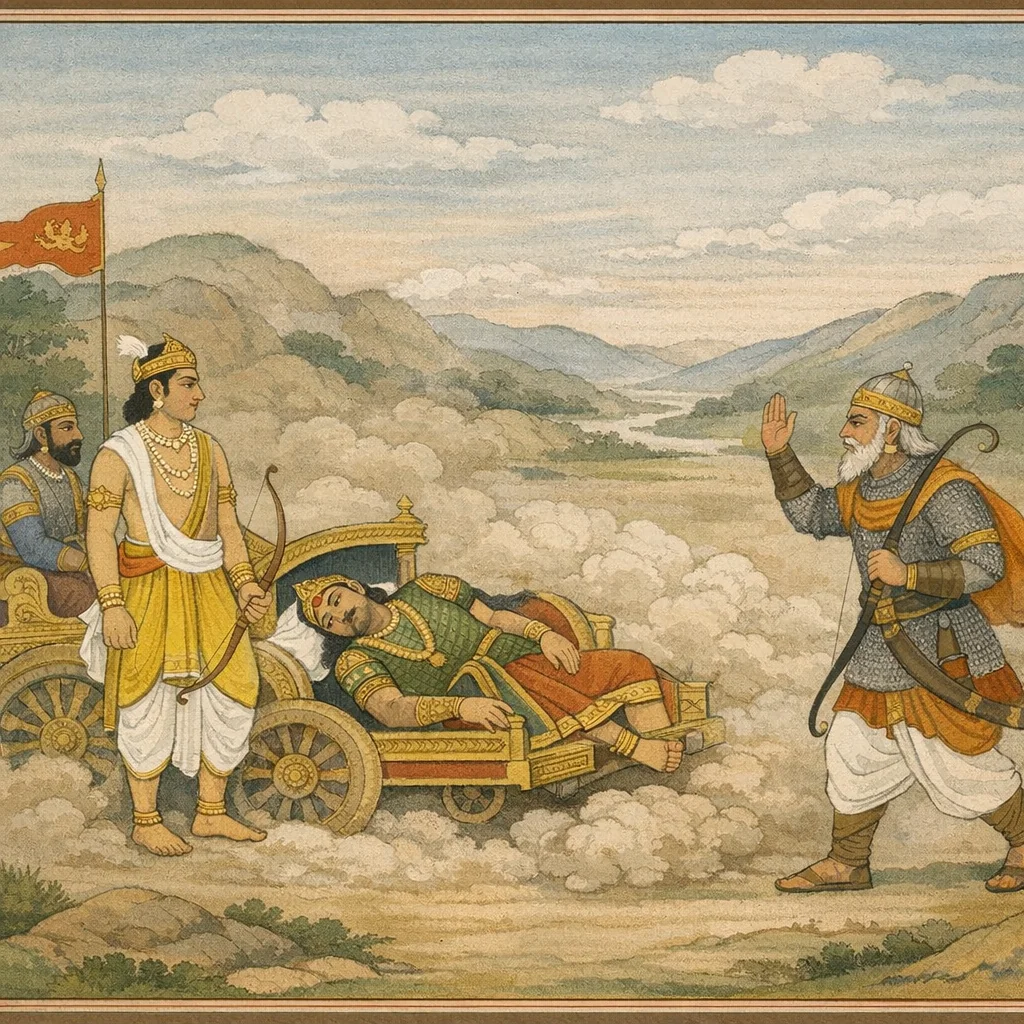
Saṃjaya reports the Pāṇḍavas’ grief upon seeing Haiḍimba (Ghaṭotkaca) slain, their eyes filled with tears and their confidence shaken. In contrast, Vāsudeva displays pronounced elation—roaring like a lion, embracing Arjuna, and manifesting visible relief—prompting Arjuna to question the appropriateness of joy at a moment of bereavement and tactical peril. Kṛṣṇa explains that his response is grounded in strategic necessity: Ghaṭotkaca has drawn out and absorbed Karṇa’s formidable, effectively single-use śakti, and therefore Karṇa should be understood as ‘already neutralized’ with respect to that decisive advantage. Kṛṣṇa further contextualizes Karṇa’s prior near-invincibility through divine armor and earrings (kavaca-kuṇḍala) and notes their removal through Indra’s intervention, emphasizing that Karṇa’s threat profile has changed. The chapter frames a core epic motif: leadership involves translating battlefield events into intelligible causal narratives that stabilize allies, clarify remaining risks, and maintain ethical seriousness without collapsing into despair.
Chapter Arc: जयद्रथ-वध के पश्चात् रणभूमि फिर धधक उठती है—पांचाल और कौरव ऐसे भिड़ते हैं मानो ‘यमराज्य’ की दीक्षा लेकर परलोक के द्वार पर ही शस्त्र-यज्ञ कर रहे हों। → शूरवीर शूरवीरों से टकराते हैं; बाण, तोमर और शक्तियों की वर्षा में दोनों सेनाएँ एक-दूसरे को यमक्षय की ओर ढकेलती हैं। विराट, द्रुपद, शिखण्डी, धृष्टद्युम्न और धर्मपुत्र युधिष्ठिर पर अनेक प्रहारों का वर्णन युद्ध को और उग्र बनाता है। → युधिष्ठिर और दुर्योधन का तीखा रथ-युद्ध चरम पर पहुँचता है—ध्वज कटते हैं, मर्मभेदी बाण लगते हैं, और अंततः दुर्योधन कानों तक खींचे गए बाण से घायल होकर रथोपस्थ पर मूर्च्छित-सा बैठ जाता है। → क्षणिक विजय-भाव के बीच कौरव पक्ष संभलता है; दुर्योधन को देखकर कौरवों में उत्तेजना और प्रतिशोध की आग भड़कती है, और पाण्डव पक्ष भी दबाव में रहते हुए मोर्चा थामे रहता है। → द्रोणाचार्य युद्धस्थल में प्रकट होकर ‘तिष्ठ, तिष्ठ’ कहते हुए आगे बढ़ते हैं—आने वाले क्षणों में आचार्य की रणनीति और भीषण प्रहार का संकेत मिलता है।
Shlokas
Verse 1
इस प्रकार श्रीमहाभारत द्रोणपर्वके अन्तर्गत जयद्रथवधपर्वमें पुन: युद्धारम्भविषयक एक सौ बावनवाँ अध्याय पूरा हुआ ॥/ १५२ ॥। (दाक्षिणात्य अधिक पाठके ४ श्लोक मिलाकर कुल ४० श्लोक हैं।) अपन क्रात बछ। आर: 2 (घटोत्कचव धपर्व) त्रिपप्चाशदधिकशततमोड< ध्याय: कौरव-पाण्डव-सेनाका युद्ध, दुर्योधन और युधिषछिरका संग्राम तथा दुर्योधनकी पराजय संजय उवाच तदुदीर्ण गजानीकं॑ बल॑ तव जनाधिप । पाण्डुसेनामतिक्रम्य योधयामास सर्वतः,संजय कहते हैं--जनेश्वर! आपकी प्रचण्ड गजसेना पाण्डव-सेनाका उल्लंघन करके सब ओर फैलकर युद्ध करने लगी
Sañjaya said: O lord of men, your force—its elephant divisions roused to a fierce pitch—overstepped the Pāṇḍava battle-line and spread out on every side, pressing the fight everywhere.
Verse 2
पज्चाला: कुरवश्चैव योधयन्त: परस्परम् । यमराष्ट्राय महते परलोकाय दीक्षिता:,पांचाल और कौरव योद्धा महान् यमराज्य एवं परलोककी दीक्षा लेकर परस्पर युद्ध करने लगे
Sañjaya said: The Pāñcālas and the Kurus, fighting one another, entered battle as if consecrated for the great realm of Yama and for the world beyond—men who had accepted death as imminent and pressed on in mutual slaughter.
Verse 3
शूरा: शूरै: समागम्य शरतोमरशक्तिभि: । विव्यधु: समरे<न्योन्यं निन्युश्चैव यमक्षयम्,एक पक्षके शूरवीर दूसरे पक्षके शूरवीरोंसे भिड़कर बाण, तोमर और शक्तियोंसे समरभूमिमें एक-दूसरेको चोट पहुँचाने और यमलोक भेजने लगे
Sañjaya said: The heroes, closing with opposing heroes, struck one another on the battlefield with arrows, javelins, and spears, and thus sent each other to Yama’s imperishable realm.
Verse 4
रथिनां रथिभि: सार्थ रुधिरत्रावदारुणम् | प्रावर्तत महद् युद्ध निध्नतामितरेतरम्,परस्पर प्रहार करनेवाले रथियोंका रथियोंके साथ महान् युद्ध होने लगा, जो खूनकी धारा बहानेके कारण अत्यन्त भयंकर जान पड़ता था
Sañjaya said: Then a great battle broke out among the chariot-warriors, chariot set against chariot. It appeared exceedingly dreadful, made terrible by the streaming of blood, as they struck one another down in mutual assault.
Verse 5
वारणाश्न महाराज समासाद्य परस्परम् । विषाणैर्दारयामासु: सुसंक़्रुद्धा मदोत्कटा:
Sañjaya said: O great king, the elephants, closing in upon one another, tore and gored with their tusks—fiercely enraged and made wild by rut.
Verse 6
महाराज! अत्यन्त क्रोधमें भरे हुए मदमत्त हाथी परस्पर भिड़कर दाँतोंके प्रहारसे एक- दूसरेको विदीर्ण करने लगे ।। हयारोहान् हयारोहा: प्रासशक्तिपरश्वधै: । बिभिदुस्तुमुले युद्धे प्रार्थयन्तो महद् यश:,उस भयंकर युद्धमें महान् यशकी अभिलाषा रखते हुए घुड़सवार घुड़सवारोंको प्रास, शक्ति और फरसोंद्वारा घायल कर रहे थे
Sañjaya said: O King, elephants, maddened with rut and swollen with extreme anger, crashed into one another and began tearing each other apart with the blows of their tusks. And in that tumultuous battle, horsemen—yearning for great renown—wounded opposing horsemen with spears, javelins, and axes.
Verse 7
पत्तयश्न महाबाहो शतश: शस्त्रपाणय: । अन्योन्यमार्दयन् राजन् नित्यं यत्ता: पराक्रमे,राजन! हाथोंमें शस्त्र लिये सैकड़ों पैदल सैनिक सदा पराक्रमके लिये प्रयत्नशील हो एक-दूसरेपर चोट कर रहे थे
Sañjaya said: O mighty-armed one, O King, hundreds of foot-soldiers with weapons in hand—ever intent on displays of valor—were continually striking and crushing one another in close combat.
Verse 8
गोत्राणां नामधेयानां कुलानां चैव मारिष | श्रवणाद्धि विजानीम: पञ्चालान् कुरुभि: सह,आर्य! नाम, गोत्र और कुलोंका परिचय सुनकर ही हमलोग उस समय कौरवोंके साथ युद्ध करनेवाले पांचालोंको पहचान पाते थे
Sañjaya said: “O venerable one, it was by hearing their gotras—clan lineages—their personal names, and their family affiliations that we could recognize the Pāñcālas who had come to fight alongside the Kurus at that time. Mere report of their identities made them known to us.”
Verse 9
तेडन्योन्यं समरे योधा: शरशक्तिपरश्वथै: । प्रैथयन् परलोकाय विचरन्तो हभीतवत्,उस समरांगणमें वे समस्त योद्धा निर्भय-से विचरते हुए बाण, शक्ति और फरसोंकी मारसे एक-दूसरेको परलोक भेज रहे थे
Sañjaya said: On that battlefield the warriors moved about without fear, and with arrows, spears, and axes they kept sending one another to the next world.
Verse 10
शरा दश दिशो राजंस्तेषां मुक्ता: सहस्रशः । न भ्राजन्ते यथातत्त्वं भास्करे5स्तंगतेडपि च,राजन! सूर्यास्त हो जानेके कारण उन योद्धाओंके छोड़े हुए सहस्रों बाण दसों दिशाओंमें फैलकर अच्छी तरह प्रकाशित नहीं हो पाते थे
Sañjaya said: O King, thousands of arrows released by those warriors spread out into the ten directions; yet, with the sun having set, they did not shine forth in their true form.
Verse 11
तथा प्रयुध्यमानेषु पाण्डवेयेषु भारत । दुर्योधनो महाराज व्यवागाहत तद् बलम्
Sañjaya said: “O Bhārata, while the sons of Pāṇḍu were thus engaged in fierce combat, King Duryodhana plunged into that host.”
Verse 12
भरतवंशी महाराज! जब इस प्रकार पाण्डवसैनिक युद्ध कर रहे थे, उस समय दुर्योधनने उस सेनामें प्रवेश किया ।। सैन्धवस्य वधेनैव भृशं दुःखसमन्वित: । मर्तव्यमिति संचिन्त्य प्राविशच्च द्विषद्बलम्,वह सिंधुराजके वधसे बहुत दुःखी हो गया था। अतः मरनेका ही निश्चय करके उसने शत्रुओंकी सेनामें प्रवेश किया
Sañjaya said: Overwhelmed with intense grief at the death of the king of Sindhu, Duryodhana resolved, “I must die,” and, with that fatal determination, plunged into the enemy host.
Verse 13
नादयन् रथघोषेण कम्पयन्निव मेदिनीम् । अभ्यवर्तत पुत्रस्ते पाण्डवानामनीकिनीम्,अपने रथकी घरघराहटसे दिशाओंको प्रतिध्वनित करता और पृथ्वीको कँपाता हुआ- सा आपका पुत्र पाण्डव-सेनाके सम्मुख आया
Sañjaya said: “Making the directions resound with the thunder of his chariot and seeming to shake the very earth, your son advanced straight toward the battle-array of the Pāṇḍavas.”
Verse 14
स संनिपातस्तुमुलस्तस्य तेषां च भारत । अभवत् सर्वसैन्यानामभावकरणो महान्
Sañjaya said: O Bhārata, the clash between his forces and theirs became a tumultuous, overwhelming melee—so great that it brought ruin and annihilation upon the armies on every side.
Verse 15
भारत! पाण्डव-सैनिकों तथा दुर्योधनका वह भयंकर संग्राम समस्त सेनाओंका महान् विनाश करनेवाला था ।। (धृतराड्र उवाच द्रोण: कर्ण: कृपश्चैव कृतवर्मा च सात्वत: | नावारयन् कथं युद्धे राजानं राजकाडुक्षिण: ।। धृतराष्ट्रने पूछा--द्रोण, कर्ण, कृप तथा सात्वतवंशी कृतवर्मा-ये तो राजाके चाहनेवालोंमेंसे हैं, इन्होंने उसे युद्धमें जानेसे रोका क्यों नहीं? सर्वोपायैहिं युद्धेषु रक्षितव्यो महीपति: । एषा नीति: परा युद्धे दृष्टा तत्र महर्षिभि: ।। युद्धमें सभी उपायोंसे राजाकी रक्षा करनी चाहिये। महर्षियोंने युद्धवेिषयक इसी सर्वोत्तम नीतिका साक्षात्कार किया है | प्रविष्टे वा मम सुते परेषां वै महद् बलम् । मामका रथिनां श्रेष्ठा: किमकुर्वत संजय ।। संजय! जब मेरा पुत्र शत्रुओंकी विशाल सेनामें घुस गया, उस समय मेरे पक्षके श्रेष्ठ रथियोंने क्या किया? संजय उवाच राजन संग्राममाश्चर्य पुत्रस्य तव भारत । एकस्य च बहूनां च शृणु मे ब्रुवतो5द्धुतम् ।। संजयने कहा--भरतवंशी नरेश! आपके पुत्रके आश्चर्यजनक एवं अद्भुत संग्रामका, जो एकका बहुत-से योद्धाओंके साथ हुआ था, वर्णन करता हूँ, सुनिये। द्रोणेन वार्यमाणो5सौ कर्णेन च कृपेण च । प्राविशत् पाण्डवीं सेनां मकरा: सागरं यथा ।। द्रोणाचार्य, कर्ण और कृपाचार्यके मना करनेपर भी जैसे मगर समुद्रमें प्रवेश करता है, उसी प्रकार दुर्योधन पाण्डव-सेनामें घुस गया था । किरन्निषुसहस्त्राणि तत्र तत्र तदा तदा । पज्चालान् पाण्डवांश्वैव विव्याध निशितै: शरै: ।। जहाँ-तहाँ सब ओर सहसी्रों बाणोंकी वर्षा करते हुए उसने तीखे बाणोंद्वारा पांचालों और पाण्डवोंको घायल कर दिया। यथोद्यन् विततं सूर्यो रश्मिभिनाशयेत् तम: । तथा पुत्रस्तव बल॑ नाशयत् तन््महाबल: ।।) जैसे उदयकालका सूर्य अपनी किरणोंद्वारा सर्वत्र फैले हुए अंधकारका नाश कर देता है, उसी प्रकार आपके महाबली पुत्रने शत्रुसेनाका विनाश कर दिया। यथा मध्यंदिने सूर्य प्रतपन्तं गभस्तिभि: । तथा तव सुतं मध्ये प्रतपन्तं शराचिभि:
Just as the sun at midday blazes with its rays, so too did your son blaze in the midst of the battle with the fiery radiance of his arrows—standing out as a single, scorching force amid the press of warriors.
Verse 16
पलायनकृतोत्साहा निरुत्साहा द्विषज्जये
Sañjaya said: In that battle against their foes, their energy was bent only toward flight; their spirit for standing and striving had ebbed away.
Verse 17
रुक्मपुड्खै: प्रसन्नाग्रैस्तव पुत्रेण धन्विना
Sañjaya said: “With arrows whose shafts were adorned with gold and whose points were keen and well-shaped, your son—the archer—(did so).”
Verse 18
न तादृशं रणे कर्म कृतवन्तस्तु तावका:
Sañjaya said: In the battle, your own warriors performed no deed of that kind—none that could match such a feat.
Verse 19
यादृशं कृतवान् राजा पुत्रस्तव विशाम्पते । प्रजानाथ! आपके सैनिकोंने रणभूमिमें वैसा पराक्रम नहीं किया था, जैसा कि आपके पुत्र राजा दुर्योधनने किया ।। पुत्रेण तव सा सेना पाण्डवी मथिता रणे
Sañjaya said: O lord of the people, ruler of men! Your soldiers did not show on the battlefield the valor that your son, King Duryodhana, displayed. By your son, the Pāṇḍava host was shaken and battered in the fight.
Verse 20
क्षीणतोयानिलाकंभ्यां हतत्विडिव पद्मिनी
Sañjaya said: Like a lotus-pond whose waters had dwindled and whose lotuses had lost their radiance under drying wind and heat, the scene appeared drained of vitality.
Verse 21
पाण्डुसेनां हतां दृष्टवा तव पुत्रेण भारत
Sañjaya said: “O Bhārata (Dhṛtarāṣṭra), seeing the Pāṇḍava army slain by your son, …”
Verse 22
भीमसेनपुरोगास्तु पञ्चाला: समुपाद्रवन् | भारत! आपके पुत्रद्वारा पाण्डव-सेनाको मारी गयी देख पांचालोंने भीमसेनको अगुआ बनाकर उसपर आक्रमण किया || २१ $ || स भीमसेनं दशभिमद्ीपुत्रौ त्रिभिस्त्रिभि:
Sañjaya said: The Pañcālas, placing Bhīmasena at their head, surged forward to attack. O Bhārata, seeing the Pāṇḍava army being cut down by your son, the Pañcālas rallied with Bhīma as their leader and launched a counter-assault against him.
Verse 23
विराटद्रुपदौ षड़भि: शतेन च शिखण्डिनम् | धृष्टद्युम्नं च सप्तत्या धर्मपुत्रं च सप्तभि:
Sañjaya said: Virāṭa and Drupada struck Śikhaṇḍin with six hundred arrows; Dhṛṣṭadyumna with seventy; and Dharmaputra (Yudhiṣṭhira) with seven.
Verse 24
केकयांश्वैव चेदींश्व बहुभिर्निशितै: शरै: । उस समय दुर्योधनने भीमसेनको दस, माद्रीकुमारों-को तीन-तीन, विराट और द्रुपदको छः:-छ:, शिखण्डीको सौ, धृष्टद्युम्नको सत्तर, धर्मपुत्र युधिष्ठिको सात और केकय तथा चेदिदेशके सैनिकोंको बहुत-से तीखे बाण मारे || २२-२३ $ ।। सात्वतं पज्चभिर्विद्ध्वा द्रौपदेयांस्त्रिभिस्त्रिभि:
Sañjaya said: Duryodhana struck the Kekayas and the Cedis with many sharp arrows. Having pierced Sātyaki with five shafts, he also wounded each of the sons of Draupadī with three arrows apiece.
Verse 25
घटोत्कचं च समरे विद्ध्वा सिंह इवानदत् । फिर सात्यकिको पाँच बाणोंसे घायल करके द्रौपदीपुत्रोंकी तीन-तीन बाण मारे। तत्पश्चात् समरभूमिमें घटोत्कचको घायल करके दुर्योधनने सिंहके समान गर्जना की ।। २४ न शतशक्षापरान् योधान् सद्दिपांश्व महारणे
Sañjaya said: Having struck Ghaṭotkaca on the battlefield, Duryodhana roared like a lion.
Verse 26
शरैरवचकर्तोंग्रै: क्रुद्धो 5न्तक इव प्रजा: । उस महायुद्धमें हाथियोंसहित सैकड़ों दूसरे योद्धाओंको क्रोधमें भरे हुए दुर्योधनने अपने भयंकर बाणोंद्वारा उसी प्रकार काट डाला, जैसे यमराज प्रजाका विनाश करते हैं ।। सा तेन पाण्डवी सेना वध्यमाना शिलीमुखै:
Sañjaya said: Enraged, Duryodhana, with sharp and dreadful arrows, cut down the warriors—along with elephants—in that great battle, just as Death (Yama) destroys living beings. Thus the Pāṇḍava host, being slain by his barbed shafts, was thrown into ruin and distress.
Verse 27
त॑ तपन्तमिवादित्यं कुरुराजं महाहवे
Sañjaya said: In that great battle, the Kuru king appeared like the blazing sun—radiant, overpowering, and difficult to face.
Verse 28
ततो युधिष्ठटिरो राजा कुपितो राजसत्तम
Sañjaya said: Then King Yudhiṣṭhira, angered, addressed the foremost of kings—showing that even a ruler devoted to dharma can be stirred by the pressures and provocations of war.
Verse 29
तावुभौ युधि कौरव्यौ समीयतुररिंदमौ
Sañjaya said: Those two Kaurava warriors—both subduers of foes—met each other in the midst of battle, closing in for direct combat as the war’s relentless duty pressed them toward confrontation.
Verse 30
ततो दुर्योधन: क्रुद्धः शरै:ः संनतपर्वभि:
Sañjaya said: Then Duryodhana, inflamed with anger, attacked with arrows whose shafts were well-bent and firmly set—wrath taking disciplined, weaponized form amid the moral collapse of war.
Verse 31
इन्द्रसेनं त्रिभिश्वैव ललाटे जध्निवान् नृप
Sañjaya said: O King, he struck down Indrasena with three arrows, piercing him in the forehead—an image of battle’s ruthless precision, where prowess is measured by lethal skill rather than mercy.
Verse 32
धनुश्न पुनरन्येन चकर्तास्थ महारथ:
Sañjaya said: The great chariot-warrior again and again cut the bow with another weapon/arrow, standing firm in battle—an image of relentless martial skill and unwavering resolve amid the chaos of war.
Verse 33
ततो युधिष्ठिर: क्रुद्धों निमेषादिव कार्मुकम्
Sañjaya said: Then Yudhiṣṭhira, inflamed with anger, in an instant—as quickly as the blink of an eye—seized his bow, signaling a sudden shift from restraint to immediate readiness for battle.
Verse 34
अन्यदादाय वेगेन कौरवं प्रत्यवारयत् । तब राजा युधिष्ठिरने कुपित हो पलक मारते-मारते दूसरा धनुष हाथमें ले लिया और बड़े वेगसे कुरुवंशी दुर्योधनको रोका ।। ३३ $ || तस्य तान् निघ्नतः शत्रून् रुक्मपृष्ठ महद् धनुः
Sañjaya said: Seizing another bow in an instant and with great speed, he checked the Kaurava (Duryodhana). As he struck down those enemies, his great bow—gold-backed and splendid—stood out as the instrument of his resolute resistance. The scene underscores a kṣatriya’s duty in battle: swift composure after loss, and disciplined force directed toward protecting one’s side rather than uncontrolled rage.
Verse 35
विव्याध चैनं दशभि: सम्यगस्तै: शितै: शरैः
Sañjaya said: He then struck him cleanly with ten well-aimed, razor-sharp arrows—an act that underscores how, in the fury of battle, skill and intent are directed toward wounding the opponent rather than restraining violence.
Verse 36
ततः परिवृता योधा: परिवत्रुर्युधिष्तिरम्
Sañjaya said: Then the warriors, having closed in around him, completely surrounded Yudhiṣṭhira—an image of the righteous king hemmed in by the pressures and perils of war, where protection of dharma must be pursued amid encirclement and threat.
Verse 37
वृत्रहत्यै यथा देवा: परिवत्रु: पुरंदरम् । फिर तो भागे हुए पाण्डव-योद्धा लौट आये और युधिष्ठिरको वैसे ही घेरकर खड़े हो गये, जैसे वृत्रासुरके वधके लिये सब देवता इन्द्रको घेरकर खड़े हुए थे ।। ततो युधिष्ठिरो राजा तव पुत्रस्य मारिष । शरं च सूर्यरश्म्याभमत्युग्रमनिवारणम्
Sañjaya said: Just as the gods once surrounded Purandara (Indra) for the slaying of Vṛtra, so too the Pāṇḍava warriors—having turned back from flight—stood encircling King Yudhiṣṭhira. Then, O revered one, Yudhiṣṭhira, in the face of your son, took up an arrow blazing like the sun’s rays—exceedingly fierce and impossible to ward off—signaling a renewed resolve to stand and act rather than yield to fear.
Verse 38
स तेनाकर्णमुक्तेन विद्धो बाणेन कौरव:
Sañjaya said: Struck by that arrow released with the bow drawn to the ear, the Kaurava warrior was pierced through—so, in the fury of battle, skill and resolve become decisive harm in an instant.
Verse 39
ततः पाञ्चाल्यसेनानां भूशमासीद् रवो महान्,आदरणीय राजेन्द्र! उस समय प्रसन्न हुए पांचाल सैनिकोंने “राजा दुर्योधन मारा गया' ऐसा कहकर चारों ओर अत्यन्त महान् कोलाहल मचाया। वहाँ बाणोंका भयंकर शब्द भी सुनायी दे रहा था
Sañjaya said: Then a tremendous roar arose from the armies of the Pāñcālas. O revered king, in that moment the Panchala soldiers, exultant, cried on all sides, “King Duryodhana has been slain,” and raised an immense uproar. Amid that tumult, the dreadful sound of arrows could also be heard—showing how swiftly rumor and rejoicing spread even while the violence of battle continued unabated.
Verse 40
हतो राजेति राजेन्द्र मुदितानां समन््ततः । बाणशब्दरवश्षोग्र: शुश्रुवे तत्र मारिष,आदरणीय राजेन्द्र! उस समय प्रसन्न हुए पांचाल सैनिकोंने “राजा दुर्योधन मारा गया' ऐसा कहकर चारों ओर अत्यन्त महान् कोलाहल मचाया। वहाँ बाणोंका भयंकर शब्द भी सुनायी दे रहा था
Sañjaya said: “The king is slain!”—O lord of kings—thus rang out on every side the cries of the rejoicing. There too, O venerable one, was heard the fierce tumult: the roar and the dreadful sound of arrows.
Verse 41
अथ द्रोणो द्रुतं तत्र प्रत्यदृश्यत संयुगे । ह्ृष्टो दुर्योधनश्वापि दृढमादाय कार्मुकम्
Sañjaya said: Then Droṇa swiftly reappeared there in the thick of battle. Duryodhana too, elated, firmly took up his bow—his confidence rising as his commander came back into view.
Verse 42
प्रत्युद्ययुस्तं त्वरिता: पज्चाला जयगृद्धिन:,यह देख विजयाभिलाषी पांचाल सैनिक तुरंत ही उसका सामना करनेके लिये आगे बढ़े; परंतु कुरुश्रेष्ठ दुर्योधनकी रक्षाके लिये द्रोणाचार्यने उन सबको उसी तरह नष्ट कर दिया, जैसे प्रचण्ड वायुद्वारा उठाये हुए मेघोंको सूर्यदेव नष्ट कर देते हैं
Sañjaya said: The Pāñcālas, swift to act and hungry for victory, rushed forward to confront him. But Droṇācārya, intent on safeguarding Duryodhana, cut them down in battle—just as the Sun disperses clouds that have been heaped up by a fierce wind.
Verse 43
तान् द्रोण: प्रतिजग्राह परीप्सन् कुरुसत्तमम् | चण्डवातोदधुतान् मेघान् निघ्नन् रश्मिमुचो यथा,यह देख विजयाभिलाषी पांचाल सैनिक तुरंत ही उसका सामना करनेके लिये आगे बढ़े; परंतु कुरुश्रेष्ठ दुर्योधनकी रक्षाके लिये द्रोणाचार्यने उन सबको उसी तरह नष्ट कर दिया, जैसे प्रचण्ड वायुद्वारा उठाये हुए मेघोंको सूर्यदेव नष्ट कर देते हैं
Sañjaya said: Seeking to protect the foremost of the Kurus, Droṇa confronted those warriors and struck them down—just as the sun, the giver of rays, disperses clouds that have been hurled up by a fierce wind.
Verse 44
ततो राजन् महानासीत् संग्रामो भूरिवर्धन: । तावकानां परेषां च समेतानां युयुत्सया,राजन! तदनन्तर युद्धकी इच्छासे एकत्र हुए आपके और शत्रुपक्षके सैनिकोंका महान् संग्राम होने लगा, जिसमें बहुसंख्यक प्राणियोंका संहार हुआ
Sañjaya said: “Then, O King, there arose a mighty battle, swelling with slaughter, as your warriors and the opposing host—having assembled with the desire to fight—clashed together.”
Verse 153
न शेकुर्भ्रातरं युद्धे पाण्डवा: समुदीक्षितुम् | जैसे अपनी किरणोंसे तपते हुए दोपहरके सूर्यकी ओर कोई देख नहीं पाता, उसी प्रकार अपने बाणोंकी ज्वालाओंसे शत्रुओंको संताप देते हुए सेनाके मध्यभागमें खड़े आपके पुत्र एवं अपने भाई दुर्योधनकी ओर उस युद्धस्थलमें पाण्डव देख नहीं पाते थे,इति श्रीमहा भारते द्रोणपर्वणि घटोत्कचवधपर्वणि रात्रियुद्धे दुर्योधनपरा भवे त्रिपठड्चाशदधिकशततमो<ध्याय:
Sañjaya said: The Pāṇḍavas were not able to look upon their brother in the midst of battle. As no one can gaze at the midday sun blazing with its own rays, so too, on that battlefield, they could not bear to face your son—Duryodhana, their brother—standing in the center of the army, scorching his enemies with the fiery brilliance of his arrows.
Verse 163
पर्यधावन्त पञ्चाला वध्यमाना महात्मना | महामनस्वी दुर्योधनकी मार खाकर पांचाल सैनिक इधर-उधर भागने लगे। अब वे पलायन करनेमें उत्साह दिखा रहे थे। उनमें शत्रुओंको जीतनेका उत्साह नहीं रह गया था
Sañjaya said: The Pāñcāla warriors, being cut down by that great-souled hero, ran about in all directions. Struck by Duryodhana’s force and resolve, their spirit turned toward flight rather than victory.
Verse 176
अर्द्यमाना: शरैस्तूर्ण न्न्यपतन् पाण्डुसैनिका: । आपके धरनुर्धर पुत्रके द्वारा चलाये हुए सुवर्णमय पंख तथा चमकती हुई धारवाले बाणोंसे पीड़ित होकर बहुतेरे पाण्डव-सैनिक तुरंत धराशायी हो गये
Sañjaya said: Struck and harried by swift arrows, the soldiers of the Pandu host fell at once. Tormented by the arrows shot by your bow-bearing son—arrows with golden-hued wings and gleaming, razor-like edges—many Pandava warriors were quickly laid low upon the earth.
Verse 193
नलिनी द्विरदेनेव समन्तात् फुल्लपड्कजा । जैसे हाथी सब ओरसे खिले हुए कमलपुष्पोंसे सुशोभित पोखरेको मथ डालता है, उसी प्रकार आपके पुत्रने रणभूमिमें पाण्डव-सेनाको मथ डाला
Sañjaya said: As an elephant churns a pond filled on every side with fully blossomed lotuses, so did your son churn and scatter the Pāṇḍava army upon the battlefield.
Verse 206
बभूव पाण्डवी सेना तव पुत्रस्य तेजसा । जैसे हवा और सूर्यसे पानी सूख जानेके कारण पद्चिनी हतप्रभ हो जाती है, उसी प्रकार आपके पुत्रके तेजसे तप्त होकर पाण्डव-सेना श्रीहीन हो गयी थी
Sañjaya said: The Pāṇḍava host grew dim beneath the blazing prowess of your son. As a lotus-pond loses its radiance when wind and sun dry up its waters, so, scorched by your son’s energy, the Pāṇḍava army was left bereft of splendor.
Verse 266
तव पुत्रेण संग्रामे विदुद्राव नराधिप । नरेश्वर! उस संग्राममें आपके पुत्रके चलाये हुए बाणोंकी मार खाकर पाण्डव-सेना इधर-उधर भागने लगी
Sañjaya said: O king, in that battle, struck by the volleys of arrows discharged by your son, the Pāṇḍava host broke formation and fled in scattered directions.
Verse 273
नाशकन् वीक्षितुं राजन् पाण्डुपुत्रस्य सैनिका: । राजन्! उस महासमरमें तपते हुए सूर्यके समान कुरुराज दुर्योधनकी ओर पाण्डव- सैनिक देख भी न सके
Sañjaya said: O King, the soldiers of the son of Pāṇḍu were unable to look on. In that great battle, blazing like the scorching sun, Kuru-king Duryodhana stood so formidable that the Pāṇḍava troops could not even bear to gaze toward him.
Verse 286
अभ्यधावत् कुरुपतिं तव पुत्र जिघांसया । नृपश्रेष्ठ) तदनन्तर क्रोधमें भरे हुए राजा युधिष्ठिर आपके पुत्र कुरुराज दुर्योधनको मार डालनेकी इच्छासे उसकी ओर दौड़े
Sañjaya said: Then, O best of kings, Yudhiṣṭhira—his wrath fully kindled—rushed toward the lord of the Kurus, your son Duryodhana, intent on slaying him.
Verse 293
स्वार्थहेतो: पराक्रान्तौ दुर्योधनयुधिष्ठिरी । शत्रुओंका दमन करनेवाले वे दोनों कुरुवंशी वीर दुर्योधन और युधिष्ठिर अपने-अपने स्वार्थके लिये युद्धमें पराक्रम प्रकट करते हुए एक-दूसरेसे भिड़ गये
Sanjaya said: Driven by their own self-interest, Duryodhana and Yudhiṣṭhira—both Kuru-born heroes, subduers of foes—displayed their prowess on the battlefield for their respective aims and closed in upon one another, engaging in direct combat.
Verse 303
विव्याध दशभिस्तूर्ण ध्वजं चिच्छेद चेषुणा । तब दुर्योधनने कुपित होकर झुकी हुई गाँठवाले दस बाणोंद्वारा तुरंत ही युधिष्ठिरको घायल कर दिया और एक बाणसे उनका ध्वज भी काट डाला
Sanjaya said: In the heat of battle, he swiftly pierced his foe with ten arrows and, with a single shaft, cut down the banner—wounding not only the body but striking at royal honor and morale.
Verse 313
सारथिं दयितं राज्ञ: पाण्डवस्य महात्मन: । नरेश्वर! उन्होंने तीन बाणोंद्वारा महात्मा पाण्डुपुत्र राजा युधिष्ठिरके प्रिय सारथि इन्द्रसेनको उसके ललाट-प्रदेशमें चोट पहुँचायी
Sanjaya said: O lord of men, Indrasena—the beloved charioteer of the great-souled Pāṇḍava king Yudhiṣṭhira—was struck on the forehead by three arrows.
Verse 326
चतुर्भिश्नतुरश्चैव बाणैरविव्याध वाजिन: । फिर दूसरे बाणसे महारथी दुर्योधनने राजा युधिष्ठिरका धनुष भी काट दिया और चार बाणोंसे उनके चारों घोड़ोंको बींध डाला
Sanjaya said: With four arrows, he pierced the four horses; in the same exchange, the great chariot-warrior Duryodhana also cut down King Yudhiṣṭhira’s bow with another shaft.
Verse 346
भल्लाभ्यां पाण्डवो ज्येष्ठस्त्रिधा चिच्छेद मारिष | माननीय नरेश! ज्येष्ठ पाण्डव युधिष्ठिरने दो भल्ल मारकर शत्रुओंके संहारमें लगे हुए दुर्योधनके सुवर्णमय पृष्ठवाले विशाल धनुषके तीन टुकड़े कर डाले
Sanjaya said: O venerable one, the eldest of the Pāṇḍavas struck with two bhalla arrows and cut into three pieces the great bow of Duryodhana—gold-backed and poised for the slaughter of foes.
Verse 373
हा हतो$सीति राजानमुक्त्वामुज्चद् युधिष्ठिर: । आर्य! तदनन्तर राजा युधिष्ठिरने आपके पुत्र राजा दुर्योधनपर सूर्यकिरणोंके समान तेजस्वी, अत्यन्त भयंकर तथा अनिवार्य बाण यह कहकर चलाया कि “हाय! तुम मारे गये”
Sañjaya said: Having addressed the king with the cry, “Alas, you are slain!”, Yudhiṣṭhira released his arrows. In the ethical tension of battle, the utterance functions as a decisive, fearsome proclamation meant to break the opponent’s resolve, even as it underscores how words and weapons together become instruments of victory in war.
Verse 383
निषसाद रथोपस्थे भृशं सम्मूढचेतन: । कानोंतक खींचकर चलाये हुए उस बाणसे घायल हो कुरुवंशी दुर्योधन अत्यन्त मूर्च्छित हो गया और रथके पिछले भागमें धम्मसे बैठ गया
Sañjaya said: Struck by the arrow and overwhelmed in mind, Duryodhana—scion of the Kuru line—fell into a deep swoon and collapsed heavily onto the rear part of his chariot. The scene underscores how, in war, even a proud ruler’s resolve can be shattered in an instant, exposing the fragility of power and the grave human cost of adharma-driven conflict.
Verse 413
तिष्ठ तिछेति राजानं ब्रुवन् पाण्डवमभ्ययात् | तत्पश्चात् तुरंत ही वहाँ युद्धस्थलमें द्रोणाचार्य दिखायी दिये। इधर, राजा दुर्योधनने भी हर्ष और उत्साहमें भरकर सुदृढ़ धनुष हाथमें ले “खड़े रहो, खड़े रहो” कहते हुए वहाँ पाण्डुपुत्र राजा युधिष्ठिरपर आक्रमण किया
Crying to the king, “Stand, stand!”, the Pāṇḍava advanced upon him. Then, at once, Droṇācārya was seen there on the battlefield. And Duryodhana too, filled with joy and fierce ardor, took up his sturdy bow and, shouting “Stand, stand!”, launched his assault against King Yudhiṣṭhira, the son of Pāṇḍu.
Verse 3536
मर्म भित्त्वा तु ते सर्वे संलग्ना: क्षितिमाविशन् | साथ ही, उन्होंने अच्छी तरह चलाये हुए दस पैने बाणोंसे दुर्योधनको भी घायल कर दिया। वे सारे बाण दुर्योधनके मर्मस्थानोंमें लगकर उन्हें विदीर्ण करते हुए पृथ्वीमें समा गये
Sañjaya said: Having pierced his vital points, all those arrows—embedded firmly—passed on and sank into the earth. The scene underscores the ruthless precision of battle: skill and force are directed not merely to strike, but to disable by targeting the body’s most vulnerable seats of life, revealing how war turns mastery into lethal intent.
Frequently Asked Questions
The tension between appropriate mourning for a fallen ally and the leader’s obligation to interpret events strategically; Kṛṣṇa must acknowledge grief while emphasizing that the loss also prevents a larger catastrophe.
Outcomes should be evaluated through causal structure and future risk: emotional reactions are natural, but wise judgment requires seeing how a painful event can constrain a greater danger and thereby serve a protective purpose.
No explicit phalaśruti appears in this passage; its meta-function is instructional through narrative reasoning—modeling how to derive clarity and steadiness (prasāda) from analysis amid destabilizing circumstances.