Adhyaya 105
Duryodhana Seeks Droṇa’s Counsel; Imperative to Protect Jayadratha; Pāñcāla Assault on Duryodhana
Upa-parva: Saindhava-rakṣaṇa (Defense of Jayadratha) Episode
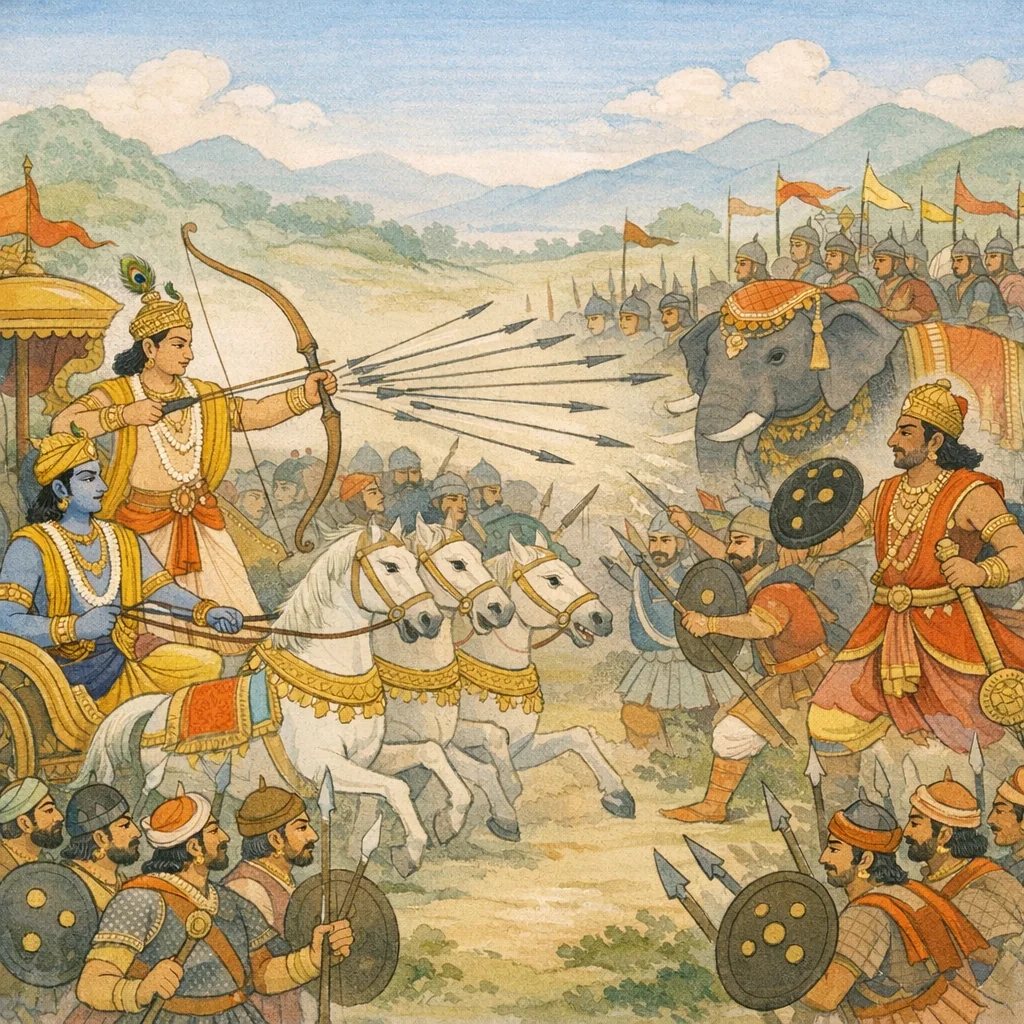
Saṃjaya reports that, as the army is disrupted and Arjuna moves against Jayadratha with Bhīma and Sātyaki, Duryodhana rapidly approaches Droṇa, agitated and red-eyed, questioning how Droṇa could be ‘surpassed’ if Arjuna and the others have broken through. Droṇa replies that the situation is complex: with Kṛṣṇa and Arjuna pressing forward, the Kaurava host is effectively seized from front and rear. Droṇa identifies the immediate operational duty as safeguarding Jayadratha from Arjuna’s anger, comparing the battlefield to a decisive dice-wager—where victory and defeat are now determined by this single stake. He instructs Duryodhana to go personally to reinforce the defenders of Jayadratha, while Droṇa remains to contain the Pāñcālas and allied forces. The narrative then depicts Yudhāmanyu and Uttamaujā (as Arjuna’s wheel-guards) engaging Duryodhana: volleys of arrows, the killing of horses and charioteers, a transition to mace action, destruction of a chariot, Duryodhana’s remounting on another ratha, and the Pāñcāla leaders returning to pursue Arjuna—highlighting rapid tactical adaptation amid command objectives.
Chapter Arc: संजय धृतराष्ट्र को रणभूमि का दृश्य सुनाते हैं—दुर्योधन स्वयं रथ बढ़ाकर कृष्ण-सारथी अर्जुन के सम्मुख आता है, मानो राजसिंह अपने भाग्य से भिड़ने चला हो। → दुर्योधन तीव्र बाण-वर्षा करता है; वह वासुदेव के वक्षस्थल को भी बाणों से बेधता और रथ के प्रतोद को काट गिराता है। अर्जुन शांत-चित्त होकर शिलाशित, सान-चढ़े बाणों से प्रत्युत्तर देता है; दोनों ओर से शस्त्र-प्रहारों की झड़ी लगती है। दुर्योधन के पक्ष के रथ, हाथी, घोड़े और पदाति-समूह धनंजय को घेरने दौड़ते हैं। → घेराबंदी के बीच अर्जुन अपने अस्त्र-वीर्य से कौरव-वरूथिनी को चीर देता है—शतशः रथ और द्विप गिरते हैं; पर साथ ही अस्त्र-प्रतिअस्त्र का उत्कर्ष दिखता है, जहाँ अश्वत्थामा ‘सर्वास्त्रधातक’ से अर्जुन के बाणों को काट देता है और युद्ध एक क्षण को भयावह तकनीकी शिखर पर पहुँचता है। → कृष्ण अर्जुन का धैर्य और गाण्डीव-बल जाँचते/उत्साह बढ़ाते हैं—‘पहले जैसा बल है न?’—और अर्जुन पुनः संगठित होकर शत्रु-समूह को पीछे ढकेलता है। दुर्योधन फिर भी विषधर-सदृश बाणों से कृष्ण-अर्जुन को घायल कर अपनी जिद और राजधर्म-हठ का परिचय देता है। → अस्त्र का पुनः प्रयोग स्वयं-विनाशक हो सकता है—यह चेतावनी (कि दो बार प्रयोग करने पर अस्त्र अपने ही पक्ष को मार डालेगा) अगले क्षणों में युद्ध को किस सीमा तक ले जाएगी, यह अनिश्चित रह जाता है।
Shlokas
Verse 1
(दाक्षिणात्य अधिक पाठका १ श्लोक मिलाकर कुल ३९ श्लोक हैं) ््ज-्अ ्ःः छा अकाल त्रयधिकशततमो<ध्याय: दुर्योधन और अर्जुनका युद्ध तथा दुर्योधनकी पराजय संजय उवाच एवमुकक््त्वार्जुनं राजा त्रिभिमर्मातिगै: शरै: । अभ्यविध्यन्महावेगैश्षतुर्भि श्वतुरो हयान्,संजय कहते हैं--राजन्! अर्जुनसे ऐसा कहकर राजा दुर्योधनने तीन अत्यन्त वेगशाली मर्मभेदी बाणोंद्वारा उन्हें बीध डाला और चार बाणोंद्वारा उनके चारों घोड़ोंको भी घायल कर दिया
Sañjaya said: “O King, having spoken thus to Arjuna, King Duryodhana struck him with three exceedingly swift arrows that sought the vital points; and with four more powerful shafts he wounded Arjuna’s four horses as well.”
Verse 2
वासुदेवं च दशभश्रि: प्रत्यविध्यत् स्तनान्तरे | प्रतोद॑ चास्य भल्लेन छित्त्वा भूमावपातयत्,इसी प्रकार दस बाण मारकर उसने श्रीकृष्णकी भी छाती छेद डाली और एक भल्लसे उनके चाबुकको काटकर पृथ्वीपर गिरा दिया
Sañjaya said: He struck Vāsudeva as well with ten arrows, piercing him in the region of the chest; and with a sharp bhalla he cut down his whip and made it fall to the ground. The scene underscores the ferocity of battle, where even Kṛṣṇa—though not fighting with weapons—becomes a target, while the charioteer’s implements are attacked to disrupt control and duty on the battlefield.
Verse 3
त॑ चतुर्दशभि: पार्थश्रित्रपुड्खै: शिलाशितै: । अविध्यत् तूर्णमव्यग्रस्ते चा भ्रश्यन्त वर्मणि,तब व्यग्रतारहित अर्जुनने सानपर चढ़ाकर तेज किये हुए विचित्र पंखवाले चौदह बाणोंद्वारा तुरंत उसे घायल किया; परंतु उनके वे बाण दुर्योधनके कवचपर जाकर फिसल गये
Sañjaya said: Unperturbed and swift, Arjuna struck him with fourteen arrows—stone-honed and bearing variegated feathers. Yet those shafts, meeting Duryodhana’s armour, slipped off and fell away, showing how mere force, without a vulnerable point, fails to pierce a well-defended foe in the harsh ethics of battle.
Verse 4
तेषां नैष्फल्यमालोक्य पुनर्नव च पञ्च च । प्राहिणोन्निशितान् बाणांस्ते चाभ्रश्यन्त वर्मण:,उन्हें निष्फल हुआ देख अर्जुनने पुनः चौदह तीखे बाण चलाये; परंतु वे भी कवचसे फिसल गये
Sañjaya said: Seeing that their effort had proved fruitless, he again discharged fourteen keen arrows; yet those too slipped away from the armour, failing to take effect. The passage underscores how, in battle, mere exertion is not enough—protection, preparedness, and the limits set by circumstance can render even skillful action ineffective.
Verse 5
अष्टाविंशांस्तु तान् बाणानस्तान् विप्रेक्ष्य निष्फलान् । अब्रवीत् परवीरघ्न: कृष्णो<र्जुनमिदं वच:,अर्जुनके चलाये हुए उन अद्वाईस बाणोंको निष्फल हुआ देख शत्रुवीरोंका संहार करनेवाले श्रीकृष्णने उनसे इस प्रकार कहा--
Sañjaya said: Seeing that those twenty-eight arrows which had been shot had proved fruitless, Kṛṣṇa—slayer of hostile heroes—addressed Arjuna with these words. The moment underscores the ethic of clear-sighted reassessment in battle: when an effort fails, one must not persist blindly but respond with counsel, strategy, and steadiness of purpose.
Verse 6
अदृष्टपूर्व पश्यामि शिलानामिव सर्पणम् | त्वया सम्प्रेषिता: पार्थ नार्थ कुर्वन्ति पत्रिण:,'पार्थ! आज तो मैं प्रस्तरखण्डोंके चलनेके समान ऐसी बात देख रहा हूँ, जिसे पहले कभी नहीं देखा था। तुम्हारे चलाये हुए बाण तो कोई काम नहीं कर रहे हैं
Sañjaya said: “O Pārtha, today I behold something never seen before—like stones themselves beginning to move. The arrows you have discharged are failing to achieve their purpose.”
Verse 7
कच्चिद् गाण्डीवज: प्राणस्तथैव भरतर्षभ । मुशिश्व ते यथापूर्व भुजयोश्व॒ बलं तव,“भरतश्रेष्ठ! तुम्हारे गाण्डीव-धनुषकी शक्ति पहले-जैसी ही है न? तुम्हारी मुट्ठी एवं बाहुबल भी पूर्ववत् हैं न?
Sañjaya said: “O bull among the Bharatas, is the life and vigor of your Gāṇḍīva-bearer still the same as before? Are your grip and the strength of your arms also as they were formerly?”
Verse 8
न वा कच्चिदयं काल: प्राप्त: स्यादद्य पश्चिम: । तव चैवास्य शत्रोश्व॒ तनन््ममाचक्ष्व पृच्छत:,“आज तुम्हारी और तुम्हारे इस शत्रुकी अन्तिम भेंटका समय नहीं आया है क्या? मैं जो पूछता हूँ, उसका उत्तर दो
Sañjaya said: “Has the final hour perhaps arrived today—for you and for this enemy of yours? Tell me plainly what I ask.”
Verse 9
विस्मयो मे महान् पार्थ तव दृष्टवा शरानिमान् | व्यर्थान् निपतितान् संख्ये दुर्योधनरथं प्रति,“कुन्तीनन्दन! आज युद्धस्थलमें दुर्योधनके रथके पास निष्फल होकर गिरे हुए तुम्हारे इन बाणोंको देखकर मुझे महान् आश्चर्य हो रहा है
Sañjaya said: “O Partha, great is my astonishment on seeing these arrows of yours fall useless in the thick of battle, aimed toward Duryodhana’s chariot. That the shafts of the son of Kunti should fail to take effect against him is a striking turn in this war.”
Verse 10
वज्राशनिसमा घोरा: परकायावभेदिन: । शरा: कुर्वन्ति ते नार्थ पार्थ काद्य विडम्बना,'पार्थ! वज़ और अशनिके समान भयंकर तथा शत्रुओंके शरीरको विदीर्ण कर देनेवाले तुम्हारे वे बाण आज कुछ काम नहीं कर रहे हैं, यह कैसी विडम्बना है?”
Sañjaya said: “O Pārtha, those arrows of yours—terrible like the thunderbolt and the lightning, and famed for rending the bodies of enemies—today are achieving no effect at all. What strange irony is this?”
Verse 11
अर्जुन बोले--श्रीकृष्ण! मेरा तो यह विश्वास है कि दुर्योधनको द्रोणाचार्यने अभेद्य कवच बाँधकर उसमें यह अद्भुत शक्ति स्थापित कर दी है। यह कवचधारणा मेरे अस्त्रोंके लिये अभेद्य है
Arjuna said: “Śrī Kṛṣṇa, I am convinced that Droṇācārya has fastened an impenetrable armor upon Duryodhana and has established within it a wondrous power. With that armor in place, he has become unreachable by my weapons.”
Verse 12
अस्मिन्नन्तहितं कृष्ण त्रैलोक्यमपि वर्मणि । एको द्रोणो हि वेदैतदहं तस्माच्च सत्तमात्,श्रीकृष्ण! इस कवचके भीतर तीनों लोकोंकी शक्ति संनिहित है। एकमात्र आचार्य द्रोण ही इस विद्याको जानते हैं और उन्हीं सदगुरुसे सीखकर मैं भी इसे जान पाया हूँ
Arjuna said: “O Kṛṣṇa, within this armour is concealed the power of the three worlds. Indeed, Droṇa alone knows this secret lore; and I too have come to know it only by learning from that most excellent teacher.”
Verse 13
अजुन उवाच द्रोणेनैषा मति: कृष्ण धार्तराष्ट्रे निवेशिता । अभेद्या हि ममास्त्राणामेषा कवचधारणा,न शक््यमेतत् कवचं बाणैर्भत्तुं कथंचन । अपि वज्रेण गोविन्द स्वयं मघवता युधि इस कवचको किसी प्रकार बाणोंद्वारा विदीर्ण नहीं किया जा सकता। गोविन्द! युद्धस्थलमें साक्षात् देवराज इन्द्र अपने वज़से भी इसका विदारण नहीं कर सकते
Arjuna said: “Kṛṣṇa, this stratagem has been planted in the son of Dhṛtarāṣṭra by Droṇa. This armor he wears cannot be pierced by my weapons. It is not possible to tear this cuirass with arrows in any way; even Indra himself—Maghavat—could not split it in battle, not even with his thunderbolt.”
Verse 14
जानंस्त्वमपि वै कृष्ण मां विमोहयसे कथम् । यद् वृत्तं त्रिषु लोकेषु यच्च केशव वर्तते,श्रीकृष्ण! आप यह सब कुछ जानते हुए भी मुझे मोहमें कैसे डाल रहे हैं? केशव! तीनों लोकोंमें जो बात हो चुकी है, जो हो रही है तथा जो कुछ आगे होनेवाली है, वह सब आपको विदित है। मधुसूदन! इसे आप जैसा जानते हैं, वैसा दूसरा कोई नहीं जानता है
Arjuna said: “O Kṛṣṇa, though you indeed know everything, how can you still bewilder me? O Keśava, whatever has occurred in the three worlds and whatever is occurring—everything is known to you. O Madhusūdana, none knows it as you do.”
Verse 15
तथा भविष्यद् यच्चैव तत् सर्व विदितं तव । न व्विदं वेद वै कश्चिद् यथा त्वं मधुसूदन,श्रीकृष्ण! आप यह सब कुछ जानते हुए भी मुझे मोहमें कैसे डाल रहे हैं? केशव! तीनों लोकोंमें जो बात हो चुकी है, जो हो रही है तथा जो कुछ आगे होनेवाली है, वह सब आपको विदित है। मधुसूदन! इसे आप जैसा जानते हैं, वैसा दूसरा कोई नहीं जानता है
Arjuna said: “Whatever is yet to come, and whatever else there is—everything is known to you. Indeed, no one knows this as you do, O Madhusūdana. And yet, though you know all, why do you cast me into delusion?”
Verse 16
एष दुर्योधन: कृष्ण द्रोणेन विहितामिमाम् | तिष्ठत्यभीतवत् संख्ये बिभ्रत् कवचधारणाम्,श्रीकृष्ण! द्रोणाचार्यके द्वारा विधिपूर्वक धारण करायी हुई इस कवचधारणाको ग्रहण करके यह दुर्योधन युद्धस्थलमें निर्भय-सा खड़ा है
Arjuna said: “O Krishna, here stands Duryodhana—bearing this armor-investiture that was duly arranged for him by Drona—remaining on the battlefield as though fearless.”
Verse 17
यत्त्वत्र विहित॑ कार्य नैष तद् वेत्ति माधव | स्त्रीवदेष बिभर्त्येतां युक्तां कवचधारणाम्,माधव! इसे धारण करनेपर जिस कर्तव्यके पालनका विधान किया गया है, उसे यह नहीं जानता है। जैसे स्त्रियाँ गहने पहन लेती हैं, उसी प्रकार यह दूसरेके द्वारा दी हुई इस कवचधारणाको अपनाये हुए है
Arjuna said: “O Mādhava, he does not understand the duty that is enjoined here in connection with wearing this armour. Like a woman who merely puts on ornaments, he bears this fitted armour as something adopted from another—without knowing the obligation that accompanies it.”
Verse 18
पश्य बल्ोश्व मे वीर्य धनुषश्न जनार्दन । पराजयिष्ये कौरव्यं कवचेनापि रक्षितम्,जनार्दन! अब आप मेरी भुजाओं और धनुषका बल देखिये। मैं कवचसे सुरक्षित होनेपर भी दुर्योधनको पराजित कर दूँगा
Arjuna said: “O Janārdana, behold the strength of my arms and the power of my bow. I shall defeat that Kaurava, even though he is protected by armor.”
Verse 19
इदमड्िरसे प्रादाद् देवेशो वर्म भास्वरम् | तस्माद् बृहस्पति: प्राप ततः प्राप पुरंदर:,देवेश्वर! ब्रह्माजीने यह तेजस्वी कवच अंगिराको दिया था। उनसे बृहस्पतिजीने प्राप्त किया था। बृहस्पतिजीसे वह इन्द्रको मिला
Arjuna said: “The Lord of the gods bestowed this radiant armor upon Aṅgiras. From Aṅgiras it came to Bṛhaspati, and from Bṛhaspati it passed to Purandara (Indra).”
Verse 20
पुनर्ददौ सुरपतिर्महां वर्म ससंग्रहम् । दैवं यद्यस्य वर्मतद् ब्रह्मणा वा स्वयं कृतम्
Arjuna said: “Then the Lord of the gods bestowed again a great suit of armor, complete in every part—divine in its power; indeed, that armor was either celestial by nature or fashioned by Brahmā himself.”
Verse 21
संजय उवाच एवमुक्त्वार्जुनो बाणमभिमन्त्रय व्यकर्षयत्
Sañjaya said: Having spoken thus, Arjuna, after consecrating his arrow with a mantra, drew it back—readying the shot.
Verse 22
मानवास्त्रेण मानार्हस्ती क्ष्णावरण भेदिना । संजय कहते हैं--राजन! ऐसा कहकर माननीय अर्जुनने कठोर आवरणका भेदन करनेवाले मानवास्त्रसे अपने बाणोंको अभिमन्त्रित करके धनुषकी डोरीको खींचा ।। २१३ || विकृष्यमाणांस्तेनैव धनुर्मध्यगतान् छरान्
Sañjaya said: “O King, having spoken thus, the honored Arjuna empowered his arrows with the Mānavāstra—an incisive weapon capable of piercing even hard armor—and then drew back the bowstring. As he pulled, the arrows set at the middle of the bow were drawn tight, ready to be released.”
Verse 23
तान् निकृत्तानिषून् दृष्टवा दूरतो ब्रह्म॒वादिना
Sañjaya said: Seeing from afar those warriors cut down and left lifeless, the brahma-speaking narrator (Sañjaya) reported the grim outcome of battle—an image that shows how swiftly martial prowess, when unguided by restraint, turns into irreversible loss.
Verse 24
न्यवेदयत् केशवाय विस्मित: श्वेतवाहन: । ब्रह्मवादी अश्वत्थामाके द्वारा दूरसे ही काट दिये गये उन बाणोंको देखकर श्वेतवाहन अर्जुन चकित हो उठे और श्रीकृष्णको सूचित करते हुए बोले-- || २३ ई ।। नैतदस्त्रं मया शक्यं द्वि: प्रयोक्तुं जनार्दन
Sañjaya said: Astonished, Arjuna—he whose chariot bears white horses—reported the matter to Keśava. He said, “O Janārdana, this weapon cannot be employed by me a second time.” In the war’s moral atmosphere, Arjuna’s words show a warrior’s restraint and truthfulness: even in crisis he admits the limits of his power and seeks right counsel from Kṛṣṇa rather than acting from pride or desperation.
Verse 25
ततो दुर्योधन: कृष्णौ नवभिर्नवशभि: शरै:
Sañjaya said: Then Duryodhana, pressing the battle forward, struck the two Kṛṣṇas with nine arrows—an act that reflects the war’s relentless escalation, where even revered allies are treated as targets amid the collapse of restraint.
Verse 26
भूय एवाभ्यवर्षच्च समरे कृष्णपाण्डवौ,उसने समरभूमिमें बड़ी भारी बाण-वर्षा करके श्रीकृष्ण और पाण्डुकुमार धनंजयपर पुनः बाणोंकी झड़ी लगा दी। इससे आपके सैनिक बड़े प्रसन्न हुए। वे बाजे बजाने और सिंहनाद करने लगे
Sañjaya said: Once again, in the thick of battle, he poured down a fierce shower of arrows upon Kṛṣṇa and the Pāṇḍava (Arjuna). Seeing this renewed missile-storm, your soldiers were greatly delighted; they began to sound their instruments and raise lion-like shouts—revealing how, in war, morale often swells at displays of martial prowess, even as the ethical cost of violence continues to mount.
Verse 27
शरवर्षेण महता ततो<5हृष्पन्त तावका: । चक्रुर्वादित्रनिनदान् सिंहनादरवांस्तथा,उसने समरभूमिमें बड़ी भारी बाण-वर्षा करके श्रीकृष्ण और पाण्डुकुमार धनंजयपर पुनः बाणोंकी झड़ी लगा दी। इससे आपके सैनिक बड़े प्रसन्न हुए। वे बाजे बजाने और सिंहनाद करने लगे
Sañjaya said: Then, by that mighty shower of arrows, your warriors were filled with exhilaration. They raised the din of instruments and also roared lion-like cries—exulting in the surge of battle and the apparent advantage gained on the field.
Verse 28
ततः क्रुद्धो रणे पार्थ: सृक्किणी परिसंलिहन् । नापश्यच्च ततोअस्याजूं यन्न स्याद् वर्मरक्षितम्,तदनन्तर युद्धस्थलमें कुपित हुए अर्जुन अपने मुँहके कोने चाटने लगे। उन्होंने दुर्योधनका कोई भी ऐसा अंग नहीं देखा, जो कवचसे सुरक्षित न हो
Sañjaya said: Then, in the midst of battle, Pārtha (Arjuna), inflamed with anger, licked the corners of his mouth. He could not discern any limb of his opponent that was not protected by armour—seeing no unguarded point to strike, his wrath sharpened into grim resolve within the harsh ethics of war.
Verse 29
ततो<स्य निशितैर्बाणै: सुमुक्तैरन््तकोपमै: । हयांश्वकार निर्देहानुभौ च पार्ष्णिसारथी,तदनन्तर अर्जुनने अच्छी तरह छोड़े हुए कालोपम तीखे बाणोंद्वारा दुर्योधनके चारों घोड़ों और दोनों पृष्ठ-रक्षकोंको मार डाला
Sañjaya said: Then Arjuna, with razor-sharp arrows well released and terrible as Death itself, struck down Duryodhana’s four horses and also the two rear-guards of the chariot, leaving them lifeless. In the grim ethics of battlefield duty, this act aims at disabling the enemy’s mobility and protection rather than engaging in mere personal hatred—yet it also intensifies the inexorable violence of war.
Verse 30
धनुरस्याच्छिनत् तूर्ण हस्तावापं च वीर्यवान् । रथं च शकलीकर्तु सव्यसाची प्रचक्रमे,तत्पश्चात् पराक्रमी सव्यसाची अर्जुनने तुरंत ही उसके धनुष और दस्तानेको काट दिया और रथको टूक-टूक करना आरम्भ किया
Sañjaya said: The mighty Arjuna, famed as Savyasācī, swiftly cut down his opponent’s bow and also struck off his hand-guards; then he set about shattering the chariot into pieces. The scene underscores the ruthless efficiency of battlefield skill—where prowess is used to disable an enemy’s capacity to fight, even as the war’s moral weight presses upon every act.
Verse 31
दुर्योधनं च बाणाभ्यां तीक्ष्णाभ्यां विरथीकृतम् । आविषध्यद्धस्ततलयोरुभयोरर्जुनस्तदा
Sañjaya said: Arjuna then struck Duryodhana—already made chariotless by two sharp arrows—so that both his palms were pierced, intensifying the moral pressure of the battle by disabling the enemy’s capacity to fight rather than merely seeking a dramatic kill.
Verse 32
उस समय पार्थने रथहीन हुए दुर्योधनकी दोनों हथेलियोंमें दो पैने बाणोंद्वारा गहरी चोट पहुँचायी ।। प्रयत्नज्ञो हि कौन्तेयो नखमांसान्तरेषुभि: | स वेदनाभिराविग्न: पलायनपरायण:,उपायको जाननेवाले कुन्तीकुमारने अपने बाणोंद्वारा दुर्योधनके नखोंके मांसमें प्रहार किया। तब वह वेदनासे व्याकुल हो युद्धभूमिसे भाग चला
Sañjaya said: The resourceful son of Kuntī, skilled in discerning the right means, struck Duryodhana with sharp arrows in the tender flesh beneath his nails. Tormented by the pain and shaken in spirit, Duryodhana turned toward flight from the battlefield—showing how, amid the brutal ethics of war, even a mighty warrior’s resolve can collapse when bodily suffering overwhelms courage and duty.
Verse 33
त॑ कृच्छामापदं प्राप्तं दृष्टयवा परमधन्विन: । समापेतु: परीप्सन्तो धनंजयशरार्दितम्,धनंजयके बाणोंसे पीड़ित हुए दुर्योधनको भारी विपत्तिमें पड़ा हुआ देख श्रेष्ठ धनुर्धर योद्धा उसकी रक्षाके लिये आ पहुँचे
Sañjaya said: Seeing Duryodhana fallen into a grievous crisis, tormented by the arrows of Dhanañjaya (Arjuna), the foremost archers hastened to him, intent on protecting and recovering him amid the press of battle.
Verse 34
त॑ रथैर्बहुसाहस्रै: कल्पितै: कुञ्जरैहयै: । पदात्योघैश्व संरब्धै: परिवद्रुर्थन॑जयम्,उन्होंने कई हजार रथों, सजे-सजाये हाथियों, घोड़ों तथा रोषमें भरे हुए पैदल सैनिकोंद्वारा अर्जुनको चारों ओरसे घेर लिया
Sañjaya said: Then, with many thousands of chariots, with well-arrayed elephants and horses, and with surging masses of enraged foot-soldiers, they rushed in and hemmed in Dhanañjaya (Arjuna) on every side.
Verse 35
अथ नार्जुनगोविन्दौ न रथो वा व्यदृश्यत | अस्त्रवर्षण महता जनौघैश्वापि संवृती,उस समय बड़ी भारी बाण-वर्षा और जनसमुदायसे घिरे हुए अर्जुन, श्रीकृष्ण और उनका रथ--इनमेैंसे कोई भी दिखायी नहीं देता था
Sañjaya said: Then neither Arjuna and Govinda nor even their chariot could be seen, for they were completely enveloped by a tremendous shower of missiles and by the surging mass of warriors.
Verse 36
ततोडर्जुनो<स्त्रवीर्येण निजघ्ने तां वरूथिनीम् । तत्र व्यज्रीकृता: पेतु: शतशो<5थ रथद्विपा:,तब अर्जुन अपने अस्त्र-बलसे उस कौरव-सेनाका विनाश करने लगे। वहाँ सैकड़ों रथ और हाथी अंग-भंग होनेके कारण धराशायी हो गये
Sañjaya said: Then Arjuna, by the prowess of his missiles, struck down that battle-array. There, hundreds of chariots and elephants, their limbs and fittings shattered, fell to the ground.
Verse 37
ते हता हन्यमानाश्र न्यगृह्लंस्तं रथोत्तमम् । स रथस्तम्भितस्तस्थौ क्रोशमात्रे समन््तत:,उन हताहत होनेवाले कौरव-सैनिकोंने उत्तम रथी अर्जुनको आगे बढ़नेसे रोक दिया। वे जयद्रथसे एक कोसकी दूरीपर चारों ओरसे रथसेनाद्वारा घिरे हुए खड़े थे
Sañjaya said: Though many of them were being slain and others were still being struck down, the Kaurava soldiers nevertheless checked that foremost of chariot-warriors. Thus Arjuna’s chariot was brought to a standstill, surrounded on every side at about a krośa’s distance.
Verse 38
ततोर्जुनं वृष्णिवीरस्त्वरितो वाक्यमब्रवीत् । भनुर्विस्फारयात्यर्थमहं ध्मास्यामि चाम्बुजम्,तब वृष्णिवीर श्रीकृष्णने तुरंत ही अर्जुनसे कहा--'तुम जोर-जोरसे धनुषको खींचो और मैं अपना शंख बजाऊँगा”
Sañjaya said: Then the hero of the Vṛṣṇis, acting with urgency, spoke to Arjuna: “Stretch your bow with full force; I shall blow my conch.” In the battle’s moral strain, Kṛṣṇa’s command joins resolve to signal—turning personal courage into disciplined action aligned with their chosen duty in war.
Verse 39
ततो विस्फार्य बलवदू गाण्डीवं जध्निवान् रिपून् | महता शरवर्षेण तलशब्देन चार्जुन:,यह सुनकर अर्जुनने बड़े जोरसे गाण्डीव धनुषको खींचकर हथेलीके चटचट शब्दके साथ भारी बाण-वर्षा करते हुए शत्रुओंका संहार आरम्भ किया
Sañjaya said: Then Arjuna, powerfully drawing back the Gāṇḍīva, began to strike down the foes—pouring forth a great shower of arrows, accompanied by the sharp clap of his palm. In the war’s moral atmosphere, the verse frames his deed as resolute performance of a warrior’s duty: decisive force against armed adversaries in battle, not personal cruelty but disciplined combat.
Verse 40
पाञज्चजन्यं च बलवान् दध्मौ तारेण केशव: । रजसा ध्वस्तपक्ष्मान्ता: प्रस्विन्ननदनो भूशम्,बलवान् केशवने उच्च स्वरसे पांचजन्य शंख बजाया। उस समय उनकी पलकें धूलधूसरित हो रही थीं और उनके मुखपर बहुत-सी पसीनेकी बूँदें छा रही थीं
Sañjaya said: Mighty Keśava blew the Pāñcajanya conch with a piercing, high note. Dust had clouded the edges of his eyelids, and his face was heavily beaded with sweat—signs of the strain and urgency of battle even for one who stands as the charioteer and guide.
Verse 41
(तेनाच्युतोष्ठयुगपूरितमारुतेन शंखान्तरोदरविवृद्धविनि:सृतेन । नादेन सासुरवियत्सुरलोकपाल- मुद्विग्नमीश्वर जगत् स्फुटतीव सर्वम् ।।) तस्य शड्खस्य नादेन धनुषो निःस्वनेन च | निःसत्त्वाश्न ससत्त्वाश्न क्षितौ पेतुस्तदा जना:,“नरेश्वर! भगवान् श्रीकृष्णके दोनों ओठोंसे भरी हुई वायु शंखके भीतरी भागमें प्रवेश करके पुष्ट हो जब गम्भीर नादके रूपमें बाहर निकली, उस समय असुरलोक (पाताल), अन्तरिक्ष, देवलोक और लोकपालोंसहित सम्पूर्ण जगत् भयसे उद्विग्न हो विदीर्ण होता-सा जान पड़ा। उस शंखकी ध्वनि और धनुषकी टंकारसे उद्विग्न हो निर्मल और सबल सभी शत्रु-सैनिक उस समय पृथ्वीपर गिर पड़े
Sañjaya said: When the breath filled between Acyuta’s two lips entered the hollow of the conch, swelled within, and burst forth as a deep, resonant roar, the whole world—together with the regions of the Asuras, the mid-space, the heaven of the gods, and even the guardians of the quarters—seemed to tremble in fear, as though it were splitting apart. Startled by that conch-blast and by the twang of the bow, the enemy soldiers—both the faint-hearted and the stout-hearted—fell to the ground. The passage underscores how the presence and resolve of the righteous leader can shake the confidence of an unjust host, even before weapons are exchanged.
Verse 42
तैरविमुक्तो रथो रेजे वाय्वीरित इवाम्बुद: । जयद्रथस्य गोप्तारस्तत: क्षुब्धा: सहानुगा:,उनके घेरेसे मुक्त हुआ अर्जुनका रथ वायुसंचालित मेघके समान शोभा पाने लगा। इससे जयद्रथके रक्षक सेवकोंसहित क्षुब्ध हो उठे
Sañjaya said: Released from their encirclement, Arjuna’s chariot shone forth like a cloud driven by the wind. Seeing this, Jayadratha’s protectors—along with their followers—were shaken and stirred into agitation, for the defense they relied upon had been broken.
Verse 43
ते दृष्टवा सहसा पार्थ गोप्तार: सैन्धवस्य तु । चक्कुर्नादान् महेष्वासा: कम्पयन्तो वसुंधराम्,जयद्रथकी रक्षामें नियुक्त हुए महाधनुर्धर वीर सहसा अर्जुनको देखकर पृथ्वीको कँपाते हुए जोर-जोरसे गर्जना करने लगे
Sañjaya said: Seeing Arjuna suddenly, the great bowmen appointed as Jayadratha’s protectors at once raised thunderous war-cries, as if making the very earth tremble—signaling their resolve to shield him and to meet Arjuna head-on in the press of battle.
Verse 44
बाणशब्दरवांश्रोग्रान् विमिश्रान शड्खनिःस्वनै: । प्रादुश्चक्रुमहात्मान: सिंहनादरवानपि,उन महामनस्वी वीरोंने शंखध्वनिसे मिले हुए बाणजनित भयंकर शब्दों और सिंहनादको भी प्रकट किया
Sañjaya said: Those high-souled warriors raised fierce, arrow-born roars—mingled with the blare of conches—and they also sent forth thunderous lion-like battle-cries.
Verse 45
त॑ श्रुत्वा निनदं घोरं तावकानां समुत्थितम् | प्रदध्मतु: शड्खवरौ वासुदेवधनंजयौ,आपके सैनिकोंद्वारा किये हुए उस भयंकर कोलाहलको सुनकर श्रीकृष्ण और अर्जुनने अपने श्रेष्ठ शंखोंको बजाया
Sañjaya said: Hearing that dreadful roar raised by your troops, Vāsudeva (Kṛṣṇa) and Dhanañjaya (Arjuna) blew their excellent conches—an answering signal of resolve and righteous confidence amid the tumult of war.
Verse 46
तेन शब्देन महता पूरितेयं वसुंधरा । सशैला सार्णवद्वीपा सपाताला विशाम्पते,प्रजानाथ! उस महान् शब्दसे पर्वत, समुद्र, द्वीप और पातालसहित यह सारी पृथ्वी गूँज उठी
Sañjaya said: “By that mighty sound, O lord of the people, the whole earth resounded—together with its mountains, oceans, islands, and even the nether regions.”
Verse 47
स शब्दो भरतश्रेष्ठ व्याप्य सर्वा दिशो दश । प्रतिसस्वान तत्रैव कुरुपाण्डवयोर्बले
Sañjaya said: O best of the Bharatas, that sound spread through all ten directions and, right there on the field, echoed back again and again amid the armies of the Kurus and the Pāṇḍavas.
Verse 48
भरतश्रेष्ठ)] वह शब्द सम्पूर्ण दसों दिशाओंमें व्याप्त होकर वहीं कौरव-पाण्डव सेनाओंमें प्रतिध्वनित होता रहा ।। तावका रथिनस्तत्र दृष्टवा कृष्णधनंजयौ । सम्भ्रमं परमं प्राप्तास्त्वरमाणा महारथा:
O best of the Bharatas, that sound spread through all the ten directions and kept echoing within the Kaurava and Pāṇḍava armies. Seeing Kṛṣṇa and Dhanañjaya there, the Kaurava chariot-warriors—great champions—were seized by extreme alarm and hurried forward in agitation.
Verse 49
आपके रथी और महारथी वहाँ श्रीकृष्ण और अर्जुनको उपस्थित देख बड़े भारी उद्वेगमें पड़कर उतावले हो उठे ।। अथ कृष्णौ महाभागौ तावका वीक्ष्य दंशितौ । अभ्यद्रवन्त संक्रुद्धास्तदद्भुतमिवा भवत्,आपके योद्धा कवच धारण किये महाभाग श्रीकृष्ण और अर्जुनको आया हुआ देख कुपित हो उनकी ओर दौड़े, यह एक अद्भुत-सी बात हुई
Sañjaya said: Then your warriors, seeing the two illustrious ones—Kṛṣṇa and Arjuna—standing there in armor, rushed at them in anger. It seemed almost wondrous: in the heat of war, they were driven by agitation and wrath to charge the very pair whose presence could shake the courage of even great fighters.
Verse 102
इस प्रकार श्रीमह्ाभारत द्रोणपर्वके अन्तर्गत जयद्रथवधपर्वमें दुर्योधनवचनविषयक एक सौ दोवाँ अध्याय पूरा हुआ
Thus ends the one-hundred-and-second chapter of the Drona Parva in the Śrī Mahābhārata, within the section on the slaying of Jayadratha, specifically dealing with Duryodhana’s speech.
Verse 103
इति श्रीमहाभारते द्रोणपर्वणि जयद्रथवधपर्वणि दुर्योधनपराजये त्रयधिकशततमो<ध्याय:
Sanjaya said: Thus, in the Śrī Mahābhārata, within the Droṇa Parva—specifically in the section concerning the slaying of Jayadratha—ends the one-hundred-and-third chapter, themed around Duryodhana’s defeat.
Verse 203
नैनं गोप्स्यति दुर्बुद्धिमद्य बाणहतं मया । फिर देवराज इन्द्रने विधि एवं रहस्यसहित वह कवच मुझे प्रदान किया। यदि दुर्योधनका यह कवच देवताओंद्वारा निर्मित हो अथवा स्वयं ब्रह्माजीका बनाया हुआ हो तो भी आज मेरे बाणोंद्वारा मारे गये इस दुर्बुद्धि दुर्योधनको यह बचा नहीं सकेगा
Arjuna said: “Today, when I have struck down this evil-minded man with my arrows, no protection will save him. Even if his armor was granted through Indra’s secret ordinance, or fashioned by the gods or by Brahmā himself, it will not be able to preserve Duryodhana from the consequence of his deeds in this battle.”
Verse 226
तानस्यास्त्रेण चिच्छेद दौणि: सर्वास्त्रधातिना । धनुषके बीचमें रखकर अर्जुनके द्वारा खींचे जानेवाले उन बाणोंको अभ्वत्थामाने सर्वस्त्रधातक अस्त्रके द्वारा काट डाला
Sanjaya said: Then Droṇa’s son, Aśvatthāman, using the weapon called Sarvāstradhātin, cut down those arrows—arrows that Arjuna, his bow held steady, was drawing and releasing. The scene marks the rising contest of skill and counter-skill in war: force answered by force, and the ethical strain that martial brilliance can both shield and deepen destruction.
Verse 246
अस्त्र मामेव हन्याद्धि हन्याच्चापि बल॑ मम । “जनार्दन! इस अस्त्रका मैं दो बार प्रयोग नहीं कर सकता; क्योंकि ऐसा करनेपर यह मुझे ही मार डालेगा और मेरी सेनाका भी संहार कर देगा'
Sanjaya said: “Indeed, this weapon would strike me myself, and it would also destroy my own forces. Therefore, O Janārdana, I cannot employ this missile a second time—for if I do so, it will recoil upon me and bring ruin upon my side as well.”
Verse 253
अविध्यत रणे राजन् शरैराशीविषोपमै: । राजन्! इसी समय दुर्योधनने रणक्षेत्रमें विषधर सर्पके समान भयंकर नौ-नौ बाणोंसे श्रीकृष्ण और अर्जुनको घायल कर दिया
Sanjaya said: O King, in the thick of battle he struck with arrows like venomous serpents—at that very moment Duryodhana, on the battlefield, wounded Śrī Kṛṣṇa and Arjuna with nine and nine dreadful shafts. The verse shows how war magnifies wrath and skill into instruments of harm, testing restraint and righteousness amid chaos.
Frequently Asked Questions
The dilemma is the conflict between reputation and responsibility: Duryodhana interprets breakthrough as Droṇa’s failure, while Droṇa argues that dharma in command requires triage—accepting partial losses to prevent a catastrophic objective (Jayadratha’s fall).
Under high uncertainty, ethical action often takes the form of disciplined prioritization: define the decisive stake, allocate roles, and act promptly, while recognizing that outcomes (jaya/ajaya) remain contingent.
No explicit phalaśruti appears here; the meta-commentary operates indirectly through Droṇa’s dice-wager analogy, emphasizing interpretive awareness of how prior actions and policies shape present consequences.