Adhyaya 60
Adhyāya 60: Dāna vs. Yajña—Royal Giving, Protection, and Karmic Share
Upa-parva: Dāna-Dharma Anuśāsana (Gifts, Recipient-Worthiness, and Royal Purification)
Yudhiṣṭhira asks Bhīṣma to clarify, with precision, which yields greater post-mortem fruit: dāna (charity) or yajña-kriyā (sacrificial/ritual action), and under what conditions of time, method, and recipient. He further inquires about gifts made within the sacrificial precinct (antarvedī) with faith and compassion, and whether such giving leads to niḥśreyasa (the highest good). Bhīṣma replies by characterizing kṣatriya life as persistently ‘raudra’ (involving force and punitive power), and therefore requiring purifying counter-practices: Vedic rites and sustained giving. He notes that the virtuous may avoid accepting gifts from sinful rulers; thus, the king should perform yajñas with properly obtained fees and, where accepted, give daily with supreme faith. The chapter then outlines a royal program of patronage: satisfying learned and disciplined brāhmaṇas, supplying food and dakṣiṇā, and providing practical goods (cows, oxen, grain, shelter, clothing, footwear, vehicles, beds). It emphasizes discreet or open support to those impoverished by livelihood, prioritizing non-contemptible recipients. Bhīṣma links this to political ethics: by protecting subjects, the king receives a share (here framed as a ‘fourth’) of their virtue and also of their wrongdoing if he fails to protect. The ruler is urged to guard livelihoods—his own and others’—care for servants and subjects as for children, and maintain the continuous welfare (yogakṣema) of brāhmaṇas. The chapter closes with a strong accountability doctrine: a ruler who claims to protect but does not may be collectively removed, while a well-protecting king becomes the sustaining source for all dependents, likened to rain for beings and a great tree for birds.
Chapter Arc: युधिष्ठिर पितामह के वचनों को सुनकर भी भीतर से काँप उठते हैं—राज्य-लाभ के पीछे छिपी करोड़ों हत्याओं का भार उन्हें ‘श्री’ के प्रकाश में भी अँधेरा दिखाता है। → वे स्वीकार करते हैं कि पृथ्वी जीतकर सैकड़ों राज्यों पर अधिकार मिला, पर उसी के लिए अपने कुटुम्बी कौरवों और सुहृदों का वध हुआ; उन्हें नरक-पतन का निश्चय-सा प्रतीत होता है। इस अपराध-बोध के बीच भीष्म विविध तपों और दानों के फलों का क्रमशः प्रतिपादन करते हैं—मानो युधिष्ठिर के भीतर उठे प्रश्न का उत्तर कर्म-मार्ग से दिया जा रहा हो। → दान की शक्ति का निर्णायक रूपक उभरता है—जैसे महासागर में वायु-युक्त नाव डूबते को पार लगाती है, वैसे ही ‘गवां दान’ (गौ-दान) तीव्र अंधकार वाले नरक में गिरते मनुष्य को परलोक में तार देता है; साथ ही अन्न-जल-रस, आश्रय और वस्त्र देने वाले को वही रस-समृद्धि और संरक्षण लौटकर मिलता है। → भीष्म के उपदेश से युधिष्ठिर का दृष्टिकोण शोक से कर्म-प्रायश्चित्त की ओर मुड़ता है। वे पाण्डवों से कहते हैं कि ‘वीर-मार्ग/धर्म-मार्ग’ के विषय में पितामह का कथन ही उन्हें रुचिकर और ग्राह्य मानना चाहिए—अर्थात् पश्चात्ताप को निष्क्रिय ग्लानि न बनाकर दान-तप के अनुशासन में ढालना। → पाण्डवों की स्वीकृति के बाद भी प्रश्न शेष रहता है—कौन-सा दान, किस भाव और किस पात्र को, युधिष्ठिर के पाप-भार को वास्तव में हल्का करेगा?
Shlokas
Verse 1
अफड---रा+ >> सप्तपञ्चाशत्तमो<्ध्याय: विविध प्रकारके तप और दानोंका फल युधिछिर उवाच मुह्यामीव निशम्याद्य चिन्तयान: पुन: पुनः । हीनां पार्थिवसंघातै: श्रीमद्धि: पृथिवीमिमाम्,युधिष्ठिरने कहा--पितामह! इस पृथ्वीको जब मैं उन सम्पतिशाली नरेशोंसे हीन देखता हूँ तब भारी चिन्तामें पड़कर बारंबार मूर्च्छित-सा होने लगता हूँ इति श्रीमहाभारते अनुशासनपर्वणि दानधर्मपर्वणि सप्तपञ्चाशत्तमो<ध्याय: ।। ५७ || इस प्रकार श्रीमह्या भारत अनुशासनपर्वके अन्तर्गत दानधर्मपर्वमें सत्तावनवाँ अध्याय पूरा हुआ ॥/ ५७ ॥। ऑपन- माल छा जि अष्टपञ्चाशत्तमो< ध्याय: जलाशय बनानेका तथा बगीचे लगानेका फल युधिछिर उवाच आरामाणां तडागानां यत् फलं कुरुपुंगव । तदहं श्रोतुमिच्छामि त्वत्तोड्द्य भरतर्षभ
Yudhiṣṭhira said: “Grandsire, when I hear and reflect upon this, I feel as though I am losing consciousness again and again. Seeing this earth now bereft of those prosperous hosts of kings, my mind is overwhelmed with heavy anxiety.”
Verse 2
प्राप्प राज्यानि शतशो महीं जित्वाथ भारत । कोटिश: पुरुषान् हत्वा परितप्ये पितामह
Yudhiṣṭhira said: “O Bhārata, having conquered the earth I have obtained hundreds of kingdoms; yet, after slaying men in countless millions, I burn with remorse, O Grandfather.”
Verse 3
भरतनन्दन! पितामह! यद्यपि मैंने इस पृथ्वीको जीतकर सैकड़ों देशोंके राज्योंपर अधिकार पाया है तथापि इसके लिये जो करोड़ों पुरुषोंकी हत्या करनी पड़ी है, उसके कारण मेरे मनमें बड़ा संताप हो रहा है ।। का नु तासां वरस्त्रीणां समवस्था भविष्यति । या हीना: पतिभि: पुन्रैर्मातुलैभ्रातृभिस्तथा,हाय! उन बेचारी सुन्दरी स्त्रियोंकी क्या दशा होगी, जो आज अपने पति, पुत्र, भाई और मामा आदि सम्बन्धियोंसे सदाके लिये बिछुड़ गयी हैं?
Yudhiṣṭhira said: “O scion of Bharata, O Grandfather! Though I have conquered this earth and gained dominion over the kingdoms of hundreds of lands, my heart is tormented, for this has been bought at the cost of the slaughter of countless men. What condition will befall those noble women who have been bereft—of husbands, sons, maternal uncles, and brothers alike?”
Verse 4
वयं हि तान् कुरून् हत्वा ज्ञातींश्व सुहददोडपि वा । अवाकु्शीर्षा: पतिष्यामो नरके नात्र संशय:,हमलोग अपने ही कुटुम्बीजन कौरवों तथा अन्य सुहृदोंका वध करके नीचे मुँह किये नरकमें गिरेंगे, इसमें संशय नहीं है
If we kill those Kurus—our own kinsmen and even our well-wishers—we shall surely fall into hell, headlong and face-down; of this there is no doubt. Yudhiṣṭhira voices the moral dread that victory purchased by slaughter of one’s own family and allies becomes a grave ethical transgression rather than a triumph.
Verse 5
शरीर योक्तुमिच्छामि तपसोग्रेण भारत । उपदिष्टमिहेच्छामि तत्त्वतो5हं विशाम्पते,भारत! प्रजानाथ! मैं अपने शरीरको कठोर तपस्याके द्वारा सुखा डालना चाहता हूँ और इसके विषयमें आपका यथार्थ उपदेश ग्रहण करना चाहता हूँ
Yudhiṣṭhira said: “O Bhārata, I wish to discipline and restrain my body through severe austerity. O lord of the people, I desire here to receive from you a true instruction on this matter—according to its real principles.”
Verse 6
वैशम्पायन उवाच युधिष्ठटिरस्य तद् वाकयं श्रुत्वा भीष्मो महामना: । परीक्ष्य निपुणं बुद्ध्या युधिष्ठिरमभाषत,वैशम्पायनजी कहते हैं--जनमेजय! युधिष्ठिरा यह कथन सुनकर महामनस्वी भीष्मजीने अपनी बुद्धिके द्वारा उसपर भलीभाँति विचार करके उनसे इस प्रकार कहा --
Verse 7
रहस्यमद्भुतं चैव शृणु वक्ष्यामि यत् त्वयि । या गति: प्राप्यते येन प्रेत्यभावे विशाम्पते,'प्रजानाथ! मैं तुम्हें एक अदभुत रहस्यकी बात बताता हूँ। मनुष्यको मरनेपर किस कर्मसे कौन-सी गति मिलती है--इस विषयको सुनो
Vaiśampāyana said: “Listen, O lord of the people; I shall tell you a wondrous secret. Hear this: by which deeds a person attains which destiny after death.”
Verse 8
तपसा प्राप्यते स्वर्गस्तपसा प्राप्यते यश: । आयु: प्रकर्षो भोगाश्व लभ्यन्ते तपसा विभो,'प्रभो! तपस्यासे स्वर्ग मिलता है, तपस्यासे सुयशकी प्राप्ति होती है तथा तपस्यासे बड़ी आयु, ऊँचा पद और उत्तमोत्तम भोग प्राप्त होते हैं
Vaiśampāyana said: “Through austerity one attains heaven; through austerity one gains fame. By austerity, O mighty one, are obtained long life, eminence, and also the finest enjoyments.”
Verse 9
ज्ञानं विज्ञानमारोग्यं रूपं सम्पत् तथैव च | सौभाग्यं चैव तपसा प्राप्यते भरतर्षभ,'भरतश्रेष्ठ! ज्ञान, विज्ञान, आरोग्य, रूप, सम्पत्ति तथा सौभाग्य भी तपस्यासे प्राप्त होते हैं
Vaiśampāyana said: “O bull among the Bharatas, through tapas (austere discipline) one attains knowledge and realized understanding, health, beauty, prosperity, and also good fortune.”
Verse 10
धन प्राप्रोति तपसा मौनेनाज्ञां प्रयच्छति । उपभोगांस्तु दानेन ब्रह्मचर्येण जीवितम्,“मनुष्य तप करनेसे धन पाता है। मौन-व्रतके पालनसे दूसरोंपर हुक्म चलाता है। दानसे उपभोग और ब्रह्मचर्यके पालनसे दीर्घायु प्राप्त करता है
Vaiśampāyana said: “By austerity a person gains wealth; by the vow of silence he acquires authority to command. By giving, he gains the means of enjoyment; and by practicing brahmacarya he gains life—i.e., longevity.”
Verse 11
अहिंसाया: फल रूप॑ दीक्षाया जन्म वै कुले । फलमूलाशिनां राज्यं स्वर्ग: पर्णाशिनां भवेत्
Vaiśaṃpāyana said: “Initiation undertaken in the form of non-violence bears fruit as birth in a noble lineage. For those who live on fruits and roots, the reward is sovereignty; for those who subsist on leaves, the reward becomes heaven.”
Verse 12
“अहिंसाका फल है रूप और दीक्षाका फल है उत्तम कुलमें जन्म। फल-मूल खाकर रहनेवालोंको राज्य और पत्ता चबाकर तप करनेवालोंको स्वर्गलोककी प्राप्ति होती है ।। पयोभक्षो दिवं याति दानेन द्रविणाधिक: । गुरुशुश्रूषया विद्या नित्यश्राद्धेन संतति:,“दूध पीकर रहनेवाला मनुष्य स्वर्गको जाता है और दान देनेसे वह अधिक धनवान् होता है। गुरुकी सेवा करनेसे विद्या और नित्य श्राद्ध करनेसे संतानकी प्राप्ति होती है
Vaiśampāyana said: “One who lives on milk attains heaven; by giving gifts one becomes richer in wealth. By devoted service to the teacher one gains true learning, and by performing the ancestral śrāddha regularly one gains progeny.”
Verse 13
गवाढ्यः शाकदीक्षाभ्रि: स्वर्गमाहुस्तृणाशिनाम् | स्त्रियस्त्रिषवर्णं स्नात्वा वायुं पीत्वा क्रतुं लभेत्
Vaiśampāyana said: “They declare that one who is rich in cattle, and one who has undertaken the Śāka-vow, attains heaven even if he lives on grass. Likewise, a woman, after bathing at the three sacred times, and sustaining herself as though ‘drinking the wind’ (living on air), may obtain the fruit of a sacrificial rite.”
Verse 14
“जो केवल साग खाकर रहनेका नियम लेता है वह गोधनसे सम्पन्न होता है। तृण खाकर रहनेवाले मनुष्योंको स्वर्गकी प्राप्ति होती है। तीनों कालमें स्नान करनेसे बहुतेरी स्त्रियोंकी प्राप्ति होती है और हवा पीकर रहनेसे मनुष्यको यज्ञका फल प्राप्त होता है ।। नित्यस्नायी भवेद् दक्ष: संध्ये तु द्वे जपन् द्विज: । मरुं साधयतो राजन् नाकपृष्ठमनाशके
Vaiśampāyana said: “A man who bathes daily becomes capable and efficient; a twice-born who performs japa at the two twilight junctions (dawn and dusk) gains spiritual merit. O King, one who undertakes the austere discipline of living in the desert attains heaven; and one who lives without eating (subsisting only on air) obtains the fruit of a sacrifice.”
Verse 15
“राजन! जो द्विज नित्य स्नान करके दोनों समय संध्योपासना और गायत्री-जप करता है वह चतुर होता है। मरुकी साधना-जलका परित्याग करनेवाले तथा निराहार रहनेवालेको स्वर्गलोककी प्राप्ति होती है ।। स्थण्डिले शयमानानां गृहाणि शयनानि च । चीरवल्कलवासोभिववसांस्थाभरणानि च,“'मिट्टीकी वेदी या चबूतरोंपर सोनेवालोंको घर और शब्याएँ प्राप्त होती हैं। चीर और वल्कलके वस्त्र पहननेसे उत्तमोत्तम वस्त्र और आभूषण प्राप्त होते हैं
Vaiśampāyana said: “O King, the twice-born man who bathes daily and performs the twilight worship at both times, along with the recitation of the Gāyatrī, becomes discerning and wise. Those who renounce the use of water for bodily comforts in austere practice, and those who live without food, attain the world of heaven. Those who sleep upon bare ground obtain houses and beds; and by wearing garments of bark and rags, one gains excellent clothing and ornaments.”
Verse 16
शय्यासनानि यानानि योगयुक्ते तपोधने । अन्निप्रवेशे नियतं ब्रह्मलोके महीयते,“योगयुक्त तपोधनको शय्या, आसन और वाहन प्राप्त होते हैं। नियमपूर्वक अग्निमें प्रवेश कर जानेपर जीवको ब्रह्मलोकमें सम्मान प्राप्त होता है
Vaiśampāyana said: “For the ascetic rich in austerity and disciplined in yoga, there arise the comforts of bed and seat, and even conveyances. And when, with due observance, one enters the sacred fire (as a vowed act), the embodied being is honored in Brahmaloka—held in high esteem in the world of Brahmā.”
Verse 17
रसानां प्रतिसंहारात् सौभाग्यमिह विन्दति । आमिषप्रतिसंहारात् प्रजा ह्यायुष्मती भवेत्,'रसोंका परित्याग करनेसे मनुष्य यहाँ सौभाग्यका भागी होता है। मांस-भक्षणका त्याग करनेसे दीर्घायु संतान उत्पन्न होती है
Vaiśampāyana said: “By withdrawing from (sensual) tastes, a person gains good fortune in this very world. By giving up meat, one’s offspring become long-lived.”
Verse 18
उदवासं वसेद् यस्तु स नराधिपतिर्भवेत् सत्यवादी नरश्रेष्ठ दैवतैः सह मोदते,“जो जलमें निवास करता है वह राजा होता है। नरश्रेष्ठ) सत्यवादी मनुष्य स्वर्गमें देवताओंके साथ आनन्द भोगता है
Vaiśampāyana said: “Whoever undertakes the vow of dwelling in water attains the status of a ruler. And the truth-speaking man, O best of men, rejoices in heaven together with the gods.”
Verse 19
कीर्तिर्भवति दानेन तथा5<5रोग्यमहिंसया । द्विजशुश्रूषया राज्यं द्विजत्वं चापि पुष्कलम्
Vaiśampāyana said: “Through giving, one gains lasting fame; through non-violence, one gains health and well-being. By devoted service to the twice-born (Brahmins), one attains sovereignty, and also an abundant share of true Brahminhood (spiritual merit and status).”
Verse 20
“दानसे यश, अहिंसासे आरोग्य तथा ब्राह्मणोंकी सेवासे राज्य एवं अतिशय ब्राह्मणत्वकी प्राप्ति होती है ।। पानीयस्य प्रदानेन कीर्तिर्भवति शाश्वती । अन्नस्य तु प्रदानेन तृप्पन्ते कामभोगत:,“जल दान करनेसे मनुष्यको अक्षय कीर्ति प्राप्त होती है, तथा अन्न-दान करनेसे मनुष्यको काम और भोगसे पूर्णतः तृप्ति मिलती है
Vaiśampāyana said: “From giving arises fame; from non-violence, health; and from serving Brahmins come sovereignty and an exceptional attainment of Brahminical excellence. By gifting drinking water one gains imperishable renown, and by gifting food one becomes fully satisfied in regard to desires and enjoyments.”
Verse 21
सान्त्वद: सर्वभूतानां सर्वशोकैर्विमुच्यते । देवशुश्रूषया राज्यं दिव्यं रूपं नियच्छति,“जो समस्त प्राणियोंको सान्त्वना देता है, वह सम्पूर्ण शोकोंसे मुक्त हो जाता है। देवताओंकी सेवासे राज्य और दिव्य रूप प्राप्त होते हैं
He who offers consolation to all living beings becomes freed from every sorrow. And by devoted service to the gods, one attains sovereign power and a radiant, divine form.
Verse 22
दीपालोक प्रदानेन चक्षुष्मान् भवते नर: । प्रेक्षणीयप्रदानेन स्मृतिं मेधां च विन्दति,“मन्दिरमें दीपकका प्रकाश दान करनेसे मनुष्यका नेत्र नीरोग होता है। दर्शनीय वस्तुओंका दान करनेसे मनुष्य स्मरणशक्ति और मेधा प्राप्त कर लेता है
Vaiśampāyana said: By gifting the light of a lamp, a person comes to possess sound and steady eyesight. By giving things worthy to be seen—objects that gladden and uplift the gaze—one gains memory and keen intelligence.
Verse 23
गन्धमाल्यप्रदानेन कीर्तिर्भवति पुष्कला । केशश्मश्रु धारयतामग्रया भवति संतति:,“गन्ध और पुष्प-माला दान करनेसे प्रचुर यशकी प्राप्ति होती है। सिरके बाल और दाढ़ी-मूँछ धारण करनेवालोंको श्रेष्ठ संतानकी प्राप्ति होती है
Vaiśampāyana said: By giving perfumes and flower-garlands, one gains abundant renown. For those who keep their hair and beard—maintaining the prescribed marks of their station and discipline—there arises excellent progeny.
Verse 24
उपवासं च दीक्षां च अभिषेकं च पार्थिव । कृत्वा द्वादशवर्षाणि वीरस्थानाद् विशिष्यते,“पृथ्वीनाथ! बारह वर्षोतक सम्पूर्ण भोगोंका त्याग, दीक्षा (जप आदि नियमोंका ग्रहण) तथा तीनों समय स्नान करनेसे वीर पुरुषोंकी अपेक्षा भी श्रेष्ठ गति प्राप्ति होती है
Vaiśampāyana said: “O king, by undertaking fasting, vowed discipline (dīkṣā), and ritual bathing/anointing (abhiṣeka) for twelve years, one attains a state superior even to the famed ‘hero’s station’ won by martial valor.”
Verse 25
दासीदासमलड्कारान् क्षेत्राणि च गृहाणि च । ब्रह्मदेयां सुतां दत्त्वा प्राप्नोति मनुजर्षभ,“नरश्रेष्ठीी जो अपनी पुत्रीका ब्राह्मविवाहकी विधिसे सुयोग्य वरको दान करता है, उसे दास-दासी, अलंकार, क्षेत्र और घर प्राप्त होते हैं
Vaiśampāyana said: “O bull among men, one who gives his daughter as a Brahma-gift (Brahma-dāna)—that is, in the Brahma form of marriage to a worthy groom—attains prosperity: servants, ornaments, fields, and houses.”
Verse 26
क्रतुभिश्नोपवासैश्व त्रिदिवं याति भारत । लभते च शिवं ज्ञानं फलपुष्पप्रदो नर:,“भारत! यज्ञ और उपवास करनेसे मनुष्य स्वर्गलोकमें जाता है तथा फल-फूलका दान करनेवाला मानव कल्याणमय मोक्षस्वरूप ज्ञान प्राप्त कर लेता है
Vaiśampāyana said: “O Bhārata, by performing sacrificial rites and by observing fasts, a person attains the heavenly world. And the one who gives gifts of fruits and flowers gains auspicious, beneficent knowledge—knowledge that leads to true welfare and liberation.”
Verse 27
सुवर्णशंगैस्तु विराजितानां गवां सहस्नस्यथ नर: प्रदानात् । प्राप्नोति पुण्यं दिवि देवलोक- मित्येवमाहुर्दिवि देवसंघा:,'सोनेसे मढ़े हुए सींगोंद्वारा सुशोभित होनेवाली एक हजार गौओंका दान करनेसे मनुष्य स्वर्गमें पुण्यमय देवलोकको प्राप्त होता है--ऐसा स्वर्गवासी देववृन्द कहते हैं
Vaiśampāyana said: By gifting a thousand cows whose horns are adorned with gold, a man gains merit and reaches the divine world in heaven—so declare the assemblies of gods who dwell in the celestial realm.
Verse 28
प्रयच्छते य: कपिलां सवत्सां कांस्योपदोहां कनकाग्रशृंगीम् । तैस्तैर्गुणै: कामदुहास्य भूत्वा नरं प्रदातारमुपैति सा गौ:,“जिसके सींगोंके अग्रभागमें सोना मढ़ा हुआ हो, ऐसी गायका काँसके बने हुए दुग्धपात्र और बछड़ेसमेत जो दान करता है, उस पुरुषके पास वह गौ उन्हीं गुणोंसे युक्त कामधेनु होकर आती है
Vaiśampāyana said: He who gives in charity a tawny cow together with her calf, with a milking vessel made of bell-metal, and with horns whose tips are plated with gold—such a cow, endowed with those very excellences, comes to the giver as a wish-fulfilling cow, bringing him the fruits of that gift.
Verse 29
यावन्ति रोमाणि भवन्ति धेन्वा- स्तावत् काल प्राप्प स गोप्रदानात् पुत्रांश्व पौत्रांश्ष कुलं च सर्व- मासप्तमं तारयते परत्र,“उस गौके शरीरमें जितने रोएँ हैं, उतने वर्षोतक मनुष्य गोदानके पुण्यसे स्वर्गीय सुख भोगता है। इतना ही नहीं, वह गौ उसके पुत्र-पौत्र आदि सात पीढ़ियोंतक समस्त कुलका परलोकमें उद्धार कर देती है
Vaiśampāyana said: As many hairs as there are on a cow, for that many years a man—having obtained the fruit of gifting a cow—enjoys heavenly happiness. Not only that: the very act of giving the cow becomes a means of deliverance for his sons, grandsons, and the entire lineage, carrying them across in the other world up to the seventh generation.
Verse 30
सदक्षिणां काञउ्चनचारुशंगीं कांस्योपदोहां द्रविणोत्तरीयाम् । धेनुं तिलानां ददतो द्विजाय लोका वसूनां सुलभा भवन्ति,“जो मनुष्य सोनेके सुन्दर सींग बनवाकर और द्रव्यमय उत्तरीय देकर कांस्यमय दुग्धपात्र तथा दक्षिणासहित तिलकी थधेनुका ब्राह्मणको दान करता है, उसे वसुओंके लोक सुलभ होते हैं
Vaiśampāyana said: For one who gives to a Brahmin a ‘sesame-cow’ donation—complete with a proper honorarium (dakṣiṇā), adorned with beautiful golden horns, accompanied by a bronze vessel for milking, and with a valuable upper garment—the worlds of the Vasus become readily attainable.
Verse 31
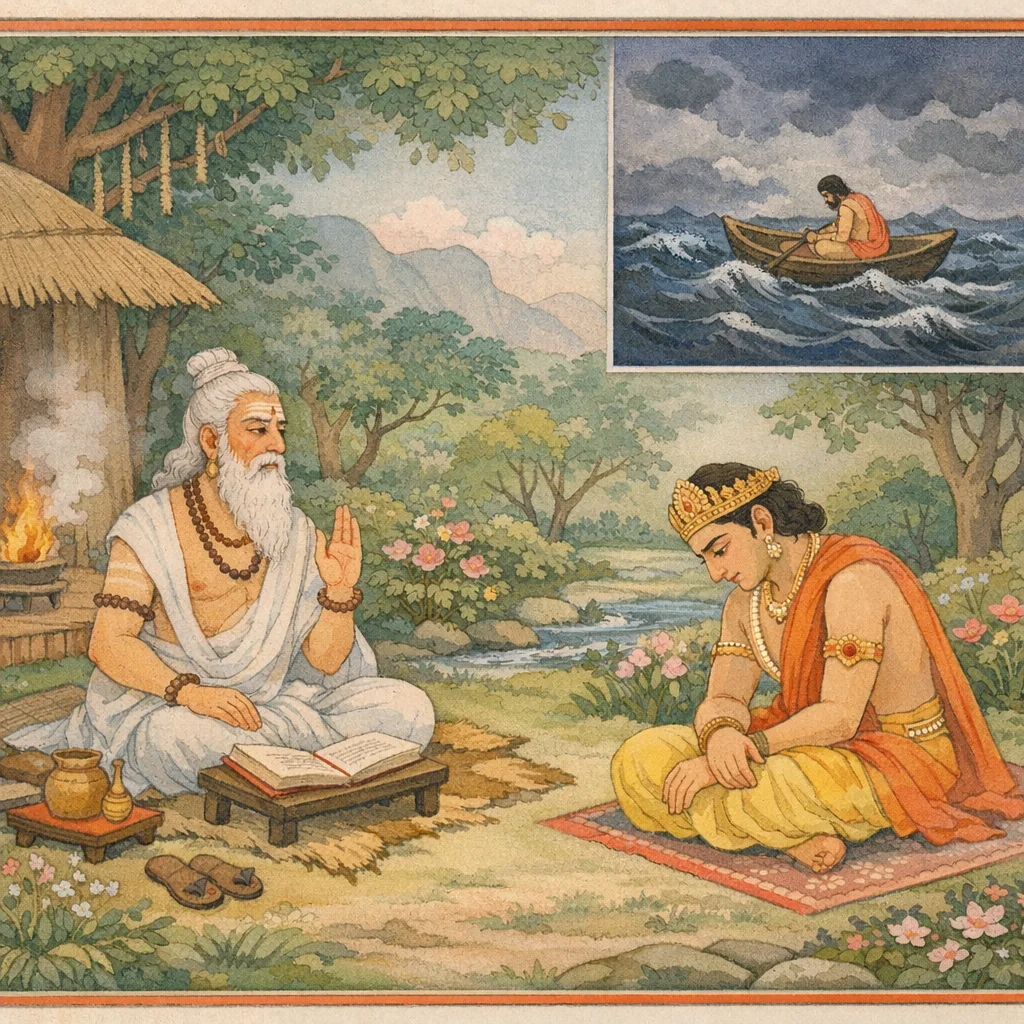
स्वकर्मभिर्मानवं संनिरुद्धं तीव्रान्धकारे नरके पतन्तम् । महार्णवे नौरिव वायुयुक्ता दानं गवां तारयते परत्र,“जैसे महासागरके बीचमें पड़ी हुई नाव वायुका सहारा पाकर पार पहुँचा देती है, उसी प्रकार अपने कर्मोंसे बँधकर घोर अन्धकारमय नरकमें गिरते हुए मनुष्यको गोदान ही परलोकमें पार लगाता है
Vaiśampāyana said: A man, hemmed in by his own deeds and falling into the hell of fierce darkness, is carried across in the world beyond by the gift of cows—just as a boat set upon the great ocean, aided by the wind, brings one safely to the far shore.
Verse 32
यो ब्रह्मदेयां तु ददाति कन्यां भूमिप्रदानं च करोति विदप्रे । ददाति चान्न॑ विधिवच्च यश्न स लोकमाप्रोति पुरंदरस्य,“जो मनुष्य ब्राह्मनविधिसे अपनी कन्याका दान करता है, ब्राह्मणको भूमिदान देता है तथा विधिपूर्वक अन्नका दान करता है, उसे इन्द्रलोककी प्राप्ति होती है
Vaiśampāyana said: Whoever gives his daughter in marriage as a brahma-gift, and also grants land to a brāhmaṇa, and further gives food according to proper rite—such a person attains the world of Purandara (Indra).
Verse 33
नैवेशिकं सर्वगुणोपपन्नं ददाति वै यस्तु नरो द्विजाय । स्वाध्यायचारित्र्यगुणान्विताय तस्यापि लोका: कुरुषूत्तरेषु
Vaiśampāyana said: The man who gives a well-appointed dwelling—endowed with every good feature—to a twice-born brāhmaṇa furnished with learning from sacred study and with upright conduct, gains for himself worlds in the northern regions of the Kurus.
Verse 34
“जो मनुष्य स्वाध्यायशील और सदाचारी ब्राह्मणको सर्वगुणसम्पन्न गृह और शय्या आदि गृहस्थीके सामान देता है, उसे उत्तर कुरुदेशमें निवास प्राप्त होता है ।। धुर्यप्रदानेन गवां तथा वै लोकानवाप्रोति नरो वसूनाम् । स्वर्गाय चाहुस्तु हिरण्यदानं ततो विशिष्ट कनकप्रदानम्,'भार ढोनेमें समर्थ बैल और गायोंका दान करनेसे मनुष्यको वसुओंके लोक प्राप्त होते हैं। सुवर्णमय आभूषणोंका दान स्वर्गलोककी प्राप्ति करानेवाला बताया गया है और विशुद्ध पक्के सोनेका दान उससे भी उत्तम फल देता है
Vaiśampāyana said: A man who, with reverence, provides a learned and well-conducted Brāhmaṇa—endowed with all virtues—with a house, a bed, and other household necessities, is said to gain residence in the land of Uttara-Kuru. By gifting draught-oxen and cows, a person attains the worlds of the Vasus. The giving of gold ornaments is declared to lead to heaven, and the gift of pure, well-refined gold is described as yielding an even higher result.
Verse 35
छत्रप्रदानेन गृहं वरिष्ठ यान॑ तथोपानहसम्प्रदाने । वस्त्रप्रदानेन फल॑ सुरूप॑ं गन्धप्रदानात् सुरभिर्नर: स्थात्,'छाता देनेसे उत्तम घर, जूता दान करनेसे सवारी, वस्त्र देनेसे सुन्दर रूप और गन्ध दान करनेसे सुगन्धित शरीरकी प्राप्ति होती है
Vaiśampāyana said: By gifting a parasol one gains an excellent dwelling; by gifting footwear one gains conveyance; by gifting garments one gains the fruit of a pleasing form; and by gifting fragrance one becomes a man of sweet scent.
Verse 36
पुष्पोपगं वाथ फलोपगं वा यः पादपं स्पर्शयते द्विजाय । सश्रीकमृद्ध॑ बहुरत्नपूर्ण लभत्ययत्नोपगतं गृहं वै,'जो ब्राह्मणकफो फल अथवा फूलोंसे भरे हुए वृक्षका दान करता है, वह अनायास ही नाना प्रकारके रत्नोंसे परिपूर्ण, धनसम्पन्न समृद्धिशाली घर प्राप्त कर लेता है
Vaiśampāyana said: Whoever gives to a brāhmaṇa a tree laden with flowers or laden with fruit, obtains—without strain—a prosperous, splendid home, filled with many kinds of jewels.
Verse 37
भक्ष्यानज्नपानीयरसप्रदाता सर्वान् समाप्रोति रसान् प्रकामम् । प्रतिश्रयाच्छादनसम्प्रदाता प्राप्नोति तान्येव न संशयो5त्र,“अन्न, जल और रस प्रदान करनेवाला पुरुष इच्छानुसार सब प्रकारके रसोंको प्राप्त करता है तथा जो रहनेके लिये घर और ओबढ़नेके लिये वस्त्र देता है, उसे भी इन्हीं वस्तुओंकी उपलब्धि होती है। इसमें संशय नहीं है
Vaiśampāyana said: The person who gives food to eat, water to drink, and pleasing refreshments attains, according to desire, every kind of enjoyment. Likewise, one who provides shelter for dwelling and clothing for covering gains those very things in return—of this there is no doubt.
Verse 38
स्रग्धूपगन्धाननुलेपनानि स््नानानि माल्यानि च मानवो यः । दद्याद् द्विजेभ्य: स भवेदरोग- स्तथाभिरूपक्ष नरेन्द्र लोके
Vaiśampāyana said: Any person who gives to Brahmins garlands, fragrant substances, unguents, bathing requisites, and floral adornments becomes free from disease and, O king, is also endowed with pleasing form and attractiveness in this world.
Verse 39
“नरेन्द्र! जो मनुष्य ब्राह्मणोंको फ़ूलोंकी माला, धूप, चन्दन, उबटन, नहानेके लिये जल और पुष्प दान करता है, वह संसारमें नीरोग और सुन्दर रूपवाला होता है ।। बीजैरशून्यं शयनैरुपेतं दद्याद् गृहं यः पुरुषो द्विजाय । पुण्याभिरामं बहुरत्नपूर्ण लभत्यधिष्ठानवरं स राजन्
Vaiśampāyana said: “O king! A man who gives Brahmins garlands of flowers, incense, sandalwood, fragrant unguents, water for bathing, and flowers becomes in this world free from illness and endowed with a pleasing form. And, O king, the man who gifts a dwelling to a twice-born—well supplied with seed-grain and furnished with beds—obtains in return an excellent abode, delightful through merit and filled with many treasures.”
Verse 40
“राजन! जो पुरुष ब्राह्मणको अन्न और शय्यासे सम्पन्न गृह दान करता है, उसे अत्यन्त पवित्र, मनोहर और नाना प्रकारके रत्नोंसे भरा हुआ उत्तम घर प्राप्त होता है ।। सुगन्धचित्रास्तरणोपधानं दद्यान्नरो यः शयनं द्विजाय । रूपान्वितां पक्षवतीं मनोज्ञां भार्यामयत्नोपगतां लभेत् सः,“जो मनुष्य ब्राह्मणको सुगन्धयुक्त विचित्र बिछौने और तकियेसे युक्त शय्याका दान करता है, वह बिना यत्नके ही उत्तम कुलमें उत्पन्न अथवा सुन्दर केशपाशवाली, रूपवती एवं मनोहारिणी भार्या प्राप्त कर लेता है
Vaiśampāyana said: O king, the man who gives a Brahmin a bed furnished with fragrant and beautifully patterned coverings and pillows gains, without struggle, a delightful wife—endowed with beauty and lovely tresses—arising from a good family.
Verse 41
पितामहस्यानवरो वीरशायी भवेन्नर: । नाधथिकं विद्यते यस्मादित्याहु: परमर्षय:,'संग्रामभूमिमें वीरशय्यापर शयन करनेवाला पुरुष ब्रह्माजीके समान हो जाता है। ब्रह्माजीसे बढ़कर कुछ भी नहीं है--ऐसा महर्षियोंका कथन है”
Vaiśampāyana said: “A man who lies upon the hero’s bed (i.e., falls in battle) becomes no less than the Grandfather (Brahmā). Since nothing is held to be higher than him, the supreme seers declare this.”
Verse 42
वैशम्पायन उवाच तस्य तद् वचन श्रुत्वा प्रीतात्मा कुरुनन्दनः । नाश्रमेडरोचयद् वासं वीरमार्गाभिकाडुक्षया,वैशम्पायनजी कहते हैं--जनमेजय! पितामहका यह वचन सुनकर युधिष्ठिरका मन प्रसन्न हो उठा। एवं वीरमार्गकी अभिलाषा उत्पन्न हो जानेके कारण उन्होंने आश्रममें निवास करनेकी इच्छाका त्याग कर दिया
Vaiśampāyana said: Hearing those words, the Kuru prince (Yudhiṣṭhira) grew glad at heart. And as a longing for the heroic path of the kṣatriya arose within him, he no longer approved of dwelling in an āśrama (the forest-dweller’s/renunciant’s life).
Verse 43
ततो युधिष्ठिर: प्राह पाण्डवान् पुरुषर्षभ । पितामहस्य यद् वाक्यं तद् वो रोचत्विति प्रभु:
Then Yudhiṣṭhira addressed the Pāṇḍavas: “O bull among men, may Grandfather Bhīṣma’s words be pleasing to you; accept them.”
Verse 44
पुरुषप्रवर! तब शक्तिशाली राजा युधिष्ठिरने पाण्डवोंसे कहा--“वीरमार्गके विषयमें पितामहका जो कथन है, उसीमें तुम सब लोगोंकी रुचि होनी चाहिये' ।। ततस्तु पाण्डवा: सर्वे द्रौपदी च यशस्विनी । युधिष्ठिरस्य तद् वाक््यं बाढमित्यभ्यपूजयन्,तब समस्त पाण्डवों तथा यशस्विनी द्रौपदी देवीने “बहुत अच्छा” कहकर युधिष्ठिरके उस वचनका आदर किया
O foremost of men, the mighty king Yudhiṣṭhira said to the Pāṇḍavas: “Concerning the warrior’s path, let what Grandfather Bhīṣma has spoken be what pleases you all.” Then all the Pāṇḍavas, and the illustrious Draupadī as well, honored Yudhiṣṭhira’s words, replying, “So be it—indeed.”
Verse 56
इस प्रकार श्रीमह्याभारत अनुशासनपर्वके अन्तर्गत दानधर्मपर्वमें च्यवन और कुशिकका संवादविषयक छतप्पनवाँ अध्याय पूरा हुआ
Thus ends the fifty-sixth chapter in the Dāna-dharma section of the Anuśāsana Parva of the sacred Mahābhārata, concerning the dialogue between Cyavana and Kuśika.
Frequently Asked Questions
How a ruler should evaluate and practice dāna and yajña for lasting merit—specifically, which action is spiritually weightier and what conditions (intent, recipient, circumstance) make giving purifying rather than compromised.
Sustain daily, faith-grounded patronage of disciplined and learned recipients; materially support ritual and social dependents; and treat protection of livelihoods as a primary royal duty that directly shapes the ruler’s moral outcome.
Yes: it frames a doctrine of karmic participation—subjects’ good and bad actions partially accrue to the protecting or neglecting king (expressed as a ‘fourth’ share), making governance itself a moral amplifier.