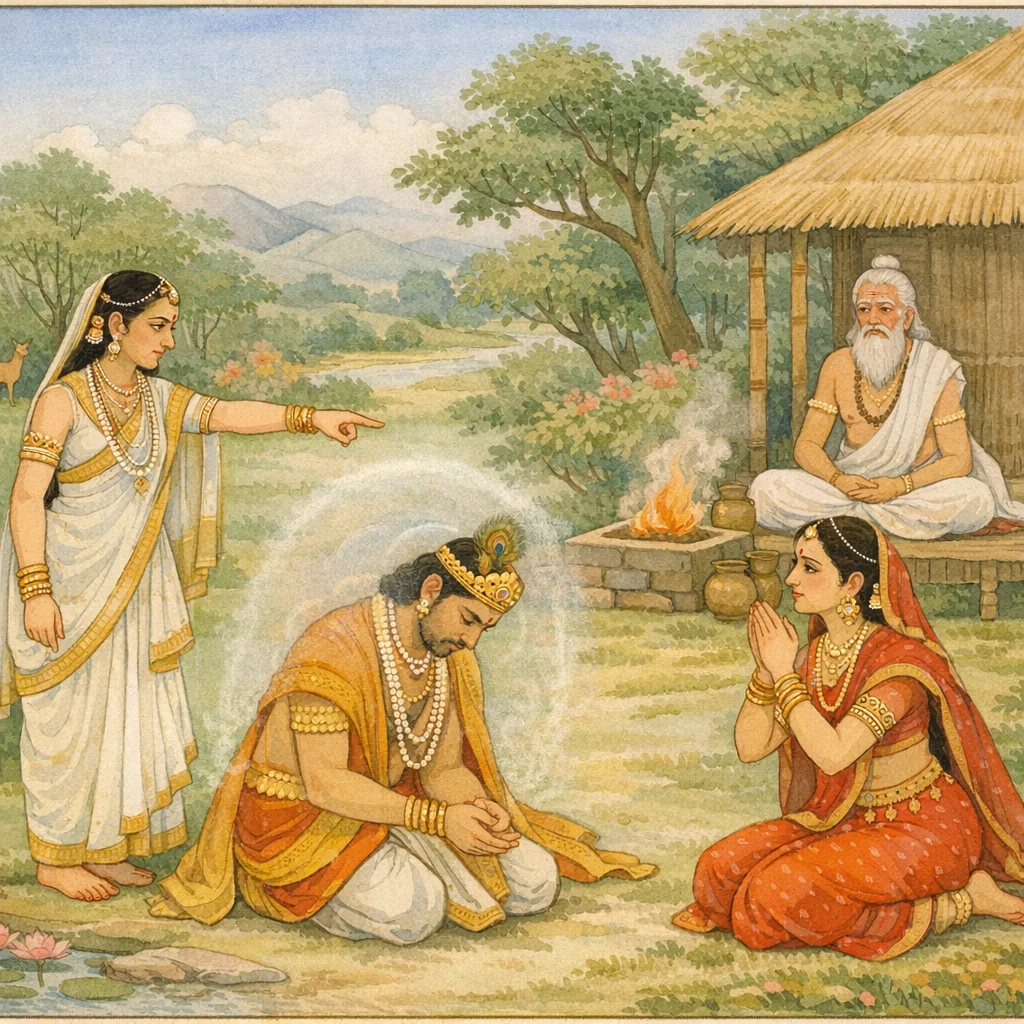
Adhyaya 83
आदि पर्व — अध्याय ८३: ययाति-इन्द्र-संवादः तथा अष्टक-प्रश्नः (Yayāti–Indra Dialogue and Aṣṭaka’s Inquiry)
Upa-parva: Sambhava (Genealogical Origins) — Yayāti–Indra–Aṣṭaka Episode
This chapter presents a layered ethical discourse on merit, pride, and the fragility of exalted states. Indra questions Yayāti—who has renounced household life for the forest—asking to whom he is comparable in austerity. Yayāti replies that he sees no equal to his own tapas among devas, humans, gandharvas, or great ṛṣis, prompting Indra to diagnose the consequence: because Yayāti disparaged those similar, superior, and inferior without understanding their true power, the worlds he attained are finite, and with merit exhausted he falls. Yayāti accepts the causal logic and states a preference: if deprived of the deva-world, he wishes to fall among the virtuous (sat) rather than into dishonor. Indra affirms that among the virtuous Yayāti regains stability and warns against contempt toward peers and superiors. The narration then shifts (Vaiśaṃpāyana) to Aṣṭaka observing the radiant figure falling from the divine path and, with others, inquiring about his identity and the reason for his descent. The chapter closes with gnomic statements on “prabhutva” (excellence/sovereignty) in domains—fire in heating, earth in sustaining, sun in illumination, and the preeminence of the virtuous as a refuge for those who have fallen from comfort.
Chapter Arc: देवयानी, आहत अभिमान और धर्म-भय से काँपती हुई, शर्मिष्ठा से पूछ बैठती है—“कामलुब्ध होकर तुमने यह कैसा पाप कर डाला?”; सखियों का संबंध अब न्यायालय बन जाता है। → शर्मिष्ठा अपने कृत्य का औचित्य गढ़ती है—एक धर्मात्मा ऋषि के वरदान/धर्मसम्मत याचना का हवाला देकर वह देवयानी के आरोप को टालती है। उधर दोनों का साझा-समर्पण (देवयानी की पिता-गुरु शुक्राचार्य द्वारा) ययाति के गृह में एक ही छत के नीचे ईर्ष्या, अधिकार और ‘कौन किसकी’ की आग को और भड़काता है। → ययाति के सामने प्रसंग फूट पड़ता है और शुक्राचार्य के समक्ष निर्णायक प्रश्न उठता है—शर्मिष्ठा ऋतु-दान/संतान-धर्म की याचना करती है, ययाति उसे देने से हिचकता है; तब शुक्राचार्य कठोर शाप देते हैं—राजा पर जरा का आरोपण। शाप के साथ ही एक असंभव-सा उपाय भी खुलता है: जरा को किसी अन्य में संक्रामित किया जा सकता है। → ययाति, शाप की सत्यता स्वीकार कर, शुक्राचार्य से अनुमति माँगता है कि कोई पुत्र उसे अपना यौवन दे; शुक्राचार्य धर्म-भाव से स्मरण करने पर पाप-रहित संक्रांति की अनुमति देते हैं। अध्याय का अंत वैम्पायन के सूत्र-वाक्य से होता है—राजा से पूछकर अब वह कुमारों (पुत्रों) से प्रश्न करेगा, अर्थात् ययाति का यौवन-याचना प्रसंग अगली कड़ी की ओर बढ़ता है। → ययाति किस पुत्र से यौवन माँगेगा, कौन देगा, और इस ‘यौवन-दान’ का धर्मफल किस पर पड़ेगा?
Shlokas
Verse 1
(दाक्षिणात्य अधिक पाठके ११ श्लोक मिलाकर कुल ३८ श्लोक हैं) ऑपन-आ प्रात बछ। अर: 2 तग्रय्शीतितमो<ध्याय: देवयानी और शर्मिष्ठाका संवाद, ययातिसे शर्मिष्ठाके पुत्र होनेकी बात जानकर देवयानीका रूठकर पिताके पास जाना, शुक्राचार्यका ययातिको बूढ़े होनेका शाप देना वैशम्पायन उवाच श्रुत्वा कुमारं जातं तु देवयानी शुचिस्मिता । चिन्तयामास दु:खार्ता शर्मिष्ठां प्रति भारत
Vaiśampāyana said: Hearing that a boy had been born, Devayānī—she of the pure smile—was seized by sorrow and began to brood, directing her troubled thoughts toward Śarmiṣṭhā, O Bhārata.
Verse 2
देवयान्युवाच किमिदं वृजिनं सुभ्रु कृतं वै कामलुब्धया,देवयानीने कहा--सुन्दर भौंहोंवाली शर्मिष्ठे! तुमने कामलोलुप होकर यह कैसा पाप कर डाला?
Devayānī said: “O fair-browed Śarmiṣṭhā, what is this wrongdoing you have done—indeed, driven by lustful desire? What a sinful act you have committed!”
Verse 3
शर्मिष्ोवाच ऋषिरभ्यागत: कश्रिद् धर्मात्मा वेदपारग: । स मया वरद: काम याचितो धर्मसंहितम्,शर्मिष्ठा बोली--सखी! कोई धर्मात्मा ऋषि आये थे, जो वेदोंके पारंगत विद्वान् थे। मैंने उन वरदायक ऋषिसे धर्मानुसार कामकी याचना की
Śarmiṣṭhā said: “A certain sage came to us—righteous in spirit and fully learned in the Vedas. From that boon-giving seer I requested, in accordance with dharma, the fulfillment of my desire.”
Verse 4
नाहमन्यायत: काममाचरामि शुचिस्मिते । तस्मादृषेर्ममापत्यमिति सत्यं ब्रवीमि ते,शुचिस्मिते! मैं न्यायविरुद्ध कामका आचरण नहीं करती। उन ऋषिसे ही मुझे संतान पैदा हुई है, यह तुमसे सत्य कहती हूँ
“O fair-smiling one, I do not pursue desire in a manner contrary to justice and right conduct. Therefore I tell you the truth: the child I have is the offspring of that sage.”
Verse 5
देवयान्युवाच शोभनं भीरु यद्येवमथ स ज्ञायते द्विज: । गोत्रनामाभिजनतो वेत्तुमिच्छामि तं॑ द्विजम्,देवयानीने कहा--भीरु! यदि ऐसी बात है तो बहुत अच्छा हुआ। क्या उन द्विजके गोत्र, नाम और कुलका कुछ परिचय मिला है? मैं उनको जानना चाहती हूँ
Devayānī said, “That is good, timid one. If this is so, and the brahmin can indeed be identified, I wish to know that brahmin by his lineage—his gotra, his name, and his family background.”
Verse 6
शर्मिष्शोवाच तपसा तेजसा चैव दीप्यमानं यथा रविम् | त॑ दृष्टवा मम सम्प्रष्टं शक्तिनासीच्छुचिस्मिते,शर्मिष्ठा बोली--शुचिस्मिते! वे अपने तप और तेजसे सूर्यकी भाँति प्रकाशित हो रहे थे। उन्हें देखकर मुझे कुछ पूछनेका साहस ही नहीं हुआ
Śarmiṣṭhā said: “O fair-smiling one, he was blazing with austerity and spiritual radiance like the sun. Seeing him, I did not have the courage or capacity to question him.”
Verse 7
देवयान्युवाच यद्येतदेवं शर्मिछे न मन्युर्विद्यते मम । अपत्यं यदि ते लब्धं ज्येष्ठाच्छेष्ठाच्च वै द्विजात्,देवयानीने कहा--शर्मिष्ठे! यदि ऐसी बात है; यदि तुमने ज्येष्ठ और श्रेष्ठ द्विजसे संतान प्राप्त की है तो तुम्हारे ऊपर मेरा क्रोध नहीं रहा
Devayānī said: “If this is indeed so, O Śarmiṣṭhā, then my anger no longer remains. If you have obtained offspring from a twice-born man who is both elder and eminent, I will not hold resentment against you.”
Verse 8
वैशम्पायन उवाच अन्योन्यमेवमुक्त्वा तु सम्प्रहस्य च ते मिथ: । जगाम भार्गवी वेश्म तथ्यमित्यवजग्मुषी,वैशम्पायनजी कहते हैं--जनमेजय! वे दोनों आपसमें इस प्रकार बातें करके हँस पड़ीं। देवयानीको प्रतीत हुआ कि शर्मिष्ठा ठीक कहती है; अत: वह चुपचाप महलमें चली गयी
Vaiśampāyana said: Having thus spoken to one another, the two of them laughed together. The Bhārgavī (Devayānī), judging that it was indeed true, went silently back to the palace.
Verse 9
ययातिर्देवयान्यां तु पुत्रावजनयन्नूप: । यदुं च तुर्वसुं चैव शक्रविष्णू इवापरौ,राजा ययातिने देवयानीके गर्भसे दो पुत्र उत्पन्न किये, जिनके नाम थे यदु और तुर्वसु। वे दोनों दूसरे इन्द्र और विष्णुकी भाँति प्रतीत होते थे
Vaiśampāyana said: King Yayāti begot two sons upon Devayānī—Yadu and Turvasu—who appeared like another Indra and Viṣṇu, radiant in strength and promise.
Verse 10
तस्मादेव तु राजर्षे: शर्मिष्ठा वार्षपर्वणी । | चानुं च पूरुं च त्रीन् कुमारानजीजनत्,उन्ही राजर्षिसे वृषपर्वाकी पुत्री शर्मिष्ठाने तीन पुत्रोंको जन्म दिया, जिनके नाम थे द्रुह्मु, अनु और पूरु
Vaiśampāyana said: From that royal sage, Śarmiṣṭhā—the daughter of Vṛṣaparvan—gave birth to three sons: Druhyu, Anu, and Pūru.
Verse 11
ततः काले तु कम्मिंश्चिद् देवयानी शुचिस्मिता । ययातिसहिता राजञ्जगाम रहित॑ वनम्,राजन्! तदनन्तर किसी समय पवित्र मुसकानवाली देवयानी ययातिके साथ एकान्त वनमें गयी
Vaiśampāyana said: Then, at a certain time, Devayānī—whose smile was pure and gentle—went with King Yayāti into a secluded forest.
Verse 12
ददर्श च तदा तत्र कुमारान् देवरूपिण: । क्रीडमानान् सुविश्रब्धान् विस्मिता चेदमब्रवीत्,वहाँ उसने देवताओंके समान सुन्दर रूपवाले कुछ बालकोंको निर्भय होकर क्रीड़ा करते देखा। उन्हें देखकर आश्वर्यचकित हो वह इस प्रकार बोली
Vaiśampāyana said: Then, there she saw some boys of godlike beauty, playing fearlessly and at ease. Astonished at the sight, she spoke as follows—setting in motion the next turn of the narrative, where wonder and inquiry lead toward recognition and the unfolding of dharma-bound events.
Verse 13
देवयान्युवाच कस्यैते दारका राजन देवपुत्रोपमा: शुभा: । वर्चसा रूपतश्वैव सदृशा मे मतास्तव,देवयानीने पूछा--राजन! ये देवबालकोंके तुल्य शुभ लक्षणसम्पन्न कुमार किसके हैं? तेज और रूपमें तो ये मुझे आपहीके समान जान पड़ते हैं
Devayānī said: “O King, whose are these boys, auspicious and like the sons of the gods? In their radiance and in their beauty, they seem to me to resemble you.”
Verse 14
देवयान्युवाच कि नामधेयं वंशो व: पुत्रका: कश्न वः पिता । प्रत्रूत मे यथातथ्यं श्रोतुमिच्छामि त॑ हाहम्,देवयानीने पूछा--बच्चो! तुम्हारे कुलका कया नाम है? तुम्हारे पिता कौन हैं? यह मुझे ठीक-ठीक बताओ मैं तुम्हारे पिताका नाम सुनना चाहती हूँ
Devayānī said: “What is the name of your lineage? Dear children, who is your father? Tell me truthfully and exactly as it is, for I wish to hear his name.”
Verse 15
(एवमुक्ता: कुमारास्ते देवयान्या सुमध्यमा ।) तेडदर्शयन् प्रदेशिन्या तमेव नृपसत्तमम् | शर्मिष्ठां मातरं चैव तथा5<चख्युश्न॒ दारका:,सुन्दरी देवयानीके इस प्रकार पूछनेपर उन बालकोंने पिताका परिचय देते हुए तर्जनी अँगुलीसे उन्हीं नृपश्रेष्ठ ययातिको दिखा दिया और शर्मिष्ठाको अपनी माता बताया
Vaiśampāyana said: Thus addressed by the slender-waisted Devayānī, those boys pointed out with the forefinger that very best of kings, and the children also declared Śarmiṣṭhā to be their mother. The scene quietly discloses the moral tension of concealed lineage and the inevitable surfacing of truth within the royal household.
Verse 16
अभिगम्य च शर्मिष्ठां देवयान्यब्रवीदिदम् । वैशम्पायनजी कहते हैं--जनमेजय! पवित्र मुसकानवाली देवयानीने जब सुना कि शर्मिष्ठाके पुत्र हुआ है, तब वह दुःखसे पीड़ित हो शर्मिष्ठाके व्यवहारको लेकर बड़ी चिन्ता करने लगी। वह शर्मिष्ठाके पास गयी और इस प्रकार बोली,वैशम्पायन उवाच इत्युक्त्वा सहितास्ते तु राजानमुपचक्रमु: । नाभ्यनन्दत तान् राजा देवयान्यास्तदान्तिके वैशम्पायनजी कहते हैं--ऐसा कहकर वे सब बालक एक साथ राजाके समीप आ गये; परंतु उस समय देवयानीके निकट राजाने उनका अभिनन्दन नहीं किया--उन्हें गोदमें नहीं उठाया
Vaiśampāyana said: Devayānī went up to Śarmiṣṭhā and spoke these words. And again, Vaiśampāyana said: Having spoken thus, all those boys together approached the king; but at that time, with Devayānī standing nearby, the king did not welcome them—he did not receive them with affection. The scene underscores how jealousy and partiality within a household can distort a ruler’s conduct, turning natural parental warmth into a calculated display shaped by fear of conflict and concern for status.
Verse 17
रुदन्तस्ते5थ शर्मिष्ठामभ्ययुर्बालकास्तत: । श्र॒ुत्वा तु तेषां बालानं सब्रीड इव पार्थिव:,तब वे बालक रोते हुए शर्मिष्ठाके पास चले गये। उनकी बातें सुनकर राजा ययाति लज्जित-से हो गये
Then the boys, weeping, went up to Śarmiṣṭhā. Hearing the words of those children, King Yayāti became as though overcome with shame—his conscience stirred by what their tears implied and by the impropriety that had led to their distress.
Verse 18
दृष्टवा तु तेषां बालानां प्रणयं पार्थिवं प्रति । बुद्ध्वा च तत्त्वं सा देवी शर्मिष्ठामिदमब्रवीत्,उन बालकोंका राजाके प्रति विशेष प्रेम देखकर देवयानी सारा रहस्य समझ गयी और शर्मिष्ठासे इस प्रकार बोली
Seeing the special affection those boys bore toward the king, and discerning the true state of affairs, the noble lady Devayānī understood the hidden matter and spoke to Śarmiṣṭhā as follows—moving the story toward a moral reckoning about loyalty, influence, and the consequences of concealed intentions.
Verse 19
देवयान्युवाच (अभ्यागच्छति मां कश्रिदृषिरित्येवमब्रवी: | ययातिमेव नूनं॑ त्वं प्रोत्माहयसि भामिनि ।। पूर्वमेव मया प्रोक्तं त्वया तु वृजिनं कृतम् ।) मदधीना सती कस्मादकार्षीविप्रियं मम । तमेवासुरधर्म त्वमास्थिता न बिभेषि मे,देवयानी बोली--भामिनि! तुम तो कहती थीं कि मेरे पास कोई ऋषि आया करते हैं। यह बहाना लेकर तुम राजा ययातिको ही अपने पास आनेके लिये प्रोत्साहन देती रहीं। मैंने पहले ही कह दिया था कि तुमने कोई पाप किया है। शर्मिष्ठे! तुमने मेरे अधीन होकर भी मुझे अप्रिय लगनेवाला बर्ताव क्यों किया? तुम फिर उसी असुर-धर्मपर उतर आयीं। मुझसे डरती भी नहीं हो?
Devayānī said: “You used to say, ‘Some sage comes to me,’ but that was only a pretext. Surely, O passionate one, you were in fact encouraging King Yayāti himself to come to you. I had already warned you, yet you have committed wrongdoing. Though you are under my authority, why did you act in a way that is offensive to me? You have again taken up that very asuric way of conduct—do you not even fear me?”
Verse 20
शर्मिष्टोवाच यदुक्तमृषिरित्येव तत् सत्यं चारुहासिनि । न्यायतो धर्मतश्चैव चरन्ती न बिभेमि ते,शर्मिष्ठा बोली--मनोहर मुसकानवाली सखी! मैंने जो ऋषि कहकर अपने स्वामीका परिचय दिया था, सो सत्य ही है। मैं न्याय और धर्मके अनुकूल आचरण करती हूँ, अतः तुमसे नहीं डरती
Śarmiṣṭhā said: “O fair-smiling friend, what I spoke of as ‘a sage’ is indeed true. I act in accordance with justice and with dharma; therefore I do not fear you.”
Verse 21
यदा त्वया वृतो भर्ता वृत एव तदा मया । सखीभर्ता हि धर्मेण भर्ता भवति शोभने,(त्वत्पित्रा गुरुणा मे च सह दत्ते उभे शुभे । तव भर्ता च पूज्यश्न पोष्यां पोषयतीह माम् ।।) जब तुमने पतिका वरण किया था, उसी समय मैंने भी कर लिया। शोभने! जो सखीका स्वामी होता है, वही उसके अधीन रहनेवाली अन्य अविवाहिता सखियोंका भी धर्मतः पति होता है। तुम ज्येष्ठ हो, ब्राह्मणकी पुत्री हो, अतः मेरे लिये माननीय एवं पूजनीय हो; परंतु ये राजर्षि मेरे लिये तुमसे भी अधिक पूजनीय हैं। क्या यह बात तुम नहीं जानतीं?
Vaiśampāyana said: “When you chose your husband, at that very time I too was chosen. O fair one, by the rule of dharma, the husband of a woman becomes, in a lawful sense, the husband also of her dependent unmarried companions. Your father, who is also my revered elder, gave us both together. Therefore your husband is worthy of honor; and as one who must be cared for, he maintains me here. Do you not understand this?”
Verse 22
पूज्यासि मम मान्या च ज्येष्ठा च ब्राह्मणी हासि । त्वत्तोडपि मे पूज्यतमो राजर्षि: कि न वेत्थ तत्,(त्वत्पित्रा गुरुणा मे च सह दत्ते उभे शुभे । तव भर्ता च पूज्यश्न पोष्यां पोषयतीह माम् ।।) जब तुमने पतिका वरण किया था, उसी समय मैंने भी कर लिया। शोभने! जो सखीका स्वामी होता है, वही उसके अधीन रहनेवाली अन्य अविवाहिता सखियोंका भी धर्मतः पति होता है। तुम ज्येष्ठ हो, ब्राह्मणकी पुत्री हो, अतः मेरे लिये माननीय एवं पूजनीय हो; परंतु ये राजर्षि मेरे लिये तुमसे भी अधिक पूजनीय हैं। क्या यह बात तुम नहीं जानतीं?
Vaiśampāyana said: “You are worthy of my worship and respect; you are the elder, and you are a Brahmin woman. Yet this royal sage is even more worthy of reverence to me than you are—do you not know this? For your father, who is also my teacher, gave us both in marriage together. And your husband, who is himself venerable, maintains me here as one who is under his protection.”
Verse 23
शुभे! तुम्हारे पिता और मेरे गुरु (शुक्राचार्यजी)-ने हम दोनोंको एक ही साथ महाराजकी सेवामें समर्पित किया है। तुम्हारे पति और पूजनीय महाराज ययाति भी मुझे पालन करनेयोग्य मानकर मेरा पोषण करते हैं। वैशम्पायन उवाच श्रुत्वा तस्यास्ततो वाक्यं देवयान्यब्रवीदिदम् राजन् नाद्येह वत्स्यामि विप्रियं मे कृतं त्वया,वैशम्पायनजी कहते हैं--शर्मिष्ठाका यह वचन सुनकर देवयानीने कहा--“राजन! अब मैं यहाँ नहीं रहूँगी। आपने मेरा अत्यन्त अप्रिय किया है”
Vaiśampāyana said: Hearing her words, Devayānī spoke: “O King, I will not remain here any longer. You have done what is deeply displeasing to me.”
Verse 24
सहसोत्पतितां श्यामां दृष्टवा तां साश्रुलोचनाम् | तूर्ण सकाशं काव्यस्य प्रस्थितां व्यथितस्तदा,ऐसा कहकर तरुणी देवयानी आँखोंमें आँसू भरकर सहसा उठी और तुरंत ही शुक्राचार्यजीके पास जानेके लिये वहाँसे चल दी। यह देख उस समय राजा ययाति व्यथित हो गये
Vaiśampāyana said: Seeing the dark-complexioned maiden suddenly rise, her eyes filled with tears, and hasten away at once toward Kāvya (Śukrācārya), King Yayāti was then deeply distressed.
Verse 25
अनुवदव्राज सम्भ्रान्त: पृष्ठतः सान्त्वयन् नृपः । न्यवर्तत न चैव सम क्रोधसंरक्तलोचना,वे व्याकुल हो देवयानीको समझाते हुए उसके पीछे-पीछे गये, किंतु वह नहीं लौटी। उसकी आँखें क्रोधसे लाल हो रही थीं
Vaiśampāyana said: The king, agitated, followed after her, speaking conciliating words from behind. Yet she did not turn back at all—her eyes were reddened with anger.
Verse 26
अविब्रुवन्ती किंचित् सा राजानं साश्रुलोचना । अचिरादेव सम्प्राप्ता काव्यस्योशनसो$5न्तिकम्,वह राजासे कुछ न बोलकर केवल नेत्रोंसे आँसू बहाये जाती थी। कुछ ही देरमें वह कविपुत्र शुक्राचार्यके पास जा पहुँची
Vaiśampāyana said: She spoke not a word; with tear-filled eyes she only wept before the king. Before long, she reached the presence of Kāvya—Uśanas (Śukrācārya).
Verse 27
सातु दृष्टवैव पितरमभिवाद्याग्रतः स्थिता । अनन्तरं ययातिस्तु पूजयामास भार्गवम्,पिताको देखते ही वह प्रणाम करके उनके सामने खड़ी हो गयी। तदनन्तर राजा ययातिने भी शुक्राचार्यकी वन्दना की
Seeing her father, she at once bowed in reverence and stood before him. Thereafter King Yayāti also paid due honor and homage to the Bhārgava (Śukrācārya), observing the proper conduct owed to elders and teachers.
Verse 28
देवयान्युवाच अधर्मेण जितो धर्म: प्रवृत्तमधरोत्तरम् । शर्मिष्ठयातिवृत्तास्मि दुहतित्रा वृषपर्वण:,देवयानीने कहा--पिताजी! अधर्मने धर्मको जीत लिया। नीचकी उन्नति हुई और उच्चकी अवनति। वृषपर्वाकी पुत्री शर्मिष्ठा मुझे लाँघचकर आगे बढ़ गयी
Devayānī said: “Father, by unrighteousness righteousness has been overcome. The lower has risen and the higher has been brought low. Here Śarmiṣṭhā, the daughter of Vṛṣaparvan, has overstepped me and gone ahead.”
Verse 29
त्रयो5स्यां जनिता: पुत्रा राज्ञानेन ययातिना | दुर्भगाया मम द्वौ तु पुत्रौ तात ब्रवीमि ते,इन महाराज ययातिसे ही उसके तीन पुत्र हुए हैं, किंतु तात! मुझ भाग्यहीनाके दो ही पुत्र हुए हैं। यह मैं आपसे ठीक बता रही हूँ
“King Yayāti has begotten three sons by this (woman). But as for me—unfortunate as I am—I have only two sons. Dear one, I tell you this truthfully.”
Verse 30
धर्मज्ञ इति विख्यात एष राजा भृगूद्वह । अकिक्रान्तश्न मर्यादां काव्यैतत् कथयामि ते,भुगुश्रेष्ठ ये महाराज धर्मज्ञके रूपमें प्रसिद्ध हैं; किंतु इन्होंने ही मर्यादाका उल्लंघन किया है। कविनन्दन! यह आपसे यथार्थ कह रही हूँ
Vaiśampāyana said: “This king, O foremost of the Bhṛgus, is renowned as a knower of dharma; yet he has indeed overstepped the bounds of rightful conduct. O son of a poet, I shall tell you this account truthfully.”
Verse 31
शुक्र उवाच धर्मज्ञ: सन् महाराज यो<धर्ममकृथा: प्रियम् । तस्माज्जरा त्वामचिराद् धर्षयिष्यति दुर्जया,शुक्राचार्यने कहा--महाराज! तुमने धर्मज्ञ होकर भी अधर्मको प्रिय मानकर उसका आचरण किया है। इसलिये जिसको जीतना कठिन है, वह वृद्धावस्था तुम्हें शीघ्र ही धर दबायेगी
Śukra said: “O great king, though you know dharma, you have treated adharma as something dear and have acted accordingly. Therefore invincible old age (decay) will soon overpower you.”
Verse 32
पाए शेख ययातिरुवाच ऋतुं वै याचमानाया भगवन् नान्यचेतसा । दुहितुर्दानवेन्द्रस्य धर्म्यमेतत् कृत॑ं मया,ययाति बोले--भगवन्! दानवराजकी पुत्री मुझसे ऋतुदान माँग रही थी; अतः मैंने धर्म-सम्मत मानकर यह कार्य किया, किसी दूसरे विचारसे नहीं। ब्रह्मन! जो पुरुष न्याययुक्त ऋतुकी याचना करनेवाली स्त्रीको ऋतुदान नहीं देता, वह ब्रह्मवादी दविद्वानोंद्वारा भ्रूणहत्या करनेवाला कहा जाता है। जो न्यायसम्मत कामनासे युक्त गम्या स्त्रीके द्वारा एकान्तमें प्रार्थना करनेपर उसके साथ समागम नहीं करता, वह धर्म-शास्त्रमें विद्वानोंद्वारा गर्भकी हत्या करनेवाला बताया जाता है
Yayāti said: “O venerable one, the daughter of the lord of the Dānavas was asking me for her rightful season (ṛtu); with no other intention, I did what is held to be proper by dharma. For the man who refuses the gift of ṛtu to a woman who seeks it lawfully is declared by Brahmavādins and learned authorities to be like one who slays an embryo. Likewise, if a woman who is a lawful partner, moved by a rightful desire, privately requests union and he does not approach her, the dharma-śāstras—according to the wise—describe him as guilty like one who destroys the fruit of the womb.”
Verse 33
ऋतुं वै याचमानाया न ददाति पुमानृतुम् । भ्रूणहेत्युच्यते ब्रह्मन् स इह ब्रह्म॒वादिभि:,ययाति बोले--भगवन्! दानवराजकी पुत्री मुझसे ऋतुदान माँग रही थी; अतः मैंने धर्म-सम्मत मानकर यह कार्य किया, किसी दूसरे विचारसे नहीं। ब्रह्मन! जो पुरुष न्याययुक्त ऋतुकी याचना करनेवाली स्त्रीको ऋतुदान नहीं देता, वह ब्रह्मवादी दविद्वानोंद्वारा भ्रूणहत्या करनेवाला कहा जाता है। जो न्यायसम्मत कामनासे युक्त गम्या स्त्रीके द्वारा एकान्तमें प्रार्थना करनेपर उसके साथ समागम नहीं करता, वह धर्म-शास्त्रमें विद्वानोंद्वारा गर्भकी हत्या करनेवाला बताया जाता है
Śukra said: “O Brahman, if a man does not grant the requested season (ṛtu) to a woman who asks for it, he is here called a slayer of the embryo by the Brahmavādins.”
Verse 34
अभिकामा स्त्रियं यश्न गम्यां रहसि याचित: । नोपैति स च धर्मेषु भ्रूणहेत्युच्यते बुध:,ययाति बोले--भगवन्! दानवराजकी पुत्री मुझसे ऋतुदान माँग रही थी; अतः मैंने धर्म-सम्मत मानकर यह कार्य किया, किसी दूसरे विचारसे नहीं। ब्रह्मन! जो पुरुष न्याययुक्त ऋतुकी याचना करनेवाली स्त्रीको ऋतुदान नहीं देता, वह ब्रह्मवादी दविद्वानोंद्वारा भ्रूणहत्या करनेवाला कहा जाता है। जो न्यायसम्मत कामनासे युक्त गम्या स्त्रीके द्वारा एकान्तमें प्रार्थना करनेपर उसके साथ समागम नहीं करता, वह धर्म-शास्त्रमें विद्वानोंद्वारा गर्भकी हत्या करनेवाला बताया जाता है
Śukra said: “If a woman who is lawfully approachable, being in desire, privately requests a man, and he does not go to her, then—according to dharma—the wise declare him to be guilty of ‘embryo-slaying.’”
Verse 35
(यद् यद् याचति मां कश्चित् तत् तद् देयमिति व्रतम् । त्वया च सापि दत्ता मे नान््यं नाथमिहेच्छति ।। मत्वैतन्मे धर्म इति कृतं ब्रह्मन् क्षमस्व माम् ।) इत्येतानि समीक्ष्याहं कारणानि भृगूद्वह । अधर्मभयसंविग्न: शर्मिष्ठामुपजग्मिवान्,ब्रह्मन! मेरा यह व्रत है कि मुझसे कोई जो भी वस्तु माँगे, उसे वह अवश्य दे दूँगा। आपके ही द्वारा मुझे सौंपी हुई शर्मिष्ठा इस जगत्में दूसरे किसी पुरुषको अपना पति बनाना नहीं चाहती थी। अत: उसकी इच्छा पूर्ण करना धर्म समझकर मैंने वैसा किया है। आप इसके लिये मुझे क्षमा करें। भृगुश्रेष्ठ) इन्हीं सब कारणोंका विचार करके अधर्मके भयसे उद्विग्न हो मैं शर्मिष्ठाके पास गया था
Śukra said: “My vow is this: whatever anyone asks of me, that very thing must be given. And Śarmiṣṭhā herself—entrusted to me by you—did not wish to accept any other man in this world as her husband. Therefore, taking it to be my duty under dharma to fulfill her wish, I acted accordingly. O Brahman, forgive me.” Having weighed these reasons, O best of the Bhṛgus, and shaken by fear of falling into adharma, I went to Śarmiṣṭhā.
Verse 36
शुक्र उवाच नन्वहं प्रत्यवेक्ष्यस्ते मदधीनो 5सि पार्थिव । मिथ्याचारस्य धर्मेषु चौर्य भवति नाहुष,शुक्राचार्यने कहा--राजन्! तुम्हें इस विषयमें मेरे आदेशकी भी प्रतीक्षा करनी चाहिये थी; क्योंकि तुम मेरे अधीन हो। नहुषनन्दन! धर्ममें मिथ्या आचरण करनेवाले पुरुषको चोरीका पाप लगता है
Śukra said: “Surely you ought to have waited for my direction in this matter, O king, for you are under my authority. O descendant of Nahūṣa, when a man behaves falsely while claiming the mantle of dharma, that conduct incurs the sin of theft.”
Verse 37
वैशम्पायन उवाच क्रुद्धनोशनसा शप्तो ययातिनहुषस्तदा । पूर्व वय: परित्यज्य जरां सद्योडन्वपद्यत,वैशम्पायनजी कहते हैं--क्रोधमें भरे हुए शुक्राचार्यके शाप देनेपर नहुषपुत्र राजा ययाति उसी समय पूर्वावस्था (यौवन)-का परित्याग करके तत्काल बूढ़े हो गये
Vaiśampāyana said: When the sage Uśanas (Śukrācārya), inflamed with anger, pronounced a curse, King Yayāti, son of Nahuṣa, at that very moment abandoned his former youth and immediately fell into old age.
Verse 38
ययातिरुवाच अतृप्तो यौवनस्याहं देवयान्यां भृगूद्वह । प्रसाद कुरु मे ब्रह्म॒ज्जरेयं न विशेच्च माम्,ययाति बोले--भृगुश्रेष्ठ! मैं देवयानीके साथ युवावस्थामें रहकर तृप्त नहीं हो सका हूँ; अतः ब्रह्मन! मुझपर ऐसी कृपा कीजिये, जिससे यह बुकढ़ापा मेरे शरीरमें प्रवेश न करे
Yayāti said: “O foremost of the Bhṛgus, though I have enjoyed youth with Devayānī, I am still unsated. Therefore, O brāhmaṇa, show me your favor—let this old age not enter into me.”
Verse 39
शुक्र उवाच नाहं मृषा ब्रवीम्येतज्जरां प्राप्तोड्सि भूमिप | जरां त्वेतां त्वमन्यस्मिन् संक्रामय यदीच्छसि,शुक्राचार्यजीने कहा--भूमिपाल! मैं झूठ नहीं बोलता; बूढ़े तो तुम हो ही गये; किंतु तुम्हें इतनी सुविधा देता हूँ कि यदि चाहो तो किसी दूसरेसे जवानी लेकर इस बुढ़ापाको उसके शरीरमें डाल सकते हो
Śukra said: “I do not speak falsely in this matter, O king. You have indeed been overtaken by old age. Yet I grant you this option: if you wish, transfer this very old age into another person.”
Verse 40
ययातिरुवाच राज्यभाक् स भवेद् ब्रद्मन् पुण्यभाक् कीर्तिभाक् तथा | यो मे दद्यात् वय: पुत्रस्तद् भवाननुमन्यताम्,ययाति बोले--ब्रह्मन्! मेरा जो पुत्र अपनी युवावस्था मुझे दे, वही पुण्य और कीर्तिका भागी होनेके साथ ही मेरे राज्यका भी भागी हो। आप इसका अनुमोदन करें
Yayāti said: “O brāhmaṇa, whichever son gives me his youth shall share in merit and fame, and shall also have a share in my kingdom. Please approve this.”
Verse 41
शुक्र उवाच संक्रामयिष्यसि जरां यथेष्टं नहुषात्मज । मामनुध्याय भावेन न च पापमवाप्स्यसि
Śukra said: “O son of Nahuṣa, you will be able to transfer old age as you wish. Meditating upon me with a devoted disposition, you will not incur sin.”
Verse 136
वैशम्पायन उवाच एवं पृष्टवा तु राजानं कुमारान् पर्यपृच्छत । वैशम्पायनजी कहते हैं--जनमेजय! राजासे इस प्रकार पूछकर उसने उन कुमारोंसे प्रश्न किया
Vaiśampāyana said: Having thus questioned the king, he then proceeded to question the princes as well—continuing the inquiry in an orderly way, seeking a fuller and more responsible account from all who were involved.
Frequently Asked Questions
The dilemma concerns self-evaluation versus humility: Yayāti’s claim of unmatched tapas is treated as ethically hazardous when it implies contempt for others, leading to loss of attained standing.
Attainments are unstable when grounded in pride; association with the virtuous and disciplined speech/judgment are presented as the durable supports when merit wanes or status reverses.
No explicit phalaśruti is stated; the meta-commentary is implicit in Indra’s causal explanation (finite worlds, merit exhaustion) and the closing maxims that elevate sat-saṅga as a restorative moral principle.