Adhyaya 154
Droṇotpattiḥ, Astralābhaḥ, Drupada-vairasya bījaṃ ca (The Birth of Droṇa, Acquisition of Weapons, and the Seed of Enmity with Drupada)
Upa-parva: Sambhava Parva (Origins and Early Formations)
A brāhmaṇa narrator recounts how the great ascetic Bharadvāja goes to Gaṅgādvāra and sees the apsaras Ghṛtācī bathing; a gust displaces her garment, and Bharadvāja’s mind is momentarily drawn, resulting in the emission of semen, from which Droṇa is preserved/received (droṇa) and born. Droṇa grows into a learned youth, mastering the Vedas and Vedāṅgas. Bharadvāja’s royal friend Pṛṣata has a son Drupada; Drupada and Droṇa study and play together, forming an early bond. After Pṛṣata’s death Drupada becomes king, while Droṇa seeks means and martial expertise. Droṇa approaches Rāma (Paraśurāma), who offers either his remaining body/service or his weapons; Droṇa requests all weapons, their deployment, and withdrawal, receiving them and becoming preeminent among men, including the Brahmāstra. Droṇa then approaches Drupada to renew friendship, but Drupada rejects him, arguing that friendship is conditioned by equal standing (śrotriya with śrotriya; charioteer with charioteer; king with king). Droṇa, resolving internally, goes to Nāgasāhva (Hastināpura). Bhīṣma entrusts the princes to Droṇa as students. After training them, Droṇa announces an ācārya-vetana (teacher’s fee): the students must seize Drupada and bring him bound. The Pāṇḍavas defeat Drupada and deliver him. Droṇa then articulates his claim: a king cannot befriend a non-king; therefore Droṇa has secured a share of Drupada’s kingdom—Drupada retains the southern bank, while Droṇa takes the northern bank of the Bhāgīrathī. The chapter closes noting Drupada’s enduring humiliation and inner distress.
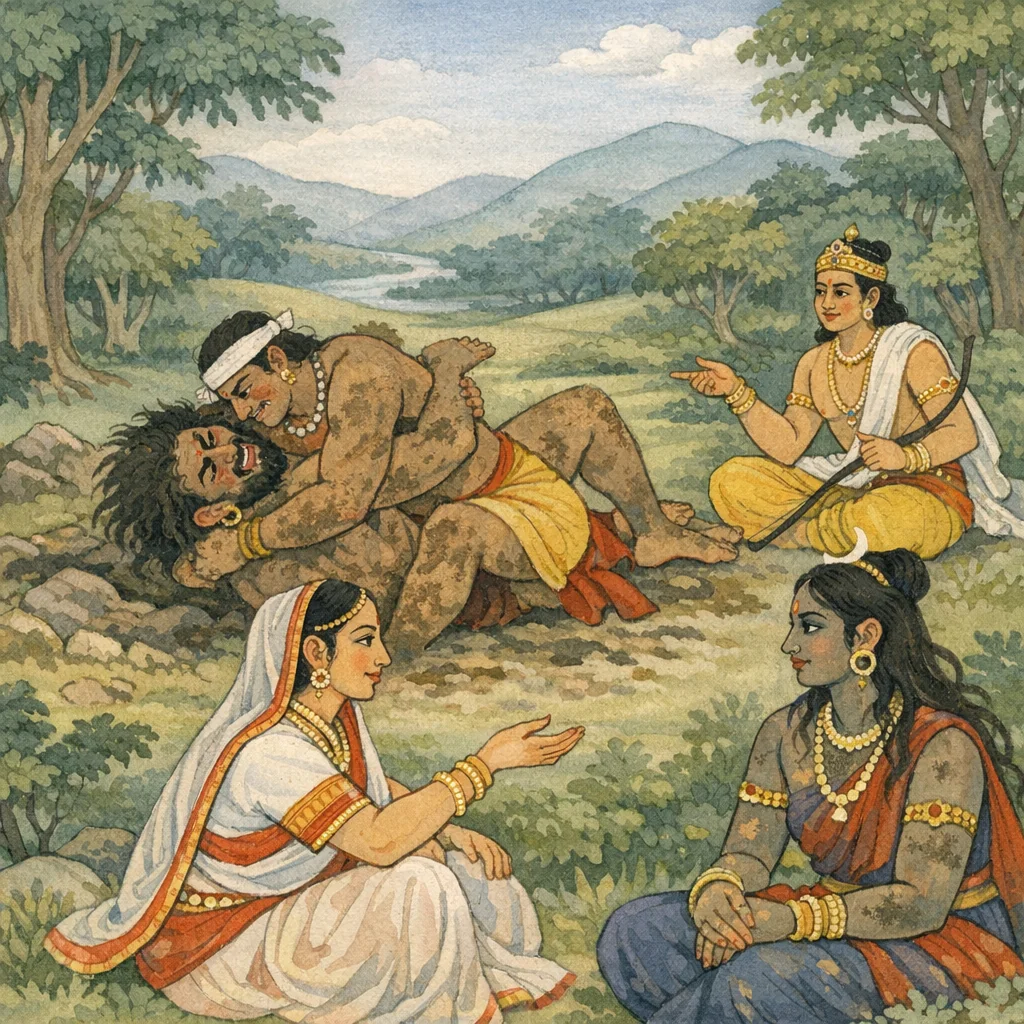
Chapter Arc: हिडिम्ब के वध के बाद वन-प्रांतर में एक अनपेक्षित, दिव्य-रूपा राक्षसी (हिडिम्बा) का आगमन होता है; कुन्ती उसकी रूप-सम्पदा देखकर विस्मित होकर मधुर, सान्त्वपूर्ण वाणी में उसका परिचय पूछती है। → हिडिम्बा स्वीकार करती है कि वह कामदेव के वशीभूत होकर भीम पर आकृष्ट हुई है और उसी आकर्षण ने उसे पाण्डवों के निकट खींच लाया। पर साथ ही यह भी स्पष्ट होता है कि अभी-अभी भीम ने उसके भाई हिडिम्ब को बलपूर्वक परास्त कर हटाया/मार डाला—जिससे प्रेम, भय, और शोक एक साथ टकराते हैं। → धूल से लथपथ, पर्वताकार देहों वाले भीम और राक्षस के संघर्ष का दृश्य चरम पर पहुँचता है; भीम के कष्ट को देखकर अर्जुन हल्के हास्य-छाया के साथ वचन कहता है—यह क्षण पाण्डव-शिविर में तनाव को तोड़ते हुए भीम की विजय-धुरी को केंद्र में रखता है। → कुन्ती के प्रश्नों और हिडिम्बा के निवेदन के बाद पाण्डव शीघ्र आगे बढ़ने का निर्णय लेते हैं—वन से नगर निकट होने का अनुमान है और सुयोधन द्वारा पता चल जाने का भय है। सभी माता कुन्ती सहित प्रस्थान करते हैं; हिडिम्बा भी साथ चल पड़ती है। → नगर-सीमा के निकट पहुँचते हुए यह अनिश्चितता बनी रहती है कि हिडिम्बा का साथ पाण्डवों के लिए वरदान बनेगा या नई जटिलता—और क्या सुयोधन को उनके मार्ग का पता चल जाएगा।
Shlokas
Verse 1
इस प्रकार श्रीमह्याभारत आदिपवके अन्तर्गत हिडिम्बवधपर्वमें हिडिग्ब-युद्धविषयक एक सौ बावनवाँ अध्याय पूरा हुआ ॥/ १५२ ॥। (दाक्षिणात्य अधिक पाठके ५ श्लोक मिलाकर कुल ५० श्लोक हैं) ह >> छा >> अर अं त्रिपठ्चाशदाधिकशततमोब< ध्याय: हिडिम्बाका कुन्ती आदिसे अपना मनोभाव प्रकट करना तथा भीमसेनके द्वारा हिडिम्बासुरका वध वैशम्पायन उवाच प्रबुद्धास्ते हिडिम्बाया रूप॑ दृष्टवातिमानुषम् । विस्मिता: पुरुषव्याप्रा बभूवु: पृथया सह,वैशम्पायनजी कहते हैं--जनमेजय! जागनेपर हिडिम्बाका अलौकिक रूप देख वे पुरुषसिंह पाण्डव माता कुन्तीके साथ बड़े विस्मयमें पड़े
Vaiśampāyana said: When they awoke and beheld Hiḍimbā’s extraordinary, more-than-human form, those tiger-like heroes—the Pāṇḍavas—were struck with amazement, together with Pṛthā (Kuntī).
Verse 2
ततः कुन्ती समीक्ष्यैनां विस्मिता रूपसम्पदा । उवाच मधुरं वाक्यं सान्त्वपूर्वमिदं शनै:,तदनन्तर कुन्तीने उसकी रूप-सम्पत्तिसे चकित हो उसकी ओर देखकर उसे सान्त्वना देते हुए मधुर वाणीमें इस प्रकार धीरे-धीरे पूछा--“देवकन्याओंकी-सी कान्तिवाली सुन्दरी! तुम कौन हो और किसकी कन्या हो? तुम किस कामसे यहाँ आयी हो और कहाँसे तुम्हारा शुभागमन हुआ है?
Then Kuntī, looking closely at her and marveling at her wealth of beauty, spoke gently and sweetly—first offering reassurance, and then, in a soft voice, began to question her, seeking to know who she was, whose daughter she might be, and for what purpose she had come. The moment underscores Kuntī’s dharmic courtesy: even amid uncertainty, she responds with compassion and careful inquiry rather than suspicion or harshness.
Verse 3
कस्य त्वं सुरगर्भाभे का वासि वरवर्णिनी । केन कार्येण सम्प्राप्ता कुतश्चञागमनं तव,तदनन्तर कुन्तीने उसकी रूप-सम्पत्तिसे चकित हो उसकी ओर देखकर उसे सान्त्वना देते हुए मधुर वाणीमें इस प्रकार धीरे-धीरे पूछा--“देवकन्याओंकी-सी कान्तिवाली सुन्दरी! तुम कौन हो और किसकी कन्या हो? तुम किस कामसे यहाँ आयी हो और कहाँसे तुम्हारा शुभागमन हुआ है?
Vaiśampāyana said: “O fair lady, radiant like one born among the gods, who are you, and whose daughter are you? For what purpose have you come here, and from where has your auspicious arrival taken place?”
Verse 4
यदि वास्य वनस्य त्वं देवता यदि वाप्सरा: । आचक्ष्व मम तत् सर्व किमर्थ चेह तिष्ठसि,“यदि तुम इस वनकी देवी अथवा अप्सरा हो तो वह सब मुझे ठीक-ठीक बता दो; साथ ही यह भी कहो कि किस कामके लिये यहाँ खड़ी हो?”
Vaiśampāyana said: “If you are the presiding goddess of this forest, or if you are an apsaras, then tell me everything clearly. Also tell me for what purpose you are standing here.”
Verse 5
हिडिग्बोवाच यदेतत् पश्यसि वन॑ नीलमेघनिभं महत् । निवासो राक्षसस्यैष हिडिम्बस्य ममैव च,हिडिम्बा बोली--देवि! यह जो नील मेघके समान विशाल वन आप देख रही हैं, यह राक्षस हिडिम्बका और मेरा निवासस्थान है
Hiḍimbā said: “Lady, this vast forest that you see—dark like a blue rain-cloud—is the dwelling place of the rākṣasa Hiḍimba, and also mine.”
Verse 6
तस्य मां राक्षसेन्द्रस्य भगिनीं विद्धि भाविनि । भ्रात्रा सम्प्रेषितामार्ये त्वां सपुत्रां जिघांसता,महाभागे! आप मुझे उस राक्षसराज हिडिम्बकी बहिन समझें। आर्ये! मेरे भाईने मुझे आपकी और आपके पुत्रोंकी हत्या करनेकी इच्छासे भेजा था
Vaiśampāyana said: “Know me, O noble lady, to be the sister of that lord of the Rākṣasas. My brother sent me here, O venerable one, with the intent to kill you together with your son(s), O greatly fortunate lady.”
Verse 7
क्रूरबुद्धेरहं तस्य वचनादागता त्विह । अद्राक्ष॑ं नवहेमाभं तव पुत्र महाबलम्,उसकी बुद्धि बड़ी क्रूरतापूर्ण है। उसके कहनेसे मैं यहाँ आयी और नूतन सुवर्णकी-सी आभावाले आपके महाबली पुत्रपर मेरी दृष्टि पड़ी
“At his command—he whose mind is cruel—I have come here. And here I beheld your mighty son, radiant like newly wrought gold.”
Verse 8
ततोऊहं सर्वभूतानां भावे विचरता शुभे । चोदिता तव पुत्रस्य मन्मथेन वशानुगा,शुभे! उन्हें देखते ही समस्त प्राणियोंके अन्तःकरणमें विचरनेवाले कामदेवसे प्रेरित होकर मैं आपके पुत्रकी वशवर्तिनी हो गयी
Then, O auspicious lady, stirred by Manmatha—who moves within the hearts of all beings—I became subject to your son’s power, compelled by desire the moment I beheld him.
Verse 9
ततो वृतो मया भर्ता तव पुत्रो महाबल: । अपनेतुं च यतितो न चैव शकितो मया,तदनन्तर मैंने आपके महाबली पुत्रको पतिरूपमें वरण कर लिया और इस बातके लिये प्रयत्न किया कि उन्हें (त(था आप सब लोगोंको) लेकर यहाँसे अन्यत्र भाग चलूँ, परंतु आपके पुत्रकी स्वीकृति न मिलनेसे मैं इस कार्यमें सफल न हो सकी
Then I chose your mighty son as my husband. After that, I strove to carry him away (and escape from here), but I was not able to do so—because I did not obtain your son’s consent.
Verse 10
चिरायमा्णां मां ज्ञात्वा ततः स पुरुषादक: । स्वयमेवागतो हन्तुमिमान् सर्वास्तवात्मजान्,मेरे लौटनेमें देर होती जान वह मनुष्यभक्षी राक्षस स्वयं ही आपके इन सब पुत्रोंको मार डालनेके लिये आया
Vaiśampāyana said: Knowing that my return was delayed, that man-eating rākṣasa came of his own accord to kill all these sons of yours.
Verse 11
स तेन मम कान्तेन तव पुत्रेण धीमता । बलादितो विनिष्पिष्य व्यपनीतो महात्मना,परंतु मेरे प्राणजवल्लभ तथा आपके बुद्धिमान् पुत्र महात्मा भीम उसे बलपूर्वक यहाँसे रगड़ते हुए दूर हटा ले गये हैं
Vaiśampāyana said: “But he—your wise son, the great-souled Bhīma, who is dear to me—dragged him away from here by sheer force, grinding and hauling him off.”
Verse 12
विकर्षन्तौ महावेगौ गर्जमानौ परस्परम् | पश्यैवं युधि विक्रान्तावेती च नरराक्षसौ,देखिये, युद्धमें पराक्रम दिखानेवाले वे दोनों मनुष्य और राक्षस जोर-जोरसे गर्जि रहे हैं और बड़े वेगसे गुत्थम-गुत्थ होकर एक-दूसरेको अपनी ओर खींच रहे हैं
Vaiśampāyana said: “Look! In the thick of battle, those two—one a man and the other a rākṣasa—are displaying fierce prowess. Roaring at each other, they grapple with tremendous force, each dragging the other toward himself.”
Verse 13
वैशम्पायन उवाच तस्या: श्रुत्वैव वचनमुत्पपात युधिष्ठिर: । अर्जुनो नकुलश्चैव सहदेवश्व वीर्यवान्,वैशम्पायनजी कहते हैं--जनमेजय! हिडिम्बाकी यह बात सुनते ही युधिष्छिर उछलकर खड़े हो गये। अर्जुन, नकुल और पराक्रमी सहदेवने भी ऐसा ही किया
Vaiśampāyana said: The moment he heard her words, Yudhiṣṭhira sprang up. Arjuna, Nakula, and the valiant Sahadeva did the same.
Verse 14
तौ ते ददृशुरासक्तौ विकर्षन्तौ परस्परम् | काड्क्षमाणौ जयं चैव सिंहाविव बलोत्कटौ,तदनन्तर उन्होंने देखा कि वे दोनों प्रचण्ड बलशाली सिंहोंकी भाँति आपसमें गुथ गये हैं और अपनी-अपनी विजय चाहते हुए एक-दूसरेको घसीट रहे हैं
Vaiśampāyana said: Then they saw those two locked fast in combat, each dragging the other, both yearning for victory—like two mighty lions, fierce with overpowering strength.
Verse 15
अथान्योन्यं समश्लिष्य विकर्षन्तौ पुनः पुनः । दावाग्निधूमसदृशं चक्रतुः पार्थिवं रज:,एक-दूसरेको भुजाओंमें भरकर बार-बार खींचते हुए उन दोनों योद्धाओंने धरतीकी धूलको दावानलके धूएँके समान बना दिया
Vaiśampāyana said: Then, clasping each other tightly and dragging one another again and again, the two warriors churned up the earth’s dust until it looked like the smoke of a forest fire.
Verse 16
वसुधारेणुसंवीती वसुधाधरसंनिभौ । बभ्राजतुर्यथा शैलौ नीहारेणाभिसंवृतौ,दोनोंका शरीर पृथ्वीकी धूलमें सना हुआ था। दोनों ही पर्वतोंके समान विशालकाय थे। उस समय वे दोनों कुहरेसे ढँके हुए दो पहाड़ोंके समान सुशोभित हो रहे थे
Vaiśampāyana said: Both were covered with the dust of the earth, and in their massive build they resembled mountains. They shone like two mountains wrapped in mist.
Verse 17
राक्षसेन तदा भीम क्लिश्यमान निरीक्ष्य च । उवाचेदं वच: पार्थ: प्रहलज्छनकैरिव,भीमसेनको राक्षरद्वारा पीड़ित देख अर्जुन धीरे-धीरे हँसते हुए-से बोले--
Seeing Bhīma then being harassed by the rākṣasa, Pārtha (Arjuna) spoke these words, as if with a gentle, restrained smile.
Verse 18
भीम मा भैर्महाबाहो न त्वां बुध्यामहे वयम् । समेतं भीमरूपेण रक्षसा श्रमकर्शितम्,“महाबाहु भैया भीमसेन! डरना मत; अबतक हमलोग नहीं जानते थे कि तुम भयंकर राक्षससे भिड़कर अत्यन्त परिश्रमके कारण कष्ट पा रहे हो
Vaiśampāyana said: “Bhīma, do not be afraid, O mighty-armed one. We did not realize until now that you had engaged in combat with a fearsome-looking rākṣasa and, worn down by exertion, were suffering from fatigue.”
Verse 19
साहाय्येडस्मि स्थित: पार्थ पातयिष्यामि राक्षसम् | नकुलः सहदेवश्ल मातरं गोपयिष्यत:,“कुन्तीनन्दन! अब मैं तुम्हारी सहायताके लिये उपस्थित हूँ। इस राक्षसको अवश्य मार गिराऊँगा। नकुल और सहदेव माताजीकी रक्षा करेंगे”
Vaiśampāyana said: “O Pārtha, I stand here to aid you. I shall strike down this rākṣasa. Nakula and Sahadeva will keep Mother safe.”
Verse 20
भीम उवाच उदासीनो निरीक्षस्व न कार्य: सम्भ्रमस्त्वया | न जात्वयं पुनर्जीवेन्मद्वाह्वन्तरमागत:,भीमसेनने कहा--अर्जुन! तटस्थ होकर चुपचाप देखते रहो। तुम्हें घबरानेकी आवश्यकता नहीं। मेरी दोनों भुजाओंके बीचमें आकर अब यह राक्षस कदापि जीवित नहीं रह सकता
Bhīma said: “Arjuna, stand aside and watch in calm; there is no need for alarm. Now that this rākṣasa has come within the reach of my two arms, he shall never live again.”
Verse 21
अजुन उवाच किमनेन चिरं भीम जीवता पापरक्षसा । गन्तव्ये न चिरं स्थातुमिह शक््यमरिंदम,अर्जुनने कहा--शत्रुओंका दमन करनेवाले भीम! इस पापी राक्षसको देरतक जीवित रखनेसे क्या लाभ? हमलोगोंको आगे चलना है, अतः यहाँ अधिक समयतक ठहरना सम्भव नहीं है
Arjuna said: “Bhīma, subduer of foes, what purpose is served by letting this sinful rākṣasa live any longer? We must continue our journey, and it is not possible to remain here for long.”
Verse 22
पुरा संरज्यते प्राची पुरा संध्या प्रवर्तते । रौद्रे मुहूर्ते रक्षांसि प्रबलानि भवन्त्युत,उधर सामने पूर्वदेशामें अरुणोदयकी लालिमा फैल रही है। प्रातःसंध्याका समय होनेवाला है। इस रौद्र मुहूर्तमें राक्षस प्रबल हो जाते हैं
Arjuna said: “Even now the eastern quarter flushes with the first glow of dawn; the morning twilight is about to begin. At this fierce juncture of time, the rākṣasas grow especially powerful.”
Verse 23
त्वरस्व भीम मा क्रीड जहि रक्षो बिभीषणम् | पुरा विकुरुते मायां भुजयो: सारमर्पय,अतः भीमसेन! जल्दी करो। इसके साथ खिलवाड़ न करो। इस भयानक राक्षसको मार डालो। यह अपनी माया फैलाये, इसके पहले ही इसपर अपनी भुजाओंकी शक्तिका प्रयोग करो
Arjuna said: “Hurry, Bhīma—do not toy with him. Strike down this dreadful rākṣasa at once. Before he can unleash his deceptive māyā, commit the full strength of your arms against him.”
Verse 24
वैशम्पायन उवाच अर्जुनेनैवमुक्तस्तु भीमो रोषाज्ज्वलन्निव । बलमाहारयामास यद् वायोर्जगत: क्षये,वैशम्पायनजी कहते हैं--अर्जुनके यों कहनेपर भीम रोषसे जल उठे और प्रलयकालमें वायुका जो बल प्रकट होता है, उसे उन्होंने अपने भीतर धारण कर लिया
Vaiśampāyana said: Thus addressed by Arjuna, Bhīma blazed as if aflame with wrath. He drew into himself that mighty force which the Wind displays at the dissolution of the world.
Verse 25
ततस्तस्याम्बुदा भस्य भीमो रोषात् तु रक्षस: । उत्क्षिप्या भ्रामयद् देहं तूर्ण शतगुणं तदा,भीमसेन और घटोत्कच तत्पश्चात् काले मेघके समान उस राक्षसके शरीरको भीमने क्रोधपूर्वक तुरंत ऊपर उठा लिया और उसे सौ बार घुमाया
Then Bhīma, inflamed with wrath, seized that rākṣasa—dark as a rain-cloud—lifted up his body, and swiftly whirled him around a hundred times. The scene underscores Bhīma’s fierce resolve to protect his own and to subdue violent wrongdoing with decisive strength.
Verse 26
भीम उवाच वृथामांसैर्व॑थापुष्टो वृथावृद्धो वृथामति: । वृथामरणमर्हस्त्वं वृथाद्य न भविष्यसि,इसके बाद भीम उस राक्षससे बोले--अरे निशाचर! तू व्यर्थ मांससे व्यर्थ ही पुष्ट होकर व्यर्थ ही बड़ा हुआ है। तेरी बुद्धि भी व्यर्थ है। इसीसे तू व्यर्थ मृत्युके योग्य है। इसलिये आज तू व्यर्थ ही अपनी इहलीला समाप्त करेगा (बाहुयुद्धमें मृत्यु होनेके कारण तू स्वर्ग और कीर्तिसे वंचित हो जायगा)
Bhima said: “O night-roaming fiend! Fed on flesh, you have grown strong in vain; you have grown great in vain; your very mind is vain. Therefore you deserve a futile death. Today you will not continue to exist—your life will end to no true purpose.”
Verse 27
क्षेममद्य करिष्यामि यथा वनमकण्टकम् | न पुनर्मनिषान् हत्वा भक्षयिष्यसि राक्षस,राक्षस! आज तुझे मारकर मैं इस वनको निष्कण्टक एवं मंगलमय बना दूँगा, जिससे फिर तू मनुष्योंको मारकर नहीं खा सकेगा
“Rākṣasa! Today I will kill you and make this forest safe and free of thorns—an auspicious refuge—so that you will never again slaughter humans and feed on them.”
Verse 28
अर्जुन उवाच यदि वा मन्यसे भार त्वमिमं राक्षसं युधि । करोमि तव साहाय्यं शीघ्रमेष निपात्यताम्,अर्जुन बोले-भैया! यदि तुम युद्धमें इस राक्षसको अपने लिये भार समझ रहे हो तो मैं तुम्हारी सहायता करता हूँ। तुम इसे शीघ्र मार गिराओ
Arjuna said: “Brother, if you consider this rākṣasa a burden to face in battle, I will assist you. Let him be struck down quickly.”
Verse 29
अथवाप्यहमेवैनं हनिष्यामि वृकोदर । कृतकर्मा परिश्रान्त: साधु तावदुपारम,वृकोदर! अथवा मैं ही इसे मार डालूँगा। तुम अधिक युद्ध करके थक गये हो। अतः कुछ देर अच्छी तरह विश्राम कर लो
Arjuna said: “Or else I myself will slay him, O Vṛkodara. You have already done your part and are wearied from exertion in battle; therefore, rest well for a while.”
Verse 30
वैशम्पायन उवाच तस्य तद् वचन श्रुत्वा भीमसेनोत्यमर्षण: । निष्पिष्यैनं बलादू भूमौ पशुमारममारयत्,वैशम्पायनजी कहते हैं-जनमेजय! अर्जुनकी यह बात सुनकर भीमसेन अत्यन्त क्रोधमें भर गये। उन्होंने बलपूर्वक राक्षसको पृथ्वीपर दे मारा और उसे रगड़ते हुए पशुकी तरह मारना आरम्भ किया
Vaiśampāyana said: Hearing those words, Bhīmasena—overcome by fierce indignation—seized the rākṣasa and hurled him down upon the earth by sheer force. Then, crushing and grinding him against the ground, he began to kill him as one would slaughter a beast, driven by wrath and the urgent need to end a violent threat.
Verse 31
स मार्यमाणो भीमेन ननाद विपुलं स्वनम् । पूरयंस्तद् वन॑ सर्व जला इव दुन्दुभि:,इस प्रकार भीमसेनकी मार पड़नेपर वह राक्षस जलसे भीगे हुए नगारेकी-सी ध्वनिसे सम्पूर्ण वनको गुँजाता हुआ जोर-जोरसे चीखने लगा
As Bhīma struck him again and again, the rākṣasa, being beaten, let out a huge roar. Like a kettledrum made resonant by water, his cry reverberated and filled the entire forest—an ominous sound marking the collapse of violent arrogance before righteous strength.
Verse 32
बाहुभ्यां योक्त्रयित्वा तं बलवान् पाण्डुनन्दन: । मध्ये भड़्क्त्वा महाबाहुर्हर्षयामास पाण्डवान्,तब महाबाहु बलवान् पाण्डुनन्दन भीमसेनने उसे दोनों भुजाओंसे बाँधकर उलटा मोड़ दिया और उसकी कमर तोड़कर पाण्डवोंका हर्ष बढ़ाया
Vaiśampāyana said: Then the mighty son of Pāṇḍu, strong-armed Bhīmasena, bound him fast with his two arms and, bending him backward, broke him at the waist—thereby increasing the joy and confidence of the Pāṇḍavas.
Verse 33
हिडिम्बं निहतं दृष्टवा संहृष्टास्ते तरस्विन: । अपूजयन् नरव्याप्रं भीमसेनमरिंदमम्,हिडिम्बको मारा गया देख वे महान् वेगशाली पाण्डव अत्यन्त हर्षसे उललसित हो उठे और उन्होंने शत्रुओंका दमन करनेवाले नरश्रेष्ठ भीमसेनकी भूरि-भूरि प्रशंसा की
Vaiśampāyana said: Seeing Hiḍimba slain, those mighty and swift heroes were filled with joy. They honored and praised Bhīmasena—the tiger among men, the subduer of foes—for his decisive protection of the group and the removal of a grave threat.
Verse 34
अभिपूज्य महात्मानं भीम॑ भीमपराक्रमम् | पुनरेवार्जुनो वाक्यमुवाचेदं वृकोदरम्,इस प्रकार भयंकर पराक्रमी महात्मा भीमकी प्रशंसा करके अर्जुनने पुनः उनसे यह बात कही--
Having duly honored and praised the great-souled Bhīma—terrible in valor—Arjuna once again addressed words to Vṛkodara.
Verse 35
न दूरं नगरं मन्ये वनादस्मादहं विभो । शीघ्र गच्छाम भद्रं ते न नो विद्यात् सुयोधन:,'प्रभो! मैं समझता हूँ, इस वनसे नगर अब दूर नहीं है। तुम्हारा कल्याण हो। अब हमलोग शीघ्र चलें, जिससे दुर्योधनको हमारा पता न लग सके”
Vaiśampāyana said: “O mighty one, I think the city is not far from this forest. May good befall you. Let us go quickly, so that Suyodhana (Duryodhana) may not come to know of us.”
Verse 36
ततः सर्वे तथेत्युक्त्वा सह मात्रा महारथा: । प्रययु: पुरुषव्याप्रा हिडिम्बा चैव राक्षसी,तब सभी पुरुषसिंह महारथी पाण्डव “(ठीक है,) ऐसा ही करें” यों कहकर माताके साथ वहाँसे चल दिये। हिडिम्बा राक्षसी भी उनके साथ हो ली
Then all those great chariot-warriors, men of resolute action, saying, “So be it,” set out together with their mother. And Hidimbā, the rākṣasī, went along with them as well.
Verse 153
इति श्रीमहाभारते आदिपर्वणि हिडिम्बवधपर्वणि हिडिम्बवधे त्रिपएण्चाशदधिकशततमो<ध्याय:
Thus, in the Śrī Mahābhārata, within the Ādi Parva, in the section concerning the slaying of Hiḍimba, ends the one-hundred-and-fifty-third chapter.
Frequently Asked Questions
The chapter stages a dharma-sankat around recognition and status: whether prior friendship and shared education should override rank-based social rules, and whether converting personal humiliation into coercive restitution is ethically defensible within accepted political norms.
It illustrates how social power can redefine relationships and how unresolved disrespect becomes a durable causal force; disciplined learning and institutional authority can be used either for social order or for the pursuit of private grievance, shaping future outcomes.
No explicit phalaśruti appears in these verses; the meta-significance is narrative-causal—explaining the genesis of Droṇa’s authority and Drupada’s resentment, which function as preparatory conditions for later escalations in the epic.