Adhyaya 6
Vamsha of Dhruva and Prithu; Daksha’s Progeny; Enumerations of Devas, Asuras, Nagas, and Birds
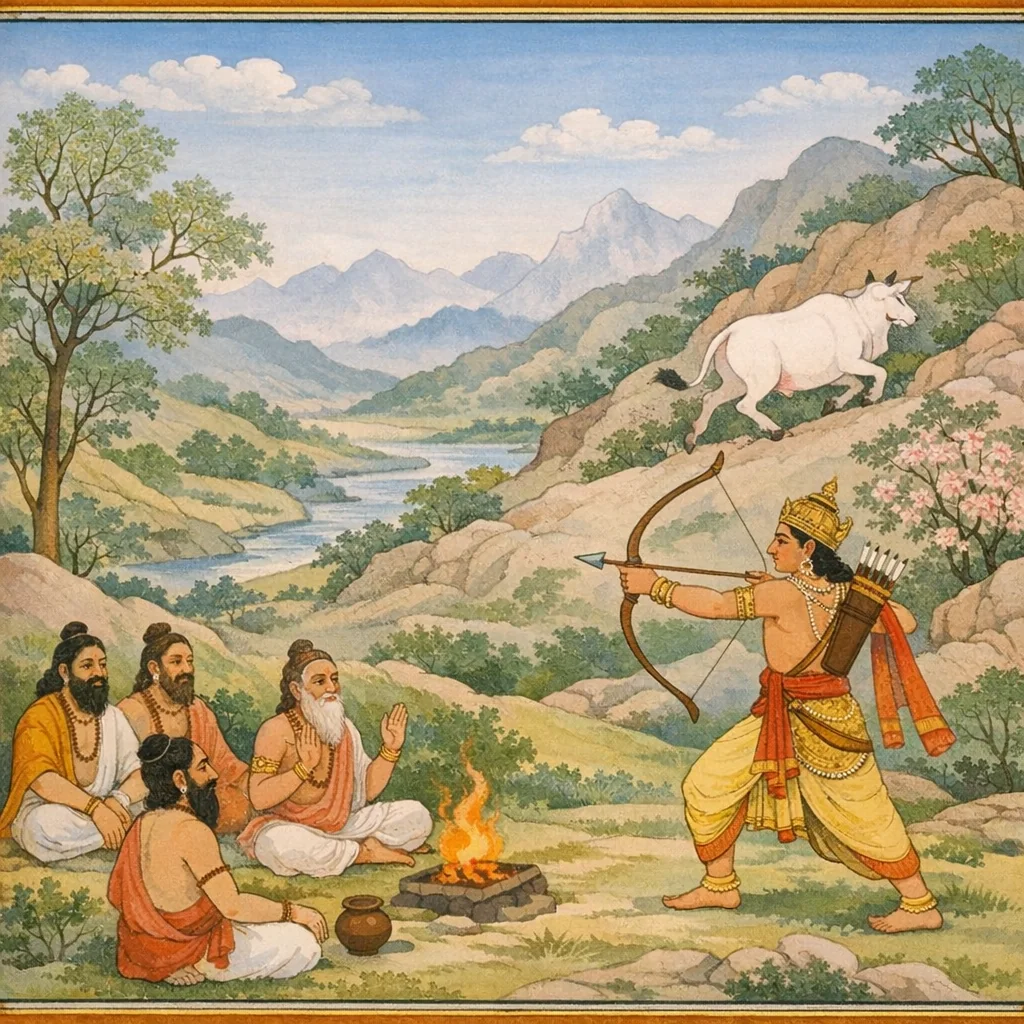
Hari continues a disciplined vaṁśa (genealogical) account, teaching that righteous kingship upholds cosmic order. From Uttānapāda come Uttama and Dhruva; Dhruva’s line runs through Śliṣṭi and Prācīnabarhis to Aṅga and the impious Veṇa, whose adharma brings death at the hands of sages. From the churning of Veṇa arise the Niṣāda and then Pṛthu, who restores sovereignty by “milking” the Earth for the people’s sustenance; his descendants are briefly noted. The narrative turns to the Prācetas, Māriṣā, and Dakṣa’s renewed creation: first mind-born progeny restrained by Hari, then progeny through union, with Nārada’s intervention and Dakṣa’s curses, including remembered tension with Śiva. Dakṣa’s daughters and their marriages (to Dharma, Kaśyapa, Soma, and others) are listed, producing the chief divine classes (Vasus, Rudras, Ādityas, Maruts) as well as asuric and animal lines (Dānavas, Nāgas, birds), with Prahlāda singled out for Viṣṇu-bhakti. The chapter closes by affirming that kings, Suras, and Dānavas are ultimately encompassed within Hari’s form, preparing the way for further cosmological and dharma-centered teaching.
Shlokas
Verse 1
पञ्चमो ऽध्यायः हरिरुवाच / उत्तानपादादभवत्सुरुच्यामुत्तमः सुतः / सुनीत्यां तु ध्रुवः पुत्रः स लेभे स्थानमुत्तमम्
Hari said: From Uttānapāda, through Surucī, was born a son named Uttama; and through Sunīti was born Dhruva—he attained the supreme, exalted station.
Verse 2
मुनिप्रसादादाराध्य देवदेवं जनार्दनम् / ध्रुवस्य तनयः श्लिष्टिर्महाबलपराक्रमः
By the sage’s grace, Dhruva’s son Śliṣṭi worshipped Janārdana, the God of gods, and was endowed with great strength and heroic prowess.
Verse 3
तस्य प्राचीनवर्हिस्तु पुत्रस्तस्याप्युदारधीः / दिवञ्जयस्तस्य सुतस्तस्य पुत्रो रिपुः स्मृतः
From him was born Prācīnabarhis; his son was the noble-minded Udāradhī. Udāradhī’s son was Divaṁjaya, and Divaṁjaya’s son is remembered as Ripu.
Verse 4
रिपोः पुत्रस्तथा श्रीमांश्चाक्षुषः कीर्तितो मनुः / रुरुस्तस्य सुतः श्रीमानङ्गस्तस्यापि चात्मजः
Ripu had a son, the illustrious Cākṣuṣa Manu. His son was the noble Ruru, and Aṅga was also born as Ruru’s son.
Verse 5
अङ्गस्य वेणः पुत्रस्तु नास्तिको धर्मवर्जितः / अधर्ंमकारी वेण(न) श्च मुनिभिश्च कुशैर्हतः
Aṅga’s son Veṇa was an unbeliever, bereft of dharma. Given to unrighteous deeds, that Veṇa was slain by the sages with blades of kuśa grass.
Verse 6
ऊरुं ममन्थुः पुत्रार्थे ततो ऽस्य तनयो ऽभवत् / ह्रस्वो ऽतिमात्रः कृष्णाङ्गो निषीदेति ततो ऽब्रुवन्
Desiring a son, they churned his thigh; from that a son was born—short in stature, exceedingly stout, dark-limbed. Then they said to him, “Sit down.”
Verse 7
निषादस्तेन वै जातो बिन्ध्यशैलनिवासकः / ततो ऽस्य दक्षिणं पाणिं ममन्थुः सहसा द्विजाः
From that, indeed, a Niṣāda was born, a dweller in the Vindhya mountains. Then the twice-born brāhmaṇas, all at once, rubbed and pressed his right hand.
Verse 8
तस्मात्तस्य सुतो जातो विष्णोर्मानसरूपधृक् / पुथुरित्येवनामा स वेणपुत्रो दिवं ययौ
From him a son was born, assuming a mind-born form of Viṣṇu. He was indeed named Pṛthu; that son of Vena departed to heaven.
Verse 9
दुदोह पृथिवीं राजा प्रजानां जीवनाय हि / अन्तर्धानः पृथोः पुत्रो तहविर्धानस्तदात्मजः
For the very sustenance of the people, the king “milked” the Earth. Antardhāna was the son of Pṛthu, and Havirdhāna was his son.
Verse 10
प्राचीनवहर्स्तेत्पुत्रः पृथिव्यामेकराड् बभौ / उपयेमे समुद्रस्य लवणस्य स वै सुताम्
The son of Prācīnavahar (Prācīnabarhis) became the sole sovereign on the earth. He then married the daughter of the Ocean, the lord of salt-waters.
Verse 11
तस्मात्सुषाव सामुद्री दश प्राचीनबर्हिषः / सर्वे प्राचेतसा नाम धनुर्वेदस्य पारगाः
Therefore Sāmudrī, the ocean-born lady, gave birth to the ten sons of Prācīnabarhis. All of them were known as the Prācetas, masters who had fully crossed to the far shore of Dhanurveda, the sacred science of archery.
Verse 12
अपृथगधर्ंमचरणास्ते ऽतप्यन्त महत्तपः / दशवर्षसहस्राणि समुद्रसलिलेशयाः
Those whose conduct was not separate from adharma nevertheless performed great austerity, lying in the waters of the ocean for ten thousand years.
Verse 13
प्रजापतित्वं संप्राप्य भार्या तेषां च मारिष / अभवद्धवशापेन तस्यां दक्षो ऽभवत्ततः
O Māriṣa, having attained the status of Prajāpati, she became their wife; and by her husband’s curse, Dakṣa was thereafter born from her.
Verse 14
असृजन्मनसा दक्षः प्रजाः पूर्वं चतुर्वोधाः / नावर्धन्त च तास्तस्य अपध्याता हरेण तु
In the beginning, Dakṣa created progeny by his mind—beings of fourfold understanding. Yet they did not multiply, for Hari (Viṣṇu) counteracted them and rendered them ineffective.
Verse 15
मैथुनेन ततः सृष्टिं कर्तुमैच्छत्प्रजापतिः / असिक्रीमावहद्भार्यां वीरणस्य प्रजापतेः
Thereafter, Prajāpati desired to carry out creation through sexual union. From the wife of the Prajāpati Vīraṇa, Asikṛmī was born.
Verse 16
तस्य पुत्रसहस्रं तु वैरण्यां समपद्यत / नारदोक्ता भुवश्चान्तं गता ज्ञातुं च नागताः
His thousand sons entered the region of Vairaṇyā. Urged by Nārada, they went to seek the end of the worlds, but they did not return.
Verse 17
दक्षपुत्रसहस्रं च तेषु नष्टेषु सृष्टवान् / शवलाश्वास्ते ऽपि गता भ्रातॄणां पदवीं हर !
Dakṣa created a thousand sons; when they were lost, he created others. Those Śavalāśvas too went along the very path taken by their brothers, O Hara (Śiva).
Verse 18
दक्षः क्रुद्धः शशापाथ नारदं जन्म चाप्स्यसि / नारदो ह्यभवत्पुत्रः कश्यपस्य मुनेः पुनः
Enraged, Dakṣa then cursed Nārada: “You shall indeed take birth.” Thus Nārada again became the son of the sage Kaśyapa.
Verse 19
यज्ञे ध्वस्ते ऽथ दक्षो ऽपि शशाप्रोग्रं महेश्वरम् / स्तुत्वात्वामुपचारैश्च पूजयिष्यन्ति शङ्कर
When the sacrifice was destroyed, Dakṣa too fiercely cursed Mahēśvara (Śiva): “O Śaṅkara, after praising you, they will worship you with ritual offerings and services.”
Verse 20
जन्मान्तरे ऽपि वैरेण ते विनश्यन्ति शङ्कर ! / तस्माद्वैरं न कर्तव्यं कदाचिदपि केनचित् / असिक्न्यां (महिष्यां) जनयामास दक्षो दुहितरो ह्यथ
Even in another birth, people are ruined by enmity, O Śaṅkara. Therefore, no one should ever create hostility at any time. Then Dakṣa begot daughters from Asiknī (his queen).
Verse 21
षष्टिं कन्या रूपयुता द्वे चैवाङ्गिरसे ददौ / द्वे प्रादात्स कृशाश्वाय दश धर्ंमाय चाप्यथ
He gave sixty beautiful daughters; two indeed he gave to Aṅgiras, two he gave to Kṛśāśva, and then ten as well to Dharma.
Verse 22
चतुर्दश कश्यपाय अष्टाविंशातिमिन्दवे / प्रददौ बहुपुत्राय सुप्रभां भामिनीं तथा
Fourteen (daughters) he bestowed upon Kaśyapa, and twenty-eight upon the Moon; and likewise he gave Suprabhā, the radiant lady, to him who was blessed with many sons.
Verse 23
मनोरमां भानुमतीं विशालां बहुदामथ / दक्षः प्रादान्महादेव ! चतस्रो ऽरिष्टनेमये (ने)
Then Dakṣa, O Mahādeva, gave in marriage to Ariṣṭanemi the four daughters—Manoramā, Bhānumatī, Viśālā, and Bahudā.
Verse 24
स कृशाश्वाय च प्रादात्सुप्रजां च तथा जयाम् / अरुन्धती वसुर्यार्(जा) मी लम्बा भानुर्मरुद्वती
To Kṛśāśva he gave in marriage Suprājā, and likewise Jayā; and also Arundhatī, Vasuryā, Arjāmī, Lambā, Bhānū, and Marudvatī.
Verse 25
सङ्कल्पा च मुहूर्ता च साध्या विश्वा च ता दश / धर्ंमपत्न्यः समाख्याताः कश्यपस्य वदाम्यहम्
Saṅkalpā, Muhūrtā, Sādhyā, and Viśvā—these ten are proclaimed as the wives of Dharma; now I declare them as the consorts of Kaśyapa.
Verse 26
अदितिर्दितिर्दनुः काला ह्यनायुः सिंहिका मुनिः / कद्रूः साध्या हरा क्रोधा विनता सुरभिः खगा
Aditi, Diti, Danu, Kāla, Anāyu, Siṁhikā, and Muni; and also Kadrū, Sādhyā, Harā, Krodhā, Vīnatā, Surabhi, and Khagā—these are named as the mother-progenitresses within the lineage.
Verse 27
विश्वेदेवास्तु विश्वायाः साध्या साध्यान्व्यजायत / मरुत्वत्यां मरुत्वन्तो वसोस्तु वसवस्तथा
From Viśvā were born the Viśvedevas; from Sādhyā were born the Sādhyas; from Marutvatī were born the Maruts; and from Vasū were born the Vasus as well.
Verse 28
भानोस्तु भानवो रुद्र ! मुहूर्ताच्च मुहूर्तजाः / लम्बायाश्चैव घोषो ऽथ नागवीथिस्तु या (जा) मितः
O Rudra! From Bhānu (the Sun) arise the Bhānavas; and from the Muhūrtas are born the Muhūrtajas. From Lambā is born Ghoṣa; and from Nāgavīthī is born Yāmitā (or Jāmitā).
Verse 29
पृथिवीविषयं सर्वमरुत्वत्यां व्यजायत / सङ्कल्पायास्तु सर्वात्मा जज्ञे संकल्प एव हि
All that pertains to the realm of earth came forth within Arutvatī; and from Saṅkalpā the All-Self was born—for indeed, he is none other than Saṅkalpa, the cosmic Will itself.
Verse 30
आपो ध्रुवश्च सोमश्च धरश्चैवानिलो ऽनलः / प्रत्यूषश्च प्रभासश्च वसवो नामभिः स्मृताः
Āpa, Dhruva, Soma, Dhara, Anila, Anala, Pratyūṣa, and Prabhāsa—these are remembered as the Vasus by name.
Verse 31
आपस्य पुत्रो वेतुण्डिः (ण्डः) श्रमः श्रान्तो ध्वनिस्तथा / ध्रुवस्य पुत्रो भगवान्कालो लोकप्रकालनः
Āpa had a son named Vetuṇḍi (also read as Veṭuṇḍa). From him are spoken of Śrama (exertion), Śrānta (fatigue), and Dhvani (sound). And Dhruva’s son is the Blessed Lord Kāla (Time), the regulator and ripener of the worlds.
Verse 32
सोमस्य भगवान्वर्चा वर्चस्वी येन जायते / धरस्य पुत्रो द्रुहिणो हुतहव्यवहस्तथा
From Soma arises the divine radiance by which one becomes resplendent; likewise are praised Druhiṇa, son of Dhara, and Hutahavyavaha (Agni), the bearer of oblations.
Verse 33
मनोहरायां शिशिरः प्राणो ऽथ रमणस्तथा / अनिलस्य शिवा भार्या तस्याः पुत्रः पुलोमजः
In Manoharā were born Śiśira, Prāṇa, and also Ramaṇa. Anila’s wife was Śivā; her son was Pulomaja.
Verse 34
अविज्ञातगतिश्चैव द्वौ पुत्रावनिलस्य तु / अग्निपुत्रः कुमारस्तु शरस्तम्बे व्यजायत्
And Anila (the Wind-god) had two sons whose later course was unknown. But Kumāra, the son of Agni, was born in a clump of reeds.
Verse 35
तस्य शाखो विशाखश्च नैगमेयश्च पृष्टजः / अपत्यं कृत्तिकानां तु कार्तिकेय इति स्मृतः
He had (sons named) Śākha and Viśākha, as well as Naigameya and Pṛṣṭaja. But the child of the Kṛttikās is remembered as Kārtikeya.
Verse 36
प्रत्युषस्य विदुः पुत्रमृषिं नाम्ना तु देवलम् / विश्वकर्ंमा प्रभासस्य विख्यातो देववर्धकिः
They know Devala to be the sage (ṛṣi), the son of Pratyūṣa; and Viśvakarmā—famed as the divine craftsman (Devavardhakī)—is renowned as the son of Prabhāsa.
Verse 37
अजैकपादहिर्बुध्न्यस्त्वष्टा रुद्रश्च वीर्यवान् / त्वष्टुश्चाप्यात्मजः पुत्रो विश्वरूपो महातपाः
Ajaikapāda, Ahirbudhnya, Tvaṣṭṛ, and mighty Rudra; and also Viśvarūpa, the son born of Tvaṣṭṛ, a great ascetic—thus are they spoken of.
Verse 38
हरश्च बहुरूपश्च त्र्यम्बकश्चापराजितः / वृषाकपिश्च शम्भुश्च कपर्दे रैवतस्तथा
Hara, the Many-Formed, Tryambaka the Three-Eyed, the Unconquered; Vṛṣākapi, Śambhu, Kapardin, and likewise Raivata—these are names of Śiva.
Verse 39
मृगव्याधश्च शर्वश्च कपाली च महामुने ! / एकादशैते कथिता रुद्रास्त्रिभुवनेश्वराः
O great sage, Mṛgavyādha, Śarva, and Kapālī—these, together with the others, are declared to be the eleven Rudras, sovereign lords of the three worlds.
Verse 40
अदित्यां कश्यपाच्चैव सूर्या द्वादश जज्ञिरे / विष्णुः शक्रोर्ऽय्यमा धाता त्वष्टा पूषा तथैव च
From Aditi and Kaśyapa were born the twelve solar deities (Ādityas): Viṣṇu, Śakra (Indra), Aryamā, Dhātā, Tvaṣṭā, and Pūṣan as well.
Verse 41
विवस्वान्सविता चैव मित्रो वरुण एव च / अशुमांश्च भगश्चैव आदित्या द्वादश स्मृताः
Vivasvān (the Sun), Savitṛ, Mitra, and Varuṇa—as well as Aṃśu and Bhaga—are remembered as (among) the twelve Ādityas.
Verse 42
सप्तविंशतिः सोमस्य पत्न्यो नक्षत्रसंज्ञिताः / हिरण्यकशिपुर्दित्यां हिरण्याक्षो ऽभवत्तदा
The twenty-seven wives of Soma were known by the names of the Nakṣatras, the lunar mansions. In that time, Hiraṇyakaśipu was born of Diti, and Hiraṇyākṣa also came into being.
Verse 43
सिंहिका चाभवत्कन्या विप्रचित्तिपरिग्रहा / हिरण्यकशिपोः पुत्राश्चत्वारः पृथुलौजसः
Siṃhikā was born as a maiden and became the consort of Vipracitti. And Hiraṇyakaśipu had four sons, all endowed with great might.
Verse 44
अनुह्रादश्च ह्रादश्च प्रह्रादश्चैव वीर्यवान् / संह्रादश्चावमस्तेषां प्रह्रादो विष्णुतत्परः
Anuhrāda, Hrāda, the valiant Prahrāda, and Saṃhrāda—these were among them; and of them all, Prahrāda was wholly devoted to Lord Viṣṇu.
Verse 45
संह्रादपुत्र आयुष्माञ्छिबिर्वाष्कल एव च / विरोचनश्च प्राह्रादिर्बलिर्जज्ञे विरोचनात्
From Saṃhrāda’s line was born Āyuṣmān; and also Chibi and Vāṣkala. From Prahlāda came Virocana; and from Virocana, Bali was born.
Verse 46
बलेः पुत्रशतं त्वासीद्वाणज्येष्ठं वृषध्वज ! / हिरण्याक्षसुताश्चासन्सर्व एव महाबलाः
O Vṛṣadhvaja (Śiva), Bali had a hundred sons, with Bāṇa as the eldest; and the sons of Hiraṇyākṣa too were all exceedingly mighty.
Verse 47
उत्कुरः शकुनिश्चैव भूतसन्तापनस्तथा / महानागो महाबाहुः कालनाभस्तथापरः
Utkūra, Śakuni, Bhūta-santāpana; Mahānāga, Mahābāhu; and likewise Kālanābha—these are the beings spoken of by name.
Verse 48
अभवन्दनुपुत्राश्च द्विमूर्धा शङ्करस्तथा / अयोमुखः शङ्कुशिराः कपिलः शम्बरस्तथा
And there were also sons of Danu: Abhavandana, Dvimūrdhā, Śaṅkara; likewise Ayomukha, Śaṅkuśirā, Kapila, and Śambara.
Verse 49
एकचक्रो महाबाहुस्तारकश्च महाबलः / स्वर्भानुर्वृषपर्वा च पुलोमा च महासुरः
Ekacakra, the mighty-armed; Tāraka, of great strength; Svarbhānu; Vṛṣaparvā; and Pulomā—these were great asuras.
Verse 50
एते दनोः सुताः ख्याता विप्रचित्तिश्च वीर्यवान् / स्वर्भानोः सुप्रभा कन्या शर्मिष्ठा वार्षपर्वणी
These are proclaimed as the sons of Danu—among them Vipracitti, the mighty one. And there is Suprabhā, the daughter of Svarbhānu; also Śarmiṣṭhā, the daughter of Vārṣaparvan.
Verse 51
उपदानवी हयशिराः प्रख्याता वरकन्यकाः / वैश्वानरसुते चोभे पुलोमा कालका तथा
Upadānavī and Hayaśirā are renowned as excellent maidens; and the two daughters of Vaiśvānara as well—Pulomā and Kālakā.
Verse 52
उभे ते तु महाभागे मारीचेस्तु परिग्रहः / ताभ्यां पुत्रसहस्राणि षष्टिर्दानवसत्तमाः
Those two illustrious ladies were indeed the wives of Mārīci; through them were born thousands of sons—sixty of whom were the finest among the Dānavas.
Verse 53
पौलोमाः कालकञ्जाश्च मारीचतनयाः स्मृताः / सिंहिकायां समुत्पन्ना विप्रचित्तिसुतास्तथा
The Paulomas and the Kālakāñjas are remembered as the sons of Marīci; likewise, those born of Siṃhikā are said to be the sons of Vipracitti.
Verse 54
व्यंशः शल्यश्च बलवान्नभश्चैव महाबलः / वातापिर्नमुचिश्चैव इल्वलः खसृमांस्तथा
Vyaṃśa and Śalya; Balavān and Nabha, greatly powerful; Vātāpi and Namuci; and also Ilvala, and Khasṛmāṃs as well—these are named in sequence.
Verse 55
अञ्ज (न्त) को नरकश्चैव काल नाभस्तथैव च / निवातकवचा दैत्याः प्रह्रादस्य कुले ऽभवन्
And Añjaka (or Antaka), Naraka, and Kālanābha as well—these Nivātakavaca daityas were born in the lineage of Prahlāda.
Verse 56
षट् सुताश्च महासत्त्वास्ताम्रायाः परिकीर्तिताः / शुकी श्येनी च भासी च सुग्रीवी शुचिगृध्रिके
Six mighty offspring of Tāmrā are declared: Śukī, Śyenī, Bhāsī, Sugrīvī, and Śucigṛdhrikā.
Verse 57
शुकी शुकानजनयदुलूकी प्रत्यलूककान् / श्येनी श्येनांस्तथा भासी भासान् गृध्रांश्च गृध्र्यपि
The female parrot (Śukī) bore parrots; the female owl (Ulūkī) bore owls; the female hawk (Śyenī) bore hawks; likewise Bhāsī bore the bhāsa-birds, and the female vulture (Gṛdhrī) bore vultures as well.
Verse 59
शुक्यौदकान्पक्षिगणान्सुग्रीवी तु व्यजायत / (अश्वानुष्टान् गर्दभांश्च ताम्रावंशः प्रकीर्तितः // गर्प्१,६। ५८ //) विनतायास्तु पुत्रौ द्वौ विख्यातौ गरुडारुणौ / सुरसायाः सहस्रं तु सर्पाणाममितौजसाम्
Sugrīvī gave birth to the hosts of birds known as the Śukyaudakas. (And in the lineage of Tāmrā are also declared the horse-faced beings and the donkeys.) But Vinatā had two celebrated sons—Garuḍa and Aruṇa. And from Surasā were born a thousand serpents of immeasurable might.
Verse 60
काद्रवेयाश्च फणिनः सहस्रममितौजसः / तेषा प्राधाना भूतेश ! शेषवासुकितक्षकाः
O Lord of beings! The hooded serpents born of Kadru—the Kādraveyas—are a thousand in number and of immeasurable power; among them, the foremost are Śeṣa, Vāsuki, and Takṣaka.
Verse 61
शङ्खः श्वेतो महापद्मः (शङ्खः) कम्बलाश्वतरौ तथा / एलापत्रस्तथा नागः कर्कोटकधनञ्जयौ
Śaṅkha, Śveta, Mahāpadma, Kambala, and Aśvatara; likewise Elāpatra, Nāga, Karkoṭaka, and Dhanañjaya—these are the nāga (serpent) beings named here.
Verse 62
गणं क्रोधवशं विद्धि ते च सर्वे च दंष्ट्रिणः / क्रोधा तु जनयामास पिशाचांश्च महाबलान्
Know that this host is under the sway of Anger; all of them are fanged. Indeed, from Anger were born the mighty Piśācas as well.
Verse 63
गास्तु वै जनयामास सुरभिर्महिषांस्तथा / इरा वृक्षलताबल्लीस्तृणजातीश्च सर्वशः
Indeed, Surabhī gave birth to the cows, and likewise to the buffaloes; and Irā brought forth, in every way, trees, creepers, vines, and all varieties of grasses.
Verse 64
खगा च यक्षरक्षांसि मुनिरप्सरसस्तथा / अरिष्टा तु महासत्त्वान् गन्धर्वान्समजीजनत्
And (from her) were born the birds, the Yakṣas and the Rākṣasas, the sages (munis), and likewise the Apsarases. But Ariṣṭā gave birth to the mighty beings—the Gandharvas.
Verse 65
देवा एकोनपञ्चाशन्मरुतो ह्यभवन्निति / एकज्यो तिश्च द्विर्ज्योतिचतुर्ज्योतिस्तथैव च
“The Devas are said to be forty-nine, and the Maruts indeed came into being (as such). Likewise, there are the one-light, the two-light, and the four-light classes.”
Verse 66
एकशुक्रो द्विशुक्रश्च त्रिशुक्रश्च महाबलः / ईदृक् सदृक् तथान्यादृक् ततः प्रतिसदृक् तथा
There is the one-seeded, the two-seeded, and the three-seeded forms, each exceedingly powerful; likewise there are forms ‘of this kind’, ‘similar’, ‘of another kind’, and then again ‘counterpart-similar’ as well.
Verse 67
मितश्च समितश्चैव सुमितश्च महाबलः / ऋतजित्सत्यजिच्चैव सुषेणः सेनजित्तथा
Mita, Samita, and Sumita—mighty in strength; and also Ṛtajit, Satyajit, Suṣeṇa, and likewise Senajit.
Verse 68
अतिमित्रो ऽप्यमित्रश्च दूरमित्रो ऽजितस्तथा / ऋतश्च ऋतधर्ंमा च विहर्ता वरुणो (चमसो) ध्रुवः
He is the exceedingly friendly, and also the unfriendly; the friend who is far away; and the unconquered. He is Ṛta (Cosmic Order) and the upholder of Ṛta; the dispenser of the fruits of karma; Varuṇa; and Dhruva, the steadfast one.
Verse 69
विधारणश्च दुर्मेधा अयमेकगणः स्मृतः / ईदृशश्च सदृक्षश्च एतादृक्षो मिताशनः
‘Vidhāraṇa’ and ‘Durmedhā’—this single class is thus remembered. Such are they, and others like them—of this very kind—living on scant food.
Verse 70
एतेनः प्रसदृक्षश्च सुरतश्च महातपाः / हेतुमान्प्रसवस्तद्वत्सुरभश्च महायशाः
These are: Etena; Prasadṛkṣa; and Surata, a great ascetic. Likewise there are Hetumān and Prasava; and similarly Surabha, of great renown.
Verse 71
नादिरुग्रो ध्वनिर्भासो बिमुक्तो विक्षिपः सहः / द्युतिर्वसुरनाधृष्यो लाभ कामो जयी विराट्
He is the sound and the fierce one; the resonance and the radiance; the liberated and the all-scattering, yet enduring. He is splendor, treasure, the unconquerable; gain, desire, the victorious, and Virāṭ—the all-pervading Cosmic Form.
Verse 72
उद्वेषणो गणो नाम वायुस्कन्धे तु सप्तमे / एतत्सर्वं हरे रूपं राजानो दानवाः सुराः
In the seventh division associated with Vāyu there is a host called Udveṣaṇa. All of this is, in truth, the very form of Hari—kings, Dānavas, and Suras alike.
Verse 73
सूर्यादि परिवारेण मन्वाद्या ईजिरे हरिम्
Accompanied by Sūrya and the other divine attendants, Manu and the rest worshipped Hari (Lord Viṣṇu).
Frequently Asked Questions
It encodes the dharmic duty of rājan (king): to organize resources so the Earth yields prosperity for all beings. The image implies disciplined governance—channeling fertility and wealth toward loka-saṅgraha (public welfare) rather than extraction for private power.
Veṇa is characterized as nāstika and dharma-hīna; his rule becomes a rupture in sacrificial and social order. The sages’ act (using kuśa) signifies that spiritual authority, when protecting dharma, can depose a king who obstructs cosmic-social stability.
Prahlāda functions as the theological counterpoint that bhakti to Viṣṇu is not bound by birth-category (deva/asura). His devotion reorients the narrative from mere taxonomy to the primacy of surrender to Hari.