Adhyaya 4
कृपोपदेशः — द्रौणेरनिद्रा च (Kṛpa’s Counsel and Drauṇi’s Sleepless Resolve)
Upa-parva: Sauptika Parva — Drauṇi’s Resolve and Counsel of Kṛpa (Chapter 4)
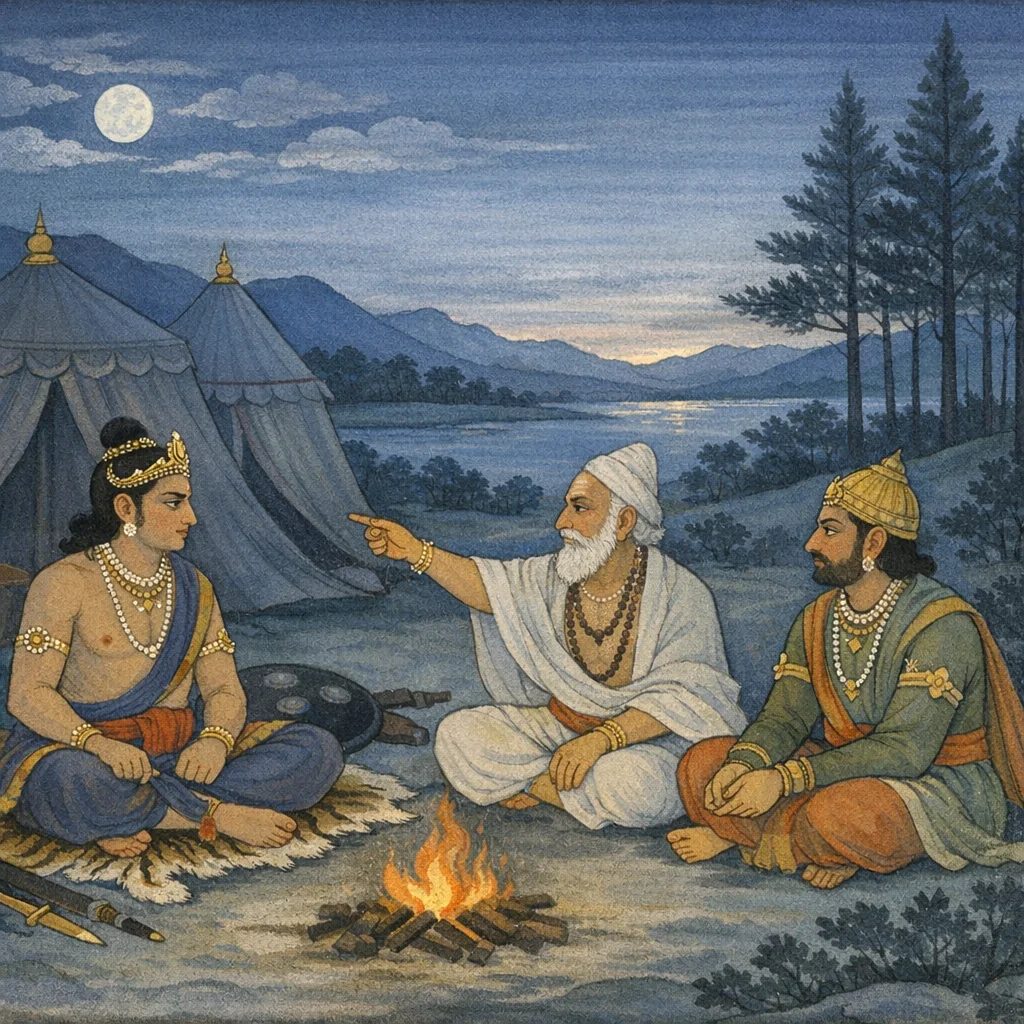
Kṛpa addresses Drauṇi with supportive assurance, stating that the intention to act has arisen and proposing a controlled sequence: rest during the night, then proceed together at dawn with Kṛtavarmā, equipped and coordinated in chariots. Kṛpa amplifies confidence through comparative invulnerability motifs (even Indra cannot restrain them), emphasizing readiness, recovery, and collective strength. Drauṇi replies with heightened agitation, arguing that sleep is impossible for one who is distressed, affronted, or consumed by planning and desire. He enumerates the causes of insomnia: the recollection of Droṇa’s death, the pain of hearing Pāñcāla statements about it, the perceived necessity of retribution against Dṛṣṭadyumna and allied forces, and the burning effect of news about allies’ defeat and the Pāṇḍavas’ victory. He asserts firm determination, concluding that he will undertake a decisive hostile action in the night context (sauptika), after which rest would become possible.
Chapter Arc: रात्रि के धुँधलके में, पराजय की राख पर बैठा अश्वत्थामा भीतर-ही-भीतर जल रहा है—राज्यहानि और पिता-द्रोण के वध की स्मृति उसकी नींद को भस्म कर देती है। → कृपाचार्य और भोजवंशी कृतवर्मा उसे संयम और योजना की राह दिखाते हैं—आज रात कवच-ध्वजा उतारकर विश्राम करो, प्रभात में हम साथ चलेंगे; पर अश्वत्थामा का क्रोध चौगुना होकर जागता है, और दुर्योधन की टूटी जाँघ की दशा सुनकर करुणा भी उसी क्रोध में घुल जाती है। → अश्वत्थामा मन में निश्चय बाँध लेता है कि धृष्टद्युम्न—पिता के वध का कारण—और उसके सहचर पाँचाल, सब रात्रि में ही दंड पाएँगे; प्रतिशोध का यह संकल्प उसके भीतर की अंतिम झिझक को काट देता है। → कृप और कृतवर्मा की ‘प्रभात-युद्ध’ की सलाह के बावजूद, अश्वत्थामा का मन रात के मार्ग पर टिक जाता है—वह मान लेता है कि अब शत्रु-शिविर में सोते हुओं पर ही प्रहार होगा, और उसी से ‘पूर्ण प्रीति’ (विजय-तृप्ति) मिलेगी। → तीनों की दिशा तय हो चुकी है—अगला कदम शत्रु-शिविर की ओर है, जहाँ निद्रा में पड़े पाँचालों पर रात्रि-प्रलय उतरने वाला है।
Shlokas
Verse 1
अ-क्रा् - भोजका अर्थ है भोजवंशी कृतवर्मा। चतुथों5 ध्याय: कृपाचार्यका कल प्रातःकाल युद्ध करनेकी सलाह देना और अश्वत्थामाका इसी रात्रिमें सोते हुओंको मारनेका आग्रह प्रकट करना कृप उवाच दिष्टया ते प्रतिकर्तव्ये मतिर्जातेयमच्युत । नत्वां वारयितुं शक्तो वज़पाणिरपि स्वयम्,कृपाचार्य बोले--तात! तुम अपनी टेकसे टलने-वाले नहीं हो, सौभाग्यकी बात है कि तुम्हारे मनमें बदला लेनेका दृढ़ विचार उत्पन्न हुआ। तुम्हें साक्षात् वज्रधारी इन्द्र भी इस कार्यसे रोक नहीं सकते
Kṛpa said: “It is fortunate, O Acyuta, that this resolve has arisen in you—to exact retaliation. Not even Vajrapāṇi (Indra) himself would be able to restrain you from this deed.”
Verse 2
अनुयास्यावहे त्वां तु प्रभाते सहितावुभौ । अद्य रात्रौ विश्रमस्व विमुक्तकवचध्वज:,आज रातमें कवच और ध्वजा खोलकर विश्राम करो। कल सबेरे हम दोनों एक साथ होकर तुम्हारे पीछे-पीछे चलेंगे
Kṛpa said: “At dawn, the two of us together will follow behind you. For tonight, rest—having laid aside your armor and your banner.” In the grim aftermath of battle, the counsel stresses disciplined regrouping and restraint: even warriors must pause, recover, and proceed in ordered companionship rather than reckless haste.
Verse 3
इस प्रकार श्रीमहाभारत सौप्तिकपर्वमें अश्वत्थामाकी मन्त्रणाविषयक तीसरा अध्याय पूरा हुआ,अहं त्वामनुयास्यामि कृतवर्मा च सात्वत: । परानभिमुखं यान्तं रथावास्थाय दंशितौ जब तुम शत्रुओंका सामना करनेके लिये आगे बढ़ोगे, उस समय मैं और सात्वतवंशी कृतवर्मा दोनों ही कवच धारण करके रथोंपर आरूढ़ हो तुम्हारे साथ चलेंगे
Sañjaya said: “When you advance to confront the enemy, I too—and Kṛtavarmā of the Sātvata line—will follow you. Armoured and mounted upon our chariots, we shall go with you as you move to face the opposing host.”
Verse 4
आवाभ्यां सहित: शत्रून् श्वो निहन्ता समागमे । विक्रम्य रथिनां श्रेष्ठ पजचालान् सपदानुगान्,रथियोंमें श्रेष्ठ वीर! कल सबेरेके संग्राममें हम दोनोंके साथ रहकर तुम अपने शत्रु पांचालों और उनके सेवकोंको बलपूर्वक मार डालना “मैं तो आज सोते समय शत्रुओंका संहार करके निश्चिन्त होनेपर ही विश्राम करूँगा और नींद लूँगा' ।। इति श्रीमहाभारते सौप्तिकपर्वणि द्रौणिमन्त्रणायां चतुर्थोडध्याय:
Kṛpa said: “O best of chariot-warriors, tomorrow in the battle, standing together with us two, strike down your enemies—the Pāñcālas and those who follow at their heels. Show your valor and destroy them.” The counsel frames killing as a planned, collective act to be executed at daybreak, revealing how strategic resolve and the thirst for retribution can eclipse restraint and the ethical limits of warfare.
Verse 5
शक्तस्त्वमसि विक्रम्य विश्रमस्व निशामिमाम् | चिरं ते जाग्रतस्तात स्वप तावन्निशामिमाम्,तात! तुम पराक्रम दिखाकर शत्रुओंका वध करनेमें समर्थ हो, अतः इस रातमें विश्राम कर लो। तुम्हें जागते हुए बहुत देर हो गयी है, अब इस रातमें सो लो
Kṛpa said: “You are capable—having displayed your valor—of striking down the enemies. Therefore rest for this night. You have been awake a long time, dear one; now sleep for a while through this night.”
Verse 6
विश्रान्तश्न विनिद्रश्न स्वस्थचित्तशक्ष॒ मानद । समेत्य समरे शत्रून् वधिष्यसि न संशय:,मानद! थकावट दूर करके नींद पूरी कर लेनेसे तुम्हारा चित्त स्वस्थ हो जायगा। फिर तुम समरभूमिमें जाकर शत्रुओंका वध कर सकोगे, इसमें संशय नहीं है
Kṛpa said: “O bestower of honor, once you have rested and fully slept, your mind will become steady and sound. Then, entering the battlefield, you will be able to slay the enemies—of this there is no doubt.” In context, the counsel frames violence as a deliberate act requiring composure and readiness, not impulsive rage, even as it remains embedded in the harsh ethic of war.
Verse 7
न हि त्वां रथिनां श्रेष्ठ प्रगहीतवरायुधम् । जेतुमुत्सहते शश्वदपि देवेषु वासव:,तुम रथियोंमें श्रेष्ठ हो, तुमने अपने हाथमें उत्तम आयुध ले रखा है। तुम्हें देवताओंके राजा इन्द्र भी कभी जीतनेका साहस नहीं कर सकते हैं
Kṛpa said: “Indeed, O best of chariot-warriors, with your excellent weapon already grasped in hand, even Vāsava (Indra), king among the gods, would never dare to attempt to conquer you.”
Verse 8
कृपेण सहित यान्त॑ गुप्तं च कृतवर्मणा । को द्रौणिं युधि संरब्धं योधयेदपि देवराट्,जब कृतवमसि सुरक्षित हो द्रोणपुत्र अश्वत्थामा मुझ कृपाचार्यके साथ कुपित होकर युद्धके लिये प्रस्थान करेगा, उस समय कौन वीर, वह देवराज इन्द्र ही क्यों न हो, उसका सामना कर सकता है?
Kripa said: “When Drona’s son (Aśvatthāmā), guarded by Kṛtavarman and accompanied by me, advances to battle in wrath, who could possibly fight him on the field—even if that warrior were Indra himself, lord of the gods?”
Verse 9
ते वयं निशि विश्रान्ता विनिद्रा विगतज्वरा: । प्रभातायां रजन्यां वै निहनिष्याम शात्रवान्,अतः हमलोग रातमें विश्राम करके निद्रारहित और विगतज्वर हो प्रातःकाल अपने शत्रुओंका संहार करेंगे
Kṛpa said: “Let us rest tonight, remaining wakeful and free from agitation. Then, at the coming of dawn, we shall strike down the enemy host.” In context, the line frames a deliberate, calculated choice of timing in war—rest and readiness are presented as means to ensure effective violence against foes, highlighting the tension between strategic prudence and the moral weight of planned killing.
Verse 10
तव ह्[स्त्राणि दिव्यानि मम चैव न संशय: । सात्वतो5पि महेष्वासो नित्य॑ं युद्धेषु कोविद:,इसमें संशय नहीं कि तुम्हारे और मेरे पास भी दिव्यास्त्र हैं तथा महाधनुर्धर कृतवर्मा भी युद्ध करनेकी कलामें सदा ही कुशल हैं
Kṛpa said: “There is no doubt that you possess divine weapons—and so do I. And the Sātvata hero, the great archer Kṛtavarmā as well, is ever skilled in the arts of battle.”
Verse 11
ते वयं सहितास्तात सर्वान् शत्रूनू समागतान् | प्रसह समरे हत्वा प्रीतिं प्राप्स्याम पुष्ललाम्,तात! हम सब लोग एक साथ होकर समरांगणमें सामने आये हुए समस्त शत्रुओंका संहार करके अत्यन्त हर्षका अनुभव करेंगे
Kṛpa said: “Dear one, if we act together, then—having forcefully slain in battle all the enemies who have assembled before us—we shall attain abundant satisfaction and exultation.”
Verse 12
विश्रमस्व त्वमव्यग्र: स्वप चेमां निशां सुखम् | अहं च कृतवर्मा च त्वां प्रयान्तं नरोत्तमम्,तुम व्यग्रता छोड़कर विश्राम करो और इस रातमें सुखपूर्वक सो लो। कल खबरेरे युद्धके लिये प्रस्थान करते समय तुम-जैसे नरश्रेष्ठ वीरके पीछे शत्रुओंको संताप देनेवाले हम और कृतवर्मा धनुष लेकर एक साथ चलेंगे। बड़ी उतावलीके साथ आगे बढ़ते हुए रथी अश्वत्थामाके साथ हम दोनों भी कवच धारण करके रथपर आखरूढ़ हो यात्रा करेंगे
Kṛpa said: “Rest now, free from agitation, and sleep comfortably through this night. When you set out tomorrow for battle, O best of men, both I and Kṛtavarmā—bow in hand—will go together behind you, bringing torment to the enemies.”
Verse 13
अनुयास्याव सहितौ धन्विनौ परतापनौ | रथिन त्वरया यान्तं रथमास्थाय दंशितौ,तुम व्यग्रता छोड़कर विश्राम करो और इस रातमें सुखपूर्वक सो लो। कल खबरेरे युद्धके लिये प्रस्थान करते समय तुम-जैसे नरश्रेष्ठ वीरके पीछे शत्रुओंको संताप देनेवाले हम और कृतवर्मा धनुष लेकर एक साथ चलेंगे। बड़ी उतावलीके साथ आगे बढ़ते हुए रथी अश्वत्थामाके साथ हम दोनों भी कवच धारण करके रथपर आखरूढ़ हो यात्रा करेंगे
Kṛpa said: “We two—archers and tormentors of foes—shall follow along together. Mounting our chariot, fully armed in our mail, we will go in haste behind the chariot-warrior who is pressing forward.”
Verse 14
स गत्वा शिबिरं तेषां नाम विश्राव्य चाहवे । ततः कर्तासि शत्रूणां युध्यतां कदनं महत्,उस अवस्थामें शत्रुओंके शिविरमें जाकर युद्धके लिये अपने नामकी घोषणा करके सामने आकर जूझते हुए उन शत्रुओंका बड़ा भारी संहार मचा देना
Having gone to their camp, proclaim your name aloud in the midst of battle; then, engaging them as they fight, you will bring about a great slaughter of the enemy. The counsel frames open, declared combat as the expected warriorly course, contrasting with covert killing and emphasizing the ethic of facing one’s foes directly.
Verse 15
कृत्वा च कदन तेषां प्रभाते विमले5हनि । विहरस्व यथा शक्र: सूदयित्वा महासुरान्,जैसे इन्द्र बड़े-बड़े असुरोंका विनाश करके सुखपूर्वक विचरते हैं, उसी प्रकार तुम भी कल प्रातःकाल निर्मल दिन निकल आनेपर उन शत्रुओंका विनाश करके इच्छानुसार विहार करो
Having wrought their slaughter at dawn, when the day breaks clear and pure, roam at will—just as Śakra (Indra), after destroying the mighty Asuras, moves about in ease and triumph. The counsel frames the coming act as a decisive, dawn-time annihilation of enemies, justified by a victorious divine analogy rather than by restraint or reconciliation.
Verse 16
त्वं हि शक्तो रणे जेतुं पज्चालानां वरूथिनीम् | दैत्यसेनामिव क्रुद्ध: सर्वदानवसूदन:,जैसे सम्पूर्ण दानवोंका संहार करनेवाले इन्द्र कुपित होनेपर दैत्योंकी सेनाको जीत लेते हैं, उसी प्रकार तुम भी रणभूमिमें पांचालोंकी विशाल वाहिनीपर विजय पानेमें समर्थ हो
Verse 17
मया त्वां सहितं संख्ये गुप्तं च कृतवर्मणा । न सहेत विभु: साक्षाद् वज़पाणिरपि स्वयम्,युद्धस्थलमें जब तुम मेरे साथ खड़े होओगे और कृतवर्मा तुम्हारी रक्षामें लगे होंगे, उस समय हाथमें वज्र लिये हुए साक्षात् देवसम्राट् इन्द्र भी तुम्हारा वेग नहीं सह सकेंगे
Kṛpa said: “If you stand in battle together with me, and Kṛtavarman is set to guard you, then even the mighty lord Indra himself—bearing the thunderbolt in his hand—would not be able to withstand your onrush.”
Verse 18
न चाहं समरे तात कृतवर्मा न चैव हि | अनिर्जित्य रणे पाण्डून् न च यास्यामि कहिचित्,तात! समरांगणमें मैं और कृतवर्मा पाण्डवोंको परास्त किये बिना कभी पीछे नहीं हटेंगे
Kṛpa said: “Dear one, neither I nor Kṛtavarmā will ever withdraw from the battlefield. Unless we have first subdued the Pāṇḍavas in combat, we shall not depart—anywhere at all.”
Verse 19
हत्वा च समरे क्रुद्धान् पज्चालान् पाण्डुभि: सह । निवर्तिष्यामहे सर्वे हता वा स्वर्गगा वयम्,समरांगणमें कुपित हुए पांचालोंको पाण्डवोंसहित मारकर ही हम सब लोग पीछे हटेंगे अथवा स्वयं ही मारे जाकर स्वर्गलोककी राह लेंगे
Kṛpa said: “Having slain in battle the enraged Pāñcālas together with the sons of Pāṇḍu, only then shall we all withdraw; or else, if we are slain ourselves, we shall go to heaven.” The statement frames their resolve as a grim either–or: victory through killing, or death embraced as a warrior’s passage—an ethical hardening that treats slaughter as the condition for retreat.
Verse 20
सर्वोपायै: सहायास्ते प्रभाते वयमाहवे । सत्यमेतन्महाबाहो प्रब्रवीमि तवानघ,निष्पाप महाबाहु वीर! कल प्रातःकाल हमलोग सभी उपायोंसे युद्धमें तुम्हारे सहायक होंगे। मैं तुमसे यह सच्ची बात कह रहा हूँ
Kṛpa said: “At daybreak, in the battle, we shall stand by you with every possible means of support. This is the truth, O mighty-armed one; I speak it to you without deceit—O sinless hero.”
Verse 21
राजन! मामाके इस प्रकार हितकारक वचन कहनेपर द्रोणकुमार अभश्वत्थामाने क्रोधसे लाल आँखें करके उनसे कहा--
Kripa said: “O King! When we, his own well-wishers, spoke to him in this beneficial manner, Drona’s son Aśvatthāmā—his eyes reddened with anger—replied to them.”
Verse 22
आतुरस्य कुतो निद्रा नरस्यामर्षितस्य च । अर्थाश्विन्तयतश्चापि कामयानस्य वा पुनः । तदिदं समनुप्राप्तं पश्य मेउद्य चतुष्टयम्,“मामाजी! जो मनुष्य शोकसे आतुर हो, अमर्षसे भरा हुआ हो, नाना प्रकारके कार्योंकी चिन्ता कर रहा हो अथवा किसी कामनामें आसक्त हो, उसे नींद कैसे आ सकती है? देखिये, ये चारों बातें आज मेरे ऊपर एक साथ आ पड़ी हैं
How could sleep come to a man who is distressed by grief, or burning with resentment, or preoccupied with thoughts of many urgent tasks, or again enslaved by desire? Look—today all four of these have fallen upon me at once.
Verse 23
यस्य भागश्नतुर्थो मे स्वप्रमह्नाय नाशयेत् । कि नाम दुःखं लोके5स्मिन् पितुर्वधमनुस्मरन्
Kṛpa said: “If even a fourth share of what is due to me were to be destroyed for the sake of my own pride, what sorrow in this world could equal the grief of remembering the slaughter of one’s father?”
Verse 24
यथा च निहत: पापै: पिता मम विशेषत:,“इन पापियोंने विशेषत: मेरे पिताजीको जिस प्रकार मारा था, वह सब आपने प्रत्यक्ष देखा है। वह घटना मेरे मर्मस्थानोंको छेदे डालती है। ऐसी अवस्थामें मेरे-जैसा वीर इस जगतमें दो घड़ी भी कैसे जीवित रह सकता है?
Kṛpa said: “You yourself witnessed how those sinful men, in particular, slew my father. That sight pierces my most vital depths. In such a state, how could a warrior like me remain alive in this world even for a moment?”
Verse 25
प्रत्यक्षमपि ते सर्व तन्मे मर्माणि कृन्तति । कथं हि मादृशो लोके मुहूर्तमपि जीवति,“इन पापियोंने विशेषत: मेरे पिताजीको जिस प्रकार मारा था, वह सब आपने प्रत्यक्ष देखा है। वह घटना मेरे मर्मस्थानोंको छेदे डालती है। ऐसी अवस्थामें मेरे-जैसा वीर इस जगतमें दो घड़ी भी कैसे जीवित रह सकता है?
Even though you witnessed it all directly, that very event keeps cutting into my vital core. For how could a man like me remain alive in this world even for a moment, after the way those sinners—above all—killed my father?
Verse 26
द्रोणो हतेति यद् वाच: पञ्चालानां शृणोम्यहम् | धृष्टद्युम्नमहत्वा तु नाहं जीवितुमुत्सहे
Kṛpa said: “I hear the Pañcālas proclaim, ‘Droṇa has been slain.’ But unless I myself slay Dhṛṣṭadyumna, I have no heart to go on living.”
Verse 27
'ट्रोणाचार्य धृष्टद्युम्नके हाथसे मारे गये” यह बात जब मैं पांचालोंके मुखसे सुनता आ रहा हूँ, तब धृष्टद्युम्नका वध किये बिना जीवित नहीं रह सकता ।। स मे पितुर्वधाद् वध्य: पञ्चाला ये च संगता: । विलापो भग्नसक्थस्य यस्तु राज्ञो मया श्रुत:
Kripa said: “Ever since I have been hearing from the mouths of the Panchalas that ‘Drona, our teacher, was slain by Dhrishtadyumna’s own hand,’ I cannot go on living unless I kill Dhrishtadyumna. He is to be slain by me for the murder of my father-figure (my revered teacher), and so too are the Panchalas who stood with him. For I have heard the lament of the king, broken in spirit, and that grief demands retribution.”
Verse 28
कस्य हाकरुणस्यापि नेत्राभ्यामश्रु नाव्रजेत्
Kripa said: “From whose eyes would tears not flow—even if he were utterly without compassion—on witnessing such a scene?”
Verse 29
यक्षायं मित्रपक्षो मे मयि जीवति निर्जित:
Kṛpa said: “This one is like a yakṣa—my ally and supporter—yet while I still live, he has been overcome.”
Verse 30
शोकं मे वर्धयत्येष वारिवेग इवार्णवम् | एकाग्रमनसो मेउ5द्य कुतो निद्रा कुत: सुखम्
This surge only increases my grief, like a rushing torrent swelling the ocean. Today my mind cannot settle on a single point—how could there be sleep for me, and how could there be any happiness?
Verse 31
“मेरे जीते-जी जो यह मेरा मित्र-पक्ष परास्त हो गया, वह मेरे शोककी उसी प्रकार वृद्धि कर रहा है, जैसे जलका वेग समुद्रको बढ़ा देता है। आज मेरा मन एक ही कार्यकी ओर लगा हुआ है, फिर मुझे नींद कैसे आ सकती है और मुझे सुख भी कैसे मिल सकता है? ।। वासुदेवार्जुनाभ्यां च तानहं परिरक्षितान् | अविषद्दुतमान् मन्ये महेन्द्रेणापि सत्तम
Kṛpa said: “While I still live, the defeat of my own allied side only swells my grief—just as the rush of waters makes the ocean rise. Today my mind is fixed on a single task; how, then, could sleep come to me, and how could I find any peace? Those men, guarded by Vāsudeva and Arjuna, I deem unshaken and foremost—indeed, O best of men, as if protected even by Mahendra himself.”
Verse 32
'सत्पुरुषोंमें श्रेष्ठ मामाजी! पाण्डव और पांचाल जब श्रीकृष्ण और अर्जुनसे सुरक्षित हों, उस दशामें मैं उन्हें देवराज इन्द्रके लिये भी अत्यन्त असहा एवं अजेय मानता हूँ ।। न चापि शक्तः संयन्तुं कोपमेतं समुत्थितम् | त॑ं न पश्यामि लोकेडस्मिन् यो मां कोपान्निवर्तयेत्
Verse 33
“इस समय जो क्रोध उत्पन्न हुआ है, इसे मैं स्वयं भी रोक नहीं सकता। इस संसारमें किसी भी ऐसे पुरुषको नहीं देख रहा हूँ, जो मुझे क्रोधसे दूर हटा दे ।। तथैव निश्चिता बुद्धिरेषा साधु मता मम । वार्तिकै: कथ्यमानस्तु मित्राणां मे पराभव:
Kṛpa said: “The anger that has arisen in me at this moment—I cannot restrain it even by my own effort. In this world I see no man who could turn me away from wrath. And my resolve stands fixed; in my judgment it is the right course. Yet, as I hear the reports and talk, I am reminded of the defeat and humiliation of my friends.”
Verse 34
पाण्डवानां च विजयो हृदयं दहतीव मे । “इसी प्रकार मैंने जो अपनी बुद्धिमें शत्रुओंके संहारका यह दृढ़ निश्चय कर लिया है, यही मुझे अच्छा प्रतीत होता है। जब संदेशवाहक दूत मेरे मित्रोंकी पराजय और पाण्डवोंकी विजयका समाचार कहने लगते हैं, तब वह मेरे हृदयको दग्ध-सा कर देता है ।। अहं तु कदन कृत्वा शत्रूणामद्य सौप्तिके । ततो विश्रमिता चैव स्वप्ता च विगतज्वर:
Kṛpa said: “The victory of the Pāṇḍavas burns my heart as if it were on fire. Therefore, tonight, in this nocturnal assault, I shall carry out the slaughter of the enemies. After that, I will rest—and sleep—free from the fever of anguish.”
Verse 231
एवमुक्तस्ततो द्रौणिर्मातुलेन हित॑ वच: । अब्रवीन्मातुलं राजन् क्रोधसंरक्तलोचन:
Thus addressed by his maternal uncle with well-meant counsel, Droṇa’s son (Aśvatthāmā), his eyes reddened with anger, replied to his uncle, O King. The moment underscores how even beneficial advice can be rejected when the mind is seized by wrath, a moral fault that clouds judgment in the aftermath of war.
Verse 233
हृदयं निर्दहन्मेड्द्य राज्यहानि न शाम्यति । “इन चारोंका एक चौथाई भाग जो क्रोध है, वही मेरी निद्राको तत्काल नष्ट किये देता है। अपने पिताके वधकी घटनाका बारंबार स्मरण करके इस संसारमें कौन-सा ऐसा दुःख है, जिसका मुझे अनुभव न होता हो। वह दुःखकी आग रात-दिन मेरे हृदयको जलाती हुई अबतक बुझ नहीं पा रही है
Kṛpa says: “My heart keeps burning; the loss of kingdom does not subside within me. Of the four forces that drive men, it is anger—one quarter of them—that instantly destroys my sleep. Recalling again and again the episode of my father’s killing, what sorrow in this world is there that I have not tasted? That fire of grief, burning my heart day and night, has still not been quenched.”
Verse 276
स पुनर्हदयं कस्य क्रूरस्यापि न निर्दहेत् । *धृष्टद्युम्न तो पिताजीका वध करनेके कारण मेरा वध्य होगा और उसके संगी-साथी जो पांचाल हैं, वे भी उसका साथ देनेके कारण मारे जायँगे। इधर जिसकी जाँघें तोड़ डाली गयी हैं, उस राजा दुर्योधनका जो विलाप मैंने अपने कानों सुना है, वह किस क्रूर मनुष्यके भी हृदयको शोक-दग्ध नहीं कर देगा?
Kripa said: “And again, whose heart—even if he were cruel—would not be scorched (with grief) by this? Dhrishtadyumna will be slain by me for killing my father, and his companions, the Panchalas, will also be killed for standing with him. And the lament of King Duryodhana—whose thighs have been shattered—which I have heard with my own ears: what man of hard heart would not be burned by sorrow upon hearing it?”
Verse 283
नृपतेर्भग्नसक्थस्य श्रुत्वा तादृगू वच: पुनः । “टूटी जाँघवाले राजा दुर्योधनकी वैसी बात पुनः सुनकर किस निष्ठुरके भी नेत्रोंसे आँसू नहीं बह चलेगा?
Kṛpa said: “Hearing again such words from the king—Duryodhana—whose thighs had been shattered, whose heart was broken by defeat, who would not have tears rise even in the eyes of the most hard-hearted? The scene compels compassion, even amid the cruelty of war.”
Frequently Asked Questions
The tension between disciplined restraint (rest, timing, counsel) and immediate retaliatory impulse driven by grief and anger, raising questions about legitimate conduct when formal war norms have fractured.
The chapter juxtaposes two models of agency: strategic self-regulation as a safeguard for discernment versus emotion-dominated resolve that narrows moral and cognitive flexibility.
No explicit phalaśruti appears in this passage; its meta-function is thematic—positioning psychological causality (śoka, krodha, vārttā) as a driver of consequential action within the epic’s karmic narrative.