Adhyaya 118
भूरिश्रवसः गर्हा, प्रायोपवेशः, सात्यकिकृतशिरच्छेदः (Bhūriśravas’s Censure, Prāyopaveśa, and Sātyaki’s Beheading)
Upa-parva: Bhūriśravas–Sātyaki Dharmavāda (Episode of reproach, prāyopaveśa, and beheading)
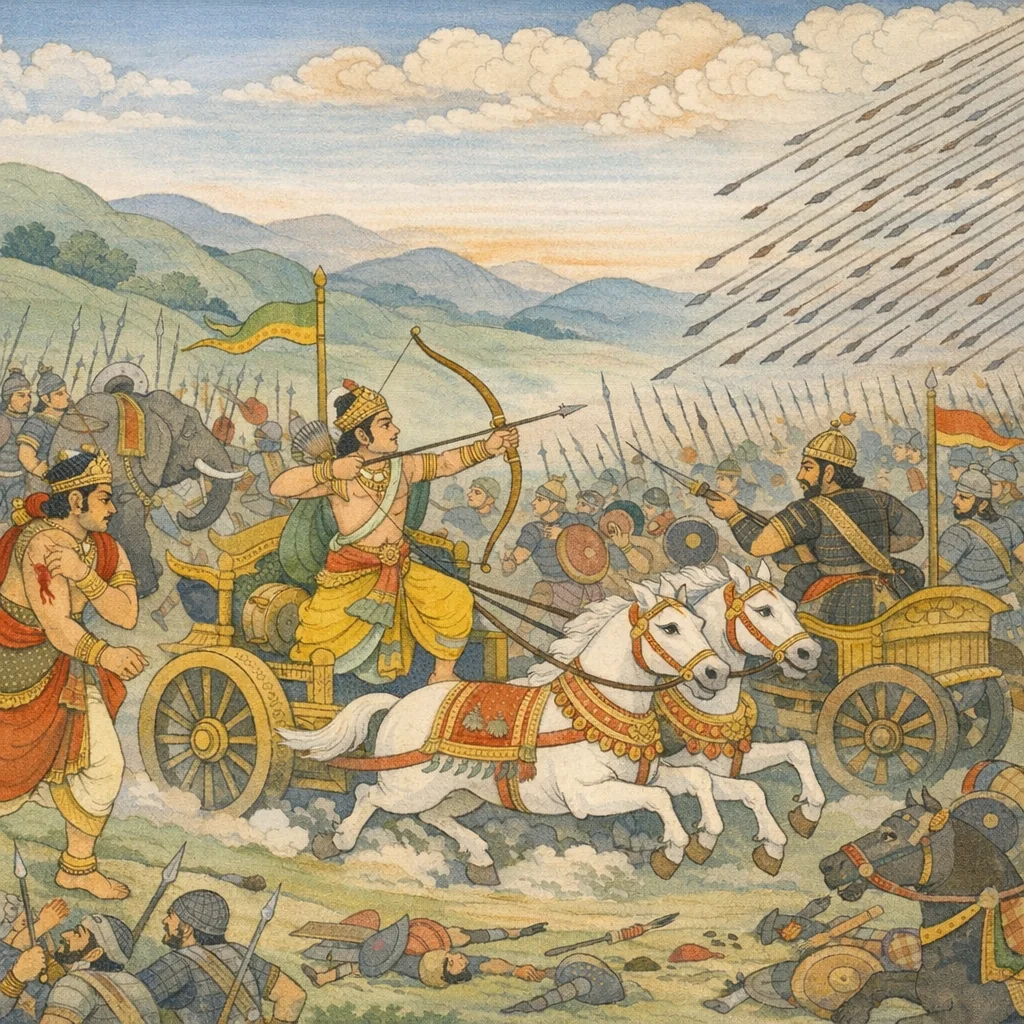
Sañjaya reports that Bhūriśravas’s arm—still holding a sword—falls to the ground, cut by Arjuna (Kirīṭin). Bhūriśravas, seeing himself thwarted, releases Sātyaki and angrily censures Arjuna for striking him when he was not properly engaged, framing the act as a lapse from kṣatra-dharma and attributing it to association with Kṛṣṇa and Vṛṣṇi-Andhaka counsel. He then renounces further combat, sits in prāyopaveśa on the field, arranges arrows, and adopts a yogic, ascetic composure oriented toward Brahmaloka. Public reaction is divided: many reproach Kṛṣṇa and Arjuna while also praising Bhūriśravas’s restraint. Arjuna responds with controlled speech, arguing that cutting the arm of an armed aggressor intent on killing a Vṛṣṇi warrior is not blameworthy, and he cites the earlier killing of Abhimanyu (when weaponless/disabled) as evidence of compromised norms. Arjuna grants Bhūriśravas leave to attain higher worlds. After Bhūriśravas is released, Sātyaki rises with a sword intending to sever Bhūriśravas’s head; despite restraint attempts by several leaders, he proceeds to behead the prāyopaveśa-sitting Bhūriśravas. The armies do not celebrate the act; celestial beings honor Bhūriśravas, and discourse turns to fate (daiva), necessity, and retaliatory logic. Sātyaki defends himself by invoking Abhimanyu’s killing and by asserting a prior vow: anyone who tramples and attacks him in battle is to be slain, even if ascetic-like. The chapter closes with collective silence and a portrayal of Bhūriśravas’s purified ascent after death.
Chapter Arc: संजय धृतराष्ट्र को बताता है कि रणभूमि में सात्यकि का पराक्रम भड़क उठा है—वह अकेला ही आपके महारथियों की भीड़ में घिरकर भी रुकता नहीं, और दुर्योधन-कृतवर्मा की प्रतिष्ठा को फिर चुनौती देता है। → द्रोणाचार्य सात्यकि पर तीक्ष्ण बाण-वर्षा करते हैं—सतहत्तर शरों से उसे घायल करते हैं; दुर्मर्षण, दुःसह और विकर्ण भी क्रमशः अनेक बाणों से उसे बेधते हैं। सात्यकि पर चारों ओर से आच्छादन होता है, पर वह एक-एक को प्रत्युत्तर देकर फिर-फिर नए बाणों से छेदता है और दुर्योधन तक को त्वरित आघात देता है। → सात्यकि विधिपूर्वक सज्जित रथ से ‘धनुर्धरों के आदर्श’ कृतवर्मा के सामने जा टिकता है; अर्जुन-दर्शन की उत्कंठा से प्रेरित होकर वह अस्सी बाणों की वर्षा करता है और फिर सुवर्ण-पंखों वाला प्रचण्ड बाण छोड़ता है—क्रुद्ध सर्प-सा दहकता हुआ। इसी उग्रता में दुर्योधन भी सात्यकि के श्रेष्ठ बाणों से क्षत-विक्षत होकर सहसा पीछे हटता/भागता है। → कृतवर्मा भी प्रत्युत्तर को तत्पर होता है; सारथी को आदेश मिलता है कि ‘सर्वधन्विनां प्रवर’ कृतवर्मा तीव्र वेग से आ रहा है—रथ बढ़ाओ। अध्याय का अंत इस पर होता है कि सात्यकि की धारा ने कौरव-पक्ष को क्षणिक रूप से डगमगाया, पर कृतवर्मा का प्रतिघात अब सामने है। → कृतवर्मा के तीव्र प्रत्याक्रमण में सात्यकि टिकेगा या मार्ग बनाकर अर्जुन तक पहुँचेगा?
Shlokas
Verse 1
(दाक्षिणात्य अधिक पाठके १६३ “लोक मिलाकर कुल ६२३ श्लोक हैं।) ० गा षोडशाधिकशततमोड<्ध्याय: सात्यकिका पराक्रम तथा दुर्योधन और कृतवर्माकी पुनः पराजय संजय उवाच ते किरन्त: शरव्रातान् सर्वे यत्ता: प्रहारिण: । त्वरमाणा महाराज युयुधानमयोधयन्,संजय कहते हैं--महाराज! वे प्रहारकुशल सम्पूर्ण योद्धा सावधान हो बड़ी फुर्तीके साथ बाणसमूहोंकी वर्षा करते हुए वहाँ युयुधानके साथ युद्ध करने लगे
Sañjaya said: O King, all those warriors—skilled in striking and fully alert—hurriedly showered volleys of arrows and engaged Yuyudhāna in battle. The scene underscores the war’s relentless momentum: disciplined martial skill is deployed with speed and coordination, intensifying the moral pressure of combat where prowess and purpose collide.
Verse 2
तं द्रोण: सप्तसप्तत्या जघान निशितै: शरे: । दुर्मर्षणो द्वादशभिर्दु:सहो दशभि: शरै:,द्रोणाचार्यने सात्यकिको सतहत्तर तीखे बाणोंसे घायल कर दिया। फिर दुर्मर्षणने बारह और दु:सहने दस बाणोंसे उन्हें बींध डाला
Sañjaya said: Droṇa struck him with seventy-seven razor-sharp arrows. Then Durmarṣaṇa pierced him with twelve, and Duḥsaha with ten more. Thus, in the press of battle, multiple warriors converge upon a single foe—an image of how martial prowess, loyalty to one’s side, and the harsh calculus of war can overwhelm individual valor, raising the ethical tension between duty in combat and the suffering it inflicts.
Verse 3
विकर्णश्वापि निशितैस्त्रिंशद्धिः कड्कपत्रिभि: । विव्याध स्ये पाश्वें तु स््तनाभ्यामन्तरे तथा,तत्पश्चात् विकर्णने भी कंककी पाँखवाले तीस तीखे बाणोंसे सात्यकिकी बायीं पसली और छाती छेद डाली
Sañjaya said: Vikarṇa too, with thirty sharp arrows feathered with heron-plumes, pierced Sātyaki in the side and also in the region between the breasts. The narration underscores the relentless escalation of battle, where prowess is displayed through precise, injurious strikes, even as the ethical weight of violence in a fratricidal war continues to loom over every act.
Verse 4
दुर्मुखो दशभिर्बाणैस्तथा दुःशासनोडष्टभि: । चित्रसेनश्न शैनेयं द्वाभ्यां विव्याध मारिष,आर्य! तदनन्तर दुर्मुखने दस, दुःशासनने आठ और चित्रसेनने दो बाणोंसे सात्यकिको घायल कर दिया
Sañjaya said: Durmukha struck Śaineya (Sātyaki) with ten arrows; Duḥśāsana likewise with eight; and Citrasena pierced him with two. Thus, in the press of battle, the Kaurava warriors concentrated their missiles upon Sātyaki, seeking to check his advance by sheer force rather than by restraint or counsel.
Verse 5
दुर्योधनश्व॒ महता शरवर्षेण माधवम् | अपीडयद्ू रणे राजन शूराश्षान्ये महारथा:,राजन! उस रणक्षेत्रमें दुर्योधन तथा अन्य शूरवीर महारथियोंने भारी बाण-वर्षा करके सात्यकिको पीड़ित कर दिया
Sañjaya said: O King, in that battle Duryodhana, along with other heroic great chariot-warriors, tormented Mādhava with a mighty shower of arrows. Thus, amid the fury of war, many sought to overpower the foremost fighter by sheer force of arms.
Verse 6
सर्वतः प्रतिविद्धस्तु तव पुत्रैर्महारथै: । तान् प्रत्यविध्यद् वार्ष्णेय: पृथक् पृथगजिद्दागैः,आपके महारथी पुत्रोंद्वारा सब ओरसे घायल किये जानेपर वृष्णिवंशी वीर सात्यकिने उन सबको पृथक्-पृथक् अपने बाणोंसे बींधकर बदला चुकाया
Sañjaya said: Though struck from every side by your sons, the great chariot-warriors, the Vṛṣṇi hero Sātyaki repaid them in kind—piercing each of them separately with his swift, unfailing arrows. The scene underscores the grim reciprocity of battle: injury answered by measured retaliation, prowess serving loyalty amid the relentless ethics of kṣatriya warfare.
Verse 7
भारद्वाजं त्रिभिरबणर्दु:सहं नवभि: शरै: । विकर्ण पञज्चविंशत्या चित्रसेनं च सप्तभि:,उन्होंने द्रोणाचार्यको तीन, दुःसहको नौ, विकर्णको पचीस, चित्रसेनको सात, दुर्मीषणको बारह, विविंशतिको आठ, सत्यव्रतको नौ तथा विजयको दस बाणोंसे घायल किया
Sañjaya said: In the thick of battle, he struck Bhāradvāja (Droṇa) with three arrows, Duḥsaha with nine shafts, Vikarṇa with twenty-five, and Citrasena with seven. The narration underscores the relentless, methodical violence of war—where prowess is measured in precise blows, even as the moral weight of harming revered elders and kinsmen hangs over the field.
Verse 8
दुर्मर्षणं द्वादशभिरष्टाभिश्न विविंशतिम् । सत्यव्रतं च नवभिर्विजयं दशभि: शरै:,उन्होंने द्रोणाचार्यको तीन, दुःसहको नौ, विकर्णको पचीस, चित्रसेनको सात, दुर्मीषणको बारह, विविंशतिको आठ, सत्यव्रतको नौ तथा विजयको दस बाणोंसे घायल किया
Sañjaya said: He struck Durmarṣaṇa with twelve arrows, Viviṃśati with eight, Satyavrata with nine, and Vijaya with ten. In the grim press of battle, the warrior’s measured volleys single out named opponents one by one, showing how the war’s ‘dharma’ has narrowed into disciplined violence and the relentless accounting of harm.
Verse 9
ततो रुक््माड़्दं चाप॑ं विधुन्चानो महारथ: । अभ्ययात् सात्यकिस्तूर्ण पुत्र तव महारथम्,तदनन्तर महारथी सात्यकिने सोनेके अंगदसे विभूषित अपने विशाल धनुषको हिलाते हुए तुरंत ही आपके महारथी पुत्र दुर्योधनपर आक्रमण किया
Sañjaya said: Then the great chariot-warrior Sātyaki, shaking his mighty bow adorned with golden armlets, swiftly advanced to attack your son—your foremost chariot-fighter. The verse underscores the relentless momentum of battle, where prowess and resolve drive warriors forward, even as the moral weight of fratricidal war hangs over every charge.
Verse 10
राजानं सर्वलोकस्य सर्वलोकमहारथम् | शरैरभ्याहनद् गाढं ततो युद्धम भूत् तयो:,सब लोगोंके राजा और समस्त संसारके विख्यात महारथी दुर्योधनको उन्होंने अपने बाणोंद्वारा गहरी चोट पहुँचायी। फिर तो उन दोनोंमें भारी युद्ध छिड़ गया
Sañjaya said: He struck King Duryodhana—lord of the people and a renowned great chariot-warrior known throughout the world—hard with volleys of arrows. Thereupon, a fierce battle erupted between the two, as prowess and kingship were tested amid the relentless demands of war.
Verse 11
विमुज्चन्तौ शरांस्तीक्ष्णान् संदधानौ च सायकान् | अदृश्यं समरे<न्योन्यं चक्रतुस्तो महारथौ,उन दोनों महारथियोंने समरभूमिमें बाणोंका संधान और तीखे बाणोंका प्रहार करते हुए एक-दूसरेको अदृश्य कर दिया
Sañjaya said: As the two great chariot-warriors loosed razor-sharp arrows and kept fitting fresh shafts to their bows, they made each other vanish from sight on the battlefield—each obscured by the other’s relentless storm of missiles. The verse underscores how, in war, prowess can eclipse perception itself, turning combat into a contest of endurance and disciplined skill rather than mere display.
Verse 12
सात्यकि: कुरुराजेन निर्विद्धों बह्मशो भत । अस्रवद् रुधिरं भूरि स्वरसं चन्दनो यथा,सात्यकि कुरुराज दुर्योधनके बाणोंसे बिंधकर अधिक मात्रामें रक्त बहाने लगे। उस समय वे अपना रक्त बहाते हुए लाल चन्दनवृक्षके समान अधिक शोभा पा रहे थे
Sañjaya said: Sātyaki, repeatedly and fiercely pierced by the Kuru king’s arrows, began to pour forth blood in great quantity. Even as he bled, he appeared all the more resplendent—like a red sandalwood tree exuding its natural crimson sap. The verse frames the warrior’s suffering not as mere spectacle, but as steadfast endurance amid the moral weight of battle.
Verse 13
सात्वतेन च बाणीौचघैर्निरविद्धिस्तनयस्तव । शातकुम्भमयापीडो बभौ यूप इवोच्छित:,सात्यकिके बाणसमूहोंसे घायल होकर आपका पुत्र दुर्योधन सुवर्णमय मुकुट धारण किये ऊँचे यूपके समान सुशोभित हो रहा था
Sañjaya said: Pierced by the dense volleys of arrows shot by the Sātvata (Sātyaki), your son Duryodhana—wearing a crown of pure gold—still stood out conspicuously, shining like a tall sacrificial post (yūpa). The image underscores the grim ethic of war: even when wounded, a king’s outward splendor and resolve are displayed amid violence, while the battlefield turns symbols of sacrifice into symbols of destruction.
Verse 14
माधवस्तु रणे राजन् कुरुराजस्य धन्विन: । धनुश्चिच्छेद समरे क्षुरप्रेण हसन्निव,राजन! रफणक्षेत्रमें सात्यकिने धनुर्धर दुर्योधनके धनुषको एक क्षुरप्रद्वारा हँसते हुए-से काट दिया
Sanjaya said: O King, in the thick of battle Mādhava, as though smiling, severed with a razor-headed arrow the bow of the Kuru king—the archer—thereby checking his martial power in a single, decisive stroke.
Verse 15
अथीैनं छिन्नधन्वानं शरैर्बहुभिसचिनोत् । निर्भिन्निश्न शरैस्तेन द्विषता क्षिप्रकारिणा
Sanjaya said: Then, after his bow had been cut down, he was quickly covered with many arrows. Pierced through by those shafts, he suffered at the hands of that swift-acting foe—an image of how, in battle, a moment’s loss of weapon and composure can invite relentless assault.
Verse 16
अथान्यद् धनुरादाय हेमपृष्ठं दुरासदम्
Sañjaya said: Then, taking up another bow—gold-backed and difficult for others to withstand—(he prepared to continue the fight). The line underscores the relentless escalation of martial resolve, where superior weaponry becomes a means to press advantage in a war already heavy with moral cost.
Verse 17
सो$तिविद्धों बलवता तव पुत्रेण धन्विना
Sañjaya said: He was struck with great force—pierced deeply—by the powerful bowman, your son. The line underscores how, in the chaos of battle, prowess and weapon-skill can suddenly overwhelm even a formidable warrior, reminding the listener that martial power, when driven by enmity and duty-bound conflict, brings swift and grievous consequences.
Verse 18
पीडित॑ नृपतिं दृष्टवा तव पुत्रा महारथा:
Sañjaya said: Seeing the king in distress, your sons—those great chariot-warriors—(reacted accordingly).
Verse 19
स च्छाद्यमानो बहुभिस्तव पुत्रैर्महारथै:,आपके बहुसंख्यक महारथी पुत्रोंद्वारा बाणोंसे आच्छादित किये जानेपर सात्यकिने उनमेंसे एक-एकको पहले पाँच-पाँच बाणोंसे घायल किया। फिर सात-सात बाणोंसे बींध डाला। तत्पश्चात् तुरंत ही आठ शीघ्रगामी बाणोंद्वारा दुर्योधनको भी गहरी चोट पहुँचायी
Sañjaya said: Though being covered on all sides by the many great chariot-warriors who were your sons, Sātyaki struck them one by one—first wounding each with five arrows, then piercing each again with seven. Immediately thereafter, with eight swift-flying shafts, he dealt Duryodhana a deep and grievous blow. The scene underscores the relentless momentum of battle, where prowess and resolve drive action even amid overwhelming opposition, and where the ethical tension of kṣatriya-duty plays out through measured, escalating force.
Verse 20
एकैकं पज्चभिर्विद्ध्वा पुनर्विव्याध सप्तभि: । दुर्योधनं च त्वरितो विव्याधाष्टभिराशुगै:,आपके बहुसंख्यक महारथी पुत्रोंद्वारा बाणोंसे आच्छादित किये जानेपर सात्यकिने उनमेंसे एक-एकको पहले पाँच-पाँच बाणोंसे घायल किया। फिर सात-सात बाणोंसे बींध डाला। तत्पश्चात् तुरंत ही आठ शीघ्रगामी बाणोंद्वारा दुर्योधनको भी गहरी चोट पहुँचायी
Sañjaya said: Sātyaki, though covered by the arrows of Duryodhana’s many great chariot-warrior sons, struck each of them—first piercing each with five shafts, then again wounding them with seven. Thereafter, swiftly, he also dealt Duryodhana a deep blow with eight fast-flying arrows. The verse underscores the relentless escalation of force in battle and the warrior’s resolve amid overwhelming opposition.
Verse 21
प्रहसंश्षास्य चिच्छेद कार्मुकं रिपुभीषणम् । नागं मणिमयं चैव शरैर्ध्वजमपातयत्,इसके बाद युयुधानने हँसते हुए ही दुर्योधनके शत्रु भीषण धनुषको और मणिमय नागसे चिह्नित ध्वजको भी बाणोंद्वारा काट गिराया
Sañjaya said: Laughing, he swiftly cut down that enemy-terrifying bow, and with his arrows he also felled the banner marked with a jeweled serpent—an act meant to break the foe’s pride and signal mastery amid the chaos of battle.
Verse 22
हत्वा तु चतुरो वाहांश्षतुर्भिनिशितै: शरै: । सारथिं पातयामास क्षुरप्रेण महायशा:,फिर चार तीखे बाणोंसे उसके चारों घोड़ोंको मारकर महायशस्वी सात्यकिने क्षुरप्रद्वारा उसके सारथिको भी मार गिराया
Sañjaya said: Having slain the four horses with four keen arrows, the greatly renowned warrior then struck down the charioteer as well with a razor-edged shaft—an act that decisively disabled the enemy’s chariot in the relentless ethics of battlefield necessity.
Verse 23
एतस्मिन्नन्तरे चैव कुरुराजं महारथम् । अवाकिरच्छरैईष्टो बहुभिर्मर्म भेदिभि:,तदनन्तर हर्षमें भरे हुए सात्यकिने महारथी कुरुराज दुर्योधनपर बहुत-से मर्मभेदी बाणोंकी वर्षा आरम्भ कर दी
Sañjaya said: In the meantime, Sātyaki—exultant and intent on striking true—began to shower the Kuru king Duryodhana, that great chariot-warrior, with many arrows that pierced the vital points. The scene underscores how, in the fury of battle, skill and resolve are directed toward disabling the opponent decisively, even as the larger war continues to test the bounds of kṣatriya duty and restraint.
Verse 24
स वध्यमान: समरे शैनेयस्य शरोत्तमै: । प्राद्रवत् सहसा राजन पुत्रो दुर्योधनस्तव
Sanjaya said: Struck down in the thick of battle by the finest arrows of Śaineya, your son Duryodhana suddenly fled, O King. The moment underscores how even a proud ruler, when overpowered by superior skill and force, may abandon the field—revealing the moral fragility that accompanies ambition unmoored from dharma.
Verse 25
हाहाभूतं जगच्चासीद् दृष्टवा राजानमाहवे
Sañjaya said: Seeing the king on the battlefield, the whole world seemed to cry out in lamentation—‘Alas, alas!’—as if overcome by grief at the sight of that fateful moment in war.
Verse 26
त॑ तु शब्दमथ श्रुत्वा कृतवर्मा महारथ:
Sañjaya said: Hearing that sound, Kṛtavarmā—the great chariot-warrior—became alert to what it signified amid the turmoil of battle, readying himself to respond to the unfolding crisis.
Verse 27
अभ्ययात् सहसा तत्र यत्रास्ते माधव: प्रभु: । उस कोलाहलको सुनकर महारथी कृतवर्मा सहसा वहीं आ पहुँचा, जहाँ शक्तिशाली सात्यकि खड़े थे ।। विधुन्वानो धनु: श्रेष्ठ चोदयंश्वैव वाजिन:
Sañjaya said: Hearing the tumult, he rushed at once to the spot where Mādhava, the mighty lord, was stationed—brandishing his excellent bow and urging on his horses. The verse underscores the war’s swift, reactive momentum: warriors are driven by sound, urgency, and allegiance, moving instantly toward the perceived center of command and danger.
Verse 28
तमापततन्तं सम्प्रेक्ष्य व्यादितास्यमिवान्तकम्
Sañjaya said: Seeing him rushing in—like Death itself with gaping jaws—(the warriors beheld the oncoming assailant with dread), as the battle’s violence surged toward its fatal climax.
Verse 29
कृतवर्मा रथेनैष द्रुतमापतते शरी
Sañjaya said: Kṛtavarmā, mounted on his chariot, rushed forward swiftly, assailing (the foe) with a shower of arrows—an image of the war’s relentless momentum, where valor and duty are pursued through violent means.
Verse 30
ततः प्रजविताश्वेन विधिवत् कल्पितेन च
Then, with a horse made ready and urged on, and with everything duly arranged according to proper procedure, the next action was set in motion in an orderly, rule-bound manner—showing that even amid the violence of war, operations were carried out with deliberate preparation and adherence to accepted norms.
Verse 31
ततः: परमसंक्रुद्धो ज्वलिताविव पावकौ
Sañjaya said: Then, seized by extreme wrath, they blazed like two fires—anger flaring into a destructive force that drives the battle onward and darkens discernment.
Verse 32
कृतवर्मा तु शैनेयं षड़्विंशत्या समार्पयत्
Sañjaya said: Kṛtavarmā then assigned Śaineya to be dealt with by twenty-six (warriors), indicating a deliberate tactical concentration of force against a single prominent fighter amid the escalating violence of the battle.
Verse 33
चतुरक्षतुरो वाहांश्षतुर्भि: परमेषुभि:
Sanjaya said: With four supreme arrows, he struck down four horses, each with a single shaft—an act of precise, ruthless skill that reflects how, in the ethics of war, mastery can become a tool for swift destruction when dharma has already been eclipsed by the demands of battle.
Verse 34
रुक्मध्वजो रुक्मपृष्ठं महद् विस्फार्य कार्मुकम्
Sañjaya said: Rukmadhvaja, drawing back and fully stretching his great bow with a golden back, prepared for the next act of battle—an image of martial resolve where prowess is displayed through disciplined control of weapon and body amid the moral weight of war.
Verse 35
ततो<शीतिं शिने: पौत्र: सायकान् कृतवर्मणे
Sañjaya said: Then the grandson of Śini discharged eighty arrows at Kṛtavarman—an act that intensifies the battle’s relentless exchange, where prowess is measured by restraint and precision even amid escalating violence.
Verse 36
सो5तिविद्धो बलवता शत्रुणा शत्रुतापन:
Sañjaya said: Struck through with great force by his enemy, the scorcher of foes was grievously pierced—an image of how, in war, even the mighty are brought low when hostility ripens into decisive violence.
Verse 37
त्रिषष्ट्या चतुरोअस्याश्वान् सप्तभि: सारथिं तथा
Sañjaya said: With sixty-four (arrows) he struck down his four horses, and with seven he likewise struck the charioteer—describing the swift, methodical disabling of the chariot in the midst of battle.
Verse 38
सुवर्णपुडुखं विशिखं समाधाय च सात्यकि:
Sañjaya said: Sātyaki, fitting to his bow a golden-feathered arrow, prepared himself to strike—an image of resolute warrior-duty amid the moral weight of the battlefield.
Verse 39
सो<विध्यत् कृतवर्माणं यमदण्डोपम: शर:,सात्यकिका वह बाण यमदण्डके समान भयंकर था। उसने कृतवमकिे सुवर्णजटित चमकीले कवचको छित्न-भिन्न करके उसे गहरी चोट पहुँचायी तथा खूनसे लथपथ होकर वह धरतीमें समा गया
Sañjaya said: A terrifying arrow, like Yama’s rod of punishment, struck Kṛtavarmā. That missile of Sātyaki tore through his gold-inlaid, gleaming armour, inflicted a deep wound, and—soaked in blood—fell down into the earth. The scene underscores the grim moral weight of war: prowess and protection alike prove fragile before the inexorable ‘rod’ of death that battle repeatedly invokes.
Verse 40
जाम्बूनदविचित्रं च वर्म निर्भिद्य भानुमत् अभ्यगाद् धरणीमुग्रो रुधिरेण समुक्षित:,सात्यकिका वह बाण यमदण्डके समान भयंकर था। उसने कृतवमकिे सुवर्णजटित चमकीले कवचको छित्न-भिन्न करके उसे गहरी चोट पहुँचायी तथा खूनसे लथपथ होकर वह धरतीमें समा गया
Sañjaya said: Having pierced and shattered the radiant, gold-inlaid coat of mail—splendid with Jāmbūnada gold—the fierce warrior, drenched in blood, fell and sank to the earth. The scene underscores the grim ethic of Kurukṣetra: prowess and splendid armor do not avert the ordained consequence of battle, where even the illustrious are brought down by relentless martial duty.
Verse 41
संजातरुधिरश्नाजौ सात्वतेषुभिररदित: । सशरं धनुरुत्सृज्य न्यपतत् स्यन्दनोत्तमात्,युद्धसस््थलमें सात्यकिके बाणोंसे पीड़ित हो कृतवर्मा खूनकी धारा बहाता हुआ धनुष- बाण छोड़कर उस उत्तम रथसे उसके पिछले भागमें गिर पड़ा
Sañjaya said: Struck hard by the Sātvata warriors, Kṛtavarmā—his body drenched in flowing blood—let go of his bow along with the arrows and collapsed from his excellent chariot, falling toward its rear. The verse underscores the brutal immediacy of battle: prowess and status offer no immunity when violence escalates beyond control, and the warrior’s body becomes the stark measure of the war’s moral cost.
Verse 42
स सिंहदंष्टो जानुभ्यां पतितो5मितविक्रम: । शरार्दित: सात्यकिना रथोपस्थे नरर्षभ:,सिंहके समान दाँतोंवाला अमितपराक्रमी नरश्रेष्ठ कृतवर्मा सात्यकिके बाणोंसे पीड़ित हो घुटनोंके बलसे रथकी बैठकमें गिर गया
Sañjaya said: Kṛtavarmā—lion-toothed, a bull among men, and of immeasurable prowess—wounded and harried by Sātyaki’s arrows, collapsed onto his knees and fell down upon the seat of his chariot. The verse underscores how, in the moral chaos of war, even renowned warriors are brought low by the immediate consequences of skill, resolve, and relentless assault.
Verse 43
सहस्रबाहुसदृशमक्षोभ्यमिव सागरम् | निवार्य कृतवर्माणं सात्यकि: प्रययौ ततः,सहस्रबाहु अर्जुनके समान दुर्जय तथा महासागरके समान अक्षोभ्य कृतवर्माको इस प्रकार पराजित करके सात्यकि वहाँसे आगे बढ़ गये
Sañjaya said: Having checked Kṛtavarmā—who was hard to overcome, like Sahasrabāhu (Kārtavīrya Arjuna), and unshakable like the ocean—Sātyaki then pressed onward. The verse highlights steadfastness and martial restraint: Sātyaki does not linger for pride or vengeance, but neutralizes an obstacle and continues toward his larger duty amid the chaos of war.
Verse 44
खड्गशक्तिधनु:कीर्णा गजाश्वरथसंकुलाम् । प्रवर्तितोग्ररुधिरां शतश: क्षत्रियर्षभै:,जैसे वृत्रनाशक इन्द्र असुरोंकी सेनाको लाँधकर जा रहे हों, उसी प्रकार शिनिप्रवर सात्यकि सम्पूर्ण सैनिकोंके देखते-देखते उनके बीचसे होकर उस सेनाका परित्याग करके चल दिये। उस कौरव-सेनामें सैकड़ों क्षत्रिय-शिरोमणियोंने भयानक रक्तकी धारा बहा दी थी। वहाँ हाथी, घोड़े तथा रथ खचाखच भरे हुए थे और खड्ग, शक्ति एवं धनुष सब ओर व्याप्त थे
Sañjaya said: The Kaurava host was choked with elephants, horses, and chariots, and everywhere it was strewn with swords, spears, and bows. Set in motion by hundreds of bull-like kṣatriyas, it poured forth a dreadful flood of blood—an image of war’s collective fury, where prowess and pride drive men to deeds that stain the field and test the bounds of dharma.
Verse 45
प्रेक्षतां सर्वसैन्यानां मध्येन शिनिपुड्भव: । अभ्यागाद्वाहिनीं हित्वा वृत्रहेवासुरी चमूम्,जैसे वृत्रनाशक इन्द्र असुरोंकी सेनाको लाँधकर जा रहे हों, उसी प्रकार शिनिप्रवर सात्यकि सम्पूर्ण सैनिकोंके देखते-देखते उनके बीचसे होकर उस सेनाका परित्याग करके चल दिये। उस कौरव-सेनामें सैकड़ों क्षत्रिय-शिरोमणियोंने भयानक रक्तकी धारा बहा दी थी। वहाँ हाथी, घोड़े तथा रथ खचाखच भरे हुए थे और खड्ग, शक्ति एवं धनुष सब ओर व्याप्त थे
Sañjaya said: While all the armies looked on, the descendant of Śini (Sātyaki) advanced through their very midst. Abandoning that battle-line, he moved on—like Indra, the slayer of Vṛtra, breaking past the host of the Asuras. The verse underscores a warrior’s daring resolve amid the moral pressure of a catastrophic war, where individual valor cuts through massed violence and fear.
Verse 46
समाश्चस्य च हार्दिक्यो गृह चान्यन्महद् धनु: । तस्थौ स तत्र बलवान् वारयन् युधि पाण्डवान्,उधर बलवान कृतवर्मा आश्वस्त होकर दूसरा विशाल धनुष हाथमें लेकर युद्धस्थलमें पाण्डवोंका सामना करता हुआ वहीं खड़ा रहा
Sañjaya said: Kṛtavarmā, the son of Hṛdīka, having regained his composure, took up another great bow and stood firm there on the battlefield, powerfully holding back the Pāṇḍavas in the fight. The verse highlights steadfastness and martial duty amid chaos—resuming one’s role in war with resolve, even after disruption.
Verse 116
इति श्रीमहाभारते द्रोणपर्वणि जयद्रथवधपर्वणि सात्यकिकप्रवेशे दुर्योधनकृतवर्मपराजये षोडशाधिकशततमो<ध्याय:
Thus, in the Śrī Mahābhārata, within the Droṇa Parva—specifically in the section concerning the slaying of Jayadratha—this concludes the one-hundred-and-sixteenth chapter, describing Sātyaki’s entry into the fray and the defeat of Duryodhana and Kṛtavarman. The colophon signals a moral turning-point in the war narrative: valor and resolve break through opposing formations, while prideful resistance meets reversal amid the escalating consequences of adharma on the battlefield.
Verse 153
नामृष्यत रणे राजा शत्रोर्विजयलक्षणम् | धनुष कट जानेपर उन्होंने बहुत-से बाण मारकर दुर्योधनके शरीरको चुन दिया। शीघ्रतापूर्वक हाथ चलानेवाले अपने शत्रु सात्यकिके बाणोंद्वारा विदीर्ण होकर राजा दुर्योधन रणभूमिमें विपक्षीके उस विजय-सूचक पराक्रमको सह न सका
Verse 166
विव्याध सात्यकिं तूर्ण सायकानां शतेन ह | उसने सोनेकी पीठवाले दूसरे दुर्धर्ष धनुषको लेकर शीघ्र ही सौ बाणोंसे सात्यकिको घायल कर दिया
Sañjaya said: With swift precision, he pierced Sātyaki with a hundred arrows. The scene underscores the relentless intensity of the battlefield, where martial skill and resolve are tested amid the larger struggle over duty and allegiance.
Verse 173
अमर्षवशमापतन्नस्तव पुत्रमपीडयत् | आपके बलवान् और धरनुर्धर पुत्रके द्वारा अत्यन्त घायल किये जानेपर सात्यकिने भी अमर्षके वशीभूत होकर आपके पुत्रको बड़ी पीड़ा दी
Sañjaya said: Overcome by indignation, Sātyaki pressed hard upon your son, inflicting severe pain in return—his fury rising after being grievously wounded by your powerful, bow-wielding son. The verse underscores how, in the heat of war, injury breeds retaliatory wrath, tightening the cycle of violence and suffering.
Verse 186
सात्यकिं शरवर्षेण छादयामासुरोजसा । राजाको पीड़ित देखकर आपके अन्य महारथी पुत्रोंने बलपूर्वक बाणोंकी वर्षा करके सात्यकिको आच्छादित कर दिया
Sañjaya said: Seeing the king hard-pressed, your other mighty warrior-sons, with forceful energy, showered Sātyaki with a rain of arrows and completely covered him. The scene underscores how, in the heat of war, loyalty to one’s side and the urge to protect a leader can drive coordinated violence that overwhelms even a renowned fighter.
Verse 253
ग्रस्यमानं सात्यकिना खे सोममिव राहुणा । जैसे आकाशमें राहु चन्द्रमापर ग्रहण लगाता है, उसी प्रकार सात्यकिद्वारा राजा दुर्योधनको ग्रस्त होते देख वहाँ सब लोगोंमें हाहाकार मच गया
Sañjaya said: As the Moon in the sky is seized by Rāhu during an eclipse, so did Duryodhana appear to be overwhelmed by Sātyaki. Seeing the king thus being engulfed, a cry of alarm and lamentation rose among all those present—an image that underscores how swiftly fortune turns in war and how fear spreads when a leader is threatened.
Verse 273
भर्त्सयन् सारथिं चाग्रे याहि याहीति सत्वरम् । वह अपने श्रेष्ठ धनुषको कँपाता, घोड़ोंको हाँकता और “आगे बढ़ो, जल्दी चलो” कहकर सारथिको फटकारता हुआ वहाँ आया
Sañjaya said: Rebuking his charioteer, he urgently cried, “Go on—go on, quickly!” Shaking his excellent bow and driving the horses hard, he came there in haste—his impatience and martial resolve revealing the fierce pressure of the battlefield and the harsh, ethically fraught urgency of war.
Verse 283
युयुधानो महाराज यन्तारमिदमब्रवीत् | महाराज! मुँह बाये हुए कालके समान कृतवर्माको वहाँ आते देख युयुधानने अपने सारथिसे कहा--
Sañjaya said: “O King, Yuyudhāna spoke these words to his charioteer. Seeing Kṛtavarmā approaching there—his face turned askew, resembling Death itself—Yuyudhāna addressed his driver.” The narration underscores how, in the chaos of war, a warrior reads omens in an opponent’s bearing and prepares his own action accordingly.
Verse 303
आससाद रणे भोजं प्रतिमानं धनुष्मताम् । तदनन्तर सात्यकि विधिपूर्वक सजाये गये तेज घोड़ोंवाले रथके द्वारा रणभूमिमें धनुर्धरोंके आदर्शभूत कृतवर्माके पास जा पहुँचे
Sanjaya said: In the thick of battle, Satyaki closed in upon Bhoja (Kṛtavarmā), the very standard among bowmen. Immediately thereafter, with his chariot properly readied and drawn by swift, powerful horses, Satyaki reached Kṛtavarmā on the battlefield—advancing with disciplined intent into the heart of the conflict.
Verse 316
समेयातां नरव्याप्रौ व्याप्राविव तरस्विनौ । तत्पश्चात् प्रजजलित पावक और वेगशाली व्याप्रोंके समान वे दोनों नरश्रेष्ठ वीर अत्यन्त कुपित हो एक-दूसरेसे भिड़ गये
Sañjaya said: The two foremost of men closed in upon each other, swift and forceful like two powerful tigers. Thereafter, blazing like kindled fire and driven by fierce momentum, those two heroic champions—utterly enraged—rushed to grapple with one another, as the war’s fury overcame restraint.
Verse 326
निशितै: सायकैस्ती&णैर्यन्तारं चास्य पठचभि: । कृतवमनि सात्यकिपर तेज धारवाले छब्बीस तीखे बाण चलाये और पाँच बाणोंद्वारा उनके सारथिको भी घायल कर दिया
Sañjaya said: With razor-sharp arrows, Sātyaki—exultant and blazing with martial energy—struck Kṛtavarmā with twenty-six keen shafts, and with five more he also wounded his charioteer. The scene underscores the relentless escalation of battle, where skill and fury drive warriors to disable both fighter and support, tightening the moral pressure of war upon all involved.
Verse 333
अविध्यत् साधुदान्तान् वै सैन्धवान् सात्वतस्य हि | इसके बाद चार उत्तम बाण मारकर उसने सात्यकिके सुशिक्षित एवं विनीत चारों सिंधी घोड़ोंको भी बींध डाला
Sañjaya said: He pierced the well-trained and well-reined Sindhu horses belonging to Sātvata (Sātyaki). Then, with four excellent arrows, he struck through all four of Sātyaki’s disciplined, expertly trained Sindhu steeds—an act that underscores how, in the fury of battle, even noble training and restraint in animals offers no protection against the ruthless efficiency of a skilled archer.
Verse 343
रुक्माड्दी रुक्मवर्मा रुक्मपुड्खैरवारयत् । तदनन्तर सोनेके केयूर और सोनेके ही कवच धारण करनेवाले सुवर्णमय ध्वजासे सुशोभित कृतवर्माने सोनेकी पीठवाले अपने विशाल धनुषकी टंकार करके स्वर्णमय पंखवाले बाणोंसे सात्यकिको आगे बढ़नेसे रोक दिया
Sañjaya said: Rukmavarmā and the others checked him with arrows fitted with golden nocks. Then Kṛtavarmā—adorned with a golden banner, wearing golden armlets and a golden cuirass—twanged his great bow with its golden back and, with arrows winged in gold, halted Sātyaki from advancing. In the moral atmosphere of the war, the verse highlights how martial splendor and prowess are employed to obstruct an opponent’s righteous momentum, showing the relentless contest of duty-bound warriors on opposing sides.
Verse 353
प्राहिणोत् त्वरया युक्तो द्रष्टकामो धनंजयम् | तब शिनिपौत्र सात्यकिने बड़ी उतावलीके साथ मनमें अर्जुनके दर्शनकी कामना लिये वहाँ कृतवर्माको अस्सी बाण मारे
Sañjaya said: Eager and in great haste, longing to see Dhanañjaya (Arjuna), the Śini-descendant Sātyaki—driven by an intense desire for Arjuna’s sight—there struck Kṛtavarmā with eighty arrows. The verse underscores how personal loyalty and urgency on the battlefield translate into swift, forceful action, even as the war’s violence escalates.
Verse 363
समकम्पत दुर्धर्ष: क्षितिकम्पे यथाचल: । शत्रुओंको संताप देनेवाला दुर्धर्ष वीर कृतवर्मा अपने बलवान शत्रु सात्यकिके द्वारा अत्यन्त घायल होकर उसी प्रकार काँपने लगा, जैसे भूकम्पके समय पर्वत हिलने लगता है
Sañjaya said: The otherwise unassailable Kṛtavarmā—one who scorches his foes—having been grievously wounded by his powerful enemy Sātyaki, began to tremble like a mountain shaken during an earthquake. The image underscores how, in war, even renowned valor can be brought low by the force of a righteous adversary’s onslaught and the inexorable consequences of violence.
Verse 373
विव्याध निशितैस्तूर्ण सात्यकि: सत्यविक्रम: । तत्पश्चात् सत्यपराक्रमी सात्यकिने तिरसठ बाणोंसे उसके चारों घोड़ोंको और सात तीखे बाणोंसे उसके सारथिको भी शीघ्र ही क्षत-विक्षत कर दिया
Sanjaya said: Satyaki, whose valor never failed, swiftly pierced his foe with sharp arrows. Then, displaying true prowess, he struck down the opponent’s four horses with sixty-three arrows and, with seven keen shafts, quickly wounded and mangled the charioteer as well—an act that shows how, in the ruthless ethics of battlefield duty, disabling the chariot’s support becomes a decisive means to end resistance.
Verse 386
व्यसृजत् तं॑ महाज्वालं संक्ुद्धमिव पन्नगम् । अब सात्यकिने अपने धनुषपर सुवर्णमय पंखवाले अत्यन्त तेजस्वी बाणका संधान किया, जो क्रोधमें भरे हुए सर्पके समान प्रतीत होता था। उस बाणको उन्होंने कृतवर्मापर छोड़ दिया
Sañjaya said: He released that arrow blazing with a great flame, appearing like a serpent inflamed with wrath. Having fixed upon his bow a supremely radiant, gold-feathered shaft, Sātyaki discharged it at Kṛtavarmā—an act that intensifies the moral tension of battle, where anger and prowess drive warriors toward ever more lethal retaliation.
Verse 2436
आप्लुतश्न ततो यान॑ चित्रसेनस्थ धन्विन: । राजन! सात्यकिके श्रेष्ठ बाणोंद्वारा समरांगणमें क्षत-विक्षत होकर आपका पुत्र दुर्योधन सहसा भागा और थधनुर्धर चित्रसेनके रथपर जा चढ़ा
Sañjaya said: O King, then your son Duryodhana—wounded and torn by the arrows of Sātyaki, the foremost among warriors—suddenly fled from the battlefield and climbed onto the chariot of the archer Citraseṇa. The moment underscores how, in war, pride collapses before superior valor, and survival can drive even a king’s son to seek refuge with an ally rather than stand and uphold his boastful resolve.
Verse 2936
प्रत्युद्याहि रथेनैनं प्रवरं सर्वधन्विनाम् । 'सूत! यह कृतवर्मा बाण लेकर रथके द्वारा तीव्र वेगसे आ रहा है। यह सम्पूर्ण धनुर्धरोंमें श्रेष्ठ है। तुम रथके द्वारा इसकी अगवानी करो”
Sañjaya said: “Go forth in your chariot to meet him—this Kṛtavarmā, bearing arrows, is rushing in with fierce speed. He is foremost among all bowmen; receive him by driving out in the chariot.”
Frequently Asked Questions
Whether it is dharmically legitimate to strike a combatant perceived as disengaged or vulnerable, versus the counter-claim that protecting an ally and responding to prior norm-violations justifies exceptional action in battle.
The chapter illustrates dharma’s ‘sūkṣmatā’ (subtlety): ethical judgments depend on intention, context, and prior actions; vows and communal memory (e.g., Abhimanyu’s death) shape what parties consider justifiable.
Yes in narrative effect: Bhūriśravas is depicted as ‘purified’ by a weapon-death and ascetic composure, receiving celestial honor and ascent—functioning as a theological valuation of disciplined end-of-life resolve rather than a formal phalaśruti.