Adhyaya 9
चत्वारोऽाश्रमाः — ब्रह्मचर्यादि मोक्षाश्रमपर्यन्तम् (The Four Āśramas as a graded path to mokṣa)
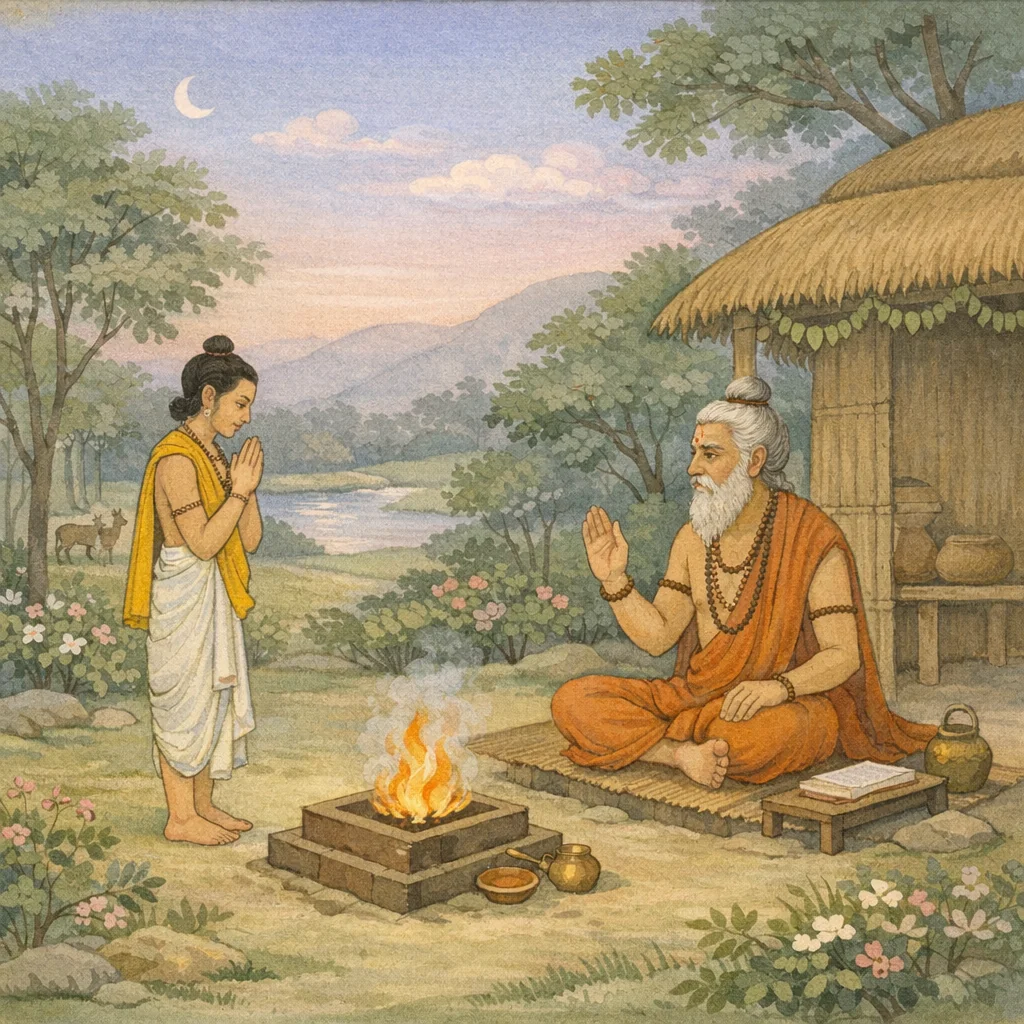
Continuing from varṇa-dharma, Parāśara sets forth āśrama-dharma in order. In brahmacarya, the upanīta student lives in the guru’s household, keeps purity, serves, observes vows, performs sandhyā-upāsanā to Sun and Fire, studies only as instructed, and eats only with permission. Having completed Vedic study and repaid the guru-debt, he enters gārhasthya: lawful marriage, righteous livelihood, and fivefold honoring—Pitṛs by nivāpa, Devas by yajña, guests by food and hospitality, sages by svādhyāya, and Prajāpati by offspring. The householder is declared the support of the other āśramas; neglect of guests reverses merit and demerit. In old age he becomes vānaprastha, practicing forest austerities, honoring guests, and enduring hardships, thereby burning faults and attaining lasting worlds. Finally, the bhikṣu/parivrājaka renounces possessions and the aims of tri-varga, practices non-injury in thought, speech, and deed, stays only briefly in settlements, takes alms only to sustain life, and abandons kāma, krodha, and lobha. The mokṣa-āśrama culminates in inner sacrifice and calm like a fuel-less flame, leading to Brahmaloka.
Shlokas
Verse 1
बालः कृतोपनयनो वेदाहरणतत्परः गुरुगेहे वसेद् भूप ब्रह्मचारी समाहितः
After undergoing upanayana, O King, the boy should dwell in his teacher’s house as a disciplined brahmacārin, steady in mind and intent on receiving and studying the Veda.
Verse 2
शौचाचारवता तत्र कार्यं शुश्रूषणं गुरोः व्रतानि चरता ग्राह्यो वेदश् च कृतबुद्धिना
There, the student established in purity of conduct should diligently serve the teacher; and, observing the prescribed vows, with a disciplined and resolute mind, he should receive and master the Veda.
Verse 3
उभे संध्ये रविं भूप तथैवाग्निं समाहितः उपतिष्ठेत् तथा कुर्याद् गुरोर् अप्य् अभिवादनम्
O King, with a steady and gathered mind he should attend upon both sandhyās, reverencing the Sun and likewise the sacred Fire; and in the same spirit he should offer due salutation to his teacher.
Verse 4
स्थिते तिष्ठेद् व्रजेद् याते नीचैर् आसीत चासति शिष्यो गुरौ नृपश्रेष्ठ प्रतिकूलं न संचरेत्
O best of kings, when the teacher stands the disciple should stand; when the teacher walks he should follow; when the teacher sits he should sit humbly. In the guru’s presence, the disciple must never act or move in a contrary, disrespectful way.
Verse 5
तेनैवोक्तः पठेद् वेदं नान्यचित्तः पुरः स्थितः अनुज्ञातश् च भिक्षान्नम् अश्नीयाद् गुरुणा ततः
Thus instructed by the teacher, the student should recite the Veda with an undistracted mind, standing before the Guru; and only when permitted by the Guru should he thereafter partake of the alms-food.
Verse 6
अवगाहेद् अपः पूर्वम् आचार्येणावगाहिताः समिज्जलादिकं चास्य काल्यं काल्यम् उपानयेत्
First he should bathe in the water sanctified by his teacher’s own bathing; and, morning after morning, at the proper time, he should bring for his teacher what is needed—firewood, water, and the like.
Verse 7
गृहीतग्राह्यवेदश् च ततो ऽनुज्ञाम् अवाप्य वै गार्हस्थ्यम् आवसेत् प्राज्ञो निष्पन्नगुरुनिष्कृतिः
Having duly received the Veda that is fit to be received, and then—after obtaining his teacher’s permission—let the wise one, who has fully completed what is owed to the guru, enter and dwell in the householder’s stage of life.
Verse 8
विधिनावाप्तदारस् तु धनं प्राप्य स्वकर्मणा गृहस्थकार्यम् अखिलं कुर्याद् भूपाल शक्तितः
O King, one who has, according to sacred rule, obtained a lawful wife and gained wealth through his own rightful work should, in due order and to the extent of his capacity, perform the entire range of a householder’s duties.
Verse 9
निवापेन पितॄन् अर्चेद् यज्ञैर् देवांस् तथातिथीन् अन्नैर् मुनींश् च स्वाध्यायैर् अपत्येन प्रजापतिम्
With the nivāpa (funeral offering) one should honor the Pitṛs; with sacrifices, the Devas; with food, the guest; with self-study (svādhyāya), the sages; and with offspring, Prajāpati—thus sustaining the ordained order of dharma.
Verse 10
बलिकर्मणा च भूतानि वात्सल्येनाखिलं जगत् प्राप्नोति लोकान् पुरुषो निजकर्मसमार्जितान्
By the sacred offering (bali) living beings are nourished, and by compassionate care the whole world is upheld; thus a person attains the realms earned by one’s own deeds, shaped by the karma one has gathered.
Verse 11
भिक्षाभुजश् च ये केचित् परिव्राड्ब्रह्मचारिणः ते ऽप्य् अत्रैव प्रतिष्ठन्ते गार्हस्थ्यं तेन वै परम्
Even those who live on alms—wandering renunciants and brahmacārins—are sustained only by what is established here in the householder’s station; therefore the discipline of gārhasthya is truly supreme.
Verse 12
वेदाहरणकार्येण तीर्थस्नानाय च प्रभो अटन्ति वसुधां विप्राः पृथिवीदर्शनाय च
O Lord, brahmanas wander across the earth—sometimes to recover and preserve the Veda, sometimes to bathe at sacred tīrthas, and also to behold the world in its true expanse.
Verse 13
अनिकेता ह्य् अनाहारा यत्रसायंगृहास् तु ये तेषां गृहस्थः सर्वेषां प्रतिष्ठा योनिर् एव च
Those without a home and without stored food—who go to a house only at evening—depend on others for their very sustenance; therefore the householder is the foundation of them all, and indeed the source from which the other ways of life arise.
Verse 14
तेषां स्वागतदानादि वक्तव्यं मधुरं नृप गृहागतानां दद्याच् च शयनासनभोजनम्
O king, such guests should be welcomed with gracious honor and addressed with gentle, pleasing words; and to those who come to one’s home one should give rest—a bed, a seat, and food—thus fulfilling dharma through hospitality.
Verse 15
अतिथिर् यस्य भग्नाशो गृहात् प्रतिनिवर्तते स दत्त्वा दुष्कृतं तस्मै पुण्यम् आदाय गच्छति
If a guest, his hope of welcome broken, turns back from a house, he departs giving that householder his own demerit and carrying away the householder’s merit.
Verse 16
अवज्ञानम् अहंकारो दम्भश् चैव गृहे सतः परितापोपघातौ च पारुष्यं च न शस्यते
For one who abides in household life, contempt for others, egoism, and hypocrisy are never approved; nor are deeds that cause affliction or injury, nor harshness in speech and conduct—these have no place in a home grounded in dharma.
Verse 17
यस् तु सम्यक् करोत्य् एवं गृहस्थः परमं विधिम् सर्वबन्धविमुक्तो ऽसौ लोकान् आप्नोत्य् अनुत्तमान्
But that householder who, in this very manner, rightly fulfills the highest rule of life—freed from every binding attachment—attains the unsurpassed worlds.
Verse 18
वयःपरिणतौ राजन् कृतकृत्यो गृहाश्रमी पुत्रेषु भार्यां निक्षिप्य वनं गच्छेत् सहैव वा
O King, when age has ripened and the aims of the householder’s life have been duly fulfilled, the man established in the household stage should entrust his wife to the care of his sons and depart for the forest—or, if she so chooses, he may go together with her.
Verse 19
पर्णमूलफलाहारः केशश्मश्रुजटाधरः भूमिशायी भवेत् तत्र मुनिः सर्वातिथिर् नृप
Living only on leaves, roots, and fruits—wearing long hair, beard, and matted locks—he should sleep upon the bare ground. There, O king, that sage becomes ‘a guest to all’, belonging to none and welcomed by all.
Verse 20
चर्मकाशकुशैः कुर्यात् परिधानोत्तरीयके तद्वत् त्रिषवणं स्नानं शस्तम् अस्य नरेश्वर
O lord of men, let him fashion his lower garment and upper wrap from leather, kāśa grass, and kuśa; likewise, bathing at the three daily sandhyā-junctions is declared the proper rule for him.
Verse 21
देवताभ्यर्चनं होमः सर्वाभ्यागतपूजनम् भिक्षाबलिप्रदानं च शस्तम् अस्य नरेश्वर
O king of men, worship of the deities, homa into the sacred fire, honoring every arriving guest, and giving alms and bali-offerings—these are declared proper and praiseworthy duties for him.
Verse 22
वन्यस्नेहेन गात्राणाम् अभ्यङ्गश् चास्य शस्यते तपस्यतश् च राजेन्द्र शीतोष्णादिसहिष्णुता
O king, for one engaged in austerity it is commended to anoint the limbs with oil obtained from the forest; and for the ascetic, endurance of cold, heat, and the like is also enjoined.
Verse 23
यस् त्व् एतां नियतश् चर्यां वानप्रस्थश् चरेन् मुनिः स दहत्य् अग्निवद् दोषाञ् जयेल् लोकांश् च शाश्वतान्
But the sage who, as a vānaprastha, lives this disciplined regimen with steadfast restraint burns away his faults like fire and attains the everlasting worlds.
Verse 24
चतुर्थश् चाश्रमो भिक्षोः प्रोच्यते यो मनीषिभिः तस्य स्वरूपं गदतो मम श्रोतुं नृपार्हसि
The wise declare a fourth āśrama—the life of the bhikṣu, the mendicant. O king, you are worthy to hear from me as I describe its true nature.
Verse 25
पुत्रद्रव्यकलत्रेषु त्यक्तस्नेहो नराधिप चतुर्थम् आश्रमस्थानं गच्छेन् निर्धूतमत्सरः
O king, when a man has cast off attachment to sons, wealth, and spouse, and has shaken envy from his heart, he should proceed to the fourth āśrama—the sannyāsa, the final station of peace.
Verse 26
त्रैवर्गिकांस् त्यजेत् सर्वान् आरम्भान् अवनीपते मित्रादिषु समो मैत्रः समस्तेष्व् एव जन्तुषु
O lord of the earth, let him abandon every undertaking aimed merely at the three worldly ends; let him be even-minded toward friends and others, and abide in friendliness toward all beings.
Verse 27
जरायुजाण्डजादीनां वाङ्मनःकर्मभिः क्वचित् युक्तः कुर्वीत न द्रोहं सर्वसङ्गांश् च वर्जयेत्
Toward beings born of womb, egg, and every other kind, whenever occasion arises, let him be disciplined in speech, mind, and deed: let him do no harm, bear no malice, and abandon all binding attachments.
Verse 28
एकरात्रस्थितिर् ग्रामे पञ्चरात्रस्थितिः पुरे तथा तिष्ठेद् यथा प्रीतिर् द्वेषो वा नास्य जायते
Let him stay for a single night in a village and for five nights in a city; and even there he should dwell so that neither attachment nor aversion arises within him.
Verse 29
प्राणयात्रानिमित्तं च व्यङ्गारे भुक्तवज्जने काले प्रशस्तवर्णानां भिक्षार्थं पर्यटेद् गृहान्
And solely for the continuance of life, when the cooking-fire has died down and the household has finished its meal, at the proper time he should go from house to house among the virtuous, seeking alms.
Verse 30
कामः क्रोधस् तथा दर्पमोहलोभादयश् च ये तांस् तु दोषान् परित्यज्य परिव्राड् निर्ममो भवेत्
Casting away desire, anger, pride, delusion, greed, and such faults, the wandering renunciant (parivrājaka) should become free from possessiveness, resting without the sense of “mine.”
Verse 31
अभयं सर्वभूतेभ्यो दत्त्वा यश् चरते मुनिः न तस्य सर्वभूतेभ्यो भयम् उत्पद्यते क्वचित्
The sage who moves through the world having granted fearlessness to all beings—never, at any time, does fear arise for him from any being.
Verse 32
कृत्वाग्निहोत्रं स्वशरीरसंस्थं शारीरम् अग्निं स्वमुखे जुहोति विप्रस् तु भिक्षोपगतैर् हविर्भिश् चिताग्निना स व्रजति स्म लोकान्
Having duly performed the Agnihotra, the brāhmaṇa then offers into his own mouth the “bodily fire” that abides within his frame, making his very self the sacrificial altar. Sustained by oblations that come to him as alms, he departs onward to the worlds, purified as though by the fire of the funeral pyre.
Verse 33
मोक्षाश्रमं यश् चरते यथोक्तं शुचिः स्वसंकल्पितबुद्धियुक्तः अनिन्धनं ज्योतिर् इव प्रशान्तः स ब्रह्मलोकं श्रयते द्विजातिः
That twice-born who lives the discipline of the Mokṣa-āśrama exactly as it is taught—pure in conduct, with a mind made steady by right resolve—becomes calm like a flame that burns without fuel; and such a one attains refuge in Brahmaloka.
Frequently Asked Questions
Because brahmacārins and wandering renunciants depend on the householders’ support; thus gārhasthya is the practical foundation (pratiṣṭhā) of the other āśramas.
Non-injury and non-possessiveness: abandoning kāma, krodha, lobha and all ‘mine’-sense, granting fearlessness to all beings through harmlessness in speech, mind, and action.
A purified, calm, fuel-less-flame-like tranquility and inner sacrificial life that leads the twice-born to Brahmaloka.