Adhyaya 14
Śrāddha’s Cosmic Reach and Kāla-Nirṇaya (Sacred Timings): Amāvāsyā, Nakṣatra-Yoga, Tīrtha, and Minimum Offerings
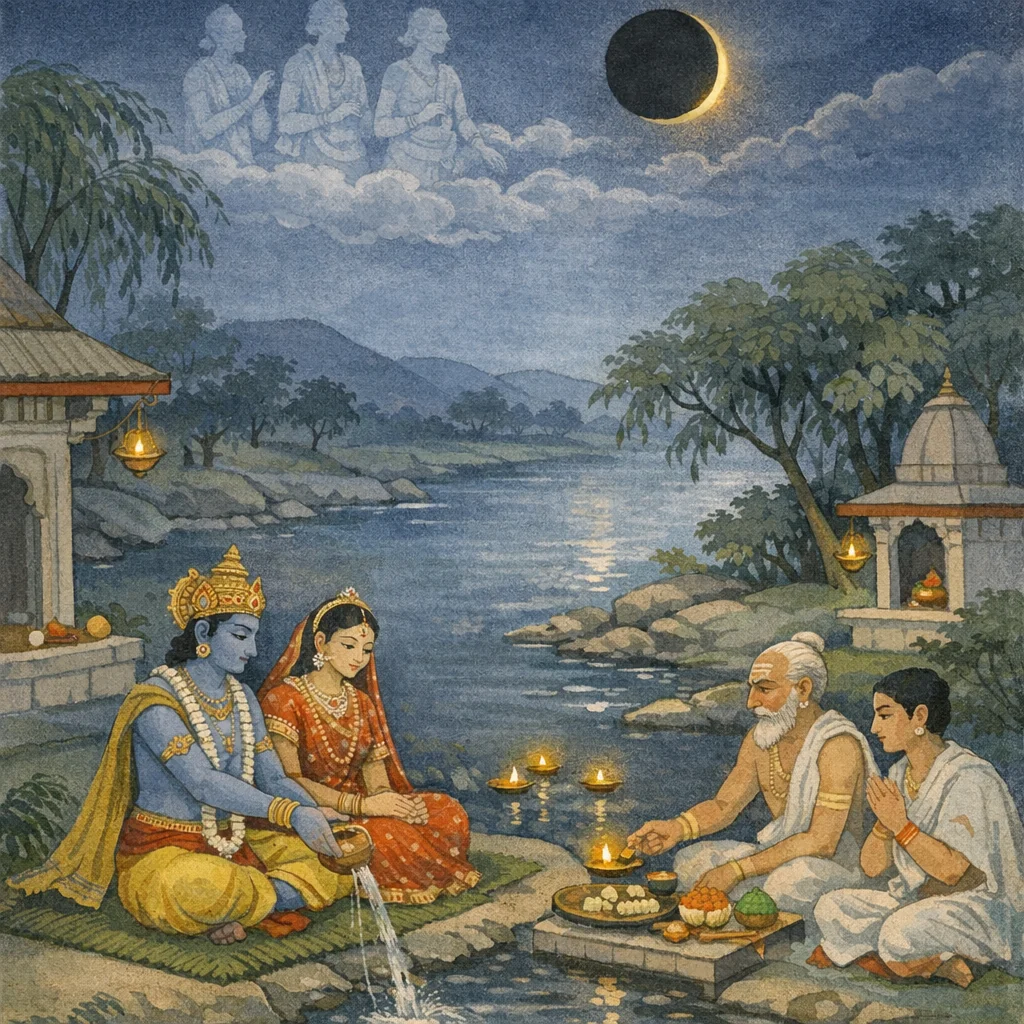
Parāśara teaches Maitreya that śrāddha done with śraddhā satisfies not only the Pitṛs but also gods, ṛṣis, humans, animals, and even creeping life, since the rite participates in the all-pervading governance of Lord Viṣṇu. He then gives kāla-nirṇaya: proper occasions such as the monthly kṛṣṇa-caturdaśī/Amāvāsyā and aṣṭakā days, as well as vyatīpāta, ayana, equinoxes, eclipses, and auspicious planetary transits; and also optional/remedial śrāddhas for planetary afflictions, ominous dreams, and the new harvest. Certain Amāvāsyā combinations with specific yogas and nakṣatras grant long-lasting Pitṛ-satisfaction (for years, even up to yuga-scale), authorized by Sanatkumāra’s teaching to Ilā. He stresses that in special contexts even tilodaka (sesame-water) can be a complete śrāddha, and that bathing and worship at tīrthas—Gaṅgā, Śatadrū, Vipāśā, Sarasvatī, Naimiṣa-Gomatī—remove ancestral demerit. The Pitṛs’ own verses proclaim sincerity over wealth: if one cannot feed brāhmaṇas, grain, a small dakṣiṇā, or even a few sesame seeds offered with devotion suffice; in utter poverty, a humble forest-prayer with honest labor is given as the last resort—teaching bhāva as the true source of ritual fruit.
Shlokas
Verse 1
ब्रह्मेन्द्ररुद्रनासत्यसूर्याग्निवसुमारुतान् विश्वेदेवान् ऋषिगणान् वयांसि मनुजान् पशून्
Brahmā, Indra, Rudra; the Nāsatyas (Aśvins); Sūrya and Agni; the Vasus and the Maruts; the Viśvedevas; the hosts of Ṛṣis; birds, human beings, and beasts—all these are comprehended within the one all-pervading sovereignty of the Supreme, who stands as their inner ruler.
Verse 2
सरीसृपान् पितृगणान् यच् चान्यद् भूतसंज्ञितम् श्राद्धं श्रद्धान्वितः कुर्वन् तर्पयत्य् अखिलं जगत्
Performing the śrāddha with faith, one satisfies the creeping beings, the hosts of the Pitṛs, and whatever else is reckoned among living creatures; indeed, by that act he brings contentment to the entire world.
Verse 3
मासि मास्य् असिते पक्षे पञ्चदश्यां नरेश्वर तथाष्टकासु कुर्वीत काम्यान् कालाञ् छृणुष्व मे
O lord of men, in every month—on the fifteenth day of the dark fortnight, and likewise on the Aṣṭakā days—one should perform kāmya rites prompted by one’s intent. Hear from me the proper seasons and appointed times for these sacred acts.
Verse 4
श्राद्धार्हम् आगतं द्रव्यं विशिष्टम् अथवा द्विजम् श्राद्धं कुर्वीत विज्ञाय व्यतीपाते ऽयने तथा
When wealth fit for offering in śrāddha is obtained—or when an eminent dvija arrives—one should, with due understanding, perform the śrāddha; likewise at vyatīpāta and at the transitions of ayana.
Verse 5
विषुवे चापि संप्राप्ते ग्रहणे शशिसूर्ययोः समस्तेष्व् एव भूपाल राशिष्व् अर्के च गच्छति
When the equinox arrives, and when eclipses of the Moon and Sun occur, O king, the Sun also passes through all the zodiacal signs—by these ordered revolutions time in the world is measured.
Verse 6
नक्षत्रग्रहपीडासु दुष्टस्वप्नावलोकने इच्छाश्राद्धानि कुर्वीत नवसस्यागमे तथा
When afflicted by the troubling influences of stars and planets, when ominous dreams are seen, and likewise at the coming of the fresh harvest, one should perform kāmya śrāddhas as intended—so that disturbance is pacified and dharma’s right order is restored.
Verse 7
अमावास्या यदा मैत्रविशाखास्वातियोगिनी श्राद्धैः पितृगणस् तृप्तिं तथाप्नोत्य् अष्टवार्षिकीम्
When the new-moon day (Amāvāsyā) is conjoined with the yogas named Maitra, Viśākhā, and Svātī, then by performing śrāddha on that occasion the hosts of the Pitṛs attain satisfaction that endures for eight years.
Verse 8
अमावास्या यदा पुष्ये रौद्रे चर्क्षे पुनर्वसौ द्वादशाब्दं तदा तृप्तिं प्रयान्ति पितरो ऽर्चिताः
When the new-moon day coincides with Puṣya, the fierce asterism (Ārdrā), or Punarvasu, then the Pitṛs, duly worshiped on that occasion, attain a satisfaction that endures for twelve years.
Verse 9
वासवाजैकपादर्क्षे पितॄणां तृप्तिम् इच्छताम् वारुणे चाप्य् अमावास्या देवानाम् अपि दुर्लभा
When the lunar mansion is Vāsava, Āja, or Eka-pāda, those who seek to satisfy the Pitṛs gain their contentment; and when it is Vāruṇa, the new-moon day becomes so potent and rare that even the gods find it hard to obtain.
Verse 10
नवस्व् ऋक्षेष्व् अमावास्या यदैतेष्व् अवनीपते तदा तृप्तिप्रदं श्राद्धं पितॄणां शृणु चापरम्
O king, when the new-moon day coincides with these nine lunar mansions, the śrāddha then performed becomes a special bestower of satisfaction to the Pitṛs. Hear from me further as well.
Verse 11
गीतं सनत्कुमारेण यद्ऽइलाय महात्मने पृच्छते पितृभक्ताय श्रद्धयावनताय च
This indeed was the teaching sung by Sanatkumāra to the great-souled Ilā, when Ilā—devoted to the Pitṛs—bowed in reverent faith and made the inquiry.
Verse 12
वैशाखमासस्य च या तृतीया नवम्य् असौ कार्त्तिकशुक्लपक्षे नभस्यमासस्य तु कृष्णपक्षे त्रयोदशी पञ्चदशी च माघे
The third lunar day of Vaiśākha; the ninth day of the bright fortnight of Kārttika; the thirteenth day of the dark fortnight of Nabhasya (Bhādrapada); and likewise the fifteenth day of Māgha—these are proclaimed as especially potent sacred dates for religious observance.
Verse 14
पानीयम् अप्य् अत्र तिलैर् विमिश्रं दद्यात् पितृभ्यः प्रयतो मनुष्यः श्राद्धं कृतं तेन समाः सहस्रं रहस्यम् एतत् पितरो वदन्ति
Here, even water mixed with sesame—when offered with pure intent to the Pitṛs—becomes a complete śrāddha. By that act, a man is said to have performed the ancestral rite for a thousand years; thus declare the Fathers themselves—this is their secret teaching.
Verse 15
माघासिते पञ्चदशी कदाचिद् उपैति योगं यदि वारुणेन ऋक्षेण कालः स परः पितॄणां न ह्य् अल्पपुण्यैर् नृप लभ्यते ऽसौ
O King, if at any time the fifteenth day of the dark fortnight in Māgha comes into conjunction with the lunar mansion of Varuṇa, that moment is declared the supreme season for the Pitṛs. Such an exalted time is not attained by those of little merit.
Verse 16
काले धनिष्ठा यदि नाम तस्मिन् भवन्ति भूपाल तदा पितृभ्यः दत्तं जलान्नं प्रददाति तृप्तिं वर्षायुतं तत्कुलजैर् मनुष्यैः
O king, if at that appointed time the lunar mansion Dhaniṣṭhā is prevailing, then the water and food offered to the Pitṛs bestow satisfaction upon them for ten thousand years—so efficacious is that gift for the men born in that lineage.
Verse 17
तत्रैव चेद् भाद्रपदास् तु पूर्वाः काले तदा यत् क्रियते पितृभ्यः श्राद्धं परां तृप्तिम् उपेत्य तेन युगं समग्रं पितरः स्वपन्ति
And if, at that very time—when the earlier days of Bhādrapada have arrived—the śrāddha offering is duly performed for the Pitṛs, then, attaining supreme satisfaction through that rite, the ancestral Fathers repose in peace for an entire yuga.
Verse 18
गङ्गां शतद्रूम् अथ वा विपाशां सरस्वतीं नैमिषगोमतीं वा ततो ऽवगाह्यार्चनम् आदरेण कृत्वा पितॄणां दुरितानि हन्ति
Whether one approaches the Gaṅgā, the Śatadrū, the Vipāśā, the Sarasvatī, or the Gomati of Naimiṣa—having bathed there and then performed worship with reverent care, one destroys the demerit that clings to the Pitṛs and the ancestral line, restoring their course toward auspicious worlds.
Verse 19
गायन्ति चैतत् पितरः सदैव वर्षामघातृप्तिम् अवाप्य भूयः माघासितान्ते शुभतीर्थतोयैर् यास्याम तृप्तिं तनयादिदत्तैः
The Pitṛs ever sing this refrain: “Having gained our satisfaction in the rainy season, we shall again attain fullness at the close of the Māgha vow—through the auspicious waters of sacred tīrthas, offered by our sons and descendants.”
Verse 20
चित्तं च वित्तं च नृणां विशुद्धं शस्तश् च कालः कथितो विधिश् च पात्रं यथोक्तं परमा च भक्तिर् नृणां प्रयच्छत्य् अभिवाञ्छितानि
When one’s mind is purified and one’s wealth is honestly gained; when the time is auspicious and the prescribed rite is duly performed; when the recipient is worthy as taught, and devotion is supreme—then all these together bestow upon people the fruits they desire.
Verse 21
पितृगीतांस् तथैवात्र श्लोकांस् तांश् च शृणुष्व मे श्रुत्वा तथैव भवता भाव्यं तत्रादृतात्मना
Hear from me, here and now, those sacred ślokas sung in praise of the Pitṛs. Having heard them, you too should act accordingly in that observance, with a reverent and attentive heart.
Verse 22
अपि धन्यः कुले जायाद् अस्माकं मतिमान् नरः अकुर्वन् वित्तशाठ्यं यः पिण्डान्नो निर्वपिष्यति
Blessed indeed would it be if, in our lineage, a wise man were born—one who, without deceit or stinginess regarding wealth, will duly offer the piṇḍas, the rice-balls, as food for us, the ancestors.
Verse 23
रत्नवस्त्रमहीयानमहाभोगादिकं वसु विभवे सति विप्रेभ्यो यो ऽस्मान् उद्दिश्य दास्यति
Whoever, when he has the means, gives to the brāhmaṇas wealth—jewels, garments, conveyances, great enjoyments and the like—dedicating that gift with us, the ancestors, in mind, truly offers it unto us.
Verse 24
अन्नेन वा यथाशक्त्या काले ऽस्मिन् भक्तिनम्रधीः भोजयिष्यति विप्राग्र्यांस् तन्मात्रविभवो नरः
In this time, a man whose mind is bowed in devotion should, according to his capacity, feed the foremost brāhmaṇas with food; for his true “wealth” is only as much as he can offer in such sacred hospitality.
Verse 25
असमर्थो ऽन्नदानस्य धान्यम् आमं स्वशक्तितः प्रदास्यति द्विजाग्रेभ्यः स्वल्पाल्पां वापि दक्षिणाम्
If one is not capable of giving prepared food, then according to one’s own capacity one should offer uncooked grain to the foremost of the twice-born; or, even a very small honorarium (dakṣiṇā) may be given.
Verse 26
तत्राप्य् असामर्थ्ययुतः कराग्राग्रस्थितांस् तिलान् प्रणम्य द्विजमुख्याय कस्मैचिद् भूप दास्यति
Even there, a king who is burdened by incapacity—having bowed in reverence—will offer to some foremost brāhmaṇa merely a few sesame seeds resting on the very tips of his fingers.
Verse 27
तिलैः सप्ताष्टभिर् वापि समवेताञ् जलाञ्जलीन् भक्तिनम्रः समुद्दिश्य भुव्य् अस्माकं प्रदास्यति
Even with only seven or eight sesame seeds, if one—humbled by devotion—gathers water into joined palms and, with reverent intention, offers those libations upon the earth, he truly bestows that gift upon us, the ancestors.
Verse 28
यतः कुतश्चित् संप्राप्य गोभ्यो वापि गवाह्निकम् अभावे प्रीणयन्न् अस्माञ् श्रद्धायुक्तः प्रदास्यति
Having obtained it from wherever he can, he should, with faith, offer the daily due for cows (gavāhnika); or, if that is not possible, he should still give what he can, intent on pleasing us through his sincerity.
Verse 29
सर्वाभावे वनं गत्वा कक्षमूलप्रदर्शकः सूर्यादिलोकपालानाम् इदम् उच्चैर् पठिष्यति
When all other supports fail, he should go to the forest and take refuge at the foot of a tree—making that root his appointed shelter—and recite aloud this invocation to the world-guardians beginning with Sūrya, so that protection and right order may be restored around him.
Verse 30
न मे ऽस्ति वित्तं न धनं च नान्यच् छ्राद्धोपयोग्यं स्वपितॄन् नतो ऽस्मि तृप्यन्तु भक्त्या पितरो मयैतौ कृतौ भुजौ वर्त्मनि मारुतस्य
“I have no wealth, no riches—nothing fit to be offered in a śrāddha; yet I bow to my own forefathers. Let the Pitṛs be satisfied by devotion alone: these two arms I have made the path of the Wind—set to labor and to serve.”
Verse 31
इत्य् एतत् पितृभिर् गीतं भावाभावप्रयोजनम् यः करोति कृतं तेन श्राद्धं भवति पार्थिव
Thus have the Pitṛs themselves declared this teaching on the true purpose of presence and absence (of prescribed conditions). O king, whoever performs it—by him the śrāddha is indeed accomplished.
Frequently Asked Questions
Because śrāddha is framed as an act within the cosmic order upheld by the Supreme: by feeding and offering with śraddhā, one participates in a network of sustenance that reaches devas, pitṛs, and living beings—making the rite a dharmic instrument of universal harmony.
Tilodaka—water mixed with sesame—offered with purity and devotion is taught as capable of constituting a complete śrāddha in special contexts; additionally, even a few sesame seeds with water-libations, given with sincere intention, are affirmed by the Pitṛs as efficacious.