Adhyaya 7
मानससृष्टिः, रुद्रोत्पत्तिः, मन्वादिवंशः, प्रलयचतुष्टयम्
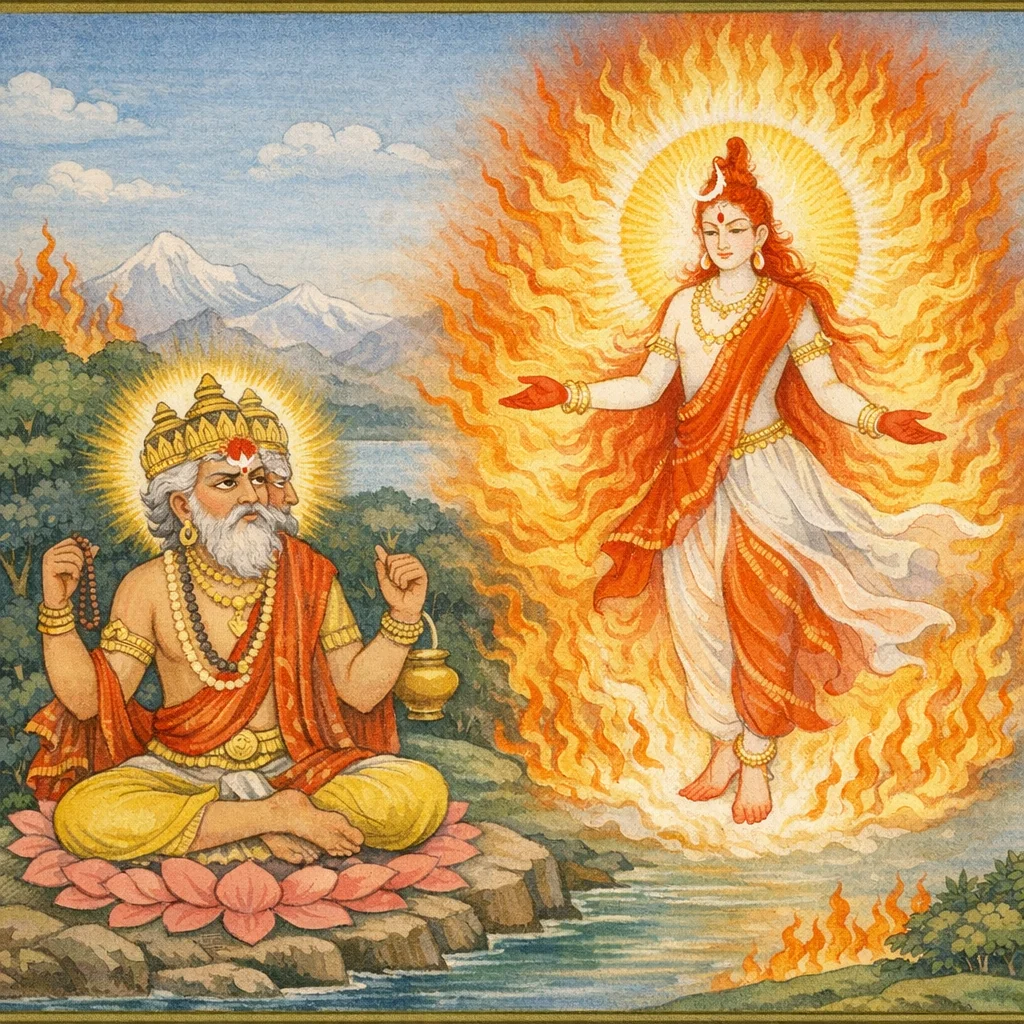
Parāśara explains how Brahmā’s mind-born creation, arising from contemplation, unfolds within the realm of the three guṇas: beings from gods down to immovables appear, yet do not multiply, so Brahmā brings forth the nine mānasas—Bhṛgu, Pulastya, Pulaha, Kratu, Aṅgiras, Marīci, Dakṣa, Atri, and Vasiṣṭha—as progenitors. The earlier Kumāras remain detached through vairāgya. From Brahmā’s wrath Rudra arises, divides into male and female, and further differentiates into many forms. Parāśara then recounts Svāyambhuva Manu and Śatarūpā, their children, and Dakṣa’s daughters and marriages, giving rise to personified dharma and adharma. When Maitreya asks about the eternal nature of creation, preservation, and cessation, Parāśara centers Madhusūdana Viṣṇu as the unobstructed doer of sarga–sthiti–vināśa, and defines four kinds of pralaya along with nitya-sarga (daily/perpetual arising).
Shlokas
Verse 1
ततो ऽभिध्यायतस् तस्य जज्ञिरे मानसाः प्रजाः तच्छरीरसमुत्पन्नैः कार्यैस् तैः करणैः सह क्षेत्रज्ञाः समवर्तन्त गात्रेभ्यस् तस्य धीमतः
Then, as that wise one entered contemplation, mind‑born progeny came forth. And along with the instruments of action that arose from his own body, the kṣetrajñas—the embodied, conscious selves—manifested from his limbs.
Verse 2
ते सर्वे समवर्तन्त ये मया प्राग् उदाहृताः देवाद्याः स्थावरान्ताश् च त्रैगुण्यविषये स्थिताः
All those beings I previously enumerated—beginning with the gods and extending down to the immovable orders—came forth together, each abiding within the domain of the three guṇas.
Verse 3
एवं भूतानि सृष्टानि चराणि स्थावराणि च
Thus, under the sovereignty of the Supreme Lord, all beings—moving and unmoving—were manifested within the ordered creation.
Verse 4
यदास्य ताः प्रजाः सर्वा न व्यवर्धन्त धीमतः तदान्यान् मानसान् पुत्रान् सदृशान् आत्मनो ऽसृजत्
When all those beings born of him did not increase, the wise one created other sons—mind-born and like unto himself—so that creation might proceed in due order.
Verse 5
भृगुं पुलस्त्यं पुलहं क्रतुम् अङ्गिरसं तथा मरीचिं दक्षम् अत्रिं च वसिष्ठं चैव मानसान्
Bhrigu, Pulastya, Pulaha, Kratu, and Angiras; likewise Marici, Daksha, Atri, and Vasishtha—these were the mind-born Prajapatis, brought forth to establish the ordered unfolding of creation by the supreme ordinance of Vishnu.
Verse 6
नव ब्रह्माण इत्य् एते पुराणे निश्चयं गताः
Thus, in the Purāṇic tradition it is firmly concluded that there are nine Brahmās.
Verse 7
सनन्दनादयो ये च पूर्वं सृष्टास् तु वेधसा न ते लोकेष्व् असज्जन्त निरपेक्षाः प्रजासु ते
Those beginning with Sanandana, created earlier by the Creator (Vedhas, Brahmā), did not become attached to the worlds; indifferent to progeny, they stood free of dependence and the desire to create.
Verse 8
सर्वे ते ऽभ्यागतज्ञाना वीतरागा विमत्सराः तेष्व् एवं निरपेक्षेषु लोकसृष्टौ महात्मनः ब्रह्मणो ऽभून् महान् क्रोधस् त्रैलोक्यदहनक्षमः
All of them were wise in welcoming what came to them, free from passion and without envy. Yet, seeing such beings remain utterly unattached—even in the very work of bringing forth the worlds—the great-souled Brahmā was seized by a mighty wrath, a fury capable of consuming the three worlds.
Verse 9
तस्य क्रोधसमुद्भूतं ज्वालामालाविदीपितम् ब्रह्मणो ऽभूत् तदा सर्वं त्रैलोक्यम् अखिलं मुने
O sage, then the entire threefold world—indeed all of it—became as though it were Brahmā’s own blazing fire, kindled by that wrath and illuminated by garlands of flames.
Verse 10
भ्रुकुटीकुटिलात् तस्य ललाटात् क्रोधदीपितात् समुत्पन्नस् तदा रुद्रो मध्याह्नार्कसमप्रभः अर्धनारीनरवपुः प्रचण्डो ऽतिशरीरवान्
From his forehead—furrowed by tightly knit brows and kindled by wrath—there then sprang forth Rudra, blazing like the midday sun: a fearsome being of immense stature, whose form was half woman and half man.
Verse 11
विभजात्मानम् इत्य् उक्त्वा तं ब्रह्मान्तर्दधे ततः
Having said, “Divide yourself,” Brahmā thereupon vanished from his sight, withdrawing within himself.
Verse 12
तथोक्तो ऽसौ द्विधा स्त्रीत्वं पुरुषत्वं तथाकरोत् बिभेद पुरुषत्वं च दशधा चैकधा च सः
Thus instructed, he fashioned himself in two ways—as womanhood and as manhood. And he further divided the masculine principle: into tenfold forms, and also into a single, unified form.
Verse 13
सौम्यासौम्यैस् तथा शान्त(अ)शान्तैः स्त्रीत्वं च स प्रभुः बिभेद बहुधा देवः स्वरूपैर् असितैः सितैः
That Sovereign Lord, the Divine One, according to His own supreme nature, diversified existence into the gentle and the fierce, the tranquil and the untranquil, even into womanhood, manifesting Himself in forms dark and bright.
Verse 14
ततो ब्रह्मात्मसंभूतं पूर्वं स्वायम्भुवं प्रभुः आत्मानम् एव कृतवान् प्राजापत्ये मनुं द्विज
Then the Lord—who brings forth Brahmā from His own Self—first fashioned Svāyambhuva Manu from His very being, O twice-born, and appointed him to the Prajāpati office.
Verse 15
शतरूपां च तां नारीं तपोनिर्धूतकल्मषाम् स्वायम्भुवो मनुर् देवः पत्नीत्वे जगृहे विभुः
And that woman Śatarūpā—her impurities washed away by austerity—was taken by the divine, mighty Svāyambhuva Manu as his wife.
Verse 16
तस्माच् च पुरुषाद् देवी शतरूपा व्यजायत प्रियव्रतोत्तानपादौ प्रसूत्याकूतिसंज्ञितम् कन्याद्वयं च धर्मज्ञ रूपौदार्यगुणान्वितम्
From that primordial Person the goddess Śatarūpā was born. She then bore two sons—Priyavrata and Uttānapāda—and two daughters—Prasūti and Ākūti—endowed with dharma, beauty, generosity, and noble virtues.
Verse 17
ददौ प्रसूतिं दक्षाय आकूतिं रुचये पुरा प्रजापतिः स जग्राह तयोर् जज्ञे सदक्षिणः पुत्रो यज्ञो महाभाग दम्पत्योर् मिथुनं ततः
In ancient times the Prajāpati gave Prasūti to Dakṣa and Ākūti to Ruci. Ruci accepted her; and from that couple, O noble one, was born Yajña, together with Dakṣiṇā as his consort, and from that marriage the divine pair was manifested.
Verse 18
यज्ञस्य दक्षिणायां तु पुत्रा द्वादश जज्ञिरे यामा इति समाख्याता देवाः स्वायम्भुवे मनौ
From Dakṣiṇā, the consort of Yajña, twelve sons were born; in the Manvantara of Svāyambhuva Manu they are renowned as the gods called the Yāmas, who uphold the cosmic ṛta under the supreme sovereignty of Viṣṇu.
Verse 19
प्रसूत्यां च तथा दक्षश् चतस्रो विंशतिं तथा ससर्ज कन्यास् तासां तु सम्यङ् नामानि मे शृणु
And from Prasūti, Dakṣa brought forth twenty-four daughters. Now hear from me, with careful attention, their proper names as they are to be recounted.
Verse 20
श्रद्धा लक्ष्मीर् धृतिस् तुष्टिर् पुष्टिर् मेधा क्रिया तथा बुद्धिर् लज्जा वपुः शान्तिः सिद्धिः कीर्तिस् त्रयोदशी
Śraddhā (Faith), Lakṣmī (Prosperity), Dhṛti (Steadfastness), Tuṣṭi (Contentment), Puṣṭi (Nourishment), Medhā (Intelligence), Kriyā (Right Action), Buddhi (Discernment), Lajjā (Modesty), Vapu (Comeliness), Śānti (Peace), Siddhi (Accomplishment), and Kīrti (Renown)—these are proclaimed as the thirteen divine powers.
Verse 21
पत्न्यर्थं प्रतिजग्राह धर्मो दाक्षायणीः प्रभुः ताभ्यः शिष्टा यवीयस्य एकादश सुलोचनाः
To establish the dharma of household life, the Lord Dharma accepted the daughters of Dakṣa as his wives. From those unions, in the younger line, were born eleven fair‑eyed daughters, famed for their virtuous nature.
Verse 22
ख्यातिः सत्य् अथ संभूतिः स्मृतिः प्रीतिः क्षमा तथा सन्नतिश् चानसूया च ऊर्जा स्वाहा स्वधा तथा
Khyāti, Satyā, and Saṃbhūti; Smṛti, Prīti, and Kṣamā; Sannati and Anasūyā; and likewise Ūrjā, Svāhā, and Svadhā—these are proclaimed in order. Through these revered feminine powers, under the Supreme Lord Viṣṇu, dharma and the sacrificial order are sustained in the world.
Verse 23
भृगुर् भवो मरीचिश् च तथा चैवाङ्गिरा मुनिः पुलस्त्यः पुलहश् चैव क्रतुश् चर्षिवरस् तथा
Bhrigu, Bhava, and Marīci—so too the sage Aṅgiras; Pulastya and Pulaha, and likewise Kratu—these are the eminent seers numbered among the primeval rishis.
Verse 24
अत्रिर् वसिष्ठो वह्निश् च पितरश् च यथाक्रमम् ख्यात्याद्या जगृहुः कन्या मुनयो मुनिसत्तम
O best of sages, in due order Atri, Vasiṣṭha, Agni (Vahni), and the Pitṛs took the maidens—beginning with Khyāti—as their wives.
Verse 25
श्रद्धा कामं चला दर्पं नियमं धृतिर् आत्मजम् संतोषं च तथा तुष्टिर् लोभं पुष्टिर् असूयत
From Śraddhā were born Kāma, Calā, Darpa, Niyama, and Dhṛti. From Dhṛti, in turn, arose her own offspring—Saṃtoṣa, Tuṣṭi, Lobha, Puṣṭi, and Asūyā.
Verse 26
मेधा श्रुतं क्रिया दण्डं नयं विनयम् एव च बोधं बुद्धिस् तथा लज्जा विनयं वपुर् आत्मजम् व्यवसायं प्रजज्ञे वै क्षेमं शान्तिर् असूयत
From her arose discernment and śruti, sacred learning; right action, just punishment, and sound policy; humility as well—together with understanding, intelligence, and modesty. From humility was born noble conduct; from resolute effort came welfare; and from peace there issued freedom from envy.
Verse 27
सुखं सिद्धिर् यशः कीर्तिर् इत्य् एते धर्मसूनवः कामाद् रतिः सुतं हर्षं धर्मपौत्रम् असूयत
Happiness, accomplishment, fame, and renown—these are said to be the sons of Dharma. And from Kāma, Rati gave birth to a son named Harṣa—thus was born Dharma’s grandson.
Verse 28
हिंसा भार्या त्व् अधर्मस्य तयोर् जज्ञे तथानृतम् कन्या च निकृतिस् ताभ्यां भयं नरकम् एव च
Violence became the wife of Adharma; from their union was born Anṛta, Falsehood. Their daughter was Nikṛti, Deceit; and from these arose Fear—and Hell itself.
Verse 29
माया च वेदना चैव मिथुनं त्व् इदम् एतयोः तयोर् जज्ञे ऽथ वै माया मृत्युं भूतापहारिणम्
Māyā and Vedanā became a pair; and from their union, Māyā indeed brought forth Mṛtyu—Death, the taker-away of embodied beings.
Verse 30
वेदना स्वसुतं चापि दुःखं जज्ञे ऽथ रौरवात् मृत्योर् व्याधिजराशोकतृष्णाक्रोधाश् च जज्ञिरे
From Raurava arose Vedanā, Pain, and she also bore her own offspring—Duḥkha, Sorrow. From Mṛtyu were born disease, old age, grief, craving, and anger.
Verse 31
दुःखोत्तराः स्मृता ह्य् एते सर्वे चाधर्मलक्षणाः नैषां भार्यास्ति पुत्रो वा ते सर्वे ह्य् ऊर्ध्वरेतसः
All these are remembered as ending in sorrow, for they are marked by adharma. They have neither wife nor offspring; indeed, they are all ūrdhva-retas—generative power turned upward, barren of worldly lineage.
Verse 32
रौद्राण्य् एतानि रूपाणि विष्णोर् मुनिवरात्मज नित्यप्रलयहेतुत्वं जगतो ऽस्य प्रयान्ति वै
O son of the foremost sage, these are the Raudra—terrible—forms of Viṣṇu; through them He is known as the enduring cause of this world’s pralaya, the power by which the universe is brought again and again to its end.
Verse 33
दक्षो मरीचिर् अत्रिश् च भृग्वाद्याश् च प्रजेश्वराः जगत्य् अत्र महाभाग नित्यं सर्गस्य हेतवः
O greatly fortunate one, Dakṣa, Marīci, Atri, and Bhṛgu—together with the other Lords of Progeny—are the perpetual causes by which creation continues unceasingly in this world-order.
Verse 34
मनवो मनुपुत्राश् च भूपा वीर्यधराश् च ये सन्मार्गाभिरताः शूरास् ते नित्यं स्थितिकारिणः
The Manus, the sons of Manus, and the mighty kings who bear strength—delighting in the true path as heroes of dharma—ever uphold the stability of the world-order.
Verse 35
येयं नित्यस्थितिर् ब्रह्मन् नित्यसर्गस् तथेरितः नित्याभावश् च तेषां वै स्वरूपं मम कथ्यताम्
O Brahman, you have spoken of eternal preservation, of eternal creation, and of their eternal cessation; now explain to me their true nature—what they really are.
Verse 36
सर्गस्थितिविनाशांश् च भगवान् मधुसूदनः तैस् तै रूपैर् अचिन्त्यात्मा करोत्य् अव्याहतान् विभुः
The Blessed Lord Madhusūdana, whose inner nature is beyond thought, assumes manifold forms and, as the all-pervading Sovereign, brings about creation, preservation, and dissolution without impediment.
Verse 37
नैमित्तिकः प्राकृतिकस् तथैवात्यन्तिको द्विज नित्यश् च सर्वभूतानां प्रलयो ऽयं चतुर्विधः
O twice-born one, the dissolution (pralaya) of all beings is declared fourfold: occasional, primordial (elemental), absolute, and perpetual.
Verse 38
ब्राह्मो नैमित्तिकस् तत्र यच् छेते जगतः पतिः प्रयाति प्राकृते चैव ब्रह्माण्डं प्रकृतौ लयम्
That dissolution is called the Brāhma (cosmic) and the Naimittika (occasional); there the Lord of the universe lies in yogic repose. And when the Prākṛta dissolution arrives, the whole cosmic egg (brahmāṇḍa) is absorbed into Prakṛti.
Verse 39
ज्ञानाद् आत्यन्तिकः प्रोक्तो योगिनः परमात्मनि नित्यः सदैव जातानां यो विनाशो दिवानिशम्
Through true knowledge, the yogin is said to attain the ultimate state in the Supreme Self (Paramātman). For all who are born, there is ever a constant destruction, unceasing by day and by night.
Verse 40
प्रसूतिः प्रकृतेर् या तु सा सृष्टिः प्राकृता स्मृता दैनंदिनी तथा प्रोक्ता यान्तरप्रलयाद् अनु
That manifestation which arises from Prakṛti is remembered as the ‘Prākṛta’ creation. It is also called the ‘daily’ (dainaṃdinī) creation, for it follows upon each intermediate dissolution (antara-pralaya).
Verse 41
भूतान्य् अनुदिनं यत्र जायन्ते मुनिसत्तम नित्यसर्गो हि स प्रोक्तः पुराणार्थविचक्षणैः
O best of sages, that process in which beings arise day after day is called ‘nitya-sarga’, the perpetual creation, by those who discern the inner meaning of the Purāṇas.
Verse 42
एवं सर्वशरीरेषु भगवान् भूतभावनः संस्थितः कुरुते विष्णुर् उत्पत्तिस्थितिसंयमान्
Thus, abiding within every body as the Blessed Lord—the source and nourisher of all beings—Viṣṇu brings about the threefold governance: origination, continuance, and withdrawal into restraint.
Verse 43
सृष्टिस्थितिविनाशानां शक्तयः सर्वदेहिषु वैष्णव्यः परिवर्तन्ते मैत्रेयाहर्निशं सदा
O Maitreya, within all embodied beings the Vaiṣṇava powers—the energies of creation, preservation, and dissolution—unceasingly turn and operate, day and night.
Verse 44
गुणत्रयमयं ह्य् एतद् ब्रह्मञ् छक्तित्रयं महत् यो ऽतियाति स यात्य् एव परं नावर्तते पुनः
O Brahmin, this vast reality is made of the three guṇas and empowered by a threefold śakti; whoever transcends it reaches the Supreme and does not return again.
Frequently Asked Questions
They are Bhr̥gu, Pulastya, Pulaha, Kratu, Aṅgiras, Marīci, Dakṣa, Atri, and Vasiṣṭha—mānasas created to advance proliferation when the earlier orders did not expand.
Because the Kumāras’ detachment from world-making triggers Brahmā’s intense krodha; from that wrath, Rudra manifests as a cosmic functionary, after which Brahmā commands him to ‘divide yourself’ to diversify manifestation.
Naimittika (occasional/Brahmā’s), Prākṛtika (elemental absorption of the brahmāṇḍa into Prakṛti), Ātyantika (absolute cessation attained through jñāna in the Supreme Self), and Nitya (perpetual dissolution—moment-to-moment decay for embodied beings).