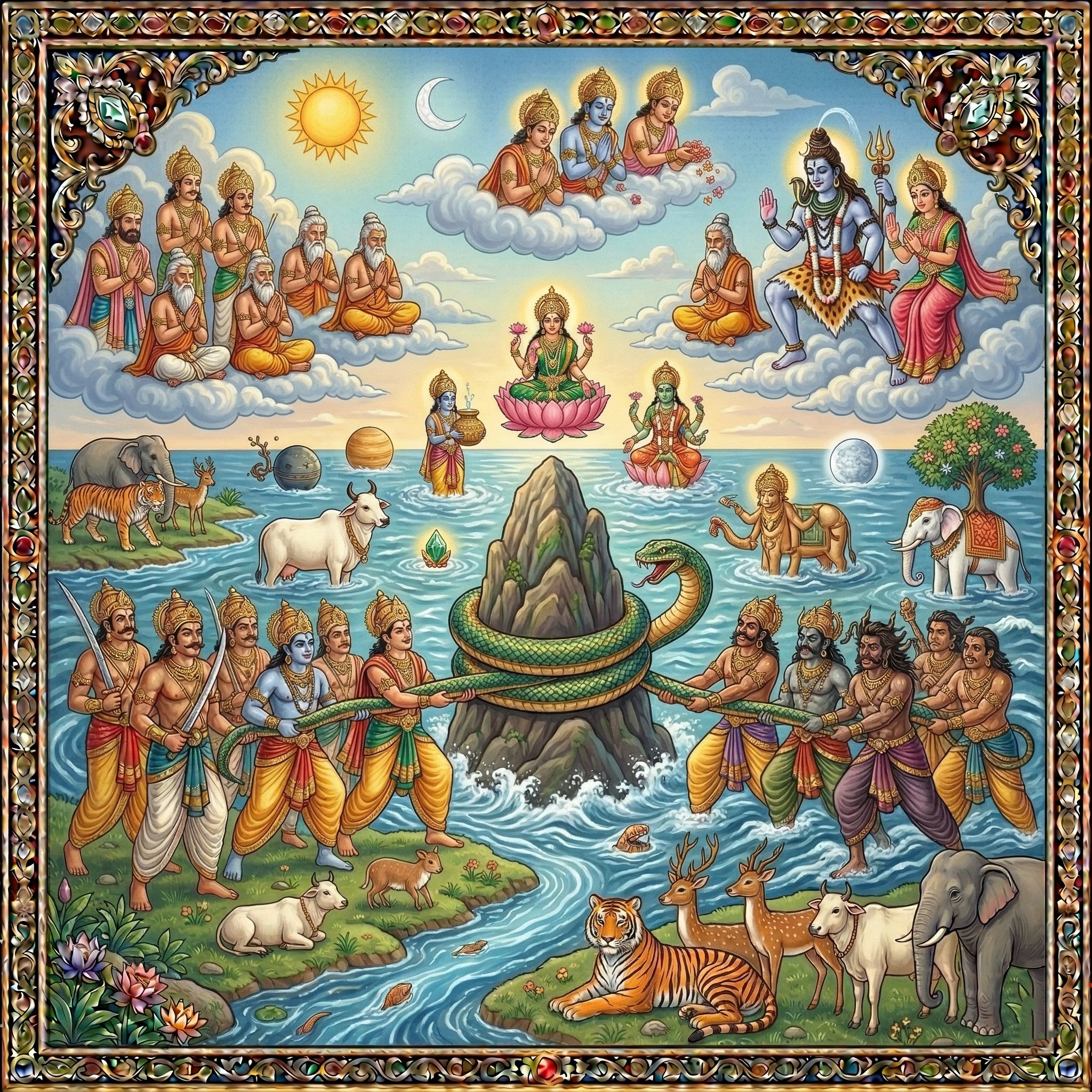
Brahmottara Khanda
Brahmottara Khanda
In this sub-division, sacred geography is articulated through the prominence of Śaiva kṣetras, especially the coastal pilgrimage sphere of Gokarṇa (गोकर्ण). The discourse treats the site as a concentrated field of ritual efficacy, where darśana (seeing the liṅga), upavāsa (fasting), jāgaraṇa (night vigil), and bilva-patra arcana (bilva-leaf offering) are framed as high-impact devotional technologies. The narrative also situates kingship and social order within tīrtha practice: the ruler’s moral crisis becomes legible and resolvable through movement across places, culminating in a sage-mediated redirection toward Gokarṇa as a purificatory destination.
Adhyayas in Brahmottara Khanda
22 chapters to explore.
Adhyaya 1
शैवपञ्चाक्षरी-मन्त्र-माहात्म्यं तथा गुरूपदेश-प्रभावः (The Glory of the Śaiva Pañcākṣarī and the Efficacy of Guru-Initiated Japa)
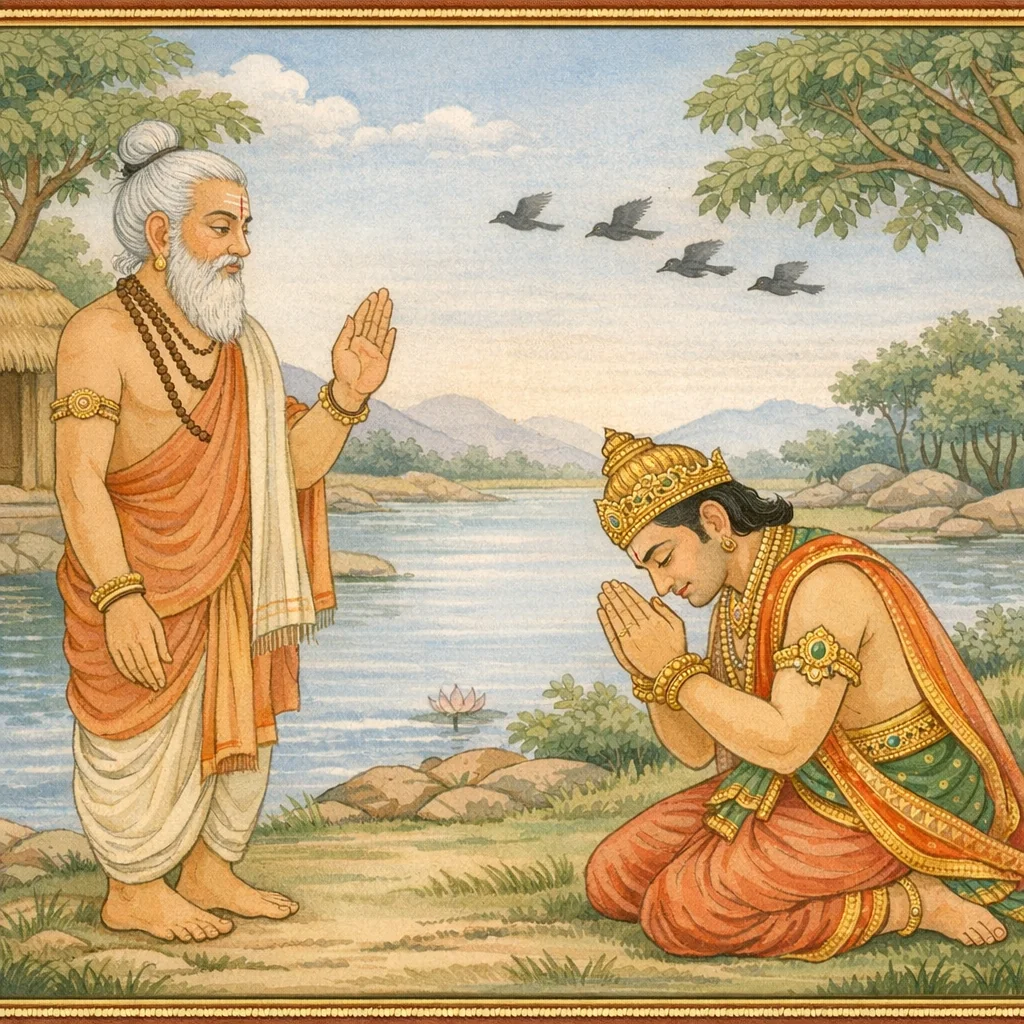
The chapter begins with invocatory verses and salutations (including obeisance to Gaṇeśa and Śiva) and moves into a dialogue in which the Ṛṣis ask Sūta to recount Tripuradviṣ (Śiva as the destroyer of Tripura), the greatness of Śiva’s devotees, and the power of the mantras connected with them. Sūta replies that causeless devotion to hearing and speaking Īśvara-kathā is the highest welfare, and he extols japa as the foremost sacrifice. The teaching then centers on the Śaiva Pañcākṣarī as the supreme mantra—liberating, purifying, and rich with Vedānta-aligned meaning. When held with inner purity and right orientation, it is said not to depend on elaborate auxiliaries such as fixed timings or external rites. Exemplary places for japa are named: Prayāga, Puṣkara, Kedāra, Setubandha, Gokarṇa, and Naimiṣāraṇya. An illustrative tale follows: a valorous king of Mathurā marries the princess Kalāvatī. When he seeks intimacy without honoring her vow and purity, he meets a startling consequence and asks its cause. The queen explains that in childhood she received Pañcākṣarī instruction from the sage Durvāsā, so her body is ritually protected; she also reproaches the king for lacking daily purity and devotional discipline. Seeking purification, the king approaches the guru Garga. The guru leads him to the bank of the Yamunā, arranges the proper seat and orientation, and imparts the mantra with a hand placed upon the king’s head. Karmic impurities are symbolized as crows leaving the body and being destroyed, which the guru interprets as accumulated sins burned away through mantra-dhāraṇā. The chapter closes by reaffirming the mantra’s comprehensive efficacy and its accessibility for seekers of liberation.
Adhyaya 2
माघकृष्णचतुर्दशी-व्रतप्रशंसा तथा कल्मषाङ्घ्रिराजोपाख्यानम् (Praise of the Māgha Kṛṣṇa Caturdaśī observance and the legend of King Kalmaṣāṅghri)
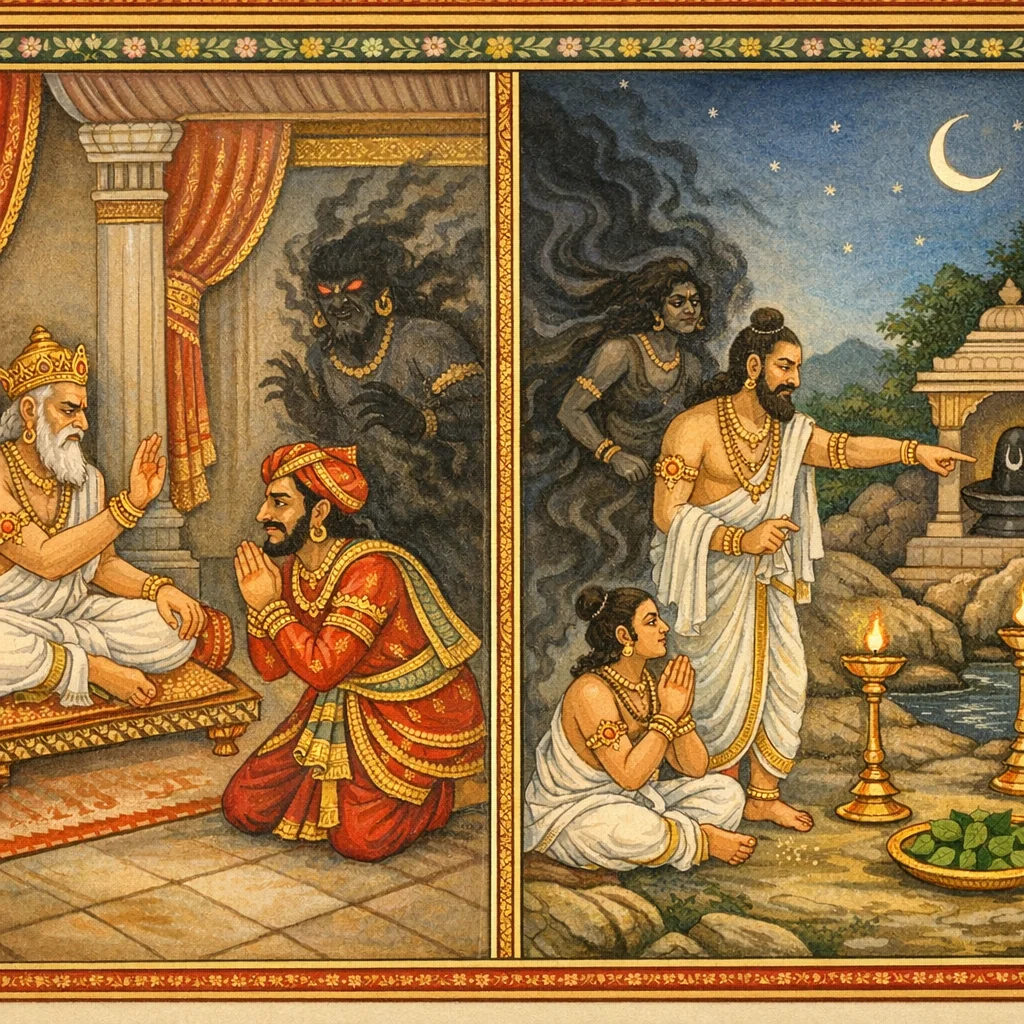
The chapter begins with Sūta’s theological teaching that worship of Śiva has the highest power to purify, serving as the supreme prāyaścitta even for sins deemed persistent and hard to remove. It then praises the Māgha kṛṣṇa caturdaśī observance—fasting (upavāsa), night vigil (jāgaraṇa), darśana of the Śiva-liṅga, and especially offering bilva leaves—declaring its merit comparable to, or greater than, grand sacrifices and long years of bathing at tīrthas. A narrative exemplum follows: a righteous king of the Ikṣvāku line (later called Kalmaṣāṅghri) unknowingly appoints a rākṣasa in disguise, leading to an offense against Vasiṣṭha and a time-bound curse that turns the king into a rākṣasa. In that state he commits a dreadful act (devouring a sage’s son); the bereaved wife utters a powerful śāpa restricting his future conjugal life, and the king is pursued by the personified Brahmahatyā. Seeking release, he wanders through many tīrthas without finding purification until he meets Gautama, who teaches that Gokarṇa is a uniquely efficacious kṣetra: mere entry and darśana can bring immediate cleansing, and rites performed there yield results surpassing what is gained elsewhere over vast spans of time. Thus the chapter binds karma, curse, and repentance to a geography of remedy (Gokarṇa) and to the Śaiva system of vrata and pūjā.
Adhyaya 3
चाण्डाल्याः पूर्वकर्मविपाकः, गोकर्णे बिल्वार्पणप्रभावः, शिवानुग्रहकथा (Karmic Ripening and Śiva’s Grace through a Bilva Offering at Gokarṇa)
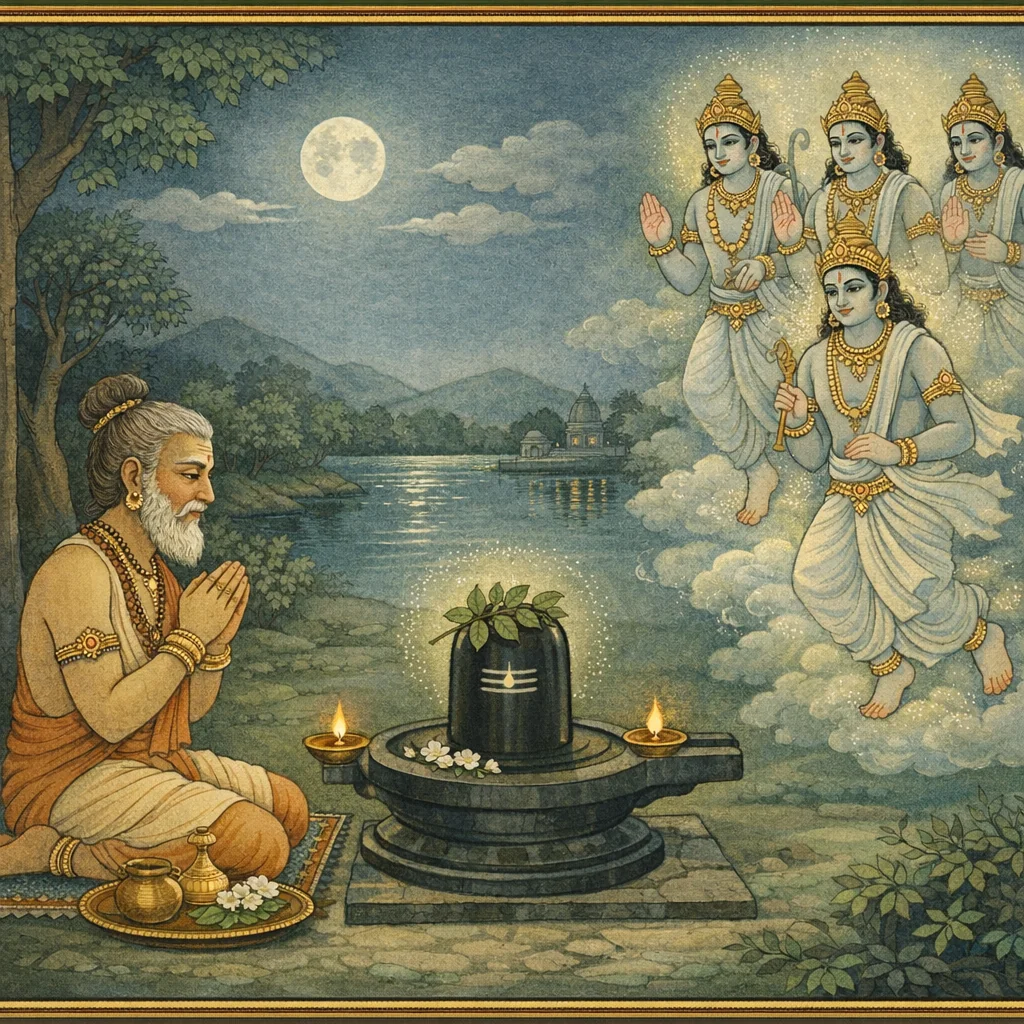
The chapter is framed as a dialogue: a king asks the sage Gautama about a wondrous scene witnessed on a journey. Gautama recounts that at midday, near a pure lake, he saw an aged caṇḍālī—blind, grievously diseased, and in extreme misery. As he watched with compassion, a radiant aerial chariot (vimāna) appeared, bearing four attendants of Śiva carrying Śaiva emblems. Gautama wonders why such divine emissaries would approach one socially despised and deemed morally fallen. The Śivadūtās explain karmic causality through her former life: she was once a Brahmin girl, later widowed, then entered transgressive relationships, took to meat and alcohol, and committed a grave wrong by killing a calf and trying to conceal it. After death she suffers punitive results and is reborn as a blind, afflicted caṇḍālī, living in deprivation. The narrative then highlights sacred time and place. During a Śiva-tithi pilgrimage flow toward Gokarṇa, she begs for food; a traveler tosses her a bilva sprig, which she rejects as inedible, yet it accidentally falls upon a Śiva-liṅga on the night of Śiva-caturdaśī, amid the spirit of fasting and vigil. That unintended bilva-offering, aligned with holy Gokarṇa and the auspicious moment, becomes the stated basis for Śiva’s compassionate uplift despite her heavy karma. The chapter closes by praising the māhātmya of Śiva worship—teaching that even minimal offerings can bear great power through grace—while still affirming her suffering as the ripening of past deeds.
Adhyaya 4
चतुर्दशी-शिवपूजा-माहात्म्यं (The Glory of Śiva Worship on Caturdaśī and the Karmic Power of Darśana)
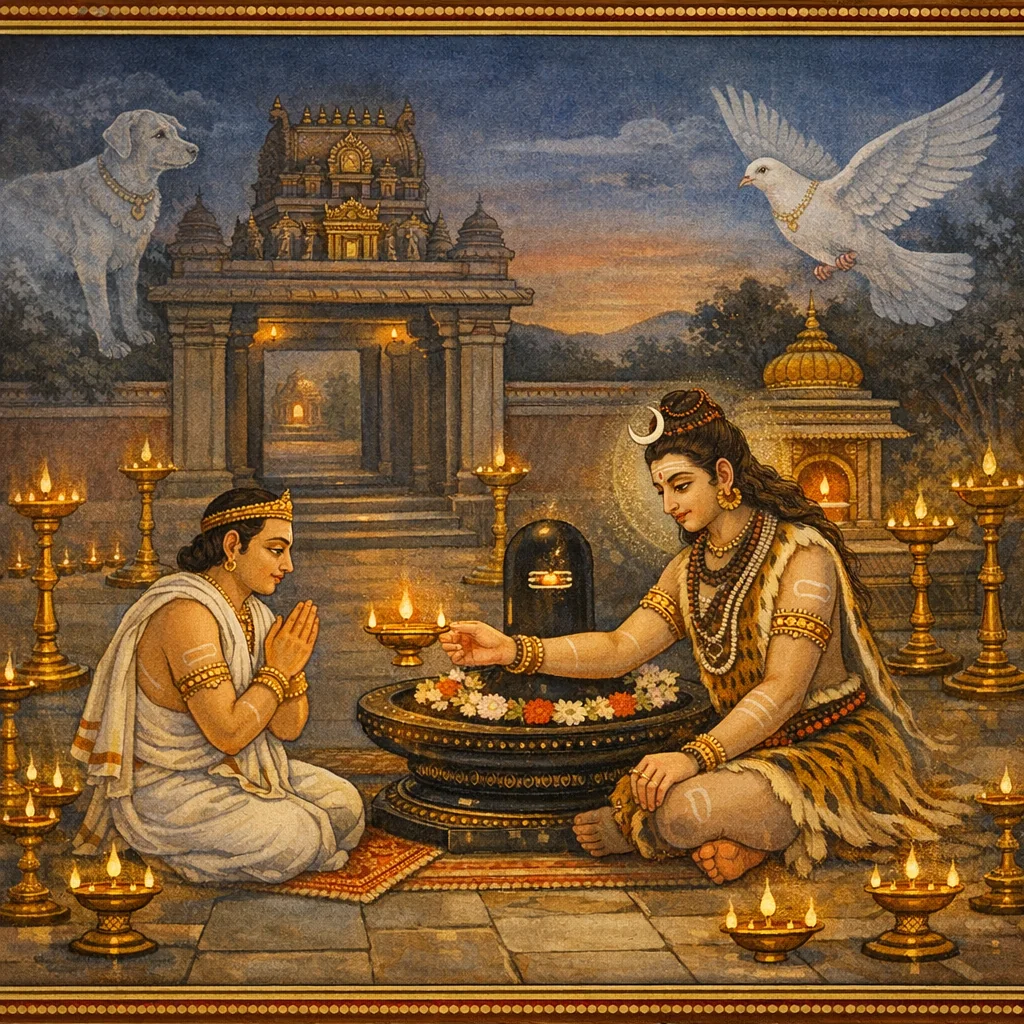
Sūta introduces an “extraordinary” account of Śiva’s greatness, declaring that Śiva-worship is a decisive means for those lost in sense-objects to cross the “ocean of demerit.” The chapter recounts King Vimardana of the Kirāta lands: though violent and morally excessive, he worships Śiva regularly, especially on the fourteenth lunar day (caturdaśī) in both bright and dark fortnights, celebrating with song and dance. His queen Kumudvatī questions this seeming contradiction, and the king explains it through karmic residues from former births. Once a dog seeking food, he repeatedly circumambulated a Śiva temple (pradakṣiṇā) and, driven away and struck, died at the gate; by that proximity and repeated circling he attained a royal birth. He also attributes his tri-kāla-jñatva—knowledge of past, present, and future—to having witnessed the caturdaśī worship and the festival of lamps. He tells of the queen’s prior birth as a flying pigeon that, fleeing a predator, circled a Śiva shrine and died there, gaining her present royal birth. The king then prophesies a series of shared rebirths across many kingdoms, culminating in renunciation, receiving brahma-jñāna from Agastya, and together attaining Śiva’s supreme abode. The concluding phalaśruti states that hearing or reciting this māhātmya leads to the highest state.
Adhyaya 5
Śiva-bhakti-mahātmya and the Legend of Candrasena and Śrīkara (Ujjayinī–Mahākāla Context)
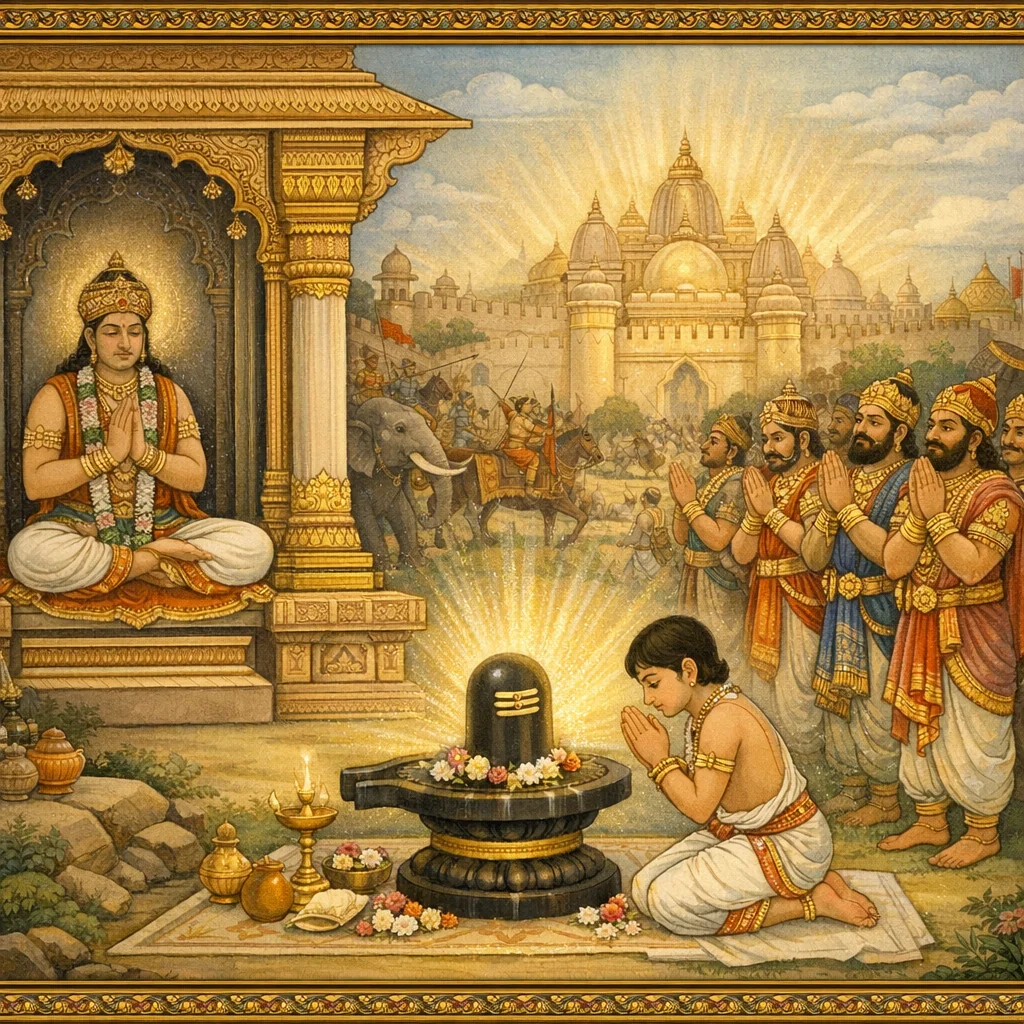
The chapter begins with a doctrinal hymn to Śiva as guru, deity, kinsman, the Self, and the very life-principle. It teaches that offerings, japa, and homa performed with Śiva as the intended object yield inexhaustible merit, affirmed by āgamic authority; even the smallest gift, when given with bhakti, becomes spiritually vast, and exclusive devotion to Śiva is praised as freedom from bondage. The narrative then turns to Ujjayinī: King Candrasena worships Mahākāla. His associate Maṇibhadra grants him the wish-fulfilling cintāmaṇi jewel, stirring other kings’ envy and a siege; Candrasena takes refuge in Mahākāla through unwavering pūjā. In parallel, a cowherd boy, inspired by the royal worship, fashions a simple liṅga and performs improvised devotion; though his mother disrupts the rite, Śiva’s grace appears as the boy’s camp becomes a splendid Śiva-temple and his household turns prosperous. The marvel pacifies the hostile kings, who renounce violence, honor Mahākāla, and reward the boy. Hanumān appears, declares that no refuge surpasses Śiva-pūjā, names the boy Śrīkara, and gives a future-oriented genealogical prophecy. The chapter closes with its phala: the account is secret, purifying, fame-bestowing, and devotion-enhancing.
Adhyaya 6
प्रदोषपूजामाहात्म्यं तथा विदर्भराजवंशोपाख्यानम् (The Glory of Pradoṣa Worship and the Vidarbha Royal Legend)
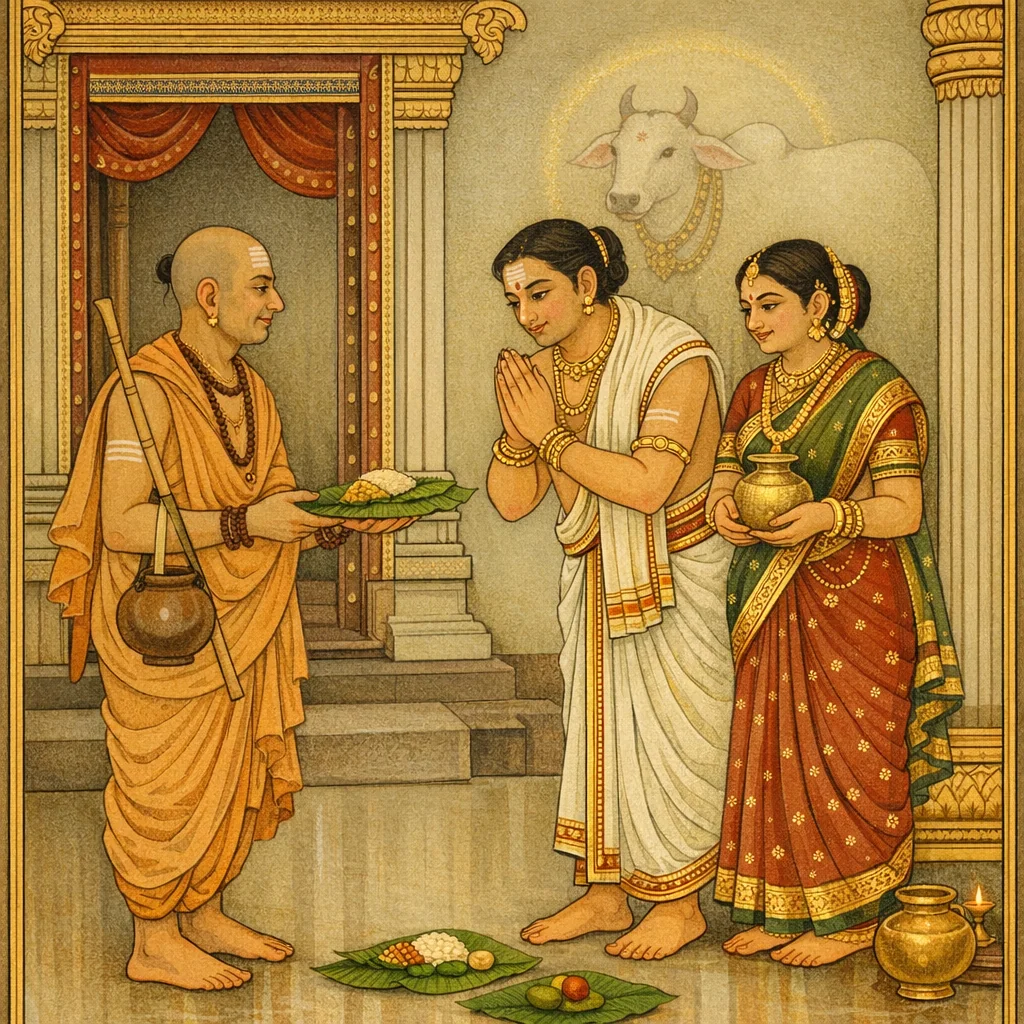
Chapter 6 begins with the ṛṣis asking Sūta to clarify the spiritual power of worshiping Śiva at pradōṣa, the evening period of the thirteenth lunar day. Sūta teaches that pradōṣa is a specially privileged time when Mahādeva should be worshiped by those seeking the four aims of life (caturvarga: dharma, artha, kāma, mokṣa). Accordingly, pūjā, japa, homa, and the recitation of Śiva’s virtues are commended as ethical and ritual disciplines. The chapter heightens this with devotional cosmography: at pradōṣa, Śiva dances on Kailāsa in a silver abode, attended by devas and celestial beings, making worship at that hour highly meritorious. It then offers an illustrative legend of the Vidarbha royal line: King Satyratha is defeated and slain; the queen flees, gives birth, and is seized by a crocodile, leaving the infant abandoned. A brāhmaṇa woman named Umā finds and raises the child alongside her own son. Sage Śāṇḍilya reveals the child’s royal origin and explains the karmic cause of the family’s suffering—neglect and interruption of pradōṣa-time Śiva worship, along with ethical lapses, bring poverty and calamity across births, while renewed devotion and taking refuge (śaraṇa) in Śaṅkara is shown as the remedy.
Adhyaya 7
प्रदोषकाले शिवपूजाविधिः (Pradoṣa-Time Procedure for Śiva Worship)
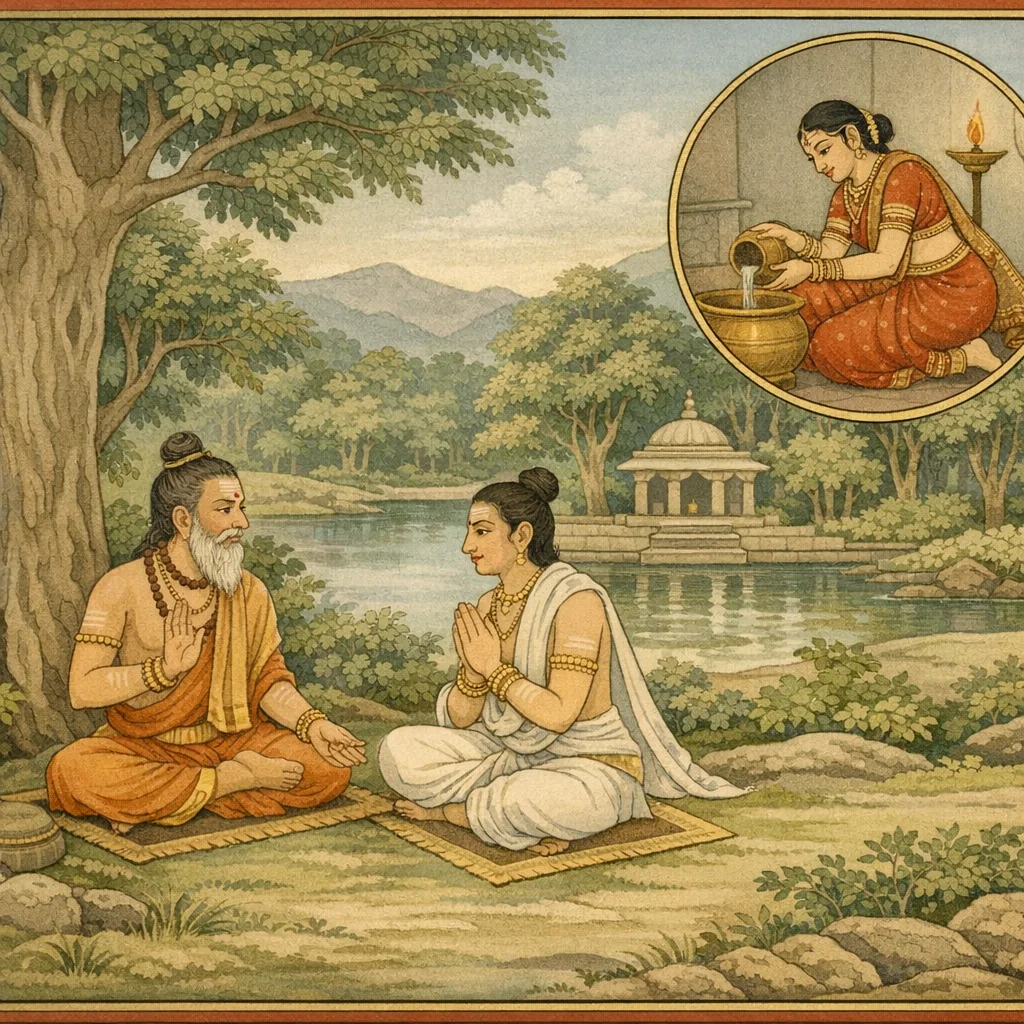
Chapter 7 sets forth a technical liturgical template for worship of Śiva at pradoṣa (the twilight hour). In response to a Brahmin woman’s question, Śāṇḍilya teaches the rite, with Sūta presenting the lineage of transmission. It begins with preparatory disciplines: fasting on the 13th day of the fortnight, bathing before sunset, maintaining purity, and restraining speech. The chapter then details the ritual’s construction—cleansing the worship space, drawing the maṇḍala, arranging implements, invoking the pīṭha, and performing ātmā-śuddhi and bhūta-śuddhi, prāṇāyāma, mātṛkā-nyāsa, and deity visualization. It gives dhyāna descriptions of Śiva in Candrasekhara form and of Pārvatī, and maps āvaraṇa-pūjā directionally with attendant powers, deities, siddhis, and protective figures. Next come the upacāras: abhiṣeka with pañcāmṛta and tīrtha waters with Rudra-sūkta recitation, offerings of flowers (including bilva), incense, lamp, naivedya, homa, and concluding prayers for release from debt, sin, poverty, illness, and fear. The chapter closes with a phala-assertion that Śiva pūjā nullifies extensive wrongdoing, warns of the grave sin of misappropriating Śiva’s property, and recounts the devotees’ tangible success—culminating in the discovery of treasure and further boons—presenting ritual discipline as both ethical rule and means of liberation.
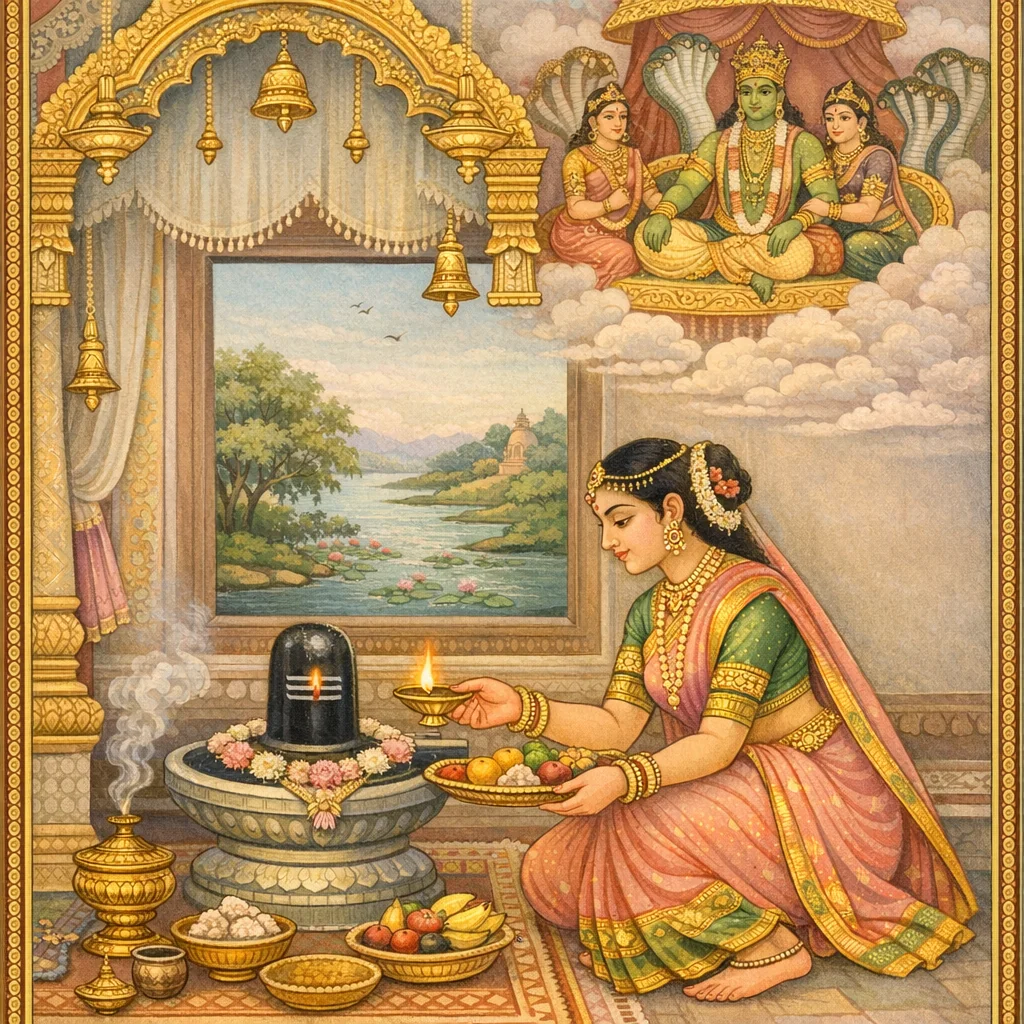
Adhyaya 8
Somavāra-Śivapūjā Māhātmya and the Narrative of Sīmantinī & Candrāṅgada
Chapter 8 begins with Sūta’s teaching: those who know Śiva-tattva as eternal, tranquil, and beyond all conceptual fabrication attain the highest state; even those still attached to sense-objects may advance through karmamaya pūjā, an accessible discipline of worship through prescribed acts. The chapter then extols Somavāra (Monday) worship of Śiva—performed with fasting, purity, self-restraint, and correct ritual procedure—as a dependable means for both worldly attainments and apavarga (liberation). An illustrative narrative follows. In Āryāvarta, Sīmantinī, daughter of King Citravarman, is praised by astrologer-Brahmins, yet another prediction declares she will be widowed at fourteen. Seeking a remedy, she consults Maitreyī, wife of Yājñavalkya, who prescribes the Somavāra-vrata to worship Śiva and Gaurī, with offerings and feeding of Brahmins, and explains the upacāras—abhiṣeka, gandha, mālya, dhūpa, dīpa, naivedya, tāmbūla, namaskāra, japa, homa—and their stated fruits. Though tragedy strikes when her husband Candrāṅgada is lost in the Yamunā, she steadfastly maintains the vow. Parallel events reveal political upheaval and Candrāṅgada’s survival in Takṣaka’s nāga realm; his explicit Śaiva confession impresses Takṣaka, who aids his return, demonstrating that Śiva-bhakti protects even amid extreme adversity. The chapter closes by indicating further exposition of the greatness of the Somavāra-vrata.
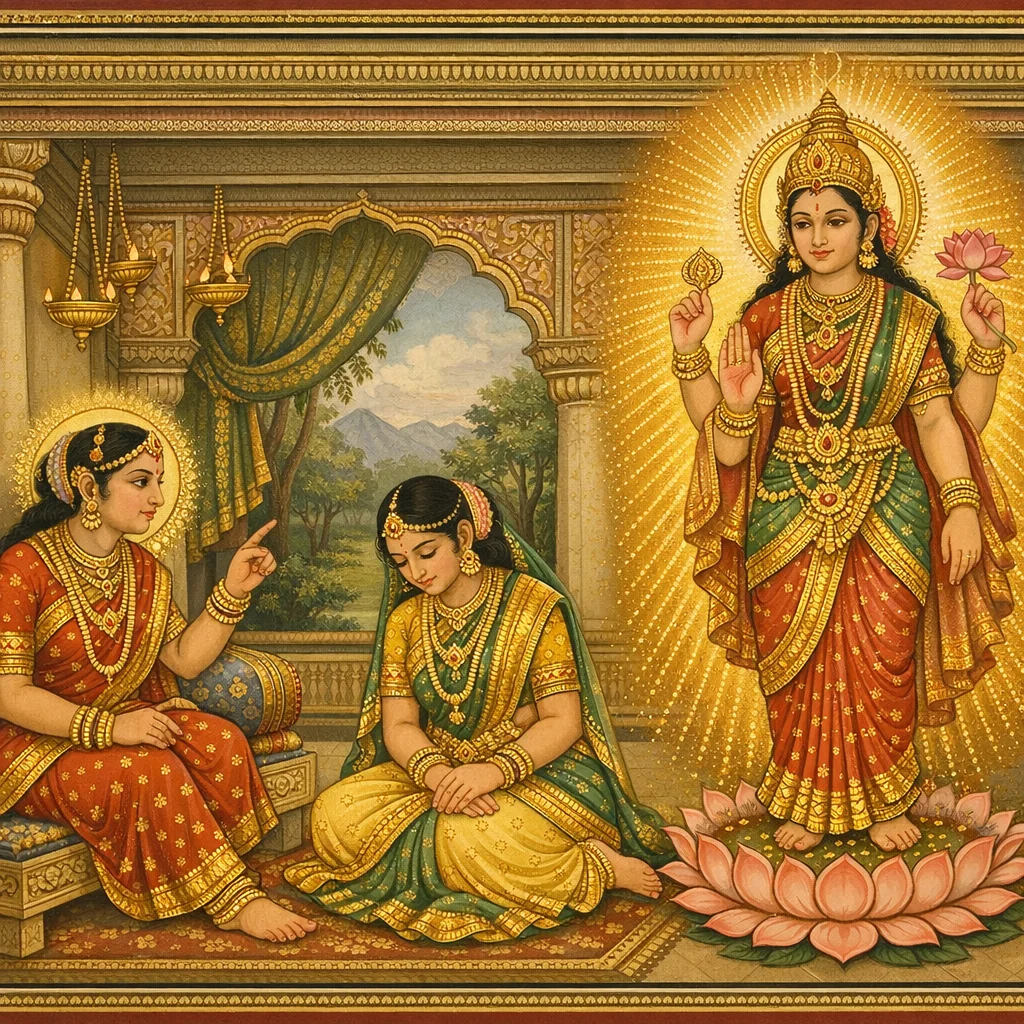
Adhyaya 9
Sīmantaṇī-prabhāvaḥ — Somavāra-Śiva–Ambikā-pūjāyāḥ kathā (The Efficacy of Queen Sīmantaṇī’s Devotion)
The ṛṣis ask for another instructive tale, and Sūta recounts an episode in Vidarbha. Two devotedly bonded brāhmaṇas, Vedamitra and Sārasvata, raise their sons Sumedhā and Somavān to mastery of the Veda, auxiliary sciences, itihāsa–purāṇa, and dharmaśāstra. When they lack means for arranging marriages, they seek aid from the king of Vidarbha. The king proposes a dharmically troubling scheme: one youth should disguise himself as a woman so the pair may enter Queen Sīmantaṇī of Niṣadha’s Somavāra (Monday) Śiva–Ambikā worship assembly, receive lavish gifts and dāna, and return wealthy. The youths protest that deceit brings social disgrace and destroys earned virtue, but the king insists on obedience. Somavān is transformed into a convincing female form, Sāmavatī, and the two arrive as a “couple” at the rite where brāhmaṇas and their wives are honored with offerings. After the worship, the queen becomes enamored of the disguised youth, stirring desire and disorder. Sumedhā admonishes Sāmavatī with dharmic reasoning, seeing the fault born of deception under coercion. When the matter reaches the king, sages explain that the potency of devotion to Śiva–Pārvatī and the deity’s will cannot be easily undone. The king undertakes severe observance and praise of Ambikā; the Goddess appears and grants a resolution: Sāmavatī is to remain as Sārasvata’s daughter and become Sumedhā’s wife, and Sārasvata will receive another son by the Goddess’s grace. The chapter closes by proclaiming the astonishing prabhāva of Śiva’s devotees and teaching that devotion, rightly framed by ritual and ethics, can reshape outcomes even amid human error.
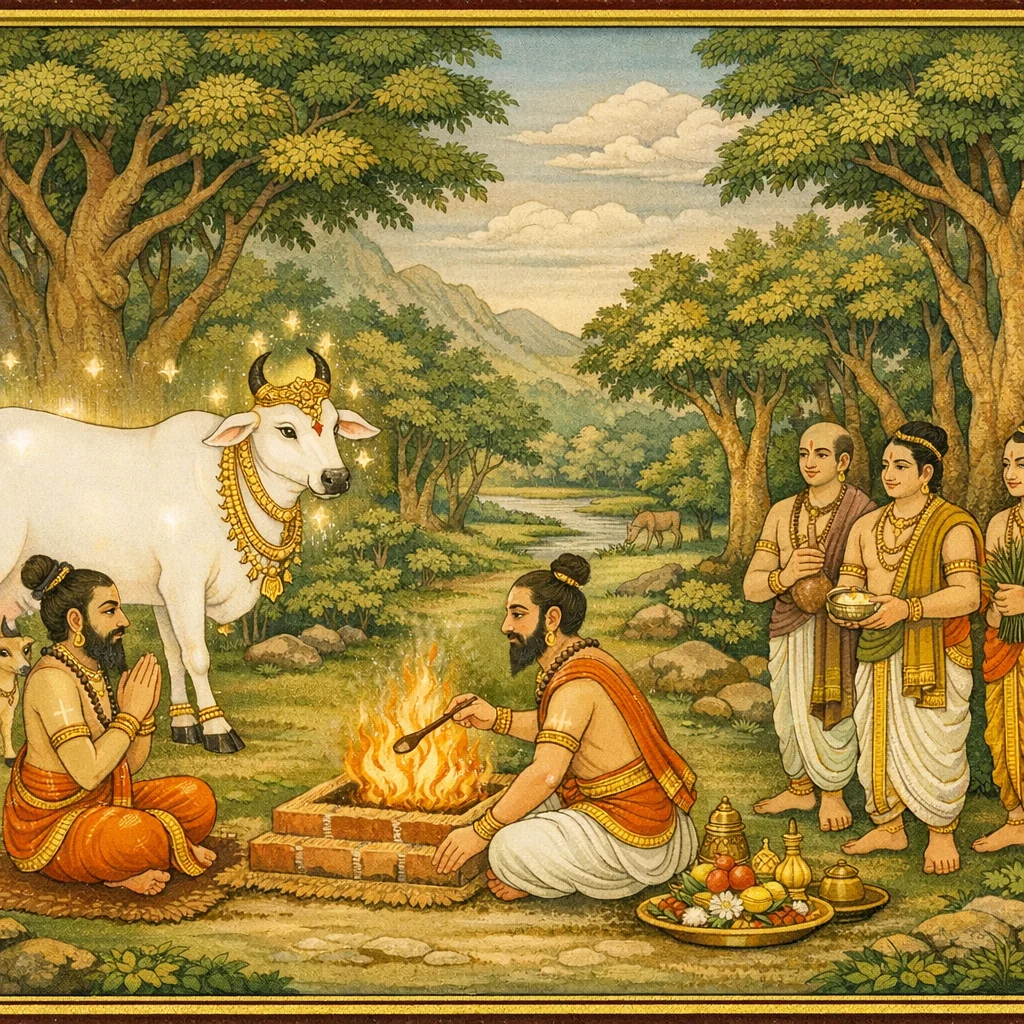
Adhyaya 10
ऋषभशिवयोग्युपदेशः, भस्ममन्त्रप्रभावश्च (Ṛṣabha’s Śiva-yogic instruction and the efficacy of consecrated ash)
Sūta recounts a “wondrous” Śiva-centered episode showing how devotion and reverence toward a realized yogin can redirect karmic destiny. In Avanti, a brāhmaṇa named Mandara—given to sensuality and neglectful of daily rites—lives with the courtesan Piṅgalā. When the Śiva-yogin Ṛṣabha arrives, they honor him with ritual hospitality: washing his feet, offering arghya, food, and service, thereby gaining a pivotal merit amid otherwise fallen conduct. After death, karmic results unfold through rebirth and suffering. Mandara is reborn in a royal setting in Daśārṇa, yet a poison-related affliction torments mother and child, leading to abandonment and hardship in the forest. They are later sheltered by the wealthy merchant Padmākara, but the child dies. Ṛṣabha reappears as healer and teacher, discoursing on impermanence, the guṇas, karma, kāla, and the inevitability of death, and concludes with śaraṇāgati to Śiva—Mṛtyuñjaya, Umāpati—and Śiva-dhyāna as the remedy for sorrow and rebirth. He then applies bhasma consecrated by Śiva-mantra to revive the child and heal mother and son, granting them a divinized body and auspicious destiny. The child is named Bhadrāyu and is foretold to attain renown and kingship.
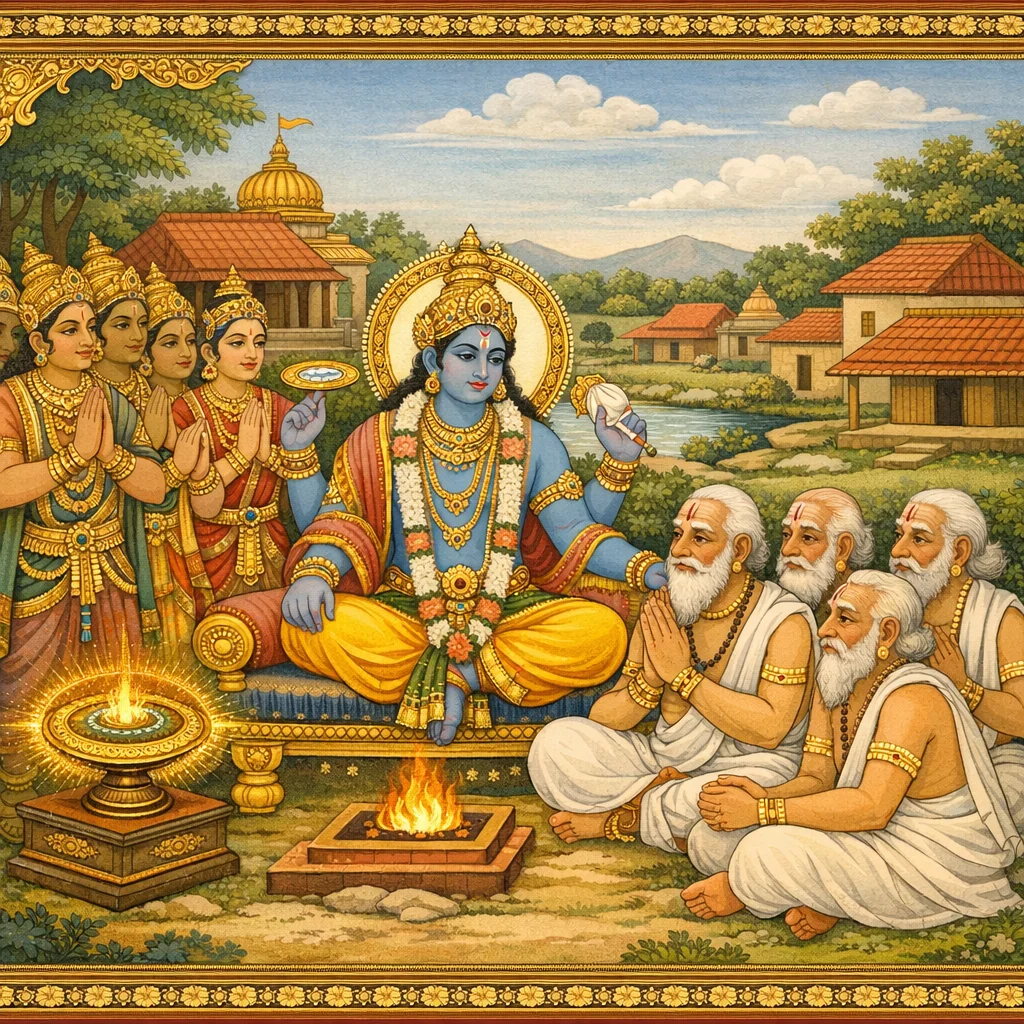
Adhyaya 11
Ṛṣabha-Śivayogin’s Dharma-Saṅgraha and Śaiva Devotional Discipline (Ethical Compendium)
Chapter 11 continues Sūta’s karmic and social narrative: the courtesan Piṅgalā is reborn as Kīrtimālinī, daughter of Sīmantiṇī, endowed with beauty and virtue. At the same time, a prince and a merchant’s son named Sunaya grow up as intimate friends, undergo the prescribed saṃskāras (including upanayana), and study disciplines with proper conduct. When the prince turns sixteen, the Śaiva yogin Ṛṣabha arrives at the royal palace; the queen and prince repeatedly bow and honor him with hospitality. The queen petitions him to accept the prince and guide him as a compassionate guardian-teacher. Ṛṣabha then teaches a structured dharma-saṅgraha: dharma rooted in śruti–smṛti–purāṇa and practiced according to varṇāśrama; reverence for cow, deity, guru, and brāhmaṇa; truthfulness (with a narrow exception to protect cows and brāhmaṇas); renouncing illicit desire for others’ wealth and wives, and avoiding anger, deceit, slander, and needless violence; disciplined moderation in sleep, speech, food, and recreation; avoiding harmful company and seeking good counsel; protecting the helpless and showing non-violence to one who seeks refuge; generosity even in hardship and pursuit of good repute (satkīrti); governance ethics mindful of time, place, and capacity, preventing harm and restraining criminals by sound policy; and a daily Śaiva regimen of morning purity, salutations to guru and deities, offering food to Śiva, dedicating all acts to Śiva, constant remembrance, rudrākṣa and tripuṇḍra marks, and japa of the pañcākṣara mantra. The chapter ends by announcing a subsequent teaching: a Śaiva kavaca, a purāṇic secret that removes sin and grants protection.
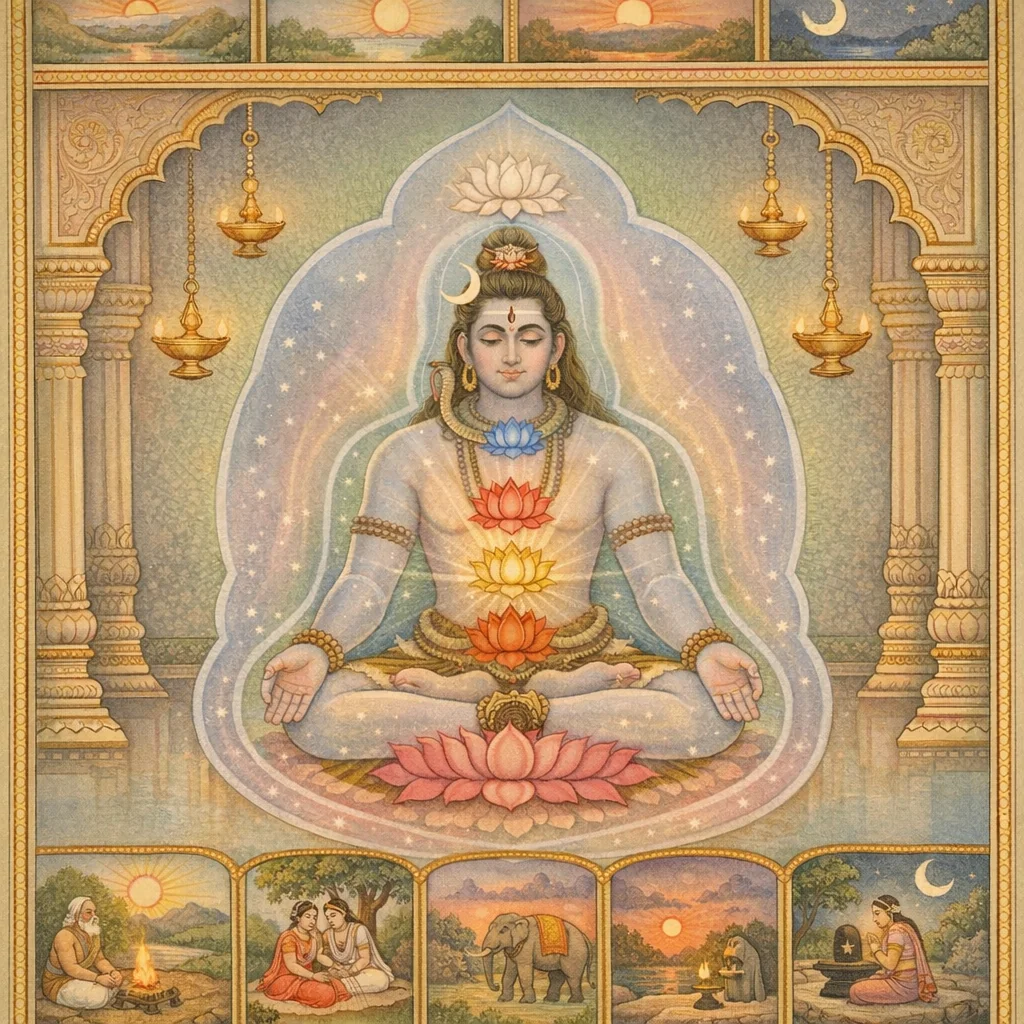
Adhyaya 12
Śivamaya Kavaca (Śaiva Protective Armour): Meditation, Nyāsa, Directional Guardianship, and Phalaśruti
This chapter sets forth a technical Śaiva kavaca (protective armour), spoken by Ṛṣabha. It opens with a ritual and inner discipline: salutation to Mahādeva, sitting in a purified place, steadying the posture, restraining the senses, and sustained contemplation of imperishable Śiva. The practitioner then visualizes Mahādeva within the heart-lotus and establishes protection through ṣaḍakṣara-nyāsa and the donning of the kavaca. A structured protective litany assigns Śiva’s forms to the elements and surroundings, to the directions through the five-faced Śiva—Tatpuruṣa, Aghora, Sadyojāta, Vāmadeva, and Īśāna—to the body from head to feet, and to the divisions of day and night. A long mantra-like invocation culminates in requests for complete safeguarding and the removal of afflictions and dangers, ending with a phalaśruti that regular recitation or wearing dispels obstacles, eases suffering, and supports longevity and auspiciousness. The frame then shifts as Sūta reports Ṛṣabha empowering a prince with consecrated ash, a conch, and a sword, describing their effects on strength, morale, and deterrence of foes, and concluding with an assurance of victory and stable kingship.
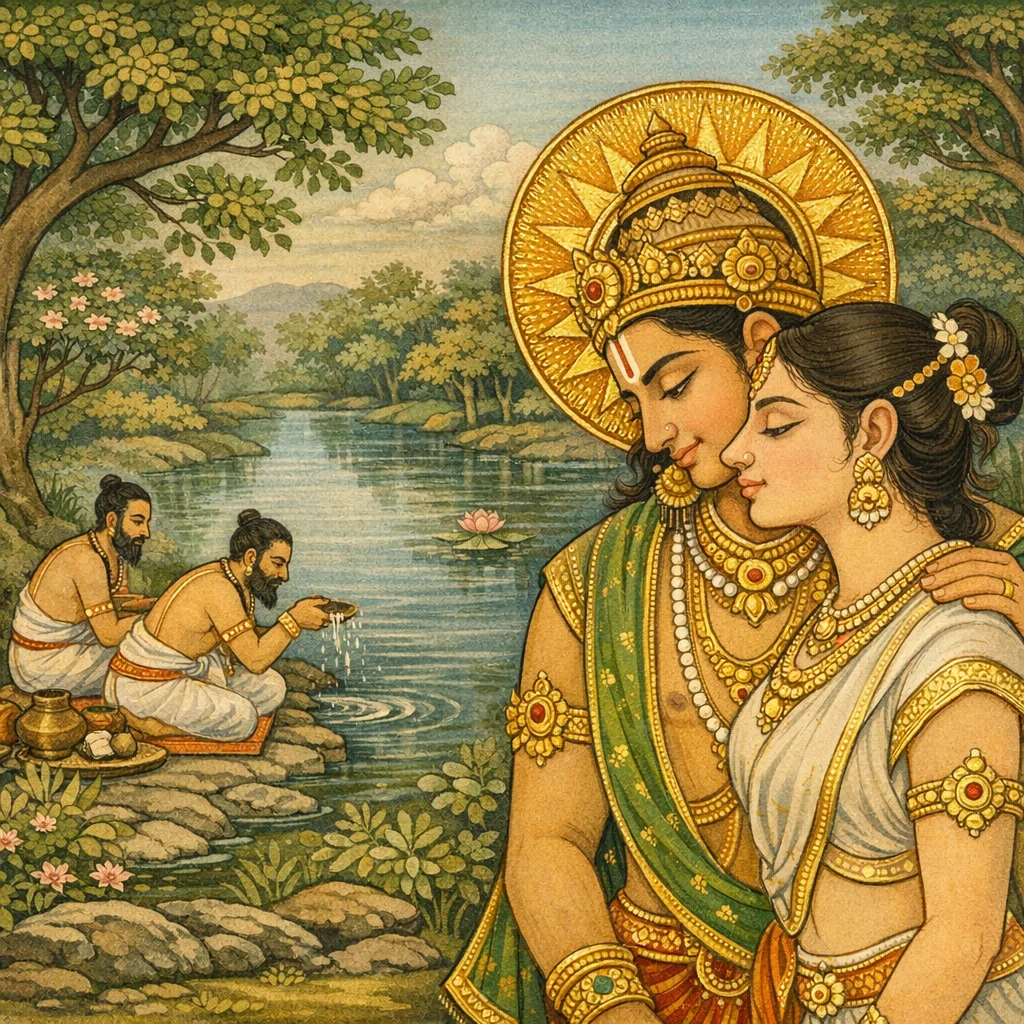
Adhyaya 13
भद्रायोः पराक्रमः — The Valor of Bhadrāyu and the Restoration of Daśārṇa
Sūta recounts a political calamity: Hemaratha, king of Magadha, invades Daśārṇa, plundering wealth, burning homes, and carrying off women and royal dependents. King Vajrabāhu resists but is overwhelmed, disarmed, bound, and his city is entered and systematically looted. Hearing of his father’s capture and the kingdom’s ruin, Prince Bhadrāyu advances with kṣatriya resolve and breaks into the enemy formation. Shielded by Shivavarma and bearing extraordinary weapons—especially a sword and a conch—he routs the opposing host; the conch-blast renders foes helpless and unconscious. Bhadrāyu refuses to strike those who are senseless or weaponless, upholding the dharma of righteous warfare. He frees Vajrabāhu and all captives, secures the enemy’s assets, and binds Hemaratha and allied chiefs for a public return into the city. Then comes recognition: Bhadrāyu is revealed as the king’s own son, once abandoned in childhood due to illness and later restored to life by the yogin Ṛṣabha; his exalted prowess is ascribed to the grace of Śaiva yoga. The chapter ends with a marriage alliance to Kīrtimālinī, political stabilization, and later magnanimity—Hemaratha is released and befriended before the Brahmarṣis—while Bhadrāyu’s reign shines with exceptional vigor.
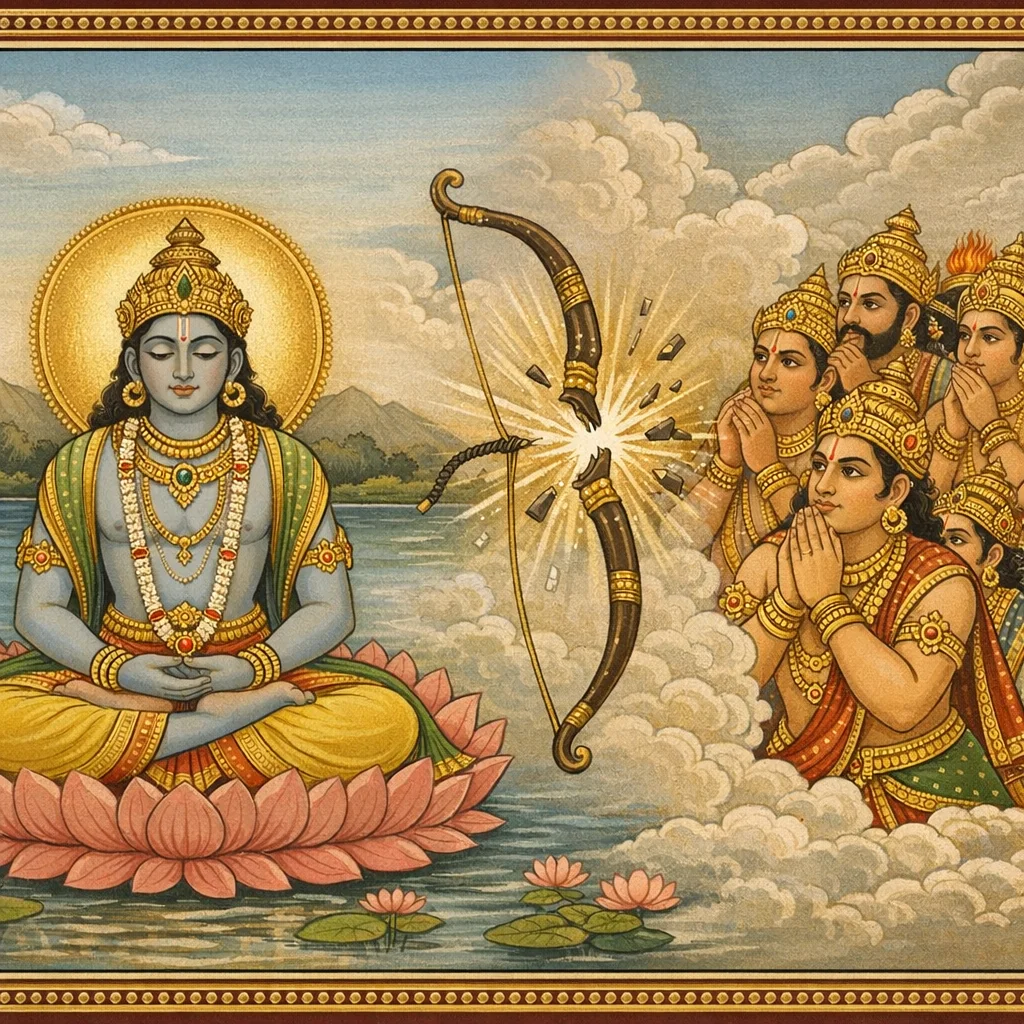
Adhyaya 14
भद्रायोः धर्मपरीक्षा तथा शिवप्रत्यक्षता (Bhadrāyu’s Ethical Test and Śiva’s Direct Manifestation)
Sūta relates that King Bhadrāyu, delighting in spring within a luxuriant forest together with Queen Kīrtimālinī, meets a brahmin couple fleeing a tiger. Though the king shoots his arrows, they prove powerless, and the tiger seizes the wife, exposing a crisis in royal efficacy. The bereft brahmin laments and rebukes the king for failing in rājadharma, declaring that protecting the distressed surpasses life, wealth, and sovereignty. Shamed and fearing moral ruin, the king offers compensation; the brahmin instead demands the king’s own queen, sharpening the ethical conflict between the duty to protect, social propriety, and sin. Concluding that failure to protect brings grave demerit, the king yields the queen and prepares for self-immolation to preserve honor and expiate guilt. As he is about to enter the fire, Śiva appears in radiant form with Umā, surrounded by celestial beings, and receives the king’s extended hymn praising Śiva as the transcendent cause beyond mind and speech. Śiva reveals that the tiger and the brahmin were māyā-forms meant to test the king’s steadiness and devotion, and that the seized woman is a divine figure (Girīndrajā). Boons are granted: the king asks for perpetual nearness to Śiva for himself, the queen, and named relatives; the queen asks the same for her parents. The chapter ends with a phalaśruti promising prosperity and final attainment of Śiva to those who recite, or cause others to hear, this account.
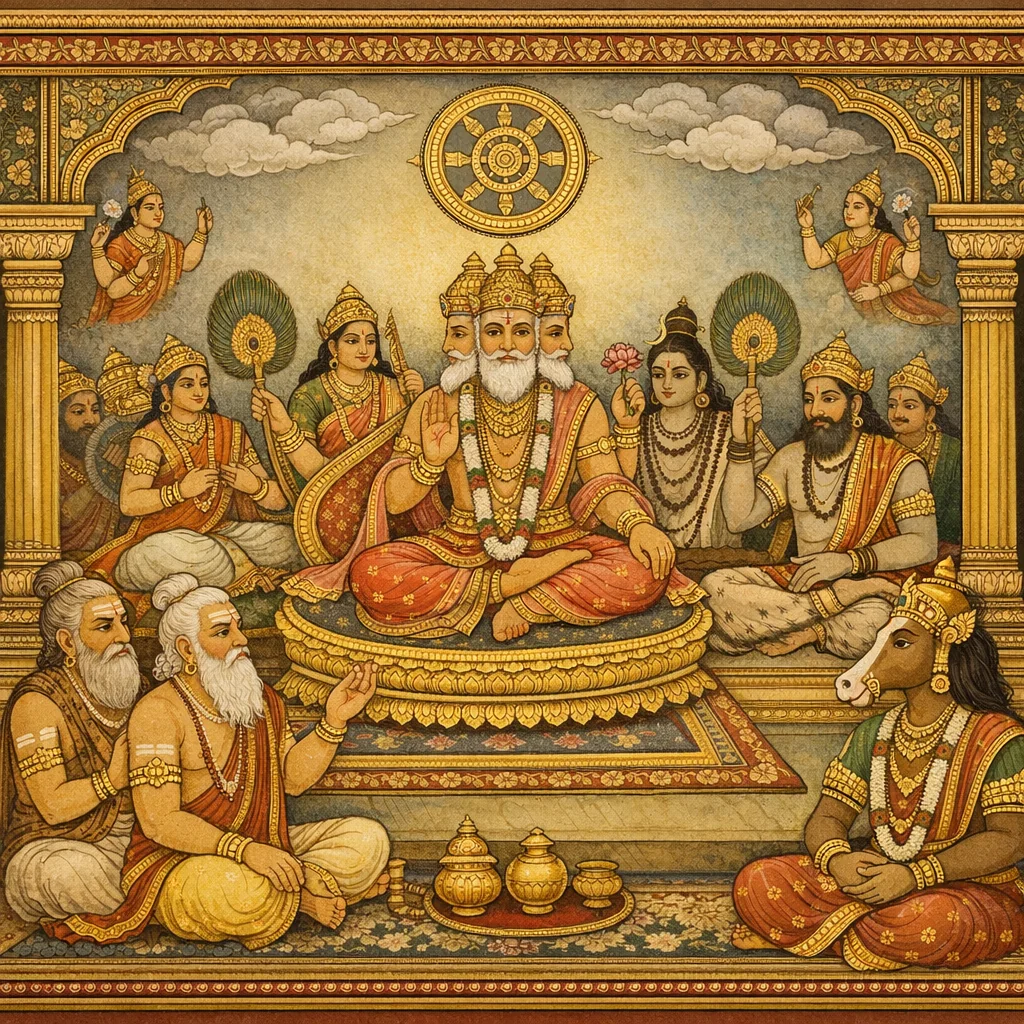
Adhyaya 15
भस्ममाहात्म्यं तथा वामदेवयोगिनः प्रभावः (The Glory of Sacred Ash and the Transformative Power of Yogin Vāmadeva)
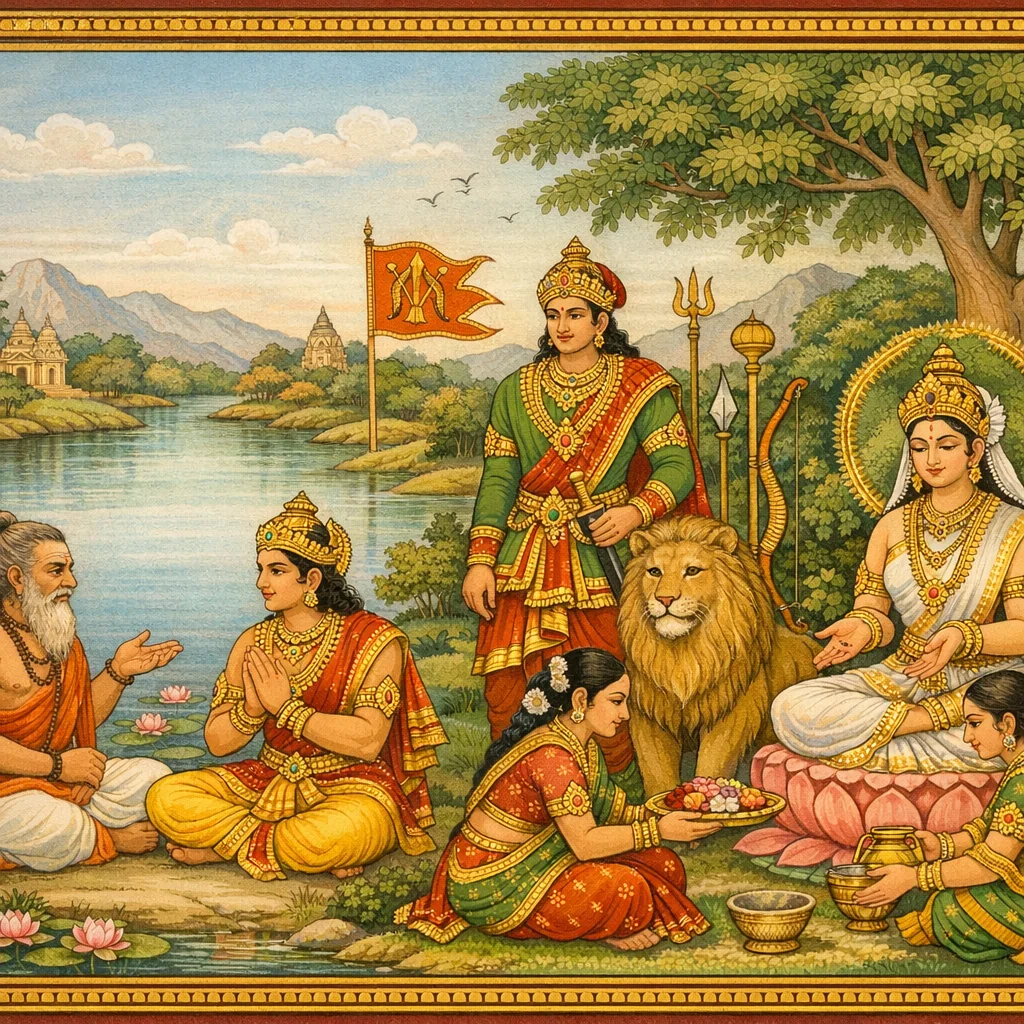
Sūta offers another illustration of a Śiva-yogin’s potency and announces a brief account of the māhātmya of bhasma (vibhūti), the sacred ash. The chapter portrays the ascetic Vāmadeva—detached, tranquil, non-possessive—marked with ash, matted hair, bark/skin garments, and the conduct of a mendicant. Entering the dreadful Kraunca forest, he is attacked by a starving brahmarākṣasa, yet the yogin remains unmoved. The moment the creature touches his ash-covered body, its sins are instantly destroyed, memory of former births returns, and a deep nirveda—inner revulsion and turning—arises. It recounts a long karmic past: once a powerful but immoral ruler (notorious for coercive sexual wrongdoing), then torment in hell, and repeated non-human rebirths culminating in brahmarākṣasa existence. Asking whether such power comes from tapas, tīrtha, mantra, or divine energy, it is told by Vāmadeva that the effect is specifically due to bhasma’s greatness, fully known only to Mahādeva. He cites a precedent in which a corpse marked with ash is claimed by Śiva’s emissaries even against Yama’s attendants. The chapter ends with the brahmarākṣasa requesting instruction on how to wear bhasma, which mantra and auspicious procedure to use, and the proper time and place—preparing for further teaching.
Adhyaya 16
त्रिपुण्ड्र-माहात्म्य तथा भस्म-धारण-विधि (Tripuṇḍra: Greatness and the Procedure for Wearing Sacred Ash)
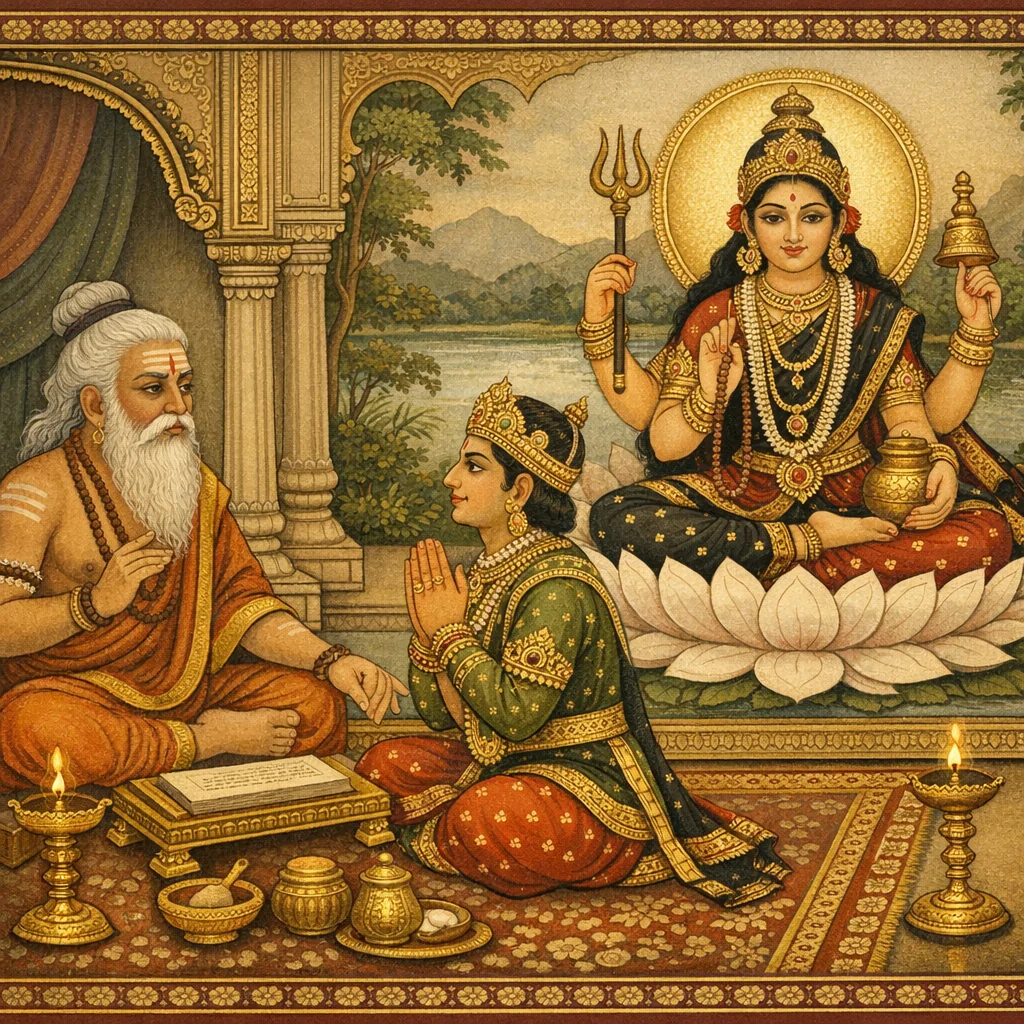
This chapter unfolds through layered narration: Sūta introduces Vāmadeva’s account of a vast divine assembly on Mount Mandara, where Rudra appears as an awe-inspiring cosmic Lord, surrounded by innumerable Rudra hosts and many kinds of beings. Sanatkumāra approaches to ask for dharmas that lead to liberation and requests a practice that is easy to perform yet yields great results. Rudra proclaims Tripuṇḍra-dhāraṇa—wearing the three lines of sacred ash—as an eminent, Śruti-aligned secret for all beings. The chapter then details the rite: bhāsma made from burnt cow-dung is consecrated with the five Brahma-mantras (Sadyōjāta, etc.) and other mantras; it is applied to the head, forehead, arms, and shoulders; and the three lines are defined by their span and finger-method. A doctrinal scheme assigns to each line sets of nine correspondences (a/u/ma, fires, worlds/guṇas/Vedic portions, powers, savanas, and presiding deities), culminating in Mahādeva/Maheśvara/Śiva. The phalaśruti extols its fruits: purification from major and minor sins, exaltation of the bearer even if socially marginal, equivalence to bathing in all tīrthas, and efficacy as though many mantras were recited. It uplifts one’s lineage, grants celestial enjoyments, and finally bestows Śiva-loka and sāyujya without rebirth. The narrative closes with Rudra’s disappearance, Vāmadeva’s exhortation, and an exemplum in which a brahmarākṣasa is transformed by receiving and applying bhāsma/Tripuṇḍra and ascends to auspicious worlds; hearing, reciting, or teaching this māhātmya is itself declared salvific.
Adhyaya 17
Śraddhā–bhāva and the Efficacy of Śiva-Pūjā: The Niṣāda Couple’s Exemplum (श्रद्धा-भावमाहात्म्यं)
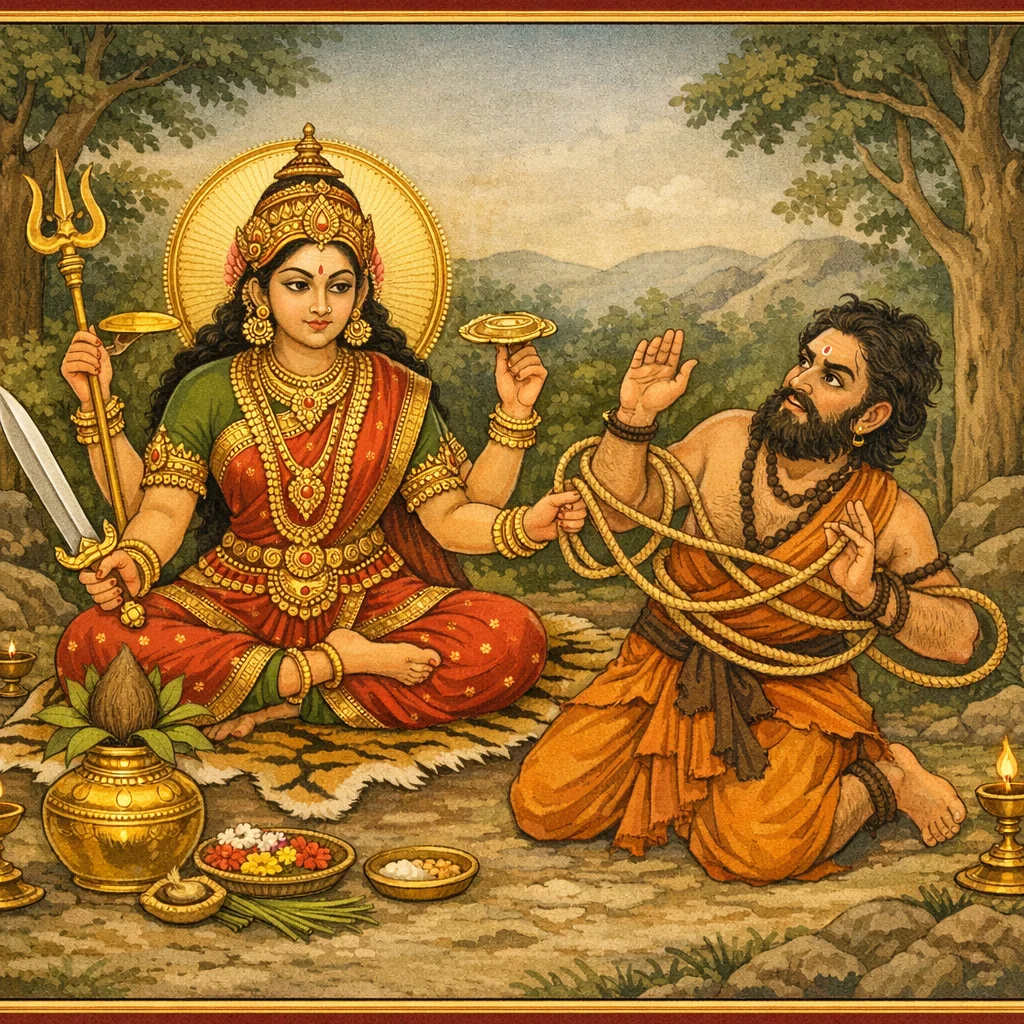
The sages ask whether instruction from highly learned brahmavādins is superior to guidance from more ordinary yet practically skilled teachers. Sūta replies that śraddhā—faithful, earnest trust—is the enabling condition of all dharma: it grants success in both worlds. Even simple things like stone become fruit-bearing when approached with devotion; mantra and deity-worship yield results according to one’s bhāvanā (inner intention), while doubt, restlessness, and lack of śraddhā estrange one from the highest aim and bind one to saṃsāra. To illustrate, the tale begins with Siṃhaketū, son of the Pañcāla king, who—through a Śabara attendant—finds a ruined shrine and a subtle Śiva-liṅga. The Śabara asks for a method of worship pleasing to Maheśvara for both mantra-knowers and non-knowers. The prince, speaking with a parodic tone, outlines a “simple” Śiva-pūjā: abhiṣeka with fresh water, preparing the seat, offering fragrance, flowers, leaves, incense, lamps, and especially citā-bhasma (cremation ash), then reverently receiving prasāda. The Śabara, Caṇḍaka, accepts this as authoritative and worships daily with devotion. When ash becomes unavailable, he despairs; his wife proposes an extreme act—burning the house and entering fire to produce ash for Śiva’s worship. Though her husband objects that the body is a means to dharma-artha-kāma-mokṣa, she insists that life’s fulfillment is self-offering for Śiva’s purpose. In prayer she interprets her senses as flowers, body as incense, heart as lamp, breaths as oblations, and actions as offerings, asking only for unbroken devotion across births. She enters the fire without pain; the house remains unharmed, and she reappears at the end of the pūjā to receive prasāda. A divine vimāna arrives; Śiva’s attendants uplift the couple, and by their touch the pair attain Śiva-like form (sārūpya). The chapter concludes that śraddhā should be cultivated in all meritorious acts: even a low-status Śabara reaches a yogic destination through faith, while birth and learning are secondary to steady devotion to the Supreme.
Adhyaya 18
Umā–Maheśvara Vrata: Narrative of Śāradā and the Ritual Protocol
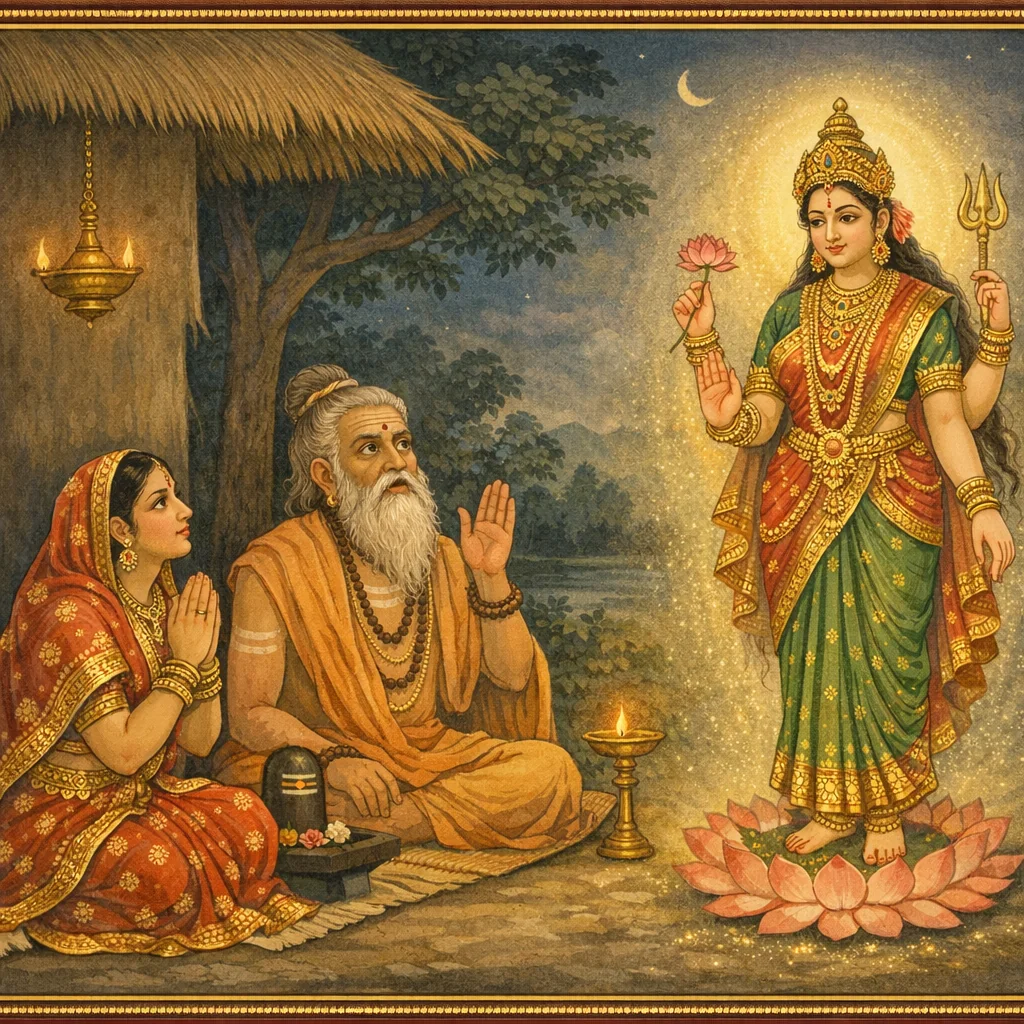
Sūta presents a case-based theological teaching centered on the Umā–Maheśvara-vrata, praised as a complete vow for sarvārtha-siddhi (fulfillment across many aims). The narrative begins in the home of the learned brāhmaṇa Vedaratha: his daughter Śāradā is married to a wealthy dvija, but the groom dies soon after the wedding from a snakebite, and Śāradā is suddenly widowed. A blind aged sage, Naidhruva, arrives as a guest. Śāradā serves him with exemplary atithi-sevā—washing his feet, fanning, anointing, arranging his bath and worship, and offering food—treating ethical hospitality as ritual merit. Pleased, the sage blesses her with renewed married life, a virtuous son, and public renown; Śāradā questions how this can be, given karma and widowhood. Naidhruva then prescribes the Umā–Maheśvara-vrata and lays out its full protocol: auspicious timing (Caitra or Mārgaśīrṣa, bright fortnight), saṅkalpa on aṣṭamī and caturdaśī, a decorated maṇḍapa, a lotus diagram with specified petal counts, and installation of a rice mound, sacred kūrca, water-filled kalaśa, cloth, and golden images of Śiva and Pārvatī. He details abhiṣeka with pañcāmṛta, japa of Rudra-ekādaśa and pañcākṣara in prescribed counts, prāṇāyāma and saṅkalpa for sin-destruction and prosperity, dhyāna with iconographic descriptions of Śiva and the Devī, external worship with arghya mantras, naivedya, homa, and a reverent conclusion. The vow is observed for a year (both fortnights) and culminates in udyāpana with mantra-bathing, gifts to the guru (kalaśa, gold, cloth), feeding brāhmaṇas, and dakṣiṇā; the phalaśruti promises uplift of lineages and progressive enjoyment of divine realms ending in proximity to Śiva. At the family’s request, the sage stays nearby in their maṭha while Śāradā undertakes the vow as instructed.
Adhyaya 19
गौरी-प्रादुर्भावः, स्वप्न-संगम-वरदानम्, तथा शारदाया चरितम् (Gaurī’s Epiphany, Dream-Union Boon, and the Account of Śāradā)
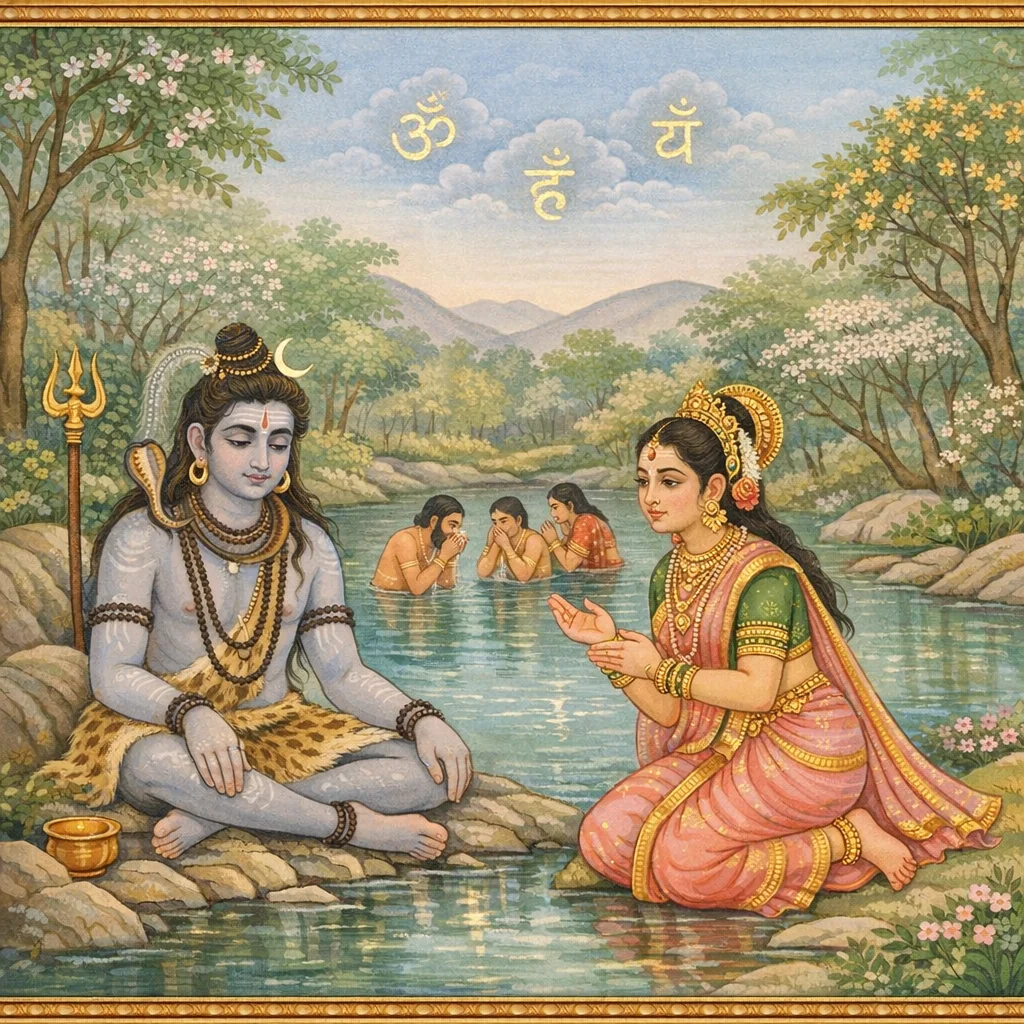
Chapter 19, narrated by Sūta, unfolds a closely linked sacred account. The young woman Śāradā completes a year-long great vow with strict niyamas near her guru and performs the udyāpana by feeding brāhmaṇas and giving fitting gifts. During a night vigil, guru and devotee intensify japa, arcana, and meditation; Devī Bhavānī (Gaurī) manifests in a “dense,” embodied form, and the sage who had been blind instantly regains his sight. When Devī offers a boon, the sage asks that his promise to Śāradā be fulfilled: long companionship with a husband and the birth of an excellent son. Devī explains the karmic causes—Śāradā’s former-life act of creating marital discord led to repeated widowhood, yet her prior worship of the Goddess neutralized the remaining sin. A subtle ethical resolution follows: Śāradā experiences nightly dream-union with her husband (reborn elsewhere), conceives through that extraordinary means, and faces public accusations. A disembodied voice vindicates her chastity and warns slanderers of immediate consequences; elders then interpret the event through precedent tales of unusual conception. The chapter culminates in the birth and education of a brilliant son, and at Gokarṇa the spouses recognize one another, transmit the “fruit of the vow” through the child, and finally attain a divine abode. The phalaśruti proclaims that hearing or reciting this chapter removes sin, grants prosperity and health, brings auspicious well-being to women, and leads to the highest attainment.
Adhyaya 20
रुद्राक्षमाहात्म्यं (Rudrākṣa Māhātmya: Theological Discourse on the Sacred Bead)
The chapter begins with Sūta’s brief proclamation that hearing and reciting the greatness of Rudrākṣa purifies, granting benefit to listeners and reciters across all social standings and degrees of devotion. Rudrākṣa is then described as a disciplined observance like a great vow (mahā-vrata), with ideal numbers of beads and prescribed ways of wearing them on the body, along with ritual equivalences: head-bathing with Rudrākṣa yields the merit of bathing in the Gaṅgā, and Rudrākṣa worship parallels liṅga worship. Japa performed with Rudrākṣa is said to magnify results compared to japa without it, and Rudrākṣa is placed within a broader Śaiva identity alongside bhasma and the tripuṇḍra marks. The narrative then turns to a didactic legend: King Bhadrasena of Kashmir asks sage Parāśara about two youths who are naturally devoted to Rudrākṣa. Parāśara recounts a previous-life episode involving a courtesan devoted to Śiva and a merchant who offers a jewel bracelet and entrusts a gem liṅga to her care. A sudden fire destroys the liṅga, the merchant resolves to immolate himself, and the courtesan—bound by the truth of her spoken word—prepares to enter the fire as well. Śiva appears, reveals the event as a test, grants boons, and liberates her and her dependents; the surviving monkey and rooster, once adorned with Rudrākṣa, are said to be reborn as the two boys, explaining their innate practice through prior merit and habituation.
Adhyaya 21
रुद्राध्याय-प्रभावः तथा आयुर्लेख्य-परिवर्तनम् (The Efficacy of the Rudrādhyāya and the Revision of Lifespan Records)
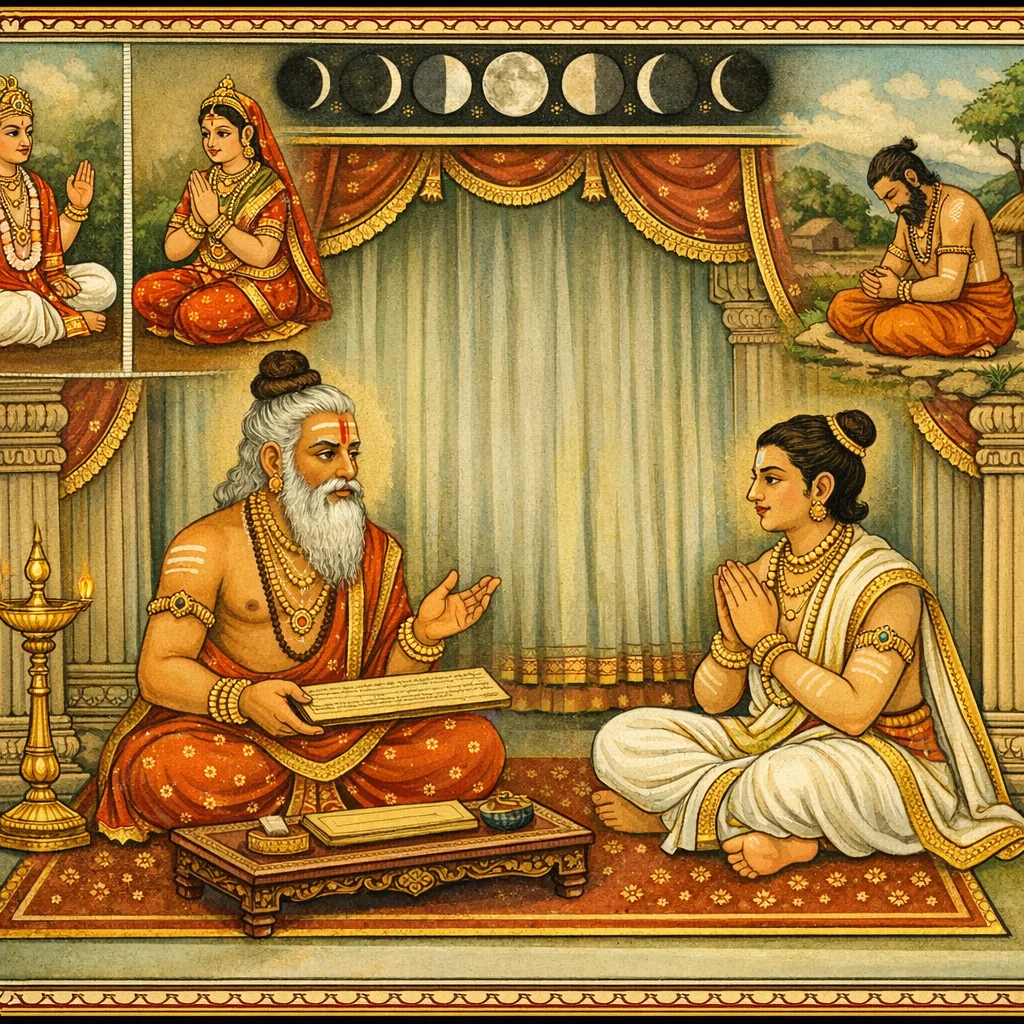
Sūta recounts a courtly dialogue: the king, stirred by the sage’s nectar-like speech, praises sat-saṅga as a purifier that restrains passion and grants clarity. He asks Parāśara about his son’s future—lifespan, fortune, learning, fame, strength, faith, and devotion. Parāśara reluctantly reveals a grievous forecast: the prince has only twelve years and will die on the seventh day from that moment; the king collapses in sorrow. The sage consoles him and teaches doctrine: Śiva is the primordial, partless, luminous principle of consciousness and bliss; Brahmā is empowered for creation and receives the Vedas and the Rudrādhyāya as an Upaniṣadic essence. A karmic-ethical cosmos is then described: dharma and adharma yield heaven and hell, and personified vices and great sins administer naraka under Yama. When Rudrādhyāya practice spreads as a direct means to kaivalya, these agents complain they cannot function; Yama petitions Brahmā, who introduces obstacles—unfaith (aśraddhā) and dull intellect (durmedhā)—to hinder recitation among mortals. The text proclaims the fruits of Rudrādhyāya japa and Rudra-abhiṣeka: destruction of sins, longevity, health, knowledge, and freedom from fear of death. A grand ritual bathing of the prince is performed; he briefly perceives a punitive figure, yet protection is affirmed. Nārada arrives and reports the unseen event: Death came to take the prince, Śiva commissioned Vīrabhadra, and Yama’s apparatus (including Citragupta) confirms the lifespan record is revised from twelve years to a longer term through the rite. The chapter ends by praising hearing and reciting this Śiva-mahātmya as liberative and by prescribing Rudra-bathing for the prince’s long enjoyment of life.
Adhyaya 22
Śiva-kathā-śravaṇa-mahattva (The Excellence of Hearing Śiva’s Purāṇic Narrative)
Chapter 22 explains, in a structured theological way, why Śiva’s purāṇic narrative (śaivī-paurāṇikī kathā) is called a universally accessible “common path” (sādhāraṇaḥ panthāḥ) that can grant immediate liberation (sadyo-mukti). Hearing and reciting it are praised as a cure for ignorance, a destroyer of karmic seeds, and a discipline especially suited to Kali-yuga when other dharmic means are hard to practice. The chapter then lays down ethical rules for transmission: the qualifications of the Purāṇa-knower (pūrāṇajña), proper venues (clean, devotional, non-hostile), and the listener’s etiquette. It warns of harmful results from disrespect—interrupting, mocking, improper posture, or inattentive listening. Finally, an illustrative story near Gokarṇa depicts a morally compromised household and a woman’s transformation through fear, remorse, and sustained listening, culminating in purification of mind, meditation, and liberation-oriented devotion. The chapter closes with exalted Śaiva praise, affirming Paramaśiva as transcendent beyond speech and mind.
FAQs about Brahmottara Khanda
It emphasizes Gokarṇa as a Śaiva kṣetra where Śiva’s presence is treated as especially accessible and purificatory, making the site a focal point for accelerated ritual merit and moral restoration.
Repeated claims highlight rapid purification through Gokarṇa-darśana and vrata performance; offerings such as bilva-leaf worship are presented as yielding results comparable to extended bathing or long-duration austerities elsewhere.
Key materials include the Mahābala-liṅga’s prominence at Gokarṇa, the assembly of deities around the shrine’s directional gateways, and a moral exemplum involving a king’s fall and partial restoration through sage-guided practice.