Adhyaya 21
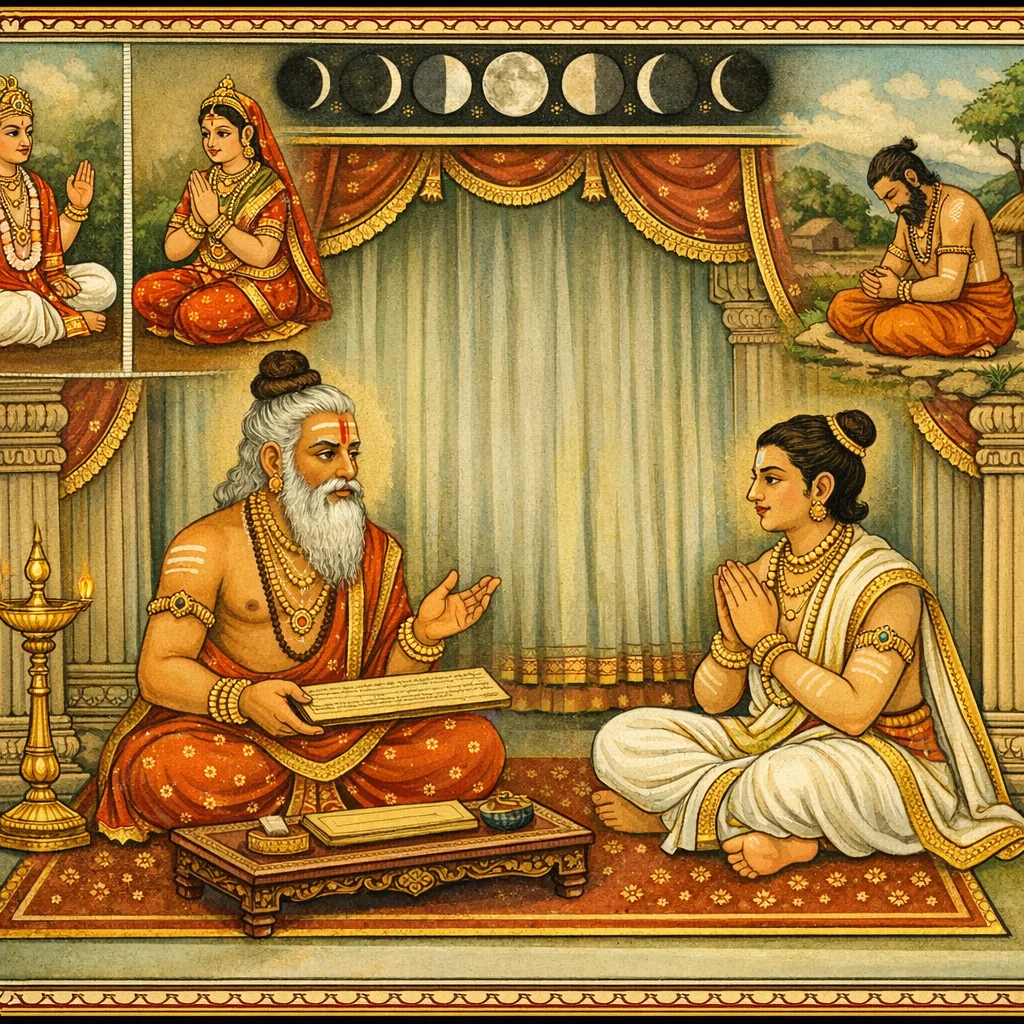
Sūta recounts a courtly dialogue: the king, stirred by the sage’s nectar-like speech, praises sat-saṅga as a purifier that restrains passion and grants clarity. He asks Parāśara about his son’s future—lifespan, fortune, learning, fame, strength, faith, and devotion. Parāśara reluctantly reveals a grievous forecast: the prince has only twelve years and will die on the seventh day from that moment; the king collapses in sorrow. The sage consoles him and teaches doctrine: Śiva is the primordial, partless, luminous principle of consciousness and bliss; Brahmā is empowered for creation and receives the Vedas and the Rudrādhyāya as an Upaniṣadic essence. A karmic-ethical cosmos is then described: dharma and adharma yield heaven and hell, and personified vices and great sins administer naraka under Yama. When Rudrādhyāya practice spreads as a direct means to kaivalya, these agents complain they cannot function; Yama petitions Brahmā, who introduces obstacles—unfaith (aśraddhā) and dull intellect (durmedhā)—to hinder recitation among mortals. The text proclaims the fruits of Rudrādhyāya japa and Rudra-abhiṣeka: destruction of sins, longevity, health, knowledge, and freedom from fear of death. A grand ritual bathing of the prince is performed; he briefly perceives a punitive figure, yet protection is affirmed. Nārada arrives and reports the unseen event: Death came to take the prince, Śiva commissioned Vīrabhadra, and Yama’s apparatus (including Citragupta) confirms the lifespan record is revised from twelve years to a longer term through the rite. The chapter ends by praising hearing and reciting this Śiva-mahātmya as liberative and by prescribing Rudra-bathing for the prince’s long enjoyment of life.
Shlokas
Verse 1
सूत उवाच । एवं ब्रह्मर्षिणा प्रोक्तां वाणीं पीयूषसन्निभाम् । आकर्ण्य मुदितो राजा प्रांजलिः पुनरब्रवीत्
Sūta said: Having heard the brahmarṣi’s words—like nectar—the king, delighted, with hands folded in reverence, spoke again.
Verse 2
राजोवाच । अहो सत्संगमः पुंसामशेषाघप्रशोधनः । कामक्रोधनिहंता च इष्टदोग्धा जनस्य हि
The king said: Ah! The company of the good washes away every sin. It destroys lust and anger, and truly yields to a person the fruits they cherish.
Verse 3
मम मायातमो नष्टं ज्ञानदृष्टिः प्रकाशिता । तव दर्शनमात्रेण प्रायोहममरोत्तमः
The darkness of delusion within me is destroyed; the vision of true knowledge has been illumined. By your mere darśana, I feel as though I have become exalted like the immortals.
Verse 4
श्रुतं च पूर्वचरितं बालयोः सम्यगेतयोः । भविष्यदपि पृच्छामि मत्पुत्राचरणं मुने
I have properly heard the former deeds of these two boys. Now I ask also about what is to come—tell me, O sage, the future conduct and course of my son.
Verse 5
अस्यायुः कति वर्षाणि भाग्यं वद च कीदृ शम् । विद्या कीर्तिश्च शक्तिश्च श्रद्धा भक्तिश्च कीदृशी
How many years will his life endure? Tell me also what his fortune shall be—what of his learning, his fame, his strength, and what his faith and devotion shall be.
Verse 6
एतत्सर्वमशेषेण मुने त्वं वक्तुमर्हसि । तव शिष्योस्मि भृत्योस्मि शरणं त्वां गतोस्मयहम्
All this, without leaving anything out, you ought to tell, O sage. I am your disciple, I am your servant; I have come to you for refuge.
Verse 7
पराशर उवाच । अत्रावाच्यं हि यत्किंचित्कथं शक्तोस्मि शंसितुम् । यच्छ्रुत्वा धृतिमंतोपि विषादं प्राप्नुयुर्जनाः
Parāśara said: Here there is something that ought not be spoken—how am I able to declare it? Hearing it, even steadfast people might fall into grief.
Verse 8
तथापि निर्व्यलीकेन भावेन परिपृच्छतः । अवाच्यमपि वक्ष्यामि तव स्नेहान्महीपते
Yet, because you ask with a guileless heart, O king, I shall speak even what is difficult to utter—out of affection for you.
Verse 9
अमुष्य त्वत्कुमारस्य वर्षाणि द्वादशात्ययुः । इतः परं प्रपद्येत सप्तमे दिवसे मृतिम्
Your prince has already passed twelve years of life. From this point onward, he will meet death on the seventh day.
Verse 10
इति तस्य वचः श्रुत्वा कालकूटमिवोदितम् । मूर्च्छितः सहसा भूमौ पतितो नृपतिः शुचा
Hearing those words—uttered like the deadly Kālakūṭa poison—the king, overwhelmed by grief, suddenly fainted and fell to the ground.
Verse 11
तमुत्थाप्य समाश्वास्य स मुनिः करुणार्द्रधीः । उवाच मा भैर्नृपते पुनर्वक्ष्यामि ते हितम्
Raising him up and comforting him, the sage—his mind softened with compassion—said, “Do not fear, O king; I shall again declare to you what is truly for your good.”
Verse 12
सर्गात्पुरा निरालोकं यदेकं निष्कलं परम् । चिदानंदमयं ज्योतिः स आद्यः केवलः शिवः
Before creation, there was That One—supreme, partless, and beyond all manifestation: a radiance made of pure consciousness and bliss. He alone is the primal, absolute Śiva.
Verse 13
स एवादौ रजोरूपं सृष्ट्वा ब्रह्माणमात्मना । सृष्टिकर्मनियुक्ताय तस्मै वेदांश्च दत्तवान्
He alone, in the beginning, brought forth Brahmā in the form of rajas by his own power; and to that one appointed for the work of creation, he bestowed the Vedas.
Verse 14
पुनश्च दत्तवानीश आत्मतत्त्वैकसंग्रहम् । सर्वोपनिषदां सारं रुद्राध्यायं च दत्तवान्
And again the Lord bestowed the Rudrādhyāya—an unrivaled compendium of the truth of the Self, the very essence of all the Upaniṣads.
Verse 15
यदेकमव्ययं साक्षाद्ब्रह्मज्योतिः सनातनम् । शिवात्मकं परं तत्त्वं रुद्राध्याये प्रतिष्ठितम्
That One, imperishable and directly knowable—the eternal radiance of Brahman—the supreme Reality whose very nature is Śiva, is established in the Rudrādhyāya.
Verse 16
स आत्मभूः सृजद्विश्वं चतुर्भिर्वदनैर्विराट् । ससर्ज वेदांश्चतुरो लोकानां स्थितिहेतवे
That self-born Brahmā, the cosmic Virāṭ, created the universe with his four faces; and for the stability of the worlds he brought forth the four Vedas.
Verse 17
तत्रायं यजुषां मध्ये ब्रह्मणो दक्षिणान्मुखात् । अशेषोपनिषत्सारो रुद्राध्यायः समुद्गतः
There, within the Yajurveda, from Brahmā’s southern face arose this Rudrādhyāya—the distilled essence of all the Upaniṣads without remainder.
Verse 18
स एष मुनिभिः सर्वैर्मरीच्यत्रिपुरोगमैः । सह देवैर्धृतस्तेभ्यस्तच्छिष्या जगृहुश्च तम्
This (Rudrādhyāya) was upheld by all the sages—led by Marīci and Atri—together with the gods; and from them their disciples received it as a sacred inheritance.
Verse 19
तच्छिष्यशिष्यैस्तत्पुत्रैस्तत्पुत्रैश्च क्रमागतैः । धृतो रुद्रात्मकः सोऽयं वेदसारः प्रसादितः
Maintained in due succession by the disciples’ disciples, by their sons and grandsons, this Rudra-natured teaching—this very essence of the Vedas—has been preserved and handed down with grace.
Verse 20
एष एव परो मन्त्र एष एव परं तपः । रुद्राध्यायजपः पुंसां परं कैवल्यसाधनम्
This alone is the supreme mantra; this alone is the highest austerity: for human beings, the repeated recitation of the Rudra-adhyāya is the foremost means to attain kaivalya, liberating aloneness.
Verse 21
महापातकिनः प्रोक्ता उपपातकिनश्च ये । रुद्राध्यायजपात्सद्यस्तेऽपि यांति परां गतिम्
Even those proclaimed to be great sinners, and those who commit lesser sins as well—by the recitation of the Rudra-adhyāya, they too swiftly attain the highest state.
Verse 22
भूयोपि ब्रह्मणा सृष्टाः सदसन्मिश्रयोनयः । देवतिर्यङ्मनुष्याद्यास्ततः संपूरितं जगत्
Again, Brahmā created the wombs of mixed being and non-being; as gods, animals, humans, and the rest came forth, the world became filled thereby.
Verse 23
तेषां कर्माणि सृष्टानि स्वजन्मानुगुणानि च । लोकास्तेषु प्रवर्तंते भुंजते चैव तत्फलम्
For them, actions were ordained in accordance with their own births; beings engage in those courses of action and indeed experience the fruits that arise from them.
Verse 24
लोकसृष्टिप्रवाहार्थं स्वयमेव प्रजापतिः । धर्माधर्मौ ससर्जाग्रे स्ववक्षःपृष्ठभागतः
To keep the stream of worldly creation in motion, Prajāpati himself, in the beginning, brought forth Dharma and Adharma from the region of his chest and back.
Verse 25
धर्ममेवानुतिष्ठंतः पुण्यं विंदंति तत्फलम् । अधर्ममनुतिष्ठंतस्ते पापफलभोगिनः
Those who abide in Dharma alone attain merit and its reward; those who abide in Adharma become the experiencers of sinful fruits.
Verse 26
पुण्यकर्मफल स्वर्गो नरकस्तद्विपर्ययः । तयोर्द्वावधिपौ धात्रा कृतौ शतमखांतकौ
Heaven (Svarga) is the fruit of meritorious deeds; hell (Naraka) is its opposite. Over these two, the Creator appointed two rulers—the “destroyers of the hundred sacrifices”.
Verse 27
कामः क्रोधश्च लोभश्च मदमानादयः परे । अधर्मस्य सुता आसन्सर्वे नरकनायकाः
Desire, anger, greed, and others such as intoxication and pride were the sons of Adharma; all of them became leaders of hell.
Verse 28
गुरुतल्पः सुरापानं तथान्यः पुल्कसीगमः । कामस्य तनया ह्येते प्रधानाः परिकीर्तिताः
Violation of the teacher’s bed, drinking intoxicants, and consorting with a Pulkasī woman—these are declared to be the principal offspring of Desire (Kāma).
Verse 29
क्रोधात्पितृवधो जातस्तथा मातृवधः परः । ब्रह्महत्या च कन्यैका क्रोधस्य तनया अमी
From anger arose the killing of one’s father, and likewise the killing of one’s mother; and Brahmin-slaying—these are said to be the offspring of Anger (Krodha).
Verse 30
देवस्वहरणश्चैव ब्रह्मस्वहरणस्तथा । स्वर्णस्तेय इति त्वेते लोभस्य तनयाः स्मृताः
“Stealing what belongs to the Devas, stealing what belongs to Brahmins, and the theft of gold”—these three are remembered as the sons born of Greed (Lobha).
Verse 31
एतानाहूय चांडालान्यमः पातकनायकान् । नरकस्य विवृद्ध्यर्थमाधिपत्यं चकार ह
Summoning those outcaste beings, Yama appointed them as “leaders of sins” (pātaka-nāyakas), granting them authority for the expansion and administration of hell.
Verse 32
ते यमेन समादिष्टा नव पातकनायकाः । ते सर्वे संगता भूयो घोराः पातकनायकाः
Those nine “leaders of sins,” commissioned by Yama, assembled together once again—terrible indeed, those pātaka-nāyakas.
Verse 33
नरकान्पालयामासुः स्वभृत्यैश्चोपपातकैः । रुद्राध्याये भुवि प्राप्ते साक्षात्कैवल्यसाधने
They kept watch over the hells along with their own servants—the subsidiary sins. But when the Rudrādhyāya, the direct means to liberation, spread upon the earth…
Verse 34
भीताः प्रदुद्रुवुः सर्वे तेऽमी पातकनायकाः । यमं विज्ञापयामासुः सहान्यैरुपपातकैः
Terrified, all those leaders of sins fled, and together with other minor sins they went to inform Yama.
Verse 35
जय देव महाराज वयं हि तव किंकराः । नरकस्य विवृद्ध्यर्थं साधिकाराः कृतास्त्वया
Victory to you, O divine great king! Truly we are your servants. For the increase of hell’s domain, you appointed us and vested us with authority.
Verse 36
अधुना वर्तितुं लोके न शक्ताः स्मो वयं प्रभो । रुद्राध्यायानुभावेन निर्दग्धाश्चैव विद्रुताः
Now, O Lord, we are no longer able to function in the world; by the power of the Rudrādhyāya we are scorched and driven away.
Verse 37
ग्रामेग्रामे नदीकूले पुण्येष्वायतनेषु च । रुद्रजाप्ये तु पर्याप्ते कथं लोके चरेमहि
When Rudra-japa has become widespread—in every village, on riverbanks, and in holy sanctuaries—how can we continue to move about in the world?
Verse 38
प्रायश्चित्तसहस्रं वै गणयामो न किंचन । रुद्रजाप्याक्षराण्येव सोढुं बत न शक्नुमः
We count thousands of expiations as nothing; but the very syllables of Rudra-japa—alas—we cannot endure them.
Verse 39
महापातकमुख्यानामस्माकं लोकघातिनाम् । रुद्रजाप्यं भयं घोरं रुद्रजाप्यं महद्विषम्
For us—chief among the great sins, destroyers of the world—Rudra-japa is a dreadful terror; Rudra-japa is a mighty poison to us.
Verse 40
अतो दुर्विषहं घोरमस्माक व्यसनं महत् । रुद्रजाप्येन संप्राप्तमपनेतुं त्वमर्हसि
Therefore, a great calamity—terrible and unbearable—has come upon us through the japa of Rudra; it is fitting that you remove it.
Verse 41
इति विज्ञापितः साक्षाद्यमः पातकनायकैः । ब्रह्मणोंऽतिकमासाद्य तस्मै सर्वं न्यवेदयत्
Thus, directly petitioned by the leaders of sin, Yama approached Brahmā and reported everything to him.
Verse 42
देवदेव जगन्नाथ त्वामेव शरणं गतः । त्वया नियुक्तो मर्त्यानां निग्रहे पापकारिणाम्
O God of gods, Lord of the world, in you alone have I taken refuge. Appointed by you, I restrain mortals who commit sin.
Verse 43
अधुना पापिनो मर्त्या न संति पृथिवीतले । रुद्राध्यायेन निहतं पातकानां महत्कुलम्
Now there are no sinful mortals left upon the earth, for by the Rudra-lesson (Rudrādhyāya) the great lineage of sins has been struck down.
Verse 44
पातकानां कुले नष्टे नरकाः शून्यतां गताः । नरके शून्यतां याते मम राज्यं हि निष्फलम्
When the lineage of sins is destroyed, the hells become empty; and when the hells are empty, my kingdom indeed becomes fruitless.
Verse 45
तस्मात्त्वयैव भगवन्नुपायः परिचिन्त्यताम् । यथा मे न विहन्येत स्वामित्वं मर्त्यदेहिनाम्
Therefore, O Blessed Lord, you yourself must devise a means, so that my authority over embodied mortals is not undone.
Verse 46
इति विज्ञापितो धाता यमेन परिखिद्यता । रुद्रजाप्यविघातार्थमुपायं पर्यकल्पयत्
Thus informed by Yama, who was deeply distressed, the Creator (Dhātā) devised a means to hinder Rudra-japa.
Verse 47
अश्रद्धां चैव दुर्मेधामविद्यायाः सुते उभे । श्रद्धामेधाविघातिन्यौ मर्त्येषु पर्यचोदयत्
And he dispatched into the world of mortals both Aśraddhā (Lack of Faith) and Durmedhā (Perverse Intellect), the two daughters of Avidyā—those who destroy faith and right understanding among men.
Verse 48
ताभ्यां विमोहिते लोके रुद्राध्यायपराङ्मुखे । यमः स्वस्थानमासाद्य कृतार्थ इव सोऽभवत्
When the world was deluded by those two and turned away from the Rudra-adhyāya, Yama returned to his own abode and seemed as though his purpose had been fulfilled.
Verse 49
पूर्वजन्मकृतैः पापैर्जायंतेऽल्पायुषो जनाः । तानि पापानि नश्यंति रुद्रं जप्तवतां नृणाम्
Because of sins committed in former births, people are born short-lived; yet those very sins perish for men who have chanted Rudra.
Verse 50
क्षीणेषु सर्वपापेषु दीर्घमायुर्बलं धृतिः । आरोग्यं ज्ञानमैश्वर्यं वर्धते सर्वदेहिनाम्
When all sins are exhausted, long life, strength, and steadfastness increase; health, true knowledge, and prosperity also grow for all embodied beings.
Verse 51
रुद्राध्यायेन ये देवं स्नापयंति महेश्वरम् । तज्जलैः कुर्वतः स्नानं ते मृत्युं संतरंति च
Those who bathe Lord Maheśvara with the Rudrādhyāya, and those who themselves bathe using that consecrated water—such people cross beyond death.
Verse 52
रुद्राध्यायाभिजप्तेन स्नानं कुर्वंति येंऽभसा । तेषां मृत्युभयं नास्ति शिवलो के महीयते
Those who bathe with water over which the Rudrādhyāya has been duly recited have no fear of death; they are honored in Śiva’s world.
Verse 53
शतरुद्राभिषेकेण शतायुर्जायते नरः । अशेषपापनिर्मुक्तः शिवस्य दयितो भवेत्
By performing the Śatarudra abhiṣeka, a man attains a hundred-year lifespan; freed from all sins, he becomes dear to Śiva.
Verse 55
अव्याहतबलैश्वर्यो हतशत्रुर्निरामयः । निर्धूताखिलपापौघः शास्ता राज्यमकंटकम्
With unimpaired strength and sovereignty, his enemies destroyed and his body free from disease, having shaken off every flood of sin, he rules a kingdom without thorns—free of obstacles and afflictions.
Verse 56
विप्रा वेदविदः शांताः कृतिनः शंसितव्रताः । ज्ञानयज्ञतपोनिष्ठाः शिवभक्तिपरायणाः
They were brāhmaṇas—knowers of the Vedas, tranquil in mind, accomplished and famed for their vows—steadfast in knowledge, sacrifice, and austerity, and wholly devoted to Śiva-bhakti.
Verse 57
रुद्राध्याय जपं सम्यक्कुर्वंतु विमलाशयाः । तेषां जपानुभावेन सद्यः श्रेयो भविष्यति
Let the pure-hearted perform the Rudrādhyāya japa correctly; by the power of that repetition, their highest good will arise at once.
Verse 58
इत्युक्तवंतं नृपतिर्महामुनिं तमेव वव्रे प्रथमं क्रियागुरुम् । अथापरांस्त्यक्तधनाशयान्मुनीनावाहयामास सहस्रशः क्षणात्
Thus addressed, the king chose that great sage as his foremost preceptor for rites; then, in a moment, he summoned thousands of other sages who had abandoned all desire for wealth.
Verse 59
ते विप्राः शांतमनसः सहस्रपरिसंमिताः । कलशानां शतं स्थाप्य पुण्य वृक्षरसैर्युतम्
Those brāhmaṇas, tranquil-minded and numbering about a thousand, set up a hundred water-pots (kalaśas) filled with the saps of sacred trees.
Verse 60
रुद्राध्यायेन संस्नाप्य तमुर्वीपतिपुत्रकम् । विधिवत्स्नापयामासुः संप्राप्ते सप्तमे दिने
Having bathed the prince—the son of the lord of the earth—through the Rudrādhyāya, they duly performed his ceremonial bathing when the seventh day arrived.
Verse 61
स्नाप्यमानो मुनिजनैः स राजन्यकुमारकः । अकस्मादेव संत्रस्तः क्षणं मूर्च्छामवाप ह
As the sages bathed the young prince, he was suddenly seized by fear and for a moment fell into a faint.
Verse 62
सहसैव प्रबुद्धोऽसौ मुनिभिः कृतरक्षणः । प्रोवाच कश्चित्पुरुषो दंडहस्तः समागतः
He suddenly regained consciousness, protected by the sages, and said: “A certain man has arrived, holding a staff in his hand.”
Verse 63
मां प्रहर्तुं कृतमतिर्भीमदण्डो भयानकः । सोऽपि चान्यैर्महावीरै पुरुषैरभिताडितः
“He was intent on striking me—terrifying, bearing a dreadful staff; yet he too was beaten back by other great heroes among men.”
Verse 64
बद्ध्वा पाशेन महता दूरं नीत इवाभवत् । एतावदहमद्राक्षं भवद्भिः कृतरक्षणः
“Bound with a great noose, he seemed to be carried far away. This much I saw, having been protected by you.”
Verse 65
इत्युक्तवंतं नृपतेस्तनूजं द्विजसत्तमाः । आशीर्भिः पूजयामासुर्भयं राज्ञे न्यवेदयन्
When the king’s son had spoken thus, the foremost of the twice-born honored him with blessings and informed the king of the danger.
Verse 66
अथ सर्वानृषीञ्छ्रेष्ठान्दक्षिणाभिर्नृपोत्तमः । पूजयित्वा वरान्नेन भोजयित्वा च भक्तितः
Then the excellent king honored all the foremost sages with gifts (dakṣiṇā) and, with devotion, fed them choice foods.
Verse 67
प्रतिगृह्याशिषस्तेषां मुनीनां ब्रह्मवादि नाम् । भक्त्या बंधुजनैः सार्धं सभायां समुपाविशत्
Receiving the blessings of those sages—proclaimers of Brahman—he sat in the assembly, devotedly, together with his kinsmen.
Verse 68
तस्मिन्समागते वीरे मुनिभिः सह पार्थिवे । आजगाम महायोगी देवर्षिर्नारदः स्वयम्
When that heroic king had assembled together with the sages, the great yogin—the divine seer Nārada himself—arrived.
Verse 69
तमागतं प्रेक्ष्य गुरुं मुनीनां सार्धं सदस्यैरखिलैर्मुनींद्रैः । प्रणम्य भक्त्या विनिवेश्य पीठे कृतोपचारं नृपतिर्बभाषे
Seeing him arrive—the preceptor of sages—together with all the sage-lords who were present, the king bowed with devotion, seated him upon a throne, offered due honors, and then spoke.
Verse 70
राजोवाच । दृष्टं किमस्ति ते ब्रह्मस्त्रिलोक्यां किंचिदद्भुतम् । तन्नो ब्रूहि वयं सर्वे त्वद्वाक्यामृतलालसाः
The king said: “O Brahman, have you seen anything wondrous in the three worlds? Tell us of it—for we all long for the nectar of your words.”
Verse 71
नारद उवाच । अद्य चित्रं महद्दृष्टं व्योम्नोवतरता मया । तच्छृणुष्व महाराज सहैभिर्मुनिपुंगवैः
Nārada said: “Today, as I descended from the heavens, I beheld a wondrous and momentous event. O great King, hear it—together with these foremost sages.”
Verse 72
अद्य मृत्युरिहायातो निहंतुं तव पुत्रकम् । दंडहस्तो दुराधर्षो लोकमुद्बाधयन्सदा
“Today, Death has come here to strike down your son—staff in hand, hard to resist, ever harassing the worlds.”
Verse 73
ईश्वरोपि विदित्वैनं त्वत्पुत्रं हंतुमागतम् । सहैव पार्षदैः कंचिद्वीरभद्रमचोदयत्
“Even the Lord, knowing that he had come to kill your son, at once dispatched Vīrabhadra—together with his attendants.”
Verse 74
स आगत्य हठान्मृत्युं त्वत्पुत्रं हंतुमागतम् । गृहीत्वा सुदृढं बद्ध्वा दंडेनाभ्यहनद्रुषा
“He came and, with force, seized Death who had arrived to kill your son; binding him tightly, he struck him with the staff in wrath.”
Verse 75
तं नीयमानं जगदीशसन्निधिं शीघ्रं विदित्वा भगवान्यमः स्वयम् । कृतांजलिर्देव जयेत्युदीरयन्प्रणम्य मूर्ध्ना निजगाद शूलिनम्
Realizing at once that he was being taken into the presence of the Lord of the universe, the blessed Yama himself—hands folded—cried, “Victory to you, O God!” and, bowing his head, addressed the Trident-bearing Lord.
Verse 76
यम उवाच । देवदेव महारुद्र वीरभद्र नमोऽस्तु ते । निरागसि कथं मृत्यौ कोपस्तव समुत्थितः
Yama said: “O God of gods, Mahārudra—O Vīrabhadra, salutations to you. Death is without offense; why has your anger arisen against Mṛtyu?”
Verse 77
निजकर्मानुबंधेन राजपुत्रं गतायुषम् । प्रहर्तुमुद्यते मृत्यौ कोपराधो वद प्रभो
“Bound by his own karma, Death is prepared to strike the prince whose lifespan is spent. Tell me, O Lord—what is the offense that warrants your anger?”
Verse 78
वीरभद्र उवाच । दशवर्षसहस्रायुः स राजतनयः कथम् । विपत्तिमंतरायाति रुद्रस्नानहताशुभः
Vīrabhadra said: “That prince is destined to live ten thousand years—how, then, can calamity overtake him, when his impurities have been destroyed by Rudra-bathing?”
Verse 79
अस्ति चेत्तव संदेहो मद्वाक्येऽप्यनिवारिते । चित्रगुप्तं समाहूय प्रष्टव्योऽद्यैव मा चिरम्
“If you still have doubt—though my words are not to be set aside—then summon Citragupta and ask him this very day; do not delay.”
Verse 80
नारद उवाच । अथाहूतश्चित्रगुप्तो यमेन सहसागतः । आयुःप्रमाण त्वत्सूनोः परिपृष्टः स चाब्रवीत्
Nārada said: “Then Citragupta, summoned by Yama, came immediately. When asked about the measure of your son’s lifespan, he replied.”
Verse 81
द्वादशाब्दं च तस्यायुरित्युक्त्वाथ विमृश्य च । पुनर्लेख्यगतं प्राह स वर्षायुतजीवितम्
Having said, “His lifespan is twelve years,” he reflected again; then, consulting the written record once more, he declared, “He shall live for ten thousand years.”
Verse 82
अथ भीतो यमो राजा वीरभद्रं प्रणम्य च । कथंचिन्मोचयामास मृत्युं दुर्वारबंधनात्
Then King Yama, terrified, bowed to Vīrabhadra; and somehow he managed to release Death from that inescapable bondage.
Verse 83
वीरभद्रेण मुक्तोऽथ यमोऽगान्निजमंदिरम् । वीरभद्रश्च कैलासमहं प्राप्तस्तवांतिकम्
Released by Vīrabhadra, Yama then went to his own abode; and Vīrabhadra came to Kailāsa—indeed, I have arrived into your presence.
Verse 84
अतस्तव कुमारोऽयं रुद्रजाप्यानुभावतः । मृत्योर्भयं समुत्तीर्य सुखी जातोऽयुतं समाः
Therefore this son of yours, by the potency of Rudra-japa, has crossed beyond the fear of Death and has become happy—for ten thousand years.
Verse 85
इत्युक्त्वा नृपमामंत्र्य नारदे त्रिदिवं गते । विप्राः सर्वे प्रमुदिताः स्वस्वजग्मुरथाश्रमम्
Having said this and taking leave of the king, when Nārada went to heaven, all the brāhmaṇas, delighted, then departed each to his own hermitage.
Verse 86
इत्थं काश्मीरनृपती रुद्राध्यायप्रभावतः । निस्तीर्याशेषदुः खानि कृतार्थोभूत्सपुत्रकः
Thus the king of Kāśmīra, through the power of the Rudra chapter, crossed beyond all sorrows and became fulfilled—together with his son.
Verse 87
ये कीर्तयंति मनुजाः परमेश्वरस्य माहात्म्यमेतदथ कर्णपुटैः पिबंति । ते जन्मकोटिकृतपापगणैर्विमुक्ताः शांताः प्रयांति परमं पदमिंदुमौलेः
Those who sing this greatness of the Supreme Lord and drink it in through the cups of their ears—freed from heaps of sins amassed over crores of births—go in peace to the highest state of the Moon-crested Lord (Śiva).
Verse 94
एष रुद्रायुतस्नानं करोतु तव पुत्रकः । दशवर्षसहस्राणि मोदते भुवि शक्रवत्
Let this son of yours perform the ‘Rudra-ayuta bath’; for ten thousand years he will rejoice on earth like Śakra (Indra).