Adhyaya 10
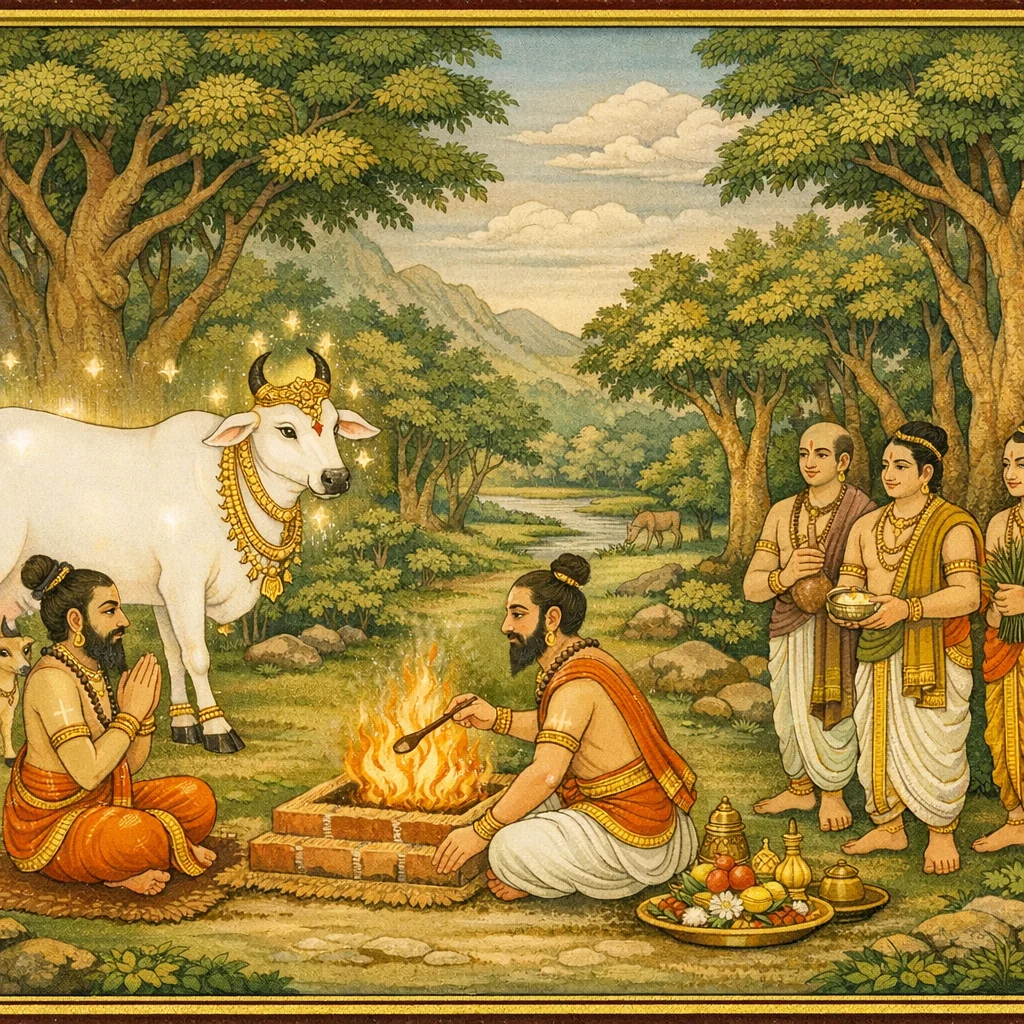
Sūta recounts a “wondrous” Śiva-centered episode showing how devotion and reverence toward a realized yogin can redirect karmic destiny. In Avanti, a brāhmaṇa named Mandara—given to sensuality and neglectful of daily rites—lives with the courtesan Piṅgalā. When the Śiva-yogin Ṛṣabha arrives, they honor him with ritual hospitality: washing his feet, offering arghya, food, and service, thereby gaining a pivotal merit amid otherwise fallen conduct. After death, karmic results unfold through rebirth and suffering. Mandara is reborn in a royal setting in Daśārṇa, yet a poison-related affliction torments mother and child, leading to abandonment and hardship in the forest. They are later sheltered by the wealthy merchant Padmākara, but the child dies. Ṛṣabha reappears as healer and teacher, discoursing on impermanence, the guṇas, karma, kāla, and the inevitability of death, and concludes with śaraṇāgati to Śiva—Mṛtyuñjaya, Umāpati—and Śiva-dhyāna as the remedy for sorrow and rebirth. He then applies bhasma consecrated by Śiva-mantra to revive the child and heal mother and son, granting them a divinized body and auspicious destiny. The child is named Bhadrāyu and is foretold to attain renown and kingship.
Shlokas
Verse 1
सूत उवाच । विचित्रं शिवनिर्माणं विचित्र शिवचेष्टितम् । विचित्रं शिवमाहात्म्यं विचित्रं शिवभाषितम्
Sūta said: “Wondrous is Śiva’s creation, wondrous are Śiva’s deeds; wondrous is Śiva’s greatness, and wondrous are Śiva’s words.”
Verse 2
विचित्रं शिवभक्तानां चरितं पापनाशनम् । स्वर्गापवर्गयोः सत्यं साधनं तद्ब्रवीम्यहम्
“Wondrous is the conduct of Śiva’s devotees, for it destroys sin. That is a true means to both heaven and liberation—this I declare.”
Verse 3
अवंतीविषये कश्चिद्ब्राह्मणो मंदराह्वयः । बभूव विषयारामः स्त्रीजितो धनसंग्रही
In the land of Avanti there lived a brāhmaṇa named Mandara. He came to delight in sense-pleasures—overpowered by women and intent on hoarding wealth.
Verse 4
संध्यास्नापरित्यक्तो गंधमाल्यांबरप्रियः । कुस्त्रीसक्तः कुमार्गस्थो यथा पूर्वमजामिलः
He abandoned the twilight prayers and ritual bathing; he grew fond of perfumes, garlands, and fine garments. Attached to an immoral woman, he stood upon the wrong path—like Ajāmila of old.
Verse 5
स वेश्यां पिंगलां नाम रममाणो दिवानिशम् । तस्या एव गृहे नित्यमासीदविजितेंद्रियः
Sporting day and night with a courtesan named Piṅgalā, he stayed constantly in her very house—his senses unconquered.
Verse 6
कदाचित्सदने तस्यास्तस्मिन्निवसति द्विजे । ऋषभो नाम धर्मात्मा शिवयोगी समाययौ
Once, while that brāhmaṇa was living in her house, a righteous-souled Śiva-yogin named Ṛṣabha arrived there.
Verse 7
तमागतमभिप्रेक्ष्य मत्वा स्वं पुण्यमूर्जितम् । सा वेश्या स च विप्रश्च पर्यपूजयतामुभौ
Seeing him arrive, and thinking their own merit had grown strong, both that courtesan and the brāhmaṇa honored him with reverence.
Verse 8
तमारोप्य महापीठे कंबलांबरसंभृते । प्रक्षाल्य चरणौ भक्त्या तज्जलं दधतुः शिरः
Seating him upon a great seat furnished with blanket and cloth, they washed his feet with devotion and placed that water upon their heads.
Verse 9
स्वागतार्घ्यनमस्कारैर्गंधपुष्पाक्षतादिभिः । उपचारैः समभ्यर्च्य भोजयामासतुर्मुदा
With welcome, offerings of arghya, and salutations—along with fragrance, flowers, unbroken grains, and other services—they worshipped him duly and then fed him with joy.
Verse 10
तं भुक्तवंतमाचांतं पर्यंके सुखसंस्तरे । उपवेश्य मुदा युक्तौ तांबूलं प्रत्ययच्छताम्
After he had eaten and performed ācāmana for purification, they seated him on a couch with comfortable bedding, and with joy they offered him betel (tāmbūla).
Verse 11
पादसंवाहनं भक्त्या कुर्वंतौ दैवचो दितौ । कल्पयित्वा तु शुश्रूषां प्रीणयामासतुश्चिरम्
As though impelled by divine prompting, the two of them devotedly massaged his feet; arranging attentive service, they pleased him for a long while.
Verse 12
एवं समर्चितस्ताभ्यां शिवयोगी महाद्युतिः । अतिवाह्य निशामेकां ययौ प्रातस्तदादृतः
Thus duly honored by them, the radiant Śiva-yogin spent that one night there, and at dawn he departed—treated with great respect.
Verse 13
एवं काले गतप्राये स विप्रो निधनं गतः । सा च वेश्या मृता काले ययौ कर्मार्जितां गतिम्
Thus, when his appointed time was nearly spent, that brāhmaṇa met his end. And in due course the courtesan also died, each attaining the destiny earned by their own deeds.
Verse 14
स विप्रः कर्मणा नीतो दशार्णधरणीपतेः । वज्रबाहुकुटुंबिन्याः सुमत्या गर्भमास्थितः
Driven onward by his karma, that brāhmaṇa was led to the land of the Daśārṇas and entered the womb of Sumatī, the chief queen in the household of King Vajrabāhu.
Verse 15
तां ज्येष्ठपत्नीं नृपतेर्गर्भसंपदमाश्रिताम् । अवेक्ष्य तस्यै गरलं सपत्न्यश्छद्मना ददुः
Seeing the king’s senior queen prospering in pregnancy, the co-wives, out of jealousy, deceitfully gave her poison.
Verse 16
सा भुक्त्वा गरलं घोरं न मृता दैवयोगतः । क्लेशमेव परं प्राप मरणादतिदुःसहम्
Though she consumed the dreadful poison, by a turn of fate she did not die; instead she fell into extreme torment—suffering even harder to bear than death.
Verse 17
अथ काले समायाते पुत्रमे कमजीजनत् । क्लेशेन महता साध्वी पीडिता वरवर्णिनी
Then, when the time came, the virtuous lady—afflicted by great agony, though of excellent complexion—gave birth to a single son.
Verse 18
स निर्दशो राजपुत्रः स्पृष्टपूर्वो गरेण यत् । तेनावाप महाक्लेशं क्रंदमानो दिवानिशम्
Because the prince was touched by poison while still in the womb, he fell into great anguish, crying day and night without respite.
Verse 19
तस्य बालस्य माता च सर्वांगव्रणपीडिता । बभूवतुरतिक्लिष्टौ गरयोगप्रभावतः
That child’s mother too was tormented by wounds over her whole body; through the poison’s power, both mother and son were grievously afflicted.
Verse 20
तौ राज्ञा च समानीतौ वैद्यैश्च कृतभेषजौ । न स्वास्थ्यमापतुर्यत्नैरनेकैर्योजितैरपि
The king had them brought, and physicians applied medicines; yet, despite many treatments and efforts, the two did not regain health.
Verse 21
न रात्रौ लभते निद्रां सा राज्ञी विपुलव्यथा । स्वपुत्रस्य च दुःखेन दुःखिता नितरां कृशा
At night the queen could not find sleep, overwhelmed by intense pain; and grieving over her son’s suffering, she grew exceedingly thin.
Verse 22
नीत्वैवं कतिचिन्मासान्स राजा मातृपुत्रकौ । जीवंतौ च मृतप्रायौ विलोक्यात्मन्यचिंतयत्
After some months had passed in this way, the king, seeing mother and son still alive yet as good as dying, reflected anxiously within himself.
Verse 23
एतौ मे गृहिणीपुत्रौ निरयादागताविह । अश्रांतरोगौ क्रंदंतौ निद्राभंगविधायिनौ
“These two sons of my wife have come here from hell. Afflicted with unceasing disease, they keep wailing and continually disturb my sleep.”
Verse 24
अत्रोपायं करिष्यामि पापयोर्ध्रुवमेतयोः । मर्तुं वा जीवितुं वापि न क्षमौ पापभोगिनौ
“Here, I shall certainly devise a remedy regarding these two sinners. They are not fit either to die or even to live, for they are undergoing the fruits of sin.”
Verse 25
इत्थं विनिश्चित्य च भूमिपालः सक्तः सपत्नीषु तदात्मजेषु । आहूय सूतं निजदारपुत्रौ निर्वापयामास रथेन दूरम्
Thus having decided, the king—attached to his co-wives and their children—summoned the charioteer and had his own wife and son driven far away in a chariot and abandoned.
Verse 26
तौ सूतेन परित्यक्तौ कुत्रचिद्विजने वने । अवापतुः परां पीडां क्षुत्तृड्भ्यां भृशविह्वलौ
Abandoned by the charioteer in some lonely forest, the two suffered extreme torment, greatly distressed by hunger and thirst.
Verse 27
सोद्वहंती निजं बालं निपतंती पदे पदे । निःश्वसंती निजं कर्म निंदंती चकिता भृशम्
Carrying her own child, she fell at every step—sighing, blaming her own deeds, and trembling greatly in fear.
Verse 28
क्वचित्कंटकभिन्नांगी मुक्तकेशी भयातुरा । क्वचिद्व्याघ्रस्वनैर्भीता क्वचिद्व्यालैरनुद्रुता
At times her limbs were torn by thorns and, in terror, her hair fell loose; at times she was shaken by the roars of tigers, and at times she was pursued by serpents and wild beasts.
Verse 29
भर्त्स्यमाना पिशाचैश्च वेतालैर्ब्रह्मराक्षसैः । महागुल्मेषु धावंती भिन्नपादा क्षुराश्मभिः
Harassed by piśācas, vetālas, and brahma-rākṣasas, she ran through dense thickets; her feet were split and wounded by stones sharp as razors.
Verse 30
सैवं घोरे महारण्ये भ्रमंती नृपगे हिनी । दैवात्प्राप्ता वणिङ्मार्गं गोवाजिनरसेवितम्
Thus, wandering in that dreadful great forest, the king’s wife, by the decree of fate, came upon a merchants’ road frequented by cows, horses, and people.
Verse 31
गच्छंती तेन मार्गेण सुदूरमतियत्नतः । ददर्श वैश्यनगरं वहुस्त्रीनरसेवितम्
Proceeding along that road for a great distance with much effort, she beheld a merchants’ city thronged with many women and men.
Verse 32
तस्य गोप्ता महावैश्यो नगरस्य महाजनः । अस्ति पद्माकरो नाम राजराज इवापरः
The guardian of that city was a great vaiśya, a foremost magnate of the town, named Padmākara—like another king of kings.
Verse 33
तस्य वैश्यपतेः काचिद्गृहदासी नृपांगनाम् । आयांती दूरतो दृष्ट्वा तदंतिकमुपाययौ
A maidservant in the household of that merchant-lord, seeing the king’s lady approaching from afar, hurried forth to meet her and bring her near.
Verse 34
सा दासी नृपतेः कांतां सपुत्रां भृशपीडिताम् । स्वयं विदितवृत्तांता स्वामिने प्रत्यदर्शयत्
That maidservant, knowing the whole situation, presented to her master the king’s beloved queen—grievously afflicted—together with her son.
Verse 35
स तां दृष्ट्वा विशां नाथो रुजार्त्तां क्लिष्टपुत्रकाम् । नीत्वा रहसि सुव्यक्तं तद्वृत्तांतमपृच्छत
Seeing her, the leader of the Vaiśyas found her in pain and weighed down with concern for her child. Taking her aside in private, he asked her to relate clearly the whole account of what had happened.
Verse 36
तया निवेदिताशेषवृत्तांतः स वणिक्पतिः । अहोकष्टमिति ज्ञात्वा निशश्वास मुहुर्मुहुः
When she had reported the entire matter, the merchant-lord, understanding it, cried, “Alas, how grievous!” and sighed again and again.
Verse 37
तामंतिके स्वगेहस्य संनिवेश्य रहोगृहे । वासोन्नपानशयनैर्मातृसाम्यमपूजयत्
Settling her near his own home in a secluded chamber, he honored her as though she were his mother—providing clothing, food, drink, and a place to rest.
Verse 38
तस्मिन्गृहे नृपवधूर्निवसंती सुरक्षिता । व्रणयक्ष्मादिरोगाणां न शांतिं प्रत्यपद्यत
Though dwelling protected in that house, the king’s bride found no relief; wounds, consumption (yakṣmā), and other diseases did not subside.
Verse 39
ततो दिनैः कतिपयैः स बालो व्रणपीडितः । विलंघितभिषक्सत्त्वो ममार च विधेर्वशात्
After some days, the boy—tormented by his wound—died, as fate ordained, despite the physicians’ efforts and means.
Verse 40
मृते स्वतनये राज्ञी शोकेन महतावृता । मूर्च्छिता चापतद्भूमौ गजभग्नेव वल्लरी
When her own son had died, the queen, overwhelmed by immense grief, fainted and fell to the ground like a creeper broken by an elephant.
Verse 41
दैवात्संज्ञामवाप्याथ वाष्पक्लिन्नपयोधरा । सांत्विताऽपि वणिक्स्त्रीभिर्विललाप सुदुःखिता
By destiny she regained consciousness; her breasts were wet with tears. Though consoled by the merchant’s womenfolk, she lamented, pierced by deep sorrow.
Verse 42
हा ताततात हा पुत्र हा मम प्राणरक्षक । हा राजकुलपूर्णेन्दो हा ममानंदवर्धन
“Alas, dear child—alas, my son! Alas, you who guarded my very life! Alas, full moon of our royal line! Alas, you who increased my joy!”
Verse 43
इमामनाथां कृपणां त्वत्प्राणां त्यक्तवबांधवाम् । मातरं ते परित्यज्य क्व यातोऽसि नृपात्मज
Leaving your mother—helpless, wretched, and bereft of kin, whose very life was you—where have you gone, O prince?
Verse 44
इत्येभिरुदितैर्वाक्यैः शोकचिंताविवर्धकैः । विलपंतीं मृतापत्यां को नु सांत्वयितुं क्षमः
With such utterances—ever increasing grief and anxious thought—she wailed for her dead child. Who indeed could console her?
Verse 45
एतस्मिन्समये तस्या दुःखशोकचिकित्सकः । ऋषभः पूर्वमाख्यातः शिवयोगी समाययौ
At that very time there arrived Ṛṣabha—the Śiva-yogin spoken of earlier—an expert physician for her anguish and grief.
Verse 46
स योगी वैश्यनाथेन सार्घहस्तेन पूजितः । तस्याः सकाशमगमच्छोचन्त्या इदमब्रवीत्
That yogin, honored by Vaiśyanātha with joined hands, went to her as she grieved and spoke these words.
Verse 47
ऋषभ उवाच । अकस्मात्किमहो वत्से रोरवीषि विमूढधीः । को जातः कतमो लोके को मृतो वद सांप्रतम्
Ṛṣabha said: “Why, child, do you suddenly cry out so, your understanding bewildered? Who was born, who in this world—who has died? Tell me now.”
Verse 48
अमी देहादयो भावास्तोयफेनसधर्मकाः । क्वचिद्भ्रांतिः क्वचिच्छांतिः स्थितिर्भवति वा पुनः
These conditions, beginning with the body, are like foam upon water: now agitation, now calm—where is any lasting stability at all?
Verse 49
अतोऽस्मिन्फेनसदृशे देहे पञ्चत्वमागते । शोकस्यानवकाशत्वान्न शोचंति विपश्चितः
Therefore, when this foam-like body reaches its end and returns to the five elements, the wise do not grieve—for grief finds no rightful place.
Verse 50
गुणैर्भूतानि सृज्यंते भ्राम्यंते निजकर्मभिः । कालेनाथ विकृष्यंते वासनायां च शेरते
Beings are produced by the guṇas and made to wander by their own deeds; then, drawn onward by Time, they lie bound within their latent tendencies (vāsanās).
Verse 51
माययोत्पत्तिमायांति गुणाः सत्त्वादयस्त्रयः । तैरेव देहा जायंते जातास्तल्लक्षणाश्रयाः
By Māyā the three guṇas—sattva and the rest—arise; from those alone bodies are born, and once born they bear the marks of those qualities.
Verse 52
देवत्वं यानि सत्त्वेन रजसा च मनुष्यताम् । तिर्यक्त्वं तमसा जंतुर्वासनानुगतोवशः
Through sattva one attains godhood; through rajas, the state of humanity; through tamas, an embodied being falls into animality—driven helplessly by the pull of its vāsanās.
Verse 53
संसारे वर्तमानेस्मिञ्जंतुः कर्मानुबन्धनात् । दुर्विभाव्यां गतिं याति सुखदुःखमयीं मुहुः
Moving through this worldly existence, a living being—bound to the chain of its own karma—again and again enters destinies hard to fathom, made of alternating pleasure and pain.
Verse 54
अपि कल्पायुषां तेषां देवानां तु विपर्ययः । अनेकामयबद्धानां का कथा नरदेहिनाम्
Even the gods, whose lives may span a kalpa, still meet reversal and decline—how much more so human beings, bound by countless diseases?
Verse 55
केचिद्वदंति देहस्य कालमेव हि कारणम् । कर्म केचिद्गुणान्केचिद्देहः साधारणो ह्ययम्
Some say Time alone is the cause of embodiment; some say karma; others say the guṇas. Yet this body is a common product of these factors.
Verse 56
कालकर्मगुणाधानं पञ्चात्मकमिदं वपुः । जातं दृष्ट्वा न हृष्यंति न शोचंति मृतं बुधाः
This body, formed by time, karma, and the guṇas, is fivefold in its constitution; therefore the wise neither exult on seeing birth nor grieve on seeing death.
Verse 57
अव्यक्ते जायते जंतुरव्यक्ते च प्रलीयते । मध्ये व्यक्तवदाभाति जलबुद्बुदसन्निभः
A being is born from the unmanifest and dissolves back into the unmanifest; in between it appears as though manifest—like a bubble upon water.
Verse 58
यदा गर्भगतो देही विनाशः कल्पितस्तदा । दैवाज्जीवति वा जातो म्रियते सहसैव वा
Even when destruction is imagined for a being while still in the womb, by destiny it may yet live; or, even after being born, it may suddenly die.
Verse 59
गर्भस्था एव नश्यंति जातमात्रास्तथा परे । क्वचिद्युवानो नश्यंति म्रियंते केपि वार्धके
Some perish while still in the womb; others die just after birth. Some die in youth, and some meet death only in old age.
Verse 60
यादृशं प्राक्तनं कर्म तादृशं विंदते वपुः । भुंक्ते तदनुरूपाणि सुखदुःखानि वै ह्यसौ
As one’s former karma is, so is the body one obtains; and accordingly, one surely experiences pleasures and pains that match it.
Verse 61
मायानुभावेरितयोः पित्रोः सुरतसंभ्रमात् । देह उत्पद्यते कोपि पुंयोषित्क्लीबलक्षणः
Through the agitation of sexual union between the parents, impelled by the force of māyā, a body comes to be—bearing the marks of male, female, or neutral sex.
Verse 62
आयुः सुखं च दुःख च पुण्यं पापं श्रुतं धनम् । ललाटे लिखितं धात्रा वहञ्जंतुः प्रजायते
Lifespan, happiness and sorrow, merit and sin, learning and wealth—carrying what the Creator has written upon the forehead, a being is born.
Verse 63
कर्मणामविलंघ्यत्वात्कालस्याप्यनतिक्रमात् । अनित्यत्वाच्च भावानां न शोकं कर्तुमर्हसि
Since the fruits of karma cannot be transgressed, and even Time cannot be overstepped, and because all conditions are impermanent—therefore you should not surrender yourself to grief.
Verse 64
क्व स्वप्ने नियतं स्थैर्यमिंद्रजाले क्व सत्यता । क्व नित्यता शरन्मेघे क्व शश्वत्त्वं कलेवरे
Where, in a dream, is any assured stability? Where, in a magician’s illusion, is truth? Where is permanence in an autumn cloud? And where is lastingness in the human body?
Verse 65
तव जन्मान्यतीतानि शतकोट्ययुतानि च । अजानंत्याः परं तत्त्वं संप्राप्तोऽयं महाश्रमः
Countless births of yours—hundreds of crores and tens of thousands—have already passed; and because you have not known the supreme Reality, this great weariness has come upon you.
Verse 66
कस्यकस्यासि तनया जननी कस्यकस्य वा । कस्यकस्यासि गृहिणी भवकोटिषु वर्त्तिनी
In the crores of lives you have passed through, whose daughter have you been, whose mother, and whose wife as well?
Verse 67
पञ्चभूतात्मको देहस्त्वगसृङ्मांसबन्धनः । मेदोमज्जास्थिनिचितो विण्मूत्रश्लेष्मभाजनम्
The body is made of the five elements—bound together by skin, blood, and flesh; heaped with fat, marrow, and bone; a vessel of feces, urine, and phlegm.
Verse 68
शरीरांतरमप्येतन्निजदेहोद्भवं मलम् । मत्त्वा स्वतनयं मूढे मा शोकं कर्तुमर्हसि
This “other body” too is but impurity born of one’s own body; thinking it to be your son, O deluded one, you should not give way to grief.
Verse 69
यदि नाम जनः कश्चिन्मृत्युं तरति यत्नतः । कथं तर्हि विपद्येरन्सर्वे पूर्वे विपश्चितः
If indeed some person could, by mere effort, cross beyond death, then how would all the wise ones of old have perished?
Verse 70
तपसा विद्यया बुद्ध्या मन्त्रौषधिरसायनैः । अतियाति परं मृत्युं न कश्चिदपि पंडितः
By austerity, learning, intellect, mantras, medicines, or rejuvenating elixirs—no scholar whatsoever goes beyond death.
Verse 71
एकस्याद्य मृतिर्जंतोः श्वश्चान्यस्य वरानने । तस्मादनित्यावयवे न त्वं शोचितुमर्हसि
For one creature death is today; for another, tomorrow, O fair-faced one. Therefore, over this body of perishable parts, you should not grieve.
Verse 72
नित्यं सन्निहितो मृत्युः किं सुखं वद देहिनाम् । व्याघ्रे पुरः स्थिते ग्रासः पशूनां किं नु रोचते
When death is ever near, tell me—what happiness is there for embodied beings? When a tiger stands before them, can a morsel truly delight the animals?
Verse 73
अतो जन्मजरां जेतुं यदीच्छसि वरानने । शरणं व्रज सर्वेशं मृत्युंजयमुमापतिम्
Therefore, O fair-faced one, if you wish to conquer birth and old age, take refuge in the Lord of all—Mṛtyuṃjaya, the Conqueror of Death, the Consort of Umā.
Verse 74
तावन्मृत्युभयं घोरं तावज्जन्मजराभयम् । यावन्नो याति शरणं देही शिवपदांबुजम्
So long as one does not go for refuge to Śiva’s lotus-feet, so long do terrible fear of death—and fear of birth and old age—remain.
Verse 75
अनुभूयेह दुःखानि संसारे भृशदारुणे । मनो यदा वियुज्येत तदा ध्येयो महेश्वरः
Having experienced the many sorrows of this world—so exceedingly harsh—when the mind becomes detached, then Maheśvara is to be meditated upon.
Verse 76
मनसा पिबतः पुंसः शिवध्यानरसामृतम् । भूयस्तृष्णा न जायेत संसारविषयासवे
For the person who drinks with the mind the nectar-like essence of Śiva-meditation, thirst does not arise again for the intoxicating objects of saṃsāra.
Verse 77
विमुक्तं सर्वसंगैश्च मनो वैराग्ययंत्रितम् । यदा शिवपदे मग्नं तदा नास्ति पुनर्भवः
When the mind—freed from all attachments and held steady by dispassion—becomes immersed in Śiva’s state, then there is no rebirth.
Verse 78
तस्मादिदं मनो भद्रे शिवध्यानैकसाधनम् । शोकमोहसमाविष्टं मा कुरुष्व शिवं भज
Therefore, O gentle lady: let this mind, whose sole means is meditation on Śiva, not be overwhelmed by grief and delusion. Worship Śiva.
Verse 79
सूत उवाच । इत्थं सानुनयं राज्ञी बोधिता शिवयोगिना । प्रत्याचष्ट गुरोस्तस्य प्रणम्य चरणां बुजम्
Sūta said: Thus, the queen—gently and persuasively instructed by that Śiva-yogin—replied to her teacher, bowing to his lotus-feet.
Verse 80
राज्ञ्युवाच । भगवन्मृतपुत्रायास्त्यक्तायाः प्रियबन्धुभिः । महारोगातुराया मे का गतिर्मरणं विना
The queen said: O Blessed one, my son is dead; I have been abandoned by my dear relatives; and I am afflicted by a grievous disease—what refuge or course remains for me, apart from death?
Verse 81
अतोऽहं मर्तुमिच्छामि सहैव शिशुनाऽमुना । कृतार्थाहं यदद्य त्वामपश्यं मरणोन्मुखी
Therefore I wish to die, together with this child. Yet I deem my life fulfilled, for today—though facing death—I have seen you.
Verse 82
सूत उवाच । इति तस्या वचः श्रुत्वा शिवयोगी दयानिधिः । पूर्वोपकारं संस्मृत्य मृतस्यांतिकमाययौ
Sūta said: Hearing her words, the Śiva-yogin—an ocean of compassion—remembered her former kindness and went near the dead child.
Verse 83
स तदा भस्म संगृह्य शिवमन्त्राभिमंत्रितम् । विदीर्णे तन्मुखे क्षिप्त्वा मृतं प्राणैरयोजयत्
Then he gathered sacred ash, consecrated with Śiva-mantras; casting it into the child’s opened mouth, he rejoined the departed one with the life-breath once again.
Verse 84
स बालः संगतः प्राणैः शनैरुन्मील्य लोचने । प्राप्तपूर्वेन्द्रियबलो रुरोद स्तन्यकांक्षया
That child, reunited with breath, slowly opened his eyes; regaining his former strength of the senses, he cried out, longing for milk.
Verse 85
मृतस्य पुनरुत्थानं वीक्ष्य बालस्य विस्मिताः । जना मुमुदिरे सर्वे नगरेषु पुरोगमाः
Seeing the dead child rise again, the people—astonished—rejoiced, especially the foremost citizens throughout the towns.
Verse 86
अथानंदभरा राज्ञी विह्वलोन्मत्तलोचना । जग्राह तनयं शीघ्रं बाष्पव्याकुललोचना
Then the queen, overwhelmed with joy, her eyes unsteady and wild with emotion, quickly seized her son, her gaze blurred by tears.
Verse 87
उपगुह्य तदा तन्वी परमानंदनिर्वृता । न वेदात्मानमन्यं वा सुषुप्तेव परिश्रमात्
Embracing him then, the slender queen, fulfilled with supreme joy, knew neither herself nor anything else—like one fallen into sleep from exhaustion.
Verse 88
पुनश्च ऋषभो योगी तयोर्मातृकुमारयोः । विषव्रणयुतं देहं भस्मनैव परामृशत्
And again the yogin Ṛṣabha touched, with that very sacred ash, the poison-wounded bodies of the mother and the boy.
Verse 89
तौ च तद्भस्मना स्पृष्टौ प्राप्तदिव्यकलेवरौ । देवानां सदृशं रूपं दधतुः कांतिभूषितम्
Touched by that ash, the two attained divine bodies, bearing a form like that of the devas, adorned with radiance.
Verse 90
संप्राप्ते त्रिदिवैश्वर्ये यत्सुखं पुण्यकर्मणाम् । तस्माच्छतगुणं प्राप सा राज्ञी सुखमुत्तमम्
Whatever happiness belongs to the doers of merit upon attaining the lordship of the three heavens—a hundredfold beyond that did the queen obtain as supreme bliss.
Verse 91
तां पादयोर्निपतितामृषभः प्रेमविह्वलः । उत्थाप्याश्वासयामास दुःखैर्मुक्तामुवाच ह
When she fell at his feet, Ṛṣabha—overcome with affection—raised her up and consoled her; freed from sorrow, she was then addressed by him.
Verse 92
अयि वत्से महाराज्ञि जीवत्वं शाश्वतीः समाः । यावज्जीवसि लोकेस्मिन्न तावत्प्राप्स्यसे जराम्
“O dear child, O great queen—live for everlasting years. So long as you live in this world, you shall not be touched by old age.”
Verse 93
एष ते तनयः साध्वि भद्रायुरिति नामतः । ख्यातिं यास्यति लोकेषु निजं राज्यमवाप्स्यति
O virtuous lady, this is your son; by name he is Bhadrāyu. He shall gain renown in the worlds and reclaim his own rightful kingdom.
Verse 94
अस्य वैश्यस्य सदने तावत्तिष्ठ शुचिस्मिते । यावदेष कुमारस्ते प्राप्तविद्यो भविष्यति
O lady of pure smile, stay for a time in the house of this merchant, until this boy of yours becomes fully trained in learning.
Verse 95
सूत उवाच । इति तामृषभो योगी तं च राजकुमारकम् । संजीव्य भस्मवीर्येण ययौ देशान्यथेप्सितान्
Sūta said: Having spoken thus, the yogī Ṛṣabha revived that young prince by the potency of sacred ash, and then departed to whatever regions he desired.