Adhyaya 20
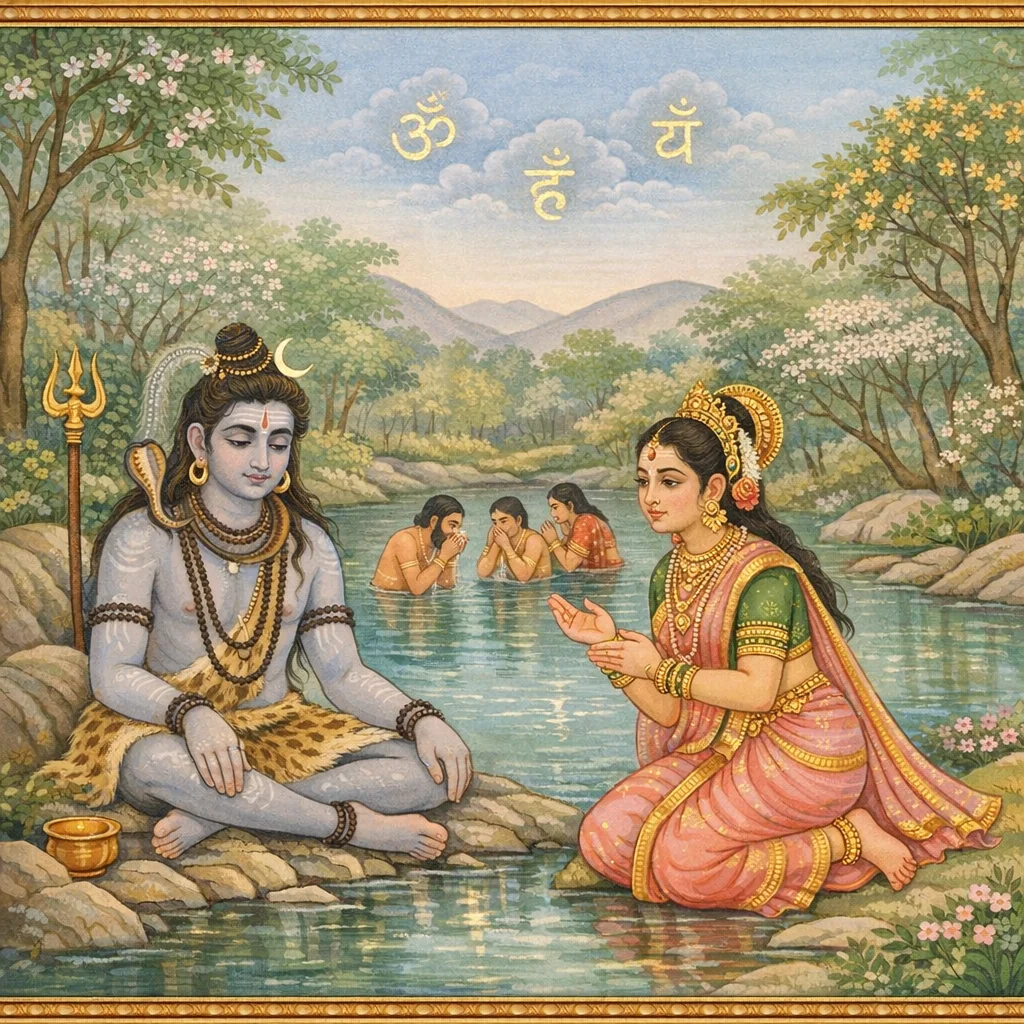
The chapter begins with Sūta’s brief proclamation that hearing and reciting the greatness of Rudrākṣa purifies, granting benefit to listeners and reciters across all social standings and degrees of devotion. Rudrākṣa is then described as a disciplined observance like a great vow (mahā-vrata), with ideal numbers of beads and prescribed ways of wearing them on the body, along with ritual equivalences: head-bathing with Rudrākṣa yields the merit of bathing in the Gaṅgā, and Rudrākṣa worship parallels liṅga worship. Japa performed with Rudrākṣa is said to magnify results compared to japa without it, and Rudrākṣa is placed within a broader Śaiva identity alongside bhasma and the tripuṇḍra marks. The narrative then turns to a didactic legend: King Bhadrasena of Kashmir asks sage Parāśara about two youths who are naturally devoted to Rudrākṣa. Parāśara recounts a previous-life episode involving a courtesan devoted to Śiva and a merchant who offers a jewel bracelet and entrusts a gem liṅga to her care. A sudden fire destroys the liṅga, the merchant resolves to immolate himself, and the courtesan—bound by the truth of her spoken word—prepares to enter the fire as well. Śiva appears, reveals the event as a test, grants boons, and liberates her and her dependents; the surviving monkey and rooster, once adorned with Rudrākṣa, are said to be reborn as the two boys, explaining their innate practice through prior merit and habituation.
Shlokas
Verse 1
सूत उवाच । अथ रुद्राक्षमाहात्म्यं वर्णयामि समासतः । सर्वपापक्षयकरं शृण्वतां पठतामपि
Sūta said: Now I shall describe, in brief, the greatness of Rudrākṣa—an account that brings about the destruction of all sins for those who hear it and even for those who recite it.
Verse 2
अभक्तो वापि भक्तो वा नीचो नीचतरोपि वा । रुद्राक्षान्धारयेद्यस्तु मुच्यते सर्वपातकैः
Whether one is devoid of devotion or devoted, whether lowly or even lower—whoever wears Rudrākṣa is released from all grave sins.
Verse 3
रुद्राक्षधारणं पुण्यं केन वा सदृशं भवेत् । महाव्रतमिदं प्राहुर्मुनयस्तत्त्वदर्शिनः
The merit of wearing Rudrākṣa—what could be comparable to it? The seers who behold truth declare this to be a ‘great vow’ (mahā-vrata).
Verse 4
सहस्रं धारयेद्यस्तु रुद्राक्षाणां धृतव्रतः । तं नमंति सुराः सर्वे यथा रुद्रस्तथैव सः
But whoever, steadfast in observance, wears a thousand Rudrākṣas—all the gods bow to him, just as they bow to Rudra; so too does he become like Rudra.
Verse 5
अभावे तु सहस्रस्य बाह्वोः षोडश षोडश । एकं शिखायां करयोर्द्वादश द्वादशैव हि
If a thousand are not available, then one should wear sixteen and sixteen on the two arms; one upon the topknot; and twelve and twelve upon the two hands, indeed.
Verse 6
द्वात्रिंशत्कंठदेशे तु चत्वारिंशत्तु मस्तके । एकैक कर्णयोः षट् षट् वक्षस्यष्टोत्तरं शतम् । यो धारयति रुद्राक्षान्रुद्रवत्सोपि पूज्यते
Thirty-two should be worn at the neck, and forty upon the head; six and six on each ear; and one hundred and eight upon the chest. Whoever wears Rudrākṣas in this way is honored, even as Rudra is honored.
Verse 7
मुक्ताप्रवालस्फटिकरौप्यवैदूर्यकांचनैः । समेतान्धारयेद्यस्तु रुद्राक्षान्स शिवो भवेत्
Whoever wears Rudrākṣas together with pearls, coral, crystal, silver, cat’s-eye gem, and gold becomes Śiva-like, attaining Śiva’s state.
Verse 8
केवलानपि रुद्राक्षान्यथालाभं बिभर्ति यः । तं न स्पृशंति पापानि तमांसीव विभावसुम्
Even if one wears Rudrākṣas alone, as one is able to obtain them, sins do not touch him—just as darkness does not touch the sun.
Verse 9
रुद्राक्षमालया जप्तो मंत्रोऽनंतफलप्रदः । अरुद्राक्षो जपः पुंसां तावन्मात्रफलप्रदः
A mantra repeated with a Rudrākṣa rosary bestows endless fruit. But japa done without Rudrākṣa grants only that limited measure of fruit.
Verse 10
यस्यांगे नास्ति रुद्राक्ष एकोपि बहुपुण्यदः । तस्य जन्म निरर्थं स्यात्त्रिपुंड्ररहितं यदि
If a person’s body bears not even a single rudrākṣa—bestower of abundant merit—and he is also without the Tripuṇḍra, the three sacred ash-lines, then his very birth becomes fruitless.
Verse 11
रुद्राक्षं मस्तके बद्ध्वा शिरःस्नानं करोति यः । गंगास्नानफलं तस्य जायते नात्र संशयः
Whoever ties a rudrākṣa upon the head and then bathes the head attains the very fruit of bathing in the sacred Gaṅgā; of this there is no doubt.
Verse 12
रुद्राक्षं पूजयेद्यस्तु विना तोयाभिषेचनम् । यत्फलं लिंगपूजायास्तदेवाप्नोति निश्चितम्
But whoever worships a rudrākṣa even without bathing it with water in abhiṣeka surely attains the same fruit that comes from worship of the Śiva-liṅga.
Verse 13
एकवक्त्राः पंचवक्त्रा एकादशमुखाः परे । चतुर्दशमुखाः केचिद्रुद्राक्षा लोकपूजिताः
Some rudrākṣas are one-faced, some five-faced, others eleven-faced; and some are fourteen-faced—these rudrākṣas are worshipped by the world.
Verse 14
भक्त्या संपूजितो नित्यं रुद्राक्षः शंकरात्मकः । दरिद्रं वापि कुरुते राजराजश्रियान्वितम्
When the rudrākṣa—of the very nature of Śaṅkara—is worshipped daily with devotion, it can even make a poor man endowed with royal, kingly prosperity.
Verse 15
अत्रेदं पुण्यमाख्यानं वर्णयंति मनीषिणः । महापापक्षयकरं श्रवणात्कीर्त्तनादपि
Here the wise proclaim this holy narrative, which destroys great sins even by mere hearing or by recitation.
Verse 16
राजा काश्मीरदेशस्य भद्रसेन इति श्रुतः । तस्य पुत्रो ऽभवद्धीमान्सुधर्मानाम वीर्यवान्
In the land of Kāśmīra there was a king renowned as Bhadrasena. He had a son—wise and valorous—named Sudharmā.
Verse 17
तस्यामात्यसुतः कश्चित्तारको नाम सद्गुणः । बभूव राजपुत्रस्य सखा परमशोभनः
A certain minister’s son, named Tāraka and endowed with noble qualities, became the prince’s friend—exceedingly admirable.
Verse 18
तावुभौ परमस्निग्धौ कुमारौ रूपसुन्दरौ । विद्याभ्यासपरौ बाल्ये सह क्रीडां प्रचक्रतुः
Those two young princes, deeply affectionate and handsome in form, devoted themselves to learning; in their boyhood they played together.
Verse 19
तौ सदा सर्वगात्रेषु रुद्राक्षकृतभूषणौ । विचेरतुरुदारांगौ सततं भस्मधारिणौ
They always wore ornaments of rudrākṣa upon all their limbs; noble in body, they moved about constantly bearing the sacred ash.
Verse 20
हारकेयूरकटककुंडलादिविभूषणम् । हेमरत्नमयं त्यक्त्वा रुद्राक्षान्दधतुश्च तौ
Casting aside ornaments—necklaces, armlets, bracelets, and earrings—fashioned of gold and jewels, the two instead donned Rudrākṣa beads.
Verse 21
रुद्राक्षमालितौ नित्यं रुद्राक्षकरकंकणौ । रुद्राक्षकंठाभरणौ सदा रुद्राक्षकुंडलौ
They were ever garlanded with Rudrākṣa; their hand-ornaments were Rudrākṣa; their neck-ornaments were Rudrākṣa; and their earrings too were always Rudrākṣa.
Verse 22
हेमरत्नाद्यलंकारे लोष्टपाषाणदर्शनौ । बोध्यमानावपि जनैर्न रुद्राक्षान्व्यमुंचताम्
To them, ornaments of gold and gems appeared like mere clods and stones; and even when people tried to dissuade them, they did not give up their Rudrākṣa.
Verse 23
तस्य काश्मीरराजस्य गृहं प्राप्तो यदृच्छया । पराशरो मुनिवरः साक्षादिव पितामहः
By chance, the great sage Parāśara arrived at the house of that king of Kāśmīra—like Pitāmaha (Brahmā) himself made manifest.
Verse 24
तमर्चयित्वा विधिवद्राजा धर्मभृतां वरः । प्रपच्छ सुखमासीनं त्रिकालज्ञं महामुनिम्
Having duly worshipped him, the king—foremost among upholders of dharma—questioned the great sage, who sat at ease and knew the three times (past, present, and future).
Verse 25
राजोवाच । भगवन्नेष पुत्रो मे सोपि मंत्रिसुतश्च मे । रुद्राक्षधारिणौ नित्यं रत्नाभरणनिःस्पृहौ
The king said: “O Blessed One, this is my son, and that is the son of my minister. Both ever wear Rudrākṣa and remain indifferent to ornaments of jewels.”
Verse 26
शास्यमानावपि सदा रत्नाकल्पपरिग्रहे । विलंघितास्मद्वचनौ रुद्राक्षेष्वेव तत्परौ
Though they were continually instructed to accept jeweled finery, they disregarded my words and remained intent only on Rudrākṣa.
Verse 27
नोपदिष्टाविमौ बालौ कदाचिदपि केनचित् । एषा स्वाभाविकी वृत्तिः कथमासीत्कुमारयोः
No one ever instructed these two boys at any time. How, then, did this natural disposition arise in the two youths?
Verse 28
पराशर उवाच । शृणु राजन्प्रवक्ष्यामि तव पुत्रस्य धीमतः । यथा त्वं मंत्रिपुत्रस्य प्राग्वृत्तं विस्मयावहम्
Parāśara said: “Listen, O King. I shall explain the former account of your wise son—and likewise the astonishing past of the minister’s son.”
Verse 29
नंदिग्रामे पुरा काचिन्महानंदेति विश्रुता । बभूव वारवनिता शृंगारललिताकृतिः
Formerly, in Nandigrāma, there lived a courtesan renowned as Mahānandā, graceful in form and skilled in adornment and allure.
Verse 30
छत्रं पूर्णेंदुसंकाशं यानं स्वर्णविराजितम् । चामराणि सुदंडानि पादुके च हिरण्मये
A parasol gleaming like the full moon, a conveyance resplendent with gold, fly-whisks of chāmara with sturdy handles, and even golden sandals—such were her splendid possessions.
Verse 31
अंबराणि विचित्राणि महार्हाणि द्युमंति च । चंद्ररश्मिनिभाः शय्या पर्यंकाश्च हिरण्मयाः
She had garments of many designs—costly and radiant; beds like moonbeams in their softness and sheen, and couches fashioned of gold.
Verse 32
गावो महिष्यः शतशो दासाश्च शतशस्तथा
There were hundreds of cows and buffaloes, and likewise hundreds of servants.
Verse 33
सर्वाभरणदीप्तांग्यो दास्यश्च नवयौवना । भूषणानि परार्ध्याणि नवरत्नोज्ज्वलानि च
Her maidservants, in the freshness of youth, shone with every ornament; and there were adornments of the highest value, glittering with nine kinds of gems.
Verse 34
गन्धकुंकुमकस्तूरीकर्पूरागुरुलेपनम् । चित्रमाल्यावतंसश्च यथेष्टं मृष्टभोजनम्
There were fragrances and unguents—saffron, kunkuma, musk, camphor, and aloe-wood (aguru) paste—garlands and colorful ornaments for the hair, and delicacies of food in whatever measure was desired.
Verse 35
नानाचित्रवितानाढ्यं नानाधान्यमयं गृहम् । बहुरत्नसहस्राढ्यं कोटिसंख्याधिकं धनम्
Her house was adorned with many colorful canopies and filled with diverse grains; it abounded in thousands of jewels of many kinds, and in wealth exceeding even crores in count.
Verse 36
एवं विभवसंपन्ना वेश्या कामविहारिणी । शिवपूजारता नित्यं सत्यधर्मपरायणा
Thus endowed with great riches, that courtesan—though moving amid pleasures—was ever devoted to the worship of Śiva, and steadfastly dedicated to truth and dharma.
Verse 37
सदाशिवकथासक्ता शिवनामकथोत्सुका । शिवभक्तांघ्र्यवनता शिवभक्तिरतानिशम्
She was attached to discourses on Sadāśiva, eager for narrations of Śiva’s Name; she bowed at the feet of Śiva’s devotees, and day and night delighted in devotion to Śiva.
Verse 38
विनोदहेतोः सा वेश्या नाट्यमण्डपमध्यतः । रुद्राक्षैभूषयित्वैकं मर्कटं चैव कुक्कुटम्
For amusement, that courtesan, from the midst of the dance-hall, adorned a monkey and also a rooster with rudrākṣa beads.
Verse 39
करतालैश्च गीतैश्च सदा नर्तयति स्वयम् । पुनश्च विहसंत्युच्चैः सखीभिः परिवारिता
With hand-clapping and songs she herself would always make them dance; and then, surrounded by her companions, she laughed aloud again and again.
Verse 40
युग्मम् । रुद्राक्षैः कृतकेयूरकर्णाभरणभूषणः । मर्कटः शिक्षया तस्याः सदा नृत्यति बालवत्
Adorned with armlets and ear-ornaments fashioned from rudrākṣa beads, the monkey—trained by her—would ever dance like a child.
Verse 41
शिखायां बद्धरुद्राक्षः कुक्कुटः कपिना सह । चिरं नृत्यति नृत्यज्ञः पश्यतां चित्रमावहन्
With a rudrākṣa tied upon his topknot, the rooster—skilled in dancing—danced for a long while with the monkey, delighting the onlookers with a wondrous spectacle.
Verse 42
एकदा भवनं तस्याः कश्चिद्वैश्यः शिवव्रती । आजगाम सरुद्राक्षस्त्रिपुंड्री निर्ममः कृती
Once, a certain Vaiśya devoted to Śiva’s vow came to her house—wearing rudrākṣa beads, marked with the triple lines of sacred ash, free from possessiveness, and disciplined in conduct.
Verse 43
स बिभ्रद्भस्म विशदे प्रकोष्ठे वरकंकणम् । महारत्नपरिस्तीर्णं ज्वलंतं तरुणार्कवत्
He bore bright, pure sacred ash, and upon his forearm a splendid bracelet, strewn with great gems, blazing like the newly risen sun.
Verse 44
तमागतं सा गणिका संपूज्य परया मुदा । तत्प्रकोष्ठगतं वीक्ष्य कंकणं प्राह विस्मिता
When he arrived, the courtesan welcomed and honored him with great delight; then, seeing the bracelet upon his forearm, she spoke in astonishment.
Verse 45
महारत्नमयः सोऽयं कंकणस्त्वत्करे स्थितः । मनो हरति मे साधौ दिव्यस्त्रीभूषणोचितः
This bracelet upon your hand is fashioned of great gems. O virtuous one, it steals my mind—truly a divine ornament befitting a woman.
Verse 46
इति तां वररत्नाढ्य सस्पृहां करभूषणे । वाक्ष्योदारमतिर्वैश्यः सस्मितं समभाषत
Thus, seeing her—abounding in fine jewels and eager for the hand-ornament—the generous-minded Vaiśya spoke to her with a smile.
Verse 47
वैश्य उवाच । अस्मिन्रत्नवरे दिव्ये यदि ते सस्पृहं मनः । तमेवादत्स्व सुप्रीता मौल्यमस्य ददासि किम्
The Vaiśya said: “If your heart longs for this divine and excellent jewel, then take it gladly. What price will you give for it?”
Verse 48
वेश्यो वाच । वयं तु स्वैरचारिण्यो वेश्यास्तु न पतिव्रताः । अस्मत्कुलोचितो धर्मो व्यभिचारो न संशयः
The courtesan said: “We are women of free conduct; courtesans are not devoted wives. The dharma customary to our community is union outside marriage—there is no doubt of it.”
Verse 49
यद्येतद्रत्नखचितं ददासि करभूषणम् । दिनत्रयमहोरात्रं तव पत्नी भवाम्यहम्
“If you give this hand-ornament set with jewels, then for three days and nights I shall become your wife.”
Verse 50
वैश्य उवाच । तथास्तु यदि ते सत्यं वचनं वारवल्लभे । ददामि रत्नवलयं त्रिरात्रं भव मद्वधूः
The merchant said: “So be it—if your word is true, O beloved courtesan. I shall give you a jeweled bracelet; for three nights, become my wife.”
Verse 51
एतस्मिन्व्यवहारे तु प्रमाणं शशिभास्करौ । त्रिवारं सत्यमित्युक्त्वा हृदयं मे स्पृश प्रिये
“In this transaction, the Moon and the Sun shall be the witnesses. Saying three times, ‘It is true,’ touch my heart, O beloved.”
Verse 52
वेश्योवाच । दिनत्रयमहोरात्रं पत्नी भूत्वा तव प्रभो । सहधर्मं चरामीति सा तद्धृदयमस्पृशत्
The courtesan said: “For three days and nights, O lord, becoming your wife, I shall live in shared dharma with you.” Saying so, she touched his heart.
Verse 53
अथ तस्यै स वैश्यस्तु प्रददौ रत्नकङ्कणम् । लिंगं रत्नमयं चास्या हस्ते दत्त्वेदमब्रवीत्
Then that merchant gave her a jeweled bracelet; and placing in her hand a Liṅga made of gems, he spoke as follows.
Verse 54
इदं रत्नमयं शैवं लिंगं मत्प्राणसंनिभम् । रक्षणीयं त्वया कांते तस्य हानिर्मृतिर्मम
“This gem-made Śaiva Liṅga is as dear to me as my own life. It must be protected by you, O beloved; its loss would be my death.”
Verse 55
एवमस्त्विति सा कांता लिंगमादाय रत्नजम् । नाट्यमण्डपिकास्तंभे निधाय प्राविशद्गृहम्
“So be it,” said the beloved. Taking the jewel-born Liṅga, she set it within a pillar of the small theatre-pavilion, and then entered the house.
Verse 56
सा तेन संगता रात्रौ वैश्येन विटधर्मिणा । सुखं सुष्वाप पर्यंके मृदुतल्पोपशोभिते
That night she lay with him—the merchant of libertine ways—and slept happily upon a couch adorned with a soft mattress.
Verse 57
ततो निशीथसमये नाट्यमण्डपिकांतरे । अकस्मादुत्थितो वह्निस्तमेव सहसावृणोत्
Then, at midnight, within the theatre-pavilion, a fire suddenly sprang up and swiftly engulfed it.
Verse 58
मण्डपे दह्यमाने तु सहसोत्थाय संभ्रमात् । सा वेश्या मर्कटं तत्र मोचयामास बंधनात्
As the pavilion burned, she sprang up in panic; and there the courtesan freed a monkey from its bonds.
Verse 59
स मर्कटो मुक्तबंधः कुक्कुटेन सहामुना । भीतो दूरं प्रदुद्राव विधूयाग्निकणान्बहून्
That monkey, freed from its bonds, ran far away in fear along with that rooster, shaking off many sparks of fire.
Verse 60
स्तंभेन सह निर्दग्धं तल्लिंगं शकलीकृतम् । दृष्ट्वा वेश्या च वैश्यश्च दुरंतं दुःखमापतुः
When they beheld the Liṅga—burnt with its pedestal and shattered into fragments—the courtesan and the vaiśya were overwhelmed by unbearable sorrow.
Verse 61
दृष्ट्वा प्राणसमं लिंगं दग्धं वैश्यपतिस्तथा । स्वयमप्याप्तनिर्वेदो मरणाय मतिं दधौ
Seeing the Liṅga—dear to him as life itself—burnt, that leader of merchants, seized by deep dispassion, resolved upon death.
Verse 62
निर्वेददान्नितरां खेदाद्वैश्यस्तामाह दुःखिताम् । शिवलिंगे तु निर्भिन्ने नाहं जीवितुमुत्सहे
From remorse—and from grief even deeper—the vaiśya spoke to the sorrowing woman: “Now that the Śiva-liṅga has been broken, I have no heart to go on living.”
Verse 63
चितां कारय मे भद्रे तव भृत्यैर्बलाधिकैः । शिवे मनः समावेश्य प्रविशामि हुताशनम्
“O noble lady, have a funeral pyre made for me by your strong attendants. Fixing my mind on Śiva, I shall enter the fire.”
Verse 64
यदि ब्रह्मेंद्रविष्ण्वाद्या वारयेयुः समेत्य माम् । तथाप्यस्मिन्क्षणे धीरः प्रविश्याग्निं त्यजाम्यसून्
“Even if Brahmā, Indra, Viṣṇu, and the others were to gather and restrain me, still—this very moment—steadfast, I will enter the fire and give up my life-breath.”
Verse 65
तमेवं दृढबंधं सा विज्ञाय बहुदुःखिता । स्वभृत्यैः कारयामास चितां स्वनगराद्बहिः
Knowing him to be thus firmly resolved, she, stricken with grief, had her attendants build a funeral pyre outside the city.
Verse 66
ततः स वैश्यः शिवभक्तिपूतः प्रदक्षिणीकृत्य समिद्धमग्निम् । विवेश पश्यत्सु जनेषु धीरः सा चानुतापं युवती प्रपेदे
Then that Vaishya, purified by devotion to Shiva, circumambulated the blazing fire and steadfastly entered it as the people watched; and the young woman was seized by remorse.
Verse 67
अथ सा दुःखिता नारी स्मृत्वा धर्मं सुनिर्मलम् । सर्वान्बन्धून्समीक्ष्यैव बभाषे करुणं वचः
Then the grief-stricken woman, remembering the spotless Dharma, looked upon all her kinsfolk and spoke words filled with compassion.
Verse 68
रत्नकंकणमादाय मया सत्यमुदाहृतम् । दिनत्रयमहं पत्नी वैश्यस्यामुष्य संमता
"Taking the jeweled bracelet, I spoke the truth: for three days I was acknowledged as the wife of that Vaishya."
Verse 69
कर्मणा मत्कृतेनायं मृतो वैश्यः शिवव्रती । तस्मादहं प्रवेक्ष्यामि सहानेन हुताशनम् । सधर्मचारिणीत्युक्तं सत्यमेतद्धि पश्यथ
"Because of my deed, this Vaishya, an observer of Shiva's vow, has died. Therefore, I shall enter the fire with him. 'A companion in Dharma'—this is truly spoken; behold this truth."
Verse 70
सत्येन प्रीतिमायांति देवास्त्रिभुवनेश्वराः । सत्यासक्तिः परो धर्मः सत्ये सर्वं प्रतिष्ठितम्
By truth the gods—the lords of the three worlds—are pleased. Devotion to truth is the highest dharma; upon truth everything stands firmly established.
Verse 71
सत्येन स्वर्गमोक्षौ च नासत्येन परा गतिः । तस्मासत्यं समाश्रित्य प्रवेक्ष्यामि हुताशनम्
Through truth one gains both heaven and liberation; through untruth there is no highest destiny. Therefore, taking refuge in truth, I shall enter the fire.
Verse 72
इति सा दृढनिर्बंधा वार्यमाणापि बंधुभिः । सत्यलोपभयान्नारी प्राणांस्त्यक्तुं मनो दधे
Thus, though restrained by her relatives, she remained firm in resolve. Fearing any breach of truth, the woman set her mind on giving up her very life.
Verse 73
सर्वस्वं शिवभक्तेभ्यो दत्त्वा ध्यात्वा सदाशिवम् । तमग्निं त्रिः परिक्रम्य प्रदेशाभिमुखी स्थिता
Having given all she owned to Śiva’s devotees and meditated on Sadāśiva, she circumambulated that fire three times and then stood facing it, ready to proceed.
Verse 74
तां पतंतीं समिद्धेऽग्नौ स्वपदार्पितमानसाम् । वारयामास विश्वात्मा प्रादुर्भूतः शिवः स्वयम्
As she was falling into the blazing fire, her mind surrendered to His feet, Śiva Himself—the Soul of the universe—manifested and stopped her.
Verse 75
सा तं विलोक्याखिलदेव देवं त्रिलोचनं चन्द्रकलावतंसम् । शशांकसूर्यानलकोटिभासं स्तब्धेव भीतेव तथैव तस्थौ
Seeing Him—the God of all gods, the Three-eyed One crowned with the crescent moon, radiant like crores of moons, suns, and fires—she stood motionless, as if stunned and afraid.
Verse 76
तां विह्वलां परित्रस्तां वेपमानां जडी कृताम् । समाश्वास्य गलद्बाष्पां करे गृह्याब्रवीद्वचः
Seeing her shaken, terrified, trembling and benumbed, He comforted her; taking her hand as tears streamed down, He spoke these words.
Verse 77
शिव उवाच । सत्यं धर्मं च ते धैर्यं भक्तिं च मयि निश्चलाम् । निरीक्षितुं त्वत्सकाशं वैश्यो भूत्वाहमागतः
Śiva said: “To witness your truth, your dharma, your steadfast courage, and your unwavering devotion to Me, I came to you in the guise of a vaiśya.”
Verse 78
माययाग्निं समुत्थाप्य दग्धवान्नाट्यमंडपम् । दग्धं कृत्वा रत्नलिंगं प्रवृष्टोस्मि हुताशनम्
“By My māyā I raised up a fire and burned the hall of performance. Having made the jeweled liṅga appear burnt, I entered the fire as part of this test.”
Verse 79
वेश्याः कैतवकारिण्यः स्वैरिण्यो जनवंचकाः । सा त्वं सत्यमनुस्मृत्य प्रविष्टाग्निं मया सह
“Courtesans are often deceitful, wanton, and deluders of people; yet you—remembering truth—entered the fire together with Me.”
Verse 80
अतस्ते संप्रदास्यामि भोगांस्त्रिदशदुर्लभान् । आयुश्च परमं दीर्घमारोग्यं च प्रजोन्नतिम् । यद्यदिच्छसि सुश्रोणि तत्तदेव ददामि ते
Therefore I shall bestow upon you enjoyments hard to attain even for the gods—supremely long life, health free from disease, and the flourishing of offspring. Whatever you desire, O fair-hipped one, that very thing I grant you.
Verse 81
सूत उवाच । इति ब्रुवति गौरीशे सा वेश्या प्रत्यभाषत
Sūta said: When the Lord of Gaurī had spoken thus, that courtesan replied.
Verse 82
वेश्योवाच । न मे वांछास्ति भोगेषु भूमौ स्वर्गे रसातले । तव पादांबुजस्पर्शादन्यत्किंचिन्न वै वृणे
The courtesan said: I have no desire for pleasures—on earth, in heaven, or in the netherworld. Apart from the touch of your lotus-feet, I truly choose nothing else.
Verse 83
एते भृत्याश्च दास्यश्च ये चान्ये मम बांधवाः । सर्वे त्वदर्चनपरास्त्वयि संन्यस्तवृत्तयः
These servants and maidservants, and my other kinsfolk as well—may they all be devoted to your worship, entrusting and surrendering their entire way of life to you.
Verse 84
सर्वानेतान्मया सार्धं नीत्वा तव परं पदम् । पुनर्जन्मभयं घोरं विमोचय नमोस्तु ते
Taking all of these along with me to your supreme abode, free us from the dreadful fear of rebirth. Salutations be to you.
Verse 85
तथेति तस्या वचनं प्रतिनंद्य महेश्वरः । तान्सर्वांश्च तया सार्धं निनाय परमं पदम्
Saying, “So be it,” Maheśvara approved her words and led them all, together with her, to the supreme state.
Verse 86
पराशर उवाच । नाट्यमंडपिकादाहे यौ दूरं विद्रुतौ पुरा । तत्रावशिष्टौ तावेव कुक्कुटो मर्कटस्तथा
Parāśara said: Formerly, when the little theatre-pavilion was burning, two fled far away. Yet those very two remained there—the rooster and the monkey as well.
Verse 87
कालेन निधनं यातो यस्तस्या नाट्यमर्कटः । सोभूत्तव कुमारोऽसौ कुवकुटो मंत्रिणः सुतः
In time, the monkey of that theatre met his death. He has become that son of yours; and the (former) rooster has become the minister’s son.
Verse 88
रुद्राक्षधारणोद्भूतात्पुण्यात्पूर्वभवार्जितात् । कुले महति संजातौ वर्तेते बालकाविमौ
From the merit arising from wearing rudrākṣa—merit earned in a former birth—these two boys have been born in a great and noble family, and now live therein.
Verse 89
पूर्वाभ्यासेन रुद्राक्षान्दधाते शुद्धमानसौ । अस्मिञ्जन्मनि तं लोकं शिवं संपूज्य यास्य तः
By the force of former practice they wear rudrākṣas, their minds purified. In this very birth, worshipping Śiva fully, they will go to that divine world.
Verse 90
एषा प्रवृत्तिस्त्वनयोर्बालयोः समुदाहृता । कथा च शिवभक्ताया किमन्यत्प्रष्टुमिच्छसि
Thus has the account of these two boys been fully related, and also the story of that devoted worshipper of Śiva. What else do you wish to ask?