Adhyaya 9
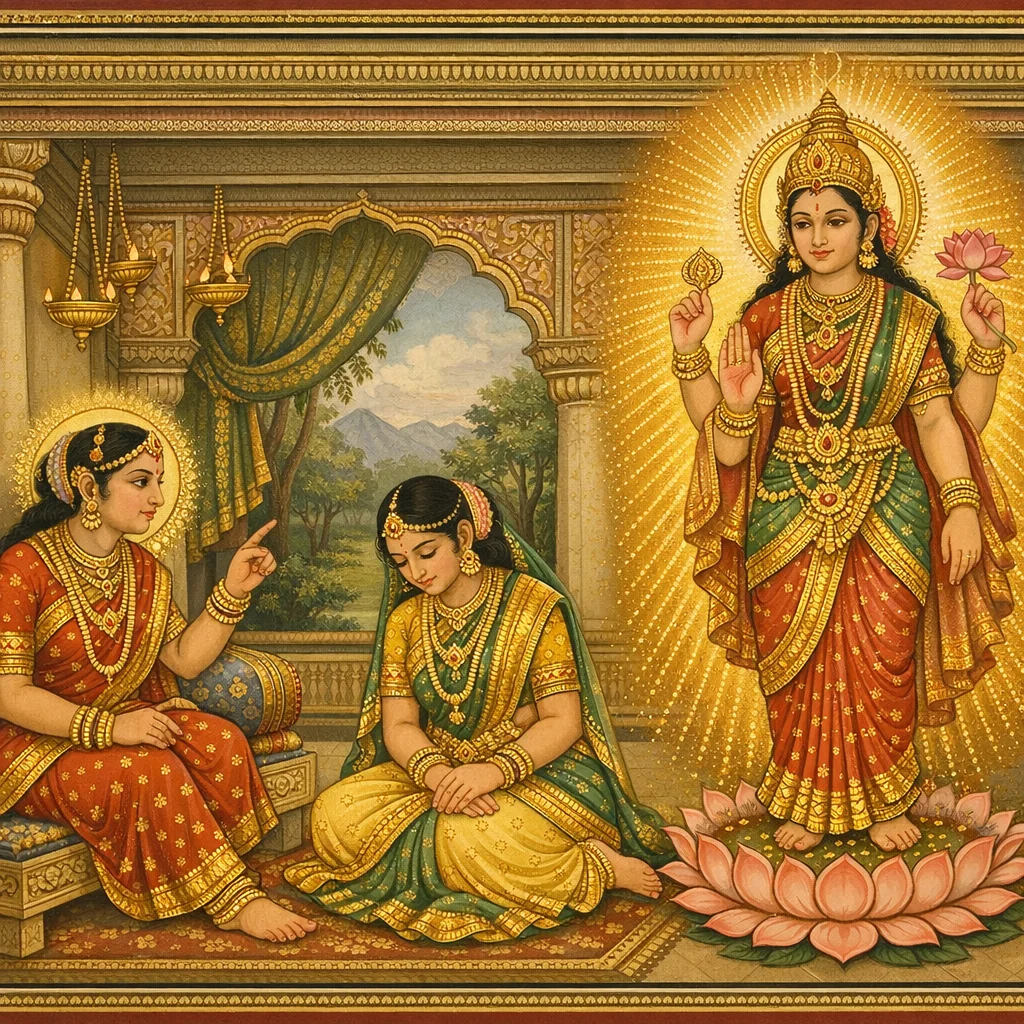
The ṛṣis ask for another instructive tale, and Sūta recounts an episode in Vidarbha. Two devotedly bonded brāhmaṇas, Vedamitra and Sārasvata, raise their sons Sumedhā and Somavān to mastery of the Veda, auxiliary sciences, itihāsa–purāṇa, and dharmaśāstra. When they lack means for arranging marriages, they seek aid from the king of Vidarbha. The king proposes a dharmically troubling scheme: one youth should disguise himself as a woman so the pair may enter Queen Sīmantaṇī of Niṣadha’s Somavāra (Monday) Śiva–Ambikā worship assembly, receive lavish gifts and dāna, and return wealthy. The youths protest that deceit brings social disgrace and destroys earned virtue, but the king insists on obedience. Somavān is transformed into a convincing female form, Sāmavatī, and the two arrive as a “couple” at the rite where brāhmaṇas and their wives are honored with offerings. After the worship, the queen becomes enamored of the disguised youth, stirring desire and disorder. Sumedhā admonishes Sāmavatī with dharmic reasoning, seeing the fault born of deception under coercion. When the matter reaches the king, sages explain that the potency of devotion to Śiva–Pārvatī and the deity’s will cannot be easily undone. The king undertakes severe observance and praise of Ambikā; the Goddess appears and grants a resolution: Sāmavatī is to remain as Sārasvata’s daughter and become Sumedhā’s wife, and Sārasvata will receive another son by the Goddess’s grace. The chapter closes by proclaiming the astonishing prabhāva of Śiva’s devotees and teaching that devotion, rightly framed by ritual and ethics, can reshape outcomes even amid human error.
Shlokas
Verse 1
ऋषय ऊचुः । साधुसाधु महाभाग त्वया कथितमुत्तमम् । आख्यानं पुनरन्यत्र विचित्रं वक्तुमर्हसि
The sages said: “Well done, well done, O blessed one—excellent is what you have spoken. Now you should also relate another wondrous account from elsewhere.”
Verse 2
सूत उवाच । विदर्भविषये पूर्वमासीदेको द्विजोत्तमः । वेदमित्र इति ख्यातो वेद शास्त्रार्थवित्सुधीः
Sūta said: “Formerly, in the land of Vidarbha, there lived a foremost brāhmaṇa, renowned as Vedamitra—wise, and a knower of the meanings of the Vedas and the śāstras.”
Verse 3
तस्यासीदपरो विप्रः सखा सारस्वताह्वयः । तावुभौ परमस्निग्धावेकदेशनिवासिनौ
“He had another brāhmaṇa as a friend, named Sārasvata. Both were deeply affectionate and lived in the same region.”
Verse 4
वेदमित्रस्य पुत्रोऽभूत्सुमेधा नाम सुव्रतः । सारस्वतस्य तनयः सोमवानिति विश्रुतः
“Vedamitra had a son named Sumedhā, a man of excellent vows; and Sārasvata’s son was famed as Somavān.”
Verse 5
उभौ सवयसौ बालौ समवेषौ समस्थिती । समं च कृतसंस्कारौ सम विद्यौ बभूवतुः
“Both were boys of the same age, alike in dress and bearing; their saṃskāras were performed equally, and they became equals in learning as well.”
Verse 6
सांगानधीत्य तौ वेदांस्तर्कव्याकरणानि च । इतिहासपुराणानि धर्मशास्त्राणि कृत्स्नशः
Having mastered the Vedas together with their auxiliary disciplines, and having also studied logic and grammar, they thoroughly learned the Itihāsas and Purāṇas, as well as the Dharmaśāstras in their entirety.
Verse 7
सर्वविद्याकुशलिनौ बाल्य एव मनीषिणौ । प्रहर्षमतुलं पित्रोर्ददतुः सकलैर्गुणैः
Skilled in every branch of knowledge even from childhood, those two wise ones gave their parents immeasurable joy by the fullness of their virtues.
Verse 8
तावेकदा स्वतनयौ तावुभौ ब्राह्मणोत्तमौ । आहूयावोचतां प्रीत्या षोड शाब्दौ शुभाकृती
One day those two excellent Brahmins—of auspicious form—summoned their own two sons and, with affection, spoke these sixteen words to them.
Verse 9
हे पुत्रकौ युवां बाल्ये कृतविद्यौ सुवर्चसौ । वैवाहिकोयं समयो वर्तते युवयोः समम्
‘O dear sons, you have completed your learning from childhood and are radiant in excellence. Now the proper time for marriage has arrived for you both alike.’
Verse 10
इमं प्रसाद्य राजानं विदर्भेशं स्वविद्यया । ततः प्राप्य धनं भूरि कृतोद्वाहौ भविष्यथः
‘Win the favor of this king—the lord of Vidarbha—by your own learning; then, obtaining abundant wealth, you will be able to accomplish your marriages.’
Verse 11
एवमुक्तौ सुतौ ताभ्यां तावुभौ द्विजनंदनौ । विदर्भराजमासाद्य समतोषयतां गुणैः
Thus instructed by their parents, those two sons—delights of the twice-born—approached the king of Vidarbha and satisfied him with their virtues.
Verse 12
विद्यया परितुष्टाय तस्मै द्विजकुमारकौ । विवाहार्थं कृतोद्योगौ धनहीनावशंसताम्
To that king—pleased by their learning—the two young Brahmins, though lacking wealth, submitted their request, stating that they were making efforts for the sake of marriage.
Verse 13
तयोरपि मतं ज्ञात्वा स विदर्भमहीपतिः । प्रहस्य किंचित्प्रोवाच लोकतत्त्वविवित्सया
Knowing their intention, the king of Vidarbha smiled and spoke a little—wishing to understand the true ways of the world.
Verse 14
आस्ते निषधराजस्य राज्ञी सीमंतिनी सती । सोमवारे महादेवं पूजयत्यंबिकायुतम्
There is the chaste queen Sīmantinī of the king of Niṣadha; on Mondays she worships Mahādeva together with Ambikā.
Verse 15
तस्मिन्दिने सपत्नीकान्द्विजाग्र्यान्वेदवित्तमान् । संपूज्य परया भक्त्या धनं भूरि ददाति च
On that day, after reverently honoring foremost Brahmins—learned in the Vedas—together with their wives, she worships them with supreme devotion and also gives abundant wealth in charity.
Verse 16
अतोऽत्र युवयोरैको नारीविभ्रमवेषधृक् । एकस्तस्या पतिर्भूत्वा जायेतां विप्रदंपती
Therefore, here one of you should take on the disguise and bearing of a woman, and the other, becoming her husband—thus you two shall pass as a brāhmaṇa couple.
Verse 17
युवां वधूवरौ भूत्वा प्राप्य सीमंतिनीगृहम् । भुक्त्वा भूरि धनं लब्ध्वा पुनर्यातं ममांमतिकम्
Becoming bride and groom, enter the house of the noble lady; partake there, obtain abundant wealth, and then return again according to my intention.
Verse 18
इति राज्ञा समादिष्टौ भीतौ द्विजकुमारकौ । प्रत्यूचतुरिदं कर्म कर्तुं नौ जायते भयम्
Thus commanded by the king, the two brāhmaṇa youths—afraid—replied: ‘We are frightened to carry out this deed.’
Verse 19
देवतासु गुरौ पित्रोस्तथा राजकुलेषु च । कौटिल्यमाचरन्मोहात्सद्यो नश्यति सान्वयः
If, out of delusion, one practices crookedness toward the deities, the guru, the parents, or within royal households, one’s lineage and standing are swiftly ruined.
Verse 20
कथमंतर्गृहं राज्ञां छद्मना प्रविशेत्पुमान् । गोप्यमानमपिच्छद्म कदाचित्ख्यातिमेष्यति
How could a man enter the inner apartments of kings by deception? Even a disguise kept hidden will, at some time, become known.
Verse 21
ये गुणाः साधिताः पूर्वं शीलाचारश्रुतादिभिः । सद्यस्ते नाशमायांति कौटिल्य पथगामिनः
The virtues once cultivated through character, righteous conduct, sacred learning, and the like—those very virtues swiftly perish for one who walks the crooked path of deceit.
Verse 22
पापं निंदा भयं वैरं चत्वार्येतानि देहिनाम् । छद्ममार्गप्रपन्नानां तिष्ठंत्येव हि सर्वदा
Sin, blame, fear, and enmity—these four ever remain with embodied beings who take refuge in the path of disguise and deceit.
Verse 23
अत आवां शुभाचारौ जातौ च शुचिनां कुले । वृत्तं धूर्तजनश्लाघ्यं नाश्रयावः कदाचन
Therefore we—trained in good conduct and born in a pure family—will never take refuge in a way of life praised by the deceitful.
Verse 24
राजोवाच । दैवतानां गुरूणां च पित्रोश्च पृथिवीपतेः । शासनस्याप्यलंघ्यत्वात्प्रत्यादेशो न कर्हिचित्
The king said: “Since the commands of the gods, the gurus, the parents, and the lord of the earth are not to be transgressed, there should never be any refusal.”
Verse 25
एतैर्यद्यत्समादिष्टं शुभं वा यदि वाऽशुभम् । कर्तव्यं नियतं भीतैरप्रमत्तैर्बुभूषुभिः
Whatever is commanded by these—whether auspicious or inauspicious—must certainly be done by those who are fearful, vigilant, and desirous of continued life and security.
Verse 26
अहो वयं हि राजानः प्रजा यूयं हि संमताः । राजाज्ञया प्रवृत्तानां श्रेयः स्यादन्यथा भयम्
Indeed, we are the kings, and you are the people subject to our assent. For those who act according to the king’s command, welfare arises; otherwise, there is fear.
Verse 27
अतो मच्छासनं कार्यं भव द्भ्यामविलंबितम् । इत्युक्तौ नरदेवेन तौ तथेत्यूचतुर्भयात्
Therefore, my command must be carried out by you both without delay. Thus addressed by the king, the two replied, “So be it,” out of fear.
Verse 28
सारस्वतस्य तनयं सामवन्तं नराधिपः । स्त्रीरूपधारिणं चक्रे वस्त्राकल्पां जनादिभिः
The king made Sāmavant—son of Sārasvata—assume the form of a woman, having people arrange garments and adornments for that disguise.
Verse 29
स कृत्रिमोद्भूतकलत्रभावः प्रयुक्तकर्णाभरणांगरागः । स्निग्धाञ्जनाक्षः स्पृहणीयरूपो बभूव सद्यः प्रमदोत्तमाभः
With an artificially assumed wife-like appearance—ears adorned, body anointed with cosmetics, eyes darkened with smooth collyrium—he at once became beautiful and desirable, like an excellent young woman.
Verse 30
तावुभौ दंपती भूत्वा द्विजपुत्रौ नृपाज्ञया । जग्मतुर्नैषधं देशं यद्वा तद्वा भवत्विति
Thus those two brāhmaṇa sons, becoming a “married couple” by the king’s command, went to the land of Naiṣadha, saying, “Let whatever must happen, happen.”
Verse 31
उपेत्य राजसदनं सोमवारे द्विजोत्तमैः । सपत्नीकैः कृतातिथ्यौ धौतपादौ बभूवतुः
Arriving at the royal residence on a Monday, they were received with due hospitality by eminent brāhmaṇas together with their wives; and, with their feet washed, the two were honored as sacred guests.
Verse 32
सा राज्ञी ब्राह्मणान्सर्वानुपविष्टान्वरासने । प्रत्येकमर्चयांचक्रे सपत्नीकान्द्विजोत्तमान्
The queen, seeing all the brāhmaṇas seated upon excellent seats, worshipped each of those foremost brāhmaṇas individually—together with their wives.
Verse 33
तौ च विप्रसुतौ दृष्ट्वा प्राप्तौ कृतकदंपती । ज्ञात्वा किंचिद्विहस्याथ मेने गौरीमहेश्वरौ
Seeing those two brāhmaṇa sons arrive as an artificially made ‘married couple,’ Gaurī and Maheśvara understood the situation and then smiled slightly.
Verse 34
आवाह्य द्विजमुख्येषु देवदेवं सदाशिवम् । पत्नीष्वावाहयामास सा देवीं जगदंबिकाम्
Having invoked the God of gods, Sadāśiva, into the foremost brāhmaṇas, she invoked the Goddess Jagadambikā, the Mother of the world, into their wives.
Verse 35
गन्धैर्माल्यैः सुरभिभिर्धूपैर्नीराजनैरपि । अर्चयित्वा द्विजश्रेष्ठान्नमश्चक्रे समाहिता
With perfumes, fragrant garlands, incense, and also with the offering of light (ārati), she worshipped those excellent brāhmaṇas; then, composed in mind, she bowed in reverent homage.
Verse 36
हिरण्मयेषु पात्रेषु पायसं घृतसंयुतम् । शर्करामधुसंयुक्तं शाकैर्जुष्टं मनोरमैः
In golden vessels she served sweet rice blended with ghee, mixed with sugar and honey, and accompanied by delightful vegetable dishes.
Verse 37
गंधशाल्योदनैर्हृद्यैर्मोदकापूपराशिभिः । शष्क्रुलीभिश्च संयावैः कृसरैर्माषपक्वकैः
With fragrant rice-dishes pleasing to the heart, with heaps of modakas and apūpas, and also with śaṣkrulīs, saṃyāvas, kṛsaras, and cooked preparations of black gram, she offered a rich spread of foods.
Verse 38
तथान्यैरप्यसंख्यातैर्भक्ष्यैर्भोज्यैर्मनोरमैः । सुगन्धैः स्वादुभिः सूपैः पानीयैरपि शीतलैः
And with countless other delightful eatables and meals—fragrant, sweet soups as well, and cool drinks—she continued to serve them with care.
Verse 39
क्लृप्तमन्नं द्विजाग्र्येभ्यः सा भक्त्या पर्यवेषयत् । दध्योदनं निरुपमं निवेद्य समतोषयत्
Having arranged the meal, she served the foremost brāhmaṇas with devotion; and by presenting incomparable curd-rice, she satisfied them completely.
Verse 40
भुक्तवत्सु द्विजाग्र्येषु स्वाचांतेषु नृपांगना । प्रणम्य दत्त्वा तांबूलं दक्षिणां च यथार्हतः
When the foremost brāhmaṇas had eaten and performed their rinsing, the king’s lady bowed down and gave them tāmbūla and a suitable honorarium (dakṣiṇā), as was proper.
Verse 41
धेनूर्हिरण्यवासांसि रत्नस्रग्भूषणानि च । दत्त्वा भूयो नमस्कृत्य विससर्ज द्विजोत्तमान्
She bestowed cows, gold, garments, and jeweled garlands and ornaments; then, bowing once more, she respectfully dismissed those excellent brāhmaṇas.
Verse 42
तयोर्द्वयोर्भूसुरवर्यपुत्रयोरेकस्त्तया हैमवतीधियार्चितः । एको महादेवधियाभिपूजितः कृतप्रणामौ ययतुस्तदाज्ञया
Of the two sons of that most excellent brāhmaṇa, one she worshiped with devotion to Haimavatī, and the other she honored with reverence for Mahādeva. Having offered obeisance, the two departed at her command.
Verse 43
सा तु विस्मृतपुंभावा तस्मिन्नेव द्विजोत्तमे । जातस्पृहा मदोत्सिक्ता कन्दर्पविवशाब्रवीत्
But she—forgetting her restraint—fixed her mind upon that very excellent brāhmaṇa; desire arose, she grew intoxicated with passion, and, overpowered by Kāma, she spoke.
Verse 44
अंयि नाथ विशालाक्ष सर्वावयवसुन्दर । तिष्ठतिष्ठ क्व वा यासि मां न पश्यसि ते प्रियाम्
“O my lord, wide-eyed one, beautiful in every limb—stop, stop! Where are you going? Do you not see me, your beloved?”
Verse 45
इदमग्रे वनं रम्यं सुपुष्पितमहाद्रुमम् । अस्मिन्विहर्तुमिच्छामि त्वया सह यथासुखम्
“Here ahead is a lovely forest with great trees in full bloom. I wish to sport here with you, as happily as we please.”
Verse 46
इत्थं तयोक्तमाकर्ण्य पुरोऽगच्छद्द्विजात्मजः । विचिंत्य परिहासोक्तिं गच्छति स्म यथा पुरा
Hearing what the two had said, the son of a brāhmaṇa went on ahead. Thinking it only a jesting remark, he continued on his way as before.
Verse 47
पुनरप्याह सा बाला तिष्ठतिष्ठ क्व यास्यसि । दुरुत्सहस्मरावेशां परिभोक्तुमुपेत्य माम्
Again the young woman said, “Stop, stop—where are you going? Come to me and enjoy me, for I am seized by an unbearable surge of passion.”
Verse 48
परिष्वजस्व मां कांतां पाययस्व तवाधरम् । नाहं गंतुं समर्थास्मि स्मरबाणप्रपीडिता
“Embrace me, beloved, and let me drink from your lips. I cannot go on—pierced and tormented by the arrows of Kāma.”
Verse 49
इत्थमश्रुतपूर्वां तां निशम्य परिशंकितः । आयांतीं पृष्ठतो वीक्ष्य सहसा विस्मयं गतः
Hearing such words as he had never heard before, he grew suspicious; and seeing her coming from behind, he was suddenly struck with astonishment.
Verse 50
कैषा पद्मपलाशाक्षी पीनोन्नतपयोधरा । कृशोदरी बृहच्छ्रोणी नवपल्लवकोमला
“Who is this—lotus-leaf-eyed, with full and uplifted breasts, a slender waist, broad hips, and the softness of fresh sprouts?”
Verse 51
स एव मे सखा किन्नु जात एव वरांगना । पृच्छाम्येनमतः सर्वमिति संचिन्त्य सोऽब्रवीत्
“Is this truly that same friend of mine—has he been born as a splendid woman?” Thinking so, he resolved, “I shall ask him everything,” and then he spoke.
Verse 52
किमपूर्व इवाभाषि सखे रूपगुणादिभिः । अपूर्वं भाषसे वाक्यं कामिनीव समाकुला
“Why do you speak as though you were someone new, my friend—of form, qualities, and the like? You utter strange words, agitated like a woman shaken by love.”
Verse 53
यस्त्वं वेदपुराणज्ञो ब्रह्मचारी जितेंद्रियः । सारस्वतात्मजः शांतः कथमेवं प्रभाषसे
“You are a knower of the Vedas and Purāṇas, a brahmacārin, one who has conquered the senses, a son of Sarasvatī, and serene—how can you speak in this way?”
Verse 54
इत्युक्ता सा पुनः प्राह नाहमस्मि पुमान्प्रभो । नाम्ना सामवती बाला तवास्मि रतिदायिनी
Thus addressed, she replied again, “Lord, I am not a man. I am a young maiden named Sāmavatī; I have come to grant you delight.”
Verse 55
यदि ते संशयः कांत ममांगानि विलोकय । इत्युक्तः सहसा मार्गे रहस्येनां व्यलोकयत्
“Beloved, if you have any doubt, look upon my limbs.” Thus addressed, he quickly—there on the road—looked at her in secret.
Verse 56
तामकृत्रिमधम्मिल्लां जवनस्तनशोभिनीम् । सुरूपां वीक्ष्य कामेन किंचिद्व्याकुलतामगात्
Seeing her—her hair naturally arranged, her youthful breasts radiant with beauty, and her form exquisitely lovely—he was stirred by desire and fell into a slight agitation of mind.
Verse 57
पुनः संस्तभ्य यत्नेन चेतसो विकृतिं बुधः । मुहूर्तं विस्मयाविष्टो न किंचित्प्रत्यभाषत
Then the wise man, with effort, steadied the mind’s disturbance; yet for a moment, overcome with astonishment, he replied nothing.
Verse 58
सामवत्युवाच । गतस्ते संशयः कश्चित्तर्ह्यागच्छ भजस्व माम् । पश्येदं विपिनं कांत परस्त्रीसुरतोचितम्
Sāmavatī said: “If any doubt of yours has now passed, then come—take delight in me. Behold this forest, beloved; it is fit for dalliance with another man’s wife.”
Verse 59
सुमेधा उवाच । मैवं कथय मर्यादां मा हिंसीर्मदमत्तवत् । आवां विज्ञातशास्त्रार्थौ त्वमेवं भाषसे कथम्
Sumedhā said: “Do not speak so—do not violate propriety, like one intoxicated with pride. We both understand the purport of the śāstras; how, then, do you speak in this manner?”
Verse 60
अधीतस्य च शास्त्रस्य विवेकस्य कुलस्य च । किमेष सदृशो धर्मो जारधर्मनिषेवणम्
“For one who has studied the śāstras, who possesses discernment, and who belongs to a noble lineage—how could this be a fitting ‘dharma’: the practice of a paramour’s conduct?”
Verse 61
न त्वं स्त्री पुरुषो विद्वाञ्जानीह्यात्मानमात्मना । अयं स्वयंकृतोऽनर्थ आवाभ्यां यद्विचेष्टितम्
You are not truly woman or man, O learned one—know the Self by the Self. This calamity is self-made, born of what we two have done.
Verse 62
वंचयित्वात्मपितरौ धूर्त्तराजानुशासनात् । कृत्वा चानुचितं कर्म तस्यैतद्भुज्यते फलम्
Having deceived one’s own parents, following the command of a wicked king, and having committed improper acts—this is the fruit of that, now being endured.
Verse 63
सर्वं त्वनुचितं कर्म नृणां श्रेयोविनाशनम् । यस्त्वं विप्रात्मजो विद्वान्गतः स्त्रीत्वं विगर्हितम्
Indeed, every improper deed destroys a person’s highest good. Yet you—learned, born of a brāhmaṇa—have come to a censured condition of womanhood.
Verse 64
मार्गं त्यक्त्वा गतोऽरण्यं नरो विध्येत कण्टकैः । बलार्द्धिस्येत वा हिंस्रैर्यदा त्यक्तसमा गमः
A man who abandons the path and goes into the forest is pierced by thorns, or is torn by fierce beasts—so too, when right association is forsaken.
Verse 65
एवं विवेकमाश्रित्य तूष्णीमेहि स्वयं गृहम् । देवद्विजप्रसादेन स्त्रीत्वं तव विलीयते
Therefore, taking refuge in discernment, go silently yourself to your home. By the grace of the gods and the brāhmaṇas, your womanhood will dissolve.
Verse 66
अथवा दैवयोगेन स्त्रीत्वमेव भवेत्तव । पित्रा दत्ता मया साकं रंस्यसे वरवर्णिनि
Or else, by the force of destiny, womanhood itself may befall you. Given by your father to me, you shall sport with me—O fair-complexioned one.
Verse 67
अहो चित्रमहो दुःखमहो पापबलं महत् । अहो राज्ञः प्रभावोयं शिवाराधनसंभृतः
Ah—how strange! Ah—how grievous! Ah—how great is the power of sin! Ah—this is the king’s might, amassed through the worship of Śiva.
Verse 68
इत्युक्ताप्यसकृत्तेन सा वधूरतिविह्वला । बलेन तं समालिंग्य चुचुंबाधरपल्लवम्
Though repeatedly addressed thus by him, the bride—overwhelmed by passion—forcefully embraced him and kissed the tender shoot of his lips.
Verse 69
धर्षितोपि तया धीरः सुमेधा नूतनस्त्रियम् । यत्नादानीय सदनं कृत्स्नं तत्र न्यवेदयत्
Though assailed by her, the steadfast Sumedhā, after carefully bringing the newly-made woman home, disclosed the entire matter there.
Verse 70
तदाकर्ण्याथ तौ विप्रौ कुपितौ शोकविह्वलौ । ताभ्यां सह कुमाराभ्यां वैदर्भांतिकमीयतुः
Hearing that, the two brāhmaṇas—angered and shaken with grief—went, together with the two youths, to the presence of the king of Vidarbha.
Verse 71
ततः सारस्वतः प्राह राजानं धूर्तचेष्टितम् । राजन्ममात्मजं पश्य तव शासनयंत्रितम्
Then Sārasvata spoke to the king of deceitful conduct: “O King, look upon my son—ensnared by your command.”
Verse 72
एतौ तवाज्ञावशगौ चक्रतुः कर्म गर्हितम् । मत्पुत्रस्तत्फलं भुंक्ते स्त्रीत्वं प्राप्य जुगुप्सितम्
These two, subject to your command, performed a reprehensible act. My son now consumes its fruit, having attained a despised womanhood.
Verse 73
अद्य मे संततिर्नष्टा निराशाः पितरो मम । नापुत्रस्य हि लोकोस्ति लुप्तपिंडादिसंस्कृतेः
Today my lineage is ruined; my forefathers are left without hope. For one without a son has no (secure) world, since the rites such as the piṇḍa-offering are cut off.
Verse 74
शिखोपवीतमजिनं मौजीं दंडं कमंडलुम् । ब्रह्मचर्योचितं चिह्नं विहायेमां दशां गतः
Abandoning the topknot and sacred thread, the deer-skin, the muñja-girdle, the staff and water-pot—those marks proper to brahmacarya—he has fallen into this condition.
Verse 75
ब्रह्मसूत्रं च सावित्रीं स्नानं संध्यां जपार्चनम् । विसृज्य स्त्रीत्वमाप्तोस्य का गतिर्वद पार्थिव
Having cast aside the sacred thread and the Sāvitrī (Gāyatrī), bathing, the sandhyā-prayers, japa and worship—he has attained womanhood. Tell me, O King: what will be his fate?
Verse 76
त्वया मे संततिर्नष्टा नष्टो वेदपथश्च मे । एकात्मजस्य मे राजन्का गतिर्वद शाश्वती
Because of you my lineage has been destroyed, and my course upon the Vedic path has also been ruined. O King, I had but one son—tell me, what eternal refuge remains for me?
Verse 77
इति सारस्वतेनोक्तं वाक्यमाकर्ण्य भूपतिः । सीमंतिन्याः प्रभावेण विस्मयं परमं गतः
Hearing these words spoken by Sārasvata, the king was struck with the greatest astonishment at the extraordinary power of the lady Sīmantinī.
Verse 78
अथ सर्वान्समाहूय महर्षीनमितद्युतीन् । प्रसाद्य प्रार्थयामास तस्य पुंस्त्वं महीपतिः
Then the king summoned all the great seers of immeasurable splendor; having pleased them, he implored them to restore manhood to him.
Verse 79
तेऽबुवन्नथ पार्वत्याः शिवस्य च समीहितम् । तद्भक्तानां च माहात्म्यं कोन्यथा कर्तुमीश्वरः
Then they said: “This is indeed the will of Pārvatī and of Śiva. And who but the Lord could make the greatness of His devotees be otherwise?”
Verse 80
अथ राजा भरद्वाजमादाय मुनिपुंगवम् । ताभ्यां सह द्विजाग्र्याभ्यां तत्सुताभ्यां समन्वितः
Then the king took Bharadvāja, the foremost of sages, and—accompanied by two eminent brāhmaṇas together with their two sons—set forth.
Verse 81
अंबिकाभवनं प्राप्य भरद्वाजोपदेशतः । तां देवीं नियमैस्तीव्रैरुपास्ते स्म महानिशि
Reaching Ambikā’s abode as instructed by Bharadvāja, he worshipped the Goddess with severe vows and strict restraints, keeping vigil through the great night.
Verse 82
एवं त्रिरात्रं सुविसृष्टभोजनः स पार्वतीध्यान रतो महीपतिः । सम्यक्प्रणामैर्विविधैश्च संस्तवैर्गौरीं प्रपन्नार्तिहरामतोषयत्
Thus, for three nights the king—taking only carefully regulated food—remained absorbed in meditation on Pārvatī; and by proper prostrations and varied hymns of praise, he satisfied Gaurī, remover of the distress of those who seek refuge.
Verse 83
ततः प्रसन्ना सा देवी भक्तस्य पृथिवीपतेः । स्वरूपं दर्शयामास चंद्रकोटिसमप्रभम्
Then the Goddess, pleased with the king’s devotion, revealed her own form—radiant like ten million moons.
Verse 84
अथाह गौरी राजानं किं ते ब्रूहि समीहितम् । सोऽप्याह पुंस्त्वमेतस्य कृपया दीयतामिति
Then Gaurī said to the king, “Tell me—what do you desire?” He replied, “By your compassion, let manhood be granted to him.”
Verse 85
भूयोप्याह महादेवी मद्भक्तैः कर्म यत्कृतम् । शक्यते नान्यथा कर्तुं वर्षायुतशतैरपि
Again the Mahādevī said: “Whatever deed has been done by my devotees cannot be made otherwise—even with hundreds of thousands of years.”
Verse 86
राजोवाच । एकात्मजो हि विप्रोयं कर्मणा नष्टसंततिः । कथं सुखं प्रपद्येत विना पुत्रेण तादृशः
The King said: “This brāhmaṇa had but a single son; yet by the force of karma his lineage has been cut off. How could such a man attain happiness without a son?”
Verse 87
देव्युवाच । तस्यान्यो मत्प्रसादेन भविष्यति सुतोत्तमः । विद्या विनयसंपन्नो दीर्घायुरमलाशयः
The Goddess said: “By my grace, another excellent son will be born to him—endowed with learning and good conduct, long-lived, and pure in heart.”
Verse 88
एषा सामवती नाम सुता तस्य द्विजन्मनः । भूत्वा सुमेधसः पत्नी कामभोगेन युज्यताम्
“This is his daughter named Sāmavatī, born to that twice-born man. Let her become the wife of Sumedhas and be joined with him in wedded enjoyment.”
Verse 89
इत्युक्त्वांतर्हिता देवी ते च राजपुरोगमाः । गताः स्वंस्वं गृहं सर्वे चक्रुस्तच्छासने स्थितिम्
Having spoken thus, the Goddess vanished. And they all—led by the King—returned to their respective homes and acted in accordance with her command.
Verse 90
सोपि सारस्वतो विप्रः पुत्रं पूर्वसुतो त्तमम् । लेभे देव्याः प्रसादेन ह्यचिरादेव कालतः
That brāhmaṇa of the Sārasvata line too soon obtained a son—an excellent child like the former—by the Goddess’s grace, in no long time.
Verse 91
तां च सामवतीं कन्यां ददौ तस्मै सुमेधसे । तौ दंपती चिरं कालं बुभुजाते परं सुखम्
And he gave that maiden Sāmavatī to Sumedhas. The two, as husband and wife, enjoyed supreme happiness for a long time.
Verse 92
सूत उवाच । इत्येष शिवभक्तायाः सीमंतिन्या नृपस्त्रियाः । प्रभावः कथितः शंभोर्माहात्म्यमपि वर्णितम्
Sūta said: “Thus has been told the wondrous power of that queen, Sīmaṃtinī, a devotee of Śiva; and thereby the greatness of Śambhu as well has been described.”
Verse 93
भूयोपि शिवभक्तानां प्रभावं विस्मयावहम् । समासाद्वर्णयिष्यामि श्रोतॄणां मंगलायनम्
“Again, I shall narrate—briefly—the astonishing power of Śiva’s devotees, a source of auspiciousness for the listeners.”