Adhyaya 1
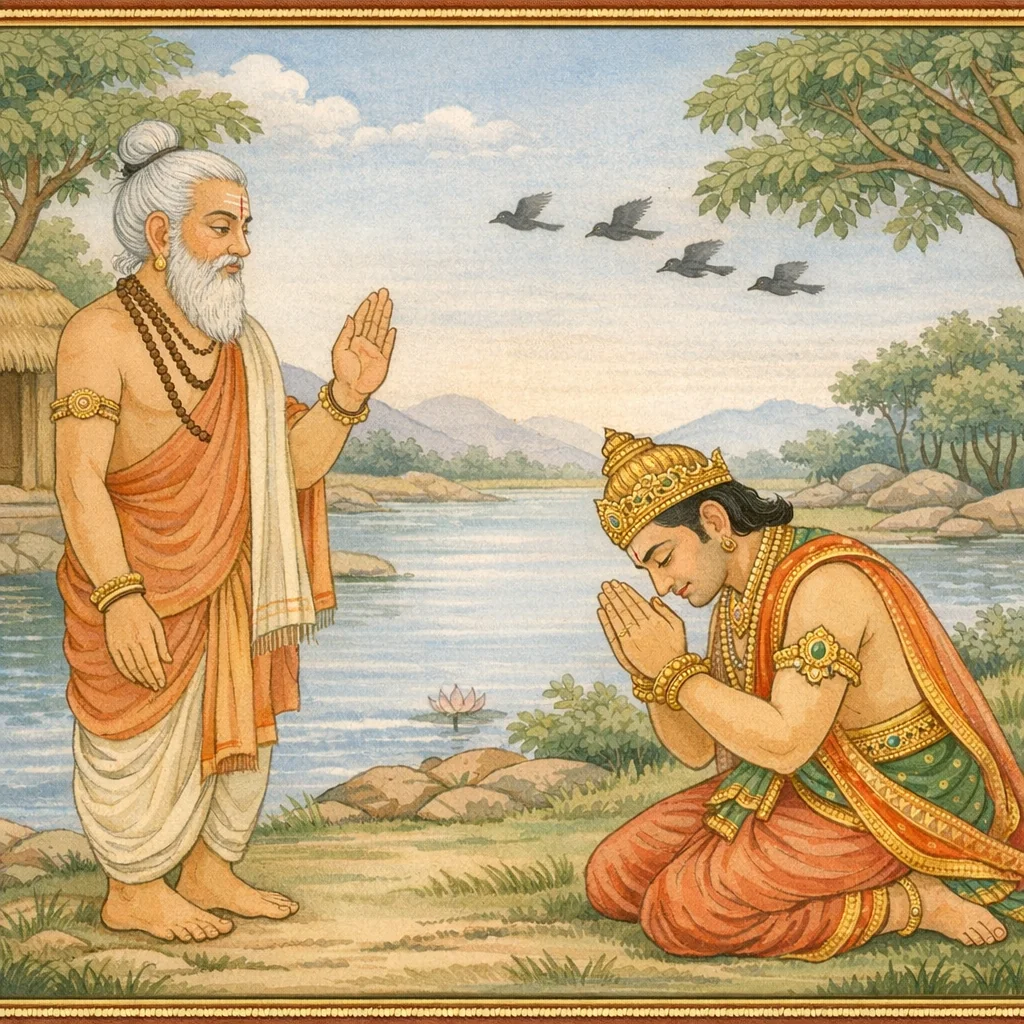
The chapter begins with invocatory verses and salutations (including obeisance to Gaṇeśa and Śiva) and moves into a dialogue in which the Ṛṣis ask Sūta to recount Tripuradviṣ (Śiva as the destroyer of Tripura), the greatness of Śiva’s devotees, and the power of the mantras connected with them. Sūta replies that causeless devotion to hearing and speaking Īśvara-kathā is the highest welfare, and he extols japa as the foremost sacrifice. The teaching then centers on the Śaiva Pañcākṣarī as the supreme mantra—liberating, purifying, and rich with Vedānta-aligned meaning. When held with inner purity and right orientation, it is said not to depend on elaborate auxiliaries such as fixed timings or external rites. Exemplary places for japa are named: Prayāga, Puṣkara, Kedāra, Setubandha, Gokarṇa, and Naimiṣāraṇya. An illustrative tale follows: a valorous king of Mathurā marries the princess Kalāvatī. When he seeks intimacy without honoring her vow and purity, he meets a startling consequence and asks its cause. The queen explains that in childhood she received Pañcākṣarī instruction from the sage Durvāsā, so her body is ritually protected; she also reproaches the king for lacking daily purity and devotional discipline. Seeking purification, the king approaches the guru Garga. The guru leads him to the bank of the Yamunā, arranges the proper seat and orientation, and imparts the mantra with a hand placed upon the king’s head. Karmic impurities are symbolized as crows leaving the body and being destroyed, which the guru interprets as accumulated sins burned away through mantra-dhāraṇā. The chapter closes by reaffirming the mantra’s comprehensive efficacy and its accessibility for seekers of liberation.
Shlokas
Verse 1
श्रीगणेशाय नमः श्रीगुरुभ्यो नमः । अथ ब्रह्मोत्तरखंडमारंभः । ॐ नमः शिवाय । ज्योतिर्मात्रस्वरूपाय निर्मलज्ञानचक्षुषे । नमः शिवाय शांताय ब्रह्मणे लिंगमूर्त्तये
Salutations to Śrī Gaṇeśa; salutations to the revered Gurus. Now begins the Brahmottarakhaṇḍa. Oṃ—salutations to Śiva: to Him whose very nature is pure Light, whose eye is stainless knowledge; salutations to Śiva, the Peaceful One, the Supreme Brahman, manifest as the Liṅga.
Verse 2
ऋषय ऊचुः । आख्यातं भवता सूत विष्णोर्माहात्म्यमुत्तमम् । समस्ताघहरं पुण्यं समसेन श्रुतं च नः
The sages said: “O Sūta, you have described to us the supreme greatness of Viṣṇu—holy and remover of all sins—and we have heard it in full.”
Verse 3
इदानीं श्रोतुमिच्छामो माहात्म्यं त्रिपुरद्विषः । तद्भक्तानां च माहात्म्यमशेषाघहरं परम्
“Now we wish to hear the greatness of the foe of Tripura (Śiva), and also the greatness of His devotees—supreme, and destroying every sin without remainder.”
Verse 4
तन्मंत्राणां च माहात्म्यं तथैव द्विजसत्तम । तत्कथायाश्च तद्भक्तेः प्रभावमनुवर्णय
“O best of the twice-born, describe also the greatness of His mantras, and likewise the power of His sacred narratives and devotion (bhakti) to Him.”
Verse 5
सूत उवाच । एतावदेव मर्त्यानां परं श्रेयः सनातनम् । यदीश्वरकथायां वै जाता भक्तिरहैतुकी
Sūta said: “This alone is the highest, eternal good for mortals—when, through discourse on the Lord, causeless devotion arises.”
Verse 6
अतस्तद्भक्तिलेशस्य माहात्म्यं वर्ण्यते मया । अपि कल्पायुषा नालं वक्तुं विस्तरतः क्वचित्
“Therefore I shall describe the greatness of even a mere fragment of that devotion; even with a lifespan of a kalpa, one could never fully express it in detail.”
Verse 7
सर्वेषामपि पुण्यानां सर्वेषां श्रेयसामपि । सर्वेषामपि यज्ञानां जपयज्ञः परः स्मृतः
“Among all meritorious acts, among all means to welfare, and among all sacrifices, the sacrifice of japa (mantra-repetition) is remembered as the highest.”
Verse 8
तत्रादौ जपयज्ञस्य फलं स्वस्त्ययनं महत् । शैवं षडक्षरं दिव्यं मंत्रमाहुर्महर्षयः
“In that path, first, the fruit of the japa-sacrifice is great auspicious well-being; the great sages declare the divine six-syllabled Śaiva mantra.”
Verse 9
देवानां परमो देवो यथा वै त्रिपुरांतकः । मंत्राणां परमो मंत्रस्तथा शैवः षडक्षरः
“Just as Tripurāntaka (Śiva) is the supreme God among the gods, so the Śaiva six-syllabled mantra is the supreme mantra among mantras.”
Verse 10
एष पंचाक्षरो मंत्रो जप्तॄणां मुक्तिदायकः । संसेव्यते मुनिश्रेष्ठैरशेषैः सिद्धिकांक्षिभिः
This five-syllabled mantra grants liberation to those who repeat it in japa. It is reverently practiced by the foremost sages—by all who seek spiritual attainments.
Verse 11
अस्यैवाक्षरमाहात्म्यं नालं वक्तुं चतुर्मुखः । श्रुतयो यत्र सिद्धांतं गताः परमनिर्वृताः
Even four-faced Brahmā is not sufficient to fully describe the greatness of this very syllable-mantra. There the Vedas themselves reach their final conclusion and rest in supreme peace.
Verse 12
सर्वज्ञः परिपूर्णश्च सच्चिदानंदलक्षणः । स शिवो यत्र रमते शैवे पंचाक्षरे शुभे
All-knowing and all-complete, whose very nature is Existence, Consciousness, and Bliss (Sat-Cit-Ānanda)—Śiva delights there, in the auspicious Śaiva five-syllabled mantra.
Verse 13
एतेन मंत्रराजेन सर्वोपनिषदात्मना । लेभिरे मुनयः सर्वे परं ब्रह्म निरामयम्
By this king of mantras—whose essence is all the Upaniṣads—all sages attained the supreme Brahman, free from every affliction.
Verse 14
नमस्कारेण जीवत्वं शिवेऽत्र परमात्मनि । ऐक्यं गतमतो मंत्रः परब्रह्ममयो ह्यसौ
Through the act of reverent salutation (namaskāra), the state of individuality merges here into Śiva, the Supreme Self. Therefore this mantra is indeed composed of the Supreme Brahman (Parabrahman).
Verse 15
भवपाशनिबद्धानां देहिनां हितकाम्यया । आहोंनमः शिवायेति मंत्रमाद्यं शिवः स्वयम्
Out of compassion for embodied beings bound by the noose of worldly becoming, Śiva Himself proclaimed the primal mantra: “Oṃ, namaḥ śivāya.”
Verse 16
किं तस्य बहुभिर्मंत्रैः किं तीर्थैः किं तपोऽध्वरैः । यस्योंनमः शिवायेति मंत्रो हृदयगोचरः
What need has such a person for many other mantras, for pilgrimages, or for austerities and sacrifices—when the mantra “Oṃ namaḥ śivāya” has entered the heart?
Verse 17
तावद्भ्रमंति संसारे दारुणे दुःखसंकुले । यावन्नोच्चारयंतीमं मंत्रं देहभृतः सकृत्
Embodied beings continue to wander in this harsh saṃsāra, crowded with suffering, so long as they do not even once utter this mantra.
Verse 18
मंत्राधिराजराजोऽयं सर्ववेदांतशेखरः । सर्वज्ञाननिधानं च सोऽयं चैव षडक्षरः
This is the emperor among the lords of mantras, the crest-jewel of all Vedānta, and a treasury of all knowledge—this very six-syllabled mantra.
Verse 19
कैवल्यमार्गदीपोऽयमविद्यासिंधुवाडवः । महापातकदावाग्निः सोऽयं मंत्रः षडक्षरः
This six-syllabled mantra is a lamp upon the path to liberation; it is the submarine fire that dries up the ocean of ignorance; it is the forest-fire that burns away great sins.
Verse 21
नास्य दीक्षा न होमश्च न संस्कारो न तर्पणम् । न कालो नोपदेशश्च सदा शुचिरयं मनुः
For this mantra there is no need of formal dīkṣā, no homa, no purificatory saṃskāras, and no tarpaṇa libations. No special time is required, nor even elaborate instruction—this mantra is ever pure.
Verse 22
महापातकविच्छित्त्यै शिव इत्यक्षरद्वयम् । अलं नमस्कियायुक्तो मुक्तये परिकल्पते
To cut off even the greatest sins, the two syllables ‘Śi‑va’ are sufficient; when joined with reverent salutation, they become a direct means to liberation.
Verse 23
उपदिष्टः सद्गुरुणा जप्तः क्षेत्रे च पावने । सद्यो यथेप्सितां सिद्धिं ददातीति किमद्भुतम्
When imparted by a true guru and chanted as japa in a holy, purifying sacred place, it grants the desired attainment at once—what wonder is there in that?
Verse 24
अतः सद्गुरुमाश्रित्य ग्राह्योऽयं मंत्रनायकः । पुण्यक्षेत्रेषु जप्तव्यः सद्यः सिद्धिं प्रयच्छति
Therefore, taking refuge in a true guru, one should receive this lordly mantra; it should be chanted in meritorious sacred places, and it bestows accomplishment immediately.
Verse 25
गुरवो निर्मलाः शांताः साधवो मितभाषिणः । कामक्रोधविनिर्मुक्ताः सदाचारा जितेंद्रियाः
True teachers are pure and peaceful—saintly sādhus, measured in speech, free from desire and anger, established in good conduct, and masters of their senses.
Verse 26
एतैः कारुण्यतो दत्तो मंत्रः क्षिप्रं प्रसिद्ध्यति । क्षेत्राणि जपयोग्यानि समासात्कथयाम्यहम्
A mantra bestowed by such teachers out of compassion quickly becomes efficacious. Now I shall briefly tell the sacred places fit for japa.
Verse 27
प्रयागं पुष्करं रम्यं केदारं सेतुबंधनम् । गोकर्णं नैमिषारण्यं सद्यः सिद्धिकरं नृणाम्
Prayāga, lovely Puṣkara, Kedāra, Setubandhana, Gokarṇa, and Naimiṣāraṇya—these grant people immediate accomplishment.
Verse 28
अत्रानुवर्ण्यते सद्भिरितिहासः पुरातनः । असकृद्वा सकृद्वापि शृण्वतां मंगलप्रदः
Here the virtuous recount an ancient sacred history; whether heard many times or even once, it bestows auspiciousness upon the listeners.
Verse 29
मथुरायां यदुश्रेष्ठो दाशार्ह इति विश्रुतः । बभूव राजा मतिमान्महोत्साहो महाबलः
In Mathurā there was a king—foremost among the Yadus—famed as Dāśārha, wise in counsel, of great enterprise, and of mighty strength.
Verse 30
शास्त्रज्ञो नयवाक्छूरो धैर्यवानमितद्युतिः । अप्रधृष्यः सुगंभीरः संग्रामेष्वनिवर्त्तितः
He was learned in the śāstras, heroic in statesmanlike counsel and speech, steadfast and of immeasurable splendor; unassailable, profoundly grave, and never retreating in battle.
Verse 31
महारथो महेष्वासो नानाशास्त्रार्थकोविदः । वदान्यो रूपसंपन्नो युवा लक्ष णसंयुतः
He was a great chariot-warrior, a mighty archer, and skilled in the purport of many śāstras. Generous, handsome, and youthful, he was endowed with auspicious marks and noble virtues.
Verse 32
स काशिराजतनयामुपयेमे वराननाम् । कांतां कलावतीं नाम रूपशीलगुणान्विताम्
He married the daughter of the King of Kāśī—fair-faced and radiant—named Kalāvatī, endowed with beauty, good character, and virtues.
Verse 33
कृतोद्वाहः स राजेंद्रः संप्राप्य निजमंदिरम् । रात्रौ तां शयनारूढां संगमाय समाह्वयत्
After the wedding, that lord of kings returned to his own palace. At night, seeing her upon the bed, he called her for conjugal union.
Verse 34
सा स्वभर्त्रा समाहूता बहुशः प्रार्थिता सती । न बबंध मनस्तस्मिन्न चागच्छ तदंतिकम्
Though summoned by her husband and repeatedly entreated, that virtuous woman did not set her heart upon it, nor did she go near him.
Verse 35
संगमाय यदाहूता नागता निजवल्लभा । बलादाहर्तुकामस्तामुदतिष्ठन्महीपतिः
When she was called for union but did not come, the king—desiring to bring his beloved by force—rose up.
Verse 36
राज्ञ्युवाच । मा मां स्पृश महाराज कारणज्ञां व्रते स्थिताम् । धर्माधर्मौ विजानासि मा कार्षीः साहसं मयि
The queen said: “Do not touch me, O great king. I know the cause and I stand firm in my vow. You discern dharma and adharma—do not act with violence or rashness toward me.”
Verse 37
क्वचित्प्रियेण भुक्तं यद्रोचते तु मनीषिणाम् । दंपत्योः प्रीतियोगेन संगमः प्रीतिवर्द्धनः
At times, even what is received from one’s beloved is pleasing to the wise. For husband and wife, union born of mutual affection increases love.
Verse 38
प्रियं यदा मे जायेत तदा संगस्तु ते मयि । का प्रीतिः किं सुखं पुंसां बलाद्भोगेन योषिताम्
When affection arises in me, then there will be union with you. What love, what happiness, can a man find in taking a woman by force?
Verse 39
अप्रीतां रोगिणीं नारीमंतर्वत्नीं धृतव्रताम् । रजस्वलामकामां च न कामेत बलात्पुमान्
A man should not, by force, desire a woman who is unwilling, ill, pregnant, steadfast in a vow, menstruating, or without desire.
Verse 40
प्रीणनं लालनं पोषं रंजनं मार्दवं दयाम् । कृत्वा वधूमुपगमेद्युवतीं प्रेमवान्पतिः । युवतौ कुसुमे चैव विधेयं सुखमिच्छता
A loving husband, having first pleased her, cherished her, cared for her, delighted her, and shown gentleness and compassion, should then approach his young bride. One who seeks happiness should treat a young woman like a flower—tenderly and with care.
Verse 41
इत्युक्तोऽपि तया साध्व्या स राजा स्मरविह्वलः । बलादाकृष्य तां हस्ते परिरेभे रिरंसया
Though admonished by that virtuous lady, the king—overpowered by passion—seized her hand by force and embraced her, driven by desire for pleasure.
Verse 42
तां स्पृष्टमात्रां सहसा तप्तायःपिंडसन्निभाम् । निर्दहंतीमिवात्मानं तत्याज भयविह्वलः
The moment he touched her, she seemed like a lump of heated iron; as if she were burning his very self, he recoiled and let her go, trembling with fear.
Verse 43
राजोवाच । अहो सुमहदाश्चर्यमिदं दृष्टं तव प्रिये । कथमग्निसमं जातं वपुः पल्लवकोमलम्
The king said: “Ah! I have witnessed a most astonishing thing, my beloved. How has your body—soft as a tender sprout—become like fire?”
Verse 44
इत्थं सुविस्मितो राजा भीतः सा राजवल्लभा । प्रत्युवाच विहस्यैनं विनयेन शुचिस्मिता
Thus the king stood greatly astonished and afraid. The king’s beloved—smiling gently—laughed softly and replied to him with humility.
Verse 45
राज्ञ्युवाच । राजन्मम पुरा बाल्ये दुर्वासा मुनिपुंगवः । शैवीं पंचाक्षरीं विद्यां कारुण्येनोपदिष्टवान्
The queen said: “O King, long ago in my childhood, Durvāsā—the foremost among sages—compassionately instructed me in the Śaiva Pañcākṣarī sacred knowledge.”
Verse 46
तेन मंत्रानुभावेन ममांगं कलुषोज्झितम् । स्प्रष्टुं न शक्यते पुंभिः सपापैर्देवैवर्जितैः
By the power of that mantra, my body has been freed from defilement; men burdened with sin and bereft of divine conduct cannot touch me.
Verse 47
त्वया राजन्प्रकृतिना कुलटागणिकादयः । मदिरास्वादनिरता निषेव्यंते सदा स्त्रियः
O King, by your very disposition you constantly keep company with women such as harlots and courtesans, addicted to the taste of wine.
Verse 48
न स्नानं क्रियते नित्यं न मंत्रो जप्यते शुचिः । नाराध्यते त्वयेशानः कथं मां स्प्रष्टुमर्हसि
You do not bathe daily; you do not recite mantra with purity; you do not worship Īśāna (Śiva). How, then, are you fit to touch me?
Verse 49
राजोवाच तां समाख्याहि सुश्रोणि शैवीं पंचाक्षरीं शुभाम् । विद्याविध्वस्तपापोऽहं त्वयीच्छामि रतिं प्रिये
The king said: “O fair-hipped one, tell me that auspicious Śaiva Pañcākṣarī. When my sins are destroyed by that sacred knowledge, I desire union with you, beloved.”
Verse 50
राज्ञ्युवाच । नाहं तवोपदेशं वै कुर्यां मम गुरुर्भवान् । उपातिष्ठ गुरुं राजन्गर्गं मंत्र विदांवरम्
The queen said: “I will not instruct you, for you are my husband and thus my revered elder. O King, approach the guru Garga—the foremost among those who know mantras.”
Verse 51
सूत उवाच । इति संभाषमाणौ तौ दंपती गर्गसन्निधिम् । प्राप्य तच्चरणौ मूर्ध्ना ववंदाते कृताञ्जली
Sūta said: Thus conversing, that husband and wife came into Garga’s presence; and, placing their heads upon his feet, they bowed with folded hands.
Verse 52
अथ राजा गुरुं प्रीतमभिपूज्य पुनःपुनः । समाचष्ट विनीतात्मा रहस्यात्ममनोरथम्
Then the king—his heart subdued with humility—reverently honored the pleased guru again and again, and disclosed his innermost, secret longing.
Verse 53
राजोवाच । कृतार्थं मां कुरु गुरो संप्राप्तं करुणार्द्रधीः । शैवीं पंचाक्षरीं विद्यामुपदेष्टुं त्वमर्हसि
The king said: O Guru, make my life fulfilled. With a mind softened by compassion, you have come here—therefore you ought to instruct me in the Śaiva Pañcākṣarī sacred knowledge.
Verse 54
अनाज्ञातं यदाज्ञातं यत्कृतं राजकर्मणा । तत्पापं येन शुद्ध्येत तन्मंत्रं देहि मे गुरो
Whatever sin has been committed through royal duty—whether knowingly or unknowingly—grant me, O Guru, that mantra by which that fault may be purified.
Verse 55
एवमभ्यर्थितो राज्ञा गर्गो ब्राह्मणपुंगवः । तौ निनाय महापुण्यं कालिंद्यास्तटमुत्तमम्
Thus entreated by the king, Garga—the foremost among brāhmaṇas—led the couple to an excellent, greatly meritorious bank of the Kāliṅdī (Yamunā).
Verse 56
तत्र पुण्यतरोर्मूले निषण्णोऽथ गुरुः स्वयम् । पुण्यतीर्थजले स्नातं राजानं समुपोषितम्
There, at the root of a sacred tree, the guru himself sat down; and the king—bathed in the waters of that holy tīrtha and observing a fast—stood prepared.
Verse 57
प्राङ्मुखं चोपवेश्याथ नत्वा शिवपदाम्बुजम् । तन्मस्तके करं न्यस्य ददौ मंत्रं शिवात्मकम्
Seating him facing east, and bowing to Śiva’s lotus-feet, he placed his hand upon the king’s head and bestowed a Śiva-essenced mantra.
Verse 58
तन्मंत्रधारणादेव तद्गुरोर्हस्तसंगमात् । निर्ययुस्तस्य वपुषो वायसाः शतकोटयः
By the very taking up of that mantra, and by contact with the guru’s hand, from his body there issued forth crows—hundreds of crores of them.
Verse 59
ते दग्धपक्षाः क्रोशंतो निपतंतो महीतले । भस्मीभूतास्ततः सर्वे दृश्यंते स्म सहस्रशः
With their wings scorched, crying out and falling upon the earth, they all then became ashes—seen in their thousands.
Verse 60
दृष्ट्वा तद्वायसकुलं दह्यमानं सुविस्मितौ । राजा च राजमहिषी तं गुरुं पर्यपृच्छताम्
Seeing that flock of crows burning, the king and the queen—greatly astonished—questioned that guru.
Verse 61
भगवन्निदमाश्चर्यं कथं जातं शरीरतः । वायसानां कुलं दृष्टं किमेतत्साधु भण्यताम्
O Blessed Lord, this is wondrous—how has it arisen from the body? A whole flock of crows is seen; what is this? Pray explain it rightly.
Verse 62
श्रीगुरुरुवाच राजन्भवसहस्रेषु भवता परिधावता । संचितानि दुरन्तानि संति पापान्यनेकशः
The venerable Guru said: O King, as you have wandered through thousands of births, countless sins—hard to exhaust—have been accumulated.
Verse 63
तेषु जन्मसहस्रेषु यानि पुण्यानि संति ते । तेषामाधिक्यतः क्वापि जायते पुण्ययोनिषु
Among those thousands of births, whatever merits you have—when they become predominant—one is born somewhere in auspicious and meritorious wombs (higher births).
Verse 64
तथा पापीयसीं योनिं क्वचित्पापेन गच्छति । साम्ये पुण्यान्ययोश्चैव मानुषीं योनिमाप्तवान्
Likewise, through sin one sometimes goes to a more sinful (lower) womb; but when merit and sin are in balance, one attains a human birth.
Verse 66
कोटयो ब्रह्महत्यानामगम्यागम्यकोटयः । स्वर्णस्तेयसुरापानभ्रूणहत्या दिकोटयः । भवकोटिसहस्रेषु येऽन्ये पातकराशयः
There are crores of sins like brahma-hatyā (killing a brāhmaṇa), crores upon crores of forbidden unions, and crores in every direction of crimes such as stealing gold, drinking liquor, and killing an embryo—along with other heaps of sins accumulated through thousands of crores of births.
Verse 67
क्षणाद्भस्मीभवंत्येव शैवे पंचाक्षरे धृते । आसंस्तवाद्य राजेंद्र दग्धाः पातककोटयः
In a moment they turn to ashes when the Śaiva Pañcākṣarī is held firmly in practice. From you, O king, today crores of sins have been burned away.
Verse 68
अनया सह पूतात्मा विहरस्व यथासुखम् । इत्याभाष्य मुनिश्रेष्ठस्तं मंत्रमुपदिश्य च
“With her, your soul purified, live and rejoice as you please.” Having spoken thus, the best of sages also instructed him in that mantra.
Verse 69
शैवी पंचाक्षरी विद्या यदा ते हृदयं गता । अघानां कोटयस्त्वत्तः काकरूपेण निर्गताः
When the Śaiva Pañcākṣarī wisdom entered your heart, crores of sins departed from you, taking the form of crows.
Verse 70
ततः स्वभवनं प्राप्य रेजतुःस्म महाद्युती राजा दृढं समाश्लिष्य पत्नीं चन्दनशीतलाम् । संतोषं परमं लेभे निःस्वः प्राप्य यथा धनम्
Then, reaching their own home, the radiant pair shone. The king tightly embraced his wife, cool as sandalwood, and gained supreme contentment—like a poor man who has obtained wealth.
Verse 71
अशेषवेदोपनिषत्पुराणशास्त्रावतंसोऽयमघांतकारी । पंचाक्षरस्यैव महाप्रभावो मया समासात्कथितो वरिष्ठः
This teaching is the crown-ornament of all the Vedas, Upaniṣads, Purāṇas, and Śāstras, and it destroys sin. I have concisely declared, O excellent one, the great power of the Pañcākṣara alone.
Verse 120
तस्मात्सर्वप्रदो मंत्रः सोऽयं पञ्चाक्षरः स्मृतः । स्त्रीभिः शूद्रैश्च संकीर्णैर्धार्यते मुक्तिकांक्षिभिः
Therefore, this mantra—bestowing every blessing—is remembered as the five-syllabled (pañcākṣara) mantra. It is to be held in the heart and recited by women, by Śūdras, and by those of mixed social groups as well, by all who yearn for liberation (mokṣa).