Adhyaya 17
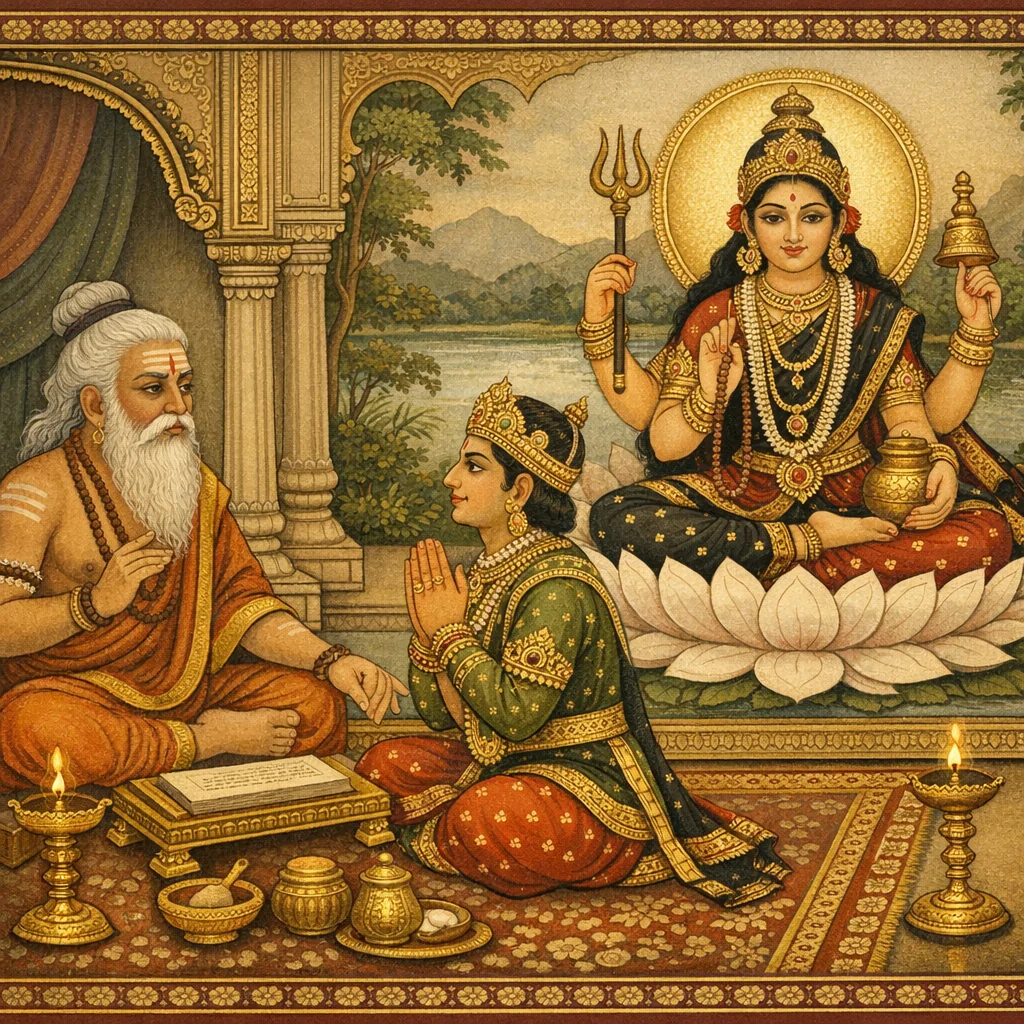
The sages ask whether instruction from highly learned brahmavādins is superior to guidance from more ordinary yet practically skilled teachers. Sūta replies that śraddhā—faithful, earnest trust—is the enabling condition of all dharma: it grants success in both worlds. Even simple things like stone become fruit-bearing when approached with devotion; mantra and deity-worship yield results according to one’s bhāvanā (inner intention), while doubt, restlessness, and lack of śraddhā estrange one from the highest aim and bind one to saṃsāra. To illustrate, the tale begins with Siṃhaketū, son of the Pañcāla king, who—through a Śabara attendant—finds a ruined shrine and a subtle Śiva-liṅga. The Śabara asks for a method of worship pleasing to Maheśvara for both mantra-knowers and non-knowers. The prince, speaking with a parodic tone, outlines a “simple” Śiva-pūjā: abhiṣeka with fresh water, preparing the seat, offering fragrance, flowers, leaves, incense, lamps, and especially citā-bhasma (cremation ash), then reverently receiving prasāda. The Śabara, Caṇḍaka, accepts this as authoritative and worships daily with devotion. When ash becomes unavailable, he despairs; his wife proposes an extreme act—burning the house and entering fire to produce ash for Śiva’s worship. Though her husband objects that the body is a means to dharma-artha-kāma-mokṣa, she insists that life’s fulfillment is self-offering for Śiva’s purpose. In prayer she interprets her senses as flowers, body as incense, heart as lamp, breaths as oblations, and actions as offerings, asking only for unbroken devotion across births. She enters the fire without pain; the house remains unharmed, and she reappears at the end of the pūjā to receive prasāda. A divine vimāna arrives; Śiva’s attendants uplift the couple, and by their touch the pair attain Śiva-like form (sārūpya). The chapter concludes that śraddhā should be cultivated in all meritorious acts: even a low-status Śabara reaches a yogic destination through faith, while birth and learning are secondary to steady devotion to the Supreme.
Shlokas
Verse 1
ऋषय ऊचुः । वेदवेदांगतत्त्वज्ञैर्गुरुभिर्ब्रह्मवादिभिः । नृणां कृतोपदेशानां सद्यः सिद्धिर्हि जायते
The sages said: When instruction is given to people by gurus who know the true purport of the Vedas and Vedāṅgas—teachers established in Brahman—success indeed arises immediately.
Verse 2
अथान्यजनसामान्यैर्गुरुभिर्नीतिकोविदैः । नृणां कृतोपदेशानां सिद्धिर्भवति कीदृशी
But when instruction is given to people by gurus who are merely ordinary persons, though skilled in worldly conduct—what kind of accomplishment results then?
Verse 3
सूत उवाच । श्रद्धैव सर्वधर्मस्य चातीव हितकारिणी । श्रद्धयैव नृणां सिद्धिर्जायते लोकयोर्द्वयोः
Sūta said: Faith alone is supremely beneficial for all dharma; and by faith alone people attain accomplishment in both worlds.
Verse 4
श्रद्धया भजतः पुंसः शिलापि फलदायिनी । मूर्खोऽपि पूजितो भक्त्या गुरुर्भवति सिद्धिदः
For one who worships with faith, even a stone becomes a giver of fruits; and even a foolish man, when honored with devotion, becomes a guru who bestows siddhi.
Verse 6
श्रद्धया पठितो मन्त्रस्त्वबद्धोपि फलप्रदः । श्रद्धया पूजितो देवो नीचस्यापि फलप्रदः
A mantra recited with faith yields fruit even if imperfectly joined or flawed; and a deity worshipped with faith bestows fruit even upon one of low station.
Verse 7
सर्वत्र संशयाविष्टः श्रद्धाहीनोऽतिचंचलः । परमार्थात्परिभ्रष्टः संसृतेर्न हि मुच्यते
One who is everywhere seized by doubt, devoid of faith and excessively restless—fallen away from the highest truth—does not, indeed, become free from saṃsāra.
Verse 8
मन्त्रे तीर्थे द्विजे देवे दैवज्ञे भेषजे गुरौ । यादृशी भावना यत्र सिद्धिर्भवति तादृशी
In mantra, in a tīrtha, in a brāhmaṇa, in a deity, in an astrologer, in medicine, and in a guru—whatever the disposition of faith one holds there, such is the accomplishment that arises.
Verse 9
अतो भावमयं विश्वं पुण्यं पापं च भावतः । ते उभे भावहीनस्य न भवेतां कदाचन
Therefore the whole world is shaped by one’s inner bhāva; from bhāva arise both merit and sin. For one who is devoid of true bhāva, neither of these ever truly takes hold.
Verse 10
अत्रेदं परमाश्चर्यमाख्यानमनुवर्ण्यते । अश्रद्धा सर्वमर्त्यानां येन सद्यो निवर्तते
Here an exceedingly wondrous account is narrated—how the lack of faith in mortals can cause sacred benefit and spiritual progress to turn back at once.
Verse 11
आसीत्पांचालराजस्य सिंहकेतुरिति श्रुतः । पुत्रः सर्वगुणोपेतः क्षात्रधर्मरतः सदा
There was, famed by the name Siṃhaketu, a son of the king of Pāñcāla—endowed with every virtue and ever devoted to the dharma of the kṣatriya.
Verse 12
स एकदा कतिपयैर्भृत्यैर्युक्तो महाबलः । जगाम मृगयाहेतोर्बहु सत्त्वान्वितं वनम्
Once, that mighty one, accompanied by a few attendants, went into a forest teeming with many creatures, for the purpose of hunting.
Verse 13
तद्भृत्यः शबरः कश्चिद्विचरन्मृगयां वने । ददर्श जीर्णं स्फुटितं पतितं देवतालयम्
While roaming in the forest during the hunt, a certain Śabara attendant of his saw a dilapidated, cracked, fallen temple of the gods.
Verse 14
तत्रापश्यद्भिन्नपीठं पतितं स्थंडिलोपरि । शिवलिंङ्गमृजुं सूक्ष्मं मूर्तं भाग्यमिवात्मनः
There he saw a broken pedestal fallen upon the bare ground—and a Śiva-liṅga, smooth and subtle, as though his own good fortune had taken visible form.
Verse 15
स समादाय वेगेन पूर्वकर्मप्रचोदितः । तस्मै संदर्शयामास राज पुत्राय धीमते
Urged on by the impulse of former deeds, he quickly took it up and showed it to the wise prince, the king’s son.
Verse 16
पश्येदं रुचिरं लिंगं मया दृष्टमिह प्रभो । तदेतत्पूजयिष्यामि यथाविभवमादरात्
“Behold this lovely liṅga that I have seen here, O lord. I shall worship it with reverence, according to my means.”
Verse 17
अस्य पूजाविधिं ब्रूहि यथा देवो महेश्वरः । अमंत्रज्ञैश्च मन्त्रज्ञैः प्रीतो भवति पूजितः
“Tell me the method of worship for this, so that the Lord Maheśvara becomes pleased when worshipped—whether by those who do not know mantras or by those who do.”
Verse 18
इति तेन निषादेन पृष्टः पार्थिवनंदनः । प्रत्युवाच प्रहस्यैनं परिहास विचक्षणः
Thus questioned by that Niṣāda, the king’s son replied—laughing at him, clever in jest and mockery.
Verse 19
संकल्पेन सदा कुर्यादभिषेकं नवांभसा । उपवेश्यासने शुद्धे शुभैर्गंधाक्षतैर्नवैः । वन्यैः पत्रैश्च कुसुमैर्धूपैर्दीपैश्च पूजयेत
Having first made the solemn saṅkalpa, one should always perform the abhiṣeka with fresh water. Seating the Lord upon a pure seat, one should worship with auspicious fresh gandha and akṣata, with forest leaves and flowers, and with incense and lamps.
Verse 20
चिताभस्मोपहारं च प्रथमं परिकल्पयेत् । आत्मोपभोग्येनान्नेन नैवद्यं कल्पयेद्बुधः
First of all, one should arrange the offering of cremation-ash (citā-bhasma). Then the wise devotee should prepare the naivedya from food that is fit for one’s own consumption.
Verse 21
पुनश्च धूपदीपादीनुपचारान्प्रकल्पेत् । नृत्यवादित्रगीतादीन्यथावत्परिकल्पयेत्
Again, one should duly arrange the upacāras—incense, lamps, and the other offerings. One should also properly provide dance, instrumental music, and singing, in the prescribed manner.
Verse 22
नमस्कृत्वा तु विधिवत्प्रसादं धारयेद्बुधः । एष साधारणः प्रोक्तः शिवपूजाविधिस्तव
Having bowed down according to the rite, the wise person should receive and bear the prasāda, the consecrated grace. This has been declared to you as the standard procedure of Śiva worship.
Verse 23
चिताभस्मोपहारेण सद्यस्तुष्यति शंकरः
By the offering of cremation-ash, Śaṅkara is pleased at once.
Verse 24
सूत उवाच । परिहासरसेनेत्थं शासितः स्वामिनाऽमुना । स चंडकाख्यः शबरो मूर्ध्ना जग्राह तद्वचः
Sūta said: Thus instructed by his master in a spirit of playful humor, the Śabara named Caṇḍaka accepted the command, placing those words upon his head—that is, receiving them with utmost reverence.
Verse 25
ततः स्वभवनं प्राप्य लिंगमूर्ति महेश्वरम् । प्रत्यहं पूजयामास चिताभस्मोपहारकृत्
Then, reaching his own dwelling, he worshiped Maheśvara in the form of the Liṅga each day, making an offering of the ash from the funeral pyre.
Verse 26
यच्चात्मनः प्रियं वस्तु गन्धपुष्पाक्षतादिकम् । निवेद्य शंभवे नित्यमुपायुंक्त ततः स्वयम्
Whatever was dear to him—fragrance such as sandal, flowers, unbroken rice, and the like—he would offer daily to Śambhu, and only thereafter partake of it himself.
Verse 27
एवं महेश्वरं भक्त्या सह पत्न्याभ्यपूजयत् । शबरः सुखमासाद्य निनाय कतिचित्समाः
In this way the Śabara worshiped Maheśvara with devotion, together with his wife; attaining contentment, he passed several years in happiness.
Verse 28
एकदा शिवपूजायै प्रवृत्तः शबरोत्तमः । न ददर्श चिताभस्म पात्रे पूरितमण्वपि
Once, when the best of Śabaras set out to perform Śiva worship, he did not see in his vessel even the slightest amount of ash from the funeral pyre.
Verse 29
अथासौ त्वरितो दूरमन्विष्यन्परितो भ्रमन् । न लब्धवांश्चिताभस्म श्रांतो गृहमगात्पुनः
Then he hastened far away, searching and roaming in every direction; but, not finding the ash of the funeral pyre, he returned home again, utterly weary.
Verse 30
तत आहूय पत्नीं स्वां शबरो वाक्यमब्रवीत् । न लब्धं मे चिताभस्म किं करोमि वद प्रिये
Then the Śabara called his wife and said: “I have not obtained the ash of the funeral pyre. What shall I do? Tell me, beloved.”
Verse 31
शिवपूजांतरायो मे जातोद्य बत पाप्मनः । पूजां विना क्षणमपि नाहं जीवितुमुत्सहे
“Alas—through my sin, an obstruction to my worship of Śiva has arisen today. Without performing pūjā, I cannot bear to live even for a moment.”
Verse 32
उपायं नात्र पश्यामि पूजोपकरणे हते । न गुरोश्च विहन्येत शासनं सकलार्थदम्
“I see no remedy here, now that the implements for worship are lost. And the command of the Guru—bestowing every benefit—must not be violated.”
Verse 33
इति व्याकुलितं दृष्ट्वा भर्त्तारं शबरांगना । प्रत्यभाषत मा भैस्त्वमुपायं प्रवदामि ते
Seeing her husband thus distressed, the Śabara woman replied: “Do not fear. I shall tell you the means.”
Verse 34
इदमेव गृहं दग्ध्वा बहुकालोपबृंहितम् । अहमग्निं प्रवेक्ष्यामि चिताभस्म भवेत्ततः
Having burned this very house, built up over a long time, I shall enter the fire; then there will be funeral-ash for the worship.
Verse 35
शबर उवाच । धर्मार्थकाममोक्षाणां देहः परमसाधनम् । कथं त्यजसि तं देहं सुखार्थं नवयौवनम्
Śabara said: “The body is the supreme instrument for dharma, prosperity, desire, and liberation. How can you abandon that body—young and fit for happiness—merely for the sake of comfort?”
Verse 36
अधुना त्वनपत्या त्वमभुक्तविषयासवा । भोगयोग्यमिमं देहं कथं दग्धुमिहेच्छसि
Even now you are without children, and you have not yet enjoyed the pleasures of life. How can you wish to burn this body here—this body fit for experience and enjoyment?
Verse 37
शबर्युवाच । एतावदेव साफल्यं जीवितस्य च जन्मनः । परार्थे यस्त्यजेत्प्राणाञ्छिवार्थे किमुत स्वयम्
The Śabarī said: “This alone is the true success of life and birth: if one would give up one’s very breath for the sake of another, how much more (is it fitting) for the sake of Śiva Himself!”
Verse 38
किं नु तप्तं तपो घोरं किं वा दत्तं मया पुरा । किं वार्चनं कृतं शंभोः पूर्वजन्मशतांतरे
“What fierce austerity have I performed? What have I given in charity before? What worship of Śambhu did I do across hundreds of past births?”
Verse 39
किं वा पुण्यं मम पितुः का वा मातुः कृतार्थता । यच्छिवार्थे समिद्धेऽग्नौ त्यजाम्येतत्कलेवरम्
What merit would there be for my father, and what fulfillment for my mother, if—when the fire is kindled for Śiva’s sake—I do not cast this very body into it as an offering?
Verse 40
इत्थं स्थिरां मतिं दृष्ट्वा तस्या भक्तिं च शंकरे । तथेति दृढसंकल्पः शबरः प्रत्यपूजयत्
Seeing her unwavering resolve and her devotion to Śaṅkara, the Śabara—steadfast in purpose—assented, saying, “So be it,” and honored her decision.
Verse 41
सा भर्त्तारमनुप्राप्य स्नात्वा शुचिरलंकृता । गृहमादीप्य तं वह्निं भक्त्या चक्रे प्रदक्षिणम्
Reaching her husband, she bathed, became pure, adorned herself, lit the house-fire, and with devotion circumambulated that blazing flame.
Verse 42
नमस्कृत्वात्मगुरवे ध्यात्वा हृदि सदाशिवम् । अग्निप्रवेशाभिमुखी कृतांजलिरिदं जगौ
After bowing to her inner Guru and meditating upon Sadāśiva in her heart, facing the entry into the fire, she spoke these words with folded hands.
Verse 43
शबर्युवाच । पुष्पाणि संतु तव देव ममेंद्रियाणि धूपोऽगुरुर्वपुरिदं हृदयं प्रदीपः । प्राणा हवींषि करणानि तवाक्षताश्च पूजाफलं व्रजतु सांप्रतमेष जीवः
Śabarī said: “O God, let my senses be Your flowers; let this body be fragrant incense; let my heart be the lamp. Let my life-breaths be the oblations, and my faculties Your unbroken grains. Now let this very soul depart as the fruit of worship.”
Verse 44
वांछामि नाहमपि सर्वधनाधिपत्यं न स्वर्गभूमिमचलां न पदं विधातुः । भूयो भवामि यदि जन्मनिजन्मनि स्यां त्वत्पादपंकजलसन्मकरंदभृंगी
I do not desire sovereignty over all wealth, nor the unshakable realm of heaven, nor even the station of the Creator. If I am to be born again and again, then in every birth let me be a bee that drinks the true nectar from the lotus of Your feet.
Verse 45
जन्मानि संतु मम देव शताधिकानि माया न मे वि शतु चित्तमबोधहेतुः । किंचित्क्षणार्धमपि ते चरणारविन्दान्नापैतु मे हृदयमीश नमोनमस्ते
Let there be hundreds of births for me, O Lord—only let Māyā, the cause of delusion, not enter my mind. Even for half a moment, may my heart never depart from Your lotus-feet. O Īśa, salutations—salutations to You.
Verse 46
इति प्रसाद्य देवेशं शबरी दृढनिश्चया । विवेश ज्वलितं वह्निं भस्मसादभवत्क्षणात्
Thus, having sought the grace of the Lord of gods, Śabarī—firm in resolve—entered the blazing fire, and in an instant was reduced to ashes.
Verse 48
अथ सस्मार पूजांते प्रसादग्रहणोचिताम् । दयितां नित्यमायांतीं प्रांजलिं विनयान्विताम्
Then, at the close of worship, he remembered the beloved one who was accustomed to receiving the consecrated prasāda—who would come daily, hands folded, endowed with humility.
Verse 49
स्मृतमात्रां तदापश्यदागतां पृष्ठतः स्थिताम् । पूर्वेणावयवेनैव भक्तिनम्रां शुचिस्मिताम्
The moment he remembered her, he saw her—having come and standing behind him—appearing in the very same former body, bowed in devotion, and smiling with serene purity.
Verse 50
तां वीक्ष्य शबरः पत्नीं पूर्ववत्प्रांजलिं स्थिताम् । भस्मावशेषितगृहं यथापूर्वमवस्थितम्
Seeing his wife standing as before with hands folded in reverence, the Śabara also beheld the house—though reduced to ash—yet seeming to stand in its former place just as earlier.
Verse 51
अग्निर्दहति तेजोभिः सूर्यो दहति रश्मिभिः । राजा दहति दंडेन ब्राह्मणो मनसा दहेत्
Fire burns by its heat; the sun burns by its rays. A king burns by his punishment; but a brāhmaṇa can burn by the power of his mind.
Verse 52
किमयं स्वप्न आहोस्वित्किं वा माया भ्रमात्मिका । इति विस्मयसंभ्रातस्तां भूयः पर्यपृच्छत
“Is this a dream, or some delusive māyā that bewilders the mind?”—thus, shaken with astonishment, he questioned her again.
Verse 53
अपि त्वं च कथं प्राप्ता भस्मभूतासि पावके । दग्धं च भवनं भूयः कथं पूर्व वदास्थितम्
“And how did you come back? How is it that you became ashes in the fire? And though the house was burned, how is it again standing just as before?”
Verse 54
शबर्युवाच । यदा गृहं समुद्दीप्य प्रविष्टाहं हुताशने । तदात्मानं न जानामि न पश्यामि हुताशनम्
Śabarī said: “When the house blazed up and I entered into the fire, then I neither knew myself nor did I see the fire at all.”
Verse 55
न तापलेशोप्यासीन्मे प्रविष्टाया इवोदकम् । सुषुप्तेव क्षणार्धेन प्रबुद्धास्मि पुनः क्षणात्
Not even the slightest trace of heat touched me—just as though I had entered water. As if asleep, within half a moment I awoke again in the very next moment.
Verse 56
तावद्भवनमद्राक्षमदग्धमिव सुस्थितम् । अधुना देवपूजांते प्रसादं लब्धुमागता
Then I beheld the house standing firm, as though it had not been burned at all. And now, at the close of worship, I have come to receive prasāda—the deity’s gracious favor.
Verse 57
एवं परस्परं प्रेम्णा दंपत्योर्भाषमाणयोः । प्रादुरासीत्तयोरग्रे विमानं दिव्यमद्भुतम्
As husband and wife thus spoke to one another in affection, there appeared before them a wondrous, divine vimāna—an aerial chariot.
Verse 58
तस्मिन्विमाने शतचन्द्रभास्वरे चत्वार ईशानुचराः पुरःसराः । हस्ते गृहीत्वाथ निषाददंपती आरोपयामासुरमुक्तविग्रहौ
In that vimāna, radiant like a hundred moons, four foremost attendants of Īśāna (Śiva) went before. Taking the Niṣāda couple by the hand, they lifted them up into it, though they still bore their unliberated mortal bodies.
Verse 59
तयोर्निषाददंपत्योस्तत्क्षणादेव तद्वपुः । शिवदूतकरस्पर्शात्तत्सारूप्यमवाप ह
At that very instant, the bodies of the Niṣāda husband and wife—by the touch of the hands of Śiva’s messengers—attained sārūpya, a form of the same likeness as theirs.
Verse 60
तस्माच्छ्रद्धैव सर्वेषु विधेया पुण्यकर्मसु । नीचोपि शबरः प्राप श्रद्धया योगिनां गतिम्
Therefore, faith (śraddhā) alone should be firmly established in all meritorious acts; for even a low-born Śabara attained, through faith, the exalted state reached by yogins.
Verse 61
किं जन्मना सकलवर्णजनोत्तमेन किं विद्यया सकलशास्त्रविचारवत्या । यस्यास्ति चेतसि सदा परमेशभक्तिः कोऽन्यस्ततस्त्रिभुवने पुरुषोस्ति धन्यः
What is the use of being born among the most eminent of all social orders? What is the use of learning that can analyze all scriptures? He in whose heart there is constant devotion to the Supreme Lord—who else in the three worlds is more blessed than he?