Adhyaya 6
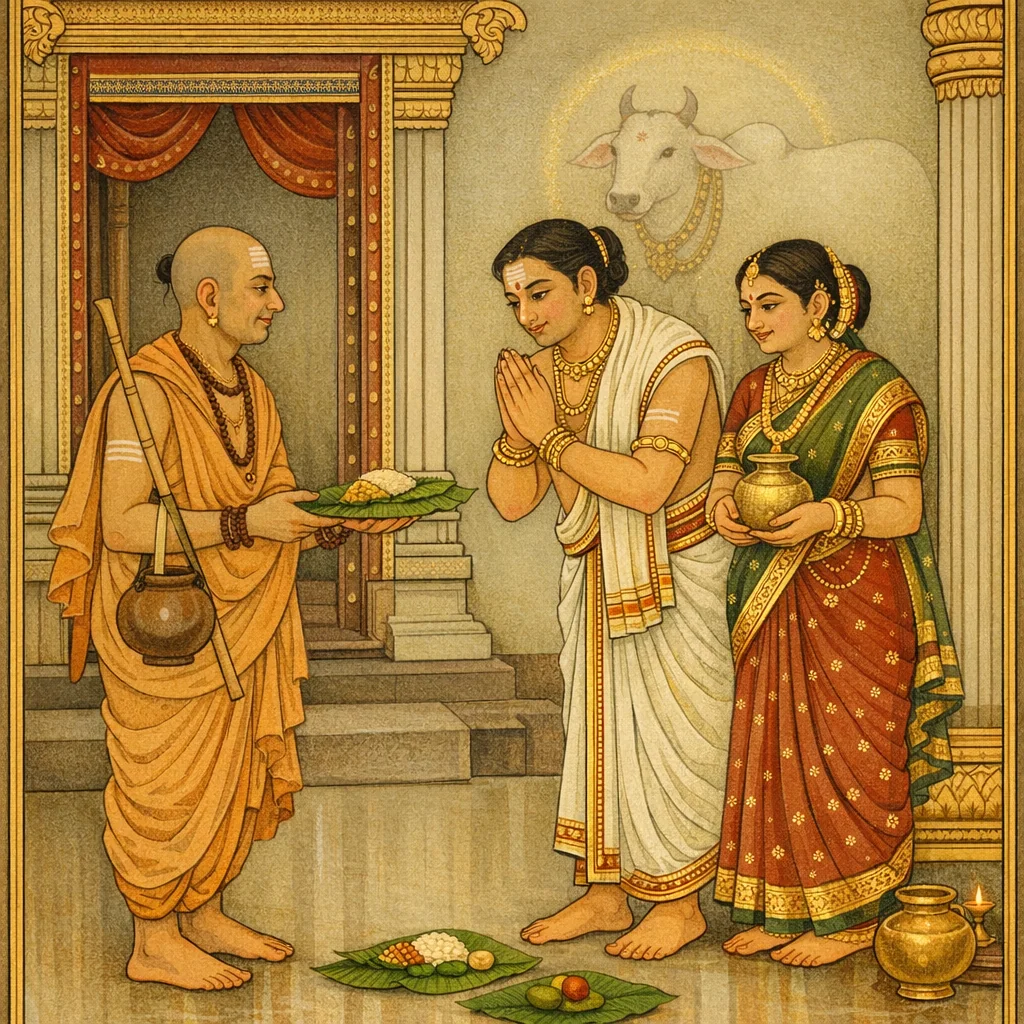
Chapter 6 begins with the ṛṣis asking Sūta to clarify the spiritual power of worshiping Śiva at pradōṣa, the evening period of the thirteenth lunar day. Sūta teaches that pradōṣa is a specially privileged time when Mahādeva should be worshiped by those seeking the four aims of life (caturvarga: dharma, artha, kāma, mokṣa). Accordingly, pūjā, japa, homa, and the recitation of Śiva’s virtues are commended as ethical and ritual disciplines. The chapter heightens this with devotional cosmography: at pradōṣa, Śiva dances on Kailāsa in a silver abode, attended by devas and celestial beings, making worship at that hour highly meritorious. It then offers an illustrative legend of the Vidarbha royal line: King Satyratha is defeated and slain; the queen flees, gives birth, and is seized by a crocodile, leaving the infant abandoned. A brāhmaṇa woman named Umā finds and raises the child alongside her own son. Sage Śāṇḍilya reveals the child’s royal origin and explains the karmic cause of the family’s suffering—neglect and interruption of pradōṣa-time Śiva worship, along with ethical lapses, bring poverty and calamity across births, while renewed devotion and taking refuge (śaraṇa) in Śaṅkara is shown as the remedy.
Shlokas
Verse 1
ऋषय ऊचुः । यदुक्तं भवता सूत महदाख्यानमद्भुतम् । शम्भोर्माहात्म्यकथनमशेषाघहरं परम्
The sages said: O Sūta, the great and wondrous narrative you have spoken—the telling of Śambhu’s glory—is supreme, for it removes all sin without remainder.
Verse 2
भूयोपि श्रोतुमिच्छामस्तदेव सुसमाहिताः । प्रदोषे भगवाञ्छंभुः पूजितस्तु महात्मभिः
We wish to hear again that very account, with minds well-concentrated—how, at Pradoṣa time, the Blessed Śambhu is worshiped by great-souled devotees.
Verse 3
संप्रयच्छति कां सिद्धिमेतन्नो ब्रूहि सुव्रत । श्रुतमप्यसकृत्सूत भूयस्तृष्णा प्रवर्धते
Tell us, O virtuous one, what attainment this bestows. Even though we have heard it many times, O Sūta, our longing to hear it again only increases.
Verse 4
सूत उवाच । साधु पृष्टं महाप्राज्ञा भवद्भिर्लोकविश्रुतैः । अतोऽहं संप्रवक्ष्यामि शिवपूजाफलं महत्
Sūta said: Well asked, O great sages renowned in the world. Therefore I shall now declare the great fruit of Śiva worship.
Verse 5
त्रयोदश्यां तिथौ सायं प्रदोषः परिकीर्त्तितः । तत्र पूज्यो महादेवो नान्यो देवः फलार्थिभिः
On the thirteenth lunar day, in the evening, the time is called Pradoṣa. At that time, those who seek results should worship Mahādeva alone, and no other deity.
Verse 6
प्रदोषपूजामाहात्म्यं को नु वर्णयितुं क्षमः । यत्र सर्वेऽपि विबुधास्तिष्ठंति गिरिशांतिके
Who indeed can describe the greatness of Pradoṣa worship—where all the gods themselves stand in attendance near Girīśa (Śiva)?
Verse 7
प्रदोषसमये देवः कैलासे रजतालये । करोति नृत्यं विबुधैरभिष्टुतगुणोदयः
At the time of pradoṣa, the Lord, in Kailāsa—His silver abode—performs the cosmic dance, while the gods hymn the rising glory of His virtues.
Verse 8
अतः पूजा जपो होमस्तत्कथास्तद्गुणस्तवः । कर्त्तव्यो नियतं मर्त्यैश्चतुर्वर्गफला र्थिभिः
Therefore, worship, japa, homa, narrations of Him, and hymns to His qualities should certainly be performed by mortals who seek the fruits of the four human aims—dharma, artha, kāma, and mokṣa.
Verse 9
दारिद्यतिमिरांधानां मर्त्यानां भवभीरुणाम् । भवसागरमग्नानां प्लवोऽयं पारदर्शनः
For mortals blinded by the darkness of poverty and fearful of worldly existence, this (Pradoṣa devotion) is a raft for those sunk in the ocean of saṃsāra—revealing the far shore.
Verse 10
दुःखशोकभयार्त्तानां क्लेशनिर्वाणमिच्छताम् । प्रदोषे पार्वतीशस्य पूजनं मंगलायनम्
For those distressed by sorrow, grief, and fear, and for those who seek the quenching of afflictions, the worship of Pārvatīśa (Śiva) at pradoṣa is a source and abode of auspiciousness.
Verse 11
दुर्बुद्धिरपि नीचोपि मन्दभाग्यः शठोऽपि वा । प्रदोषे पूज्य देवेशं विपद्भ्यः स प्रमुच्यते
Even one of poor understanding, even a lowly person—unfortunate or even deceitful—if he worships the Lord of gods at pradoṣa, he is released from calamities.
Verse 12
शत्रुभिर्हन्यमानोऽपि दश्यमानोपि पन्नगैः । शैलैराक्रम्यमाणोऽपि पतितोऽपि महांबुधौ
Even if one is being struck down by enemies, even if bitten by serpents; even if crushed by rocks, even if fallen into the great ocean—
Verse 13
आविद्धकालदण्डोऽपि नानारोगहतोऽपि वा । न विनश्यति मर्त्योऽसौ प्रदोषे गिरिशार्चनात्
Even if seized by the rod of Time (death), or struck by many diseases, that mortal does not perish—through worship of Girīśa at pradoṣa.
Verse 14
दारिद्र्यं मरणं दुःखमृणभारं नगोपमम् । सद्यो विधूय संपद्भिः पूज्यते शिवपूजनात्
Poverty, deathly peril, sorrow, and the mountain-like burden of debt—shaking these off at once, one becomes honored amid prosperity through the worship of Śiva.
Verse 15
अत्र वक्ष्ये महापुण्यमितिहासं पुरातनम् । यं श्रुत्वा मनुजाः सर्वे प्रयांति कृतकृत्यताम्
Here I shall relate an ancient sacred legend of great merit; hearing it, all people attain the state of having fulfilled life’s purpose.
Verse 16
आसीद्विदर्भविषये नाम्ना सत्यरथो नृपः । सर्वधर्मरतो धीरः सुशीलः सत्यसंगरः
Once, in the land of Vidarbha, there ruled a king named Satyaratha—devoted to every duty of dharma, courageous, well-mannered, and unwavering in his vow to truth.
Verse 17
तस्य पालयतो भूमिं धर्मेण मुनिपुंगवाः । व्यतीयाय महान्कालः सुखेनैव महामतेः
O best of sages, as he ruled the earth in accordance with dharma, a great span of time passed for that noble-minded king in peace and ease.
Verse 18
अथ तस्य महीभर्तुर्बभूवुः शाल्वभूभुजः । शत्रवश्चोद्धतबला दुर्मर्षणपुरोगमाः
Then the Śālva kings became enemies of that lord of the earth—arrogant in their might, led on by the hard-to-bear Durmarṣaṇa.
Verse 19
कदाचिदथ ते शाल्वाः संनद्धबहुसैनिकाः । विदर्भनगरीं प्राप्य रुरुधुर्विजिगीषवः
At one time the Śālvas, arrayed with many armed troops, reached the city of Vidarbha and laid siege to it, eager for conquest.
Verse 20
दृष्ट्वा निरुद्ध्यमानां तां विदर्भाधिपतिः पुरीम् । योद्धुमभ्याययौ तूर्णं बलेन महता वृतः
Seeing his city held under blockade, the lord of Vidarbha swiftly marched out to battle, surrounded by a great army.
Verse 21
तस्य तैरभवयुद्धं शाल्वैरपि बलोद्धतैः । पाताले पन्नगेन्द्रस्य गन्धर्वैरिव दुर्मदैः
Then battle arose between him and those Śālvas, swollen with strength—like the fierce Gandharvas warring with the lord of serpents in Pātāla.
Verse 22
विदर्भनृपतिः सोऽथ कृत्वा युद्धं सुदारुणम् । प्रनष्टोरुबलैः शाल्वैर्निहतो रणमूर्धनि
After waging a most dreadful battle, that king of Vidarbha was slain at the very height of the fight by the Śālvas, whose mighty forces had not been broken.
Verse 23
तस्मिन्महारथे वीरे निहते मंत्रिभिः सह । दुद्रुवुः समरे भग्ना हतशेषाश्च सैनिकाः
When that heroic great charioteer was slain along with his ministers, the remaining soldiers—broken in battle—fled from the field.
Verse 24
अथ युद्धेभिविरते नदत्सु रिपुमंत्रिषु । नगर्यां युद्ध्यमानायां जाते कोलाहले रवे
Then, when the fighting paused and the enemy ministers shouted, and as the city was thrown into turmoil, a great uproar and clamour arose.
Verse 25
तस्य सत्यरथस्यैका विदर्भाधिपतेः सती । भूरिशोकसमाविष्टा क्वचिद्यत्नाद्विनिर्ययौ
Then the devoted queen of Satyaratha, lord of Vidarbha—overwhelmed by immense grief—somehow made her way out with great effort.
Verse 26
सा निशासमये यत्नादंतर्वत्नी नृपांगना । निर्गता शोक संतप्ता प्रतीचीं प्रययौ दिशम्
At nightfall, the king’s consort—pregnant—went forth with great effort; scorched by grief and sorrow, she set out toward the western quarter.
Verse 27
अथ प्रभाते मार्गेण गच्छन्ती शनकैः सती । अतीत्य दूरमध्वानं ददर्श विमलं सरः
Then, at daybreak, that virtuous woman walked slowly along the road; having crossed a long stretch of way, she beheld a spotless lake.
Verse 28
तत्रागत्य वरारोहा तप्ता तापेन भूयसा । विलसंतं सरस्तीरे छायावृक्षं समाश्रयत्
Reaching that place, the noble lady—greatly afflicted by intense heat—took refuge beneath a shady tree, flourishing on the bank of the lake.
Verse 29
तत्र दैववशाद्राज्ञी विजने तरुकुट्टिमे । असूत तनयं साध्वी मूहूर्ते सद्गुणान्विते
There, by the force of destiny, the queen—alone in that secluded grove—gave birth to a son; she, the virtuous one, at an auspicious moment endowed with good qualities.
Verse 30
अथ सा राजमहिषी पिपासाभिहता भृशम् । सरोऽवतीर्णा चार्वंगी ग्रस्ता ग्राहेण भूयसा
Then the royal consort, sorely tormented by thirst, descended into the lake; that fair-limbed lady was seized with great force by a crocodile.
Verse 31
जातमात्रः कुमारोऽपि विनष्टपितृमातृकः । रुरोदोच्चैः सरस्तीरे क्षुत्पिपासार्दितोऽबलः
Though just born, the boy—bereft of father and mother—cried aloud on the lake’s bank, weakened and afflicted by hunger and thirst.
Verse 32
तस्मिन्नेवं क्रन्दमाने जातमात्रे कुमारके । काचिदभ्याययौ शीघ्रं दिष्ट्या विप्रवरांगना
As that just-born boy cried in this manner, by good fortune an excellent brāhmaṇa woman hurried swiftly toward him.
Verse 33
साप्येकहायनं बालमुद्वहन्ती निजात्मजम् । अधना भर्तृरहिता याचमाना गृहेगृहे
She too was carrying her own child, a one-year-old boy; poor and without a husband, she was begging from house to house.
Verse 34
एकात्मजा बंधुहीना याञ्चामार्गवशंगता । उमानाम द्विजसतीददर्श नृपनंदनम्
Having only one child and bereft of relatives, driven onto the path of begging, the chaste brāhmaṇa woman named Umā saw the king’s son.
Verse 35
सा दृष्ट्वा राजतनयं सूर्यबिंवमिव च्युतम् । अनाथमेनं क्रंदंतं चिंतयामास भूरिशः
Seeing the king’s son fallen like the disk of the sun, and hearing him cry helplessly as an orphan, she reflected deeply and at length.
Verse 36
अहो सुमहदाश्चर्यमिदं दृष्टं मयाधुना । अच्छिन्ननाभिसूत्रोऽयं शिशुर्माता क्व वा गता
“Ah—what a very great wonder I have seen just now! This infant still has the umbilical cord uncut. Where, indeed, has the mother gone?”
Verse 37
पिता नास्ति न चान्योस्ति नास्ति बंधुजनोऽपि वा । अनाथः कृपणो बालः शेते केवल भूतले
“There is no father, nor anyone else; there are not even relatives. This poor, orphaned child lies helplessly on the bare ground.”
Verse 38
एष चांडालजो वापि शूद्रजो वैश्यजोपि वा । विप्रात्मजो वा नृपजो ज्ञायते कथमर्भकः
“This little child—could he be born of a caṇḍāla, or of a śūdra, or a vaiśya, or a brāhmaṇa, or even of a king? How can one know the child’s lineage?”
Verse 39
शिशुमेनं समुद्धृत्य पुष्णाम्यौरसवद्ध्रुवम् । किं त्वविज्ञातकुलजं नोत्सहे स्प्रष्टुमुत्तमम्
“I shall surely lift up this infant and rear him as though he were my own son. Yet, since he is born of an unknown family, I do not dare to touch him (as one would in full confidence).”
Verse 40
इति मीमांसमानायां तस्यां विप्रवरस्त्रियाम्
“While that excellent brāhmaṇa lady was thus deliberating…”
Verse 42
रक्षैनं बालकं सुभ्रुर्विसृज्य हृदि संशयम् । अनेन परमं श्रेयः प्राप्स्यसे ह्यचिरादेिह
“Protect this child, O fair-browed one, casting away the doubt in your heart. Through him you will attain the highest good here in this very life, and soon.”
Verse 43
एतावदुक्त्वा त्वरितो भिक्षुः कारुणिको ययौ । अथ तस्मिन्गते भिक्षौ विश्रब्धा विप्रभामिनी
“Having said only this, the compassionate mendicant quickly went away. And when that mendicant had departed, the brāhmaṇa lady became reassured.”
Verse 44
तमर्भकं समादाय निजमेव गृहं ययौ । भिक्षुवाक्येन विश्रब्धा सा राज तनयं सती
“Taking that little child, she went to her own home. Reassured by the mendicant’s words, that virtuous woman—a king’s daughter—…”
Verse 47
ब्राह्मणैः कृतसंस्कारौ ववृधाते सुपूजितौ कृतोपनयनौ काले बालकौ नियमे स्थितौ
“With the saṃskāras performed by brāhmaṇas, the two boys grew up, greatly honored. In due time their upanayana was performed, and the boys remained established in discipline and restraint.”
Verse 48
भिक्षार्थं चेरतुस्तत्र मात्रा सह दिनेदिने । ताभ्यां कदाचिद्बालाभ्यां सा विप्रवनिता सह
“Day after day, there they went about for alms together with their mother. Once, that brāhmaṇa lady went along with those two boys…”
Verse 49
आत्मपुत्रेण सदृशं कृपया पर्यपोषयत् । एकचक्राह्वये रम्ये ग्रामे कृतनिकेतना
With compassion she nurtured him as though he were her own son, and she made her home in the delightful village called Ekacakrā.
Verse 50
तौ दृष्ट्वा बालकौ धीमाञ्छांडिल्यो मुनिरब्रवीत् । अहो दैवबलं चित्रमहो कर्म दुरत्ययम्
Seeing the two boys, the wise sage Śāṇḍilya said: “Ah, wondrous indeed is the force of destiny; ah, how inexorable is karma!”
Verse 51
एष बालोऽन्यजननीं श्रितो भैक्ष्येण जीवति । इमामेव द्विजवधूं प्राप्य मातरमुत्तमाम्
“This boy, having taken refuge with another mother, lives on alms; and having attained this very brāhmaṇa lady as an excellent mother….”
Verse 52
सहैव द्विजपुत्रेण द्विजभावं समाश्रितः । इति श्रुत्वा मुनेर्वाक्यं शांडिल्यस्य द्विजांगना
“…he has also taken on the status and conduct of a twice-born, along with the brāhmaṇa’s son.” Hearing these words of the sage Śāṇḍilya, the brāhmaṇa lady…
Verse 53
सा प्रणम्य सभामध्ये पर्यपृच्छत्सविस्मया । ब्रह्मन्नेषोर्भको नीतो मया भिक्षोर्गिरा गृहम्
Bowing in the midst of the assembly, she asked in amazement: “O Brāhmaṇa, this child was brought by me to the house at the word of a mendicant.”
Verse 54
अविज्ञातकुलोद्यापि सुतवत्परिपोष्यते । कस्मिन्कुले प्रसूतोऽयं का माता जनकोस्य कः
Though his lineage is still unknown, he is being cared for as a son. In what family was he born? Who is his mother, and who is his father?
Verse 55
सर्वं विज्ञातुमिच्छामि भवतो ज्ञानचक्षुषः
I wish to know everything from you, O one whose eyes are of knowledge.
Verse 56
इति पृष्टो मुनिः सोथ ज्ञानदृष्टिर्द्विजस्त्रियां । आचख्यौ तस्य बालस्य जन्म कर्म च पौर्विकम्
Thus questioned, the sage—endowed with the vision of knowledge—told the brāhmaṇa woman the boy’s birth and his former deeds in full.
Verse 57
विदर्भराजपुत्रस्तु तत्पितुः समरे मृतिम् । तन्मातुर्नक्रहरणं साकल्येन न्यवेदयत्
He related in full that the boy was the son of the king of Vidarbha—how his father met death in battle, and how his mother was carried away by a crocodile.
Verse 58
अथ सा विस्मिता नारी पुनः प्रपच्छ तं मुनिम् । स राजा सकलान्भोगान्हित्वा युद्धे कथं मृतः
Then the astonished woman again asked the sage: “How did that king, abandoning all enjoyments, die in battle?”
Verse 59
दारिद्र्यमस्य बालस्य कथं प्राप्तं महामुने । दारिद्र्यं पुनरुद्धूय कथं राज्यमवाप्स्यति
O great sage, how did this boy come to suffer poverty? And after casting off that poverty, how will he regain sovereignty and royal fortune?
Verse 60
अस्यापि मम पुत्रस्य भिक्षान्नेनैव जीवतः । दारिद्र्यशमनोपायमुपदेष्टुं त्वमर्हसि
This son of mine too lives only on food obtained by begging. You ought to instruct us in the means by which poverty may be pacified and removed.
Verse 61
शांडिल्य उवाच । अमुष्य बालस्य पिता स विदर्भमहीपतिः । पूर्वजन्मनि पांड्येशो बभूव नृपसत्तमः
Śāṇḍilya said: The father of this boy is the lord of the land of Vidarbha. In a former birth, he was the ruler of the Pāṇḍya country—an excellent king among men.
Verse 62
स राजा सर्वधर्मज्ञः पालयन्सकलां महीम् । प्रदोषसमये शंभुं कदा चित्प्रत्यपूजयत्
That king, a knower of all dharma, while ruling the entire earth, once worshipped Śambhu at the time of Pradoṣa.
Verse 63
तस्य पूजयतो भक्त्या देवं त्रिभुवनेश्वरम् । आसीत्कलकलारावः सर्वत्र नगरे महान्
As he worshipped with devotion the God who is Lord of the three worlds, a great clamorous uproar arose throughout the city.
Verse 64
श्रुत्वा तमुत्कटं शब्दं राजा त्यक्तशिवार्चनः । निर्ययौ राजभवनान्नगरक्षोभशंकया
Hearing that dreadful sound, the king abandoned the worship of Śiva and went out from the royal palace, fearing turmoil in the city.
Verse 65
एतस्मिन्नेव समये तस्यामात्यो महाबलः । शत्रुं गृहीत्वा सामंतं राजांतिकमुपागमत्
At that very time, his powerful minister, having seized an enemy feudal chief, approached the king’s presence.
Verse 66
अमात्येन समानीतं शत्रुं सामंतमुद्धतम् । दृष्ट्वा क्रोधेन नृपतिः शिरच्छेदमकारयत्
Seeing the arrogant enemy feudatory brought in by the minister, the king, in anger, ordered his beheading.
Verse 67
स तथैव महीपालो विसृज्य शिवपूजनम् । असमाप्तात्मनियमश्चकार निशि भोजनम्
Thus that ruler, having set aside the worship of Śiva, with his personal religious restraint left unfinished, ate food at night.
Verse 68
तत्पुत्रोपि तथा चक्रे प्रदोषसमये शिवम् । अनर्चयित्वा मूढात्मा भुक्त्वा सुष्वाप दुर्मदः
His son too did the same: at the time of Pradoṣa, without worshipping Śiva, that deluded and arrogant one ate and then slept.
Verse 69
जन्मांतरे स नृपतिर्विदर्भक्षितिपोऽभवत् । शिवार्चनांतरायेण परैर्भोगांतरे हतः
In another birth he became a king, the ruler of Vidarbha. Yet, for obstructing the worship of Śiva, he was slain by others in the midst of his enjoyments.
Verse 70
तत्पुत्रो यः पूर्वभवे सोस्मिञ्जन्मनि तत्सुतः । भूत्वा दारिद्र्यमापन्नः शिवपूजाव्यतिक्रमात्
He who was his son in the former life has become his son again in this birth; and, through neglect of Śiva’s worship, he has fallen into poverty.
Verse 71
अस्य माता पूर्वभवे सपत्नीं छद्मनाहनत् । तेन पापेन महता ग्राहेणास्मिन्भवे हता
His mother, in a former life, deceitfully killed her co-wife. By that great sin, in this life she has been killed by a crocodile.
Verse 72
एषा प्रवृत्तिरेतेषां भवत्यै समुदाहृता । अनर्चितशिवा मर्त्याः प्राप्नुवंति दरिद्रताम्
Thus, O lady, the course of events in their case has been explained. Mortals who do not worship Śiva come to poverty.
Verse 73
सत्यं ब्रवीमि परलोकहितं ब्रवीमि सारं ब्रवीम्युपनिषद्धृदयं ब्रवीमि । संसारमुल्बणमसारमवाप्य जंतोः सारो यमीश्वरपदांबुरुहस्य सेवा
I speak the truth; I speak what brings welfare in the next world; I speak the essence; I speak the very heart of the Upaniṣads: for a being who has entered this harsh and hollow cycle of saṃsāra, the true essence is service at the lotus-feet of the Lord of Yama—Śiva.
Verse 74
ये नार्चयंति गिरिशं समये प्रदोषे ये नार्चितं शिवमपि प्रणमंति चान्ये । एतत्कथां श्रुतिपुटैर्न पिबंति मूढास्ते जन्मजन्मसु भवंति नरा दरिद्राः
Those who do not worship Giriśa at the time of Pradoṣa, and those who do not even bow to Śiva when He is worshipped; and the deluded who do not drink in this sacred account with their ears—such men become poor, birth after birth.
Verse 75
ये वै प्रदोषसमये परमेश्वरस्य कुर्वंत्यनन्यमनसोंऽघ्रिसरोजपूजाम् । नित्यं प्रवृद्धधन धान्यकलत्रपुत्रसौभाग्यसंपदधिकास्त इहैव लोके
Those who, at the time of Pradoṣa, worship the lotus-feet of Parameśvara with an undivided mind—such people, in this very world, become ever more abundant in wealth, grain, spouse, children, good fortune, and prosperity.
Verse 76
कैलासशैलभवने त्रिजगजनित्रीं गौरीं निवेश्य कनकांचितरत्नपीठे । नृत्यं विधातु मभिवाञ्छति शूलपाणौ देवाः प्रदोषसमयेऽनुभजंति सर्वे
In the palace upon Mount Kailāsa, having seated Gaurī—the Mother of the three worlds—upon a jewel-throne inlaid with gold, when Śūlapāṇi desires to begin His dance, all the gods assemble and attend upon Him at the time of Pradoṣa.
Verse 77
वाग्देवी धृतवल्लकी शतमखो वेणुं दधत्पद्मजस्तालोन्निद्रकरो रमा भगवती गेयप्रयोगान्विता । विष्णुः सांद्रमृदंगवादनपटुर्देवाः समंतात्स्थिताः सेवंते तमनु प्रदोषसमये देवं मृडानीपतिम्
Vāgdevī holds the vīṇā; Śatamakha (Indra) bears the flute; Padmaja (Brahmā) keeps time with uplifted hands; the blessed goddess Ramā (Lakṣmī) is skilled in song. Viṣṇu is expert in playing the resonant mṛdaṅga; and the gods stand all around—thus, at the time of Pradoṣa, they serve that Lord, the husband of Mṛḍānī (Pārvatī).
Verse 78
गंधर्वयक्षपतगोरगसिद्ध साध्या विद्याधरामरवराप्सरसां गणाश्च । येऽन्ये त्रिलोकनिलयाः सह भूतवर्गाः प्राप्ते प्रदोषसमये हरपार्थसंस्थाः
Hosts of Gandharvas, Yakṣas, birds, Nāgas, Siddhas, and Sādhyas; troops of Vidyādharas, gods, and the foremost Apsarases; and all other dwellers of the three worlds together with bands of beings—when Pradoṣa arrives, they take their places in attendance upon Hara along with Pārvatī.
Verse 79
अतः प्रदोषे शिव एक एव पूज्योऽथ नान्ये हरिपद्मजाद्याः । तस्मिन्महेशे विधिनेज्यमाने सर्वे प्रसीदंति सुराधिनाथाः
Therefore, at Pradoṣa-time, Śiva alone is to be worshipped—not others such as Hari (Viṣṇu), Padmaja (Brahmā), and the rest. When that Maheśa is duly adored according to rule, all the lords of the gods become gracious.
Verse 80
एष ते तनयः पूर्वजन्मनि ब्राह्मणोत्तमः । प्रतिग्रहैर्वयो निन्ये न यज्ञाद्यैः सुकर्मभिः
This son of yours, in a former birth, was an excellent brāhmaṇa. Yet he passed his life by living on acceptances of gifts, not by good deeds such as sacrifices and other righteous acts.
Verse 81
अतो दारिद्र्यमापन्नः पुत्रस्ते द्विजभामिनि । तद्दोष परिहारार्थं शरणं यातु शंकरम्
Therefore your son has fallen into poverty, O noble brāhmaṇa-lady. To remove that fault, let him go for refuge to Śaṅkara.