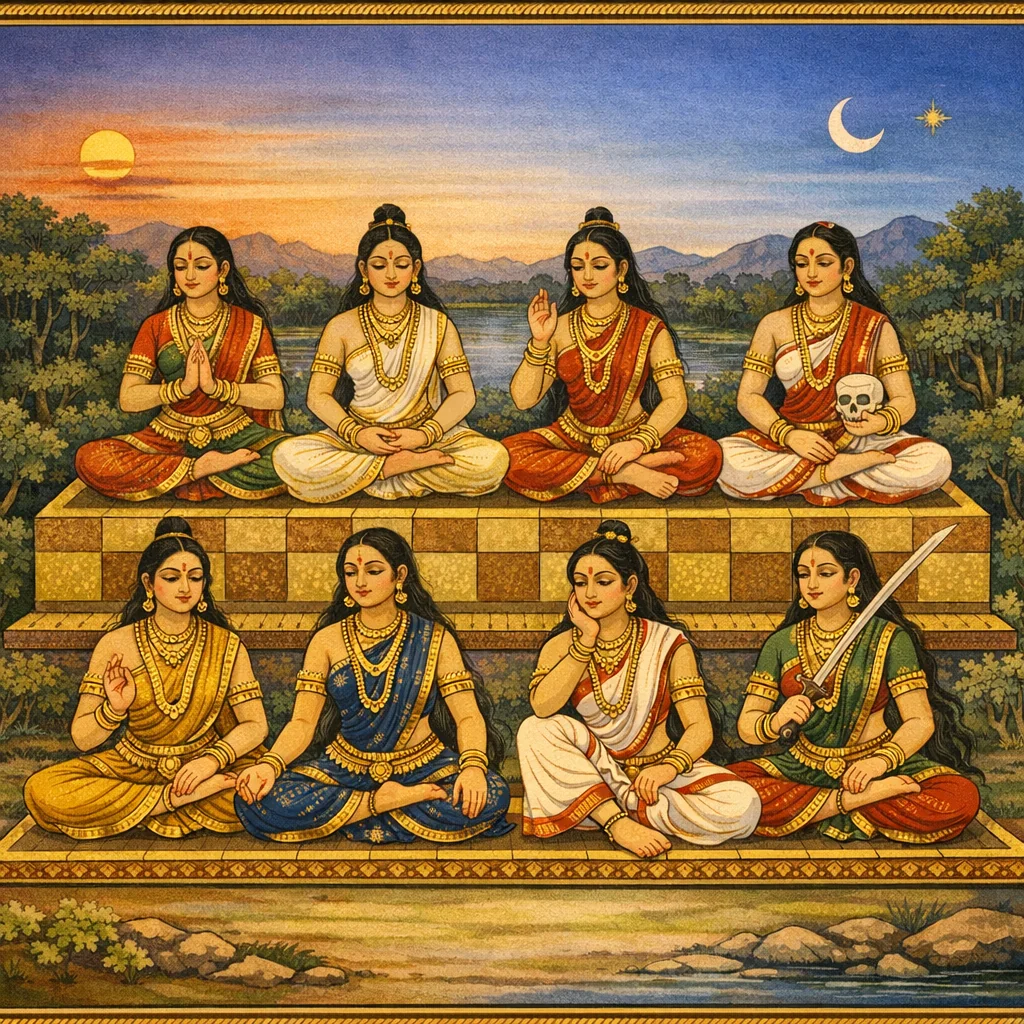
Adhyaya 22
Chapter 22 explains, in a structured theological way, why Śiva’s purāṇic narrative (śaivī-paurāṇikī kathā) is called a universally accessible “common path” (sādhāraṇaḥ panthāḥ) that can grant immediate liberation (sadyo-mukti). Hearing and reciting it are praised as a cure for ignorance, a destroyer of karmic seeds, and a discipline especially suited to Kali-yuga when other dharmic means are hard to practice. The chapter then lays down ethical rules for transmission: the qualifications of the Purāṇa-knower (pūrāṇajña), proper venues (clean, devotional, non-hostile), and the listener’s etiquette. It warns of harmful results from disrespect—interrupting, mocking, improper posture, or inattentive listening. Finally, an illustrative story near Gokarṇa depicts a morally compromised household and a woman’s transformation through fear, remorse, and sustained listening, culminating in purification of mind, meditation, and liberation-oriented devotion. The chapter closes with exalted Śaiva praise, affirming Paramaśiva as transcendent beyond speech and mind.
Shlokas
Verse 1
सूत उवाच । एवं शिवतमः पंथाः शिवेनैव प्रदर्शितः । नृणां संसृतिबद्धानां सद्योमुक्तिकरः परः
Sūta said: Thus the most Śiva-filled path has been shown by Śiva Himself; for men bound in saṃsāra, it is supreme and grants immediate liberation.
Verse 2
अथ दुर्मेधसां पुंसां वेदेष्वनधिकारिणाम् । स्त्रीणां द्विजातिबंधूनां सर्वेषां च शरीरिणाम्
Now, for men of dull understanding who lack eligibility in the Vedas, for women, for those related to the twice-born yet outside Vedic entitlement, and indeed for all embodied beings—
Verse 3
एष साधारणः पंथाः साक्षात्कैवल्यसाधनः । महामुनिजनैः सेव्यो देवैरपि सुपूजितः
This is the universal path, a direct means to kaivalya—liberating aloneness. It is served by great hosts of sages and is highly revered even by the gods.
Verse 4
यत्कथाश्रवणं शंभोः संसारभयनाशनम् । सद्योमुक्तिकरं श्लाघ्यं पवित्रं सर्वदेहिनाम्
Hearing the sacred narrative of Śambhu destroys the fear of saṃsāra. It bestows immediate release, is worthy of praise, and purifies all embodied beings.
Verse 5
अज्ञानतिमिरांधानां दीपोऽयं ज्ञानसिद्धिदः । भवरोगनिबद्धानां सुसेव्यं परमौषधम्
For those blinded by the darkness of ignorance, this is a lamp that grants the attainment of true knowledge. For those bound by the disease of worldly becoming, it is the supreme medicine, ever worthy of resort.
Verse 6
महापातकशैलानां वज्रघातसुदारुणम् । भर्जनं कर्मबीजानां साधनं सर्व संपदाम्
It is a terribly powerful thunderbolt-strike upon the mountains of great sins; it scorches the very seeds of karma and becomes a means to every auspicious attainment.
Verse 7
ये शृण्वंति सदा शम्भोः कथां भुवनपावनीम् । ते वै मनुष्या लोकेस्मिन्रुद्रा एव न संशयः
Those who always listen to Śambhu’s world-purifying narrative—those people in this world are verily Rudras; of this there is no doubt.
Verse 8
शृण्वतां शूलिनो गाथां तथा कीर्तयतां सताम् । तेषां पादरजांस्येव तीर्थानि मुनयो जगुः
Of the virtuous who listen to the tale of the Trident-bearer and likewise sing it, the sages have declared that even the dust of their feet becomes a tīrtha, a holy ford.
Verse 9
तस्मान्निश्रेयसं गन्तुं येभिवांछंति देहिनः । ते शृण्वंतु सदा भक्त्या शैवीं पौराणिकीं कथाम्
Therefore, embodied beings who long to reach the highest good (niḥśreyasa) should always, with devotion, listen to the Śaiva Purāṇic narrative.
Verse 10
यद्यशक्तः सदा श्रोतुं कथां पौराणिकीं नरः । मुहूर्तं वापि शृणुयान्नियतात्मा दिनेदिने
If a man is unable to listen to the Purāṇic narrative at all times, then—self-restrained—he should listen even for a muhūrta, day after day.
Verse 11
अथ प्रतिदिनं श्रोतुमशक्तो यदि मानवः । पुण्यमासेषु वा पुण्ये दिने पुण्यतिथिष्वपि
And if a person is unable to listen every day, then he should listen in holy months, or on auspicious days, and also on meritorious lunar dates (tithis).
Verse 12
यः शृणोति कथां रम्यां पुराणैः समुदीरिताम् । स निस्तरति संसारं दग्ध्वा कर्ममहाटवीम्
Whoever listens to the delightful narrative proclaimed in the Purāṇas crosses beyond saṃsāra, having burned down the vast forest of karma.
Verse 13
मुहूर्त्तं वा तदर्द्धं वा क्षणं वा पावनीं कथाम् । ये शृण्वंति सदा भक्त्या न तेषामस्ति दुर्गतिः
Whether for a full muhūrta, half of it, or even for a single moment—those who ever listen with devotion to the purifying sacred narrative have no evil destiny.
Verse 14
यत्फलं सर्वयज्ञेषु सर्वदानेषु यत्फलम् । सकृत्पुराणश्रवणात्तत्फलं विंदते नरः
Whatever fruit is gained from all sacrifices and whatever fruit is gained from all gifts—by hearing a Purāṇa even once, a person obtains that very same fruit.
Verse 15
कलौ युगे विशेषेण पुराणश्रवणादृते । नास्ति धर्मः परः पुंसां नास्ति मुक्तिपथः परः
Especially in the age of Kali, apart from hearing the Purāṇa there is no higher dharma for people, and no higher path leading to liberation.
Verse 16
पुराणश्रवणाच्छंभोर्नास्ति संकीर्तनं परम् । अत एव मनुष्याणां कल्पद्रुममहाफलम्
For Śambhu (Śiva), there is no higher act of praise than hearing the Purāṇa; therefore, for human beings it becomes a great fruit, like the mighty fruit of the wish-fulfilling tree.
Verse 17
कलौ हीनायुषो मर्त्या दुर्बलाः श्रमपीडिताः । दुर्मेधसो दुःखभाजो धर्माचारविवर्जिताः
In Kali Yuga, mortals are short-lived, weak, and oppressed by toil; their understanding is clouded, they partake of suffering, and they are bereft of righteous conduct.
Verse 18
इति संचिंत्य कृपया भगवान्बादरायणः । हिताय तेषां विदधे पुराणाख्यं सुधारसम्
Thus, reflecting with compassion, the blessed Bādarāyaṇa (Vyāsa), for their welfare, composed the Purāṇa—an essence like nectar.
Verse 19
पिबन्नेवामृतं यत्नादेतत्स्यादजरामरः । शम्भोः कथामृतं कुर्यात्कुलमेवाजरामरम्
By diligently drinking nectar one becomes free from aging and death; likewise, the nectar of Śambhu’s sacred story makes one’s very lineage free from aging and death.
Verse 20
बालो युवा दरिद्रो वा वृद्धो वा दुर्बलोऽपि वा । पुराणज्ञः सदा वन्द्यः पूज्यश्च सुकृतार्थिभिः
Whether a child, a youth, a poor man, an old man, or even a weak one—one who knows the Purāṇa is always worthy of reverence and worship by those who seek merit.
Verse 21
नीचबुद्धिं न कुर्वीत पुराणज्ञे कदाचन । यस्य वक्त्रांबुजाद्वाणी कामधेनुः शरीरिणाम्
One should never entertain a base opinion about a knower of the Purāṇa, for from the lotus of his mouth speech flows like a wish-fulfilling cow for embodied beings.
Verse 22
गुरवः संति लोकेषु जन्मतो गुणतस्तथा । तेषामपि च सर्वेषां पुराणज्ञः परो गुरुः
There are gurus in the world—by birth and also by virtue; yet, even among all of them, the knower of the Purāṇa is the supreme guru.
Verse 23
भवकोटिसहस्रेषु भूत्वाभूत्वावसीदति । यो ददात्यपुनर्वृत्तिं कोऽन्यस्तस्मात्परो गुरुः
After being born and dying again and again through tens of thousands of crores of existences, a being sinks into weariness. He who grants “non-return” (release from rebirth)—who else could be a Guru higher than that one?
Verse 24
पुराणज्ञः शुचिर्दांतः शांतो विजितमत्सरः । साधुः कारुण्यवान्वाग्मी वदेत्पुण्यकथां सुधी
A wise narrator should speak the meritorious sacred tale—one who knows the Purāṇas, is pure, self-restrained, peaceful, free from envy, virtuous, compassionate, and eloquent.
Verse 25
व्यासासनं समारूढो यदा पौराणिको द्विजः । असमाप्तप्रसंगश्च नमस्कुर्यान्न कस्य चित्
When the Purāṇa-reciter, a twice-born, has ascended the Vyāsa-seat and the discourse is still underway, he should not rise to offer salutations to anyone.
Verse 26
ये धूर्ता ये च दुर्वृत्ता ये चान्ये विजिगीषवः । तेषां कुटिलवृत्तीनामग्रे नैव वदेत्कथाम्
Before the crafty, the immoral, and others driven by the desire to conquer, one should not speak the sacred discourse at all—especially in the presence of those of crooked conduct.
Verse 27
न दुर्जनसमाकीर्णे न शूद्रश्वापदावृते । देशे न द्यूतसदने वदेत्पुण्यकथां सुधीः
A wise person should not speak the meritorious sacred tale in a place crowded with wicked people, nor in a region overrun by outcastes and wild beasts, nor in a gambling house.
Verse 28
सद्ग्रामे सुजनाकीर्णे सुक्षेत्रे देवतालये । पुण्ये नदनदीतीरे वदेत्पुण्यकथां सुधीः
A wise person should proclaim the meritorious sacred tale in a good village thronged with the virtuous, in a holy field or consecrated precinct, in the temple of the gods, and upon the blessed banks of rivers and streams.
Verse 29
शिवभक्तिसमायुक्ता नान्यकार्येषु लालसा । वाग्यताः सुश्रवोऽव्यग्राः श्रोतारः पुण्यभागिनः
Listeners endowed with devotion to Śiva, not eager for other affairs, restrained in speech, keen in hearing, and undistracted—such listeners are truly sharers in merit.
Verse 30
अभक्ता ये कथां पुण्यां शृण्वंति मनुजाधमाः । तेषां पुण्यफलं नास्ति दुःखं स्याज्जन्मजन्मनि
Those faithless people—base among men—who hear the meritorious sacred tale gain no fruit of merit from it; sorrow will follow them birth after birth.
Verse 31
पुराणं ये त्वसंपूज्य तांबूलाद्यैरुपायनैः । शृण्वंति च कथां भक्त्या दरिद्राः स्युर्न पापिनः
Even if they do not honor the Purāṇa with offerings such as betel and other gifts, those who listen to the discourse with devotion may be poor, yet they are not sinful.
Verse 32
कथायां कीर्त्यमानायां ये गच्छंत्यन्यतो नराः । भोगांतरे प्रणश्यंति तेषां दाराश्च संपदः
When the sacred discourse is being proclaimed, those men who leave and go elsewhere—amidst their enjoyments—their wives and their wealth come to ruin.
Verse 33
सोष्णीषमस्तका ये च कथां शृण्वंति पावनीम् । ते बलाकाः प्रजायन्ते पापिनो मनुजाधमाः
Those sinners—base among men—who listen to the purifying sacred narrative with their heads still covered (in disrespect) are reborn as balākā birds, cranes or herons.
Verse 34
तांबूलं भक्षयन्तो ये कथां शृण्वंति पावनीम् । स्वविष्ठां खादयंत्येतान्नरके यमकिंकराः
Those who chew tāmbūla (betel) while listening to the purifying sacred discourse—Yama’s servants, in hell, make such people eat their own excrement.
Verse 35
ये च तुंगासनारूढाः कथां शृण्वंति दांभिकाः । अक्षयान्नरकान्भुक्त्वा ते भवंत्येव वायसाः
Those hypocrites who listen to the sacred discourse while seated on a high seat—after suffering ‘endless’ hells, they are indeed reborn as crows.
Verse 36
ये च वीरासनारूढा ये च मंचकसंस्थिताः । शृण्वंति सत्कथां ते वै भवंत्यनृजुपादपाः
Those who listen to the holy discourse while seated in vīrāsana, or while sitting/lying on a cot—such people become ‘crooked-footed trees’, with bent and uneven trunks and branches.
Verse 37
असंप्रणम्य शृण्वंतो विषवृक्षा भवंति ते । कथां शयानाः शृण्वन्तो भवंत्यजगरा नराः
Those who listen without bowing in reverence become poisonous trees. And men who listen to the discourse while lying down become ajagara serpents—great pythons.
Verse 38
यः शृणोति कथां वक्तुः समानासनमाश्रितः । गुरुतल्पसमं पापं संप्राप्य नरकं व्रजेत्
Whoever listens to the sacred discourse while seated on a seat equal to that of the speaker incurs a sin equal to violating the guru’s bed; having gained that sin, he goes to hell.
Verse 39
ये निंदंति पुराणज्ञं कथां वा पापहारिणीम् । ते वै जन्मशतं मर्त्याः शुनका संभवंति च
Those who revile a knower of the Purāṇas, or the sacred discourse itself that destroys sin—those mortals are born as dogs for a hundred births.
Verse 40
कथायां वर्तमानायां ये वदंति नराधमाः । ते गर्दभाः प्रजायन्ते कृकलासास्ततः परम्
Those base men who speak while the sacred discourse is in progress are born as donkeys—and thereafter as lizards.
Verse 41
कदाचिदपि ये पुण्यां न शृण्वंति कथां नराः । ते भुक्त्वा नरकान्घोरान्भ वंति वनसूकराः
Men who never listen—even once—to the meritorious sacred discourse, after suffering dreadful hells, become wild boars.
Verse 42
ये कथामनुमोदन्ते कीर्त्यमानां नरोत्तमाः । अशृण्वंतोऽपि ते यांति शाश्वतं परमं पदम्
Those best of men who rejoice in and approve of the sacred discourse as it is being recited—even if they do not actually hear it—attain the eternal supreme state.
Verse 43
कथायां कीर्त्यमानायां विघ्नं कुर्वंति ये शठाः । कोट्यब्दान्नरकान्भुक्त्वा भवंति ग्रामसूकराः
Those deceitful ones who create obstacles when the sacred Purāṇic discourse is being recited—after enduring the hells for a crore of years—are reborn as village pigs.
Verse 44
ये श्रावयंति मनुजान्पुण्यां पौराणिकीं कथाम् । कल्पकोटिशतं साग्रं तिष्ठंति ब्रह्मणः पदम्
Those who cause people to hear the holy Purāṇic narrative abide in Brahmā’s realm for a full hundred crores of kalpas.
Verse 45
आसनार्थं प्रयच्छंति पुराणज्ञस्य ये नराः । कम्बलाजिनवासांसि मञ्चं फलकमेव च
Those who provide a seat for the knower of the Purāṇas—offering blankets, deerskin, garments, a cot, or even a wooden plank—gain great merit.
Verse 46
स्वर्गलोकं समासाद्य भुक्त्वा भोगान्यथेप्सितान् । स्थित्वा ब्रह्मादिलोकेषु पदं यांति निरामयम्
Attaining heaven and enjoying the desired pleasures, then dwelling in the worlds of Brahmā and others, they finally reach the supreme state—stainless and free from sorrow.
Verse 47
पुराणज्ञस्य यच्छंति ये सूत्रवसनं नवम् । भोगिनो ज्ञानसंपन्नास्ते भवंति भवेभवे
Those who offer a fresh new garment to the knower of the Purāṇas become prosperous enjoyers, endowed with knowledge, birth after birth.
Verse 48
ये महापातकैर्युक्ता उपपातकिनश्च ये । पुराणश्रवणादेव ते यांति परमं पदम्
Even those burdened with great sins, and even minor sinners, by the very act of hearing the Purāṇa attain the supreme state.
Verse 49
अत्र वक्ष्ये महापुण्यमितिहासं द्विजोत्तमाः । शृण्वतां सर्वपापघ्नं विचित्रं सुमनोहरम्
Here I shall relate a most meritorious sacred account, O best of the twice-born—one that destroys all sins for those who listen, wondrous and deeply delightful.
Verse 50
दक्षिणापथमध्ये वै ग्रामो बाष्कलसंज्ञितः । तत्र संति जनाः सर्वे मूढाः कर्मविवर्जिताः
In the midst of the southern region (Dakṣiṇāpatha) there is a village named Bāṣkala. There all the people are deluded and devoid of proper religious duties.
Verse 51
न तत्र ब्राह्मणाचाराः श्रुतिस्मृतिपराङ्मुखाः । जपस्वाध्यायरहिताः परस्त्री विषयातुराः
There, the observances of brāhmaṇical conduct are absent; they turn away from Śruti and Smṛti, lack japa and self-study, and are distressed by craving for another’s wife and sense-objects.
Verse 52
कृषीवलाः शस्त्रधरा निर्देवा जिह्मवृत्तयः । न जानंति परं धर्मं ज्ञानवैराग्यलक्षणम्
They are mere tillers and weapon-bearers, godless and crooked in conduct; they do not know the higher dharma, marked by knowledge and dispassion.
Verse 53
स्त्रियश्च पापनिरताः स्वैरि ण्यः कामलालसाः । दुर्बुद्धयः कुटिलगाः सद्गताचारवर्जिताः
And there are women devoted to sinful conduct—self-willed, craving sensual pleasure—of perverted judgment and crooked ways, bereft of the discipline of right conduct and good paths.
Verse 54
तत्रैको विदुरो नाम दुरात्मा ब्राह्मणाधमः । आसीद्वेश्यापतिर्योऽसौ सदारोऽपि कुमार्गगः
There was a man named Vidura—wicked at heart, the lowest among brāhmaṇas. He lived as the keeper of a prostitute, and though he had a wife, he still pursued the path of misconduct.
Verse 55
स्वपत्नीं बंदुलां नाम हित्वा प्रतिनिशं तथा । वेश्याभवनमासाद्य रमते स्मरपीडितः
Abandoning his own wife, named Bandulā, night after night he would go to the courtesans’ quarters and indulge there—tormented and driven by Kāma, the god of desire.
Verse 56
सापि तस्यांगना रात्रौ वियुक्ता नवयौवना । असहंती स्मरावेशं रेमे जारेण संगता
That young wife too, separated from him at night, unable to endure the onrush of desire, took pleasure—having come together with a paramour.
Verse 57
तां कदाचिद्दुराचारां जारेण सह संगताम् । दृष्ट्वा तस्याः पतिः क्रोधादभि दुद्राव सत्वरः
Once, seeing that woman of wicked conduct consorting with her paramour, her husband—overcome with anger—rushed toward them at once.
Verse 58
जारे पलायिते पत्नीं गृहीत्वा स दुराशयः । संताड्य मुष्टिबंधेन मुहुर्मुहुरताडयत्
When the paramour fled, that wicked-minded man seized his wife and, striking her with clenched fists, beat her again and again.
Verse 59
सा नारी पीडिता भर्त्रा कुपिता प्राह निर्भया । भवान्प्रतिनिशं वेश्यां रमते का गतिर्मम
Afflicted by her husband, that woman—angered yet fearless—spoke: “Night after night you take pleasure with a courtesan; what, then, is to become of me?”
Verse 60
अहं रूपवती योषा नवयौवनशालिनी । कथं सहिष्ये कामार्ता तव संगतिवर्जिता
I am a beautiful woman, adorned with fresh youth. How can I endure, tormented by desire, when I am deprived of your company?
Verse 61
इत्युक्तः स तया तन्व्या प्रोवाच ब्राह्मणाधमः । युक्तमेव त्वयोक्तं हि तस्माद्वक्ष्यामि ते हितम्
Thus addressed by that slender maiden, the wretched Brahmin replied: “Indeed, what you have said is proper; therefore I shall tell you what is beneficial for you.”
Verse 62
जारेभ्यो धनमाकृष्य तेभ्यो देहि परां रतिम् । तद्धनं देहि मे सर्वं पण्यस्त्रीणां ददामि तत्
After drawing wealth from illicit lovers, grant them intense sensual pleasure. Then give all that wealth to me; I shall hand it over to the courtesans.
Verse 63
एवं संपूर्यते कामो ममापि च वरानने । तथेति भर्तृवचनं प्रतिजग्राह सा वधूः
“Thus my desire too will be fulfilled, O fair-faced one.” Hearing her husband’s words, the bride accepted them, saying, “So be it.”
Verse 64
एवं तयोस्तु दंपत्योर्दुराचारप्रवृत्तयोः । कालेन निधनंप्राप्तः स विप्रो वृषलीपतिः
Thus, as that couple persisted in wrongful conduct, in the course of time the brāhmaṇa—husband of a woman of low station—met his death.
Verse 65
मृते भर्तरि सा नारी पुत्रैः सह निजालये । उवास सुचिरं कालं किंचिदुत्क्रांतयौवना
When her husband had died, that woman lived in her own home along with her sons for a long time, her youth having somewhat passed away.
Verse 66
एकदा दैवयोगेन संप्राप्ते पुण्यपर्वणि । सा नारी बंधुभिः सार्धं गोकर्णं क्षेत्र माययौ
Once, by a turn of providence, when a sacred festival-day arrived, that woman went with her relatives to the holy kṣetra of Gokarṇa.
Verse 67
तत्र तीर्थजले स्नात्वा कस्मिंश्चिद्देवतालये । शुश्राव देवमुख्यानां पुण्यां पौराणिकीं कथाम्
There, after bathing in the waters of the tīrtha, in a certain temple she heard a holy Purāṇic narration concerning the foremost of the gods.
Verse 68
योषितां जारसक्तानां नरके यमकिंकराः । संतप्तलोहपरिघं क्षिपंति स्मरमंदिरे
In hell, Yama’s servants hurl red-hot iron clubs upon women addicted to illicit lovers—within the “house of Kāma,” the torment born of lust.
Verse 69
इति पौराणिकेनोक्तां सा श्रुत्वा धर्मसंहिताम् । तमुवाच रहस्येषा भीता ब्राह्मणपुंगवम्
Having heard that compendium of dharma spoken by the Purāṇic reciter, she—now afraid—addressed that foremost of brāhmaṇas in private.
Verse 70
ब्रह्मन्पापमजानंत्या मयाचरितमुल्बणम् । यौवने कामचारेण कौटिल्येन प्रवर्तितम्
“O brāhmaṇa, not knowing it to be sin, I committed a grievous deed in my youth—driven by lustful conduct and deceit.”
Verse 71
इदं त्वद्वचनं श्रुत्वापुराणार्थविजृंभि तम् । भीतिर्मे महती जाता शरीरं वेपते मुहुः
“Having heard these words of yours—expounding the Purāṇic meaning—great fear has arisen in me; my body trembles again and again.”
Verse 72
धिङ्मां दुरिंद्रियासक्तां पापां स्मरविमोहिताम् । अल्पस्य यत्सुखस्यार्थे घोरां यास्यामि दुर्गतिम्
“Shame on me—sinful, attached to wicked senses, deluded by passion! For the sake of a little pleasure, I shall fall into a dreadful ruin.”
Verse 73
कथं पश्यामि मरणे यमदूतान्भयंकरान् । कथं पाशैर्बलात्कंठे बध्यमाना धृतिं लभे
How, at the time of death, shall I behold the terrifying messengers of Yama? And when, by force, their nooses are bound about my throat, how shall I find steadiness of mind?
Verse 74
कथं सहिष्ये नरके खंडशो देहकृंतनम । पुनः कथं पतिष्यामि संतप्ता क्षारकर्दमे
How shall I endure, in hell, the cutting of my body into pieces? And again, scorched by torment, how shall I be made to fall into the caustic, alkaline mire?
Verse 75
कथं च योनिलक्षेषु क्रिमिकीटखगादिषु । परिभ्रमामि दुःखौघात्पीड्यमाना निरंतरम्
And how shall I wander through hundreds of thousands of births—among worms, insects, birds, and the like—unceasingly oppressed by a flood of suffering?
Verse 76
कथं च रोचते मह्यमद्यप्रभृति भोजनम् । रात्रौ कथं च सेविष्ये निद्रां दुःखपरिप्लुता
And how can food be pleasing to me from this day onward? And at night, how shall I take to sleep, when I am overwhelmed by grief?
Verse 77
हाहा हतास्मि दग्धास्मि विदीर्णहृदयास्मि च । हा विधे मां महापापे दत्त्वा बुद्धिमपातयः
Alas, alas! I am ruined; I am burned; my heart is split apart. O Fate, after granting me understanding, why did you cast me down into great sin?
Verse 78
पततस्तुंगशैलाग्राच्छूलाक्रांतस्य देहिनः । यद्दुःखं जायते घोरं तस्मात्कोटिगुणं मम
The dreadful pain that arises for a living being who falls from the summit of a lofty mountain and is impaled upon a spear—my suffering is a million times greater than that.
Verse 79
अश्वमेधायुतं कृत्वा गंगां स्नात्वा शतं समाः । न शुद्धिर्जायते प्रायो मत्पापस्य गरीयसः
Even were I to perform ten thousand Aśvamedha sacrifices and bathe in the sacred Gaṅgā for a hundred years, purification would scarcely arise for my heavy sin.
Verse 80
किं करोमि क्व गच्छामि कं वा शरणमाश्रये । को वा मां त्रायते लोके पतंती नरकार्णवे
What shall I do—where shall I go—and whose refuge shall I take? Who in this world will save me as I sink into the ocean of hell?
Verse 81
त्वमेव मे गुरुर्ब्रह्मंस्त्वं माता त्वं पितासि च । उद्धरोद्धर मां दीनां त्वामेव शरणं गताम्
You alone are my guru, O Brahman; you are my mother, and you are my father as well. Lift me up—lift up me, the helpless one—who has come to you alone for refuge.
Verse 82
इति तां जातनिर्वेदां पतितां चरणद्वये । उत्थाप्य कृपया धीमान्बभाषे द्विजपुंगवः
Thus, seeing her filled with remorse and fallen at his two feet, the wise best of brāhmaṇas compassionately raised her up and spoke.
Verse 83
ब्राह्मण उवाच । दिष्ट्या काले प्रबुद्धासि श्रुत्वेमां महतीं कथाम् । मा भैषीस्तव वक्ष्यामि गतिं चैव सुखावहाम्
The Brāhmaṇa said: “By good fortune you have awakened at the proper time, having heard this great sacred account. Do not fear; I shall tell you the path and the destiny that bestow true happiness.”
Verse 84
सत्कथाश्रवणादेव जाता ते मतिरीदृशी । इंद्रियार्थेषु वैराग्यं पश्चात्तापो महानभूत्
“Simply by hearing a true and holy account, such understanding has arisen in you; dispassion toward sense-objects has appeared, and a great remorse has been born.”
Verse 85
पश्चात्तापो हि सर्वेषामघानां निष्कृतिः परा । तेनैव कुरुते सद्यः प्रायश्चित्तं सुधीर्नरः
“Indeed, remorse is the highest expiation for all sins. Through that very remorse, the wise person at once performs true atonement.”
Verse 86
प्रायश्चित्तानि सर्वाणि कृत्वा च विधिवत्पुनः । अपश्चात्तापिनो नार्या न यांति गतिमुत्तमाम्
“Even after performing every prescribed expiation properly, those who are without remorse do not attain the highest state.”
Verse 87
सत्कथाश्रवणान्नित्यं संयाति परमां गतिम् । पुण्यक्षेत्रनिवासाच्च चित्तशुद्धिः प्रजायते
“By regularly listening to sacred discourse one reaches the supreme goal; and by dwelling in a holy region (puṇya-kṣetra), purity of mind is born.”
Verse 88
यथा सत्कथया नित्यं संयाति परमां गतिम् । तथान्यैः सद्व्रतैर्जंतोर्नभवेन्मतिरुत्तमा
Just as by constant sacred discourse one reaches the supreme goal, so by other good vows alone a person’s understanding does not become truly exalted in the same way.
Verse 89
यथा मुहुः शोध्यमानो दर्पणो निर्मलो भवेत् । तथा सत्कथया चेतो विशुद्धिं परमां व्रजेत्
As a mirror becomes spotless when cleaned again and again, so the mind, through sacred discourse, attains the highest purity.
Verse 90
विशुद्धे चेतसि नृणां ध्यानं सिध्यत्युमापतेः । ध्यानेन सर्वं मलिनं मनोवाक्कायसंभृतम्
When people’s minds are purified, meditation on Umāpati (Śiva, Lord of Umā) succeeds. Through meditation, all impurity accumulated by mind, speech, and body is removed.
Verse 91
सद्यो विधूय कृतिनो यांति शम्भोः परं पदम् । अतः संन्यस्तपुण्यानां सत्कथा साधनं परम्
Shaking off impurity at once, the blessed go to the supreme abode of Śambhu (Śiva). Therefore, for those who have renounced reliance on merit alone, sacred discourse is the highest means.
Verse 92
कथया सिध्यति ध्यानं ध्यानात्कैवल्यमुत्तमम् । असिद्धपरमध्यानः कथामेतां शृणोति यः । सोऽन्यजन्मनि संप्राप्य ध्यानं याति परां गतिम्
Through sacred discourse, meditation becomes accomplished; from meditation arises the highest Kaivalya (liberating aloneness). Even one who has not yet attained supreme meditation—if he listens to this sacred account—then, obtaining its fruit in another birth, he reaches meditation and attains the highest goal.
Verse 93
नामोच्चारणमात्रेण जप्त्वा मंत्रमजामिलः । पश्चात्तापसमायुक्तस्त्ववाप परमां गतिम्
By the mere utterance of the Holy Name, Ajāmila as it were performed japa of the mantra; and thereafter, filled with repentance, he attained the supreme state.
Verse 94
सर्वेषां श्रेयसां बीजं सत्कथाश्रवणं नृणाम् । यस्तद्विहीनः स पशुः कथं मुच्येत बन्धनात्
For human beings, the seed of all true welfare is the hearing of sacred discourse. One who is devoid of it is like a beast—how could such a one be freed from bondage?
Verse 95
अतस्त्वमपि सर्वेभ्यो विषयेभ्यो निवृत्तधीः । भक्तिं परां समाधाय सत्कथां शृणु सर्वदा । शृण्वंत्याः सत्कथां नित्यं चेतस्ते शुद्धिमेष्यति
Therefore you too, with your mind withdrawn from all sense-objects, establish supreme devotion and always listen to sacred discourse. By listening daily to holy narratives, your mind will attain purity.
Verse 96
तेन ध्यायसि विश्वेशं ततो मुक्तिमवाप्स्यसि । ध्यायतः शिवपादाब्जं मुक्तिरेकेन जन्मना
By that you will meditate on Viśveśa, the Lord of the universe, and then you will attain liberation. For one who meditates upon the lotus-feet of Śiva, mokṣa comes within a single lifetime.
Verse 97
भविष्यति न सन्देहः सत्यं सत्यं वदाम्यहम् । इत्युक्ता तेन विप्रेण सा नारी बाष्पसंकुला
“It shall surely come to pass—there is no doubt; truth, truth I speak.” Thus addressed by that brāhmaṇa, the woman became overwhelmed with tears.
Verse 98
पतित्वा पादयोस्तस्य कृतार्थास्मीत्यभाषत । तस्मिन्नेव महाक्षेत्रे तस्मादेव द्विजोत्तमात्
Falling at his feet, she said, “My purpose is fulfilled.” In that very great sacred field, from that very excellent brāhmaṇa, she received further guidance.
Verse 99
शुश्राव सत्कथां साध्वीं कैवल्यफल दायिनी । स उवाच द्विजस्तस्यै कथां वैराग्यबृंहिताम्
She listened to a holy and virtuous sacred narrative that bestows the fruit of kaivalya, absolute liberation. Then that brāhmaṇa spoke to her a discourse strengthened by vairāgya, renunciation.
Verse 100
यां श्रुत्वा मनुजः सद्यस्त्यजेद्विषयवासनाम् । तस्याश्चित्तं यथा शुद्धं वैराग्यरसगं यथा
Hearing it, a person would at once abandon worldly cravings; and her mind became pure, as though immersed in the very flavor of vairāgya, renunciation.
Verse 110
इत्थं प्रतिदिनं भक्त्या प्रार्थयंती महेश्वरम् । शृण्वंती सत्कथां सम्यक्कर्मबंधं समाच्छिनत्
Thus, day after day, she devoutly prayed to Maheśvara; and by listening attentively to sacred discourse, she completely severed the bondage of karma.
Verse 120
देव्युवाच । सोऽस्मत्कथां महापुण्यां कदाचिच्छृणुयाद्यदि । निस्तीर्य दुर्गतिं सर्वामिमं लोकं प्रयास्यति
The Goddess said: “If anyone should ever hear this supremely meritorious sacred account of ours, having crossed beyond every misfortune and evil destiny, that person will attain this blessed realm.”
Verse 130
विमानमारुह्य स दिव्यरूपधृक्स तुंबुरुः पार्श्वगतः स्वकांतया । गायन्महेशस्य गुणान्मनोरमाञ्जगाम कैवल्यपदं सनातनम्
Ascending a celestial vimāna, Tumburu—radiant in a divine form—went forth with his beloved at his side. Singing the charming excellences of Maheśa (Śiva), he attained the eternal state of kaivalya, final spiritual freedom.
Verse 136
विविधगुणविभेदैर्नित्यमस्पृष्टरूपं जगति च बहिरंतर्वा समानं महिम्ना । स्वमहसि विहरंतं वाङ्मनोवृत्तिदूरं परमशिवमनंतानंदसांद्रं प्रपद्ये
I take refuge in Paramaśiva—whose form is ever untouched by all differentiations of the guṇas; whose majesty is the same within and without the world; who sports in His own self-luminous splendor, beyond speech and the mind’s movements—dense with infinite bliss.