Adhyaya 14
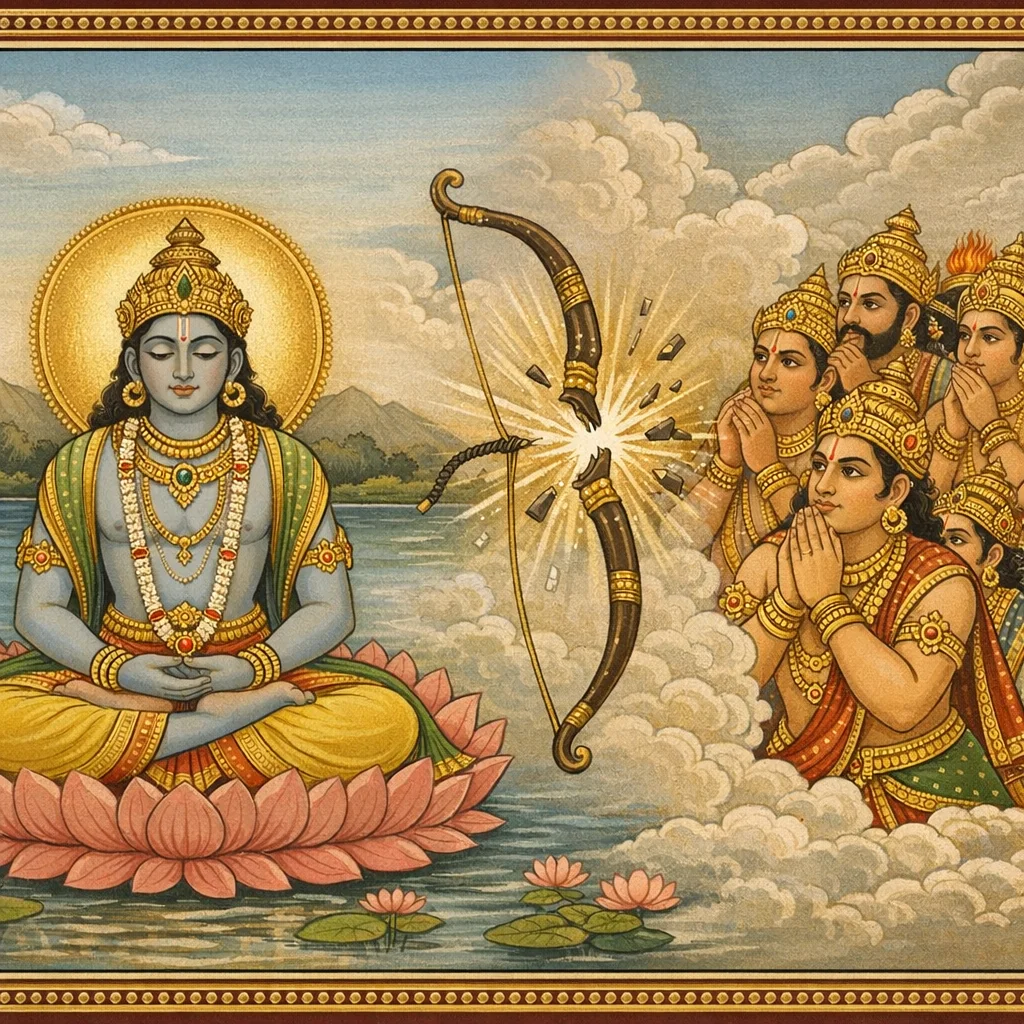
Sūta relates that King Bhadrāyu, delighting in spring within a luxuriant forest together with Queen Kīrtimālinī, meets a brahmin couple fleeing a tiger. Though the king shoots his arrows, they prove powerless, and the tiger seizes the wife, exposing a crisis in royal efficacy. The bereft brahmin laments and rebukes the king for failing in rājadharma, declaring that protecting the distressed surpasses life, wealth, and sovereignty. Shamed and fearing moral ruin, the king offers compensation; the brahmin instead demands the king’s own queen, sharpening the ethical conflict between the duty to protect, social propriety, and sin. Concluding that failure to protect brings grave demerit, the king yields the queen and prepares for self-immolation to preserve honor and expiate guilt. As he is about to enter the fire, Śiva appears in radiant form with Umā, surrounded by celestial beings, and receives the king’s extended hymn praising Śiva as the transcendent cause beyond mind and speech. Śiva reveals that the tiger and the brahmin were māyā-forms meant to test the king’s steadiness and devotion, and that the seized woman is a divine figure (Girīndrajā). Boons are granted: the king asks for perpetual nearness to Śiva for himself, the queen, and named relatives; the queen asks the same for her parents. The chapter ends with a phalaśruti promising prosperity and final attainment of Śiva to those who recite, or cause others to hear, this account.
Shlokas
Verse 1
सूत उवाच । प्राप्तसिंहासनो वीरो भद्रायुः स महीपतिः । प्रविवेश वनं रम्यं कदाचिद्भार्यया सह
Sūta said: Having ascended the throne, the heroic Bhadrāyu, lord of the earth, once entered a charming forest together with his wife.
Verse 2
तस्मिन्विकसिताशोकप्रसूननवपल्लवे । प्रोत्फुल्लमल्लिकाखंडकूजद्भ्रमरसंकुले
In that place—where fresh shoots and blossoming aśoka flowers had opened, and where clusters of fully-bloomed jasmine were alive with the humming of bees—
Verse 3
नवकेसरसौरभ्यबद्धरागिजनोत्सवे । सद्यः कोरकिताशोकतमालगहनांतरे
—where the fresh fragrance of new saffron-like pollen stirred delight among enamored hearts, and where, within dense groves of tamāla trees, the aśokas had only just formed buds—
Verse 4
प्रसूनप्रकरानम्र माधवीवनमंडपे । प्रवालकुसुमोद्द्योतचूतशाखिभिरञ्चिते
In a pavilion within a grove of Mādhavī creepers—its boughs bowed by clusters of blossoms and adorned with mango branches glowing with coral-red flowers—the scene shone radiant and festive.
Verse 5
पुन्नागवनविभ्रांतपुंस्कोकिलविराविणि । वसन्तसमये रम्ये विजहार स्त्रिया सह
In that lovely spring season, amid a punnāga grove resounding with the calls of male kokila cuckoos flitting about, the king sported there together with his consort.
Verse 6
अथाविदूरे क्रोशंतौ धावंतौ द्विजदंपती । अन्वीयमानौ व्याघ्रेण ददर्श नृपसत्तमः
Then, not far away, the best of kings saw a brāhmaṇa couple running and crying out, being pursued by a tiger.
Verse 7
पाहि पाहि महाराज हा राजन्करुणानिधे । एष धावति शार्दूलो जग्धुमावां महारयः
“Protect us, protect us, O great king—O ruler, treasure-house of compassion! This tiger is charging to devour us, with terrible speed!”
Verse 8
एष पर्वतसंकाशः सर्वप्राणिभयंकरः । यावन्न खादति प्राप्य तावन्नौ रक्ष भूपते
“He is like a mountain in size, terrifying to all living beings. Before he reaches and devours us—protect us, O king!”
Verse 9
इत्थमाक्रंदितं श्रुत्वा स राजा धनुराददे । तावदागत्य शार्दूलो मध्ये जग्राह तां वधूम्
Hearing their cry in this manner, the king took up his bow. But just then the tiger rushed in and, in their very midst, seized the bride.
Verse 10
हा नाथ नाथ हा कांत हा शंभो जगतः पते । इति रोरूयमाणां तां यावज्जग्राह भीषणः
Crying, “O lord, O lord! O beloved! O Śambhu, Lord of the world!”—even as she wailed thus, the dreadful beast seized her.
Verse 11
तावत्स राजा निशितैर्भल्लैर्व्याघ्रमताडयत् । न च तैर्विव्यथे किंचिद्गिरींद्र इव वृष्टिभिः
Then the king struck the tiger with sharp arrows; yet it did not suffer in the least from them—like a mountain-peak unmoved by rainfall.
Verse 12
स शार्दूलो महासत्त्वो राज्ञोस्त्रैरकृतव्यथः । बलादाकृष्य तां नारीमपाक्रामत सत्वरः
That mighty tiger, unhurt by the king’s weapons, dragged the woman away by force and fled swiftly.
Verse 13
व्याघ्रेणापहृतां पत्नीं वीक्ष्य विप्रोऽतिदुःखितः । रुरोद हा प्रिये बाले हा कांते हा पतिव्रते
Seeing his wife carried off by the tiger, the brāhmaṇa, overwhelmed with grief, wept aloud: “Alas, my dear! O gentle one! O beloved! O faithful wife!”
Verse 14
एकं मामिह संत्यज्य कथं लोकांतरं गता । प्राणेभ्योपि प्रियां त्यक्त्वा कथं जीवितुमुत्सहे
Leaving me here all alone, how have you gone to another world? Having abandoned one dearer to me even than my own life-breath, how could I still have the will to go on living?
Verse 15
राजन्क्व ते महास्त्राणि क्व ते श्लाघ्यं महद्धनुः । क्व ते द्वादशसाहस्रमहानागातिगं बलम्
O King, where are your mighty weapons now? Where is that famed great bow of yours? Where is that strength of yours—said to surpass even twelve thousand great elephants?
Verse 16
किं ते शंखेन खङ्गेन किं ते मंत्रास्त्रविद्यया । किं च तेन प्रयत्नेन किं प्रभावेण भूयसा
What use to you are the conch and the sword? What use is your knowledge of mantras and weapon-lore? What use is all that effort—and what use is even great ‘power’—if it fails at the moment of need?
Verse 17
तत्सर्वं विफलं जातं यच्चान्यत्त्वयि तिष्ठति । यस्त्वं वनौकसं जंतुं निवारयितुमक्षमः
All of that has become fruitless—everything else that remains in you—since you are powerless to restrain a forest-dwelling creature, a savage attacker.
Verse 18
क्षात्त्रस्यायं परो धर्मः क्षताद्यत्परिरक्षणम् । तस्मात्कुलोचिते धर्मे नष्टे त्वज्जीवितेन किम्
This is the supreme dharma of a kṣatriya: to protect the wounded and the distressed. Therefore, if the duty proper to your lineage is lost, what value is there in your life?
Verse 19
आर्तानां शरणार्तानां त्राणं कुर्वंति पार्थिवाः । प्राणैरर्थैश्च धर्मज्ञास्तद्विहीना मृतोपमाः
Kings who know dharma give protection to the afflicted and to those who seek refuge, even at the cost of life and wealth; those devoid of that spirit are as good as dead.
Verse 20
धनिनां दानहीनानां गार्हस्थ्याद्भिक्षुता वरा । आर्तत्राणविहीनानां जीवितान्मरणं वरम्
For the wealthy who are without generosity, begging is better than the householder’s life; for one who does not rescue the distressed, death is better than living.
Verse 21
वरं विषादनं राज्ञो वरमग्नौ प्रवेशनम् । अनाथानां प्रपन्नानां कृपणानामरक्षणात्
Better for a king is despair—better even to enter the fire—than to fail to protect the helpless, those who have surrendered for refuge, and the poor.
Verse 22
इत्थं विलपितं तस्य स्ववीर्यस्य च गर्हणम् । निशम्य नृपतिः शोकादात्मन्येवमचिंतयत्
Hearing such lamentation and the reproach of his own valor, the king, overwhelmed by grief, reflected within himself in this manner.
Verse 23
अहो मे पौरुषं नष्टमद्य दैवविपर्ययात् । अद्य कीर्तिश्च मे नष्टा पातकं प्राप्तमुत्क टम्
Alas—by the reversal of fate, my manliness has perished today; today my fame too is ruined, and a grievous sin has come upon me.
Verse 24
धर्मः कालोचितो नष्टो मन्दभाग्यस्य दुर्मतेः । नूनं मे संपदो राज्यमायुष्यं क्षयमेष्यति
For one ill-fated and misguided in mind, timely dharma is lost. Surely my prosperity, my kingdom, and even my span of life are now moving toward decline.
Verse 25
अपुंसां संपदो भोगाः पुत्रदारधनानि च । दैवेन क्षणमुद्यंति क्षणादस्तं व्रजंति च
For the irresolute, prosperity and pleasures—sons, wife, and wealth—rise by fate for a moment, and in the very next moment they set and vanish.
Verse 26
अत एनं द्विजन्मानं हतदारं शुचार्दितम् । गतशोकं करिष्यामि दत्त्वा प्राणानपि प्रियान्
Therefore I shall free this twice-born man—whose wife is lost and who is tormented by grief—from sorrow, even if I must surrender my own dear breaths of life.
Verse 27
इति निश्चित्य मनसा भद्रायुर्नृपसत्तमः । पतित्वा पादयोस्त्वस्य बभाषे परिसांत्वयन्
Having thus resolved in his heart, Bhadrāyu—the best of kings—fell at his feet and spoke, offering consolation.
Verse 28
कृपां कुरु मयि ब्रह्मन्क्षत्रबंधौ हतौजसि । शोकं त्यज महाबुद्धे दास्याम्यर्थं तवेप्सितम्
Show compassion to me, O brāhmaṇa—though I am a kṣatriya in name alone, bereft of power. Cast off grief, O great-minded one; I shall grant you whatever you desire.
Verse 29
इदं राज्यमियं राज्ञी ममेदं च कलेवरम् । त्वधीनमिदं सर्वं किं तेऽभिलषितं वद
This kingdom, this queen, and even this body of mine—everything here is under your sway. Tell me: what do you desire?
Verse 30
ब्राह्मण उवाच । किमादर्शेन चांधस्य किं गृहैर्भैक्ष्यजीविनः । किं पुस्तकेन मूर्खस्य ह्यस्त्रीकस्य धनेन किम्
The brāhmaṇa said: What use is a mirror to the blind? What use are houses to one who lives by alms? What use is a book to a fool? And what use is wealth to one without a wife?
Verse 31
अतोऽहं गतपत्नीको भुक्तभोगो न कर्हिचित् । इमां तवाग्रमहिषीं कामार्थं दीयतां मम
Therefore I—bereft of a wife and never having tasted pleasures—ask that your chief queen be given to me for the sake of desire.
Verse 32
राजोवाच । ब्रह्मन्किमेष धर्मस्ते किमेतद्गुरुशासनम् । अस्वर्ग्यमयशस्यं च परदाराभिमर्शनम्
The king said: O brāhmaṇa, what ‘dharma’ of yours is this, and what sort of teaching from a guru is it? To touch another man’s wife is not heavenward—it is disgraceful.
Verse 33
दातारः संति वित्तस्य राज्यस्य गजवाजिनाम् । आत्मदेहस्य वा क्वापि न कलत्रस्य कर्हिचित्
There are donors of wealth, of kingdoms, and of elephants and horses; somewhere, some even give their own bodies—but never, at any time, does one give away one’s wife.
Verse 34
परदारोपभोगेन यत्पापं समुपार्जितम् । न तत्क्षालयितुं शक्यं प्रायश्चित्तशतैरपि
The sin amassed by enjoying another man’s wife cannot be washed away—even by hundreds of acts of expiation.
Verse 35
ब्राह्मण उवाच । अपि ब्रह्मवधं घोरमपि मद्यनिषेवणम् । तपसा नाशयिष्यामि कि पुनः पारदारिकम् । तस्मात्प्रयच्छ मे भार्यामिमां त्वं ध्रुवमन्यथा
The brāhmaṇa said: “Even the dreadful sin of brahmin-slaying, even the drinking of liquor—I shall destroy by austerity (tapas); how much more, then, this matter of another’s wife. Therefore give me this wife of yours; otherwise, destruction is certain.”
Verse 36
अरक्षणाद्भयार्तानां गंतासि निरयं ध्रुवम् । इति विप्रगिरा भीतश्चिंतयामास पार्थिवः । अरक्षणान्महत्पापं पत्नीदानं ततो वरम्
“For failing to protect those distressed by fear, you will certainly go to hell.” Frightened by the brāhmaṇa’s words, the king reflected: “Neglect of protection is a great sin; therefore giving away my wife is the lesser evil.”
Verse 37
अतः पत्नीं द्विजाग्र्याय दत्त्वा निर्मुक्तकिल्विषः । सद्यो वह्निं प्रवेक्ष्यामि कीर्तिश्च निहिता भवेत्
“Therefore, having given my wife to the foremost of brāhmaṇas and becoming freed from sin, I shall at once enter the fire—thus my fame will be established.”
Verse 38
इति निश्चित्य मनसा समुज्ज्वाल्य हुताशनम् । तं ब्राह्मणं समाहूय ददौ पत्नीं सहोदकाम्
Having thus resolved in his mind and kindled the sacred fire, he summoned that brāhmaṇa and gave him his wife, along with the water-rite as formal confirmation.
Verse 39
स्वयं स्नातः शुचिर्भूत्वा प्रणम्य विबुधेश्वरान् । तमग्निं द्विः परिक्रम्य शिवं दध्यौ समाहितः
He bathed himself and became pure, bowed to the lords of the gods, circumambulated that sacred fire twice, and—his mind composed—meditated on Śiva.
Verse 40
तमथाग्नौ पतिष्यंतं स्वपदासक्तचेतसम् । प्रत्यदृश्यत विश्वेशः प्रादुर्भूतो जगत्पतिः
Then, as he was about to fall into the fire, his mind fastened upon His feet, the Lord of the universe—the Master of the worlds—appeared before him.
Verse 41
तमीश्वरं पंचवक्त्रं त्रिनेत्रं पिनाकिनं चन्द्रकलावतंसम् । आलंबितापिंगजटाकलापं मध्यंगतं भास्करकोटितेजसम्
He beheld that Lord: five-faced, three-eyed, bearing the Pināka bow; adorned with the crescent moon; with tawny matted locks hanging down—radiant with the brilliance of ten million suns.
Verse 42
मृणालगौरं गजचर्मवाससं गंगातरंगो क्षितमौलिदेशम् । नागेंद्रहारावलिकंकणोर्मिकाकिरीटकोट्यंगदकुंडलोज्ज्वलम्
Pale as lotus-fiber, clad in an elephant-hide; with the river Gaṅgā’s waves upon his head; resplendent with a serpent-king garland, rows of bracelets and armlets, and shining crowns and earrings.
Verse 43
त्रिशूलखट्वांगकुठारचर्ममृगाभयेष्टार्थपिनाकहस्तम् । वृषोपरिस्थं शितिकंठमीशं प्रोद्भूतमग्रे नृपतिर्ददर्श
The king saw the Lord manifested before him—blue-throated, seated upon the bull—whose hands bore the trident, the khatvāṅga staff, the axe, the hide, the deer, the gesture of fearlessness, the boon that grants desired aims, and the Pināka bow.
Verse 44
अथांबराद्द्रुतं पेतुर्दिव्याः कुसुमवृष्टयः । प्रणेदुर्देवतूर्याणि देवाश्च ननृतुर्जगुः
Then, swiftly from the sky, showers of divine flowers fell. Celestial instruments resounded, and the gods danced and sang in celebration.
Verse 45
तत्राजग्मुर्नारदाद्याः सनकाद्या सुरर्षयः । इन्द्रादयश्च लोकेशास्तथाब्रह्मर्षयोऽमलाः
There arrived Nārada and others, the divine sages beginning with Sanaka, and also Indra and the other guardians of the worlds—along with stainless brahmarṣis.
Verse 46
तेषां मध्ये समासीनो महादेवः सहोमया । ववर्ष करुणासारं भक्तिनम्रे महीपतौ
Seated among them, Mahādeva—together with Umā—poured forth the very essence of compassion upon the king who bowed in devotion.
Verse 47
तद्दर्शनानंदविजृंभिताशयः प्रवृद्धबाष्पांबुपरिप्लुतांगः । प्रहृष्टरोमा गलगद्गदाक्षरं तुष्टाव गीर्भिर्मुकुलीकृतांजलिः
His heart blossoming with the joy of that divine sight, his limbs drenched with streaming tears, his hair standing on end, and his words faltering in a choked voice—he praised the Lord with hymns, his hands folded in reverence.
Verse 48
राजोवाच । नतोस्म्यहं देवमनाथमव्ययं प्रधानमव्यक्तगुणं महांतम् । अकारणं कारणकारणं परं शिवं चिदानंदमयं प्रशांतम्
The King said: I bow to the God—protectorless yet the protector of all, imperishable; the primordial ground (pradhāna), vast, whose qualities are unmanifest; the causeless One, the cause of all causes; the Supreme Śiva, formed of consciousness and bliss, utterly tranquil.
Verse 49
त्वं विश्वसाक्षी जगतोऽस्यकर्त्ता विरूढधामा हृदि सन्निविष्टः । अतो विचिन्वंति विधौ विपश्चितो योगैरनेकैः कृतचित्तरोधैः
You are the Witness of the universe, the Maker of this world—your splendor firmly established, dwelling within the heart. Therefore the wise seek you through disciplined means, by many yogas, having restrained the mind.
Verse 50
एकात्मतां भावयतां त्वमेको नानाधियां यस्त्वमनेकरूपः । अतींद्रियं साक्ष्युदयास्तविभ्रमं मनःपथात्संह्रियते पदं ते
For those who contemplate oneness, you are the One; for minds of diverse tendencies, you appear in many forms. Your reality is beyond the senses; when witness-awareness arises, your true station withdraws from the pathways of the mind and becomes inexpressible.
Verse 51
तं त्वां दुरापं वचसो धियाश्च व्यपेतमोहं परमात्मरूपम् । गुणैकनिष्ठाः प्रकृतौ विलीनाः कथं वपुः स्तोतुमलंगिरो मे
You are hard to reach by speech and even by thought—free from delusion, bearing the form of the Supreme Self. Yet my words are absorbed in nature’s guṇas and fixed upon them; how can my speech be sufficient to praise your form?
Verse 52
तथापि भक्त्याश्रयतामुपेयुस्तवांघ्रिपद्मं प्रणतार्तिभंजनम् । सुघोरसंसारदवाग्निपीडितो भजामि नित्यं भवभीतिशांतये
Yet those who take refuge in devotion reach your lotus-feet, the destroyer of the suffering of the bowed. Tormented by the dreadful wildfire of saṃsāra, I worship you always, for the pacification of fear of worldly becoming.
Verse 53
नमस्ते देव देवाय महादेवाय शंभवे । नमस्त्रिमूर्तिरूपाय सर्गस्थित्यंतकारिणे
Salutations to you, God of gods, Mahādeva, Śambhu. Salutations to you whose form is the Trimūrti, who brings about creation, preservation, and dissolution.
Verse 54
नमो विश्वादिरूपाय विश्वप्रथमसाक्षिणे । नमः सन्मात्रतत्त्वाय बोधानंदघनाय च
Salutations to You whose very form is the origin of the universe, the primal Witness of the cosmos. Salutations to You who are sheer Being alone—solid mass of Consciousness and Bliss.
Verse 55
सर्वक्षेत्रनिवासाय क्षेत्रभिन्नात्मशक्तये । अशक्ताय नमस्तुभ्यं शक्ताभासाय भूयसे
Salutations to You who dwell in every sacred field and every body, whose power appears as the many selves distinct in each field. Though You are beyond all limitation and dependency, I bow to You who manifest as the very radiance of power everywhere.
Verse 56
निराभासाय नित्याय सत्यज्ञानांतरात्मने । विशुद्धाय विदूराय विमुक्ताशेषकर्मणे
Salutations to the Everlasting One, free from all illusory appearance, whose inner essence is truth and knowledge. Salutations to the Pure and the Transcendent, liberated from all remaining karma.
Verse 57
नमो वेदांतवेद्याय वेदमूलनिवासिने । नमो विविक्तचेष्टाय निवृत्तगुण वृत्तये
Salutations to You who are known through Vedānta, who abide at the very root of the Vedas. Salutations to You whose activity is utterly detached, whose ways are free from the movements of the guṇas.
Verse 58
नमः कल्याणवीर्याय कल्याणफलदायिने । नमोऽनंताय महते शांताय शिवरूपिणे
Salutations to You of auspicious valor, the giver of auspicious fruits. Salutations to the Infinite, the Great—peace itself—whose very form is Śiva, the auspicious Good.
Verse 59
अघोराय सुघोराय घोराघौघ विदारिणे । भर्गाय भवबीजानां भंजनाय गरीयसे । नमो विध्वस्तमोहाय विशदात्मगुणाय च
Salutations to the Non‑terrifying One, and to the supremely formidable—He who rends apart the hordes of terror. Salutations to Bharga, the Radiant Destroyer, who shatters the seeds of worldly becoming, the Most Venerable. Salutations to You who have destroyed delusion, whose innate qualities are utterly clear and stainless.
Verse 60
पाहि मां जगतां नाथ पाहि शंकर शाश्वत । पाहि रुद्र विरूपाक्ष पाहि मृत्युंजयाव्यय
Protect me, O Lord of the worlds; protect me, O Śaṅkara, the Eternal. Protect me, O Rudra, O Three‑eyed Lord; protect me, O Mṛtyuñjaya, the Imperishable Conqueror of death.
Verse 61
शम्भो शशांककृतशेखर शांतमूर्ते गौरीश गोपतिनिशापहुताशनेत्र । गंगाधरांधकविदारण पुण्यकीर्ते भूतेश भूधरनिवास सदा नमस्ते
O Śambhu—whose crest is adorned with the moon, whose form is peace; O Lord of Gaurī, whose eyes are the Sun, the Moon, and Fire. O Bearer of the Gaṅgā, slayer of Andhaka, whose fame is holy; O Lord of beings, dweller upon the mountains—ever to You be my salutations.
Verse 62
सूत उवाच । एवं स्तुतः स भगवान्राज्ञा देवो महेश्वरः । प्रसन्नः सह पार्वत्या प्रत्युवाच दयानिधिः
Sūta said: Thus praised by the king, the blessed Lord Maheśvara became pleased; and together with Pārvatī, that ocean of compassion, he replied.
Verse 63
ईश्वर उवाच । राजंस्ते परितुष्टोऽस्मि भक्त्या पुण्यस्तवेन च । अनन्यचेता यो नित्यं सदा मां पर्यपूजयः
Īśvara said: O King, I am fully pleased with you—by your devotion and by this holy hymn of praise. With undivided mind you have worshiped Me continually, always.
Verse 64
तव भावपरीक्षार्थं द्विजो भूत्वाहमागतः । व्याघ्रेण या परिग्रस्ता सैषा दैवी गिरींद्रजा
To test the sincerity of your inner intent, I came here in the form of a brāhmaṇa. And the “princess, daughter of the Lord of mountains,” who seemed seized by a tiger—she was truly a divine manifestation.
Verse 65
व्याघ्रो मायामयो यस्ते शरैरक्षतविग्रहः । धीरतां द्रष्टुकामस्ते पत्नीं याचितवानहम्
That tiger—unharmed in body even by your arrows—was only a form fashioned by māyā. Wishing to behold your steadfast courage, I asked you for your wife.
Verse 66
अस्याश्च कीर्तिमालिन्यास्तव भक्त्या च मानद । तुष्टोऽहं संप्रयच्छामि वरं वरय दुर्लभम्
O bestower of honor, pleased by your devotion—and by the devotion of this Kīrtimālinī—I grant you a boon. Choose, even though it is difficult to obtain.
Verse 67
राजोवाच । एष एव वरो देव यद्भवान्परमेश्वरः । भवतापपरीतस्य मम प्रत्यक्षतां गतः
The king said: “This alone is my boon, O God—that You, the Supreme Lord, have come into my direct sight, even though I am afflicted by the heat of worldly suffering.”
Verse 68
नान्यं वरं वृणे देव भवतो वरदर्षभात् । अहं च सेयं सा राज्ञी मम माता च मत्पिता
I choose no other boon, O God, from You—the bull among boon-givers. May I, this queen here, and my mother and my father all receive Your gracious favor.
Verse 69
वैश्यः पद्माकरो नाम तत्पुत्रः सुनयाभिधः । सर्वानेतान्महादेव सदा त्वत्पार्श्वगान्कुरु
There is a vaiśya named Padmākara, and his son is called Sunaya. O Mahādeva, make all of them forever attendants at your side.
Verse 70
सूत उवाच । अथ राज्ञी महाभागा प्रणता कीर्तिमालिनी । भक्त्या प्रसाद्य गिरिशं ययाचे वरमुत्तमम्
Sūta said: Then the fortunate queen Kīrtimālinī, bowing down, pleased Giriśa through devotion and asked for an excellent boon.
Verse 71
राज्ञ्युवाच । चंद्रांगदो मम पिता माता सीमंतिनी च मे । तयोर्याचे महादेव त्वत्पार्श्वे सन्निधिं सदा
The queen said: ‘My father is Candrāṃgada, and my mother is Sīmaṃtinī. For them I ask, O Mahādeva, everlasting presence at your side.’
Verse 72
एवमस्त्विति गौरीशः प्रसन्नो भक्तवत्सलः । तयोः कामवरं दत्त्वा क्षणादंतर्हितोऽभवत्
‘So be it,’ said Gaurīśa—pleased, and affectionate to his devotees. Granting them their desired boon, he vanished in an instant.
Verse 73
सोपि राजा सुरैः सार्धं प्रसादं प्राप्य शूलिनः । सहितः कीर्तिमालिन्या बुभुजे विषयान्प्रियान्
That king too, together with the gods, received the grace of Śūlin. Accompanied by Kīrtimālinī, he then enjoyed the pleasant objects of worldly life.
Verse 74
कृत्वा वर्षायुतं राज्यमव्याहतबलोन्नतिः । राज्यं पुत्रेषु विन्यस्य भेजे शंभोः परं पदम्
After ruling the kingdom for ten thousand years with unimpaired strength and ever-increasing prosperity, he entrusted the sovereignty to his sons and attained the supreme abode of Śambhu (Śiva).
Verse 75
चंद्रांगदोपि राजेंद्रो राज्ञी सीमंतिनी च सा । भक्त्या संपूज्य गिरिशं जग्मतुः शांभवं पदम्
King Caṃdrāṃgada as well—and Queen Sīmaṃtinī—having devoutly worshipped Giriśa (Lord Śiva), went to the Śāṃbhava state, the abode of Śambhu.
Verse 76
एतत्पवित्रमघनाशकरं विचित्रं शम्भोर्गुणानुकथनं परमं रहस्यम् । यः श्रावयेद्बुधजनान्प्रयतः पठेद्वा संप्राप्य भोगविभवं शिव मेति सोंते
This wondrous and supremely secret narration of Śambhu’s virtues is purifying and destroys sin. Whoever, with discipline, recites it or causes the wise to hear it—after attaining worldly enjoyments and prosperity—finally reaches Śiva.