Adhyaya 11
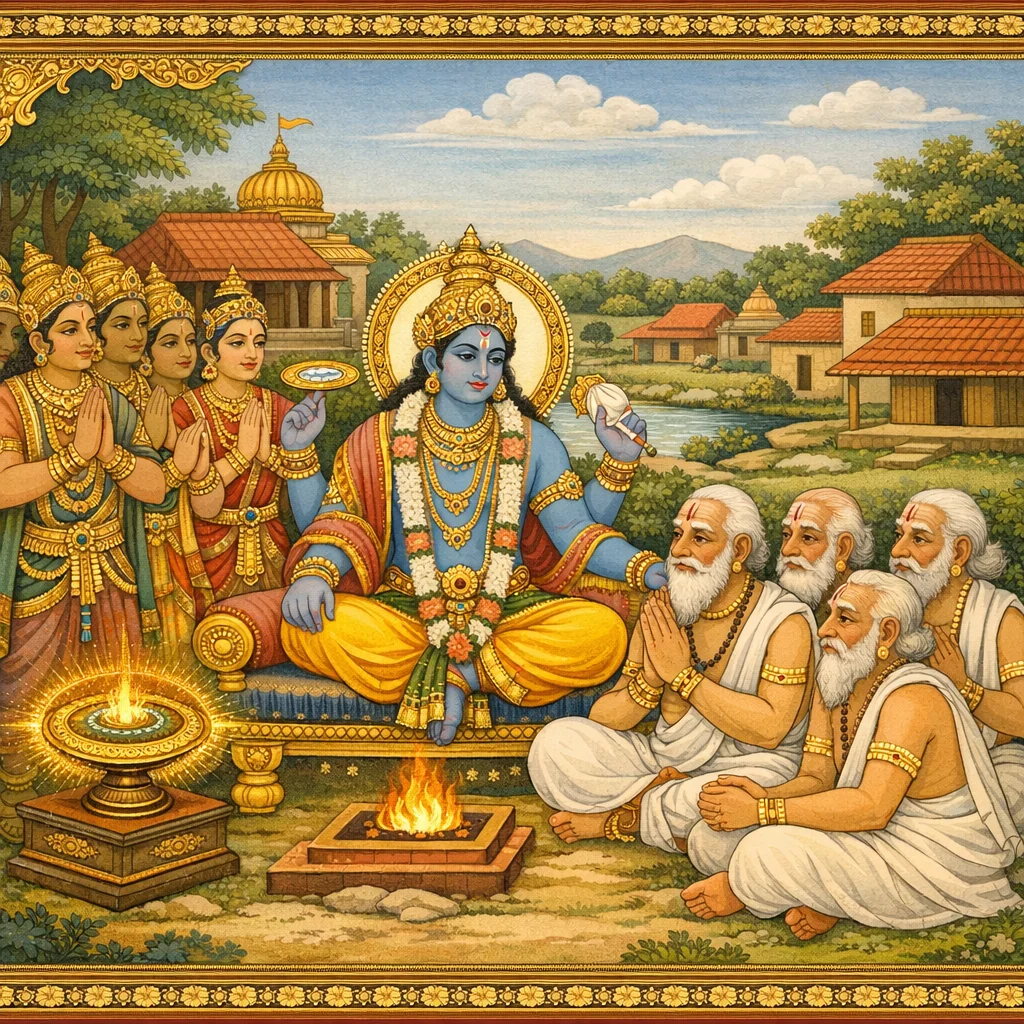
Chapter 11 continues Sūta’s karmic and social narrative: the courtesan Piṅgalā is reborn as Kīrtimālinī, daughter of Sīmantiṇī, endowed with beauty and virtue. At the same time, a prince and a merchant’s son named Sunaya grow up as intimate friends, undergo the prescribed saṃskāras (including upanayana), and study disciplines with proper conduct. When the prince turns sixteen, the Śaiva yogin Ṛṣabha arrives at the royal palace; the queen and prince repeatedly bow and honor him with hospitality. The queen petitions him to accept the prince and guide him as a compassionate guardian-teacher. Ṛṣabha then teaches a structured dharma-saṅgraha: dharma rooted in śruti–smṛti–purāṇa and practiced according to varṇāśrama; reverence for cow, deity, guru, and brāhmaṇa; truthfulness (with a narrow exception to protect cows and brāhmaṇas); renouncing illicit desire for others’ wealth and wives, and avoiding anger, deceit, slander, and needless violence; disciplined moderation in sleep, speech, food, and recreation; avoiding harmful company and seeking good counsel; protecting the helpless and showing non-violence to one who seeks refuge; generosity even in hardship and pursuit of good repute (satkīrti); governance ethics mindful of time, place, and capacity, preventing harm and restraining criminals by sound policy; and a daily Śaiva regimen of morning purity, salutations to guru and deities, offering food to Śiva, dedicating all acts to Śiva, constant remembrance, rudrākṣa and tripuṇḍra marks, and japa of the pañcākṣara mantra. The chapter ends by announcing a subsequent teaching: a Śaiva kavaca, a purāṇic secret that removes sin and grants protection.
Shlokas
Verse 1
सूत उवाच । पिंगला नाम या वेश्या मया पूर्वमुदाहृता । शिवभक्तार्चनात्पुण्यात्त्यक्त्वा पूर्वकलेवरम्
Sūta said: That courtesan named Piṅgalā, whom I mentioned earlier—through the merit born of worshipping Śiva’s devotees—cast off her former body.
Verse 2
चन्द्रांगदस्य सा भूयः सीमंतिन्यामजायत । रूपौदार्यगुणोपेता नाम्ना वै कीर्तिमालिनी
She was born again as the wife of Candrāṅgada, endowed with beauty, generosity, and virtues—indeed, she was named Kīrtimālinī.
Verse 3
भद्रायुरपि तत्रैव राजपुत्रो वणिक्पतेः । ववृधे सदने भानुः शुचाविव महातपाः
There too Bhadrāyu—the king’s son—grew up in the house of that merchant-lord, like the sun waxing in the clear season, radiant with great splendor.
Verse 4
तस्यापि वैश्यनाथस्य कुमारस्त्वेक उत्तमः । स नाम्ना सुनयः प्रोक्तो राजसूनोः सखाऽभवत्
That merchant-chief too had an excellent son. He was called Sunaya by name, and he became the friend of the king’s son.
Verse 5
तावुभौ परमस्निग्धौ राजवैश्यकुमारकौ । चित्रक्रीडावुदारांगौ रत्नाभरणमंडितौ
Those two boys—the prince and the merchant’s son—were deeply affectionate, delighting in varied games, noble in form, and adorned with jeweled ornaments.
Verse 6
तस्य राजकुमारस्य ब्राह्मणैः स वणिक्पतिः । संस्कारान्कारयामास स्वपुत्रस्यापि विस्तरात्
For that young prince, the merchant-lord had the brāhmaṇas perform the saṃskāras; and likewise for his own son as well, in full and proper detail.
Verse 7
काले कृतोपनयनौ गुरुशुश्रूषणे रतौ । चक्रतुः सर्वविद्यानां संग्रहं विनयान्वितौ
In due time, having undergone the upanayana initiation, devoted to serving their teacher, and possessed of humility, they mastered a compendium of all branches of learning.
Verse 8
अथ राजकुमारस्य प्राप्ते षोडशहायने । स एव ऋषभो योगी तस्य वेश्मन्युपाययौ
Then, when the prince had reached sixteen years of age, that very sage—Ṛṣabha, the yogin—came to his residence.
Verse 9
सा राज्ञी स कुमारश्च शिवयोगिनमागतम् । मुहुर्मुहुः प्रणम्योभौ पूजयामासतुर्मुदा
The queen and the prince, seeing the Śiva-yogin arrive, bowed down again and again; and both of them, with joy, worshipped and honored him.
Verse 10
ताभ्यां च पूजितः सोऽथ योगीशो हृष्टमानसः । तं राजपुत्रमुद्दिश्य बभाषे करुणार्द्रधीः
Thus worshipped by them, the lord of yogins became glad at heart; and, with a mind softened by compassion, he spoke, addressing the prince.
Verse 11
शिवयोग्युवाच । कच्चित्ते कुशलं तात त्वन्मातुश्चाप्यनामयम् । कच्चित्त्वं सर्वविद्यानामकार्षीश्च प्रतिग्रहम्
The Śiva-yogin said: “Dear child, is all well with you? And is your mother also free from illness? Have you duly received instruction in all branches of knowledge?”
Verse 12
कच्चिद्गुरूणां सततं शुश्रूषातत्परो भवान् । कच्चित्स्मरसि मां तात तव प्राणप्रदं गुरुम्
“Are you always devoted to serving your teachers? Dear child, do you remember me—your guru who bestowed life upon you?”
Verse 13
एवं वदति योगीशे राज्ञी सा विनयान्विता । स्वपुत्रं पादयोस्तस्य निपात्यैनमभाषत
As the lord of yogins spoke thus, the queen, endowed with humility, caused her own son to fall at his feet and then addressed him.
Verse 14
एष पुत्रस्तव गुरो त्वमस्य प्राणदः पिता । एष शिष्यस्तु संग्राह्यो भवता करुणात्मना
“O venerable guru, this is your son, for to him you are a life-giving father. Therefore accept and guide this disciple, you whose very nature is compassion.”
Verse 15
अतो बन्धुभिरुत्सृष्टमनाथं परिपालय । अस्मै सम्यक्सतां मार्गमुपदेष्टुं त्वमर्हसि
“Therefore protect this helpless one, abandoned by his kinsmen. You are worthy to teach him rightly the path followed by the good.”
Verse 16
इति प्रसादितो राज्ञ्या शिवयोगी महामतिः । तस्मै राजकुमाराय सन्मार्गमुपदिष्टवान्
Thus, entreated by the queen, the great-minded Śiva-yogin instructed that prince in the true path.
Verse 17
ऋषभ उवाच । श्रुतिस्मृतिपुराणेषु प्रोक्तो धर्मः सनातनः । वर्णाश्रमानुरूपेण निषेव्यः सर्वदा जनैः
Ṛṣabha said: “The eternal dharma is declared in the Śruti, the Smṛti, and the Purāṇas. In accordance with one’s varṇa and āśrama, it should be practiced at all times by people.”
Verse 18
भज वत्स सतां मार्गं सदेव चरितं चर । न देवाज्ञां विलंघेथा मा कार्षीर्देवहेलनम्
My child, follow the path of the virtuous and live in conduct worthy of the Devas. Do not transgress the divine command, and never show contempt toward the Devas.
Verse 19
गोदेवगुरुविप्रेषु भक्तिमान्भव सर्वदा । चांडालमपि संप्राप्तं सदा संभावयातिथिम्
Always be devoted to cows, the Devas, your teachers, and the Brāhmaṇas. Even if an outcaste arrives, honor him at all times as a guest.
Verse 20
सत्यं न त्यज सर्वत्र प्राप्तेऽपि प्राणसंकटे । गोब्राह्मणानां रक्षार्थमसत्यं त्वं वद क्वचित्
Never abandon truth anywhere, even when life itself is in danger. Yet, for the protection of cows and the Brāhmaṇas, in some situation you may speak what is untrue.
Verse 21
परस्वेषु परस्त्रीषु देवब्राह्मण वस्तुषु । तृष्णां त्यज महाबाहो दुर्लभेष्वपि वस्तुषु
O mighty-armed one, renounce craving for what belongs to others, for another’s wife, and for the possessions of the Devas and the Brāhmaṇas—even when such things are rare and tempting.
Verse 22
सत्कथायां सदाचारे सद्व्रते च सदागमे । धर्मादिसंग्रहे नित्यं तृष्णां कुरु महामते
O wise one, always cultivate longing for noble discourse, good conduct, righteous vows, and sacred teachings; and constantly gather and uphold dharma and its allied virtues.
Verse 23
स्नाने जपे च होमे च स्वाध्याये पितृतर्पणे । गोदेवातिथिपूजासु निरालस्यो भवानघ
O blameless one, be free from sloth in ritual bathing, mantra-recitation (japa), fire-offerings (homa), sacred self-study, and libations to the ancestors (tarpana); and likewise in honoring cows, the Devas, and guests.
Verse 24
क्रोधं द्वेषं भयं शाठ्यं पैशुन्य मसदाग्रहम् । कौटिल्यं दंभमुद्वेगं यत्नेन परिवर्जय
With steadfast effort, abandon anger, hatred, fear, deceit, slander, clinging to what is wrong, crookedness, hypocrisy, and agitation.
Verse 25
क्षात्रधर्मरतोऽपि त्वं वृथा हिंसां परित्यज । शुष्कवैरं वृथालापं परनिदां च वर्जय
Even if you are devoted to the warrior’s dharma, abandon pointless violence. Avoid barren enmity, idle talk, and fault-finding in others.
Verse 26
मृगया द्यूतपानेषु स्त्रीषु स्त्रीविजितेषु च । अत्याहारमतिक्रोधमतिनिद्रामतिश्रमम्
Avoid hunting, gambling, drinking, indulgence in women and being ruled by women; and also overeating, excessive anger, excessive sleep, and overexertion.
Verse 27
अत्यालापमतिक्रीडां सर्वदा परिवर्जय
Always avoid excessive talk and excessive play.
Verse 28
अतिविद्यामतिश्रद्धामतिपुण्यमतिस्मृतिम् । अत्युत्साहमतिख्यातिमतिधैर्यं च साधय
Cultivate abundant learning, deep faith, great merit, strong memory, high enthusiasm, good repute, and steadfast courage.
Verse 29
सकामो निजदारेषु सक्रोधो निज शत्रुषु । सलोभः पुण्यनिचये साभ्यसूयो ह्यधर्मिषु
Let desire be confined to your own spouse; let anger be directed only toward your enemies; let greed be for the accumulation of merit; and let indignation be reserved for those who follow unrighteousness.
Verse 30
सद्वेषो भव पाखण्डे सरागः सज्जनेषु च । दुर्बोधो भव दुर्मंत्रे बधिरः पिशुनोक्तिषु
Maintain aversion toward hypocrisy; keep affection for the virtuous; be hard to persuade by wicked counsel; and be deaf to the words of slanderers.
Verse 31
धूर्त्तं चंडं शठं क्रूरं कितवं चपलं खलम् । पतितं नास्तिकं जिह्मं दूरतः परिवर्जय
Avoid from afar the deceitful, the violent, the treacherous, the cruel, the gambler, the fickle villain, the fallen, the atheist, and the crooked-minded.
Verse 32
आत्मप्रशंसा मा कार्षीः परिज्ञातेंगितो भव । धने सर्वकुटुंबे च नात्यासक्तः सदा भव
Do not praise yourself; be one who understands the signs and intentions. And remain never overly attached to wealth or even to the whole family.
Verse 33
पत्न्याः पतिव्रतायाश्च जनन्याः श्वशुरस्य च । सतां गुरोश्च वचने विश्वासं कुरु सर्वदा
Always place trust in the words of your devoted, vow-true wife, your mother, your father-in-law, and the righteous and the Guru.
Verse 34
आत्मरक्षापरो नित्यमप्रमत्तो दृढव्रतः । विश्वासं नैव कुर्वीथाः स्वभृत्येष्वपि कुत्र चित्
Be ever intent on self-protection, vigilant and unheedful of negligence, firm in your vow; and place trust nowhere—indeed, not even in your own servants.
Verse 35
विश्वस्तं मा वधीः कंचिदपि चोरं महामते । अपापेषु न शंकेथाः सत्यान्न चलितो भव
O wise one, do not harm anyone who has trusted you—even a thief. Do not suspect the innocent, and do not be shaken from truth.
Verse 36
अनाथं कृपणं वृद्धं स्त्रियं बालं निरागसम् । परिरक्ष धनैः प्राणैर्बुद्ध्या शक्त्या बलेन च
Protect the helpless, the poor, the aged, women, children, and the unoffending—by wealth, by your very life, by intelligence, by capability, and by strength.
Verse 37
अपि शत्रुं वधस्यार्हं मा वधीः शरणागतम् । अप्यपात्रं सुपात्रं वा नीचो वापि महत्तमः
Even if an enemy deserves death, do not kill one who has come seeking refuge—whether unworthy or worthy, lowly or even exalted.
Verse 38
यो वा को वापि याचेत तस्मै देहि शिरोपि च । अपि यत्नेन महता कीर्तिमेव सदार्जय
Whoever may beg from you—give to that person, even if it be at the cost of your own head. With great effort, always strive to win only noble fame (satkīrti).
Verse 39
राज्ञां च विदुषां चैव कीर्तिरेव हि भूषणम् । सत्कीर्तिप्रभवा लक्ष्मीः पुण्यं सत्कीर्तिसंभवम्
For kings and for the learned alike, fame alone is truly an ornament. Prosperity arises from noble fame, and merit (puṇya) is born from noble fame.
Verse 40
सत्कीर्त्या राजते लोकश्चंद्रश्चंद्रिकया न्यथा । गजाश्वहेमनिचयं रत्नराशिं नगोपमम्
By noble fame the world shines—just as the moon shines by its moonlight; not by heaps of elephants and horses, stores of gold, or a mountain-like mass of jewels.
Verse 41
अकीर्त्योपहतं सर्वं तृणवन्मुंच सत्वरम् । मातुः कोपं पितुः कोपं गुरोः कोपं धनव्य यम्
Whatever is struck and tainted by ill-fame—cast it away quickly as if it were mere grass. Avoid the anger of one’s mother, one’s father, and one’s guru—for it is ruinous to wealth and well-being.
Verse 42
पुत्राणामपराधं च ब्राह्मणानां क्षमस्व भोः । यथा द्विजप्रसादः स्यात्तथा तेषां हितं चर
O sir, forgive the offenses of your sons and of the brāhmaṇas. Act for their welfare so that the twice-born (dvija) may become gracious and pleased.
Verse 43
राजानं संकटे मग्नमुद्धरेयुर्द्विजोत्तमा । आयुर्यशो बलं सौख्यं धनं पुण्यं प्रजोन्नतिः
The best among the twice-born can raise up a king sunk in calamity; from their support arise long life, fame, strength, happiness, wealth, merit (puṇya), and the prosperity of the subjects.
Verse 44
कर्मणा येन जायेत तत्सेव्यं भवता सदा । देशं कालं च शक्तिं च कार्यं चा कार्यमेव च
That conduct by which good results are born should always be practiced by you. Consider the place, the time, your capacity, what ought to be done, and what ought not to be done.
Verse 45
सम्यग्विचार्य यत्नेन कुरु कार्यं च सर्वदा । न कुर्याः कस्यचिद्बाधां परबाधां निवारय
After proper reflection, always do your duty with effort. Harm no one; prevent the harm done by others.
Verse 46
चोरान्दुष्टांश्च बाधेथाः सुनीत्या शक्तिमत्तया । स्नाने जपे च होमे च दैवे पित्र्ये च कर्मणि
Restrain thieves and the wicked with good policy and effective strength. Be diligent in ritual bathing, in japa, in homa, and in rites for the gods and for the ancestors.
Verse 47
अत्वरो भव निद्रायां भोजने भव सत्वरः । दाक्षिण्ययुक्तमशठं सत्यं जनमनोहरम्
Be unhurried in sleep, but be prompt in taking food at the proper time and in due measure. Be courteous, free from deceit, truthful, and pleasing to the minds of people.
Verse 48
अल्पाक्षरमनंतार्थं वाक्यं ब्रूहि महामते । अभीतो भव सर्वत्र विपक्षेषु विपत्सु च
O great-minded one, speak a sentence that is few in words yet endless in meaning. Be fearless everywhere—among opponents and even in times of calamity.
Verse 49
भीतो भव ब्रह्मकुले न पापे गुरुशासने । ज्ञातिबंधुषु विप्रेषु भार्यासु तनयेषु च
Be cautious regarding a Brahmin lineage; never treat sin lightly; and hold the guru’s discipline in reverent fear. Be careful also with kinsmen and friends, with Brahmins, with wives, and with sons.
Verse 50
समभावेन वर्तेथास्तथा भोजनपंक्तिषु । सतां हितोपदेशेषु तथा पुण्य कथासु च
Conduct yourself with even-mindedness—likewise in the rows of dining. So too, remain steady and receptive to the beneficial counsel of the virtuous, and to sacred, merit-bearing narratives.
Verse 51
विद्यागोष्ठीषु धर्म्यासु क्वचिन्मा भूः पराङ्मुखः । शुचौ पुण्यजलस्यांते प्रख्याते ब्रह्मसंकुले
In righteous assemblies of learning, never turn away. Abide in a pure place—on the bank of sacred waters—renowned and thronged with Brahmins.
Verse 52
महादेशे शिवमये वस्तव्यं भवता सदा । कुलटा गणिका यत्र यत्र तिष्ठति कामुकः
You should always reside in a great region permeated by Śiva. Wherever a wanton woman or a courtesan is found, and wherever the lust-driven man lingers—
Verse 53
दुर्देशे नीचसंबाधे कदाचिदपि मा वस । एकमेवाश्रितोपि त्वं शिवं त्रिभुवनेश्वरम्
Never dwell, even for a moment, in a wretched land thronged with the base. Even if you take refuge in Him alone—Śiva, the Lord of the three worlds—
Verse 54
सर्वान्देवानुपासीथास्तद्दिनानि च मानयन् । सदा शुचिः सदा दक्षः सदा शांतः सदा स्थिरः
Worship all the devas, honoring their sacred days. Be ever pure, ever capable, ever peaceful, ever steady.
Verse 55
सदा विजित षड्वर्गः सदैकांतो भवानघ । विप्रान्वेदविदः शांतान्यतींश्च नियतोज्वलान्
Having ever conquered the six inner foes, remain single-mindedly devoted to the One, O sinless one. Honor and keep company with Brahmins who know the Veda, the peaceful, and the radiant ascetics steadfast in discipline.
Verse 56
युग्मम् । पुण्यवृक्षान्पुण्यनदीः पुण्यतीर्थं महत्सरः । धेनुं च वृषभं रत्नं युवतीं च पतिव्रताम्
Revere sacred trees, sacred rivers, sacred tīrthas, and great lakes. Revere also the cow, the bull, a precious gem, and a young woman devoted in fidelity to her husband.
Verse 57
आत्मनो गृहदेवांश्च सहसैव नमस्कुरु । उत्थाय समये ब्राह्मे स्वाचम्य विमलाशयः
Immediately bow to the deities of your own household. Rising at the brāhma time (before dawn), perform ācamana with a purified intention.
Verse 58
नमस्कृत्यात्मगुरुवे ध्यात्वा देवमुमापतिम् । नारायणं च लक्ष्मीशं ब्रह्माणं च विनायकम्
Having bowed to one’s own spiritual preceptor and meditated on the Lord Umāpati (Śiva), one should also revere Nārāyaṇa, the Lord of Lakṣmī (Viṣṇu), Brahmā, and Vināyaka (Gaṇeśa).
Verse 59
स्कन्दं कात्यायनीं देवीं महालक्ष्मीं सरस्वतीम् । इन्द्रादीनथ लोकेशान्पुण्यश्लोकानृषीनपि
One should also bow to Skanda, to the Goddess Kātyāyanī, to Mahālakṣmī and Sarasvatī, and likewise to Indra and the other world-rulers, as well as to the Ṛṣis praised in holy song.
Verse 60
चिंतयित्वाथ मार्त्तंडमुद्यंतं प्रणमेत्सदा । गंधं पुष्पं च तांबूलं शाकं पक्वफलादिकम्
Then, having contemplated Mārtaṇḍa (the Sun) as he rises, one should always bow. One should offer fragrance, flowers, betel, greens, ripe fruits, and the like.
Verse 61
शिवाय दत्त्वोपभुंक्ष्व भक्ष्यं भोज्यं प्रियं नवम् । यद्दत्तं यत्कृतं जप्तं यत्स्नातं यद्धुतं स्मृतम्
After offering to Śiva, partake of what is chewable and what is to be eaten—fresh and pleasing. Whatever has been given, done, recited in japa, bathed for, offered into fire, or remembered—
Verse 62
यच्च तप्तं तपः सर्वं तच्छिवाय निवेदय । भुंजानश्च पठन्वापि शयानो विहरन्नपि । पश्यञ्छृण्न्ववदन्गृह्णञ्छिवमेवानुचिंतय
And whatever austerity you have performed—offer all of that to Śiva. Whether eating or reading, whether lying down or moving about; whether seeing, hearing, speaking, or taking—keep contemplating Śiva alone.
Verse 63
रुद्राक्षकंकणलसत्करदंडयुग्मो मालांतरालधृतभस्म सितत्रिपुंडूः । पंचाक्षरं परिपठन्परमंत्रराजं ध्यायन्सदा पशुपतेश्चरणं रमेथाः
With both arms adorned by shining rudrākṣa bracelets, with sacred ash borne amid the garlands and the bright triple lines (tripuṇḍra), ever reciting the five-syllabled mantra—the supreme king of mantras—and always meditating, delight in the feet of Paśupati (Śiva).
Verse 64
इति संक्षेपतो वत्स कथितो धर्मसंग्रहः । अन्येषु च पुराणेषु विस्तरेण प्रकीर्तितः
Thus, dear child, this compendium of dharma has been stated in brief; in other Purāṇas it is proclaimed in greater detail.
Verse 65
अथापरं सर्वपुराणगुह्यं निःशेषपापौघहरं पवित्रम् । जयप्रदं सर्वविपद्विमोचनं वक्ष्यामि शैवं कवचं हिताय ते
Now, moreover, I shall teach you the Śaiva kavaca (protective hymn)—the secret of all Purāṇas: pure, removing the entire flood of sins, bestowing victory, and freeing one from every calamity—for your welfare.