शारभावतारवर्णनम् (Account of Śiva’s Śārabha Manifestation and the Measureless Avatāras)
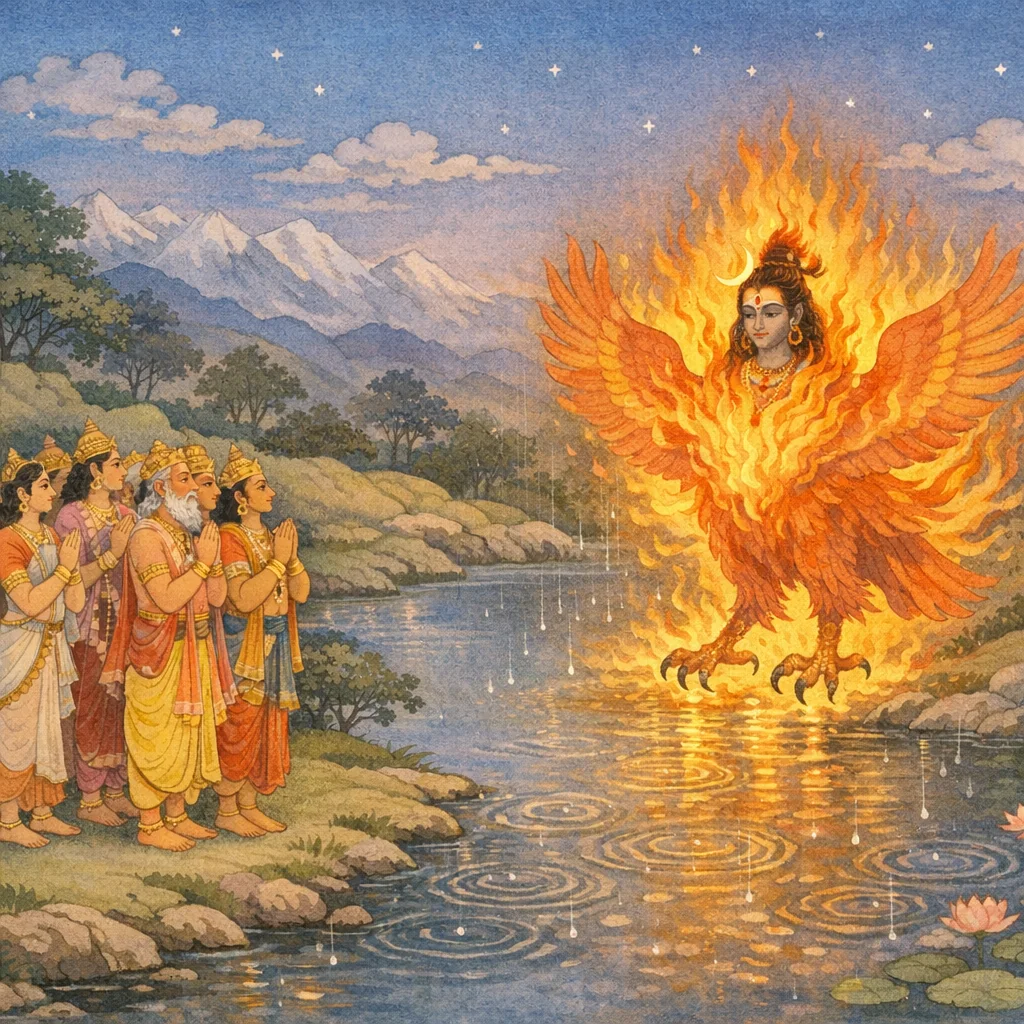
This chapter is presented as Nandīśvara’s discourse. He explicitly identifies Vīrabhadra as an avatāra of Śiva who destroyed Dakṣa’s sacrifice (dakṣayajña), but notes that the episode has already been told in the Satī-caritra and is not repeated in detail here. Out of affection for the foremost sage (muniśreṣṭha), Nandī turns to another manifestation—Śaṅkara’s Śārabha form—described as a wondrous divine embodiment assumed by Sadāśiva for the welfare of the devas, radiant like blazing fire. The chapter then declares that Śiva’s avatāras are innumerable and cannot be counted even across many kalpas, likened to the stars in the sky, dust on the earth, and drops of rain. Having established this immeasurable principle, Nandī narrates, “as best as understood,” the Śārabha-carita as an indicator of the Supreme Lord’s paramount sovereignty (paramaiśvarya-sūcaka). The narrative frame also recalls the famed curse of Jaya and Vijaya and their rebirth as Diti’s sons (Hiraṇyakaśipu and Hiraṇyākṣa), showing how cosmic enmities become occasions for divine theophany and intervention.
Shlokas
Verse 1
नंदीश्वर उवाच । विध्वंसी दक्षयज्ञस्य वीरभद्राह्वयः प्रभो । अवतारश्च विज्ञेयः शिवस्य परमात्मनः
Nandīśvara said: “O Lord, the one renowned as Vīrabhadra—who destroyed Dakṣa’s sacrifice—should be understood as an avatāra of Śiva, the Supreme Self.”
Verse 2
सतीचरित्रे कथितं चरितं तस्य कृत्स्नशः । श्रुतं त्वयापि बहुधा नातः प्रोक्तं सुविस्तरात्
In the account of Satī, his entire story has already been told in full. You too have heard it many times; therefore it will not be narrated here again at great length.
Verse 3
अतः परं मुनिश्रेष्ठ भवत्स्नेहाद्ब्रवीमि तत् । शार्दूलाख्यावतारं च शङ्करस्य प्रभोः शृणु
Therefore, O best of sages, out of affection for you I shall now speak of that. Listen to the Lord Śaṅkara’s incarnation known as Śārdūla.
Verse 4
सदाशिवेन देवानां हितार्थं रूपमद्भुतम् । शारभं च धृतन्दिव्यं ज्वलज्ज्वालासमप्रभम्
For the welfare of the gods, Sadāśiva assumed a wondrous, divine form—Śārabha—radiant with a splendor like blazing flames.
Verse 5
शिवावतारा अमिता सद्भक्तहितकारकाः । सङ्ख्या न शक्यते कर्तुं तेषां च मुनिसत्तमाः
“O best of sages, the incarnations of Śiva are limitless, ever working for the welfare of true devotees; their number cannot be counted.”
Verse 6
आकाशस्य च ताराणां रेणुकानां क्षितेस्तथा । आसाराणां च वृद्धेन बहुकल्पैः कदापि हि
“Even if one were to grow old counting—through many kalpas—the stars in the sky, the dust-particles of the earth, and the countless streams of rain, one would still never reach their end.”
Verse 7
सङ्ख्या विशक्यते कर्तुं सुप्राज्ञैर्बहुजन्मभिः । शिवावताराणां नैव सत्यं जानीहि मद्वचः
“Even the most discerning sages, though endowed with wisdom across many births, can scarcely compute their number. The incarnations and manifestations of Lord Śiva are truly beyond counting—know this as the truth of my words.”
Verse 8
तथापि च यथाबुद्ध्या कथयामि कथाश्रुतम् । चरित्रं शारभं दिव्यं परमैश्वर्य्यसूचकम्
Even so, according to the measure of my understanding, I shall relate what I have heard in sacred tradition—the divine account of Śārabha, which reveals the supreme lordship of the Great Lord (Śiva).
Verse 9
जयश्च विजयश्चैव भवद्भिः शापितौ यदा । तदा दितिसुतौ द्वौ तावभूतां कश्यपान्मुने
O sage, when you cursed Jaya and Vijaya, at that very moment those two became the two sons of Diti, born of Kaśyapa.
Verse 10
इति श्रीशिवमहापुराणे तृतीयायां शतरुद्रसंहितायां शार्दूलावतारे नृसिंहचरितवर्णनं नाम दशमोऽध्यायः
Thus, in the Śrī Śiva Mahāpurāṇa, in the Third Book—the Śatarudra-saṃhitā—ends the tenth chapter, entitled “The narration of Narasiṃha’s exploits,” within the account of Śiva’s Śārdūla (tiger-like) incarnation.
Verse 11
पृथ्व्युद्धारे विधात्रा व प्रार्थितो हि पुरा प्रभुः । हिरण्याक्षं जघानासौ विष्णुर्वाराहरूपधृक्
Formerly, when the Earth was to be rescued, the Lord was indeed entreated by the Creator (Brahmā). Taking the form of the Boar, Viṣṇu then slew Hiraṇyākṣa and lifted up the Earth.
Verse 12
तं श्रुत्वा भ्रातरं वीरं निहतं प्राणसन्निभम् । चुकोप हरयेऽतीव हिरण्यकशिपुर्मुने
O sage, hearing that his heroic brother—dear to him as his very life—had been slain, Hiraṇyakaśipu became exceedingly enraged with Hari (Viṣṇu).
Verse 13
वर्षाणामयुतं तप्त्वा ब्रह्मणो वरमाप सः । न कश्चिन्मारयेन्मां वै त्वत्सृष्टाविति तुष्टतः
After performing austerities for ten thousand years, he obtained a boon from Brahmā. Pleased, Brahmā granted: “In all your creation, let no one be able to kill you.”
Verse 14
शोणिताख्यपुरं गत्वा देवानाहूय सर्वतः । त्रिलोकीं स्ववशे कृत्वा चक्रे राज्यमकण्टकम्
Having gone to the city called Śoṇita, he summoned the gods from every quarter; and, bringing the three worlds under his control, he established a reign without any thorn—unopposed and untroubled.
Verse 15
देवर्षिकदनं चक्रे सर्वधर्म विलोपकः । द्विजपीडाकरः पापी हिरण्यकशिपुर्मुने
O sage, the sinful Hiraṇyakaśipu brought ruin upon the divine seers; he became a destroyer of all dharma and a tormentor of the twice-born (brāhmaṇas).
Verse 16
प्रह्लादेन स्वपुत्रेण हरिभक्तेन दैत्यराट् । यदा विद्वेषमकरोद्धरिर्वैरं विशेषतः
When the lord of the Daityas (Hiraṇyakaśipu), because of his own son Prahlāda—who was devoted to Hari—became filled with hatred, then Hari’s enmity toward him became especially manifest, as the destined opposition between the Lord and the tyrant.
Verse 17
सभास्तम्भात्तदा विष्णुरभूदाविर्द्रुतम्मुने । सन्ध्यायां क्रोधमापन्नो नृसिंहवपुषा ततः
O sage, then from the pillar in the assembly Viṣṇu swiftly manifested at twilight; seized by wrath, he thereafter assumed the form of Narasiṃha.
Verse 18
सर्वथा मुनिशार्दूल करालं नृहरेर्व्वपुः । प्रजज्वालातिभयदं त्रासयन्दैत्यसत्तमान्
O tiger among sages, in every way the dreadful form of Nṛhari (Narasiṃha) blazed forth, terrifying beyond measure, striking dread into the foremost of the Daityas.
Verse 19
नृसिंहेन तदा दैत्या निहताश्चैव तत्क्षणम् । हिरण्यकशिपुश्चाथ युद्धञ्चक्रे सुदारुणम्
Then, by Narasiṁha, the Daitya warriors were slain at that very moment. Thereupon Hiraṇyakaśipu too entered into a most dreadful battle.
Verse 20
महायुद्धं तयोरासीन्मुहूर्त्तम्मुनिसत्तमाः । विकरालं च भयदं सर्वेषां रोमहर्षणम्
O best of sages, for a while there arose between those two a great battle—terrifying in form, fear-inducing, and causing the hair of all to stand on end.
Verse 21
सायं चकर्ष देवेशो देहल्यां दैत्यपुङ्गवम् । व्योम्नि देवेषु पश्यत्सु नृसिंहश्च रमेश्वरः
At evening, the Lord of the gods dragged the foremost of the demons to the threshold; and, while the devas watched in the sky, the Lord—manifest as Nṛsiṃha, the beloved Lord of Ramā—did so openly before them.
Verse 22
अथोत्संगे च तं कृत्वा नखैस्तदुदरन्द्रुतम् । विदार्य मारयामास पश्यतां त्रिदिवौकसाम्
Then, placing him upon his lap, he tore open his belly with his nails and killed him, while the dwellers of heaven looked on.
Verse 23
हते हिरण्यकशिपौ नृसिंहे नैव विष्णुना । जगत्स्वास्थ्यन्तदा लेभे न वै देवाविशेषतः
When Hiraṇyakaśipu was slain, it was not truly by Viṣṇu—even in the form of Narasiṃha. Then the world regained its well-being, for in essence there is no absolute distinction among the gods (since all act through the one Supreme Lord’s power).
Verse 24
देवदुन्दुभयो नेदुः प्रह्लादो विस्मयं गतः । लक्ष्मीश्च विस्मयं प्राप्ता रूपं दृष्ट्वाऽद्भुतं हरेः
The celestial kettledrums resounded. Prahlāda was struck with wonder, and Lakṣmī too was filled with amazement on beholding the marvelous form of Hari.
Verse 25
हतो यद्यपि दैत्येन्द्रस्तथापि न पुरं सुखम् । ययुर्देवा नृसिंहस्य ज्वाला सा न निवर्तिता
Although the lord of the demons had been slain, there was still no ease within the city. The gods withdrew, for the blazing fury of Nṛsiṃha did not subside.
Verse 26
तया च व्याकुलं जातं सर्वं चैव जगत्पुनः । देवाश्च दुःखमापन्नाः किम्भविष्यति वा पुनः
Because of her, the entire world again became disturbed and agitated. The devas too fell into sorrow, thinking, “What will happen now?”
Verse 27
इत्येवं च वदन्तस्ते भयादूदूरमुपस्थि ताः । नृसिंहक्रोधजज्वालाव्याकुलाः पद्मभूमुखाः
Thus speaking, lotus-born Brahmā and the others stood far away out of fear, their faces distressed and shaken by the blazing fire born of Narasiṁha’s wrath.
Verse 28
प्रह्रादं प्रेषयामासुस्तच्छान्त्यै निकटं हरेः । सर्वान्मिलित्वा प्रह्लादः प्रार्थितो गतवांस्तदा
To bring about pacification, they sent Prahlāda to the presence of Hari (Viṣṇu). Then Prahlāda, after assembling everyone and being entreated by them, went there at once.
Verse 29
उरसाऽऽलिंगयामास तं नृसिंहः कृपानिधिः । हृदयं शीतलं जातं रुड्ज्वाला न निवर्त्तिता
Then Narasiṃha, an ocean of compassion, embraced him to His chest. His heart became cool and soothed, yet the burning pain did not completely subside.
Verse 30
तथापि न निवृता रुड्ज्वाला नरहरेर्यदा । इष्टं प्राप्तास्ततो देवाश्शंकर शरणं ययुः
Even so, when the fierce blazing energy of Narahari did not subside, the gods—having attained their desired aim—then went to Śaṅkara as their refuge.
Verse 31
तत्र गत्वा सुरास्सर्वे ब्रह्माद्या मुनय स्तथा । शंकरं स्तवयामासुर्लोकानां सुखहेतवे
Going there, all the devas—together with Brahmā and the sages—began to hymn Śaṅkara, the Lord who is the very cause of the worlds’ welfare and happiness.
Verse 32
देवा ऊचुः । देवदेव महादेव शरणागतवत्सल । पाहि नः शरणापन्ना न्सर्वान्देवाञ्जगन्ति च
The Devas said: “O God of gods, O Mahādeva, compassionate to all who seek refuge in You—protect us. We, and indeed all the gods and the worlds, have come to You for shelter.”
Verse 33
नमस्तेऽस्तु नमस्तेऽस्तु नमस्तेऽस्तु सदाशिव । पूर्वं दुःखं यदा जातं तदा ते रक्षिता वयम्
Salutations to You—salutations, salutations, O Sadāśiva. When sorrow arose in former times, then it was You who protected us.
Verse 34
समुद्रो मथितश्चैव रत्नानां च विभागशः । कृते देवैस्तदा शंभो गृहीतं गरलन्त्वया
When the Ocean was churned and the jewels were apportioned among the gods, then, O Śambhu, the deadly poison was taken up by you—out of compassion—so that the worlds might be protected.
Verse 35
रक्षिताः स्म तदा नाथ नीलकण्ठ इति श्रुतः । विषं पास्यसि नो चेत्त्वं भस्मीभूतास्तदाखिलाः
“O Lord, then we were protected—hence You are renowned as Nīlakaṇṭha (the Blue-throated One). If You do not drink this poison, all of us will at once be reduced to ashes.”
Verse 36
प्रसिद्धं च यदा यस्य दुःखं च जायते प्रभो । तदा त्वन्नाममात्रेण सर्वदुःखं विलीयते
O Lord, whenever any person becomes afflicted by sorrow, then by the mere utterance of Your Name, all sorrow dissolves away.
Verse 37
इदानीं नृहरिज्वालापीडितान्नस्सदाशिव । तां त्वं शमयितुं देव शक्तोऽसीति सुनिश्चितम्
Now we are tormented by the blazing fire of Nṛhari. O Sadāśiva, it is certain that You alone, O Lord, have the power to pacify and quell that fire.
Verse 38
नन्दीश्वर उवाच । इति स्तुतस्तदा देवैश्शंकरो भक्तवत्सलः । प्रत्युवाच प्रसन्नात्माऽभयन्दत्त्वा परप्रभुः
Nandīśvara said: Thus praised at that time by the gods, Śaṅkara—ever affectionate to His devotees—being inwardly pleased, the Supreme Lord replied, first granting them fearlessness.
Verse 39
शंकर उवाच । स्वस्थानं गच्छत सुरास्सर्व्वे ब्रह्मादयोऽभयाः । शमयिष्यामि यद्दुःखं सर्वथा हि व्रतम्मम
Śaṅkara said: “All you devas—beginning with Brahmā—go back to your own abodes, free from fear. I shall surely bring to rest whatever suffering has arisen; this indeed is my vow.”
Verse 40
गतो मच्छरणं यस्तु तस्य दुःखं क्षयं गतम् । मत्प्रियः शरणापन्नः प्राणेभ्योऽपि न संशयः
Whoever has come to My refuge—his sorrow goes to destruction. One who has surrendered for refuge becomes dear to Me, beyond even life itself—of this there is no doubt.
Verse 41
नन्दीश्वर उवाच । इति श्रुत्वा तदा देवा ह्यानन्दम्परमं गताः । यथागतं तथा जग्मुस्स्मरन्तश्शंकरं मुदा
Nandīśvara said: Hearing this, the gods were filled with supreme bliss. Then, just as they had come, they departed—joyfully remembering Śaṅkara.
Frequently Asked Questions
It argues for Śiva’s avatāra principle by (1) identifying Vīrabhadra as Śiva’s manifestation connected to the destruction of Dakṣa’s sacrifice, and (2) introducing the Śārabha form as a deliberate theophany assumed by Sadāśiva for the devas’ welfare, framed as evidence of supreme aiśvarya.
The chapter’s ‘countless avatāras’ motif functions as a rahasya of transcendence-in-immanence: the immeasurability of forms signals that the Absolute (paramātman) is not exhausted by any single icon or narrative. The blazing radiance imagery (jvalajjvālā-samaprabha) encodes the idea of consuming ignorance and restoring cosmic equilibrium—divine power as purifying luminosity rather than merely physical force.
Śiva’s manifestations highlighted are Vīrabhadra (as the avatāra associated with Dakṣa-yajña’s destruction) and the Śārabha form (Śārabha/Śārabhaḥ), presented as a wondrous embodiment of Sadāśiva undertaken for divine welfare and as a marker of paramaiśvarya.