उत्पातवर्णनम् / Description of Portents at Dakṣa’s Sacrifice
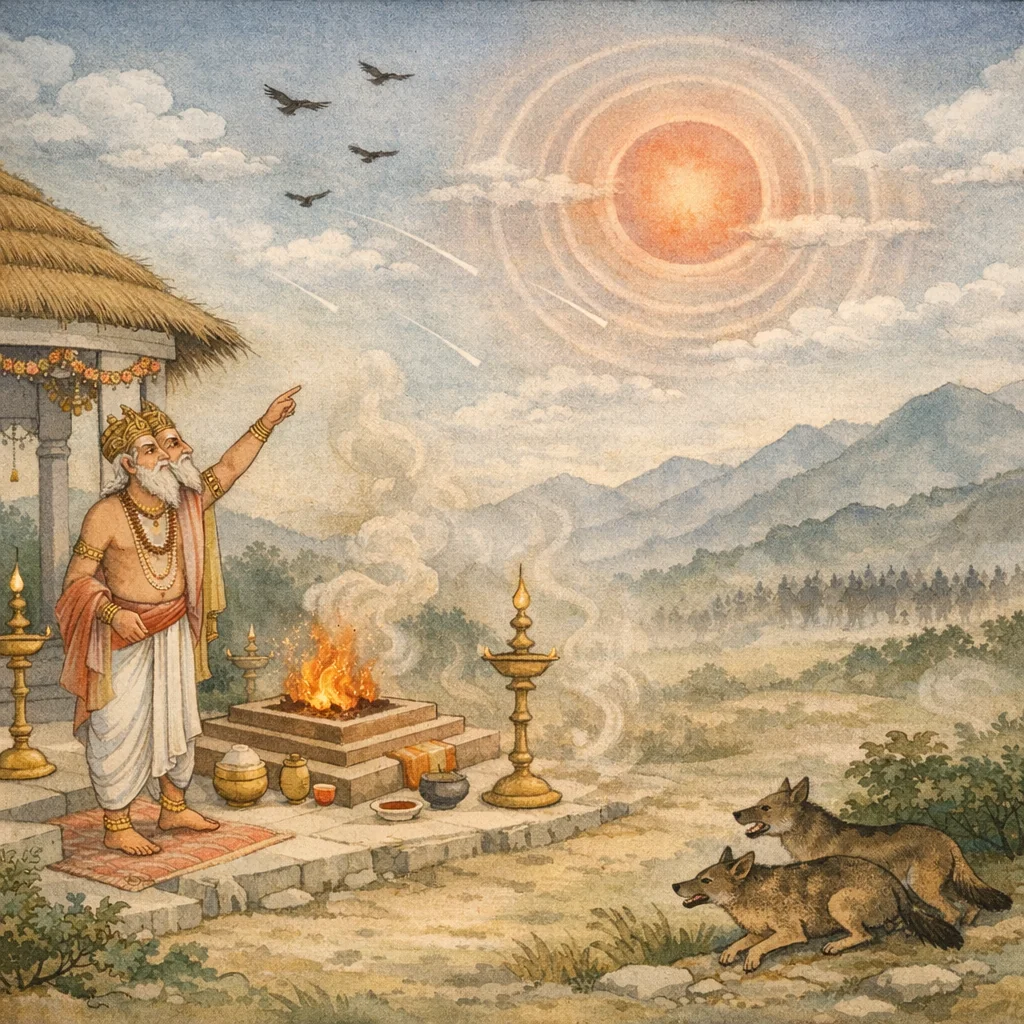
Adhyāya 34 records Brahmā’s account of ominous portents (utpāta) that arose at Dakṣa’s sacrificial arena as Vīrabhadra, accompanied by Śiva’s gaṇas, moved toward or stood around the yajña. The chapter lists layered omens foretelling the sacrifice’s impending ruin: inauspicious bodily signs in Dakṣa (tremors and spasms), an earthquake at the ritual site, midday celestial anomalies (a discolored sun and multiple halos), meteoric or fire-like falls, stars moving crookedly or downward, ominous animals and cries (vultures, jackals), and violent weather (dust-laden harsh winds, whirlwinds, and showers of fiery objects). The narrative is diagnostic: cosmic and natural order mirrors ritual and moral disorder, and the yajña’s collapse is pre-signaled through classical categories of portents.
Shlokas
Verse 1
ब्रह्मोवाच । एवं प्रचलिते चास्मिन् वीरभद्रे गणान्विते । दुष्टचिह्नानि दक्षेण दृष्टानि विबुधैरपि
Brahmā said: When Vīrabhadra thus set forth, accompanied by the hosts of Śiva, Dakṣa—and even the gods as well—beheld ominous signs of impending ruin.
Verse 2
उत्पाता विविधाश्चासन् वीरभद्रे गणान्विते । त्रिविधा अपि देवर्षे यज्ञविध्वंससूचकाः
O divine sage, when Vīrabhadra, accompanied by the Gaṇas, was present, many ominous portents arose—indeed of three kinds—foretelling the destruction of the sacrifice.
Verse 3
दक्षवामाक्षिबाहूरुविस्पंदस्समजायत । नानाकष्टप्रदस्तात सर्वथाऽशुभसूचकः
Then Dakṣa’s left eye, arm, and thigh began to throb. O dear one, it was a harbinger of misfortune in every way, foretelling many kinds of distress.
Verse 4
भूकंपस्समभूत्तत्र दक्षयागस्थले तदा । दक्षोपश्यच्च मध्याह्ने नक्षत्राण्यद्भुतानि च
Then, at that very place of Dakṣa’s sacrifice, an earthquake suddenly arose. And Dakṣa beheld, even at midday, wondrous and unnatural signs among the stars—ominous portents of dharma’s disturbance and the Lord’s displeasure.
Verse 5
दिशश्चासन्सुमलिनाः कर्बुरोभूद्दिवाकरः । परिवेषसहस्रेण संक्रांतश्च भयंकरः
The directions became foul and turbid; the sun turned mottled and dim. Encircled by thousands of ominous halos, it entered a dreadful eclipse-like change—an awe-inspiring sign of impending calamity.
Verse 6
नक्षत्राणि पतंति स्म विद्युदग्निप्रभाणि च । नक्षत्राणामभूद्वक्रा गतिश्चाधोमुखी तदा
Then the stars seemed to fall, flashing like lightning and fire. The course of the constellations became distorted, and their motion turned downward—an ominous upheaval in the cosmic order.
Verse 7
गृध्रा दक्ष शिरः स्पृष्ट्वा समुद्भूताः सहस्रशः । आसीद्गृध्रपक्षच्छायैस्सच्छायो यागमंडपः
When the vultures touched Dakṣa’s severed head, they sprang forth by the thousands; and by the shade of their wings the sacrificial pavilion became covered in a dense, ominous shadow.
Verse 8
ववाशिरे यागभूमौ क्रोष्टारो नेत्रकस्तदा । उल्कावृष्टिरभूत्तत्र श्वेतवृश्चिकसंभवा
Then, upon the sacrificial ground, the jackals howled and ominous portents met the eyes. There also fell a rain of fiery meteors, as though born of pale scorpions—terrifying signs foretelling the disturbance of the rite and the rising of adharma against Śiva’s sacred order.
Verse 9
खरा वाता ववुस्तत्र पांशुवृष्टिसमन्विताः । शलभाश्च समुद्भूता विवर्तानिलकंपिताः
There, fierce winds began to blow, accompanied by a rain of dust. Swarms of locusts also arose, shaken and driven about by the whirling gusts.
Verse 10
रीतैश्च पवनै रूर्द्ध्वं स दक्षाध्वरमंडपः । दैवान्वितेन दक्षेण यः कृतो नूतनोद्भुतः
That wondrous, newly constructed sacrificial pavilion of Dakṣa—raised up by Dakṣa together with the gods—was then hurled upward and scattered by the violent, disruptive winds.
Verse 11
वेमुर्दक्षादयस्सर्वे तदा शोणितमद्भुतम् । वेमुश्च मांसखण्डानि सशल्यानि मुहुर्मुहुः
Then Dakṣa and all the others vomited wondrous streams of blood; again and again they also spewed lumps of flesh, pierced with splinters and shards—an awful sign of the ruin brought by their offence against Śiva.
Verse 12
सकंपाश्च बभूवुस्ते दीपा वातहता इव । दुःखिताश्चाभवन्सर्वे शस्त्रधाराहता इव
They all began to tremble, like lamps struck by a gust of wind; and all of them became grief-stricken, as if cut down by the sharp edge of weapons.
Verse 13
तदा निनादजातानि बाष्पवर्षाणि तत्क्षणे । प्रातस्तुषारवर्षीणि पद्मानीव वनांतरे
At that very moment, as the cries arose, there came a sudden rain of tears—like lotus-flowers in a forest that, at dawn, drip with dewy showers.
Verse 14
दक्षाद्यक्षीणि जातानि ह्यकस्माद्विशदान्यपि । निशायां कमलाश्चैव कुमुदानीव संगवे
Then, all eyes—beginning with Dakṣa’s—became suddenly pale and lusterless, as though drained of vitality; and the lotus-like faces that bloom by day appeared as if closed and dim in the night—like kumuda lilies at daybreak.
Verse 15
असृग्ववर्ष देवश्च तिमिरेणावृता दिशः । दिग्दाहोभूद्विशेषेण त्रासयन् सकलाञ्जनान्
Then a dreadful portent arose: blood rained down, the quarters were veiled in darkness, and a fierce burning blazed in every direction, terrifying all beings on every side.
Verse 16
एवं विधान्यरिष्टानि ददृशुर्विबुधादयः । भयमापेदिरेऽत्यंतं मुने विष्ण्वादिकास्तदा
Seeing such ominous portents, the gods and other celestial beings were seized by extreme fear; at that time, O sage, even Viṣṇu and the others were overwhelmed by great dread.
Verse 17
भुवि ते मूर्छिताः पेतुर्हा हताः स्म इतीरयन् । तरवस्तीरसंजाता नदीवेगहता इव
Crying, “Alas, we are slain!”, they fell senseless upon the earth—like trees on a riverbank toppled by the rushing force of a flood.
Verse 18
पतित्वा ते स्थिता भूमौ क्रूराः सर्पा हता इव । कंदुका इव ते भूयः पतिताः पुनरुत्थिताः
Having fallen, they lay upon the ground like fierce serpents struck down. Then again, like balls rebounding, they fell and rose once more.
Verse 19
ततस्ते तापसंतप्ता रुरुदुः कुररी इव । रोदनध्वनिसंक्रातोरुक्तिप्रत्युक्तिका इव
Then, scorched by the anguish of austerity and sorrow, they wept like a kurarī bird; and their cries rose and fell like a wailing echo—call and response—reverberating through the air.
Verse 20
सवैकुंठास्ततस्सर्वे तदा कुंठितशक्तयः । स्वस्वोपकंठमाकंठं लुलुठुः कमठा इव
Then all of them—though dwelling in their own heavenly abodes—found their powers blunted. Each, sinking down near his own place, lay collapsed up to the throat, like tortoises withdrawn and helpless.
Verse 21
एतस्मिन्नंतरे तत्र संजाता चाशरीरवाक् । श्रावयत्यखिलान् देवान्दक्षं चैव विशेषतः
Just then, in that very place, a disembodied voice arose and proclaimed a message for all the gods to hear—addressing Dakṣa in particular.
Verse 22
आकाशवाण्युवाच । धिक् जन्म तव दक्षाद्य महामूढोसि पापधीः । भविष्यति महद्दुःखमनिवार्यं हरोद्भवम्
The heavenly voice said: “Fie upon your birth, O Dakṣa and the like! You are utterly deluded, with a sinful understanding. Great sorrow, unavoidable and arising because of Hara (Śiva), will come to pass.”
Verse 23
हाहापि नोत्र ये मूढास्तव देवादयस्थिताः । तेषामपि महादुःखं भविष्यति न संशयः
“Alas! Those deluded ones who stand here on your side—Devas and others—will also fall into great sorrow; of this there is no doubt.”
Verse 24
ब्रह्मोवाच तच्छ्रुत्वाकाशवचनं दृष्ट्वारिष्टानि तानि च । दक्षः प्रापद्भयं चाति परे देवादयोपि ह
Brahmā said: Hearing that proclamation from the sky, and seeing those ominous portents as well, Dakṣa fell into great fear; and the other gods and celestial beings too became afraid.
Verse 25
वेपमानस्तदा दक्षो विकलश्चाति चेतसि । अगच्छच्छरणं विष्णोः स्वप्रभोरिंदिरापतेः
Then Dakṣa, trembling and mentally unsteady, went for refuge to Viṣṇu—his own lord, the consort of Indirā (Lakṣmī).
Verse 26
सुप्रणम्य भयाविष्टः संस्तूय च विचेतनः । अवोचद्देवदेवं तं विष्णुं स्वजनवत्सलम्
Overwhelmed with fear, he bowed down deeply; and though shaken and scarcely composed, he praised and then spoke to that Lord of gods—Viṣṇu—ever affectionate toward His own devotees.
Verse 34
इति श्रीशिवमहापुराणे द्वितीयायां रुद्रसंहितायां द्वितीये सती खंडे दुश्शकुनदर्शनं नाम चतुस्त्रिंशोऽध्यायः
Thus ends the thirty-fourth chapter, called “The Seeing of Inauspicious Omens,” in the second section of the Śrī Śiva Mahāpurāṇa—within the second Saṃhitā, the Rudra Saṃhitā, and in its second division, the Satī Khaṇḍa.
Frequently Asked Questions
The emergence of pervasive omens at Dakṣa’s sacrificial arena as Vīrabhadra and Śiva’s gaṇas advance—signals that the dakṣayajña is fated to be disrupted and ruined.
They portray ṛta (cosmic order) reacting to ritual-moral disorder: a yajña performed with pride and disrespect toward Śiva becomes cosmically unsustainable, and nature itself ‘speaks’ the impending correction.
Bodily inauspicious tremors in Dakṣa, earthquake at the yajña-site, midday astral anomalies, a discolored sun with many halos, falling fiery lights, abnormal star-movements, vultures and jackals at the arena, meteor-like showers, dust-storm winds, and swarming insects.