Gautama–Ahalyā-Upākhyāna: Durbhikṣa, Tapas, and Varuṇa’s Boon (गौतमाहल्योपाख्यानम्)
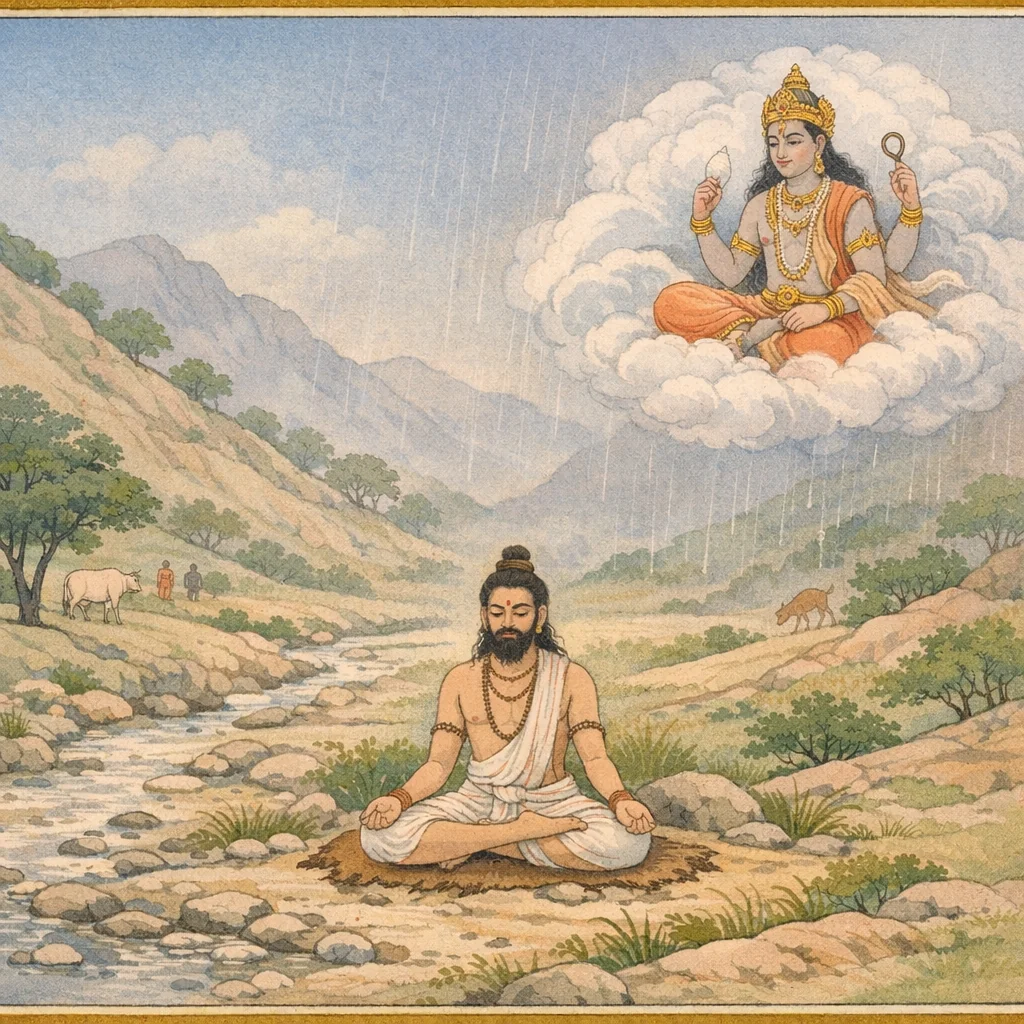
Adhyāya 24 begins with Sūta’s solemn transmission formula, presenting the tale as a sin-destroying kathā (pāpa-praṇāśinī) received through Vyāsa and the guru lineage. It introduces the famed ṛṣi Gautama and his dhārmik consort Ahalyā. The scene shifts south to Mount Brahmā, where Gautama performs long austerities. A hundred-year anāvṛṣṭi (failure of rains) follows, bringing ecological ruin: plants wither, water vanishes, and beings scatter in all directions to survive. Gautama then undertakes focused tapas to Varuṇa, sustaining prāṇāyāma for six months, while other sages endure through yogic discipline and steady meditation. Varuṇa finally appears, pleased, and offers a boon; Gautama asks for rainfall, and the divine reply frames an exemplary link between ascetic-yogic practice, the restoration of ṛta (cosmic order signaled by rain), and the ethic of interdependence between human conduct and environmental order.
Shlokas
Verse 1
सूत उवाच । श्रूयतामृषयः श्रेष्ठाः कथां पापप्रणाशिनीम् । कथयामि यथा व्यासात्सद्गुरोश्च श्रुता मया
Sūta said: “Listen, O best of sages, to this sin-destroying sacred account. I shall narrate it exactly as I heard it from Vyāsa and from my true Guru.”
Verse 2
पुरा ऋषिवरश्चासीद्गौतमो नाम विश्रुतः । अहल्या नाम तस्यासीत्पत्नी परमधार्मिकी
In ancient times there was a foremost sage, renowned by the name Gautama. His wife was Ahalyā—supremely righteous and devoted to dharma.
Verse 3
दक्षिणस्यां दिशि हि यो गिरिर्ब्रह्मेति संज्ञकः । तत्र तेन तपस्तप्तं वर्षाणाम युतं तथा
Indeed, in the southern direction there is a mountain known by the name “Brahma.” There, it is said, he performed austerities (tapas) for ten thousand years.
Verse 4
कदाचिच्च ह्यनावृष्टिरभवत्तत्र सुव्रताः । वर्षाणां च शतं रौद्री लोका दुःखमुपागताः
At one time, O you of noble vows, there arose there a terrible drought; and for a full hundred years the worlds fell into suffering.
Verse 5
आर्द्रं च पल्लवं न स्म दृश्यते पृथिवीतले । कुतो जलं विदृश्येत जीवानां प्राणधारकम्
On the face of the earth, not even a moist tender sprout is seen. How, then, could water—the very sustainer of the life-breath of living beings—be found at all?
Verse 6
गौतमोऽपि स्वयं तत्र वरुणार्थे तपश्शुभम् । चकार चैव षण्मासं प्राणायामपरायणः
There, Gautama himself also performed auspicious austerity for the sake of Varuṇa, and for six months he remained wholly devoted to the practice of prāṇāyāma, the discipline of the breath.
Verse 7
तां दृष्ट्वा चर्षयो विप्राः प्राणायामपरायणाः । ध्यानेन च तदा केचित्कालं निन्युस्सुदारुणम्
Seeing that awe-inspiring manifestation, the sage-brahmins, devoted to the discipline of prāṇāyāma, and some among them to deep meditation, passed that exceedingly dreadful span of time by steady yogic absorption—holding their minds in Shiva.
Verse 9
ततश्च वरुणस्तस्मै वरं दातुं समागताः । प्रसन्नोऽस्मि वरं ब्रूहि ददामि च वचोऽब्रवीत्
Then Varuṇa came to him to grant a boon and said: “I am pleased. Tell me the boon you desire; I shall bestow it,” thus he spoke.
Verse 10
ततश्च गौतमस्तं वै वृष्टिं च प्रार्थयत्तदा । ततस्स वरुणस्तं वै प्रत्युवाच मुनिं द्विजाः
Then Gautama prayed to him for rain. Thereupon Varuṇa replied to that sage—O twice-born ones—responding to his request.
Verse 11
वरुण उवाच । देवाज्ञां च समुल्लंघ्य कथं कुर्यामहं च ताम् । अन्यत्प्रार्थय सुज्ञोऽसि यदहं करवाणि ते
Varuṇa said: “How could I do that, transgressing the command of the gods? Ask for something else. You are wise—tell me what I should do for you.”
Verse 12
सूत उवाच । इत्येतद्वचनं तस्य वरुणस्य महात्मनः । परोपकारी तच्छुत्वा गोतमो वाक्यमब्रवीत
Sūta said: Having heard these words of the great-souled Varuṇa, the beneficent sage Gautama—ever intent on the welfare of others—spoke in reply.
Verse 13
गौतम उवाच । यदि प्रसन्नो देवेश यदि देयो वरो मम । यदहं प्रार्थयाम्यद्य कर्तव्यं हि त्वया तथा
Gautama said: “O Lord of the gods, if You are pleased—and if a boon is to be granted to me—then whatever I am praying for today, that indeed should be done by You accordingly.”
Verse 14
यतस्त्वं जलराशीशस्तस्माद्देयं जलं मम । अक्षयं सर्वदेवेश दिव्यं नित्यफलप्रदम्
Since You are the Lord of the oceanic waters, therefore I offer this water to You. O Lord of all the gods, may this divine offering be inexhaustible and grant unfailing, everlasting fruit.
Verse 15
सूत उवाच । इति संप्रार्थितस्तेन वरुणो गौतमेन वै । उवाच वचनं तस्मै गर्तश्च क्रियतां त्वया
Sūta said: Thus earnestly entreated by Gautama, Varuṇa spoke to him, saying, “Therefore, let a pit (garta) be made by you.”
Verse 16
इत्युक्ते च कृतस्तेन गर्त्तो हस्तप्रमाणतः । जलेन पूरितस्तेन दिव्येन वरुणेन सः
When this was said, he dug a pit measuring a cubit by the hand. He then filled it with divine water, consecrated by Varuṇa.
Verse 17
अथोवाच मुनिं देवो वरुणो हि जलाधिपः । गौतमं मुनिशार्दूलं परोपकृतिशालिनम्
Then Varuṇa, the divine Lord of the waters, addressed the sage Gautama—foremost among seers, a tiger among munis—who was rich in the virtue of working for the welfare of others.
Verse 18
वरुण उवाच । अक्षय्यं च जलं तेऽस्तु तीर्थभूतं महामुने । तव नाम्ना च विख्यातं क्षितावेतद्भविष्यति
Varuṇa said: “O great sage, may this water of yours be inexhaustible and become a sacred tīrtha. Upon the earth, this place shall be renowned by your very name.”
Verse 19
अत्र दत्तं हुतं तप्तं सुराणां यजनं कृतम् । पितॄणां च कृतं श्राद्धं सर्वमेवाक्षयं भवेत्
Here, whatever is given in charity, offered into the sacred fire, or performed as tapas; whatever worship of the devas is done; and whatever śrāddha is offered to the ancestors—all becomes akṣaya, imperishable in spiritual merit.
Verse 20
सूत उवाच । इत्युक्तांतर्द्दधे देवस्स्तुतस्तेन महर्षिणा । गौतमोऽपि सुखं प्राप कृत्वान्योपकृतिं मुनिः
Sūta said: Having spoken thus, the Deva—praised by that great sage—vanished from sight. And the sage Gautama too attained happiness, having rendered a beneficent service to another.
Verse 21
मद्दत्तो ह्याश्रयः पुंसां महत्त्वायोपजायते । महांतस्तत्स्वरूपं च पश्यंति नेतरेऽशुभाः
Indeed, the refuge granted by Me causes human beings to attain true greatness. The great-souled perceive its very essential nature, but those of impure disposition do not.
Verse 22
यादृङ्नरं च सेवेत तादृशं फलमश्नुते । महतस्सेवयोच्च त्वं क्षुद्रस्य क्षुद्रतां तथा
As is the person one chooses to serve, so is the fruit one comes to enjoy. By serving the great, one rises to greatness; by serving the petty, one likewise becomes petty.
Verse 23
सिंहस्य मंदिरे सेवा मुक्ताफलकरी मता । शृगालमंदिरे सेवा त्वस्थिलाभकरी स्मृता
Service rendered in the abode of a lion is regarded as bestowing the fruit of pearls; but service in the abode of a jackal is remembered as yielding only the gain of mere bones.
Verse 24
इति श्रीशिवमहापुराणे चतुर्थ्यां कोटिरुद्रसं हितायां त्र्यंबकेश्वरमाहात्म्ये गौतमप्रभाववर्णनं नाम चतुर्विशोऽध्यायः
Thus, in the Śrī Śiva Mahāpurāṇa—within the Fourth Koṭirudra Saṃhitā, in the section on the Glory of Tryambakeśvara—ends the twenty-fourth chapter entitled “The Description of the Spiritual Power and Greatness of Gautama.”
Verse 25
वृक्षाश्च हाटकं चैव चंदनं चेक्षुकस्तथा । एते भुवि परार्थे च दक्षा एवं न केचन
“Trees, gold, sandalwood, and sugarcane—such things in this world truly can serve the good of others; yet those who are able to act in that spirit of selfless purpose are indeed rare.”
Verse 26
दयालुरमदस्पर्श उपकारी जितेन्द्रियः । एतैश्च पुण्यस्तम्भैस्तु चतुर्भिर्धार्य्यते मही
Compassionate, untouched by intoxication and pride, helpful to others, and self-controlled—by these four pillars of merit the earth is truly upheld.
Verse 27
ततश्च गौतमस्तत्र जलं प्राप्य सुदुर्लभम् । नित्यनैमित्तिकं कर्म चकार विधिवत्तदा
Then Gautama, having obtained there that exceedingly hard-to-find water, duly performed at that time the daily and occasional rites in the prescribed manner.
Verse 28
ततो व्रीहीन्यवांश्चैव नीवारानप्यनेकधा । वापयामास तत्रैव हवनार्थं मुनीश्वरः
Then the great sage had rice, barley, and many kinds of wild grains (nīvāra) sown right there, for the sake of performing the homa, the sacred fire-offering.
Verse 29
धान्यानि विविधानीह वृक्षाश्च विविधास्तथा । पुष्पाणि च फलान्येव ह्यासंस्तत्रायनेकशः
There, in that sacred place, were grains of many kinds and trees of many varieties; likewise flowers and fruits abounded everywhere, in countless ways.
Verse 30
तच्छुत्वा ऋषयश्चान्ये तत्राया तास्सहस्रशः । पशवः पक्षिणश्चान्ये जीवाश्च बहवोऽगमन्
Hearing that, many other sages came there in their thousands. Animals and birds too, and many other living beings, also arrived.
Verse 31
तद्वनं सुन्दरं ह्यासीत्पृथिव्यां मंडले परम् । तदक्षयकरायोगादनावृष्टिर्न दुःखदा
That forest was indeed exceedingly beautiful—supreme upon the earth’s realm. And because it was endowed with an unfailing, prosperity-giving power, even a lack of rain did not become a cause of suffering there.
Verse 32
ऋषयोऽपि वने तत्र शुभकर्मपरायणाः । वासं चक्रुरनेके च शिष्यभार्य्यासुतान्विताः
There, in that forest, the sages too—devoted to auspicious rites and disciplines—made their dwelling; and many of them lived there accompanied by their disciples, wives, and sons.
Verse 33
धान्या नि वापयामासुः कालक्रमणहेतवे । आनंदस्तद्वने ह्यासीत्प्रभावाद्गौतमस्य च
They sowed grains there in order to mark the passage of time. In that forest, indeed, there was joy—owing to the spiritual potency of sage Gautama as well.
Frequently Asked Questions
A century-long drought (anāvṛṣṭi) devastates the world; ṛṣi Gautama responds with six months of prāṇāyāma-centered tapas directed to Varuṇa, who appears and offers a boon, leading to a petition for rainfall and restoration.
Drought functions as a narrative sign of disrupted ṛta (cosmic regularity), while rain represents the re-harmonization of cosmic and social order; the text encodes a principle that disciplined inner regulation (prāṇāyāma/tapas) can mediate outer-world stability through divine sanction.
In the provided portion of Adhyāya 24, no explicit Śiva/Gaurī form is foregrounded; instead, the chapter advances Śaiva-typical praxis-theology indirectly by showcasing tapas and yogic discipline as the operative bridge to grace, here mediated through Varuṇa’s boon.