Adhyaya 46
आचार्य-क्षमा, देśa–kāla-नīti, तथा भेद-दोषः (Teacher-Reconciliation, Timing-Policy, and the Fault of Factionalism)
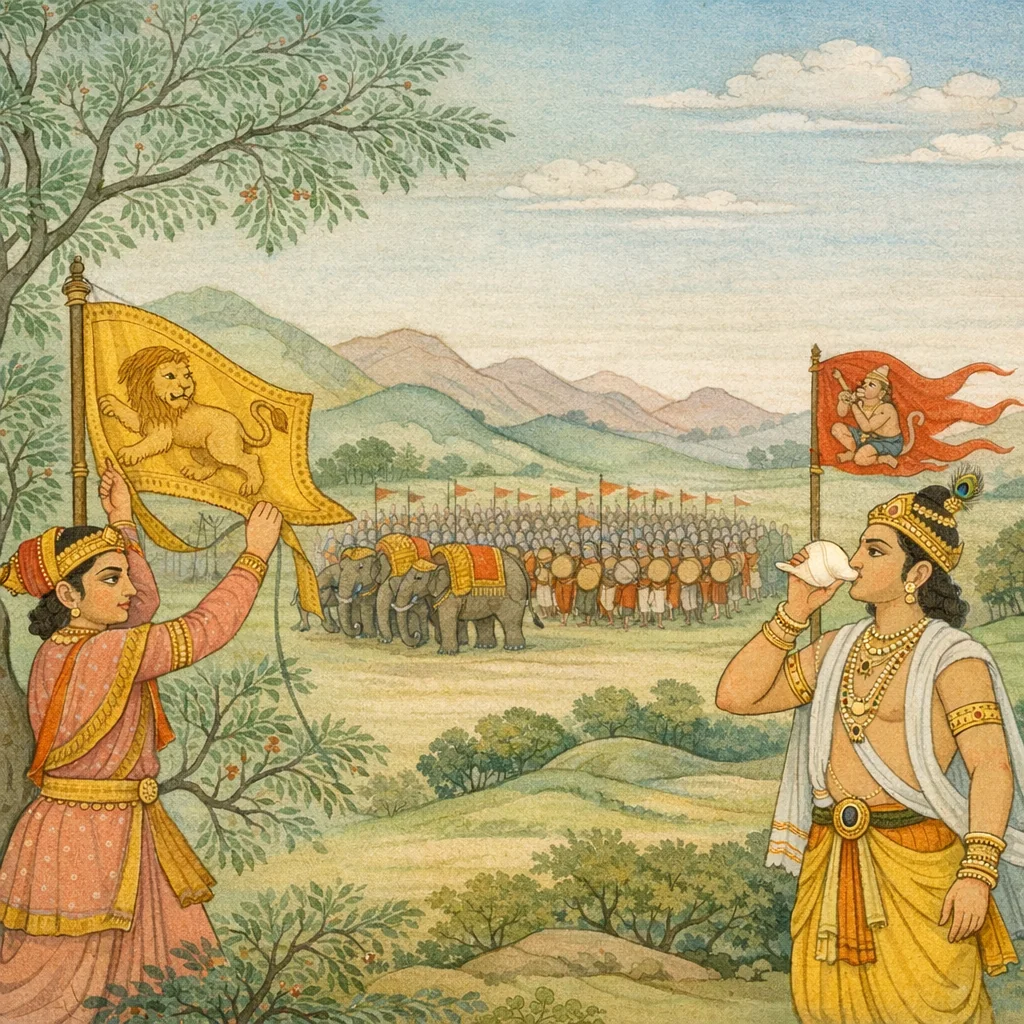
Upa-parva: Kaurava-Mantri-Nirṇaya (Council Deliberations during the Virāṭa episode)
Chapter 46 presents a tightly argued court discourse on crisis management. Bhīṣma evaluates the positions of Droṇa, Kṛpa, and Karṇa, then advises that a teacher (ācārya) should not be antagonized by a discerning ruler; rather, engagement must be calibrated by deśa and kāla. He notes that even learned persons can become confused when personal interest dominates, and urges reconciliation with Droṇa and Kṛpa when a major external challenge is at hand. Bhīṣma elevates Droṇa’s unique synthesis of Vedic learning and kṣātra capability, arguing that such combined excellence is rare and politically indispensable. He warns that internal division (bheda) is the most destructive vulnerability of a force. Aśvatthāman supports pacification, emphasizing that provoking one’s guru produces destabilizing anger. Vaiśaṃpāyana reports Duryodhana’s act of appeasement, joined by Karṇa, Bhīṣma, and Kṛpa. Droṇa accepts the counsel, calling for a policy that prevents reckless contact and avoids defeat, and he asks Bhīṣma to restate earlier guidance in a properly ordered manner—thereby closing the chapter with a procedural return to collective strategy.
Chapter Arc: गोग्रहण के संकट में उत्तर कुमार भयभीत है; उसी क्षण ‘सारथि’ बने बृहन्नला (अर्जुन) रथ पर ध्वज-परिवर्तन का आदेश देकर दृश्य को रहस्य और महिमा से भर देते हैं। → अर्जुन रथ से सिंह-चिह्न ध्वज उतरवाकर शमी-वृक्ष के नीचे रखवाते हैं और विश्वकर्मा-निर्मित दिव्य वानर-ध्वज (हनुमान-लक्षण) को रथ पर प्रतिष्ठित करते हैं। उत्तर को युद्ध-शिक्षा देते हुए वे रथ-नियंत्रण, रश्मि-संयम और शंखनाद की तैयारी कराते हैं; सामने कौरव-सेना के शंख, भेरी और गजरव वातावरण को भयावह बनाते हैं। → अर्जुन एकान्त में रथ पर दृढ़ होकर उत्तर को रथ दबाने और रश्मियाँ कसने का आदेश देते हैं—और स्वयं शंखनाद करते हैं; उस नाद के साथ वानर-ध्वज पर स्थित भूत-गण/दिव्य शक्तियाँ जाग्रत-सी प्रतीत होती हैं, जिससे कौरव-पक्ष में अपशकुन, घबराहट और मनोबल-भंग फैलता है। → अर्जुन के शंखनाद और ध्वज-प्रभाव से कौरव-सेना का उत्साह टूटता है; सैनिक विवर्ण, विचेतस होकर पीछे हटने/गायें छोड़ने की मनःस्थिति में आते हैं—युद्ध का पलड़ा मनोवैज्ञानिक रूप से पाण्डव-पक्ष (अर्जुन) की ओर झुक जाता है। → कौरव-सेना के हतोत्साह होने के बाद भी वास्तविक टक्कर और अर्जुन के बाण-प्रहार का निर्णायक चरण अगले अध्यायों में फूटने को है।
Shlokas
Verse 1
(दाक्षिणात्य अधिक पाठके ६ श्लोक मिलाकर कुल ४७ श्लोक हैं।) अर हट (0) है षट्चत्वारिशो5 ध्याय: उत्तरके रथपर अर्जुनको ध्वजकी प्राप्ति, अर्जुनका शंखनाद और द्रोणाचार्यका कौरवोंसे उत्पात-सूचक अपशकुनोंका वर्णन वैशम्पायन उवाच उत्तरं सारथिं कृत्वा शर्मी कृत्वा प्रदक्षिणम् । आयुध॑ सर्वमादाय प्रययौ पाण्डवर्षभ:,वैशम्पायनजी कहते हैं--जनमेजय! उत्तरको सारथि बना शमी वृक्षकी परिक्रमा करके अपने सम्पूर्ण अस्त्र-शस्त्र लेकर पाण्डवश्रेष्ठ अर्जुन युद्धके लिये चले
Vaiśampāyana said: “O Janamejaya! Arjuna, the bull among the Pāṇḍavas, made Uttara his charioteer; and having circumambulated the śamī tree in pradakṣiṇa, he took up all his weapons and set out for battle.”
Verse 2
ध्वजं सिंहं रथात् तस्मादपनीय महारथ: । प्रणिधाय शमीमूले प्रायादुत्तरसारथि:,उन महारथी पार्थने उस रथपरसे सिंहचिह्नयुक्त ध्वजाको हटाकर शमीवृक्षके नीचे रख दिया और सारथि उत्तरके साथ प्रस्थान किया
Vaiśampāyana said: That great warrior removed from the chariot the banner bearing the lion emblem; placing it at the root of the śamī tree, he then set out with Uttara as his charioteer—restraining himself with prudence to conceal his identity and to avoid stirring conflict before its hour.
Verse 3
दैवीं मायां रथे युक्तां विहितां विश्वकर्मणा । काज्चनं सिंहलाड्गूलं ध्वजं वानरलक्षणम्
Vaiśampāyana said: “Upon the chariot there was set a divine, wondrous device, fashioned by Viśvakarman; and there was a golden banner—lion-tailed in form, bearing the mark of a monkey.”
Verse 4
मनसा चिन्तयामास प्रसादं पावकस्य च । सच तच्चिन्तितं ज्ञात्वा ध्वजे भूतान्यदेशयत्
Vaiśampāyana said: He reflected in his mind upon the favor of Pāvaka (Agni). And, understanding what had been thus conceived, he directed the beings stationed upon the banner—setting them to act in accordance with that intention. The verse underscores the ethical force of inner resolve: a disciplined thought, aligned with a higher power, becomes effective action through rightly ordered instruments.
Verse 5
उस समय उन्होंने मन-ही-मन अग्निदेवके प्रसादस्वरूप प्राप्त हुए अपने सुवर्णमय ध्वजका चिन्तन किया, जिसपर मूर्तिमान् वानर उपलक्षित होता है और जिसकी लंबी पूँछ सिंहके समान है। वह ध्वज क्या था, विश्वकर्माकी बनायी हुई दैवी माया थी, जो रथरमें संयुक्त हो जाती थी। अग्निदेवने अर्जुनका मनोभाव जानकर उस ध्वजपर स्थित रहनेके लिये भूतोंको आदेश दिया ।। सपताकं विचित्राड़ूं सोपासड्रं महाबलम् | खात् पपात रथे तूर्ण दिव्यरूपं मनोरमम्,तत्पश्चात् पताका तथा विचित्र अंग और उपांगोंसहित वह अतिशय शक्तिशाली दिव्यरूप मनोरम ध्वज तुरंत ही आकाशसे अर्जुनके रथपर आ गिरा
Vaiśampāyana said: Then, within his heart, he recalled his golden banner—won as a boon from the Fire-god—upon which a manifest monkey was seen, its long tail like that of a lion. That banner was a divine māyā wrought by Viśvakarman, able to be joined to the chariot. Agni, knowing Arjuna’s inward intent, commanded the bhūtas to abide upon that standard. Thereupon, that exceedingly mighty, wondrously adorned banner, of divine and delightful form, swiftly fell from the sky onto Arjuna’s chariot.
Verse 6
रथं तमागतं दृष्टवा दक्षिणं प्राकरोत् तदा । रथमास्थाय बी भत्सु: कौन्तेय: श्वेतवाहन:,इस प्रकार उस ध्वजको रथपर आया हुआ देख श्वेत घोड़ोंवाले कुन्तीनन्दन अर्जुनने उस रथकी परिक्रमा की तथा उसके ऊपर बैठकर अपनी अंगुलियोंमें गोहके चमड़ेके बने हुए दस्ताने धारण किये। फिर कपिश्रेष्ठ हनुमानूजीसे उपलक्षित ध्वजाको फहराते हुए गाण्डीव धनुषके साथ उत्तर दिशाकी ओर प्रस्थान किया
Vaiśampāyana said: Seeing that chariot arrive, he circumambulated it to the right in reverence. Mounting it, Bībhatsu—Arjuna, Kuntī’s son, whose steeds were white—made ready for the task ahead, honoring the chariot and the standards of righteous conduct even as he set out toward imminent conflict.
Verse 7
बद्धगोधाड््गुलित्राण: प्रगृहीतशरासन: । ततः प्रायादुदीचीं च कपिप्रवरकेतन:,इस प्रकार उस ध्वजको रथपर आया हुआ देख श्वेत घोड़ोंवाले कुन्तीनन्दन अर्जुनने उस रथकी परिक्रमा की तथा उसके ऊपर बैठकर अपनी अंगुलियोंमें गोहके चमड़ेके बने हुए दस्ताने धारण किये। फिर कपिश्रेष्ठ हनुमानूजीसे उपलक्षित ध्वजाको फहराते हुए गाण्डीव धनुषके साथ उत्तर दिशाकी ओर प्रस्थान किया
Vaiśampāyana said: Having fastened finger-guards made of iguana-hide and taking up his bow and arrows, Arjuna then set out toward the northern direction, bearing the banner marked by the foremost of monkeys, Hanumān. The scene underscores disciplined readiness and righteous resolve: before confronting danger, the warrior equips himself properly and proceeds with steady purpose under an emblem of devotion, strength, and protection.
Verse 8
स्वनवन्तं महाशड्खं बलवानरिमर्दन: । प्राधमद् बलमास्थाय द्विषतां लोमहर्षणम्,उस समय शत्रुमर्दन महाबली अर्जुनने घोर शब्द करनेवाले अपने महान् शंखको खूब जोर लगाकर बजाया। जिसकी आवाज सुनकर शत्रुओंके रोंगटे खड़े हो गये
Vaiśampāyana said: Then Arjuna, the mighty crusher of foes, braced himself and blew his great conch, resounding with a thunderous note—so terrifying to the hostile ranks that it made their hair stand on end. The act signals resolve and righteous confidence before battle, meant to steady one’s own side and unsettle aggressors.
Verse 9
(शशाड्करूपं बीभत्सु: प्राध्यापयदरिंदम: । शड्खशब्दो<स्य सोउत्यर्थ श्रूयते कालमेघवत् ।। तस्य शंखस्य शब्देन धनुषो निस्वनेन च । वानरस्य च नादेन रथनेमिस्वनेन च ।। जड़मस्य भयं घोरमकरोत् पाकशासनि: ।) शत्रुदमन अर्जुनने जो महान् शंख फूँका था, वह चन्द्रमाके समान परम उज्ज्वल जान पड़ता था। उस शंखका जोर-जोरसे होनेवाला शब्द वर्षाकालके मेघकी गर्जनाके समान सुनायी देता था। शंखकी ध्वनि, धनुषकी टंकार, वानरकी गर्जना तथा रथके पहियोंकी घर्घराहटसे इन्द्रपुत्र अर्जुनने समस्त जंगम प्राणियोंके मनमें घोर भयका संचार कर दिया। ततस्ते जवना धुर्या जानुभ्यामगमन्महीम् । उत्तरश्नापि संत्रस्तो रथोपस्थ उपाविशत्,उस शंखध्वनिसे घबराकर रथके वेगशाली घोड़ोंने भी धरतीपर घुटने टेक दिये और उत्तर भी अत्यन्त भयभीत हो रथके ऊपरी भागमें जहाँ रथीका स्थान है, आ बैठा
Vaiśampāyana said: Arjuna, the foe-subduer, blew his conch—bright as the moon. Its booming note rolled like the thunder of rain-clouds. With the conch’s blast, the twang of his bow, the roar of the monkey-emblem (Hanumān), and the rumble of the chariot-wheels, Indra’s son spread a terrible fear through all moving creatures. Then even the swift, yoke-bearing horses sank to their knees upon the earth, and Uttara too, shaken with dread, sat down in the chariot’s upper seat.
Verse 10
संस्थाप्य चाश्वान् कौन्तेय: समुद्यम्य च रश्मिभि: । उत्तरं च परिष्वज्य समाश्चासयदर्जुन:,तब कुन्तीनन्दन अर्जुनने स्वयं रास खींचकर घोड़ोंको खड़ा किया और उत्तरको हृदयसे लगाकर धीरज बाँधाया
Vaiśampāyana said: Then Arjuna, the son of Kuntī, steadied the horses and, taking the reins firmly in hand, embraced Uttara and reassured him. In the face of fear and impending battle, Arjuna’s conduct models kṣatriya steadiness joined with compassion—strength expressed as protective guidance that restores courage and right resolve.
Verse 11
अजुन उवाच मा भैस्त्वं राजपुत्राग्रय क्षत्रियोडसि परंतप । कथं तु पुरुषव्याप्र शत्रुमध्ये विषीदसि,अर्जुनने कहा--शत्रुओंको संताप देनेवाले राजकुमारशिरोमणे! डरो मत, तुम क्षत्रिय हो। पुरुषसिंह! शत्रुओंके बीचमें आकर घबराते कैसे हो?
Arjuna said: “Do not be afraid, foremost of princes—you are a kṣatriya, a scorcher of foes. O tiger among men, how can you lose heart after coming into the midst of enemies?”
Verse 12
श्रुतास्ते शड्खशब्दाश्न भेरीशब्दाश्न पुष्कला: । कुज्जराणां च नदतां व्यूढानीकेषु तिछताम्,तुमने बहुत बार शंख-ध्वनि सुनी होगी। रण-भेरियोंके भयंकर शब्द भी बहुत बार तुम्हारे कानोंमें पड़े होंगे और व्यूहबद्ध सेनाओंमें खड़े हुए चिग्धाड़नेवाले गजराजोंके शब्द भी तुमने सुने ही होंगे
Arjuna said: “You have often heard the blare of conches, and again and again the loud, resounding beat of war-drums. You have also heard the trumpeting roars of great elephants standing amid armies drawn up in battle formation.”
Verse 13
स त्वं कथमिहानेन शड्खशब्देन भीषित: । विवर्णरूपो वित्रस्त: पुरुष: प्राकृतो यथा,फिर यहाँ इस शंखनादसे तुम भयभीत कैसे हो गये? साधारण मनुष्योंके समान अधिक डर जानेके कारण तुम्हारे शरीरका रंग फीका कैसे पड़ गया?
Arjuna said: “How is it that you have become frightened here by this sound of the conch? Why has your complexion turned pale and you appear shaken—like an ordinary man overcome by fear?”
Verse 14
उत्तर उवाच श्रुता मे शड्खशब्दाश्न भेरीशब्दाश्न पुष्कला: | कुण्जराणां निनदतां व्यूढानीकेषु तिषताम्,उत्तरने कहा--वीरवर! इसमें संदेह नहीं कि मैंने बहुत बार शंखध्वनि सुनी है। रणभेरियोंके भयंकर शब्द भी बहुत बार मेरे कानोंमें पड़े हैं और व्यूहबद्ध सेनाओंमें खड़े हुए चिग्धाड़नेवाले गजराजोंके शब्द भी मैंने सुने हैं
Uttara said: “I have indeed heard many times the blare of conches and the loud roll of war-drums. I have also heard the trumpeting of elephants as they stand within armies drawn up in battle formation.”
Verse 15
नैवंविध: शड्खशब्द: पुरा जातु मया श्रुतः । ध्वजस्य चापि रूपं मे दृष्टपूर्व न हीदूशम्,परंतु आजके पहले कभी ऐसा भयंकर शंखनाद मेरे सुननेमें नहीं आया था और ध्वजका भी ऐसा रूप मैंने कभी नहीं देखा था
Uttara said: “Never before—at any time in the past—have I heard a conch-blast of this kind. And never have I seen such a form of a banner as this.”
Verse 16
धनुषश्चैव निर्घोष: श्रुतपूर्वो न मे क्वचित् । अस्य शड्खस्य शब्देन धनुषो नि:स्वनेन च,धनुषकी ऐसी टंकार भी पहले कभी मैंने नहीं सुनी थी। इस शंखके भयानक शब्दसे, धनुषकी अनुपम टंकारसे, ध्वजामें निवास करनेवाले मानवेतर प्राणियोंके घोर शब्दसे तथा रथकी भारी घर्घराहटसे भी डरकर मेरा हृदय बहुत व्याकुल हो उठा है
Uttara said: “Never before have I heard such a thunderous sound of a bow. The blare of this conch and the ringing twang of the bow have shaken me; my heart has become deeply agitated with fear.”
Verse 17
अमानुषाणां शब्देन भूतानां ध्वजवासिनाम् | रथस्य च निनादेन मनो मुहाृति मे भूशम्,धनुषकी ऐसी टंकार भी पहले कभी मैंने नहीं सुनी थी। इस शंखके भयानक शब्दसे, धनुषकी अनुपम टंकारसे, ध्वजामें निवास करनेवाले मानवेतर प्राणियोंके घोर शब्दसे तथा रथकी भारी घर्घराहटसे भी डरकर मेरा हृदय बहुत व्याकुल हो उठा है
Uttara said: “For a moment my mind has been greatly shaken—by the unearthly cries of the beings dwelling upon the banner, and by the thunderous rumble of the chariot. The dreadful sound of the conch and the extraordinary twang of the bow have filled my heart with fear and agitation.”
Verse 18
व्याकुलाश्न दिश: सर्वा हृदयं व्यथतीव मे । ध्वजेन पिहिता: सर्वा दिशो न प्रतिभान्ति मे,सम्पूर्ण दिशाओंमें घबराहट छा गयी है तथा मेरे हृदयमें बड़ी व्यथा हो रही है, इस ध्वजने तो समस्त दिशाओंको ढँक लिया है। अतः मुझे किसी दिशाकी प्रतीति नहीं हो रही है
Uttara said: “All the directions seem thrown into confusion, and my heart feels as though it is in pain. This banner has covered every quarter; I can no longer even make out the directions.”
Verse 19
गाण्डीवस्थ च शब्देन कर्ण मे बधिरीकृतौ । स मुहूर्त प्रयातं तु पार्थो वैराटिमब्रवीत्,गाण्डीव धनुषकी टंकारसे तो मेरे दोनों कान बहरे हो गये हैं। इस प्रकार दो घड़ीतक आगे बढ़नेपर अर्जुनने विराटकुमार उत्तरसे कहा--
Uttara said: “By the sound of the Gāṇḍīva being strung, my ears have been made deaf.” After they had advanced for a short while, Pārtha (Arjuna) then addressed the prince of Virāṭa.
Verse 20
अजुन उवाच एकान्तं रथमास्थाय पद्धयां त्वमवपीडयन् । दृढं च रश्मीन् संयच्छ शड्खं ध्मास्याम्यहं पुन:,अर्जुन बोले--राजकुमार! अब तुम रथपर अच्छी तरह जमकर बैठ जाओ और अपनी टाँगोंसे बैठनेके स्थानको जकड़ लो। साथ ही घोड़ोंकी रासको दृढ़तापूर्वक पकड़े रहो। मैं फिर शंख बजाऊँगा
Arjuna said: “Prince, now seat yourself firmly upon the chariot and brace the seat with your legs. Hold the reins of the horses tightly. I shall blow the conch again.”
Verse 21
वैशम्पायन उवाच ततः शड्खमुपाध्मासीद् दारयन्न्रिव पर्वतान् | गुहा गिरीणां च तदा दिश: शैलांस्तथैव च । उत्तरश्नापि संलीनो रथोपस्थ उपाविशत्,वैशम्पायनजी कहते हैं--जनमेजय! तब अर्जुनने इतने जोरसे शंख बजाया मानो वे पर्वतों, पर्वतीय गुफाओं, सम्पूर्ण दिशाओं और बड़ी-बड़ी चट्टानोंको भी विदीर्ण कर डालेंगे। उत्तर इस बार भी रथके भीतरी भागमें छिपकर बैठ गया
Vaiśampāyana said: “Then Arjuna blew his conch with such force that it seemed as though it would split the mountains, the caves within the hills, the quarters of space, and even the great rocky crags. Uttara too, once again overcome with fear, crouched down and sat hidden in the inner part of the chariot.”
Verse 22
तस्य शड्खस्य शब्देन रथनेमिस्वनेन च । गाण्डीवस्य च घोषेण पृथिवी समकम्पत,उस शंखके शब्दसे, रथनेमियोंकी घर्घराहटसे तथा गाण्डीव धनुषकी टंकारसे धरती काँप उठी
Vaiśampāyana said: At the blast of his conch, the rumbling of the chariot-wheels, and the resounding twang of the Gāṇḍīva bow, the very earth seemed to tremble—an omen-like proclamation of irresistible martial resolve and the moral force of a righteous champion entering action.
Verse 23
त॑ं समाश्चासयामास पुनरेव धनंजय:,तदनन्तर अर्जुनने उत्तरको पुनः धीरज बँधाया
Vaiśampāyana said: Then Dhanañjaya (Arjuna) once again reassured him. After that, through Arjuna’s words and guidance, Uttara regained his courage and steadied his resolve—showing how fear can be overcome by right counsel and the presence of a steadfast protector.
Verse 24
द्रोण उवाच यथा रथस्य निर्घोषो यथा मेघ उदीर्यते । कम्पते च यथा भूमिर्नैषोडन्य: सव्यसाचिन:,(यह शंख-ध्वनि सुनकर कौरवसेनामें) द्रोणाचार्यने कहा--जैसी यह रथकी घर्घराहट सुनायी दे रही है, जिस तरह उससे मेघगर्जनाका-सा शब्द हो रहा है और उसीके कारण जिस प्रकार यह पृथ्वी काँपने लगी है, इनसे यह सूचित होता है कि यह आनेवाला योद्धा अर्जुनके सिवा दूसरा कोई नहीं है
Droṇa said: “From the thunderous rumble of this chariot, from the cloud-like roar that rises with it, and from the way the earth itself trembles, it is clear that this approaching warrior can be none other than Arjuna, the ambidextrous master of the bow.”
Verse 25
शस्त्राणि न प्रकाशन्ते प्रहृष्पन्ति वाजिन: । अग्नयश्व न भासन्ते समिद्धास्तन्न शोभनम्
Droṇa observes ominous signs: the weapons fail to shine, the horses grow strangely excited, and even the kindled fires do not blaze with their usual radiance. Such portents, he implies, are inauspicious—suggesting a disturbance in the moral and cosmic order that should restrain rash action and invite caution before violence is pursued.
Verse 26
अब हमारे शस्त्र चमक नहीं रहे हैं, घोड़े प्रसन्न नहीं जान पड़ते और अग्निहोत्रकी अग्नियाँ भी प्रज्वलित एवं उद्दीप्त नहीं हो रही हैं। यह सब अशुभकी सूचना है ।। प्रत्यादित्यं च न: सर्वे मृगा घोरप्रवादिन: । ध्वजेषु च निलीयन्ते वायसास्तन्न शोभनम्,हमारे सभी पशु सूर्यकी ओर दृष्टि करके भयंकर क्रन्दन करते हैं और रथोंकी ध्वजाओंमें कौए छिप रहे हैं। यह भी शुभसूचक नहीं है
Droṇa said: “All our beasts, turning their gaze toward the sun, are uttering dreadful cries; and crows are hiding themselves among the chariot-banners. This is not auspicious.” In the war-setting, these omens signal a moral and practical warning: when the atmosphere turns inauspicious, wise leaders read it as a sign of impending danger and disorder, urging caution rather than reckless pride.
Verse 27
शकुनाश्चापसव्या नो वेदयन्ति महद् भयम्,ये पक्षी भी हमारे वामभागमें उड़कर महान् भयकी सूचना दे रहे हैं और यह गीदड़ बिना किसी आघातके हमारी सेनाके बीचसे निकलकर रोता हुआ भाग रहा है, यह भी महान् भयका विज्ञापन कर रहा है
Droṇa said: “These birds, flying to our left in ill-omened fashion, are foretelling a great danger. And this jackal, without being struck by anyone, has slipped out from the midst of our army and is fleeing while crying—this too proclaims a great fear. Such portents warn that calamity is near, and that our conduct and resolve in the coming conflict must be weighed with utmost seriousness.”
Verse 28
गोमायुरेष सेनायां रुदन् मध्येन धावति । अनाहतकश्न निष्क्रान्तो महद् वेदयते भयम्,ये पक्षी भी हमारे वामभागमें उड़कर महान् भयकी सूचना दे रहे हैं और यह गीदड़ बिना किसी आघातके हमारी सेनाके बीचसे निकलकर रोता हुआ भाग रहा है, यह भी महान् भयका विज्ञापन कर रहा है
“This jackal, crying out, runs through the midst of the army; unstruck by anyone, it has slipped out and is proclaiming a great fear. Those birds too, flying to our left, are signaling a great danger.”
Verse 29
भवतां रोमकूपाणि प्रद्ृष्टान्युपलक्षये । ध्रुवं विनाशो युद्धेन क्षत्रियाणां प्रदृश्यते,कौरवो! मैं देखता हूँ, तुम्हारे रोंगटे खड़े हो गये हैं; अतः निश्चय ही, इस युद्धके द्वारा क्षत्रियोंका विनाश निकट दिखायी देता है
Droṇa said: “I can see the hair-follicles on your body standing up in alarm. From this, it is clear to me that through this war the destruction of the kṣatriyas is already coming into view.”
Verse 30
ज्योतींषि न प्रकाशन्ते दारुणा मृगपक्षिण: । उत्पाता विविधा घोरा दृश्यन्ते क्षत्रनाशना:,सूर्य आदिका प्रकाश मंद पड़ गया है। भयंकर मृग और पक्षी सामने आ रहे हैं और क्षत्रियोंके संहारकी सूचना देनेवाले अनेक प्रकारके घोर उत्पात दिखायी देते हैं
Droṇa said: “The heavenly lights no longer shine as they should. Fierce beasts and birds appear in ominous ways, and many dreadful portents of various kinds are seen—signs that foretell the destruction of the warrior order. Such disturbances in nature warn that adharma is rising and that a great, unrighteous slaughter is near.”
Verse 31
विशेषत इहास्माकं निमित्तानि विनाशने । उल्काभिश्ष प्रदीप्ताभिबाध्यते पृतना तव । वाहनान्यप्रहृष्टानि रुदन्तीव विशाम्पते,राजा दुर्योधन! विशेषतः यहीं हमारे लिये विनाश-सूचक अपशकुन हो रहे हैं। तुम्हारी सेनाके ऊपर जलती हुई उल्काएँ गिर-गिरकर उसे पीड़ा देती हैं। तुम्हारे वाहन (हाथी-घोड़े) अप्रसन्न तथा रोते-से दीखते हैं
Droṇa said: “Here, in particular, omens foretelling our destruction are appearing. Your army is being harassed as blazing meteors fall upon it. Your mounts—horses and elephants—are joyless and seem as though they are weeping, O lord of men, King Duryodhana.”
Verse 32
उपासते च सैन्यानि गृध्रास्तव समन्ततः: । तप्स्यसे वाहिनीं दृष्टवा पार्थबाणप्रपीडिताम् | पराभूता च व: सेना न कश्चिद् योद्धुमिच्छति,सेनाके चारों ओर गीध बैठ रहे हैं, इससे जान पड़ता है; तुम अपनी सेनाको अर्जुनके बाणोंसे पीड़ित होती देख मनमें संताप करोगे। तुम्हारी सेना अभीसे तिरस्कृत-सी हो रही है, कोई भी सैनिक युद्ध करना नहीं चाहता है
Drona said: “Vultures are gathering all around your forces; this is an omen. When you see your army harried and crushed by Arjuna’s arrows, you will burn with inner anguish. Even now your host stands as if already dishonoured and defeated—no one among your soldiers wishes to fight.”
Verse 33
विवर्णमुखभूयिष्ठा: सर्वे योधा विचेतस: । गा: सम्प्रस्थाप्य तिष्ठामो व्यूढानीका प्रहारिण:,समस्त सैनिकोंके मुखपर भारी उदासी छा गयी है। सब अचेत--हतोत्साह हो रहे हैं। अतः हम गौओंको हस्तिनापुरकी ओर भेजकर सेनाकी व्यूहरचना करके शत्रुपर प्रहार करनेके लिये उद्यत हो जायँ
All the warriors’ faces have turned pale; a heavy gloom has settled on them. They are dazed and dispirited. Therefore, let us send the cattle on toward Hastinapura, then draw up the army in battle formation and ready ourselves to strike the enemy.
Verse 46
इति श्रीमहाभारते विराटपर्वणि गोहरणपर्वणि उत्तरगोग्रहे औत्पातिको नाम षट्चत्वारिंशो5ध्याय:
Thus, in the Śrī Mahābhārata, within the Virāṭa Parva—specifically in the section on the cattle-raid, in the episode concerning the seizure of Uttara’s cattle—ends the forty-sixth chapter, entitled “Portents (Autpātika).”
Frequently Asked Questions
The dilemma is whether to confront or restrain oneself toward an ācārya (Droṇa) amid rising threat: kṣātra-assertion must be balanced with guru-maryādā and with deśa–kāla judgment to avoid unethical and strategically harmful escalation.
Power must be governed by context and cohesion: even justified strength becomes counterproductive when driven by self-interest, while unity and measured timing are portrayed as higher-order duties of statecraft.
No explicit phalaśruti appears; the meta-commentary is practical and structural—reaffirming that policy (nīti) should be re-set through elders’ counsel, with reconciliation and anti-factional discipline treated as prerequisites for legitimate action.