Adhyaya 146
सौगन्धिकपुष्पप्रसङ्गः — The Saugaṇdhika Lotus and Bhīma’s Approach to Hanūmān
Upa-parva: Saugaṇdhika-puṣpa-anuveṣaṇa (Bhīma’s quest for the fragrant lotus; Hanūmān encounter arc)
Vaiśaṃpāyana describes the Pāṇḍavas residing in a pristine forest environment while awaiting Arjuna. The landscape is rendered with technical poetic detail—flowering trees, clear lakes with lotuses, and fragrant winds—establishing a sacral-ecological setting. A divine thousand-petalled lotus is carried by a favorable wind and noticed by Draupadī, who, delighted by its scent and form, asks Bhīma to gather many such flowers for Yudhiṣṭhira and for their hermitage at Kāmyaka. Bhīma arms himself and follows the wind’s trajectory toward Gandhamādana, moving with escalating speed and force; his passage disrupts animals and vegetation, and he engages and disperses hostile wildlife. He reaches a large lake, plays in it, and sounds a conch, amplifying his presence across the mountain. The resulting roar awakens Hanūmān in a banana grove; Hanūmān responds by challenging Bhīma’s disturbance, articulating a critique grounded in compassion and dharma, and warning about the inaccessibility and danger of the region without exceptional attainment.
Chapter Arc: युधिष्ठिर भीम से कहते हैं कि उसके अत्यन्त पराक्रमी पुत्र घटोत्कच की सहायता से वे द्रौपदी सहित गन्धमादन पर्वत की कठिन यात्रा सुरक्षित रूप से करना चाहते हैं। → भीमसेन भाई की आज्ञा को मानकर घटोत्कच को बुलाते/आदेश देते हैं; राक्षस-वीर अपनी तीव्र गति और महाबल से पाण्डवों व द्रौपदी को शीघ्र मार्ग पार कराने की तैयारी करते हैं—मानो दीर्घ पथ भी अल्प हो जाए। → राक्षसों के कन्धों/वाहन-बल पर आरूढ़ होकर पाण्डव दीर्घ दुर्गम यात्रा को क्षण में लाँघते हैं और दिव्य वृक्षों से घिरी, सदा पुष्प-फलयुक्त बदरी तथा बदरिकाश्रम के रमणीय प्रदेश का साक्षात् दर्शन करते हैं। → बदरी के निकट पहुँचकर पाण्डव ब्राह्मण-श्रेष्ठों सहित राक्षस-स्कन्धों से उतरते हैं; आश्रम की देवोचित शोभा में वे शीतल तीर्थ-जल से तर्पण-जप करते हैं और द्रौपदी के साथ उस दिव्य वन-प्रदेश में विश्राम/विहार करते हैं। → गन्धमादन-प्रवेश के बाद आगे की तीर्थयात्रा और आश्रम-जीवन में कौन-सा दिव्य उपदेश/घटना पाण्डवों की तपस्या व धैर्य की परीक्षा लेगी?
Shlokas
Verse 1
#2:8 #:23:.7 () मपटम अ्ा८् पजञज्चचत्वारिशर्दाधिकशततमो< ध्याय: घटोत्कच और उसके साथियोंकी सहायतासे पाण्डवोंका गन्धमादन पर्वत एवं बदरिकाश्रममें प्रवेश तथा बदरीवृक्ष, नर-नारायणाश्रम और गंगाका वर्णन युधिष्ठिर उवाच धर्मज्ञो बलवान् शूर: सत्यो राक्षसपुज्भव: । भक्तो5स्मानौरस: पुत्रो भीम गृह्नातु मा चिरम्,युधिष्ठिर बोले--अत्यन्त भयानक पराक्रम दिखानेवाले भीम! तुम्हारा औरस पुत्र राक्षसश्रेष्ठ घटोत्कच धर्मज्ञ, बलवान, शूरवीर, सत्यवादी तथा हमलोगोंका भक्त है। यह हमें शीघ्र उठा ले चले। जिससे भीमसेन! तुम्हारे पुत्र घटोत्कचद्वारा शरीरसे किसी प्रकारकी क्षति उठाये बिना ही मैं द्रौपदीसहित गनन््धमादन पर्वतपर पहुँच जाऊँ
Yudhiṣṭhira said: “O Bhīma, your own son—Ghaṭotkaca, the foremost among the Rākṣasas—is righteous, strong, heroic, truthful, and devoted to us. Let him lift us up at once, so that, without any bodily harm, I may reach Mount Gandhamādana together with Draupadī.”
Verse 2
तव भीम सुतेनाहमतिभीमपराक्रम । अक्षत: सह पाज्चाल्या गच्छेयं गन्धमादनम्,युधिष्ठिर बोले--अत्यन्त भयानक पराक्रम दिखानेवाले भीम! तुम्हारा औरस पुत्र राक्षसश्रेष्ठ घटोत्कच धर्मज्ञ, बलवान, शूरवीर, सत्यवादी तथा हमलोगोंका भक्त है। यह हमें शीघ्र उठा ले चले। जिससे भीमसेन! तुम्हारे पुत्र घटोत्कचद्वारा शरीरसे किसी प्रकारकी क्षति उठाये बिना ही मैं द्रौपदीसहित गनन््धमादन पर्वतपर पहुँच जाऊँ
Yudhiṣṭhira said: “O Bhīma, whose prowess is exceedingly formidable! May I, uninjured, together with Pāñcālī, reach Gandhamādana by means of your son.”
Verse 3
वैशम्पायन उवाच भ्रातुर्वचनमाज्ञाय भीमसेनो घटोत्कचम् । आदिदेश नरव्याप्रस्तनयं शत्रुकर्शनम्,वैशम्पायनजी कहते हैं--राजन्! भाईकी इस आज्ञाको शिरोधार्य करके नरश्रेष्ठ भीमसेनने अपने पुत्र शत्रुसूदन घटोत्कचको इस प्रकार आज्ञा दी
Vaiśampāyana said: Having understood and accepted his brother’s command, Bhīmasena—the tiger among men—issued orders to his son Ghaṭotkaca, the crusher of enemies.
Verse 4
भीमसेन उवाच हैडिम्बेय परिश्रान्ता तव मातापराजित । त्वं च कामगमस्तात बलवान् वह तां खग,भीमसेन बोले--अपराजित और आकाशचारी हिडिम्बानन्दन! तुम्हारी माता द्रौपदी बहुत थक गयी है। तुम बलवान एवं इच्छानुसार सर्वत्र जानेमें समर्थ हो; अतः इसे (आकाशमार्गसे) ले चलो
Bhīmasena said: “O son of Hiḍimbā, O unconquered one! Your mother is exhausted. You are strong and can go wherever you wish; therefore, O sky-ranging one, carry her (by the aerial path).”
Verse 5
स्कन्धमारोप्य भद्र|ं ते मध्येडस्माकं विहायसा । गच्छ नीचिकया गत्या यथा चैनां न पीडये:,बेटा! तुम्हारा कल्याण हो। इसे कंधेपर बैठाकर हम लोगोंके बीच रहते हुए आकाशकभमार्गसे इस प्रकार धीरे-धीरे ले चलो, जिससे इसे तनिक भी कष्ट न हो
Bhīmasena said: “May it be well with you. Lift her onto your shoulder and, staying among us, carry her through the sky—moving gently and low—so that she is not pained in the least.”
Verse 6
घटोत्कच उवाच धर्मराजं च धौम्यं च कृष्णां च यमजौ तथा । एको<प्यहमल वोढुं किमुताद्य सहायवान्,घटोत्कच बोला--अनघ! मैं अकेला रहूँ तो भी धर्मराज युधिष्ठिर, पुरोहित धौम्य, माता द्रौपदी और चाचा नकुल-सहदेवको भी वहन कर सकता हूँ; फिर आज तो मेरे और भी बहुत-से संगी-साथी मौजूद हैं। इस दशामें आप लोगोंको ले चलना कौन बड़ी बात है? मेरे सिवा दूसरे भी सैकड़ों शूरवीर, आकाशचारी और इच्छानुसार रूप धारण करनेवाले राक्षस मेरे साथ हैं। वे ब्राह्मगोंसहित आप सब लोगोंको एक साथ वहन करेंगे
Ghaṭotkaca said: “Even if I were alone, I could carry Dharmarāja Yudhiṣṭhira, the priest Dhaumya, Kṛṣṇā (Draupadī), and the twin brothers as well. How much more so today, when I have helpers with me! In this condition, taking you all along is no great matter. Along with me there are hundreds of valiant rākṣasas—sky-ranging and able to assume forms at will—who will carry all of you together, including the brāhmaṇas.”
Verse 7
अन्ये च शतश: शूरा विहड्रा: कामरूपिण: । सर्वान् वो ब्राह्मणै: सार्ध वक्ष्यन्ति सहितानघ,घटोत्कच बोला--अनघ! मैं अकेला रहूँ तो भी धर्मराज युधिष्ठिर, पुरोहित धौम्य, माता द्रौपदी और चाचा नकुल-सहदेवको भी वहन कर सकता हूँ; फिर आज तो मेरे और भी बहुत-से संगी-साथी मौजूद हैं। इस दशामें आप लोगोंको ले चलना कौन बड़ी बात है? मेरे सिवा दूसरे भी सैकड़ों शूरवीर, आकाशचारी और इच्छानुसार रूप धारण करनेवाले राक्षस मेरे साथ हैं। वे ब्राह्मगोंसहित आप सब लोगोंको एक साथ वहन करेंगे
Ghaṭotkaca said: “O blameless one, besides me there are hundreds of other valiant warriors—sky-ranging beings who can assume forms at will. They will carry all of you together, along with the Brahmins.”
Verse 8
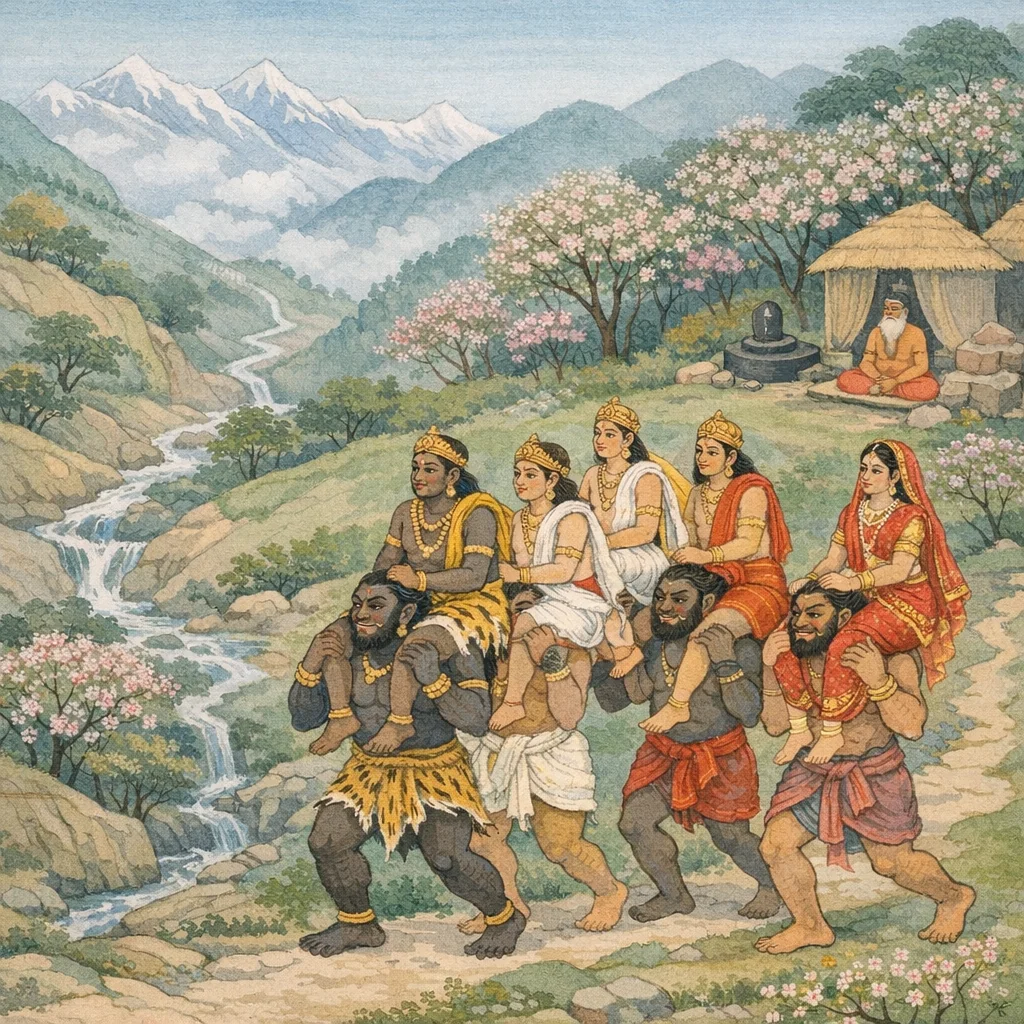
एवमुक्क्त्वा ततः कृष्णामुवाह स घटोत्कच: । पाण्डूनां मध्यगो वीर: पाण्डवानपि चापरे,ऐसा कहकर वीर घटोत्कच तो द्रौपदीको लेकर पाण्डवोंके बीचमें चलने लगा और दूसरे राक्षस पाण्डवोंको भी (अपने-अपने कंधेपर बिठाकर) ले चले
Having spoken thus, the valiant Ghaṭotkaca then lifted and carried Kṛṣṇā (Draupadī). Moving in the midst of the Pāṇḍavas, he proceeded, while other rākṣasas also carried the Pāṇḍava brothers along—bearing them upon their shoulders—so that they might be swiftly conveyed to safety.
Verse 9
लोमश: सिद्धमार्गेण जगामानुपमझद्युति: । स्वेनैव स प्रभावेण द्वितीय इव भास्कर:,अनुपम तेजस्वी महर्षि लोमश अपने ही प्रभावसे दूसरे सूर्यकी भाँति सिद्धमार्ग अर्थात् आकाशभमार्गसे चलने लगे
Ghaṭotkaca said: “The sage Lomaśa, of incomparable radiance, proceeded by the perfected path—moving through the sky itself. By the sheer force of his own spiritual power, he shone like a second sun.”
Verse 10
ब्राह्मणांश्वापि तान् सर्वान् समुपादाय राक्षसा: | नियोगाद् राक्षसेन्द्रस्थ जग्मुर्भीमपराक्रमा:,राक्षसराज घटोत्कचकी आज्ञासे अन्य सब ब्राह्मणोंको भी अपने-अपने कंधेपर चढ़ाकर वे भयंकर पराक्रमी राक्षस साथ-साथ चलने लगे
Those fearsome, mighty rākṣasas, acting under the command of their lord, also lifted up all those brāhmaṇas and set out together—bearing them along as ordered, with disciplined obedience to their leader’s will.
Verse 11
एवं सुरमणीयानि वनान्युपवनानि च । आलोकयमन्तस्ते जम्मुर्विशालां बदरीं प्रति,इस प्रकार अत्यन्त रमणीय वन और उपवनोंका अवलोकन करते हुए वे सब लोग विशाला बदरी (बदरिकाश्रम तीर्थ)-की ओर प्रस्थित हुए
Ghaṭotkaca said: “Thus, while gazing upon the exceedingly delightful forests and groves along the way, they all proceeded toward the renowned Viśālā Badarī—the sacred Badarī hermitage.”
Verse 12
ते त्वाशुगतिभिरवर्वीरा राक्षसैस्तैर्महाजवै: । उहामाना ययु: शीघ्र दीर्घमध्वानमल्पवत्,उन महावेगशाली और तीव्र गतिसे चलनेवाले राक्षसोंपर सवार हो वीर पाण्डवोंने उस विशाल मार्गको इतनी शीघ्रतासे तय कर लिया मानो वह बहुत छोटा हो
Ghaṭotkaca said: “Mounted upon those mighty, swift-moving Rākṣasas, the heroic Pāṇḍavas were carried along at great speed, so that the long and arduous road was traversed as though it were only a short distance.”
Verse 13
देशान् म्लेच्छजनाकीर्णान् नानारत्नाकरायुतान् । ददृशुर्गिरिपादांश्व नानाधातुसमाचितान्,उस यात्रामें उन्होंने म्लेच्छोंसे भरे हुए बहुत-से ऐसे देश देखे जो नाना प्रकारकी रत्नोंकी खानोंसे युक्त थे। वहाँ उन्हें नाना प्रकारके धातुओंसे व्याप्त कितने ही शाखापर्वत दृष्टिगोचर हुए। उन पर्वतीय शिखरोंपर बहुत-से विद्याधर, वानर, किन्नर, किम्पुरुष और गन्धर्व चारों ओर निवास करते थे
Ghaṭotkaca said: “On their journey they beheld many regions crowded with mleccha peoples, lands endowed with mines and deposits of varied gems. They also saw the foothills and spurs of mountains, richly studded with many kinds of ores and minerals.”
Verse 14
विद्याधरसमाकीर्णान् युतान् वानरकिन्नरै: । तथा किंपुरुषैश्नैव गन्धर्वैश्व॒ समन्तत:,उस यात्रामें उन्होंने म्लेच्छोंसे भरे हुए बहुत-से ऐसे देश देखे जो नाना प्रकारकी रत्नोंकी खानोंसे युक्त थे। वहाँ उन्हें नाना प्रकारके धातुओंसे व्याप्त कितने ही शाखापर्वत दृष्टिगोचर हुए। उन पर्वतीय शिखरोंपर बहुत-से विद्याधर, वानर, किन्नर, किम्पुरुष और गन्धर्व चारों ओर निवास करते थे
Ghaṭotkaca said: “All around, the mountain-peaks were thronged with Vidyādharas, and were also inhabited by Vānaras and Kinnaras; likewise by Kiṃpuruṣas and Gandharvas on every side.”
Verse 15
मयूरैश्नमरैश्वैव वानरै रुरुभिस्तथा । वराहैर्गवयैश्वैव महिषैश्व समावृतान्,मोर, चमरी गाय, बंदर, रुरुमृग, सूअर, गवय- और भैंस आदि पशु वहाँ विचर रहे थे
Ghaṭotkaca said: “That region was thronged with animals—peacocks and chamaras, monkeys and ruru-deer, as well as boars, gavayas, and buffaloes—moving about everywhere.”
Verse 16
नदीजालसमाकीर्णान् नानापक्षियुतान् बहून् । नानाविधम्गैर्जुष्टान् वानरैश्वोपशोभितान्,वहाँ सब ओर बहुत-सी नदियाँ बह रही थीं। अनेक प्रकारके असंख्य पक्षी विचर रहे थे। वह स्थान नाना प्रकारके मृगोंसे सेवित और वानरोंसे सुशोभित था
It was a region crisscrossed by a network of rivers. Countless birds of many kinds moved about there; it was frequented by diverse wild animals and made beautiful by troops of monkeys.
Verse 17
समदैश्वापि विहगै: पादपैरन्वितास्तथा । तेवतीर्य बहुन् देशानुत्तमर्च्छिसमन्वितान्,वह पर्वतीय प्रदेश मतवाले विहंगों और अगणित वृक्षोंसे युक्त था। पाण्डवोंने उत्तम समृद्धिसे सम्पन्न बहुत-से देशोंको लाँधकर भाँति-भाँतिके आश्वर्यजनक दृश्योंसे सुशोभित पर्वतश्रेष्ठ कैलासका दर्शन किया। उसीके निकट उन्हें भगवान् नर-नारायणका आश्रम दिखायी दिया, जो नित्य फल-फूल देनेवाले दिव्य वृक्षोंसे अलंकृत था। वहीं वह विशाल एवं मनोरम बदरी भी दिखायी दी, जिसका स्कनन््ध (तना) गोल था। वह वृक्ष बहुत ही चिकना, घनी छायासे युक्त और उत्तम शोभासे सम्पन्न था। उस शुभ वृक्षके सघन कोमल पत्ते भी बहुत चिकने थे
Ghaṭotkaca said: “That region was equally furnished with birds and with trees. Having descended there and passed beyond many lands endowed with excellent splendor and prosperity, the Pāṇḍavas beheld the foremost of mountains, Kailāsa, adorned with wondrous sights of many kinds. Near it they saw the hermitage of the blessed Nara-Nārāyaṇa, beautified by divine trees that bear fruit and flowers perpetually. There they also beheld the vast and delightful Badarī tree, with a rounded trunk—very smooth, thickly shaded, and richly beautiful; even its dense, tender leaves were exceedingly glossy.”
Verse 18
ददृशुर्विविधाश्चर्य कैलासं पर्वतोत्तमम् तस्याभ्याशे तु ददृशुर्नरनारायणाश्रमम्,वह पर्वतीय प्रदेश मतवाले विहंगों और अगणित वृक्षोंसे युक्त था। पाण्डवोंने उत्तम समृद्धिसे सम्पन्न बहुत-से देशोंको लाँधकर भाँति-भाँतिके आश्वर्यजनक दृश्योंसे सुशोभित पर्वतश्रेष्ठ कैलासका दर्शन किया। उसीके निकट उन्हें भगवान् नर-नारायणका आश्रम दिखायी दिया, जो नित्य फल-फूल देनेवाले दिव्य वृक्षोंसे अलंकृत था। वहीं वह विशाल एवं मनोरम बदरी भी दिखायी दी, जिसका स्कनन््ध (तना) गोल था। वह वृक्ष बहुत ही चिकना, घनी छायासे युक्त और उत्तम शोभासे सम्पन्न था। उस शुभ वृक्षके सघन कोमल पत्ते भी बहुत चिकने थे
They beheld the supreme mountain Kailāsa, wondrous in many ways. And near it they saw the hermitage of Nara and Nārāyaṇa—an abode that evokes reverence for ascetic dharma and the sanctity of sacred places, where the mind naturally turns from worldly striving toward restraint, devotion, and inner discipline.
Verse 19
उपेतं पादपैर्दिव्यै: सदापुष्पफलोपगै: । ददृशुस्तां च बदरीं वृत्तस्कन्धां मनोरमाम्,वह पर्वतीय प्रदेश मतवाले विहंगों और अगणित वृक्षोंसे युक्त था। पाण्डवोंने उत्तम समृद्धिसे सम्पन्न बहुत-से देशोंको लाँधकर भाँति-भाँतिके आश्वर्यजनक दृश्योंसे सुशोभित पर्वतश्रेष्ठ कैलासका दर्शन किया। उसीके निकट उन्हें भगवान् नर-नारायणका आश्रम दिखायी दिया, जो नित्य फल-फूल देनेवाले दिव्य वृक्षोंसे अलंकृत था। वहीं वह विशाल एवं मनोरम बदरी भी दिखायी दी, जिसका स्कनन््ध (तना) गोल था। वह वृक्ष बहुत ही चिकना, घनी छायासे युक्त और उत्तम शोभासे सम्पन्न था। उस शुभ वृक्षके सघन कोमल पत्ते भी बहुत चिकने थे
Adorned with divine trees that perpetually bore flowers and fruits, the place appeared resplendent. There they beheld that Badarī tree as well—charming to the eye, with a rounded trunk—standing as a sign of the sacred abundance and serenity surrounding the Nara-Nārāyaṇa hermitage near Kailāsa.
Verse 20
स्निग्धामविरलच्छायां श्रिया परमया युताम् | पत्रै: स्निग्धैरविरलैरुपेतां मृदुभि: शुभाम्,वह पर्वतीय प्रदेश मतवाले विहंगों और अगणित वृक्षोंसे युक्त था। पाण्डवोंने उत्तम समृद्धिसे सम्पन्न बहुत-से देशोंको लाँधकर भाँति-भाँतिके आश्वर्यजनक दृश्योंसे सुशोभित पर्वतश्रेष्ठ कैलासका दर्शन किया। उसीके निकट उन्हें भगवान् नर-नारायणका आश्रम दिखायी दिया, जो नित्य फल-फूल देनेवाले दिव्य वृक्षोंसे अलंकृत था। वहीं वह विशाल एवं मनोरम बदरी भी दिखायी दी, जिसका स्कनन््ध (तना) गोल था। वह वृक्ष बहुत ही चिकना, घनी छायासे युक्त और उत्तम शोभासे सम्पन्न था। उस शुभ वृक्षके सघन कोमल पत्ते भी बहुत चिकने थे
Ghaṭotkaca said: “(They beheld) that auspicious tree—smooth to the touch, casting an unbroken, dense shade, endowed with supreme beauty; adorned with soft, glossy leaves set thickly together.”
Verse 21
विशालशाखां विस्तीर्णामतिद्युतिसमन्विताम् । फलैरुपचिवीर्दिव्यैराचितां स्वादुभिर्भुशम्,उसकी डालियाँ बहुत बड़ी और बहुत दूरतक फैली हुई थीं। वह वृक्ष अत्यन्त कान्तिसे सम्पन्न था। उसमें अत्यन्त स्वादिष्ट दिव्य फल अधिक मात्रामें लगे हुए थे। उन फलोंसे मधुकी धारा बहती रहती थी। उस दिव्य वृक्षके नीचे महर्षियोंका समुदाय निवास करता था। वह वृक्ष सदा मदोन्मत्त एवं आनन्दविभोर पक्षियोंसे परिपूर्ण रहता था
Ghaṭotkaca described a wondrous tree: its branches were vast and spread far and wide, and it shone with extraordinary radiance. It was laden in abundance with heavenly fruits of exquisite sweetness. From those fruits streams of honey continually flowed. Beneath that divine tree dwelt a community of great seers, and it was ever filled with birds intoxicated with nectar and absorbed in delight—an image of a realm where abundance supports contemplation and joy without violence.
Verse 22
मधुस्रवै: सदा दिव्यां महर्षिगणसेविताम् । मदप्रमुदितैर्नित्यं नानाद्विजगणैर्युताम्,उसकी डालियाँ बहुत बड़ी और बहुत दूरतक फैली हुई थीं। वह वृक्ष अत्यन्त कान्तिसे सम्पन्न था। उसमें अत्यन्त स्वादिष्ट दिव्य फल अधिक मात्रामें लगे हुए थे। उन फलोंसे मधुकी धारा बहती रहती थी। उस दिव्य वृक्षके नीचे महर्षियोंका समुदाय निवास करता था। वह वृक्ष सदा मदोन्मत्त एवं आनन्दविभोर पक्षियोंसे परिपूर्ण रहता था
Ghaṭotkaca said: “From its delicious fruits streams of honey continually flowed. That wondrous tree was ever attended by companies of great seers, and it was constantly filled with flocks of many kinds of birds—intoxicated, as it were, with delight.”
Verse 23
अदंशमशके देशे बहुमूलफलोदके । नीलशाद्धलसंच्छन्ने देवगन्धर्वसेविते,उस प्रदेशमें डॉस और मच्छरोंका नाम नहीं था। फल-मूल और जलकी बहुतायत थी। वहाँकी भूमि हरी-हरी घाससे ढकी हुई थी। देवता और गन्धर्व वहाँ वास करते थे। उस प्रदेशका भूभाग स्वभावतः समतल और मंगलमय था। उस हिमाच्छादित भूमिका स्पर्श अत्यन्त मृदु था। उस देशमें काँटोंका कहीं नाम नहीं था। ऐसे पावन प्रदेशमें वह विशाल बदरी वृक्ष उत्पन्न हुआ था
Ghaṭotkaca said: “In that region there were no biting insects or mosquitoes. Roots and fruits were plentiful, and water was abundant. The ground was carpeted with deep green grass, and the place was frequented by gods and Gandharvas. The land there was naturally level and auspicious, its snow-cooled surface exceedingly soft to the touch, and thorns were nowhere to be found. In such a pure and favorable tract, the great Badarī tree had arisen.”
Verse 24
सुसमीकृतभूभागे स्वभावविहिते शुभे । जातां हिममृदुस्पर्शे देशेषपहतकण्टके,उस प्रदेशमें डॉस और मच्छरोंका नाम नहीं था। फल-मूल और जलकी बहुतायत थी। वहाँकी भूमि हरी-हरी घाससे ढकी हुई थी। देवता और गन्धर्व वहाँ वास करते थे। उस प्रदेशका भूभाग स्वभावतः समतल और मंगलमय था। उस हिमाच्छादित भूमिका स्पर्श अत्यन्त मृदु था। उस देशमें काँटोंका कहीं नाम नहीं था। ऐसे पावन प्रदेशमें वह विशाल बदरी वृक्ष उत्पन्न हुआ था
Ghaṭotkaca said: In that auspicious region, whose ground was naturally even and well-leveled, the touch of the snow-cooled earth was exceedingly soft; and in those lands thorns were entirely absent. The description underscores a pure, harm-free habitat—an ethical contrast to violent or harsh terrains—fit for divine and noble dwelling and for the arising of sacred growth.
Verse 25
तामुपेत्य महात्मान: सह तैब्रहद्विणर्षभै: । अवतेरुस्तत: सर्वे राक्षसस्कन्धत: शनै:,उसके पास पहुँचकर ये सब महात्मा पाण्डव जन श्रेष्ठ ब्राह्मणोंके साथ राक्षसोंके कंधोंसे धीरे-धीरे उतरे
Having approached her, those noble-souled ones—together with the foremost of the brāhmaṇas—then all gently dismounted from the shoulders of the rākṣasas. The scene underscores disciplined restraint and respectful conduct even amid extraordinary, forceful means of travel.
Verse 26
ततस्तमाश्रमं रम्यं नरनारायणश्रितम् । ददृशु: पाण्डवा राजन् सहिता द्विजपुड़वै:ः,राजन्! तदनन्तर ब्राह्मणोंसहित पाण्डवोंने एक साथ भगवान् नर-नारायणके उस रमणीय स्थानका दर्शन किया
Then, O King, the Pāṇḍavas—accompanied by eminent Brahmins—beheld that delightful hermitage, the sacred abode associated with Nara and Nārāyaṇa. The scene underscores reverence for holy places and the dharmic practice of seeking guidance and merit in the company of the learned.
Verse 27
तमसा रहित॑ पुण्यमनामृष्टं रवे: करै: । क्षुत्ृट्शीतोष्णदोषैक्ष वर्जित शोकनाशनम्,जो अन्धकार एवं तमोगुणसे रहित तथा पुण्यमय था। (वृक्षोंकी सघनताके कारण) सूर्यकी किरणें उसका स्पर्श नहीं कर पाती थीं। वह आश्रम भूख, प्यास, सर्दी और गरमी आदि दोषोंसे रहित और सम्पूर्ण शोकोंका नाश करनेवाला था
Ghaṭotkaca said: “That hermitage was free from darkness and filled with sanctity. Because of the dense growth of trees, the sun’s rays could not touch it. It was untouched by the afflictions of hunger and thirst, cold and heat, and it served to dispel every sorrow.”
Verse 28
महर्षिगणसम्बाधं ब्राह्मया लक्ष्म्या समन्वितम् । दुष्प्रवेशं महाराज नरैर्धर्मबहिष्कृतैः,महाराज! वह पावन तीर्थ महर्षियोंके समुदायसे भरा हुआ और ब्राह्मी श्रीसे सुशोभित था। धर्महीन मनुष्योंका वहाँ प्रवेश पाना अत्यन्त कठिन था
“O great king, that sacred ford was crowded with hosts of great seers and adorned with the divine splendor befitting Brahmā. For men cast out from dharma—those who live without righteousness—entry there was exceedingly difficult.”
Verse 29
बलिहोमार्चितं दिव्यं सुसम्मृष्टानुलेपनम् । दिव्यपुष्पोपहारैश्व सर्वती 5भिविराजितम्,वह दिव्य आश्रम देव-पूजा और होमसे अर्चित था। उसे झाड़-बुहारकर अच्छी तरह लीपा गया था। दिव्य पुष्पोंक उपहार सब ओरसे उसकी शोभा बढ़ा रहे थे
Ghaṭotkaca said: “That divine hermitage had been duly honoured with offerings and fire-sacrifices. It had been thoroughly swept and carefully plastered, and it shone on every side, adorned with heavenly floral gifts—an abode made radiant by reverent worship and disciplined ritual.”
Verse 30
विशालैरग्निशरणै: सख॒ग्भाण्डैराचितं शुभै: । महद्विस्तोयकलशै: कठिनैश्वोपशोभितम्,विशाल अमन्निहोत्रगृहों और खुक्, खुवा आदि सुन्दर यज्ञपात्रोंसे व्याप्त वह पावन आश्रम जलसे भरे हुए बड़े-बड़े कलशों और बर्तनोंसे सुशोभित था
Ghaṭotkaca said: “That sacred hermitage was filled with large fire-altars and with fine ritual vessels—implements fit for sacrifice—and it was further adorned with great, sturdy jars and containers brimming with water.”
Verse 31
शरण्यं सर्वभूतानां ब्रह्मघोषनिनादितम् | दिव्यमाश्रयणीयं तमाश्रमं श्रमनाशनम्
Ghaṭotkaca said: “That hermitage is a refuge for all beings, resonant with the solemn recitation of the Veda. It is divine and worthy of taking shelter in—an āśrama that dispels weariness and restores those who come to it.”
Verse 32
वह सब प्राणियोंके शरण लेनेयोग्य था। वहाँ वेदमन्त्रोंकी ध्वनि गूँजती रहती थी। वह दिव्य आश्रम सबके रहनेयोग्य और थकावटको दूर करनेवाला था ।। श्रिया युतमनिर्देश्यं देवचर्योपशोभितम् । फलमूलाशनैददन्तैश्वारुकृष्णाजिनाम्बरै:,वह शोभासम्पन्न आश्रम अवर्णनीय था। देवोचित कार्योंका अनुष्ठान उसकी शोभा बढ़ाता था। उस आश्रममें फल-मूल खाकर रहनेवाले, कृष्णमृगचर्मधारी, जितेन्द्रिय, अग्नि तथा सूर्यके समान तेजस्वी और तपःपूत अन्तःकरणवाले महर्षि, मोक्षपरायण, इन्द्रिय- संयमी संन््यासी तथा महान् सौभाग्यशाली ब्रह्मवादी ब्रह्मभूत महात्मा निवास करते थे। महातेजस्वी, बुद्धिमान धर्मपुत्र युधिष्ठिर पवित्र और एकाग्रचित्त होकर भाइयोंके साथ उन आश्रमवासी महर्षियोंके पास गये। युधिष्ठिरको आश्रममें आया देख वे दिव्यज्ञानसम्पन्न सब महर्षि अत्यन्त प्रसन्न होकर उनसे मिले और उन्हें अनेक प्रकारके आशीर्वाद देने लगे। सदा वेदोंके स्वाध्यायमें तत्पर रहनेवाले उन अग्नितुल्य तेजस्वी महात्माओंने प्रसन्न होकर युधिष्ठिरका विधिपूर्वक सत्कार किया और उनके लिये पवित्र फल-मूल, पुष्प और जल आदि सामग्री प्रस्तुत की
Ghaṭotkaca said: “That hermitage was graced with auspicious splendor, beyond easy description, and made radiant by rites and observances worthy of the gods. It was inhabited by self-restrained sages who lived on fruits and roots, wearing black antelope-skins—men of disciplined senses and purified hearts. In such a place, dharma is not merely spoken of but embodied: through simplicity, restraint, and sacred practice, fatigue is dispelled and the mind is steadied toward liberation.”
Verse 33
सूर्यवैश्वानरसमैस्तपसा भावितात्मभि: । महर्षिभिमोक्षपरैर्यतिभिर्नियतेन्द्रिये:,वह शोभासम्पन्न आश्रम अवर्णनीय था। देवोचित कार्योंका अनुष्ठान उसकी शोभा बढ़ाता था। उस आश्रममें फल-मूल खाकर रहनेवाले, कृष्णमृगचर्मधारी, जितेन्द्रिय, अग्नि तथा सूर्यके समान तेजस्वी और तपःपूत अन्तःकरणवाले महर्षि, मोक्षपरायण, इन्द्रिय- संयमी संन््यासी तथा महान् सौभाग्यशाली ब्रह्मवादी ब्रह्मभूत महात्मा निवास करते थे। महातेजस्वी, बुद्धिमान धर्मपुत्र युधिष्ठिर पवित्र और एकाग्रचित्त होकर भाइयोंके साथ उन आश्रमवासी महर्षियोंके पास गये। युधिष्ठिरको आश्रममें आया देख वे दिव्यज्ञानसम्पन्न सब महर्षि अत्यन्त प्रसन्न होकर उनसे मिले और उन्हें अनेक प्रकारके आशीर्वाद देने लगे। सदा वेदोंके स्वाध्यायमें तत्पर रहनेवाले उन अग्नितुल्य तेजस्वी महात्माओंने प्रसन्न होकर युधिष्ठिरका विधिपूर्वक सत्कार किया और उनके लिये पवित्र फल-मूल, पुष्प और जल आदि सामग्री प्रस्तुत की
Ghaṭotkaca said: “That hermitage was beyond description in its radiance, inhabited by great seers—men of disciplined senses and ascetic restraint—whose inner selves had been refined by austerities blazing like the Sun and the sacred fire (Vaiśvānara). Those sages, intent on liberation, lived on fruits and roots, wore black-antelope skins, and shone with the purity born of penance. When the mighty and wise Yudhiṣṭhira, son of Dharma, arrived there with his brothers—pure and single-minded—the seers, endowed with divine insight, were delighted to meet him. They welcomed him with blessings and honored him according to rule, offering sanctified fruits, roots, flowers, and water.”
Verse 34
ब्रह्म भूतैर्महा भागैरुपेत॑ ब्रह्म॒वादिभि: । सो<भ्यगच्छन्महातेजास्तानृषीन् प्रयत: शुचि:,वह शोभासम्पन्न आश्रम अवर्णनीय था। देवोचित कार्योंका अनुष्ठान उसकी शोभा बढ़ाता था। उस आश्रममें फल-मूल खाकर रहनेवाले, कृष्णमृगचर्मधारी, जितेन्द्रिय, अग्नि तथा सूर्यके समान तेजस्वी और तपःपूत अन्तःकरणवाले महर्षि, मोक्षपरायण, इन्द्रिय- संयमी संन््यासी तथा महान् सौभाग्यशाली ब्रह्मवादी ब्रह्मभूत महात्मा निवास करते थे। महातेजस्वी, बुद्धिमान धर्मपुत्र युधिष्ठिर पवित्र और एकाग्रचित्त होकर भाइयोंके साथ उन आश्रमवासी महर्षियोंके पास गये। युधिष्ठिरको आश्रममें आया देख वे दिव्यज्ञानसम्पन्न सब महर्षि अत्यन्त प्रसन्न होकर उनसे मिले और उन्हें अनेक प्रकारके आशीर्वाद देने लगे। सदा वेदोंके स्वाध्यायमें तत्पर रहनेवाले उन अग्नितुल्य तेजस्वी महात्माओंने प्रसन्न होकर युधिष्ठिरका विधिपूर्वक सत्कार किया और उनके लिये पवित्र फल-मूल, पुष्प और जल आदि सामग्री प्रस्तुत की
Surrounded by highly blessed sages—those established in Brahman and teachers of Brahman—he, radiant with great spiritual power, approached those seers in disciplined restraint and purity. The scene is set in an ascetic hermitage where self-controlled renouncers live on fruits and roots, shine like fire and the sun, and are devoted to liberation; when Yudhiṣṭhira arrives with his brothers, the sages joyfully receive him, offer blessings, and honor him with proper rites and simple, pure offerings.
Verse 35
भ्रातृभि: सहितो धीमान् धर्मपुत्रो युधिष्ठिर: । दिव्यज्ञानोपपन्नास्ते दृष्टवा प्राप्त युधिष्ठिरम्,वह शोभासम्पन्न आश्रम अवर्णनीय था। देवोचित कार्योंका अनुष्ठान उसकी शोभा बढ़ाता था। उस आश्रममें फल-मूल खाकर रहनेवाले, कृष्णमृगचर्मधारी, जितेन्द्रिय, अग्नि तथा सूर्यके समान तेजस्वी और तपःपूत अन्तःकरणवाले महर्षि, मोक्षपरायण, इन्द्रिय- संयमी संन््यासी तथा महान् सौभाग्यशाली ब्रह्मवादी ब्रह्मभूत महात्मा निवास करते थे। महातेजस्वी, बुद्धिमान धर्मपुत्र युधिष्ठिर पवित्र और एकाग्रचित्त होकर भाइयोंके साथ उन आश्रमवासी महर्षियोंके पास गये। युधिष्ठिरको आश्रममें आया देख वे दिव्यज्ञानसम्पन्न सब महर्षि अत्यन्त प्रसन्न होकर उनसे मिले और उन्हें अनेक प्रकारके आशीर्वाद देने लगे। सदा वेदोंके स्वाध्यायमें तत्पर रहनेवाले उन अग्नितुल्य तेजस्वी महात्माओंने प्रसन्न होकर युधिष्ठिरका विधिपूर्वक सत्कार किया और उनके लिये पवित्र फल-मूल, पुष्प और जल आदि सामग्री प्रस्तुत की
Ghaṭotkaca said: “The wise Yudhiṣṭhira, son of Dharma, arrived together with his brothers. Seeing Yudhiṣṭhira come, those sages—endowed with divine insight—were filled with joy. They received him with due rites, offered blessings, and honored him with pure gifts such as fruits, roots, flowers, and water.”
Verse 36
अभ्यगच्छन्त सुप्रीता: सर्व एव महर्षय: । आशीव॑दान् प्रयुञ्जाना: स्वाध्यायनिरता भृशम्,वह शोभासम्पन्न आश्रम अवर्णनीय था। देवोचित कार्योंका अनुष्ठान उसकी शोभा बढ़ाता था। उस आश्रममें फल-मूल खाकर रहनेवाले, कृष्णमृगचर्मधारी, जितेन्द्रिय, अग्नि तथा सूर्यके समान तेजस्वी और तपःपूत अन्तःकरणवाले महर्षि, मोक्षपरायण, इन्द्रिय- संयमी संन््यासी तथा महान् सौभाग्यशाली ब्रह्मवादी ब्रह्मभूत महात्मा निवास करते थे। महातेजस्वी, बुद्धिमान धर्मपुत्र युधिष्ठिर पवित्र और एकाग्रचित्त होकर भाइयोंके साथ उन आश्रमवासी महर्षियोंके पास गये। युधिष्ठिरको आश्रममें आया देख वे दिव्यज्ञानसम्पन्न सब महर्षि अत्यन्त प्रसन्न होकर उनसे मिले और उन्हें अनेक प्रकारके आशीर्वाद देने लगे। सदा वेदोंके स्वाध्यायमें तत्पर रहनेवाले उन अग्नितुल्य तेजस्वी महात्माओंने प्रसन्न होकर युधिष्ठिरका विधिपूर्वक सत्कार किया और उनके लिये पवित्र फल-मूल, पुष्प और जल आदि सामग्री प्रस्तुत की
All the great sages approached, filled with joy. Deeply engaged in Vedic self-study, they bestowed blessings in many forms. Seeing Yudhiṣṭhira arrive at the hermitage with his brothers, those seers—purified by austerity and radiant like fire and the sun—received him with due honor, offering sanctified forest fare such as fruits, roots, flowers, and water.
Verse 37
प्रीतास्ते तस्य सत्कारं विधिना पावकोपमा: । उपाजहुश्न सलिल पुष्पमूलफलं शुचि,वह शोभासम्पन्न आश्रम अवर्णनीय था। देवोचित कार्योंका अनुष्ठान उसकी शोभा बढ़ाता था। उस आश्रममें फल-मूल खाकर रहनेवाले, कृष्णमृगचर्मधारी, जितेन्द्रिय, अग्नि तथा सूर्यके समान तेजस्वी और तपःपूत अन्तःकरणवाले महर्षि, मोक्षपरायण, इन्द्रिय- संयमी संन््यासी तथा महान् सौभाग्यशाली ब्रह्मवादी ब्रह्मभूत महात्मा निवास करते थे। महातेजस्वी, बुद्धिमान धर्मपुत्र युधिष्ठिर पवित्र और एकाग्रचित्त होकर भाइयोंके साथ उन आश्रमवासी महर्षियोंके पास गये। युधिष्ठिरको आश्रममें आया देख वे दिव्यज्ञानसम्पन्न सब महर्षि अत्यन्त प्रसन्न होकर उनसे मिले और उन्हें अनेक प्रकारके आशीर्वाद देने लगे। सदा वेदोंके स्वाध्यायमें तत्पर रहनेवाले उन अग्नितुल्य तेजस्वी महात्माओंने प्रसन्न होकर युधिष्ठिरका विधिपूर्वक सत्कार किया और उनके लिये पवित्र फल-मूल, पुष्प और जल आदि सामग्री प्रस्तुत की
Ghaṭotkaca said: Delighted, those sages—radiant like fire—performed for him the proper rites of hospitality. In due form they brought pure water, flowers, roots, and fruits. The scene affirms the dharmic ideal that a guest, especially a righteous king, is to be honored with reverent welcome and simple, pure offerings born of forest life.
Verse 38
स तै: प्रीत्याथ सत्कारमुपनीतं महर्षिभि: । प्रयत: प्रतिगृह्मयाथ धर्मराजो युधिष्ठिर:,महर्षियोंद्वारा प्रेमपूर्वक प्रस्तुत किये हुए उस आतिथ्य-सत्कारको शुद्ध हृदयसे ग्रहण करके धर्मराज युधिष्ठिर बड़े प्रसन्न हुए
Then Dharmarāja Yudhiṣṭhira, with a purified and disciplined mind, gladly accepted the hospitality and honors that the great seers had lovingly offered.
Verse 39
त॑ं शक्रसदनप्रख्यं दिव्यगन्ध॑ मनोरमम् । प्रीत: स्वर्गोपमं पुण्यं पाण्डव: सह कृष्णया,उन्होंने भाइयों तथा द्रौपदीके साथ इन्द्रभवनके समान मनोरम और दिव्य सुगन्धसे परिपूर्ण उस स्वर्ग-सदृश शोभाशाली पुण्यमय नर-नारायण आश्रममें प्रवेश किया। अनघ! उनके साथ ही वेद-वेदांगोंके पारंगत विद्वान् सहस्ौ्रों ब्राह्मण भी प्रविष्ट हुए
Delighted at heart, the Pāṇḍava entered—together with Kṛṣṇā (Draupadī)—that holy hermitage, radiant like Indra’s own palace, charming to behold and filled with a divine fragrance, a place as splendid as heaven. With them also entered thousands of learned brāhmaṇas, masters of the Vedas and the Vedāṅgas.
Verse 40
विवेश शोभया युक्त भ्रातृभिश्च सहानघ । ब्राह्माणैवेंदवेदाड़पारगैश्व सहस्रश:,उन्होंने भाइयों तथा द्रौपदीके साथ इन्द्रभवनके समान मनोरम और दिव्य सुगन्धसे परिपूर्ण उस स्वर्ग-सदृश शोभाशाली पुण्यमय नर-नारायण आश्रममें प्रवेश किया। अनघ! उनके साथ ही वेद-वेदांगोंके पारंगत विद्वान् सहस्ौ्रों ब्राह्मण भी प्रविष्ट हुए
He entered that radiant, merit-filled hermitage of Nara and Nārāyaṇa—splendid like Indra’s own abode and suffused with divine fragrance—together with his brothers and with Draupadī. O sinless one, along with them also entered thousands of learned brāhmaṇas, masters of the Vedas and the Vedāṅgas.
Verse 41
तत्रापश्यत धर्मात्मा देवदेवर्षिपूजितम् । नरनारायणस्थानं भागीरथ्योपशोभितम्,धर्मात्मा युधिष्ठिरने वहाँ भगवान् नर-नारायणका स्थान देखा, जो देवताओं और देवर्षियोंसे पूजित तथा भागीरथी- गंगासे सुशोभित था
There the righteous Yudhiṣṭhira beheld the sacred abode of Nara and Nārāyaṇa—revered by the gods and the divine seers—made resplendent by the presence of the Bhāgīrathī (Gaṅgā).
Verse 42
पश्यन्तस्ते नरव्याप्रा रेमिरे तत्र पाण्डवा: । मधुस्रवफल दिव्य॑ ब्रह्मर्षिणणसेवितम्,नरश्रेष्ठ पाण्डव उस स्थानका दर्शन करते हुए वहाँ सब ओर सुखपूर्वक घूमने-फिरने लगे। ब्रह्मर्षियों-द्वारा सेवित जो अपने फलोंसे मधुकी धारा बहानेवाला दिव्य वृक्ष था, उसके निकट जाकर महात्मा पाण्डव ब्राह्मणोंके साथ वहाँ निवास करने लगे। उस समय वे सब महात्मा बड़ी प्रसन्नताके साथ वहाँ सुखपूर्वक रहने लगे
Beholding that place, the energetic Pāṇḍavas delighted there, moving about in comfort. Near a wondrous, divine tree—served by great seers and dripping sweetness from its fruits—they stayed together with brāhmaṇas, living there with serene joy.
Verse 43
तदुपेत्य महात्मानस्ते5वसन ब्राह्मणै:ः सह । मुदा युक्ता महात्मानो रेमिरे तत्र ते तदा,नरश्रेष्ठ पाण्डव उस स्थानका दर्शन करते हुए वहाँ सब ओर सुखपूर्वक घूमने-फिरने लगे। ब्रह्मर्षियों-द्वारा सेवित जो अपने फलोंसे मधुकी धारा बहानेवाला दिव्य वृक्ष था, उसके निकट जाकर महात्मा पाण्डव ब्राह्मणोंके साथ वहाँ निवास करने लगे। उस समय वे सब महात्मा बड़ी प्रसन्नताके साथ वहाँ सुखपूर्वक रहने लगे
Having reached that place, those great-souled ones stayed there together with the Brahmins. Filled with joy, the noble men then delighted in that region, moving about at ease—finding contentment in a dwelling sanctified by sages and sustained by the fruits of the forest.
Verse 44
आलोकयमन्तो मैनाकं नानाद्विजगणायुतम् । हिरण्यशिखरं चैव तच्च बिन्दुसर: शिवम्,वहाँ सुवर्णमय शिखरोंसे सुशोभित और अनेक प्रकारके पक्षियोंसे युक्त मैनाक पर्वत था। वहीं शीतल जलसे सुशोभित बिन्दुसर नामक तालाब था। वह सब देखते हुए पाण्डव द्रौपदीके साथ उस मनोहर उत्तम वनमें विचरने लगे, जो सभी ऋतुओंके फूलोंसे सुशोभित हो रहा था
As they looked about, they beheld Mount Maināka—adorned with multitudes of birds of many kinds—and its golden-crested peaks. There too was the auspicious lake named Bindusaras, graced with cool waters. Seeing all this, the Pāṇḍavas, together with Draupadī, began to wander through that delightful and excellent forest, radiant with flowers of every season.
Verse 45
तस्मिन् विहरमाणाश्न पाण्डवा: सह कृष्णया । मनोज्ञे काननवरे सर्वर्तुकुसुमोज्ज्वले,वहाँ सुवर्णमय शिखरोंसे सुशोभित और अनेक प्रकारके पक्षियोंसे युक्त मैनाक पर्वत था। वहीं शीतल जलसे सुशोभित बिन्दुसर नामक तालाब था। वह सब देखते हुए पाण्डव द्रौपदीके साथ उस मनोहर उत्तम वनमें विचरने लगे, जो सभी ऋतुओंके फूलोंसे सुशोभित हो रहा था
There, as they roamed about, the Pāṇḍavas—together with Kṛṣṇā (Draupadī)—wandered through that delightful and excellent forest, radiant with blossoms of every season.
Verse 46
पादपै: पुष्पविकचै: फलभारावनामिश्रि: | शोभिते सर्वतो रम्यै: पुंस्कोकिलगणायुतै:,उस वनमें सब ओर सुरम्य वृक्ष दिखायी देते थे, जो विकसित फूलोंसे युक्त थे। उनकी शाखाएँ फलोंके बोझसे झुकी हुई थीं। कोकिल पक्षियोंसे युक्त बहुसंख्यक वृक्षोंके कारण उस वनकी बड़ी शोभा होती थी
Ghaṭotkaca said: “All around, the forest was adorned with delightful trees—bright with fully opened blossoms, their branches bent low under the weight of fruit. The presence of many male cuckoos among those trees heightened the beauty of that woodland on every side.”
Verse 47
स्निग्धपत्रैरविरलै: शीतच्छायैर्मनोरमै: । सरांसि च विचित्राणि प्रसन्नसनलिलानि च,उपर्युक्त वृक्षोंके पत्ते चिकने और सघन थे। उनकी छाया शीतल थी। वे मनको बड़े ही रमणीय लगते थे। उस वनमें कितने ही विचित्र सरोवर भी थे, जो स्वच्छ जलसे भरे हुए थे
Ghaṭotkaca described the forest as filled with trees whose leaves were smooth and densely spread, casting a cool and delightful shade. He also spoke of many wondrous lakes there, brimming with clear, tranquil waters—an inviting landscape that offers rest and refreshment amid the hardships of exile.
Verse 48
कमलेै: सोत्पलैश्नैव भ्राजमानानि सर्वश: | पश्यन्तश्षारुरूपाणि रेमिरे तत्र पाण्डवा:,खिले हुए उत्पल और कमल सब ओरसे उनकी शोभाका विस्तार करते थे। उन मनोहर सरोवरोंका दर्शन करते हुए पाण्डव वहाँ सानन्द विचरने लगे
Lotuses and blue water-lilies shone everywhere, spreading their beauty in all directions. Beholding those charming forms, the Pāṇḍavas delightedly wandered there—finding a brief, dharmic respite amid their forest hardships, their minds soothed by the purity and serenity of the lakes.
Verse 49
पुण्यगन्ध:सुखस्पर्शो ववौ तत्र समीरण: । ह्वादयन् पाण्डवान् सर्वान् द्रौपद्या सहितान् प्रभो,जनमेजय! गन्धमादन पर्वतपर पवित्र सुगन्धसे वासित सुखदायिनी वायु चल रही थी, जो द्रौपदीसहित पाण्डवोंको आनन्द-निमग्न किये देती थी
Ghaṭotkaca said: “O lord Janamejaya, there a breeze was blowing—fragrant with sanctity and pleasant to the touch—delighting all the Pāṇḍavas together with Draupadī.”
Verse 50
भागीरथीं सुतीर्था च शीतां विमलपड्कजाम् । मणिप्रवालप्रस्तारां पादपरुपशोभिताम्,पूर्वोक्त विशाल बदरीवृक्षके समीप उत्तम तीर्थोंसे सुशोभित शीतल जलवाली भागीरथी गंगा बह रही थी, उसमें सुन्दर कमल खिले हुए थे। उसके घाट मणियों और मूँगोंसे आबद्ध थे। अनेक प्रकारके वृक्ष उसके तटप्रान्तकी शोभा बढ़ा रहे थे। वह दिव्य पुष्पोंसे आच्छादित हो हृदयके हर्षोल्लासकी वृद्धि कर रही थी। उसका दर्शन करके महात्मा पाण्डवोंने उस अत्यन्त दुर्गम देवर्षिसेवित प्रदेशमें भागीरथीके पवित्र जलमें स्थित हो परम पवित्रताके साथ देवताओं, ऋषियों तथा पितरोंका तर्पण किया। इस प्रकार प्रतिदिन तर्पण और जप आदि करते हुए वे पुरुषश्रेष्ठ कुरुकुल-शिरोमणि वीर पाण्डव वहाँ ब्राह्मणोंके साथ रहने लगे। देवताओंके समान कान्तिमान् नरश्रेष्ठ पाण्डव वहाँ द्रौपदीकी विचित्र क्रीड़ाएँ देखते हुए सुखपूर्वक रमण करने लगे
Ghaṭotkaca said: “There flows the Bhāgīrathī—cool, pure, and graced with excellent fords—its waters adorned with spotless lotuses. Its landing-places are spread with gems and coral, and its banks are beautified by trees.” In that sacred and difficult-to-reach region frequented by divine seers, the Pāṇḍavas, delighted at the sight of the river, stood in its holy waters and, with utmost purity, offered libations (tarpaṇa) to the gods, the ṛṣis, and the ancestors. Thus, performing daily tarpaṇa and japa, those foremost of men—the heroic Pāṇḍavas, crest-jewels of the Kuru line—dwelt there with brāhmaṇas, living happily and watching Draupadī’s varied pastimes.
Verse 51
दिव्यपुष्पसमाकीर्णा मन:प्रीतिविवर्धिनीम् । वीक्षमाणा महात्मानो विशालां बदरीमनु,पूर्वोक्त विशाल बदरीवृक्षके समीप उत्तम तीर्थोंसे सुशोभित शीतल जलवाली भागीरथी गंगा बह रही थी, उसमें सुन्दर कमल खिले हुए थे। उसके घाट मणियों और मूँगोंसे आबद्ध थे। अनेक प्रकारके वृक्ष उसके तटप्रान्तकी शोभा बढ़ा रहे थे। वह दिव्य पुष्पोंसे आच्छादित हो हृदयके हर्षोल्लासकी वृद्धि कर रही थी। उसका दर्शन करके महात्मा पाण्डवोंने उस अत्यन्त दुर्गम देवर्षिसेवित प्रदेशमें भागीरथीके पवित्र जलमें स्थित हो परम पवित्रताके साथ देवताओं, ऋषियों तथा पितरोंका तर्पण किया। इस प्रकार प्रतिदिन तर्पण और जप आदि करते हुए वे पुरुषश्रेष्ठ कुरुकुल-शिरोमणि वीर पाण्डव वहाँ ब्राह्मणोंके साथ रहने लगे। देवताओंके समान कान्तिमान् नरश्रेष्ठ पाण्डव वहाँ द्रौपदीकी विचित्र क्रीड़ाएँ देखते हुए सुखपूर्वक रमण करने लगे
Ghaṭotkaca said: “Beholding that vast Badarī region—strewn with heavenly blossoms and increasing the heart’s delight—the great-souled ones looked on in wonder.” Here the tale stresses how sacred landscapes and disciplined daily rites (tarpaṇa and japa) steady the mind, deepen gratitude to gods, sages, and ancestors, and uphold the Pāṇḍavas’ dharmic resolve in exile.
Verse 52
तस्मिन् देवर्षिचरिते देशे परमदुर्गमे । भागीरथीपुण्यजले तर्पयांचक्रिरे तदा,पूर्वोक्त विशाल बदरीवृक्षके समीप उत्तम तीर्थोंसे सुशोभित शीतल जलवाली भागीरथी गंगा बह रही थी, उसमें सुन्दर कमल खिले हुए थे। उसके घाट मणियों और मूँगोंसे आबद्ध थे। अनेक प्रकारके वृक्ष उसके तटप्रान्तकी शोभा बढ़ा रहे थे। वह दिव्य पुष्पोंसे आच्छादित हो हृदयके हर्षोल्लासकी वृद्धि कर रही थी। उसका दर्शन करके महात्मा पाण्डवोंने उस अत्यन्त दुर्गम देवर्षिसेवित प्रदेशमें भागीरथीके पवित्र जलमें स्थित हो परम पवित्रताके साथ देवताओं, ऋषियों तथा पितरोंका तर्पण किया। इस प्रकार प्रतिदिन तर्पण और जप आदि करते हुए वे पुरुषश्रेष्ठ कुरुकुल-शिरोमणि वीर पाण्डव वहाँ ब्राह्मणोंके साथ रहने लगे। देवताओंके समान कान्तिमान् नरश्रेष्ठ पाण्डव वहाँ द्रौपदीकी विचित्र क्रीड़ाएँ देखते हुए सुखपूर्वक रमण करने लगे
In that extremely inaccessible region, hallowed by the presence and practices of divine seers, the Pāṇḍavas then performed tarpaṇa in the sacred waters of the Bhāgīrathī. Having beheld the river—cool, lotus-adorned, its ghāṭs as if set with jewels and coral, and its banks graced by many trees—they daily offered to gods, sages, and ancestors with heightened purity, dwelling there with the brāhmaṇas and taking calm joy as they watched Kṛṣṇā (Draupadī) in her varied pastimes.
Verse 53
देवानषींश्व कौन्तेया: परमं शौचमास्थिता: । तत्र ते तर्पयन्तश्न जपन्तश्न कुरूद्वहा:,पूर्वोक्त विशाल बदरीवृक्षके समीप उत्तम तीर्थोंसे सुशोभित शीतल जलवाली भागीरथी गंगा बह रही थी, उसमें सुन्दर कमल खिले हुए थे। उसके घाट मणियों और मूँगोंसे आबद्ध थे। अनेक प्रकारके वृक्ष उसके तटप्रान्तकी शोभा बढ़ा रहे थे। वह दिव्य पुष्पोंसे आच्छादित हो हृदयके हर्षोल्लासकी वृद्धि कर रही थी। उसका दर्शन करके महात्मा पाण्डवोंने उस अत्यन्त दुर्गम देवर्षिसेवित प्रदेशमें भागीरथीके पवित्र जलमें स्थित हो परम पवित्रताके साथ देवताओं, ऋषियों तथा पितरोंका तर्पण किया। इस प्रकार प्रतिदिन तर्पण और जप आदि करते हुए वे पुरुषश्रेष्ठ कुरुकुल-शिरोमणि वीर पाण्डव वहाँ ब्राह्मणोंके साथ रहने लगे। देवताओंके समान कान्तिमान् नरश्रेष्ठ पाण्डव वहाँ द्रौपदीकी विचित्र क्रीड़ाएँ देखते हुए सुखपूर्वक रमण करने लगे
Ghaṭotkaca said: “O sons of Kuntī, having adopted the highest purity, those foremost of the Kurus remained there, offering tarpaṇa to the gods and the seers and performing japa.” In that sacred, hard-to-reach region—frequented by divine sages—the Pāṇḍavas, standing in the holy waters of the Bhāgīrathī, daily performed tarpaṇa and recitation with disciplined purity, dwelling with the brāhmaṇas and finding calm joy as they beheld Draupadī’s varied pastimes.
Verse 54
ब्राह्मणै:ः सहिता वीरा हवसन् पुरुषर्षभा: । कृष्णायास्तत्र पश्यन्त: क्रीडितान्यमरप्रभा: । विचित्राणि नरव्याघ्रा रेमिरे तत्र पाण्डवा:,पूर्वोक्त विशाल बदरीवृक्षके समीप उत्तम तीर्थोंसे सुशोभित शीतल जलवाली भागीरथी गंगा बह रही थी, उसमें सुन्दर कमल खिले हुए थे। उसके घाट मणियों और मूँगोंसे आबद्ध थे। अनेक प्रकारके वृक्ष उसके तटप्रान्तकी शोभा बढ़ा रहे थे। वह दिव्य पुष्पोंसे आच्छादित हो हृदयके हर्षोल्लासकी वृद्धि कर रही थी। उसका दर्शन करके महात्मा पाण्डवोंने उस अत्यन्त दुर्गम देवर्षिसेवित प्रदेशमें भागीरथीके पवित्र जलमें स्थित हो परम पवित्रताके साथ देवताओं, ऋषियों तथा पितरोंका तर्पण किया। इस प्रकार प्रतिदिन तर्पण और जप आदि करते हुए वे पुरुषश्रेष्ठ कुरुकुल-शिरोमणि वीर पाण्डव वहाँ ब्राह्मणोंके साथ रहने लगे। देवताओंके समान कान्तिमान् नरश्रेष्ठ पाण्डव वहाँ द्रौपदीकी विचित्र क्रीड़ाएँ देखते हुए सुखपूर्वक रमण करने लगे
The tiger-like heroes, foremost among men, lived there in the company of brāhmaṇas. Radiant like the gods, the Pāṇḍavas delighted in that place, watching the many wondrous sports of Kṛṣṇā (Draupadī). The scene underscores a dharmic rhythm of exile: the warriors sustain themselves not by conquest but by disciplined companionship with sages and by finding lawful joy amid hardship.
Verse 145
इति श्रीमहा भारते वनपर्वणि तीर्थयात्रापर्वणि लोमशतीर्थयात्रायां गन्धमादनप्रवेशे पजञ्चचत्वारिंशदधिकशततमो< ध्याय:,इस प्रकार श्रीमहाभारत वनपर्वके अन्तर्गत तीर्थयात्रापर्वमें लोमशती र्थयात्राके प्रसंगमें गन्धमादनप्रवेशविषयक एक सौ पैतालीसवाँ अध्याय पूरा हुआ
Thus ends the one-hundred-and-forty-fifth chapter of the Vana Parva of the Śrī Mahābhārata, within the Tīrtha-yātrā section, in the episode of Lomāśa’s pilgrimage—concerning the entry into Gandhamādana. The colophon marks the close of this unit, framing the narrative as a sacred journey in which passage through holy places and harsh terrain serves as moral and spiritual testing, not mere travel.
Frequently Asked Questions
The dilemma concerns whether justified loyalty and service (securing the desired flowers for Draupadī and Yudhiṣṭhira) permits disruptive or harmful conduct in a shared sacred ecosystem, especially when strength is exercised without measured restraint.
The chapter frames strength as ethically accountable: dharma requires compassion toward living beings and disciplined intention, and the legitimacy of an objective is weakened when pursued through uncontrolled disturbance.
No explicit phalaśruti is stated in this passage; the meta-commentary functions implicitly through Hanūmān’s corrective discourse, positioning the episode as an instructive exemplum on regulated power and situational dharma.