Adhyaya 8
अध्याय ८ — शल्यस्य सत्कारः, वरदानं, पाण्डवसमागमश्च (Śalya’s Reception, the Boon, and Meeting the Pāṇḍavas)
Upa-parva: Śalya–Duryodhana Saṃgama (Alliance Hospitality and Command-Commitment Episode)
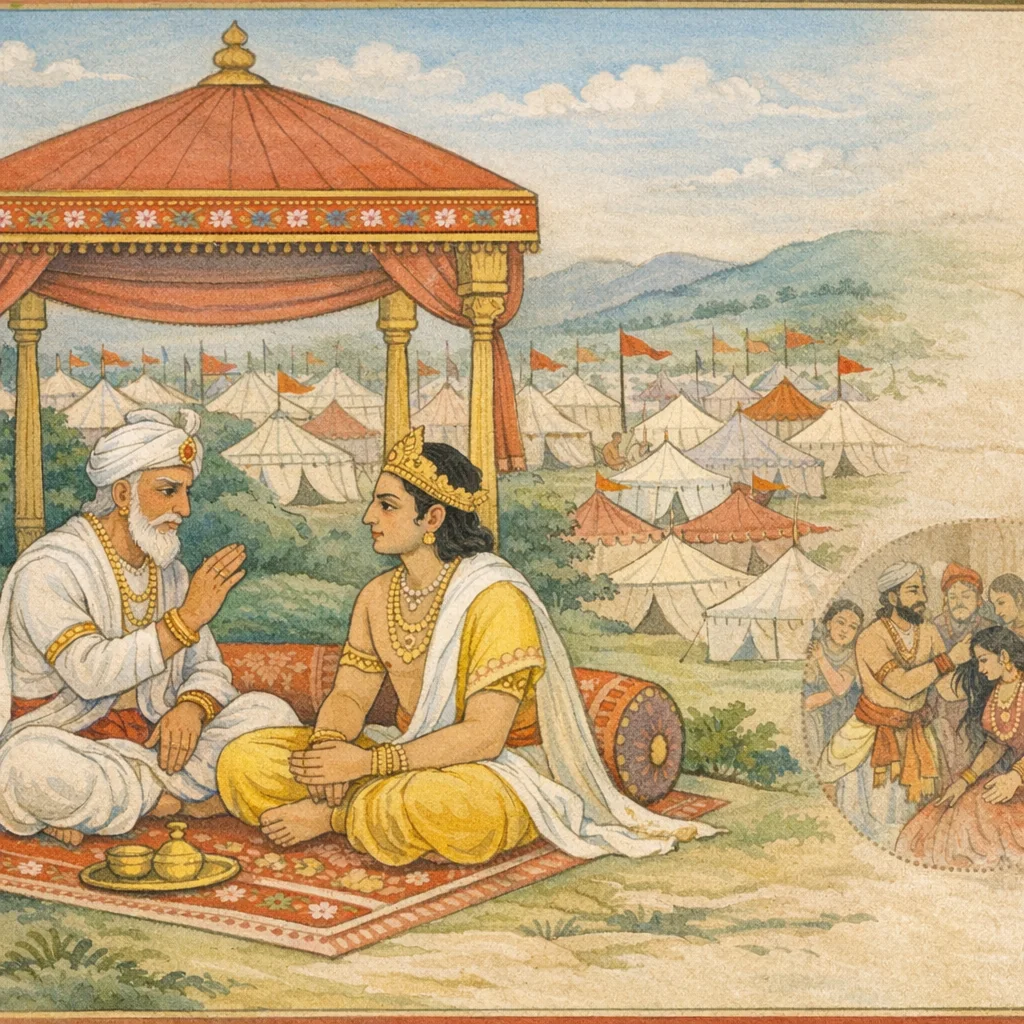
Vaiśaṃpāyana describes Śalya’s approach with a large, visually diverse army whose encampment spans a broad measure, emphasizing the scale and pageantry of mobilization. Duryodhana, informed of Śalya’s arrival, personally hastens to honor him and arranges ornate assembly-halls in pleasing locales, staging a sequence of receptions that elevate Śalya’s sense of regard. In this atmosphere of exceptional hospitality, Śalya queries attendants about the makers of these halls; Duryodhana then reveals himself and solicits a boon. Duryodhana requests Śalya to become the overall leader of his forces; Śalya assents, with Gāndhārī repeatedly affirming the commitment. Afterward, Śalya proceeds to Upaplavya, enters the Pāṇḍava camp, and is received according to protocol with offerings and embraces. In dialogue with Yudhiṣṭhira, Śalya recounts the Kaurava encounter and boon. Yudhiṣṭhira then reframes Śalya’s obligation into a strategic-ethical request: in the Karṇa–Arjuna chariot duel, Śalya should serve as Karṇa’s charioteer yet weaken Karṇa’s morale through discouraging speech, enabling a fairer prospect for the Pāṇḍavas. Śalya agrees, promising to speak contrary, confidence-reducing counsel to Karṇa while also consoling Yudhiṣṭhira regarding prior hardships and the inevitability of suffering even among exalted beings.
Chapter Arc: कृष्ण के सारथ्य-स्वीकार की गूँज के बाद कथा का रुख़ सेनाओं की वास्तविक तैयारी और राजधर्म की कसौटी की ओर मुड़ता है—शल्य की विपुल सेना का पड़ाव मानो धरती पर एक नया नगर बसाता है। → शल्य की अक्षौहिणी-सम्पन्न शक्ति, विचित्र कवच-ध्वजों से सुसज्जित शूरवीरों की भीड़, और धृतराष्ट्र-पुत्रों द्वारा रचे गए दुःख का स्मरण—इन सबके बीच युधिष्ठिर के मन में पुराने अपमान (द्यूतसभा, द्रौपदी का दुःख, कर्ण के कटुवचन) फिर से जागते हैं। शल्य की वाणी राजधर्म, लोभ-त्याग और धर्मनिष्ठा की प्रशंसा करते हुए भी युद्ध की अनिवार्यता का संकेत देती है। → शल्य युधिष्ठिर को धैर्य देता है—देवताओं और महापुरुषों तक ने समय-समय पर दुःख भोगे हैं; अतः इस ‘धार्तराष्ट्रकृत’ महान् दुःख का प्रतिकार शत्रु-वध से ही सुख-प्राप्ति का मार्ग बनेगा। साथ ही, भविष्य की निर्णायक माँग का बीज पड़ता है: ‘यदि मेरा प्रिय करना चाहते हो, तो युद्ध में अर्जुन की रक्षा करनी होगी’—यह वाक्य अध्याय के अंतःस्वर को तीखा कर देता है। → युधिष्ठिर के शोक का भार तर्क और धर्म-उपदेश से कुछ हल्का होता है; राजधर्म की दृष्टि से युद्ध को ‘अनिवार्य कर्म’ मानने की भूमि तैयार होती है। शल्य की प्रतिष्ठा—उदार, ब्रह्मण्य, दानी, धर्मपरायण—एक ऐसे सहायक की छवि बनाती है जो आगे निर्णायक भूमिका निभा सकता है। → युद्ध में ‘अकर्तव्य’ प्रतीत होने पर भी अर्जुन-रक्षा का आग्रह—शल्य किस पक्ष में, किस रूप में, और किस मूल्य पर यह प्रतिज्ञा निभाएगा?
Shlokas
Verse 1
इस प्रकार श्रीमह्याभारत उद्योगपर्वके अन्तर्गत सेनोट्रोगपर्वमें श्रीकृष्णका सारथ्यस्वीकारविषयक सातवाँ अध्याय पूरा हुआ ॥/ ७ ॥। ऑपन--माजल छा अफ<-जआकऋा-ज अष्टमो>< ध्याय: शल्यका दुर्योधनके सत्कारसे प्रसन्न हो उसे वर देना और युधिष्ठिरसे मिलकर उन्हें आश्वासन देना वैशम्पायन उवाच शल्य: श्रुत्वा तु दूतानां सैन्येन महता वृतः । अभ्ययात् पाण्डवान् राजन् सह पुत्रैर्महारथै:,वैशम्पायनजी कहते हैं--जनमेजय! पाण्डवोंके दूतोंके मुखसे उनका संदेश सुनकर राजा शल्य अपने महारथी पुत्रोंके साथ विशाल सेनासे घिरकर पाण्डवोंके पास चले
Vaiśampāyana said: O King (Janamejaya), having heard the message delivered by the Pāṇḍavas’ envoys, King Śalya—surrounded by a great army—set out toward the Pāṇḍavas, accompanied by his sons, who were mighty chariot-warriors. The verse marks a decisive movement: a powerful ally responds to diplomatic communication and physically approaches the Pāṇḍava camp, foreshadowing the ethical and strategic tensions of allegiance in the coming war.
Verse 2
तस्य सेनानिवेशो5भूदध्यर्थमिव योजनम् । तथा हि विपुलां सेनां बिभर्ति स नरर्षभ:,नरश्रेष्ठ शल्य इतनी अधिक सेनाका भरण-पोषण करते थे कि उसका पड़ाव पड़नेपर आधी योजन भूमि घिर जाती थी
Vaiśampāyana said: His army’s encampment spread to about half a yojana, for that bull among men was capable of sustaining and maintaining such a vast host. The verse underscores not only the scale of the military gathering but also the practical burden of provisioning—an implicit measure of a leader’s capacity and responsibility in the approach to war.
Verse 3
अक्षौहिणीपती राजन् महावीर्यपराक्रम: । विचित्रकवचा: शूरा विचित्रध्वजकार्मुका:,राजन! महान् बलवान् और पराक्रमी शल्य अक्षौहिणी सेनाके स्वामी थे। सैकड़ों और हजारों वीर क्षत्रियशिरोमणि उनकी विशाल वाहिनीका संचालन करनेवाले सेनापति थे। वे सब-के-सब शौर्य-सम्पन्न, कवच धारण करनेवाले तथा विचित्र ध्वज एवं धनुषसे सुशोभित थे। उन सबके अंग में विचित्र आभूषण शोभा दे रहे थे। सभीके रथ और वाहन विचित्र थे। सबके गलेमें विचित्र मालाएँ सुशोभित थीं। सबके वस्त्र और अलंकार अद्भुत दिखायी देते थे। उन सबने अपने-अपने देशकी वेश-भूषा धारण कर रखी थी
Vaiśampāyana said: O King, the commanders of entire akṣauhiṇīs were men of great might and prowess—heroes clad in varied armor, distinguished by their diverse banners and bows.
Verse 4
विचित्राभरणा: सर्वे विचित्ररथवाहना: । विचित्रस्रग्धरा: सर्वे विचित्राम्बर भूषणा:,राजन! महान् बलवान् और पराक्रमी शल्य अक्षौहिणी सेनाके स्वामी थे। सैकड़ों और हजारों वीर क्षत्रियशिरोमणि उनकी विशाल वाहिनीका संचालन करनेवाले सेनापति थे। वे सब-के-सब शौर्य-सम्पन्न, कवच धारण करनेवाले तथा विचित्र ध्वज एवं धनुषसे सुशोभित थे। उन सबके अंग में विचित्र आभूषण शोभा दे रहे थे। सभीके रथ और वाहन विचित्र थे। सबके गलेमें विचित्र मालाएँ सुशोभित थीं। सबके वस्त्र और अलंकार अद्भुत दिखायी देते थे। उन सबने अपने-अपने देशकी वेश-भूषा धारण कर रखी थी
Vaiśampāyana said: All of them wore splendid, variegated ornaments; their chariots and mounts were of diverse and striking kinds. All bore garlands of many colors, and all were adorned with remarkable garments and decorations. The scene presents the martial pageantry of a great host—outer brilliance and disciplined display that signal readiness for war, while implicitly reminding the listener that such splendor is only the surface of the grave ethical choices soon to unfold.
Verse 5
स्वदेशवेषाभरणा वीरा: शतसहस्रश: । तस्य सेनाप्रणेतारो बभूवु: क्षत्रियर्षभा:,राजन! महान् बलवान् और पराक्रमी शल्य अक्षौहिणी सेनाके स्वामी थे। सैकड़ों और हजारों वीर क्षत्रियशिरोमणि उनकी विशाल वाहिनीका संचालन करनेवाले सेनापति थे। वे सब-के-सब शौर्य-सम्पन्न, कवच धारण करनेवाले तथा विचित्र ध्वज एवं धनुषसे सुशोभित थे। उन सबके अंग में विचित्र आभूषण शोभा दे रहे थे। सभीके रथ और वाहन विचित्र थे। सबके गलेमें विचित्र मालाएँ सुशोभित थीं। सबके वस्त्र और अलंकार अद्भुत दिखायी देते थे। उन सबने अपने-अपने देशकी वेश-भूषा धारण कर रखी थी
Vaiśampāyana said: “Heroes by the hundreds of thousands—each wearing the dress and ornaments of his own land—were gathered there. For that host, the foremost of kṣatriyas became its commanders and leaders.”
Verse 6
व्यथयन्निव भूतानि कम्पयन्निव मेदिनीम् । शनैर्विश्रामयन् सेनां स ययौ येन पाण्डव:,राजा शल्य समस्त प्राणियोंको व्यथित और पृथ्वीको कम्पित-से करते हुए अपनी सेनाको धीरे-धीरे विभिन्न स्थानोंपर ठहराकर विश्राम देते हुए उस मार्गपर चले, जिससे पाण्डुनन्दन युधिष्ठिरके पास शीघ्र पहुँच सकते थे
Vaiśampāyana said: King Śalya advanced along the route by which he could quickly reach the Pāṇḍava (Yudhiṣṭhira). As he went, his great host seemed to distress living beings and to make the earth itself tremble; yet he moved steadily, halting the army here and there to let it rest in stages. The verse underscores the moral weight of marching power: even disciplined movement toward a political goal carries unavoidable pressure upon creatures and land.
Verse 7
ततो दुर्योधन: श्रुत्वा महात्मानं महारथम् । उपायान्तमभिद्रुत्य स्वयमानर्च भारत,भरतनन्दन! उन्हीं दिनों दुर्योधनने महारथी एवं महामना राजा शल्यका आगमन सुनकर स्वयं आगे बढ़कर (मार्गमें ही) उनका सेवा-सत्कार प्रारम्भ कर दिया
Then Duryodhana, having heard that King Śalya—high-souled and a great chariot-warrior—was approaching, hurried forward to meet him and personally began honoring and attending upon him on the way. In ethical terms, the scene shows strategic hospitality: outward reverence and service offered with the aim of securing a powerful ally for the coming war.
Verse 8
कारयामास पूजार्थ तस्य दुर्योधन: सभा: । रमणीयेषु देशेषु रत्नचित्रा: स्वलंकृता:,दुर्योधनने राजा शल्यके स्वागत-सत्कारके लिये रमणीय प्रदेशोंमें बहुत-से सभाभवन तैयार कराये, जिनकी दीवारोंमें रत्न जड़े हुए थे। उन भवनोंको सब प्रकारसे सजाया गया था इति श्रीमहाभारते उद्योगपर्वणि सेनोद्योगपर्वणि शल्यवाक्ये अष्टमो5ध्याय:
Vaiśampāyana said: For the purpose of honoring him, Duryodhana had many assembly-halls constructed in delightful locales—halls inlaid with gems and richly adorned in every way. The episode underscores how royal hospitality and outward splendor can be mobilized as instruments of political persuasion, especially on the eve of war.
Verse 9
शिल्पिभिविविधैश्वैव क्रीडास्तत्र प्रयोजिता: । तत्र वस्त्राणि माल्यानि भक्ष्यं पेयं च सत्कृतम्,नाना प्रकारके शिल्पियोंने उनमें अनेकानेक क्रीड़ा-विहारके स्थान बनाये थे। वहाँ भाँति-भाँतिके वस्त्र, मालाएँ, खाने-पीनेके सामान तथा सत्कारकी अन्यान्य वस्तुएँ रखी गयी थीं
Vaiśampāyana said: Skilled artisans of many kinds had arranged various places and means for recreation there. In that setting were kept garments and garlands, along with food and drink, and other provisions prepared for honoring and welcoming guests—signs of careful hospitality and social order.
Verse 10
कूृपाश्न विविधाकारा मनोहर्षविवर्धना: । वाप्यश्न विविधाकारा औदकानि गृहाणि च,अनेक प्रकारके कुएँ तथा भाँति-भाँतिकी बावड़ियाँ बनायी गयी थीं, जो हृदयके हर्षको बढ़ा रही थीं। बहुत-से ऐसे गृह बने थे, जिनमें जलकी विशेष सुविधा सुलभ की गयी थी
Vaiśampāyana said: “Wells of many kinds were constructed, delighting the heart and increasing joy. Ponds of diverse forms were also made, and houses were arranged with special provisions for water.”
Verse 11
स ता: सभा: समासाद्य पूज्यमानो यथामर: । दुर्योधनस्य सचिवैददेशे देशो समन्ततः,सब ओर विभिन्न स्थानोंमें बने हुए उन सभाभवनोंमें पहुँचकर राजा शल्य दुर्योधनके मन्त्रियोंद्वारा देवताओं-की भाँति पूजित होते थे
Vaiśampāyana said: Having reached those assembly-halls, King Śalya was honoured like a god; and, through Duryodhana’s ministers, quarters and accommodations were assigned to him on every side. The scene underscores how political hospitality and ceremonial reverence are deployed to secure allegiance on the eve of conflict.
Verse 12
आजगाम सभामन्यां देवावसथवर्चसम् | स तत्र विषयैर्युक्त: कल्याणैरतिमानुषै:
Vaiśaṃpāyana said: He then came to another assembly-hall, radiant like the dwelling of the gods. There he found it furnished with splendid appointments—auspicious, refined, and surpassing ordinary human workmanship—signaling royal order, prosperity, and the cultivated power that frames the coming decisions of state.
Verse 13
इस तरह (यात्रा करते हुए) शल्य किसी दूसरे सभाभवनमें गये, जो देवमन्दिरोंके समान प्रकाशित होता था। वहाँ उन्हें अलौकिक कल्याणमय भोग प्राप्त हुए ।। मेने5 भ्यधिकमात्मानमवमेने पुरंदरम् । पप्रच्छ स ततः: प्रेष्यान् प्रह्ृष्ट: क्षत्रियर्षभ:,उस समय उन क्षत्रियशिरोमणि नरेशने अपने-आपको सबसे अधिक सौभाग्यशाली समझा। उन्हें देवराज इन्द्र भी अपनेसे तुच्छ प्रतीत हुए। उस समय अत्यन्त प्रसन्न होकर उन्होंने सेवकोंसे पूछा--
Continuing his journey, Śalya entered another assembly-hall, radiant like a temple of the gods. There he was offered extraordinary, auspicious enjoyments. Delighted, that bull among kṣatriyas began to think himself supremely fortunate; even Indra, the slayer of cities, seemed insignificant by comparison. In that elation he questioned his attendants, eager to know more.
Verse 14
युधिष्ठिरस्य पुरुषा: केउत्र चक्र: सभा इमा: | आनीयमन्तां सभाकारा: प्रदेयार्हा हि मे मता:,'युधिष्ठिरके किन आदमियोंने ये सभाभवन बनाये हैं। उन सबको बुलाओ। मैं उन्हें पुरस्कार देनेके योग्य मानता हूँ
Vaiśampāyana said: “Which men of Yudhiṣṭhira built this assembly hall here? Bring the builders of the hall before me; in my judgment they are truly worthy of reward.”
Verse 15
प्रसादमेषां दास्यामि कुन्तीपुत्रो$नुमन्यताम् । दुर्योधनाय तत् सर्व कथयन्ति सम विस्मिता:,“मैं इन सबको अपनी प्रसन्नताके फलस्वरूप कुछ पुरस्कार दूँगा, कुन्तीनन्दन युधिष्ठिरको भी मेरे इस व्यवहारका अनुमोदन करना चाहिये।” यह सुनकर सब सेवकोंने विस्मित हो दुर्योधनसे वे सारी बातें बतायीं
Vaiśampāyana said: “I shall grant these people rewards as a mark of my favor; and the son of Kuntī (Yudhiṣṭhira) ought to approve this conduct of mine.” Hearing this, the attendants—astonished—went and reported the entire matter to Duryodhana.
Verse 16
सम्प्रहृष्टो यदा शल्यो दिदित्सुरपि जीवितम् । गूढो दुर्योधनस्तत्र दर्शयामास मातुलम्,जब हर्षमें भरे हुए राजा शल्य (अपने प्रति किये गये उपकारके बदले) प्राणतक देनेको तैयार हो गये, तब गुप्तरूपसे वहीं छिपा हुआ दुर्योधन मामा शल्यके सामने गया
Vaiśampāyana said: When King Śalya, delighted and eager to repay the favor shown to him, was ready even to stake his very life, then Duryodhana—who had been hiding there—came forward and revealed himself before his maternal uncle Śalya.
Verse 17
त॑ दृष्टवा मद्रराजश्न ज्ञात्वा यत्नं च तस्य तम् | परिष्वज्याब्रवीत् प्रीत इष्टोडर्थो गृहुतामिति,उसे देखकर तथा उसीने यह सारी तैयारी की है, यह जानकर मद्रराजने प्रसन्नतापूर्वक दुर्योधनको हृदयसे लगा लिया और कहा--'तुम अपनी अभीष्ट वस्तु मुझसे माँग लो'
Seeing him and recognizing that all these arrangements had been made by him, the king of Madra—pleased—embraced Duryodhana and said, “Let your desired request be accepted; ask of me what you wish.”
Verse 18
दुर्योधन उवाच सत्यवाग् भव कल्याण वरो वै मम दीयताम् | सर्वसेनाप्रणेता वै भवान् भवितुमहति,दुर्योधनने कहा--कल्याणस्वरूप महानुभाव! आपकी बात सत्य हो। आप मुझे अवश्य वर दीजिये। मैं चाहता हूँ कि आप मेरी सम्पूर्ण सेनाके अधिनायक हो जायेँ
Duryodhana said: “O auspicious and noble one, let your words prove true. Grant me this boon: you indeed are worthy to become the commander and leader of my entire army.”
Verse 19
(यथैव पाण्डवास्तुभ्यं तथैव भवते हाहम् । अनुमान्यं च पाल्यं च भक्त च भज मां विभो ।। आपके लिये जैसे पाण्डव हैं, वैसा ही मैं हूँ। प्रभो! मैं आपका भक्त होनेके कारण आपके द्वारा समादृत और पालित होने योग्य हूँ। अत: मुझे अपनाइये। शल्य उवाच एवमेतन्महाराज यथा वदसि पार्थिव । एवं ददामि ते प्रीत एवमेतद् भविष्यति ।। ) शल्यने कहा--महाराज! तुम्हारा कहना ठीक है। भूपाल! तुम जैसा कहते हो, वैसा ही वर तुम्हें प्रसन्नतापूर्वक देता हूँ। यह ऐसा ही होगा--मैं तुम्हारी सेनाका अधिनायक बनूँगा। वैशम्पायन उवाच कृतमित्यब्रवीच्छल्य: किमन्यत् क्रियतामिति । कृतमित्येव गान्धारि: प्रत्युवाच पुनः पुन:,वैशम्पायनजी कहते हैं--राजन्! उस समय शल्यने दुर्योधनसे कहा--'तुम्हारी यह प्रार्था तो स्वीकार कर ली। अब और कौन-सा कार्य करूँ?” यह सुनकर गान्धारीनन्दन दुर्योधनने बार-बार यही कहा कि मेरा तो सब काम आपने पूरा कर दिया
Vaiśaṃpāyana said: “Just as the Pāṇḍavas are dear to you, so am I. O Lord, because I am your devotee, I deserve to be accepted and protected by you; therefore, take me under your care.” Śalya replied: “So it is, O great king; O ruler of men, what you say is right. Pleased, I grant you this boon; it shall be so.” Vaiśaṃpāyana said: Then Śalya said, “It is done. What else shall I do?” Hearing this, Duryodhana, the son of Gāndhārī, again and again replied, “It is done—everything of mine has been accomplished by you,” implying that Śalya would become commander of his forces.
Verse 20
शल्य उवाच गच्छ दुर्योधन पुरं स्वकमेव नरर्षभ । अहं गमिष्ये द्रष्ट वै युधिष्ठिरमरिंदमम्
Śalya said: “Go, Duryodhana, to your own city as you wish, O bull among men. As for me, I shall go indeed to see Yudhiṣṭhira, the subduer of foes.”
Verse 21
शल्य बोले--नरश्रेष्ठ दुर्योधन! अब तुम अपने नगरको जाओ मैं शत्रुदमन युधिष्ठिरसे मिलने जाऊँगा ।। दृष्टवा युधिष्िरं राजन क्षिप्रमेष्ये नराधिप । अवश्य॑ चापि द्रष्टव्य: पाण्डव: पुरुषर्षभ:,नरेश्वर! मैं युधिष्ठिस्से मिलकर शीघ्र ही लौट आऊँगा। पाण्बुपुत्र नरश्रेष्ठ युधिष्ठिरसे मिलना भी अत्यन्त आवश्यक है
Śalya said: “O best of men, Duryodhana, go now to your own city. I shall go to meet Yudhiṣṭhira, the subduer of foes. Having seen Yudhiṣṭhira, O king, I will return quickly, O lord of men. Indeed, that Pāṇḍava—bull among men—must be met without fail.”
Verse 22
दुर्योधन उवाच क्षिप्रमागम्यतां राजन् पाण्डवं वीक्ष्य पार्थिव । त्वय्यधीना: सम राजेन्द्र वरदानं स्मरस्व न:,दुर्योधनने कहा--राजन्! पृथ्वीपते! पाण्डुनन्दन युधिष्ठिस्से मिलकर आप शीघ्र चले आइये। राजेन्द्र! हम आपके ही अधीन हैं। आपने हमें जो वरदान दिया है, उसे याद रखियेगा
Duryodhana said: “O King, O lord of the earth—having met and seen the Pāṇḍava, return quickly. O best of kings, we are dependent upon you; remember the boon you granted us.”
Verse 23
शल्य उवाच क्षिप्रमेष्यामि भद्रं ते गच्छस्व स्वपुरं नूप । परिष्वज्य तथान्योन्यं शल्यदुर्योधनावुभौ,शल्य बोले--नरेश्वर! तुम्हारा कल्याण हो। तुम अपने नगरको जाओ । मैं शीघ्र आऊँगा। ऐसा कहकर राजा शल्य तथा दुर्योधन दोनों एक-दूसरेसे गले मिलकर विदा हुए
Śalya said: “I shall come quickly; may good befall you. Go now to your own city, O king.” Having spoken thus, Śalya and Duryodhana embraced one another and departed.
Verse 24
स तथा शल्यमामन्त्रय पुनरायात् स्वकं पुरम् । शल्यो जगाम कौन्तेयानाख्यातुं कर्म तस्य तत्,इस प्रकार शल्यसे आज्ञा लेकर दुर्योधन पुन: अपने नगरको लौट आया और शल्य कुन्तीकुमारोंसे दुर्योधनकी वह करतूत सुनानेके लिये युधिष्ठिरके पास गये
Having thus taken leave of Śalya, Duryodhana returned again to his own city. Śalya, for his part, went to the sons of Kuntī to report to Yudhiṣṭhira that very deed of Duryodhana—so that the Pāṇḍavas might clearly understand his intent and conduct in the unfolding conflict.
Verse 25
उपप्लव्यं स गत्वा तु स्कन्धावारं प्रविश्य च । पाण्डवानथ तानू सर्वान् शल्यस्तत्र ददर्श ह,विराटनगरके उपप्लव्य नामक प्रदेशमें जाकर वे पाण्डवोंकी छावनीमें पहुँचे और वहीं उन सब पाण्डवोंसे मिले
Having gone to Upaplavya and entered the Pāṇḍavas’ military camp, Śalya there beheld all the Pāṇḍava brothers. The verse places his arrival amid the mobilization for war, highlighting the formal meeting of allies and the ethical weight of choosing sides on the eve of conflict.
Verse 26
समेत्य च महाबाहु: शल्य: पाण्डुसुतैस्तदा । पाद्यमर्घ्य च गां चैव प्रत्यगृह्नाद् यथाविधि
Then Śalya, the mighty-armed, having met the sons of Pāṇḍu, accepted—according to proper custom—the ceremonial water for washing the feet, the respectful offering (arghya), and also a cow. The scene underscores the binding force of hospitality and ritual propriety, by which relationships and obligations are formally acknowledged.
Verse 27
पाण्डुपुत्रोंस मिलकर महाबाहु शल्यने उनके द्वारा विधिपूर्वक दिये हुए पाद्य, अर्घ्ध और गौको ग्रहण किया ।। ततः कुशलपूर्व हि मद्रराजोडरिसूदन: । प्रीत्या परमया युक्त: समाश्शलिष्यद् युधिष्ठिरम्
Then the king of Madra, the foe-subduer, after first exchanging courteous inquiries about well-being, embraced Yudhiṣṭhira with the deepest affection. The scene underscores the dharmic etiquette of reception—honoring a guest with proper rites and meeting him with warmth—while also hinting at the political and moral weight of alliances on the eve of conflict.
Verse 28
तथा भीमार्जुनौ हृष्टौ स्वस्रीयौ च यमावुभौ । तत्पश्चात् शत्रुसूदन मद्रराज शल्यने कुशल-प्रश्नके अनन्तर बड़ी प्रसन्नताके साथ राजा युधिष्ठिरको हृदयसे लगाया। इसी प्रकार उन्होंने हर्षमें भरे हुए दोनों भाई भीमसेन और अर्जुनको तथा अपनी बहिनके दोनों जुड़वे पुत्रों--नकुल-सहदेवको भी गले लगाया ।। (द्रौपदी च सुभद्रा च अभिमन्युश्न भारत | समेत्य च महाबाहुं शल्यं पाण्डुसुतस्तदा ।। कृताञ्जलिरदीनात्मा धर्मात्मा शल्यमब्रवीत् | भारत! तदनन्तर द्रौपदी, सुभद्रा तथा अभिमन्युने महाबाहु शल्यके पास आकर उन्हें प्रणाम किया। उस समय उदारचेता धर्मात्मा पाण्डुपुत्र युधिष्ठिरने दोनों हाथ जोड़कर शल्यसे कहा। युधिष्ठिर उदाच स्वागतं ते<स्तु वै राजन्नेतदासनमास्यताम् ।। युधिष्ठिर बोले--राजन्! आपका स्वागत है। इस आसनपर विराजिये। वैशम्पायन उवाच ततो न्यषीदच्छल्यक्षु काज्चने परमासने । कुशल पाण्डवो<5पृच्छच्छल्यं सर्वसुखावहम् ।। स तै: परिवृतः सर्व: पाण्डवैर्धर्मचारिभि: ।) आसने चोपविष्टस्तु शल्य: पार्थमुवाच ह,वैशम्पायनजी कहते हैं--जनमेजय! तब राजा शल्य सुवर्णके श्रेष्ठ सिंहासनपर विराजमान हुए। उस समय पाण्डुनन्दन युधिष्ठिने सबको सुख देनेवाले शल्यसे कुशलसमाचार पूछा। उन समस्त धर्मात्मा पाण्डवोंसे घिरकर आसनपर बैठे हुए राजा शल्य कुन्तीकुमार युधिष्ठिरसे इस प्रकार बोले--
Vaiśampāyana said: Then, with great joy, King Śalya of Madra—slayer of foes—after exchanging greetings, embraced King Yudhiṣṭhira warmly from the heart. In the same glad spirit he embraced Bhīma and Arjuna, and also the twin sons of his sister, Nakula and Sahadeva. Then, O Bhārata, Draupadī, Subhadrā, and Abhimanyu approached the mighty-armed Śalya and paid him reverence. At that time the righteous-souled son of Pāṇḍu, Yudhiṣṭhira, with joined palms and undepressed mind, addressed Śalya: “O king, welcome to you. Be seated on this seat.” Vaiśampāyana continued: Thereupon Śalya sat upon a splendid golden throne. Surrounded by the dharma-observing Pāṇḍavas, Yudhiṣṭhira inquired after Śalya’s welfare—words meant to bring comfort and well-being to all. Seated among them, Śalya then began to speak to Pārtha (the Pāṇḍava prince).
Verse 29
कुशलं राजशार्दूल कच्चित् ते कुरुनन्दन । अरण्यवासादू दिष्ट्यासि विमुक्तो जयतां वर,“नृपतिश्रेष्ठ कुरुनन्दन! तुम कुशलसे तो हो न? विजयी वीरोंमें श्रेष्ठ नरेश! यह बड़े सौभाग्यकी बात है कि तुम वनवासके कष्टसे छुटकारा पा गये
Vaiśampāyana said: “O tiger among kings, O joy of the Kuru line—are you well? Fortunate indeed that you have been released from the hardship of forest-dwelling, O best among the victorious.”
Verse 30
सुदुष्करं कृतं राजन् निर्जने वसता त्वया । भ्रातृभि: सह राजेन्द्र कृष्णया चानया सह,“राजन! तुमने अपने भाइयों तथा इस द्रुपदकुमारी कृष्णाके साथ निर्जन वनमें निवास करके अत्यन्त दुष्कर कार्य किया है
Vaiśampāyana said: “O King, you have accomplished something exceedingly difficult: living in a lonely wilderness. O best of kings, together with your brothers and with this Kṛṣṇā (Draupadī), you endured the hardship of exile—an act that displays steadfastness, self-control, and fidelity to duty despite suffering.”
Verse 31
अज्ञातवासं घोरं च वसता दुष्करं कृतम् । दुःखमेव कुत:ः सौख्य॑ भ्रष्टराज्यस्य भारत,“भारत! भयंकर अज्ञातवास करके तो तुमलोगोंने और भी दुष्कर कार्य सम्पन्न किया है। जो अपने राज्यसे वंचित हो गया हो, उसे तो कष्ट ही उठाना पड़ता है, सुख कहाँसे मिल सकता है?
Vaiśampāyana said: “Living in fearful concealment (the period of incognito exile) has been accomplished by you as a most difficult undertaking. For one who has been deprived of his kingdom, there is only suffering—how could happiness arise, O Bhārata?”
Verse 32
दुःखस्यैतस्य महतो धार्तराष्ट्रकृतस्य वै । अवाप्स्यसि सुखं राजन् हत्वा शत्रून् परंतप,'शत्रुओंको संताप देनेवाले नरेश! दुर्योधनके दिये हुए इस महान् दुःखके अन्तमें अब तुम शत्रुओंकोी मारकर सुखके भागी होओगे
Vaiśampāyana said: “O king, scorcher of foes—after this great suffering brought about by the Dhārtarāṣṭras, you will attain happiness at its end, having slain your enemies.”
Verse 33
विदितं ते महाराज लोकतनन््त्रं नराधिप । तस्माल्लोभकृतं किंचित् तव तात न विद्यते
Vaiśaṃpāyana said: “O great king, O ruler of men, you are well acquainted with the ways by which the world is governed. Therefore, dear one, there is nothing in you that is born of greed.”
Verse 34
“महाराज! नरेश्वर! तुम्हें लोकतन्त्रका सम्यक् ज्ञान है। तात! इसीलिये तुममें लोभजनित कोई भी बर्ताव नहीं है ।। राजर्षीणां पुराणानां मार्गमन्विच्छ भारत । दाने तपसि सत्ये च भव तात युधिष्ठिर,“भारत! प्राचीन राजर्षियोंके मार्गका अनुसरण करो। तात युधिष्छिर! तुम सदा दान, तपस्या और सत्यमें ही संलग्न रहो
Vaiśampāyana said: “O great king, O lord of men, you possess a thorough understanding of the principles of governance and public order. Therefore, dear one, no conduct born of greed is found in you. O Bhārata, follow the path of the ancient royal seers. Dear Yudhiṣṭhira, remain ever devoted to generosity, austerity, and truth.”
Verse 35
क्षमा दमश्न सत्यं च अहिंसा च युधिष्छिर । अद्भुतश्न पुनर्लोकस्त्वयि राजन् प्रतिष्ठित:,“राजा युधिष्ठिर! क्षमा, इन्द्रियसंयम, सत्य, अहिंसा तथा अद्भुत लोक--ये सब तुममें प्रतिष्ठित हैं
Vaiśampāyana said: “O Yudhiṣṭhira, O king—patience (forbearance), self-restraint, truthfulness, and non-violence are firmly established in you; and, moreover, a wondrous moral world seems to stand supported upon you.”
Verse 36
मृदुर्वदान्यो ब्रह्मण्यो दाता धर्मपरायण: । धममस्ति विदिता राजन् बहवो लोकसाक्षिका:,“महाराज! तुम कोमल, उदार, ब्राह्मणभक्त, दानी तथा धर्मपरायण हो। संसार जिनका साक्षी है, ऐसे बहुत-से धर्म तुम्हें ज्ञात हैं
Vaiśampāyana said: “O King, you are gentle in speech, generous, devoted to the Brahmins, a giver, and steadfast in dharma. Many duties and righteous norms—attested by the world itself—are already known to you.”
Verse 37
सर्व जगदिदं तात विदितं ते परंतप । दिष्ट्या कृच्छुमिदं राजन् पारितं भरतर्षभ,“तात! परंतप! तुम्हें इस सम्पूर्ण जगतका तत्त्व ज्ञात है। भरतश्रेष्ठ नरेश! तुम इस महान् संकटसे पार हो गये, यह बड़े सौभाग्यकी बात है
Vaiśaṃpāyana said: “Dear child, O scorcher of foes, the truth of this entire world is known to you. O king, bull among the Bharatas, it is indeed a blessing that you have crossed beyond this grievous crisis.”
Verse 38
दिष्ट्या पश्यामि राजेन्द्र धर्मात्मानं सहानुगम् । निस्तीर्ण दुष्करं राजंस्त्वां धर्मनिचयं प्रभो,राजेन्द्र! तुम धर्मात्मा एवं धर्मकी निधि हो। राजन! तुमने भाइयोंसहित अपनी दुष्कर प्रतिज्ञा पूरी कर ली है और इस अवस्थामें मैं तुम्हें देख रहा हूँ; यह मेरा अहोभाग्य है!
By good fortune I behold you, O best of kings—righteous in spirit and accompanied by your followers. You have crossed what was difficult to cross; O king, O lord, you are a very treasury of dharma. To see you now, after you have fulfilled that arduous vow together with your brothers, is indeed my blessing.
Verse 39
वैशम्पायन उवाच ततो<5स्याक थयद्ू राजा दुर्योधनसमागमम् | तच्च शुश्रूषितं सर्व वरदानं च भारत,वैशम्पायनजी कहते हैं--भारत! तदनन्तर राजा शल्यने दुर्योधनके मिलने, सेवा- शुश्रूषा करने और उसे अपने वरदान देनेकी सारी बातें कह सुनायीं
Vaiśampāyana said: Then King Śalya recounted to him, O Bhārata, the entire account—how he came to meet Duryodhana, how he rendered him service and attendance, and how he granted him a boon.
Verse 40
युधिछिर उवाच सुकृतं ते कृतं राजनू् प्रह्ृष्टेनान्तरात्मना । दुर्योधनस्य यद् वीर त्वया वाचा प्रतिश्रुतम्,युधिष्ठिर बोले--वीर महाराज! आपने प्रसन्नचित्त होकर जो दुर्योधनको उसकी सहायताका वचन दे दिया, वह अच्छा ही किया
Yudhiṣṭhira said: “O king, you have done well—your inner self being glad and untroubled—inasmuch as, O hero, you gave Duryodhana your word of support.”
Verse 41
एकं च्विच्छामि भद्र| ते क्रियमाणं महीपते । राजन्नकर्तव्यमपि कर्तुमहसि सत्तम,परंतु पृथ्वीपते! आपका कल्याण हो। मैं आपके द्वारा अपना भी एक काम कराना चाहता हूँ। साधु शिरोमणे! वह न करने योग्य होनेपर भी मेरी ओर देखते हुए आपको अवश्य करना चाहिये। वीरवर! सुनिये; मैं वह कार्य आपको बता रहा हूँ। महाराज! आप इस भूतलपर संग्राममें सारथिका काम करनेके लिये वसुदेवनन्दन भगवान् श्रीकृष्णके समान माने ये हैं
Yudhiṣṭhira said: “One more request I have, O blessed king. O lord of the earth, I wish to have a task carried out by you. O king, though it may be something you would normally refrain from doing, yet, out of regard for me, you ought to do it. Listen; I shall tell you that task.”
Verse 42
ममत्ववेक्षया वीर शृणु विज्ञापयामि ते । भवानिह च सारथ्ये वासुदेवसमो युधि,परंतु पृथ्वीपते! आपका कल्याण हो। मैं आपके द्वारा अपना भी एक काम कराना चाहता हूँ। साधु शिरोमणे! वह न करने योग्य होनेपर भी मेरी ओर देखते हुए आपको अवश्य करना चाहिये। वीरवर! सुनिये; मैं वह कार्य आपको बता रहा हूँ। महाराज! आप इस भूतलपर संग्राममें सारथिका काम करनेके लिये वसुदेवनन्दन भगवान् श्रीकृष्णके समान माने ये हैं
Yudhiṣṭhira said: “O hero, listen; out of personal regard I submit this request to you. Here, in the matter of charioteering amid battle, you are regarded as the equal of Vāsudeva (Kṛṣṇa).”
Verse 43
कण्णार्जुनाभ्यां सम्प्राप्ते द्वैरथे राजसत्तम । कर्णस्य भवता कार्य सारथ्यं नात्र संशय:
Yudhiṣṭhira said: “O best of kings, when Karṇa and Arjuna come to engage in a chariot-duel, you must serve as Karṇa’s charioteer—of this there is no doubt.”
Verse 44
नूपशिरोमणे! जब कर्ण और अर्जुनके द्वैरथयुद्धका अवसर प्राप्त होगा, उस समय आपको ही कर्णके सारथिका काम करना पड़ेगा; इसमें तनिक भी संशय नहीं है ।। तत्र पाल्यो<र्जुनो राजन् यदि मत्प्रियमिच्छसि । तेजोवधश्न ते कार्य: सौतेरस्मज्जयावह:
Yudhiṣṭhira said: “O crest-jewel among kings! When the moment arrives for Karṇa and Arjuna to meet in single-chariot combat, you yourself must take up the role of Karṇa’s charioteer—of this there is not the slightest doubt. Therefore, O king, if you wish to do what is dear to me, you must ensure Arjuna’s safety at that time. You must also curb the charioteer’s son’s (Karṇa’s) martial brilliance; for that will bring victory to us.”
Verse 45
शल्य उवाच शृणु पाण्डव ते भद्रं यद् ब्रवीषि महात्मन: । तेजोवधनिमित्तं मां सूतपुत्रस्य सड़मे,शल्य बोले--पाण्डुनन्दन! तुम्हारा कल्याण हो। तुम मेरी बात सुनो! युद्धमें महामना सूतपुत्र कर्णके तेज और उत्साहको नष्ट करनेके लिये तुम जो मुझसे अनुरोध करते हो, वह ठीक है। यह निश्चय है कि मैं उस युद्धमें उसका सारथि होऊँगा। स्वयं कर्ण भी सदा मुझे सारथिकर्ममें भगवान् श्रीकृष्णके समान समझता है
Śalya said: “Listen, O Pāṇḍava; may good befall you. What you, a noble-minded man, are saying is fitting—namely, that you seek to use me, in the coming battle, as the means to diminish the splendor and fighting spirit of the charioteer’s son (Karna). It is settled that in that war I shall serve as his charioteer; and Karna himself has long regarded me in the charioteer’s art as comparable to Lord Śrī Kṛṣṇa.”
Verse 46
अहं तस्य भविष्यामि संग्रामे सारथिर्धुवम् । वासुदेवेन हि सम॑ नित्यं मां स हि मन्यते,शल्य बोले--पाण्डुनन्दन! तुम्हारा कल्याण हो। तुम मेरी बात सुनो! युद्धमें महामना सूतपुत्र कर्णके तेज और उत्साहको नष्ट करनेके लिये तुम जो मुझसे अनुरोध करते हो, वह ठीक है। यह निश्चय है कि मैं उस युद्धमें उसका सारथि होऊँगा। स्वयं कर्ण भी सदा मुझे सारथिकर्ममें भगवान् श्रीकृष्णके समान समझता है
Śalya said: “In that battle I shall certainly become his charioteer. For he always regards me as equal to Vāsudeva (Kṛṣṇa) in the art of charioteering.”
Verse 47
तस्याहं कुरुशार्दूल प्रतीपमहितं वच: । ध्र॒वं संकथयिष्यामि योद्धुकामस्य संयुगे,कुरुश्रेष्ठ! जब कर्ण रणभूमिमें अर्जुनके साथ युद्धकी इच्छा करेगा, उस समय मैं अवश्य ही उसके प्रतिकूल अहितकर वचन बोलूँगा, जिससे उसका अभिमान और तेज नष्ट हो जायगा और वह युद्धमें सुखपूर्वक मारा जा सकेगा। पाण्डुनन्दन! मैं तुमसे यह सत्य कहता हूँ
Śalya said: “O tiger among the Kurus, I will certainly speak words that are hostile and harmful to him when he is eager to fight in battle. By those contrary remarks his pride and splendor will be broken, so that he may be slain in the war without difficulty. Son of Pāṇḍu, I tell you this as the truth.”
Verse 48
यथा स हृतदर्पश्न हृततेजाश्न पाण्डव । भविष्यति सुखं हन्तुं सत्यमेतद् ब्रवीमि ते,कुरुश्रेष्ठ! जब कर्ण रणभूमिमें अर्जुनके साथ युद्धकी इच्छा करेगा, उस समय मैं अवश्य ही उसके प्रतिकूल अहितकर वचन बोलूँगा, जिससे उसका अभिमान और तेज नष्ट हो जायगा और वह युद्धमें सुखपूर्वक मारा जा सकेगा। पाण्डुनन्दन! मैं तुमसे यह सत्य कहता हूँ
Śalya said: “O Pāṇḍava, I tell you this truth: I shall so speak to Karṇa—when he longs to fight Arjuna on the battlefield—with words that run against him and do him harm, that his pride and splendor will be broken. Then he will be easy to strike down in war.”
Verse 49
एवमेतत् करिष्यामि यथा तात त्वमात्थ माम् | यच्चान्यदपि शक्ष्यामि तत् करिष्यामि ते प्रियम्,तात! तुम मुझसे जो कुछ कह रहे हो, यह अवश्य पूर्ण करूँगा। इसके सिवा और भी जो कुछ मुझसे हो सकेगा, तुम्हारा वह प्रिय कार्य अवश्य करूँगा
Śalya said: “So shall I do exactly as you, dear one, have spoken to me. And whatever else I am able to do, I will also do that for your sake—what is pleasing and beneficial to you.”
Verse 50
यच्च दु:खं त्वया प्राप्तं द्यूते वै कृष्णया सह । परुषाणि च वाक्यानि सूतपुत्रकृतानि वै
And the sorrow that came upon you in the gambling match—together with Kṛṣṇā (Draupadī)—and the harsh words that were spoken, indeed, by the charioteer’s son: all this is being recalled.
Verse 51
जटासुरात् परिक्लेश: कीचकाच्च महाद्युते । द्रौपद्याधिगतं सर्व दमयन्त्या यथाशुभम्
Śalya said: “O great-splendoured one, there was grievous suffering because of Jaṭāsura, and also because of Kīcaka. All that calamity which befell Draupadī was as inauspicious as what befell Damayantī.”
Verse 52
सर्व दुःखमिदं वीर सुखोदर्क भविष्यति । नात्र मन्युस्त्वया कार्यो विधिहिं बलवत्तर:
O hero, all this suffering will in the end yield happiness. Therefore you should not give way to anger here; destiny is the stronger force.
Verse 53
महातेजस्वी वीरवर युधिष्ठिर! तुमने द्यूतसभामें द्रौपदीके साथ जो दुःख उठाया है, सूतपुत्र कर्णने तुम्हें जो कठोर बातें सुनायी हैं तथा पूर्वकालमें दमयन्तीने जैसे अशुभ (दुःख) भोगा था, उसी प्रकार द्रौपदीने जटासुर तथा कीचकसे जो महान् क्लेश प्राप्त किया है, यह सभी दुःख भविष्यमें तुम्हारे लिये सुखके रूपमें परिवर्तित हो जायगा। इसके लिये तुम्हें खेद नहीं करना चाहिये; क्योंकि विधाताका विधान अति प्रबल होता है || ५०-- ५२ |। दुःखानि हि महात्मान: प्राप्तुवन्ति युधिष्ठिर । देवैरपि हि दुःखानि प्राप्तानि जगतीपते
“Sufferings do indeed befall great-souled men, O Yudhiṣṭhira. Even the gods, O lord of the earth, have had to endure sorrow. Therefore you should not grieve: the ordinance of fate is exceedingly powerful, and the pains you have borne will, in time, ripen into your good.”
Verse 54
युधिष्ठिर! महात्मा पुरुष भी समय-समयपर दु:ख पाते हैं। पृथ्वीपते! देवताओंने भी बहुत दुःख उठाये हैं ।। इन्द्रेण श्रूयते राजन् सभार्येण महात्मना । अनुभूतं महद् दुःखं देवराजेन भारत,भरतवंशी नरेश! सुना जाता है कि पत्नीसहित महामना देवराज इन्द्रने भी महान् दुःख भोगा है
O Yudhiṣṭhira, even great-souled men meet with sorrow from time to time. O lord of the earth, even the gods have borne much suffering. O king of Bharata’s line, it is heard that Indra himself—the great-minded king of the gods—together with his consort, endured a mighty grief.
Verse 443
अकर्तव्यमपि होतत् कर्तुमहसि मातुल । राजन्! यदि आप मेरा प्रिय करना चाहते हैं, तो उस युद्धमें आपको अर्जुनकी रक्षा करनी होगी। आपका कार्य इतना ही होगा कि आप कर्णका उत्साह भंग करते रहें। वही कर्णसे हमें विजय दिलानेवाला होगा। मामाजी! मेरे लिये यह न करने योग्य कार्य भी करें
Yudhiṣṭhira said: “O maternal uncle, even if this is something that ought not to be done, you must do it. O king—if you wish to do what is dear to me, then in that battle you must protect Arjuna. Your task will be only this: keep breaking Karṇa’s confidence and ardor. It is that very checking of Karṇa that will secure victory for us. Uncle, for my sake, do even this deed that is not fit to be done.”
Frequently Asked Questions
The chapter presents a vow-conflict: Śalya’s spoken boon to Duryodhana binds him publicly, yet Yudhiṣṭhira seeks to redirect Śalya’s role so that, while formally serving Karṇa, he mitigates harm by undermining Karṇa’s confidence—testing how truthfulness and obligation interact with higher duties.
Speech-acts and honors create real ethical constraints; therefore, one must be vigilant about commitments formed under social pressure. When obligations collide, the narrative suggests seeking a course that preserves formal duty while reducing unjust outcomes through prudent counsel.
No explicit phalaśruti is stated here; the meta-commentary is implicit in the consolatory reflection that suffering is not unique to the dispossessed and can be endured within a broader moral order, reinforcing resilience and dharma-based resolve.