Adhyaya 28
Udyoga-parva Adhyāya 28: Dharmādharmalakṣaṇa in Āpad (Crisis-Discernment of Right and Wrong)
Upa-parva: Sañjaya–Yudhiṣṭhira Dharmādharmaviveka (Ethical Discernment in Crisis)
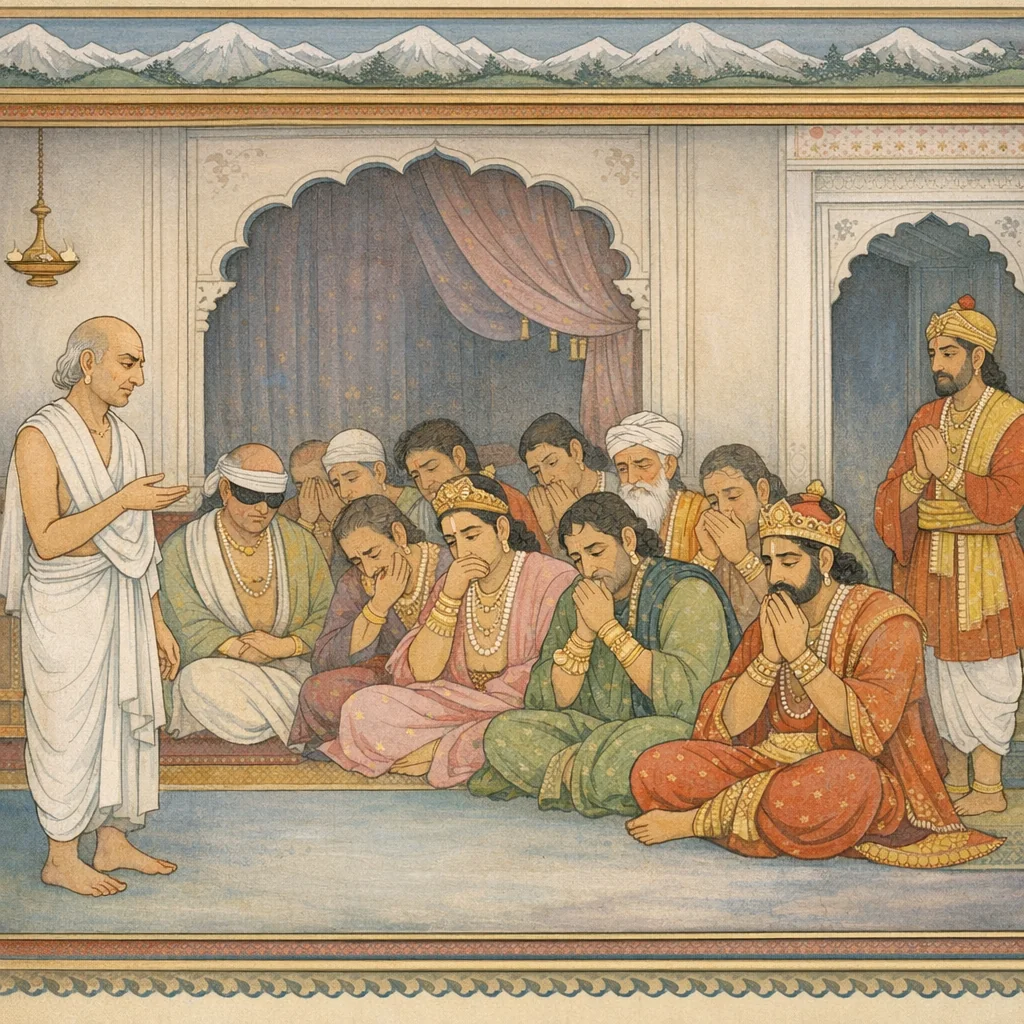
Yudhiṣṭhira addresses Sañjaya and accepts the premise that dharma is superior among human undertakings, while insisting on accountability: Sañjaya should censure him if he strays into adharma. He then articulates the epistemic difficulty of moral judgment in crisis—adharma can wear the forms of dharma and dharma can appear as adharma; therefore, only the wise, through बुद्धि (reflective intelligence), can correctly perceive the distinction. He proposes a diagnostic rule for āpaddharma: the ‘first sign’ (ādya-liṅga) or primary indicator becomes the measure for determining what is legitimate under distress. He notes that when normal conditions (prakṛti) are disrupted, acts undertaken to accomplish necessary ends may still be blameworthy, and even those who remain in ordinary conditions while behaving as if in crisis can be censurable. He references prāyaścitta (expiation) as a divinely instituted corrective for Brahmins seeking non-violation, and he frames improper crisis-conduct (vikarma) as subject to critique. The chapter contrasts disciplined ethical inquiry with indiscriminate negationism and extreme prescriptions. It culminates in a pragmatic turn: Yudhiṣṭhira invokes Kṛṣṇa (Keśava/Vāsudeva) as a competent arbiter of action and consequence, describing the Yādava-Vṛṣṇi-Andhaka political strength and Kṛṣṇa’s capacity to guide rulers, and requests Kṛṣṇa’s counsel on whether relinquishment or battle would avoid blame while preserving svadharma.
Chapter Arc: संजय के वचनों के प्रत्युत्तर में श्रीकृष्ण का स्वर कठोर हो उठता है—वे धृतराष्ट्र के लिए चेतावनी बनकर कहते हैं कि पाण्डवों की अविनाशिता और धर्म-बल को हल्के में लेना विनाश को बुलाना है। → कृष्ण धृतराष्ट्र-पुत्रों की लोभ-ग्रस्तता और सभा की कायर चुप्पी को उघाड़ते हैं: युधिष्ठिर का शम (क्षमा-शान्ति) ‘सुदुष्कर’ होते हुए भी प्रदर्शित हुआ, फिर भी धृतराष्ट्र सपरिवार गृद्ध (लालची) बना रहा—ऐसे में कलह क्यों न भड़के? वे संकेत करते हैं कि यदि पाण्डव पितृ-धर्म निभाते हुए भी दिष्टवश मृत्यु को प्राप्त हों, तो वह भी उनके लिए प्रशस्त निधन होगा—पर अधर्मियों के लिए नहीं। → सभा-धर्म का निर्णायक क्षण आता है: द्यूतकाले शकुनि की निकृष्ट वाणी और छल का स्मरण कराया जाता है, और बताया जाता है कि कैसे ‘कार्पण्य’ से ग्रस्त राजाओं ने प्रतिवचन न किया; केवल विदुर (क्षत्ता) ने धर्म्य अर्थ बोलकर अल्पबुद्धि को प्रत्युत्तर दिया। यही बिन्दु धृतराष्ट्र के राज्य में अधर्म के संस्थानीकरण का प्रमाण बनता है। → कृष्ण संजय के माध्यम से धृतराष्ट्र को अंतिम रूप से स्पष्ट करते हैं: पाण्डव शान्ति के लिए स्थिर हैं, सेवा-भाव से भी खड़े हैं, पर वे योद्धा भी समर्थ हैं—धृतराष्ट्र जो कर्तव्य चुनेगा, वही परिणाम का द्वार खोलेगा। क्षत्रिय-धर्म, प्रजा-रक्षा, दान-यज्ञ और धर्म-अध्ययन का स्मरण कराकर वे नीति का मार्ग दिखाते हैं। → धृतराष्ट्र क्या विदुर-वाणी और कृष्ण-चेतावनी को स्वीकार करेगा, या पुत्र-मोह और शकुनि-नीति के साथ चलकर युद्ध को अपरिहार्य बना देगा?
Shlokas
Verse 1
ऑपन-माज बक। डे: एकोनत्रिशो< ध्याय: संजयकी बातोंका प्रत्युत्तर देते हुए श्रीकृष्णका उसे धृतराष्ट्रके लिये चेतावनी देना वायुदेव उवाच अविनाशं संजय पाण्डवाना- मिच्छाम्यहं भूतिमेषां प्रियं च । तथा राज्ञो धृतराष्ट्रस्य सूत समाशंसे बहुपुत्रस्य वृद्धिम्,भगवान् श्रीकृष्णने कहा--सूत संजय! मैं जिस प्रकार पाण्डवोंको विनाशसे बचाना, उनको ऐश्वर्य दिलाना तथा उनका प्रिय करना चाहता हूँ, उसी प्रकार अनेक पुत्रोंसे युक्त राजा धृतराष्ट्रका भी अभ्युदय चाहता हूँ
Vāyudeva said: “Sañjaya, O charioteer—my wish is to save the Pāṇḍavas from destruction, to secure their prosperity, and to win what is dear to them. In the same spirit, I also hope for the welfare and continued flourishing of King Dhṛtarāṣṭra, the aged ruler blessed with many sons.”
Verse 2
१ ॥ जज है ्द् जि - ] अ&24७०॥ के ५ | क 5" ः घ. - न है. २ पे ० > 5760४. ह «२७ | ७ शक $ कैप: + 65 30 प्र. ४७०० २७. कामो हि मे संजय नित्यमेव नान्यद् ब्रूयां तान् प्रति शाम्यतेति । राज्ञश्न हि प्रियमेतच्छुणोमि मन्ये चैतत् पाण्डवानां समक्षम्,सूत! मेरी भी सदा यही अभिलाषा है कि दोनों पक्षोंमें शान्ति बनी रहे। “कुन्तीकुमारो! कौरवोंसे संधि करो, उनके प्रति शान्त बने रहो,” इसके सिवा दूसरी कोई बात मैं पाण्डवोंके सामने नहीं कहता हूँ। राजा युधिष्ठिरके मुँहसे भी ऐसा ही प्रिय वचन सुनता हूँ और स्वयं भी इसीको ठीक मानता हूँ
Vāyu said: “Sañjaya, my constant wish is only this: that peace be made with them. Before the Pāṇḍavas I say nothing else—‘Be reconciled with the Kauravas; be calm and peaceable toward them.’ From King Yudhiṣṭhira too I hear this very same pleasing counsel, and I myself judge it to be right.”
Verse 3
सुदुष्करस्तत्र शमो हि नून॑ प्रदर्शित: संजय पाण्डवेन । यस्मिन् गृद्धो धृतराष्ट्र: सपुत्र: कस्मादेषां कलहो नावमूच्छेत्,संजय! जैसा कि पाण्डुनन्दन युधिष्ठिरने प्रकट किया है, राज्यके प्रश्नोंको लेकर दोनों पक्षोंमें शान्ति बनी रहे, यह अत्यन्त दुष्कर जान पड़ता है। पुत्रों-सहित धृतराष्ट्र (इनके स्वत्वरूप) जिस राज्यमें आसक्त होकर उसे लेनेकी इच्छा करते हैं, उसके लिये इन कौरव- पाण्डवोंमें कलह कैसे नहीं बढ़ेगा?
O Sañjaya, the peace that the Pāṇḍava has shown there is indeed exceedingly hard to sustain. For in that very kingdom to which Dhṛtarāṣṭra, together with his sons, is greedily attached and longs to possess—how could strife between these Kauravas and Pāṇḍavas fail to flare up and grow?
Verse 4
न त्वं धर्म विचारं संजयेह मत्तश्न जानासि युधिष्ठिराच्च । अथो कस्मात् संजय पाण्डवस्य उत्साहिन: पूरयत: स्वकर्म,संजय! तुम यह अच्छी तरह जानते हो कि मुझसे और युधिष्छिरसे धर्मका लोप नहीं हो सकता, तो भी जो उत्साहपूर्वक स्वधर्मका पालन करते हैं तथा शास्त्रोंमें जैसा बताया गया है, उसके अनुसार ही कुट॒म्ब (गृहस्थाश्रम)-में रहते हैं, उन्हीं पाण्डुकुमार युधिष्ठिरके धर्मलोपकी चर्चा या आशंका तुमने पहले किस आधारपर की है? गृहस्थ आश्रममें रहनेकी जो शास्त्रोक्त विधि है, उसके होते हुए भी इसके ग्रहण अथवा त्यागके विषयमें वेदज्ञ ब्राह्मणोंके भिन्न-भिन्न विचार हैं
Vāyu said: “Do not raise doubts about dharma, Sañjaya. You know well that from me and from Yudhiṣṭhira there can be no falling away from righteousness. Why, then, did you earlier entertain or voice an anxiety about the Pāṇḍava’s loss of dharma—about Yudhiṣṭhira, who, with steady zeal, fulfills his own duty? He lives in the household life in the very manner taught by the śāstras; on what basis did you suspect a lapse in him?”
Verse 5
यथा55ख्यातमावसत: कुट॒म्बे पुरा कस्मात् साधुविलोपमात्थ । अस्मिन् विधौ वर्तमाने यथाव- दुच्चावचा मतयो ब्राह्मणानाम्,संजय! तुम यह अच्छी तरह जानते हो कि मुझसे और युधिष्छिरसे धर्मका लोप नहीं हो सकता, तो भी जो उत्साहपूर्वक स्वधर्मका पालन करते हैं तथा शास्त्रोंमें जैसा बताया गया है, उसके अनुसार ही कुट॒म्ब (गृहस्थाश्रम)-में रहते हैं, उन्हीं पाण्डुकुमार युधिष्ठिरके धर्मलोपकी चर्चा या आशंका तुमने पहले किस आधारपर की है? गृहस्थ आश्रममें रहनेकी जो शास्त्रोक्त विधि है, उसके होते हुए भी इसके ग्रहण अथवा त्यागके विषयमें वेदज्ञ ब्राह्मणोंके भिन्न-भिन्न विचार हैं
Vāyu said: “Sañjaya, you know well that neither I nor Yudhiṣṭhira can fall away from dharma. Why then, earlier, did you speak of the ‘loss of virtue’ in the case of Yudhiṣṭhira—on what grounds did you raise such a suspicion—when he lives in the household order exactly as the tradition prescribes? Even while this scriptural rule for the householder stands in force, learned Brāhmaṇas hold differing opinions about accepting it or renouncing it.”
Verse 6
कर्मणा<<हु: सिद्धिमेके परत्र हित्वा कर्म विद्यया सिद्धिमेके । नाभुज्जानो भक्ष्यभोज्यस्य तृप्येद् विद्वानपीह विदहितं ब्राह्म॒णानाम्,कोई तो (गृहस्थाश्रममें रहकर) कर्मयोगके द्वारा ही परलोकमें सिद्धि-लाभ होनेकी बात बताते हैं,- दूसरे लोग कर्मको त्यागकर ज्ञानके द्वारा ही सिद्धि (मोक्ष)-का प्रतिपादन करते हैं। विद्वान् पुरुष भी इस जगत्में भक्ष्य-भोज्य पदार्थोको भोजन किये बिना तृप्त नहीं हो सकता, अतएव दिद्वान् ब्राह्मणके लिये भी क्षुधानिवृत्तिके लिये भोजन करनेका विधान है
Vāyu said: “Some declare that perfection in the hereafter is attained through action; others teach that perfection is gained through knowledge after abandoning action. Yet even a learned man in this world cannot be satisfied without eating what is fit to be eaten and enjoyed. Therefore, for Brahmins too, eating is enjoined as a means to remove hunger.”
Verse 7
या वै विद्या: साधयन्तीह कर्म तासां फलं विद्यते नेतरासाम् । तत्रेह वै दृष्टफलं तु कर्म पीत्वोदकं शाम्यति तृष्णयाडडर्त:,जो विद्याएँ कर्मका सम्पादन करती हैं, उन्हींका फल दृष्टिगोचर होता है, दूसरी विद्याओंका नहीं। विद्या तथा कर्ममें भी कर्मका ही फल यहाँ प्रत्यक्ष दिखायी देता है। प्याससे पीड़ित मनुष्य जल पीकर ही शान्त होता है (उसे जानकर नहीं; अतः गृहस्थाश्रममें रहकर सत्कर्म करना ही श्रेष्ठ है)
Vāyu said: Only those branches of knowledge that lead one here to the accomplishment of action yield a visible result; other kinds do not. Indeed, in this world it is action whose fruit is directly seen—just as a man tormented by thirst is calmed only by drinking water, not merely by knowing about it. Thus, practical righteous conduct, especially within the householder’s life, is upheld as superior to knowledge that remains merely theoretical.
Verse 8
सो<यं विधिर्विहिित: कर्मणैव संवर्तते संजय तत्र कर्म | तत्र योडन्यत् कर्मण: साधु मन्ये- न्मोघं तस्यालपितं दुर्बलस्य,संजय! ज्ञानका विधान भी कर्मको साथ लेकर ही है; अतः ज्ञानमें भी कर्म विद्यमान है। जो कर्मसे भिन्न कर्मोके त्यागको श्रेष्ठ मानता है, वह दुर्बल है, उसका कथन व्यर्थ ही है
Vāyu said: “This rule, as it has been ordained, proceeds only together with action, O Sañjaya; there, action is integral. Whoever, separating it from action, imagines that the abandonment of action is the better course—he is weak, and his speech is futile, O Sañjaya.”
Verse 9
कर्मणामी भान्ति देवा: परत्र कर्मणैवेह प्लवते मातरिश्वा । अहोरात्रे विदधत् कर्मणैव अतनन््द्रितो नित्यमुदेति सूर्य:,ये देवता कर्मसे ही स्वर्गलोकमें प्रकाशित होते हैं। वायुदेव कर्मको अपनाकर ही सम्पूर्ण जगत्में विचरण करते हैं तथा सूर्यदेव आलस्य छोड़कर कर्म-द्वारा ही दिन-रातका विभाग करते हुए प्रतिदिन उदित होते हैं
Vāyu said: “By their works the gods shine in the world beyond. Here too, Mātariśvan (the Wind) moves throughout the whole world by taking refuge in action; and the Sun, ever free from sloth, rises each day, dividing day and night through action alone.”
Verse 10
मासार्धमासानथ नक्षत्रयोगा- नतन्द्रितश्रन्द्रमा श्चा भ्युपैति । अतन्द्रितो दहते जातवेदा: समिध्यमान: कर्म कुर्वन् प्रजाभ्य:,चन्द्रमा भी आलस्य त्यागकर (कर्मके द्वारा ही) मास, पक्ष तथा नक्षत्रोंका योग प्राप्त करते हैं; इसी प्रकार जातवेदा (अग्निदेव) भी आलस्यरहित होकर प्रजाके लिये कर्म करते हुए ही प्रज्वलित होकर दाह-क्रिया सम्पन्न करते हैं
Vāyu-deva said: “Without indolence the Moon attains the conjunctions that mark the months, half-months, and the courses of the constellations. In the same way, Jātavedas (Fire), free from sloth, blazes when kindled and, performing his appointed work for the sake of creatures, carries out the act of burning. Thus even the cosmic order is upheld through tireless performance of duty.”
Verse 11
अतन्द्रिता भारमिमं महान्तं बिभर्ति देवी पृथिवी बलेन । अतन्द्रिता: शीघ्रमपो वहन्ति संतर्पयन्त्य: सर्वभूतानि नद्यः,पृथ्वीदेवी भी आलस्यशून्य हो (कर्ममें तत्पर रहकर ही) बलपूर्वक विश्वके इस महान् भारको ढोती हैं। ये नदियाँ भी आलस्य छोड़कर (कर्मपरायण हो) सम्पूर्ण प्राणियोंको तृप्त करती हुई शीघ्रतापूर्वक जल बहाया करती हैं
Vāyu-deva said: “Unwearied, the goddess Earth bears this immense burden by her strength. Unwearied too, the rivers swiftly carry their waters, satisfying all living beings.”
Verse 12
अतन्द्रितो वर्षति भूरितेजा: संनादयजन्नन्तरिक्षं दिशश्चव । अतनन््द्रितो ब्रह्मचर्य चचार श्रेष्ठव्वमिच्छन् बलभिद् देवतानाम्
Vāyu said: “Untiringly, the mighty one of abundant radiance poured down rain, making the mid-sky and the quarters resound. Untiringly he also practiced brahmacarya, seeking preeminence among the gods—(he who is) the breaker of strength.”
Verse 13
जिन्होंने देवताओंमें श्रेष्ठ स्थान पानेकी इच्छासे तन््द्रारहित होकर ब्रह्मचर्य-व्रतका पालन किया था, वे महातेजस्वी बलसूदन इन्द्र भी आलस्य छोड़कर (कर्मपरायण होकर ही) मेघगर्जनाद्वारा आकाश तथा दिशाओंको गुँजाते हुए समय-समयपर वर्षा करते हैं ।। हित्वा सुखं मनसश्न प्रियाणि तेन शक्र: कर्मणा श्रैष्ठ्यमाप । सत्यं धर्म पालयन्नप्रमत्तो दमं तितिक्षां समतां प्रियं च,इन्द्रने सुख तथा मनको प्रिय लगनेवाली वस्तुओंका त्याग करके सत्कर्मके बलसे ही देवताओंमें ऊँची स्थिति प्राप्त की। उन्होंने सावधान होकर सत्य, धर्म, इन्द्रियसंयम, सहिष्णुता, समदर्शिता तथा सबको प्रिय लगनेवाले उत्तम बर्तावका पालन किया था। इन समस्त सदगुणोंका सेवन करनेके कारण ही इन्द्रको देवसग्राट्का श्रेष्ठ पद प्राप्त हुआ है। इसी प्रकार बृहस्पतिजीने भी नियमपूर्वक समाहित एवं संयतचित्त होकर सुखका परित्याग करके समस्त इन्द्रियोंकों अपने वशमें रखते हुए ब्रह्मचर्यव्रतका पालन किया था। इसी सत्कर्मके प्रभावसे उन्होंने देवगुरुका सम्मानित पद प्राप्त किया है। आकाशके सारे नक्षत्र सत्कर्मके ही प्रभावसे परलोकमें प्रकाशित हो रहे हैं। रुद्र, आदित्य, वसु तथा विश्वदेवगण भी कर्मबलसे ही महत्त्वको प्राप्त हुए हैं
Vāyu said: Renouncing personal comfort and the things dear to the mind, Śakra (Indra) attained the highest excellence through disciplined action. Ever vigilant, he upheld truth and dharma, and practiced self-restraint, forbearance, even-mindedness, and conduct that is pleasing and beneficial to all. Thus, Indra’s supremacy among the gods is presented as the fruit of sustained ethical effort rather than indulgence in ease.
Verse 14
एतानि सर्वाण्युपसेवमान: स देवराज्यं मघवान् प्राप मुख्यम् । बृहस्पतिर्तब्रह्मचर्य चचार समाहित: संशितात्मा यथावत्,इन्द्रने सुख तथा मनको प्रिय लगनेवाली वस्तुओंका त्याग करके सत्कर्मके बलसे ही देवताओंमें ऊँची स्थिति प्राप्त की। उन्होंने सावधान होकर सत्य, धर्म, इन्द्रियसंयम, सहिष्णुता, समदर्शिता तथा सबको प्रिय लगनेवाले उत्तम बर्तावका पालन किया था। इन समस्त सदगुणोंका सेवन करनेके कारण ही इन्द्रको देवसग्राट्का श्रेष्ठ पद प्राप्त हुआ है। इसी प्रकार बृहस्पतिजीने भी नियमपूर्वक समाहित एवं संयतचित्त होकर सुखका परित्याग करके समस्त इन्द्रियोंकों अपने वशमें रखते हुए ब्रह्मचर्यव्रतका पालन किया था। इसी सत्कर्मके प्रभावसे उन्होंने देवगुरुका सम्मानित पद प्राप्त किया है। आकाशके सारे नक्षत्र सत्कर्मके ही प्रभावसे परलोकमें प्रकाशित हो रहे हैं। रुद्र, आदित्य, वसु तथा विश्वदेवगण भी कर्मबलसे ही महत्त्वको प्राप्त हुए हैं
Vāyu said: “By cultivating all these virtues, Maghavan (Indra) attained the foremost sovereignty among the gods. Likewise, Bṛhaspati duly practiced brahmacarya—collected in mind and disciplined in self-control. Thus, through the power of right conduct and restraint, the highest stations are won, not by indulgence in pleasure.”
Verse 15
हित्वा सुखं प्रतिरुध्येन्द्रियाणि तेन देवानामगमद् गौरवं सः । तथा नक्षत्राणि कर्मणामुत्र भान्ति रुद्रादित्या वसवो5थापि विश्वे,इन्द्रने सुख तथा मनको प्रिय लगनेवाली वस्तुओंका त्याग करके सत्कर्मके बलसे ही देवताओंमें ऊँची स्थिति प्राप्त की। उन्होंने सावधान होकर सत्य, धर्म, इन्द्रियसंयम, सहिष्णुता, समदर्शिता तथा सबको प्रिय लगनेवाले उत्तम बर्तावका पालन किया था। इन समस्त सदगुणोंका सेवन करनेके कारण ही इन्द्रको देवसग्राट्का श्रेष्ठ पद प्राप्त हुआ है। इसी प्रकार बृहस्पतिजीने भी नियमपूर्वक समाहित एवं संयतचित्त होकर सुखका परित्याग करके समस्त इन्द्रियोंकों अपने वशमें रखते हुए ब्रह्मचर्यव्रतका पालन किया था। इसी सत्कर्मके प्रभावसे उन्होंने देवगुरुका सम्मानित पद प्राप्त किया है। आकाशके सारे नक्षत्र सत्कर्मके ही प्रभावसे परलोकमें प्रकाशित हो रहे हैं। रुद्र, आदित्य, वसु तथा विश्वदेवगण भी कर्मबलसे ही महत्त्वको प्राप्त हुए हैं
Vāyu said: “Renouncing personal pleasure and restraining the senses, he attained high honor among the gods through the power of righteous action. In the same way, the stars shine in the other world by the force of their deeds; and Rudras, Ādityas, Vasus, and the Viśvedevas too have reached greatness through the strength of karma.”
Verse 16
यमो राजा वैश्रवण: कुबेरो गन्धर्वयक्षाप्सरसश्व सूत । ब्रह्मविद्यां ब्रह्मचर्य क्रियां च निषेवमाणा ऋषयोअमुत्र भान्ति,सूत! यमराज, विश्रवाके पुत्र कुबेर, गन्धर्व, यक्ष तथा अप्सराएँ भी अपने-अपने कर्मोंके प्रभावसे ही स्वर्गमें विराजमान हैं। ब्रह्मज्ञान तथा ब्रह्मचर्यकर्मका सेवन करनेवाले महर्षि भी कर्मबलसे ही परलोकमें प्रकाशमान हो रहे हैं
Vāyu said: “O Sūta, King Yama, Vaiśravaṇa Kubera, and also the Gandharvas, Yakṣas, and Apsarases shine in heaven by the power of their own deeds. Likewise, the great seers who devote themselves to Brahma-knowledge, to the discipline of brahmacarya, and to sacred observances are radiant in the other world through the strength of their practiced karma.”
Verse 17
जानन्निमं सर्वलोकस्य धर्म विप्रेन्द्राणां क्षत्रियाणां विशां च । स कस्मात् त्वं जानतां ज्ञानवान् सन् व्यायच्छसे संजय कौरवार्थे
Vāyu said: “You know this dharma that upholds all the worlds—the proper conduct of the foremost among brāhmaṇas, of kṣatriyas, and of the vaiśyas as well. Why then, O Saṃjaya, though you are wise and among those who understand, do you restrain yourself and hold back—on behalf of the Kauravas?”
Verse 18
संजय! तुम श्रेष्ठ ब्राह्मण, क्षत्रिय, वैश्य तथा सम्पूर्ण लोकोंके इस सुप्रसिद्ध धर्मको जानते हो। तुम ज्ञानियोंमें भी श्रेष्ठ ज्ञानी हो, तो भी तुम कौरवोंकी स्वार्थसिद्धिके लिये क्यों वाग्जाल फैला रहे हो? ।। आम्नायेषु नित्यसंयोगमस्य तथाश्वमेधे राजसूये च विद्धि । संयुज्यते धनुषा वर्मणा च हस्त्यश्वाद्यै रथशस्त्रैश्न भूय:,राजा युधिष्ठिरका वेद-शास्त्रोंके साथ स्वाध्यायके रूपमें सदा सम्बन्ध बना रहता है। इसी प्रकार अश्वमेध तथा राजसूय आदि यज्ञोंसे भी इनका सदा लगाव है। ये धनुष और कवचसे भी संयुक्त हैं। हाथी-घोड़े आदि वाहनों, रथों और अस्त्र-शस्त्रोंकी भी इनके पास कमी नहीं है। ये कुन्तीपुत्र यदि कौरवोंका वध किये बिना ही अपने राज्यकी प्राप्तिका कोई दूसरा उपाय जान लेंगे, तो भीमसेनको आग्रहपूर्वक आर्य पुरुषोंके द्वारा आचरित सद्व्यवहारमें लगाकर धर्मरक्षारूप पुण्यका ही सम्पादन करेंगे, तुम ऐसा (भलीभाँति) समझ लो
Vāyu said: “Sañjaya, you know the celebrated dharma upheld by the best among brāhmaṇas, kṣatriyas, vaiśyas, and indeed by all the worlds. You are counted among the wisest—why then do you spread a web of words to serve the Kauravas’ self-interest? Know that King Yudhiṣṭhira is ever joined to the Veda and śāstra through constant study; he is likewise devoted to great rites such as the Aśvamedha and the Rājasūya. He is also equipped with bow and armor, and is abundantly supplied with elephants, horses, chariots, and weapons. If the sons of Kuntī can discover any means of regaining their kingdom without killing the Kauravas, then they will restrain Bhīmasena and set him firmly in the noble conduct practiced by the righteous, accomplishing merit through the protection of dharma—understand this clearly.”
Verse 19
ते चेदिमे कौरवाणामुपाय- मवगच्छेयुरवधेनैव पार्था: । धर्मत्राणं पुण्यमेषां कृतं स्था- दार्ये वृत्ते भीमसेनं निगृहा,राजा युधिष्ठिरका वेद-शास्त्रोंके साथ स्वाध्यायके रूपमें सदा सम्बन्ध बना रहता है। इसी प्रकार अश्वमेध तथा राजसूय आदि यज्ञोंसे भी इनका सदा लगाव है। ये धनुष और कवचसे भी संयुक्त हैं। हाथी-घोड़े आदि वाहनों, रथों और अस्त्र-शस्त्रोंकी भी इनके पास कमी नहीं है। ये कुन्तीपुत्र यदि कौरवोंका वध किये बिना ही अपने राज्यकी प्राप्तिका कोई दूसरा उपाय जान लेंगे, तो भीमसेनको आग्रहपूर्वक आर्य पुरुषोंके द्वारा आचरित सद्व्यवहारमें लगाकर धर्मरक्षारूप पुण्यका ही सम्पादन करेंगे, तुम ऐसा (भलीभाँति) समझ लो
Vāyu said: “If these Pārthas should discover a means of dealing with the Kauravas without slaughter, then—by restraining Bhīmasena and keeping him established in the noble conduct practiced by the righteous—they will accomplish a meritorious act: the safeguarding of dharma. Understand this well.”
Verse 20
ते चेत् पित्रये कर्मणि वर्तमाना आपसट्येरन् दिष्टवशेन मृत्युम् । यथाशक्त्या पूरयन्त: स्वकर्म तदप्येषां निधन स्यात् प्रशस्तम्,पाण्डव अपने बाप-दादोंके कर्म-क्षात्रधर्म (युद्ध आदि)-में प्रवृत्त हो यथाशक्ति अपने कर्तव्यका पालन करते हुए यदि दैववश मृत्युको भी प्राप्त हो जायेँ तो इनकी वह मृत्यु उत्तम ही मानी जायगी
If, engaged in the ancestral duty—especially the kṣatriya’s work of battle—they should, by the force of destiny, meet with death, then even that death would be deemed noble, for they would have fulfilled their own obligation to the best of their ability.
Verse 21
उताहो त्वं मन्यसे शाम्यमेव राज्ञां युद्धे वर्तते धर्मतन्त्रम् । अयुद्धे वा वर्तते धर्मतन्त्रं तथैव ते वाचमिमां शृणोमि
Vāyu said: “Or do you suppose that the ordered fabric of dharma for kings operates only in war? Or that the same rule of dharma applies even in refusing to fight? I hear you speak as though it were so.”
Verse 22
यदि तुम शान्ति धारण करना ही ठीक समझते हो तो बताओ, युद्धमें प्रवृत्त होनेसे राजाओंके धर्मका ठीक-ठीक पालन होता है या युद्ध छोड़कर भाग जानेसे? क्षत्रियधर्मका विचार करते हुए तुम जो कुछ भी कहोगे, मैं तुम्हारी वही बात सुननेको उद्यत हूँ ।। चातुर्वर्ण्यस्य प्रथमं संविभाग- मवेक्ष्य त्वं संजय स्वं च कर्म । निशम्याथो पाण्डवानां च कर्म प्रशंस वा निन्द वा या मतिस्ते,संजय! तुम पहले ब्राह्मण आदि चारों वर्णोंके विभाग तथा उनमेंसे प्रत्येक वर्णके अपने-अपने कर्मको देख लो। फिर पाण्डवोंके वर्तमान कर्मपर दृष्टिपात करो; तत्पश्चात् जैसा तुम्हारा विचार हो, उसके अनुसार इनकी प्रशंसा अथवा निन््दा करना
Vāyu said: “If you truly think that upholding peace is the right course, then tell me this: is the kings’ dharma properly fulfilled by entering into battle, or by abandoning the battle and fleeing? Considering the duty of a kṣatriya, whatever you conclude, I am ready to hear your very words. “First, Sañjaya, examine the primary division of the four varṇas and the proper work assigned to each, and also reflect on your own duty. Then look carefully at what the Pāṇḍavas are doing at present; after that, according to your judgment, either praise them or censure them.”
Verse 23
अधीयीत ब्राह्मणो वै यजेत दद्यादीयात् तीर्थमुख्यानि चैव । अध्यापयेद् याजयेच्चापि याज्यान् प्रतिग्रहान् वा विहितान् प्रतीच्छेत्,ब्राह्मण अध्ययन, यज्ञ एवं दान करे तथा प्रधान-प्रधान तीर्थोंकी यात्रा करे, शिष्योंको पढ़ावे और यजमानोंका यज्ञ करावे अथवा शाख्त्रविहित प्रतिग्रह (दान) स्वीकार करे
Vāyu said: “A brāhmaṇa should devote himself to Vedic study; he should perform sacrifices; he should give and also accept what is proper; and he should visit the foremost sacred fords. He should teach students, officiate sacrifices for qualified patrons, and accept gifts only when sanctioned by the scriptures.”
Verse 24
(अधीयीत क्षत्रियो5थो यजेत दद्याद् दानं न तु याचेत किंचित् । न याजयेन्नापि चाध्यापयीत एष स्मृतः क्षत्रधर्म: पुराण: ।। ) इसी प्रकार क्षत्रिय स्वाध्याय, यज्ञ और दान करे। किसीसे किसी भी वस्तुकी याचना न करे। वह न तो दूसरोंका यज्ञ करावे और न अध्यापनका ही कार्य करे; यही धर्मशास्त्रोंमें क्षत्रियोंका प्राचीन धर्म बताया गया है। तथा राजन्यो रक्षणं वै प्रजानां कृत्वा धर्मेणाप्रमत्तो5थ दत्त्वा । यज्जैरिष्टवा सर्ववेदानधीत्य दारान् कृत्वा पुण्यकृदावसेद् गृहान्
Vāyu said: “A kṣatriya should pursue sacred study, perform sacrifices, and give gifts in charity; he should not beg for anything. He should neither officiate sacrifices for others nor take up the work of teaching. This, the tradition declares, is the ancient dharma of the warrior-ruler—self-disciplined, generous, and independent, devoted to duty rather than livelihood through priestly or pedagogical professions.”
Verse 25
वैश्यो5धीत्य कृषिगोरक्षपण्यै- वित्त चिन्चन् पालयन्नप्रमत्त:
Vāyu said: “A Vaiśya, having duly learned his duties, should seek wealth through agriculture, the protection of cattle, and trade, and should guard and manage it with constant vigilance, never becoming careless.”
Verse 26
प्रियं कुर्वन् ब्राह्मणक्षत्रियाणां धर्मशील: पुण्यकृदावसेद् गृहान् । वैश्य अध्ययन करके कृषि, गोरक्षा तथा व्यापारद्वारा धनोपार्जन करते हुए सावधानीके साथ उसकी रक्षा करे। ब्राह्मणों और क्षत्रियोंका प्रिय करते हुए धर्मशील एवं पुण्यात्मा होकर वह गृहस्थाश्रममें निवास करे ।। परिचर्या वन्दनं ब्राह्मणानां नाधीयीत प्रतिषिद्धो5स्य यज्ञ: । नित्योत्थितो भूतये5तन्द्रित: स्या- देवं स्मृतः शूद्रधर्म: पुराण: २६ ।। शूद्र ब्राह्मणोंकी सेवा तथा वन्दना करे, वेदोंका स्वाध्याय न करे। उसके लिये यज्ञका भी निषेध है। वह सदा उद्योगी और आलस्यरहित होकर अपने कल्याणके लिये चेष्टा करे। इस प्रकार शूद्रोंका प्राचीन धर्म बताया गया है
Vāyu said: “A Śūdra should attend upon and respectfully salute the Brāhmaṇas; he should not undertake Vedic study, and for him the performance of sacrifice is prohibited. Ever rising to his duties, he should remain free from sloth and strive for his own welfare. Thus is declared the ancient dharma of the Śūdra.”
Verse 27
एतान् राजा पालयजन्नप्रमत्तो नियोजयन् सर्ववर्णान् स्वधर्मे । अकामात्मा समतवृत्तिः प्रजासु नाधार्मिकाननुरुध्येत कामान्,राजा सावधानीके साथ इन सब वर्णोका पालन करते हुए ही इन्हें अपने-अपने धर्ममें लगावे। वह कामभोगमें आसक्त न होकर समस्त प्रजाओंके साथ समानभावसे बर्ताव करे और पापपूर्ण इच्छाओंका कदापि अनुसरण न करे
Vāyu said: “Let the king, vigilant and unnegligent, protect these (social orders) and actively engage all the varṇas in their own duties. Let him be free from craving, deal with all his subjects with even-handedness, and never follow desires that are unrighteous.”
Verse 28
श्रेयांस्तस्माद् यदि विद्येत कश्नि- दभिज्ञात: सर्वधर्मोपपन्न: । सतं द्रष्टमनुशिष्यात् प्रजानां न चैतद् बुध्येदिति तस्मिन्नसाधु:,यदि राजाको यह ज्ञात हो जाय कि उसके राज्यमें कोई सर्वधर्मसम्पन्न श्रेष्ठ पुरुष निवास करता है तो वह उसीको प्रजाके गुण-दोषका निरीक्षण करनेके लिये नियुक्त करे तथा उसके द्वारा पता लगवावे कि मेरे राज्यमें कोई पापकर्म करनेवाला तो नहीं है
Therefore, if a king comes to know of some excellent person in his realm—one who is discerning and endowed with all the qualities of dharma—he should appoint that good man, proven by experience, to observe and guide the people. Through him the king should ascertain whether anyone in the kingdom is engaging in sinful conduct; for one who does not understand and act upon this is, in that matter, not acting rightly.
Verse 29
यदा गृध्येत् परभूतौ नृशंसो विधिप्रकोपाद् बलमाददान: । ततो राज्ञामभवद् युद्धमेतत् तत्र जात॑ वर्म शस्त्र धनुश्च,जब कोई क्रूर मनुष्य दूसरेकी धन-सम्पत्तिमें लालच रखकर उसे ले लेनेकी इच्छा करता है और विधाताके कोपसे (परपीडनके लिये) सेना-संग्रह करने लगता है, उस समय राजाओंमें युद्धका अवसर उपस्थित होता है। इस युद्धके लिये ही कवच, अस्त्र-शस्त्र और धनुषका आविष्कार हुआ है इति श्रीमहाभारते उद्योगपर्वणि सञ्जययानपर्वणि कृष्णवाक्ये एकोनत्रिंशो 5ध्याय:
When a ruthless man grows covetous of another’s wealth and, driven by the wrath of destiny, begins to amass force in order to oppress, then among kings the occasion for war arises. For this very war, armor, weapons, and the bow came into being—implements born of conflict and the greed that provokes it.
Verse 30
इन्द्रेणेतद् दस्युवधाय कर्म उत्पादितं वर्म शस्त्र धनुश्च,स्वयं देवराज इन्द्रने ऐसे लुटेरोंका वध करनेके लिये कवच, अस्त्र-शस्त्र और धनुषका आविष्कार किया है
Vāyu said: “This undertaking was brought forth by Indra for the slaying of marauding bandits. The divine king Indra himself devised protective armour, weapons, and the bow so that such plunderers might be restrained and destroyed.”
Verse 31
तत्र पुण्यं दस्युवधेन लभ्यते सो<यं दोष: कुरुभिस्तीव्ररूप: । अधर्मजिर्धर्ममबुध्यमानै: प्रादुर्भूत: संजय साधु तन्न,(राजाओंको) लुटेरोंका वध करनेसे पुण्यकी प्राप्ति होती है। संजय! कौरवोंमें यह लुटेरेपनका दोष तीव्ररूपसे प्रकट हो गया है, जो अच्छा नहीं है। वे अधर्मके तो पूरे पण्डित हैं; परंतु धर्मकी बात बिलकुल नहीं जानते
“In such a case, merit is gained by slaying robbers. Yet among the Kurus this very fault—this robber-like disposition—has arisen in a fierce form. O Saṃjaya, it is not good that it has manifested among those who are skilled in unrighteousness while failing to understand what dharma truly is.”
Verse 32
तत्र राजा धृतराष्ट्र: सपुत्रो धर्म्य हरेत् पाण्डवानामकस्मात् | नावेक्षन्ते राजधर्म पुराणं तदन्वया: कुरव: सर्व एव,राजा धृतराष्ट्र अपने पुत्रोंके साथ मिलकर सहसा पाण्डवोंके धर्मतः प्राप्त उनके पैतृक राज्यका अपहरण करनेको उतारू हो गये हैं। अन्य समस्त कौरव भी उन्हींका अनुसरण कर रहे हैं। वे प्राचीन राजधर्मकी ओर नहीं देखते हैं
There, King Dhṛtarāṣṭra, together with his sons, has suddenly set himself to seize what rightfully belongs to the Pāṇḍavas—their ancestral kingdom obtained in accordance with dharma. All the Kurus who follow his lead likewise ignore the ancient code of royal duty, refusing to look to the time-honored standards of kingship.
Verse 33
स्तेनो हरेद् यत्र धन हादृष्ट: प्रसह वा यत्र हरेत दृष्ट: । उभौ गह्याँ भवतः संजयैतौ कि वै पृथक्त्वं धृतराष्ट्रस्य पुत्रे,चोर छिपा रहकर धन चुरा ले जाय अथवा सामने आकर डाका डाले, दोनों ही दशाओंमें वे चोर-डाकू निन्दाके ही पात्र होते हैं। संजय! तुम्हीं कहो, धृतराष्ट्रपुत्र दुर्योधन और उन चोर-डाकुओंमें क्या अन्तर है?
A thief may steal wealth when unseen, or seize it by force even when seen; in both cases he is blameworthy and fit to be apprehended. Sanjaya, tell me—what real difference is there between such thieves and Duryodhana, the son of Dhritarashtra?
Verse 34
सो<यं लोभान्मन्यते धर्ममेतं यमिच्छति क्रोधवशानुगामी । भाग: पुनः पाण्डवानां निविष्ट- स्तं न: कस्मादाददीरन् परे वै,दुर्योधन क्रोधके वशीभूत हो उसके अनुसार चलनेवाला है और वह लोभसे राज्यको ले लेना चाहता है। इसे वह धर्म मान रहा है; परंतु वह तो पाण्डवोंका भाग है, जो कौरवोंके यहाँ धरोहरके रूपमें रखा गया है। संजय! हमारे उस भागको हमसे शत्रुता रखनेवाले कौरव कैसे ले सकते हैं?
Driven by greed, he imagines this to be ‘dharma’—the very course he desires—while in truth he is led along by the power of anger. But that share belongs to the Pāṇḍavas; it has merely been lodged among the Kauravas as a deposit. How, then, could our hostile opponents possibly seize that portion from us?
Verse 35
अस्मिन् पदे युध्यतां नो वधो5पि श्लाघ्य: पित्रयं परराज्याद् विशिष्टम् । एतान् धर्मान् कौरवाणां पुराणा- नाचक्षीथा: संजय राजमध्ये,सूत! इस राज्यभागकी प्राप्तिके लिये युद्ध करते हुए हमलोगोंका वध हो जाय तो वह भी हमारे लिये स्पृहणीय ही है। बाप-दादोंका राज्य पराये राज्यकी अपेक्षा श्रेष्ठ है। संजय! तुम राजाओंकी मण्डलीमें राजाओंके इन प्राचीन धर्मोंका कौरवोंके समक्ष वर्णन करना
If, while fighting for this rightful share, we are even slain, that too is worthy of honor for us. The ancestral kingdom is superior to a kingdom belonging to others. Therefore, Sañjaya—O sūta—declare in the midst of the kings’ assembly these ancient, traditional duties of the Kauravas.
Verse 36
एते मदान्मृत्युवशाभिपन्ना: समानीता धार्तराष्ट्रेण मूढा: । इदं पुनः कर्म पापीय एव सभामध्ये पश्य वृत्तं कुरूणाम्,दुर्योधनने जिन्हें युद्धके लिये बुलवाया है, वे मूर्ख राजा बलके मदसे मोहित होकर मौतके फंदेमें फँस गये हैं। संजय! भरी सभामें कौरवोंने जो यह अत्यन्त पापपूर्ण कर्म किया था, उनके इस दुराचारपर दृष्टि डालो
These men, deluded by the intoxication of power, have been brought by Dhṛtarāṣṭra’s son into the very grasp of death. Look again, Sañjaya, at what the Kurus did in the midst of the royal assembly—this deed is even more sinful; behold their conduct and the moral collapse it reveals.
Verse 37
प्रियां भार्या द्रौपदी पाण्डवानां यशस्विनीं शीलवृत्तोपपन्नाम् | यदुपैक्षन्त कुरवो भीष्ममुख्या: कामानुगेनोपरुद्धां व्रजन्तीम्,पाण्डवोंकी प्यारी पत्नी यशस्विनी द्रौपदी जो शील और सदाचारसे सम्पन्न है, रजस्वला-अवस्थामें सभाके भीतर लायी जा रही थी, परंतु भीष्म आदि प्रधान कौरवोंने भी उसकी ओरसे उपेक्षा दिखायी
Draupadī—the beloved wife of the Pāṇḍavas, renowned and endowed with noble character and right conduct—was being led along in a state of helpless violation, driven by lust. Yet the Kurus, with Bhīṣma at their head, looked on with indifference, failing to protect her.
Verse 38
त॑ चेत् तदा ते सकुमारवृद्धा अवारयिष्यन् कुरव: समेता: । मम प्रियं धृतराष्ट्रो5करिष्यत् पुत्राणां च कृतमस्याभविष्यत्,यदि बालकसे लेकर बूढ़ेतक सभी कौरव उस समय दुःशासनको रोक देते तो राजा धृतराष्ट्र मेरा अत्यन्त प्रिय कार्य करते तथा उनके पुत्रोंका भी प्रिय मनोरथ सिद्ध हो जाता
Vāyu said: “If at that time all those Kurus—young boys and elders alike—had gathered together and restrained him, then King Dhṛtarāṣṭra would have done what was most dear to me; and the cherished purpose of his sons would also have been fulfilled.”
Verse 39
दुःशासन: प्रातिलोम्यान्निनाय सभामध्ये श्वशुराणां च कृष्णाम् । सा तत्र नीता करुणं व्यपेक्ष्य नानय॑ क्षत्तु्नाथमवाप किंचित्,दुःशासन मर्यादाके विपरीत द्रौपदीको सभाके भीतर श्वशुरजनोंके समक्ष घसीट ले गया। द्रौपदीने वहाँ जाकर कातरभावसे चारों ओर करुणदृष्टि डाली, परंतु उसने वहाँ विदुरजीके सिवा और किसीको अपना रक्षक नहीं पाया
Duḥśāsana, acting in utter violation of propriety and right order, dragged Kṛṣṇā (Draupadī) into the assembly, before her elders and in-laws. Brought there, she cast a piteous glance around, seeking compassion and protection; yet in that hall she found no true refuge in anyone—except Vidura, the kṣattṛ (royal counselor).
Verse 40
कार्पण्यादेव सहितास्तत्र भूपा नाशवनुवन् प्रतिवक्तुं सभायाम् | एक: क्षत्ता धर्म्यमर्थ ब्रुवाणो धर्मबुद्धा प्रत्युवाचाल्पबुद्धिम्,उस समय सभामें बहुत-से भूपाल एकत्रित थे, परंतु अपनी कायरताके कारण वे उस अन्यायका प्रतिवाद न कर सके। एकमात्र विदुरजीने अपना धर्म समझकर मन्दबुद्धि दुर्योधनसे धर्मानुकूल वचन कहकर उसके अन्यायका विरोध किया
In that royal assembly many kings were gathered, yet out of sheer faint-heartedness they did not dare to speak up in protest. Only Vidura, the wise minister, understanding what dharma required, addressed the dull-witted Duryodhana with fitting words and opposed his wrongdoing.
Verse 41
अबुदृध्वा त्वं धर्ममेतं सभाया- मथेच्छसे पाण्डवस्योपदेष्टम् । कृष्णा त्वेतत् कर्म चकार शुद्ध सुदुष्करं तत्र सभां समेत्य,संजय! द्यूतसभामें जो अन्याय हुआ था, उसे भुलाकर तुम पाण्डुनन्दन युधिष्ठिरको धर्मका उपदेश देना चाहते हो। द्रौपदीने उस दिन सभामें जाकर अत्यन्त दुष्कर और पवित्र कार्य किया कि उसने पाण्डवों तथा अपनेको महान् संकटसे बचा लिया; ठीक उसी तरह, जैसे नौका समुद्रकी अगाध जलराशिमें डूबनेसे बचा लेती है। उस सभामें कृष्णा श्वशुरजनोंके समीप खड़ी थी, तो भी सूतपुत्र कर्णने उसे अपमानित करते हुए कहा --'याज्ञसेनि! अब तेरे लिये दूसरी गति नहीं है, तू दासी बनकर दुर्योधनके महलमें चली जा। पाण्डव जूएमें अपनेको हार चुके हैं, अतः अब वे तेरे पति नहीं रहे। भाविनि! अब तू किसी दूसरेको अपना पति वरण कर ले'
Without truly understanding this dharma as it stood in the royal assembly, you now wish to instruct the Pāṇḍava (Yudhiṣṭhira) about righteousness. Yet Kṛṣṇā (Draupadī), entering that very hall, performed a deed both pure and exceedingly difficult: she acted so as to save the Pāṇḍavas and herself from a great calamity. Even while standing near her elders by marriage, the charioteer’s son Karṇa insulted her, declaring that she had no other course but to become a slave and go to Duryodhana’s palace, that the Pāṇḍavas—having lost themselves in the dice—were no longer her husbands, and that she should choose another husband.
Verse 42
येन कृच्छात् पाण्डवानुज्जहार तथा5त्मानं नौरिव सागरौघात् | यत्राब्रवीत् सूतपुत्र: सभायां कृष्णां स्थितां श्वशुराणां समीपे,संजय! द्यूतसभामें जो अन्याय हुआ था, उसे भुलाकर तुम पाण्डुनन्दन युधिष्ठिरको धर्मका उपदेश देना चाहते हो। द्रौपदीने उस दिन सभामें जाकर अत्यन्त दुष्कर और पवित्र कार्य किया कि उसने पाण्डवों तथा अपनेको महान् संकटसे बचा लिया; ठीक उसी तरह, जैसे नौका समुद्रकी अगाध जलराशिमें डूबनेसे बचा लेती है। उस सभामें कृष्णा श्वशुरजनोंके समीप खड़ी थी, तो भी सूतपुत्र कर्णने उसे अपमानित करते हुए कहा --'याज्ञसेनि! अब तेरे लिये दूसरी गति नहीं है, तू दासी बनकर दुर्योधनके महलमें चली जा। पाण्डव जूएमें अपनेको हार चुके हैं, अतः अब वे तेरे पति नहीं रहे। भाविनि! अब तू किसी दूसरेको अपना पति वरण कर ले'
Vāyu said: “Remember the deed by which Draupadī, with great difficulty, rescued the Pāṇḍavas and herself from calamity—like a boat saving one from the surging flood of the sea. Yet in that very assembly, while Kṛṣṇā stood near her elders-by-marriage, the charioteer’s son Karṇa spoke words of humiliation. And now, Sañjaya, setting aside the injustice that occurred in the dice-hall, you wish to instruct Yudhiṣṭhira, the son of Pāṇḍu, about dharma.”
Verse 43
न ते गतिर्विद्यते याज्ञसेनि प्रपद्य दासी धार्तराष्ट्रस्य वेश्म | पराजितास्ते पतयो न सन्ति पतिं चान्यं भाविनि त्वं वृणीष्व,संजय! द्यूतसभामें जो अन्याय हुआ था, उसे भुलाकर तुम पाण्डुनन्दन युधिष्ठिरको धर्मका उपदेश देना चाहते हो। द्रौपदीने उस दिन सभामें जाकर अत्यन्त दुष्कर और पवित्र कार्य किया कि उसने पाण्डवों तथा अपनेको महान् संकटसे बचा लिया; ठीक उसी तरह, जैसे नौका समुद्रकी अगाध जलराशिमें डूबनेसे बचा लेती है। उस सभामें कृष्णा श्वशुरजनोंके समीप खड़ी थी, तो भी सूतपुत्र कर्णने उसे अपमानित करते हुए कहा --'याज्ञसेनि! अब तेरे लिये दूसरी गति नहीं है, तू दासी बनकर दुर्योधनके महलमें चली जा। पाण्डव जूएमें अपनेको हार चुके हैं, अतः अब वे तेरे पति नहीं रहे। भाविनि! अब तू किसी दूसरेको अपना पति वरण कर ले'
Vāyudeva said: “O Yājñasenī, there is no other course left for you. Go and submit as a maidservant in the house of Dhṛtarāṣṭra’s son. Your husbands have been defeated; they are no longer your husbands. O destined one, choose another man as your husband, O Sañjaya.”
Verse 44
यो बीभत्सोहदये प्रोत आसी- दस्थिच्छिन्दन् मर्मघाती सुघोर: । कर्णाच्छरो वाड्मयस्तिग्मतेजा: प्रतिष्ठितो हृदये फाल्गुनस्य,कर्णके मुखसे निकला हुआ वह अत्यन्त घोर कटुवचनरूपी बाण मर्मपर चोट पहुँचानेवाला था। वह कानके रास्तेसे भीतर जाकर हड्डियोंको छेदता हुआ अर्जुनके हृदयमें धँस गया। तीखी कसक पैदा करनेवाला वह वाग्बाण आज भी अर्जुनके हृदयमें गड़ा हुआ है (और इनके कलेजेको साल रहा है)
Vāyu said: “That dreadful, heart-piercing shaft—made of words—was lodged within his heart: terrifying, striking the vital points, as though splitting bones. Entering through the ear, that razor-bright verbal arrow sank into Phālguna’s heart, and it still remains fixed there, continuing to torment him.”
Verse 45
कृष्णाजिनानि परिधित्समानान् दुःशासन: कटुकान्य भ्यभाषत् । एते सर्वे षण्ढतिला विनष्टा: क्षयं गता नरक॑ दीर्घकालम्,जिस समय पाण्डव वनमें जानेके लिये कृष्ण-मृगचर्म धारण करना चाहते थे, उस समय दुःशासनने उनके प्रति कितनी ही कड़वी बातें कहीं--'ये सब-के-सब हीजड़े अब नष्ट हो गये, चिरकालके लिये नरकके गर्तमें गिर गये”
As the Pāṇḍavas were preparing to don black antelope-skins for their departure to the forest, Duḥśāsana addressed them with harsh, cutting words: “All of these are ruined—impotent, contemptible men—fallen into destruction, consigned to hell for a long time.”
Verse 46
गान्धारराज: शकुनिर्निकृत्या यदब्रवीद् द्यूतकाले स पार्थम् पराजितो नन्दन: कि तवास्ति कृष्णया त्वं दीव्य वै याज्ञसेन्या,गान्धारराज शकुनिने द्यूतक्रीड़ाके समय कुन्तीनन्दन युधिष्ठिरसे शठतापूर्वक यह बात कही थी कि अब तो तुम अपने छोटे भाईको भी हार गये, अब तुम्हारे पास क्या है? इसलिये इस समय तुम द्रुपदनन्दिनी कृष्णाको दाँवपर रखकर जूआ खेलो
Vāyu said: “At the time of the dice-game, the king of Gāndhāra, Śakuni, speaking with deceit, addressed Pārtha: ‘O son, you have been defeated—what remains to you now? Therefore, stake Kṛṣṇā, the daughter of Yājñasena, and play.’”
Verse 47
जानासि त्वं संजय सर्वमेतद् द्यूते वाक्यं गहमिवं यथोक्तम् । स्वयं त्वहं प्रार्थये तत्र गन्तुं समाधातु कार्यमेतद् विपन्नम्,संजय! (कहाँतक गिनाऊँ,) जूएके समय जितने और जैसे निन्दनीय वचन कहे गये थे, वे सब तुम्हें ज्ञात हैं, तथापि इस बिगड़े हुए कार्यको बनानेके लिये मैं स्वयं हस्तिनापुर चलना चाहता हूँ
“You know all this, Sañjaya—the words spoken at the time of the dice-game, just as they were uttered, harsh and blameworthy. Even so, I myself seek to go there, to set right this ruined affair, Sañjaya.”
Verse 48
अहापयित्वा यदि पाण्डवार्थ शमं कुरूणामपि चेच्छकेयम् | पुण्यं च मे स्याच्चरितं महोदयं मुच्येरंश्न॒ कुरवो मृत्युपाशात्,यदि पाण्डवोंका स्वार्थ नष्ट किये बिना ही मैं कौरवोंके साथ इनकी संधि करानेमें सफल हो सका तो मेरे द्वारा यह परम पवित्र और महान् अभ्युदयका कार्य सम्पन्न हो जायगा तथा कौरव भी मौतके फंदेसे छूट जायँगे
Vāyu said: “If, without harming the Pāṇḍavas’ rightful interest, I could bring about peace even for the Kurus, then a supremely holy deed of great and auspicious consequence would be accomplished by me—and the Kurus too would be released from the noose of death.”
Verse 49
अपि मे वाचं भाषमाणस्य काव्यां धर्मारामामर्थवतीमहिंस्राम् । अवेक्षेरन् धार्तराष्ट्रा: समक्ष॑ मां च प्राप्त कुरव: पूजयेयु:,मैं वहाँ जाकर शुक्रनीतिके अनुसार धर्म और अर्थसे युक्त ऐसी बातें कहूँगा, जो हिंसावृत्तिको दबानेवाली होंगी। क्या धृतराष्ट्रके पुत्र मेरी उन बातोंपर विचार करेंगे? क्या कौरवगण अपने सामने उपस्थित होनेपर मेरा सम्मान करेंगे?
When I speak—uttering a well-shaped, persuasive message that delights in dharma, is purposeful in artha, and restrains violence—will the sons of Dhṛtarāṣṭra truly reflect upon my words? And when I arrive before them, will the Kurus honor me in their presence?
Verse 50
अतो<न््यथा रथिना फाल्गुनेन भीमेन चैवाहवर्दशितेन । परासिक्तान धार्तराष्टांश्व विद्धि प्रदह्ममानान् कर्मणा स्वेन पापान्,संजय! यदि ऐसा नहीं हुआ--कौरवोंने इसके विपरीत भाव दिखाया तो समझ लो कि रथपर बैठे हुए अर्जुन और युद्धके लिये कवच धारण करके तैयार हुए भीमसेनके द्वारा पराजित होकर धूृतराष्ट्रके वे सभी पापात्मा पुत्र अपने ही कर्मदोषसे दग्ध हो जायूँगे
If it turns out otherwise—if the Kauravas reveal a disposition contrary to what is right—then know this, Sañjaya: those sinful sons of Dhṛtarāṣṭra will be struck down and routed by Phālguna (Arjuna), the great charioteer, and by Bhīma, already armed and ready to display his prowess in battle. Burned by the consequences of their own deeds, they will perish through their own wrongdoing.
Verse 51
पराजितान् पाण्डवेयांस्तु वाचो रौद्रा रूक्षा भाषते धार्तराष्ट्र: । गदाहस्तो भीमसेनो <प्रमत्तो दुर्योधनं स्मारयिता हि काले
Vāyu said: Though the sons of Pāṇḍu have been subdued, the son of Dhṛtarāṣṭra speaks harsh, wrathful words. Yet in due time Bhīmasena—mace in hand and roused to fierce resolve—will make Duryodhana remember (the consequences of such arrogance).
Verse 52
द्यूतके समय जब पाण्डव हार गये थे, तब दुर्योधनने उनके प्रति बड़ी भयानक और कड़वी बातें कही थीं; अतः सदा सावधान रहनेवाले भीमसेन युद्धके समय गदा हाथमें लेकर दुर्योधनको उन बातोंकी याद दिलायेंगे ।। सुयोधनो मन्युमयो महाद्रुम: स्कन्ध: कर्ण: शकुनिस्तस्य शाखा: । दुःशासन: पुष्पफले समद्धे मूलं राजा धृतराष्ट्रोइमनीषी
Vāyu-deva said: When the Pāṇḍavas had lost in the gambling match, Duryodhana spoke to them words that were terrifying and bitter. Therefore, even the ever-watchful Bhīmasena, in the hour of battle, will take up his mace and remind Duryodhana of those cruel taunts. Suyodhana (Duryodhana) is like a great tree made of wrath: Karṇa is its trunk, and Śakuni its branches. Duḥśāsana is its abundant flowers and fruits, while its root is the king Dhṛtarāṣṭra—lacking discernment.
Verse 53
दुर्योधन क्रोधमय विशाल वृक्षके समान है, कर्ण उस वृक्षका स्कन्ध, शकुनि शाखा और दुःशासन समृद्ध फल-पुष्प है। अज्ञानी राजा धृतराष्ट्र ही इसके मूल (जड़) हैं |। युधिष्ठिरो धर्ममयो महाद्रुम: स्कन्धो<र्जुनो भीमसेनो5स्य शाखा: । माद्रीपुत्रौ पुष्पफले समृद्धे मूलं त्वहं ब्रह्म च ब्राह्मणाश्न,युधिष्ठिर धर्ममय विशाल वृक्ष हैं। अर्जुन (उस वृक्षके) स्कन्ध, भीमसेन शाखा और माद्रीनन्दन नकुल-सहदेव इसके समृद्ध फल-पुष्प हैं। मैं, वेद और ब्राह्मण ही इस वृक्षके मूल (जड़) हैं
Vāyu said: “Duryodhana is like a vast tree made of wrath; Karṇa is its trunk, Śakuni its branch, and Duḥśāsana its luxuriant flowers and fruits. The ignorant king Dhṛtarāṣṭra is its very root. But Yudhiṣṭhira is a great tree formed of dharma; Arjuna is its trunk, Bhīmasena its branches, and Mādrī’s sons (Nakula and Sahadeva) its rich blossoms and fruits. The root of that tree is I (Vāyu), along with the Veda, Brahman, and the Brāhmaṇas.”
Verse 54
वन॑ राजा धृतराष्ट्र: सपुत्रो व्याप्रास्ते वै संजय पाण्डुपुत्रा: । सिंहाभिगुप्तं न वनं विनश्येत् सिंहो न नश्येत वनाभिगुप्त:,संजय! पुत्रोंसहित राजा धृतराष्ट्र एक वन हैं और पाण्डव उस वनमें निवास करनेवाले व्याप्र हैं। सिंहोंसे रक्षित वन नष्ट नहीं होता एवं वनमें रहकर सुरक्षित सिंह नष्ट नहीं होता उस वनका उच्छेद न करो
Vāyu said: “O Sañjaya, King Dhṛtarāṣṭra together with his sons is like a forest, and the sons of Pāṇḍu are like the wild creatures dwelling and moving within that forest. A forest protected by lions is not destroyed; and a lion, secure within a forest, is not destroyed either. Therefore, do not bring about the ruin of that forest.”
Verse 55
निर्वनो वध्यते व्याप्रो निर्व्याच्रंं छिद्यते वनम् । तस्माद् व्याप्रो वन रक्षेद् वन॑ व्याप्रं च पालयेत्,क्योंकि वनसे बाहर निकला हुआ व्याप्र मारा जाता है और बिना व्याप्रके वनको सब लोग आसानीसे काट लेते हैं। अतः व्याप्र वनकी रक्षा करे और वन व्याप्रकी
“A wild creature that leaves the forest is slain; and a forest without wild creatures is easily cut down by men. Therefore the creature should protect the forest, and the forest should in turn protect the creature.”
Verse 56
लताधर्मा धार्तराष्ट्रा: शाला: संजय पाण्डवा: । न लता वर्धते जातु महाद्रुममनाश्रिता,संजय! धृतराष्ट्रके पुत्र लताओंके समान हैं और पाण्डव शाल-वृक्षोंके समान। कोई भी लता किसी महान् वृक्षका आश्रय लिये बिना कभी नहीं बढ़ती है (अतः पाण्डवोंका आश्रय लेकर ही धृतराष्ट्रपुत्र बढ़ सकते हैं)
Vāyu said: “O Sañjaya, the sons of Dhṛtarāṣṭra are by nature like clinging creepers, while the Pāṇḍavas are like sturdy śāla trees. A creeper never truly grows unless it takes shelter upon a great tree. In the same way, the Dhṛtarāṣṭras can prosper only by relying on the Pāṇḍavas.”
Verse 57
स्थिता: शुश्रूषितुं पार्था: स्थिता योद्धुमरिंदमा: । यत् कृत्यं धृतराष्ट्रस्य तत् करोतु नराधिप:,शत्रुओंका दमन करनेवाले कुन्तीपुत्र धृतराष्ट्रकी सेवा करनेके लिये भी उद्यत हैं और युद्धके लिये भी। अब राजा धृतराष्ट्रका जो कर्तव्य हो, उसका वे पालन करें
“The sons of Kuntī, subduers of foes, stand ready both to serve King Dhṛtarāṣṭra and to fight. Now let the ruler do what is the duty of Dhṛtarāṣṭra.”
Verse 58
स्थिता: शमे महात्मान: पाण्डवा धर्मचारिण: । योधा: समर्थास्तद् विद्वन्नाचक्षीथा यथातथम्,विद्वन् संजय! धर्मका आचरण करनेवाले महात्मा पाण्डव शान्तिके लिये भी तैयार हैं और युद्ध करनेमें भी समर्थ हैं। इन दोनों अवस्थाओंको समझकर तुम राजा धुृतराष्ट्रसे यथार्थ बातें कहना
Vāyu said: “The great-souled Pāṇḍavas, who walk in dharma, are established in restraint and are ready for peace; yet they are also capable warriors. Understanding both these conditions, O wise Sañjaya, report the matter to King Dhṛtarāṣṭra exactly as it is.”
Verse 246
स धर्मात्मा धर्ममधीत्य पुण्यं यदिच्छया व्रजति ब्रह्मलोकम् । इसके सिवा क्षत्रिय धर्मके अनुसार सावधान रहकर प्रजाजनोंकी रक्षा करे, दान दे, यज्ञ करे, सम्पूर्ण वेदोॉंका अध्ययन करके विवाह करे और पुण्य कर्मोका अनुष्ठान करता हुआ गृहस्थाश्रममें रहे। इस प्रकार वह धर्मात्मा क्षत्रिय धर्म एवं पुण्यका सम्पादन करके अपनी इच्छाके अनुसार ब्रह्मलोकको जाता है
Vāyu said: “Having studied and practiced righteous duty and accrued merit, that virtuous man attains Brahmaloka according to his own wish. Apart from this, remaining vigilant in accordance with the kṣatriya code, he should protect the people, give gifts, perform sacrifices, study the Vedas in full, marry, and continue the observance of meritorious rites while living the householder’s life. Thus, fulfilling kṣatriya-dharma and gathering merit, he goes to Brahmaloka as he desires.”
Frequently Asked Questions
The dilemma is how to choose a course of action under crisis when the usual outward markers of righteousness fail—i.e., when adharma can resemble dharma and dharma can look compromised—raising the question of what conduct is justifiable and who may rightly censure it.
Moral evaluation in āpad requires reasoned discernment (buddhi) and attention to primary indicators (liṅga) rather than reliance on appearances; ethical judgment must be context-sensitive while remaining accountable to critique and corrective mechanisms such as prāyaścitta.
No explicit phalaśruti is stated in the provided verses; the chapter instead functions as methodological meta-ethics, emphasizing discernment, censure, and authoritative counsel as the interpretive frame for subsequent decisions.