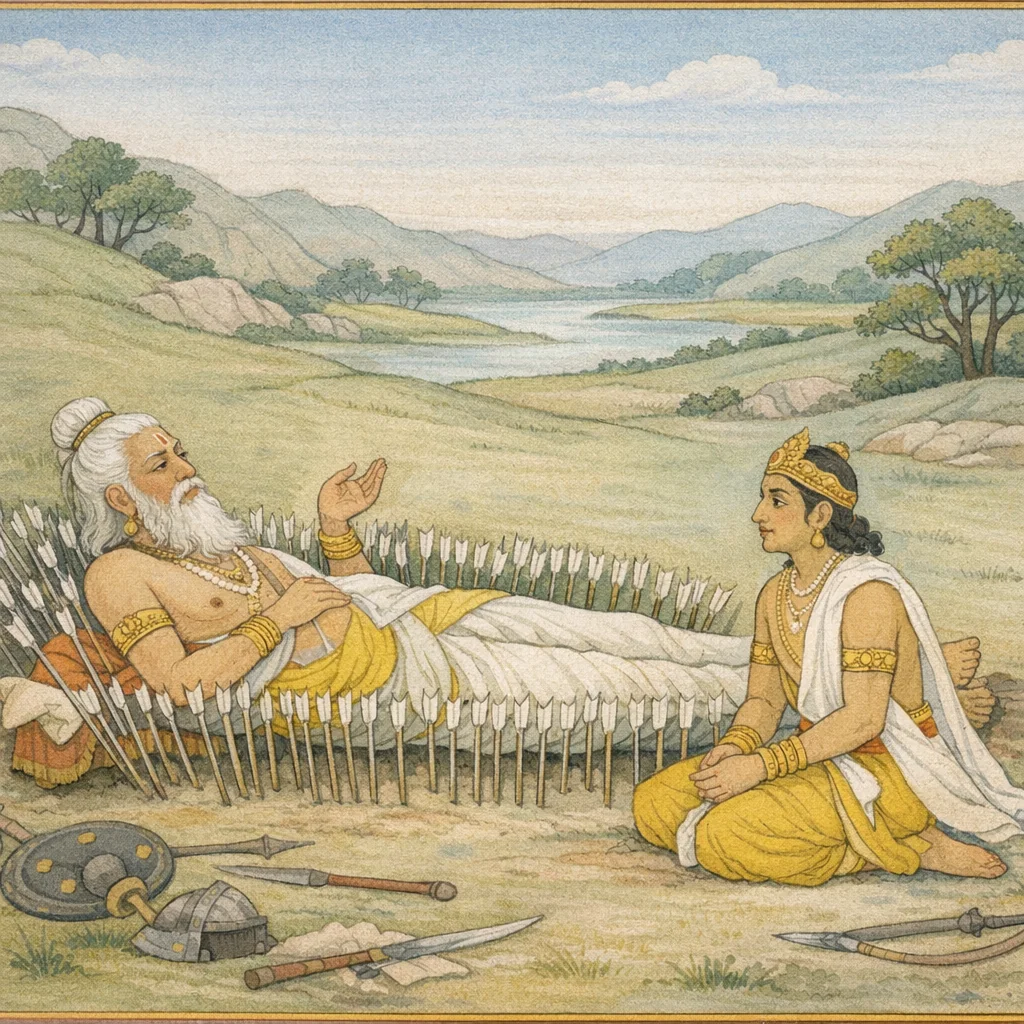
Adhyaya 109
मातापितृगुरुपूजा-प्रशंसा (Praise of Venerating Mother, Father, and Teacher)
Upa-parva: Rājadharmānuśāsana (Instruction on Kingship and Public Ethics) — Guru-śuśrūṣā (Veneration of Parents and Teachers)
Yudhiṣṭhira asks Bhīṣma to identify the most practicable and weightiest dharma among many branches, by which a person attains welfare here and hereafter. Bhīṣma responds by prioritizing the veneration (pūjā/paricaryā) of three authorities—mother, father, and teacher—claiming that their satisfaction confers reputation and beneficial worlds, while their neglect renders actions fruitless. He states that one should not fabricate an alternative dharma without their consent; what they authorize is to be treated as dharma for the agent. The triad is analogized to cosmic and ritual structures: three worlds, three āśramas, three Vedas, and three sacred fires; father is mapped to gārhapatya, mother to dakṣiṇa, and teacher to āhavanīya, with the teacher presented as especially weighty in guiding toward brahmaloka. The chapter further ranks relational obligations, emphasizes non-contempt and careful service, and warns that hostility toward parent/teacher is a severe transgression. The unit closes by presenting this triadic reverence as a comprehensive, superlative ethical directive derived from following all dharmas.
Chapter Arc: युधिष्ठिर भीष्म से पूछते हैं—धर्म के अनेक शाखाओं वाले वृक्ष में ऐसा कौन-सा कर्म है जो सब धर्मों में श्रेष्ठ हो, जिससे इस लोक और परलोक—दोनों में परम धर्म की प्राप्ति हो सके। → भीष्म उत्तर को एक ही धुरी पर टिकाते हैं—माता, पिता और गुरु की पूजा-सेवा। वे बताते हैं कि इन तीनों के प्रति युक्त आचरण से यश, कीर्ति, पुण्य और लोक-प्राप्ति होती है; और जो अपने ही जनक-जननी का पालन नहीं करता, उसका पाप भ्रूणहत्या के तुल्य कहा गया है। → भीष्म कठोर नैतिक निष्कर्ष रखते हैं—जो स्वयोनिज पुत्र वृद्ध माता-पिता का भरण-पोषण नहीं करता, वह लोक में सबसे बड़ा पापकर्मी है; और इसके विपरीत, इन तीनों की सेवा ही ‘सुकृतमुत्तमम्’ है जो त्रिलोकी में प्रतिष्ठा दिलाती है। → भीष्म सेवा-धर्म का फल स्पष्ट करते हैं—माता-पिता-गुरु के प्रति उत्तम व्यवहार से महान धर्मफल, यश और कल्याण प्राप्त होता है; वे यह भी रेखांकित करते हैं कि माता-पिता शरीर का जन्म देते हैं, पर आचार्य के उपदेश से ‘द्वितीय जन्म’ (संस्कार/विद्या) प्राप्त होता है—अतः गुरु-ऋण भी परम है।
Shlokas
Verse 1
हि. 57 2 -22-> छा अंक अष्टाधिकशततमोब<् ध्याय: माता-पिता तथा गुरुकी सेवाका महत्त्व युधिछिर उवाच महानयं धर्मपथो बहुशाखश्न भारत | किंस्विदेवेह धर्माणामनुछ्ठेय तमं मतम्,युधिष्ठिरने पूछा--भारत! धर्मका यह मार्ग बहुत बड़ा है तथा इसकी बहुत-सी शाखाएँ हैं इन धर्मोमेंसे किसको आप विशेषरूपसे आचरणमें लानेयोग्य समझते हैं?
Yudhiṣṭhira said: “O Bhārata, this path of dharma is vast and has many branches. Among the duties taught here, which one do you judge to be the most essential to put into practice?”
Verse 2
कि कार्य सर्वधर्माणां गरीयो भवतो मतम् । यथाहं परम धर्ममिह च प्रेत्य चाप्तुयाम्,सब धर्मोमें कौन-सा कार्य आपको श्रेष्ठ जान पड़ता है, जिसका अनुष्ठान करके मैं इहलोक और परलोकमें भी परम धर्मका फल प्राप्त कर सकूँ?
Yudhiṣṭhira said: “Among all duties, which course of action do you judge to be the most weighty and best? By performing it, how may I attain the highest fruit of dharma—both here in this world and after death?”
Verse 3
भीष्म उवाच मातापित्रोर्गुरूणां च पूजा बहुमता मम । इह युक्तो नरो लोकान् यशश्च महदश्लुते,भीष्मजीने कहा--राजन्! मुझे तो माता-पिता तथा गुरुजनोंकी पूजा ही अधिक महत्त्वकी वस्तु जान पड़ती है। इसलोकमें इस पुण्य कार्यमें संलग्न होकर मनुष्य महान् यश और श्रेष्ठ लोक पाता है
Bhishma said: “To me, the honoring of one’s mother and father and of one’s teachers is of the highest importance. A person devoted to this virtuous practice in this world attains great renown and reaches excellent realms hereafter.”
Verse 4
यच्च ते5भ्यनुजानीयु: कर्म तात सुपूजिता: । धर्माधर्मविरुद्धं वा तत् कर्तव्यं युधिष्ठिर,तात युधिष्ठिर! भलीभाँति पूजित हुए वे माता-पिता और गुरुजन जिस कामके लिये आज्ञा दें, वह धर्मके अनुकूल हो या विरुद्ध, उसका पालन करना ही चाहिये
Bhīṣma said: “Dear child, whatever action your well-honoured elders—such as parents and teachers—permit or command you to do, that is what you should carry out, O Yudhiṣṭhira, even if it appears to be in accord with dharma or opposed to it.”
Verse 5
न च तैरभ्यनुज्ञातो धर्ममन्यं समाचरेत् । यं च ते5भ्यनुजानीयु: स धर्म इति निश्चय:,जो उनकी आज्ञाके पालनमें संलग्न है, उसके लिये दूसरे किसी धर्मके आचरणकी आवश्यकता नहीं है। जिस कार्यके लिये वे आज्ञा दें, वही धर्म है ऐसा धर्मात्माओंका निश्चय है
Bhīṣma said: “One who is not permitted by those elders should not undertake any other course of duty. And whatever act they authorize—this alone is to be regarded as dharma; such is the settled conviction of the righteous.”
Verse 6
एत एव त्रयो लोका एत एवाश्रमास्त्रय: । एत एव त्रयो वेदा एत एव त्रयो5ग्नय:,ये माता-पिता और गुरुजन ही तीनों लोक हैं, यही तीनों आश्रम हैं, यही तीनों वेद हैं तथा ये ही तीनों अग्नियाँ हैं
Bhishma said: “These very ones are the three worlds; these very ones are the three āśramas (stages of disciplined life). These very ones are the three Vedas, and these very ones are the three sacred fires.”
Verse 7
पिता वै गार्हपत्यो<ग्निर्मातानिनिर्दक्षिण: स्मृत: । गुरुराहवनीयस्तु साग्नित्रेता गरीयसी,पिता गार्हपत्य अग्नि हैं, माता दक्षिणाग्नि मानी गयी है और गुरु आहवनीय अग्निका स्वरूप है। लौकिक अग्नियोंसे माता-पिता आदि त्रिविध अग्नियोंका गौरव अधिक है
Bhishma said: “The father is indeed to be regarded as the Gārhapatya fire; the mother is remembered as the Dakṣiṇa fire; and the teacher is the Āhavanīya fire. Thus, this triad of ‘fires’ embodied in one’s parents and preceptor is weightier in honor than the ordinary ritual fires.”
Verse 8
त्रिष्वप्रमाद्यन्नेतेषु त्रींललोकांश्व विजेष्यसि | पितृवृत्त्या त्विमं लोक॑ मातृवृत््या तथा परम्
Bhīṣma said: “If you remain vigilant and do not lapse in regard to these three, you will conquer the three worlds. By conduct befitting a father you win this world, and by conduct befitting a mother you attain the next.”
Verse 9
सम्यगेतेषु वर्तस्व त्रिषु लोकेषु भारत
Bhīṣma said: “Conduct yourself rightly in these matters, O Bhārata, so that your life may stand in harmony with the three worlds.”
Verse 10
नैतानतिशयेज्जातु नात्यश्रीयान्न दूषयेत्,इन तीनोंकी आज्ञाका कभी उल्लंघन न करे, इनको भोजन करानेके पहले स्वयं भोजन न करे, इनपर कोई दोषारोपण न करे और सदा इनकी सेवामें संलग्न रहे। यही सबसे उत्तम पुण्यकर्म है। नृपश्रेष्ठ) इनकी सेवासे तुम कीर्ति, पवित्र यश और उत्तमलोक सब कुछ प्राप्त कर लोगे
Bhishma said: “Never, at any time, seek to outshine these persons, nor treat them with contempt or disparage them. Do not violate their rightful authority; do not eat before first feeding them; do not impute faults to them; and remain constantly engaged in their service. This is the highest meritorious conduct. O best of kings, by serving them you will gain renown, purified fame, and the attainment of excellent worlds.”
Verse 11
इन तीनोंकी आज्ञाका कभी उल्लंघन न करे, इनको भोजन करानेके पहले स्वयं भोजन न करे, इनपर कोई दोषारोपण न करे और सदा इनकी सेवामें संलग्न रहे। यही सबसे उत्तम पुण्यकर्म है। नृपश्रेष्ठ) इनकी सेवासे तुम कीर्ति, पवित्र यश और उत्तमलोक सब कुछ प्राप्त कर लोगे
Bhishma said: “Never transgress the commands of these three. Do not eat before feeding them; do not cast blame upon them; and remain constantly engaged in serving them. This, indeed, is the highest meritorious act. O best of kings, by serving them you will attain fame, pure renown, and all the highest worlds.”
Verse 12
सर्वे तस्यादृता लोका यस्यैते त्रय आदृता: । अनादूृतास्तु यस्यैते सर्वास्तस्याफला: क्रिया:,जिसने इन तीनोंका आदर कर लिया, उसके द्वारा सम्पूर्ण लोकोंका आदर हो गया और जिसने इनका अनादर कर दिया, उसके सम्पूर्ण शुभ कर्म निष्फल हो जाते हैं
Bhīṣma said: “All the worlds are, as it were, honored by the one who honors these three. But for the one who shows them disrespect, all his meritorious acts become fruitless.”
Verse 13
न चायं न परो लोकस्तस्य चैव परंतप । अमानिता नित्यमेव यस्यैते गुरुवस्त्रय:,शत्रुओंको संताप देनेवाले नरेश! जिसने इन तीनों गुरुजनोंका सदा अपमान ही किया है, उसके लिये न तो यह लोक सुखद है और न परलोक
Bhīṣma said: “O scorcher of foes, for one who continually shows disrespect to these three venerable authorities, neither this world brings happiness nor does the next.”
Verse 14
न चास्मिन्नपरे लोके यशस्तस्य प्रकाशते । न चान्यदपि कल्याण परत्र समुदाह्ृतम्,न इस लोकमें और न परलोकमें ही उसका यश प्रकाशित होता है। परलोकमें जो अन्य कल्याणमय सुखकी प्राप्ति बतायी गयी है, वह भी उसे सुलभ नहीं होती है
Bhīṣma said: “In this world and even in the next, such a person’s good fame does not shine forth. Nor does he easily attain in the hereafter any other auspicious well-being that is spoken of.”
Verse 15
तेभ्य एव हि यत् सर्व कृत्वा च विसृजाम्यहम् । तदासीन्मे शतगुणं सहस्रगुणमेव च
Bhīṣma said: “Whatever I do, I do it for them alone—and then I let it go without clinging. Yet that very act returned to me a hundredfold, even a thousandfold.”
Verse 16
दशैव तु सदा5<चार्य: श्रोत्रियानतिरिच्यते
Bhīṣma said: “Indeed, an ācārya is always to be regarded as tenfold superior to a mere śrotriya (one learned in Vedic recitation).”
Verse 17
दशाचार्यानुपाध्याय उपाध्यायान् पिता दश | पितृन् दश तु मातैका सर्वा वा पृथिवीमपि
Bhīṣma said: “An upādhyāya is to be honored as ten teachers; a father as ten upādhyāyas; but a single mother surpasses ten fathers—indeed, she is worthy of reverence even above the whole earth.”
Verse 18
गुरुत्वेनाभिभवति नास्ति मातृसमो गुरु: । आचार्य सदा दस श्रोत्रियोंसे बढ़कर है। उपाध्याय (विद्यागुरु) दस आचार्योसे अधिक महत्त्व रखता है, पिता दस उपाध्यायोंसे बढ़कर है और माताका महत्त्व दस पिताओंसे भी अधिक है। वह अकेली ही अपने गौरवके द्वारा सारी पृथ्वीको भी तिरस्कृत कर देती है। अतः माताके समान दूसरा कोई गुरु नहीं है ।। गुरुर्गरीयान् पितृतो मातृतश्नलेति मे मति:
Bhishma said: “In the scale of reverence, none surpasses the mother; there is no teacher equal to her. An ācārya is held greater than ten learned śrotriyas; an upādhyāya is greater than ten ācāryas; a father is greater than ten upādhyāyas; and a mother is greater even than ten fathers. By her single dignity she eclipses the whole earth. Therefore, there is no guru comparable to the mother—indeed, in my judgment, the guru is weightier than the father, and the mother weightier still.”
Verse 19
उभौ हि मातापितरौ जन्मन्येवोपयुज्यत: । परंतु मेरा विश्वास यह है कि गुरुका पद पिता और मातासे भी बढ़कर है; क्योंकि माता-पिता तो केवल इस शरीरको जन्म देनेके ही उपयोगमें आते हैं ।। शरीरमेव सृजत: पिता माता च भारत
Bhishma said: “Both mother and father are indeed indispensable at the very moment of one’s birth. Yet my conviction is that the status of the teacher surpasses even that of the parents; for parents serve chiefly in bringing this body into existence. It is the father and the mother, O Bharata, who create only the body.”
Verse 20
अवध्या हि सदा माता पिता चाप्यपकारिणौ,पिता-माता यदि कोई अपराध करें तो भी वे सदा अवध्य ही हैं; क्योंकि पुत्र या शिष्य पिता-माता और गुरुका अपराध करके भी उनकी दृष्टिमें दूषित नहीं होते हैं। वे गुरुजन पुत्र या शिष्यपर स्नेहवश दोषारोपण नहीं करते; बल्कि सदा उसे धर्मके मार्गपर ही ले जानेका प्रयत्न करते हैं। ऐसे पिता-माता आदि गुरुजनोंका महत्त्व महर्षियोंसहित देवता ही जानते हैं
Bhīṣma said: “A mother is always inviolable, and so too a father—even if they have acted harmfully. Even when a father or mother commits a fault, they are not to be treated as fit for injury or contempt; for a son (or disciple), though he may perceive their failing, should not become tainted by retaliating against them. Out of affection, such elders do not fix blame upon the child or student; rather, they continually strive to lead him back onto the path of dharma. The true greatness of such parents and preceptors is known fully only to the gods together with the seers.”
Verse 21
न संदुष्यति तत् कृत्वा न च ते दूषयन्ति तम् । धर्माय यतमानानां दिदुर्देवा महर्षिभि:,पिता-माता यदि कोई अपराध करें तो भी वे सदा अवध्य ही हैं; क्योंकि पुत्र या शिष्य पिता-माता और गुरुका अपराध करके भी उनकी दृष्टिमें दूषित नहीं होते हैं। वे गुरुजन पुत्र या शिष्यपर स्नेहवश दोषारोपण नहीं करते; बल्कि सदा उसे धर्मके मार्गपर ही ले जानेका प्रयत्न करते हैं। ऐसे पिता-माता आदि गुरुजनोंका महत्त्व महर्षियोंसहित देवता ही जानते हैं
Bhishma said: “Even if one were to commit an offence against them, one does not become tainted thereby, nor do they (the elders) brand him as tainted. The gods, together with the great seers, know the true stature of those who strive to lead others toward dharma—such as parents and teachers—who, out of affection, do not fix blame on the son or disciple but continually endeavor to guide him onto the righteous path.”
Verse 22
यश्नचावृणोत्यवितथेन कर्मणा ऋतं ब्रुवन्ननृतं सम्प्रयच्छन् । त॑ं वै मन््येत पितरं मातरं च तस्मै न द्रहोत् कृतमस्य जानन्,जो सत्य कर्म (के द्वारा यथार्थ उपदेश) के द्वारा पुत्र या शिष्यको कवचकी भाँति ढक लेता है, सत्यस्वरूप वेदका उपदेश देता और असत्यकी रोक-थाम करता है, उस गुरुको ही पिता और माता समझे और उसके उपकारको जानकर कभी उससे द्रोह न करे
Bhishma said: One who, through unfailing right conduct, shields (a pupil) as with armor; who proclaims ṛta—the true, Vedic order—and restrains untruth—such a teacher should be regarded as both father and mother. Knowing the benefit received from him, one should never commit treachery against that guru.
Verse 23
विद्यां श्र॒त्वा ये गुरु नाद्रियन्ते प्रत्यासन्ना मनसा कर्मणा वा | तेषां पापं भ्रूणहत्याविशिष्टं नान्यस्तेभ्य: पापकृदस्ति लोके । यथैव ते गुरुभिर्भावनीया- स्तथा तेषां गुरवो<भ्यर्चनीया:,जो लोग विद्या पढ़कर गुरुका आदर नहीं करते, निकट रहकर मन, वाणी और क्रियाद्वारा गुरुकी सेवा नहीं करते, उन्हें गर्भके बालककी हत्यासे भी बढ़कर पाप लगता है। संसारमें उनसे बड़ा पापी दूसरा कोई नहीं है। जैसे गुरुओंका कर्तव्य है, शिष्यको आत्मोन्नतिके पथपर पहुँचाना, उसी तरह शिष्योंका धर्म है गुरुओंका पूजन करना
Bhishma said: Those who, after learning sacred knowledge, do not honor their teacher—who, though living close by, fail to serve the guru with mind, speech, and deed—incur a sin comparable to (indeed, on par with) the killing of an embryo. In this world there is no sinner greater than they. Just as it is the duty of teachers to cultivate and uplift their students, so it is the duty of students to worship and honor their teachers.
Verse 24
तस्मात् पूजयितव्याश्व संविभज्याश्न यत्नतः । गुरवो<र्चयितव्याश्व पुराणं धर्ममिच्छता,अतः जो पुरातन धर्मका फल पाना चाहते हैं, उन्हें चाहिये कि वे गुरुओंकी पूजा-अर्चा करें और प्रयत्नपूर्वक उन्हें आवश्यक वस्तुएँ लाकर दें
Therefore, one should diligently honor them and, after making proper offerings and sharing what one has, partake of one’s food with care. Those who seek the fruits of the ancient, time-honored Dharma must worship and revere their teachers, striving to provide them with the necessities they require.
Verse 25
येन प्रीणाति पितरं तेन प्रीत: प्रजापति: । प्रीणाति मातरं येन पृथिवी तेन पूजिता,मनुष्य जिस कर्मसे पिताको प्रसन्न करता है, उसीके द्वारा प्रजापति ब्रह्माजीभी प्रसन्न होते हैं तथा जिस बर्तावसे वह माताको प्रसन्न कर लेता है, उसीके द्वारा समूची पृथ्वीकी भी पूजा हो जाती है
By whatever conduct a person gladdens his father, by that very conduct Prajāpati (Brahmā) is pleased. And by whatever conduct he gladdens his mother, by that very conduct the whole Earth is honored as though worshipped.
Verse 26
येन प्रीणात्युपाध्यायं तेन स्याद् ब्रह्म पूजितम् । मातृतः पितृतश्वैव तस्मात् पूज्यतमो गुरु:,जिस कर्मसे शिष्य उपाध्याय (विद्यागुरु) को प्रसन्न करता है, उसीके द्वारा परब्रह्म परमात्माकी पूजा सम्पन्न हो जाती है; अतः गुरु माता-पितासे भी अधिक पूजनीय है
Bhishma said: By whatever conduct a student gladdens and satisfies his teacher, by that very conduct the Supreme Brahman is worshipped. Therefore the guru is worthy of the highest reverence—indeed more venerable than one’s mother and father.
Verse 27
ऋषय जश्न हि देवाश्न प्रीयन्ते पितृभि: सह । पूज्यमानेषु गुरुषु तस्मात् पूज्यतमो गुरु:
Bhīṣma said: When one honors one’s teachers, the sages and the gods—together with the ancestors—are pleased. Therefore, among all who are worthy of reverence, the teacher is the most worthy of reverence.
Verse 28
गुरुओंके पूजित होनेपर पितरोंसहित देवता और ऋषि भी प्रसन्न होते हैं; इसलिये गुरु परम पूजनीय है ।। केनचिजन्न च वृत्तेन हावज्ञेयो गुरुर्भवेत् । नच माता न च पिता मन्यते यादृशो गुरु:
Bhishma said: A teacher should never be treated with contempt because of anyone’s birth or worldly condition. For neither mother nor father is regarded as comparable to the teacher in the manner in which the teacher is to be revered.
Verse 29
किसी भी बर्तावके कारण गुरु अपमानके योग्य नहीं होता। इसी तरह माता और पिता भी अनादरके योग्य नहीं हैं। जैसे गुरु माननीय हैं, वैसे ही माता-पिता भी हैं ।। न ते5वमानमर्हन्ति न तेषां दूषयेत् कृतम् । गुरूणामेव सत्कारं विदुर्देवा महर्षिभि:,वे तीनों कदापि अपमानके योग्य नहीं हैं। उनके किये हुए किसी भी कार्यकी निन्दा नहीं करनी चाहिये। गुरुजनोंके इस सत्कारको देवता और महर्षि भी अपना सत्कार मानते हैं
Bhishma said: They are never fit to be treated with contempt, nor should what they have done be spoken of with blame. The honoring of elders—especially of teachers—is recognized even by the gods and the great seers as true honor.
Verse 30
उपाध्यायं पितरं मातरं च येअभिद्रह्मन्ते ममसा कर्मणा वा । तेषां पापं भ्रूणहत्याविशिष्टं तस्मान्नान्य: पापकृदस्ति लोके,अध्यापक, पिता और माताके प्रति जो मन-वाणी और क्रियाद्दारा द्रोह करते हैं, उन्हें भ्रूणहत्यासे भी महान् पाप लगता है। संसारमें उससे बढ़कर दूसरा कोई पापाचारी नहीं है
Bhishma said: Those who betray their teacher, their father, or their mother—whether by mind, by word, or by deed—incur a sin comparable to the killing of an embryo. In this world, there is no wrongdoer more grievous than such a person.
Verse 31
भृतो वृद्धों यो न बिभर्ति पुत्र: स्वयोनिज: पितरं मातरं च । तद् वै पापं भ्रूणहत्याविशिष्टं तस्मान्नान्य: पापकृदस्ति लोके,जो पिता-माताका औरस पुत्र है और पाल-पोसकर बड़ा कर दिया गया है, वह यदि अपने माता-पिताका भरण-पोषण नहीं करता है तो उसे भ्रूणहत्यासे भी बढ़कर पाप लगता है और जगतमें उससे बड़ा पापात्मा दूसरा कोई नहीं है
Bhishma said: If a son—one’s own begotten child—who has been reared and brought to maturity does not support and maintain his father and mother, that is a sin comparable to (indeed, counted as) the grievous crime of foeticide. In this world, there is no wrongdoer more blameworthy than such a person.
Verse 32
मित्रद्रुह: कृतघ्नस्य स्त्रीघ्नस्य गुरुघातिन: । चतुर्णा वयमेतेषां निष्कृतिं नानुशुश्रुम
Bhishma said: For one who betrays a friend, for the ungrateful, for the killer of a woman, and for the slayer of a teacher—of these four, we have not heard of any expiation that truly removes the fault.
Verse 33
मित्रद्रोही, कृतघ्न, स्त्रीहत्यारे और गुरुघाती--इन चारोंके पापका प्रायश्चित्त हमारे सुननेमें नहीं आया है ।। एतत्सर्वमनिर्देशेनैवमुक्तं यत् कर्तव्यं पुरुषेणेह लोके । एतच्छेयो नान्यदस्माद् विशिष्टं सर्वान् धर्माननुसृत्यैतदुक्तम्,ये सारी बातें जो इस जगतमें पुरुषके द्वारा पालनीय हैं, यहाँ विस्तारके साथ बतायी गयी हैं। यही कल्याणकारी मार्ग है। इससे बढ़कर दूसरा कोई कर्तव्य नहीं है। सम्पूर्ण धर्मोका अनुसरण करके यहाँ सबका सार बताया गया है
Bhishma said: For four grievous sins—betraying a friend, ingratitude, the killing of a woman, and the slaying of one’s teacher—we have not heard of any expiation. All that a person ought to do in this world has thus been stated in summary, without excessive detail. This is the path of true welfare; there is no duty higher than this. Following the whole range of dharma, its essence has been declared here.
Verse 83
ब्रह्मलोकं गुरोरव॑त्त्या नियमेन तरिष्यसि । यदि तुम इन तीनोंकी सेवामें कोई भूल नहीं करोगे तो तीनों लोकोंको जीत लोगे। पिताकी सेवासे इस लोकको, माताकी सेवासे परलोकको तथा नियमपूर्वक गुरुकी सेवासे ब्रह्मलोकको भी लाँध जाओगे
Bhishma said: “By disciplined observance and devoted service to the teacher, you will cross beyond even Brahmaloka. If you commit no lapse in serving these three—father, mother, and guru—you will, as it were, conquer the three worlds: through service to the father you gain success in this world; through service to the mother you gain the next world; and through rule-bound service to the guru you transcend even Brahmaloka.”
Verse 96
यश: प्राप्स्यसि भद्रें ते धर्म च सुमहत्फलम् । भरतनन्दन! इसलिये तुम त्रिविध लोकस्वरूप इन तीनोंके प्रति उत्तम बर्ताव करो। तुम्हारा कल्याण हो। ऐसा करनेसे तुम्हें यश और महान् फल देनेवाले धर्म की प्राप्ति होगी
Bhishma said: “You will attain fame, and you will also gain dharma that yields exceedingly great results—may it be well with you. Therefore, O joy of the Bharatas, conduct yourself in the best way toward these three, which embody the threefold form of the worlds. May welfare be yours. By acting thus, you will obtain fame and dharma that grants great fruit.”
Verse 107
इस प्रकार श्रीमह्याभारत शान्तिपर्वके अन्तर्गत राजधमनुशासनपर्वमें गणराज्यका बर्तावविषयक एक सौ सातवाँ अध्याय पूरा हआ
Thus ends the one hundred and seventh chapter, dealing with the conduct and governance of a republican polity, within the Rājadharmānuśāsana section of the Śānti Parva of the revered Mahābhārata. The close of the chapter signals the completion of Bhīṣma’s instruction on how collective rule must be guided by discipline, lawful procedure, and ethical restraint so that power serves the common good rather than factional interest.
Verse 108
इति श्रीमहा भारते शान्तिपर्वणि राजधर्मानुशासनपर्वणि मातृपितृगुरुमाहात्म्ये अष्टाधिकशततमोड<ध्याय:
Thus, in the Śrī Mahābhārata, within the Śānti Parva—specifically the section on the instruction of royal duties—concludes the chapter on the greatness of the mother, father, and teacher, being the one-hundred-and-eighth chapter (of this section).
Verse 131
नित्यं परिचरेच्चैव तद् वै सुकृतमुत्तमम् । कीर्ति पुण्यं यशो लोकानू् प्राप्स्यसे राजसत्तम
Bhishma said: “Serve (this duty/that person) constantly; that indeed is the highest meritorious act. By doing so, O best of kings, you will attain good repute, spiritual merit, fame, and auspicious worlds (hereafter).”
Verse 153
तस्मान्मे सम्प्रकाशन्ते त्रयो लोका युधिष्छिर । मैं तो सारा शुभ कर्म करके इन तीनों गुरुजनोंको ही समर्पित कर देता था। इससे मेरे उन सभी शुभ कर्मोका पुण्य सौगुना और हजारगुना बढ़ गया है। युधिष्ठिर! इसीसे तीनों लोक मेरी दृष्टिके सामने प्रकाशित हो रहे हैं
Bhishma said: “Therefore, O Yudhiṣṭhira, the three worlds shine clearly before me. For I used to perform every auspicious act and dedicate it wholly to those three revered elders; by that offering, the merit of all my good deeds increased a hundredfold and a thousandfold. It is for this reason that the three worlds now stand illumined in my sight.”
Verse 196
आचार्यशिष्टा या जाति: सा दिव्या साजरामरा | भारत! पिता और माता केवल शरीरको ही जन्म देते हैं; परंतु आचार्यका उपदेश प्राप्त करके जो द्वितीय जन्म उपलब्ध होता है, वह दिव्य है, अजर-अमर है
Bhishma said: “O Bharata, the lineage and true ‘birth’ shaped by a teacher’s discipline is divine and beyond decay and death. A father and mother bring forth only the body; but the second birth gained through receiving the teacher’s instruction is a higher birth—sacred, ageless, and deathless.”
Frequently Asked Questions
Yudhiṣṭhira seeks a single, most executable dharma amid many branches—an operational criterion for right conduct that yields benefit in this life and the next.
Consistent reverence and service to mother, father, and teacher is treated as the highest practical dharma; their approval is a decisive guide for conduct, and their neglect undermines all other acts.
Yes: honoring the triad is linked to reputation, merit, and attainment of favorable ‘worlds,’ while disrespect is said to nullify actions and is characterized as a grave ethical fault with severe consequences.