Adhyaya 62
गान्धारी-प्रशमनम् — Pacification of Gāndhārī and Kṛṣṇa’s Counsel at Hāstinapura
Upa-parva: Gāndhārī-Śamana (Pacification of Gāndhārī) Episode
Janamejaya asks why Yudhiṣṭhira again sent Kṛṣṇa to Gāndhārī after victory. Vaiśaṃpāyana explains that Yudhiṣṭhira, alarmed by the irregularity perceived in Duryodhana’s defeat and anticipating Gāndhārī’s wrath empowered by severe austerities, seeks preemptive reconciliation. Yudhiṣṭhira credits Kṛṣṇa’s strategic support (including charioteership) for victory and requests him to neutralize Gāndhārī’s anger. Kṛṣṇa proceeds to Hāstinapura with Dāruka, meets Dhṛtarāṣṭra and Gāndhārī, and speaks in a composed, causality-focused register: peace proposals were previously rejected, kāla (time/inevitability) and prior choices shaped the outcome, and the Pāṇḍavas should not be targeted with resentment. He praises Gāndhārī’s moral counsel given earlier and discourages thoughts of harming the Pāṇḍavas, acknowledging her ascetic potency while urging restraint. Gāndhārī’s agitation subsides; she accepts Kṛṣṇa’s framing while grieving. Kṛṣṇa then perceives Aśvatthāman’s hostile nocturnal intent and departs urgently to protect the Pāṇḍavas, after which Vyāsa consoles the elders and Kṛṣṇa returns to the camp to report and rejoin the Pāṇḍavas.
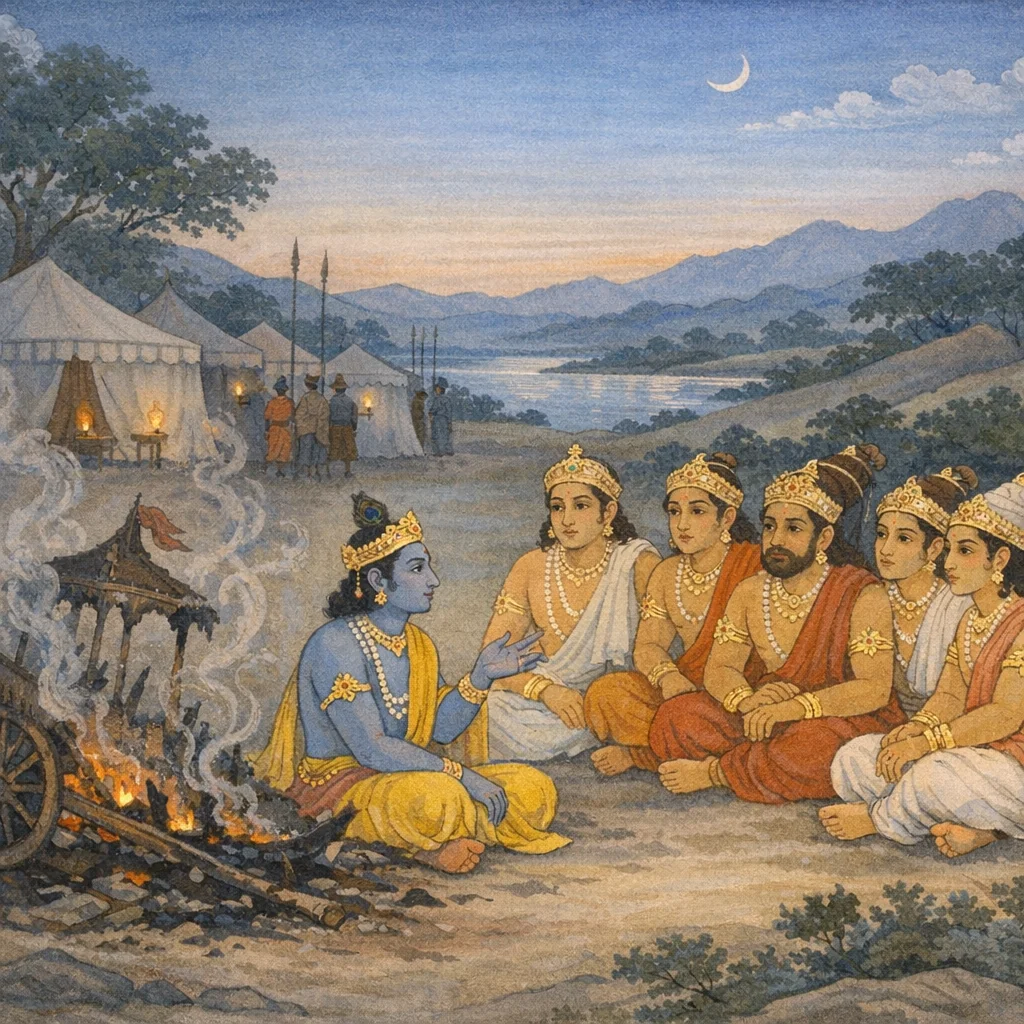
Chapter Arc: संजय धृतराष्ट्र से कहता है—युद्ध की धूल बैठते ही विजयी पाण्डव-सेना शंखनाद करती हुई विश्राम को चलती है; पर उसी शांति के भीतर एक असाधारण घटना छिपी है—दुर्योधन के शिविर में प्रवेश। → धृष्टद्युम्न, शिखण्डी, द्रौपदेय और अन्य महाधनुर्धर पाण्डवों के पीछे-पीछे बढ़ते हैं। वे पहले दुर्योधन के शिविर में घुसते हैं—हतशत्रु, हतनेता, और भयाक्रान्त जनों से रिक्त उस शिविर में—और फिर कौरव-सम्पदा, कोश-रत्न और भण्डारों पर अधिकार की तैयारी करते हैं। → पाण्डव जब अर्जुन के रथ को अग्नि से भस्म हुआ देखते हैं तो विस्मय से हाथ जोड़कर कृष्ण से पूछते हैं—यह रथ, जो अभी-अभी युद्ध में अजेय था, अचानक कैसे जल गया? कृष्ण उद्घाटित करते हैं कि यह रथ दिव्य संरक्षण से अब तक टिका था; कार्य पूर्ण होते ही वह संचित तेज/अस्त्र-प्रभाव से मुक्त होकर भस्म हो गया—यह विजय का नहीं, नियति का संकेत है। → कृष्ण पाण्डवों को सावधान करते हैं कि रात्रि-रक्षा और मर्यादा हेतु शिविर से बाहर ठहरना उचित है; पाण्डव गान्धारी—हतपुत्रा माता—के प्रति शोक-सम्मान का स्मरण करते हुए कृष्ण से आगे की नीति पूछते हैं। अंततः पाण्डव कृष्ण को दारुक सहित हस्तिनापुर भेजने का निश्चय करते हैं, ताकि शेष राजनीतिक-धार्मिक दायित्व निभाए जा सकें। → कृष्ण का हस्तिनापुर-प्रस्थान एक नए नैतिक-सामाजिक टकराव की भूमिका बनता है—विजय के बाद शोक, प्रतिशोध और धर्म-निर्णय की अगली परीक्षा अब राजसभा और गान्धारी के सम्मुख होगी।
Shlokas
Verse 1
(दाक्षिणात्य अधिक पाठके १५ श्लोक मिलाकर कुल ८६ श्लोक हैं।) पम्प बछ। अ-काज जा द्विषष्टितमो<5 ध्याय: पाण्डवोंका कौरव शिबिरमें पहुँचना, अर्जुनके रथका दग्ध होना और पाण्डवोंका है श्रीकृष्णको हस्तिनापुर जना संजय उवाच ततस्ते प्रययु: सर्वे निवासाय महीक्षित: । शड्खान् प्रध्मापयन्तो वै हृष्टा: परिघबाहव:
Sañjaya said: Then all those kings set out to take up their night’s quarters, joyfully blowing their conches—mighty-armed like iron clubs—exulting in the war-spirit.
Verse 2
संजय कहते हैं--राजन्! तदनन्तर परिघके समान मोटी भुजाओंवाले सब नरेश अपना-अपना शंख बजाते हुए शिबिरमें विश्राम करनेके लिये प्रसन्नतापूर्वक चल दिये ।। पाण्डवान् गच्छतश्चापि शिबिरं नो विशाम्पते | महेष्वासो<न्वगात् पश्चाद् युयुत्सु: सात्यकिस्तथा,प्रजानाथ! हमारे शिबिरकी ओर जाते हुए पाण्डवोंके पीछे-पीछे महाधनुर्धर युयुत्सु, सात्यकि, धृष्टद्युम्न, शिखण्डी, द्रौपदीके सभी पुत्र तथा अन्य सब धनुर्धर योद्धा भी उन शिबिरोंमें गये
Sañjaya said: O King, thereafter all the rulers—whose thick arms were like iron clubs—blew their respective conches and, with satisfaction, went to their camps to rest. And as the Pāṇḍavas were proceeding toward our camp, O lord of men, the great bowmen followed behind them—Yuyutsu and Sātyaki as well.
Verse 3
धृष्टद्युम्न: शिखण्डी च द्रौपदेयाश्न सर्वश: । सर्वे चान्ये महेष्वासा: प्रययु: शिबिराण्युत,प्रजानाथ! हमारे शिबिरकी ओर जाते हुए पाण्डवोंके पीछे-पीछे महाधनुर्धर युयुत्सु, सात्यकि, धृष्टद्युम्न, शिखण्डी, द्रौपदीके सभी पुत्र तथा अन्य सब धनुर्धर योद्धा भी उन शिबिरोंमें गये
Sañjaya said: Dhṛṣṭadyumna and Śikhaṇḍī, together with all the sons of Draupadī and the other great bowmen, followed behind the Pāṇḍavas as they proceeded toward their encampments, O lord of men.
Verse 4
ततस्ते प्राविशन् पार्था हतत्विट्कं हतेश्वरम् | दुर्योधनस्य शिबिरं रड्भवद्धिसृते जने,तत्पश्चात् कुन्तीके पुत्रोंने पहले दुर्योधनके शिबिरमें प्रवेश किया। जैसे दर्शकोंके चले जानेपर सूना रंगमण्डप शोभाहीन दिखायी देता है, उसी प्रकार जिसका स्वामी मारा गया था, वह शिबिर उत्सवशून्य नगर और नागरहित सरोवरके समान श्रीहीन जान पड़ता था। वहाँ रहनेवाले लोगोंमें अधिकांश स्त्रियाँ और नपुंसक थे तथा बूढ़े मन्त्री अधिष्ठाता बनकर उस शिबिरका संरक्षण कर रहे थे
Sañjaya said: Then the sons of Pṛthā entered Duryodhana’s camp—its lord slain and its splendor extinguished. With the crowd dispersed, it resembled an empty theatre after the spectators had departed: bereft of festivity and radiance, like a city without celebration or a lake without nāgas. Within, most of those remaining were women and eunuchs, while aged ministers stood as overseers, guarding what was left of the camp.
Verse 5
गतोत्सवं पुरमिव हृतनागमिव हृदम् | स्त्रीवर्षवरभूयिष्ठं वृद्धामात्यैरधिष्ठितम्,तत्पश्चात् कुन्तीके पुत्रोंने पहले दुर्योधनके शिबिरमें प्रवेश किया। जैसे दर्शकोंके चले जानेपर सूना रंगमण्डप शोभाहीन दिखायी देता है, उसी प्रकार जिसका स्वामी मारा गया था, वह शिबिर उत्सवशून्य नगर और नागरहित सरोवरके समान श्रीहीन जान पड़ता था। वहाँ रहनेवाले लोगोंमें अधिकांश स्त्रियाँ और नपुंसक थे तथा बूढ़े मन्त्री अधिष्ठाता बनकर उस शिबिरका संरक्षण कर रहे थे
Sañjaya said: After that, Kuntī’s son entered Duryodhana’s camp. It looked like a city whose festivities had ended, or like a lake bereft of its nāgas—stripped of splendor. Just as a theatre becomes dull once the spectators have departed, so too that camp, its lord having been slain, appeared joyless and forlorn. Most of those remaining there were women and eunuchs, while aged ministers stood as overseers, guarding and administering the camp in the aftermath of its leader’s fall.
Verse 6
तत्रैतान् पर्युपातिष्ठन् दुर्योधनपुर:सरा: । कृताञ्जलिपुटा राजन् काषायमलिनाम्बरा:,राजन! वहाँ दुर्योधनके आगे-आगे चलनेवाले सेवकगण मलिन भगवा वस्त्र पहनकर हाथ जोड़े हुए इन पाण्डवोंके समक्ष उपस्थित हुए
Sañjaya said: There, O King, the attendants who went in front of Duryodhana came and stood before these Pāṇḍavas. With their hands joined in reverence, and wearing soiled saffron garments, they presented themselves.
Verse 7
शिबिरं समनुप्राप्य कुरुराजस्य पाण्डवा: । अवतेरुम॑हाराज रथेभ्यो रथसत्तमा:,महाराज! कुरुराजके शिबिरमें पहुँचकर रथियोंमें श्रेष्ठ पाण्डव अपने रथोंसे नीचे उतरे
Sañjaya said: Having reached the camp of the Kuru king, O great king, the Pāṇḍavas—foremost among chariot-warriors—alighted from their chariots.
Verse 8
ततो गाण्डीवधन्वानमभ्यभाषत केशव: । स्थित: प्रियहिते नित्यमतीव भरतर्षभ
Sañjaya said: Then Keśava addressed the wielder of the Gāṇḍīva—ever steadfast in what was dear and beneficial (to him), O bull among the Bharatas.
Verse 9
अवरोपय गाण्डीवमक्षयौ च महेषुधी । अथाहमवरोक्ष्यामि पश्चाद् भरतसत्तम
Sañjaya said: “Set down the Gāṇḍīva bow, and also the two great, inexhaustible quivers. Then I too shall dismount afterward, O best of the Bharatas.”
Verse 10
स्वयं चैवावरोह त्वमेतच्छेयस्तवानघ । भरतश्रेष्ठ! तत्पश्चात् सदा अर्जुनके प्रिय एवं हितमें तत्पर रहनेवाले भगवान् श्रीकृष्णने गाण्डीवधारी अर्जुनसे कहा--“भरतवंशशिरोमणे! तुम गाण्डीव धनुषको और इन दोनों बाणोंसे भरे हुए अक्षय तरकसोंको उतार लो। फिर स्वयं भी उतर जाओ! इसके बाद मैं उतरूँगा! अनघ! ऐसा करनेमें ही तुम्हारी भलाई है” ।। तच्चाकरोत् तथा वीर: पाण्डुपुत्रो धनंजय:,वीर पाण्डुपुत्र अर्जुनने वह सब वैसे ही किया। तदनन्तर परम बुद्धिमान् भगवान् श्रीकृष्ण घोड़ोंकी बागडोर छोड़कर गाण्डीवधारी अर्जुनके रथसे स्वयं भी उतर पड़े
Sañjaya said: Kṛṣṇa, ever intent on what was dear and beneficial to Arjuna, addressed the wielder of the Gāṇḍīva: “O best of the Bharatas, O sinless one—first you must descend; that is truly for your welfare. Remove the Gāṇḍīva bow and take down these two inexhaustible quivers filled with arrows; then step down yourself. After you, I shall descend.” Arjuna, the heroic son of Pāṇḍu, did exactly as instructed. Thereupon the supremely wise Lord Śrī Kṛṣṇa, letting go of the reins, also alighted from Arjuna’s chariot.
Verse 11
अथ पश्चात् ततः कृष्णो रश्मीनुत्सृज्य वाजिनाम् । अवारोहत मेधावी रथाद् गाण्डीवधन्चन:,वीर पाण्डुपुत्र अर्जुनने वह सब वैसे ही किया। तदनन्तर परम बुद्धिमान् भगवान् श्रीकृष्ण घोड़ोंकी बागडोर छोड़कर गाण्डीवधारी अर्जुनके रथसे स्वयं भी उतर पड़े
Then, after that, Kṛṣṇa—releasing the reins of the horses—alighted from the chariot. The wise Gāṇḍīva-bearing Dhanañjaya (Arjuna) also descended from the chariot.
Verse 12
अथावतीर्णे भूतानामीश्वरे सुमहात्मनि । कपिरन्तर्दथे दिव्यो ध्वजो गाण्डीवधन्चन:,समस्त प्राणियोंके ईश्वर परमात्मा श्रीकृष्णके उतरते ही गाण्डीवधारी अर्जुनका ध्वजस्वरूप दिव्य वानर उस रथसे अन्तर्धान हो गया
Sañjaya said: When the Supreme Lord—the great-souled ruler of all beings—had descended from the chariot, the divine monkey that served as the banner upon Arjuna’s chariot vanished from sight.
Verse 13
स दग्धो द्रोणकर्णाभ्यां दिव्यैरस्त्रमहारथ: । अथादीप्तोडग्निना हयाशु प्रजज्वाल महीपते,पृथ्वीनाथ! इसके बाद अर्जुनका वह विशाल रथ, जो द्रोण और कर्णके दिव्यास्त्रोंद्वारा दग्धप्राय हो गया था, तुरंत ही आगसे प्रज्वलित हो उठा
Sañjaya said: O king, that great chariot—already nearly consumed by the divine missiles of Droṇa and Karṇa—was then quickly kindled by fire and burst into flames, O lord of the earth.
Verse 14
सोपासड्र: सरश्मिश्न साश्वः सयुगबन्धुर: । भस्मी भूतो 5पतद् भूमौ रथो गाण्डीवधन्चन:,गाण्डीवधारीका वह रथ उपासंग, बागडोर, जूआ, बन्धुरकाष्ठ और घोड़ोंसहित भस्म होकर भूमिपर गिर पड़ा
Sañjaya said: Arjuna’s chariot—together with its fittings, reins, horses, yoke, and the pole that binds the team—was reduced to ashes and fell upon the earth.
Verse 15
त॑ तथा भस्मभूतं तु दृष्टवा पाण्डुसुता: प्रभो । अभवन् विस्मिता राजन्नर्जुनश्वेदमब्रवीत्,प्रभो! नरेश्वर! उस रथको भस्मीभूत हुआ देख समस्त पाण्डव आश्चर्यचकित हो उठे और अर्जुनने भी हाथ जोड़कर भगवान्के चरणोंमें बारंबार प्रणाम करके प्रेमपूर्वक पूछा --“गोविन्द! यह रथ अकस्मात् कैसे आगसे जल गया? भगवन्! यदुनन्दन! यह कैसी महान् आश्चवर्यकी बात हो गयी? महाबाहो! यदि आप सुनने-योग्य समझें तो इसका रहस्य मुझे बतावें'
Sañjaya said: O lord, when the sons of Pāṇḍu saw that chariot reduced to ashes, they were struck with amazement. Then Arjuna spoke in reverence, seeking from Govinda the hidden cause of this sudden burning—an event that appeared as a great and wondrous mystery amid the aftermath of war.
Verse 16
कृताञ्जलि: सप्रणयं प्रणिपत्याभिवाद्य ह । गोविन्द कस्माद् भगवन् रथो दग्धोडयमग्निना,प्रभो! नरेश्वर! उस रथको भस्मीभूत हुआ देख समस्त पाण्डव आश्चर्यचकित हो उठे और अर्जुनने भी हाथ जोड़कर भगवान्के चरणोंमें बारंबार प्रणाम करके प्रेमपूर्वक पूछा --“गोविन्द! यह रथ अकस्मात् कैसे आगसे जल गया? भगवन्! यदुनन्दन! यह कैसी महान् आश्चवर्यकी बात हो गयी? महाबाहो! यदि आप सुनने-योग्य समझें तो इसका रहस्य मुझे बतावें'
Sañjaya said: With palms joined, and with affectionate reverence, Arjuna bowed down and repeatedly saluted Govinda, then asked: “O Govinda, O Blessed Lord—why has this chariot suddenly been burned by fire? O Master! O Lord of men! This is a great wonder. If you deem it fit to be heard, please tell me the secret behind it.”
Verse 17
किमेतन्महदा क्षर्यम भवद् यदुनन्दन । तन्मे ब्रूहि महाबाहो श्रोतव्यं यदि मन््यसे,प्रभो! नरेश्वर! उस रथको भस्मीभूत हुआ देख समस्त पाण्डव आश्चर्यचकित हो उठे और अर्जुनने भी हाथ जोड़कर भगवान्के चरणोंमें बारंबार प्रणाम करके प्रेमपूर्वक पूछा --“गोविन्द! यह रथ अकस्मात् कैसे आगसे जल गया? भगवन्! यदुनन्दन! यह कैसी महान् आश्चवर्यकी बात हो गयी? महाबाहो! यदि आप सुनने-योग्य समझें तो इसका रहस्य मुझे बतावें'
“O Yadunandana, what is this great marvel that has occurred? O mighty-armed one, tell me this—if you deem it fit to be heard.”
Verse 18
वायुदेव उवाच अस्त्रैरबहुविधैर्दग्ध: पूर्वमेवायमर्जुन । मदधिषछितत्वात् समरे न विशीर्ण: परंतप,श्रीकृष्णने कहा--शत्रुओंको संताप देनेवाले अर्जुन! यह रथ नाना प्रकारके अस्त्रोंद्वारा पहले ही दग्ध हो चुका था; परंतु मेरे बैठे रहनेके कारण समरांगणमें भस्म होकर गिर न सका
Vāyudeva said: “O Arjuna, scorcher of foes, this chariot had already been burned by many kinds of missiles. Yet because I was seated upon it, it did not collapse into ashes on the battlefield.”
Verse 19
इदानीं तु विशीर्णो<यं दग्धो ब्रह्मास्त्रतेजसा । मया विमुक्त: कौन्तेय त्वय्यद्य कृतकर्मणि,युद्धके अन्तमें अर्जुनके रथका दाह कुन्तीनन्दन! आज जब तुम अपना अभीष्ट कार्य पूर्ण कर चुके हो, तब मैंने इसे छोड़ दिया है; इसलिये पहलेसे ही ब्रह्मास्त्रके तेजसे दग्ध हुआ यह रथ इस समय बिखरकर गिर पड़ा है
Vāyu said: “Now this chariot, already scorched by the fiery power of the Brahmāstra, has at last fallen apart. O son of Kuntī, today—when you have accomplished your intended task in battle—I have released my support; therefore the chariot, long since burned by that weapon’s radiance, has only now collapsed.”
Verse 20
ईषदुत्स्मयमानस्तु भगवान् केशवो$रिहा । परिष्वज्य च राजानं युधिष्ठिरमभाषत,इसके बाद शत्रुओंका संहार करनेवाले भगवान् श्रीकृष्णने किंचित् मुसकराते हुए वहाँ राजा युधिष्ठिरको हृदयसे लगाकर कहा--
Smiling faintly, the Blessed Keśava—destroyer of foes—embraced King Yudhiṣṭhira and then spoke to him.
Verse 21
दिष्टया जयसि कौन्तेय दिष्ट्या ते शत्रवो जिता: । दिष्ट्या गाण्डीवधन्वा च भीमसेनश्नू पाण्डव:,“कुन्तीनन्दन! सौभाग्यसे आपकी विजय हुई और सारे शत्रु परास्त हो गये। राजन! गाण्डीवधारी अर्जुन, पाण्डुकुमार भीमसेन, आप और माद्रीपुत्र पाण्डुनन्दन नकुल-सहदेव --ये सब-के-सब सकुशल हैं तथा जहाँ वीरोंका विनाश हुआ और तुम्हारे सारे शत्रु कालके गालमें चले गये, उस घोर संग्रामसे तुमलोग जीवित बच गये, यह बड़े सौभाग्यकी बात है
Vāyu said: “By good fortune you are victorious, O son of Kuntī; by good fortune your enemies have been conquered. By good fortune, Arjuna the wielder of Gāṇḍīva and Bhīmasena, the Pāṇḍava, are safe as well.”
Verse 22
त्वं चापि कुशली राजन माद्रीपुत्रौो च पाण्डवौ | मुक्ता वीरक्षयादस्मात् संग्रामान्निहतद्विष:,“कुन्तीनन्दन! सौभाग्यसे आपकी विजय हुई और सारे शत्रु परास्त हो गये। राजन! गाण्डीवधारी अर्जुन, पाण्डुकुमार भीमसेन, आप और माद्रीपुत्र पाण्डुनन्दन नकुल-सहदेव --ये सब-के-सब सकुशल हैं तथा जहाँ वीरोंका विनाश हुआ और तुम्हारे सारे शत्रु कालके गालमें चले गये, उस घोर संग्रामसे तुमलोग जीवित बच गये, यह बड़े सौभाग्यकी बात है
Vāyu said: “O King, you too are safe; and the two Pāṇḍava sons of Mādrī are safe as well. Having slain your foes, you have all been delivered alive from this battle—a dreadful field where heroes were destroyed. This is indeed a mark of great good fortune.”
Verse 23
क्षिप्रमुत्ततकालानि कुरु कार्याणि भारत | उपायातमुपप्लव्यं सह गाण्डीवधन्चना
Vāyu said: “O Bhārata, act swiftly and do what must be done at once. Arjuna, the wielder of the Gāṇḍīva, has arrived—ready to be brought into the fray.”
Verse 24
आनीय मधुपर्क मां यत् पुरा त्वमवोचथा: । एष भ्राता सखा चैव तव कृष्ण धनंजय:
“Bring me the madhuparka, as you once promised. Here is your brother and also your friend—Kṛṣṇa, O Dhanañjaya.”
Verse 25
रक्षितव्यो महाबाहो सर्वास्वापत्स्विति प्रभो । “भरतनन्दन! अब आगे समयानुसार जो कार्य प्राप्त हो उसे शीघ्र कर डालिये। पहले गाण्डीवधारी अर्जुनके साथ जब मैं उपलव्य नगरमें आया था, उस समय मेरे लिये मधुपर्क अर्पित करके आपने मुझसे यह बात कही थी कि “श्रीकृष्ण! यह अर्जुन तुम्हारा भाई और सखा है। प्रभो! महाबाहो! तुम्हें इसकी सब आपत्तियोंसे रक्षा करनी चाहिये” || २३-२४ ३ || तव चैव ब्रुवाणस्य तथेत्येवाहमब्रुवम्,मुक्तो वीरक्षयादस्मात् संग्रामाललोमहर्षणात् । “आपने जब ऐसा कहा, तब मैंने “तथास्तु/ कहकर वह आज्ञा स्वीकार कर ली थी। जनेश्वर! राजेन्द्र! आपका वह शूरवीर, सत्यपराक्रमी भाई सव्यसाची अर्जुन मेरे द्वारा सुरक्षित रहकर विजयी हुआ है तथा वीरोंका विनाश करनेवाले इस रोमांचकारी संग्रामसे भाइयोंसहित जीवित बच गया है”
Vāyu said: “O mighty-armed Lord, you must protect him in every crisis.”
Verse 26
स सव्यसाची गुप्तस्ते विजयी च जनेश्वर । भ्रातृभि: सह राजेन्द्र शूर: सत्यपराक्रम:
Vāyu said: “That ambidextrous archer is protected for your sake, O lord of men, and he is destined to be victorious. Along with his brothers, O best of kings, he is a hero whose prowess is true and unwavering.”
Verse 27
एवमुक्तस्तु कृष्णेन धर्मराजो युधिष्ठिर:
Thus addressed by Kṛṣṇa, King Yudhiṣṭhira—the Dharmarāja—responded.
Verse 28
युधिछिर उवाच प्रमुक्त द्रोणकर्णाभ्यां ब्रह्मास्त्रमरिमर्दन
Yudhiṣṭhira said: “O subduer of foes, the Brahmāstra has been discharged by Droṇa and Karṇa.”
Verse 29
भवततस्तु प्रसादेन संशप्तकगणा जिता:
Yudhiṣṭhira said: “By your gracious favor, the companies of the Saṁśaptakas have been overcome.”
Verse 30
महारणगत: पार्थो यच्च नासीत् पराड्मुख: । आपकी ही कृपासे संशप्तकगण परास्त हुए हैं और कुन्तीकुमार अर्जुनने उस महासमरमें जो कभी पीठ नहीं दिखायी है, वह भी आपके ही अनुग्रहका फल है || २९६ || तथैव च महाबाहो परयिर्बहुभिर्मया
Yudhiṣṭhira said: “That Pārtha entered the great battle and never once turned his back—this too is the fruit of your grace. By your favor the band of the Saṁsaptakas was defeated; and Arjuna, Kuntī’s son, remained unwavering in that vast combat. Likewise, O mighty-armed one, I too have been sustained and guided through many trials by your support.”
Verse 31
कर्मणामनुसंतानं तेजसश्न गती: शुभा: । महाबाहो! आपके द्वारा अनेकों बार हमारे कार्योकी सिद्धि हुई है और हमें तेजके शुभ परिणाम प्राप्त हुए हैं || ३० ई ।। उपप्लवब्ये महर्षिमें कृष्णद्वेपायनो5ब्रवीत्
Yudhiṣṭhira said: “The continuity of our undertakings and the auspicious courses of our strength have been sustained. O mighty-armed one, through you, time and again our purposes have been fulfilled, and we have obtained the blessed outcomes of valor and influence.”
Verse 32
इत्येवमुक्ते ते वीरा: शिबिरं तव भारत
Yudhiṣṭhira said: “When this had been spoken in this manner, those heroes, O Bhārata, turned toward your camp.”
Verse 33
रजतं जातरूपं च मणीनथ च मौक्तिकान्,चाँदी, सोना, मोती, मणि, अच्छे-अच्छे आभूषण, कम्बल (कालीन), मृगचर्म, असंख्य दास-दासी तथा राज्यके बहुत-से सामान उनके हाथ लगे
Yudhiṣṭhira said: “They came into possession of silver and gold, gems and pearls—along with fine ornaments, blankets and carpets, animal hides, countless male and female servants, and many other articles belonging to the kingdom.”
Verse 34
भूषणान्यथ मुख्यानि कम्बलान्यजिनानि च । दासीदासमसंख्येयं राज्योपकरणानि च,चाँदी, सोना, मोती, मणि, अच्छे-अच्छे आभूषण, कम्बल (कालीन), मृगचर्म, असंख्य दास-दासी तथा राज्यके बहुत-से सामान उनके हाथ लगे
Yudhiṣṭhira said: “They came into possession of choice ornaments, blankets and rugs, and animal-skins; countless male and female servants as well; and many implements and appurtenances of royal power.”
Verse 35
ते प्राप्प धनमक्षय्यं त्वदीयं भरतर्षभ | उदक्रोशन्महा भागा नरेन्द्र विजितारय:,भरतश्रेष्ठ! नरेश्वरर आपके धनका अक्षय भण्डार पाकर शत्रुविजयी महाभाग पाण्डव जोर-जोरसे हर्षध्वनि करने लगे
Yudhiṣṭhira said: “O bull among the Bharatas, O king! Having obtained your inexhaustible treasure, the fortunate Pāṇḍavas—victorious over their foes—raised loud cries of joy.”
Verse 36
ते तु वीरा: समाश्वस्य वाहनान्यवमुच्य च । अतिष्ठ न्त मुहुः सर्वे पाण्डवा: सात्यकिस्तथा,वे सारे वीर अपने वाहनोंको खोलकर वहीं विश्राम करने लगे। समस्त पाण्डव और सात्यकि वहाँ एक साथ बैठे हुए थे
Those heroes, having regained their composure, unyoked their mounts and, for a while, remained there to rest. All the Pāṇḍavas, and Sātyaki as well, stayed together in that place.
Verse 37
अथाब्रवीन्महाराज वासुदेवो महायशा: । अस्माभिरमर्मड्नलार्थाय वस्तव्यं शिबिराद् बहि:,महाराज! तदनन्तर महायशस्वी वसुदेवनन्दन श्रीकृष्ण-ने कहा--'आजकी रातमें हमलोगोंको अपने मंगलके लिये शिविरसे बाहर ही रहना चाहिये”
Then the illustrious Vāsudeva said, “O King, for our own safety and well-being, we should remain outside the camp tonight.”
Verse 38
तथेत्युक्त्वा हि ते सर्वे पाण्डवा: सात्यकिस्तथा । वासुदेवेन सहिता मड़लार्थ बहिर्ययु:,तब “बहुत अच्छा” कहकर समस्त पाण्डव और सात्यकि श्रीकृष्णके साथ अपने मंगलके लिये छावनीसे बाहर चले गये
Saying, “So be it,” all the Pāṇḍavas—and Sātyaki as well—accompanied by Vāsudeva (Kṛṣṇa), went out from the camp for the sake of auspiciousness, seeking a favorable, dharmic outcome amid the pressures of war.
Verse 39
ते समासाद्य सरितं पुण्यामोघवतीं नृप । न्यवसन्नथ तां रात्रिं पाण्डवा हतशत्रव:,नरेश्वर! जिनके शत्रु मारे गये थे, उन पाण्डवोंने उस रातमें पुण्यमलिला ओघवती नदीके तटपर जाकर निवास किया
O king, having reached the sacred river Oghavatī, the Pāṇḍavas—whose enemies had been slain—spent that night dwelling on its bank. The verse marks a brief pause after violence: the victors seek a purified, auspicious place to rest, as if to regain composure and re-center themselves in dharma even amid the war’s aftermath.
Verse 40
युधिष्ठिरस्ततो राजा प्राप्तकालमचिन्तयत् । तत्र ते गमनं प्राप्त रोचते तव माधव
Then King Yudhiṣṭhira reflected that the decisive moment had arrived. He said to Mādhava (Kṛṣṇa): “The time has come for you to go there; I approve of your going.”
Verse 41
गान्धार्या: क्रोधदीप्ताया: प्रशमार्थमरिंदम । तब राजा युधिष्ठिरने वहाँ समयोचित कार्यका विचार किया और कहा--'शत्रुदमन माधव! एक बार क्रोधसे जलती हुई गान्धारी देवीको शान्त करनेके लिये आपका हस्तिनापुरमें जाना उचित जान पड़ता है ।। हेतुकारणयुक्तैश्न वाक्यै: कालसमीरितै:
Yudhiṣṭhira said: “O subduer of foes, to pacify Queen Gāndhārī, who is blazing with anger, it seems fitting that you go to Hastināpura.” At that moment King Yudhiṣṭhira reflected on what the time demanded and spoke with words supported by reasons, suited to the exigency of the hour.
Verse 42
क्षिप्रमेव महाभाग गान्धारीं प्रशमिष्यसि । पितामहश्न भगवान् व्यासस्तत्र भविष्यति
Yudhiṣṭhira said: “O noble one, you will soon be able to soothe and console Gāndhārī. And the revered grandsire, the blessed sage Vyāsa, will also be present there.”
Verse 43
“महाभाग! आप युक्ति और कारणोंसहित समयोचित बातें कहकर गान्धारी देवीको शीघ्र ही शान्त कर सकेंगे। हमारे पितामह भगवान् व्यास भी इस समय वहीं होंगे! ।। वैशम्पायन उवाच ततः सम्प्रेषयामासुर्यादवं नागसाह्नयम् | स च प्रायाज्जवेनाशु वासुदेव: प्रतापवान्
Vaiśampāyana said: “O noble one! By speaking timely words, upheld by sound reasoning and clear causes, you will be able to pacify Queen Gāndhārī quickly. Our grandsire, the revered sage Vyāsa, will also be present there at this time.” Then they dispatched the Yādava hero, the slayer of Nāga (Kṛṣṇa). And the mighty Vāsudeva set out at once, swiftly.
Verse 44
तमूचु: सम्प्रयास्यन्तं शैब्यसुग्रीववाहनम्
They addressed him as he was about to set forth—him whose mount was the famed Śaibya and Sugrīva—at a decisive moment in the war narrative, where counsel and resolve meet on the threshold of action.
Verse 45
प्रत्याश्चासय गान्धारीं हतपुत्रां यशस्विनीम् । शैब्य और सुग्रीव नामक अश्व जिनके वाहन हैं, उन भगवान् श्रीकृष्णके जाते समय पाण्डवोंने फिर उनसे कहा--'प्रभो! यशस्विनी गान्धारी देवीके पुत्र मारे गये हैं; अतः आप उस दु:खिया माताको धीरज बँधावें' ।। स प्रायात् पाण्डवैरुक्तस्तत् पुरं सात्वतां वर: । आससाद ततः: क्षिप्रं गान्धारीं निहतात्मजाम्
As Kṛṣṇa—whose chariot was drawn by the horses Śaibya and Sugrīva—was setting out, the Pāṇḍavas said to him again: “Lord! The sons of the illustrious Queen Gāndhārī have been slain; therefore, console that sorrowing mother and strengthen her heart.” Thus addressed by the Pāṇḍavas, Kṛṣṇa—the foremost of the Sāttvatas—set out for the city and quickly approached Gāndhārī, bereft of her sons, to steady and comfort the grieving mother after the devastation of war.
Verse 61
इस प्रकार श्रीमहाभारत शल्यपर्वके अन्तर्गत गदापरववमें श्रीकृष्ण पाण्डव और दुर्योधनका संवादविषयक इकसठवाँ अध्याय पूरा हुआ
Sanjaya said: Thus, in the Śrī Mahābhārata, within the Śalya Parva—specifically in the section concerning the mace-duel—ends the sixty-first chapter, whose subject is the dialogue between Śrī Kṛṣṇa, the Pāṇḍavas, and Duryodhana. The closing formula marks a transition in the war narrative, emphasizing that counsel and moral positioning accompany martial action, and that the coming violence is framed by deliberation on right conduct and consequence.
Verse 62
पाण्डवोंके ऐसा कहनेपर सात्वतवंशके श्रेष्ठ पुरुष भगवान् श्रीकृष्ण जिनके पुत्र मारे गये थे, उन गान्धारी देवीके पास हस्तिनापुरमें शीघ्र जा पहुँचे ।। इति श्रीमहाभारते शल्यपर्वणि गदापर्वणि वासुदेवप्रेषणे द्विषष्टितमो5ध्याय: ।। ६२ || इस प्रकार श्रीमहाभारत शल्यपर्वके अन्तर्गत यदापरववमें पाण्डवोंका भगवान् श्रीकृष्णको हस्तिनापुर भेजनाविषयक बासठवाँ अध्याय पूरा हुआ
Hearing the Pāṇḍavas’ words, Bhagavān Śrī Kṛṣṇa—the foremost of the Sātvata line, though himself bereaved of his sons—quickly arrived at Hastināpura to meet Queen Gāndhārī, whose sons had been slain. Thus ends the sixty-second chapter of the Gadā section within the Śalya Parva of the Mahābhārata, concerning the dispatch of Vāsudeva.
Verse 266
मुक्तो वीरक्षयादस्मात् संग्रामाललोमहर्षणात् । “आपने जब ऐसा कहा, तब मैंने “तथास्तु/ कहकर वह आज्ञा स्वीकार कर ली थी। जनेश्वर! राजेन्द्र! आपका वह शूरवीर, सत्यपराक्रमी भाई सव्यसाची अर्जुन मेरे द्वारा सुरक्षित रहकर विजयी हुआ है तथा वीरोंका विनाश करनेवाले इस रोमांचकारी संग्रामसे भाइयोंसहित जीवित बच गया है”
Released from this battle that makes the hair stand on end and brings about the destruction of heroes, I had earlier accepted your command, saying, “So be it (tathāstu).” O lord of men, O best of kings: that heroic brother of yours—Savyasācī Arjuna, whose valor is true—protected by me, has emerged victorious and has survived this thrilling, hero-slaying war together with his brothers.
Verse 276
हृष्टरोमा महाराज प्रत्युवाच जनार्दनम् | महाराज! श्रीकृष्णके ऐसा कहनेपर धर्मराज युधिष्ठिरके शरीरमें रोमांच हो आया। वे उनसे इस प्रकार बोले
Hearing these words addressed to Śrī Kṛṣṇa, King Yudhiṣṭhira—the upholder of dharma—was overcome with a thrill of reverent awe, his hair standing on end. With his mind stirred by the moral weight of what had been said, he then replied to Janārdana in this manner.
Verse 286
कस्त्वदन्यः सहेत् साक्षादपि वज्ी पुरंदर: । युधिष्ठिरने कहा--शत्रुमर्दन श्रीकृष्ण! द्रोणाचार्य और कर्णने जिस ब्रह्मास्त्रका प्रयोग किया था, उसे आपके सिवा दूसरा कौन सह सकता था। साक्षात् वज्रधारी इन्द्र भी उसका आघात नहीं सह सकते थे
Yudhiṣṭhira said: “O Kṛṣṇa, crusher of foes! Who other than you could have endured it? Even Purandara himself—Indra bearing the thunderbolt—could not have withstood the direct impact (of that weapon).”
Verse 313
यतो धर्मस्तत: कृष्णो यतः कृष्णस्ततो जय: । उपप्लव्य नगरमें महर्षि द्वैपायनने मुझसे कहा था कि “जहाँ धर्म है, वहाँ श्रीकृष्ण हैं और जहाँ श्रीकृष्ण हैं, वहीं विजय है”
Yudhiṣṭhira said: “Wherever dharma stands, there stands Kṛṣṇa; and wherever Kṛṣṇa stands, there is victory. In the city of Upaplavya, the great sage Dvaipāyana once told me: ‘Where there is dharma, there is Śrī Kṛṣṇa; and where Śrī Kṛṣṇa is, there indeed is triumph.’”
Verse 323
प्रविश्य प्रत्यपद्यन्त कोशरत्नर्थिसंचयान् | भारत! युधिष्ठिरके ऐसा कहनेपर पाण्डव वीरोंने आपके शिबिरमें प्रवेश करके खजाना, रत्नोंकी ढेरी तथा भण्डारघरपर अधिकार कर लिया
Yudhiṣṭhira said: “Entering (the enemy camp), they took possession of the amassed wealth—treasury stores and heaps of jewels.”
Verse 433
दारुकं रथमारोप्य येन राजाम्बिकासुत: । वैशम्पायनजी कहते हैं--जनमेजय! ऐसा कहकर पाण्डवोंने यदुकुल॒तिलक भगवान् श्रीकृष्णको हस्तिनापुर भेजा। प्रतापी वासुदेव दारुकको रथपर बिठाकर स्वयं भी बैठे और जहाँ अम्बिकानन्दन राजा धृतराष्ट्र थे, वहाँ पहुँचनेके लिये बड़े वेगसे चले
Vaiśampāyana said: Having seated Dāruka upon the chariot, Vāsudeva himself set out at great speed toward the place where the king—Ambikā’s son, Dhṛtarāṣṭra—was staying. The narrative underscores purposeful, disciplined action in service of a larger duty: swift movement and clear intent in a moment of political and moral consequence.
Frequently Asked Questions
How to manage victory when it is shadowed by perceived rule-breach and collective grief: whether the victors should fear retaliatory moral power (tapas) and how to pursue reconciliation without denying responsibility.
De-escalation requires truthful causal analysis: acknowledge prior choices and the role of kāla, avoid misdirected blame, and use disciplined speech to prevent grief from becoming destructive policy.
No explicit phalaśruti appears here; the chapter functions as narrative meta-commentary by showing how dharmic stabilization (śama) and timely prevention of further harm are integral to the epic’s broader movement toward post-war moral repair.