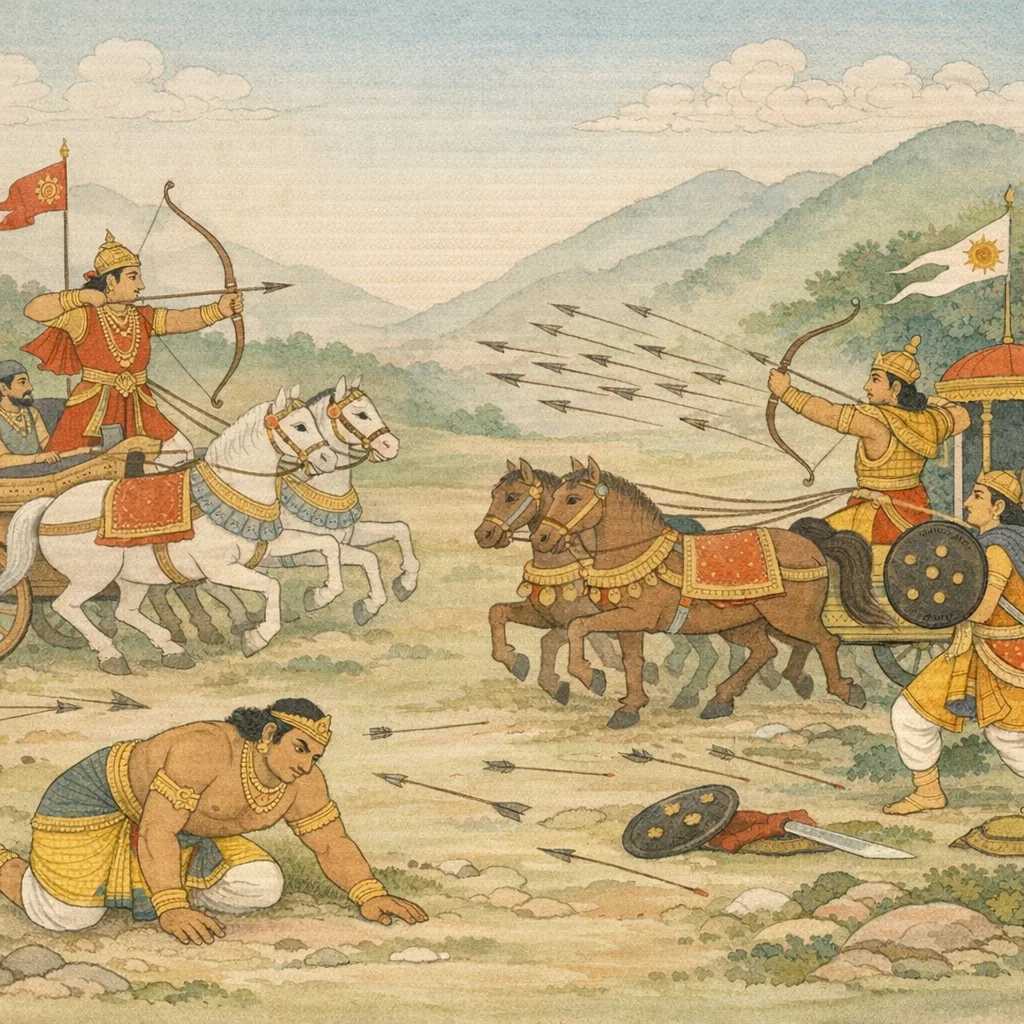
Adhyaya 82
Chapter Arc: संजय धृतराष्ट्र से कहते हैं—जब कौरव-सेना घबराकर भागने लगी, तब सूतपुत्र कर्ण वायु की भाँति मेघ-समूहों को छिन्न-भिन्न करने लगा; रणभूमि में उसका रथ मानो भय का केन्द्र बन गया। → कर्ण एक-एक कर पाण्डव-पक्ष के रथों, ध्वजों, घोड़ों और सारथियों पर अचूक प्रहार करता है—जनमेजय के सारथि को गिराकर, शतानीक और सुतसोम पर बाण-वर्षा कर, धनुष काटकर; धृष्टद्युम्न, सात्यकि-सेना और शिखण्डी तक उसके वेग से विचलित होते हैं। → अध्याय का शिखर दो धाराओं में फूटता है—(1) कर्ण का उग्र प्रहार: शिखण्डी को अनेक बाणों से बेधना, उत्तमौजा/युधामन्यु/सोमक-पार्षत-पुत्रों पर तीव्र शर-प्रहार; (2) दुःशासन-भीमसेन का घोर संग्राम: दुःशासन भीम को बारह बाणों से बेधकर उसे रथ पर गिरा देता है; भीम मूर्छित-सा पड़कर फिर चेतना पाकर गर्जना करता है। → कर्ण के बाणों से पाण्डव-पक्ष में क्षणिक अव्यवस्था और भय फैलता है, पर धृष्टद्युम्न के साथ उत्तमौजा, जनमेजय, युधामन्यु और शिखण्डी एकत्र होकर कर्ण पर प्रत्याक्रमण करते हैं; उधर भीम गिरकर भी उठ खड़ा होता है—युद्ध का प्रवाह थमता नहीं, केवल दिशा बदलता है। → भीम की पुनः चेतना और गर्जना के साथ दुःशासन-भीम द्वंद्व और कर्ण के विरुद्ध संयुक्त पाण्डव-आक्रमण—दोनों अगले क्षण और भी प्रचण्ड होने को हैं।
Shlokas
Verse 1
संजय कहते हैं--राजन्! जब कौरव-सैनिक बड़े वेगसे भागने लगे, उस समय जैसे वायु मेघोंके समूहको छिन्न-भिन्न कर देती है, उसी प्रकार सूतपुत्र कर्णने श्वेत घोड़ोंवाले रथके द्वारा आक्रमण करके अपने विशाल बाणोंसे पांचालराजकुमारोंका संहार आरम्भ किया
Sañjaya said: O King, when the Kaurava soldiers began to flee in great haste, then—just as the wind rends and scatters a mass of clouds—so did Karṇa, the son of a charioteer, charge forward in his chariot drawn by white horses and, with his mighty arrows, begin the slaughter of the princes of Pāñcāla.
Verse 2
सूतं रथादञ्जलिकैर्निपात्य जघान चाश्वाञज्जनमेजयस्य । शतानीकं सुतसोम॑ च भल्लै- रवाकिरद् धनुषी चाप्यकृन्तत्,उसने अंजलिक नामवाले बाणोंसे जनमेजयके सारथिको रथसे नीचे गिराकर उसके घोड़ोंको भी मार डाला। फिर शतानीक तथा सुतसोमको भल्लोंसे ढक दिया और उन दोनोंके धनुष भी काट डाले
Sanjaya said: With arrows called anjalikas he struck down Janamejaya’s charioteer from the chariot and slew his horses as well. Then he showered Shatanika and Sutasoma with bhalla-arrows and cut their bows too.
Verse 3
धृष्टय्युम्न॑ निर्बिभेदाथ षड़्भि- ज॑घानाश्चवांस्तरसा तस्य संख्ये । हत्वा चाश्वान् सात्यके: सूतपुत्र: कैकेयपुत्रं न्न्यवधीद् विशोकम्,तत्पश्चात् छः बाणोंसे युद्धस्थलमें धृष्टद्यम्मको घायल कर दिया और उनके घोड़ोंको भी वेगपूर्वक मार डाला। इसके बाद सूतपुत्रने सात्यकिके घोड़ोंको नष्ट करके केकयराजकुमार विशोकका भी वध कर डाला
Sanjaya said: Then he pierced Dhrishtadyumna with six arrows and, in the press of battle, swiftly struck down his horses. After destroying Satyaki’s horses, the charioteer’s son (Karna) also slew Visoka, the prince of the Kaikeyas.
Verse 4
तमभ्यधावतन्निहते कुमारे कैकेयसेनापतिरुग्रकर्मा । शरैरविधुन्वन् भृशमुग्रवेगै: कर्णात्मजं चाप्यहनत् प्रसेनम्,केकयराजकुमारके मारे जानेपर वहाँके सेनापति उग्रकर्माने कर्णपर धावा किया। उसने धनुषको तीव्रवेगसे संचालित करते हुए भयंकर वेगवाले बाणोंद्वारा कर्णके पुत्र प्रसेनको भी घायल कर दिया
Sanjaya said: When that prince had been struck down, the Kekaya army-commander Ugrakarman rushed forward. Whirling his bow and driving forth arrows of dreadful speed, he also struck Karna’s son Prasena, wounding him in the press of battle.
Verse 5
तस्यार्धचन्द्रैस्त्रिभिरुच्चकर्त प्रहस्य बाहू च शिरश्न कर्ण: । स स्यन्दनादू् गामगमद् गतासु: परश्ववैः शाल इवावरुग्ण:,तब कर्णने हँसकर तीन अर्धचन्द्राकार बाणोंसे उग्रकर्माकी दोनों भुजाएँ और मस्तक काट डाले। वह प्राणशून्य होकर कुल्हाड़ीके काटे हुए शाखूके पेड़के समान रथसे पृथ्वीपर गिर पड़ा
Sanjaya said: Laughing, Karna severed with three crescent-headed arrows his opponent’s two arms and his head. Bereft of life, he fell from the chariot to the earth, like a sala tree lopped down by axes.
Verse 6
हताश्चमञ्जोगतिभशि: प्रसेन: शिनिप्रवीरं निशितै: पृषत्कैः | प्रच्छाद्य नृत्यन्निव कर्णपुत्र: शैनेयबाणाभिहत: पपात,उधर कर्णने जब सात्यकिके घोड़े मार डाले, तब कर्णपुत्र प्रसेनने तीव्रगामी पैने बाणोंद्वारा शिनिप्रवर सात्यकिको ढक दिया। इसके बाद सात्यकिके बाणोंकी चोट खाकर वह नाचता हुआ-सा पृथ्वीपर गिर पड़ा
Sanjaya said: After Satyaki’s horses had been slain, Prasena—the son of Karna—covered the foremost hero of the Sini line (Satyaki) with sharp, swift arrows. Yet, struck in return by the arrows of Shaineya, Prasena fell to the earth, as though dancing.
Verse 7
पुत्रे हते क्रोधपरीतचेता: कर्ण: शिनीनामृषभं जिधघांसु: । हतो$सि शैनेय इति ब्रुवन् स व्यवासृजद् बाणममित्रसाहम्
Sañjaya said: When his son had been slain, Karṇa’s mind was overwhelmed by anger. Intent on killing the bull among the Śinis, he cried, “You are slain, O Śaineya!” and released a mighty arrow that could withstand hostile foes. The verse highlights how grief can harden into rage on the battlefield, driving speech and action toward vengeance rather than restraint.
Verse 8
पुत्रके मारे जानेपर क्रोधसे व्याकुलचित्त हुए कर्णने शिनिप्रवर सात्यकिका वध करनेके लिये उनपर एक शत्रु-नाशक बाण छोड़ा और कहा--'सात्यके! अब तू मारा गया” ।। तमस्य चिच्छेद शरं शिखण्डी त्रिभिस्त्रिभिश्व प्रतुतोद कर्णम् । शिखण्डिन: कार्मुकं च ध्वजं च छित्त्वा क्षुराभ्यां न्यपतत् सुजात:,परंतु उसके उस बाणको शिखण्डीने तीन बाणोंद्वारा काट दिया और उसे भी तीन बाणोंसे पीड़ित कर दिया। तब कर्णने दो छुरोंस शिखण्डीकी ध्वजा और धनुष काटकर नीचे गिरा दिये
Sañjaya said: When his son had been slain, Karṇa—his mind shaken by wrath—shot a foe-destroying arrow at the foremost of the Śinis, Sātyaki, declaring, “Sātyaki, now you are as good as dead!” But Śikhaṇḍī cut down that arrow with three shafts and, with three more, struck Karṇa in return. Then Karṇa, swift and well-born, severed Śikhaṇḍī’s bow and banner with two razor-headed arrows, causing them to fall. The passage highlights how grief and anger intensify violence, while battlefield skill and counteraction rapidly shift advantage without resolving the deeper moral cost of vengeance.
Verse 9
शिखण्डिनं षड़्भिरविध्यदुग्रो धार्शद्युम्ने: स शिरश्नोच्चकर्त । तथाभिनत् सुतसोम॑ शरेण सुसंशितेनाधिरथिमीहात्मा,फिर भयंकर वीर कर्णने छः: बाणोंसे शिखण्डीको घायल कर दिया और धुृष्टद्युम्नके पुत्रका मस्तक काट डाला। साथ ही महामनस्वी अधिरथपुत्रने अत्यन्त तीखे बाणसे सुतसोमको भी क्षत-विक्षत कर दिया
Sañjaya said: The fierce Karṇa pierced Śikhaṇḍin with six arrows and then struck off the head of Dhṛṣṭadyumna’s son. In the same onrush, the high-souled son of Adhiratha also wounded Sutasoma with a keenly sharpened shaft. The verse underscores the relentless momentum of battle, where prowess and lethal skill dominate the field even as the larger questions of righteous conduct and the cost of violence continue to loom over the war.
Verse 10
अशथाक्रन्दे तुमुले वर्तमाने धार्शद्युम्ने निहते तत्र कृष्ण: । अपाज्चाल्यं क्रियते याहि पार्थ कर्ण जहीत्यब्रवीद् राजसिंह
Sañjaya said: When the tumultuous battle-cry of Aśvatthāman was raging and Dhṛṣṭadyumna had been slain, Kṛṣṇa spoke there to the lion-like king (Arjuna): “The Pāñcāla host is being overwhelmed—go forth, O Pārtha; strike down Karṇa.” In this moment of crisis, Kṛṣṇa urges decisive action to protect allies and to remove a principal source of adharma-driven devastation on the battlefield.
Verse 11
राजसिंह! इस प्रकार जब वह भयंकर घमासान युद्ध चलने लगा और धृष्टद्युम्नका पुत्र मारा गया, तब भगवान् श्रीकृष्णने वहाँ अर्जुनसे कहा--'पार्थ! कर्ण पांचालोंका संहार कर रहा है, अत: आगे बढ़ो और उसे मार डालो” ।। ततः प्रहस्याशु नरप्रवीरो रथं रथेनाधिरथेर्जगाम । भये तेषां त्राणमिच्छन् सुबाहु- रभ्याहतानां रथयूथपेन,तदनन्तर सुन्दर भुजाओंवाले नरवीर अर्जुन हँसकर भयके अवसरपर उन घायल सैनिकोंकी रक्षाके लिये रथसमूहोंके अधिपति विशाल रथके द्वारा सूतपुत्रके रथकी ओर शीघ्रतापूर्वक आगे बढ़े
Sanjaya said: Then the foremost of men, Arjuna of mighty arms, smiling, swiftly drove his chariot toward Karna’s chariot. Seeking to protect those troops who had been struck down and thrown into fear, he advanced with his great chariot as the leader of a chariot-squadron—answering slaughter with guardianship and meeting violence with resolute duty.
Verse 12
विस्फार्य गाण्डीवमथोग्रघोष॑ं ज्यया समाहत्य तले भृशं च । बाणान्धकारं सहसैव कृत्वा जघान नागाश्चरथध्वजांश्ष,उन्होंने भयानक टंकार करनेवाले गाण्डीव धनुषको फैलाकर उसकी प्रत्यंचाद्वारा अपनी हथेलीमें आघात करते हुए सहसा बाणोंद्वारा अन्धकार फैला दिया और शत्रुपक्षके हाथी, घोड़े, रथ एवं ध्वज नष्ट कर दिये
Sañjaya said: Arjuna stretched the Gāṇḍīva, whose roar was fierce; striking his palm hard with the bowstring, he suddenly spread a darkness of arrows. In that instant he shattered the enemy’s elephants, chariots, and standards—an overwhelming display of martial mastery that turns the tide through disciplined force rather than cruelty for its own sake.
Verse 13
प्रतिश्रुति: प्राचरदन्तरिक्षे गुहा गिरीणामपतन् वयांसि । यन्मण्डलज्येन विजृम्भमाणो रौद्रे मुहूर्तेडभ्यपतत् किरीटी
Sañjaya said: A loud reverberation spread through the sky; birds fell down into the mountain-caves. At that dreadful moment, the diademed Arjuna, swelling with the force of his bow’s arc, sprang forward to attack—an omen-laden surge of battle in which nature itself seemed shaken by the warrior’s resolve.
Verse 14
उस भयंकर मुहूर्तमें गाण्डीव धनुषकी प्रत्यंचाको मण्डलाकार करके जब किरीटधारी अर्जुन शत्रुसेनापर टूट पड़े तथा बल और प्रतापमें बढ़ने लगे, उस समय धनुषकी टंकारकी प्रतिध्वनि आकाशगमें गूँज उठी, जिससे डरे हुए पक्षी पर्वतोंकी कन्दराओंमें छिप गये ।। त॑ भीमसेनो5नुययौ रथेन पृष्टे रक्षन् पाण्डवमेकवीर: । तौ राजपुत्रौ त्वरितौ रथाभ्यां कर्णाय यातावरिभिर्विषक्तौ,प्रमुख वीर भीमसेन पीछेसे पाण्डुनन्दन अर्जुनकी रक्षा करते हुए रथके द्वारा उनका अनुसरण करने लगे। वे दोनों पाण्डवराजकुमार बड़ी उतावलीके साथ शत्रुओंसे जूझते हुए कर्णकी ओर बढ़ने लगे
Sanjaya said: In that dreadful moment, when Arjuna, the diadem-wearing lord of the Gāṇḍīva, drew his bowstring into a full circle and hurled himself upon the enemy host—his might and splendor rising—an echoing roar of the bow’s twang resounded through the sky. Terrified birds hid themselves in the mountain caves. Then Bhīmasena followed close behind in his chariot, guarding the lone hero among the Pāṇḍavas. The two royal sons, swift in their cars, pressed on toward Karṇa, locked in combat with their foes—an image of comradeship and protective duty amid the fury of war.
Verse 15
तत्रान्तरे सुमहत् सूतपुत्र- श्रक्रे युद्धे सोमकान् सम्प्रमृदूनन् रथाश्वमातड्रगणान् जघान प्रच्छादयामास शरैर्दिशश्ष,इसी बीचमें सूतपुत्र कर्णने सोमकोंका संहार करते हुए उनके साथ महान् युद्ध किया। उनके बहुत-से घोड़े, रथ और हाथियोंका वध कर डाला और बाणोंद्वारा सम्पूर्ण दिशाओंको आच्छादित कर दिया
Sañjaya said: Meanwhile, Karṇa—the son of a charioteer—waged a tremendous battle, crushing the Somakas. He slew multitudes of their chariots, horses, and companies of elephants, and with his arrows he seemed to veil the very quarters. The scene underscores the grim ethic of kṣatriya-war: prowess and relentless force displayed without pause, even as the cost in lives and order mounts.
Verse 16
तमुत्तमौजा जनमेजयश्न क्रुद्धी युधामन्युशिखण्डिनौ च । कर्ण बिभेदु: सहिता: पृषत्कै: संनर्दमाना: सह पार्षतेन,उस समय धृष्टद्युम्नके साथ गर्जते हुए उत्तमौजा, जनमेजय, कुपित युधामन्यु और शिखण्डी--से सब संगठित होकर अपने बाणोंद्वारा कर्णको घायल करने लगे
Sañjaya said: Then, roaring in unison with Dhṛṣṭadyumna, Uttamaujā, Janamejaya, the enraged Yudhāmanyu, and Śikhaṇḍin—acting together—pierced Karṇa with volleys of arrows. In the press of battle, their coordinated assault reflects the warriors’ resolve to check a formidable foe through collective effort rather than solitary pride.
Verse 17
ते पञ्च पाञउ्चालरथप्रवीरा वैकर्तनं कर्णमभिद्रवन्त: । तस्माद् रथाच्चयावयितु न शेकु- ्ैर्यात् कृतात्मानमिवेन्द्रियार्था:,पांचाल रथियोंमें प्रमुख ये पाँचों वीर वैकर्तन कर्णपर आक्रमण करके भी उसे उस रथसे नीचे न गिरा सके। ठीक उसी तरह, जैसे जिसने अपने मनको वशमें कर रखा है उस योगीको शब्द, स्पर्श आदि विषय धैर्यसे विचलित नहीं कर पाते हैं
Sañjaya said: Those five foremost heroes among the Pāñcāla chariot-warriors charged at Vaikartana Karṇa; yet they could not shake him down from his chariot. Just so, the objects of the senses—sound, touch, and the rest—cannot, by their force, unsettle a self-mastered man who has brought his mind under control.
Verse 18
तेषां धनूंषि ध्वजवाजिसूतां- स्तूर्ण पताकाश्न निकृत्य बाणै: । तान् पज्चभि स्त्वभ्यहनत् पृषत्कैः कर्णस्ततः सिंह इवोन्ननाद,कर्णने अपने बार्णोद्वारा तुरंत ही उनके धनुष, ध्वज, घोड़े, सारथि और पताकाएँ काट डालीं और पाँच बाणोंसे उन पाँचों वीरोंको भी घायल कर दिया। तत्पश्चात् वह सिंहके समान दहाड़ने लगा
Sañjaya said: Karṇa swiftly sheared off with his arrows their bows, their standards, their horses, their charioteers, and their pennons. Then, with five sharp shafts, he struck those five warriors as well, wounding them. After this, Karṇa roared like a lion.
Verse 19
तस्यास्यतस्तानभिनिध्नतश्ष ज्याबाणहस्तस्य धनुःस्वनेन । साद्रिद्रुमा स्यात् पृथिवी विशीर्णे- त्यतीव मत्वा जनता व्यषीदत्,कर्ण बाण छोड़ता और शत्रुओंका संहार करता जा रहा था। उसके हाथमें धनुषकी प्रत्यंचा और बाण सदा मौजूद रहते थे। उसके धनुषकी टंकारसे पर्वतों और वृक्षोंसहित यह सारी पृथ्वी विदीर्ण हो जायगी, ऐसा समझकर सब लोग अत्यन्त खिन्न हो उठे थे
Sañjaya said: As he kept shooting and striking down those foes—his hands ever furnished with bowstring and arrows—the thunderous twang of his bow made the people despair. Thinking, “The very earth, with its mountains and trees, will be torn apart by that sound,” they sank into deep dejection.
Verse 20
स शक्रचापप्रतिमेन धन््वना भूशायतेनाधिरथि: शरान् सृजन् | बभौ रणे दीप्तमरीचिमण्डलो यथांशुमाली परिवेषवांस्तथा,इन्द्रधनुषके समान खींचे हुए मण्डलाकार विशाल धनुषके द्वारा बाणोंकी वर्षा करता हुआ अधिरथपुत्र कर्ण रणभूमिमें प्रकाशमान किरणोंवाले परिधियुक्त अंशुमाली सूर्यके समान शोभा पा रहा था
Sañjaya said: With a mighty bow resembling Indra’s rainbow, the son of Adhiratha—Karna—lay low upon the earth yet continued to discharge volleys of arrows. On that battlefield he shone like the sun, ringed with a radiant halo, his blazing rays seeming to encircle him.
Verse 21
उसने शिखण्डीको बारह, उत्तमौजाको छ:, युधामन्युको तीन तथा जनमेजय और धष्टद्युम्नको भी तीन-तीन पैने बाणोंसे अत्यन्त घायल कर दिया
Sañjaya said: He struck Śikhaṇḍin with twelve sharp arrows, Uttamaujā with six, and Yudhāmanyu with three; and he also pierced Janamejaya and Dhṛṣṭadyumna with three arrows each, grievously wounding them.
Verse 22
पराजिता: पज्च महारथास्तु ते महाहवे सूतसुतेन मारिष । निरुद्यमास्तस्थुरमित्रनन्दना यथेन्द्रियार्थात्मवता पराजिता:,आर्य! जैसे मनको वशमें रखनेवाले जितेन्द्रिय पुरुषके द्वारा पराजित हुए विषय उसे आदृष्ट नहीं कर पाते, उसी प्रकार महासमरमें सूतपुत्र कर्णके द्वारा परास्त हुए वे पाँचों पांचाल वीर निश्वेष्टभावसे खड़े हो गये और शत्रुओंका आनन्द बढ़ाने लगे
Sañjaya said: O dear one, those five great chariot-warriors, defeated in the mighty battle by Karṇa, the son of a charioteer, stood helpless and inactive—thus increasing the joy of their foes—just as sense-objects, once overcome by a self-controlled man who has mastered his inner faculties, can no longer overpower or draw him away.
Verse 23
निमज्जतस्तानथ कर्णसागरे विपन्ननावो वणिजो यथार्णवे । उद्दप्रिरे नौभिरिवार्णवाद् रथै: सुकल्पितैद्रौपदिजा: स्वमातुलान्,जैसे समुद्रमें जिनकी नाव डूब गयी हो, उन डूबते हुए व्यापारियोंको दूसरी नौकाओंद्वारा लोग बचा लेते हैं, उसी प्रकार द्रौपदीके पुत्रोंने कर्णरूपी सागरमें डूबनेवाले अपने उन मामाओंको रण-सामग्रीसे सजे-सजाये रथोंद्वारा बचाया
Sañjaya said: Just as merchants whose boat has foundered in the ocean are rescued by others in boats, so too did Draupadī’s sons, with well-equipped and well-prepared chariots, lift up and save their maternal uncles who were sinking in the sea-like Karṇa—bringing them out of peril amid the battle’s chaos.
Verse 24
ततः शिनीनामृषभ: शितै: शरै- निक्त्य कर्णप्रहितानिषून् बहून् । विदार्य कर्ण निशितैरयस्मयै- स्तवात्मजं ज्येष्ठमविध्यदष्टभि:,तत्पश्चात् शिनिप्रवर सात्यकिने कर्णके छोड़े हुए बहुत-से बाणोंको अपने तीखे बाणोंसे काटकर लोहेके पैने बाणोंसे कर्णको घायल करनेके पश्चात् आपके ज्येष्ठ पुत्र दुर्योधनको आठ बाण मारकर बींध डाला
Sañjaya said: Then Sātyaki, the bull among the Śinis, with his keen arrows cut down many shafts that had been discharged by Karṇa. Having then pierced and wounded Karṇa with sharp iron-tipped arrows, he struck your eldest son Duryodhana with eight arrows, pinning him down.
Verse 25
कृपो5थ भोजश्च तवात्मजस्तथा स्वयं च कर्णो निशितैरताडयत् । स तैश्नतुर्भिययुधे यदूत्तमो दिगीश्रवरैदैत्यपतिर्यथा तथा,तब कृपाचार्य, कृतवर्मा, आपका पुत्र दुर्योधन तथा स्वयं कर्ण भी सात्यकिको तीखे बाणोंसे घायल करने लगे। यदुकुलतिलक सात्यकिने अकेले ही उन चारों वीरोंके साथ उसी प्रकार युद्ध किया, जैसे दैत्यराज हिरण्यकशिपुने चारों दिक्पालोंके साथ किया था
Sañjaya said: Then Kṛpa, Bhoja (Kṛtavarmā), your son Duryodhana, and Karṇa himself struck Sātyaki with sharp arrows. Yet that foremost of the Yadus fought those four heroes alone—just as the lord of the Dānavas once contended with the guardians of the four quarters.
Verse 26
समाततेनेष्वसनेन कूजता भृशायतेनामितबाणवर्षिणा । बभूव दुर्धर्षतर: स सात्यकि: शरन्नभोमध्यगतो यथा रवि:,जैसे शरद्ू-ऋतुके आकाशमण्डलके बीचमें आये हुए मध्याह्नकालिक सूर्य प्रचण्ड हो उठते हैं, उसी प्रकार असंख्य बाणोंकी वर्षा करनेवाले तथा कानतक खींचे जानेके कारण गम्भीर टंकार करनेवाले अपने विशाल धनुषके द्वारा सात्यकि उस समय शत्रुओंके लिये अत्यन्त दुर्जय हो उठे
Sañjaya said: With his great bow drawn to the ear—resounding with a deep twang—and showering an immeasurable rain of arrows, Sātyaki became at that moment even more unassailable to his foes, like the fierce midday sun standing in the clear mid-sky of autumn.
Verse 27
पुनः समास्थाय रथान् सुदंशिता: शिनिप्रवीरं जुगुपु: परंतपा: । समेत्य पाड्चालमहारथा रणे मरुद्गणा: शक्रमिवारिनिग्रहे,तदनन्तर शत्रुओंको तपानेवाले पूर्वोक्त पांचाल महारथी कवच पहन रथोंपर आरूढ़ हो पुनः आकर शिनिप्रवर सात्यकिकी रणभूमिमें उसी तरह रक्षा करने लगे, जैसे मरुदगण शत्रुओंके दमनकालमें देवराज इन्द्रकी रक्षा करते हैं
Sañjaya said: Then those mighty, enemy-scorching Pāñcāla warriors, well-armoured and remounted upon their chariots, came together again in the battle and protected the foremost hero of the Śinis, Sātyaki—just as the hosts of the Maruts guard Indra when he is engaged in the suppression of foes.
Verse 28
ततो5भवद् युद्धमतीव दारुणं तवाहितानां तव सैनिकै: सह । रथाश्वमातड्रविनाशनं तथा यथा सुराणामसुरै: पुराभवत्,इसके बाद आपके शत्रुओंका आपके सैनिकोंके साथ अत्यन्त दारुण युद्ध होने लगा, जो रथों, घोड़ों और हाथियोंका विनाश करनेवाला था। वह युद्ध प्राचीन कालके देवासुर- संग्रामके समान जान पड़ता था
Sañjaya said: Then a battle of extreme ferocity arose between your enemies and your soldiers. It was a slaughter that destroyed chariots, horses, and elephants, and it appeared like the ancient war of the gods and the asuras.
Verse 29
रथा द्विपा वाजिपदातयस्तथा भवन्ति नानाविधशस्त्रवेष्टिता: । परस्परेणाभिहताश्न चस्खलु- विनिदुरार्ता व्यसवो5पतंस्तथा,बहुत-से रथी, सवारोंसहित हाथी, घोड़े तथा पैदल सैनिक नाना प्रकारके अस्त्र-शस्त्रोंसे आच्छादित हो एक-दूसरेसे टकराकर लड़खड़ाने लगते, आर्तनाद करते और प्राणशून्य होकर गिर पड़ते थे
Sañjaya said: Chariots, elephants, horsemen, and foot-soldiers—armoured and covered with weapons of many kinds—struck one another in close combat. Staggering from the blows, they cried out in anguish and then fell, bereft of life.
Verse 30
तथागते भीममभीस्तवात्मज: ससार राजावरज: किरन् शरै: | तमभ्यधावत् त्वरितो वृकोदरो महारुरुं सिंह इवाभिपेदिवान्
Sañjaya said: When Bhīma had thus come forward, your son’s younger brother (the king’s younger brother) rushed at him, showering arrows. Swiftly Vṛkodara charged straight at him—like a lion springing upon a great serpent.
Verse 31
राजन! इस प्रकार जब वह भयंकर संग्राम चल रहा था, उसी समय राजा दुर्योधनका छोटा भाई आपका पुत्र दुःशासन निर्भय हो बाणोंकी वर्षा करता हुआ भीमसेनपर चढ़ आया। उसे देखते ही भीमसेन भी बड़े उतावले होकर उसकी ओर दौड़े और जिस प्रकार सिंह महारुकु नामक मृगपर आक्रमण करता है, उसी प्रकार उसके पास जा पहुँचे ।। ततस्तयोर्युद्धमतीव दारुणं प्रदीव्यतो: प्राणदुरोदरं द्वयो: । परस्परेणाभिनिविष्टरोषयो- रुदग्रयो: शम्बरशक्रयोर्यथा
Sañjaya said: O king, while that dreadful battle raged, Duḥśāsana—Duryodhana’s younger brother, your son—fearlessly advanced upon Bhīmasena, pouring forth a rain of arrows. At the sight of him, Bhīmasena too rushed forward in hot haste, like a lion attacking the beast called Mahāruru. Then between those two, as they blazed in combat, there arose a battle exceedingly dreadful, with life itself at stake; wrath fixed upon each other, the two fierce warriors clashed like Śambara and Indra (Śakra) of old.
Verse 32
उन दोनोंके मनमें एक-दूसरेके प्रति महान् रोष भरा हुआ था। दोनों ही प्राणोंकी बाजी लगाकर अत्यन्त भयंकर युद्धका जूआ खेल रहे थे। उन प्रचण्ड वीरोंका वह संग्राम शम्बरासुर और इन्द्रके समान हो रहा था ।। शरै: शरीरार्तिकरै: सुतेजनै- निजषध्नतुस्तावितरेतरं भृशम् । सकृत्प्रभिन्नाविव वासितान्तरे महागजौ मन्मथसक्तचेतसौ,शरीरको पीड़ा देनेवाले अत्यन्त पैने बाणोंद्वारा वे दोनों वीर एक-दूसरेको गहरी चोट पहुँचाने लगे; मानो मैथुनकी इच्छावाली हथिनीके लिये कामासक्त चित्त होकर दो मदस्रावी गजराज परस्पर आघात करते हों
Sañjaya said: With razor-sharp arrows that tore and tormented the body, the two warriors struck each other again and again with great force. They were like two mighty rutting elephants, their temples streaming, driven by passion in the presence of a receptive mate, crashing into one another—an image that underscores how wrath and desire can intoxicate even the strongest, turning battle into a reckless wager of life.
Verse 33
(आलोक्य तौ तत्र परस्परं तत: समं च शूराौ च ससारथी तदा । भीमोड<ब्रवीद् याहि दःशासनाय दुःशासनो याहि वृकोदराय ।। सारथिसहित उन दोनों शूरवीरोंने जब वहाँ एक-दूसरेको एक साथ देखा तब भीमने अपने सारथिसे कहा--'दुःशासनकी ओर चलो” और दुःशासनने अपने सारथिसे कहा --भीमसेनकी ओर चलो'। तयोरथौ सारथिथभ्यां प्रचोदितौ सम॑ रणे तो सहसा समीयतु: । नानायुथौ चित्रपताकिनौ ध्वजौ दिवीव पूर्व बलशक्रयो रणे ।। सारथियोंद्वारा एक साथ हाँके गये उन दोनोंके रथ रणभूमिमें दोनोंके पास सहसा जा पहुँचे। वे दोनों ही रथ नाना प्रकारके आयुधोंसे सम्पन्न तथा विचित्र पताकाओं और ध्वजाओंसे सुशोभित थे। जैसे पूर्वकालमें स्वर्गके निमित्त होनेवाले युद्धमें बलासुर और इन्द्रके रथ थे, उसी प्रकार दुःशासन और भीमसेनके भी थे। भीम उवाच दिष्ट्यासि दुःशासन मेडउद्य दृष्ट: ऋणं प्रतीच्छे सहवृद्धिमूलम् । चिरोद्यतं यन्मया ते सभायां कृष्णाभिमर्शेन गृहाण मत्त: ।। भीमसेन बोले--दुःशासन! बड़े सौभाग्यकी बात है कि तू आज मुझे दिखायी दिया है। कौरव-सभामें द्रौपदीका स्पर्श करनेके कारण दीर्घकालसे जो तेरा ऋण मेरे ऊपर चढ़ गया है, उसे मैं आज ब्याज और मूलसहित चुकाना चाहता हूँ। तू मुझसे वह सब ग्रहण कर। संजय उवाच स एवमुक्तस्तु ततो महात्मा दुःशासनो वाक्यमुवाच वीर: । संजय कहते हैं--राजन! भीमसेनके ऐसा कहनेपर महामनस्वी वीर दुःशासनने इस प्रकार कहा। दुःशासन उवाच सर्व स्मरे नैव च विस्मरामि उदीर्यमाणं शृणु भीमसेन ।। स्मरामि चात्मप्रभवं चिराय यज्जातुषे वेश्मनि रात्र्यहानि । विश्वासहीना मृगयां चरन्तो वसन्ति सर्वत्र निराकृतास्तु ।। दुःशासन बोला--भीमसेन! मुझे सब कुछ याद है। मैं भूलता नहीं हूँ। तुम मेरी कही हुई बात सुनो। मैं अपनी की हुई सारी बातोंको चिरकालसे याद रखता हूँ। पहले तुमलोग लाक्षागृहमें रात-दिन सशंक होकर निवास करते थे। फिर वहाँसे निकाले जाकर वनमें सर्वत्र शिकार खेलते हुए रहने लगे। महाभये रात्र्यहनी स्मरन्त- स्तथोपभोगाच्च सुखाच्च हीना: । वनेष्वटन्तो गिरिगद्वराणि पाञ्चालराजस्य पुरं प्रविष्टा: ।। मायां यूयं कामपि सम्प्रविष्टा यतो वृतः कृष्णया फाल्गुनो व: । रात-दिन महान् भयमें डूबे रहकर तुम चिन्तामें पड़े रहते और सुख एवं उपभोगसे वंचित हो जंगलों तथा पर्वतकी कन्दराओंमें घूमते थे। इसी अवस्थामें तुम सब लोग एक दिन पांचालराजके नगरमें जा घुसे। वहाँ तुम लोगोंने किसी मायामें प्रविष्ट होकर अपने स्वरूपको छिपा लिया था; इसलिये द्रौपदीने तुमलोगोंमेंसे अर्जुनका वरण कर लिया। सम्भूय पापैस्तदनार्यवृत्तं कृतं तदा मातृकृतानुरूपम् ।। एको वृत: पड्चभि: साभिपन्ना हालज्जमानैश्न परस्परस्य । स्मरे सभायां सुबलात्मजेन दासीकृता: स्थ सह कृष्णया च ।।) परंतु तुम सब पापियोंने मिलकर उसके साथ वह नीचोंका-सा बर्ताव किया, जो तुम्हारी माताकी करनीके अनुरूप था। द्रौपदीने तो एकहीका वरण किया, परंतु तुम पाँचोंने उसे अपनी पत्नी बनाया और इस कार्यमें तुम्हें एक-दूसरेसे तनिक भी लज्जा नहीं हुई। मुझे यह भी याद है कि कौरवसभामें शकुनिने द्रौपदीसहित तुम सब लोगोंको दास बना लिया था। संजय उवाच (इत्येवमुक्तस्तु तवात्मजेन पाण्डो: सुतः कोपवशं जगाम ।) तवात्मजस्याथ वृकोदरस्त्वरन् धनु:क्षुरा भ्यां ध्वजमेव चाच्छिनत् । ललाटमप्यस्य बिभेद पत्रिणा शिरश्न कायात् प्रजहार सारथे:,संजय कहते हैं--राजन्! आपके पुत्रके ऐसा कहनेपर पाण्डुकुमार भीमसेन क्रोधके वशीभूत हो गये। वृकोदरने बड़ी उतावलीके साथ दो क्षुरोंके द्वारा आपके पुत्र दुःशासनके धनुष और ध्वजको काट दिया, एक बाणसे उसके ललाटमें घाव कर दिया और दूसरेसे उसके सारथिका मस्तक भी धड़से अलग कर दिया
Sanjaya said: Seeing each other there at the same moment, both heroes with their charioteers, Bhima told his driver, “Drive toward Duhshasana,” and Duhshasana told his, “Drive toward Vrikodara (Bhima).” Urged on together by their charioteers, the two chariots rushed into close range on the battlefield. Both were armed with many kinds of weapons and adorned with striking banners and standards—like the chariots of the demon Bala and Indra in the ancient war for heaven. Bhima said: “Fortune indeed—Duhshasana—you have come into my sight today. Accept your debt from me, with principal and interest: the long-held payment I owe you for laying hands on Krishna (Draupadi) in the assembly. Take it from me now.” Sanjaya said: Thus addressed, the valiant Duhshasana replied. Duhshasana said: “I remember everything; I do not forget. Hear me, Bhimasena. I remember for long what arose from your own deeds: the nights and days in the house of lac, living without trust; then, cast out, dwelling everywhere, roaming in the hunt. In great fear day and night, deprived of comfort and enjoyment, wandering forests and mountain caves, you entered the city of the king of Panchala. You entered some disguise, and therefore Krishna chose Phalguna (Arjuna) among you. Then, joining together in sin, you committed that ignoble conduct, fitting to what your mother had done: one was chosen, yet the five of you took her as wife, without shame before one another. I also remember that in the assembly, the son of Subala (Shakuni) made you slaves, along with Krishna.” Sanjaya said: When your son spoke thus, Bhima, son of Pandu, was seized by wrath. Hastening, Vrikodara cut down your son’s bow and his standard with two razor-headed arrows; he pierced his forehead with a shaft, and with another he struck off the charioteer’s head from his body. Ethical context: The passage frames the duel as a collision of remembered wrongs. Bhima invokes retributive justice for Draupadi’s humiliation; Duhshasana counters by weaponizing past suffering and moral accusation (polyandry, disguise, gambling enslavement) to justify contempt. The narrative shows how grievance and shame escalate into immediate violence, illustrating the Mahabharata’s recurring warning: when dharma is argued as vengeance, speech becomes a weapon that accelerates slaughter.
Verse 34
स राजपुत्रो&न्यदवाप्य कार्मुकं वृकोदरं द्वादशभि: पराभिनत् | स्वयं नियच्छंस्तुरगानजिद्दागै: शरैश्व भीम॑ पुनरप्यवीवृषत्,तब राजकुमार दुःशासनने भी दूसरा धनुष लेकर भीमसेनको बारह बाणोंसे बींध डाला और स्वयं ही घोड़ोंको काबूमें रखते हुए उसने पुनः उनके ऊपर सीधे जानेवाले बाणोंकी झड़ी लगा दी
Sañjaya said: The prince (Duḥśāsana), taking up another bow, pierced Vṛkodara (Bhīma) with twelve arrows. Then, while himself restraining and guiding the horses, he once again showered Bhīma with straight-flying, unerring shafts—an image of relentless martial resolve in the midst of the war’s escalating violence.
Verse 35
ततः शरं सूर्यमरीचिसप्रभं सुवर्णवज्ोत्तमरत्नभूषितम् । महेन्द्रवज्ञा शनिपातदु:सहं मुमोच भीमाड़्विदारणक्षमम्,इसके बाद दुःशासनने सूर्यकी किरणोंके समान कान्तिमान्, सुवर्ण और हीरे आदि उत्तम रत्नोंसे विभूषित तथा देवराज इन्द्रके वज्र एवं विद्युत्पातके समान दुःसह एक ऐसा भयंकर बाण छोड़ा, जो भीमसेनके अंगोंको विदीर्ण कर देनेमें समर्थ था
Sañjaya said: Then he released an arrow radiant like the sun’s rays, adorned with gold and the finest jewels. Terrible and hard to endure like Indra’s thunderbolt and a lightning strike, it was capable of tearing apart Bhīmasena’s limbs. The scene underscores the war’s escalating ferocity, where martial prowess is displayed through ever more destructive weapons, pressing the ethical tension between heroic duty in battle and the brutal cost of violence.
Verse 36
स तेन निर्विद्धतनुर्व॑कोदरो निपातित:ः सत्रस्ततनुर्गतासुवत् । प्रसार्य बाहू रथवर्यमाश्रित: पुनः स संज्ञामुपलभ्य चानदत्,उससे भीमसेनका शरीर छिद गया। वे बहुत शिथिल हो गये और प्राणहीनके समान दोनों बाँहें फैलाकर अपने श्रेष्ठ रथपर लुढ़क गये। फिर थोड़ी ही देरमें होशमें आकर भीमसेन सिंहके समान दहाड़ने लगे
Sañjaya said: Struck through by that blow, Vṛkodara (Bhīmasena) fell, his body pierced and slack, appearing as if life had departed. With his arms outstretched he collapsed upon his excellent chariot; then, after a brief moment, regaining consciousness, he roared like a lion—signaling that his resolve in battle had not been broken despite the wound.
Verse 82
इति श्रीमहाभारते कर्णपर्वणि दुःशासनभीमसेनयुद्धे द्यशीतितमो5ध्याय:
Thus, in the Śrī Mahābhārata, in the Karṇa Parva, in the account of the battle between Duḥśāsana and Bhīmasena, ends the eighty-second chapter.
Verse 231
शिखण्डिनं द्वादशभि: पराभिन- च्छितै: शरै: षड़भिरथोत्तमौजसम् । त्रिभिर्युधामन्युमवि ध्यदाशुगै- स्त्रिभिस्त्रिभि: सोमकपार्षतात्मजौ
Sañjaya said: With twelve arrows he struck Śikhaṇḍin; with six he pierced the mighty Uttamaujā. Then, with swift shafts, he wounded Yudhāmanyu with three, and likewise—three and three—he struck the sons of Somaka and Pārṣata.