Adhyaya 179
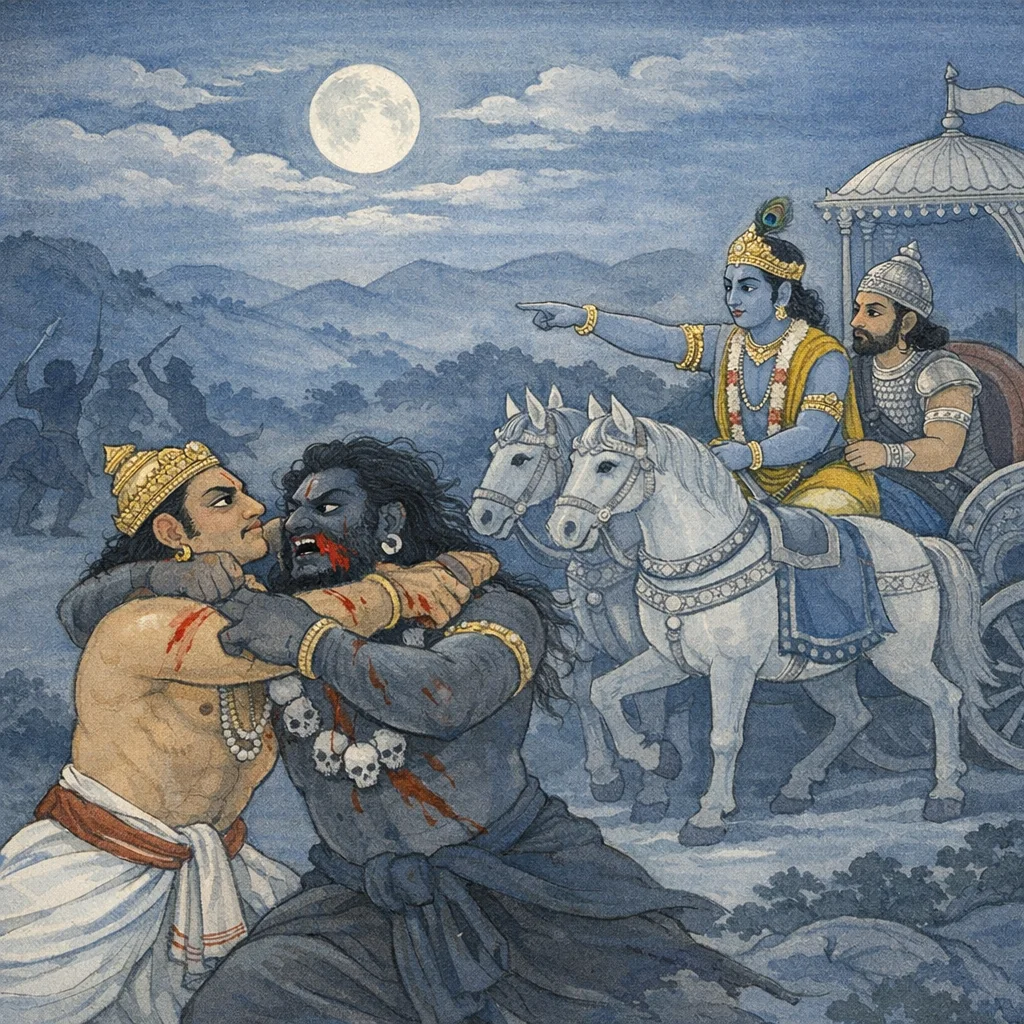
Chapter Arc: रात्रियुद्ध की भयावहता में कौरव-पक्ष को एक नया सहारा मिलता है—राक्षसेन्द्र अलायुध का आगमन, जिसे देखकर दुर्योधनादि मानो ‘पुनर्जन्म’ का उत्सव मनाते हैं। → अलायुध भीमसेन पर शिलाधौत (पत्थर-जैसे) प्रहारों की वर्षा करता है और भीम के पराक्रम को चुनौती देता है। रणभूमि में राक्षस-बल और मानव-बल की टक्कर से अराजकता बढ़ती जाती है; श्रीकृष्ण दूर से ही संकट की दिशा पहचान लेते हैं। → श्रीकृष्ण अर्जुन को संकेत करते हैं—‘भीम पर राक्षसेन्द्र का घोर आक्रमण देखो; उसके पदचिह्न का अनुसरण करो, विचार मत करो।’ इसके बाद भीम और अलायुध का युद्ध उन्मत्त गजराजों-सा निकट-युद्ध बन जाता है; दोनों रथ-उपकरणों और जो हाथ लगे उससे प्रहार करते हुए रक्तधार बहाते, खींचातानी करते भिड़ते हैं। → कौरवों का उत्साह क्षणभर के लिए चरम पर पहुँचता है, पर श्रीकृष्ण की त्वरित रणनीतिक दृष्टि से पाण्डव-पक्ष भीम की रक्षा/सहायता हेतु तत्पर हो उठता है; युद्ध का केंद्र अलायुध बन जाता है और निर्णायक टक्कर की भूमिका तैयार होती है। → श्रीकृष्ण के निर्देश पर महारथी कर्ण तथा राक्षस-समूह का सामना करने को बढ़ते हैं—रात्रि के अंधकार में अगला प्रहार किस ओर निर्णायक होगा, यह अगले प्रसंग पर टिका रहता है।
Shlokas
Verse 1
इस प्रकार श्रीमह्ााभारत द्रोणपर्वके अन्तर्गत घटोत्कचवधपर्वमें रात्रियुद्धके प्रसंगमें अलायुधयुद्धविषयक एक सौ छिद्वत्तरवाँ अध्याय पूरा हुआ ॥/ १७६ ॥। अपन का छा | अप्-#-#कत सप्तसप्तत्याधिकशततमो< ध्याय: भीमसेन और अलायुधका घोर युद्ध संजय उवाच तमागतमभिप्रेक्ष्य भीमकर्माणमाहवे । हर्षमाहारयांचक्रु: कुरव: सर्व एव ते,संजय कहते हैं--राजन्! युद्धस्थलमें भयंकर कर्म करनेवाले अलायुधको आया हुआ देख सभी कौरव-योद्धा बड़े प्रसन्न हुए
Sanjaya said: “O King, seeing Alāyudha arrive on the battlefield—one who performs fearsome deeds in war—all the Kurus, every one of them, were filled with delight.”
Verse 2
तथैव तव पुत्रास्ते दुर्योधनपुरोगमा: । अप्लवा: प्लवमासाद्य तर्तुकामा इवार्णवम्,उसी प्रकार आपके दुर्योधन आदि पुत्रोंको भी बड़ा हर्ष हुआ, मानो समुद्रके पार जानेकी इच्छावाले नौकाहीन पुरुषोंको जहाज मिल गया हो
Sañjaya said: “In the same way, your sons—led by Duryodhana—were filled with great delight, like men without a boat who, longing to cross the ocean, suddenly find a vessel.”
Verse 3
पुनर्जातमिवात्मानं मन्वाना: पुरुषर्षभा: । अलायुध॑ राक्षसेन्द्रं स््वागतेना भ्यपूजयन्,वे पुरुषप्रवर कौरव अपना नया जन्म हुआ मानने लगे। उन्होंने राक्षसराज अलायुधका स्वागतपूर्वक सत्कार किया
Sanjaya said: The foremost of men, thinking of themselves as if newly reborn, welcomed and honored Alāyudha, the lord of the Rākṣasas, with due rites of reception.
Verse 4
तम्मिंस्त्वमानुषे युद्धे वर्तमाने महाभये । कर्णराक्षसयोर्नक्त दारुणप्रतिदर्शने,(न द्रौणिर्न कृपो द्रोणो न शल्यो न च माधव: । एक एव तु तेनासीद् योद्धा कर्णो रणे वृषा ।।) उस रात्रिकालमें जब कर्ण और घटोत्कचका अत्यन्त भयंकर और दारुण अमानुषिक युद्ध चल रहा था। उस समय न तो अश्व॒त्थामा, न कृपाचार्य, न द्रोणाचार्य, न शल्य और न कृतवर्मा ही घटोत्कचका सामना कर सके। अकेला दानवीर कर्ण ही रणभूमिमें उसके साथ जूझ रहा था
Sañjaya said: In that night, when a dreadful, terrifying, and seemingly non-human battle was raging, the combat between Karṇa and the rākṣasa (Ghaṭotkaca) appeared grim beyond measure. At that time neither Aśvatthāman, nor Kṛpa, nor Droṇa, nor Śalya, nor Kṛtavarman could stand against Ghaṭotkaca; Karṇa alone—unyielding like a bull in battle—fought him on the field.
Verse 5
उपप्रैक्षनन््त पज्चाला: स्मयमाना: सराजका: | तथैव तावका राजन् वीक्षमाणास्ततस्तत:,राजन! पांचाल योद्धा अन्यान्य राजाओंके साथ विस्मित होकर वह युद्ध देखने लगे। उसी प्रकार आपके सैनिक भी इधर-उधरसे उसी युद्धका दृश्य देख रहे थे
Sañjaya said: The Pāñcālas, together with their kings, watched the battle with astonished smiles. In the same way, O King, your own troops too kept looking on from this side and that, observing the scene of combat from different points.
Verse 6
चुक्रुशुनेंदमस्तीति द्रोणद्रौणिकृपादय: । तत् कर्म दृष्टवा सम्भ्रान्ता हैडिम्बस्य रणाजिरे,समरांगणमें हिडिम्बाकुमार घटोत्कवका वह अलौकिक कर्म देखकर घबराये हुए द्रोणाचार्य, अश्वत्थामा और कृपाचार्य आदि चिल्ला-चिल्लाकर कहने लगे कि “अब हमारी यह सेना नहीं बचेगी”
Sañjaya said: Seeing that extraordinary deed of the Haiḍimba (Ghaṭotkaca) on the battlefield, Droṇa, Drauṇi (Aśvatthāmā), Kṛpa and the others, shaken with alarm, cried out again and again, “Now this army of ours will not survive.”
Verse 7
सर्वमाविग्नमभवद्धाहा भूतमचेतनम् । तव सैन्यं महाराज निराशं कर्णजीविते,महाराज! कर्णके जीवनसे निराश होकर आपकी सारी सेना उद्विग्न हो उठी थी। सर्वत्र हाहाकार मचा था। सबके होश उड़ गये थे
Sañjaya said: “O great king, your entire army became shaken and distressed. A cry of ‘hā hā!’ rose everywhere, and men seemed stunned and senseless—having lost hope in Karṇa’s very survival.”
Verse 8
दुर्योधनस्तु सम्प्रेक्ष्य कर्णमार्ति परां गतम् । अलायुध॑ राक्षसेन्द्रे समाहूयेदमब्रवीत्,उस समय कर्णको बड़े भारी संकटमें पड़ा देख दुर्योधनने राक्षसराज अलायुधको बुलाकर इस प्रकार कहा--
Sañjaya said: Seeing Karṇa plunged into extreme distress on the battlefield, Duryodhana summoned Alāyudha, the lord of the Rākṣasas, and spoke these words.
Verse 9
एष वैकर्तन: कर्णो हैडिम्बेन समागत: । कुरुते कर्म सुमहद् यदस्यौपयिकं मृथे,“वीरवर! देखो, यह सूर्यपुत्र कर्ण हिडिम्बाकुमार घटोत्कचके साथ जूझ रहा है। युद्धस्थलमें जहाँतक इसके प्रयत्नसे होना सम्भव है, वहाँतक यह महान् पराक्रम प्रकट कर रहा है
Sañjaya said: “Behold—this Karṇa, famed as Vaikartana, has engaged Haiḍimba’s son (Ghaṭotkaca). In the press of battle he is displaying great prowess, doing all that is possible for him to do in this fight.”
Verse 10
पश्यैतान् पार्थिवान् शूरान् निहतान् भैमसेनिना । नानाशस्त्रैरभिहतान् पादपानिव दन्तिना,'भीमसेनके पुत्रने नाना प्रकारके शस्त्रोंद्वारा जिन शूरवीर नरेशोंको घायल करके मार डाला है, वे हाथीके गिराये हुए वृक्षोंके समान यहाँ पड़े हैं, इन्हें देखो
Sañjaya said: “Behold these heroic kings, slain by Bhīmasena—struck down by weapons of many kinds—lying here like trees felled by an elephant.”
Verse 11
तवैष भाग: समरे राजमध्ये मया कृत: । तवैवानुमते वीर तं विक्रम्य निबर्हय,“वीर! तुम्हारी अनुमतिसे ही समरांगणमें सम्पूर्ण राजाओंके बीच इस घटोत्कचको मैंने तुम्हारा भाग नियत किया है, अतः तुम पराक्रम करके इसे मार डालो
Sañjaya said: “In this battle, in the very midst of the kings, I have assigned this as your share. With your own consent, O hero—exert your valor and strike him down.”
Verse 12
पुरा वैकर्तनं कर्णमेष पापो घटोत्कच: । मायाबलं समाश्रित्य कर्षयत्यरिकर्शन,'शत्रुसूदन! कहीं ऐसा न हो कि यह पापी घटोत्कच मायाबलका आश्रय ले वैकर्तन कर्णको पहले ही नष्ट कर दे”
Sañjaya said: “O subduer of foes, may it not happen that this sinful Ghaṭotkaca, taking refuge in the power of illusion, should prematurely destroy Karṇa, Vaikartana.”
Verse 13
एवमुक्त: स राज्ञा तु राक्षसो भीमविक्रम: । तथेत्युक्त्वा महाबाहुर्घटोत्कचमुपाद्रवत्,राजा दुर्योधनके ऐसा कहनेपर उस भयंकर पराक्रमी महाबाहु राक्षसने “बहुत अच्छा' कहकर घटोत्कचपर धावा किया
Sañjaya said: Thus addressed by the king, that rākṣasa of dreadful prowess, the mighty-armed one, replied, “So be it,” and at once rushed to attack Ghaṭotkaca.
Verse 14
ततः कर्ण समुत्सृज्य भैमसेनिरपि प्रभो । प्रत्यमित्रमुपायान्तमर्दयामास मार्गणै:,प्रभो! तब घटोत्कचने भी कर्णको छोड़कर अपने समीप आते हुए शत्रुको बाणोंद्वारा पीड़ित करना आरम्भ किया
Sañjaya said: Then, leaving Karṇa aside, Bhīmasena’s son (Ghaṭotkaca), O lord, began to harass with volleys of arrows the enemy who was advancing straight toward him.
Verse 15
तयो: समभवद् युद्ध क्रुद्धयो राक्षसेन्द्रयो: । मत्तयोरवासिताहेतोर्द्धिपयोरिव कानने,फिर तो क्रोधमें भरे हुए उन दोनों राक्षसराजोंमें वनके भीतर हथिनीके लिये लड़नेवाले दो मतवाले हाथियोंके समान घोर युद्ध होने लगा
Sañjaya said: Between those two enraged lords of the Rākṣasas, a fierce battle arose—like two intoxicated elephants in a forest, driven by a fixed cause, fighting for the sake of a she-elephant.
Verse 16
रक्षसा विप्रमुक्तस्तु कर्णोडपि रथिनां वर: । अभ्यद्रवद् भीमसेनं रथेनादित्यवर्चसा,राक्षससे छूटनेपर रथियोंमें श्रेष्ठ कर्णने भी सूर्यके समान तेजस्वी रथके द्वारा भीमसेनपर धावा किया
Sañjaya said: Freed from the rākṣasa’s assault, Karṇa too—foremost among chariot-warriors—charged straight at Bhīmasena, advancing in a chariot radiant like the sun.
Verse 17
तमायान्तमनादृत्य दृष्ट्वा ग्रस्तं घटोत्कचम् । अलायुधेन समरे सिंहेनेव गवां पतिम्,आते हुए कर्णकी उपेक्षा करके समरांगणमें सिंहके चंगुलमें फँसे हुए साँड़की भाँति घटोत्कचको अलायुधका ग्रास बनते देख योद्धाओंमें श्रेष्ठ भीमसेन सूर्यके समान तेजस्वी रथके द्वारा बाणसमूहोंकी वर्षा करते हुए अलायुधके रथकी ओर बड़े वेगसे बढ़े
Sañjaya said: Disregarding Karṇa as he advanced, and seeing Ghaṭotkaca seized in battle by Alāyudha—like a bull caught in a lion’s jaws—Bhīmasena, foremost among warriors, rushed with great speed toward Alāyudha’s chariot, showering volleys of arrows from his sun-bright car.
Verse 18
रथेनादित्यवपुषा भीम: प्रहरतां वर: । किरन् शरौघान् प्रययावलायुधरथं प्रति,आते हुए कर्णकी उपेक्षा करके समरांगणमें सिंहके चंगुलमें फँसे हुए साँड़की भाँति घटोत्कचको अलायुधका ग्रास बनते देख योद्धाओंमें श्रेष्ठ भीमसेन सूर्यके समान तेजस्वी रथके द्वारा बाणसमूहोंकी वर्षा करते हुए अलायुधके रथकी ओर बड़े वेगसे बढ़े
Sañjaya said: Bhīma—foremost among those who strike—mounted on a chariot radiant like the sun. Casting forth a dense shower of arrows, he surged forward at great speed toward Alāyudha’s chariot.
Verse 19
तमायान्तमभिप्रेक्ष्य स तदालायुध: प्रभो । घटोत्कचं समुत्सृज्य भीमसेनं समाह्दयत्,प्रभो! उस समय उन्हें आते देख अलायुधने घटोत्कचको छोड़कर भीमसेनको ललकारा
Sañjaya said: Seeing him approaching at that moment, O lord, Ālāyudha released Ghaṭotkaca and challenged Bhīmasena.
Verse 20
त॑ भीम: सहसाभ्येत्य राक्षसान्तकर: प्रभो । सगणं राक्षसेन्द्रं तं शरवर्षरवाकिरत्,राजन! राक्षस्रोंका विनाश करनेवाले भीमने सहसा निकट जाकर सैनिकगणोंसहित राक्षसराज अलायुधको अपने बाणोंकी वर्षासे ढक दिया
Sañjaya said: O lord, Bhīma—destroyer of the rākṣasas—rushed forward at once and, closing in, overwhelmed that rākṣasa-king along with his followers, covering him with a torrential shower of arrows.
Verse 21
तथैवालायुथो राजन् शिलाधौतैरजिद्दागै: । अभ्यवर्षत कौन्तेयं पुन: पुनररिंदम,शत्रुओंका दमन करनेवाले नरेश! उसी प्रकार अलायुध भी कुन्तीकुमार भीमसेनपर शिलापर तेज किये हुए बाणोंकी बारंबार वर्षा करने लगा
Sañjaya said: “In the same manner, O king—subduer of foes—Alāyudha again and again showered the son of Kuntī, Bhīmasena, with arrows whose points had been honed upon stone. By that unceasing assault, the fury of the battle grew ever more intense.”
Verse 22
तथा ते राक्षसा: सर्वे भीमसेनमुपाद्रवन् । नानाप्रहरणा भीमास्त्वत्सुतानां जयैषिण:,आपके पुत्रोंकी विजय चाहनेवाले वे समस्त भयंकर राक्षस हाथोंमें नाना प्रकारके अस्त्र-शस्त्र लेकर भीमसेनपर टूट पड़े
Sañjaya said: “Then all those fierce rākṣasas, bearing many kinds of weapons, rushed upon Bhīmasena, driven by the desire to win victory for your sons. In the frenzy of war, loyalty to one’s side can harden into ruthless aggression.”
Verse 23
स ताड्यमानो बहुभिर्भीमसेनो महाबल: । पज्चभि: पज्चश्रि: सर्वास्तानविध्यच्छितै: शरै:,बहुत-से योद्धाओंकी मार खाकर महाबली भीमसेनने उन सबको पाँच-पाँच तीखे बाणोंसे घायल कर दिया
Sañjaya said: “Though struck again and again by many warriors, the mighty Bhīmasena did not waver; swiftly he pierced each of them with five keen arrows. Amid the chaos, he answered assault with disciplined, measured force.”
Verse 24
ते वध्यमाना भीमेन राक्षसा: क्रूरबुद्धय: । विनेदुस्तुमुलान्नादान दुद्रुवुस्ते दिशो दश,भीमसेनके बाणोंकी चोट खाकर वे क्रूरबुद्धि राक्षस भयंकर चीत्कार करने और दसों दिशाओंमें भागने लगे
Sañjaya said: “Struck by Bhīma, those rākṣasas of savage intent raised thunderous, terrifying cries and fled in panic toward all ten directions. Brute cruelty collapsed before resolute strength.”
Verse 25
तांस्त्रास्यमानान् भीमेन दृष्टवा रक्षो महाबलम् । अभिदुद्राव वेगेन शरैश्वैनमवाकिरत्,भीमके द्वारा उन राक्षसोंको भयभीत होते देख महाबली राक्षस अलायुधने बड़े वेगसे भीमसेनपर धावा किया और उन्हें बाणोंसे ढक दिया
Sañjaya said: “Seeing those rākṣasas thrown into panic by Bhīma, the mighty rākṣasa Alāyudha rushed at Bhīmasena with great speed and showered him with arrows, seeking to check his onslaught in the midst of battle.”
Verse 26
त॑ भीमसेन: समरे तीक्ष्णाग्रैरक्षेणोच्छरै: । अलायुधस्तु तानस्तान् भीमेन विशिखान् रणे
Sañjaya said: In the thick of battle, Bhīmasena struck him with sharp-pointed arrows, swift as a glance. But Alāyudha, in that same fight, endured those shafts shot by Bhīma—meeting violence with steadfast resistance amid the chaos of war.
Verse 27
सतं दृष्टवा राक्षसेन्द्रं भीमो भीमपराक्रम:
Sañjaya said: Seeing the lord of the Rākṣasas, Bhīma—terrible in might—prepared to confront him. The line signals Bhīma’s resolute readiness to meet a formidable, fearsome opponent in the moral crucible of war, where courage and duty are tested amid violence.
Verse 28
तामापतन्तीं वेगेन गदां ज्वालाकुलां तत:
Sañjaya said: Then he saw that blazing mace—wreathed in flames—hurtling down with great speed. The image underscores the war’s ferocity, where weapons become instruments of overwhelming force, testing the warriors’ restraint, resolve, and adherence to kṣatriya-duty amid chaos.
Verse 29
स राक्षसेन्द्रं कौन्तेय: शरवर्षरवाकिरत्
Sañjaya said: Then the son of Kuntī showered the lord of the Rākṣasas with a roaring rain of arrows, pressing the battle forward with relentless force.
Verse 30
ते चापि राक्षसा: सर्वे रजन्यां भीमरूपिण:
Sañjaya said: And those rākṣasas too—all of them—assumed terrifying forms in the night, intensifying the dread and moral darkness that accompany nocturnal violence in war.
Verse 31
पज्चाला: सृञ्जयाश्वैव वाजिन: परमद्दधिपा:
Sañjaya said: The Pañcālas and the Sṛñjayas—together with their foremost horsemen, the supreme lords of the land—stood arrayed in ordered ranks, proclaiming the disciplined strength and steadfast resolve of the forces aligned with the Pāṇḍavas amid the war’s moral and political crisis.
Verse 32
तं॑ तु दृष्टवा महाघोरं वर्तमानं महाहवम्
Sañjaya said: Having beheld that exceedingly dreadful great battle now unfolding, the observer in the tale perceived the terrifying intensity of the conflict as it surged onward—an arena where courage, duty, and the moral weight of violence press upon all who witness it.
Verse 33
अब्रवीत् पुण्डरीकाक्षो धनंजयमिदं वच: । पश्य भीम॑ महाबाहं राक्षसेन्द्रवर्शं गतम्
Sañjaya said: Then the lotus-eyed one addressed Dhananjaya: “O mighty-armed, look upon Bhīma—he has advanced into the very downpour of the lord of the Rākṣasas.” The words lay bare the war’s moral strain: valor must be joined to vigilance, for even righteous wrath can draw a warrior into peril before a formidable, unearthly foe.
Verse 34
पदमस्यानुगच्छ त्वं मा विचारय पाण्डव | उस महाभयंकर वर्तमान महायुद्धको देखकर कमलनयन भगवान् श्रीकृष्णने अर्जुनसे इस प्रकार कहा--'पाण्डुनन्दन! देखो, महाबाहु भीमसेन राक्षसराज अलायुधके वशमें पड़ गये हैं। तुम शीघ्र उन्हींके मार्गपर चलो। कोई दूसरा विचार मनमें न लाओ ।। ३२-३३ $ ।। धृष्टद्युम्न: शिखण्डी च युधामन्यूत्तमौजसौ
Sañjaya said: “O Pāṇḍava, follow his very track—do not hesitate or admit any other thought.” (Here the narration turns to those warriors present:) “Dhrishtadyumna, Shikhandi, and the two mighty fighters Yudhamanyu and Uttamaujas…” The passage declares the urgency of decisive action amid a dreadful battle, where delay born of doubt can become both moral and strategic failure.
Verse 35
नकुल: सहदेवश्न युयुधानश्च वीर्यवान्
Sañjaya said: Nakula and Sahadeva, and the mighty Yuyudhāna as well—these valiant warriors are named among those present as the battle unfolds, affirming the Pāṇḍava side’s resolve and the ethical weight of kinsmen fighting in a war driven by duty and fate.
Verse 36
त्वमपीमां महाबाहो चमूं द्रोणपुरस्कृताम्
Sañjaya said: “You too, O mighty-armed one, behold this army—marshalled with Droṇa at its head.”
Verse 37
एवमुक्ते तु कृष्णेन यथोद्दधिष्टा महारथा:
Sañjaya said: When Kṛṣṇa had spoken thus, the great chariot-warriors, as they had been instructed, set themselves to act accordingly—accepting his direction amid the moral pressure of war and the demands of duty.
Verse 38
अथ पूर्णायतोत्सृष्टे: शरैराशीविषोपमै:
Sañjaya said: Then, with arrows shot from fully drawn bows—arrows like venomous serpents in their deadly force—the battle’s violence surged.
Verse 39
हयांश्षास्य शितैर्बाणै: सारथिं च महाबल:,जघान मिषत: संख्ये भीमसेनस्य राक्षस: । साथ ही, उस महाबली निशाचरने युद्धमें भीमसेनके देखते-देखते पैने बाणोंद्वारा उनके सारथि और घोड़ोंको भी मार डाला
Sañjaya said: In the thick of battle, that mighty rākṣasa struck down Bhīmasena’s charioteer and his horses with sharp arrows—doing so openly, right before Bhīma’s eyes.
Verse 40
|| सो5वतीर्य रथोपस्थाद्धताश्वो हतसारथि:
Sañjaya said: Having descended from the chariot-platform—his horses slain and his charioteer killed—he stood bereft of the very supports of war.
Verse 41
है प् विद ऐ + () पे ५ कि ५ हं ः है. | + डी ततस्तां भीमनिर्घोषामापतन्ती महागदाम्
Sañjaya said: Then he beheld that mighty mace—roaring with a dreadful, Bhīma-like thunder—hurtling straight toward him. In the brutal ethics of war, the moment signals the clash of strength and resolve, where survival depends on steadiness, skill, and adherence to the warrior’s code amid lethal force.
Verse 42
तद् दृष्ट्वा राक्षसेन्द्रस्य घोरं कर्म भयावहम्
Sañjaya said: Seeing that dreadful, fear-inspiring deed of the lord of the Rākṣasas, the onlookers were struck with alarm at the terrible course the battle had taken.
Verse 43
भीमसेन: प्रहृष्टात्मा गदामाशु परामृशत् | राक्षसराज अलायुधके उस भयदायक घोर कर्मको देखकर भीमसेनका हृदय हर्ष और उत्साहसे भर गया और उन्होंने शीघ्र ही गदा हाथमें ले ली ।। ४२ $ ।। तयो: समभवद् युद्ध तुमुलं नररक्षसो:
Sañjaya said: Seeing the fearsome and dreadful deed of the rākṣasa-king Ālāyudha, Bhīmasena’s heart swelled with joy and martial ardor. At once he grasped his mace in hand. Then a tumultuous battle arose between the man and the rākṣasa—Bhīma and Ālāyudha—each driven by the uncompromising demands of war and the resolve to uphold his side’s cause.
Verse 44
गदाविमुक्तौ तौ भूय: समासाद्येतरेतरम्
Sañjaya said: Having let go of their maces, the two warriors once again closed in upon each other, re-engaging at close quarters—unyielding in resolve as the battle’s fury pressed them toward renewed confrontation.
Verse 45
रथचक्रैर्युगैरक्षेरधिष्ठानैरुपस्करै:
Sañjaya said: “With chariot-wheels, yokes, axles, axle-beds, and the various fittings and equipment…”
Verse 46
तौ विक्षरन्तौ रुधिरं समासाद्येतरेतरम्
Sañjaya said: The two, streaming with blood, closed in upon one another and met face to face—each pressing the other in the fury of battle, as the war’s violence reduced them to wounded yet unyielding opponents.
Verse 47
तदपश्यद्हृृषीकेश: पाण्डवानां हिते रत: । स भीमसेनरक्षार्थ हैडिम्बिं पर्यचोदयत्,पाण्डवोंके हितमें तत्पर रहनेवाले भगवान् श्रीकृष्णने जब वह युद्ध देखा, तब भीमसेनकी रक्षाके लिये हिडिम्बाकुमार घटोत्कचको भेजा
Sañjaya said: Seeing that turn of battle, Hrishikesha (Krishna), ever intent on the welfare of the Pandavas, urged Hidimbi’s son (Ghatotkacha) into action in order to protect Bhimasena. The verse highlights Krishna’s vigilant guardianship—using timely counsel and the right ally to uphold the Pandavas’ cause amid the moral pressure of war.
Verse 177
इति श्रीमहाभारते द्रोणपर्वणि घटोत्कचवधपर्वणि रात्रियुद्धेडलायु धयुद्धे सप्तसप्तत्यधिकशततमो<ध्याय:
Thus, in the Śrī Mahābhārata, within the Droṇa Parva—specifically in the section on the slaying of Ghaṭotkaca—during the night-battle and the encounter involving Ḍalāyudha, ends the one-hundred-and-seventy-seventh chapter. This is a colophon marking the close of a narrative unit, underscoring the grim moral weight of nocturnal warfare and the climactic consequences of Ghaṭotkaca’s death for the course of the war.
Verse 263
चिच्छेद कांश्षित समरे त्वरया कांश्षिदग्रहीत । तब भीमसेनने समरांगणमें तीखी धारवाले बाणोंसे अलायुधको क्षत-विक्षत कर दिया। अलायुधने भीमसेनके चलाये हुए कुछ बाणोंको रणभूमिमें काट दिया और कुछ बाणोंको बड़ी शीघ्रताके साथ हाथसे पकड़ लिया
Sañjaya said: In the press of battle, Alayudha swiftly cut down some of the arrows and seized some of them. Then Bhimasena, on the field of combat, tore Alayudha with sharp-edged shafts, leaving him wounded and mangled. Yet Alayudha, meeting Bhima’s assault, struck down certain arrows on the battlefield and, with great speed, caught others with his hands—showing that in war, prowess and presence of mind can momentarily check even a furious onslaught, though the violence itself remains morally grim and destructive.
Verse 276
गदां चिक्षेप वेगेन वज्रपातोपमां तदा । भयंकर पराक्रमी भीमसेनने राक्षसराज अलायुधको ऐसा पराक्रम करते देख उस समय उसके ऊपर वज्रपातके समान अपनी भयंकर गदा बड़े वेगसे चलायी
Sañjaya said: Then Alayudha, the king of the Rakshasas, seeing Bhimasena’s terrifying prowess, hurled his dreadful mace with great speed—like a thunderbolt’s strike—aiming to bring down the mighty warrior in the fury of battle. The moment underscores how, in war, valor provokes counter-valor, and force answers force, even as the ethical cost of violence continues to mount.
Verse 286
गदया ताडयामास सा गदा भीममाव्रजत् । ज्वालासे व्याप्त हुई उस गदाको वेगसे आती देख अलायुधने उसपर अपनी गदासे आघात किया। फिर वह गदा भीमके पास ही लौट आयी
Sañjaya said: Striking with his mace, he hurled it forth; that blazing mace rushed toward Bhīma with great speed. Seeing it coming, Alāyudha struck it with his own mace; yet the mace returned again to Bhīma.
Verse 296
तानप्यस्याकरोन्मोघान् राक्षसो निशितै: शरै: । फिर कुन्तीकुमार भीमसेनने राक्षसराज अलायुधपर बाणोंकी झड़ी लगा दी; परंतु उस राक्षसने अपने तीखे बाणोंद्वारा उनके वे सभी बाण व्यर्थ कर दिये
Sañjaya said: The rākṣasa, with his razor-sharp arrows, rendered even those missiles of his opponent ineffective.
Verse 303
शासनाद् राक्षसेन्द्रस्य निजघ्नू रथकुञ्जरान् | उस रातमें भयंकर रूपधारी सम्पूर्ण राक्षसोंने भी राक्षसराज अलायुधकी आज्ञासे कितने ही रथों और हाथियोंको नष्ट कर दिया
Sañjaya said: At the command of the lord of the Rākṣasas, the fearsome Rākṣasas struck down and destroyed many chariots and elephants.
Verse 313
न शान्तिं लेभिरे तत्र राक्षसैर्भूशपीडिता: । उन राक्षसोंसे अत्यन्त पीड़ित होकर पांचाल और सूंजयवंशी क्षत्रिय तथा उनके घोड़े और बड़े-बड़े हाथी भी शान्ति न पा सके
Sañjaya said: There, grievously tormented by the rākṣasas, they could find no peace. The Pañcālas and the Sṛñjaya-line kṣatriyas—along with their horses and mighty elephants—were unable to regain calm or respite under that relentless assault.
Verse 346
सहितौ द्रौपदेयाश्व॒ कर्ण यान्तु महारथा: । 'धृष्टद्युम्न, शिखण्डी, साथ रहनेवाले युधामन्यु और उत्तमौजा तथा द्रौपदीके पाँचों पुत्र --ये सभी महारथी एक साथ होकर कर्णपर धावा करें
Sañjaya said: “Let the great chariot-warriors go together against Karṇa—Dhṛṣṭadyumna, Śikhaṇḍin, and the allied Yudhāmanyu and Uttamaujas, along with Draupadī’s five sons. United as one body, let all these foremost fighters charge upon Karṇa.”
Verse 353
इतरान् राक्षसान् घ्नन्तु शासनात् तव पाण्डव | 'पाण्डुपुत्र! नकुल, सहदेव और पराक्रमी सात्यकि--ये तुम्हारे आदेशसे अन्य राक्षसोंका वध करें
Sañjaya said: “O Pāṇḍava, let the others, under your command, slay the remaining Rākṣasas.”
Verse 366
वारयस्व नरव्यात्र महद्धि भयमागतम् | “महाबाहु! तुम भी द्रोण जिसके अगुआ हैं, इस कौरव-सेनाको आगे बढ़नेसे रोको; क्योंकि नरव्याप्र! पाण्डव-सेनापर महान् भय आ पहुँचा है”
Sañjaya said: “Restrain them, O tiger among men; a great danger has arrived. O mighty-armed one, stop the Kaurava host—led by Droṇa—from pressing forward, for a grave fear has now descended upon the Pāṇḍava army.”
Verse 383
धनुश्रिच्छेद भीमस्य राक्षसेन्द्र: प्रतापवान् | तदनन्तर प्रतापी राक्षसराज अलायुधने धनुषको पूर्णतः खींचकर छोड़े गये विषधर सर्पके समान भयंकर बाणोंद्वारा भीमसेनके धनुषको काट डाला
Sañjaya said: The mighty lord of the Rākṣasas, blazing with prowess, cut down Bhīma’s bow. Immediately thereafter, that valiant Rākṣasa-king, in combat with Alāyudha, drew his bow to the full and released terrifying arrows—like venom-bearing serpents let loose—thereby severing Bhīmasena’s bow.
Verse 406
तस्मै गुर्वी गदां घोरां विनदन्नुत्ससर्ज ह । घोड़ों और सारथिके मारे जानेपर रथकी बैठकसे नीचे उतरकर गर्जते हुए भीमसेनने उस राक्षसपर अपनी भारी एवं भयंकर गदा दे मारी
Sañjaya said: Roaring aloud, he hurled at that foe a heavy, dreadful mace. When the charioteer and horses had been slain, Bhīmasena descended from the chariot-seat and, bellowing, cast his massive weapon upon the Rākṣasa.
Verse 416
गदया राक्षसो घोरो निजघान ननाद च । भयानक शब्द करनेवाली उस विशाल गदाको आती देख भयंकर राक्षस अलायुधने अपनी गदासे उसपर आघात किया और बड़े जोरसे गर्जना की
Sañjaya said: The dreadful Rākṣasa struck with his mace and roared aloud. Seeing the huge mace rushing in with a terrifying sound, the fearsome Rākṣasa—Alāyudha—met it with a blow of his own mace and thundered mightily.
Verse 433
गदानिपातसंहादैर्भुवं कम्पयतोर्भुशम् । फिर गदाओंके टकरानेकी आवाजसे भूतलको अत्यन्त कम्पित करते हुए उन दोनों मनुष्य और राक्षसोंमें वहाँ भयंकर युद्ध होने लगा
Sañjaya said: With the thunderous clashing of their maces, the two combatants shook the earth violently; and there, amid men and rākṣasas, a dreadful battle broke out—its noise and force signaling the unchecked fury of war rather than any restraint of dharma.
Verse 443
मुष्टिभिर्वज्संदह्ादैरन्योन्यमभिजध्नतु: । गदासे छूटते ही वे दोनों फिर एक-दूसरेसे गुथ गये और वज्रपातकी-सी आवाज करनेवाले मुक्कोंसे एक-दूसरेको मारने लगे
Sañjaya said: With fists that struck like thunderbolts, the two battered one another. When their clubs and swords had slipped away, they closed again in a tight grapple and began to pummel each other with blows that rang like a thunderclap—an image of warriors driven beyond weapons into raw, relentless violence.
Verse 453
यथासन्नमुपादाय निजघ्नतुरमर्षणौ । तत्पश्चात् अमर्षमें भरकर वे दोनों रथके पहियों, जूओं, धुरों, बैठकों और अन्य उपकरणोंसे तथा जो भी वस्तु समीप मिल जाती, उसीको लेकर एक-दूसरेपर चोट करने लगे
Sañjaya said: Seized by ungovernable fury, the two combatants snatched up whatever lay nearest at hand and struck each other with it. Thereafter, driven by wrath, they began to batter one another with chariot parts—wheels, yokes, axles, seats, and any other fittings—and with whatever object they could find close by. The scene shows how, when anger eclipses restraint, even the instruments of war become improvised weapons and the boundary between disciplined combat and blind violence collapses.
Verse 463
मत्ताविव महानागौ चकृषाते पुन: पुनः । वे मदस्रावी मतवाले गजराजोंके समान अपने अंगोंसे रुधिरकी धारा बहाते हुए एक- दूसरेसे भिड़कर बारंबार खींचातानी करने लगे
Sañjaya said: Like two great elephants gone mad with rut, the two warriors grappled again and again, each striving to drag the other down. Their bodies, streaming with blood, showed how fury and pride can turn valor into a brutal contest of domination, where the battlefield’s ethic is endurance and resolve rather than mercy.
Verse 3736
जम्मुर्वैकर्तनं कर्ण राक्षसांश्वैव तान् रणे । श्रीकृष्णके ऐसा कहनेपर वे सभी महारथी उनके आदेशके अनुसार रणभूमिमें वैकर्तन कर्ण तथा उन राक्षसोंका सामना करनेके लिये चले गये
Sanjaya said: “In the midst of battle, they advanced against Karna—known as Vaikartana—and against those Rakshasas as well. When Śrī Kṛṣṇa spoke thus, all those great chariot-warriors, in obedience to his command, moved onto the battlefield to confront Vaikartana Karna and those Rakshasa fighters.”