Adhyaya 17
Saṃśaptakas in Candrārdha-vyūha; Arjuna’s Devadatta and the Traigarta Rout (Chapter 17)
Upa-parva: Saṃśaptaka–Traigarta Engagement (Candrārdha-vyūha episode)
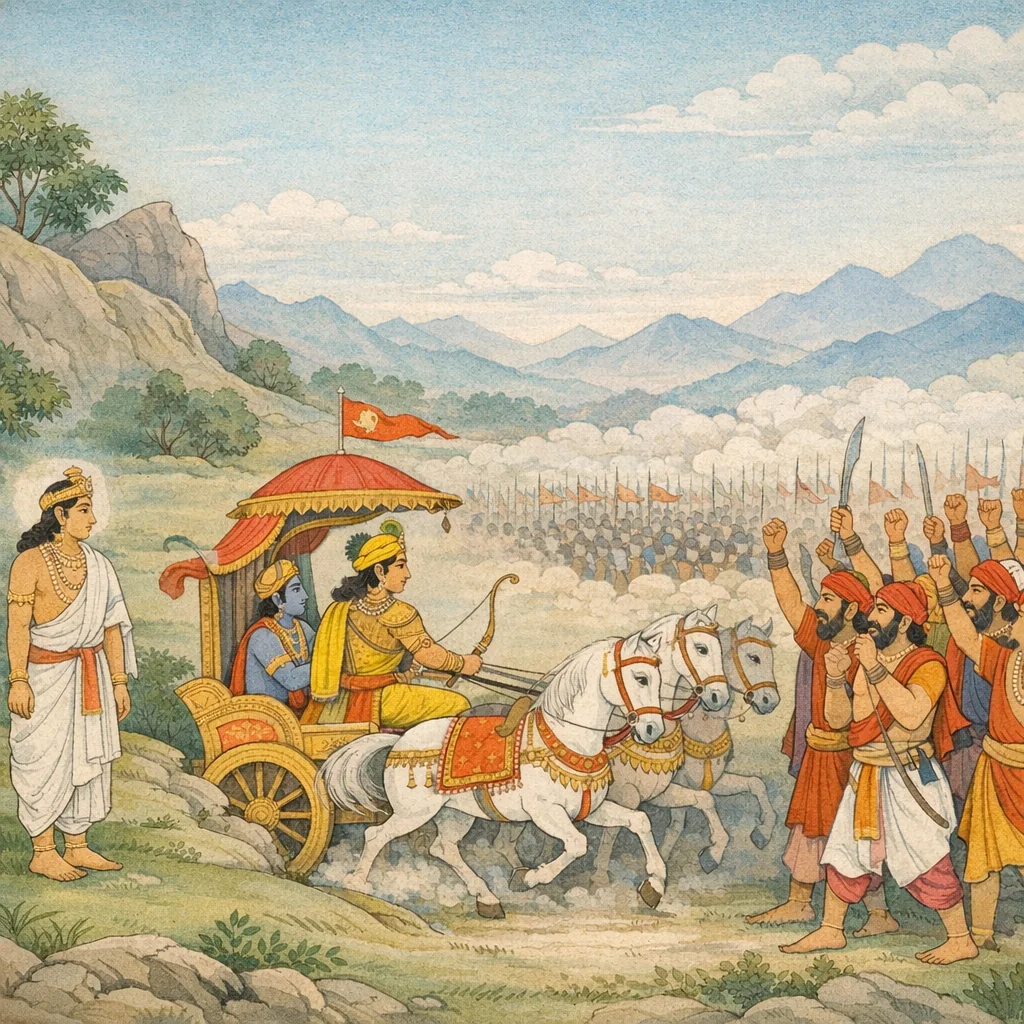
Saṃjaya reports that the Saṃśaptakas/Traigartas take position on level ground and array their chariot host in a candrārdha (“crescent”) formation, rejoicing at Arjuna’s approach. Their loud cries fill the directions, producing an enveloping din. Observing their exuberance, Arjuna addresses Kṛṣṇa with ironic appraisal, interpreting their joy as premature and connected to their impending death in battle. He then advances and blows the gold-adorned Devadatta conch, whose sound startles the opposing ranks and even disturbs their horses, described as rigid and panicked. Regaining composure, the Traigartas launch massed arrows; Arjuna intercepts volleys mid-flight with swift shafts, answers repeated attacks, and exchanges targeted strikes. Subāhu pierces Arjuna’s crown with numerous hard arrows, making the diadem appear like an elevated post; Arjuna severs Subāhu’s weapon-hand and overwhelms him with arrow-rain, leading to Subāhu’s death and the flight of his followers. Arjuna, angered, further breaks the host with continuous arrow-nets. Fear spreads; the Traigarta king rebukes the warriors, invoking their terrible oaths made before the army and warning against public disgrace. The Saṃśaptakas then shout anew, blow conches, and return to the engagement, reaffirming a death-facing resolve.
Chapter Arc: युद्ध से सेनाओं को लौटा कर द्रोणाचार्य भीतर-ही-भीतर ग्लानि और चिंता से भर उठते हैं; वे दुर्योधन की ओर देखकर लज्जित-सा होकर कहते हैं कि अर्जुन के रहते युधिष्ठिर को संग्राम में बाँधना या पकड़ना असंभव है। → द्रोण की असफलता-स्वीकृति के बीच त्रिगर्तों के संशप्तक वीर (सुशर्मा आदि) आगे आते हैं और कठोर प्रतिज्ञा करते हैं—आज या तो अर्जुन को मारेंगे, या स्वयं मारे जाएँगे; यदि लौटे तो उन्हें अग्निदाहियों, गौहन्ताओं और ब्रह्मद्वेषियों जैसे पापियों के लोक प्राप्त हों—ऐसी शपथ से वे अपने लिए वापसी का मार्ग बंद कर देते हैं। → संशप्तक वीर युद्धभूमि में अर्जुन को ललकारते हुए पितृलोक-दिशा की ओर उसे खींच ले जाते हैं; अर्जुन धर्मराज से त्वरित वचन-विनिमय कर उन्हें रोकने के लिए अलग होता है और भूखे सिंह की तरह मृग-समूह पर टूट पड़ने को तत्पर होकर त्रिगर्तों की ओर बढ़ता है। → अर्जुन के हटते ही दुर्योधन की सेना हर्षित होकर युधिष्ठिर के निग्रह के लिए उग्र हो उठती है; दोनों सेनाएँ प्रचण्ड वेग से टकराती हैं—मानो वर्षा-ऋतु की उफनती धाराएँ एक-दूसरे से भिड़ गई हों। → अर्जुन को दूर फँसाकर कौरव-सेना का मुख्य धक्का अब युधिष्ठिर पर पड़ता है—क्या द्रोण की योजना सफल होगी, या पाण्डव-सेना इस संकट को रोक लेगी?
Shlokas
Verse 1
(दाक्षिणात्य अधिक पाठके १० श्लोक मिलाकर कुल ६४ श्लोक हैं।) ऑपनआक्रात बछ। अकाल (संशप्तकवधपर्व) सप्तदशो< ध्याय: सुशर्मा आदि संशप्तकवीरोंकी प्रतिज्ञा तथा अर्जुनका युद्धके लिये उनके निकट जाना संजय उवाच ते सेने शिबिरं गत्वा न््यविशेतां विशाम्पते । यथाभागं यथान्यायं यथागुल्मं च सर्वश:,संजय कहते हैं--प्रजानाथ! वे दोनों सेनाएँ अपने शिविरमें जाकर ठहर गयीं। जो सैनिक जिस विभाग और जिस सैन्यदलमें नियुक्त थे, उसीमें यथायोग्य स्थानपर जाकर सब ओर ठहर गये इति श्रीमहा भारते द्रोणपर्वणि संशप्तकवधपर्वणि धनंजययाने सप्तदशो<ध्याय: ।। १७ |। इस प्रकार श्रीमह्ाभारत द्रोणपर्वके अन्तर्गत संशप्तकवधपर्वमें अर्जुनकी रणयात्राविषयक सत्रहवाँ अध्याय पूरा हुआ ॥/ १७ ॥। (दाक्षिणात्य अधिक पाठके १६ श्लोक मिलाकर कुल ५०३ श्लोक हैं।) व्न््््ाञस> धनु मा आ अष्टादशो< ध्याय: संशप्तक-सेनाओंके साथ अर्जुनका युद्ध और सुधन्वाका वध संजय उवाच ततः संशप्तका राजन् समे देशे व्यवस्थिता: । व्यूह्वानीकं रथैरेव चन्द्राकारं मुदा युता:
Sañjaya said: O lord of the people, both armies returned to their encampments and took up their stations. Each body of troops settled everywhere in the place proper to it—according to its allotted division, according to rule and order, and according to its assigned company and formation.
Verse 2
कृत्वावहारं सैन्यानां द्रोण: परमदुर्मना: । दुर्योधनमभिप्रेक्ष्य सब्रीडमिदमब्रवीत्,सेनाओंको युद्धसे लौटाकर द्रोणाचार्य मन-ही-मन अत्यन्त दुःखी हो दुर्योधनकी ओर देखते हुए लज्जित होकर बोले--
Sañjaya said: Having called the armies back from the fighting, Droṇa—deeply distressed at heart—looked toward Duryodhana and, with a sense of shame, spoke these words.
Verse 3
उक्तमेतन्मया पूर्व न तिष्ठति धनंजये । शक्यो ग्रहीतु संग्रामे देवेरपि युधिष्ठिर:,“राजन! मैंने पहले ही कह दिया था कि अर्जुनके रहते हुए सम्पूर्ण देवता भी युद्धमें युधिष्ठिरको पकड़ नहीं सकते हैं
Sañjaya said: “I told you this earlier: so long as Dhanañjaya (Arjuna) stands firm, Yudhiṣṭhira cannot be seized in battle—even by the gods.”
Verse 4
इति तद् व: प्रयततां कृतं पार्थेन संयुगे । मा विशड्कीर्वचो मह[मजेयौ कृष्णपाण्डवौ,“तुम सब लोगोंके प्रयत्न करनेपर भी उस युद्धस्थलमें अर्जुनने मेरे पूर्वोक्त कथनको सत्य कर दिखाया है। तुम मेरी बातपर संदेह न करना। वास्तवमें श्रीकृष्ण और अर्जुन मेरे लिये अजेय हैं
“Even though you all strove, on that battlefield Pārtha (Arjuna) made my earlier words come true. Do not doubt what I say: truly, for me, Kṛṣṇa and Arjuna the Pāṇḍava are invincible.”
Verse 5
अपनीते तु योगेन केनचिच्छवेतवाहने । तत एष्यति मे राजन् वशमेष युधिष्ठिर:,“राजन्! यदि किसी उपायसे श्वेतवाहन अर्जुन दूर हटा दिये जाय॑ँ तो ये राजा युधिष्छिर मेरे वशमें आ जायँगे
Sañjaya said: “O King, if by some stratagem the White-horsed one (Arjuna) can be drawn away, then this Yudhiṣṭhira will come under my control.”
Verse 6
कश्चिदाहूय त॑ं संख्ये देशमन्यं प्रकर्षतु । तमजित्वा न कौन्तेयो निवर्तेत कथंचन,“यदि कोई वीर अर्जुनको युद्धके लिये ललकारकर दूसरे स्थानमें खींच ले जाय तो वह कुन्तीकुमार उसे परास्त किये बिना किसी प्रकार नहीं लौट सकता
Sañjaya said: “If some warrior were to challenge him in battle and draw him away to another spot, that son of Kuntī would not, under any circumstance, turn back without first defeating that opponent.”
Verse 7
एतस्मिन्नन्तरे शून्ये धर्मराजमहं नृप । ग्रहीष्यामि चमूं भित्त्वा धृष्टद्युम्नस्य पश्यत:,“नरेश्वर! इस सूने अवसरमें मैं धृष्टद्युम्नके देखते-देखते पाण्डव-सेनाको विदीर्ण करके धर्मराज युधिष्ठिरको अवश्य पकड़ लूँगा
Sañjaya said: “O king, in this momentary gap—when the field is left exposed—I shall break through the army and seize Dharmarāja Yudhiṣṭhira, even as Dhṛṣṭadyumna looks on.”
Verse 8
अर्जुनेन विहीनस्तु यदि नोत्सूजते रणम् । मामुपायान्तमालोक्य गृहीतं विद्धि पाण्डवम्,“अर्जुनसे अलग रहनेपर यदि पाण्डुनन्दन युधिष्ठिर मुझे निकट आते देख युद्धस्थलका परित्याग नहीं कर देंगे तो तुम निश्चय समझो, वे मेरी पकड़में आ जायाँगे
Sañjaya said: “If, being without Arjuna, the Pāṇḍava (Yudhiṣṭhira) does not abandon the battlefield on seeing me advancing toward him, then know for certain that he will be seized—caught in my grasp.”
Verse 9
एवं ते5हं महाराज धर्मपुत्रं युधिष्ठिरम् । समानेष्यामि सगणं वशमद्य न संशय:,“महाराज! यदि अर्जुनके बिना दो घड़ी भी युद्धभूमिमें खड़े रहे तो मैं तुम्हारे लिये धर्मपुत्र पाण्डुनन्दन युधिष्ठिरको आज उनके गणोंसहित अवश्य पकड़ लाऊँगा; इसमें संदेह नहीं है और यदि वे संग्रामसे भाग जाते हैं तो यह हमारी विजयसे भी बढ़कर है!
Sañjaya said: “O great king, thus I shall bring Dharmaputra Yudhiṣṭhira—together with his followers—under your control today; of this there is no doubt.”
Verse 10
यदि तिष्ठति संग्रामे मुहूर्तमपि पाण्डव: । अथापयाति संग्रामाद् विजयात् तद् विशिष्यते,“महाराज! यदि अर्जुनके बिना दो घड़ी भी युद्धभूमिमें खड़े रहे तो मैं तुम्हारे लिये धर्मपुत्र पाण्डुनन्दन युधिष्ठिरको आज उनके गणोंसहित अवश्य पकड़ लाऊँगा; इसमें संदेह नहीं है और यदि वे संग्रामसे भाग जाते हैं तो यह हमारी विजयसे भी बढ़कर है!
Sañjaya said: “If the Pāṇḍava stands firm in battle even for a single muhūrta, then (I shall act accordingly). But if he withdraws from the battlefield, that—more than even our victory—would be the greater outcome.”
Verse 11
संजय उवाच द्रोणस्य तद् वच:ः श्रुत्वा त्रिगर्ताधिपतिस्तदा । भ्रातृभि: सहितो राजन्निदं वचनमब्रवीत्,संजय कहते हैं--राजन! द्रोणाचार्यका यह वचन सुनकर उस समय भाइयोंसहित त्रिगर्तराज सुशर्माने इस प्रकार कहा--
Sañjaya said: O King, hearing those words of Drona, the ruler of the Trigartas—Susharman—then, accompanied by his brothers, spoke these words.
Verse 12
वयं विनिकृता राजन् सदा गाण्डीवधन्चना । अनाग:स्वपि चागस्तत् कृतमस्मासु तेन वै,“महाराज! गाण्डीवधारी अर्जुनने हमेशा हमलोगोंका अपमान किया है। यद्यपि हम सदा निरपराध रहे हैं तो भी उनके द्वारा सर्वदा हमारे प्रति अपराध किया गया है
“O King, we have always been humiliated by Arjuna, the wielder of the Gāṇḍīva bow. Though we were not at fault, he has nonetheless repeatedly committed an offense against us.”
Verse 13
ते वयं स्मरमाणास्तान् विनिकारान् पृथग्विधान् । क्रोधाग्निना दह्ममाना न शेमहि सदा निशि,“हम पृथक्-पृथक् किये गये उन अपराधोंको याद करके क्रोधाग्निसे दग्ध होते रहते हैं तथा रातमें हमें कभी नींद नहीं आती है
“Remembering those various wrongs and injuries, each in its own way, we are scorched by the fire of anger; and in the night we find no rest—sleep does not come to us at all.”
Verse 14
स नो दिष्टयास्त्रसम्पन्नश्नक्षु्िषयमागत: । कर्तार: सम वयं कर्म यच्चिकीर्षाम हृदूगतम्,“अब हमारे सौभाग्यसे अर्जुन स्वयं ही अस्त्र-शस्त्र धारण करके आँखोंके सामने आ गये हैं। इस दशामें हम मन-ही-मन जो कुछ करना चाहते थे, वह प्रतिशोधात्मक कार्य अवश्य करेंगे
“By good fortune, Arjuna—fully equipped with weapons—has come directly within our sight. Now we shall indeed carry out the deed we had been inwardly resolved to do.”
Verse 15
भवतश्च प्रियं यत् स्थादस्माकं च यशस्करम् । वयमेनं हनिष्यामो निकृष्यायोधनाद् बहि:,“उससे आपका तो प्रिय होगा ही, हमलोगोंके सुयशकी भी वृद्धि होगी। हम इन्हें युद्धस्थलसे बाहर खींच ले जायूँगे और मार डालेंगे
Sañjaya said: “This will be pleasing to you, and it will also enhance our own renown. We shall drag him out from the battlefield and then kill him.”
Verse 16
अद्यास्त्वनर्जुना भूमिरत्रिगर्ताथ वा पुन: । सत्यं ते प्रतिजानीमो नैतन्मिथ्या भविष्यति,“आज हम आपके सामने यह सत्य प्रतिज्ञापूर्वक कहते हैं कि यह भूमि या तो अर्जुनसे सूनी हो जायगी या त्रिर्गतोंमेंसे कोई इस भूतलपर नहीं रह जायगा। मेरा यह कथन कभी मिथ्या नहीं होगा”
“Today, before you, we pledge in truth: either this land shall be rid of Arjuna, or not a single one among the Trigartas shall remain upon the earth. This word of mine shall never prove false.”
Verse 17
एवं सत्यरथश्नोक्त्वा सत्यवर्मा च भारत | सत्यव्रतश्न सत्येषु: सत्यकर्मा तथैव च,भरतनन्दन! सुशमाके ऐसा कहनेपर सत्यरथ, सत्यवर्मा, सत्यव्रत, सत्येषु तथा सत्यकर्मा नामवाले उसके पाँच भाइयोंने भी इसी प्रतिज्ञाको दुहराया। उनके साथ दस हजार रथियोंकी सेना भी थी। महाराज! ये लोग युद्धके लिये शपथ खाकर लौटे थे
Sañjaya said: “O Bhārata, having spoken thus, Satyavarmā also responded. Likewise Satyavrata, Satyeṣu, and Satyakarmā did the same.” That is, after Satyaratha’s declaration, his brothers repeated the very same vow, binding themselves by truth and resolve to return to the battle.
Verse 18
सहिता भ्रातर: पञजच रथानामयुतेन च । न्यवर्तन्त महाराज कृत्वा शपथमाहवे,भरतनन्दन! सुशमाके ऐसा कहनेपर सत्यरथ, सत्यवर्मा, सत्यव्रत, सत्येषु तथा सत्यकर्मा नामवाले उसके पाँच भाइयोंने भी इसी प्रतिज्ञाको दुहराया। उनके साथ दस हजार रथियोंकी सेना भी थी। महाराज! ये लोग युद्धके लिये शपथ खाकर लौटे थे
Sañjaya said: “O great king, delight of the Bhāratas, he returned accompanied by his five brothers and by a force of ten thousand chariot-warriors, having taken a solemn oath for the fight.”
Verse 19
मालवास्तुण्डिकेराश्न रथानामयुतैस्त्रिभि: । सुशर्मा च नरव्याप्रस्त्रिगर्त: प्रस्थलाधिप:,महाराज! ऐसी प्रतिज्ञा करके प्रस्थलाधिपति पुरुषसिंह त्रिर्गतराज सुशर्मा तीस हजार रथियोंसहित मालव, तुण्डिकेर, मावेल्लक, ललित्थ, मद्रकगण तथा दस हजार रथियोंसे युक्त अपने भाइयोंके साथ युद्धके लिये (शपथ ग्रहण करनेको) गया
Sañjaya said: “The Mālavas and the Tuṇḍikeras, together with Suśarmā—the tiger among men, the Trigarta king and lord of Prasthala—came forward having taken a vow, accompanied by thirty thousand chariot-warriors.”
Verse 20
मावेल्लकैललित्थैश्न सहितो मद्रकैरपि । रथानामयुतेनैव सो5गमद् भ्रातृभि: सह,महाराज! ऐसी प्रतिज्ञा करके प्रस्थलाधिपति पुरुषसिंह त्रिर्गतराज सुशर्मा तीस हजार रथियोंसहित मालव, तुण्डिकेर, मावेल्लक, ललित्थ, मद्रकगण तथा दस हजार रथियोंसे युक्त अपने भाइयोंके साथ युद्धके लिये (शपथ ग्रहण करनेको) गया
Sañjaya said: O great king, having made such a vow, Suśarmā, the Trigarta ruler and lion among the lords of Prasthala, set out with his brothers to take the war-oath, accompanied by the Māvellakas, the Kailalitas, and also the Madrakas, and supported by a force of ten thousand chariots.
Verse 21
नानाजनपदेभ्यश्व रथानामयुतं पुनः । समुत्थितं विशिष्टानां शपथार्थमुपागमत्,विभिन्न देशोंसे आये हुए दस हजार श्रेष्ठ महारथी भी वहाँ शपथ लेनेके लिये उठकर गये
Sañjaya said: From many different realms, ten thousand distinguished warriors—masters of horse and chariot—rose again and went forward to take an oath.
Verse 22
ततो ज्वलनमानर्च्य हुत्वा सर्वे पृथक् पृथक् । जगृहु: कुशचीराणि चित्राणि कवचानि च,उन सबने पृथक्-पृथक् अग्निदेवकी पूजा करके हवन किया तथा कुशके चीर और विचित्र कवच धारण कर लिये
Sañjaya said: Thereafter, each of them separately worshipped the blazing Fire-god and offered oblations. Having completed the rite, they took up garments made of kuśa-grass and also donned variegated armor.
Verse 23
ते च बद्धतनुत्राणा घृताक्ता: कुशचीरिण: । मौर्वीमेखलिनो वीरा: सहस्रशतदक्षिणा:,कवच बाँधकर कुश-चीर धारण कर लेनेके पश्चात् उन्होंने अपने अंगोंमें घी लगाया और “मौर्वी” नामक तृणविशेषकी बनी हुई मेखला धारण की। वे सभी वीर पहले यज्ञ करके लाखों स्वर्ण-मुद्राएँ दक्षिणामें बाँट चुके थे
Sañjaya said: Having fastened on their armor, and after donning garments of kuśa-grass, they anointed their bodies with clarified butter and girded themselves with belts made of the grass called maurvī. Those heroes had already performed sacrifices and distributed vast gifts as sacrificial fees.
Verse 24
यज्वान: पुत्रिणो लोक्या: कृतकृत्यास्तनुत्यज: । योक्ष्यमाणास्तदा55त्मानं यशसा विजयेन च,उन सबने पूर्वकालमें यज्ञोंका अनुष्ठान किया था, वे सभी पुत्रवान् तथा पुण्यलोकोंमें जानेके अधिकारी थे, उन्होंने अपने कर्तव्यको पूरा कर लिया था। वे हर्षपूर्वक युद्धमें अपने शरीरका त्याग करनेको उद्यत थे और अपने-आपको यश एवं विजयसे संयुक्त करने जा रहे थे
Sañjaya said: They had performed sacrifices in earlier times; they were men blessed with sons and fit to attain meritorious worlds. Having fulfilled their duties, they were then ready—glad at heart—to lay down their bodies in battle, seeking to unite themselves with fame and victory.
Verse 25
ब्रह्मचर्यश्रुतिमुखै: क्रतुभिश्नाप्तदक्षिणै: । प्राप्पॉल्लोकान् सुयुद्धेन क्षिप्रमेव यियासव:,ब्रह्मचर्यपालन, वेदोंके स्वाध्याय तथा पर्याप्त दक्षिणावाले यज्ञोंके अनुष्ठान आदि साधनोंसे जिन पुण्यलोकोंकी प्राप्ति होती है, उन सबमें वे उत्तम युद्धके द्वारा ही शीघ पहुँचनेकी इच्छा रखते थे
Sañjaya said: They longed to reach swiftly, by means of noble battle itself, those meritorious worlds that are otherwise attained through disciplines such as the observance of brahmacarya, the study of the Vedas and sacred learning, and the performance of sacrifices furnished with due priestly fees.
Verse 26
ब्राह्मणांस्तर्पयित्वा च निष्कान् दत्त्वा पृथक् पृथक् । गाश्न वासांसि च पुन: समाभाष्य परस्परम्
Sañjaya said: Having duly satisfied the Brahmins, and having given out gold ornaments (niṣkas) to each one separately, and again distributing cows and garments, they then spoke with one another in mutual consultation.
Verse 27
(द्विजमुख्यै: समुदितैः कृतस्वस्त्ययनाशिष: । मुदिताश्ष प्रहृष्टाश्न॒ जल॑ संस्पृश्य निर्मलम् ।।) प्रज्वाल्य कृष्णवर्त्मानमुपागम्य रणव्रतम् । तस्मिन्नग्नौ तदा चक्र: प्रतिज्ञां दृढनिश्चया:
Sañjaya said: With the foremost of the twice-born assembled and having pronounced auspicious benedictions, they—joyful and exultant—touched pure water in ritual purification. Then, kindling the sacred fire with its dark path of smoke, and approaching the warrior bound by his vow for battle, they there, before that fire, made a pledge with firm resolve.
Verse 28
ब्राह्मगोंको भोजन आदिसे तृप्त करके उन्हें अलग-अलग स्वर्णमुद्राओं, गौओं तथा वस्त्रोंकी दक्षिणा देकर परस्पर बातचीत करके उन्होंने वहाँ एकत्र हुए श्रेष्ठ ब्राह्मणोंद्वारा स्वस्तिवाचन कराया, आशीर्वाद प्राप्त किया और हर्षोल्लासपूर्वक निर्मल जलका स्पर्श करके अग्निको प्रज्वलित किया। फिर समीप आकर युद्धका व्रत ले अग्निके सामने ही दृढ़ निश्चयपूर्वक प्रतिज्ञा की ।। शृण्वतां सर्वभूतानामुच्चैर्वाचो बभाषिरे । सर्वे धनंजयवधे प्रतिज्ञां चापि चक्रिरे,उन सभीने समस्त प्राणियोंके सुनते हुए अर्जुनका वध करनेके लिये प्रतिज्ञा की और उच्चस्वरसे यह बात कही--
Sañjaya said: While all beings listened, they spoke aloud. All of them, with a fixed resolve, also made a vow to bring about the slaying of Dhanañjaya (Arjuna).
Verse 29
ये वै लोकाश्चाव्रतिनां ये चैव ब्रह्मघातिनाम् । मद्यपस्य च ये लोका गुरुदाररतस्य च,“यदि हमलोग अर्जुनको युद्धमें मारे बिना लौट आवें अथवा उनके बाणोंसे पीड़ित हो भयके कारण युद्धसे पराड्मुख हो जायेँ तो हमें वे ही पापमय लोक प्राप्त हों, जो व्रतका पालन न करनेवाले, ब्रह्महत्यारे, मद्य पीनेवाले, गुरुस्त्रीगामी, ब्राह्मणके धनका अपहरण करनेवाले, राजाकी दी हुई जीविकाको छीन लेनेवाले, शरणागतको त्याग देनेवाले, याचकको मारनेवाले, घरमें आग लगानेवाले, गोवध करनेवाले, दूसरोंकी बुराईमें लगे रहनेवाले, ब्राह्मणोंसे द्वेष रखनेवाले, ऋतुकालमें भी मोहवश अपनी पत्नीके साथ समागम न करनेवाले, श्राद्धके दिन मैथुन करनेवाले, अपनी जाति छिपानेवाले, धरोहरको हड़प लेनेवाले, अपनी प्रतिज्ञा तोड़नेवाले, नपुंसकके साथ युद्ध करनेवाले, नीच पुरुषोंका संग करनेवाले, ईश्वर और परलोकपर विश्वास न करनेवाले, अग्नि, माता और पिताकी सेवाका परित्याग करनेवाले, खेतीको पैरोंसे कुचलकर नष्ट कर देनेवाले, सूर्यकी ओर मुँह करके मूत्र॒त्याग करनेवाले तथा पापपरायण पुरुषोंको प्राप्त होते हैं
Sañjaya said: “If we were to return without killing Arjuna in battle, or if—wounded by his arrows—we were to turn away from the fight out of fear, then we would fall into those same sinful realms that await the vowless, the slayers of a brāhmaṇa, the drunkard, and the man who violates his teacher’s wife.”
Verse 30
ब्रह्मस्वहारिणश्रैव राजपिण्डापहारिण: | शरणागतं च त्यजतो याचमानं तथा घ्नत:,“यदि हमलोग अर्जुनको युद्धमें मारे बिना लौट आवें अथवा उनके बाणोंसे पीड़ित हो भयके कारण युद्धसे पराड्मुख हो जायेँ तो हमें वे ही पापमय लोक प्राप्त हों, जो व्रतका पालन न करनेवाले, ब्रह्महत्यारे, मद्य पीनेवाले, गुरुस्त्रीगामी, ब्राह्मणके धनका अपहरण करनेवाले, राजाकी दी हुई जीविकाको छीन लेनेवाले, शरणागतको त्याग देनेवाले, याचकको मारनेवाले, घरमें आग लगानेवाले, गोवध करनेवाले, दूसरोंकी बुराईमें लगे रहनेवाले, ब्राह्मणोंसे द्वेष रखनेवाले, ऋतुकालमें भी मोहवश अपनी पत्नीके साथ समागम न करनेवाले, श्राद्धके दिन मैथुन करनेवाले, अपनी जाति छिपानेवाले, धरोहरको हड़प लेनेवाले, अपनी प्रतिज्ञा तोड़नेवाले, नपुंसकके साथ युद्ध करनेवाले, नीच पुरुषोंका संग करनेवाले, ईश्वर और परलोकपर विश्वास न करनेवाले, अग्नि, माता और पिताकी सेवाका परित्याग करनेवाले, खेतीको पैरोंसे कुचलकर नष्ट कर देनेवाले, सूर्यकी ओर मुँह करके मूत्र॒त्याग करनेवाले तथा पापपरायण पुरुषोंको प्राप्त होते हैं
Sañjaya said: “If we return without having slain Arjuna in battle, or if, tormented by his arrows, we turn away from the fight out of fear, then we shall fall into those sinful realms that are attained by men who steal what is dedicated to Brahmins, who seize the king’s allotted sustenance, who abandon one who has sought refuge, and who kill a supplicant.”
Verse 31
अगारदाहिनां चैव ये च गां निघ्नतामपि । अपकारिणां च ये लोका ये च ब्रह्मद्धिषामपि,“यदि हमलोग अर्जुनको युद्धमें मारे बिना लौट आवें अथवा उनके बाणोंसे पीड़ित हो भयके कारण युद्धसे पराड्मुख हो जायेँ तो हमें वे ही पापमय लोक प्राप्त हों, जो व्रतका पालन न करनेवाले, ब्रह्महत्यारे, मद्य पीनेवाले, गुरुस्त्रीगामी, ब्राह्मणके धनका अपहरण करनेवाले, राजाकी दी हुई जीविकाको छीन लेनेवाले, शरणागतको त्याग देनेवाले, याचकको मारनेवाले, घरमें आग लगानेवाले, गोवध करनेवाले, दूसरोंकी बुराईमें लगे रहनेवाले, ब्राह्मणोंसे द्वेष रखनेवाले, ऋतुकालमें भी मोहवश अपनी पत्नीके साथ समागम न करनेवाले, श्राद्धके दिन मैथुन करनेवाले, अपनी जाति छिपानेवाले, धरोहरको हड़प लेनेवाले, अपनी प्रतिज्ञा तोड़नेवाले, नपुंसकके साथ युद्ध करनेवाले, नीच पुरुषोंका संग करनेवाले, ईश्वर और परलोकपर विश्वास न करनेवाले, अग्नि, माता और पिताकी सेवाका परित्याग करनेवाले, खेतीको पैरोंसे कुचलकर नष्ट कर देनेवाले, सूर्यकी ओर मुँह करके मूत्र॒त्याग करनेवाले तथा पापपरायण पुरुषोंको प्राप्त होते हैं
Sañjaya said: “If we return without slaying Arjuna in battle, or if, wounded by his arrows, we turn away from the fight out of fear, then we shall attain those very sinful worlds that fall to house-burners, cow-slayers, wrongdoers, and even to those who hate the Brahmins.”
Verse 32
स्वभार्यामृतुकालेषु मोहाद् वै नाभिगच्छताम् । श्राद्धमैथुनिकानां च ये चाप्यात्मापहारिणाम्,“यदि हमलोग अर्जुनको युद्धमें मारे बिना लौट आवें अथवा उनके बाणोंसे पीड़ित हो भयके कारण युद्धसे पराड्मुख हो जायेँ तो हमें वे ही पापमय लोक प्राप्त हों, जो व्रतका पालन न करनेवाले, ब्रह्महत्यारे, मद्य पीनेवाले, गुरुस्त्रीगामी, ब्राह्मणके धनका अपहरण करनेवाले, राजाकी दी हुई जीविकाको छीन लेनेवाले, शरणागतको त्याग देनेवाले, याचकको मारनेवाले, घरमें आग लगानेवाले, गोवध करनेवाले, दूसरोंकी बुराईमें लगे रहनेवाले, ब्राह्मणोंसे द्वेष रखनेवाले, ऋतुकालमें भी मोहवश अपनी पत्नीके साथ समागम न करनेवाले, श्राद्धके दिन मैथुन करनेवाले, अपनी जाति छिपानेवाले, धरोहरको हड़प लेनेवाले, अपनी प्रतिज्ञा तोड़नेवाले, नपुंसकके साथ युद्ध करनेवाले, नीच पुरुषोंका संग करनेवाले, ईश्वर और परलोकपर विश्वास न करनेवाले, अग्नि, माता और पिताकी सेवाका परित्याग करनेवाले, खेतीको पैरोंसे कुचलकर नष्ट कर देनेवाले, सूर्यकी ओर मुँह करके मूत्र॒त्याग करनेवाले तथा पापपरायण पुरुषोंको प्राप्त होते हैं
Sañjaya said: “Those who, out of delusion, do not approach their own wives during the proper season, and those who engage in sexual intercourse on the day of śrāddha rites, and those who steal or destroy their own very self—such people are counted among grievous sinners.”
Verse 33
न्यासापहारिणां ये च श्रुतं नाशयतां च ये । क्लीबेन युध्यमानानां ये च नीचानुसारिणाम्,“यदि हमलोग अर्जुनको युद्धमें मारे बिना लौट आवें अथवा उनके बाणोंसे पीड़ित हो भयके कारण युद्धसे पराड्मुख हो जायेँ तो हमें वे ही पापमय लोक प्राप्त हों, जो व्रतका पालन न करनेवाले, ब्रह्महत्यारे, मद्य पीनेवाले, गुरुस्त्रीगामी, ब्राह्मणके धनका अपहरण करनेवाले, राजाकी दी हुई जीविकाको छीन लेनेवाले, शरणागतको त्याग देनेवाले, याचकको मारनेवाले, घरमें आग लगानेवाले, गोवध करनेवाले, दूसरोंकी बुराईमें लगे रहनेवाले, ब्राह्मणोंसे द्वेष रखनेवाले, ऋतुकालमें भी मोहवश अपनी पत्नीके साथ समागम न करनेवाले, श्राद्धके दिन मैथुन करनेवाले, अपनी जाति छिपानेवाले, धरोहरको हड़प लेनेवाले, अपनी प्रतिज्ञा तोड़नेवाले, नपुंसकके साथ युद्ध करनेवाले, नीच पुरुषोंका संग करनेवाले, ईश्वर और परलोकपर विश्वास न करनेवाले, अग्नि, माता और पिताकी सेवाका परित्याग करनेवाले, खेतीको पैरोंसे कुचलकर नष्ट कर देनेवाले, सूर्यकी ओर मुँह करके मूत्र॒त्याग करनेवाले तथा पापपरायण पुरुषोंको प्राप्त होते हैं
Sañjaya said: “May those same sinful realms befall us—realms destined for people who steal what has been entrusted, who destroy sacred learning, who fight against an impotent opponent, and who keep company with the base—if we return without killing Arjuna, or if, tormented by his arrows, we turn away from battle out of fear.”
Verse 34
नास्तिकानां च ये लोका येडग्निमातृपितृत्यजाम् । (सस्यमाक्रमतां ये च प्रत्यादित्यं प्रमेहताम् ।) तानाप्नुयामहे लोकान् ये च पापकृतामपि,“यदि हमलोग अर्जुनको युद्धमें मारे बिना लौट आवें अथवा उनके बाणोंसे पीड़ित हो भयके कारण युद्धसे पराड्मुख हो जायेँ तो हमें वे ही पापमय लोक प्राप्त हों, जो व्रतका पालन न करनेवाले, ब्रह्महत्यारे, मद्य पीनेवाले, गुरुस्त्रीगामी, ब्राह्मणके धनका अपहरण करनेवाले, राजाकी दी हुई जीविकाको छीन लेनेवाले, शरणागतको त्याग देनेवाले, याचकको मारनेवाले, घरमें आग लगानेवाले, गोवध करनेवाले, दूसरोंकी बुराईमें लगे रहनेवाले, ब्राह्मणोंसे द्वेष रखनेवाले, ऋतुकालमें भी मोहवश अपनी पत्नीके साथ समागम न करनेवाले, श्राद्धके दिन मैथुन करनेवाले, अपनी जाति छिपानेवाले, धरोहरको हड़प लेनेवाले, अपनी प्रतिज्ञा तोड़नेवाले, नपुंसकके साथ युद्ध करनेवाले, नीच पुरुषोंका संग करनेवाले, ईश्वर और परलोकपर विश्वास न करनेवाले, अग्नि, माता और पिताकी सेवाका परित्याग करनेवाले, खेतीको पैरोंसे कुचलकर नष्ट कर देनेवाले, सूर्यकी ओर मुँह करके मूत्र॒त्याग करनेवाले तथा पापपरायण पुरुषोंको प्राप्त होते हैं
Sañjaya said: “If we return without slaying Arjuna in battle, or if—wounded by his arrows—we turn away from the fight out of fear, then may we attain those very sinful worlds that fall to the faithless and to those who abandon the service of fire, mother, and father; likewise to those who trample down growing crops and to those who urinate facing the sun—indeed, the worlds that are reached by evildoers.”
Verse 35
यद्यहत्वा वयं युद्धे निवर्तेम धनंजयम् | तेन चाभ्यर्दितास्त्रासादू भवेम हि पराड्मुखा:,“यदि हमलोग अर्जुनको युद्धमें मारे बिना लौट आवें अथवा उनके बाणोंसे पीड़ित हो भयके कारण युद्धसे पराड्मुख हो जायेँ तो हमें वे ही पापमय लोक प्राप्त हों, जो व्रतका पालन न करनेवाले, ब्रह्महत्यारे, मद्य पीनेवाले, गुरुस्त्रीगामी, ब्राह्मणके धनका अपहरण करनेवाले, राजाकी दी हुई जीविकाको छीन लेनेवाले, शरणागतको त्याग देनेवाले, याचकको मारनेवाले, घरमें आग लगानेवाले, गोवध करनेवाले, दूसरोंकी बुराईमें लगे रहनेवाले, ब्राह्मणोंसे द्वेष रखनेवाले, ऋतुकालमें भी मोहवश अपनी पत्नीके साथ समागम न करनेवाले, श्राद्धके दिन मैथुन करनेवाले, अपनी जाति छिपानेवाले, धरोहरको हड़प लेनेवाले, अपनी प्रतिज्ञा तोड़नेवाले, नपुंसकके साथ युद्ध करनेवाले, नीच पुरुषोंका संग करनेवाले, ईश्वर और परलोकपर विश्वास न करनेवाले, अग्नि, माता और पिताकी सेवाका परित्याग करनेवाले, खेतीको पैरोंसे कुचलकर नष्ट कर देनेवाले, सूर्यकी ओर मुँह करके मूत्र॒त्याग करनेवाले तथा पापपरायण पुरुषोंको प्राप्त होते हैं
Sañjaya said: “If, without slaying Dhanañjaya (Arjuna), we were to turn back from the battle—or, harassed by his arrows, become fearful and thus turn away from the fight—then indeed we would fall into those sinful realms reserved for grievous transgressors. For to retreat from one’s duty out of fear, after entering a righteous war, is counted as a moral collapse, akin to the worst violations of sacred and social order.”
Verse 36
यदि त्वसुकरं लोके कर्म कुर्याम संयुगे । इष्टॉल्लोकान प्राप्रुयामो वयमद्य न संशय:,“यदि आज हम युद्धमें अर्जुनको मारकर लोकमें असम्भव माने जानेवाले कर्मको भी कर लेंगे तो मनोवांछित पुण्यलोकोंको प्राप्त करेंगे, इसमें संशय नहीं है”
Sañjaya said: “If today, in battle, we accomplish a deed that the world deems nearly impossible—namely, slaying Arjuna—then we shall surely attain the desired worlds of merit. Of this there is no doubt.”
Verse 37
एवमुकक््त्वा तदा राजंस्ते<भ्यवर्तन्त संयुगे । आह्वयन्तोडर्जुनं वीरा: पितृजुष्टां दिशं प्रति,राजन! ऐसा कहकर वे वीर संशप्तकगण उस समय अर्जुनको ललकारते हुए युद्धस्थलमें दक्षिण दिशाकी ओर जाकर खड़े हो गये
Sañjaya said: “Having spoken thus, O King, those heroes turned back in the thick of battle. Challenging Arjuna by name, the Saṁśaptakas took their stand facing the southern quarter—the direction hallowed by the Fathers—resolved to press their vow through combat.”
Verse 38
आहूतस्तैर्नरिव्याप्रै: पार्थ: परपुरंजय: । धर्मराजमिदं वाक्यमपदान्तरमब्रवीत्,उन पुरुषसिंह संशप्तकोंद्वारा ललकारे जानेपर शत्रुनगरीपर विजय पानेवाले कुन्तीकुमार अर्जुन तुरंत ही धर्मराज युधिष्ठटिरसे इस प्रकार बोले--
Sañjaya said: “Summoned and challenged by those tiger-like warriors, Pārtha (Arjuna), the conqueror of enemy strongholds, without a moment’s delay spoke these words to Dharmarāja (Yudhiṣṭhira).”
Verse 39
आहूतो न निवर्तेयमिति मे व्रतमाहितम् । संशप्तकाश्न मां राजन्नाह्नयन्ति महामूथे,राजन! मेरा यह निश्चित व्रत है कि यदि कोई मुझे युद्धके लिये बुलाये तो मैं पीछे नहीं हटूँगा। ये संशप्तक मुझे महायुद्धमें बुला रहे हैं
Sañjaya said: “O King, I have taken a firm vow: when challenged to battle, I shall not turn back. The Saṁśaptakas are now calling me into the great fight.”
Verse 40
एष च भ्रातृभि: सार्थ सुशर्मा55ह्वयते रणे । वधाय सगणपस्यास्य मामनुज्ञातुमरहसि,“यह सुशर्मा अपने भाइयोंके साथ आकर मुझे युद्धके लिये ललकार रहा है, अतः गणोंसहित इस सुशर्माका वध करनेके लिये मुझे आज्ञा देनेकी कृपा करें
Sañjaya said: “Behold, Suśarmā, together with his brothers, is challenging me on the field of battle. Therefore, grant me leave to slay Suśarmā along with all his followers.”
Verse 41
नैतच्छक्नोमि संसोदुमाद्दानं पुरुषर्षभ । सत्यं ते प्रतिजानामि हतान् विद्धि परान् युधि,'पुरुषप्रवर! मैं शत्रुओंकी यह ललकार नहीं सह सकता। आपसे सच्ची प्रतिज्ञापूर्वक कहता हूँ कि इन शत्रुओंको युद्धमें मारा गया ही समझिये”
Sañjaya said: “O bull among men, I cannot endure this insolent challenge. I pledge to you in truth—know these foes as already slain in battle.”
Verse 42
युधिषछ्िर उवाच श्रुतं ते तत्त्वतस्तात यद् द्रोणस्य चिकीर्षितम् । यथा तदनृतं तस्य भवेत् तत् त्वं समाचर,युधिष्ठिर बोले--तात! द्रोणाचार्य क्या करना चाहते हैं, यह तो तुमने अच्छी तरह सुन ही लिया होगा। उनका वह संकल्प जैसे भी झूठा हो जाय, वही तुम करो
Yudhiṣṭhira said: “Dear one, you have heard in full truth what Droṇa intends to do. Act in such a way that his resolve becomes false—so that his intended outcome is thwarted.”
Verse 43
द्रोणो हि बलवाउछूर: कृतास्त्रश्न जितश्रम: । प्रतिज्ञातं च तेनैतद् ग्रहणं मे महारथ,महारथी वीर! आचार्य द्रोण बलवान, शौर्यसम्पन्न और अस्त्रविद्यामें निपुण हैं, उन्होंने परिश्रमको जीत लिया है तथा वे मुझे पकड़कर दुर्योधनके पास ले जानेकी प्रतिज्ञा कर चुके हैं
Yudhiṣṭhira said: “O mighty chariot-warrior, the teacher Droṇa is strong, valorous, and consummate in the science of weapons. He has conquered fatigue, and he has vowed to seize me and carry me before Duryodhana.”
Verse 44
अजुन उवाच अयं वै सत्यजिद् राजन्नद्य त्वां रक्षिता युधि | प्रियमाणे च पाज्चाल्ये नाचार्य: काममाप्स्यति,अर्जुन बोले--राजन! ये पांचालराजकुमार सत्यजित् आज युद्धस्थलमें आपकी रक्षा करेंगे। इनके जीते-जी आचार्य अपनी इच्छा पूरी नहीं कर सकेंगे
Arjuna said: “O King, Satyajit, the Pāñcāla prince, will protect you today on the field of battle. So long as the Pāñcāla stands firm and prevails, the Teacher Droṇa will not be able to accomplish his desired aim.”
Verse 45
हते तु पुरुषव्याप्रे रणे सत्यजिति प्रभो । सर्वैरपि समेतैर्वा न स्थातव्यं कथंचन,प्रभो! यदि पुरुषसिंह सत्यजित् रणभूमिमें वीरगतिको प्राप्त हो जायँ तो आप सब लोगोंके साथ होनेपर भी किसी तरह युद्धभूमिमें न ठहरियेगा
Arjuna said: “O lord, if Satyajit—the lion among men—is slain in battle, then even if all of you are gathered together, you must not remain on the battlefield in any way. Withdraw at once.”
Verse 46
संजय उवाच अनुज्ञातस्ततो राज्ञा परिष्वक्तश्व फाल्गुन: | प्रेम्णा दृष्टश्च॒ बहुधा ह्याशिषश्चास्य योजिता:,संजय कहते हैं--राजन्! तब राजा युधिष्ठिरने अर्जुनको जानेकी आज्ञा दे दी और उनको हृदयसे लगा लिया। प्रेमपूर्वक उन्हें बार-बार देखा और आशीर्वाद दिया
Sañjaya said: Then, having been granted leave by the king, Phālguna (Arjuna) was embraced. The king looked upon him again and again with affection, and invoked blessings upon him—sending him forth with love and auspicious wishes amid the demands of war.
Verse 47
विहायैनं ततः पार्थस्त्रिगर्तान् प्रत्ययाद् बली । क्षुधित: क्षुद्विघातार्थ सिंहो मृगगणानिव,तदनन्तर बलवान कुन्तीकुमार अर्जुन राजा युधिष्ठिरको वहीं छोड़कर त्रिगर्तोंकी ओर बढ़े, मानो भूखा सिंह अपनी भूख मिटानेके लिये मृगोंके झुंडकी ओर जा रहा हो
Sañjaya said: Then the mighty son of Pṛthā (Arjuna), leaving him there, advanced against the Trigartas—like a hungry lion moving toward a herd of deer to quell its hunger.
Verse 48
ततो दौर्योधनं सैन्यं मुदा परमया युतम् | ऋतेडर्जुनं भृशं क्रुद्धं धर्मराजस्य निग्रहे,तब दुर्योधनकी सेना बड़ी प्रसन्नताके साथ अर्जुनके बिना राजा युधिष्ठिरको कैद करनेके लिये अत्यन्त क्रोधपूर्वक प्रयत्न करने लगी
Sañjaya said: Then Duryodhana’s army, filled with the highest delight, set about—without Arjuna present—seizing Dharmarāja (Yudhiṣṭhira). Inflamed with fierce anger, they strove to overpower and capture the king.
Verse 49
ततोडचन्योन्येन ते सैन्ये समाजग्मतुरोजसा । गड्भासरय्वौ वेगेन प्रावषीवोल्बणोदके,तत्पश्चात् दोनों सेनाएँ बड़े वेगसे परस्पर भिड़ गयीं, मानो वर्षा-ऋतुमें जलसे लबालब भरी हुई गंगा और सरयू वेगपूर्वक आपसमें मिल रही हों
Sañjaya said: Then the two armies, driven by sheer force, rushed together and collided with one another—like the Gaṅgā and the Sarayū, swollen with the torrential waters of the rainy season, surging forward to meet in a violent confluence.
Frequently Asked Questions
The chapter juxtaposes warrior exhilaration with the reality of lethal consequence, raising the tension between valor as duty and the moral disquiet of celebrating an outcome that entails widespread harm.
It demonstrates that battlefield outcomes depend not only on weapons but on perception-management: signaling can destabilize cohesion, while leadership rhetoric can temporarily restore collective purpose—though not necessarily alter strategic imbalance.
No explicit phalaśruti appears here; the chapter functions as narrative-analytic material illustrating how oath, morale, and tactical skill operate as causal forces within the wider war-book.