Adhyaya 126
Droṇa’s Rebuke to Duryodhana after Jayadratha’s Fall (द्रोणेन दुर्योधनं प्रति प्रत्युक्तिः)
Upa-parva: Saindhava-vadha Anuśaṅga (Aftermath Discourse on Jayadratha’s Fall)
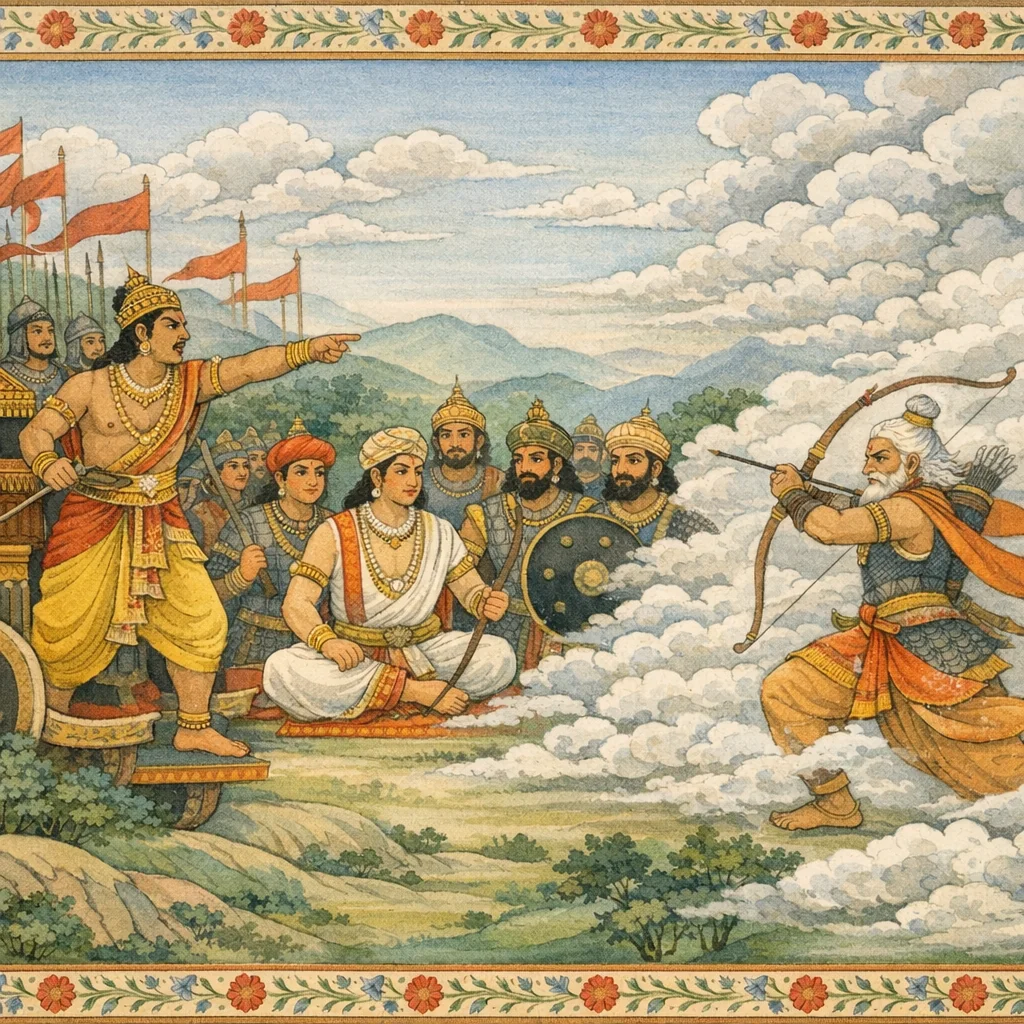
Dhṛtarāṣṭra inquires about the Kaurava state of mind after Jayadratha and Bhūriśravas are reported slain. Sañjaya describes widespread despair and the perception that Duryodhana’s earlier counsel and policy have been discredited by outcomes. Droṇa, distressed, responds to Duryodhana’s reproach: he argues that Arjuna’s capacity was already evident when Bhīṣma fell with Śikhaṇḍin as a contributing factor and when an ‘unassailable’ warrior was nevertheless brought down. Droṇa then broadens the causal frame, invoking ignored warnings and earlier court actions—particularly the coercive treatment of Draupadī and the inequitable dice episode that exiled the Pāṇḍavas—as ethically generative causes of present catastrophe. He challenges the expectation of effortless protection for Jayadratha amid elite defenders, admits his own strategic anxiety, and declares an intent to press into the opposing formations with renewed severity, specifically targeting the Pāñcāla contingent alongside Śikhaṇḍin. The chapter closes with operational instructions to Duryodhana (hold the line, anticipate continued night engagement) and a brief normative counsel to Aśvatthāman on restraint, truth, and proper conduct toward Brahmins, linking battlefield action to social-ethical order.
Chapter Arc: धृतराष्ट्र के समक्ष संजय युद्धभूमि का भयावह चित्र खींचते हैं—कौरव-पाण्डव सेनाएँ घोर संग्राम में उलझी हैं, और सात्यकि के मार्ग से होकर हुई ध्वंस-लीला का स्मरण कौरवों के मन में आशंका भर देता है। → कौरव पक्ष यह टटोलता है कि जिस पथ से सात्यकि आगे बढ़ा था वह अब ‘शून्य’ तो नहीं—अर्थात क्या वह मार्ग कौरव-वीरों से रिक्त कर दिया गया है। इसी बीच दुर्योधन स्वयं रण में उतरकर पाण्डव-राज युधिष्ठिर की ओर बढ़ता है; पंचाल-सेना संघबद्ध होकर उसे रोकने दौड़ती है, पर द्रोणाचार्य युधिष्ठिर को पकड़ने की इच्छा से उन्हें रोकते-छाँटते आगे बढ़ते हैं। → दुर्योधन ‘तिष्ठ तिष्ठ’ कहता हुआ युधिष्ठिर पर झपटता है; पंचालों का प्रतिरोध उठता है, किन्तु द्रोण का प्रचण्ड अवरोध—मेघों को उड़ा ले जाने वाले चण्डवात की भाँति—पाण्डव-पक्ष की रक्षा-पंक्ति को विचलित कर देता है और युधिष्ठिर के चारों ओर संकट का घेरा कसता है। → रणनीति का केन्द्र युधिष्ठिर बन जाता है—कौरवों की आशा है कि सात्यकि-अर्जुन के अलग होने पर पाण्डव टूटेंगे; पाण्डव-पक्ष सुयश और धैर्य के साथ युद्ध-बुद्धि बाँधकर टिकता है, पर द्रोण की पकड़-योजना अभी टली नहीं। → द्रोण युधिष्ठिर को लक्ष्य बनाकर आगे बढ़ चुके हैं—क्या पाण्डव-रक्षा-चक्र टूटेगा, या कोई वीर (भीम/धृष्टद्युम्न/पंचाल) निर्णायक प्रतिघात करेगा?
Shlokas
Verse 1
भीकम (2 अमान चतुर्विशर्त्याधकशततमो< ध्याय: कौरव-पाण्डव-सेनाका घोर युद्ध तथा पाण्डवोंके साथ दुर्योधनका संग्राम घतयाट्र उवाच कि तस्यां मम सेनायां नासन् केचिन्महारथा: । ये तथा सात्यकिं यान्तं नैवाघ्नन् नाप्यवारयम्,धृतराष्ट्रने पूछा--संजय! क्या मेरी उस सेनामें कोई भी महारथी वीर नहीं थे, जिन्होंने जाते हुए सात्यकिको न तो मारा और न उन्हें रोका ही
Dhṛtarāṣṭra said: “In that army of mine, were there truly no great chariot-warriors—none who, as Sātyaki advanced in that manner, either struck him down or even checked his progress?”
Verse 2
एको हि समरे कर्म कृतवान् सत्यविक्रम: । शक्रतुल्यबलो युद्धे महेन्द्रो दानवेष्विव,जैसे देवराज इन्द्र दानवोंके साथ युद्धमें पराक्रम दिखाते हैं, उसी प्रकार इन्द्रतुल्य बलशाली सत्यपराक्रमी सात्यकिने समरांगणमें अकेले ही महान् कर्म किया
For in the battle, Sātyaki—whose valor is true and unwavering—performed a great deed all by himself. Mighty in war like Śakra (Indra), he displayed prowess just as Mahendra does when fighting the Dānavas.
Verse 3
अथवा शून्यमासीत् तत् येन यातः स सात्यकि: । हतभूयिष्ठमथवा येन यातः स सात्यकि:,अथवा जिस मार्गसे सात्यकि आगे बढ़े थे, वह वीरोंसे शून्य तो नहीं हो गया था या वहाँके अधिकांश सैनिक मारे तो नहीं गये थे
Ghṛtayaṭra said: “Or was that route by which Sātyaki advanced now left empty of warriors? Or, along the path he took, have most of the soldiers been slain?”
Verse 4
यत् कृतं वृष्णिवीरेण कर्म शंससि मे रणे । नैतदुत्सहते कर्तु कर्म शक्रोडपि संजय,संजय! तुम रणक्षेत्रमें वृष्णिवंशी वीर सात्यकिके द्वारा किये हुए जिस कर्मकी प्रशंसा कर रहे हो, वह कर्म देवराज इन्द्र भी नहीं कर सकते
Dhṛtarāṣṭra said: “The deed you praise to me as having been done in the battle by the Vṛṣṇi hero—such a feat cannot be accomplished even by Śakra (Indra) himself, O Saṃjaya.”
Verse 5
अश्रद्धेयमचिन्त्यं च कर्म तस्य महात्मन: । वृष्ण्यन्धकप्रवीरस्य श्रुत्वा मे व्यथितं मन:,वृष्णि और अंधक वंशके प्रमुख वीर महामना सात्यकिका वह कर्म अचिन्त्य (सम्भावनासे परे) है। उसपर सहसा विश्वास नहीं किया जा सकता। उसे सुनकर मेरा मन व्यथित हो उठा है
The deed of that great-souled hero—foremost among the Vṛṣṇis and Andhakas—is both unbelievable and beyond imagining. Hearing of it, my mind has been shaken with anguish.
Verse 6
न सन्ति तस्मात् पुत्रा मे यथा संजय भाषसे । एको वै बहुला: सेना: प्रामृदूनत् सत्यविक्रम:,संजय! जैसा कि तुम बता रहे हो, यदि एक ही सत्यपराक्रमी सात्यकिने मेरी बहुत-सी सेनाओंको धूलमें मिला दिया है, तब तो मुझे यह मान लेना चाहिये कि अब मेरे पुत्र जीवित नहीं हैं
Therefore, Sañjaya, as you report, my sons cannot still be alive. If a single warrior—Sātyaki, famed for true valor—has indeed crushed my many divisions into the dust, then I must accept that my sons have been slain.
Verse 7
कथं च युध्यमानानामपक्रान्तो महात्मनाम् । एको बहूनां शैनेयस्तन्ममाचक्ष्व संजय,संजय! जब बहुत-से महामनस्वी वीर युद्ध कर रहे थे, उस समय अकेले सात्यकि उन्हें पराजित करके कैसे आगे बढ़ गये, यह सब मुझे बताओ
Dhṛtarāṣṭra said: “Tell me, Saṃjaya—how did Śaineya (Sātyaki), though alone, press forward after routing many great-souled warriors even as they were engaged in battle? Explain this to me fully.”
Verse 8
संजय उवाच राजन् सेनासमुद्योगो रथनागाश्वपत्तिमान् तुमुलस्तव सैन्यानां युगान्तसदृशो5भवत्,संजयने कहा--राजन! रथ, हाथी, घोड़े और पैदलोंसे भरा हुआ आपका सेनासम्बन्धी उद्योग महान् था। आपके सैनिकोंका समाहार प्रलयकालके समान भयंकर जान पड़ता था
Sañjaya said: O King, the mobilization of your army—abounding in chariots, elephants, horses, and infantry—was tumultuous. The massing of your troops appeared terrifying, like the cataclysm at the end of an age.
Verse 9
आहूृतेषु समूहेषु तव सैन्यस्य मानद । नाभूल्लोके सम: कश्चित् समूह इति मे मति:,मानद! जब आपकी सेनाके भिन्न-भिन्न समूह सब ओरसे बुलाये गये, उस समय जो महान् समुदाय एकत्र हुआ, उसके समान इस संसारमें दूसरा कोई समूह नहीं था, ऐसा मेरा विश्वास है
Sañjaya said: “O bestower of honor, when the various divisions of your army were summoned from all sides and assembled, there was no other host in the world equal to that gathered multitude—such is my conviction.”
Verse 10
तत्र देवास्त्वभाषन्त चारणाश्न समागता: । एतदन्ता: समूहा वै भविष्यन्ति महीतले
There, the gods spoke, and the Cāraṇas too had assembled. They declared: ‘On the surface of the earth, these gathered hosts will meet their end here.’
Verse 11
वहाँ आये हुए देवता तथा चारण ऐसा कहते थे कि इस भूतलपर सारे समूहोंकी अन्तिम सीमा यही होगी ।। न च वै तादृशो व्यूह आसीत् कश्चिद् विशाम्पते | यादग् जयद्रथवधे द्रोणेन विहितो$भवत्,प्रजानाथ! जयद्रथवधके समय द्रोणाचार्यने जैसा व्यूह बनाया था, वैसा दूसरा कोई भी व्यूह नहीं बन सका था
Sañjaya said: O lord of the people, O ruler of men, no battle-formation of such a kind had ever existed as the one Droṇa devised at the time of Jayadratha’s slaying. Even the gods and the celestial bards who had come there declared that on this very earth this would stand as the ultimate limit of assembled formations—an unsurpassed pinnacle of martial arrangement, forged for a single, fateful purpose in the war.
Verse 12
चण्डवातविभिगन्नानां समुद्राणामिव स्वन: । रणे5भवद् बलौघानामन्योन्यमभिधावताम्,प्रचण्ड वायुके थपेड़े खाकर उद्वेलित हुए समुद्रोंक जलसे जैसा भैरव गर्जन सुनायी देता है, उस रणक्षेत्रमें एक-दूसरेपर धावा करनेवाले सैन्यसमूहोंका कोलाहल भी वैसा ही भयंकर था
Sañjaya said: In that battle, the roar that arose from the massed armies charging at one another was terrifying—like the thunderous sound of oceans churned and shattered by violent winds. The simile underscores the war’s overwhelming, impersonal force, where collective fury drowns out individual restraint and the ethical weight of conflict becomes palpable through its sheer devastation.
Verse 13
पार्थिवानां समेतानां बहून्यासन् नरोत्तम | तदबले पाण्डवानां च सहस्राणि शतानि च,नरश्रेष्ठ आपकी और पाण्डवोंकी सेनाओंमें सब ओरसे एकत्र हुए भूमिपालोंके सैकड़ों और हजारों दल थे
Sanjaya said: O best of men, on all sides there were many contingents of assembled kings; and within that host, the Pandavas’ forces too stood in hundreds and in thousands. The scene conveys the vast, many-ruler coalition drawn into the war, where personal loyalties and royal duty converge into a single, overwhelming battlefield reality.
Verse 14
संरब्धानां प्रवीराणां समरे दृढकर्मणाम् | तत्रासीत् सुमहाशब्दस्तुमुलो लोमहर्षण:,वे सभी प्रमुख वीर रोषावेशसे परिपूर्ण हो समरभूमिमें सुदृढ़ पराक्रम कर दिखानेवाले थे। वहाँ उन सबका महान् एवं तुमुल कोलाहल रोंगटे खड़े कर देनेवाला था
Sañjaya said: As the foremost heroes, inflamed with wrath and steadfast in action, pressed on in battle, there arose there a very great uproar—deafening and tumultuous—so intense that it made one’s hair stand on end. The verse underscores how anger and martial resolve, when unleashed together, magnify the violence and psychological terror of war.
Verse 15
(पाण्डवानां कुरूणां च गर्जतामितरेतरम् । क्ष्ेवेडा: किलकिलाशब्दास्तत्रासन् वै सहस्रश:ः ।। एक-दूसरेके प्रति गर्जना करनेवाले पाण्डवों तथा कौरवोंके सिंहनाद और किलकिलाहटके शब्द वहाँ सहस्रों बार प्रकट होते थे। भेरीशब्दाश्न तुमुला बाणशब्दाश्व॒ भारत । अन्योन्यं निध्नतां चैव नराणां शुश्रुवे स्वन: ।।) भरतनन्दन! वहाँ नगाड़ोंकी भयानक गड़गड़ाहट, बाणोंकी सनसनाहट तथा परस्पर प्रहार करनेवाले मनुष्योंकी गर्जनाके शब्द बड़े जोरसे सुनायी दे रहे थे। अथाक्रन्दद् भीमसेनो धृष्टद्युम्नश्व मारिष । नकुल: सहदेवश्व धर्मराजश्न पाण्डव:,माननीय नरेश! तदनन्तर भीमसेन, धृष्टद्युम्न, नकुल, सहदेव तथा पाण्डुपुत्र धर्मराज युधिष्ठिरने अपने सैनिकोंसे पुकारकर कहा--
Sañjaya said: As the Pāṇḍavas and the Kurus roared at one another, there arose on that field thousands upon thousands of battle-cries—shouts, whoops, and tumultuous clamour. O Bhārata, the dreadful booming of kettledrums, the whirring hiss of arrows, and the loud cries of men striking one another were clearly heard. Then, O noble king, Bhīmasena, Dhṛṣṭadyumna, Nakula, Sahadeva, and the Pāṇḍava Dharmarāja (Yudhiṣṭhira) called out to their troops.
Verse 16
आगच्छत प्रहरत द्रुतं विपरिधावत । प्रविष्टावरिसेनां हि वीरी माधवपाण्डवौ,“वीरो! आओ, शत्रुओंपर प्रहार करो। बड़े वेगसे इनपर टूट पड़ो; क्योंकि वीर सात्यकि और अर्जुन शत्रुओंकी सेनामें घुस गये हैं
Sañjaya said: “Advance! Strike at once! Rush in swiftly from every side. For the heroic Mādhava and the Pāṇḍava have indeed driven deep into the enemy’s host.”
Verse 17
यथा सुखेन गच्छेतां जयद्रथवध॑ प्रति । तथा प्रकुरुत क्षिप्रमिति सैन्यान्यचोदयन्,'वे दोनों जयद्रथका वध करनेके लिये जैसे सुखपूर्वक आगे जा सकें, उसी प्रकार शीघ्रतापूर्वक प्रयत्न करो।” इस तरह उन्होंने सारी सेनाओंको आदेश दिया
Sañjaya said: “Make haste and strive, so that those two may advance with ease toward the slaying of Jayadratha.” Thus he urged and directed all the divisions of the army.
Verse 18
तयोरभावे कुरव: कृतार्था: स्युर्वयं जिता: । ते यूयं सहिता भूत्वा तूर्णमेव बलार्णवम्
Sañjaya said: “If those two are brought down, the Kauravas will have gained their end, and we shall be defeated. Therefore, all of you, united, quickly press on to confront that ocean-like host of strength.”
Verse 19
भीमसेनेन ते राजन् पाञ्ताल्येन च नोदिता:
Sañjaya said: “O King, they were urged on—spurred into action—by Bhīmasena and by the Pāñcāla prince, Dhṛṣṭadyumna.”
Verse 20
आजलसघ्नु: कौरवान् संख्ये त्यक्त्वासूनात्मन: प्रियान् राजन! भीमसेन तथा धृष्टद्युम्नके द्वारा इस प्रकार प्रेरित हुए पाण्डव-सैनिकोंने अपने प्यारे प्राणोंका मोह छोड़कर युद्धस्थलमें कौरवयोद्धाओंका संहार आरम्भ कर दिया ।। १९ न ! इच्छन्तो निधन युद्धे शस्त्रैरुत्तमतेजस:
Sañjaya said: “O King, urged on in this manner by Bhīmasena and Dhṛṣṭadyumna, the Pāṇḍava troops cast aside attachment even to their own dear lives and, on the battlefield, began the slaughter of the Kaurava warriors. Though they did not desire death in war, the clash of weapons and the blaze of heroic energy drove them into relentless combat.”
Verse 21
तथैव तावका राजन प्रार्थयन्तो महद् यश:
Sañjaya said: “In the same way, O King, your own warriors too were striving—seeking great renown.”
Verse 22
तस्मिन् सुतुमुले युद्धे वर्तमाने भयावहे
Sañjaya said: As that exceedingly tumultuous battle was unfolding—terrifying in its very nature—
Verse 23
कवचानां प्रभास्तत्र सूर्यरश्मिविराजिता:
Sañjaya said: There, the gleam of the warriors’ armor shone brilliantly, made radiant by the sun’s rays—an outward splendor that heightens the scene’s martial intensity even as it foreshadows the peril and impermanence of worldly glory on the battlefield.
Verse 24
दृष्टी: संख्ये सैनिकानां प्रतिजघ्नु: समनन््ततः । वहाँ वीरोंके सुवर्णमय कवचोंकी प्रभाएँ सूर्यकी किरणोंसे उद्धासित हो युद्धस्थलमें सब ओर खड़े हुए सैनिकोंके नेत्रोंमें चकाचौंध पैदा कर रही थीं ।। २३ $ ।। तथा प्रयतमानानां पाण्डवानां महात्मनाम्
Sañjaya said: In the press of battle, the warriors’ golden cuirasses, flaring under the sun’s rays, struck the eyes of the soldiers on every side with dazzling glare across the field. And so, as the great-souled Pāṇḍavas strove on with full effort, the scene of war became a blinding spectacle—beauty and violence intertwined, where outward brilliance masks the grave moral cost of slaughter.
Verse 25
स संनिपातस्तुमुलस्तेषां तस्य च भारत
Sañjaya said: O Bhārata, the clash between them and him became a tumultuous, overwhelming melee—an encounter marked by fierce commotion and the escalating fury of war.
Verse 26
धृतराष्ट्र रवाच तथा यातेषु सैन्येषु तथा कृच्छूगत: स्वयम्
Dhṛtarāṣṭra said: “And when the armies had thus departed, I myself too fell into grievous distress.”
Verse 27
एकस्य च बहूनां च संनिपातों महाहवे
Sañjaya said: In that great battle, there was a fierce convergence—one warrior meeting many, and many pressing upon one—showing how war compresses countless lives into a single, perilous clash.
Verse 28
सो>त्यन्तसुखसंवृद्धो लक्ष्म्या लोकस्य चेश्वर:
Sañjaya said: Thus, he—nurtured and elevated by the height of prosperity and pleasure—stood as a lord over the people, empowered by fortune. The line underscores how worldly sovereignty can be strengthened by comfort and wealth, even amid the moral pressures of war.
Verse 29
एको बहून् समासाद्य कच्चिन्नासीतू पराड्मुख: । अत्यन्त सुखमें पला हुआ, इस लोक तथा राजलक्ष्मीका स्वामी अकेला दुर्योधन बहुसंख्यक योद्धाओंके साथ युद्ध करके रणभूमिसे विमुख तो नहीं हुआ? ।। संजय उवाच राजन संग्राममाश्चर्य तव पुत्रस्य भारत
Sañjaya said: “O King, after encountering many warriors all alone, did your son not turn away from the battlefield? Though reared in great comfort and possessing sovereignty and royal fortune in this world, did Duryodhana—standing single against a multitude—remain steadfast in the fight? O Bhārata, the battle involving your son was indeed astonishing.”
Verse 30
दुर्योधनेन समरे पृतना पाण्डवी रणे
Sañjaya said: In the battle, amid the clash of arms, the Pāṇḍava host was engaged in combat with Duryodhana—an image of war where pride and ambition drive men to endanger entire armies.
Verse 31
नलिनी द्विरदेनेव समन्तात् प्रतिलोडिता । दुर्योधनने समरांगणमें पाण्डव-सेनाको सब ओरसे उसी प्रकार मथ डाला, जैसे हाथी कमलोंसे भरे हुए किसी पोखरेको || ३० ई ।। ततस्तां प्रहितां सेनां दृष्टवा पुत्रेण ते नृप
Sañjaya said: On the battlefield, Duryodhana churned and scattered the Pāṇḍava host on every side, as an elephant entering a lotus-filled pond stirs it up from all directions. The image lays bare war’s brutal momentum: disciplined ranks collapse into turmoil when driven by pride and the hunger for victory rather than restraint and dharma.
Verse 32
स भीमसेनं दशभि: शरैरविव्याध पाण्डवम्
Sañjaya said: He then struck Bhīmasena, the Pāṇḍava, piercing him with ten arrows—an image of the battle’s relentless escalation, where prowess is measured in restraint and resolve amid violence.
Verse 33
विराटद्रुपदौ षड़भि: शतेन च शिखण्डिनम्
Sañjaya said: Virāṭa and Drupada, together with six hundred others, surrounded and pressed upon Śikhaṇḍin in the thick of battle—an image of the war’s relentless momentum, where even renowned allies become targets amid the ethical strain of massed violence.
Verse 34
शतशकश्षापरान् योधान् सद्दिपांश्व रथान् रणे
Sañjaya said: “In that battle there were warriors in their hundreds, and chariots with their lamps alight—countless combatants and blazing war-cars moving amid the clash.”
Verse 35
न संदधन् विमुज्चन् वा मण्डलीकृतकार्मुक:
Sañjaya said: He neither fixed his aim nor released his arrows, keeping his bow drawn in a circular, guarded posture—hesitating in the very act of violence, as if weighing the moment’s duty against the consequences of bloodshed.
Verse 36
तस्य तान् निध्नतः शत्रून् हेमपृष्ठ महद् धनु:
Sañjaya said: As he struck down those enemies, his great bow—gold-backed and splendid—stood out as the emblem of his relentless martial force, showing that the battle’s momentum was being driven by sheer prowess rather than restraint.
Verse 37
ततो युधिष्िरो राजा भल्लाभ्यामच्छिनद् धनु:
Sañjaya said: Then King Yudhiṣṭhira, with the resolve expected of a righteous ruler amid the pressures of war, severed the enemy’s bow with two sharp bhalla arrows—seeking to check violence by disarming rather than merely destroying.
Verse 38
विव्याध चैनं दशभि: सम्यगस्तै: शरोत्तमै:
Sañjaya said: He then pierced him with ten excellent arrows, well-aimed and true—intensifying the relentless rhythm of battle, where skill and resolve are displayed even as violence deepens the moral weight of the war.
Verse 39
वर्म चाशु समासाद्य ते भित्त्वा क्षितिमाविशन् | और उसे विधिपूर्वक चलाये हुए उत्तम दस बाणोंद्वारा गहरी चोट पहुँचायी। वे बाण तुरंत ही उसके कवचमें जा लगे और उसे छेदकर धरतीमें समा गये ।। ततः प्रमुदिता: पार्था: परिवत्रुर्युधिष्ठिरम्
Sañjaya said: Having swiftly struck his armour, those arrows pierced through it and sank into the earth. Then the Pāṇḍava warriors, delighted at the turn of events, gathered around Yudhiṣṭhira—protecting him and taking heart amid the fierce press of battle.
Verse 40
यथा वृत्रवधे देवा: पुरा शक्रं महर्षय: । इससे कुन्तीकुमारोंको बड़ी प्रसन्नता हुई। जैसे पूर्वकालमें वृत्रासुरका वध होनेपर सम्पूर्ण देवताओं और महर्षियोंने इन्द्रको सब ओरसे घेर लिया था, उसी प्रकार पाण्डव भी युधिष्ठिरको चारों ओरसे घेरकर खड़े हो गये ।। ततोअन्यद् धनुरादाय तव पुत्र: प्रतापवान्
Sañjaya said: Just as, in ancient times after the slaying of Vṛtra, the gods and great seers surrounded Śakra (Indra) on every side, so too the sons of Kuntī were filled with great joy; the Pāṇḍavas stood encircling Yudhiṣṭhira from all directions. Then your valiant son took up another bow.
Verse 41
तमायान्तमभिप्रेक्ष्य तव पुत्र महामृथे
Sañjaya said: Seeing your son approaching in the midst of that great clash of arms, (the warriors reacted as the moment demanded).
Verse 42
तान् द्रोण: प्रतिजग्राह परीप्सन् युधि पाण्डवम्
Sañjaya said: Seeking to seize the Pāṇḍava in the midst of battle, Droṇa accepted that challenge and moved to engage.
Verse 43
तत्र राजन् महानासीत् संग्रामो लोमहर्षण:,राजन! महाबाहो! फिर तो वहाँ युद्धस्थलमें पाण्डवों तथा आपके सैनिकोंमें महान् रोमांचकारी संग्राम होने लगा। जो रुद्रकी क्रीडाभूमि (श्मशानके सदृश) सम्पूर्ण देहधारियोंके लिये संहारका स्थान बन गया था
Sañjaya said: “There, O King, a great battle arose—one that made the hair stand on end. On that field, the clash between the Pāṇḍavas and your troops swelled into a terrifying slaughter, as if the ground itself had become Rudra’s playground, a cremation-ground-like place of destruction for embodied beings.”
Verse 44
पाण्डवानां महाबाहो तावकानां च संयुगे । रुद्रस्याक्रीडसदृश: संहार: सर्वदेहिनाम्,राजन! महाबाहो! फिर तो वहाँ युद्धस्थलमें पाण्डवों तथा आपके सैनिकोंमें महान् रोमांचकारी संग्राम होने लगा। जो रुद्रकी क्रीडाभूमि (श्मशानके सदृश) सम्पूर्ण देहधारियोंके लिये संहारका स्थान बन गया था
Sañjaya said: O mighty-armed king, in that battle between the Pāṇḍavas and your own forces, the field became like Rudra’s playground—a place of destruction for all embodied beings. The fighting rose into a terrifying, all-consuming slaughter, as if the very ground were a cremation-field where life is cut down without distinction.
Verse 45
तत: शब्दो महानासीत् पुनर्येन धनंजय: । अतीव सर्वशब्देभ्यो लोमहर्षकर: प्रभो
Sañjaya said: Then, from the very direction where Dhanañjaya (Arjuna) was, a mighty roar arose once again—surpassing all other sounds and sending a shudder through the hair, O lord.
Verse 46
प्रभो! तदनन्तर जिधर अर्जुन गये थे, उसी ओर बड़े जोरका कोलाहल होने लगा, जो सम्पूर्ण शब्दोंसे ऊपर उठकर सुननेवालोंके रोंगटे खड़े किये देता था ।। अर्जुनस्य महाबाहो तावकानां च धन्विनाम् | मध्ये भारतसैन्यस्य माधवस्य महारणे,महाबाहो! उस महासमरमें कौरवी सेनाके भीतर आपके धनुर्धरोंकी तथा अर्जुन और सात्यकिकी भीषण गर्जना सुनायी देती थी
Sañjaya said: O lord, after that, in the very direction where Arjuna had gone, a tremendous uproar arose—rising above all other sounds and making the listeners’ hair stand on end. In that great battle, in the midst of the Bharata host, there was heard the dreadful roar of Arjuna and Sātyaki, and also the clamor of your bowmen within the Kaurava army—an awe-inspiring tumult that signaled the fierce collision of champions and the moral weight of a war where courage and duty are tested amid chaos.
Verse 47
द्रोणस्यापि परै: सार्ध व्यूहद्वारे महारणे । एवमेष क्षयो वृत्त: पृथिव्यां पृथिवीपते | क्रुद्धेडर्जुने तथा द्रोणे सात्वते च महारथे,पृथ्वीपते! उस महायुद्धमें व्यूहके द्वारपर शत्रुओंके साथ जूझते हुए द्रोणाचार्यका भी सिंहनाद प्रकट हो रहा था। इस प्रकार अर्जुन, द्रोणाचार्य तथा महारथी सात्यकिके कुपित होनेपर युद्धभूमिमें यह भयंकर विनाशका कार्य सम्पन्न हुआ
Sañjaya said: Even Droṇa, locked in combat with the enemy at the very gateway of the battle-formation in that great war, made his lion-like roar. Thus, O lord of the earth, this fearful destruction unfolded upon the battlefield when Arjuna, Droṇa, and the great chariot-warrior Sātyaki were inflamed with wrath—showing how anger in war magnifies ruin, even among the foremost heroes.
Verse 123
इस प्रकार श्रीमहाभारत द्रोणपर्वके अन्तर्गत जयद्रथवधपर्वमें सात्यकिका प्रवेश और दुःशासनकी पराजयविषयक एक सौ तेईसवाँ अध्याय पूरा हुआ
Sañjaya said: Thus, in the Śrī Mahābhārata, within the Droṇa Parva—specifically in the section concerning the slaying of Jayadratha—the one hundred and twenty-third chapter comes to an end, dealing with Sātyaki’s entry into the fray and the defeat of Duḥśāsana. The closing formula underscores the epic’s moral frame: valor and strategy unfold within the larger reckoning of dharma amid the devastation of war.
Verse 124
इति श्रीमहाभारते द्रोणपर्वणि जयद्रथवधपर्वणि सात्यकिप्रवेशे संकुलयुद्धे चतुर्विशत्यधिकशततमो<थध्याय:
Sañjaya concludes: Thus, in the revered Mahābhārata, within the Droṇa Parva—specifically in the section concerning the slaying of Jayadratha—this is the one-hundred-and-twenty-fourth chapter, describing Sātyaki’s entry into the battle and the ensuing confused, densely entangled fighting. The colophon frames the episode as a pivotal moment in the day’s dharmic crisis, where vows, loyalty, and the brutal momentum of war converge.
Verse 186
क्षोभयध्वं महावेगा: पवन: सागरं यथा । (इसके बाद उन्होंने फिर कहा--) 'सात्यकि और अर्जुनके न होनेपर ये कौरव तो कृतार्थ हो जायँगे और हम पराजित होंगे। अत: तुम सब लोग एक साथ मिलकर महान् वेगका आश्रय ले तुरंत ही इस सैन्य-समुद्रमें हलचल मचा दो। ठीक वैसे ही जैसे प्रचण्ड वायु महासागरको विकज्षुब्ध कर देती है”
Sañjaya said: “Stir up (the enemy host), O men of great speed, just as a mighty wind churns the ocean.” Then he said again: “If Sātyaki and Arjuna are not present, the Kauravas will think themselves fulfilled, and we shall be defeated. Therefore, all of you together, taking refuge in great momentum, quickly raise a commotion in this sea of troops—just as a fierce wind throws the vast ocean into turmoil.”
Verse 206
स्वर्गेप्सवो मित्रकार्ये नाभ्यनन्दन्त जीवितम् । वे उत्तम तेजवाले नरेश स्वर्गलोक प्राप्त करना चाहते थे। अतः उन्हें युद्धमें शस्त्रोंद्वारा मृत्यु आनेकी अभिलाषा थी। इसीलिये उन्होंने मित्रका कार्य सिद्ध करनेके प्रयत्नमें अपने प्राणोंकी परवा नहीं की
Those who longed for heaven, to fulfill a friend’s cause, took no delight in life. Those warriors of highest splendor sought to reach the celestial world; therefore they desired that death should come to them in battle by weapons. For this reason, striving to accomplish their friend’s purpose, they did not spare their own lives.
Verse 216
आर्या युद्धे मतिं कृत्वा युद्धायैवावतस्थिरे । राजन! इसी प्रकार आपके सैनिक भी महान् सुयश प्राप्त करना चाहते थे। अतः वे युद्धविषयक श्रेष्ठ बुद्धिका आश्रय ले वहाँ युद्धके लिये ही डँटे रहे
Sañjaya said: “Having resolved their minds for battle, those noble warriors stood firm, intent only on fighting. In the same way, O King, your soldiers too desired to win great renown; therefore, taking refuge in the best war-minded resolve, they remained stationed there solely for combat.”
Verse 226
जित्वा सर्वाणि सैन्यानि प्रायात् सात्यकिरर्जुनम् । जिस समय वह अत्यन्त भयंकर घमासान युद्ध चल रहा था, उसी समय सात्यकि आपकी सारी सेनाओंको जीतकर अर्जुनकी ओर बढ़ चले
Sañjaya said: In the midst of that exceedingly dreadful, tumultuous battle, Sātyaki, having overcome all your forces, pressed forward toward Arjuna.
Verse 243
दुर्योधनो महाराज व्यगाहत महद् बलम् | महाराज! इस प्रकार विजयके लिये प्रयत्नशील हुए महामनस्वी पाण्डवोंकी उस विशाल वाहिनीमें राजा दुर्योधनने प्रवेश किया
Sañjaya said: O King, Duryodhana plunged into the great host. O Mahārāja, as the high-souled Pāṇḍavas strove for victory, King Duryodhana entered their vast army.
Verse 256
अभवत् सर्वभूतानामभावकरणो महान् | भारत! पाण्डव-सैनिकों तथा दुर्योधनका वह भयंकर संग्राम समस्त प्राणियोंके लिये महान् संहारकारी सिद्ध हुआ
Sañjaya said: O Bhārata, that dreadful battle between the Pāṇḍava forces and Duryodhana proved a mighty cause of annihilation for all living beings.
Verse 266
कच्चिद् दुर्योधन: सूत नाकार्षीत् पृष्ठतो रणम् । धृतराष्ट्रने पूछा--सूत! जब इस प्रकार सारी सेनाएँ भाग रही थीं, उस समय स्वयं भी वैसे संकटमें पड़े हुए दुर्योधनने क्या उस युद्धमें पीठ नहीं दिखायी?
Sañjaya said: “O charioteer, did Duryodhana truly not turn his back in battle? When all the armies were fleeing in that manner, did Duryodhana himself—caught in the same peril—avoid the disgrace of retreat?”
Verse 276
विशेषतो नरपतेर्विषम: प्रतिभाति मे | उस महासमरमें बहुत-से योद्धाओंके साथ किसी एक वीरका विशेषतः राजा दुर्योधनका युद्ध करना तो मुझे विषम (अयोग्य) प्रतीत हो रहा है
Sañjaya said: “O king, it appears improper to me—especially in this great battle—that one hero should have to fight against many warriors at once; and most of all, that King Duryodhana should be made to fight in such an unequal manner. Such a contest seems unworthy and unjust to me.”
Verse 293
एकस्य बहुभि: सार्ध शृणुष्व गदतो मम । संजयने कहा--भरतवंशी नरेश! आपके एकमात्र पुत्र दुर्योधनका शत्रुपक्षके बहुसंख्यक योद्धाओंके साथ जो आश्चर्यजनक संग्राम हुआ था, उसे मैं बताता हूँ, सुनिये
Sañjaya said: “O king of Bharata’s line, listen as I speak. I shall recount the astonishing battle in which your single son, Duryodhana, fought against a great multitude of warriors from the opposing side—an encounter that reveals both the ferocity of war and the peril of pride when set against overwhelming force.”
Verse 313
भीमसेनपुरोगास्तं पञ्चाला: समुपाद्रवन् | नरेश्वरर आपके पुत्रद्वारा आपकी सेनाको आगे बढ़नेके लिये प्रेरित हुई देख भीमसेनको अगुआ बनाकर पांचालयोद्धाओंने दुर्योधनपर आक्रमण कर दिया
Sañjaya said: With Bhīmasena at their head, the Pāñcāla warriors surged forward and fell upon him in assault. Seeing the Kuru host being urged on—spurred by your son’s command to press ahead—they made Bhīma their vanguard and attacked Duryodhana, intensifying the moral and strategic pressure of the battle.
Verse 323
त्रिभिस्त्रिभिर्यमौ वीरौ धर्मराजं च सप्तभि: । तब दुर्योधनने पाण्डुपुत्र भीमसेनको दस बाणोंसे, वीर नकुल और सहदेवको तीन-तीन बाणोंसे तथा धर्मराज युधिष्ठिरको सात बाणोंसे घायल कर दिया
Sañjaya said: Then Duryodhana struck the Pāṇḍava Bhīmasena with ten arrows; the twin heroes Nakula and Sahadeva with three arrows each; and Dharma-rāja Yudhiṣṭhira with seven arrows. In the relentless press of battle, the king’s assault displays martial prowess, yet the scene also underscores the tragic moral tension of kin slaying kin in a war where duty and destruction move side by side.
Verse 336
धृष्टद्युम्नं च विंशत्या द्रौपदेयांस्त्रिभिस्त्रिभि: । तत्पश्चात् उसने राजा विराट और ट्रपदको छः:-छः बाणोंसे बींध डाला, फिर शिखण्डीको सौ, धृष्टद्यम्मनको बीस और द्रौपदीपुत्रोंकी तीन-तीन बाणोंसे घायल किया
Sañjaya said: He struck Dhṛṣṭadyumna with twenty arrows and wounded each of the sons of Draupadī with three. Thereafter, he pierced King Virāṭa and King Drupada with six arrows each; then he smote Śikhaṇḍin with a hundred arrows, Dhṛṣṭadyumna again with twenty, and the Draupadī-born princes with three each.
Verse 346
शरैरवचकर्तोंग्रै: क्रुद्धो 5न्तक इव प्रजा: । तदनन्तर उस रफक्षेत्रमें उसने अपने भयंकर बाणोंद्वारा दूसरे-दूसरे सैकड़ों योद्धाओं, हाथियों और रथोंको उसी प्रकार काट डाला, जैसे क्रोधमें भरा हुआ यमराज समस्त प्राणियोंका विनाश करता है
Sañjaya said: With razor-edged, keen arrows, he—like Death incarnate when enraged—cut down living beings. Thereafter, on that battlefield, with his dreadful shafts he hewed apart, one after another, hundreds of warriors, elephants, and chariots, just as Yama, seized by wrath, brings destruction upon all creatures.
Verse 356
अदृश्यत रिपून् निष्नन् शिक्षयास्त्रबलेन च । दुर्योधनने अपने धनुषको खींचकर मण्डलाकार बना दिया था। वह अपनी शिक्षा और अस्त्र-बलसे इतनी शीघ्रताके साथ बाणोंको धनुषपर रखता, चलाता तथा शत्रुओंका वध करता था कि कोई उसके इस कार्यको देख नहीं पाता था
Sañjaya said: Duryodhana, drawing his bow, made it whirl in a circular sweep. By the power of his training and mastery of weapons, he set arrows to the string and released them with such speed, striking down enemies so swiftly that no one could even perceive the act.
Verse 363
अजसंरं मण्डलीभूतं ददृशु: समरे जना: । शत्रुओंके संहारमें लगे हुए दुर्योधनके सुवर्णमय पृष्ठवाले विशाल धनुषको सब लोग समरांगणमें सदा मण्डलाकार हुआ ही देखते थे
Sañjaya said: In the battle, the people saw that great bow of Duryodhana—broad, with a golden-backed sheen—ceaselessly moving in a circular sweep on the field, as he remained intent on the destruction of his enemies.
Verse 373
तव पुत्रस्य कौरव्य यतमानस्य संयुगे । कुरुनन्दन! तदनन्तर राजा युधिष्ठिरने दो भलल मारकर युद्धमें विजयके लिये प्रयत्न करनेवाले आपके पुत्रके धनुषको काट दिया
Sañjaya said: O Kauravya, while your son was striving in the battle, then—O joy of the Kurus—King Yudhiṣṭhira, having struck with two sharp arrows, cut down your son’s bow as he labored for victory in the war.
Verse 403
तिष्ठ तिछेति राजानं ब्रुवन् पाण्डवमभ्ययात् । तत्पश्चात् आपके प्रतापी पुत्रने दूसरा धनुष लेकर “खड़ा रह, खड़ा रह” ऐसा कहते हुए वहाँ पाण्डुपुत्र राजा युधिष्ठिरपर आक्रमण किया
Sañjaya said: Crying to the king, “Stand! Stand!”, he rushed upon the Pāṇḍava. Thereafter your valiant son took up a second bow and, repeating “Stand, stand,” attacked Yudhiṣṭhira, the Pāṇḍava king, there on the field.
Verse 413
प्रत्युद्ययु: समुदिता: पठचाला जयगद्धिन: । उस महासमरमें आपके पुत्रको आते देख विजयकी अभिलाषा रखनेवाले पांचाल सैनिक संघबद्ध हो उसका सामना करनेके लिये आगे बढ़े
Sañjaya said: The Pāñcālas, gathered together and eager for victory, advanced in response. In that great battle, seeing your son approaching, the Pāñcāla soldiers—driven by the desire to win—closed ranks and moved forward to confront him.
Verse 426
चण्डवातोद्धुतान् मेघान् गिरिरम्बुमुचो यथा । उस समय युद्धमें युधिष्ठिरको पकड़नेकी इच्छावाले द्रोणाचार्यने उन सब योद्धाओंको उसी प्रकार रोक दिया, जैसे प्रचण्ड वायुद्वारा उड़ाये गये जलवर्षी मेघोंको पर्वत रोक देता है
Sañjaya said: Like a mountain that checks rain-bearing clouds driven forward by a fierce wind, Droṇa, intent on seizing Yudhiṣṭhira, held back and halted all those warriors on the battlefield.
Frequently Asked Questions
The chapter stages a leadership dilemma: whether to interpret defeat as mere tactical failure or as ethically conditioned consequence, compelling Droṇa to confront accusations while asserting that earlier injustices and ignored counsel have destabilized the polity and its war aims.
Strategic capacity alone is insufficient when governance violates restraint and fairness; durable protection depends on heeding wise counsel, maintaining social-ethical order, and recognizing that political acts generate downstream consequences that shape institutional resilience.
No explicit phalaśruti appears; the meta-commentary is implicit in Droṇa’s causal linking of past court conduct to present calamity, positioning the chapter as an interpretive node for understanding karmic and political causality within the war narrative.