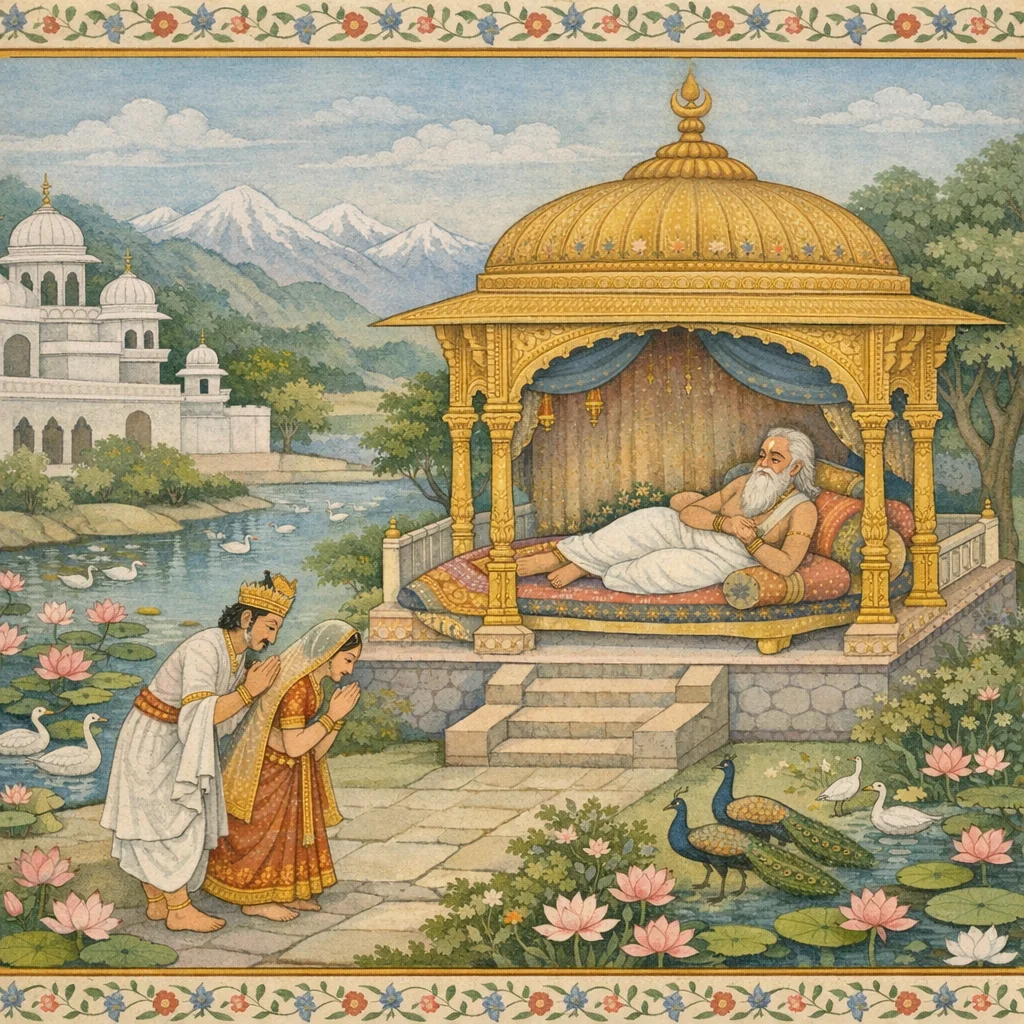
Adhyaya 57
Adhyāya 57: Tapas–Dāna Phala (On the Fruits of Austerity and Giving)
Upa-parva: Dāna–Tapas Upadeśa (Merit of Austerity and Gifts)
Yudhiṣṭhira voices intense remorse and cognitive disorientation after hearing reflections on the war’s consequences, describing the earth as depleted of prosperous rulers and lamenting the deaths of innumerable men. He worries about the condition of noble women now deprived of husbands, sons, and male kin, and anticipates negative posthumous consequences for having participated in the killing of gurus, relatives, and allies. Seeking expiation, he asks for precise instruction on rigorous tapas. Vaiśaṃpāyana reports Bhīṣma’s measured reply: Bhīṣma frames a ‘secret and wondrous’ teaching on attainments in the afterlife, then enumerates a graded economy of merit. Tapas yields heaven, fame, longevity, enjoyments, knowledge, health, beauty, prosperity, and good fortune; other disciplines (silence, brahmacarya, ahiṃsā, teacher-service, regular śrāddha) produce specific results. The chapter then systematizes dāna: water, food, comfort, light, and items of daily life generate durable reputation and capacities; major gifts—especially cows with ritual embellishments, land, and a brahmadeya maiden—are portrayed as rescuing the donor from dark destinies, likened to a boat in an ocean. The unit closes with Yudhiṣṭhira’s approval and his communication of Bhīṣma’s counsel to the Pāṇḍavas and Draupadī, who assent.
Chapter Arc: महर्षि च्यवन के प्रभाव से राजा कुशिक और उनकी रानी को एक अलौकिक, आश्चर्यमय लोक-प्रासादों का दर्शन होता है—मानो गन्धर्वनगर पृथ्वी पर उतर आया हो। → कुशिक स्वर्णमय प्रासाद, मणिस्तम्भों की सहस्र-श्रेणियाँ, रूप्य-शिखर पर्वत, नलिनियाँ, शीत-उष्ण जल, विचित्र आसन-शयन और मधुर पक्षी-ध्वनियाँ देखता जाता है; विस्मय बढ़ता है और मन में प्रश्न उठता है—यह सब किसकी माया/तपः-शक्ति है और इसका प्रयोजन क्या है? → ‘यह महान आश्चर्य क्या है?’ सोचते हुए राजा को मणिमय खम्भों से युक्त सुवर्ण-विमान के भीतर दिव्य पर्यङ्क पर शयन करते भृगुनन्दन च्यवन का साक्षात् दर्शन होता है; वहीं से उपदेश का शिखर आता है—राजा ने इन्द्रियों और मन को जीतकर तप-आराधना सिद्ध की है, इसलिए मुनि अत्यन्त प्रसन्न हैं। → च्यवन राजा की निष्कलुषता और आराधना की प्रशंसा करते हैं—उसमें सूक्ष्मतम भी दोष नहीं—और वर/अनुग्रह देने की तत्परता प्रकट करते हैं; राजा-रानी का विस्मय श्रद्धा में रूपान्तरित होता है। → मुनि कहते हैं—‘मैं तुम पर प्रसन्न हूँ; वर ग्रहण करो’—पर अध्याय का अंत वर के चयन/फल-निर्णय की प्रतीक्षा में छोड़ देता है।
Shlokas
Verse 1
ऑपनआक्रात बछ। सं: चतु:पञ्चाशत्तमो5 ध्याय: महर्षि च्यवनके प्रभावसे राजा कुशिक और उनकी रानीको अनेक आश्चर्यमय दृश्योंका दर्शन एवं च्यवन मुनिका प्रसन्न होकर राजाको वर माँगनेके लिये कहना भीष्म उवाच ततः स राजा रात्र्यन्ते प्रतिबुद्धो महामना: । कृतपूर्वालह्निकः प्रायात् सभार्यस्तद् वन॑ प्रति,भीष्मजी कहते हैं--राजन! तत्पश्चात् रात्रि व्यतीत होनेपर महामना राजा कुशिक जागे और पूर्वह्निकालके नैत्यिक नियमोंसे निवृत्त होकर अपनी रानीके साथ उस तपोवनकी ओर चल दिये
Bhishma said: Then, when the night had come to its end, that great-minded king awoke. Having completed the customary morning rites, he set out—together with his queen—toward that forest hermitage.
Verse 2
ततो ददर्श नृपति: प्रासादं सर्वकाउ्चनम् । मणिस्तम्भसहस्राढ्यं गन्धर्वनगरोपमम्,वहाँ पहुँचकर नरेशने एक सुन्दर महल देखा, जो सारा-का-सारा सोनेका बना हुआ था। उसमें मणियोंके हजारों खम्भे लगे हुए थे और वह अपनी शोभासे गन्धर्वनगरके समान जान पड़ता था
Then the king beheld a splendid palace, entirely fashioned of gold. Adorned with thousands of jewel-studded pillars, it appeared in its radiance like the celestial city of the Gandharvas.
Verse 3
तत्र दिव्यानभिप्रायान् ददर्श कुशिकस्तदा । पर्वतान् रूप्यसानूंश्व नलिनीश्व सपड़कजा:
There, Kuśika beheld wondrous sights that seemed to breathe of heaven—mountains with silvery slopes, and lotus-filled lakes where lilies and lotuses grew together—signs of an exalted, auspicious realm that draws the mind toward higher aims.
Verse 4
चित्रशालाक्ष विविधास्तोरणानि च भारत । शाद्वलोपचितां भूमिं तथा काञ्चनकुट्टिमाम्
Bhīṣma said: “O Bhārata, there were many kinds of beautifully adorned halls and gateways; the ground was covered with fresh turf, and likewise it was paved with golden flooring.”
Verse 5
भारत! उस समय राजा कुशिकने वहाँ शिल्पियोंके अभिप्रायके अनुसार निर्मित और भी बहुत-से दिव्य पदार्थ देखे। कहीं चाँदीके शिखरोंसे सुशोभित पर्वत, कहीं कमलोंसे भरे सरोवर, कहीं भाँति-भाँतिकी चित्रशालाएँ तथा तोरण शोभा पा रहे थे। भूमिपर कहीं सोनेसे मढ़ा हुआ पक्का फर्श और कहीं हरी-हरी घासकी बहार थी ।। सहकारान् प्रफुल्लांश्व केतकोद्दालकान् वरान् | अशोकान् सहकुन्दांश्व॒ फुल्लांश्वैवातिमुक्तकान्,अमराइयोंमें बौर लगे थे। जहाँ-तहाँ केतक, उद्दालक, अशोक, कुन्द, अतिमुक्तक, चम्पा, तिलक, कटहल, बेंत और कनेर आदिके सुन्दर वृक्ष खिले हुए थे। राजा और रानीने उन सबको देखा
Bhīṣma said: “O Bhārata, at that time King Kuśika saw many other wondrous, celestial objects there, fashioned according to the intention and design of the artisans. In one place were mountains adorned with silver peaks; in another, lotus-filled lakes; elsewhere, galleries of paintings and splendid gateways. On the ground, some areas had firm floors plated with gold, while other stretches were bright with fresh green grass. He also saw trees in full bloom—mango, ketaka and uddālaka, aśoka along with kundā, and the flowering atimuktaka—so that the whole place appeared like a carefully ordered vision of prosperity and auspiciousness.”
Verse 6
चम्पकांस्तिलकान् भव्यान् पनसान् वज्जुलानपि । पुष्पितान् कर्णिकारांश्व तत्र तत्र ददर्श ह,अमराइयोंमें बौर लगे थे। जहाँ-तहाँ केतक, उद्दालक, अशोक, कुन्द, अतिमुक्तक, चम्पा, तिलक, कटहल, बेंत और कनेर आदिके सुन्दर वृक्ष खिले हुए थे। राजा और रानीने उन सबको देखा
Bhīṣma said: “He saw, here and there, splendid trees in bloom—campaka, tilaka, jackfruit, and vañjula, as well as flowering karṇikāra. The scene emphasizes the ordered beauty of a well-tended grove, suggesting prosperity, auspiciousness, and the quiet fruits of righteous governance and domestic harmony.”
Verse 7
श्यामान् वारणपुष्पांश्व तथाष्टपदिका लता: । तत्र तत्र परिक्लृप्ता ददर्श स महीपति:,राजाने विभिन्न स्थानोंमें निर्मित श्याम तमाल, वारणपुष्प तथा अष्टपदिका लताओंका दर्शन किया
Bhīṣma said: “The king beheld, arranged here and there, dark-hued tamāla trees, vāraṇa-flowers, and creepers of the aṣṭapadikā kind—ornamental growths set in various places, suggesting a carefully ordered and auspicious setting rather than a random wilderness.”
Verse 8
रम्यान् पद्मोत्यलधरान् सर्वर्तुकुसुमांस्तथा । विमानप्रतिमांश्वापि प्रासादान् शैलसंनिभान्,कहीं कमल और उत्पलसे भरे हुए रमणीय सरोवर शोभा पाते थे। कहीं पर्वत-सदूश ऊँचे-ऊँचे महल दिखायी देते थे जो विमानके आकारमें बने हुए थे। वहाँ सभी ऋतुओंके फूल खिले हुए थे
There were lovely pools, filled with lotuses and utpala-flowers, shining on every side. In other places appeared lofty palaces, mountain-like in height, fashioned in the form of vimānas. There too, the flowers of every season were in bloom.
Verse 9
शीतलानि च तोयानि क्वचिदुष्णानि भारत । आसनानि विचित्राणि शयनप्रवराणि च,भरतनन्दन! कहीं शीतल जल थे तो कहीं उष्ण, उन महलोंमें विचित्र आसन और उत्तमोत्तम शय्याएँ बिछी हुई थीं
O Bhārata, in that place there were waters that were cool in some quarters and warm in others; and within those splendid dwellings were seats of many kinds and the finest of beds laid out.
Verse 10
पर्यड्कान् रत्नसौवर्णान् परारघ्यास्तरणावृतान् | भक्ष्यं भोज्यमनन्तं च तत्र तत्रोपकल्पितम्,सोनेके बने हुए रत्नजटित पलंगोंपर बहुमूल्य बिछौने बिछे हुए थे। विभिन्न स्थानोंमें अनन्त भक्ष्य, भोज्य पदार्थ रखे गये थे
There were couches made of gold and set with jewels, covered with exceedingly costly spreads. And in various places, limitless kinds of foods—both to be chewed and to be eaten—had been laid out and arranged.
Verse 11
वाणीवादान् शुकांश्वैव सारिकान् भृंगराजकान् | कोकिलान् शतपपत्रांक्ष सकोयष्टिककुक्कुभान्,समन््ततः प्रमुदितान् ददर्श सुमनोहरान् । राजाने देखा, मनुष्योंकी-सी वाणी बोलनेवाले तोते और सारिकाएँ चहक रही हैं। भृंगराज, कोयल, शतपत्र, कोयष्टि, कुक्कुभ, मोर, मुर्गे, दात्यूह, जीवजीवक, चकोर, वानर, हंस, सारस और चक्रवाक आदि मनोहर पशु-पक्षी चारों ओर सानन्द विचर रहे हैं
He beheld all around, delighting the mind, many creatures and birds—parrots and mynas that seemed to speak with human-like voices, along with the bhṛṅgarāja, cuckoos, and other charming species—moving about joyfully on every side.
Verse 12
मयूरान् कुक्कुटांश्चापि दात्यूहानू जीवजीवकान् । चकोरान् वानरान् हंसान् सारसां श्रक्रसाह्नयान्
Bhīṣma said: “(One should give in charity) peacocks and cocks as well; dātyūha-birds, jīvajīvakā-birds, and cakoras; monkeys, swans, and cranes—along with birds known as śakrasāhnaya.”
Verse 13
क्वचिदप्सरसां संघान् गन्धर्वाणां च पार्थिव,पृथ्वीनाथ! कहीं झुंड-की-झुंड अप्सराएँ विहार कर रही थीं। कहीं गन्धर्वोके समुदाय अपनी प्रियतमाओंके आलिंगन-पाशमें बँधे हुए थे। उन सबको राजाने देखा। वे कभी उन्हें देख पाते थे और कभी नहीं देख पाते थे
Bhishma said: “O king, lord of the earth! In some places, companies of Apsarases were sporting in delight; elsewhere, groups of Gandharvas were held fast in the noose of their beloveds’ embrace. The king beheld them all—yet at times he could see them, and at times he could not.”
Verse 14
कान्ताभिरपरांस्तत्र परिष्वक्तान् ददर्श ह | न ददर्श च तान् भूयो ददर्श च पुनर्नुप:,पृथ्वीनाथ! कहीं झुंड-की-झुंड अप्सराएँ विहार कर रही थीं। कहीं गन्धर्वोके समुदाय अपनी प्रियतमाओंके आलिंगन-पाशमें बँधे हुए थे। उन सबको राजाने देखा। वे कभी उन्हें देख पाते थे और कभी नहीं देख पाते थे
Bhishma said: “There the king beheld others clasped in the embrace of their beloveds. Yet again he could not see them; and then once more he saw them. Thus, in that wondrous realm of celestial pleasures, perception itself wavered—hinting that delight and attachment are unstable, and that what is sought through sense-enjoyment cannot be held with certainty.”
Verse 15
गीतध्वनिं सुमधुरं तथैवाध्यापनध्वनिम् । हंसान् सुमधुरांश्चापि तत्र शुश्राव पार्थिव:,राजा कभी संगीतकी मधुर ध्वनि सुनते, कभी वेदोंके स्वाध्यायका गम्भीर घोष उनके कानोंमें पड़ता और कभी हंसोंकी मीठी वाणी उन्हें सुनायी देती थी
Bhishma said: “There the king heard, at one time, the exquisitely sweet sound of song; at another, the solemn resonance of Vedic recitation; and again, the pleasing calls of swans. The scene evokes a realm ordered by dharma—where refined enjoyment, disciplined learning, and the harmony of nature coexist without excess.”
Verse 16
त॑ दृष्टवात्यद्भुतं राजा मनसाचिन्तयत् तदा । स्वप्लोडयं चित्तविभ्रंश उताहो सत्यमेव तु,उस अति अदभुत दृश्यको देखकर राजा मन-ही-मन सोचने लगे--“अहो! यह स्वप्न है या मेरे चित्तमें भ्रम हो गया है अथवा यह सब कुछ सत्य ही है
Seeing that exceedingly wondrous sight, the king then reflected within his mind: “Is this a dream, or has my mind fallen into delusion—or is all this truly real?”
Verse 17
अहो सह शरीरेण प्राप्तो5स्मि परमां गतिम् । उत्तरान् वा कुरून् पुण्यानथवाप्यमरावतीम्,“अहो! क्या मैं इसी शरीरसे परम गतिको प्राप्त हो गया हूँ अथवा पुण्यमय उत्तरकुरु या अमरावतीपुरीमें-आ पहुँचा हूँ
Bhīṣma said: “Ah! Have I, with this very body, attained the highest state? Or have I arrived in the holy land of the Northern Kurus—or even in Amarāvatī, the city of the gods?”
Verse 18
किंचेदं महदाश्चर्य सम्पश्यामीत्यचिन्तयत् । एवं संचिन्तयन्नेव ददर्श मुनिपुंगवम्,“यह महान् आश्वर्यकी बात जो मुझे दिखायी दे रही है, क्या है?” इस तरह वे बारंबार विचार करने लगे। राजा इस प्रकार सोच ही रहे थे कि उनकी दृष्टि मुनिप्रवर च्यवनपर पड़ी
Bhishma said: “What is this great wonder that I am seeing?”—so he reflected. As he continued to ponder, the king’s gaze fell upon an eminent sage, foremost among ascetics.
Verse 19
तस्मिन् विमाने सौवर्णे मणिस्तम्भसमाकुले । महाहें शयने दिव्ये शयानं भूगुनन्दनम्
Bhīṣma said: “There, in that golden aerial palace, crowded with jewel-studded pillars, I beheld Bhṛgu’s illustrious descendant lying upon a magnificent, divine couch.”
Verse 20
मणिमय खम्भोंसे युक्त सुवर्णमय विमानके भीतर बहुमूल्य दिव्य पर्यकपर वे भृगुनन्दन च्यवन लेटे हुए थे ।। तमभ्ययात् प्रहर्षेण नरेन्द्र: सह भार्यया । अन्तर्हितस्ततो भूयक्ष्यवन: शयनं च तत्,उन्हें देखते ही पत्नीसहित महाराज कुशिक बड़े हर्षके साथ आगे बढ़े। इतनेहीमें फिर महर्षि च्यवन अन्तर्धान हो गये। साथ ही उनका वह पलंग भी अदृश्य हो गया
Within a golden aerial mansion supported by jewel-studded pillars, the Bhṛgu-descendant Cyavana was seen reclining upon a splendid, precious, divine couch. On seeing him, King Kuśika, accompanied by his queen, approached with great delight. But at that very moment the sage Cyavana vanished from sight again, and with him the couch also disappeared.
Verse 21
ततोडन्यस्मिन् वनोद्देशे पुनरेव ददर्श तम् | कौश्यां बृस्यां समासीनं जपमानं महाव्रतम्,तदनन्तर वनके दूसरे प्रदेशमें राजाने फिर उन्हें देखा, उस समय वे महान् व्रतधारी महर्षि कुशकी चटाईपर बैठकर जप कर रहे थे
Then, in another tract of the forest, the king saw him again. The great sage—steadfast in a lofty vow—was seated on a mat of kuśa-grass, absorbed in the repetition of sacred formulae.
Verse 22
एवं योगबलाद् विप्रो मोहयामास पार्थिवम् । क्षणेन तद् वनं॑ चैव ते चैवाप्सरसां गणा:,इस प्रकार ब्रह्मर्षि च्यवनने अपनी योगशक्तिसे राजा कुशिकको मोहमें डाल दिया। एक ही क्षणमें वह वन, वे अप्सराओंके समुदाय, गन्धर्व और वृक्ष सब-के-सब अदृश्य हो गये। नरेश्वर! गंगाका वह तट पुनः शब्द-रहित हो गया
Bhīṣma said: “Thus, by the power of his yoga, the brahmin-sage cast the king into delusion. In a single instant that forest, and those very companies of Apsarases, vanished from sight.”
Verse 23
गन्धर्वा: पादपाश्रैव सर्वमन्तरधीयत । नि:शब्दम भवच्चापि गंगाकूलं॑ पुनर्न॒ूप,इस प्रकार ब्रह्मर्षि च्यवनने अपनी योगशक्तिसे राजा कुशिकको मोहमें डाल दिया। एक ही क्षणमें वह वन, वे अप्सराओंके समुदाय, गन्धर्व और वृक्ष सब-के-सब अदृश्य हो गये। नरेश्वर! गंगाका वह तट पुनः शब्द-रहित हो गया
Bhishma said: “The Gandharvas—and even the trees—vanished from sight at once. And, O king, the bank of the Ganga again became utterly silent.” (Thus the brahmarshi Cyavana, by his yogic power, cast King Kuśika into delusion; in a single moment the forest-scene—apsarases, gandharvas, and trees—disappeared, leaving the riverbank quiet.)
Verse 24
कुशवल्मीकभूयिष्ठं बभूव च यथा पुरा । ततः स राजा कुशिक: सभार्यस्तेन कर्मणा,वहाँ पहलेके ही समान कुश और बाँबीकी अधिकता हो गयी। तत्पश्चात् पत्नीसहित राजा कुशिक ऋषिका वह महान् अद्भुत प्रभाव देखकर उनके उस कार्यसे बड़े विस्मयको प्राप्त हुए। इसके बाद हर्षमग्न हुए कुशिकने अपनी पत्नीसे कहा--
“Just as before, the place again became thickly overgrown with kuśa grass and ant-hills. Seeing that wondrous effect produced by her act, King Kuśika—together with his queen—was struck with great astonishment.”
Verse 25
विस्मयं परम॑ प्राप्तस्तद् दृष्टया महदद्भुतम् । ततः प्रोवाच कुशिको भार्या हर्षसमन्वित:,वहाँ पहलेके ही समान कुश और बाँबीकी अधिकता हो गयी। तत्पश्चात् पत्नीसहित राजा कुशिक ऋषिका वह महान् अद्भुत प्रभाव देखकर उनके उस कार्यसे बड़े विस्मयको प्राप्त हुए। इसके बाद हर्षमग्न हुए कुशिकने अपनी पत्नीसे कहा--
Bhishma said: “Seeing that great and wondrous marvel, Kushika was filled with the highest astonishment. Then, delighted at heart, King Kushika spoke to his wife—moved by what he had just witnessed.”
Verse 26
पश्य भद्ठे यथा भावाश्षित्रा दृष्टा: सुदुर्लभा: । प्रसादाद् भगुमुख्यस्य किमन्यत्र तपोबलात्
Bhīṣma said: “O noble lady, behold how these wondrous and exceedingly rare manifestations have been seen. From where could such a vision arise, if not from the gracious favor of the foremost of the Bhṛgus—what else could grant it, except the power born of austerity?”
Verse 27
“कल्याणी! देखो, हमने भूगुकुलतिलक च्यवन मुनिकी कृपासे कैसे-कैसे अद्भुत और परम दुर्लभ पदार्थ देखे हैं। भला, तपोबलसे बढ़कर और कौन-सा बल है? ।। तपसा तदवाप्यं हि यत् तु शक््यं मनोरथै: । त्रैलोक्यराज्यादपि हि तप एव विशिष्यते,“जिसकी मनके द्वारा कल्पना मात्र की जा सकती है, वह वस्तु तपस्यासे साक्षात् सुलभ हो जाती है। त्रिलोकीके राज्यसे भी तप ही श्रेष्ठ है
Bhishma said: “O auspicious lady, behold—by the grace of the sage Cyavana, the ornament of the Bhrigu lineage, we have witnessed many wondrous and exceedingly rare realities. Truly, what strength can surpass the power of austerity? For by austerity one can actually attain what the mind can only imagine as a wish; indeed, austerity is superior even to sovereignty over the three worlds.”
Verse 28
तपसा हि सुतप्तेन शक््यो मोक्षस्तपोबलात् । अहो प्रभावो ब्रह्मार्षेक्ष्यवनस्य महात्मन:,“अच्छी तरह तपस्या करनेपर उसकी शक्तिसे मोक्षतक मिल सकता है। इन ब्रह्मर्षि महात्मा च्यवनका प्रभाव अद्भुत है
Bhīṣma said: “By austerity, when it is truly and intensely performed, liberation itself can be attained through the power born of tapas. How astonishing is the spiritual potency of the great-souled Brahmarṣi Cyavana!”
Verse 29
इच्छयैष तपोवीर्यादन्यॉललोकान् सृजेदपि । ब्राह्मणा एव जायेरन् पुण्यवाग्बुद्धिकर्मण:
Bhīṣma said: “By mere will, through the potency born of austerity, he could even create other worlds; and in those worlds, only Brāhmaṇas would be born—men whose speech, understanding, and actions are all pure and meritorious.”
Verse 30
'ये इच्छा करते ही अपनी तपस्याकी शक्तिसे दूसरे लोकोंकी सृष्टि कर सकते हैं। इस पृथ्वीपर ब्राह्मण ही पवित्रवाक्, पवित्रबुद्धि और पवित्र कर्मवाले होते हैं ।। उत्सहेदिह कृत्वैव को<न्यो वै च्यवनादते । ब्राह्मण्यं दुर्लभ लोके राज्यं हि सुलभं नरै:,“महर्षि च्यवनके सिवा दूसरा कौन है, जो ऐसा महान् कार्य कर सके? संसारमें मनुष्योंको राज्य तो सुलभ हो सकता है, परंतु वास्तविक ब्राह्मणत्व परम दुर्लभ है
Bhishma said: Those who, by mere resolve, can by the power of their austerity even bring forth other worlds—such are they. On this earth, it is the Brahmins alone who are marked by purity of speech, purity of understanding, and purity of conduct. Who else here, except the great sage Cyavana, could accomplish so mighty a deed? For among men, kingship may be easily obtained, but true Brahminhood—genuine spiritual and ethical excellence—is exceedingly rare in the world.
Verse 31
ब्राह्माण्यस्य प्रभावाद्धि रथे युक्तौ स्वधुर्यवत् । इत्येवं चिन्तयान: स विदितश्न्यवनस्य वै,“ब्राह्मणत्वके प्रभावसे ही महर्षिने हम दोनोंको अपने वाहनोंकी भाँति रथमें जोत दिया था।” इस तरह राजा सोच-विचार कर ही रहे थे कि महर्षि च्यवनको उनका आना ज्ञात हो गया
“It was by the power of Brahminhood (brāhmaṇya) that the great ṛṣi yoked us both to the chariot, as though we were his own beasts of burden.” As the king pondered thus, the sage Cyavana became aware of his arrival.
Verse 32
सम्प्रेक्ष्योवाच नृपतिं क्षिप्रमागम्यतामिति । इत्युक्त: सहभार्यस्तु सो5भ्यगच्छन्महामुनिम्
After looking on, he addressed the king: “Let him come quickly.” Thus instructed, the king—together with his wife—went to the great sage.
Verse 33
शिरसा वन्दनीयं तमवन्दत च पार्थिव: । उन्होंने राजाकी ओर देखकर कहा--'भूपाल! शीघ्र यहाँ आओ।” उनके इस प्रकार आदेश देनेपर पत्नीसहित राजा उनके पास गये तथा उन वन्दनीय महामुनिको उन्होंने मस्तक झुकाकर प्रणाम किया ।। तस्याशिष: प्रयुज्याथ स मुनिस्तं नराधिपम्
Bhishma said: The king bowed his head and paid reverence to that venerable sage, worthy of salutation. Then, having bestowed his blessings, the great ascetic addressed the ruler—showing how rightful authority is to be exercised with humility before spiritual merit, and how dharma is upheld when power honors wisdom.
Verse 34
ततः प्रकृतिमापन्नो भार्गवो नूपते नृपम्
Bhīṣma said: “Thereafter, Bhārgava, having returned to his natural disposition, addressed the king.”
Verse 35
राजन् सम्यग् जितानीह पञड्च पज्च स्वयं त्वया
Bhīṣma said: “O King, here you have rightly and thoroughly conquered the five and the five by your own effort.”
Verse 36
सम्यगाराधित: पुत्र त्वया प्रवदतां वर
Bhīṣma said: “My son, you have duly and properly honored (the one you approached). Therefore, choose the best boon from among those that may be granted.”
Verse 37
अनुजानीहि मां राजन् गमिष्यामि यथागतम्
Bhīṣma said: “O King, grant me leave; I shall depart, returning the way I came.”
Verse 38
0 &.* 7 एप कतचजत णः हपफ तक ज्ज्ल्च्य कण का यक्ुम्त्ाप ग ः 2० [! 7472 5५2 ५ ॥#/ ८ कुशिक उवाच अग्निमध्ये गतेनेव भगवन् संनिधौ मया
Kuśika said: “O Blessed one, in your very presence I feel as though I have entered the midst of fire.”
Verse 39
वर्तितं भूगुशार्दूल यन्न दग्धो5स्मि तद् बहु । एष एव वरो मुख्य: प्राप्तो मे भूगुनन्दन
Kuśika said: “O tiger among the Bhṛgus, the fact that I have passed through this ordeal and yet have not been burned—this itself is a great boon. O delight of the Bhṛgus, this alone is the foremost blessing that has come to me.”
Verse 40
कुशिक बोले--भगवन्! भृगुश्रेष्ठी मैं आपके निकट उसी प्रकार रहा हूँ, जैसे कोई प्रज्वलित अग्निके बीचमें खड़ा हो। उस अवस्थामें रहकर भी मैं जलकर भस्म नहीं हुआ, यही मेरे लिये बहुत बड़ी बात है। भृगुनन्दन! यही मैंने महान् वर प्राप्त कर लिया ।। यत् प्रीतोडसि मया ब्रह्मन् कुलं त्रातं च मेडनघ । एष मे&नुग्रहो विप्र जीविते च प्रयोजनम्,निष्पाप ब्रह्मर्ष! आप जो प्रसन्न हुए हैं तथा आपने जो मेरे कुलको नष्ट होनेसे बचा दिया, यही मुझपर आपका भारी अनुग्रह है। और इतनेसे ही मेरे जीवनका सारा प्रयोजन सफल हो गया
Kuśika said: “Revered sir, best of the Bhṛgus, I have remained near you as one might stand amid a blazing fire. Yet even in that condition I was not burned to ashes—this alone is a great marvel for me. O descendant of Bhṛgu, this itself is the great boon I have obtained. That you are pleased with me, O Brahmin, and that you have saved my lineage from destruction—this is your mighty grace toward me. With just this, O sinless Brahmarṣi, the very purpose of my life has been fulfilled.”
Verse 41
एतदू् राज्यफलं चैव तपसश्न॒ फलं मम । यदि त्वं प्रीतिमान् विप्र मयि वै भूगुनन्दन
Kuśika said: “This, indeed, is the reward of kingship, and this too is the fruit of my austerities—if you, O Brahmin, O delight of the Bhṛgus, are truly pleased with me.”
Verse 42
अस्ति मे संशय: कश्चित् तन्मे व्याख्यातुमहसि
Kuśika said: “I have a certain doubt. You ought to explain it to me.”
Verse 53
इस प्रकार श्रीमह्याभारत अनुशासनपर्वके अन्तर्गत दानधर्मपर्वमें च्यवन और कुशिकका संवादविषयक तिरपनवाँ अध्याय पूरा हुआ
Thus ends the fifty-third chapter, concerning the dialogue between Cyavana and Kuśika, within the Dānadharma section of the Anuśāsana Parva of the revered Mahābhārata. This colophon marks the completion of a teaching unit on the ethics of giving and the dharmic standards by which generosity is judged.
Verse 54
भृगुनन्दन! यही मेरे राज्यका और यही मेरी तपस्याका भी फल है। विप्रवर! यदि आपका मुझपर प्रेम हो तो मेरे मनमें एक संदेह है, उसका समाधान करनेकी कृपा करें ।। इति श्रीमहाभारते अनुशासनपर्वणि दानधर्मपर्वणि च्यवनकुशिकसंवादे चतुः:पञ्चाशत्तमो5ध्याय:
O descendant of Bhṛgu, this is the fruit of my kingship, and this too is the fruit of my austerities. O best of Brahmins, if you bear affection for me, there is a doubt in my mind—please be gracious and resolve it.
Verse 123
समन््ततः प्रमुदितान् ददर्श सुमनोहरान् । राजाने देखा, मनुष्योंकी-सी वाणी बोलनेवाले तोते और सारिकाएँ चहक रही हैं। भृंगराज, कोयल, शतपत्र, कोयष्टि, कुक्कुभ, मोर, मुर्गे, दात्यूह, जीवजीवक, चकोर, वानर, हंस, सारस और चक्रवाक आदि मनोहर पशु-पक्षी चारों ओर सानन्द विचर रहे हैं
The king looked all about and beheld, on every side, delightful creatures rejoicing. Parrots and sārika birds, speaking as though with human voices, chattered and sang. Bhr̥ṅgarāja, cuckoos, śatapatra, koyasṭi, kukkubha, peacocks, cocks, dātyūha, jīvajīvaka, cakora, monkeys, swans, cranes, and cakravāka, and many others—charming beasts and birds—wandered happily in every direction.
Verse 336
निषीदेत्यब्रवीद् धीमान् सान्त्वयन् पुरुषर्षभ: । तब उन पुरुषप्रवर बुद्धिमान् मुनिने राजाको आशीर्वाद देकर सान्त्वना प्रदान करते हुए कहा--'“आओ बैठो”'
The wise sage, consoling the bull among men, blessed the king and spoke gently, “Come, sit.”
Verse 346
उवाच श्लक्ष्णया वाचा तर्पयन्निव भारत | भरतवंशी नरेश! तदनन्तर स्वस्थ होकर भृगुपुत्र च्यवन मुनि अपनी स्निग्ध मुधर वाणीद्वारा राजाको तृप्त करते हुए-से बोले--
Bhīṣma said: “O descendant of Bharata, O king of the Bharata line! Thereafter, the sage Cyavana, son of Bhṛgu, having regained composure, spoke to the king in a gentle, smooth, and sweet voice—seeming, as it were, to satisfy and reassure him.”
Verse 353
मनः:षष्ठानीन्द्रियाणि कृच्छान्मुक्तोडसि तेन वै । “राजन! तुमने पाँच ज्ञानेन्द्रियों, पाँच कर्मेन्द्रियों और छठे मनको अच्छी तरह जीत लिया है। इसीलिये तुम महान् संकटसे मुक्त हुए हो
Bhishma said: “O King, you have thoroughly mastered the senses—five along with the mind as the sixth. Therefore, you have been released from a great distress.”
Verse 363
नहि ते वृजिनं किंचित् सुसूक्ष्ममपि विद्यते । “वक्ताओंमें श्रेष्ठ पुत्र! तुमने भलीभाँति मेरी आराधना की है। तुम्हारे द्वारा कोई छोटे- से-छोटा या सूक्ष्म-से-सूक्ष्म अपराध भी नहीं हुआ है
Bhīṣma said: “In you there is not the slightest trace of wrongdoing—no fault at all, not even one that is minute or subtle. You have honored and served me properly; therefore you stand free from even the tiniest offence.”
Verse 3736
प्रीतो5स्मि तव राजेन्द्र वरश्न प्रतिगृह्मताम् । “राजन! अब मुझे विदा दो। मैं जैसे आया था, वैसे ही लौट जाऊँगा। राजेन्द्र! मैं तुमपर बहुत प्रसन्न हूँ; अतः तुम कोई वर माँगो”
Bhishma said: “O king, I am pleased with you. Therefore, accept a boon. Grant me leave now, O Rajan; I shall return just as I came.”
Frequently Asked Questions
Yudhiṣṭhira confronts the ethical aftermath of kin-slaying and guru-slaying in a civil war: how to understand culpability, the suffering of survivors (especially bereaved women), and the prospect of adverse karmic destinies.
Expiation and restoration are operationalized through disciplined practices: tapas and targeted dāna are presented as structured means to generate merit, cultivate virtues, and re-anchor social order after collapse.
Yes in functional form: the chapter repeatedly attaches explicit ‘phala’ (fruits) to practices—asserting predictable outcomes in this world and posthumously (e.g., heaven, reputation, rescue from dark destinies), thereby positioning the teaching as an efficacy-mapped ethical manual.