Adhyaya 47
Ādi Parva, Adhyāya 47 — Janamejaya’s Sarpa-satra: Vow, Preparation, and the Onset of the Serpent Offering
Upa-parva: Pauloma Parva (Sarpa-satra framing episode within Ādi Parva)
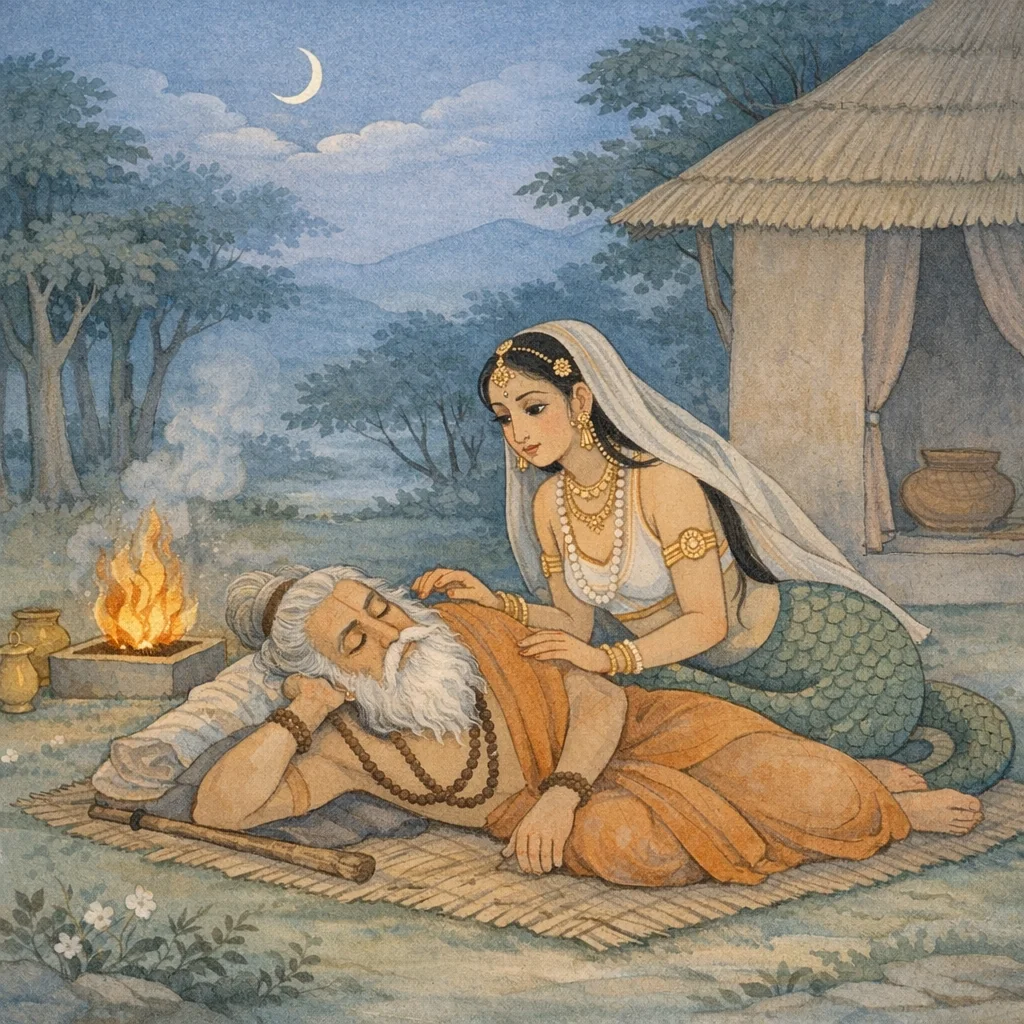
Sauti reports that King Janamejaya, approved by his ministers, formally undertakes a vow to perform the Sarpa-satra in response to Takṣaka’s killing of Parīkṣit (1–5). He summons the purohita and ṛtvij-s, asking for a method by which Takṣaka—together with associates—may be brought into the blazing sacrificial fire (3–5). The priests affirm that a great sacrifice, known in purāṇic tradition as the Sarpa-satra, exists and that Janamejaya is its proper sponsor (6–7). Interpreting their counsel as assurance that Takṣaka can be drawn into the fire’s ‘mouth,’ the king orders preparations and requisites to be assembled (8–9). The officiants measure and establish the yajña-ground according to śāstric procedure, construct the desired sacrificial enclosure, and initiate the king’s dīkṣā (10–12). A significant portent arises that threatens to obstruct the sacrifice, and the sthapati (expert in vāstu/measurement) issues a caution: given the place/time/measurement conditions, making a Brahmin the causal factor, the rite will not properly conclude (13–15). Before full initiation, the king orders the kṣattṛ (chamberlain/guard) to prevent unknown persons from entering the ritual space (16). The ritual then proceeds: priests, wearing dark garments and with smoke-reddened eyes, make offerings with mantras into the kindled fire; snakes are invoked and consigned into Agni’s mouth, producing mass descent of serpents—of many colors, sizes, and forms—into the flames amid distress calls and convulsive motion (17–25). The chapter thematically juxtaposes procedural orthopraxy with ethical risk: retributive intent is operationalized through ritual technology, yet omens and specialist warnings signal limits and potential disruption.
Chapter Arc: सौतिर उग्रश्रवा जनमेजय के सर्पसत्र में वह प्रसंग उठाते हैं जहाँ मुनि जरत्कारु का विवाह नागकन्या ‘जरत्कारु’ से हुआ—पर यह बंधन तपस्वी के कठोर नियमों पर टिका है, प्रेम पर नहीं। → वासुकि अपनी बहन को सौंपते हुए वचन देता है कि वह उसकी रक्षा करेगा, पर मुनि स्पष्ट कर देते हैं कि वे उसका भरण-पोषण नहीं करेंगे; शर्त यह कि पत्नी कोई अप्रिय कर्म न करे, अन्यथा वे उसे त्याग देंगे। समय बीतता है—संध्या-वेला और अग्निहोत्र का मुहूर्त निकट आता है, और मुनि निद्रा में हैं। पत्नी धर्म-संकट में पड़ती है: जगाए तो क्रोध, न जगाए तो संध्यातिक्रमण से धर्मलोप। → धर्म की रक्षा हेतु वह मुनि को जगाती है—और वही क्षण शर्त का फंदा बन जाता है। मुनि इसे ‘अप्रिय’ मानकर कहते हैं कि अब वे जैसे आए थे वैसे ही चले जाएंगे; सूर्य में भी इतनी शक्ति नहीं कि उनके सोते हुए उन्हें रोक सके—तो किसी और की क्या बिसात। → पत्नी काँपते हृदय से धैर्य बाँधकर विनती करती है कि वह निर्दोष है, उसे न त्यागें; पर मुनि अपने नियम पर अडिग रहते हैं और तपस्या के लिए प्रस्थान का निश्चय करते हैं। पत्नी के मन में भाई वासुकि, कुल-कल्याण और मातृशाप से पीड़ित नाग-ज्ञातियों का भय उमड़ आता है—वह सोचती है कि अब वासुकि उसे क्या कहेगा। → मुनि के प्रस्थान के साथ ही यह अनिश्चितता छा जाती है कि नागवंश-रक्षा का उद्देश्य (आस्तीक का जन्म) कैसे पूर्ण होगा और पत्नी अपने कुल के सामने किस उत्तर के साथ लौटेगी।
Shlokas
Verse 1
अफ्-४#-काल सप्तचत्वारिशो<् ध्याय: जरत्कारु मुनिका नागकन्याके साथ विवाह, नागकन्या जरत्कारुद्धवारा पतिसेवा तथा पतिका उसे त्यागकर तपस्याके लिये गमन सौतिरुवाच वासुकिस्त्वब्रवीद् वाक््यं जरत्कारुमृषिं तदा | सनाम्नी तव कन्येयं स्वसा मे तपसान्विता,उग्रश्रवाजी कहते हैं-शौनक! उस समय वासुकिने जरत्कारु मुनिसे कहा -- द्विजश्रेष्ठ) इस कन्याका वही नाम है, जो आपका है। यह मेरी बहिन है और आपकी ही भाँति तपस्विनी भी है। आप इसे ग्रहण करें। आपकी पत्नीका भरण-पोषण मैं करूँगा। तपोधन! अपनी सारी शक्ति लगाकर मैं इसकी रक्षा करता रहूँगा। मुनिश्रेष्ठ] अबतक आपहीके लिये मैंने इसकी रक्षा की है
Sauti said: Then Vāsuki addressed the sage Jaratkāru: “O best of twice-born ones, this maiden bears the very same name as you. She is my sister, endowed with ascetic merit. Accept her in marriage. I shall provide for her maintenance, and with all my strength I will protect her. Until now I have preserved her for you alone.”
Verse 2
भरिष्यामि च ते भार्या प्रतीच्छेमां द्विजोत्तम | रक्षणं च करिष्ये5स्या: सर्वशक्त्या तपोधन । त्वदर्थ रक्ष्यते चैषा मया मुनिवरोत्तम,उग्रश्रवाजी कहते हैं-शौनक! उस समय वासुकिने जरत्कारु मुनिसे कहा -- द्विजश्रेष्ठ) इस कन्याका वही नाम है, जो आपका है। यह मेरी बहिन है और आपकी ही भाँति तपस्विनी भी है। आप इसे ग्रहण करें। आपकी पत्नीका भरण-पोषण मैं करूँगा। तपोधन! अपनी सारी शक्ति लगाकर मैं इसकी रक्षा करता रहूँगा। मुनिश्रेष्ठ] अबतक आपहीके लिये मैंने इसकी रक्षा की है
“I shall also maintain your wife—accept this woman, O best of Brahmins. I will protect her with all my strength, O possessor of austerity. Indeed, for your sake this maiden has been kept under my protection until now, O foremost of sages.”
Verse 3
ऋषिरुवाच न भरिष्येडहमेतां वै एब मे समय: कृत: । अप्रियं च न कर्तव्यं कृते चैनां त्यजाम्यहम्,ऋषिने कहा--नागराज! मैं इसका भरण-पोषण नहीं करूँगा, मेरी यह शर्त तो तय हो गयी। अब दूसरी शर्त यह है कि तुम्हारी इस बहिनको कभी ऐसा कार्य नहीं करना चाहिये, जो मुझे अप्रिय लगे। यदि अप्रिय कार्य कर बैठेगी तो उसी समय मैं इसे त्याग दूँगा
The sage said: “I will not undertake the maintenance of her; this condition of mine has already been settled. And further, she must never do anything that displeases me. If she commits an act that is displeasing, then at that very moment I will abandon her.”
Verse 4
सौतिर्वाच प्रतिश्रुते तु नागेन भरिष्ये भगिनीमिति । जरत्कारुस्तदा वेश्म भुजगस्य जगाम ह,उग्रश्रवाजी कहते हैं--नागराजने यह शर्त स्वीकार कर ली कि “मैं अपनी बहिनका भरण-पोषण करूँगा।” तब जरत्कारु मुनि वासुकिके भवनमें गये
Sauti said: When the serpent had thus given his promise—“I shall maintain my sister”—the sage Jaratkāru then went to the dwelling of the serpent.
Verse 5
तत्र मन्त्रविदां श्रेष्ठस्तपोवृद्धों महाव्रत: । जग्राह पार्णिं धर्मात्मा विधिमन्त्रपुरस्कृतम्,वहाँ मन्त्रवेत्ताओंमें श्रेष्ठ तपोवृद्ध महाव्रती धर्मात्मा जरत्कारुने शास्त्रीय विधि और मन्त्रोच्चारणके साथ नागकन्याका पाणिग्रहण किया
There, the righteous Jaratkāru—foremost among those skilled in sacred formulas, matured by austerity and steadfast in great vows—accepted the maiden’s hand in marriage, performing the rite according to scriptural procedure and with the prescribed mantras.
Verse 6
ततो वासगहं रम्यं पन्नगेन्द्रस्य सम्मतम् । जगाम भार्यामादाय स्तूयमानो महर्षिभि:,तदनन्तर महर्षियोंसे प्रशंसित होते हुए वे नागराजके रमणीय भवनमें, जो मनके अनुकूल था, अपनी पत्नीको लेकर गये
Then, praised by the great sages, he went—taking his wife with him—to the delightful residence approved by the lord of serpents.
Verse 7
शयनं तत्र संक्लृप्तं स्पर्थ्यास्तरणसंवृतम् । तत्र भार्यासहायो वै जरत्कारुरुवास ह,वहाँ बहुमूल्य बिछौनोंसे सजी हुई शय्या बिछी थी। जरत्कारु मुनि अपनी पत्नीके साथ उसी भवनमें रहने लगे
There a bed had been duly prepared, covered with costly and choice bedding. There the sage Jaratkāru, accompanied by his wife, took up residence.
Verse 8
स तत्र समयं चक्रे भार्यया सह सत्तम: । विप्रियं मे न कर्तव्यं न च वाच्यं कदाचन,उन साधुशिरोमणिने वहाँ अपनी पत्नीके सामने यह शर्त रखी--'तुम्हें ऐसा कोई काम नहीं करना चाहिये, जो मुझे अप्रिय लगे। साथ ही कभी अप्रिय वचन भी नहीं बोलना चाहिये
There he, the noble one, made an agreement with his wife: “You must never do anything that displeases me, nor should you ever speak words that are displeasing.”
Verse 9
त्यजेयं विप्रिये च त्वां कृते वासं च ते गृहे । एतद् गृहाण वचनं मया यत् समुदीरितम्,“तुमसे अप्रिय कार्य हो जानेपर मैं तुम्हें और तुम्हारे घरमें रहना छोड़ दूँगा। मैंने जो कुछ कहा है, मेरे इस वचनको दृढ़तापूर्वक धारण कर लो”
“If anything displeasing to you should occur, I will leave you and also cease dwelling in your house. Hold firmly to this statement—this is the word I have spoken.”
Verse 10
तत: परमसंविग्ना स्वसा नागपतेस्तदा । अतिदुःखान्विता वाक्यं तमुवाचैवमस्त्विति,यह सुनकर नागराजकी बहिन अत्यन्त उद्विग्न हो गयी और उस समय बहुत दुःखी होकर बोली--'भगवन्! ऐसा ही होगा”
Hearing this, the Nāga-king’s sister was deeply shaken. Overwhelmed with intense sorrow, she addressed him and said, “So be it; it shall be as you have said.”
Verse 11
फिर वह यशस्विनी नागकन्या दुःखद स्वभाववाले पतिकी उसी शर्तके अनुसार सेवा करने लगी। वह श्वेतकाकीय- उपायोंसे सदा पतिका प्रिय करनेकी इच्छा रखकर निरन्तर उनकी आराधनामें लगी रहती थी
Then that illustrious serpent-maiden began to serve her husband exactly according to the condition that had been set. Employing the means associated with Śvetakākī, she remained continually devoted to pleasing her husband, intent on winning his favor through steady attendance and reverent care.
Verse 12
ऋतुकाले ततः सनाता कदाचिद् वासुके: स्वसा । भर्तरें वै यथान्यायमुपतस्थे महामुनिम्,तदनन्तर किसी समय ऋतुकाल आनेपर वासुकिकी बहिन स्नान करके न्यायपूर्वक अपने पति महामुनि जरत्कारुकी सेवामें उपस्थित हुई
Then, when the proper season had come, Vāsuki’s sister, having bathed, at a certain time approached her husband—the great sage—according to what is lawful and proper.
Verse 13
तथैव सा च भर्तरें दुःखशीलमुपाचरत् | उपायै: श्वेतकाकीयै: प्रियकामा यशस्विनी,तत्र तस्यथा: समभवद् गर्भो ज्वलनसंनिभ: । अतीवतेजसा युक्तो वैश्वानरसमद्युति: वहाँ उसे गर्भ रह गया, जो प्रज्वलित अग्निके समान अत्यन्त तेजस्वी तथा तपःशक्तिसे सम्पन्न था। उसकी अंगकान्ति अग्निके तुल्य थी
In the same manner, she continued to attend upon her husband, who was of a sorrowful disposition. Seeking what was dear to her, the illustrious woman employed subtle stratagems likened to those of the ‘white-crow’ kind, Śvetakākī. In due course she conceived there a child, blazing like fire—endowed with extraordinary radiance, his splendor comparable to Vaiśvānara, the cosmic fire; the glow of his limbs was like flame.
Verse 14
शुक्लपक्षे यथा सोमो व्यवर्धत तथैव स: । ततः कतिपयाहस्य जरत्कारुर्महायशा:,जैसे शुक्लपक्षमें चन्द्रमा बढ़ते हैं, उसी प्रकार वह गर्भ भी नित्य परिपुष्ट होने लगा। तत्पश्चात् कुछ दिनोंके बाद महातपस्वी जरत्कारु कुछ खिन्न-से होकर अपनी पत्नीकी गोदमें सिर रखकर सो गये। उन विप्रवर जरत्कारुके सोते समय ही सूर्य अस्ताचलको जाने लगे
Takṣaka said: “Just as the Moon waxes in the bright fortnight, so too that embryo steadily grew and became well-nourished. Then, after some days had passed, the illustrious ascetic Jaratkāru—somewhat dejected—laid his head in his wife’s lap and fell asleep; and while that best of brāhmaṇas slept, the Sun began to set.”
Verse 15
उत्सड्रेडस्या: शिर: कृत्वा सुष्वाप परिखिन्नवत् । तस्मिंश्न सुप्ते विप्रेन्द्रे सवितास्तमियाद् गिरिम्,जैसे शुक्लपक्षमें चन्द्रमा बढ़ते हैं, उसी प्रकार वह गर्भ भी नित्य परिपुष्ट होने लगा। तत्पश्चात् कुछ दिनोंके बाद महातपस्वी जरत्कारु कुछ खिन्न-से होकर अपनी पत्नीकी गोदमें सिर रखकर सो गये। उन विप्रवर जरत्कारुके सोते समय ही सूर्य अस्ताचलको जाने लगे
Worn out, he laid his head down and fell asleep as though exhausted. While that foremost of brāhmaṇas slept, the Sun began to set behind the mountain—marking the approach of evening and the moment when duties and vows must be carefully observed.
Verse 16
अह्वः परिक्षये ब्रह्मूंस्तत: साचिन्तयत् तदा । वासुकेर्भगिनी भीता धर्मलोपान्मनस्विनी,ब्रह्म! दिन समाप्त होने ही वाला था। अतः वासुकिकी मनस्विनी बहिन जरत्कारु अपने पतिके धर्मलोपसे भयभीत हो उस समय इस प्रकार सोचने लगी--“इस समय पतिको जगाना मेरे लिये अच्छा (धर्मानुकूल) होगा या नहीं? मेरे धर्मात्मा पतिका स्वभाव बड़ा दुःखद है। मैं कैसा बर्ताव करूँ, जिससे उनकी दृष्टिमें अपराधिनी न बनूँ
As the day was drawing to its close, she reflected. Vāsuki’s sister—high-minded yet fearful that her husband’s duty might be neglected—began to deliberate: “Is it right for me to wake my husband at this moment or not? My righteous husband’s temperament is severe and sorrowful; how should I act so that I do not appear blameworthy in his eyes?”
Verse 17
कि नु मे सुकृतं भूयाद् भर्तुरुत्थापनं न वा । दुःखशीलो हि धर्मात्मा कथं नास्यापराध्नुयाम्,ब्रह्म! दिन समाप्त होने ही वाला था। अतः वासुकिकी मनस्विनी बहिन जरत्कारु अपने पतिके धर्मलोपसे भयभीत हो उस समय इस प्रकार सोचने लगी--“इस समय पतिको जगाना मेरे लिये अच्छा (धर्मानुकूल) होगा या नहीं? मेरे धर्मात्मा पतिका स्वभाव बड़ा दुःखद है। मैं कैसा बर्ताव करूँ, जिससे उनकी दृष्टिमें अपराधिनी न बनूँ
She reflected: “What course would be truly meritorious for me now—should I wake my husband, or should I not? He is righteous at heart, yet of a sorrowful and sensitive disposition. O Brahman, how can I act so that I do not incur offense in his eyes?”
Verse 18
कोपो वा धर्मशीलस्य धर्मलोपो5थवा पुनः । धर्मलोपो गरीयान् वै स्यादित्यत्राकरोन्मतिम्,'यदि इन्हें जगाऊँगी तो निश्चय ही इन्हें मुझपर क्रोध होगा और यदि सोते-सोते संध्योपासनका समय बीत गया तो अवश्य इनके धर्मका लोप हो जायगा, ऐसी दशामें धर्मात्मा पतिका कोप स्वीकार करूँ या उनके धर्मका लोप? इन दोनोंमें धर्मका लोप ही भारी जान पड़ता है।” अतः जिससे उनके धर्मका लोप न हो, वही कार्य करनेका उसने निश्चय किया
She reflected: “If I wake this righteous man, he will surely be angry with me; but if the time for his twilight worship passes while he sleeps, his dharma will be impaired. In such a situation, should I accept my husband’s anger, or allow his dharma to lapse? Of the two, the lapse of dharma is the graver.” Therefore she resolved to do what would prevent any loss of his religious duty.
Verse 19
उत्थापयिष्ये यद्येन॑ ध्रुवं कोपं करिष्यति । धर्मलोपो भवेदस्य संध्यातिक्रमणे ध्रुवम्,'यदि इन्हें जगाऊँगी तो निश्चय ही इन्हें मुझपर क्रोध होगा और यदि सोते-सोते संध्योपासनका समय बीत गया तो अवश्य इनके धर्मका लोप हो जायगा, ऐसी दशामें धर्मात्मा पतिका कोप स्वीकार करूँ या उनके धर्मका लोप? इन दोनोंमें धर्मका लोप ही भारी जान पड़ता है।” अतः जिससे उनके धर्मका लोप न हो, वही कार्य करनेका उसने निश्चय किया
Takṣaka reflected: “If I wake him, he will surely become angry with me. Yet if the time for his twilight worship passes while he sleeps, his dharma will certainly suffer loss. In such a situation, should I accept the righteous husband’s anger, or allow his dharma to be diminished? Of the two, the loss of dharma seems the graver.” Therefore, she resolved to act in whatever way would prevent his dharma from being impaired.
Verse 20
इति निश्चित्य मनसा जरत्कारुर्भुजड़मा । तमृषिं दीप्ततपसं शयानमनलोपमम्,मन-ही-मन ऐसा निश्चय करके मीठे वचन बोलनेवाली नागकन्या जरत्कारुने वहाँ सोते हुए अग्निके समान तेजस्वी एवं तीव्र तपस्वी महर्षिसे मधुरवाणीमें यों कहा--“महाभाग! उठिये, सूर्यदेव अस्ताचलको जा रहे हैं
Having thus resolved in her mind, Jaratkāru, the Nāga maiden of sweet speech, addressed the sleeping sage Jaratkāru—radiant like fire and fierce in austerity—in gentle words: “O fortunate one, rise; the Sun-god is going down toward the western mountain.”
Verse 21
उवाचेदं वच: श्लक्ष्णं ततो मधुरभाषिणी । उत्तिष्ठ त्वं महाभाग सूर्यो5स्तमुपगच्छति,मन-ही-मन ऐसा निश्चय करके मीठे वचन बोलनेवाली नागकन्या जरत्कारुने वहाँ सोते हुए अग्निके समान तेजस्वी एवं तीव्र तपस्वी महर्षिसे मधुरवाणीमें यों कहा--“महाभाग! उठिये, सूर्यदेव अस्ताचलको जा रहे हैं
Then the sweet-speaking maiden addressed him with gentle, polished words: “O fortunate one, rise now; the sun is going down.”
Verse 22
संध्यामुपास्स्व भगवन्नप: स्पृष्टवा यतव्रतः । प्रादुष्कृताग्निहोत्रो5यं मुहूर्तो रम्यदारुण:
Takṣaka said: “O venerable one, perform your twilight worship. Having touched water and restraining yourself by vow, complete the Agnihotra that has now become due. This moment is at once pleasing in its outward calm and dreadful in what it is about to bring.”
Verse 23
एवमुक्त: स भगवान् जरत्कारुर्महातपा:,नागकन्याके ऐसा कहनेपर महातपस्वी भगवान् जरत्कारु जाग उठे। उस समय क्रोधके मारे उनके होठ काँपने लगे। वे इस प्रकार बोले--“नागकन्ये! तूने मेरा यह अपमान किया है
Thus addressed, the venerable and great ascetic Jaratkāru was roused. In that moment, seized by anger, his lips began to tremble. He spoke: “O Nāga maiden! You have insulted me.”
Verse 24
भार्य॑ प्रस्फुरमाणौष्ठ इदं वचनमत्रवीत् । अवमान: प्रयुक्तो5यं त्वया मम भुजड़मे,नागकन्याके ऐसा कहनेपर महातपस्वी भगवान् जरत्कारु जाग उठे। उस समय क्रोधके मारे उनके होठ काँपने लगे। वे इस प्रकार बोले--“नागकन्ये! तूने मेरा यह अपमान किया है
His wife, her lips trembling, spoke these words: “O Nāga maiden, you have aimed this insult at my husband—the Nāga.” The line underscores how a slight (avamāna) is treated as a moral injury, provoking anger and setting in motion consequences that will ripple through the serpent–sage narrative.
Verse 25
समीपे ते न वत्स्यामि गमिष्यामि यथागतम् | शक्तिरस्ति न वामोरु मयि सुप्ते विभावसो:,कि पुनर्धर्मशीलस्य मम वा मद्विधस्य वा । “इसलिये अब मैं तेरे पास नहीं रहूँगा। जैसे आया हूँ, वैसे ही चला जाऊँगा। वामोरु! सूर्यमें इतनी शक्ति नहीं है कि मैं सोता रहूँ और वे अस्त हो जायेँ। यह मेरे हृदयमें निश्चय है। जिसका कहीं अपमान हो जाय ऐसे किसी भी पुरुषको वहाँ रहना अच्छा नहीं लगता। फिर मेरी अथवा मेरे-जैसे दूसरे धर्मशील पुरुषकी तो बात ही कया है”
Takṣaka said: “I will not stay near you any longer; I shall depart just as I came. O fair-thighed one, the Sun has no power to set while I am asleep—this is my firm resolve. When a man has been dishonoured anywhere, it is not fitting for him to remain there; how much more so for me, or for one like me, who is devoted to dharma.”
Verse 26
अस्तं गन्तुं यथाकालमिति मे हृदि वर्तते । न चाप्यवमतस्येह वासो रोचेत कस्यचित्
Takṣaka said: “It is fixed in my heart that I should depart at the proper time. And indeed, to remain here in a place where one is held in contempt would not be pleasing to anyone.”
Verse 27
एवमुक्ता जरत्कारुर्भत्रा हृदयकम्पनम्,जब पतिने इस प्रकार हृदयमें कँपकँपी पैदा करनेवाली बात कही, तब उस घरमें स्थित वासुकिकी बहिन इस प्रकार बोली--'विप्रवर! मैंने अपमान करनेके लिये आपको नहीं जगाया था। आपके धर्मका लोप न हो जाय, यही ध्यानमें रखकर मैंने ऐसा किया है।” यह सुनकर क्रोधमें भरे हुए महातपस्वी ऋषि जरत्कारुने अपनी पत्नी नागकन्याको त्याग देनेकी इच्छा रखकर उससे कहा--“नागकन्ये! मैंने कभी झूठी बात मुँहसे नहीं निकाली है, अत: अवश्य जाऊँगा'
When Jaratkāru had been addressed in words that made his heart tremble, Vāsuki’s sister, who was in that house, spoke: “Best of brāhmaṇas, I did not wake you in order to insult you. I acted only with the thought that your dharma should not be lost.” Hearing this, the great ascetic Jaratkāru, filled with anger and wishing to abandon his Nāga-wife, replied: “O Nāga maiden, I have never uttered a falsehood; therefore I must surely depart.”
Verse 28
अब्रवीद् भगिनी तत्र वासुके: संनिवेशने । नावमानात् कृतवती तवाहं विप्र बोधनम्,जब पतिने इस प्रकार हृदयमें कँपकँपी पैदा करनेवाली बात कही, तब उस घरमें स्थित वासुकिकी बहिन इस प्रकार बोली--'विप्रवर! मैंने अपमान करनेके लिये आपको नहीं जगाया था। आपके धर्मका लोप न हो जाय, यही ध्यानमें रखकर मैंने ऐसा किया है।” यह सुनकर क्रोधमें भरे हुए महातपस्वी ऋषि जरत्कारुने अपनी पत्नी नागकन्याको त्याग देनेकी इच्छा रखकर उससे कहा--“नागकन्ये! मैंने कभी झूठी बात मुँहसे नहीं निकाली है, अत: अवश्य जाऊँगा'
At that time, in Vāsuki’s dwelling, his sister spoke: “O brāhmaṇa, I did not awaken you in order to insult you. I did so only with the concern that your dharma might not be diminished.”
Verse 29
धर्मलोपो न ते विप्र स्यादित्येतन्मया कृतम् । उवाच भायमित्युक्तो जरत्कारुर्महातपा:,जब पतिने इस प्रकार हृदयमें कँपकँपी पैदा करनेवाली बात कही, तब उस घरमें स्थित वासुकिकी बहिन इस प्रकार बोली--'विप्रवर! मैंने अपमान करनेके लिये आपको नहीं जगाया था। आपके धर्मका लोप न हो जाय, यही ध्यानमें रखकर मैंने ऐसा किया है।” यह सुनकर क्रोधमें भरे हुए महातपस्वी ऋषि जरत्कारुने अपनी पत्नी नागकन्याको त्याग देनेकी इच्छा रखकर उससे कहा--“नागकन्ये! मैंने कभी झूठी बात मुँहसे नहीं निकाली है, अत: अवश्य जाऊँगा'
Takṣaka said: “O brāhmaṇa, I did this only so that your dharma would not be impaired. That is why I acted thus.”
Verse 30
ऋषि: कोपसमाविष्ट स्त्यक्तुकामो भुजजड़माम् | न मे वागनृतं प्राह गमिष्ये5हं भुजड़मे,जब पतिने इस प्रकार हृदयमें कँपकँपी पैदा करनेवाली बात कही, तब उस घरमें स्थित वासुकिकी बहिन इस प्रकार बोली--'विप्रवर! मैंने अपमान करनेके लिये आपको नहीं जगाया था। आपके धर्मका लोप न हो जाय, यही ध्यानमें रखकर मैंने ऐसा किया है।” यह सुनकर क्रोधमें भरे हुए महातपस्वी ऋषि जरत्कारुने अपनी पत्नी नागकन्याको त्याग देनेकी इच्छा रखकर उससे कहा--“नागकन्ये! मैंने कभी झूठी बात मुँहसे नहीं निकाली है, अत: अवश्य जाऊँगा'
The sage, seized by anger and wishing to abandon his serpent-born wife, declared: “Never has my speech uttered falsehood. Therefore, O serpent-woman, I shall indeed depart.”
Verse 31
समयो होपष मे पूर्व त्वया सह मिथ: कृत: । सुखमस्म्युषितो भद्रे ब्रूयास्त्वं भ्रातरं शुभे,“मैंने तुम्हारे साथ आपसमें पहले ही ऐसी शर्त कर ली थी। भठद्रे! मैं यहाँ बड़े सुखसे रहा हूँ। यहाँसे मेरे चले जानेके बाद अपने भाईसे कहना--“भगवान् जरत्कारु चले गये।” शुभे! भीरु! मेरे निकल जानेपर तुम्हें भी शोक नहीं करना चाहिये”
“Formerly, between you and me, a mutual agreement was made. O auspicious lady, I have dwelt here in comfort. After I depart from this place, tell your brother: ‘The venerable Jaratkāru has gone away.’ And, O fair and timid one, once I have left, you too should not give way to grief.”
Verse 32
इतो मयि गते भीरु गत: स भगवानिति । त्वं चापि मयि निष्क्रान्ते न शोकं कर्तुमहसि,“मैंने तुम्हारे साथ आपसमें पहले ही ऐसी शर्त कर ली थी। भठद्रे! मैं यहाँ बड़े सुखसे रहा हूँ। यहाँसे मेरे चले जानेके बाद अपने भाईसे कहना--“भगवान् जरत्कारु चले गये।” शुभे! भीरु! मेरे निकल जानेपर तुम्हें भी शोक नहीं करना चाहिये”
“When I have departed from here, timid one, you should say, ‘That venerable one has gone.’ And when I have come out and left, you too ought not to give way to grief.”
Verse 33
इत्युक्ता सानवद्याड़ी प्रत्युवाच मुनि तदा । जरत्कारुं जरत्कारुश्षिन्ताशोकपरायणा,उनके ऐसा कहनेपर अनिन््द्य सुन्दरी जरत्कारु भाईके कार्यकी चिन्ता और पतिके वियोगजनित शोकमें डूब गयी। उसका मुँह सूख गया, नेत्रोंमें आँसू छलक आये और हृदय काँपने लगा। फिर किसी प्रकार धैर्य धारण करके सुन्दर जाँघों और मनोहर शरीरवाली वह नागकन्या हाथ जोड़ गदगद वाणीमें जरत्कारु मुनिसे बोली--'धर्मज्ञ! आप सदा धर्ममें स्थित रहनेवाले हैं। मैं भी पत्नी-धर्ममें स्थित तथा आप प्रियतमके हितमें लगी रहनेवाली हूँ। आपको मुझ निरपराध अबलाका त्याग नहीं करना चाहिये। द्विजश्रेष्ठ! मेरे भाईने जिस उद्देश्यको लेकर आपके साथ मेरा विवाह किया था, मैं मन्दरभागिनी अबतक उसे पा न सकी। नागराज वासुकि मुझसे क्या कहेंगे? साधुशिरोमणे! मेरे कुटुम्बीजन माताके शापसे दबे हुए हैं। उन्हें मेरे द्वारा आपसे एक संतानकी प्राप्ति अभीष्ट थी, किंतु उसका भी अबतक दर्शन नहीं हुआ। आपसे पुत्रकी प्राप्ति हो जाय तो उसके द्वारा मेरे जाति-भाइयोंका कल्याण हो सकता है
When he had spoken thus, the blameless, fair-limbed maiden replied to the sage. Overwhelmed by anxiety for her brother’s purpose and by grief born of separation from her husband, she steadied herself and, with folded hands and a voice choked with emotion, addressed the ascetic Jaratkāru: “O knower of dharma, ever established in righteousness! I too am established in a wife’s dharma and devoted to your welfare. You should not abandon me, an innocent and helpless woman. My brother arranged this marriage for a specific end, yet I, unfortunate as I am, have not attained it. What will the serpent-king Vāsuki say to me? O best of sages, my kinsmen are crushed under a mother’s curse; they longed to obtain a child from you through me, but even that has not yet come to pass. If a son is born to you, through him the welfare of my serpent-brethren may be secured.”
Verse 34
बाष्पगद्गदया वाचा मुखेन परिशुष्यता । कृताञ्जलिवर्वरारोहा पर्यश्रुनयना तत:,उनके ऐसा कहनेपर अनिन््द्य सुन्दरी जरत्कारु भाईके कार्यकी चिन्ता और पतिके वियोगजनित शोकमें डूब गयी। उसका मुँह सूख गया, नेत्रोंमें आँसू छलक आये और हृदय काँपने लगा। फिर किसी प्रकार धैर्य धारण करके सुन्दर जाँघों और मनोहर शरीरवाली वह नागकन्या हाथ जोड़ गदगद वाणीमें जरत्कारु मुनिसे बोली--'धर्मज्ञ! आप सदा धर्ममें स्थित रहनेवाले हैं। मैं भी पत्नी-धर्ममें स्थित तथा आप प्रियतमके हितमें लगी रहनेवाली हूँ। आपको मुझ निरपराध अबलाका त्याग नहीं करना चाहिये। द्विजश्रेष्ठ! मेरे भाईने जिस उद्देश्यको लेकर आपके साथ मेरा विवाह किया था, मैं मन्दरभागिनी अबतक उसे पा न सकी। नागराज वासुकि मुझसे क्या कहेंगे? साधुशिरोमणे! मेरे कुटुम्बीजन माताके शापसे दबे हुए हैं। उन्हें मेरे द्वारा आपसे एक संतानकी प्राप्ति अभीष्ट थी, किंतु उसका भी अबतक दर्शन नहीं हुआ। आपसे पुत्रकी प्राप्ति हो जाय तो उसके द्वारा मेरे जाति-भाइयोंका कल्याण हो सकता है
With her voice choked by tears and her mouth drying up, she stood with folded hands; that noble-thighed lady’s eyes brimmed with tears. Overwhelmed by anxiety for her brother’s purpose and by the sorrow of separation from her husband, she nevertheless gathered her composure and addressed the sage Jaratkāru in a trembling voice: “O knower of dharma, ever established in righteousness— I too remain steadfast in a wife’s duty and devoted to your welfare. You should not abandon me, an innocent and helpless woman. O best of twice-born, my brother arranged this marriage for a specific end, yet I, unfortunate, have not attained it. What will the serpent-king Vāsuki say to me? O foremost of the virtuous, my kinsmen are crushed under a mother’s curse; through me they sought a child from you, but even that has not yet been seen. If a son is born to you, by him the welfare of my serpent-brethren may be secured.”
Verse 35
धैर्यमालम्ब्य वामोरु्दयेन प्रवेपता । न मामहसि धर्मज्ञ परित्यक्तुमनागसम्,उनके ऐसा कहनेपर अनिन््द्य सुन्दरी जरत्कारु भाईके कार्यकी चिन्ता और पतिके वियोगजनित शोकमें डूब गयी। उसका मुँह सूख गया, नेत्रोंमें आँसू छलक आये और हृदय काँपने लगा। फिर किसी प्रकार धैर्य धारण करके सुन्दर जाँघों और मनोहर शरीरवाली वह नागकन्या हाथ जोड़ गदगद वाणीमें जरत्कारु मुनिसे बोली--'धर्मज्ञ! आप सदा धर्ममें स्थित रहनेवाले हैं। मैं भी पत्नी-धर्ममें स्थित तथा आप प्रियतमके हितमें लगी रहनेवाली हूँ। आपको मुझ निरपराध अबलाका त्याग नहीं करना चाहिये। द्विजश्रेष्ठ! मेरे भाईने जिस उद्देश्यको लेकर आपके साथ मेरा विवाह किया था, मैं मन्दरभागिनी अबतक उसे पा न सकी। नागराज वासुकि मुझसे क्या कहेंगे? साधुशिरोमणे! मेरे कुटुम्बीजन माताके शापसे दबे हुए हैं। उन्हें मेरे द्वारा आपसे एक संतानकी प्राप्ति अभीष्ट थी, किंतु उसका भी अबतक दर्शन नहीं हुआ। आपसे पुत्रकी प्राप्ति हो जाय तो उसके द्वारा मेरे जाति-भाइयोंका कल्याण हो सकता है
Steadying herself with effort, the fair-thighed maiden—her heart trembling—spoke: “O knower of dharma, you ought not abandon me, who am without fault.” The line conveys a plea grounded in righteousness: the speaker appeals not to passion but to the ethical duty of a dharmic person to protect the innocent and to uphold marital responsibility rather than cast aside one who has done no wrong.
Verse 36
धर्मे स्थितां स्थितो धर्मे सदा प्रियहिते रताम् । प्रदाने कारणं यच्च मम तुभ्य॑ द्विजोत्तम,उनके ऐसा कहनेपर अनिन््द्य सुन्दरी जरत्कारु भाईके कार्यकी चिन्ता और पतिके वियोगजनित शोकमें डूब गयी। उसका मुँह सूख गया, नेत्रोंमें आँसू छलक आये और हृदय काँपने लगा। फिर किसी प्रकार धैर्य धारण करके सुन्दर जाँघों और मनोहर शरीरवाली वह नागकन्या हाथ जोड़ गदगद वाणीमें जरत्कारु मुनिसे बोली--'धर्मज्ञ! आप सदा धर्ममें स्थित रहनेवाले हैं। मैं भी पत्नी-धर्ममें स्थित तथा आप प्रियतमके हितमें लगी रहनेवाली हूँ। आपको मुझ निरपराध अबलाका त्याग नहीं करना चाहिये। द्विजश्रेष्ठ! मेरे भाईने जिस उद्देश्यको लेकर आपके साथ मेरा विवाह किया था, मैं मन्दरभागिनी अबतक उसे पा न सकी। नागराज वासुकि मुझसे क्या कहेंगे? साधुशिरोमणे! मेरे कुटुम्बीजन माताके शापसे दबे हुए हैं। उन्हें मेरे द्वारा आपसे एक संतानकी प्राप्ति अभीष्ट थी, किंतु उसका भी अबतक दर्शन नहीं हुआ। आपसे पुत्रकी प्राप्ति हो जाय तो उसके द्वारा मेरे जाति-भाइयोंका कल्याण हो सकता है
Takṣaka said: “O best of twice-born ones, you are firmly established in dharma, and I too stand in dharma—ever devoted to what is dear and beneficial. And whatever purpose there was for my being given to you (in marriage), that purpose still remains.”
Verse 37
तदलब्धवतीं मन्दां कि मां वक्ष्यति वासुकि: । मातृशापाभि भूतानां ज्ञातीनां मम सत्तम,उनके ऐसा कहनेपर अनिन््द्य सुन्दरी जरत्कारु भाईके कार्यकी चिन्ता और पतिके वियोगजनित शोकमें डूब गयी। उसका मुँह सूख गया, नेत्रोंमें आँसू छलक आये और हृदय काँपने लगा। फिर किसी प्रकार धैर्य धारण करके सुन्दर जाँघों और मनोहर शरीरवाली वह नागकन्या हाथ जोड़ गदगद वाणीमें जरत्कारु मुनिसे बोली--'धर्मज्ञ! आप सदा धर्ममें स्थित रहनेवाले हैं। मैं भी पत्नी-धर्ममें स्थित तथा आप प्रियतमके हितमें लगी रहनेवाली हूँ। आपको मुझ निरपराध अबलाका त्याग नहीं करना चाहिये। द्विजश्रेष्ठ! मेरे भाईने जिस उद्देश्यको लेकर आपके साथ मेरा विवाह किया था, मैं मन्दरभागिनी अबतक उसे पा न सकी। नागराज वासुकि मुझसे क्या कहेंगे? साधुशिरोमणे! मेरे कुटुम्बीजन माताके शापसे दबे हुए हैं। उन्हें मेरे द्वारा आपसे एक संतानकी प्राप्ति अभीष्ट थी, किंतु उसका भी अबतक दर्शन नहीं हुआ। आपसे पुत्रकी प्राप्ति हो जाय तो उसके द्वारा मेरे जाति-भाइयोंका कल्याण हो सकता है
Takshaka said: “I, unfortunate and still unfulfilled in my purpose—what will Vāsuki say to me? O best of men, my kinsmen are crushed under our mother’s curse.” In context, the Nāga maiden (Jaratkāru’s wife) is overwhelmed by anxiety for her brother’s mission and by grief at the prospect of separation from her husband. Regaining composure, she appeals to the sage on ethical grounds: she is devoted to wifely duty and to his welfare, and he should not abandon an innocent woman. The marriage was arranged to secure a child who could become the means of deliverance for her cursed lineage; without that offspring, her duty to her family and the hope of their welfare remain unfulfilled.
Verse 38
अपत्यमीप्तितं त्वत्तस्तच्च तावन्न दृश्यते । त्वत्तो हापत्यलाभेन ज्ञातीनां मे शिवं भवेत्,उनके ऐसा कहनेपर अनिन््द्य सुन्दरी जरत्कारु भाईके कार्यकी चिन्ता और पतिके वियोगजनित शोकमें डूब गयी। उसका मुँह सूख गया, नेत्रोंमें आँसू छलक आये और हृदय काँपने लगा। फिर किसी प्रकार धैर्य धारण करके सुन्दर जाँघों और मनोहर शरीरवाली वह नागकन्या हाथ जोड़ गदगद वाणीमें जरत्कारु मुनिसे बोली--'धर्मज्ञ! आप सदा धर्ममें स्थित रहनेवाले हैं। मैं भी पत्नी-धर्ममें स्थित तथा आप प्रियतमके हितमें लगी रहनेवाली हूँ। आपको मुझ निरपराध अबलाका त्याग नहीं करना चाहिये। द्विजश्रेष्ठ! मेरे भाईने जिस उद्देश्यको लेकर आपके साथ मेरा विवाह किया था, मैं मन्दरभागिनी अबतक उसे पा न सकी। नागराज वासुकि मुझसे क्या कहेंगे? साधुशिरोमणे! मेरे कुटुम्बीजन माताके शापसे दबे हुए हैं। उन्हें मेरे द्वारा आपसे एक संतानकी प्राप्ति अभीष्ट थी, किंतु उसका भी अबतक दर्शन नहीं हुआ। आपसे पुत्रकी प्राप्ति हो जाय तो उसके द्वारा मेरे जाति-भाइयोंका कल्याण हो सकता है
“The child I have longed for from you is still not to be seen. If only I could obtain offspring from you, then through that child there would be welfare for my kinsmen.”
Verse 39
सम्प्रयोगो भवेन्नायं मम मोघस्त्वया द्विज । ज्ञातीनां हितमिच्छन्ती भगवंस्त्वां प्रसादये,“ब्रह्मन] आपसे जो मेरा सम्बन्ध हुआ, वह व्यर्थ नहीं जाना चाहिये। भगवन्! अपने बान्धवजनोंका हित चाहती हुई मैं आपसे प्रसन्न होनेकी प्रार्थना करती हूँ
Takṣaka said: “Let not this bond between you and me be in vain, O twice-born. Seeking the welfare of my own kinsmen, venerable sir, I pray to win your favor.”
Verse 40
इममव्यक्तरूपं मे गर्भभाधाय सत्तम । कथं त्यक्त्वा महात्मा सन् गन्तुमिच्छस्यनागसम्,“महाभाग! आपने जो गर्भ स्थापित किया है, उसका स्वरूप या लक्षण अभी प्रकट नहीं हुआ। महात्मा होकर ऐसी दशामें आप मुझ निरपराध पत्नीको त्यागकर कैसे जाना चाहते हैं?”
Takṣaka said: “O best of men, after you have planted a child in my womb—whose form and signs are not yet manifest—how can you, though a mahātmā, wish to depart by abandoning me, an innocent wife? Such a leaving is not in accord with dharma for one who claims the stature of a mahātmā.”
Verse 41
एवमुक्तस्तु स मुनिर्भाय्या वचनमत्रवीत् । यद् युक्तमनुरूपं च जरत्कारुं तपोधन:,यह सुनकर उन तपोधन महर्षिने अपनी पत्नी जरत्कारुसे उचित तथा अवसरके अनुरूप बात कही--
Thus addressed, the ascetic sage—rich in austerity—spoke to his wife Jaratkāru words that were fitting and appropriate to the occasion.
Verse 42
अस्त्ययं सुभगे गर्भस्तव वैश्वानरोपम: । ऋषि: परमधर्मात्मा वेदवेदाड़पारग:,सुभगे! “अयं अस्ति'--तुम्हारे उदरमें गर्भ है। तुम्हारा यह गर्भस्थ बालक अग्निके समान तेजस्वी, परम धर्मात्मा मुनि तथा वेद-वेदांगोंका पारंगत विद्वान होगा”
Takṣaka said: “O fortunate lady, you indeed carry a child in your womb. This unborn son will be radiant like fire, a sage of the highest righteousness, and a master who has crossed to the far shore of the Vedas and their auxiliary disciplines.”
Verse 43
एवमुकक््त्वा स धर्मात्मा जरत्कारुर्महानृषि: । उग्राय तपसे भूयो जगाम कृतनिश्चय:,ऐसा कहकर धर्मात्मा महामुनि जरत्कारु, जिन्होंने जानेका दृढ़ निश्चय कर लिया था, फिर कठोर तपस्याके लिये वनमें चले गये
Having spoken thus, the righteous-souled great sage Jaratkāru—his resolve firmly set—departed once more to undertake severe austerities.
Verse 46
इस प्रकार श्रीमह्याभारत आदिपरव्वके अन्तर्गत आस्तीकपर्वरमें वायुकि-जरत्कारु- समागमसम्बन्धी छियालीसवाँ अध्याय पूरा हुआ
Thus ends the forty-sixth chapter of the Āstīka section within the Ādi Parva of the Śrī Mahābhārata, describing the meeting and union of Vāyuki and Jaratkāru. This closing colophon marks a turn in the tale, showing how rightful alliances and timely encounters shape the course of destiny and safeguard the lineage.
Verse 47
इति श्रीमहा भारते आदिपर्वणि आस्तीकपर्वणि जरत्कारुनिर्गमे सप्तचत्वारिंशो5ध्याय:
Thus, in the revered Mahābhārata, within the Ādi Parva—specifically the Āstīka Parva—this marks the forty-seventh chapter, concerning the episode of Jaratkāru’s departure. It serves as a colophon, formally closing the chapter and setting the tale within the ethical frame of lineage, duty (dharma), and the consequences surrounding the serpent-linked events of the Āstīka cycle.
Verse 226
संध्या प्रवर्तते चेयं पश्चिमायां दिशि प्रभो । “भगवन्! आप संयमपूर्वक आचमन करके संध्योपासन कीजिये। अब अग्निहोत्रकी बेला हो रही है। यह मुहूर्त धर्मका साधन होनेके कारण अत्यन्त रमणीय जान पड़ता है। इसमें भूत आदि प्राणी विचरते हैं, अत: भयंकर भी है। प्रभो! पश्चिम दिशामें संध्या प्रकट हो रही है--उधरका आकाश लाल हो रहा है”
Takṣaka said: “O lord, evening twilight is setting in the western quarter. Revered sir, please perform ācamana with self-restraint and undertake the Sandhyā worship. The time for the Agnihotra is now approaching. This auspicious moment, being a means to uphold dharma, appears exceedingly delightful; yet it is also fearful, for beings such as spirits (bhūta) and other creatures are said to roam at this hour. O lord, in the west the twilight has become manifest—the sky there is turning red.”
Verse 266
कि पुनर्धर्मशीलस्य मम वा मद्विधस्य वा । “इसलिये अब मैं तेरे पास नहीं रहूँगा। जैसे आया हूँ, वैसे ही चला जाऊँगा। वामोरु! सूर्यमें इतनी शक्ति नहीं है कि मैं सोता रहूँ और वे अस्त हो जायेँ। यह मेरे हृदयमें निश्चय है। जिसका कहीं अपमान हो जाय ऐसे किसी भी पुरुषको वहाँ रहना अच्छा नहीं लगता। फिर मेरी अथवा मेरे-जैसे दूसरे धर्मशील पुरुषकी तो बात ही कया है”
“How much more so for one who is devoted to dharma—whether it be I myself or another like me! A person who has been insulted does not find it right to remain in that place; and for a righteous man, the impropriety is even greater.”
Frequently Asked Questions
The chapter stages a dharma-sankat between retributive justice for Parīkṣit’s death and the ethical danger of indiscriminate ritual harm, as the king’s vow targets Takṣaka but the rite draws vast numbers of serpents into destruction.
It illustrates that intention alone does not guarantee righteousness: royal purpose is filtered through institutional procedure (priestly counsel, measurement, initiation), and omens/warnings function as checks on excessive or improperly conditioned action.
No explicit phalaśruti is stated here; the meta-commentary is implicit in the framing: the ritual scene is narrated as a cautionary case where sanctioned means (yajña) can still raise ethical and procedural constraints within the epic’s broader inquiry into dharma.